Showing posts with label Samuel L. Jackson. Show all posts

Tuesday, July 23, 2019

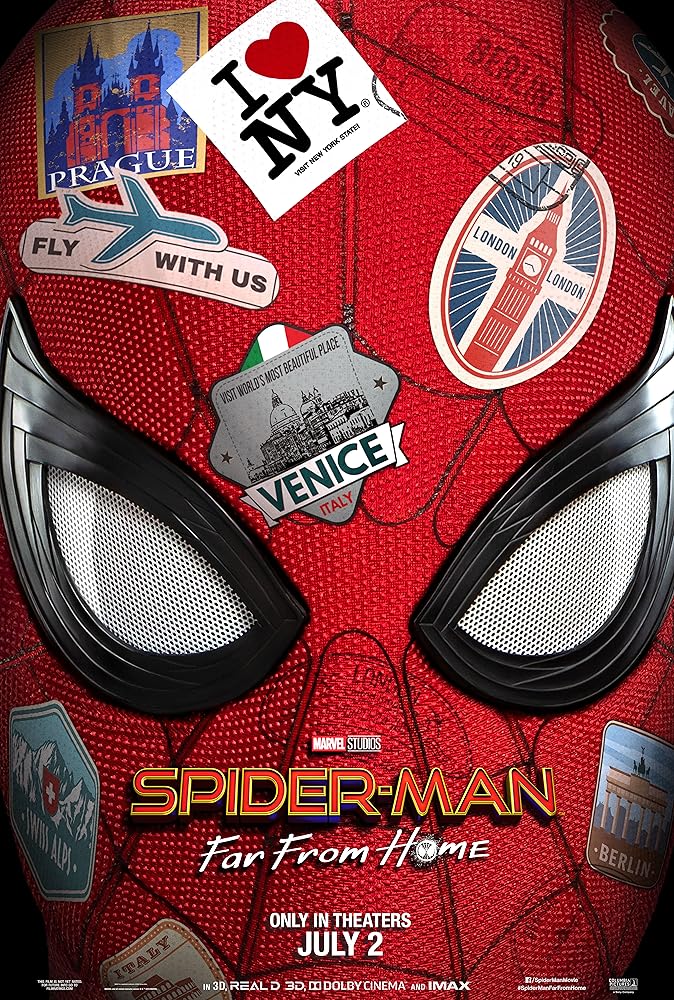
Spider-Man: Far From Home (2019) review


Spider-Man: Far from Home (2019)

(Disclaimer: I apologize in advance, folks, but due to the nature of this being the first MCU film after Avengers: Endgame, I will have to address what is easily the biggest of that film’s spoilers. I have the feeling that most of you reading this have already watched the film (it did just become the highest-grossing film of all time, after all…), but in the slim chance that you haven’t seen it yet, all I can recommend at this point is that you watch Endgame first.)

When we last left the Marvel Cinematic Universe, it had just reached the culmination of its legendary run up to this point with Avengers: Endgame. It goes without saying that the film was a true epic in every sense of the word, effectively providing the franchise’s dedicated fanbase with a satisfying conclusion to what has now officially been designated as ‘the Infinity Saga’. However, as it turns out, it ultimately wasn’t going to be the final installment of this saga. Instead, that honor goes to the follow-up to 2017’s Spider-Man: Homecoming, Spider-Man: Far From Home. As most of you know, Spider-Man’s inclusion in the MCU ultimately came courtesy of a deal between Marvel Studios and Sony. While the latter has held the character’s film rights for the past several decades, the lackluster performance of the Amazing Spider-Man reboot series led to this deal that would see both parties working together to develop a new iteration of the character, who made a phenomenal debut in Captain America: Civil War. Thus, just like Homecoming, Far From Home is an interesting release in terms of its distribution because while Marvel Studios is currently under the Disney banner, both Homecoming and Far From Home are officially Sony productions. And yet, because of Kevin Feige and co.’s involvement in the production, it’s still technically an MCU film at the end of the day, with Homecoming director Jon Watts returning to direct along with most of the main cast from the previous film. And because of this, Far From Home is yet another superb outing for the MCU that brilliantly handles the ramifications of the epic, emotional finale of its immediate predecessor while also giving us a taste of what’s to come for this legendary franchise.

Not long after the events of Endgame, teenager Peter Parker (Tom Holland) returns to his hometown of Queens to resume his duties as the friendly neighborhood web-slinger, Spider-Man. At the same time, though, Peter has struggled to overcome the death of his mentor/father figure Tony Stark. Thus, when Midtown High organizes a summer vacation to Europe, Peter signs up for it, eager to take a break from the superhero lifestyle and hopeful that this trip will give him a chance to reveal the blossoming feelings that he has for his classmate Michelle AKA MJ (Zendaya). Unfortunately for Peter, his superhero life quickly follows him to Europe, and he ends up being approached with a mission by Nick Fury (Samuel L. Jackson) and Maria Hill (Cobie Smulders). The two inform him that due to the cosmic implications of ‘the Snap’, four creatures from another dimension known as the Elementals have arrived on Earth and have caused mass destruction wherever they go. Luckily for them, they have gained a new ally in Quentin Beck (Jake Gyllenhaal), an illusion-based superhero who is also from the Elementals’ dimension and is promptly given the nickname ‘Mysterio’ by the media. Thus, as Peter now finds himself struggling once again to balance his responsibilities as Spider-Man with his desire for a stress-free vacation, he must also grapple with the biggest question of them all; can he live up to the expectations that have been set upon him and become ‘the next Iron Man’?

In the past, I’ve noted that Marvel Studios does a great job when it comes to the kind of films that they do right after the big ensemble pieces that are the Avengers films. The original Ant-Man followed the grand spectacle of Avengers: Age of Ultron with a refreshingly small-scaled affair (no pun intended) while Ant-Man and the Wasp allowed for some well-earned levity after the devastating finale of Avengers: Infinity War. The same situation applies to Far From Home, but in this case, its effectiveness as the immediate follow-up to Avengers: Endgame stems from the fact that the events of Endgame’s finale directly affect this film’s plot. Simply put, the death of Tony Stark is felt throughout, right down to the fact that tributes to him can be seen in practically every European country that Peter visits. Without spoiling anything from the plot, this film is all about Tony’s legacy and how Peter must now work to maintain it, and as one can only expect from an MCU film, this is where the franchise’s phenomenal sense of emotional poignancy comes into play because of how closely tied the MCU’s version of Peter has been to Tony. Another key aspect of this film is its European setting since Far From Home is the first main Spider-Man film (not counting Spidey’s trip to Germany in Civil War since that’s a Captain America film) that’s not primarily set in New York, and because of this, the new locales offer some fantastic imagery that’s even more amazing when viewed in IMAX. All this helps to bolster everything else that you’ve come to expect from an MCU film; I would elaborate on what that stuff is further but, let’s be frank, I’ve already done that in my previous MCU film reviews.  

Like Homecoming, Far From Home primarily revolves around its younger cast members to great effect. Of course, it’s all headlined by Tom Holland, who continues to be a wonderful iteration of Spider-Man. Not only does Holland perfectly embody the combination of Spider-Man’s wisecracking persona with Peter Parker’s endearing awkwardness, but he also brilliantly handles all the emotional turmoil that Peter’s been going through since Tony Stark’s death. He also continues to have excellent camaraderie with Jacob Batalon as Peter’s best friend Ned, who gets his own little subplot via a budding romance with their classmate Betty Brant (Angourie Rice), as well as some wonderful chemistry with Zendaya as the MCU’s ‘MJ’. As alluded to in the plot synopsis, the film begins to develop a relationship between the two that, in turn, does allow Zendaya to have a larger role this time around. After that, there’s the always reliable supporting characters like Jon Favreau as Happy Hogan, Marisa Tomei as Aunt May, and Samuel L. Jackson and Cobie Smulders as Fury and Maria Hill. Finally, there’s quite arguably the most anticipated addition to the cast, Jake Gyllenhaal as Mysterio, and sure enough, he is fantastic in the role thanks in large part to the excellent camaraderie that he forms with Holland. Now for those who are aware of Mysterio’s traditional role in the comics… yes, this film goes exactly the way you think it does when it comes to his overall characterization. Still, the way in which it translates this to tie him into the MCU’s lore is a brilliant method of subverting expectations.

Marvel Studios has been on a roll as of late when it comes to producing sequels that are superior to their already excellent predecessors. That was the case with films like Captain America: The Winter Soldier, Guardians of the Galaxy Vol. 2, and Ant-Man and the Wasp, just to name a few. And sure enough, that trend continues with Spider-Man: Far From Home, which has quite possibly become my new favorite Spider-Man film. Now don’t get me wrong, Spider-Man: Homecoming was a terrific outing for the web-slinger that perfectly encapsulated the character arc of the MCU’s rendition of the character; a young kid who wants to join the Avengers but quickly has to grapple with the reality that he’s still just a kid in a much larger universe. But then you have Far From Home, which takes everything great from Homecoming and amplifies it even further with better action sequences, better visuals, and a tightly-written script which sees Peter Parker now having to face the burden of proving exactly why Tony Stark made him an Avenger. In other words, while I’m sure that I’ve said this plenty of times before when it comes to the MCU, this truly is one of those films that is a pitch-perfect representation of everything great about this franchise. Thus, it ends up being a perfect epilogue to Marvel Studios’ ‘Infinity Saga’, which is quite arguably the most impressive run that any franchise has had in the history of film. And considering all the exciting films and TV shows that Marvel Studios announced at Comic-Con this past weekend, it’s undeniably clear that they’re not even remotely done yet.    

Rating: 5/5!

Tuesday, March 12, 2019

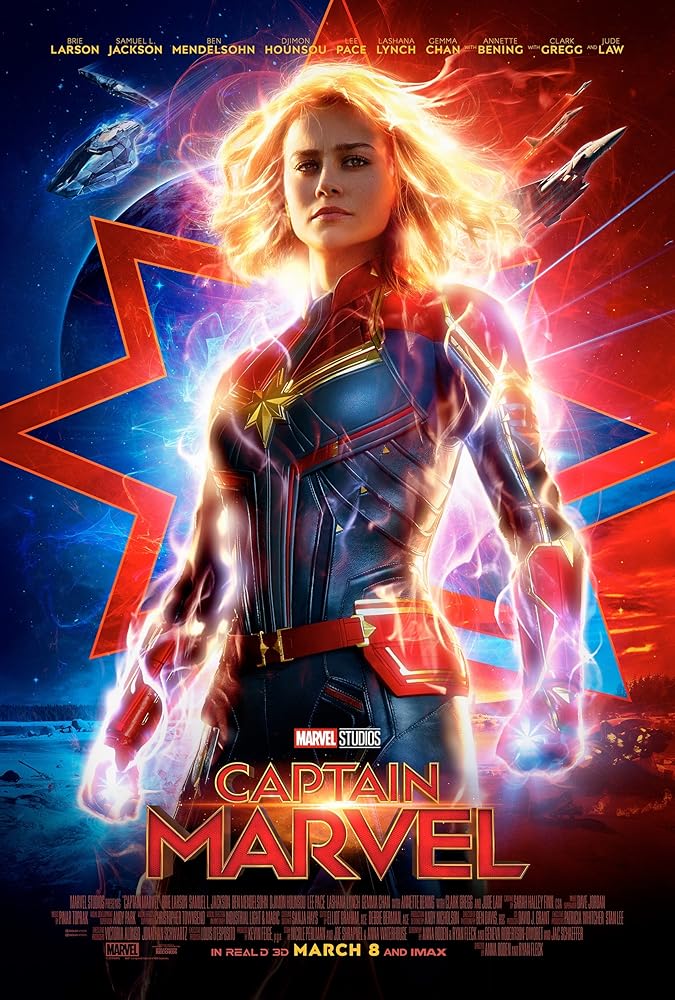
Captain Marvel (2019) review

Brie Larson in Captain Marvel (2019)

Since 2008, Marvel Studios has been the most dominant force behind the current state of the superhero genre as their bold plan to unite their various superheroes within one single franchise has more than proven to be a huge success with both critics and audiences. And yet, it legitimately could be argued that they’ve been a bit behind the times when it comes to having a diverse representation of characters in their film output. To be clear, the MCU has managed to give us a wide collection of excellent characters, especially when it comes to their female protagonists like Black Widow, Scarlet Witch, Gamora, Daisy Johnson, and Peggy Carter, just to name a few. However, in the case of their latest outing, Captain Marvel, it is the first female-led entry of a franchise that is currently 21 films in. And for those who are wondering why it took so long for this to happen, it’s been noted that this was mainly due to the studio’s former CEO, Ike Perlmutter, who played a huge role in some of the franchise’s most controversial bits of ‘executive meddling’. This included everything from the lack of Black Widow merchandise for Avengers: Age of Ultron to all the creative conflicts that led to Edgar Wright backing out of Ant-Man. And if that wasn’t enough, he also reportedly wasn’t keen on doing a film adaptation of Black Panther. But, of course, Marvel Studios president Kevin Feige managed to break away from Perlmutter and the Creative Committee in 2015. And because of this, one of Marvel’s most popular superheroines has finally been given the chance to grace her own solo film, with Oscar-winner Brie Larson taking on the role of Carol Danvers, arguably the most famous incarnation of the one that they call Captain Marvel (disclaimer: not to be confused with DC’s Captain Marvel, who will be making his own live-action debut next month in Shazam). For this installment, directorial duties go to the husband and wife duo of Anna Boden and Ryan Fleck, whose previous works include critically-acclaimed outings like 2006’s Half Nelson and 2015’s Mississippi Grind. And despite what certain parts of the internet may tell you, Captain Marvel is, what a surprise, yet another phenomenal installment of the Marvel Cinematic Universe that more than establishes its title character as the franchise’s newest badass heroine.

The year is 1995. On a seemingly average night, a mysterious woman crash-lands into a Blockbuster store in Los Angeles. The woman, who goes by the name of Vers (Brie Larson), claims to be a member of an elite intergalactic unit known as Starforce made up of members of an alien race known as the Kree. During their most recent mission, Starforce found themselves dealing with their longest-standing adversaries, Skrulls, who can shapeshift into any being that they come across. Vers ends up getting captured by a faction of Skrulls led by their commander, Talos (Ben Mendelsohn), who she learns is searching for a woman on Earth named Dr. Wendy Lawson (Annette Benning), who supposedly developed plans for a light-speed engine. After arriving on Earth, she ends up meeting Nick Fury (Samuel L. Jackson), an agent of the Strategic Homeland Intervention, Enforcement and Logistics Division AKA SHIELD, and the two end up going on a journey together to try and prevent the Skrulls from acquiring Dr. Lawson’s plans. Along the way, Vers also starts to uncover more about her past life that she has long struggled to remember. Most specifically, she discovers that she was a former U.S. Air Force pilot named Carol Danvers who had supposedly died during a test run of Dr. Lawson’s engine in 1989. And as she soon finds out, the ramifications of what happened during this event end up providing her with a radically different outlook on the war between the Kree and the Skrulls.  

As alluded to in the plot synopsis, Captain Marvel goes the route of Captain America: The First Avenger by being a prequel that takes place before most of the other MCU films. In this instance, it’s set in the ’90s, and the film doesn’t disappoint when it comes to having a historically accurate representation of the era thanks to its rocking soundtrack and plenty of references to 90’s culture (e.g. the limitations of the technology of the time). As for the story, though, it’s admittedly one of the simpler affairs of the MCU. The best way to describe it is that it parallels the execution of the first Thor film by spending more time on Earth than in space. And while many have felt that the Thor films worked better when they weren’t on Earth, it’s ironically the opposite case with this film as it doesn’t really get going until after Carol arrives on Earth. Despite this, however, the film does manage to craft a solid mystery around Carol slowly but surely discovering her identity and how it ultimately factors into the long-standing conflict between the Kree and the Skrulls. This, along with the various lore-related references that the film makes (e.g. appearances of familiar objects, characters, etc.), creates an outcome that manages to keep in line with what we’ve seen in the other MCU films. And just like those other MCU films, Captain Marvel continues to feature everything that audiences have come to expect from this franchise, from its solid comedic dialogue to its excellent action sequences.    

Most importantly, though, Captain Marvel continues to maintain the MCU’s strong sense of emotional depth, which is well-exemplified by Brie Larson’s excellent performance in the title role. Larson perfectly conveys Carol’s tenacity and her rebellious attitude, which helps to make her transition into a full-blown superhero one of the most satisfying arcs to come from the MCU. The film also benefits greatly from her phenomenal camaraderie with Samuel L. Jackson, who gets what is easily his largest role in an MCU film to date as Nick Fury. And because of this film’s 90’s setting, it gives us a radically different take on the man who will end up becoming the leader of SHIELD, which Jackson (along with the aid of Marvel Studios’ continually impressive de-aging visual effects technology) handles brilliantly. Aside from them, you also have your reliable MCU supporting players, which notably include a few returnees from other installments of the franchise. Clark Gregg makes his first appearance as Agent Coulson in an MCU film since transitioning over to Agents of SHIELD while both Lee Pace and Djimon Hounsou reprise their roles of Ronan the Accuser and Korath, respectively, from Guardians of the Galaxy. However, it should be noted that their roles in the film are incredibly minor. Thankfully, there are also some great supporting players in here that have much larger roles in the plot, like newcomer Lashana Lynch as Carol’s best friend Maria Rambeau, Annette Benning as Dr. Lawson, and Jude Law as Starforce’s leader (and Carol’s mentor) Yon-Rogg. And as for the main antagonist, Skrull commander Talos, admittedly I can’t say much about his role in the film just yet as that would be delving into spoiler territory. It’s a well-layered role, though, and Ben Mendelsohn gets to be one of the rare instances of a more comedic Marvel Cinematic Universe villain.  

What’s this, another great MCU film to add to the collection? Yes, folks, the MCU continues to be one of the top film franchises in the industry as their 21st installment is another well-rounded solo flick with all the usual fixings. I mean, at this point, it’s crazy to doubt the fact that Marvel Studios knows what they’re doing, but admittedly, this one did attract some skepticism prior to its release. If that wasn't enough, it also attracted some unwarranted backlash following a comment made by Brie Larson where she wished for better diversity in the media during this film’s press tour. And while it’s a reasonable desire backed by undisputable fact, this got misinterpreted as ‘sexist SJW BS’ by the same morons who considered Star Wars: The Last Jedi an utter offense to humanity. Modern era trolling in a nutshell, ladies and gentlemen. Thankfully, though, those ‘fans’ (and yes, the term ‘fans’ is used loosely in this case) were proven very much wrong. Now, to be clear, I’m not saying that this is ‘the best’ MCU film ever made. It does have an admittedly slow start and its plot is simpler in execution when compared to other installments of the franchise. But even with that in mind, this ‘back to basics’ approach isn’t necessarily a bad thing as it is still just as entertaining as any other MCU film. As a prequel to most of the other MCU films, the ways in which it sets up future events are generally handled quite well. And thanks in large part to Brie Larson’s excellent performance in the title role, Carol Danvers’ transformation into the franchise’s newest badass heroine, Captain Marvel, gives this film the same great emotional poignancy that the MCU is known for. Thus, while it might get a bit overshadowed by the upcoming epic that is Avengers: Endgame, Captain Marvel continues Marvel Studios’ stellar cinematic hot streak that has now been going on for a full decade.


Rating: 4.5/5

Wednesday, January 23, 2019

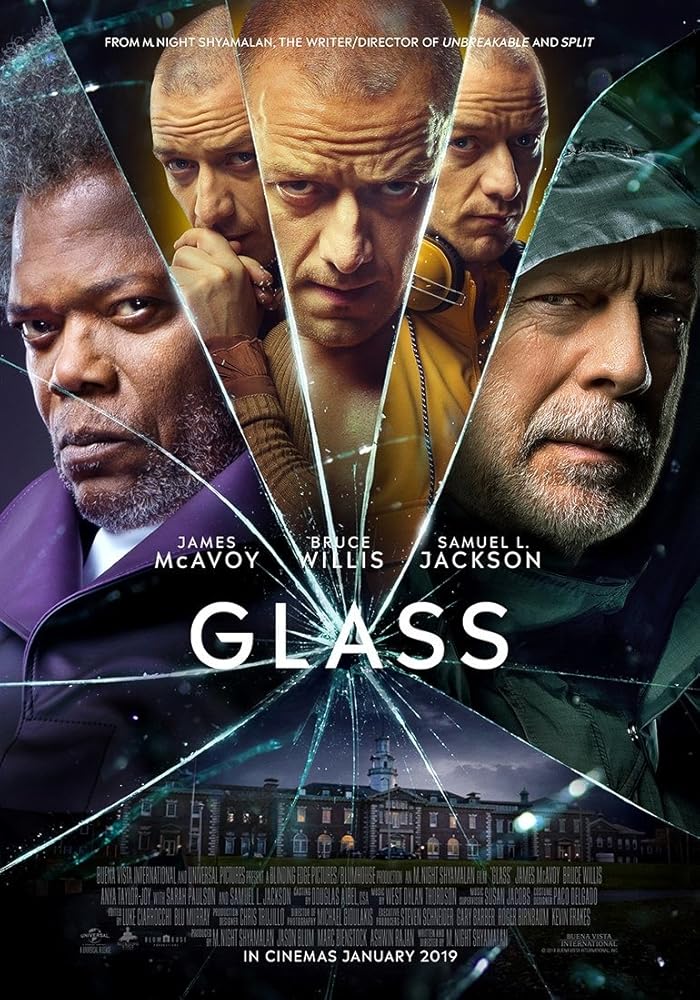
Glass (2019) review

Samuel L. Jackson, Bruce Willis, and James McAvoy in Glass (2019)

One year after making it big with The Sixth Sense, writer/director M. Night Shyamalan released his next directorial effort, Unbreakable. Serving as a deconstruction of the superhero genre, the film followed a seemingly average man who ponders if he’s a superhero himself after miraculously surviving a devastating tragedy. Upon its release, the film didn’t quite do as good with critics and audiences as The Sixth Sense, but it has gone on to arguably surpass it as Shyamalan’s most popular film. And yet, because it wasn’t that big of a hit, plans for a sequel were put on hold for the next decade and a half. It wasn’t until 2017 when the idea of continuing the series was put into play thanks to Shyamalan’s then-latest effort, Split, which had continued his recent career resurgence after a string of critical flops in the 2000s. But while the film may have seemed like a simple small-scale thriller about a group of girls who found themselves kidnapped by a man with multiple identities, audiences were surprised to discover that the film was the long-awaited Unbreakable sequel thanks to a cameo by the previous film’s protagonist. And thus, the plans were set for a third film that would bring together the main characters of both films and provide a conclusive finale to what is now being referred to by fans as the Eastrail 177 trilogy, named after the train that started this whole ordeal. Taking its name from the first film’s main antagonist, Glass once again brings audiences into a world of real-life super-heroes and real-life super-villains. And while some may be put off by the ways in which it continues the story of Unbreakable, it’s still a highly engaging thriller with captivating performances.  

19 years ago, security guard David Dunn (Bruce Willis) was the sole survivor of a devastating train crash in the city of Philadelphia. After learning that he somehow managed to survive the crash without any injuries, David proceeds to undergo a journey where he starts to test himself to see if he’s a real-life superhero, a notion that’s encouraged by comic enthusiast Elijah Price (Samuel L. Jackson), a man who suffers from brittle bone disease. However, David eventually learns that Price was the one responsible for the train crash, having decided that his purpose in life was to be David’s arch-enemy, Mr. Glass, resulting in David alerting the authorities and Price being placed in a mental institution. Since then, David has continued to operate as the vigilante known as ‘The Overseer’, which leads him to a confrontation with Kevin Wendell Crumb (James McAvoy), an infamous kidnapper/murderer who has dissociative identity disorder and 24 distinct identities fighting for control of his mind, thus earning him the nickname ‘The Horde’. Their ensuing clash ends up with them both being arrested and sent to the Raven Hill Psychiatric Hospital where, as fate would have it, Price is being held as well. Whilst there, the three become the subjects of Dr. Ellie Staple (Sarah Paulson), who specializes in dealing with patients who have delusions of grandeur, specifically the idea that they possess super-powers. But as the three men find themselves subjected to intense psychological evaluations that put their abilities into question, the ever-devious Elijah begins planning his next criminal scheme that he promises will prove to the world once and for all that super-powered beings truly exist.

When it comes to this unexpected trilogy of films, Glass is a combination of the best elements of its two predecessors. Since Split wasn’t technically revealed as a sequel to Unbreakable until its ending, Glass is ultimately more in line with the first film when it comes to its structure and purpose as a commentary on the concept of comic-book superheroes. At the same time, though, Glass also carries over the psychological ideologies of Split’s plot to further strengthen its commentary. With that in mind, it should be noted that this isn’t meant to be a big-budget superhero flick with large-scale action sequences a la something out of the Marvel Cinematic Universe. Instead, Glass’ big action sequences are reserved for its first act and finale, with the rest of the film focusing on its main characters’ time spent in the mental institution. And overall, the film manages to maintain an engaging narrative throughout because of its layered characters and effective moments of emotional poignancy that come from taking the idea of super-powered beings and grounding it in realism. But just like any Shyamalan film, this story ends up leading to some major twists that, in this instance, seem to be a major source of contention amongst this film’s critics, and to be perfectly frank, in some ways it’s easy to see why this is. Without spoiling any of these twists, the biggest of the bunch could’ve benefitted from being built up a bit more because as is, it sort of feels like it came out of nowhere. And yet, despite this, the film then immediately course corrects itself with another twist that works a lot better because it manages to provide a thorough conclusion to the arcs of its main characters.

On that note, one of the biggest draws to this film is getting to see the three main leads of the franchise together in one big ‘crossover’. Starting with the cast from Unbreakable, Bruce Willis is excellent once again as main protagonist David Dunn. Instead of being one of Willis’ more recent outings where many have felt that he’s just ‘phoning it in’, he provides the film with several of its best emotional moments in his second go-around as the reluctant hero who’s been put through the emotional wringer more often than most. But, of course, you can’t have a hero without a villain, and that’s where Samuel L. Jackson comes in as Elijah Price AKA Mr. Glass. Now fully embracing his role as ‘the mastermind’, Jackson commands the screen as this series’ fascinating antagonist with the tragic backstory of a life that’s been considerably hindered by his condition. And yet, arguably the biggest standout of them all is James McAvoy reprising his role from Split as Kevin Wendell Crumb and his 24 unique identities. Just like in the previous film, the ways in which McAvoy slips in and out of each identity, whether it’s the innocent 9-year old Hedwig or a Southerner named Luke who has the tendency to spoil films, is a sight to behold in terms of all the physical and mental transformations that he undergoes. The three are then joined by a variety of returning players from the other films, including Spencer Treat Clark as David’s son Joseph and Anya Taylor-Joy as Casey, the sole survivor of Kevin’s rampage in Split, and they’re all good as well despite not having as much to do as Willis, Jackson, and McAvoy. Sarah Paulson then closes out the ensemble as this film’s primary new addition, Dr. Staple, and she shines as well as the film’s most mysterious character with an unclear agenda.  

With Glass, M. Night Shyamalan has been granted something that he hasn’t had in years, hype. While it may not have been as big of a hit as The Sixth Sense was upon its initial release, Unbreakable has since gone on to be regarded by many as his best film. As such, when it was revealed that his 2017 outing Split was the unexpected follow-up to Unbreakable, the anticipation began to mount for the concluding installment of the Eastrail 177 trilogy. Despite this, however, Glass is proving to be quite the polarizing affair amongst critics and audiences, with several feeling that it just didn’t live up to the hype and was a lackluster conclusion to this promising trilogy. And to be perfectly fair, there are certain aspects of this film that won’t exactly go over well with everyone when it comes to the ways in which it concludes the trilogy and, more importantly, the overall arcs of its main characters. Ultimately, though, I did find Glass to be a genuinely satisfying finale to this trilogy, as it combines the best elements of Unbreakable and Split to produce yet another highly engaging thriller. It may not boast the usual structure of a ‘superhero flick’ but the story is solidly written and the film benefits from an excellent collection of layered characters headlined by the phenomenal lead trio of James McAvoy, Bruce Willis, and Samuel L. Jackson. In short, it’s nice to see that after all these years, M. Night Shyamalan was finally able to return to the world of heroes and villains that he had initially created with Unbreakable to spawn a truly unique trilogy of superhero films.     


Rating: 4.5/5

Saturday, June 16, 2018

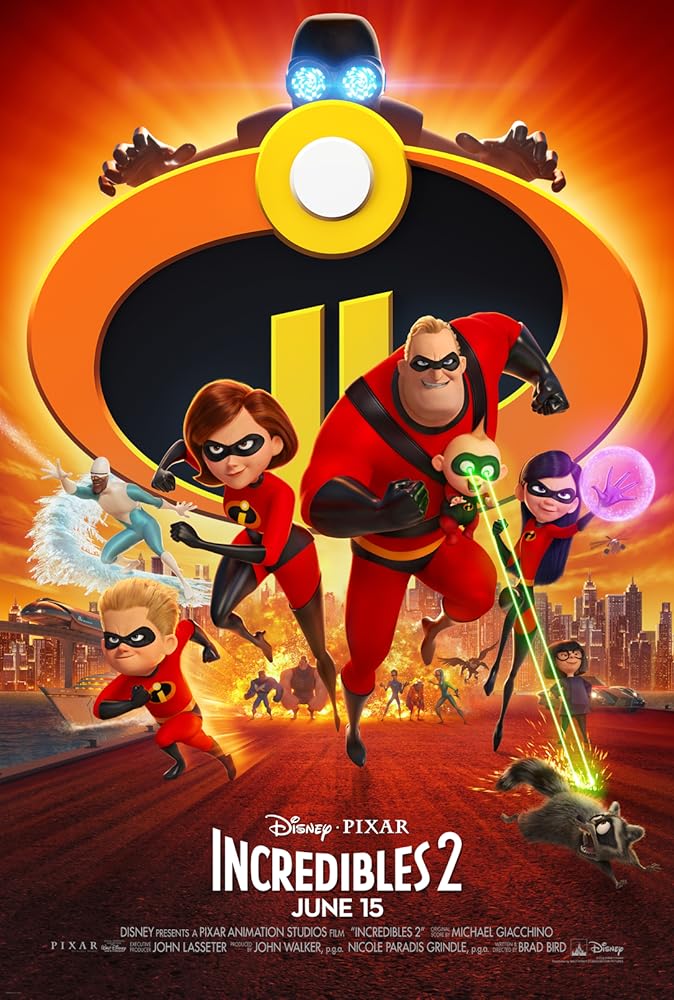
Incredibles 2 (2018) review

Samuel L. Jackson, Holly Hunter, Craig T. Nelson, Brad Bird, and Huck Milner in Incredibles 2 (2018)

In 2004, Pixar released what many consider to be one of their greatest films to date, The Incredibles. The film notably served as the first Pixar film that wasn’t directed by one of the studio’s primary group of filmmakers. However, director Brad Bird isn’t that far off from being a member of Pixar’s core creative team, as he was one of the many iconic animators who attended the California Institute of the Arts in the 1970’s alongside the likes of Pixar mainstays like Pete Docter and Andrew Stanton. With The Incredibles, Bird gave audiences a delightfully entertaining homage to the Silver Age of comics that starred a family of superheroes whose powers were tied directly to classic familial archetypes, like the father who’s expected to be strong for his family or the mother who gets pulled in all directions. Upon its release, the film grossed over $633 million worldwide and won two Oscars for Best Sound Editing and Best Animated Feature. Critics and audiences lauded it for its animation (which was touted as having broken new grounds for creating human characters), thrilling action sequences, and a layered plot that delved into subjects that one wouldn’t normally expect to see in a film geared towards younger audiences (e.g. going through a mid-life crisis, potential inter-martial affairs, etc.). And it ended on a big cliffhanger that effectively made it one of the few Pixar films (arguably the only one, even…) where a sequel was almost universally demanded by fans. Well, it may have taken 14 years, but Brad Bird is back once again with the continuing adventures of everyone’s favorite superhero family in Incredibles 2. And fear not, folks, as that long gap in time between the releases of these two films does not prevent this sequel from being one of the most satisfying follow-ups in recent memory, sure to delight both those who grew up with the original and those who didn’t grow up with it but now get to experience its majesty for the first time.

Incredibles 2 opens right where the first film left off, with retired crime-fighters Bob Parr AKA Mr. Incredible (Craig T. Nelson) and his wife Helen AKA Elastigirl (Holly Hunter) having returned to their old lives of being superheroes. Not only that, but they’re now joined by their two oldest kids as well; Violet (Sarah Vowell), who can turn invisible and project force fields, and Dash (Huck Milner, replacing Spencer Fox from the first film), a speedster. However, due to the government laws that had forced Bob, Helen, and their fellow superheroes to go into retirement 15 years ago still being in effect, the family is forced to once again return to their normal lives. To make matters worse, Bob and Helen learn from their government ally Rick Dicker (Jonathan Banks, replacing Bud Luckey from the first film) that the ‘Superhero Relocation Program’ that has been keeping their secret identities secure is set to be discontinued, putting the family’s entire future in jeopardy. That is, until Bob, Helen, and family friend Lucius Best AKA Frozone (Samuel L. Jackson) are approached with an offer by Winston Deavor (Bob Odenkirk), the owner of one of the top telecommunication companies in the world, DEVTECH. Having been a fan of superheroes ever since he was a kid, Winston and his sister Evelyn (Catherine Keener) propose a plan to use their influences in the media to help revitalize the public’s perception of superheroes. The Deavors end up selecting Helen to lead their operation as they consider her to be the ‘least-destructive’ of the three. Despite this, Bob offers to watch the kids so that Helen can do her thing and hopefully allow them all to return to doing what they do best. Thus, Mr. Incredible finds himself facing his most difficult challenge yet… being a stay-at-home dad who must deal with everything from Violet’s dating struggles to figuring out the powers of the family’s infant son, Jack-Jack. Meanwhile, Helen finds herself dealing with a new tech-savvy villain known as the Screenslaver who threatens to undermine the whole operation with his ability to brainwash people using hypnotic imagery.

The superhero genre has obviously evolved quite a bit since the release of the first Incredibles, primarily thanks to the global powerhouse that is the Marvel Cinematic Universe. Thus, Brad Bird has noted that this was one of the biggest challenges in developing the sequel because he didn’t want to follow a lot of the genre’s common narrative tropes. Thus, he instead focused on the key aspect that made the first film the classic that it is, the family dynamic. Oh sure, like its predecessor, there’s plenty of fun action sequences in this film and it isn’t afraid to explore some of the various facets of its world of superheroes. But at its core, this is still a film about a family who struggles to deal with the consequences of having superpowers in a world that isn’t that accepting of those who have them. Some may argue that the plot is mostly just a role reversal of the first film, this time having Elastigirl being the one who goes out to fight crime instead of Mr. Incredible, but it’s a lot more than that. The first film was about Mr. Incredible overcoming the mid-life crisis that he found himself in as a former superhero who’s forced to go into hiding and become an average citizen in a frustrating dead-end job. As for the sequel, it’s about how Mr. Incredible and Elastigirl are both forced to make sacrifices to ensure their family’s future. Elastigirl’s crime-fighting requires her to leave her family for an extended amount of time while Mr. Incredible is forced to stand back and let his wife go out and revel in all the superhero glory when it’s clear that she’s quite arguably better at it than him. Because of this, the film ends up boasting a strong amount of emotional depth that is on par with what we got out of the original.

All of this is paired nicely with the film’s excellent animation, which truly does showcase how far computer animation has evolved since 2004. Like the first film, the animation in this film does an excellent job in capturing that vibrant comic-book style, with some scenes even managing to give off a nice 2-D vibe. As for the characters, the majority of the first film’s cast return to reprise their roles in this film, save for Jonathan Banks taking over for the late Bud Luckey as Rick Dicker and Huck Milner taking over for Spencer Fox in the role of Dash a la Hayden Rolence taking over for Alexander Gould as Nemo in Finding Dory. These two do a nice job in taking over their respective roles and all the returning players slip back into their parts with ease. As noted earlier, the film does a fantastic job of balancing out Mr. Incredible and Elastigirl’s roles in the story while still making the latter the central character this time around, something that Holly Hunter very much revels in. But Craig T. Nelson also gets a lot of great material to work with as well, with Mr. Incredible getting a lot of the film’s best humorous moments due to his increasing exasperation over all the crazy shenanigans that he gets into while trying to take care of the family, like struggling to understand the new ways to learn math. And of course, there are all the memorable supporting roles, from the always-reliable Samuel L. Jackson as the suave Frozone to director Brad Bird himself as the Parrs’ legendary costume designer Edna Mode to newcomers like Bob Odenkirk and Catherine Keener as the Deavors. 

The concept of Pixar doing sequels to their various animated classics has been a heavily contentious topic amongst the studio’s fanbase. While sequels in general always tend to get a bad reputation from many film buffs, it seems as if Pixar’s sequels face even more scrutiny from those who feel that the studio is ‘above all that’. Sure, the Toy Story sequels managed to be just as critically-acclaimed as the original 1995 film that started it all for the company, but the same can’t exactly be said for follow-ups to films like Cars and Monsters Inc. Heck, even the upcoming Toy Story 4 has been attracting tons of skepticism from those who felt that the series had reached its proper conclusion with 2010’s Toy Story 3. In short, as I said before, The Incredibles seemed to be the only Pixar film that most fans genuinely wanted a sequel to given how it ended on a major cliffhanger (a cliffhanger that, rest assured, does get a satisfying conclusion in this new film). Thankfully, Incredibles 2 does manage to live up to all the hype surrounding it by being yet another fun animated superhero adventure that never loses sight of the strong family dynamic that defined its predecessor. This, in turn, allows the film to stand out amongst all the superhero films that have come out since the original Incredibles in 2004. It’s clear that Brad Bird took his time to ensure that the sequel would be up to par with its predecessor, and he more than delivers in that regard. I won’t go as far as to compare these two films just yet seeing how I’ve only seen the sequel once compared to the countless times I’ve seen the first film, but I’d say that they’re evenly matched. Either way, for fans of the original film, you’ll be more than satisfied with this long-awaited follow-up while younger audiences get to experience everything that made the first Incredibles a modern masterpiece.


Rating: 5/5!

Monday, August 28, 2017

The Hitman's Bodyguard (2017) review

Image result for the hitman's bodyguard poster

Well, we’re nearing the end of the summer film season, meaning that the slate of new releases that we’ve had for the past few weeks admittedly hasn’t been as strong as it was a few months back. At this point, we’ve already gotten all the summer’s biggest outings from the likes of Marvel and DC, other big franchise hits like the newest Planet of the Apes film, and excellent new films from the likes of Christopher Nolan and Edgar Wright, just to name a few. Thus, it can sometimes be easy to look past the films that come out during the month of August, because aside from films like the first Guardians of the Galaxy, not a lot of big hits tend to come out during this part of the year. However, that doesn’t mean that we haven’t had any new worthwhile releases this month because there have been a few. One of these is The Hitman’s Bodyguard, an action film that is headlined by two of the biggest on-screen personalities in the film industry. First, there’s Ryan Reynolds who, of course, is fresh off his long-awaited success in the superhero film genre with Deadpool. The other main lead in this film is the one and only Samuel L. Jackson, a man whose legendary status in the film industry needs no introduction. As for the film itself, it’s directed by Patrick Hughes, who recently helmed his first big studio picture back in 2014 with the third installment of The Expendables series. And while this was the entry in the franchise that was heavily affected by both a nasty online leak and major backlash towards its watered-down PG-13 rating, it was still a decent commercial hit overseas. But this isn’t a PG-13-rated action film that we have here today, folks; nope, this is an R-rated action extravaganza that uses the fun onscreen personalities of its two leads to great effect.

Michael Bryce (Ryan Reynolds) is a top-level bodyguard for high-level assets. However, when one of his clients ends up getting killed, Bryce finds himself ‘demoted’ to the position of protecting lesser targets. However, that begins to change when he is approached by his ex-girlfriend, Interpol agent Amelia Roussel (Elodie Yung), who asks for his help on her current operation when it begins to go horribly wrong. Said operation involves the transportation of infamous hitman Darius Kincaid (Samuel L. Jackson) to the Netherlands. There, he has agreed to testify at the International Court of Justice against the diabolical dictator of the Republic of Belarus, Vladislav Dukhovich (Gary Oldman), in exchange for the release of his wife Sonia (Salma Hayek) from prison. There’s just one problem, though; Bryce and Kincaid have had quite the tumultuous history together, meaning that these two aren’t exactly keen on working with each other. But, neither of them ultimately have much of a choice in the matter as Bryce is forced to get Kincaid to the Netherlands by a specific deadline, otherwise, Dukhovich goes free. Thus, the two head off on a crazy adventure while being endlessly pursued by Dukhovich’s men who are hell-bent on killing them… that is unless Bryce and Kincaid kill each other first.

Let’s be honest, folks; you’re not expecting anything Oscar-worthy out of this. It’s just a simple action film with a basic plot and some clear-cut plot twists, from a mole within Interpol (played by Joaquim de Almeida, who played the villain in Fast Five) to a reveal that ties Kincaid to the incident that ruined Bryce’s career. But, ultimately, that’s not what makes this film such an entertaining action thriller. The key to it all is its two leads, as Ryan Reynolds and Samuel L. Jackson work off each other incredibly well. Both have terrific comic timing and, thus, provide the film with its greatest moments whenever they’re on-screen together. Everyone else in the film is solid too though, admittedly, their roles are minor compared to Reynolds and Jackson’s. That can especially be said for the main villain Dukhovich, who doesn’t even factor into the plot, really, until the finale. Still, to the film’s credit, it does have quite a lot of fun action sequences. Unlike The Expendables 3, director Patrick Hughes isn’t limited in terms of having to tone them down so that the film can be rated PG-13 (even though Expendables 3 did, kind of, go beyond the limits of a usual PG-13 rated action film, but that’s beside the point). The action sequences in this film are far more violent and don’t suffer as much from the quick editing that was apparent in Expendables 3. And so, in conclusion, The Hitman’s Bodyguard may be far from perfect, but for a film that got released during the tail-end of summer, this is a decent way to close out one’s summer at the theater. Simply put, if you’re just looking for a film where Deadpool and Nick Fury constantly bicker with each other while mowing down bad guys, this is that film.

Rating: 3.5/5


Sunday, March 12, 2017

Kong: Skull Island (2017) review

Image result for kong skull island poster

For nearly nine decades, King Kong has stood (figuratively and, in some cases, literally!) as one of the most iconic creatures in film history. The original King Kong from 1933 still stands as one of the most famous films of all time, particularly thanks to its groundbreaking special effects done by Willis O’Brien. Since then, this classic story of ‘Beauty killed the Beast’ has seen numerous updates over the years. There was the 1976 remake starring Jeff Bridges, Charles Grodin, and Jessica Lange that was fairly hyped back in the day but ultimately received a mixed response from both critics and audiences upon release. And then there was the 2005 remake directed by Peter Jackson, which was far more successful with critics and audiences despite its butt-numbingly long 3-hour runtime. And this year, the Eighth Wonder of the World is back in a new film, Kong: Skull Island. The film serves as the second installment in Warner Bros. and Legendary Pictures’ newly-developing ‘cinematic universe’ of monster films, dubbed the MonsterVerse, that first started with the 2014 reboot of Godzilla. These two classic monsters will soon share the screen in Godzilla vs. Kong, a ‘re-imagining’ of the duo’s previous crossover from 1962 that is set to come out in 2020. But first, it’s time to revive cinema’s definitive ape. Unlike Godzilla, which was set in the present day, Kong: Skull Island is set in the 70’s and is directed by Jordan Vogt-Roberts, who previously directed the 2013 indie film The Kings of Summer. Here, he takes us on a wild ride that may not have much to it in terms of story and character development but delivers on good old fashioned monster action.

The year is 1973. As America begins to back out of the Vietnam War, Bill Randa (John Goodman), senior official for a government program known as Monarch, and Houston Brooks (Corey Hawkins), a geologist working for Monarch, acquire permission from the U.S. government for a mapping expedition to an uncharted island in the South Pacific known as ‘Skull Island’. To help them during the operation, they enlist the aid of an elite helicopter squadron known as the Sky Devils, led by Lt. Colonel Preston Packard (Samuel L. Jackson), for escort and former British Special Air Service captain/tracker James Conrad (Tom Hiddleston) to guide them once on the island. Along the way, they’re also joined by anti-war photojournalist Mason Weaver (Brie Larson), who’s along for the ride for her own reasons. But, once they arrive on Skull Island, they immediately come across its most notable resident, King Kong (portrayed via motion capture by Terry Notary), who ends up attacking them and subsequently strands them on the island. Separated into two groups, the survivors are now forced to try and get to the other side of the island in time to meet up with a resupply team. But, along the way, they find themselves having to deal with the other creatures on the island aside from Kong, specifically a race of creatures known as Skullcrawlers who were unleashed because of their efforts in mapping out the island.

While 2014’s Godzilla was a solid critical and commercial success, at least when compared to the infamous 1998 remake directed by Roland Emmerich, not everybody was a fan of it. One of the main reasons why was due to the limited screen-time of the title character; about eleven minutes to be precise. Here, though, director Jordan Vogt-Roberts wastes no time when it comes to getting into the monster action and he does deliver on that front. The action in this film is epic and a lot of it is thanks to the excellent visual design. As many have pointed out, it’s arguably the film’s greatest strength. From the bright and flashy color palette to the various homages to the 70’s, particularly Apocalypse Now, this film is absolutely gorgeous to look at. Like the 2005 film, Kong is portrayed via motion-capture and, fittingly enough, following in the footsteps of Andy Serkis’ take on the character in the 2005 film, here he’s played by Serkis’ Planet of the Apes co-star Terry Notary (AKA ‘Rocket’). And, boy, is Kong a ‘beast’ in this film. Standing at 100 feet tall, he absolutely towers over the human characters, resulting in some epic ‘scale shots’ that I’m sure look amazing on an IMAX screen (admittedly, I only saw this on a regular screen so I wouldn’t know). The other great thing about the film is that it isn’t just another redo of the original Kong story. In other words, we don’t go back to New York at the end of it to see Kong climb the Empire State Building; heck, this Kong doesn’t even need to climb it given his height. Instead, almost the entire film takes place on Skull Island and, as such, wastes no opportunities in terms of showcasing its unique wildlife.

But while the visuals, visual style, and action sequences are great, admittedly the story is the film’s biggest weakness. Despite what I just said about it not being a rehash of previous Kong films, it’s basically just a simple ‘get off the island’ story, nothing more, nothing less. And the same thing can be said for the characters as well, which may have something to do with the fact that this film has one of the largest ensemble casts I’ve ever seen. Seriously, there are quite a lot of characters in this film and, as you might have guessed, some of them don’t get much to do in this. Still, at the very least, the film does have a good cast to play these parts, as limited as some of them may be. All the leads do good jobs; Tom Hiddleston, Brie Larson, John Goodman, Samuel L. Jackson, etc. However, the biggest standouts of the film come from the supporting cast. This includes Shea Whigham as Earl Cole, an eccentric member of the Sky Devils, and, most of all, John C. Reilly as Hank Marlow, a former pilot who had been stranded on Skull Island for nearly three decades after crash-landing there during World War II. Now, I’ll admit that in regards to Reilly, when he first appeared in the film’s second trailer, I wasn’t sure at first how he’d factor into the film. Clearly meant to be the main source of comic relief, initially, I was unsure if it would fit with the overall tone of the film, which seemed to be generally serious based on the first few trailers. However, having now seen the film, it’s clear that Reilly’s performance is in line with the film’s overall light-hearted nature; as such, he’s one of the best parts of the film and, technically speaking, he’s arguably got the most to work with in terms of character development out of anyone in the entire cast.

It seems to me that Kong: Skull Island is proving to be just as polarizing as 2014’s Godzilla. But while Godzilla divided audiences primarily due to the limited screen-time of the titular monster, it looks like the polarizing nature of Skull Island is due to just what kind of beast of a film it is. It has much more to it in terms of monster action than Godzilla but, like that film, it also doesn’t have much to it in terms of plot and character development. Still, director Jordan Vogt-Roberts does succeed in what he clearly must have set out to do; make a good old-fashioned monster film. And thanks to some excellent monster action, as well as fantastic visuals based on a gorgeous 70’s-inspired visual style, Kong: Skull Island is a highly entertaining new take on the lore of King Kong. Admittedly, I wouldn’t say that it’s my favorite of the Kong films (that honor is between the 1933 original and Peter Jackson’s 2005 remake) but it’s a worthy addition to the Kong franchise nevertheless. Not only that, but I am looking forward to the future installments of Warner Bros. and Legendary Pictures’ MonsterVerse, especially the upcoming crossover between Kong and Godzilla which, without giving anything major away, is teased in this film.

Rating: 4/5

(Also, be sure to check out my buddy Alex Corey’s review of the film over on his blog, Alex Corey Reviews!!)


Sunday, October 2, 2016

Miss Peregrine's Home for Peculiar Children (2016) review

Image result for miss peregrine's home for peculiar children poster

Ever since he made his feature-length directorial debut in 1985 with Pee-Wee’s Big Adventure, Tim Burton has proven himself to be one of the most visually unique filmmakers in the entire film industry. Thanks to big hits like Beetlejuice, Edward Scissorhands, and his two Batman films, he’s become well-known for his dark and quirky gothic style. And even though some of his more recent films haven’t exactly fared as well with critics, including the remakes that he did of films like Planet of the Apes and Alice in Wonderland, he’s still very much one of those directors whose films are always worth checking out just to see what he does next. For his latest film, Burton takes on a very Burton-esque kind of story that some might describe as a cross between Harry Potter and X-Men; Miss Peregrine’s Home for Peculiar Children. The film is based on a 2011 book of the same name by author Ransom Riggs, who was inspired by a series of vintage photographs that he had been collecting over the years. Originally intended to be released as a picture book, Riggs instead decided to use these photographs and craft a story about a series of children with extraordinary powers or, to be more precise, ‘peculiar’ powers. The book became a big hit and has since led to two sequels, 2014’s Hollow City and 2015’s Library of Souls. Five years later, it now spawns a feature film directed by the one and only master of the macabre himself, Tim Burton. And while it ultimately may not be one of his ‘best’ films, it’s still a solidly entertaining film that highlights Burton’s talents as a director, especially in terms of visuals.  

As the film begins, 16-year old Jacob Portman (Asa Butterfield) is suddenly dealt with the tragic loss of his grandfather Abraham (Terence Stamp). When he was younger, Jacob’s grandfather always used to tell him stories about a group of children with extraordinary abilities (or ‘peculiarities’ as they’re referred to in the film) living on an island in Wales being looked after by a woman named Miss Peregrine. Given the mysterious circumstances surrounding his grandfather’s death, Jacob convinces his parents to let him travel to the island so that he can seek ‘closure’ and find out whether or not his stories were true. Once he gets there, Jacob does end up coming across the children his grandfather told him about and they take him to their home, where he meets their protector, Miss Peregrine (Eva Green). Jacob learns that because those with ‘peculiarities’ are often frowned upon by others, Miss Peregrine and her children live in a peaceful abode away from the outside world, with Miss Peregrine having the ability to keep them within a closed time loop that has them reliving the same day over and over again safe from harm. However, the peaceful lives of the ‘Peculiar Children’ are soon threatened by the arrival of the Wights, a group of immortal human-like creatures, led by Mr. Barron (Samuel L. Jackson), who hunt peculiars for their eyes in order to maintain their immortality. When Mr. Barron ends up taking Miss Peregrine hostage, Jacob takes on the responsibility of keeping the Peculiar Children safe from Barron and his fellow Wights, as Jacob learns that he himself has the ‘peculiarity’ of seeing the monstrous creatures known as hollowgasts that the Wights control and yet are invisible to others.

Admittedly this film starts off on a rather slow note. It does take a little while before it really gets going and starts to get into the stuff with the titular ‘Peculiar Children’. But once it does, I can safely say that this is where the film really starts to shine. In terms of story, this definitely matches with Burton’s visual sensibilities as well as his tendency to focus on characters who are generally seen as ‘outcasts’ (e.g. Edward Scissorhands, Batman, etc.). As a result, the visuals are definitely the best part of the film, from the action sequences (the big action sequence involving re-animated skeletons and hollowgasts at a carnival is easily the best moment in the entire film) to even minor details like the shift in color scheme that occurs whenever characters go in and out of time loops. But ultimately the key success of this film comes in the form of its titular ‘Peculiar Children’. While her name does come first in the title, Miss Peregrine ultimately isn’t the main character of the story; the children are. Granted, like I said before, it takes a while before they really start to let the kids use their abilities but when they do, they’re easily the best part of the film. They work very well together and there is a nice variety to their abilities, from Emma (Ella Purnell), who can control air, to Olive (Lauren McCrostie), who can control fire (and yes, their abilities were switched from the book which is really no big deal in terms of the overall story), to Enoch (Finlay MacMillan), who can bring inanimate objects to life (e.g. those aforementioned skeletons). So in short, while the first half of the film does start off rather slow, the second half does end it on a good note.

Because the focus is on the kids, they get plenty of screen time during the second half of the film. And for a cast of general unknowns, they all do a really solid job. Sure character development is admittedly pretty simple in this story but the ‘Peculiar Children’ do make up for it thanks to the variety of their abilities and their solid camaraderie. As for some of the other members of the cast, Asa Butterfield does a good job acting as the audience’s avatar in this world of peculiarity. He also has solid romantic chemistry with Ella Purnell in what will no doubt be her breakout role as Emma, who’s easily the principal member of the ‘Peculiar Children’ and quite frankly provides a lot of the film’s heart. While Miss Peregrine does end up taking a back seat to the Peculiar Children during the second half of the story, Eva Green, in her second collaboration with Tim Burton following 2012’s Dark Shadows, brings just the right amount of eccentricity to the role while also very much conveying the compassion that she has for the Peculiar Children that she protects. As she put it, she’s ‘Scary Poppins with a Big Heart’. And finally there’s Samuel L. Jackson as the film’s main villain, Mr. Barron. I’ll just say it straight up; Jackson is very much hamming it up here. But if you ask me, that’s totally fine. Campy Samuel L. Jackson is fun Samuel L. Jackson and it’s very clear that he’s having quite a lot of fun in this role. And just like in The Legend of Tarzan earlier this year, he gets plenty of the best lines.

Admittedly I wouldn’t really say that Miss Peregrine’s Home for Peculiar Children is one of Tim Burton’s best films. Given the films that he’s made over the years, this one is admittedly a bit standard by comparison, especially in terms of story. And as noted earlier, it does take a bit for it to really get going. But once it does, that’s when the film really starts to shine. It smartly focuses on what it should be focusing on; the ‘Peculiar Children’. The kids are easily the stars of the show and they all do a really nice job for being a cast of general unknowns. The other members of the cast are solid as well and this is very much a Tim Burton film in terms of visual style and how it reflects Burton’s quirky sensibilities as a filmmaker. Overall, if one were to rank all of the films that Burton has directed over the years, this one would fit somewhere nicely in the middle. As noted in the intro, this is based off of the first installment in a series of books that author Ransom Riggs wrote that was directly inspired by the collection of vintage photographs that he has amassed over the years. At the moment it’s unclear if this will be followed by a sequel and for the record, this can technically be classified as being part of the ‘Young Adult’ genre that’s had generally mixed results in terms of film adaptations the past few years. But in that case, at the very least I can say that for a film that’s based off of a ‘Young Adult’ novel, this is definitely one of the better ones and I wouldn’t mind seeing another film set in this universe.


Rating: 3.5/5

Monday, July 11, 2016

The Legend of Tarzan (2016) review


Prior to 2007, director David Yates was mostly known for his work in television, being behind the camera for various British shows and mini-series, including a 2001 adaptation of Anthony Trollope’s The Way We Live Now and 2003’s State of Play, which was later adapted into an Americanized film in 2009. But then in 2007, Yates got his big break in the film industry when he was hired to direct the fifth installment of the Harry Potter franchise; Harry Potter and the Order of the Phoenix. As expected at that point, the film was another big hit for the franchise, grossing nearly a billion worldwide and regarded by some (including this reviewer) as the best film in the franchise. Because of this, Yates was then brought back to direct the final three installments of the franchise; 2009’s Harry Potter and the Half-Blood Prince and the two-part adaptation of Harry Potter and the Deathly Hallows, with Part 1 released in 2010 and the series finale, Part 2, released the next year in the summer of 2011. He is set to return to the Wizarding World this November with the J.K. Rowling-penned spin-off, Fantastic Beasts and Where to Find Them. But before that, he has a different project coming out that also happens to be based off of a popular literary character; Edgar Rice Burroughs’ Tarzan. The legendary jungle warrior who was raised by apes has seen numerous film adaptations over the years, the most recent ‘big one’ being Disney’s 1999 animated film of the same name. With Yates’ new film, The Legend of Tarzan, Alexander Skarsgard takes on the title role in a film that sees the character return home to the jungle to deal with a new threat. What follows is a story that’s generally old-fashioned in terms of its execution but still succeeds in being an entertaining adventure flick.

The film takes place many years after a young John Clayton III, stranded in the African Congo with his parents, was orphaned and then subsequently raised by a family of Apes, becoming the legendary jungle warrior known as Tarzan. Since then, ‘Tarzan’ (Alexander Skarsgard) has returned home to England as heir to the Greystroke name while also marrying Jane Porter (Margot Robbie), whom he first met while living in the jungle. Meanwhile, control over the Congo has mostly been held by the government of Belgium though they are on the verge of bankruptcy due to their various ventures in the area. As a result, King Leopold II sends his trusty envoy, Captain Leon Rom (Christoph Waltz), to collect the treasured diamonds of the lost city of Opar. His expedition soon leads to him coming face to face with the local tribe defending the area, led by Chief Mbonga (Djimon Hounsou), who offers Rom the diamonds in exchange for bringing Tarzan to him, as Mbonga seeks revenge against Tarzan for the death of his son. And so, Rom and King Leopold ‘invite’ John to the area under the guise of having him check out the area and report on their proceedings. John ultimately decides to go, joined by Jane and American envoy George Washington Williams (Samuel L. Jackson), with the latter looking to investigate into the rumored enslavement of the natives. However, as soon as they get there, they are ambushed by Rom and his men, who proceed to capture Jane, leading John and George into having to trek through the dangerous jungle in order to rescue her.

In terms of execution, this is a fairly old-fashioned adventure flick that certainly harkens back to the Tarzan films of old. As such, this certainly isn’t going to win any awards for its plot. It’s basically just a straight-forward chase through the jungle and not much else. However, even with that said, the film very much succeeds in being just that; an old-fashioned adventure flick. Yates’ direction is solid and as partially exemplified by the Harry Potter films, he does a good job when it comes to directing period pieces. And for the record no, the Potter films aren’t primarily ‘period pieces’ (though Fantastic Beasts will be one as it is set in the 1920’s) but they do sometimes have the look and feel of one. Overall, the film maintains a solid light-hearted tone throughout with a few humorous moments peppered in here and there to lighten up the mood, which mostly come courtesy of Samuel L. Jackson’s character. At the same time, there actually does manage to be quite a few moments of effective emotional gravitas, namely in regards to the overall conflict between Tarzan and Chief Mbonga and why Tarzan killed Mbonga’s son. And because the film takes place after the character’s origin story, that backstory is represented in this film via flashbacks that effectively further develop Tarzan as a character. The action is a little hit-and-miss due to the occasional use of fast cuts but it still delivers on exactly what you’d expect from a Tarzan film in terms of the character swinging through the jungle and what not. Visually the film does a similar practice that The Jungle Book did by having the animals created via CGI and overall the CG is pretty solid.

Alexander Skarsgard does a pretty good job in the role of Tarzan. He certainly brings the right physique to the part while also working well in terms of conveying Tarzan’s jungle expertise. He has solid camaraderie with Samuel L. Jackson’s George Washington Williams as well as a very nice romantic chemistry with Margot Robbie’s Jane. As for Jane, this film does maintain the usual plot-point of having Jane be a ‘damsel in distress’ as she spends a good chunk of the film as Rom’s prisoner. However, like the Jane of Disney’s 1999 Tarzan, this actually isn’t a bad thing as Robbie gives the character a fun assertive and spunky attitude, especially in the scenes where she interacts with Rom. Plus, because the film takes place after Tarzan had met Jane and they have already married, she has the same level of experience living in the jungle as her husband. All of this does keep in line with how the character has evolved over the years. As for Christoph Waltz as the film’s main villain Leon Rom, he’s about as good as you’d usually expect from Waltz whenever he plays a villain; diabolical but also charismatic. However, arguably the real standout of the cast is actually Samuel L. Jackson as George Washington Williams. Based off of an actual person, Jackson, as noted earlier, has a solid camaraderie with Skarsgard and provides some of the film’s more humorous moments as a result of their interactions with each other.  

I recall hearing some reports a few months ago that David Yates had apparently abandoned the film while in post-production, mainly to go work on Fantastic Beasts. How true this is I’m not entirely sure but if it is, it could mean that perhaps Warner Bros. was a little hesitant about the film, especially after the commercial failure of their other recent big ‘famous literary’ adaptation, last year’s Pan. However, this film actually isn’t as bad as its low rating on RT may suggest. If anything, the fact that it’s actually been doing pretty decently at the box-office (I’ll admit I thought this would be one of the big ‘box-office bombs’ of the summer but it’s actually doing pretty fine) shows that it’s succeeding at being a solid crowd pleaser and I can see why. Sure at the end of the day the film is fairly simple in terms of its plot and overall execution but sometimes that’s actually a good thing. Yates certainly does a good job direction-wise and the cast is solid as well from top to bottom. Tarzan has certainly had plenty of film adaptations over the years, good and bad. As for this film, I think it definitely stands amongst the former. In short, the film succeeds at what it attempts to be; a light-hearted, old-fashioned jungle adventure. At the very least, I’m glad that this hasn’t been a ‘total disaster’ for Yates as a director, who I’m sure will have a solid critical/commercial success on his hands with Fantastic Beasts when it’s released later this year. But as for Tarzan, if you’re looking for a good, old-fashioned popcorn flick, you’ll probably really enjoy this one.


Rating: 4/5

Monday, January 4, 2016

Short Review Triple Feature

Greetings ladies and gentlemen! As I noted a few days ago in my Quentin Tarantino directorial retrospective, I’ve been spending a lot of time developing my ‘Top 12 Favorite Films of 2015’ posts for you folks, which I can confirm for you all will start being published on this blog on January 6th. Until then, as a result of me being primarily focused on those posts, I haven’t had much time to do full reviews for the films that I usually see around this time of the year; in other words, anything I see during the last few days of 2015. As I’ve established before, I’ve been partaking in an annual post-Christmas tradition in the form of a double feature run that I have been doing with my good friend Matthew Goudreau, who’s currently working as an Entertainment Staff Writer with ‘The Young Folks’, every year since 2012. But due to the both of us being rather busy, we actually weren’t able to do it until the first day of 2016 but even if it wasn’t 2015 anymore, this should still be considered as our 2015 run. In 2012, it was ‘Les Miserables’ and ‘Django Unchained’. In 2013 it was ‘The Wolf of Wall Street’ and ‘American Hustle’. And last year, it was ‘Into the Woods’ and ‘The Imitation Game’. So today, as one last post before the big ‘Best Films of the Year’ posts, I’ll be doing a pair of quick reviews of the two films that we saw back-to-back this time around. But this time, however, I’ll be adding in an additional review of a film that I saw the day before I did the double feature screening with Matt on the last day of 2015.  

First up on the list is the film that I saw on December 31st, 2015, New Year’s Eve. It was the last ‘new’ 2015 release that I watched in 2015.

JOY


David O. Russell and Jennifer Lawrence have become one of the biggest director-actor duos in recent years. The two first collaborated on 2012’s ‘Silver Linings Playbook’. That film not only landed Lawrence her second Oscar nomination for Best Actress, after her breakout turn in 2010’s ‘Winter’s Bone’, but also her first win. The two teamed up again the following year, along with her ‘Silver Linings’ co-stars Bradley Cooper and Robert De Niro, for ‘American Hustle’. While only in a supporting role this time around, Lawrence once again got major award buzz for her performance as the unstable wife of Christian Bale’s character and earned her third (and second straight) Oscar nomination, this time for Best Supporting Actress. And while Lupita Nyong’o ended up winning that award that year for her turn in ‘Twelve Years a Slave’, Lawrence was still regarded as being one of the best parts of ‘American Hustle’. This year the duo of Lawrence and O. Russell are at it again, along with Bradley Cooper and Robert De Niro, again, for ‘Joy’. This time Lawrence is the true star of the show in this semi true story about Joy Mangano, a divorced mother from Long Island who became famous in the 90’s for her invention of the Miracle Mop, a self-wringing mop that kept users from having to touch the wet mop head as they would have to have done if they used a regular mop. Her invention was a huge success and Mangano became a highly successful entrepreneur for the Home Shopping Network. She’s been developing new inventions for the network ever since.   

I say ‘semi’ true story because O. Russell has gone on record saying that the film is not entirely based around Mangano’s life. Instead, the screenplay is based around several different stories of women who dared to change their lives around. So while the film may not delve into the full story of Mangano’s rise to fame, it’s still a solidly-executed story of a young woman with the weight of the entire world on her shoulders who manages to overcome all of that through both her perseverance and her ingenious invention. Her life struggles make her easy to sympathize with and relate to and Jennifer Lawrence is superb as always in the role of Joy, as are Robert De Niro as Joy’s father Rudy, who gets quite a lot of humorous lines of dialogue (If you recall my review of ‘American Hustle’, I questioned why that film was being regarded as a comedy when it really wasn’t. ‘Joy’, on the other hand, does a much better job when it comes to comedic dialogue), and Bradley Cooper in the role of an executive from QVC who helps Joy sell her product on the network. Admittedly the film takes a little while to get going and there is quite a bit of uncomfortableness that comes from Joy’s mother’s (Virginia Madsen) role in the film, a woman who spends all of her time watching soap operas and never leaving her room. But once Joy starts to produce and sell her new invention, that’s where the film really starts to shine. Many of you are aware that even though I really liked ‘Silver Linings Playbook’, I wasn’t too big on ‘American Hustle’ and thought that it was one of the more ‘overrated’ films of that year. ‘Joy’, on the other hand, is a film that I’m happy to say that I’m much more positive towards. This one has been more polarizing with critics but at the very least I feel that Lawrence should at least get another Oscar nomination for her work on this film.

Rating: 4/5

And now we move onto the two films that I saw with Matt on January 1st, New Year’s Day.

THE HATEFUL EIGHT


Good ol’ Quentin Tarantino is back with yet another balls-to-the-wall cinematic experience with his eighth feature film, fittingly titled ‘The Hateful Eight’. A western set in post-Civil War Wyoming, the film centers around a group of eight strangers who end up stuck together in a Haberdashery due to a harsh blizzard. These people include bounty hunter John Ruth (Kurt Russell), known as ‘The Hangman’ due to his insistence on making sure his bounties hang, his current prisoner/bounty Daisy Domergue (Jennifer Jason Leigh), fellow bounty hunter Major Marquis Warren (Samuel L. Jackson), ‘new sheriff’ Chris Mannix (Walton Goggins), the haberdashery’s caretaker Bob (Demian Bichir), ‘hangman’ Oswaldo Mobray (Tim Roth), cow-puncher Joe Gage (Michael Madsen), and former Confederate general Sanford Smithers (Bruce Dern). The major selling point of the film was that it was shot in Ultra Panavision 70, a format that hadn’t been used since the 60’s with films like ‘Ben-Hur’ and ‘It’s a Mad, Mad, Mad, Mad World’. Ever the film buff, Tarantino prepared a special ‘roadshow’ release of the film, complete with an overture, intermission, and special booklet, that was 20 minutes longer than the version that would be released nationwide and would be screened in any theaters that still had 70 mm projectors. Of the roughly 100 theaters that screened this special version of the film, the closest to me was the Providence Place Cinema. However, I saw the film in Lincoln so, yes, I only saw the film in its ‘digital release’ form and not in the way that Tarantino had intended. I will see if I can get to see the film’s roadshow release while it’s still running.

But even though I didn’t see the film in the 70 mm format, it is still a beautifully-shot film in terms of its vast landscapes and fresh color palette. As for the film itself, it’s exactly what you’d expect from a Tarantino film. The first half of the film is mostly build-up and exposition between characters but Tarantino is easily one of the best in the business in terms of establishing tension that keeps the audience guessing as to what’s going to happen next and, perhaps most importantly, who’s going to be on the end of another person’s bullet by the end. Admittedly the film is a bit flawed. It loses some momentum in the second half, you do feel the film’s hefty 160+ minute runtime in places, and admittedly Tarantino’s violent action sequences are starting to get a little ridiculous, from heads exploding to people coughing up tons of blood after they drink poisoned coffee. But at the same time, as noted earlier, Tarantino’s direction in terms of establishing suspense and tension is once again superb and the film’s ensemble cast is superb as well. If I had to name the biggest standouts of the film, I would have to go with the three that most people are talking about. Those three are Samuel L. Jackson, of course (this is a Tarantino film after all), as the badass Major Warren, Walton Goggins as arguably the most charismatic of the bunch (even though you really wouldn’t use that word to describe any of these characters) as Mannix, and Jennifer Jason Leigh as, to put it as nicely as I possibly can, the extremely feral Domergue. For Tarantino fans, ‘The Hateful Eight’ will deliver on everything you come to expect from the legendary filmmaker. It’s by no means his best work but still a must-see in every sense of the word.

Rating: 4/5

THE BIG SHORT

Big Short, The Poster

Finally, we have ‘The Big Short’, an interesting against-type project for director Adam McKay. Known for his numerous collaborations with Will Ferrell on comedies like ‘Anchorman’ and ‘Talladega Nights’, ‘The Big Short’, based on the book of the same name by ‘Moneyball’ author Michael Lewis, is more of a drama that focuses on the financial crisis of 2007-2010 that came as a result of the fall of the housing market and build-up of the credit bubble. The film primarily follows the stories of three separate parties; hedge fund manager Michael Burry (Christian Bale), who is the first to notice the impending collapse of the market, another hedge fund manager Mark Baum (Steve Carell) who is notified of this by trader Jared Vennett (Ryan Gosling) and uncovers the fraudulent practices of collateralized debt obligations (CDOs), and up-and-coming investors Charlie Geller (John Magaro) and Jamie Shipley (Finn Wittrock), who get involved with the credit default swap market with their help of their friend, retired banker Ben Rickert (Brad Pitt). All of these characters spend their time in the film working to take advantage of the practice of credit default swap that would bet against the housing market. And despite the fact that obviously this ends up working in their favor, they pretty much all come to the conclusion that in doing so, they’re profiting at the expense of pretty much everyone else in the world except for the banks, resulting in the question of how are they any better than the banks for doing this.

So yeah, sounds like a pretty downer story, right? Well, that’s where McKay’s comedic talents come in as the film manages to have a lot of comedic dialogue that for the most part sort of makes up for the more depressing elements of the story. A lot of the humor comes from Ryan Gosling, whose character Jared Vennett serves as the film’s narrator and Gosling brings a charismatic and also quite boisterous attitude to the role. Now I’ll admit that I know very little about all of this stuff about the housing market and the credit bubble and so on and so forth. And that’s okay because the film is totally aware about that too. It knows that a lot of us aren’t economics majors. So what it does in order to at least make more sense for people like me who don’t know anything about all of this is by cutting to random cameos where celebrities like Margot Robbie and Selena Gomez address the audience and give us a better understanding of all of this trading business, from Robbie talking about loans while in a bathtub to chef Anthony Bourdain talking about CDOs. I’ll admit that there’s sort of a surreal nature to these scenes but thanks to McKay’s direction, a superb cast (if I had to pick a standout I’d go with Gosling for his aforementioned narration work), and an actually solid mix of comedy and drama, ‘The Big Short’ is a fascinating look into one of the biggest incidents in the recent history of this country while also pointing out all of the BS that was responsible from it; BS that, as Brad Pitt put it, hasn’t gone away.


Rating: 4.5/5

Saturday, February 14, 2015

Kingsman: The Secret Service (2015) review

Kingsman: The Secret Service - Poster

I’m a big fan of the James Bond franchise and in 2006, the 21st entry of that prestigious film series, ‘Casino Royale’ was released in theaters. But this one was much different than the Bond films that came before it and there was a fairly good reason for this as the producers decided to reboot the series after the previous film, 2002’s ‘Die Another Day’, was criticized for being way too campy. So as a result, they decided to go the route of the recent ‘Bourne’ films and go for a much grittier take on the character and it’s worked out pretty well for the most part. But if you’re one of those people who misses all of those old-school spy movies then I think you’re really going to enjoy ‘Kingsman: The Secret Service’, which is based off of the comic book series of the same name (minus the Kingsman part) by Mark Millar and Dave Gibbons. This also happens to be the second major film from director Matthew Vaughn to be based on a Millar comic, the other being ‘Kick-Ass’. In the end, ‘Kingsman’ is just as zany and ridiculous as those aforementioned old-school Bond films… and also so damn fun thanks to Vaughn’s excellent direction, a stylish look, and a top notch ensemble cast.

When one of his fellow agents dies during a mission, Kingsman secret agent Harry Hart (Colin Firth) personally visits the agent’s widow and their son, Gary ‘Eggsy’ Unwin. He gives them a medal with a phone number on the back and tells them that, if they ever needed any help, all they had to do was just dial the number on the medal and to use a special message. 17 years later, Eggsy (Taron Egerton) is now a juvenile delinquent living with his mom and his abusive stepfather and is constantly getting into trouble with the law. After one arrest, he calls the number on the medal and Hart ends up bailing him out of prison. Eggsy ultimately learns all about the Kingsman and is chosen by Hart as a potential candidate for an open position after another agent is killed during a rescue mission. Eggsy is then enrolled into the training program, which puts him and the other candidates through a series of rigorous tests. While this is going on, technology tycoon Richmond Valentine (Samuel L. Jackson) is developing a series of special SIM cards that, when activated via a special program, sends out a signal that causes all humans to turn violent. Valentine plans to use these cards to wipeout most of the human population in order to keep it from further destroying the Earth, resulting in the Kingsmen having to stop Valentine before his plan can succeed.

I’ll admit that when the first trailer for this film came out, I wasn’t really sure what to think of it. It looked fine enough but at the time nothing about it really stood out to me that much. But then I saw the red-band trailer and that was the one that really clued me in as to what kind of a film this was and that’s why this film is so damn awesome. As I noted in the intro, it can pretty much be described as a love letter to the old-school spy films (e.g. the pre-2006 Bond films) with its over-the-top tone and action sequences of pure insanity. And even with that in mind, the film actually does manage to stay fairly fresh in terms of its writing, spinning some of the old spy film clichés on its head. Sure, the film’s violence can be just a tad bit overly brutal at times but the film maintains a badass and stylish look, similar to Vaughn’s previous film, ‘X-Men: First Class’, which also felt like an old-school Bond film in regards to its tone and atmosphere. The action sequences are excellent and the film is just entertaining from beginning to end, though I must say the film really shines in the finale. Admittedly some of Vaughn’s films have suffered from weak endings; heck, even ‘First Class’s climax, while not bad, wasn’t that memorable either. But this is where the movie really takes off in terms of its over-the-top action, including one of the most memorable explosion sequences of all time.

One of the best parts of this film comes in the form of its stellar ensemble cast, led by Colin Firth in what I’m pretty sure is his first major role in an action film. And I must say that he handles that transition pretty darn well. He more than holds his own in the action sequences while also maintaining a great sense of charm and wit. Arguably even more impressive in this is newcomer Taron Egerton, who also does a great job at conveying a lot of charm and wit. The fact that he manages to hold his own alongside bigger name actors like Michael Caine (who plays the role of the head of the Kingsmen agents, Arthur) and Mark Strong (who plays Merlin, a senior Kingsmen agent) shows that he has a very promising career ahead of him. And then we have Samuel L. Jackson as the main villain Valentine. Admittedly, like how the first trailer didn’t really ‘wow’ me that much, going in I felt that Jackson might actually be the weak link as it looked like he was just acting way too over the top for this role. But of course, knowing what kind of movie this is, it does work and the end result is an incredibly charismatic villain that also has that badass vibe that one can always expect from Mr. Jackson.

‘Kingsman: The Secret Service’ is quite frankly one of the coolest action films of the past decade or so. Like with his previous film ‘First Class’, director Matthew Vaughn, who if you ask me at this point can do no wrong given his directorial track record, brings such a stylish look to the film while also giving a nice big old dose of craziness in terms of its story, action sequences, and overall tone and atmosphere. It’s not a spy film in the veins of recent entries of the genre like ‘Bourne’ and the ‘Casino Royale’ era Bond films but in this case that’s a good thing as instead it harkens back to the spy films of old while also managing to keep things fresh for a modern era. Yes, it’s over-the-top and ridiculous compared to the spy films of today but it’s just straight up fun. In short, the end result is easily the first major ‘stand-out’ film of 2015. I know that this weekend a lot of people are going to go see ‘Fifty Shades of Grey’ and that it’ll probably be the Number 1 film of the weekend. For the record, I’m not one of those people who complains whenever audiences make a film like that successful because that’s just mean. But in all seriousness folks, believe me when I say that you’re definitely going to be much better off with this movie.


Rating: 4.5/5

Sunday, April 6, 2014

Captain America: The Winter Soldier (2014) review


2011’s ‘Captain America: The First Avenger’ is one of my personal favorite films in the Marvel Cinematic Universe. I will admit that I may be a little biased about this seeing how I first saw the film the day after I watched the terrible ‘Captain America’ film from 1990 (the less said about that one, the better) but ‘First Avenger’ has stood out as one of the best films in the MCU. It is, in many ways, an old school summer blockbuster with the modern tricks, showcasing director Joe Johnston’s talents for period pieces in a film that was mostly set during WWII. Also, the film did an excellent job with the portrayal of the character of Captain America AKA Steve Rogers. While I may not have read any of the comics these films were based off of, I’ve heard many say how he’s one of the less interesting characters in the Marvel universe. That certainly wasn’t the case in the film, as it gave us a character that we could root for before he was subjected to the superhero serum but was someone that maintained his patriotic sense of duty and honor as well as a likable persona after he became Captain America. Of course, that was mostly thanks to Chris Evans’ terrific performance in the role.

Like his fellow Avengers, Cap would return for ‘The Avengers’ and while it wasn’t a major element of the film, it did give us our first look at how Steve was trying to adapt to the new world he now lives in, having been reawakened from an icy slumber to find that he had been asleep for more than 70 years. The journey of this ‘fish out of water’ continues in ‘Captain America: The Winter Soldier’ where a lot has certainly changed, not just from the time period in which the story takes place but also behind the camera. Taking over for Joe Johnston for this film are brothers Anthony and Joe Russo. Marvel has been known for making some bold decisions in regards to the directors they hire (including Joss Whedon and Shane Black, to name a few) but this is certainly one of the most interesting choices they’ve made so far. That is because this is pretty much the Russo brothers’ first major action film. They’ve mainly been known for their work on television, mostly for comedy shows; they’ve each directed (sometimes as a duo, other times by themselves) a handful of episodes for the cult hit series ‘Arrested Development’ and ‘Community’. It may seem like an extremely ‘left-field’ choice for Marvel, but let me tell you, these two certainly delivered.

‘Winter Soldier’ takes place two years after the events of ‘The Avengers’. Steve Rogers (Chris Evans) AKA Captain America has been living in Washington D.C., where he not only continues to work for the organization of S.H.I.E.L.D. but also tries to adapt to his new life in the modern world. The latter goal hasn’t really been that easy as he continuously finds that it has been harder to trust people now than back when he was living in the 1940’s. But he soon finds himself facing a brand new threat when S.H.I.E.L.D. director Nick Fury (Samuel L. Jackson) is critically injured in an attack led by a mysterious assassin known only as the ‘Winter Soldier’ (Sebastian Stan). Now finding himself on the run from not only this powerful enemy but S.H.I.E.L.D. as well, Steve teams up with agent Natasha Romanoff (Scarlett Johansson) AKA Black Widow and former Pararescueman/war veteran Sam Wilson (Anthony Mackie) AKA ‘The Falcon’ in order to stop the Winter Soldier but in the process, they discover a much darker plan occurring within S.H.I.E.L.D. itself that spells doom for millions of people.

The first thing to note about this film is that it is very much different from ‘The First Avenger’ in many areas, specifically its overall style. ‘The First Avenger’ was, of course, an old-school World War II action movie. This film is, as advertised, a political thriller and as such, it’s a pretty damn good one at that with a plot that is full of plenty twists and turns. That’s especially in regards to how this film really sets the stage for what’s to come down the road in the Marvel Cinematic Universe, perhaps even more so than any of the previous MCU films. It definitely leaves you wondering what’s going to happen now considering what happens in this film. This genre of film also blends well with the character arc of Captain America as he continues to discover how much things have changed in the 70+ years he’s been ‘asleep’; in other words, it’s a ‘fish out of water’ story both figuratively and literally. But even with the passage of time, Cap still retains his strong sense of honor and patriotism, which shines through just as it did in the last two films he was in. True, it may not mesh well with the current world he now lives in but to paraphrase a quote from Coulson in ‘Avengers’, sometimes we ‘might just need a little old-fashioned’.

I also have to give a lot of credit to the Russo brothers for their work on this film because for a duo who have mainly been known for working on comedic shows, the direction here is fantastic, especially in the action scenes. This film has some great action set pieces and some pretty good camera work as well. It’s interesting I say that because like how the whole movie is very much different than ‘First Avenger’, that can also be said for the cinematography during the action sequences. Upon rewatch, I find that ‘The First Avenger’ had some of the best action from not just any recent superhero film, but any of the action films to have come out in recent years, mainly because Johnston kept the camera steady during the majority of the action scenes allowing us to see most of the action. Here, the cinematography is more in line with the handheld camerawork style that has been really popular these last few years. However here, they do it well as it’s not to the point where the camera work is so shaky that we’re unable to see just what the heck is happening onscreen.

Now in his third appearance in the role of Captain America, Chris Evans gives probably his best performance in the role to date. He was already doing an excellent job in ‘The First Avenger’ and ‘The Avengers’ but he’s really at his best here now that he’s had two other movies to really fine tune his performance. The same can be said for Scarlett Johansson, who also makes her third appearance in the role of Black Widow in a MCU film. Evans and Johansson have excellent chemistry, the relationship between their characters is a really good one without really going the way of a ‘romantic’ connection, and after all of this, who doesn’t think Marvel should do a Black Widow movie? Come on Marvel, make it happen! The returning ‘vets’ from previous Marvel films, including Samuel L. Jackson in what is easily his most substantial role to date as Nick Fury, are excellent as well. As for the new additions to the cast, the biggest standout here would be Mackie as Falcon. Like with Black Widow, he has excellent camaraderie with Cap and the scenes of him in action are pretty damn cool. Robert Redford also does an excellent job here as Alexander Pierce, a senior leader of S.H.I.E.L.D. and friend of Nick Fury.

Finally, we come to the titular ‘Winter Soldier’ for whom this film is named after. I do sort of wish that he was in the film just a bit more (you know, because his name’s in the damn title) especially considering that he’s not really the main villain here. But for what it’s worth, they still do a really good job at handling his whole character arc/relationship with Captain America. Normally, I don’t spoil important plot points like this, but this is something that many comic book fans know about and for those who aren’t comic book fans like me it wasn’t exactly that big of a secret considering who’s playing him. For you see, the true identity of the Winter Soldier is that of James ‘Bucky’ Barnes, Steve’s best friend from his World War II days who had apparently died during the events of ‘The First Avenger’ but as soon as the title for this film was announced, many of us knew that this wasn’t the case. Again, I do wish the character was given more to do but Sebastian Stan does do a very good job with what he’s given and I’m hoping they’ll dive more into this storyline with ‘Captain America 3’.

‘Captain America: The First Avenger’ was one of the best films of Marvel’s Phase One. ‘Captain America: The Winter Soldier’ is both one of the best films of Marvel’s Phase Two and one of the best MCU films period. For one thing this film, probably more so than any other MCU film, really sets the stage for the future path of the MCU. But on its own, ‘The Winter Soldier’ is an effective political thriller and a very exciting superhero film. You really have to give a lot of credit here to directors Anthony and Joe Russo, who proved that they could do an action movie (I have no argument against them directing ‘Captain America 3’ now), one that has great action sequences and cinematography but also one with excellent writing and performances. Is it the absolute best film in the Marvel Cinematic Universe, even more so than ‘Avengers’? Well, I’ll have to watch this film again to see where it will ultimately stand compared to the other films in the MCU, but no matter what, it’s definitely going to end up being one of their best. DC, I’d take notes if I were you.


Rating: 5/5!