Showing posts with label 2018. Show all posts

Wednesday, March 20, 2019

TOP 12 FAVORITE FILMS OF 2018: TOP 3!

Welcome back to Rhode Island Movie Corner’s annual End of the Year list where I’m counting down my Top 12 Favorite Films from 2018. And today, folks, we’ve finally reached the grand finale of this epic 4-part series of posts as I’ll be delving into my Top 3 Favorite Films from this past year. If you missed the last three parts where I discussed films 12 through 4 (plus my 6 Honorable Mentions), then just head to the links below. And thus, without further ado, let us return to the list one last time.


At Number 3, we have a film that, in my review for it, I described as ‘exactly the kind of film that we need right now’. Simply put, calling this one a heartwarming visual and emotional delight would be a massive understatement.
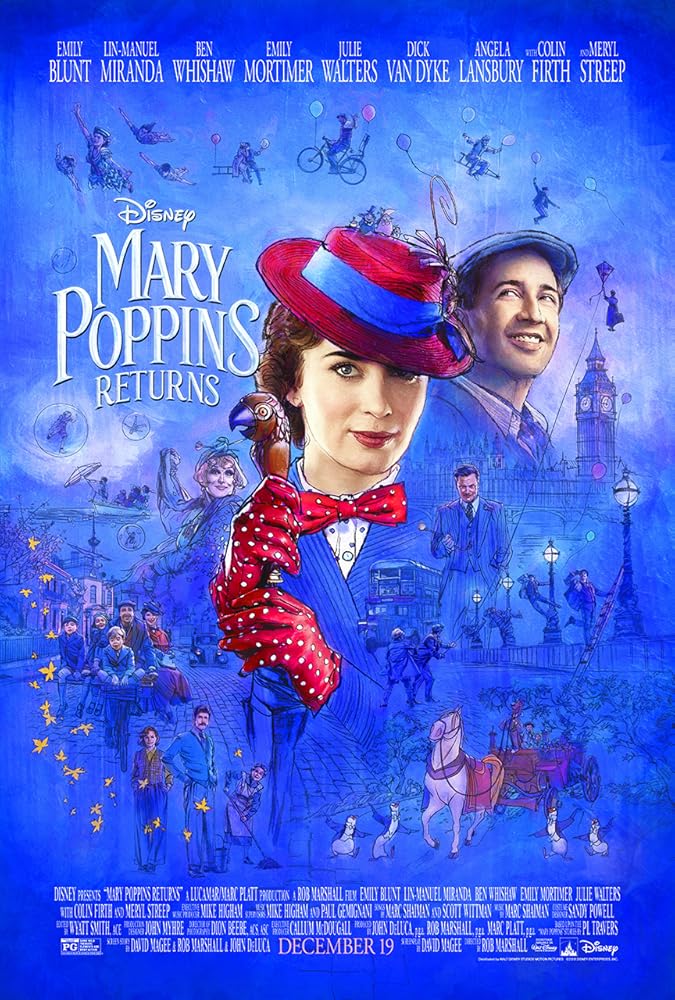

Colin Firth, Meryl Streep, Lin-Manuel Miranda, Emily Mortimer, Julie Walters, Ben Whishaw, and Emily Blunt in Mary Poppins Returns (2018)

Now I’ll be the first to admit that if you compare this film to its iconic 1964 predecessor, you’re bound to notice quite a few similarities that they share. For starters, the plots of both films are generally similar in structure, with both focusing on Mary Poppins’ efforts to help the Banks family overcome a specific familial conflict that involves the bank that the patriarch works for. But it goes a little further than that because even this film’s songs share similar placement and purpose when compared to the songs from the original film. There’s a song that sees the Banks children have their first experience with Mary Poppins’ magical abilities. There’s an elaborate song-and-dance number set during the evening that helps to liven up spirits after a not-so-cheery incident at the bank. And then there’s the grand finale, which brings the main cast together with what is easily the most uplifting tune of the bunch. The only major difference between the two films from a narrative perspective is that this film has a more prominent villain in Colin Firth’s Wilkins, the head of Fidelity Fiduciary who seeks to repossess the Banks’ home at 17 Cherry Tree Lane. By comparison, the original Mary Poppins didn’t really have a villain, even when considering that one scene where Jane and Michael argued with their father’s employers at the bank over the matter of Michael making a financial investment. But with all this in mind, it should be stressed that Mary Poppins Returns is not just a remake of the original film.

Despite all the similarities that it shares with its predecessor, this is a legitimate sequel, and there are quite a few moments in this film that provide some nice nods to the original. This includes everything from the Banks’ housekeeper Ellen recognizing Mary Poppins without hesitation to the family being told that the tuppence that Michael deposited in the bank as a child truly was a good investment as it blossomed into the family’s savings. And thanks to solid direction from Rob Marshall, this film does maintain the same great balance that the original managed to achieve when it comes to mixing its whimsical bits of fantasy with its effectively poignant family drama. It also helps that the film sports an excellent ensemble cast that’s highlighted by Emily Blunt in the title role of the nanny who’s practically perfect in every way, Mary Poppins. Despite the fact that she had to overcome the immense pressure of having to follow in the footsteps of Julie Andrews’ Oscar-winning take on the character, Blunt manages to make the role her own by implementing some of the character’s snark from P.L Travers’ original novels while still maintaining the overall warmth that Andrews brought to the role. And just like how Andrews worked wonderfully alongside her primary co-star, Dick Van Dyke, Blunt works phenomenally with her primary co-star, Lin Manuel Miranda. Sure, Jack the lamplighter could just simply be described as ‘this film’s Bert’, but Miranda’s charisma is on full display throughout and there’s even a sweet little romance that forms between Jack and Jane Banks. Speaking of the Banks family, Ben Whishaw and Emily Mortimer are both solid as well as the grown-up Michael and Jane, respectively, as are Pixie Davies, Nathaniel Saleh, and Joel Dawson as Michael’s children, Annabel, John, and Georgie. And then to top it all off, there are also some very memorable cameos from the likes of Meryl Streep as Mary Poppins’ eccentric cousin Topsy and Bert himself, Dick Van Dyke, as Fidelity Fiduciary chairman Mr. Dawes Jr., the son of Mr. Dawes Sr. from the original film (who, of course, was also played by Van Dyke).

But, of course, we can’t forget about the other important aspect of this film, the music. This film’s soundtrack was provided by the duo behind the Broadway hit Hairspray, Marc Shaiman and Scott Wittman. And despite what I said before about how these songs have quite a lot in common with the Sherman Brothers’ iconic soundtrack from the original, this film’s soundtrack is generally on par with its predecessor. Like the Sherman Brothers’ soundtrack, this film’s soundtrack does a nice job of mixing emotional melodies with toe-tapping show tunes. On the emotional side of things, there’s the Oscar-nominated ‘The Place Where Lost Things Go’, Mary Poppins’ lullaby to the Banks children, and ‘A Conversation’, a solo for Michael where he reflects on everything that’s happened since the death of his wife Kate one year prior. And as for the upbeat tunes… gosh, take your pick. ‘Trip a Little Light Fantastic’, the big ‘Step in Time’ style number featuring Jack and his fellow lamplighters. ‘Turning Turtle’, Meryl Streep’s big scene where she laments how her life figuratively and literally turns upside down every second Wednesday of the month. ‘A Cover is Not the Book’, the lively duet between Mary Poppins and Jack that even allows Lin Manuel Miranda the opportunity to do some freestyle rap a la Hamilton. But my personal favorite track has to be the grand finale, ‘Nowhere to Go But Up’, sung by the cast as they float around in the sky via balloons provided by the Balloon Lady (Angela Lansbury; and yes, I have the feeling that this probably would’ve been Julie Andrews’ cameo role if she hadn’t declined to do so to prevent her from overshadowing Emily Blunt). Thus, with an amazing soundtrack, a terrific ensemble cast, and a lovely visual style (complete with another traditionally-animated sequence just like in the original film), Mary Poppins Returns is easily one of the most heartwarming films to come out in recent years.
    
Our next film is one that has undeniably been one of the biggest hits of the year. And while some parts of the internet have recently tried to enforce their ‘it’s not THAT great’ mentality upon it, it’s clear that this film has very much become one of the landmark entries of its genre.
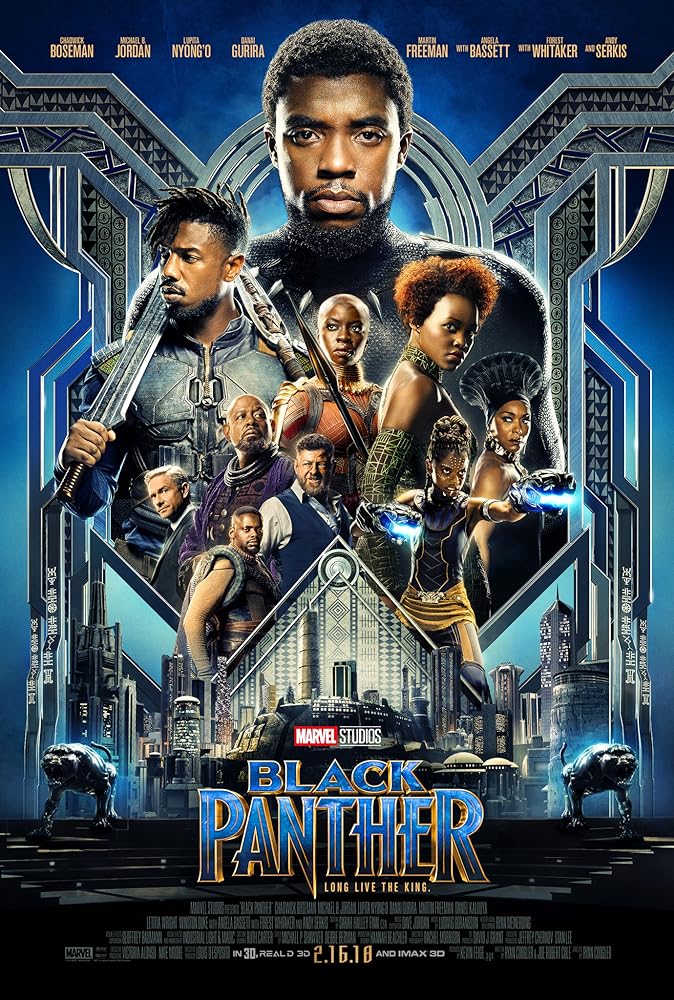

Angela Bassett, Forest Whitaker, Isaach De Bankolé, Martin Freeman, Michael B. Jordan, Andy Serkis, Chadwick Boseman, Danai Gurira, Lupita Nyong'o, Daniel Kaluuya, and Letitia Wright in Black Panther (2018)

In the past, I’ve talked about the Marvel Cinematic Universe’s knack for strong emotional poignancy as exemplified in films such as Guardians of the Galaxy and Captain America: Civil War. A lot of this is thanks to the considerable amount of time that the franchise has spent establishing the world and its characters, allowing us to become fully endeared to the MCU’s eclectic collection of protagonists as they face off against all sorts of foes. And the MCU’s strong sense of emotional depth is arguably at its finest in Black Panther, as both the plot and key bits of character development are fully steeped in emotion. Main protagonist T’Challa finds himself facing the pressure of being Wakanda’s new ruler while still coping with the loss of his father T’Chaka during the events of Civil War. Main antagonist Erik Killmonger, who’s revealed to be a member of the Royal Family and T’Challa’s cousin, wages a personal war against Wakanda after his father, Prince N’Jobu, was killed by T’Chaka for aiding their enemy, Ulysses Klaue, in the process of stealing Wakanda’s most valuable resource, Vibranium. And if that wasn’t enough, T’Chaka then decided to abandon young Erik, effectively making him ‘the truth [he] chose to omit’ and resulting in T’Challa realizing that his father wasn’t the perfect ruler that he thought he was. In other words, this is quite arguably the closest that the MCU has ever gotten to telling a Shakespearean tragedy, and thanks to amazing direction from Ryan Coogler, all these big emotional moments hit their mark, especially thanks to the film’s terrific ensemble cast.

Chadwick Boseman continues to excel as T’Challa while also shedding some of the stoicism that he brought to his debut appearance in Civil War through the usual MCU-style humor (e.g. the badass ‘I Never Freeze’ line of his from the trailer that ultimately turned out to be more about him getting nervous around his ex-girlfriend) and all the big emotional moments in this film. He’s then joined by some of the best female leads that the MCU has seen to date via the trio of Nakia, Okoye, and Shuri. As Nakia, Lupita Nyong’o gets to be more than just T’Challa’s love interest thanks to her strong devotion to Wakanda taking far greater precedence over her relationship with her new king. At the same time, though, she and Boseman do manage to have some of the best chemistry to come from an MCU couple. As for Danai Gurira and Letitia Wright as Dora Milaje leader Okoye and T’Challa’s tech-savvy sister Shuri, respectively, the two of them prove to be major standouts thanks to their phenomenal dry wit. And speaking of standouts, there’s also Winston Duke as M’Baku, the fierce leader of Wakanda’s rogue Jabari tribe. But while he’s initially portrayed as a major thorn in T’Challa’s side, he ends up undergoing one of the best about-faces that any character has had in recent years by helping to save T’Challa from his near-death fight with Killmonger because T’Challa had spared his life during their own royal rumble earlier in the film. Plus, Duke also gets to have some of the best humorous moments in the film, like when he threatens CIA agent Everett Ross (Martin Freeman, in a solid reprise of his role from Civil War) with the prospect of being fed to his children… before immediately admitting that he was kidding and that he and his tribe are vegetarians.

After that, you have your reliable supporting players like Forest Whitaker as the noble shaman Zuri, who is revealed to be connected to the death of N’Jobu because he had been sent by T’Chaka as an informant, and Angela Bassett as T’Challa’s mother, Queen Ramonda, even if she admittedly doesn’t have that much to do in the grand scheme of things. But, of course, as everyone else has noted, the biggest standout of them all is Michael B. Jordan, who is phenomenal as the film’s main antagonist, Erik Killmonger. He’s easily one of the most layered villains to ever come out of the MCU, with a radical ideology regarding Wakanda’s stance on staying out of world conflicts that he inherited from his father which, despite his status as a villain, does make him the kind of villain that one can somewhat sympathize with. This remains the case throughout the entire film ultimately leading up to his demise. After being stabbed by T’Challa with his own spear, he mentions that his father once promised him that he would show him Wakanda in all its beauty (“Can you believe that? A kid from Oakland running around believing in fairy tales?”). T’Challa then proceeds to help him witness one of Wakanda’s beautiful sunsets, and while T’Challa does offer him the chance to heal his injuries with their kingdom’s advanced technology, Killmonger refuses. His reasoning? “Just bury me in the ocean, with my ancestors that jumped from the ships because they knew death was better than bondage.” He then proceeds to pull out the spear from his body and falls to the ground dead in a moment that parallels Roy Batty’s iconic ‘Tears in Rain’ monologue from Blade Runner.

With all this in mind, it’s easy to see why Black Panther became such a cultural phenomenon. As the first superhero film of the MCU era to be centered around an African-American hero, its success can only mean great things for an industry that’s slowly but surely starting to embrace a more diversified identity. Not only did it become the highest-grossing MCU film of all time domestically, but it also became the highest-grossing solo-based MCU film worldwide. And with a 97% rating on Rotten Tomatoes, it’s also the best-reviewed MCU film to date. This, of course, led to it becoming the first superhero film to ever be nominated for Best Picture, and while it ultimately didn’t win the big award, it did give the MCU its first-ever Oscars wins for Best Costume Design, Best Production Design, and Best Original Score. Unfortunately, as is the case with anything that becomes incredibly popular, this film has attracted its fair share of critics. Their arguments usually tend to include jabs at the mediocre CGI in the finale, and while the visual effects during this part of the film are admittedly far from being the best to come from the MCU, they’re still just one small part of a larger film. And for some reason, the internet got really worked up over this becoming the first superhero film to be nominated for Best Picture rather than some of the genre’s other critically-acclaimed outings like Logan (which did get a Best Adapted Screenplay nomination, for the record). But at the end of the day, there’s no denying that Black Panther truly is one of the MCU’s finest outings to date because of a phenomenal ensemble cast, excellent direction from Ryan Coogler, and for having some of the best emotional depth in a franchise that’s already well-known for this sort of thing.

I’m not even going to try and build up suspense for this one. Anyone who knows me and the films that I often tend to like will undoubtedly know what my #1 of 2018 is. To be perfectly blunt, this was set into motion the minute I walked out of that theater. Thus, without further ado, my #1 of 2018 and my new favorite Marvel Cinematic Universe film is…
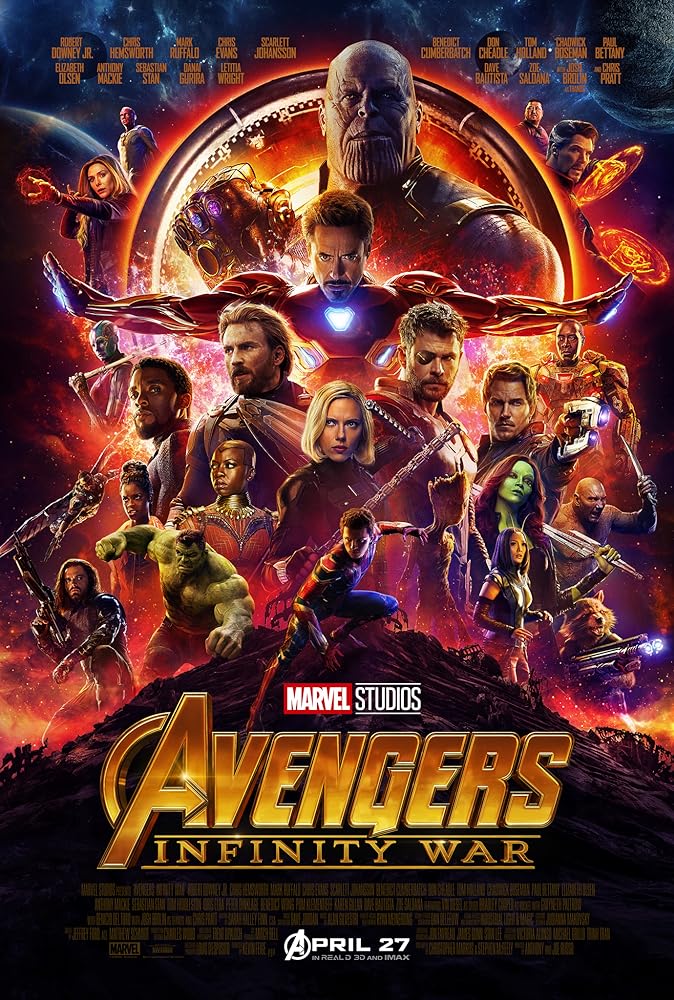

Don Cheadle, Robert Downey Jr., Josh Brolin, Vin Diesel, Paul Bettany, Bradley Cooper, Chris Evans, Scarlett Johansson, Elizabeth Olsen, Chris Pratt, Mark Ruffalo, Zoe Saldana, Benedict Wong, Anthony Mackie, Chris Hemsworth, Dave Bautista, Benedict Cumberbatch, Chadwick Boseman, Sebastian Stan, Danai Gurira, Karen Gillan, Pom Klementieff, Letitia Wright, and Tom Holland in Avengers: Infinity War (2018)

Infinity War is a masterpiece of the superhero film genre. It is the emotional, epic, thrilling culmination of everything that the Marvel Cinematic Universe has been building up to ever since the original Iron Man a decade prior. Under the phenomenal direction of the Russo brothers, this film is quite arguably the very definition of everything that’s great about this franchise. The action sequences are outstanding and are bolstered by excellent visual effects. And thanks to the franchise’s amazing ensemble cast, this film has plenty of that great MCU-style humor complete with a lot of fun character pairings. There’s Iron Man and Doctor Strange who, despite having similar personalities (while also being played by two actors who’ve both played Sherlock Holmes… also, no, there isn’t a moment where someone says ‘no s***, Sherlock’), do not get along. There’s Thor’s scene with the Guardians of the Galaxy, who then later interact with Iron Man and his team and proceed to clearly annoy the hell out of him (i.e. this scene and Robert Downey Jr.’s priceless reaction shot). Even small moments like Bucky Barnes picking up Rocket Raccoon and spinning him around to take out a bunch of baddies or Steve Rogers meeting Groot for the first time, hearing him say ‘I am Groot’, and then saying ‘I am Steve Rogers’ are utterly delightful. And yet, the most important character in this film ironically isn’t any of the Avengers themselves. Instead, that honor goes to the film’s main antagonist, Thanos the Mad Titan (Josh Brolin). Thanos… is the Marvel Cinematic Universe’s greatest villain to date.

Ever since he was first introduced in the mid-credit scene of the original Avengers, the MCU has slowly but surely been building up to Thanos becoming the most intimidating adversary that the Avengers have ever faced. However, his initial appearance in the first Guardians of the Galaxy prompted quite a lot of jokes that revolved around the fact that said appearance mainly consisted of him sitting in a chair. But then comes Infinity War… which opens with Thanos and his Black Order decimating half the surviving people of Asgard, giving the Hulk a beatdown unlike any other, killing Heimdall after he saved Hulk by sending him back to Earth, and killing Loki, his former ‘ally’, by snapping his neck right in front of his brother Thor. This all occurs in the first ten minutes of the film, and simply put, it does exactly what Kevin Feige said it would do and make Thanos a force to be reckoned with. It also helps that Thanos is one of the most-layered villains that the genre has ever seen. His goal? Wipe out half the universe to combat the kind of over-population and waste of resources that destroyed his home on the planet Titan… and yes, I’ve seen the argument that questions why Thanos doesn’t just create more resources. However, the primary thing to take from all this is that Thanos is truly committed to achieving his goal. He even goes as far as to sacrifice his ‘favorite’ adopted daughter Gamora by throwing her off a cliff on the planet Vormir to collect the mythical Soul Stone, even though a key reaction shot shows that it thoroughly destroys him to do so. And at the end of it all, when he’s confronted by a vision of a young Gamora asking him what it cost to achieve his goal, Thanos solemnly responds with a single word, “Everything”. Thus, with an outstanding performance from Josh Brolin and quite arguably the best motion-capture visual effects ever seen on film, Thanos is very much a villain who lived up to all the hype that had been surrounding him since May 2012.

If those big emotional scenes with Thanos weren’t enough of an indication, Infinity War is easily the most emotionally-charged installment of the Marvel Cinematic Universe. This film hits hard when it comes to putting its protagonists (and yes, even its antagonist) through the emotional wringer. And because of all the time that’s been spent developing these characters in previous MCU films, these big dramatic scenes are perfectly handled. I mean… jeez, where do I start? There’s the scene where Thor tells Rocket about everything that’s happened to him and everyone that he’s lost along the way, and when Rocket poses the question of whether Thor can beat Thanos, a dispirited Thor responds with, “What more could I lose?”. There’s the subplot regarding the pressing matter of the Avengers protecting the Mind Stone that’s housed in Vision’s forehead. And despite their best efforts to try and destroy it without it affecting Vision, his lover Scarlet Witch is forced to do it herself, even though it will kill him, while the rest of the Avengers desperately try to fend off Thanos… who then proceeds to render it all for naught by reversing time and killing Vision himself to collect the Mind Stone. There’s also the previously mentioned subplot involving Gamora’s status as Thanos’ adopted daughter, as she reveals to Star-Lord that Thanos will try to find her as she knows the location of the Soul Stone. To prevent this from happening, Gamora makes Star-Lord promise (even making him swear on his mother, no less…) that he will kill her if Thanos managed to capture her. Sure enough, that’s exactly what happens when the Guardians confront Thanos on Knowhere, with Star-Lord and Gamora saying ‘I love you’ to each other for the last time before the former pulls the trigger. And while Thanos ends up diminishing the impact of this moment by using the Reality Stone to turn Star-Lord’s blaster fire into bubbles, it’s clear that Star-Lord was willing to do what was necessary even if it meant having to do the unthinkable and kill the woman that he loves.

With that in mind… let’s talk about ‘that’ scene. You know what I’m talking about. It’s the one moment from this film that has become quite infamous on the internet, and it occurs during the big fight scene on Titan between Thanos and the team of heroes that consist of Iron Man, Spider-Man, Dr. Strange, and the Guardians sans Gamora and Rocket. In a pivotal moment, our heroes manage to subdue Thanos and begin to try and pull the Infinity Gauntlet off him. However, things begin to change when everyone learns about what Thanos did to Gamora on Vormir. And in a fit of rage, Star-Lord begins to attack Thanos, which then leads to him regaining the upper hand against them. To put it very lightly, the internet did not react kindly to this little moment to the point where they treated Star-Lord with about the same amount of respect as Jar-Jar Binks, effectively blaming him for everything that happened after this moment. And to be perfectly blunt… I don’t really see what the big deal is. To be clear, I’m not saying that what Star-Lord did at this moment wasn’t a mistake because it was. And yet, ignoring for a moment what happens afterward, this is something that I’m sure a lot of others would’ve done had they been in his shoes because it’s a natural response to the loss of a loved one. In fact, this could’ve easily happened to any of the other heroes that were involved in this scene. For example, imagine how Iron Man would’ve reacted if Thanos admitted that he had killed Pepper Potts. In fact, didn’t Tony go through this exact same situation in Civil War when he lashed out at Cap and Bucky when he learned that the latter killed his parents, even though this was at the exact moment when they were about to capture Zemo? Thus, in this film, he’s the one who tries to talk Star-Lord down because he knows exactly what’s about to happen. And yet, given the internet’s reaction to Star-Lord’s big gaffe, it sounds like they wanted Tony to have kept his cool during the Civil War finale rather than have any kind of emotional reaction to the revelation about his parents’ deaths.

But perhaps the most baffling part about this whole debacle is the insinuation that Star-Lord was the one who’s primarily responsible for this film’s big finale when a lot of the other Avengers made their own mistakes along the way. Scarlet Witch, for example, took way too much time to agree to the destruction of the Mind Stone as it isn’t done until a point where Thanos has already acquired the Time Stone from Doctor Strange, who willingly gave it to him just to save Tony Stark’s life. A similar situation occurred with Gamora when she revealed the location of the Soul Stone just to save her sister Nebula from further torture. And let’s not forget about Thor’s big error during the finale… but we’ll get to that in just a bit. Basically, it’s truly bizarre that out of all the things that happened in this film, Star-Lord’s error is the one that people venomously single out… it’s even more bizarre that the internet is trying to pin all this on any of the Avengers, to begin with. Yes, despite everything that I just mentioned about the other Avengers’ mishaps, I just don’t understand why some people are trying to blame them for this film’s finale because it legitimately undermines how great of a villain Thanos really is. Let’s be clear, folks, Thanos (not Star-Lord) was the sole figure who was responsible for that finale, because no matter what the Avengers tried to do to overcome him, he was always one step ahead of them. And because of this, the most unthinkable scenario ends up occurring… Thanos wins. Yes, folks, the time has finally come to address what is easily the signature moment of Avengers: Infinity War; a moment that the filmmakers have officially dubbed as ‘the Decimation’.

After reversing time to acquire the Mind Stone from Vision’s forehead, Thanos has finally managed to secure all six of the Infinity Stones. But before he can snap his fingers to wipe out half the universe, Thor comes in just in the nick of time to impale Thanos with his new weapon that was formed in the forges of Nidavellir, Stormbreaker (and yes, the scene where he, Groot, and Rocket first arrive on the Wakandan battlefield is another one of the film’s epic highlights). And yet, while it may seem like Thor has managed to beat the Mad Titan in an emotionally cathartic parallel to the opening scene of the film where he was helplessly outmatched against his latest adversary, Thanos changes everything with one line of dialogue, “You should have gone for the head”. Thanos then snaps his fingers, effectively resulting in half of the universe being erased from existence. And it isn’t just ordinary people who are turned to dust, because in the span of just a few minutes, Bucky Barnes, Black Panther, Groot, Scarlet Witch, Falcon, Mantis, Drax, Star-Lord, Doctor Strange, and finally Spider-Man fade out of existence in front of their friends and family. The post-credit scene (no mid-credit scene for this one given all the crap that had just gone down a few minutes prior) then confirms that Nick Fury and Maria Hill are among the victims of this event as well, but not before Fury manages to contact his old pal Carol Danvers AKA Captain Marvel via pager. The mid-credit scene for the next MCU film, Ant-Man and the Wasp, further stresses the gravity of this moment by establishing that Dr. Hank Pym, Janet van Dyne, and Hope van Dyne were also erased from existence, and this complicates things for Ant-Man as it occurs right as he begins to travel into the Quantum Realm.

This… is one of the most flawlessly executed moments in the history of the franchise. While the rest of the film features an amazing score by Alan Silvestri (one of the franchise’s best), it isn’t used at all during this scene. Instead, the only bits of sound to perforate the silence are background noises and character dialogue, which obviously helps to strengthen the impact of this scene. And simply put, the film doesn’t skimp on the emotional drama of these deaths, as these are some truly hard-hitting losses. Some of the most notable examples of this include Okoye having to witness her king’s death for the second time in just two films and Rocket being helpless to stop Groot’s disintegration, which is made even worse by the latter’s final words which, as confirmed by James Gunn, translate out to ‘dad’. And yet, arguably the most hard-hitting death of them all happens at the very end with Spider-Man, as a frightened Peter hugs his father figure, Tony Stark, and constantly repeats the phrase “I don’t want to go” before fading away into nothing. One can only imagine how Tony feels about all this given his line from Spider-Man: Homecoming about how he would feel personally responsible if anything happened to Peter. If that wasn’t enough, it also ties into a fear that he addressed in Age of Ultron regarding the visions that he’s had of witnessing his friends’ deaths while he himself survived. And how does this film end? With Thanos doing exactly what he promised Doctor Strange during their conversation on Titan by resting and “watching the sunrise on a ‘grateful’ universe”.

Now with all this in mind, I know exactly what some of you are thinking… yes, it’s clear that a lot of what happened during this finale will most likely get fixed in Avengers: Endgame. You can tell this just by being aware of some of the upcoming MCU films like Spider-Man: Far From Home and planned sequels to the likes of Doctor Strange and Black Panther. And yet, that doesn’t take anything away from the emotional agony of this film’s last half hour. Sure, the Avengers have experienced some low points over the years, like when they were divided by the Sokovia Accords in Civil War. But in this film, they were hit with what is undoubtedly the biggest loss that they’ve ever experienced, and no matter what happens in Avengers: Endgame, it’s clear that this is something that can’t easily be undone. At the end of the day, though, all the great things that have come from this film serve as a testament to what Marvel Studios has managed to accomplish over the course of this past decade. They’ve crafted a franchise unlike any other that has established a grand universe full of layered characters that we’ve very much come to care about over the course of the 21 films that have currently been released at the time of this post’s publication. Thus, while Infinity War may be the first half of the finale for what Kevin Feige has recently designated as ‘the Infinity Saga’, it still stands as the emotionally-charged culmination of everything that’s been set up so far for one of the best film franchises around. And on April 26th, we’ll finally get to see how our heroes overcome this because to quote Doctor Strange in one of this film’s key scenes, “We’re in the Endgame now…”


And with that, Rhode Island Movie Corner’s Top 12 Favorite Films of 2018 list has officially come to an end. As always, I’d like to thank everyone who’s been following along on this big retrospective of some of my favorite films from this past year. I apologize for the considerably long time that it took for me to get both this and the Worst of 2018 list published, but that’s just what happens when you’re in a situation like I am where you’re preparing for the conclusion of your internship program at the Happiest Place on Earth. And now that these posts are finally complete, I can fully commit to preparations for some of the exciting posts that I have planned for 2019 along with all the reviews that I will continue to produce for you lovely readers. Thus, to quote the one and only Roger Ebert, “I’ll see you at the movies”.

Tuesday, March 19, 2019

TOP 12 FAVORITE FILMS OF 2018: #6-4

Welcome back to Rhode Island Movie Corner’s annual end-of-the-year list where I’m counting down my Top 12 Favorite Films of 2018. We are now halfway through the list, and today in Part 3 of this 4-part series, we’ll be delving into films 6-4. If you missed my 6 Honorable Mentions and films 12-7, just click the links below to be directed back to Parts 1 and 2. Thus, with all that out of the way, it’s time to once again get back to the list…


To start off the second half of this list, we have an admittedly controversial pick at #6 because it’s a film that’s based on a rather polarizing bit of source material. In the case of the film, though, I’d argue that it did manage to alleviate some of the issues that audiences have had with its original incarnation.


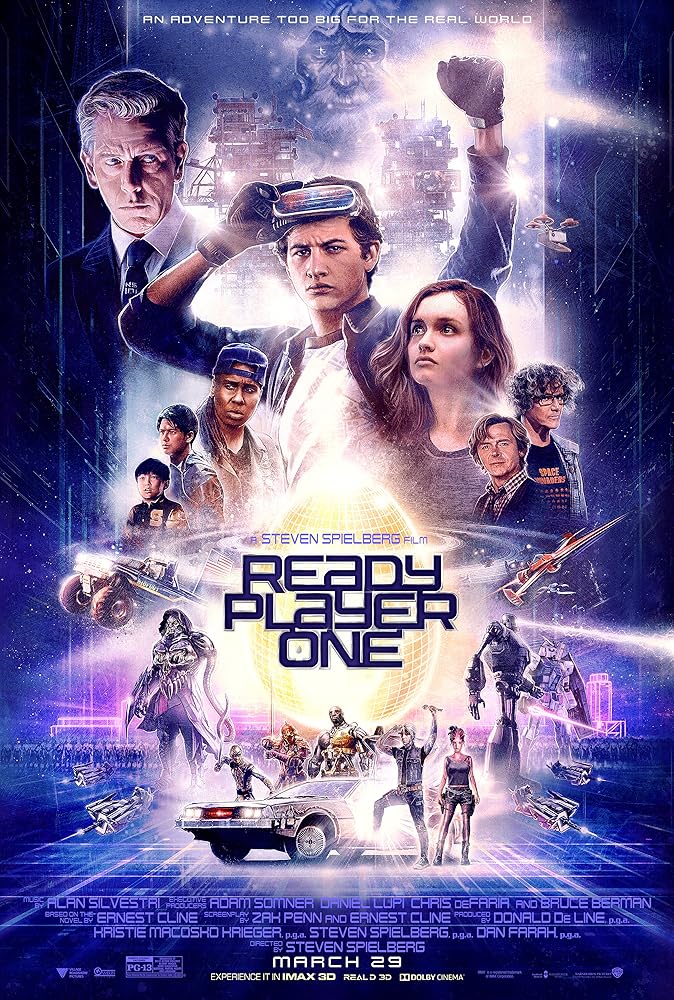
Ben Mendelsohn, Simon Pegg, Mark Rylance, Lena Waithe, Win Morisaki, Tye Sheridan, Olivia Cooke, and Philip Zhao in Ready Player One (2018)

Ready Player One was the first film of 2018 that I saw twice in theaters. After the second time, I then proceeded to download the audiobook of author Ernest Cline’s original novel off Audible, and in doing so, I began to understand why it’s been rather controversial. While Ready Player One did do well with critics and audiences when it was first published in 2011, it’s since attracted a more polarizing response from those who feel that it’s nothing more than a hodge-podge of pop cultural references. And to be fair, it’s easy to see how it could’ve been just that given that the story revolves around an advanced VR system that allows its users to live through all their various pop cultural related fantasies, whether it’s climbing Mount Everest with Batman or driving a DeLorean from Back to the Future. As such, while I tend not to get into discussions about the long-standing debate of ‘book vs. film’, there are various reasons why I find that this is one of the cases of book-to-film adaptations where the film is indeed better than the book. For starters, it helps that the film was directed by someone as revered as Steven Spielberg who, along with co-writer Zak Penn, managed to streamline some of the more aggressively nerdy aspects of Cline’s story. Most specifically, they managed to tone down a lot of the ‘leetspeak’ that dominated much of the novel and has arguably dated it. Sure, there are still some very cheesy one-liners here and there (e.g. “a fanboy knows a hater”), but at the same time, we probably should be thankful that we didn’t have to watch a Spielberg film that featured phrases like ‘Suxorz’, a derogatory term used to describe the main antagonist’s army of indentured servants.

But easily the biggest improvement over the novel is how the film portrays its characters. Even with that said, though, several critics have noted that one of the biggest shortcomings of the film is that it’s quite lacking in terms of character development… and they’re not entirely wrong about this. Aside from main protagonist Wade Watts/Parzival, his ally/love interest Samantha/Art3mis, main antagonist Nolan Sorrento, and Wade’s best friend Helen/Aech (albeit to a lesser extent due to the film not delving into the full reveal of Aech’s identity as a young lesbian woman), every other character in the film has a very limited role in the plot. But if there’s one upside to this, it’s that the film manages to make these characters a lot more likable when compared to the novel. Because of the novel’s heavy use of ‘leetspeak’, the main characters frequently came off as being rather unpleasant, with a lot of their interactions consisting of them just lobbying geek-related insults at each other. Wade Watts, especially, was quite obnoxious when it came to some of his narration. Thankfully, this isn’t as big of an issue in the film as Tye Sheridan does a very nice job of making this version of Wade a lot more down-to-earth. And while the book does spend a lot more time focusing on the formation of Wade and his friends’ clan, the High Five, their camaraderie feels a lot more natural in the film. Sheridan has solid chemistry with Olivia Cooke as Samantha/Art3mis and I do appreciate that the film has them meeting in person a lot earlier than in the book, which didn’t see them interact outside of the OASIS until the very end. And while the other members of the High Five obviously don’t get as much to work with by comparison, Lena Waithe (Aech/Helen), Win Morisaki (Daito/Toshiro), and Philip Zhao (Zhou/Sho) all get to have their own unique standout moments in the film, like when Daito enters the final battle manning one of the mechs from Mobile Suit Gundam.

In conclusion, despite all that I’ve said about this film, I do still recognize why Ready Player One has been such a controversial bit of media. At their core, both the book and film rely heavily on their various references to pop culture, and because of this, they can also serve as a representation of some of the more unpleasant aspects of fandom that, as I’ve noted before, have sadly become a lot more prominent this past year. But when it comes to the film, it thankfully manages to tone down some of the more extreme elements of its source material. Simply put, Steven Spielberg turned this full-blown tribute to 80’s pop culture (something that he himself had a prominent hand in creating) into the kind of film that he was known for making at the time like E.T. and the Indiana Jones series. And while I’m not saying that this is necessarily ‘as good’ as those films, I have the feeling that it would’ve been a lot more like the book (which, to reiterate, wouldn’t have been a good thing) had a different filmmaker been involved. Heck, Spielberg even went as far as to limit references to his own filmography save for one moment with a T-Rex and a few nods to Back to the Future (which he only produced). And because of all this, that trademark Spielbergian magic is on solid display here in a visually stunning sci-fi adventure that boasts some fantastic visual effects that help bring the world of the OASIS to life. Highlights of this film’s impressive visuals include an incredibly thrilling race through the streets of a virtual Manhattan that sees racers deal with everything from wrecking balls to King Kong and an almost pitch-perfect recreation of Stanley Kubrick’s 1980 horror classic The Shining. In short, while I don’t ‘hate’ Ready Player One the novel the same way that a lot of people on the internet do, I ultimately prefer the film adaptation because, if anything, it proves that you really shouldn’t underestimate one of the most prolific filmmakers in the industry.

My Number 5 pick is a lot like Solo as it’s another film that truly deserved to do better than it ultimately did at the box-office. Thus, it’s quite sad that both ended up being undone by some incredibly moronic bits of controversy.


Ryan Gosling in First Man (2018)

As you might have guessed from the title, First Man tells the story of the iconic Apollo 11 mission where Neil Armstrong and Buzz Aldrin became the first people to walk on the moon. More specifically, the film focuses on Armstrong (it is, after all, an adaptation of his 2005 biography of the same name) and the emotional state that he was in prior to launch. Thus, for most of the film, Armstrong may come off as a blank slate to most people as he spends a lot more time preparing for the mission than he does interacting with people, whether it’s his NASA co-workers or even his wife Janet and their two sons. However, the film ultimately reveals why this is the case during the final moments of the film after Armstrong and Aldrin manage to land on the moon’s surface. While Aldrin heads off to jump around on the surface, Armstrong, in a moment of solitude, stands before the Little West Crater and proceeds to drop a bracelet into it that belonged to his daughter Karen, who tragically died at a young age from a brain tumor. Now to be clear, there hasn’t been any official confirmation that this moment ever happened, but as the filmmakers have pointed out, it’s still a reasonable conclusion to come to as it’s been said that it wasn’t uncommon for astronauts to leave family mementos on the moon. But in the context of the film, it does work to explain what Armstrong was going through at the time and why he ultimately decided to focus more on his work than his friends and family. In doing so, it provided him an outlet where he wouldn’t be distracted by his grief, and the eventual success of the Apollo 11 mission allowed him to have that final moment of emotional catharsis and officially move on from the loss of his daughter. It’s a beautifully executed emotional moment thanks in large part to an excellent performance by Ryan Gosling as Neil Armstrong.

Aside from the film’s emotional poignancy, director Damien Chazelle also manages to craft some genuinely tense sequences whenever a spaceflight is involved. Whereas most films of this nature tend to rely on grand exterior shots of spacecraft traveling through space, most of this film’s spaceflight sequences stick within the cramped confines of the ships themselves. In doing so, it helps to illustrate the fact that what these astronauts are trying to accomplish is incredibly dangerous, and the film certainly doesn’t gloss over this little factoid. Whether it’s the near-disastrous Gemini 8 mission that Neil Armstrong was involved in or the devastating fire that killed the crew of Apollo 1, it’s clear that many risks were taken to get a man on the moon. But once the film finally gets to the grand finale that is the Apollo 11 mission, that’s where things start to change. Compared to previous spaceflight sequences, more exterior shots are used (while still primarily focusing on interior shots) and said shots are generally held for longer periods of time whereas previous sequences featured more rapid cuts. And, of course, once Armstrong and Aldrin step out onto the moon’s surface, all lunar sequences were filmed with IMAX cameras, and while we weren’t granted the chance to see this film in true 70 mm like some of Christopher Nolan’s recent films, this is still one of the best uses of the format. Simply put, this was the very definition of a film that was a must-see in IMAX… a shame, then, that not many people went to go see it in IMAX because the film didn’t do so hot at the box-office. While it wasn’t an outright flop, it just barely managed to gross over $100 million worldwide… and if you follow film-related news, then you’re probably aware of one of the reasons behind this.

It all started when the film premiered at the Venice Film Festival this past August, where it was reported that it did not include a scene where Armstrong and Aldrin plant the American flag on the moon’s surface. Chazelle and Gosling (with further support from Armstrong’s sons Rick and Mark) noted that this was because they wanted to focus more on Armstrong’s story, but nevertheless, this attracted tons of controversy that mainly came from the conservative side of the political spectrum. And while I know that some will argue that there was a bit more to it than just that, it’s clear that this debacle played a considerable factor in the film’s commercial underperformance. Because of this, I must ask the following… was the planting of the American flag really the most important aspect of the Apollo 11 mission? Yes, it’s true that a lot of what led to Apollo 11 was due to the Space Race that was going on at the time between the U.S. and Russia, something that the film does properly address. And yet, this whole controversy seems to imply that simply one-upping Russia was the only thing that mattered during this moment in history, thus ignoring all the achievements in human engineering that helped make it possible. Plus, if there’s one thing that was overlooked during this debacle… it’s that the flag does appear in the damn film… granted, it’s only seen from afar, but the point still stands. This is nothing but a completely fabricated bit of controversy, and if you ask me, it’s way more offensive to the legacy of the Apollo 11 mission than what it was trying to implicate. Thus, I do hope that First Man becomes one of those films that gains a greater audience in the years to come, as it’s another excellent outing from Damien Chazelle that shows that there was much more to Neil Armstrong than just the fact that he was the first man to walk on the moon.

And now we return to the controversial claim that I made back in Part 2 where I noted that this year’s Best Animated Feature winner, Spider-Man: Into the Spider-Verse, was not my #1 animated film of the year. Instead, it’s my Number 4 pick, which I’d argue was a worthy follow-up to its beloved predecessor even with all the expectations that it had to overcome.


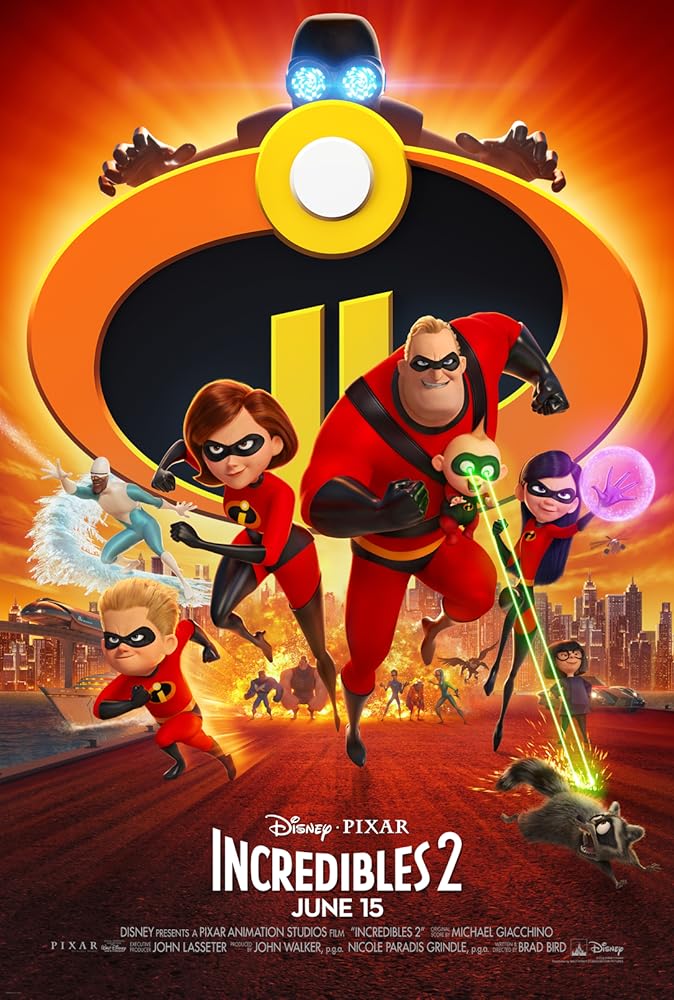
Samuel L. Jackson, Holly Hunter, Craig T. Nelson, Brad Bird, Sarah Vowell, Eli Fucile, and Huck Milner in Incredibles 2 (2018)

Calling Incredibles 2 one of the most anticipated films of the past year would be a massive understatement. Pixar’s 2004 classic The Incredibles is easily one of the studio’s most beloved outings. Plus, it’s quite arguably the only Pixar film not named Toy Story that fans legitimately demanded a sequel to given that it ended on a cliffhanger that teased a new villain. And while it may have taken 14 years for it to happen, the continuing adventures of the Parr family have finally seen the light of day. Now, obviously, the superhero film genre has changed quite a bit since the original Incredibles, namely thanks to the introduction of the Marvel Cinematic Universe. And if anything, it’s clear that writer/director Brad Bird was well-aware of this as this film continues to focus more on its characters than its superhero-related hi-jinx. Sure, this film does feature some more excellent superhero action sequences, but at the end of the day, it’s all about the Parr family and their strong dynamic. With that in mind, though, some felt that this film heavily rehashed the plot of the first film by having one of the parents go off to fight crime while the other stays behind. And while it’s true that the plot of this film sees Helen Parr AKA Elastigirl head out to fight crime while Bob Parr AKA Mr. Incredible becomes the stay-at-home dad, there’s a bit more to it than that. The first film was mainly about Mr. Incredible overcoming a severe mid-life crisis, which ultimately ends up helping him reaffirm his devotion to his family.

As for the sequel, it sees Bob and Helen undergo a switcheroo regarding their parental roles. Helen, who had become a homemaker since the outlawing of superheroes, finds herself having to leave her family during a crucial time in their lives even though what she’s doing will help ensure their future. Bob, meanwhile, must swallow his pride and let his wife do all the superhero stuff while he tries to understand the ins and outs of being a stay-at-home dad, which includes everything from him trying (and failing) to fix his daughter’s dating woes to asking the age-old question when it comes to helping his son with his homework, “Why would they change math?”. In other words, this does a nice job of tying into what is arguably Bob and Helen’s greatest character arcs in these films, with Bob having to learn that even someone as strong as him isn’t invincible and Helen rediscovering her identity as a superhero after spending several years trying to move on from such a lifestyle. Meanwhile, their kids (i.e. Dash and Violet) continue to play vital roles in the plot, and yes, for those who were eager to see how this film would follow up on the previous film’s finale, it doesn’t disappoint when it comes to showcasing the full extent of infant Jack-Jack’s various powers (e.g. the scene where he fights off a raccoon). Thus, as I noted before, the strong dynamic from this family of supers is easily the best aspect of the film, but they are matched by a solid villain in the form of the mind-controlling Screenslaver, who’s revealed to be tech-savvy Evelyn Deavor. However, this also happens to be one of the more contentious aspects of the film for many people for various reasons that range from the rather obvious reveal that she is the villain to the argument that she’s just not as good of a villain as Syndrome was in the last film. Once again, though, I’d argue otherwise as both Incredibles films do a good job in giving us villains who serve as a critique on the concept of superheroes.

In the first film, we had Syndrome AKA Buddy Pine, Mr. Incredible’s highly enthusiastic #1 fan who turns to the dark side when his idol rejects him (in other words, toxic fandom in a nutshell). His plan is to use the various inventions that he has created to grant those without superpowers the chance to be superheroes themselves. As he puts it, “when everyone’s super… no one will be”. In the case of the sequel and Evelyn Deavor, we have a villain whose motivations are based on the public’s dependence on superheroes. As revealed by her brother Winston in a flashback, their father was such a big fan of superheroes that he even had direct landlines to two of the Supers, Gazerbeam and Fironic. And yet, unfortunately, this ends up costing him his life as he couldn’t get into contact with them while he was dealing with burglars because of the Supers being outlawed. Thus, while Winston works to “bring supers back into the sunlight”, Evelyn secretly aspires to get rid of them for good. In short, both Incredibles villains work excellently within the context of their respective film’s plots. And thanks to its strong emotional depth and phenomenal animation that, dare I say, is often on par with Into the Spider-Verse when it comes to replicating the comic book style, Incredibles 2 is an excellent follow-up to its iconic predecessor. However, I’m not going to compare these two films to determine ‘which is better’ because I feel that this would be a bit unfair to the sequel as I obviously have a lot more experience with the original Incredibles. It was one of my favorites as a kid (and yes, it still stands as one of my all-time favorite Pixar films to this day) and I even still remember going to see it in theaters back in 2004. But because the sequel is just as well-made by comparison, I’m happy to say that those who didn’t ‘grow up’ with the original now get the chance to witness everything that made The Incredibles an undisputed classic of my generation.


And that concludes Part 3 of Rhode Island Movie Corner’s list of my Top 12 Favorite Films from 2018. Thanks for following along and be sure to check back in tomorrow for the big finale where I delve into my Top 3 Favorite Films from the past year.

Monday, March 18, 2019

TOP 12 FAVORITE FILMS OF 2018: #9-7

Welcome back to Rhode Island Movie Corner’s annual end-of-the-year list where I’m counting down my Top 12 Favorite Films of 2018. This is Part 2 of 4 and today we’ll be delving into films 9-7. If you missed my 6 Honorable Mentions and films 12-10, just click the link below to be directed back to Part 1. And thus, back to the list…


My Number 9 pick might be a bit controversial because, unlike a lot of the internet, this isn’t my #1 favorite animated film of the year. And yet, the fact that this is still in my Top 10 should hopefully indicate that I still thought that the film was great.


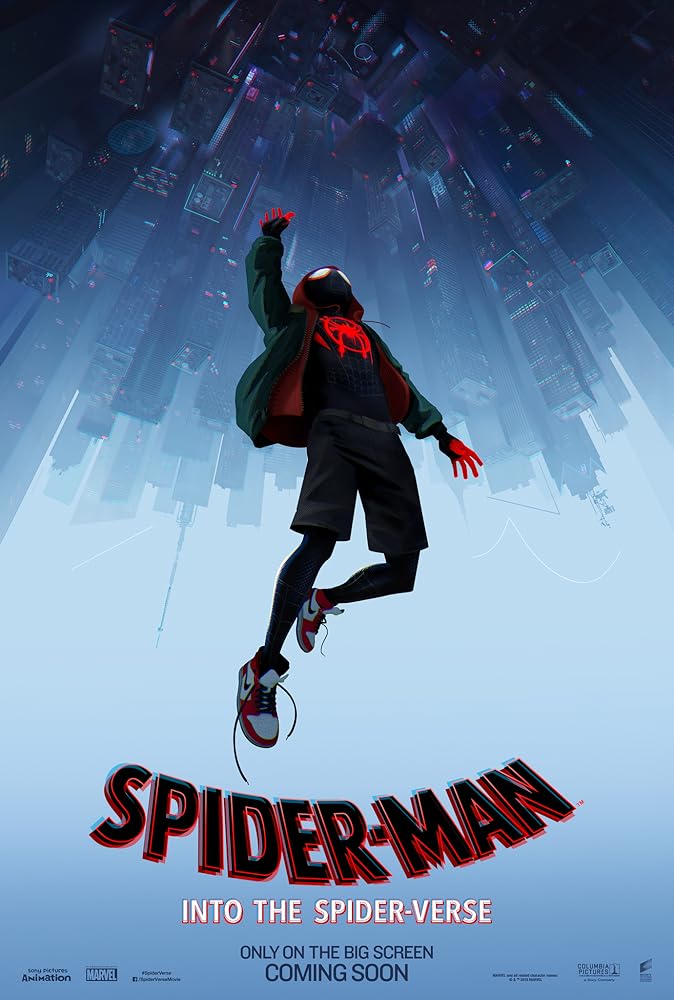
Shameik Moore in Spider-Man: Into the Spider-Verse (2018)

Into the Spider-Verse is a well-deserved success story for all involved. For Sony Animation, it is a major rebound for them after their infamous 2017 outing, The Emoji Movie. It’s a film that once again sees them collaborating with Phil Lord and Chris Miller after their previous work on the Cloudy with a Chance of Meatballs films, although it should be noted that Lord and Miller only produced this while Lord was one of the primary screenwriters. Directorial duties instead went to the trio of Bob Persichetti, Peter Ramsey, and Rodney Rothman. But thanks to the combined efforts of these five filmmakers, Spider-Verse features excellent writing that expands upon its traditional superhero origin story by being one of the first major superhero films since the start of the MCU to explore the concept of multi-verses. Several iconic iterations of Spider-Man are featured prominently in this film, from the badass Spider-Woman to the hilarious Spider-Ham… and yes, there’s a Spider-Man who’s a talking pig. Ultimately, though, this film primarily serves as the first official Spider-Man film to center on the character of Miles Morales, who is easily the most popular rendition of Spider-Man after Peter Parker. And amidst Lord and Miller’s trademark sense of humor, the film very much delivers on the emotional aspect of Miles’ transformation into Spider-Man. Over the course of this film, he witnesses the brutal death of his universe’s Peter Parker, learns that his uncle Aaron Davis is one of the Kingpin’s henchmen, the Prowler, and is then forced to witness his uncle’s death at the hands of Kingpin. Thus, when Miles finally makes his mark as Spider-Man in what is easily the definitive scene of the film, it’s one of the most emotionally cathartic moments in recent memory. And just like every other sequence in the film, it boasts brilliant animation that is easily the closest that any animated film has ever gotten to replicating the classic comic book style. Thus, with a win for Best Animated Feature at this year’s Oscars, along with the announcement that both a sequel and various spin-offs are in the works, it’s clear that a promising new franchise has been born.

The bigger question, though… who pointed first? ("SPIDER-MAN POINTED FIRST, OBVIOUSLY!")


Well, to prove my point about how Into the Spider-Verse not being my #1 favorite animated film of the year is a controversial opinion, my #8 pick is… an animated film. Not only that, but this film has apparently been a bit polarizing due to one key aspect of its plot. Still, it’s another solid addition to the growing pantheon that is Walt Disney Animation’s library of animated classics.


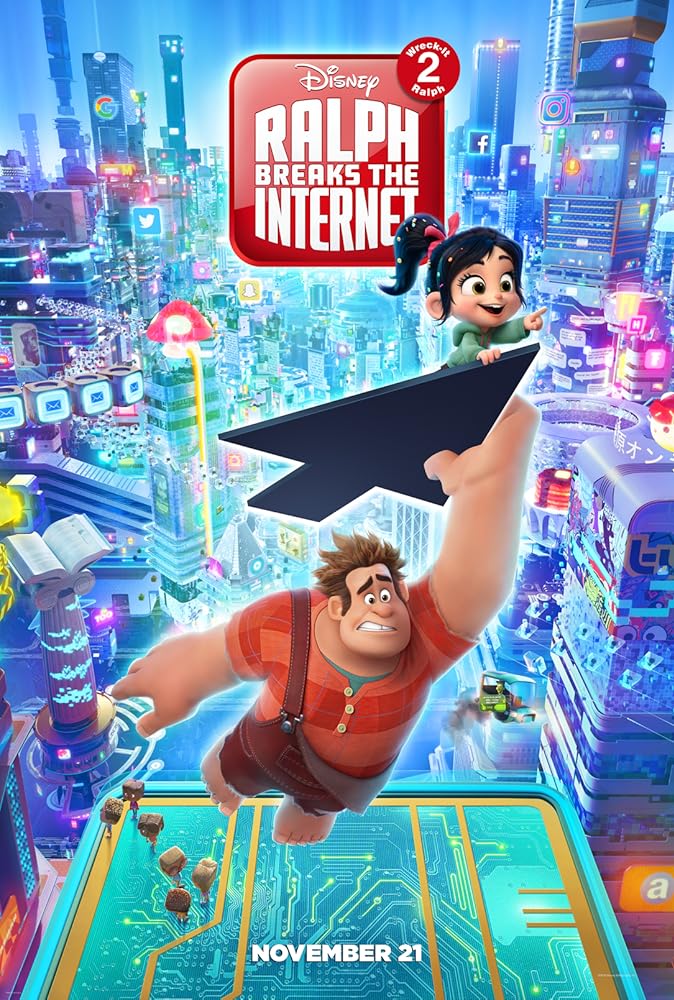
Ralph Breaks the Internet served as the first theatrically-released sequel to a Walt Disney Animation film since The Rescuers Down Under back in 1990. And overall, this follow-up to the studio’s 2012 outing Wreck-it Ralph managed to avoid ending up as Disney’s equivalent of The Emoji Movie even though both films are set within the confines of the internet and feature several references to current internet culture. Sure, just like the original and its references to classic arcade games, the references that this film makes to internet culture do run the risk of making it rather dated given the internet’s ever-changing landscape. Ultimately, though, the film wisely works around this by ensuring that the internet itself is not the focus of its story. Instead, this film’s creative and vibrantly animated spin on the internet only serves as the setting for the story, which is generally on par with the original when it comes to its strong themes and heartfelt narrative. It’s a film that treats its internet concepts seriously, simultaneously highlighting its best aspects while also paying attention to its worst (e.g. the firestorms that are comment sections). And in the process, it strengthens the film’s themes of change and insecurity, which are both represented in figurative and literal terms. And while the film does reference a few real-life websites here and there, it’s clear that the filmmakers did their homework when it comes to portraying them in a realistic manner. Even the highly talked about sequence where Vanellope meets with all* the Disney princesses (*yeah, yeah, I know that there are some notable absentees…) is handled very well. In different hands, it could’ve been the most blatant bit of corporate synergy that Disney has ever done. And yet, this sequence allows all of Disney’s current princess voice actresses to play off some of their characters’ common criticisms without betraying anything that has made these heroines so beloved in the first place.

But even with all this in mind, it seems as if Ralph Breaks the Internet has been a bit polarizing. Surprisingly, though, this applies more to audiences instead of critics, as the latter gave the film decent reviews that were generally on par with the original. Audiences, however, were a bit more split due to the story’s handling of Vanellope, who is arguably the main character this time around. When Ralph accidentally causes Sugar Rush’s steering wheel to break, the two of them travel to the internet to try and find a replacement wheel. But along the way, Vanellope, who’s been starting to have a bit of an identity crisis after years of doing the same old thing in Sugar Rush, ends up falling in love with another racing game named Slaughter Race to the point where the film ends with her staying there instead of directly returning to the arcade. Simply put, some felt that this arc wasn’t handled very well, with the main argument of theirs being that Vanellope’s decision to spend more time there instead of trying to help Ralph fix Sugar Rush makes their current dilemma worse while also being a poor sign of friendship. However, I don’t think that it negatively affects Vanellope as a character too much because it does tie into the primary theme of the film which shows that relationships, especially between best friends, do change over time. And even after all the hi-jinx that Ralph and Vanellope get into in this film (including stopping a giant, zombie-like, Ralph-shaped virus from destroying the internet), the two continue to stay in touch even after Vanellope moves over to Slaughter Race, complete with a genuinely effective tear-jerker scene where the two friends part ways. Because of all this, I would argue that Ralph Breaks the Internet is, at the very least, on par with its predecessor. Even though it doesn’t follow the same arcade-based narrative as the original, its internet setting does allow it to have its own identity instead of just being a carbon copy of the first film.   

Next up is a film that was undoubtedly one of the most anticipated blockbusters of the year as it served as the latest installment of one of the best action franchises around. And as you might have guessed, this newest entry did not disappoint.


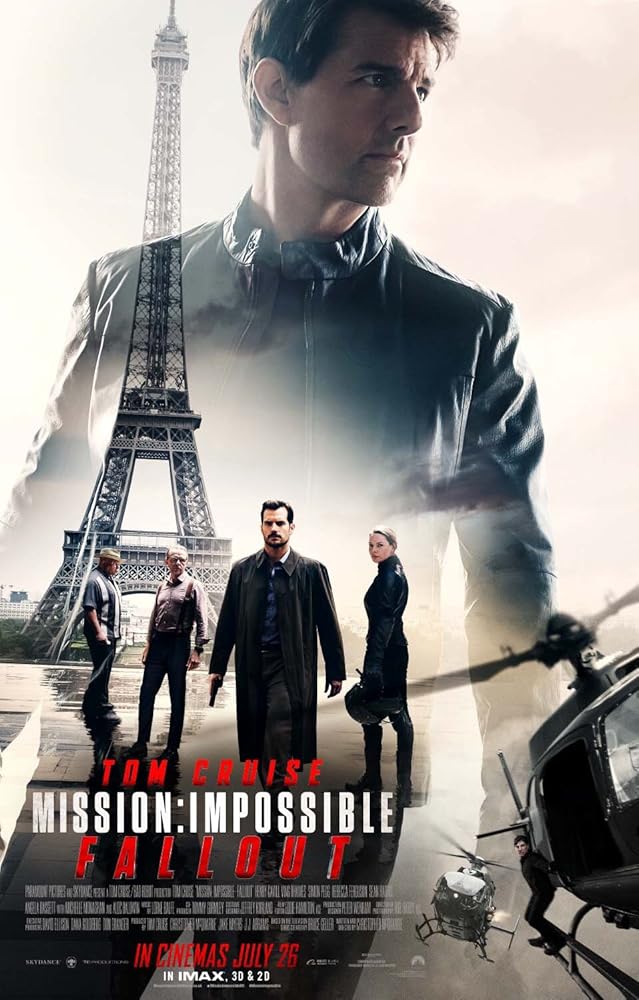
Tom Cruise, Ving Rhames, Henry Cavill, Rebecca Ferguson, and Simon Pegg in Mission: Impossible - Fallout (2018)

Prior to this film’s release, my personal favorite entry of the Mission Impossible series was the fourth film, Ghost Protocol. This remained the case even after the release of the fifth film, Rogue Nation, which was just as well-received as its predecessor if not arguably more so. This then led to a genuinely legitimate debate at the time as to which one was the series’ best installment. And while I will agree that Rogue Nation had a better villain, I still prefer Ghost Protocol by a slight margin as it was the first entry of the series to not just be about Ethan Hunt by giving the rest of his IMF teammates solid character development. By comparison, Rogue Nation went back on this a bit by being a bit more Ethan-centric though, thankfully, this wasn’t the case for the entire film. And now we come to Fallout, the second MI film in a row to be directed by Christopher McQuarrie, which is more like Ghost Protocol in terms of balancing Ethan and his teammates’ roles in the plot. Obviously, like every other Mission Impossible film, Ethan Hunt is still the main character but this one also manages to give him some of the best character development that he’s had in the entire series. His commitment to stopping Solomon Lane and his followers forces him to take some major risks to achieve that, including a temporary ‘alliance’ with Lane’s associates to break him out of prison. As the film goes on, though, it’s reasserted that Ethan is still very much one of the good guys, and there’s even some nice closure to his relationship with his ex-wife Julia (Michelle Monaghan), who’s revealed to have remarried to another doctor, Erik (Wes Bentley). Meanwhile, just like Ghost Protocol, the film does a nice job of giving Ethan’s teammates decently sized roles in the story. It’s all headlined by Rebecca Ferguson returning as the badass Ilsa Faust, who initially finds herself in conflict with Ethan over orders from her superiors to kill Lane. Series mainstay Luther Stickell (Ving Rhames) also has a notable character moment when Ethan saves him during a botched operation in Berlin, even if said mission ends up setting the stakes of this film’s plot into motion. Finally, Simon Pegg is great once again as Benji Dunn even if Benji’s big character moments were in the previous two films.

This solid character development is then paired nicely with everything that director Christopher McQuarrie brought to Rogue Nation. Under his direction, Fallout features some of the best action sequences in recent years, especially when seen in IMAX. There’s Ethan and CIA agent August Walker’s (played excellently by Henry Cavill) HALO jump into Paris, their brawl with one of their targets within a bathroom, and an intense chase through the streets of Paris with Ethan on a motorcycle… and yes, that’s just to name a few. Ultimately, though, arguably the best action sequence in the film is its finale, in which Ethan and company try to stop Lane and Walker, the latter of whom is revealed to be the extremist behind this terrorist plot, from detonating two nuclear bombs in the Kashmir region. Whether it’s Ethan giving chase to Walker in a helicopter, the two of them brawling on a cliffside, or Benji and Ilsa trying to deal with Lane, this is easily one of the most intense finales that has ever been seen on film due in large part to how high the stakes are. Granted, previous MI films have done a nice job in creating tense scenarios, like in Ghost Protocol when Ethan and his team were on their own in their efforts to stop a Russian strategist from starting a nuclear war. But in the case of Fallout, which also focuses on a plot involving nuclear weapons, having Ethan and co. in the same location as the nukes really stresses the consequences of what will happen if they fail. And for the record, it literally goes to the last second with this, complete with a bright white flash… that’s ultimately revealed to be sunlight, but the point still stands. And because of all this, Mission Impossible – Fallout manages to surpass all its predecessors as the new high mark of the franchise. Plus, if that wasn’t enough, it’s recently been confirmed that Christopher McQuarrie will return to helm two more sequels, which will be filmed back-to-back for releases in 2021 and 2022, respectively.

And that concludes Part 2 of Rhode Island Movie Corner’s list of my Top 12 Favorite Films of 2018. Thanks for following along and be sure to check back in tomorrow for Part 3, where we’ll be delving into films 6 through 4.

Monday, February 4, 2019

Top 10 WORST Films of 2018: Part 2 (#5-1)

Welcome back to Rhode Island Movie Corner’s big end-of-the-year list where I’m counting down my Top 10 Worst Films of 2018. This is the second half of a two-part post and today we’ll be looking at the not-so-great collection of films that make up the Top 5. If you haven’t checked out Part 1 of this list, where I address #10-6, just click here. Thus, without further ado, let’s get back to the list…

To kick off this half of the list at #5, we have a film that admittedly isn’t trying to be something it’s not but still ends up being a mediocre knock-off of far more successful action thrillers. 

5. THE HURRICANE HEIST

The Hurricane Heist (2018)

One look at this film’s poster makes it seem like a cheap spin-off of the Fast and Furious films. It’s only coincidence, then, that the film was directed by Rob Cohen, who helmed the original Fast and the Furious back in 2001. And simply put, this film is a primary example of why Cohen’s work as an action director isn’t quite up to par with that of his most prominent Fast and Furious successor, Justin Lin. While I’ve never seen Cohen’s adaptation of author James Patterson’s Alex Cross series from 2012, I’m well aware of its infamous action sequences that have been regarded by many as some of the worst filmed action sequences in recent years. Sure enough, The Hurricane Heist’s action sequences are of the same quality, suffering from frenetic camerawork and choppy editing. This is only made worse by the fact that most of the film is set during a raging hurricane, meaning that several of these action sequences became even more incoherent than they already are due to grimy visuals. And while the idea of an action thriller about a group of criminals who use an impending hurricane as cover for a bank heist could have potentially resulted in a ridiculous but decently entertaining film, it only ends up being the former in this case. Several of the film’s biggest action sequences end up going to ludicrous lengths (e.g. the main character is so traumatized by the destruction caused by a hurricane that he literally sees the image of a skull forming in the storm clouds) in a story that’s ironically very basic in terms of its plot and character development. Thus, while The Hurricane Heist tries its best to be the next Die Hard and/or Point Break, it’s ultimately an incredibly mediocre action flick that’s not very well-directed and not very well-acted, for that matter.

This next film was my #1 worst of the year for quite a few months, and while it’s since been overshadowed by the next three films, it’s still the weakest installment by far of its decently entertaining franchise.

4. THE FIRST PURGE

The First Purge (2018)

When it comes to the popular Purge franchise, I find that I’m generally in the same boat as most critics/audiences when it comes to the quality of the films. Despite good performances from Ethan Hawke and Lena Headey, the first Purge was an underwhelming home invasion thriller that decided to limit its action to a single suburban home, meaning that it never got the chance to fully capitalize on the potential of its premise. Thankfully, things started to improve with the sequels, The Purge: Anarchy and The Purge: Election Year. For starters, the second film introduced the series’ best character in Frank Grillo’s Sgt. Leo Barnes, who then made a welcome return in the third film. But perhaps the most relevant improvement that the sequels made was transitioning the action from a single location to out in the streets, allowing them to truly highlight all the insanity of a night where all crime (including murder) is made legal for 12 hours. The only possibly controversial opinion that I have on these films is that I prefer Election Year over Anarchy by a slight margin (and no, not because it was filmed near my hometown) for having arguably the most likable main protagonists of the series. Election Year did, however, end on a note that posed some serious questions about the future of the franchise, as it ended with the implication that ‘Purge Night’ would finally be put to an end. And yet, the way in which the franchise would ultimately continue was surprisingly simple; it would just go and do the one concept that fans of the series have been requesting consistently for the past few years. Thus, that is exactly what we got with The First Purge, which delved into the origins of this infamous annual ‘holiday’. This time, however, the film wasn’t directed by series creator James DeMonaco. While he still stayed on as the film’s writer, newcomer Gerard McMurray stepped in to take over as director. However, at the end of the day, it’s clear that this film probably would’ve turned out a lot better had DeMonaco stayed on to direct.

For one thing, DeMonaco handles action a lot better, as this film features some of the worst action sequences in recent years in terms of their cinematography and editing. The most egregious of the bunch is a scene that takes place in a darkened apartment complex with the only light source being the bright flashing lights of the building’s fire alarms. But perhaps the film’s biggest shortcoming is how it ultimately acts as a prequel to the other Purge films. Now when it comes to prequels, I’ll admit that I don’t rag on them as much as the rest of the internet because part of me genuinely has an interest in seeing how film franchises attempt these kinds of stories. But even with that said, they don’t always work, and this film is a prime example of that. Because it’s the newest installment of the franchise, it adds in some new story elements like neon-colored optics for those who partake in the Purge that allows the New Founding Fathers of America to access footage of everything that’s going on during the night. This would be fine… if this wasn’t a prequel to a series of films where this technology never once appeared. And then there are the film’s attempts to build up the conflict between the NFFA and those who oppose the Purge, namely the residents of Staten Island where the initial Purge Night is held. Simply put, this is nothing more than a rehash of what we saw in the previous films, and while the film may end with the main characters preparing to combat the Purge, once again the film’s status as a prequel makes it clear that it will be a long time before anything is done about it. Now to the film’s credit, there are some decent performances from its cast of general newcomers, including Y’lan Noel as a local drug lord who takes on the responsibility of protecting his community and Lex Scott Davis as his ex-girlfriend who leads the anti-Purge resistance movement. Still, the lack of awesome characters like Leo Barnes or even series regulars like Edwin Hodge’s Dante is certainly felt. And if you want to talk about one of the most thankless roles in recent memory, look no further than Marisa Tomei as the doctor who created the Purge but is then swiftly killed off by the NFFA when she starts to realize how terrible it is. Thus, despite what I said before about how the film probably would’ve worked better had James DeMonaco continue to serve as the series’ director, this is easily the weakest-written entry in the entire series.

Well, it was only a matter of time before this one appeared on the list…

3. FIFTY SHADES FREED

Dakota Johnson and Jamie Dornan in Fifty Shades Freed (2018)

Yes, it’s the final installment of the Fifty Shades of Grey trilogy adapted from author E.L. James’ best-selling book series. As I’ve noted in the past, this series was spawned from fan-fiction inspired by the equally popular Twilight series, which means that it features the same cheesy melodrama but without the occasionally cool supernatural elements involving vampires and werewolves. Instead, it’s an extremely dull romance plot and nothing else, and while the books became notorious for their overt erotic content, the films never go ‘that far’ to avoid being rated NC-17, meaning that they don’t even deliver on what is arguably the only notable aspect of the books. And to top it all off, this series features some of the most frustratingly indecisive characters in recent history. This is most apparent with main protagonist Anastasia Steele, who constantly grapples with the idea of being in a long-term relationship with the borderline abusive billionaire Christian Grey. And while their ‘will they, won’t they’ arc isn’t as prevalent as it was in the previous films due to them getting married, the arguments that they get into (e.g. Christian’s hostile reaction to Ana’s unexpected pregnancy) just reinforces the fact that this is one of the most toxic relationships that has ever been put on page and film. At the end of the day, though, this surprisingly isn’t the worst installment of the series. That distinction goes to the second film, Fifty Shades Darker, as it was the most obnoxious of the trilogy when it came to Anastasia’s inability to move on from Christian. And yet, even with that said, Fifty Shades Freed is still an apathetic conclusion to a mediocre trilogy that ultimately goes out with a whimper.

We’ve gotten quite a lot of great horror films these past few years, including but not limited to the recent adaptation of Stephen King’s It and Jordan Peele’s Oscar-winning psychological horror-thriller Get Out. It’s legitimately gotten to the point now where even someone like me who isn’t that big a fan of the horror genre is genuinely looking forward to some of its biggest upcoming releases. But, of course, there are still some horror films out there that exhibit the genre’s worst qualities, and this next one is a prime example of this.

2. BLUMHOUSE’S TRUTH OR DARE

Lucy Hale in Truth or Dare (2018)

In Truth or Dare, a group of college students find themselves targeted by a demon who forces them into playing a sinister spin on the classic party game ‘Truth or Dare’, where the punishment for not completing their task is death. On paper, this could’ve potentially worked as a decent psychological horror flick where the game forces these friends to spill some of their darkest secrets and effectively put their relationships to the test. However, the film stumbles hard when it comes to its execution as there are several instances where severe gaps in logic occur, mainly whenever the demon ‘cheats the system’ by forcing the current player into selecting one option over the other. It also doesn’t help that the demon’s kills are neutered by the film’s toothless PG-13 rating and were already spoiled in advance by the marketing. And from what I’ve read, the unrated cut that was released on home media doesn’t add anything major to the film as it seems like the only significant thing that was cut for the theatrical release were scenes of the main characters drinking. But easily the worst aspect of this film is something that ties into a point that I’ve mentioned several times this past year, and that is the argument that a horror film works a lot better when you have characters that you care about as they go through these sinister plots. And simply put, that is not the case with Truth or Dare. You don’t give a single crap about any of these people, and the scenes where they reveal each other’s darkest secrets makes the situation even worse to the point where the film often gives off a very mean-spirited vibe. In conclusion, Truth or Dare is the very definition of a ‘by-the-numbers’ teen-oriented horror flick.
 
And at last, we come to my #1 worst of 2018, which will admittedly be an obvious one as this film has undoubtedly appeared on many other folks’ ‘Worst of the Year’ lists. Calling this film one of the most notorious releases of the year would be a massive understatement. 

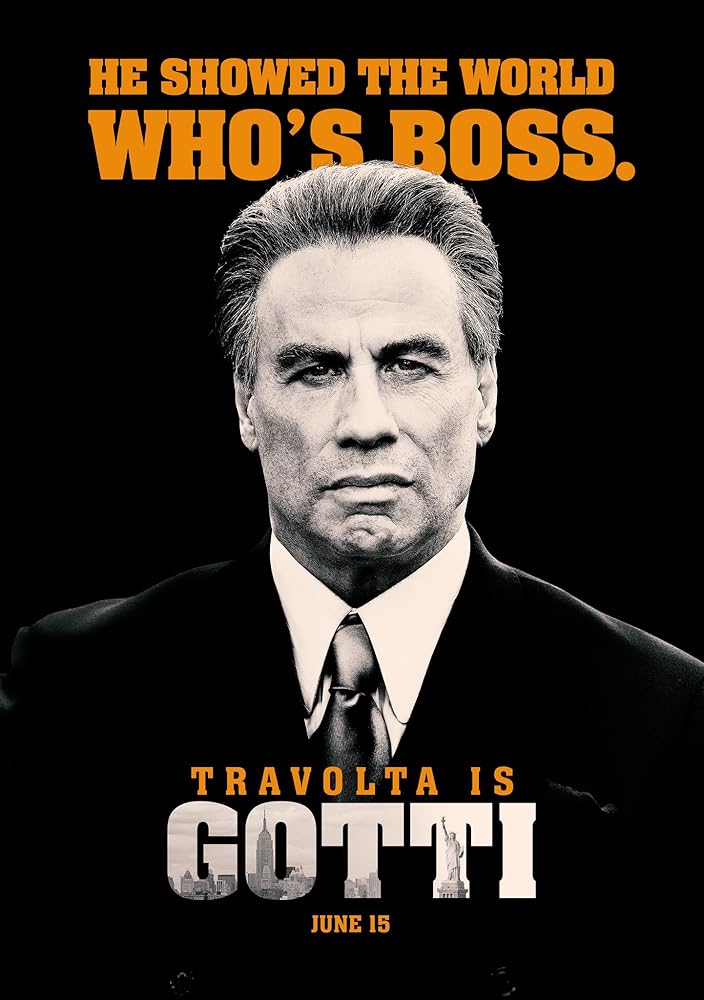
1. GOTTI

John Travolta in Gotti (2018)

Directed by Kevin Connolly (AKA ‘E’ from Entourage), Gotti tells the story of the infamous New York mobster John Gotti, who rose up in the ranks to become the head of the Gambino crime family in the ’80s. The film also explores his relationship with his son, John ‘Junior’, who proceeded to take over his father’s position in 1992 when John Sr. was sentenced to life in prison. However, the film ends up being more like a hodge-podge of key moments in their lives, skipping around to different points in time in an extremely erratic fashion with the second half of the film focusing more on John ‘Junior’ as he plans on pleading guilty in an impending trial. As such, what we ultimately get is a generic and frustratingly dull gangster flick (with music from Pitbull, for some reason…) that often feels like a knock-off of other gangster flicks, especially Goodfellas. To his credit, John Travolta is at least trying his best in the title role, but it’s still not that good of a performance and everyone else in the film isn’t any better by comparison. But the weirdest thing about the film is how it tries very hard to humanize John Gotti. Despite all the various crimes that he commits, the film continually reinforces the argument that he’s a genuine ‘family man’ and a hero of his community. Now I’m fully aware that a common criticism of films of this nature (e.g. Goodfellas, The Wolf of Wall Street) is that they often tend to glorify the actions of their ‘protagonists’ even when they do something that’s completely immoral. However, the thing about those other films is that they are far more balanced than they’re often given credit for when it comes to their characters eventually getting the comeuppance that they deserve. But in the case of Gotti, it’s full-on adulation for its notorious main character.

I should also address the big post-release controversy that this film got into that involved Rotten Tomatoes. Upon its release last June, the film was savaged by critics, earning it the dubious distinction of maintaining a 0% rating on Rotten Tomatoes. And yet, the ratings from the site’s audience review section during the film’s opening weekend were a different story, as that score was around 80%. For several people, the broad imbalance between these two scores seemed rather suspect, especially after the film’s marketing campaign started to boast that it was loved by audiences while simultaneously denouncing the ‘trolls behind a keyboard’ who were giving it poor reviews. And yet, as it turns out, several of these ‘positive audience reviews’ were revealed to have come from accounts that had just been set up that month and would end up being the only reviews posted there aside from ones for a film that was distributed by the same studio, American Animals (which, ironically, was well-received by critics). The studio in question is the film division of the subscription-based ticketing service MoviePass which, to put it lightly, ended up having a very rough 2018. So yes, it seems like this was indeed a case of ‘review manipulation’, and at the time of this post’s publication, the audience score on Rotten Tomatoes is now down to a generally more realistic 49% rating. In short, it’s hilariously ironic that the most notable aspect of Gotti ultimately wasn’t something that came from the film itself.

And that concludes this list of Rhode Island Movie Corner’s Top 10 Worst Films of 2018. I apologize for this one coming out later than anticipated, but I promise that I will do my best to get my ‘Top 12 Favorite Films of the Year’ list published before the 91st annual Academy Awards on February 24th. Until then, be sure to sound off in the comments below with your own personal Top 10 Worst of 2018. 

Sunday, February 3, 2019

Top 10 WORST Films of 2018: Part 1 (#10-6)

As the 2019 film season begins, it’s time to once again reflect upon on the year prior to rank the best and worst from the past twelve months. But unlike a lot of people on the internet, I do things a little differently around here by doing the ‘Worst of the Year’ list first BEFORE the ‘Best of the Year’ list. The reason why I do this is simple; why the heck would I want to end the year on a bad note by talking about the worst films that I’ve seen? Now with that said, I’m fully aware that the annual ‘Worst of’ lists always get greater attention online because the internet loves to see people rag on the worst films of the year. But as you might have guessed, I’m just not one of those people. Even in cases where I don’t have particularly high expectations for a film, I always go into every new film that I see hoping for the best because, if you ask me, that’s exactly what a film fan should be. Obviously, though, there will be times where you’ll come across a film that just didn’t work for you, and that’s perfectly okay because film is a subjective medium. As such, do not go into these next two posts expecting any sort of intense rants on the films that will be appearing on this list because I find that I tend not to get that angry anymore when it comes to films that I don’t really like. It’s a lot like a recent situation that actor John Krasinski was in when he met with director Paul Thomas Anderson, who suggested that the word ‘hate’ is too strong a word to use when talking about film, a mindset that I certainly agree with. However, don’t assume that this means that I will be ‘going soft’ on these films as I still intend on addressing their various shortcomings. It’s also worth noting that while I will be delving into a few spoilers here and there, Spoiler Warnings will not be put into effect given that this is the ‘Worst of’ list. Thus, without further ado, it’s time to cover my Top 10 Worst Films of 2018, starting with films #10-6. Before we begin, however, there is one Dishonorable Mention… 

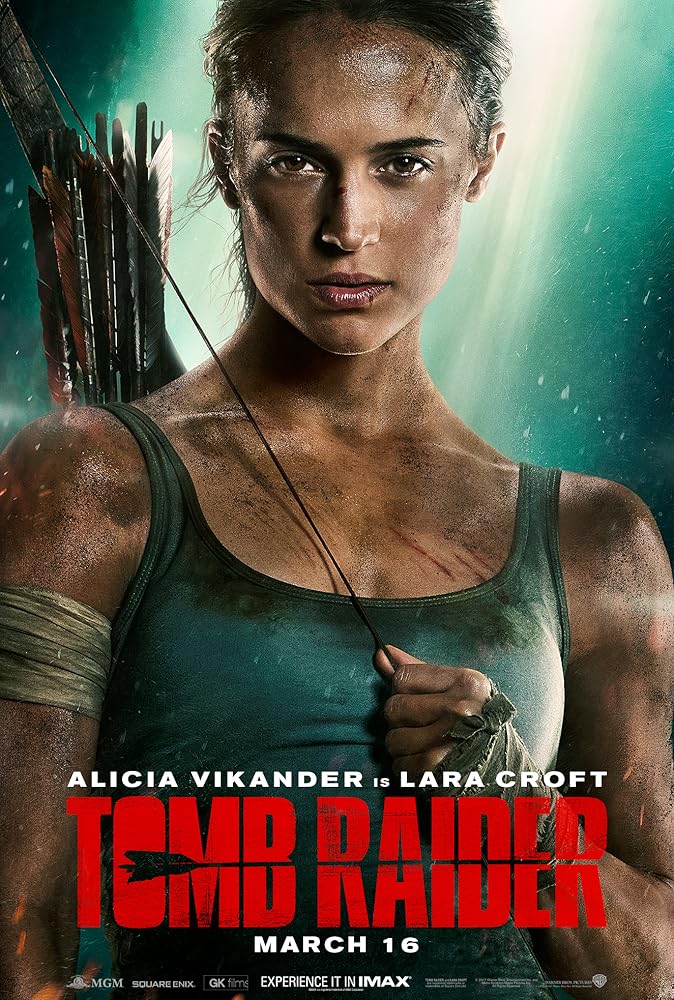
DISHONORABLE MENTION: TOMB RAIDER

Alicia Vikander in Tomb Raider (2018)

When I first reviewed this film back in March, I gave it a 3/5 rating and noted that while it wouldn’t be the one to break the dreaded curse of poorly-received film adaptations of popular video games, at the very least it was one of the genre’s better outings. But while I do still stand by that specific argument, this ultimately became one of the rare instances where my initial opinion of the film changed considerably as time went on. Now to the film’s credit, when it does get into its big action set-pieces, these sequences are well-handled and do a nice job of replicating the thrills of some of the most standout moments of the recent Tomb Raider video games. However, these only occur during the second half of a film that suffers from an extremely slow opening that takes its sweet time when it comes to getting Lara on the mystical island of Yamatai. And even after that, it still runs on a basic ‘origin’ plot that primarily focuses on Lara’s relationship with her long-lost father Richard. Sure, there is some decent emotional depth to come from this, especially once Lara learns that her father is still alive. At the same time, though, the film would’ve benefitted more by adding in some of the characters and plotlines from the 2013 Tomb Raider game, including Lara’s best friend Sam and the other crew members who were on the same ship that Lara was on before she got stranded on Yamatai. It’s a shame, really, because despite some of the pre-release skepticism that revolved around her casting, Alicia Vikander does give it her all as Lara Croft. Unfortunately, though, the film just doesn’t match her commitment to the part. Still, compared to other films in the genre, this one at least tried.

And now we move on to the Top 10, which is always started off by films that I was generally ‘on the fence’ about. In other words, these are the films that were far from being the worst of the year but weren’t necessarily that good, either. And at Number 10, we have a prime example of this in a film that I feel rather bad about when it comes to putting it on here as it was made by a very talented filmmaker. Sadly, though, this was ultimately an underwhelming take on its iconic source material, especially when compared to its Disney counterpart.

10. MOWGLI: LEGEND OF THE JUNGLE

Christian Bale and Rohan Chand in Mowgli (2018)

In the early 2010’s, two different live-action adaptations of author Rudyard Kipling’s classic novel The Jungle Book were put into production. The first of these to come out came in 2016 via Disney and director Jon Favreau’s remake of the studio’s 1967 animated classic. However, instead of just being a straight-forward remake of the original film, Favreau combined elements from both the film and the novel to give it its own unique identity. And upon its release, the film was a massive critical and commercial success, grossing over $966 million worldwide and still standing as the most critically-acclaimed installment of Disney’s recent line of live-action remakes. As such, I think it’s safe to say that the success of Favreau’s film ended up having a huge effect on the other live-action adaptation of The Jungle Book that was being developed by Warner Bros and directed by motion-capture icon Andy Serkis. For his adaptation, Serkis promised that it would be a darker and more faithful take on the source material. In other words, there weren’t going to be any musical numbers and the film wouldn’t shy away from the gruesome results of attacks made by either Shere Kahn or a human hunter. However, while the film was initially slated for an October 2018 release date, its theatrical release was ultimately canned when Warner Bros. sold the rights to Netflix, who premiered it online in December. This was reportedly done because Warner Bros feared that the film wouldn’t do so well in theaters. And yet, regardless of how it got released, something about it feels unfinished.

To be clear, the film’s darker tone isn’t its biggest issue. Even when you factor in a sequence where Mowgli comes across the decapitated head of his wolf friend Bhoot (yes, seriously…) and the occasional awkward tonal shift, it does let the film differentiate itself from previous adaptations. Plus, it does do a decent job of setting up Mowgli’s traditional arc of overcoming his status as an ‘outsider’ in the eyes of his jungle brethren, especially through the importance of him having to pass a trial known as ‘the Running’ so that he can officially join the wolf pack. However, once the film sends Mowgli to the man-village, this is where things start to get quite problematic in terms of the writing. Mowgli’s time in the man-village only takes up a small part of the run-time, and the addition of a secondary villain in hunter John Lockwood negatively affects the plot to the point where the notorious Shere Kahn ends up getting severely undermined as an antagonist. And if that wasn’t enough, these two villains are then dealt with quickly in an extremely abrupt and lackluster finale. Ultimately, though, the most disappointing aspect of the film… is that the visual effects aren’t that good. Sure, as one can expect from an Andy Serkis production, the film’s motion-capture effects are generally solid. Unlike Favreau’s film, the use of mo-cap is a lot more prominent to the point where the facial features of the actors playing the primary animal characters are easily recognizable. And yet, this film’s mo-cap work ends up paling in comparison to the effects of the Middle-Earth films and the recent Planet of the Apes films. The film’s CG jungle landscapes are even more lackluster, especially when compared to sequences that were shot on location in South Africa. In conclusion, this film at least deserves credit for its ambition. Despite its narrative flaws, Andy Serkis’ direction is solid and the film sports an excellent cast headlined by Christian Bale as the noble Bagheera, Serkis himself as a far gruffer take on Baloo, and Cate Blanchett as Kaa who, unlike the Disney films, is more in line with the novel by being one of Mowgli’s mentors instead of an antagonist. However, while I’ve tried not to frequently compare this one to the Jon Favreau-directed Disney flick, Mowgli: Legend of the Jungle ultimately lacks the visual polish and heart of its Disney counterpart.  

As fate would have it, Number 9 is also a film that was originally intended for a theatrical release before being abandoned by its studio and sold off to Netflix, and this one is even more disappointing compared to Mowgli because it comes from a franchise with a lot of potential.

9. THE CLOVERFIELD PARADOX

The Cloverfield Paradox (2018)

After years of speculation, a sequel to the 2008 found footage monster flick Cloverfield finally hit theaters in 2016. However, this was not an ordinary sequel. Instead, 10 Cloverfield Lane was a Hitchcockian thriller that was pitched as a ‘spiritual sequel’ to its predecessor after producer J.J. Abrams’ production company Bad Robot reworked a spec script titled The Cellar to connect it to Cloverfield. Upon its release, the film was a solid critical and commercial hit, showcasing the franchise’s newfound potential as an anthology series a la The Twilight Zone. And later that year, another Bad Robot film, then titled God Particle, was confirmed to be the third installment of the franchise. A release date was confirmed for October 2017… before things started to get a lot more complicated. In July of that year, it was announced that the film would be pushed back to February 2018 for undisclosed reasons. In January 2018, the film was pushed back again, this time to April 2018. Once again, no explanation was given for the delay, and just like any J.J. Abrams production, details about the film were minimal to the point where these release date shifts were literally the only bits of news about them. The film continued to remain a secret until February 4th, 2018, when its first promo was aired during Super Bowl LII. The film was officially renamed The Cloverfield Paradox and it was revealed that it would be debuting on Netflix. The biggest surprise, though, was that the film would premiere that very night after the game. Ultimately, though, this bold marketing strategy was better than the film itself.

Like Universal’s recent remake of The Mummy, this is a film that is clearly more focused on setting up the lore for its franchise rather than ensuring that its own story is solid. The ways in which the film connects to the previous Cloverfield films is fine, for the most part, mainly through the reveal that debris from the film’s main locale, the ‘Cloverfield Station’, was what crashed into the ocean at the end of the first Cloverfield. But as for the main plot itself… it’s just a clone of films like Alien and Sunshine where the crew of a space station find themselves being offed one by one by a mysterious force. Sure, this film does feature some effectively brutal kills, but the story is incredibly predictable and the characters are vastly underdeveloped, wasting a talented ensemble cast that includes Daniel Bruhl, Elizabeth Debicki, and David Oyelowo. One member of the cast does manage to get some decent material to work with, however, and that honor goes to Gugu Mbatha-Raw as main protagonist Ava Hamilton AKA the only character in the film to get any sort of character development through the reveal of a tragic incident where she lost both her kids in a house fire. In short, like Mowgli, it’s been made clear that this film’s fate as a Netflix release was because its studio (in this case, Paramount) wasn’t that confident in the final product. It has been reported that J.J. Abrams had planned on fixing the film in post-production, but he ultimately couldn’t do so due to his commitment to Star Wars: Episode IX. Still, regardless of how it would’ve turned out had J.J. been able to work on it as he had hoped, The Cloverfield Paradox is a sadly underwhelming installment of its promising franchise.

With Number 8, we have a genuine rarity in that this is quite arguably the first film produced under the Disney banner that’s appeared on my annual ‘Worst of’ lists. Usually Disney films end up on the other list, but as many of my peers have pointed out over the years, you won’t like every single film that’s made by your favorite studio.

8. THE NUTCRACKER AND THE FOUR REALMS

Mackenzie Foy in The Nutcracker and the Four Realms (2018)

As I noted in my review for this film back in November, I didn’t necessarily ‘dislike’ this ambitious spin on the classic story of The Nutcracker as there are some genuinely good things about it, mainly in terms of its visuals. While it can be argued that this is another example of CGI overload like Tim Burton’s Alice in Wonderland, the visual effects in this film are quite solid and they do succeed in bringing the bright and colorful world of the Four Realms to life, especially thanks to some solid cinematography by Damien Chazelle’s go-to DP Linus Sandgren. The film also has some solid performances from those who treat the material seriously, specifically Mackenzie Foy as main protagonist Clara, Helen Mirren as the ‘villainous’ Mother Ginger, and newcomer Jayden Fowora-Knight as the titular Nutcracker. However, this then ties into the film’s biggest issue in that it suffers heavily from severe tonal shifts. While the initial set-up for the story, specifically Clara learning more about her mother Marie’s past as the original ruler of the Four Realms, is treated seriously, almost all the sequences that take place within the Four Realms are incredibly over-the-top in nature. And because the film still tries to have a lot of serious moments over the course of its runtime, these two extremes frequently collide and, simply put, do not gel well. This is especially the case with the film’s biggest twist that revolves around the big reveal of its true main antagonist, the Sugar Plum Fairy.

Right from the get-go, Clara is led to believe that the Four Realms are in danger of being overtaken by Mother Ginger, ruler of the desolate Land of Amusements. To stop her, Clara is told of a special machine that can turn the Four Realms’ inhabitants into toys and vice versa, which is how her mother created the world in the first place. However, after Sugar Plum activates the machine and starts to amass an army of toy soldiers, it’s revealed that Mother Ginger wasn’t the sinister tyrant that she was made out to be. Instead, it’s Sugar Plum who plans on taking over the Four Realms as she blames Marie for abandoning them in favor of living the rest of her life with her family. Now while I’ll admit that I don’t have a lot of experience with The Nutcracker outside of a general awareness of it, I don’t think that I’ve ever come across a version of the story where the Sugar Plum Fairy is an antagonist. Granted, this could’ve worked in theory, but because the film has a short 99-minute runtime and a surprisingly brisk pace once Clara enters the Four Realms, this twist literally comes out of nowhere. To be fair, though, Keira Knightley does deserve some credit for, at the very least, committing to what is easily one of the weirdest performances in recent memory. In conclusion, this is another film that had quite an interesting production. While it was primarily directed by veteran filmmaker Lasse Hallstrom, fellow veteran director Joe Johnston supervised the film’s reshoots when Hallstrom became unavailable due to scheduling conflicts. And because Johnston’s contributions to the film proved to be quite substantial, he and Hallstrom ended up sharing the directorial credit in what is a genuine rarity when it comes to a production of this nature. At this time, there hasn’t been much info on what Johnston added to the film although it has been reported that he primarily buffed up the finale to make it ‘more exciting’. However, regardless of what he added to the final product, The Nutcracker and the Four Realms is an underwhelming take on its iconic source material. I mean, at the very least, it’s a harmless family flick, but at the same time, it’s still rather bland.

Say, remember back in May when I did a retrospective on The Dark Crystal and Labyrinth, the two non-Muppet films directed by Muppets creator Jim Henson? This was primarily done to honor the impending release of his company’s newest film… even though the film wasn’t set to come out until August. To be perfectly frank, the reason why the retrospective was done in May was so that I could have some new material published on this site during a time where the only other posts from that month were reviews of Deadpool 2 and Solo: A Star Wars Story. And then, if that wasn’t enough, I didn’t even end up seeing this new Henson production when it first came out. Having now seen it, it was probably for the best that I didn’t see it in theaters…

7. THE HAPPYTIME MURDERS

Melissa McCarthy and Dorien Davies in The Happytime Murders (2018)

The Happytime Murders is a rare adult-oriented outing from the Jim Henson Company and was directed by Jim Henson’s son Brian, who also helmed the beloved Muppet Christmas Carol and the cult classic Muppet Treasure Island. The film focuses on a puppet ex-cop turned private investigator named Phil Phillips who investigates into a string of murders revolving around the cast of an old television sitcom that he has quite a history with. Like any Henson production, the main reason to watch this film is for its impressive puppetry work, as the filmmakers continue to do a great job when it comes to having their puppet characters seamlessly interact with humans. It’s a shame, then, that the story itself is incredibly predictable and goes through all the usual beats of a murder mystery plot, from a traumatic incident from the main character’s past that destroyed his career to a seductive femme fatale with ulterior motives. And while the film may tout itself as an R-rated comedy that’s ‘No Sesame, All Street’ (a tagline that literally got them sued by Sesame Street), it lacks the clever writing of other Henson productions, stranding a talented ensemble cast that includes Melissa McCarthy, Maya Rudolph, and Joel McHale. In short, it could be argued that this film’s shortcomings may have been due to it spending a few years in development hell. To put this all into perspective, I remember this film being announced around the time that the 2011 Muppets film was released, and to be perfectly blunt, this does feel like a film that didn’t necessarily evolve much from its initial story pitch.

To close out the first half of this year’s ‘Worst of’ list, we have a film that stars a talented actress and is directed by someone that she’s worked with to great success in the past. Sadly, though, their latest collaboration isn’t quite as good as their previous projects.

6. RED SPARROW

Jennifer Lawrence in Red Sparrow (2018)

First off, let me make it clear that despite this being the second film of hers in a row to appear on my annual ‘Worst of’ list, I’m still a big fan of Jennifer Lawrence. Despite what I’ve said about last year’s disastrous biblical drama Mother and what I will be saying about this film, none of their shortcomings are her fault as she does give good performances in both. In this instance, she reunites with director Francis Lawrence (again, no relation) after they’d worked together on the last three Hunger Games films. F. Lawrence also brings in a lot of the same crew that they had worked with on those films, so at the very least, this film is well-shot and utilizes its wintry Russian setting to solid effect. Despite this, though, the film suffers from an incredibly slow pace that isn’t helped in the slightest by its hefty 140-minute run-time. And because of this, the film slogs through a very basic spy story that starts out fine enough but then ends up taking some major stumbles as the film goes on. While it has been reported that the ending was changed from its source material (author Jason Matthews’ 2013 novel of the same name) to give it more of a feminist angle, it’s still a generic finale in which the main protagonist makes a critical power move that allows her to get out of her predicament alive. In other words, this film’s a lot like 2017’s similarly-themed spy thriller Atomic Blonde but without the solid pacing. Granted, the dialogue-driven approach that this film takes over the genre’s usual action-oriented perspective is admirable, but it still could’ve benefitted from a few trims here and there as some scenes and plotlines feel quite extraneous. Thus, despite the best efforts of Jennifer Lawrence and a supporting cast that includes Joel Edgerton, Jeremy Irons, and Charlotte Rampling, Red Sparrow is a spy thriller that thoroughly lacks the ‘wow factor’ of the genre’s most iconic films.

And that concludes Part 1 of Rhode Island Movie Corner’s list of my Top 10 Worst Films of 2018. Thanks for following along and be sure to check back in tomorrow for Part 2 of this list, where I’ll be revealing the Top 5.