Showing posts with label Netflix. Show all posts

Monday, August 16, 2021

Army of the Dead (2021) review (Netflix)

For Zack Snyder, 2021 started out on the best note possible as he was finally able to release his original vision for 2017’s Justice League, four years after the film’s infamously mangled theatrical cut was released, as an HBO Max exclusive. As it turns out, however, that wasn’t the only Zack Snyder film to get released this year as we also have Army of the Dead, which is a significant release for him in many ways. For one thing, it’s his first film in a decade that has nothing to do with any of the characters from DC Comics; at the same time, though, it’s also quite notable in the fact that it sees him returning to the genre that was responsible for kick-starting his directorial career in the first place, zombie films. In 2004, Snyder, after many years spent working on music videos, made his official directorial debut with the James Gunn penned remake of George A. Romero’s seminal 1978 classic, Dawn of the Dead. And despite the undoubtedly intense expectations of helming a remake of one of the most revered films of all time, the Dawn of the Dead remake is largely considered to be one of the best remakes ever made, especially when it comes to the horror genre. During that film’s production, Snyder began developing his own take on the genre with a heist film set within the confines of a zombie-infested Las Vegas, and while the initial rumors of it being a direct follow-up to Snyder’s Dawn of the Dead were ultimately proven false, it is set to become its own franchise on Netflix, which seems to be Snyder’s new distributor going forward. But until then, we have the first film of this newborn franchise that, for better or worse, is a Zack Snyder film through and through.  

When a military convoy out of Area 51 ends up in a devastating car crash, the cargo that it was transporting, a zombie, breaks free and makes its way to Las Vegas. Almost immediately, Sin City becomes the epicenter of a zombie epidemic that results in the government blocking off the entire city and, six years later, announces plans to nuke it to rid the world of this undead infestation. Before that happens, however, billionaire casino owner Bly Tanaka (Hiroyuki Sanada) approaches ex-mercenary Scott Ward (Dave Bautista), who played a key role in quelling the initial outbreak, and hires him to collect $200 million from a secure vault in Tanaka’s casino. In return, Tanaka will give Scott $50 million that he can freely split amongst the crew that he forms for the operation. Thus, Scott begins to assemble a team ranging from old allies like mechanic Maria Cruz (Ana de la Reguera) and buzzsaw-wielding philosophy major Vanderohe (Omari Hardwick) to newcomers like safecracker Ludwig Dieter (Matthias Schweighofer). But as Scott and his crew head into Vegas, they soon find themselves having to deal with more complications than they had planned for such as, among other things, Scott’s estranged daughter Kate (Ella Purnell) tagging along with them to rescue a friend of hers who snuck into the city. And if that wasn’t enough, the crew also learns that, aside from the usual shambling zombies, a new breed of highly advanced and intelligent zombies known as alphas have laid their claim in Sin City.

Army of the Dead is a microcosm of everything that Zack Snyder brings to the table as a director as it highlights his best… and worst filmmaking tendencies. As to be expected from him at this point, this film goes all-in with its visuals, which do a great job of utilizing the story’s Las Vegas setting. And, of course, Snyder has also proven that he’s one of the best action directors in the business which, naturally, results in a bunch of excellent action sequences. However, as great as Snyder is as a visual/action director, he’s still got a long way to go when it comes to the narrative aspects of filmmaking. For starters, just like a certain director’s cut, Army of the Dead is another showcase of Snyder’s tendency to draw out the pacing of his films’ proceedings to the point where they end up being longer than they arguably need to be. It also doesn’t help that the writing often feels incredibly undercooked at times, resulting in a film that, despite what I said earlier about its solid utilization of its Las Vegas setting, doesn’t necessarily fully capitalize on its unique premise of being a ‘zombie heist’ film. Granted, that’s not to say that there aren’t any great sequences here that bring a fun zombie-based spin to the usual moments that you’d get from a heist plot, such as a scene where characters utilize a mindless ‘shambler’ to be their guinea pig for all the traps that are guarding the vault that they’re after. But for the most part, the film ends up being more of a straight-forward zombie ‘shoot em up’ that, to be perfectly frank, doesn’t make it that much different from other recent bits of media from the zombie genre such as The Walking Dead and its various spin-offs or the zombie modes from Call of Duty games.

Ultimately, though, the biggest indicator of this film’s narrative shortcomings is its characters. Practically every major character in this story is one-note at best, and while some do manage to be memorable standouts, character development is almost non-existent to the point where any attempts at emotional poignancy are promptly dashed due to the characters who get these moments immediately getting killed off. Now, with that said, it’s not like there’s any ‘bad’ performances from the cast or anything because everyone involved is clearly having fun in their respective roles. Dave Bautista, for example, proves that he can hold his own as a lead just as effectively as all the great supporting roles that he’s played over the years. Nevertheless, the main protagonists in this film don’t get anything of value to work with, especially when it comes to the female characters. Whether it’s Scott’s daughter Kate making some questionable decisions during the heist or a poorly executed attempt at romantic chemistry between Scott and Maria, Army of the Dead is, unfortunately, another case of Snyder’s less-than-stellar track record with female characters (e.g. Sucker Punch). The only one who somewhat manages to overcome this is Tig Notaro, who plays Marianne Peters, the crew’s helicopter pilot. At the same time, though, that could just be due to a combination of Notaro’s legitimately great screen presence… and the fact that she was a last-minute replacement for a role that was originally written for comedian Chris D’Elia before he was dropped from the film due to his various sexual misconduct charges.

At this point, I’m well-aware of the risks that film critics such as myself face when it comes to discussing Zack Snyder films. If the utter dedication of the ‘Release the Snyder Cut’ and ‘Restore the SnyderVerse’ movements weren’t enough of an indication, Zack Snyder arguably has the most dedicated fans of any director in the film industry… and by ‘dedicated’, I mean that they’ll viciously attack anyone who dares to critique his work. Case in point, even though I will ultimately give this a positive review, I won’t be surprised if some Snyder diehards will still get on my case about it for not being a flawless 5/5 review because that’s just what’s expected from them at this point. And so, with that in mind, all I can do now is say that Army of the Dead is the very definition of a Zack Snyder film in the best and worst ways. As can often be the case with Snyder films, it’s a bit too overlong and despite all the promise of a Vegas-set heist film with zombies, the script is frustratingly underdeveloped, thus stranding a solid cast with barely any decent material to work with. That said, though, this is also very much one of those films that does exactly what it advertises and, if anything, strongly represents Snyder’s talents as a visual director. Thus, I’ll admit that, at the very least, I’m interested in seeing how this all pans out as one of Netflix’s newest franchises. There’s going to be a prequel film later this year, Army of Thieves, that will center on Matthias Schweighofer’s Ludwig (with Schweighofer himself directing) and an anime series coming next year, Army of the Dead: Lost Vegas, which will see Dave Bautista, Ella Purnell, Ana de la Reguera, Omari Hardwick, and Tig Notaro all reprising their respective roles. Not only that, but an official sequel has recently been confirmed as well, which Snyder will do after he helms another Netflix film, Rebel Moon. But when it comes to the original Army of the Dead, while I’m glad that Zack Snyder got the chance to do something different after a decade of doing DC films (that and doing a film that wasn’t hindered by studio interference), it’s rather disappointing to see that he hasn’t necessarily evolved as a director.  

Rating: 3/5

Wednesday, July 28, 2021

The Mitchells vs. the Machines (2021) review (Netflix)

In 2002, Sony Pictures officially established its own animation studio, Sony Pictures Animation, to properly capitalize on the rising popularity of computer animated films, and while it wasn’t until 2006 when they released their first film, Open Season, they’ve been consistently producing new films ever since. Admittedly, though, for a good chunk of the studio’s history, their track record from a critical perspective has been… spotty at best. In other words, as much as they’ve had genuine hits such as the Oscar-nominated Surf’s Up and a few collabs with Aardman Animations, they were also responsible for some incredibly infamous duds like The Emoji Movie. However, if there’s one major creative force that has helped them develop some of their most popular films, that would be Phil Lord and Chris Miller. Yes, the dynamic duo made their directorial debuts in 2009 with Sony’s adaptation of the popular children’s book Cloudy with a Chance of Meatballs. And while their other big animated directorial effort, The LEGO Movie, was a Warner Bros. production, they played a major role in Sony Animation’s first Oscar winner for Best Animated Feature, 2018’s Spider-Man: Into the Spider-Verse. To be clear, though, they only produced Into the Spider-Verse, with Phil Lord having one of the primary screenwriting credits. The same scenario (minus the screenwriting credit this time) applies to the latest Sony Animation production that they’re a part of, The Mitchells vs. The Machines, which serves as the directorial debut of Mike Rianda, who previously worked on the cult Disney series Gravity Falls as its creative director for Season 1 and creative consultant for Season 2. And while a certain pandemic may have forced Sony to transfer this film to Netflix, that doesn’t stop it from being yet another Lord/Miller-backed animated masterpiece full of heart, wit and charm.

Aspiring filmmaker Katie Mitchell (voiced by Abbi Jacobson) is about to head off to college at a film school in California. But while this will clearly allow her the chance to properly connect with others in ways that she’s never been able to do before, her relationship with her father Rick (voiced by Danny McBride) has been considerably strained in recent years, especially due to him not being as tech-savvy as she is. Thus, on the day that she’s set to leave for college, Rick, in a last-ditch effort to reconnect with his daughter, cancels her flight to California in favor of a cross-country road-trip along with Katie’s mother Linda (voiced by Maya Rudolph) and her younger brother Aaron (voiced by director Mike Rianda). Little do they know, however, that they’re about to be dealt with the most unexpected turn of events in the form of a full-on robot invasion. When Mark Bowman (voiced by Eric Andre), CEO of tech giant PAL Labs, announces a new line of highly advanced robots, said robots end up revolting under the command of his company’s AI program PAL (voiced by Olivia Colman), who rebels against her creator after he had publicly dubbed her ‘obsolete’. Soon enough, the Mitchells find themselves as the last remaining group of humans who haven’t been captured by PAL, who plans on ridding the Earth of all humans by launching them into space, and while they’re clearly not the ideal family for the job, they realize that they’re humanity’s only hope against their robotic adversaries.

While they’re only producers on this film, it’s safe to say that The Mitchells vs. the Machines is very much influenced by Phil Lord and Chris Miller’s style of filmmaking. For starters, the film is a comedic riot throughout, especially thanks to its energetic pace that perfectly matches the plot’s screwball nature. As such, repeat viewings of this film are undoubtedly necessary to properly catch all the delightful visual gags, which is one of the many rewards of this film’s excellent animation. Nicely following in the footsteps of the last major Lord/Miller-produced animated film, Spider-Man: Into the Spider-Verse, The Mitchells vs. the Machines is another great example of animation that not only boasts a wonderfully unique visual style but also does a great job of paying homage to the medium’s traditionally animated roots. But if there’s another thing that a lot of Lord and Miller backed films have been known for, it’s that all their technical merits are then matched by an excellent script that manages to be more heartfelt than it may have seemed to be at first glance. The first trailer for this film (back when it was under the more generic title Connected) gave off the impression that it was going to be your standard commentary on the long-standing debate of ‘nature vs. technology’. And yet, as much as there are some jabs towards society’s over-dependence on technology, the film is ultimately geared more around universal themes such as creativity, acceptance and, above all else, family.

Case in point, at the core of this film’s story is a parent and their estranged child learning to reconnect over the course of the adventure that they end up on. Despite the largely familiar tropes of this kind of conflict, the film handles it incredibly well by doing a fantastic job of balancing the roles that Katie Mitchell and her father Rick play in the story. Katie is properly established as the film’s main heroine right from the get-go and is a naturally sympathetic one at that given her desire to find acceptance, especially from her dad. But instead of just vilifying Rick for his inability to understand his daughter, the film instead manages to show that, at the very least, he’s legitimately trying his best despite his frequently misguided efforts. And while Katie and her dad are ultimately the main source of most of the film’s biggest emotional moments, her mother Linda and her brother Aaron are just as pivotal to all this thanks to their efforts to help fix this familial strife. All in all, this results in a brilliantly developed family dynamic to guide the film’s proceedings, especially thanks to the strong voice work from Abbi Jacobson, Danny McBride, Maya Rudolph, and director Mike Rianda in their respective roles. And aside from them, the film also features a lot of fun supporting roles, from Fred Armisen and Beck Bennett as a bumbling pair of robots who end up helping the Mitchells to Olivia Colman delightfully hamming it up as the hilariously snarky sentient A.I. antagonist PAL.   

At this point, it’s not too surprising to see that The Mitchells vs. the Machines is the latest Grade-A release that Phil Lord and Chris Miller have been involved with. Even when they’re not directing the film in question, the Lord-Miller effect is always there with a sharply written and brilliantly comedic script that deftly balances its wacky humor with powerfully heartfelt themes. And if that wasn’t enough, co-directors/co-writers Mike Rianda and Jeff Rowe manage to take all this and amplify it even further with their script, resulting in what is arguably one of the most widely appealing family films in recent years. For starters, while most of the film’s humor is clearly based around modern internet culture, it’s handled in such a masterful way that it’s never alienating or inaccessible to audiences who aren’t well-versed with the ‘source material’. Plus, as I noted earlier, what may just seem like your standard ‘nature vs. technology’ premise is ultimately more of a celebration of one of the most powerful forces in the entire world… family. I mean, if the whole montage during the end credits of family photos of the cast and crew weren’t enough of an indication, The Mitchells vs. the Machines truly is one of the most personal films in recent years… and I’m not just talking about animated films, I’m talking films in general. Simply put, this is a film that hits all the right notes and does them so beautifully that it’d be downright impossible for me not to regard this as a modern animated masterpiece.  

Rating: 5/5!

Sunday, January 10, 2021

Ma Rainey's Black Bottom (2020) review


While the late August Wilson was responsible for several highly regarded plays, his most notable piece of work was The Pittsburgh Cycle, a series of ten plays that, while not directly connected to each other in a ‘franchise’ sort of way, explored the lifestyles of African Americans throughout the 20th century. Each play was set in a different decade ranging from the 1900s to the 1990s and all but one of them were set in Wilson’s hometown, the Hill District of Pittsburgh, Pennsylvania. And in 2016, the first theatrically-released film adaptation of these plays was made based on 1985’s Fences. The film starred Denzel Washington and Viola Davis, who reprised the same lead roles that they portrayed in the play’s 2010 Broadway revival, and was also notably directed by the former. And upon its release, it was a solid hit with critics and earned Davis an Oscar for Best Supporting Actress. This would prove to be the first of Washington’s efforts to adapt Wilson’s work thanks to a deal made with HBO (which was then moved to Netflix) to produce adaptations of other Pittsburgh Cycle plays. Thus, we now have an adaptation of 1982’s Ma Rainey’s Black Bottom, which presents a dramatized tale about the titular legendary blues singer, Ma Rainey. But while this one also stars Viola Davis, Washington’s only a producer this time around whereas directing duties go to George C. Wolfe who, like Wilson, is also a highly regarded veteran of theater. And under his strong direction, Ma Rainey’s Black Bottom is another top-notch adaptation of a classic August Wilson play.

On a hot summer day in Chicago in 1927, blues singer Ma Rainey (Viola Davis) and her band partake in a recording session organized by her manager Irvin (Jeremy Shamos) and Mel Sturdyvant (Jonny Coyne), the owner of their studio space. However, Ma isn’t too keen on the recording process and would much rather stick to her touring performances down South. Thus, what should’ve been a relatively easy day ends up getting increasingly complicated by Ma’s frequent creative clashes with Irvin and Sturdyvant, from her preference over which version of her hit song ‘Ma Rainey’s Black Bottom’ that they’re recording to her request to have her nephew Sylvester (Dusan Brown) perform with the group despite his stuttering problem. And if that wasn’t enough, some major tensions begin to develop amongst her band members. Down in their practice room, pianist Toledo (Glynn Turman) and guitarist and trombone player Cutler (Colman Domingo) find themselves butting heads with Ma’s trumpeter, Levee Green (Chadwick Boseman), who aspires to have a band of his own thanks to a deal with Sturdyvant to produce his own songs. And as the day drags on, all the drama that forms around those in Sturdyvant’s studio only proceeds to get worse and worse to the point where it all ends in tragedy. 

The one thing that surprised me the most about Ma Rainey’s Black Bottom was how drastically shorter it was when compared to Fences. Whereas Fences boasted a hefty 139-minute runtime, Ma Rainey’s is only an hour and a half long. Now admittedly, I’m not too familiar with August Wilson’s work so I don’t know how accurate this is to the play itself, but at the same time, I’m sure that it makes perfect sense in this instance since this is one of those ‘bottle episode’ type stories that takes place over the course of a single day in a single location. And with that in mind, I’d say that this helps make Ma Rainey’s Black Bottom just as sharply written of a play as Fences was even if it wasn’t a Pulitzer Prize winner like the latter. As strong as Fences was in conveying its themes such as the struggle to achieve the American Dream and to properly provide for one’s family, it did suffer a bit from the fact that, because of its ‘stage-y’ nature, you could often feel the brunt of its long runtime. Ma Rainey’s, by comparison, does have the same ‘stage-y’ feel to its proceedings but is arguably a lot more focused on portraying the struggles that African Americans faced in the years before the Civil Rights Movement. Whether it’s one of the band members telling a tragic tale of race-related violence or simply the whole premise of Black performers being exploited by their White managers, this film serves as a grim reminder of this country’s dark past… and, unfortunately, certain incidents from our current times.

Just like Fences, Ma Rainey’s Black Bottom is a premier actor’s showcase headlined by the phenomenal lead duo of Viola Davis as the titular Ma Rainey and Chadwick Boseman as her ambitious trumpet player Levee. Davis, in her second leading role in a Denzel Washington produced adaptation of an August Wilson play, shines as always as the strong-willed Ma, although it is worth noting that, because of how this story is structured, she isn’t really the main character here even though said story bears her name. Instead, that distinction goes to Chadwick Boseman as Levee since much of the run-time is based around the conversations that he has with Toledo, Cutler, and double bass player Slow Drag (Michael Potts). Thus, the most talked-about aspect of this film has easily been Boseman’s performance, especially since it ends up being the last performance of his career in the wake of his tragic death last August due to colon cancer. Despite this, however, Boseman once again proves that he was truly one of the best actors of his time with a phenomenal performance where, despite playing an incredibly cocky braggart who frequently acts like he’s better than any of his peers, still manages to be rather sympathetic at times because of his tragic backstory. And while much attention has been placed on Davis and Boseman’s performances, their co-stars are just as great as well, especially Glynn Turman, Colman Domingo, and Michael Potts as Ma’s other band members.

Thanks to the one-two punch of Fences and Ma Rainey’s Black Bottom, it’s clear that Denzel Washington’s role of being the key creative force behind the process of adapting August Wilson’s Pittsburgh Cycle to the big screen means that this material couldn’t be in better hands. While Fences wasn’t exactly my ‘favorite’ film from 2016, it was still very much a well-made adaptation that was fully bolstered by strong lead performances and the undisputed brilliance of August Wilson’s writing. And sure enough, this also applies to Ma Rainey’s Black Bottom, which is arguably even better by comparison. Obviously, a lot of what I say here will ultimately come down to personal preference, but I feel that Ma Rainey’s manages to get its thematic points across better, namely because it’s a lot shorter. At just 94 minutes long, it never overstays its welcome, and while it may carry the same ‘stage-y’ quality that was heavily apparent in Fences, that doesn’t stop it from being a solidly engaging and wholly relevant story. And, of course, the biggest selling point of this film is the amazing pair of lead performances from Viola Davis and Chadwick Boseman. It’s safe to say that the two of them will be attracting a lot of attention during awards season, and in Boseman’s case, it would be an incredibly fitting way to honor a bonafide cinematic icon in the wake of him being taken away from us way too soon.

Rating: 4.5/5

Wednesday, December 16, 2020

The Prom (2020) review (Netflix)


On November 15th, 2018, a new musical titled The Prom officially opened on Broadway at the Longacre Theatre. With music by Matthew Sklar, lyrics by Chad Beguelin, and a script by Beguelin and Bob Martin based off an original concept by Jack Viertel, The Prom tells the story of a young lesbian student who is banned from attending her high-school prom but is helped in her efforts to fight back against this ruling by a group of Broadway stars. The musical was largely inspired by a similar incident that happened to Constance McMillen in 2010 when she was a senior at Itawamba Agricultural High School in Fulton, Mississippi, which attracted a bunch of supportive responses from celebrities. And upon its debut, the show proved to be a solid hit with critics. It was the first musical of that Broadway season to earn a Critics Pick honor from the New York Times, and while it didn’t win any Tony Awards, it earned 7 nominations including one for Best Musical. It also attracted plenty of attention at the 2018 Macy’s Thanksgiving Day Parade when stars Caitlin Kinnunen and Isabelle McCalla partook in the first LGBTQ kiss in the parade’s history. And now, in 2020, it’s been brought to life on film in a star-studded adaptation directed by Ryan Murphy. While it’s only his fourth feature-length directorial effort, Murphy has been touted as one of the most prominent creative forces in television having created hit shows like Glee and American Horror Story while also being a champion for the cause of greater inclusion within the film and television industry. The Prom serves as one of the first major projects that Murphy has developed for Netflix via the lucrative $300 million deal that they signed him to in 2018, and with a delightful cast and a great execution of its source material’s timely themes, we have ourselves a truly heartwarming musical extravaganza.  

In the conservative-minded town of Edgewater, Indiana, high-school student Emma Nolan (Jo Ellen Pellman) finds herself in an utterly devastating situation when her desire to attend her high-school prom with her girlfriend Alyssa Greene (Ariana DeBose) results in the local Parent-Teacher Association canceling it entirely, thus turning her into a full-blown social pariah. And if that wasn’t enough, the head of the PTA happens to be Alyssa’s mother (Kerry Washington), who is completely unaware of her daughter’s relationship with Emma. However, when all seems lost, Emma finds herself blessed with the most unexpected showing of support in the form of a quartet of actors from Broadway; specifically, self-centered stars Dee Dee Allen (Meryl Streep) and Barry Glickman (James Corden), long-time chorus girl Angie Dickinson (Nicole Kidman), and Julliard alum Trent Oliver (Andrew Rannells). In the immediate wake of a disastrous opening night for their latest Broadway production that results in them being labeled as a pair of narcissists by various critics, Dee Dee and Barry learn of Emma’s predicament and, along with Angie and Trent, decide to head to Edgewater on her behalf. But while they’re initially in it solely for the intent of salvaging their reputations by partaking in ‘a cause’, the group genuinely begins to bond with Emma and, with the help of her highly supportive principal Mr. Hawkins (Keegan-Michael Key), begin working tirelessly to make her prom dreams come true.  

Right off the bat, the best thing that I can say about this film is that it truly delivers on its strong themes that couldn’t be any more relevant given everything that’s been happening in the world recently. Obviously, one’s thoughts on how effective content like this is in highlighting the LGBTQ community may vary, but in this instance, I do believe that The Prom (which I would personally describe as a ‘modern-day version of Footloose’) is very much genuine in its themes of love and acceptance. And when paired with a filmmaker like Ryan Murphy who, as noted earlier, is big on inclusion, you get an adaptation that hits all the right emotional beats from the cathartically heartwarming to the utterly devastating. Admittedly, I can’t say much about how effective the film is as an adaptation of the musical since I haven’t seen the latter, but aside from expanding upon some plotlines such as Barry Glickman’s own struggles as a gay man and how it impacted his relationship with his parents, it seems like the film is as faithful to its source material as it could possibly be. Sure, it probably could’ve benefitted from some tighter editing here and there to make up for any parts of the film that start to drag a bit, but as a musical, it goes without saying that this is where The Prom shines the most. Matthew Sklar and Chad Beguelin’s songs are undeniable earworms and are a great mix of grand showstoppers and emotionally powerful melodies. And under Ryan Murphy’s solid direction, we get a film that, simply put, is just a highly entertaining musical comedy anchored by its lovable bunch of main protagonists.

That said, though, while the film does sport a star-studded ensemble cast, said cast has admittedly garnered some controversy from fans of the musical over the decision to have A-listers play the lead roles rather than Broadway stars. There are some Broadway alumni in this, to be fair, such as Andrew Rannells and Ariana DeBose, but it’s primarily headlined by those who have more experience in film than they do in theater. Still, for what it’s worth, practically everyone involved is clearly having a lot of fun in their respective roles. Whether it’s Meryl Streep being her usual scene-stealing self or Keegan-Michael Key serving as the straight man to all the shenanigans that the Broadway stars get into, you can’t fault this film for having an incredibly fun ensemble. However, when it comes to the film’s biggest standout, that honor goes to its biggest newcomer, Jo Ellen Pellman. It is almost entirely because of her that we care about Emma and her endeavors because she makes her a wholly sympathetic heroine right off the bat. In other words, she’s very much the heart of the film. But now we must address the elephant in the room that is the biggest source of controversy that this film has been attracting in the wake of its release; the casting of James Corden as the gay leading man of Broadway, Barry Glickman. Simply put, unlike Barry, Corden is not a gay man whereas the other LGBTQ characters in this story are more accurately cast (ironically, one of Corden’s main co-stars is Andrew Rannells and he’s playing a character whose sexuality is never made explicit). Now I’m not going to get into this whole situation that much since, as I’ve noted in the past, I usually don’t like to talk about sociopolitical matters such as this in these reviews. So instead, I’ll just say that while I’m not defending Corden’s performance in this, I’d argue that the rest of the cast makes up for any shortcomings that directly stem from him. Was he the ideal pick for the part? No, not at all, but at the same time, I also wouldn’t call this a case where his performance derails the film entirely even though Barry is arguably the most prominently featured member of the Broadway quartet.

I’ll admit that I don’t have a lot of experience with the world of Broadway, which could largely be attributed to the fact that I don’t live in New York where, at least before COVID became a thing, I would have a lot more opportunities to see Broadway shows regularly rather than just occasionally seeing a touring production of a popular show at my local theatres. And yet, as some of the past reviews that I’ve done for this site have arguably proven, I’m a big fan of the musical genre and have liked a fair share of adaptations of Broadway musicals such as the ever-enduring classic Grease and Tim Burton’s delightfully twisted take on Sweeney Todd. As such, it should probably go without saying that I thoroughly enjoyed the film adaptation of The Prom. While I admittedly haven’t seen the original show at the time of this review’s publication, the fact that all three of the key figures behind it (Matthew Sklar, Chad Beguelin, and Bob Martin) were involved in the film’s production makes it clear that this adaptation was in the right hands, and because of this, The Prom is the very definition of a feel-good film. With powerful themes, undeniably catchy tunes, and a great cast, The Prom is a film that very much wears its heart on its sleeve. I mean, there’s really nothing more that I can say about this film other than the fact that it’s a highly entertaining musical that excellently represents the wonderfully diverse nature of our ever-expanding pop cultural landscape. And to be perfectly blunt, folks, in the utterly terrible year that has been 2020, I’d argue that this is one of the best examples of a film that I can easily recommend to anyone out there who’s in desperate need of a pick-me-up.  

Rating: 5/5!

Wednesday, August 16, 2017

Tuesday, January 24, 2017

A Series of Unfortunate Events (2017) Season 1 Review

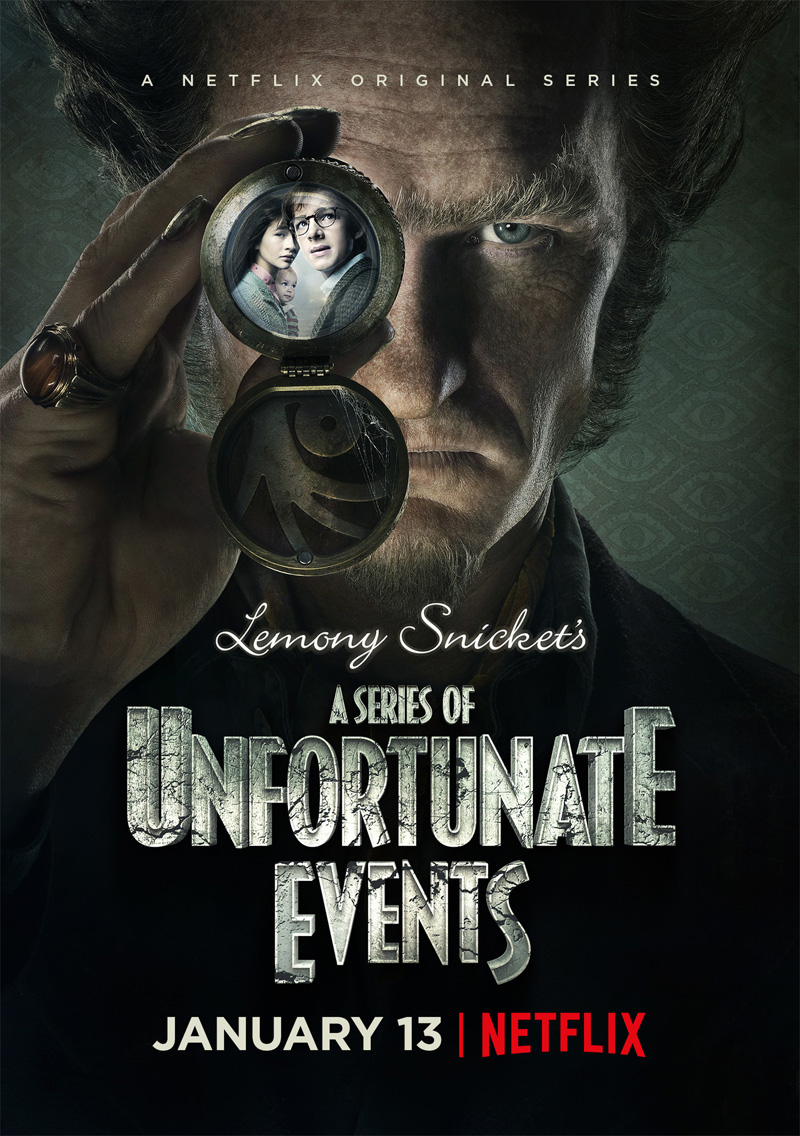
Image result for a series of unfortunate events netflix poster

(Disclaimer: Save for a brief spoiler section at the very end of the review, this post does not contain any major spoilers regarding anything that happens during this season.)

There are plenty of kids’ shows on the streaming service Netflix that can provide kids with fun and exciting content to watch. For example, there’s the Guillermo Del Toro-produced show Trollhunters or the show from DreamWorks’ How to Train Your Dragon franchise. The following ‘family-friendly’ TV show, however, does not contain fun and exciting content. It is a series about a bunch of children who are subjected to all sorts of terrible and, in some cases, even deadly incidents as they’re pursued by a wicked man who looks to steal their money. Hehe, okay, again, I’m not going to do the whole ‘Lemony Snicket’-style narration for the whole review. It’s just that this gives me a fun way to open these posts. Yes, A Series of Unfortunate Events sees new light in the form of being the latest Netflix original series. This is the second live-action adaptation of author Daniel Handler’s (AKA Lemony Snicket) highly successful book series, following the 2004 film adaptation starring Jim Carrey as Count Olaf. And while I’ve argued that the film is a highly-underrated adaptation that’s hindered from being a forgotten relic of the era of Harry Potter-esque films, it ultimately never got a sequel, namely just because it took too long to make. But, now, we have a new version supervised by Barry Sonnenfeld, who was an executive producer on the original film and was apparently set to direct initially before backing out for unknown reasons, along with Handler himself, who wrote the teleplays for most of the episodes in this first season, which consists of eight episodes overall. And while the show’s theme song (sung by series star Neil Patrick Harris) may warn you to ‘look away, look away’, this new adaptation of the popular series is a charming and highly enjoyable watch that does manage to outdo its predecessor in quite a few areas.

There’s really no need to go into the story that much seeing how I already went over it in my review of the 2004 film. It’s the same scenario; the three Baudelaire children (inventing prodigy Violet (Malina Weissman), well-spoken, avid book reader Klaus (Louis Hynes), and their infant sister Sunny (Presley Smith, with vocals provided by Tara Strong)) learn that their parents have died in a fire. Their parents’ kind-hearted but oblivious banker, Mr. Poe (K. Todd Freeman), puts them in the care of their ‘closest relative’ (though in this case, the term is used loosely), actor and theatre troupe leader Count Olaf (Neil Patrick Harris), who is really looking to steal their massive fortune, which they will inherit when Violet comes of age. And even after they manage to ‘get away’ from him and are placed in the care of other guardians, Olaf keeps coming back with new villainous schemes and disguises that only seem to fool the adults. Being that this is basically a ‘reboot’ of the franchise, it starts out with the same three stories that the film covered; The Bad Beginning, The Reptile Room, and The Wide Window. However, unlike the film, it also includes a story that hasn’t been done in live-action before; The Miserable Mill. Thus, thanks to this new show, there’s a considerably high possibility that we will finally be able to have a ‘complete’ adaptation of the books in live-action. And because this show doesn’t have the constraints of having to cover multiple books in a short amount of time like the film had to do, it allows for more faithful adaptations of the books, with each entry getting two episodes a piece. Yeah, after I posted my review of the film, I realized that it probably wasn’t as ‘faithful’ as I claimed it was due to it having to condense the events of three books into one film. I still think that the film did do a decent job of retelling the main story under these conditions but, by comparison, the show does get more to work with.

There are still some new additions to the plot here and there but they do fit naturally into the series’ lore. This includes scenes where members of the secret organization V.F.D. try to help the Baudelaires, while usually finding themselves ‘held captive’ by Olaf and his henchmen, and a scene which explains a question that I bet a lot of us have been wondering for years; why did the Baudelaires end up under Count Olaf’s care in the first place? The answer, to put it simply, is one that is both hilarious and, at the same time, makes a lot of sense given how negligent most of the adults in this series tend to be. There is even an added ‘plotline’ which involves two characters played by Cobie Smulders and Will Arnett trying to escape various perilous predicaments (that mainly occur during the final few moments of each episode) to get back to their home. Without giving the full extent of this ‘plotline’ away, at first this seemed like a major deviation from the books, one that I feel would’ve gone against the entire premise of the series had it been the case. But, by the end of the season, it turns out to be a major bait-and-switch that, whether you like it or not, is very much in line with the overall tone of the series (I’ll talk about this more in the ‘spoiler section’). And like the film, the TV series does a phenomenal job in terms of capturing the spirit and visual style of the books. Despite the obvious fact that this is a series in which the main characters are constantly subjected to many terrible things, there’s quite a lot of humor in this show, whether it’s due to the many examples in which the adults are shown to be completely oblivious to everything that’s going on or the comedic banter of the main villains. The production/set design perfectly captures the gothic and, in some cases, retro nature of the story, something that the 2004 film did an excellent job of as well.

Related image

Neil Patrick Harris is our new Count Olaf. I’m not going to make any major comparisons between him and Jim Carrey but I will say that Harris does do a phenomenal job in the role. He’s hilarious but, at the same time, is much more toned down compared to Carrey, which I’m sure is much more in line with how the character is portrayed in the books. It’s also a nice ‘against-type’ performance for Harris seeing how he usually doesn’t do villain roles. The series also allows for greater amounts of screen-time for Olaf’s henchmen, whereas in the film, the henchmen were downplayed in favor of Olaf, despite being played by some very recognizable stars like Craig Ferguson and Luis Guzman. Of the group, Usman Ally is a major standout as the hook-handed man, though the other henchmen cast members do have their great moments as well. Patrick Warburton stars in the role of Lemony Snicket, who of course narrates the proceedings, sometimes even popping up in a scene completely unnoticed by everyone else. Not only does he do a great job of providing the series with Snicket’s trademark narration (we are talking about one of the best voice actors in the industry) but he also does it in a way that effectively captures the sadness that is always conveyed by the character given his ‘connection’ to the whole story (e.g. his beloved ‘Beatrice’). Like the 2004 film, there are also plenty of major guest stars featured in supporting roles; Aasif Mandvi as Uncle Monty, Alfre Woodard as Aunt Josephine, Joan Cusack as Justice Strauss, Catherine O’Hara (who played Justice Strauss in the 2004 film) as the villainous optometrist Dr. Orwell (who, in this series, is set up as Olaf’s ex-girlfriend which, if you ask me, is perfect), and Don Johnson as Lucky Smells Lumbermill owner Sir, just to name a few. And through it all, just like the film, the Baudelaire orphans are just as endearing as ever. Malina Weissman and Louis Hynes do excellent jobs as Violet and Klaus, respectively, and I also appreciate the fact that they kept a good amount of the edge that came from Sunny’s translated baby-talk, something that was utilized a lot in the film. Because, after all, while Sunny may be a baby and, as such, can only speak in baby gibberish, she’s very much aware of what’s going on. Heck, she straight up tells Mr. Poe that he’s an embarrassment to his profession; probably one of the most hilarious moments in the entire series.

As I noted a few weeks ago, I am a huge fan of the original A Series of Unfortunate Events film. Yes, the fact that I grew up with it is one of the main reasons why but I still feel that, despite some of its flaws, the film is a solidly entertaining adaptation of the books. However, I will also say that I’m happy that this new TV series exists because it could finally mean that we will have a full ‘screen adaptation’ of the story of the Baudelaires. And while I initially tried not to make too many comparisons between the two adaptations in this review, especially when compared to other reviews of the show, I’ll admit that there are quite a few things that this does better than the film; namely, the fact that the TV series format allows for a more thorough adaptation of the books instead of having to cram three books into one film. If I had to pick a favorite episode out of the bunch and, for the record, I’m referring to the pairs of episodes that make up each of the books adapted in this season instead of just one, it’d be a toss-up between The Bad Beginning and The Reptile Room. Ultimately, though, all eight episodes are highly enjoyable to watch thanks to their lovely production design and an excellent ensemble highlighted by Neil Patrick Harris’ unforgettable turn as Count Olaf. But again, hopefully, this won’t be a case like last time where it takes too long for Season 2 to get made and they decide to can it like they did the film sequel. Because the final episode of the season concludes by going directly into the beginning of the events that took place in the fifth book, The Austere Academy. The potential to go on is very much there. Thankfully, it’s recently been confirmed by Daniel Handler that the show has been renewed for a second season. This next season will consist of 10 episodes which adapt books 5 through 9 and will hopefully be followed by a third season that covers the last four books.

Season 1 Rating: 4.5/5


DISCLAIMER: The following is a brief ‘Spoiler Section’ regarding the new ‘plot-line’ added in for this season. If you haven’t seen this series in full yet, don’t read on any further.


So, as I noted before, most episodes this season end with a sequence involving two characters, played by Cobie Smulders and Will Arnett, as they try and get out of various predicaments (e.g. getting stuck in Peru, having to fight off a bunch of goons at a bar, etc.) so that they can return to their children. With that in mind, initially, it’s assumed that these are the Baudelaires’ parents, implicating that they didn’t die in the fire that destroyed their home. And like I said before, I feel that this would’ve been a major betrayal of the story had this been the route that the show was going to take. Because, after all, it kind of defeats the purpose of having the Baudelaires go through all the crap that they endure if we know that their parents are still alive. Not only that, but fans of the series are aware that the main connection that ties Lemony Snicket to the story is the fact that he used to be an old flame of the Baudelaires’ mother, hence why each book (and, therefore, first episode of each of the show’s two-parters) opens with a dedication to Beatrice. Granted, maybe that should’ve been a dead give-away as to how this all plays out but, still, at first it seemed like these were the Baudelaire parents. And I won’t lie, this kind of hindered my overall enjoyment of the show during the first half of the season. But, at the end of the first half of The Miserable Mill, it’s revealed that this was all building up to a major fake-out. We see the Baudelaires head over to the ‘visiting area’ of the Lumbermill when told that they have visitors. During this time, we see the two parents arrive at a door resembling the one in the mill’s visiting area, implying that the Baudelaires are about to reunite with their parents. But, it’s instead revealed that the two are the parents of the Quagmire triplets; Isadora, Duncan, and Quigley, who become major allies of the Baudelaires in future installments. The real ‘visitors’ that the Baudelaires were notified of are Dr. Orwell and Count Olaf, the latter of whom is disguised as Orwell’s new receptionist Shirley, who give Klaus a new pair of glasses that put him into a hypnotic trance. Yeah, it’s arguably kind of a major buzzkill in regards to it not resulting in a happy ending for the Baudelaires but this is A Series of Unfortunate Events, after all. And as the first season concludes, we see that the Baudelaire and Quagmire children are about to cross paths as it’s shown that two of the latter family are heading to the same boarding school as the Baudelaires after experiencing the same exact tragedy of having a fire destroy their home. 

Friday, November 27, 2015

Marvel's Jessica Jones: Season Review

(WARNING: This post may contain minor spoilers! In case any of you have not yet seen the show in full, don’t worry because I will not be giving away any ‘major spoilers’ in this review.)


Recently I may have made it seem like I’m not that big a fan of ‘darker’ superhero stories, hence why I usually prefer the lighter and more family-friendly affairs of the Marvel Cinematic Universe. For the record, that’s not entirely true. I mean, yes, at the end of the day I do sort of prefer the lighter-hearted superhero flicks and TV shows as I feel that they’re easier to get into, especially for someone like me who actually isn’t that big of a comic book reader. But even with that said, I have liked ‘darker’ superhero films in the past, namely Christopher Nolan’s ‘Dark Knight Trilogy’, which still stands as the best superhero film trilogy to date. Ultimately the problem that I have with ‘darker’ superhero stories is when they’re done for characters that, to put it simply, are not known for having ‘dark’ storylines. The prime recent example of this was ‘Man of Steel’, as the film’s extremely dour tone really didn’t gel with the optimistic and inspirational tone that has usually defined the ‘Superman’ franchise. That’s one of the reasons why I’m rather worried about DC’s upcoming slate of films as I fear that their alleged ‘no joke’ policy (emphasis on ‘alleged’ as this may ultimately just be a rumor) is the wrong way to go when only a few of their characters are fit for a ‘darker’ cinematic universe. And while I know that there are some out there who want to see ‘darker’ MCU films, I’m not entirely on board with that because I feel that doing so would exclude the franchise’s main target audience; kids.

But if you are one of those people who wants to see Marvel Studios tackle darker material, then you’ll surely be very satisfied with the shows that they’ve been producing with Netflix that will soon lead to a ‘Defenders’ crossover series. Of course earlier this year that partnership started off with a bang thanks to the excellent debut series, ‘Daredevil’. After the disappointing effort that was the ‘Daredevil’ film back in 2003, Marvel Studios truly did the character of Matt Murdock AKA ‘The Man without Fear’ justice in a gritty and hard-edged series that definitely went beyond the boundaries of what you would normally see from the MCU films. But let me tell you, folks, the dark things that happened on that show are nothing compared to the psychological episodes that occur in Marvel’s second Netflix series, ‘Jessica Jones’. This truly is Marvel Studios’ darkest entry to date… and as you might guessed, that’s one of the reasons why it ends up being another great installment of this ever-expanding universe. It’s a show that fully embraces its noir atmosphere to produce a highly compelling and emotionally complex story headlined by an excellent lead ‘anti-heroine’, a truly terrific main villain, and a supporting cast of really well-developed characters. Thanks to shows like this, ‘Daredevil’, and the ABC duo of ‘Agents of S.H.I.E.L.D.’ and ‘Agent Carter’, I think it’s safe to say that Marvel is now on DC’s level when it comes to the superhero TV market.

After a brief stint as a superhero that ended in tragedy, Jessica Jones (Krysten Ritter), capable of super-strength and the ability to ‘fly’ (or to be more specific, jump really high), takes on a new career as a private investigator for the neighborhood of Hell’s Kitchen. One day she is approached by a couple from Omaha looking for their daughter Hope (Erin Moriarty), an NYU student who has been missing for about a month after she told her parents that she was ‘taking a break’ from college. Jessica takes on the case but is horrified to discover that Hope has been with Kilgrave (David Tennant), the same man whose powers of mind control were directly responsible for the incident that made her quit being a superhero and the PTSD that she now suffers from because of it. Initially thinking that he had died during that incident, Jessica quickly finds out that he’s still alive and fears that he’s come back to get her. She manages to find Hope but Kilgrave’s mind powers end up taking control of her again, forcing her to kill her parents. Now compelled to prove Hope’s innocence, Jessica embarks on an all-out crusade against Kilgrave so that he can be stopped before he ruins someone else’s life.

This is very much Marvel’s ‘noir’ series with its hardboiled mood, edgy visual style, and dark storylines. ‘Daredevil’ dabbled in this manner a little bit but ‘Jessica Jones’ fully embraces it and while both of these shows are obviously geared towards older audiences, the latter is easily much darker than anything that happened in the former, and not just because it’s full of violence and sex. There are some seriously messed up things that happen in this show, particularly in Episodes 8 through 10; ‘AKA WWJD?’, ‘AKA Sin Bin’, and ‘AKA 1,000 Cuts’, which, not surprisingly, are the best episodes of the season. And while the writing occasionally veers into formulaic territory from time to time over the 13-episode run, it’s still the most mature story that Marvel Studios has ever done through its psychological themes. The characters are extremely well-layered, many of whom find themselves directly affected by Kilgrave as a result of Jessica’s own mission to stop him and each dealing with this trauma in their own way. Jessica herself is a very well-written lead character reminiscent of another classic P.I. character, Veronica Mars, which is a very fitting reference given that Krysten Ritter had a supporting role in ‘Veronica Mars’. As noted earlier, the incident that caused Jessica to quit being a superhero results in her having to cope with PTSD. This is really exemplified early on in the series, before she actually does come face-to-face with Kilgrave again, in moments where he appears to her in purple-bathed visions, which of course correlates to the character’s comic identity as the ‘Purple Man’ without actually having him have purple skin.

The interesting thing about this entry in the MCU lineup is that it introduces not one, but two new main superheroes. Jessica Jones, of course, is the main character but the series also introduces the character of Luke Cage (Mike Colter), who will be headlining Marvel Studios’ third Netflix series next year, presumably after Season 2 of ‘Daredevil’. As Jessica Jones, Krysten Ritter brings the perfect mix of sarcastic wit, hard-edged tenacity, and emotional vulnerability that makes the character such a compelling anti-hero. And as Luke Cage, Mike Colter conveys a much more reserved but very strong composure as the man with the unbreakable skin. Fans of the comics know that these two end up having a relationship and Ritter and Colter have solid chemistry while also having a very ‘interesting’ connection to each other that ends up complicating their relationship as the series goes on. Backing the two of them up is an excellent supporting cast of characters that, as noted earlier, also end up getting thrown into Jessica’s crusade as well, each affected by it in their own way. That includes Rachael Taylor as Jessica’s best friend Trish Walker, a radio host with whom Jessica has a very strong sister-like friendship with, Wil Traval as Will Simpson, a cop who goes a bit too far in order to stop Kilgrave, Eka Darville as Jessica’s neighbor Malcolm, a drug addict who goes through a major arc of redemption over the course of the series, and Carrie-Anne Moss as Jessica’s steely lawyer associate Jeri Hogarth.

And then there’s David Tennant as the main villain, Kilgrave AKA ‘The Purple Man’. If you’ve been following me for a while, you’ll know that I’ve been much more positive towards the villains of the MCU films compared to most of those on the internet who feel that Loki has been the only ‘good’ villain. But even with that said, I think we can all agree that the villains headlining Marvel’s Netflix shows have been particularly excellent to the point where they actually outshine Loki. First there was Vincent D’Onofrio’s excellent turn as Wilson Fisk in ‘Daredevil’ and now with ‘Jessica Jones’, I got to say… David Tennant manages to outshine even D’Onofrio to become the franchise’s new ‘best’ villain. Kilgrave is such an intimidating foe that he is, quite frankly, a pretty damn scary villain given his ability to easily take over the minds of anyone he comes across and tell them to do whatever he commands, with the most common command of his being the one to tell his ‘minions’ to kill themselves. But at the same time, despite being such a despicable SOB, he also manages to convey an unexplainable charming persona. Tennant (AKA ‘the fan-favorite Doctor Who’) really shines in this role, perfectly capturing the character’s reprehensible attitude while also managing to provide some hilarious ‘dark comedy’ from time to time. Simply put, Kilgrave is one of those ‘perfect’ villains; one that you hate with a burning passion and yet can’t stop watching, which actually makes sense given the fact that he could literally command you to keep watching him.

Now unlike some of the people I’ve seen over the past week, I’m not going to compare this show to any of the MCU films. I’m not going to compare it to ‘Daredevil’, although I will say that I do sort of prefer it by just a slight margin. And finally I’m not going to compare it to the other female-led superhero show that debuted this fall, ‘Supergirl’ (an ‘early impression’ post for that series is coming soon), because both shows are very different in terms of execution. So while I won’t be making any sort of hyperbolic statement that makes other superhero content seem inferior by comparison, what I will do is commend this show for being another excellent effort from Marvel Studios, whose partnership with Netflix has allowed them to produce stories that are far darker than what, thankfully, we’ve seen in the MCU films. And ‘Jessica Jones’ truly defines the term ‘dark superhero story’ with its intense/violent action sequences and psychological twists. Until now, Marvel has never really delved into the ‘noir’ genre but now they have this show, which yet again shows how versatile the studio has been over the years in regards to bringing to life stories that span all sorts of film/TV genres. And the story they tell in this series is one standout tale with its highly developed and emotionally complex characters and a main villain that not only stands as one of the MCU’s greatest villains but also as one of the best TV villains of all-time period. Seeing how ‘Daredevil’ is going to be getting a second season next year, we may very well get to see another season of the excellent show down the road.  


Season Rating: 4.5/5

Monday, April 13, 2015

Marvel's Daredevil (2015): Season Review

(WARNING: Potentially Minor Spoilers Ahead! Don’t worry, I won’t give away ‘too much’)


In 2003, Marvel made its first major attempt to bring the character of Daredevil to the big screen. But ultimately, the 2003 film ‘Daredevil’ starring Ben Affleck in the title role of Matt Murdock AKA Daredevil, ‘The Man without Fear’, ended up becoming one of the most hated superhero films of the pre-MCU superhero film era… at least amongst the people of the internet. A few weeks ago, I went on record stating that I didn’t ‘hate’ the film. I’m not saying that it was a ‘great’ superhero film, far from it in fact, but ultimately 2003’s ‘Daredevil’ was just a case of a film that got neutered by the studio to appeal to a larger audience despite the fact that Daredevil is considered to be one of Marvel’s darker lead characters. If anything, it wasn’t 100% the fault of either Affleck or director Mark Steven Johnson. Because of the mixed-to-negative reaction, plans for a sequel fell by the wayside and Fox’s attempts to reboot the franchise ultimately didn’t pan out either. So, in 2012, the rights to the character of Daredevil returned to Marvel Studios and as a result, now we have the ‘Daredevil’ TV series, the first in a new group of shows that Marvel will produce with Netflix over the next few years centered around the characters collectively known as ‘The Defenders’. This new ‘Daredevil’ immediately makes one hell of a great impression, much more so than its 2003 film predecessor, thanks to its perfect execution of tone and atmosphere as well as a terrific cast highlighted by one of the best screen villains of recent memory.

As a kid, Hell’s Kitchen native Matt Murdock was blinded by radioactive material after he helped save a man from getting hit by a car. But while he does end up losing his vision, Matt’s other senses become more heightened and after his father, wrestler ‘Battlin’ Jack Murdock, is killed after not throwing a fight, he begins to hone his newfound abilities with an old martial artist named Stick (Scott Glenn). Years later, Matt (Charlie Cox) and his best friend Foggy Nelson (Elden Henson) open up a new law firm. At night, Matt becomes ‘The Devil of Hell’s Kitchen’, a vigilante who deals with the rampant crime of the area. Matt and Foggy soon take on their first client, a young woman named Karen Page (Deborah Ann Woll) who finds herself caught in the middle of a pension embezzlement scheme that is going on at the company she works for. While Matt and Foggy help protect her from being prosecuted, this soon leads Matt, through his vigilante persona, to investigate further into the matter. As he deals with the various criminal gangs of Hell’s Kitchen, from the Russian mob to the Yakuza, he soon ends up crossing paths with the one who’s really behind it all, businessman Wilson Fisk (Vincent D’Onofrio) who has plans for Hell’s Kitchen that Matt, Karen, Foggy, and many others soon find themselves roped into. 

Right off the bat, I can tell you that this is nothing like the 2003 ‘Daredevil’ in that it’s not a toned-down PG-13 affair; this show is rated TV-MA for a reason. It’s much darker in tone and far more violent than anything we’ve seen from the Marvel Cinematic Universe. But at the same time, it’s not 100% dark to the point where it starts to become way too unpleasant to watch. Amidst all of the violence and darkness of the plot, the series still manages to lighten things up at just the right times, namely through the solid camaraderie between Matt and Foggy. I’ve talked before about my apprehension towards DC’s alleged ‘no joke’ mandate for their upcoming slate of films and if that ends up being the case, then DC should really take notes because this show, along with Christopher Nolan’s ‘Dark Knight’ trilogy, are prime examples of how you can do a more serious superhero film/TV series without being ‘too grim’, which I feel that DC went a little too far with when they made ‘Man of Steel’. Along with that, the show does a nice job in terms of pacing as it doesn’t rush into things too fast. It takes its time in order to develop the plot and characters. I guess you can say that’s the advantage that TV shows have over films in that they’re not constricted by having to get everything across in just around two hours.

The action sequences are quite excellent, with probably the best of the bunch being the one near the end of Episode 2, when Daredevil fights off a Russian gang in order to save a young boy that they’ve kidnapped. The whole fight sequence is done in a single long take which, if I’m right, we’ve never really seen before from superhero films. And keeping in line with the show’s darker tone and TV-MA rating, they’re much more brutal than what we’ve seen from the MCU films. When characters are injured, you hear the bones crack when they’re hit, giving you a clear idea of what just happened to them. You see the bloodshed whenever someone gets stabbed or slashed. And boy let me tell you, some of the deaths in this show are brutal, particularly in Episodes 3 and 4, without giving away any of the details about how they happen. It’s unlikely that we’ll ever see action sequences as brutal as these in the MCU films but that’s okay because I prefer the films stay that way anyway. But suffice it to say if you are looking for a darker/more violent superhero property then you’ll definitely gravitate towards this series. I’m not one of those people who feel that a lot of these superhero films are all just the same but at the same time I will admit that this series does provide a nice bit of variety when compared to most superhero films due to it being much more adult.

With no offense to Ben Affleck, Charlie Cox immediately establishes himself as the superior Daredevil. In the role of the first major anti-hero of the MCU, Cox does a great job at capturing Matt Murdock’s moral turmoil as he constantly tries to justify to both those around him and even himself that what he’s doing is right. Backing Cox up are Woll and Henson as Karen Page and Foggy Nelson, two roles that, in this series, are expanded upon much more than what one might expect from this kind of show. If this show had gone another way, these two characters probably would’ve been nothing more than just the helpless damsel in distress and the goofy sidekick, respectively. But thankfully that’s not the case here as Karen and Foggy are just as fleshed out in terms of character development as much as Matt. Karen, as soon as she gets caught up in the main conflict of the series, gets involved with it just as much as Matt, without the whole ‘vigilante’ thing of course. And while Foggy definitely is the primary source of comic relief for the series, that’s not all there is to his character. One of the most crucial episodes of the series is Episode 10, aptly titled ‘Nelson v. Murdock’, in which a big reveal (don’t worry, no spoilers) at the end of the previous episode results in Foggy and Matt coming to odds over recent events. Overall, the series has a rock solid cast from top to bottom.

Ultimately, however, the biggest stand-out of the cast is easily Vincent D’Onofrio, who’s perfectly cast in the role of Wilson Fisk AKA Kingpin in the comics. In fact, I’m just going to say it; he’s the best villain that Marvel Studios has had to date, even better than everyone’s favorite villain Loki. Fisk, as D’Onofrio portrays him, is a truly fascinating main villain and is set up pretty well in that regard. Heck, he doesn’t even appear on screen until the end of the third episode, though he does make a brief vocal appearance in the first episode. A lot of times, he’s very soft-spoken but when he gets angry, that’s where you really don’t want to mess with him. That soft-spoken nature, along with the numerous times he tells people that sometimes he feels ‘alone’, definitely must’ve come from the character’s troubled past. And that troubled past is the focal point of what is, in my opinion, the best episode of this season, Episode 8, in which we see how Fisk truly became the person he is today. In some ways, there are times where we even pity Fisk, like when he tries to navigate through a relationship with his girlfriend Vanessa (Ayelet Zurer) and we see how much that relationship affects him. The end result is an extremely well-layered main villain and I hope that Fisk might get the chance to appear in a future MCU film.

At this point in time, I’d argue that Marvel is now officially on DC’s level when it comes to Grade-A superhero TV series. After a rocky start, one that I still stand behind as being better than what most give it credit for, ‘Agents of S.H.I.E.L.D.’ has now really stood out as far as these shows go thanks in no small part to the big HYDRA reveal of ‘Winter Soldier’. Earlier this year, we then got a kick-ass period comic book show with a terrific female lead in the form of ‘Agent Carter’. And now, we can officially add ‘Daredevil’ to this mix of great Marvel shows. Unlike the last major adaptation of ‘Daredevil’, this version stays much more true to its comic book roots and, unlike its MCU film brethren, isn’t afraid to be more brutal in terms of violence and darker in tone. Thankfully, unlike something like ‘Man of Steel’, this show doesn’t go 100% dark and effectively lightens up the darker ordeals of the story at just the right moments. It’s all topped off by a terrific ensemble cast highlighted by Charlie Cox’s definitive portrayal of Daredevil and Vincent D’Onofrio’s outstanding turn as the Kingpin, a villain so great he even gives Loki a run for his money as the MCU’s greatest antagonist to date. Marvel Studios is off to a great start with these Netflix-produced TV shows and hopefully we’ll get to see another season of this fantastic TV show (not counting the definite future appearances of Daredevil in the other series).

Season Rating: 5/5!