Showing posts with label Danny McBride. Show all posts

Wednesday, July 28, 2021

The Mitchells vs. the Machines (2021) review (Netflix)

In 2002, Sony Pictures officially established its own animation studio, Sony Pictures Animation, to properly capitalize on the rising popularity of computer animated films, and while it wasn’t until 2006 when they released their first film, Open Season, they’ve been consistently producing new films ever since. Admittedly, though, for a good chunk of the studio’s history, their track record from a critical perspective has been… spotty at best. In other words, as much as they’ve had genuine hits such as the Oscar-nominated Surf’s Up and a few collabs with Aardman Animations, they were also responsible for some incredibly infamous duds like The Emoji Movie. However, if there’s one major creative force that has helped them develop some of their most popular films, that would be Phil Lord and Chris Miller. Yes, the dynamic duo made their directorial debuts in 2009 with Sony’s adaptation of the popular children’s book Cloudy with a Chance of Meatballs. And while their other big animated directorial effort, The LEGO Movie, was a Warner Bros. production, they played a major role in Sony Animation’s first Oscar winner for Best Animated Feature, 2018’s Spider-Man: Into the Spider-Verse. To be clear, though, they only produced Into the Spider-Verse, with Phil Lord having one of the primary screenwriting credits. The same scenario (minus the screenwriting credit this time) applies to the latest Sony Animation production that they’re a part of, The Mitchells vs. The Machines, which serves as the directorial debut of Mike Rianda, who previously worked on the cult Disney series Gravity Falls as its creative director for Season 1 and creative consultant for Season 2. And while a certain pandemic may have forced Sony to transfer this film to Netflix, that doesn’t stop it from being yet another Lord/Miller-backed animated masterpiece full of heart, wit and charm.

Aspiring filmmaker Katie Mitchell (voiced by Abbi Jacobson) is about to head off to college at a film school in California. But while this will clearly allow her the chance to properly connect with others in ways that she’s never been able to do before, her relationship with her father Rick (voiced by Danny McBride) has been considerably strained in recent years, especially due to him not being as tech-savvy as she is. Thus, on the day that she’s set to leave for college, Rick, in a last-ditch effort to reconnect with his daughter, cancels her flight to California in favor of a cross-country road-trip along with Katie’s mother Linda (voiced by Maya Rudolph) and her younger brother Aaron (voiced by director Mike Rianda). Little do they know, however, that they’re about to be dealt with the most unexpected turn of events in the form of a full-on robot invasion. When Mark Bowman (voiced by Eric Andre), CEO of tech giant PAL Labs, announces a new line of highly advanced robots, said robots end up revolting under the command of his company’s AI program PAL (voiced by Olivia Colman), who rebels against her creator after he had publicly dubbed her ‘obsolete’. Soon enough, the Mitchells find themselves as the last remaining group of humans who haven’t been captured by PAL, who plans on ridding the Earth of all humans by launching them into space, and while they’re clearly not the ideal family for the job, they realize that they’re humanity’s only hope against their robotic adversaries.

While they’re only producers on this film, it’s safe to say that The Mitchells vs. the Machines is very much influenced by Phil Lord and Chris Miller’s style of filmmaking. For starters, the film is a comedic riot throughout, especially thanks to its energetic pace that perfectly matches the plot’s screwball nature. As such, repeat viewings of this film are undoubtedly necessary to properly catch all the delightful visual gags, which is one of the many rewards of this film’s excellent animation. Nicely following in the footsteps of the last major Lord/Miller-produced animated film, Spider-Man: Into the Spider-Verse, The Mitchells vs. the Machines is another great example of animation that not only boasts a wonderfully unique visual style but also does a great job of paying homage to the medium’s traditionally animated roots. But if there’s another thing that a lot of Lord and Miller backed films have been known for, it’s that all their technical merits are then matched by an excellent script that manages to be more heartfelt than it may have seemed to be at first glance. The first trailer for this film (back when it was under the more generic title Connected) gave off the impression that it was going to be your standard commentary on the long-standing debate of ‘nature vs. technology’. And yet, as much as there are some jabs towards society’s over-dependence on technology, the film is ultimately geared more around universal themes such as creativity, acceptance and, above all else, family.

Case in point, at the core of this film’s story is a parent and their estranged child learning to reconnect over the course of the adventure that they end up on. Despite the largely familiar tropes of this kind of conflict, the film handles it incredibly well by doing a fantastic job of balancing the roles that Katie Mitchell and her father Rick play in the story. Katie is properly established as the film’s main heroine right from the get-go and is a naturally sympathetic one at that given her desire to find acceptance, especially from her dad. But instead of just vilifying Rick for his inability to understand his daughter, the film instead manages to show that, at the very least, he’s legitimately trying his best despite his frequently misguided efforts. And while Katie and her dad are ultimately the main source of most of the film’s biggest emotional moments, her mother Linda and her brother Aaron are just as pivotal to all this thanks to their efforts to help fix this familial strife. All in all, this results in a brilliantly developed family dynamic to guide the film’s proceedings, especially thanks to the strong voice work from Abbi Jacobson, Danny McBride, Maya Rudolph, and director Mike Rianda in their respective roles. And aside from them, the film also features a lot of fun supporting roles, from Fred Armisen and Beck Bennett as a bumbling pair of robots who end up helping the Mitchells to Olivia Colman delightfully hamming it up as the hilariously snarky sentient A.I. antagonist PAL.   

At this point, it’s not too surprising to see that The Mitchells vs. the Machines is the latest Grade-A release that Phil Lord and Chris Miller have been involved with. Even when they’re not directing the film in question, the Lord-Miller effect is always there with a sharply written and brilliantly comedic script that deftly balances its wacky humor with powerfully heartfelt themes. And if that wasn’t enough, co-directors/co-writers Mike Rianda and Jeff Rowe manage to take all this and amplify it even further with their script, resulting in what is arguably one of the most widely appealing family films in recent years. For starters, while most of the film’s humor is clearly based around modern internet culture, it’s handled in such a masterful way that it’s never alienating or inaccessible to audiences who aren’t well-versed with the ‘source material’. Plus, as I noted earlier, what may just seem like your standard ‘nature vs. technology’ premise is ultimately more of a celebration of one of the most powerful forces in the entire world… family. I mean, if the whole montage during the end credits of family photos of the cast and crew weren’t enough of an indication, The Mitchells vs. the Machines truly is one of the most personal films in recent years… and I’m not just talking about animated films, I’m talking films in general. Simply put, this is a film that hits all the right notes and does them so beautifully that it’d be downright impossible for me not to regard this as a modern animated masterpiece.  

Rating: 5/5!

Monday, October 22, 2018

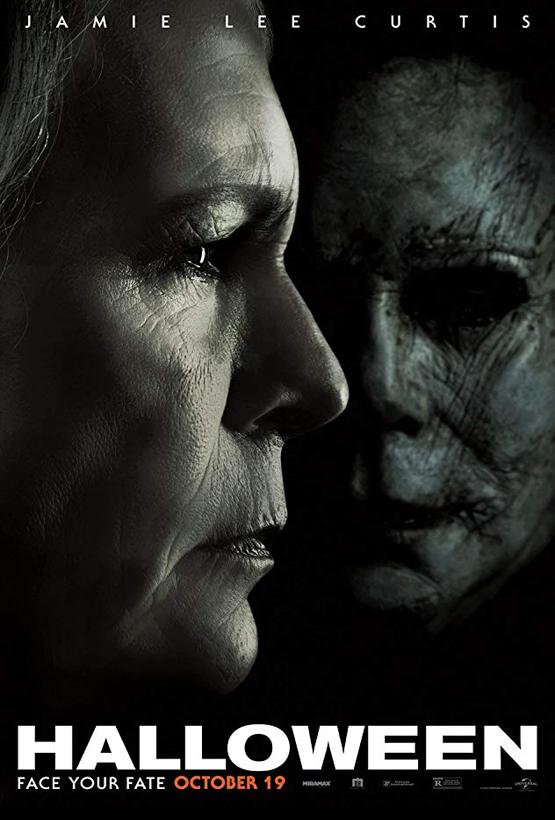
Halloween (2018) review

Jamie Lee Curtis and Nick Castle in Halloween (2018)

In 1978, director John Carpenter and co-writer/producer Debra Hill began working on a low-budget horror film about a serial killer who breaks out of a mental institution and enacts a string of murders in his hometown. Set during the holiday of Halloween, the film ended up sharing its name, resulting in the seminal classic that was Halloween. Upon its release, the film became a landmark entry in the horror genre and helped launch the careers of both Carpenter and lead actress Jamie Lee Curtis, who played the main protagonist Laurie Strode. After that, the series then continued with a bunch of sequels that varied heavily in terms of overall quality, with some serving as decent follow-ups to the original while others effectively killed the franchise for a few years at a time due to how poorly-received they were. But now this classic horror franchise is back with a new film that once again shares the title of the holiday that it’s set during, Halloween. Following the same path as 1998’s Halloween H20, which ignored the events of everything after 1981’s Halloween II, the new film goes the retcon route to remove itself from the franchise’s lesser sequels. In this case, however, it ignores the events of every single Halloween film that was released after 1978, meaning that John Carpenter’s original film is now the only one to precede it. Set 40 years after the events of its predecessor, this new film is directed by David Gordon Green, who co-wrote it with frequent collaborator Danny McBride. The two even have the honor of having John Carpenter return to the franchise for the first time since the ill-received 1982 spin-off Halloween III: Season of the Witch as an executive producer along with Jamie Lee Curtis making a much-heralded return as Laurie Strode. And with a pedigree like that behind it, the new Halloween film proves to be a worthy follow-up (arguably the first truly worthy follow-up, depending on who you ask…) to the 1978 classic.   

On Halloween Night in 1963, six-year-old Michael Myers murdered his older sister Judith with a kitchen knife. 15 years later, Michael broke out of the Smith’s Grove Sanitarium and returned to his hometown of Haddonfield, Illinois, where he began a new Halloween killing spree before he was stopped by his psychiatrist, Dr. Sam Loomis, and apprehended by the local police. 40 years later, Michael (played by a combination of newcomer James Jude Courtney and series veterans Nick Castle and Tony Moran) is still being held at Smith’s Grove. During this time, podcasters Aaron Korey (Jefferson Hall) and Dana Haines (Rhian Rees) look to initiate a reunion between Myers and the sole survivor of his massacre, Laurie Strode (Jamie Lee Curtis), before he’s permanently transferred to a maximum-security prison. The two discover that, in the years since that fateful Halloween night, Laurie has been preparing for a potential return from the man who once tried to kill her. However, the physical and emotional scarring that she has been constantly dealing with ever since has also caused her to become incredibly distant from her daughter Karen (Judy Greer), although she does maintain a decent relationship with her granddaughter Allyson (Andi Matichak). And unfortunately, her past ends up coming back to haunt her once more when Michael manages to escape from his captivity and return to Haddonfield to finished what he started 40 years ago. But this time, Laurie is ready for him and hellbent on making sure that the infamous being known as ‘the Shape’ is stopped once and for all.

As I noted a few days back in my retrospective on the Halloween franchise, the series eventually moved away from the slow, suspenseful atmosphere of John Carpenter’s original film in favor of a more traditional horror film mood and bloodier aesthetic compared to the first film’s generally non-graphic kills. In fact, this all began to take effect as early as its original sequel, Halloween II. Despite director Rick Rosenthal’s plan to have the film maintain the same general atmosphere of its predecessor, Carpenter decided to have the film be more violent given some of the horror films that had come out since his film was released. But with this new Halloween, director David Gordon Green delivers what is easily the closest to the original in terms of replicating its general mood. Granted, this film isn’t a ‘primarily bloodless’ affair like the original film, as it doesn’t hold anything back when it comes to some of Michael’s kills. Plus, the film even gives Green and McBride some opportunities to flex their comedic sensibilities with some humorous bits of dialogue here and there. But as far as tone and atmosphere are concerned, this film maintains the same narrative method of a slow buildup leading to an incredibly effective payoff that helped to make the original Halloween the classic that it still is today. Just like in that film, it takes a while before Michael officially starts to do his thing, but when he does, it paves the way for some incredibly suspenseful moments that, just like the original, are backed by an equally suspenseful score from John Carpenter. And while it can be argued that the plot is perhaps a tad bit predictable at times in terms of where it ultimately goes, along with having a few of the usual stock horror film characters who are just there to be killed by Michael, Green and McBride do a phenomenal job when it comes to all the ways that they pay tribute to the original film.  

Just like Halloween H20, the biggest coup that this film manages to achieve is getting Jamie Lee Curtis back to reprise her role as Laurie Strode. And simply put, she is just as fantastic as she’s been in the other Halloween films that she’s been in, as the film does an excellent job of showing Laurie’s transition from the timid ‘final girl’ of the original film to someone who’s fully prepared to take on Michael Myers. In other words, this film ends up going the same route that Halloween H20 did in further developing her character, but in this case, it works a lot better here because the arc is more prominent to the plot whereas H20 didn’t really get into it until its finale. A lot of this is due to how the film explores all the psychological trauma that Laurie has been going through ever since that fateful Halloween night 40 years prior, and we see how it affects not only her but her loved ones as well. As such, the other two major standouts of the film are Laurie’s daughter Karen and granddaughter Allyson, effectively providing the film with a phenomenal trio of female leads. With Karen, Judy Greer gets one of the more prominent roles of her film career thanks to a nice arc that showcases what Karen has gone through due to her mother’s over-protective nature. And without spoiling anything, this leads to one heck of an awesome payoff at the end. As for Allyson, newcomer Andi Matichak basically serves the same role that Curtis played in the original as the innocent teen who gets caught up in the whole Michael Myers situation. Matichak handles the role incredibly well, especially when it comes to Allyson arguably being the only one in the film to fully sympathize with her grandmother’s struggles, making her just as sympathetic of a protagonist as Laurie’s been all these years.

In short, for those who were disappointed by some of the franchise’s weakest follow-ups (e.g. Resurrection, Curse of Michael Myers, Rob Zombie’s heavily polarizing remake, etc.), you’ll be pleased to know that this new rendition of Halloween is easily the series’ best sequel to date. Ignoring everything that came after John Carpenter’s original film, this new sequel excellently showcases the evolution of Laurie Strode from the vulnerable heroine that she once was to a badass who’s ready to take on the man who nearly killed her while still maintaining the same sense of vulnerability that has helped make her one of the most iconic horror film heroines. This is then highlighted further by the film establishing her daughter Karen and granddaughter Allyson as equally fleshed out protagonists who are just as capable as she is when it comes to dealing with their current predicament. And as for the rest of the film, it succeeds at being a natural follow-up to Carpenter’s film by maintaining the same slow-burn atmosphere that leads to an incredibly satisfying climax while still utilizing aspects of the many horror films that have come out after the original. Plus, it also serves as another excellent example of a director stepping out of their comfort zone to produce an excellent film in a genre that they’re usually not known for. To reiterate, this film was directed by the guy who did the 2008 hit comedy Pineapple Express and he co-wrote it with one of the most prominent comedic actors of this current generation. Simply put, this sequel clearly reflects David Gordon Green and Danny McBride’s admiration for the original film, and with the backing of both John Carpenter and one of the horror genre’s most prominent producers in Jason Blum, their collaborative efforts results in one of the most satisfying revivals of a classic horror film franchise in recent memory.

Rating: 4.5/5

Tuesday, May 23, 2017

Alien: Covenant (2017) review

Image result for Alien covenant poster

In 1979, Ridley Scott directed a sci-fi horror film that would go on to become one of the quintessential films of the sci-fi genre; Alien. It was then followed by Aliens, directed by James Cameron, in 1986; that film would also become one of the most critically acclaimed films of the genre. After that, though, the Alien franchise admittedly started to go downhill. Both 1992’s Alien 3, directed by David Fincher in his directorial debut, and 1997’s Alien: Resurrection, directed by Jean-Pierre Jeunet and written by pre-Buffy the Vampire Slayer Joss Whedon, went through rather tumultuous productions and that ultimately translated to both films’ mediocre reception amongst critics and audiences. And don’t get me started on the infamous crossover films that the series had with the Predator franchise in the early 2000’s. However, in 2012, the Alien franchise was revitalized by the man who started it all; Ridley Scott. That year saw the release of Prometheus, a pseudo-prequel to the original Alien that wasn’t directly tied to the events of that film but was still set in the same general universe. The film did perform solidly on both a critical and commercial level but would prove to be one of the most polarizing films of that year. It spawned an equal number of fans and dissenters, the latter of whom criticized it for leaving some plotlines unanswered in a philosophical-based plot focusing on the origins of humanity. And thus, here we are this year with Alien: Covenant. Scott returns to direct this follow-up to Prometheus, which claims that it’ll provide some of the answers to the unexplained mysteries of its immediate predecessor. Whether it does or not is ultimately up to the viewer, but Scott does deliver another enjoyable, if somewhat predictable, suspenseful adventure in this historic franchise.

In the year 2104, the colonization ship Covenant travels to a remote planet named Origae-6. Onboard are over 2,000 colonists, around 1,000 embryos, and a 15-man crew made up of advanced synthetic android Walter (Michael Fassbender) and several couples, including Captain Jacob (James Franco) and terraforming expert Daniels Branson (Katherine Waterston), First Mate Christopher (Billy Crudup) and biologist Karine Oram (Carmen Ejogo), and pilots Tennessee (Danny McBride) and Maggie Faris (Amy Seimetz). When a run-in with an unexpected neutrino blast severely damages the ship, even causing a few casualties in the process, the crew, forced out of stasis, begins to consider other options should something like this happen again. Specifically, they come across a mysterious transmission from a nearby planet that they learn has a seemingly viable atmosphere that they can potentially inhabit. Deciding that they’d rather not risk going through another stasis-based catastrophe, the crew heads down to the planet to investigate. However, once they arrive, they unknowingly unleash a collection of terrifying creatures that begin to hunt them down. Along the way, they also learn what happened to the surviving crew members of the Prometheus; Dr. Elizabeth Shaw (Noomi Rapace) and the android David (also played, once again, by Michael Fassbender).

As was the case with Alien and Prometheus, one of the absolute best parts about Alien: Covenant is its overall production design. From the scenic landscapes of the remote planet that the crew lands on to the cramped confines of the crew’s ship, as is tradition with the Alien films, the film has some excellent cinematography and special effects. Yes, the alien creatures are primarily CG this time around but from a technical perspective, this film is practically flawless. Admittedly, though, I don’t think that the film delivers on its intention of returning to the series’ horror roots. Sure, the action in Covenant outdoes any Alien film before it in terms of how gruesome it is, but overall, the film is more like Prometheus in that the plot is more based around mystery and suspense. And, for the most part, I do think that the film does succeed in having an engaging mystery plot. With that in mind, though, the question remains; does this deliver on its promise of answering some of the questions that were left unanswered by its predecessor? Well, I’m not entirely sure that it does, but it does continue to lay the groundwork for the events of the Alien franchise in fascinating ways. Though, admittedly, if I did have any gripes with the writing, it’s that the film ends on a rather lackluster note. For the record, this has nothing to do with the overall context of the plot or how it sets up a sequel; it’s more because of this one big reveal that the film ends on. And to be perfectly frank, without giving it away in this review, you’ll likely see this twist coming a mile away.

The film also boasts a solid ensemble cast. Sure, most of the characters are your typical ‘expendable’ crew members and the fact that there are around 15 ‘primary’ characters in this film sometimes makes it hard to keep track of all of them. However, at the same time, because most of them are paired up as couples, it does kind of make things a bit more interesting on an emotional level whenever one half of a couple is killed off. This is especially the case with Katherine Waterston’s character, Daniels. Right out the gate, she becomes one of the most sympathetic characters in the film, thanks in no small part to Waterston’s excellent performance in the role, after (Minor Spoiler!) her husband is killed in the neutrino blast incident that forces the Covenant crew out of stasis. But when chaos ensues, she easily slips into the same badass territory that the franchise’s iconic heroine, Ellen Ripley, has always been known for. Danny McBride is also great in an against-type role as pilot Tennessee, another likable member of the crew. And, of course, there’s Michael Fassbender, in a dual role, no less! He returns as Prometheus’ main android David, who’s still as enigmatic as ever and still one of the most fascinating characters in the entire franchise. At the same time, he also plays the Covenant’s android, Walter, who, despite being more advanced than David, still has some interesting quirks of his own. Fassbender does a great job of differentiating between the two characters and any scenes where the two share the screen together are a major highlight.

Well, it seems like we have another Prometheus on our hands as far as this film’s current critical reception is concerned. Just like its predecessor, I’ve seen plenty of responses towards this film, both positive and negative. So, where do I stand? Well, I’d say that I’m somewhere in the middle of this spectrum but am leaning more towards the positive camp. I can’t say that the film is perfect as there are some noticeable flaws, especially a rather predictable finale that’s based around an obvious twist. However, despite this, the film still manages to be an engrossing new story set within this universe, thanks in part to its solid ensemble cast and the same great technical merits of its predecessor. And, through it all, I’m still interested in seeing where they go from here (Scott has stated that a sequel is currently being prepped and will likely start production next year). Because despite the previously mentioned obvious twist that anchors the whole ending, to the film’s credit it does end on a rather ballsy note. And while it’s debatable over how much the film answers Prometheus’ mysteries, it’s still very interesting to see how it begins to set the stage for what we saw from the previous Alien films. Thus, while it won’t win over everyone who wasn’t a fan of Prometheus, Alien: Covenant is still an entertaining entry in this long-running franchise.


Rating: 4/5