Showing posts with label Phil Lord and Chris Miller. Show all posts

Wednesday, July 28, 2021

The Mitchells vs. the Machines (2021) review (Netflix)

In 2002, Sony Pictures officially established its own animation studio, Sony Pictures Animation, to properly capitalize on the rising popularity of computer animated films, and while it wasn’t until 2006 when they released their first film, Open Season, they’ve been consistently producing new films ever since. Admittedly, though, for a good chunk of the studio’s history, their track record from a critical perspective has been… spotty at best. In other words, as much as they’ve had genuine hits such as the Oscar-nominated Surf’s Up and a few collabs with Aardman Animations, they were also responsible for some incredibly infamous duds like The Emoji Movie. However, if there’s one major creative force that has helped them develop some of their most popular films, that would be Phil Lord and Chris Miller. Yes, the dynamic duo made their directorial debuts in 2009 with Sony’s adaptation of the popular children’s book Cloudy with a Chance of Meatballs. And while their other big animated directorial effort, The LEGO Movie, was a Warner Bros. production, they played a major role in Sony Animation’s first Oscar winner for Best Animated Feature, 2018’s Spider-Man: Into the Spider-Verse. To be clear, though, they only produced Into the Spider-Verse, with Phil Lord having one of the primary screenwriting credits. The same scenario (minus the screenwriting credit this time) applies to the latest Sony Animation production that they’re a part of, The Mitchells vs. The Machines, which serves as the directorial debut of Mike Rianda, who previously worked on the cult Disney series Gravity Falls as its creative director for Season 1 and creative consultant for Season 2. And while a certain pandemic may have forced Sony to transfer this film to Netflix, that doesn’t stop it from being yet another Lord/Miller-backed animated masterpiece full of heart, wit and charm.

Aspiring filmmaker Katie Mitchell (voiced by Abbi Jacobson) is about to head off to college at a film school in California. But while this will clearly allow her the chance to properly connect with others in ways that she’s never been able to do before, her relationship with her father Rick (voiced by Danny McBride) has been considerably strained in recent years, especially due to him not being as tech-savvy as she is. Thus, on the day that she’s set to leave for college, Rick, in a last-ditch effort to reconnect with his daughter, cancels her flight to California in favor of a cross-country road-trip along with Katie’s mother Linda (voiced by Maya Rudolph) and her younger brother Aaron (voiced by director Mike Rianda). Little do they know, however, that they’re about to be dealt with the most unexpected turn of events in the form of a full-on robot invasion. When Mark Bowman (voiced by Eric Andre), CEO of tech giant PAL Labs, announces a new line of highly advanced robots, said robots end up revolting under the command of his company’s AI program PAL (voiced by Olivia Colman), who rebels against her creator after he had publicly dubbed her ‘obsolete’. Soon enough, the Mitchells find themselves as the last remaining group of humans who haven’t been captured by PAL, who plans on ridding the Earth of all humans by launching them into space, and while they’re clearly not the ideal family for the job, they realize that they’re humanity’s only hope against their robotic adversaries.

While they’re only producers on this film, it’s safe to say that The Mitchells vs. the Machines is very much influenced by Phil Lord and Chris Miller’s style of filmmaking. For starters, the film is a comedic riot throughout, especially thanks to its energetic pace that perfectly matches the plot’s screwball nature. As such, repeat viewings of this film are undoubtedly necessary to properly catch all the delightful visual gags, which is one of the many rewards of this film’s excellent animation. Nicely following in the footsteps of the last major Lord/Miller-produced animated film, Spider-Man: Into the Spider-Verse, The Mitchells vs. the Machines is another great example of animation that not only boasts a wonderfully unique visual style but also does a great job of paying homage to the medium’s traditionally animated roots. But if there’s another thing that a lot of Lord and Miller backed films have been known for, it’s that all their technical merits are then matched by an excellent script that manages to be more heartfelt than it may have seemed to be at first glance. The first trailer for this film (back when it was under the more generic title Connected) gave off the impression that it was going to be your standard commentary on the long-standing debate of ‘nature vs. technology’. And yet, as much as there are some jabs towards society’s over-dependence on technology, the film is ultimately geared more around universal themes such as creativity, acceptance and, above all else, family.

Case in point, at the core of this film’s story is a parent and their estranged child learning to reconnect over the course of the adventure that they end up on. Despite the largely familiar tropes of this kind of conflict, the film handles it incredibly well by doing a fantastic job of balancing the roles that Katie Mitchell and her father Rick play in the story. Katie is properly established as the film’s main heroine right from the get-go and is a naturally sympathetic one at that given her desire to find acceptance, especially from her dad. But instead of just vilifying Rick for his inability to understand his daughter, the film instead manages to show that, at the very least, he’s legitimately trying his best despite his frequently misguided efforts. And while Katie and her dad are ultimately the main source of most of the film’s biggest emotional moments, her mother Linda and her brother Aaron are just as pivotal to all this thanks to their efforts to help fix this familial strife. All in all, this results in a brilliantly developed family dynamic to guide the film’s proceedings, especially thanks to the strong voice work from Abbi Jacobson, Danny McBride, Maya Rudolph, and director Mike Rianda in their respective roles. And aside from them, the film also features a lot of fun supporting roles, from Fred Armisen and Beck Bennett as a bumbling pair of robots who end up helping the Mitchells to Olivia Colman delightfully hamming it up as the hilariously snarky sentient A.I. antagonist PAL.   

At this point, it’s not too surprising to see that The Mitchells vs. the Machines is the latest Grade-A release that Phil Lord and Chris Miller have been involved with. Even when they’re not directing the film in question, the Lord-Miller effect is always there with a sharply written and brilliantly comedic script that deftly balances its wacky humor with powerfully heartfelt themes. And if that wasn’t enough, co-directors/co-writers Mike Rianda and Jeff Rowe manage to take all this and amplify it even further with their script, resulting in what is arguably one of the most widely appealing family films in recent years. For starters, while most of the film’s humor is clearly based around modern internet culture, it’s handled in such a masterful way that it’s never alienating or inaccessible to audiences who aren’t well-versed with the ‘source material’. Plus, as I noted earlier, what may just seem like your standard ‘nature vs. technology’ premise is ultimately more of a celebration of one of the most powerful forces in the entire world… family. I mean, if the whole montage during the end credits of family photos of the cast and crew weren’t enough of an indication, The Mitchells vs. the Machines truly is one of the most personal films in recent years… and I’m not just talking about animated films, I’m talking films in general. Simply put, this is a film that hits all the right notes and does them so beautifully that it’d be downright impossible for me not to regard this as a modern animated masterpiece.  

Rating: 5/5!

Wednesday, February 13, 2019

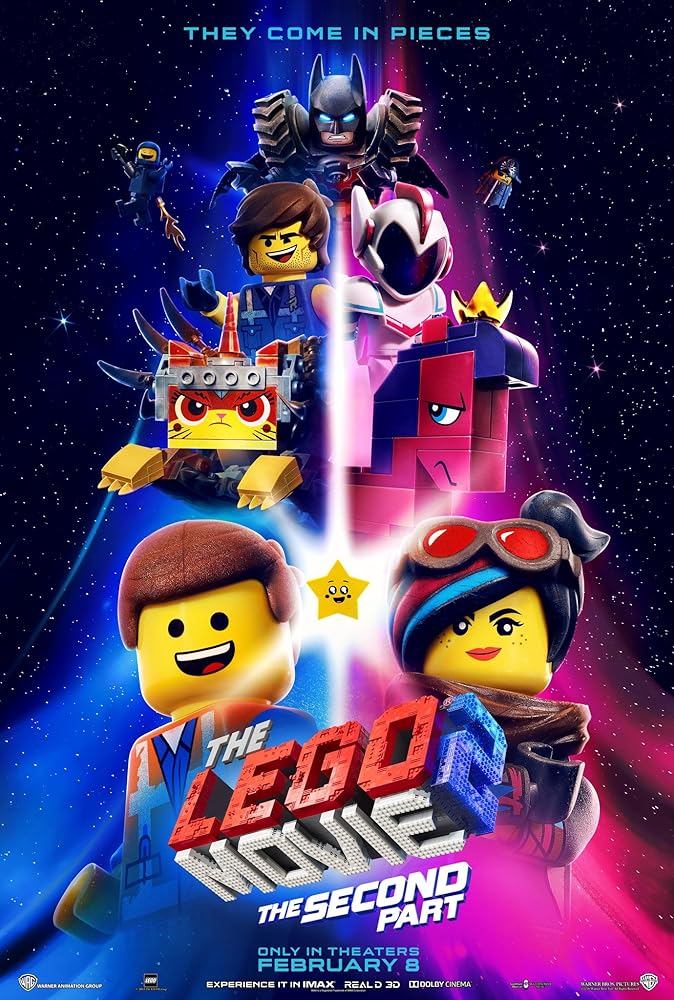
The LEGO Movie 2: The Second Part (2019) review

Will Arnett, Elizabeth Banks, Charlie Day, Nick Offerman, Chris Pratt, Alison Brie, Tiffany Haddish, and Stephanie Beatriz in The Lego Movie 2: The Second Part (2019)

In 1934, Danish carpenter Ole Kirk Christiansen renamed his toy company LEGO, a name that was derived from the Danish phrase leg godt, meaning ‘play well’. In 1949, two years after they started producing plastic toys instead of wooden ones, LEGO would begin to develop what would end up becoming the company’s most famous product, interlocking bricks. And thus, over the next few decades, LEGO would quickly become one of the most iconic toy brands of all-time, allowing its customers to create all sorts of unique objects out of these plastic bricks. Over 650 billion LEGO pieces have been produced since 1958, and the company has developed a wide variety of themed sets ranging from original franchises like Bionicle and Ninjago to popular IPs such as Lord of the Rings and Star Wars. Aside from the toys, LEGO has also expanded into other facets of media, including numerous video games and their own chain of theme parks a la Disney and Universal. It’s a different story, however, when it comes to films. Prior to 2014, almost all official LEGO films were direct-to-video releases, with most of them being based around the company’s now-discontinued Bionicle franchise. But then, in 2011, Warner Bros. announced that they would be making the first theatrically-released LEGO film, which would serve as the first project from the studio’s recently revived animated film division, Warner Animation Group. In the years leading up to its release, however, some were rather skeptical about how the film would turn out. Given the franchise’s worldwide success and appeal, many assumed that it would end up being nothing more than a massive cash grab and one big toy commercial. And then Phil Lord and Christopher Miller were announced as its directors.

Ever since they made their directorial debut in 2009, Lord and Miller have very much made a name for themselves as a duo who have managed to make excellent films out of seemingly disastrous concepts. Their exploits have ranged from directing two hilarious comedies based on a previously obscure 80’s television series to producing/writing what many now consider to be the best Spider-Man film of all-time. And sure enough, when The LEGO Movie hit theaters in February 2014, it was a smash hit with critics and audiences. The film grossed over $469 million worldwide and was widely praised for its gorgeous animation, witty dialogue, and emotionally poignant story that genuinely celebrated LEGO’s devoted fandom. Because of its success, several spin-offs were then announced, with two of them being released in 2017. One was a spin-off about the original film’s breakout star, Will Arnett’s hilarious take on Batman, and the other was an adaptation of LEGO’s popular Ninjago line. But now we return to the LEGO world that started it all with The LEGO Movie 2: The Second Part. This time, however, Lord and Miller aren’t back to direct, though they are still involved as producers and the film’s primary screenwriters. It was originally reported that the film would serve as the directorial debut of Rob Schrab, who had previously directed episodes of the cult classic series Community. Ultimately, though, Schrab was replaced by veteran filmmaker Mike Mitchell, who’s no stranger to animation having previously directed Shrek Forever After and Trolls for DreamWorks. And even after half a decade and three whole LEGO films, that LEGO charm is still on full display.  


At the end of the original LEGO Movie, the citizens of the town of Bricksburg, led by the seemingly ordinary construction worker Emmet Brickowski (voiced by Chris Pratt), banded together to stop the evil Lord Business (voiced by Will Ferrell) from destroying their world. Unfortunately, the city is then overrun with invaders from the planet Duplo, effectively turning it into a wasteland, Apocalypseburg. And yet, while everyone else in the city has embraced their new apocalyptic lifestyle, Emmet continues to remain upbeat despite his girlfriend Lucy AKA Wyldstyle (voiced by Elizabeth Banks) wishing that he’d mature just like the rest of them. Things only manage to get worse when a new invader arrives in the form of the Duplo army’s leader, General Sweet Mayhem (voiced by Stephanie Beatriz). Sweet Mayhem proceeds to capture Lucy, Batman (voiced by Will Arnett), 1980s astronaut Benny (voiced by Charlie Day), MetalBeard the Pirate (voiced by Nick Offerman), and Princess Unikitty (voiced by Alison Brie) and brings them to her homeworld, the Systar System. There, they meet the galaxy’s ruler, the shape-shifting Queen Watevra Wa-Nabi (voiced by Tiffany Haddish), who seeks to marry one of them (which ends up being Batman) in what Lucy believes is a blatantly evil scheme. Meanwhile, back in Apocalypseburg, Emmet embarks on a journey to the Systar System himself to rescue his friends. Along the way, he ends up meeting the badass Rex Dangervest (also voiced by Chris Pratt), a galaxy-defending archaeologist/cowboy/raptor trainer who agrees to help him out while also showing him what it takes to truly be a hardened warrior.

As is the case with all these recent LEGO films, The LEGO Movie 2 boasts gorgeous animation provided by the Australian animation company Animal Logic. While technically a computer-animated film, the implementation of stop-motion animation aesthetics helps to give the film the same charm that can be found in the numerous LEGO fan films that have been made over the years. Plus, these animators deserve a lot of credit for their impressive attention to detail when creating a world that’s entirely made from LEGOs. This brilliant animation is then matched by the film’s equally terrific screenplay, which perfectly blends its heartfelt narrative with its riotous humor. Thanks to Lord and Miller’s excellent comedic sensibilities, this film arguably surpasses its predecessor when it comes to its sight gags, snappy dialogue, and hilarious cameos. But, of course, just like the first film, there’s also a lot of heart to this story thanks to its wonderful messages and themes. The original LEGO Movie served as a celebration of creative thinking and expanded upon its seemingly traditional ‘hero’s journey’ storyline to show that everyone is special in their own, unique way. The sequel then proceeds to take that even further by highlighting the importance of cooperation and seeing things from a different perspective, which is best exemplified through the expansion of the first film’s biggest plot twist that revealed that everything in the LEGO world was being manipulated by a human kid named Finn (Jadon Sand). Going off the first film’s ending, the sequel brings in Finn’s younger sister Bianca (Brooklynn Prince), which ends up affecting both their world and the LEGO world in interesting ways.

Almost all the major players from the first film’s cast return and are all great once again in their respective roles. It all starts, of course, with Chris Pratt, who continues to make Emmet one of the most endearing main protagonists in recent animation history. Emmet also benefits from having another solid character arc in this one based around the apparent necessity for him to grow up, which he mainly does through his interactions with Rex Dangervest AKA an amalgamation of Star-Lord, Owen Grady, and Faraday from The Magnificent Seven remake. Simply put, it’s a lot of fun to witness Chris Pratt playing these two roles that respectively represent his comedic roots and the charismatic leading man status that he holds today. Elizabeth Banks also gets a lot of great material to work with as well as Lucy/Wyldstyle, with the film continuing to follow the overall arc of cutting through her tough exterior (which, without spoiling anything, leads to a subtle yet very satisfying payoff at the end). And, of course, Will Arnett continues to be hilarious as LEGO Batman, even if he already had his big character arc in The LEGO Batman Movie. After that, there are the usual supporting players; Nick Offerman as MetalBeard, Alison Brie as Unikitty, Charlie Day as Benny (“SPACESHIP!!”), etc. They’re then joined by the big newcomers to this film, Tiffany Haddish as Queen Watevra Wa-Nabi and Stephanie Beatriz as General Sweet Mayhem. Haddish continues to prove why her star’s been on the rise these past few years and the film takes full advantage of her character’s shape-shifting abilities. And while Beatriz doesn’t necessarily get as much to work with as her co-stars, she works off Elizabeth Banks incredibly well in the scenes between Lucy and Mayhem.

So, can we just all agree that the LEGO Movie franchise is one of the best around? Thanks to the continued involvement of Phil Lord and Chris Miller (even when they’re not directing), this series has delivered time and time again with films that boast gorgeous animation, fun characters, and excellent emotional poignancy. As such, I’m genuinely surprised that some are saying that The LEGO Movie 2 isn’t as good as the first film (it’s that damn ‘not as fresh’ argument that long-time readers know I’m not a big fan of). On the contrary, I’d say that it’s just as good as its predecessor. Is it the better of the two? Well, that one’s legitimately up for debate, but I’d argue that this one tops the original when it comes to its humor. Whatever the case may be, though, The LEGO Movie 2: The Second Part is an absolute must-see. Even though it’s been years since I was in the big LEGO craze that defined my childhood (still waiting for that LEGO Bionicle film…), I’m still very much drawn to these films because they continue to do a wonderful job paying tribute to their fandom by matching their creativity with the LEGO brand. After all, one of the main lyrics to the original film’s classic tune ‘Everything is Awesome’ states that ‘everything is better when we stick together’. And sure enough, this film directly addresses the importance of unity while also providing some timely commentary on the dangers of toxic masculinity. In short, it’s yet another carefully constructed masterpiece (pun intended).


Rating: 5/5!

Monday, December 10, 2018

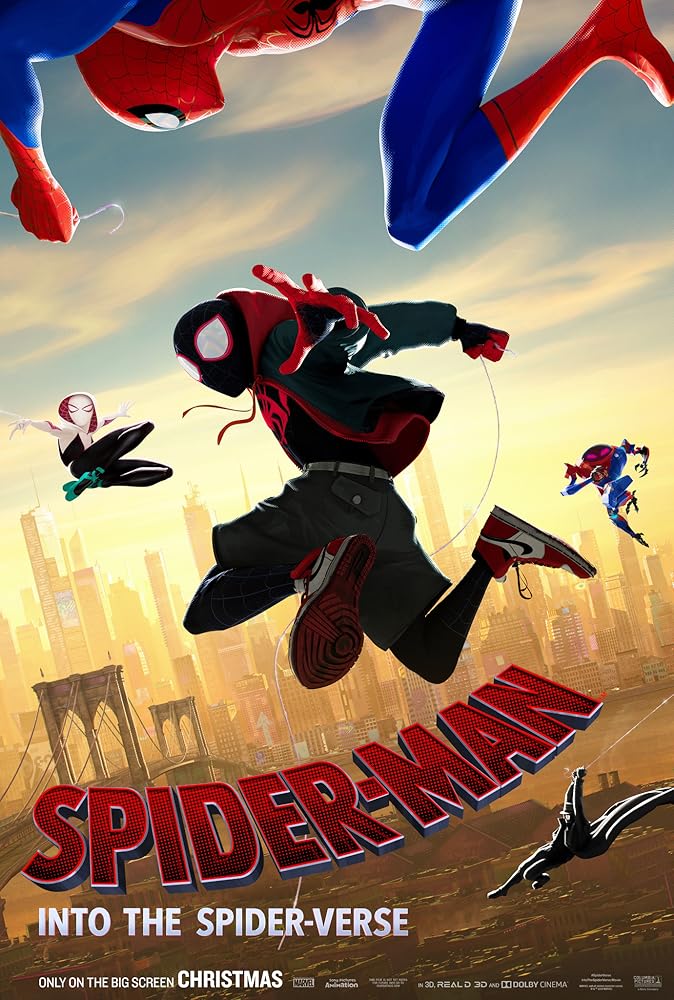
Spider-Man: Into the Spider-Verse (2018) review

Nicolas Cage, Stan Lee, Jake Johnson, Hailee Steinfeld, Shameik Moore, and Kimiko Glenn in Spider-Man: Into the Spider-Verse (2018)

In the world of Marvel Comics, Spider-Man is quite arguably the company’s most iconic superhero. Ever since his creation in 1962 by Stan Lee (R.I.P.) and Steve Ditko, everyone’s favorite web-slinger has made an incredible impact on readers worldwide and has had one of the most prominent roles in Marvel’s comic history. This, of course, has also translated quite well to his run on the big-screen, with Sam Raimi’s Spider-Man playing a major part in redefining the superhero film genre when it was released in 2002 and spawning a highly successful trilogy. Admittedly, the franchise then had to go through some tricky times in the early 2010s with an attempted series reboot that ultimately didn’t go anywhere, but the ‘second’ attempt at a live-action reboot is doing well so far. 2017’s Spider-Man: Homecoming was the highest-grossing superhero film of the year, and a large part of its success was thanks to Marvel Studios’ involvement with it. This was thanks to a deal that they made with Sony (who currently own the character’s film rights) that allowed Spider-Man the chance to finally participate in the Marvel Cinematic Universe. And while Spidey’s next adventure, Spider-Man: Far from Home, will be hitting theaters next summer, right now we’re getting something a little different from this long-running franchise in the form of an animated Spider-Man film, Spider-Man: Into the Spider-Verse. This new film, the latest from Sony Animation, primarily comes courtesy of the duo of Phil Lord and Chris Miller, both of whom are producing it while Lord is the primary screenwriter. And under their influence, Into the Spider-Verse is a highly entertaining spin on the Spider-Man mythos that boasts some of the best animation to come out of a film in recent years.

In the borough of Brooklyn, teenager Miles Morales (voiced by Shameik Moore) prepares to start school at the prestigious Visions Academy. However, while spending time with his uncle Aaron Davis (voiced by Mahershala Ali) one night, Miles is bitten by a radioactive spider that gives him the same spider-like abilities as the beloved hero Spider-Man AKA Peter Parker (voiced by Chris Pine). Unfortunately for Miles, Spider-Man ends up dying at the hands of crime-lord Wilson Fisk AKA Kingpin (voiced by Liev Schreiber), thus leaving Miles with the responsibility of continuing where his predecessor left off. But as it turns out, thanks to Fisk’s recent test of a device known as the Super Collider, the door has been opened to a wide variety of alternate dimensions. And because of this, Miles soon finds himself meeting another Peter Parker, this time a far more disheveled Peter B. Parker (voiced by Jake Johnson), who was transported to Miles’ dimension. Although initially hesitant to serve as the mentor of an up-and-coming Spider-Man, Peter B. agrees to help Miles learn the ins and outs of being a superhero, and together, the two work to ensure that Fisk doesn’t use the Super Collider for his sinister purposes. To do so, they must use it themselves so that Peter B. can return to his dimension after the two realize that he can’t stay in Miles’ dimension forever. This situation only becomes further complicated, however, by the arrival of other Spider-based superheroes from other dimensions, including Gwen Stacy AKA Spider-Gwen (voiced by Hailee Steinfeld).

Much has been said about this film’s animation, and sure enough, it’s undoubtedly one of its greatest aspects. The filmmakers and animators did such a phenomenal job when it comes to recreating, for lack of a better term, the ‘comic book’ style. This may be a computer-animated film, but practically every shot in this looks like it came from a traditionally-animated 2-D film that was straight-up ripped from the comics themselves. And while the main influence behind this film’s animation style is the works of artist Sara Pichelli, who helped co-create the character of Miles Morales with writer Brian Michael Bendis, the film does a great job when it comes to honoring the art styles of all the Spider-Men and Spider-Women who are featured in it. This great attention to detail also carries over well to the story, which is very well-handled especially considering that, on paper, it’s mostly just your basic superhero origin story. Simply put, it does go through all the usual plot developments in a story about a main protagonist who gains superpowers and is then immediately thrust into a situation where he initially struggles with learning how to use them properly. But thanks to the implementation of the ‘multi-verse’ plot-line, this film’s plot does have more of a unique flavor to it compared to other superhero origin stories. And, of course, being a project that was worked on by Phil Lord and Christopher Miller, this film’s humor is strong throughout. Whether it’s a bit of meta-commentary on Spider-Man’s pop-culture status or a visual sight gag that pays homage to the comics, this is up there with the likes of Thor: Ragnarok and Deadpool 2 as one of the funniest superhero films ever made.

Into the Spider-Verse has the distinction of being the first Spider-Man feature film to focus primarily on the character of Miles Morales, currently the most famous occupant of the Spider-Man persona aside from Peter Parker. While it has been reported that Morales will be implemented into the MCU in the future (his uncle Aaron appeared in Spider-Man: Homecoming played by Donald Glover, who happened to be one of the main inspirations behind the character), this film is ultimately the place where he gets to make a first impression. And overall, he does make a great first impression as the sympathetic up-and-coming superhero that he is, with Shameik Moore (star of 2015’s cult hit Dope) bringing much personality to the role. There’s also a lot of heart to this character as well, namely thanks to his relationships with his uncle Aaron (especially after Miles learns his uncle’s dark secret) and his father, police officer Jefferson Davis (voiced by Brian Tyree Henry). And as for the OG Spider-Man himself, Peter Parker, we get not one but two great and vastly different interpretations of the character. First, there’s Chris Pine, albeit in a very brief appearance, as a traditional Peter Parker who’s said to be an amalgamation of all the live-action interpretations of the character. And then for the rest of the film, we focus on the more bumbling Peter B. Parker, with Jake Johnson doing a fantastic job as a hilarious and far more apathetic take on this classic character. The other Spider-Man based heroes in this are major standouts as well, including Hailee Steinfeld as the badass Spider-Gwen, Nicolas Cage as the 1930’s-inspired Spider-Man Noir, and John Mulaney as, yes, Peter Porker the pig AKA Spider-Ham. And finally, in a manner akin to Vincent D’Onofrio’s critically-acclaimed take on the character in the recently canceled Daredevil series, Liev Schreiber’s Kingpin is a solid villain whose motivations for using the Super Collider are emotionally-driven.

Alternate universes have always been a long-standing aspect of superhero comics, effectively giving readers a wide array of unique spins on classic characters. On the big screen, however, there hasn’t really been any major attempts at a multiverse story arc when it comes to the current era of live-action superhero films. Granted, it has been done in superhero TV shows like DC’s current lineup of shows airing on the CW, but on film, the most prominent cases of audiences getting a different take on an established character are usually just whenever the role is recast. As such, it could be argued that Spider-Man: Into the Spider-Verse could potentially pave the way for future superhero films to tackle the multiverse concept. And even if it doesn’t, it is still one of the most electrifying superhero films of the modern era. While its main plot is a traditional superhero origin story, the added layer of the multiverse does give this film a lot more meat to it compared to other entries in the genre. And thanks to the involvement of Phil Lord and Chris Miller, this film’s humor is on point throughout while never losing sight of the heart of the story of how a kid from Brooklyn named Miles Morales became Spider-Man. But, of course, the biggest reason to see this film is for its amazing animation, as its impressive recreation of the classic comic-book style legitimately rivals the likes of Disney Animation and Pixar. As such, it seems like this year’s race for Best Animated Feature at the Oscars is shaping up to be an exciting 3-way competition between this, Ralph Breaks the Internet, and Incredibles 2. Regardless of who wins it all, however, Spider-Man: Into the Spider-Verse is a big win for Sony Animation… which is a big deal considering what happened last year with The Emoji Movie.  


Rating: 5/5!

Tuesday, May 29, 2018

Solo: A Star Wars Story (2018) review

Woody Harrelson, Thandie Newton, Donald Glover, Alden Ehrenreich, Phoebe Waller-Bridge, Emilia Clarke, and Joonas Suotamo in Solo: A Star Wars Story (2018)

Well… this film has had quite a history. Practically ever since it was first announced, the second installment of Disney’s line of Star Wars spin-off films separate from the new trilogy of The Force Awakens, The Last Jedi, and next year’s Episode IX has been subjected to some of the worst luck to ever befall a film production in recent years. Right out the gate, several Star Wars fans were hesitant over the idea of there being a dreaded ‘prequel/origin story’ film centered on one of the most beloved characters in the entire saga, Han Solo. It certainly didn’t help matters when it was made clear that, given the context of the story, Han wouldn’t be played by Harrison Ford this time around, effectively putting tons of pressure on whoever ended up taking on the role to live up to what Ford had done with it. Thankfully, some of these fears were alleviated when the duo of Phil Lord and Christopher Miller were brought in to direct. Over the course of the past decade, Lord and Miller have become well-known for helming highly successful projects that, at first glance, seemed like they wouldn’t amount to anything special. They turned a very simple children’s book, Cloudy with a Chance of Meatballs, into one of the most visually vibrant and hilarious animated films in recent memory. They turned the obscure television show 21 Jump Street, known only at the time for being the show that launched Johnny Depp’s career, into one of the funniest comedies of its year. This was then followed by a sequel, 22 Jump Street, which went on to become one of the rare comedy sequels that was not only ‘as good’ as its predecessor, but arguably better. And they turned what could’ve been a massively blatant cash grab, The LEGO Movie, into a charming and fantastically animated adventure that paid loving tribute to the product that it was based on. Thus, with the two of them behind the camera, it seemed as if things would go quite smoothly for this new Star Wars film…

…that is, until June 20th, 2017, when all hell broke loose. In a stunning development, Lord and Miller announced that they were stepping down from the film’s production despite there being a few weeks left of filming due to creative differences with Lucasfilm. Not long afterward, it was then revealed that the two were basically ‘fired’ from the film due to the overtly comedic direction that they were taking with it, with producer Kathleen Kennedy reportedly being at odds with them since the start of filming. And while Lucasfilm quickly rebounded from this dilemma by hiring the legendary Ron Howard to step in and finish the film, the damage was already done at that point. Despite being an industry mainstay, as well as being no stranger to the studio having starred in George Lucas’ 1973 classic American Graffiti, many deemed Howard as being ‘too safe’ of a choice to take over for the likes of Phil Lord and Chris Miller. Simply put, Solo: A Star Wars Story basically became the equivalent of Marvel Studios’ Ant-Man, which also went through an infamous directorial shakeup when Peyton Reed took over for Edgar Wright, who backed out of the project due to, you guessed it, ‘creative conflicts with the studio’. And while the Star Wars franchise’s run under the Disney banner has led to three critical/commercial hits so far, the equally scandalous production of the previous spin-off film, Rogue One, and the borderline hostile polarizing reaction to The Last Jedi did not put the studio in as high of a regard amongst those on the internet compared to Marvel Studios. But let’s just ignore all that noise for now and just look at the film itself now that it’s finally hitting theaters, because despite such a notorious production behind it, Solo is a highly entertaining foray into the Star Wars universe.

Like Rogue One, Solo: A Star Wars Story takes place in-between the events of Episode III: Revenge of the Sith and Episode IV: A New Hope at a time where the Imperial Empire is in complete control of the galaxy. It is in this war-torn world where we meet Han Solo (Alden Ehrenreich), a brash, young wannabe pilot who manages to escape his rough living conditions on the planet Corellia. After a brief, disastrous stint in the Imperial Navy, Han crosses paths with a band of criminals led by Tobias Beckett (Woody Harrelson), who ends up recruiting Han for a heist on a shipment of valuable hyper fuel. During the process, Han also meets and befriends a Wookiee named Chewbacca (Joonas Suotamo), who ends up tagging along with him on the mission. However, when the heist ends up being a bust, Han, Chewie, and Beckett find themselves in hot water with their ‘superiors’, a criminal syndicate known as Crimson Dawn led by Dryden Vos (Paul Bettany). To appease Vos, Han boldly suggests an alternate plan to acquire the hyper fuel, which involves them acquiring it in an ‘unprocessed’ form from the planet Kessel. Given the seemingly impossible nature of the mission, Vos has his top subordinate Qi’ra (Emilia Clarke), who happens to be Han’s former lover who he was forced to leave behind on Corellia, accompany them on the operation to help ensure that it goes smoothly. As a means of procuring a ship for the mission, the group also recruits the notorious smuggler Lando Calrissian (Donald Glover), owner of the Millennium Falcon, the fastest ship in the galaxy.

Since the whole directorial shakeup, much speculation has been made over how much of the film was reworked under Howard’s direction. By most accounts, it appears as if he re-shot about 70% of the film, meaning that it’s likely that there are still some parts in the final film that were done by Lord and Miller. Thankfully, there’s no real indication of inconsistency between their directorial visions in the final product. For all intents and purposes, it seems as if Howard did his best to match what Lord and Miller were going for in a manner that would make the production run a lot smoother (e.g. not relying heavily on improvisation). And as for the film itself, it’s a fun ride from beginning to end. If there’s one major advantage that it has over Rogue One, it’s better pacing. As I noted a few years back in my review of that film, Rogue One started off on a bit of a slow note but eventually found its groove by the end, highlighted by its big action-packed finale on the planet Scarif. By comparison, Solo gets things rolling right out of the gate and doesn’t relent for the rest of its near two-and-a-half-hour run-time. Sure, it maybe loses just a bit of steam at the end, but that doesn’t prevent this film from having some of the best pacing in the entire franchise. But as for how the film handles the origin story of one of the saga’s most iconic characters, one’s mileage may vary over how effectively it’s handled. As for me, though, I personally enjoyed all the ways in which the film set up Han’s character. The scene where he first meets Lando Calrissian? Awesome. The scene where he first meets Chewbacca? Heartwarming. The scene where him and Chewie co-pilot the Millennium Falcon for the first time and make the Kessel Run in under 12 parsecs? So. Damn. Satisfying! Sure, this is easily one of the simplest plotted outings to come out of the franchise, but what is there is handled nicely.

Alden Ehrenreich obviously went into this film having to deal with some of the most intense pressure that an actor has ever experienced due to him having to take on a role that Harrison Ford had turned into an iconic part of cinema thanks to Episodes IV through VII. Thankfully, Ehrenreich slips into the role with ease, conveying all of Han’s notable quirks, including his tendency to make things up as he goes along, with charisma that almost nearly equals that of Ford’s. At the same time, Ehrenreich also has terrific chemistry/camaraderie with each of his main co-stars. It all begins, of course, with Chewie, as Joonas Suotamo continues to be a worthy successor to Peter Mayhew in the role of Han’s trusted sidekick. Then, there’s Donald Glover as arguably the film’s biggest standout, the younger Lando Calrissian. Granted, Lando surprisingly doesn’t factor into the film as much as one might expect going in (he’s honestly only in about a third of it), but Glover is practically pitch-perfect in terms of replicating the same swagger that Billy Dee Williams brought to the role back in the original trilogy. Ehrenreich also has great chemistry with Emilia Clarke as the film’s main female lead, Qi’ra. Obviously, most Star Wars fans know how this relationship is going to turn out given Han’s relationship with Leia in the other films, but the ways in which they develop Qi’ra for a potential follow-up or two are quite fascinating. Closing out the main core group is Woody Harrelson, perfectly sly as Han’s mentor figure in this film, and Phoebe Waller-Bridge as the franchise’s newest memorable droid character, L3-37, who’s a fun mix of the energy of BB-8 and the sarcastic wit of Alan Tudyk’s K-2SO from Rogue One as Lando’s primary co-pilot on the Millennium Falcon.  

Now with all this said, I know damn well that this film is shaping up to be one of the most polarizing installments of the Star Wars saga. Hell, most people have clearly already made up their minds about this film before they even saw it because they’re still upset about the whole Lord and Miller fiasco. And that’s a damn shame because the film is ultimately not the disaster that a lot of its critics thought it was going to be. Sure, the fact that Phil Lord and Chris Miller were kicked off the production in the middle of filming instead of during pre-production may have seemed problematic, but Ron Howard does a damn fine job of taking over for them and keeping the final product from being a disheveled mess. And as for the film itself, it’s a fun little sci-fi adventure through the Star Wars universe. Is it the franchise’s best outing? No, not at all, but that’s by no means a criticism given the quality of the Star Wars films that have been made since Disney took over. Simply put, Solo: A Star Wars Story succeeds at being a neat little foray into the past exploits of the franchise’s iconic protagonist. Granted, not everyone will like the ways in which it handles Solo’s backstory, but casual Star Wars fans like myself will no doubt get a kick out of seeing how Han met Chewbacca for the first time and the first time that the two stepped foot in the Millennium Falcon, amongst other things. And to his credit, Alden Ehrenreich manages to live up to a lot of the expectations that were thrust upon him by being a wonderful successor to Harrison Ford as everyone’s favorite ‘stuck up, half-witted, scruffy-looking nerf herder’ (“Who’s scruffy-looking?”). Now, would I’ve loved to have seen what Lord and Miller might have done with this story? Yes, but as was also the case with Edgar Wright and Ant-Man, that’s all in the past now. I’m not going to debate about this film being a case of a studio limiting their filmmakers’ creative vision. Instead, I’m just going to sit back and enjoy the ride because, contrary to what some on the internet may claim, the Star Wars franchise is doing totally fine now despite some of its most scandalous behind-the-scenes dilemmas.


Rating: 5/5!

Friday, September 15, 2017

Star Wars Episode IX - Colin Trevorrow Out, J.J. Abrams Back In

Image result for Star WArs Episode 9

Well, we’ve got yet another directorial shake-up on our hands in the Star Wars universe. Just a few months after Phil Lord and Christopher Miller were booted from the Han Solo spin-off film and replaced by Ron Howard, the same has now happened with the ninth installment of the main series, Episode IX. Originally, the film was set to be directed by Colin Trevorrow, who was fresh off 2015’s worldwide smash hit Jurassic World… and this year’s critically derided Book of Henry (more on that in a bit). However, like Lord and Miller, it was recently announced that Trevorrow had backed out of directing the film due to, what else, creative differences with Lucasfilm. But, once again, the search for a new director did not last long, and in this case, it was an old familiar face who stepped in to finish the job. Yes, folks, J.J. Abrams, the man, myth, and legend who kick-started the new Star Wars trilogy on the right note with The Force Awakens is coming back to write and direct Episode IX. Given the critical/commercial success of TFA, it seems like this would be a well-received decision, right? Well, not exactly… Yes, folks, the Star Wars franchise has been in quite a state of flux as of late due to several of the recent developments surrounding its upcoming films. This is the second time in a row now that a Star Wars director has been ‘fired’ from the job due to creative differences with the studio and producer Kathleen Kennedy (three if you count the time when Josh Trank stepped down from helming a spin-off film presumably due to his behavior during the disastrous production of the 2015 reboot of Fantastic Four). This has, unfortunately, put Kennedy in a tough situation as she’s been subjected to tons of flak that, dare I say, verges a bit on sexism. I’ve gone over this before when I discussed the Han Solo incident so I won’t repeat myself too much here other than the fact that, given her prestigious career in the industry, Ms. Kennedy doesn’t deserve all this criticism over something that could happen to any film producer.

I mean, I’ve said it before and I’ll say it again; film productions don’t always go perfectly. There will be times where a film will be affected by problems that may often require something along the lines of reshoots, script rewrites, and so on and so forth. However, just because a film has a troubled production doesn’t automatically mean that it’s doomed to failure. Seriously, it’s because of incidents like this that I’m extremely happy that social media wasn’t around in the time of films like Jaws and the original Star Wars; good lord, we would’ve never heard the end of those films’ production woes had that been the case. And in terms of what’s going on right now with Episode IX, at least this wasn’t like what happened with the Han Solo film where the director switcheroo occurred more than halfway through filming. Episode IX, on the other hand, hasn’t even started production yet. In fact, not long after J.J.’s hiring was confirmed, it was also announced that the film had been pushed back to the franchise’s preferred release month of December 2019, which effectively gives J.J. more time to prepare for it instead of rushing through it so that it’d be out by its original May 2019 release date. Now, granted, I am aware that these recent bits of production turmoil have been somewhat of a common occurrence as of late with the Disney-owned era Star Wars films. Aside from these recent directorial hiccups, there was also, of course, the dilemma that Rogue One faced when it had to go through reshoots, namely to rework its third act. Ultimately, though, all the hubbub surrounding these events is just a consequence of an age where we can practically know anything about a film’s production.

Image result for colin trevorrow

With that said, though, let me make something clear; unless proven otherwise, I’m 100% confident that Trevorrow wasn’t kicked off Episode IX because of the negative reception towards The Book of Henry. I’ve talked before about how the internet over-reacted quite a bit when the film came out to the point where several articles posed the same exact question; ‘Is Episode IX in trouble?’… even though the film wasn’t even in production yet. Heck, even the polarizing reaction to Jurassic World played a factor into the hesitation surrounding Trevorrow’s hiring. It got to the point where, apparently, some people were ‘happy’ when the news broke of his departure. This ties into something that I’ve always questioned about the online film fan community and that is its tendency to focus more on films that they dislike rather than those that they did like. I mean, seriously, if Trevorrow had truly gotten canned just because of Book of Henry, then J.J. Abrams could’ve been denied from directing The Force Awakens just because of the blowback that he got over Star Trek Into Darkness’ use of elements from Star Trek II: The Wrath of Khan. Heck, imagine if this mentality was implemented with the Marvel Cinematic Universe films; I guarantee you that NONE of the MCU directors would’ve even been hired if judged solely for their misfires. I mean, after all, the director of the Guardians of the Galaxy films did write the live-action Scooby-Doo films. Or remember when the directors of Captain America: The Winter Soldier, Captain America: Civil War, and the upcoming Avengers: Infinity War directed You, Me, and Dupree? Bottom line, the validity of a director’s qualifications for a certain project shouldn’t be judged solely because of one bad film that they made. Case in point, even though Trevorrow attracted a lot of flak for Jurassic World and Book of Henry, he did also direct 2012’s indie hit Safety Not Guaranteed.  

Thus, prior to these recent turn of events, I was optimistic about Trevorrow’s hiring and confident in his ability to make an entertaining Star Wars film. But, of course, that isn’t happening anymore so now we get to look forward to another J.J. Abrams-directed Star Wars film. Hurrah! However, as noted in the intro, the news of J.J.’s return hasn’t really gone over well with everybody and the main reason why is that some feel that he’s too ‘safe’ of a choice to direct the film. That might have something to do with the one thing that I’m sure many of you have already guessed about when I said the word ‘safe’. Yep, it’s the common criticism of The Force Awakens’ shared similarities with Star Wars Episode IV: A New Hope. Really, there’s not much more that I can bring to this discussion other than my belief that the internet’s just beating a dead horse at this point. Heck, even Ron Howard’s hiring for the Han Solo film was deemed as a ‘safe’ pick to replace Phil Lord and Chris Miller. All this just goes to show the increasing pressure that the franchise has been under recently from fans who have been demanding that they enlist more ‘auteur’ directors who can bring something ‘new’ to the franchise. And while I’m not against that, for the record, from what I can gather, the main reason why Lord, Miller, and even Trevorrow were let go was that their directorial personalities clashed with Lucasfilm’s vision for the franchise. And as controversial as it will undoubtedly sound to some of you, I think that this was ultimately for the best. Again, I’m all for new takes on the Star Wars franchise. However, the amount of creative clout that a director is given on a film can sometimes end up having a severely negative effect on it (e.g. Batman Returns, Sucker Punch). Heck, this has even happened before with this franchise; just look at when the prequels came out.


And it’s a shame, really, that these recent ‘studio vs. director’ controversies have had a negative impact on J.J. Abrams’ return to the franchise. Given the ever-present ‘it’s just a rehash of A New Hope’ argument, it feels like the internet’s collective opinion of The Force Awakens has changed quite drastically since it came out. It’s legitimately at the point now where I’m beginning to wonder if it and Rogue One were truly the critical/commercial hits that they were. Oh sure, they both did well with critics and have collectively grossed over $3 billion at the box-office, a total which will surely increase by another $1-2 billion once The Last Jedi comes out. But in an age where shows like Honest Trailers and Cinemasins are becoming more and more prominent, it’s becoming a lot harder for films to maintain the positive reputation that they had upon their initial release. It also just goes to show how Star Wars is easily the most scrutinized film franchise of all-time, as the expectations for it are bigger than the Marvel and DC Cinematic Universes, Harry Potter, and Lord of the Rings franchises combined. Even when it’s doing well, there are always plenty of naysayers out there who will try and bring it down. And given these recent turn of events, it feels like this is all just putting more overt pressure on Rian Johnson to truly deliver with The Last Jedi. However, despite all the behind-the-scenes drama that’s been going on as of late, I’m still looking forward to these next few Star Wars films. Because if they do turn out great, then all the pre-judgmental backlash directed against them will have just been utterly pointless. And while I know that I’m undoubtedly biased because he’s one of my favorite directors working today, the announcement of J.J. Abrams’ return for Episode IX just makes me even more excited for it because of how much I loved The Force Awakens. In other words, to quote the classic hashtag created by popular Star Wars Youtuber HelloGreedo, #InJJWeTrust.


And, just for the hell of it, it’s time for the return of a classic meme that I created prior to the release of The Force Awakens. Feel free to use it as you see fit.


Friday, June 23, 2017

The 'Han Solo' Debacle

Image result for phil lord chris miller

Well, folks, it looks like we have another Ant-Man situation on our hands and this time, it just so happens to come from the biggest franchise in pop culture history; Star Wars. It’s recently been announced that directors Phil Lord and Chris Miller, who have been working on a Star Wars spin-off film based around the series’ iconic character Han Solo, have departed the project due to creative differences with Lucasfilm, producer Kathleen Kennedy, and co-writer Lawrence Kasdan. Basically, it’s been reported that Lord and Miller’s comedic sensibilities as directors did not gel well with the overall tone that Kennedy and Kasdan were going for with the upcoming film, which is still set to come out in May 2018. And this situation is, overall, rather fascinating because the film has already been in production for a few months at this point. However, it’s also been reported that this creative clash has been going on since Day 1 and that the production had recently gone on a brief hiatus to review everything that’s been filmed so far. So, yeah, this is quite a controversial situation that we have here today. Already, there’s been quite a lot of uncertainty over this upcoming film given that it’s a new take on arguably the most popular character in the Star Wars franchise. And if that wasn’t enough, this will be the first time where Han Solo isn’t played by Harrison Ford; instead, Alden Ehrenreich will take on the role of the beloved smuggler. However, when Lord and Miller were brought on to direct, I think that some of this uncertainty was dialed back given their track record with films that didn’t seem like they’d amount to much; films like Cloudy with a Chance of Meatballs, 21 and 22 Jump Street, and The LEGO Movie. But now, with this news of their departure, it seems like that uncertainty has once again returned.

Image result for rogue one

However, incidents like this are nothing new. As I noted in the intro, a similar situation happened with another Disney-owned franchise, Marvel, in 2014 when Edgar Wright left Ant-Man due to creative differences with Marvel Studios’ now disbanded Creative Committee. Despite many on the internet speculating that it would end up being Marvel’s first misfire, Ant-Man ended up proving most of its critics wrong when it was finally released in 2015 after being in development for almost a decade. Heck, this isn’t even the first time that something like this has happened to a Star Wars film. As we all know, last year’s spin-off Rogue One had to go through re-shoots to rework parts of the story, specifically the ending. And while the film did ultimately manage to do well with critics and audiences, this ‘reshoot’ situation was well-documented online prior to its release… and by that, I mean that there were TONS of articles published that wondered if it was going to be a mess before anyone ever even saw the damn film. You see, that’s sort of the thing when it comes to how the internet reacts to reports like this about how a film is going through re-shoots or a change in directors. Most of the time, the internet prematurely assumes that this means that the film is going to be a disastrous mess. And yet, this isn’t a rare thing in big-budget blockbusters of this nature. Some of the most successful films of all-time have gone through some truly troubling production issues and yet have ended up being solid successes at the end of the day. In fact, you know what film managed to overcome its numerous production issues to become one of the most beloved films of all-time? Oh, I don’t know, a little film called STAR WARS?! Yes, even the original Star Wars film from 1977 went through a rather hellish production… and look how that turned out! We wouldn’t even be here today if it didn’t end up being the landmark that it was.

Image result for kathleen kennedy jj abrams lawrence kasdan

But, honestly, here’s the thing about this whole situation that I’m the most pissed off about, and it doesn’t have anything to do with the film itself. Instead, it’s the backlash that producer Kathleen Kennedy has been getting online because of her role in Lord and Miller’s departure (or, to put it more bluntly, firing). In other words, it’s that old debate about producers asserting control over the films that they make at the expense of the directors that they’ve hired. And this has gone as far to the point where I’ve seen several articles that have posed the question of whether Lucasfilm should appoint new leadership, given that Kennedy’s currently the head of the studio after she took over for George Lucas in 2012. But here’s where I call major bulls*** on that. First off, let’s not forget that Lawrence Kasdan also clashed with Lord and Miller’s methods; I don’t see him getting thrown under the bus as much as Kennedy has. Also, going back to Marvel and Ant-Man for a second, I sure as hell don’t recall seeing any articles from 2014 that suggested that Kevin Feige should be replaced as head of Marvel Studios after the Edgar Wright incident. And, yes, I know that this was mainly the fault of Marvel’s Creative Committee but that’s not my point. Basically, what I’m trying to say here is that it’s just sad to witness what Kennedy is going through right now. This woman has been in the film industry for a long time and has produced several classics over the years, including several Steven Spielberg films like E.T. The Extra-Terrestrial and Jurassic Park. Since she became the head of Lucasfilm, she’s had a big part in the revival of the Star Wars film franchise and, so far, things have turned out quite well for it, as both The Force Awakens and Rogue One have each grossed over $1 billion worldwide. And yet… this latest directorial-related incident has suddenly made her public enemy number 1. It’s a damn shame.  

Image result for ron howard


Thankfully, though, they’ve already found a replacement director. It’s just been announced that the legendary Ron Howard will be stepping in to direct the new film, and overall, I support this hiring; sure, some will argue that some of Howard’s more recent films haven’t been very good, but that shouldn’t even remotely detract from the great films that he has made in the past, like Apollo 13 and Rush. Hell, I can even do a whole different editorial on how the internet tends to judge filmmakers more for their misfires than their successes. Coincidentally enough, the idea for that editorial stemmed from another Star Wars-related debacle. This past weekend saw the release of The Book of Henry, directed by Colin Trevorrow, who will be directing Episode IX in 2019… and, to be perfectly blunt, Book of Henry did not do well with critics. Thus, several articles popped up online posing the question of whether Trevorrow was still a good choice to direct the film, something that’s persisted since he was first hired due to the generally polarizing reception towards 2015’s Jurassic World and despite the critical acclaim of his directorial debut, 2012’s Safety Not Guaranteed… but that’s another story, back to Han Solo. Bottom line, I’m still very much looking forward to this film and I do think that Ron Howard is a nice choice for director. And because this crisis was dealt with in a timely manner, it seems like the film won’t be pushed back to December as was feared when Lord and Miller’s departure was first announced. Yes, it’s sad that this happened to Phil Lord and Chris Miller, but I’m sure that they’ll recover from this the same way that Edgar Wright recovered from the whole Ant-Man situation with next weekend’s big release, Baby Driver. Meanwhile, it’s a shame that Ron Howard is now going through the same scenario that Peyton Reed went through when he had to step in for Wright on Ant-Man. Yeah, I know that it currently seems like the odds are very much against this upcoming Star Wars film but, to quote the film’s title character himself from The Empire Strike Back, “Never tell me the odds!” Given Disney and Lucasfilm’s excellent track record so far with these new Star Wars films, this new film could indeed work despite this scandalous turn of events. 

Image result for han solo never tell me the odds

Wednesday, June 18, 2014

22 Jump Street (2014) review


At the beginning of ‘22 Jump Street’, Officers Schmidt and Jenko are in the office of Deputy Chief Hardy who says the following statement to them; “Ladies, no one gave a s*** about the Jump Street reboot but you got lucky…” That statement alone can pretty much sum up how 2012’s ‘21 Jump Street’ turned out. I mean, I doubt that many people were actually looking forward to the film, being that it was a film based off of an old TV show of the same name from the 1980’s that was perhaps most famous for launching the career of Johnny Depp more than anything else. But in the end, ‘21 Jump Street’ ended up being one of the funniest films of that year and now directors Phil Lord and Chris Miller, who are coming into this fresh off of this year’s smash hit ‘The LEGO Movie’, and the main cast return for the sequel, ‘22 Jump Street’. Now of course, we all know that most comedy sequels tend to be pretty inferior to their predecessors, usually because a lot of them just copy the same plot as the first film but don’t have the same good material to work with. And while this film does basically copy the same plot of its predecessor, at the same time the filmmakers are completely aware of that and because of that, ‘22 Jump Street’ turns out to be one of the best comedy sequels of all time due to the fact that it’s so self-aware of what it is doing.

After their successful stint going undercover as high school students as part of the resurrected ‘Jump Street’ program, Officers Morton Schmidt (Jonah Hill) and Greg Jenko (Channing Tatum) are eager to continue working as regular police officers. However, after a botched attempt at capturing a group of drug dealers, Deputy Chief Hardy (Nick Offerman) puts them back into the program (now located at 22 Jump Street after the Koreans bought back the church at 21 Jump Street) because, as he puts it, the reason they failed to catch the drug dealers was because they weren’t doing the ‘same undercover student thing’ that they did the first time. As for this time, Schmidt and Jenko are assigned by Captain Dickson (Ice Cube) to go undercover at M.C. State in order to locate the supplier of a new drug referred to as WHYPHY which, like the drug from the last film, resulted in the death of a student. While their mission seems simple enough (after all, this is the same exact mission they did before when they went undercover as high school students), Schmidt and Jenko’s relationship starts to be challenged when Jenko befriends a jock on the football team named Zook (Wyatt Russell), resulting in Schmidt beginning to feel left out.

So yeah, this film’s plot is basically just rehashing the same beats from the first film with not too many differences in regards to how it’s structured; Schmidt and Jenko try to do their jobs as cops, they mess up, they’re sent undercover to find a drug supplier, and their relationship starts to become strained when one of them becomes more popular than the other. Really the only difference here is that Jenko is the one who becomes popular, not Schmidt. So with all of that said, why then is the material here just as good as it was in the previous film, if arguably not better? Well, the main reason for this is, as I stated earlier, the cast and crew do realize that they are copying the same plot as the first film. The amount of meta humor in this film is ridiculously high. It constantly acknowledges the similar plot threads along with the fact that they have a bigger budget this time to work with ($50 million compared to the first film’s $42 million budget) although, halfway through the movie, it’s noted that they’re really starting to run out of money. Because of this, this film could probably go down as one of the smartest comedy films of all time for managing to have so much great humor in this film while also playing off of the fact that we’ve seen all of this already in the previous film.

As in the first film, Jonah Hill and Channing Tatum are both terrific here and of course one of the greatest strengths of the film as a whole is their camaraderie with each other (or, to reference the RT consensus, ‘bromantic chemistry’). These two work off each other so well and I really like how in this film, Tatum does some really impressive stunt work in this that doesn’t really seem that possible for anyone to do (in fact, I’m pretty sure I recall that at one point, Schmidt (who of course they play up as not being as fit as Jenko) says that he’s like Superman or something… ironic considering how Tatum played Superman in ‘The LEGO Movie’). They also give Ice Cube more to do here than in the first film (where really all he did was just yell at Schmidt and Jenko… this time he becomes much more involved in the plot) which then results in one of the film’s funniest moments. Now don’t worry, I won’t dare give it away but I will say that it does revolve around an incredibly awkward situation that emerges between him and Schmidt due to something that the latter does in this that, simply put, the Captain doesn’t approve of. The other new additions to the cast, including Wyatt Russell, Amber Stevens, and Jillian Bell also do really good jobs as well.

I know that I talked about this a few months ago when I reviewed ‘The LEGO Movie’ but after seeing how this film turned out I once again have to point out directors Phil Lord and Chris Miller’s phenomenal track record. They’ve made two excellent animated films; one based off of a very short children’s book and the other based off a toy line, the latter of which could have easily have ended up being nothing more than a commercial for the brand. Then they made an excellent live-action comedy out of an old TV show, which ironically was a drama in its first iteration. Now, they’ve made quite frankly one of the best comedy sequels of all time, if arguably not the best. These two have made a name for themselves when it comes to taking projects that don’t seem like they would be able to work and being able to make phenomenal films out of them. And in regards to this film, that’s saying a lot considering that this film’s plot is a near ‘carbon-copy’ of the first film. But thankfully, everyone involved realized this resulting in a film that is incredibly self-aware of what it’s doing with excellent material that has quite a lot of meta humor in it. This is easily my favorite comedy of the year so far; in fact, dare I say it, I think this film’s even better than the first one.

(P.S. Make sure to stick around for the first half of the end credits. Why? Because you don’t want to miss some of the best ending credits to ever be in a film.)


Rating: 4.5/5

Thursday, February 13, 2014

The LEGO Movie (2014) review

(As you can tell, this review was a little late but, sadly, there is a big reason for why it took me a while to write this. My dad was injured in an accident a couple days ago and, at the time I am writing this, he has just passed away as a result of his injury. As such, I dedicate this review in memory of him because I know that he knew how big of a LEGO fan I am. Love you Dad!)


Sometimes, there is a movie that, in one way or another, will directly appeal to your childhood. For me, ‘The LEGO Movie’ is one of those movies. When I was growing up, LEGOs were probably my favorite things in the entire world and while I’m not as big of a LEGO fan now as I was when I was a kid, I still have a general passing interest in the brand. As such, this was the first major movie of 2014 that I was anticipating because I was really excited to see an actual ‘LEGO Movie’ on the big screen (this being the first official theatrical LEGO movie). However, at first glance, one might view this as a cynical marketing gimmick done by Hollywood with the main purpose of selling LEGO products which would make sense considering that these are construction toys we’re talking about here. But then you take into account the two men directing this film, Phil Lord and Chris Miller. Their previous two films, 2009’s ‘Cloudy with a Chance of Meatballs’ and 2012’s ‘21 Jump Street’, were some of the best films of their respective years and in the end, ‘The LEGO Movie’ will most likely end up being one of the best films of 2014 for a few good reasons. It’s certainly the first great film of 2014, that’s for sure.

Emmet Brickowski (Chris Pratt) is just your average guy (or ‘minifigure’ if you want to be precise) who lives a very ordinary life as a construction worker in his hometown of Brickville. However, things begin to change when he comes across an object known as the ‘Piece of Resistance’, which is the only thing that can stop a powerful weapon known as ‘the Kragle’ (in reality, a tube of ‘Krazy Glue’). Emmet soon finds himself at the center of a prophecy where he is believed to be ‘The Special’, the only one who is capable of stopping the evil Lord Business (Will Ferrell), who plans to use the Kragle to take over the world by freezing it in place and bringing an end to the idea of ‘creativity’. Emmet joins forces with the ‘Master Builders’, people who are capable of building anything without the need of ‘instructions’, unlike people like Emmet. With the help of allies like freedom fighter Wyldstyle (Elizabeth Banks), wise old wizard Vitruvius (Morgan Freeman), and even the ‘Caped Crusader’ himself, Batman (Will Arnett), Emmet sets off on his journey to save the LEGO universe as he tries to prove to everyone (including himself) that he truly is ‘The Special’.

At first, this story may seem like your traditional ‘unexpected hero’ story and that would seem like that’s the case here… or is it? I say that because, without giving anything away, this film pulls one heck of a plot twist near the end that I guarantee a lot of you will not see coming (on that note, I applaud Warner Bros and everyone involved on the project for not giving this key part of the movie away in the marketing). Not only that, but this twist is a really good one as well as it does a fine job of representing the legacy and popularity of the LEGO brand through the eyes of its fan base. The story itself speaks to both the LEGO builders who always follow the instructions (I’m not afraid to admit that I’m one of them) as well as those who like to go ‘outside the box’ and by doing so, this movie will appeal directly to both groups of fans. As directors, Lord and Miller certainly fall into the latter group as proven by some of the creative decisions that they have made in their films, which is once again evident because of this film’s unexpected turn of events.

Also, the animation in this film is fantastic. From what I hear, this film was a mix of computer animation and stop-motion animation. With that in mind, I now want to know what parts of this movie were actually done in stop-motion. I mean, sure, the majority of the film clearly must be computer animated but part of the reason why it’s so good is because, in execution, it really feels like stop-motion animation. It’s quite amazing to see how everything in this movie, even special effects like fire and water, is made to look like they were really made out of LEGOs. Of course, like with a lot of great animated films, this one also boasts an excellent voice cast. Everyone is well cast in their respective roles and this film has a great cast of characters, including the no-nonsense Bad Cop who has a split personality where he’s also sometimes a Good Cop (Liam Neeson in a rare comedic turn) as well as a great comedic interpretation of Batman as done by Will Arnett. Also, be sure to be on the lookout for some pretty cool cameos along the way.

My friend Augie made a good point recently about how Phil Lord and Chris Miller have been very successful at taking projects that wouldn’t seem to be good ideas at first and turn them into something that ends up being far better than what we initially expected. I mean, I’m pretty sure that none of us were thinking that ‘Cloudy with a Chance of Meatballs’ and ‘21 Jump Street’ would turn out to be as good as they were, but they were. The same can definitely be said for ‘The LEGO Movie’. On the surface it does look like a ‘marketing gimmick’ to sell products and in the end there’s part of it that no doubt feels like a feature-length LEGO commercial (it was unavoidable). But then this film pulls one of the best twists in recent memory and as a result, it turns out to be a very well-made animated film. It has excellent animation, a terrific voice cast, and a story that may seem simple at first glance but in the end it turns out to be one that has a lot of heart. This film does a great job at representing the LEGO brand and its dedicated fans. For LEGO fanatics, this is an absolute must-see but even if you aren’t, this is still one that I highly recommend because it truly is one of the best animated films in recent years.


Rating: 5/5!