Showing posts with label Zack Snyder. Show all posts

Monday, August 16, 2021

Army of the Dead (2021) review (Netflix)

For Zack Snyder, 2021 started out on the best note possible as he was finally able to release his original vision for 2017’s Justice League, four years after the film’s infamously mangled theatrical cut was released, as an HBO Max exclusive. As it turns out, however, that wasn’t the only Zack Snyder film to get released this year as we also have Army of the Dead, which is a significant release for him in many ways. For one thing, it’s his first film in a decade that has nothing to do with any of the characters from DC Comics; at the same time, though, it’s also quite notable in the fact that it sees him returning to the genre that was responsible for kick-starting his directorial career in the first place, zombie films. In 2004, Snyder, after many years spent working on music videos, made his official directorial debut with the James Gunn penned remake of George A. Romero’s seminal 1978 classic, Dawn of the Dead. And despite the undoubtedly intense expectations of helming a remake of one of the most revered films of all time, the Dawn of the Dead remake is largely considered to be one of the best remakes ever made, especially when it comes to the horror genre. During that film’s production, Snyder began developing his own take on the genre with a heist film set within the confines of a zombie-infested Las Vegas, and while the initial rumors of it being a direct follow-up to Snyder’s Dawn of the Dead were ultimately proven false, it is set to become its own franchise on Netflix, which seems to be Snyder’s new distributor going forward. But until then, we have the first film of this newborn franchise that, for better or worse, is a Zack Snyder film through and through.  

When a military convoy out of Area 51 ends up in a devastating car crash, the cargo that it was transporting, a zombie, breaks free and makes its way to Las Vegas. Almost immediately, Sin City becomes the epicenter of a zombie epidemic that results in the government blocking off the entire city and, six years later, announces plans to nuke it to rid the world of this undead infestation. Before that happens, however, billionaire casino owner Bly Tanaka (Hiroyuki Sanada) approaches ex-mercenary Scott Ward (Dave Bautista), who played a key role in quelling the initial outbreak, and hires him to collect $200 million from a secure vault in Tanaka’s casino. In return, Tanaka will give Scott $50 million that he can freely split amongst the crew that he forms for the operation. Thus, Scott begins to assemble a team ranging from old allies like mechanic Maria Cruz (Ana de la Reguera) and buzzsaw-wielding philosophy major Vanderohe (Omari Hardwick) to newcomers like safecracker Ludwig Dieter (Matthias Schweighofer). But as Scott and his crew head into Vegas, they soon find themselves having to deal with more complications than they had planned for such as, among other things, Scott’s estranged daughter Kate (Ella Purnell) tagging along with them to rescue a friend of hers who snuck into the city. And if that wasn’t enough, the crew also learns that, aside from the usual shambling zombies, a new breed of highly advanced and intelligent zombies known as alphas have laid their claim in Sin City.

Army of the Dead is a microcosm of everything that Zack Snyder brings to the table as a director as it highlights his best… and worst filmmaking tendencies. As to be expected from him at this point, this film goes all-in with its visuals, which do a great job of utilizing the story’s Las Vegas setting. And, of course, Snyder has also proven that he’s one of the best action directors in the business which, naturally, results in a bunch of excellent action sequences. However, as great as Snyder is as a visual/action director, he’s still got a long way to go when it comes to the narrative aspects of filmmaking. For starters, just like a certain director’s cut, Army of the Dead is another showcase of Snyder’s tendency to draw out the pacing of his films’ proceedings to the point where they end up being longer than they arguably need to be. It also doesn’t help that the writing often feels incredibly undercooked at times, resulting in a film that, despite what I said earlier about its solid utilization of its Las Vegas setting, doesn’t necessarily fully capitalize on its unique premise of being a ‘zombie heist’ film. Granted, that’s not to say that there aren’t any great sequences here that bring a fun zombie-based spin to the usual moments that you’d get from a heist plot, such as a scene where characters utilize a mindless ‘shambler’ to be their guinea pig for all the traps that are guarding the vault that they’re after. But for the most part, the film ends up being more of a straight-forward zombie ‘shoot em up’ that, to be perfectly frank, doesn’t make it that much different from other recent bits of media from the zombie genre such as The Walking Dead and its various spin-offs or the zombie modes from Call of Duty games.

Ultimately, though, the biggest indicator of this film’s narrative shortcomings is its characters. Practically every major character in this story is one-note at best, and while some do manage to be memorable standouts, character development is almost non-existent to the point where any attempts at emotional poignancy are promptly dashed due to the characters who get these moments immediately getting killed off. Now, with that said, it’s not like there’s any ‘bad’ performances from the cast or anything because everyone involved is clearly having fun in their respective roles. Dave Bautista, for example, proves that he can hold his own as a lead just as effectively as all the great supporting roles that he’s played over the years. Nevertheless, the main protagonists in this film don’t get anything of value to work with, especially when it comes to the female characters. Whether it’s Scott’s daughter Kate making some questionable decisions during the heist or a poorly executed attempt at romantic chemistry between Scott and Maria, Army of the Dead is, unfortunately, another case of Snyder’s less-than-stellar track record with female characters (e.g. Sucker Punch). The only one who somewhat manages to overcome this is Tig Notaro, who plays Marianne Peters, the crew’s helicopter pilot. At the same time, though, that could just be due to a combination of Notaro’s legitimately great screen presence… and the fact that she was a last-minute replacement for a role that was originally written for comedian Chris D’Elia before he was dropped from the film due to his various sexual misconduct charges.

At this point, I’m well-aware of the risks that film critics such as myself face when it comes to discussing Zack Snyder films. If the utter dedication of the ‘Release the Snyder Cut’ and ‘Restore the SnyderVerse’ movements weren’t enough of an indication, Zack Snyder arguably has the most dedicated fans of any director in the film industry… and by ‘dedicated’, I mean that they’ll viciously attack anyone who dares to critique his work. Case in point, even though I will ultimately give this a positive review, I won’t be surprised if some Snyder diehards will still get on my case about it for not being a flawless 5/5 review because that’s just what’s expected from them at this point. And so, with that in mind, all I can do now is say that Army of the Dead is the very definition of a Zack Snyder film in the best and worst ways. As can often be the case with Snyder films, it’s a bit too overlong and despite all the promise of a Vegas-set heist film with zombies, the script is frustratingly underdeveloped, thus stranding a solid cast with barely any decent material to work with. That said, though, this is also very much one of those films that does exactly what it advertises and, if anything, strongly represents Snyder’s talents as a visual director. Thus, I’ll admit that, at the very least, I’m interested in seeing how this all pans out as one of Netflix’s newest franchises. There’s going to be a prequel film later this year, Army of Thieves, that will center on Matthias Schweighofer’s Ludwig (with Schweighofer himself directing) and an anime series coming next year, Army of the Dead: Lost Vegas, which will see Dave Bautista, Ella Purnell, Ana de la Reguera, Omari Hardwick, and Tig Notaro all reprising their respective roles. Not only that, but an official sequel has recently been confirmed as well, which Snyder will do after he helms another Netflix film, Rebel Moon. But when it comes to the original Army of the Dead, while I’m glad that Zack Snyder got the chance to do something different after a decade of doing DC films (that and doing a film that wasn’t hindered by studio interference), it’s rather disappointing to see that he hasn’t necessarily evolved as a director.  

Rating: 3/5

Wednesday, June 3, 2020

The Snyder Cut is Coming

Zack Snyder's Justice League (2021)

For the past two and a half years, one of the most talked-about films in recent memory has been the DC Extended Universe’s 2017 outing, Justice League… and not exactly for the best reasons. Simply put, the film that was released to theaters was far from being the version of it that director Zack Snyder had envisioned after he was forced to step away from the production due to deeply tragic circumstances. And because of this, the film was yet another critical flop for the DCEU at a time where they were struggling immensely to match the utterly dominant success of the Marvel Cinematic Universe. It also ended up being a rather notorious financial flop as it was unable to break-even on its hefty $300 million budget. But while the DCEU has since managed to move on from this with more critically and financially successful outings, fans of both the franchise and Zack Snyder immediately began pushing for the release of his version of Justice League, with the hashtag #ReleasetheSnyderCut quickly becoming a staple of modern fandom’s vernacular. Their efforts to get this version of the film released ranged from letter-writing campaigns to earning the full support of several key figures in the industry, including those who worked on the film and, of course, Zack Snyder himself. And after all this time, this fabled cut of the film will finally see the light of day as Snyder recently announced that it will make its official debut on WarnerMedia’s new streaming service, HBO Max, in 2021. However, as genuinely great as it is that Snyder has finally been given the chance to showcase his version of Justice League, today we’re going to delve a bit further into everything that led to this exact moment. In doing so, not only will we reiterate exactly why the DCEU has often struggled to match the quality of the MCU, but we’ll also be addressing how a lot of this movement has been fueled by incredibly toxic fans who have very much paved the way for this current age of toxic fandom.
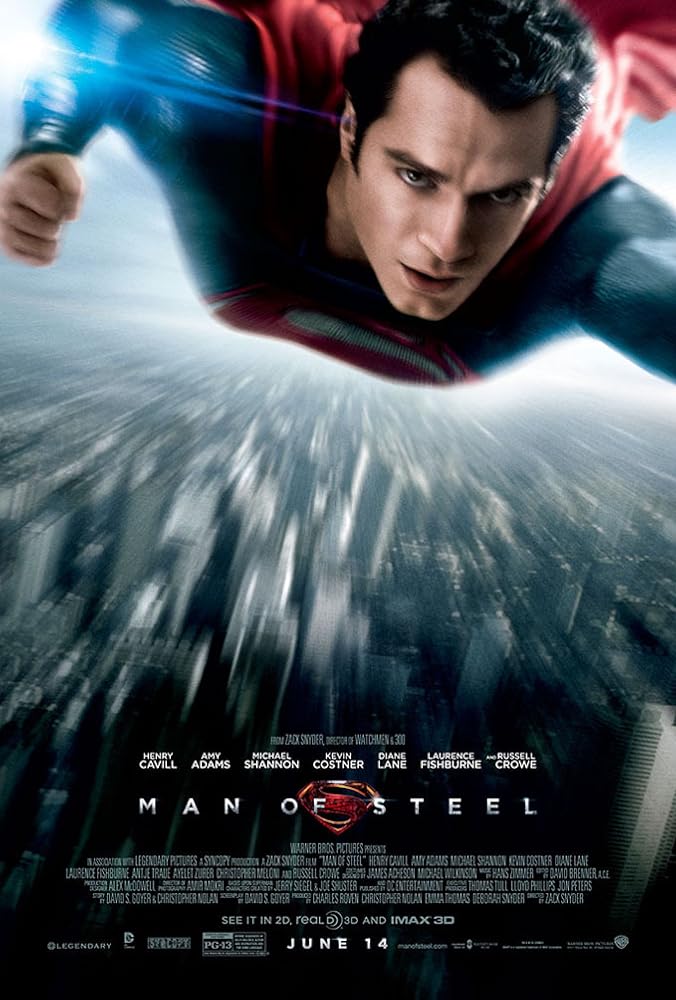
 Kevin Costner, Russell Crowe, Laurence Fishburne, Christopher Meloni, Amy Adams, Henry Cavill, Richard Schiff, Michael Shannon, Ayelet Zurer, Dylan Sprayberry, Samantha Win, and Rebecca Buller in Man of Steel (2013)

First off, let’s start by going over Zack Snyder’s affiliation with the DCEU, which officially began in 2013 with the Superman reboot Man of Steel. For both DC and Warner Bros, this was their second major attempt at a reboot of the Superman franchise after their previous attempt, 2006’s Superman Returns, was both a critical and financial underperformer. Luckily for them, this was right around the time that Christopher Nolan had just completed working on his trilogy of Batman films, AKA the Dark Knight trilogy, which were easily some of the most critically-acclaimed and financially successful superhero films at the time. Because of this, Nolan was brought on to spearhead Man of Steel’s production, which meant that while he wasn’t going to direct it, he would still be heavily involved with it with the expectation that it would match the overall atmosphere of the Dark Knight trilogy. Nolan reteamed with his Dark Knight trilogy co-writer David S. Goyer to write the film, and after considering filmmakers like Darren Aronofsky, Matt Reeves, and Ben Affleck (who, of course, would factor into the franchise at a later date), Zack Snyder was chosen to direct the film. At this point, Snyder was easily one of the studio’s most prominent filmmakers with hits such as the 2007 adaptation of Frank Miller’s 300 and his incredibly ambitious adaptation of the seminal graphic novel Watchmen by Alan Moore and Dave Gibbons. Sure, he had just come off a rather notorious critical and financial flop with 2011’s Sucker Punch, based on his own original concept, but that didn’t stop Snyder in the slightest from taking the helm on the next major incarnation of the Last Son of Krypton.

Henry Cavill in Man of Steel (2013)

Man of Steel was easily one of the most anticipated films of 2013, and upon its release… it ended up being arguably the most polarizing film of that year. Critics and audiences were truly split down the middle when it came to their thoughts on the film, namely due to how Snyder (and, by extension, Nolan and Goyer) delivered a radically different take on the title character. For some folks, they were totally fine with this as they felt that it was something that Superman needed for what was meant to be a more modernized take on the character. For others, however, it was a bit too much, especially due to things like the film’s utilization of destruction imagery that felt too similar to 9/11 and the controversial moment where Superman kills the main antagonist, General Zod, by snapping his neck despite his traditional ‘no-killing’ mandate from the comics. Nevertheless, the film was a solid hit at the box-office and grossed over $668 million worldwide, thus paving the way for Warner Bros to immediately begin laying the groundwork for its own cinematic universe to rival the MCU. While it was initially implied that the plan was to do at least one more Superman-centric feature before getting into the whole ‘cinematic universe’ angle, that idea seemed to change when the first details of the film were revealed at the 2013 San Diego Comic-Con. After having Harry Lennix (who played General Swanwick in Man of Steel) set the mood by reciting a passage from the iconic miniseries that was Frank Miller’s The Dark Knight Returns, it was instantly made clear that the next installment of the DC Extended Universe would be a crossover between Batman and Superman. And since Christian Bale had already completed his turn as Batman in Nolan’s Dark Knight trilogy, this new film would serve as the official debut of the DCEU’s interpretation of the Dark Knight that would be heavily inspired by the grizzled and jaded version of the character from Dark Knight Returns.

Ben Affleck in Batman v Superman: Dawn of Justice (2016)

After a highly publicized casting search that included names like Josh Brolin and Jon Hamm, Ben Affleck was officially cast as Bruce Wayne AKA Batman. Admittedly, though, Affleck’s casting initially drew an intensely negative response from fans, namely due to his disastrous previous role in a superhero film when he played Marvel’s Daredevil in the 2003 film of the same name. At the same time, though, Affleck was experiencing a major career resurrection thanks to his work as a director on Gone Baby Gone, The Town, and 2012’s Best Picture winner, Argo. Thus, the most exciting aspect of Affleck’s casting was that it immediately led to him being given the opportunity to direct the first solo outing for his version of the character. After that, further announcements then revealed that Batman wasn’t going to be the only new superhero appearing in the film. First, it was announced that the third and final member of DC’s ‘Trinity’, Wonder Woman, would make her debut in the film as well, which would also be the character’s first official appearance in a live-action film. Gal Gadot was cast in the role and, like Affleck, experienced some harshly negative blowback from fans when the initial news broke of her involvement. Soon afterward, it was then revealed that The Flash (Ezra Miller), Aquaman (Jason Momoa), and Cyborg (Ray Fisher) would all make cameos as well to build up hype for their larger roles in the upcoming Justice League film which, of course, Zack Snyder was also slated to direct. Thus, while a lot of the build-up for the film was clearly impacted by the polarizing nature of Man of Steel and how fans reacted to Snyder’s casting choices, Batman v Superman: Dawn of Justice was still widely considered to be one of the most highly anticipated films of 2016. At this point, it was now very much clear that it was meant to be the official kick-starter for Warner Bros and DC’s own, unique spin on a superhero-centric cinematic universe.

Ben Affleck, Henry Cavill, and Gal Gadot in Batman v Superman: Dawn of Justice (2016)

The film finally hit theaters on March 25th, 2016, and if you thought that the reception towards Man of Steel was rough… well, it was about to get a whole lot worse for DC and Warner Bros. Upon its release, Batman v Superman was utterly savaged by critics who felt that the story was incredibly convoluted and that the film itself was far too dour. Simply put, this wasn’t even close to being the same kind of situation that Man of Steel ended up in where there was a genuine 50/50 split between its fans and its critics. When it came to Batman v Superman… most people hated it. This also translated to its run at the box-office where, despite a $166 million opening weekend and a worldwide gross of over $873 million worldwide, it was considered a financial disappointment since it didn’t reach the studio’s projected total of $1 billion. By comparison, the MCU’s big ensemble picture of that year, Captain America: Civil War, instantly outmatched BvS in every conceivable way with a $179 million opening weekend, a worldwide gross of over $1.1 billion, and perhaps most importantly, vastly superior reviews from critics and audiences. However, when it comes to Dawn of Justice’s initial release, it soon became known that some of its biggest shortcomings weren’t exactly Zack Snyder’s fault when it was revealed that he was forced to cut around half an hour of what was originally meant to be a three-hour film. It was reported that the biggest reason for this decision was that the studio was uncertain about the original cut’s box-office potential, especially since it would’ve garnered an R rating instead of the more genre-friendly PG-13 rating. Luckily for Snyder, he was able to make his version available to the public when the ‘Ultimate Edition’ of the film was released on Blu-Ray and digital. And upon its release, many agreed that while it may not have been enough to sway the film’s most vocal critics, it was, at the very least, a far superior cut since many of the sequences that were taken out resulted in the theatrical cut suffering from some significant plot-holes.

Ben Affleck in Batman v Superman: Dawn of Justice (2016)

Despite this, however, the damage was already done. Batman v Superman: Dawn of Justice was meant to be DC and Warner Bros’ answer to what Marvel Studios had managed to accomplish with the Marvel Cinematic Universe… and it ended up being one of the most despised blockbusters of recent memory. As you might have guessed, this immediately began to impact future installments of the franchise. The other big DCEU release of 2016, Suicide Squad, ended up having a troubled production largely due to the studio’s efforts to try and address many of the issues that critics had with Batman v Superman. And yet, as a result, Suicide Squad yielded the exact same results as BvS; it was commercially successful but critically panned. Luckily for both DC and Warner Bros, they did end up having their first big hit the following year with Wonder Woman. Not only did it manage to avoid any of the issues that BvS and Suicide Squad endured during its production, but it was easily the most well-received installment of the franchise to date as it was widely touted for forgoing the overly grim atmosphere of the franchise’s previous installments. And from the looks of it, it seemed like this would also be the case with the DCEU’s other big 2017 release, especially since this was going to be the biggest one of them all, Justice League. Following all the intense criticism that stemmed from Batman v Superman’s overly dour tone, it was widely reported that Justice League was not going to end up the same way and would be far lighter in tone by comparison. And while later reports noted that the film would have to undergo some major reshoots after early test screenings didn’t go too well, everything seemed to be going all right for the production. But then, of course, as we all know, it all came crumbling down, and unfortunately, it all began with a devastating family tragedy.


On March 12th, 2017, Snyder’s 20-year-old daughter Autumn committed suicide. While Snyder did continue to work on Justice League for the next two months, he and his wife Deborah (his long-time producer) then proceeded to announce that they would be stepping away from the production in the wake of the loss of their daughter. And so, Joss Whedon, who had already been brought on to help work on script re-writes, was put in charge of both the reshoots and post-production. Whedon, of course, was already quite familiar with the superhero genre thanks to his work as the director of the first two Avengers films, and before the film’s release, it was reported that Whedon would be doing his best to maintain the vision that Snyder had for the film. But when the film finally came out… it ended up telling a completely different story. Immediately upon its release, both critics and audiences noted how the film was an absolute mess in terms of its tone. And while it was initially reported that Whedon’s additions to the film would be generally minor at best, it was very much clear that he had re-shot much of the film and that only a few moments in it were leftover from Snyder’s version, resulting in a complete hodge-podge of clashing directorial visions. Thus, Justice League became yet another critical flop for the DCEU, and even worse, this time it was also a financial flop since it wasn’t able to break-even on its $300 million budget, which made it one of the most expensive films of all-time. And because of its failure, the entire franchise was put through a complete reshuffle. Key figures like Geoff Johns and Jon Berg left the studio while plans for a Justice League sequel were canceled in favor of solo films that didn’t rely on the shared universe narrative. And in 2019, after he had already stepped down from directing the next Batman film, Ben Affleck announced that he was officially stepping down from the title role. Thus, Robert Pattinson will now take on the role of Batman for director Matt Reeves in The Batman, which is set to hit theaters on October 1st, 2021.

Jason Momoa, Gal Gadot, Ezra Miller, and Ray Fisher in Zack Snyder's Justice League (2021)

Now for the record, today’s post is not going to delve into the specific details of the changes that Whedon made to Justice League and the noteworthy scenes from Snyder’s version that were left out. Simply put, that’s another post for another time. But to sum up everything that we’ve gone through so far, I think it’s safe to say that of the three DC Extended Universe films that Zack Snyder has directed, his first one, Man of Steel, was the only entry where he wasn’t considerably hindered by studio interference. But because Man of Steel was so polarizing due to its radically different take on Superman, I can imagine that Warner Bros began to show some concern over the direction that the franchise was heading in, especially since it wasn’t as financially successful as Nolan’s Dark Knight trilogy despite his direct involvement in it. Perhaps that is one of the reasons why Batman was brought in for the next film to try and improve its box-office potential even if it came at the cost of not doing a proper follow-up to Man of Steel. But, of course, the biggest story that came out of Batman v Superman: Dawn of Justice’s production was how Snyder was forced to cut out a full half-hour of the film. It’s been rumored that another big reason why he had to do this was that, supposedly, he didn’t have the same kind of directorial clout that someone like James Cameron has to make a massive three-hour blockbuster. However, this also meant that the sequences that were being cut were ones that were utterly pivotal to the story, resulting in some incredibly egregious plot-holes. Thankfully, this ended up being one of those cases where this occurred near the end of production, effectively allowing Snyder to release his version of the film on home video without the need for any extensive reworking of the theatrical cut. Unfortunately, the same can’t be said for Justice League. His version of it was far from finished when he stepped away from production and would’ve required a lot of extra money to finish a film that was already sporting one of the largest budgets in film history. With that in mind, it goes without saying that many of the issues with Justice League are ones that can’t be attributed to Snyder since he had nothing to do with the theatrical cut due to immensely tragic circumstances that were far beyond his control.

Ben Affleck, Henry Cavill, and Gal Gadot in Justice League (2017)

However, if you’ll allow me to debunk one of the biggest myths that has been perpetrated by the DCEU fandom, it’s the idea that all the film’s problems were entirely Joss Whedon’s fault. Ever since the theatrical cut’s release, Whedon has been the primary target of the #ReleasetheSnyderCut faithful for ‘destroying’ Snyder’s vision with the new material that he shot. However, what these folks tend to overlook is the fact that, in a scenario that was obviously much different than what happened with Snyder, Whedon was also heavily screwed over by the production. In his case, it primarily stemmed from the fact that the two months of reshoots that he presided over began in July of 2017… just 4 months before the film’s November release date. And so, given all the information that has revealed that Snyder’s contributions to the theatrical cut only amounted to a few select scenes, this means that Whedon had to rework almost all of what was set to be one of Warner Bros’ biggest tent-pole releases in less than half a year. In other words, all those criticisms surrounding the film’s mediocre visual effects suddenly make a lot more sense when you realize that the VFX artists who worked on it had barely any time to finish them. Now to be clear, everything that I just brought up here doesn’t mean that I’m ‘defending’ the changes that Joss Whedon made to the film. While I am a fan of much of Whedon’s work from Firefly and its film adaptation Serenity to, of course, his Avengers films, even I can agree that this is some of his worst material when it comes to the snappy dialogue that he’s well-known for. But at the end of the day, you can’t really blame the theatrical cut of Justice League solely on him since it’s very much clear that time wasn’t on his side.

Jason Momoa, Gal Gadot, Ezra Miller, and Ray Fisher in Justice League (2017)

Ultimately, the failure of Justice League was mainly the result of Warner Bros not recognizing the fact that they were clearly rushing it so that they could compete with the Avengers films that Marvel Studios was making. They were so locked in on that November 2017 release date that it didn’t even matter that the reshoots for it couldn’t happen until July of that year. This, of course, spawned one of the biggest stories that surrounded these reshoots; the fact that it occurred during the production of a different film, Mission Impossible – Fallout, which Superman himself, Henry Cavill, was also starring in. He also notably sported a mustache for that film, and Paramount (the studio behind the Mission Impossible franchise) wasn’t keen on having Cavill shave it off for the Justice League reshoots. Thus, Cavill had to keep his facial hair for the reshoots, resulting in the most widely mocked visual effects in the entire film… the CGI that had to be used to erase it off his face. Clearly, Warner Bros should’ve just pushed the film back to 2018 so that Zack and Deborah Snyder would have enough time to mourn the loss of their daughter and properly return to the production. After all, that’s exactly what happened with both of Snyder’s previous DCEU films so that he and his crew could have more time to work on them. Man of Steel was originally set to come out at the end of 2012 before it was pushed back to June 2013. And as for Batman v Superman, it was originally meant to come out in July 2015 before being pushed back nearly a full year and ultimately settling for its final March 2016 release date. Now admittedly, at the time of Justice League’s release, 2018 was shaping up to be an incredibly packed year for the superhero genre. The MCU had the next Avengers film, Infinity War, along with Black Panther and Ant-Man and the Wasp, the X-Men franchise was set to release its next main installment, Dark Phoenix, along with the sequel to Deadpool and a spin-off, The New Mutants, Sony had the Spider-Man spin-off Venom and even the DCEU had its next big release, Aquaman. And yet, not long into 2018, both Dark Phoenix and The New Mutants were pushed back (Dark Phoenix to 2019, New Mutants… well, we’ll get to that one another time). So yeah… there really wasn’t any kind of excuse at this point as to why Warner Bros didn’t just delay Justice League back a year.

Justice League (2017)

But at the end of the day, these disastrous results were exactly what Warner Bros and DC needed so that they could finally realize that they were foolishly rushing the development of the DC Extended Universe. Instead of efficiently building up the franchise with solo installments that both properly introduced us to its main protagonists and gradually expanded the universe like the MCU did, they decided to just skip ahead to Justice League after only a few films. Thus, when Justice League came out, Batman, Wonder Woman and Superman were the only members of the titular group to have had major roles in previous installments while the Flash, Aquaman, and Cyborg were basically making their official franchise debuts with almost little to no buildup. Sure, they had all previously appeared in Batman v Superman and Flash had also made an appearance in Suicide Squad, but only as minor (and nearly inconsequential) cameos. In other words, to reiterate a point that I made a few months back in my Top 12 Films of 2019 list when I ranked Shazam at the #7 spot, it was like if Marvel had decided to do the first Avengers film right after Iron Man 2, completely ignoring Thor and Captain America’s first solo features. If that was the case, then the only instances that would’ve hinted at their future appearances would’ve been the prototype of Cap’s shield seen in Tony Stark’s basement and the post-credits scene of Iron Man 2 where Agent Coulson arrives at the crash site of Thor’s hammer, Mjolnir. Thankfully, though, Marvel Studios was smart enough to not do that. Unfortunately, you can’t really say the same for the DCEU since, apparently, they didn’t want to be bogged down by what they perceived to be the increasingly routine nature of traditional superhero origin stories.
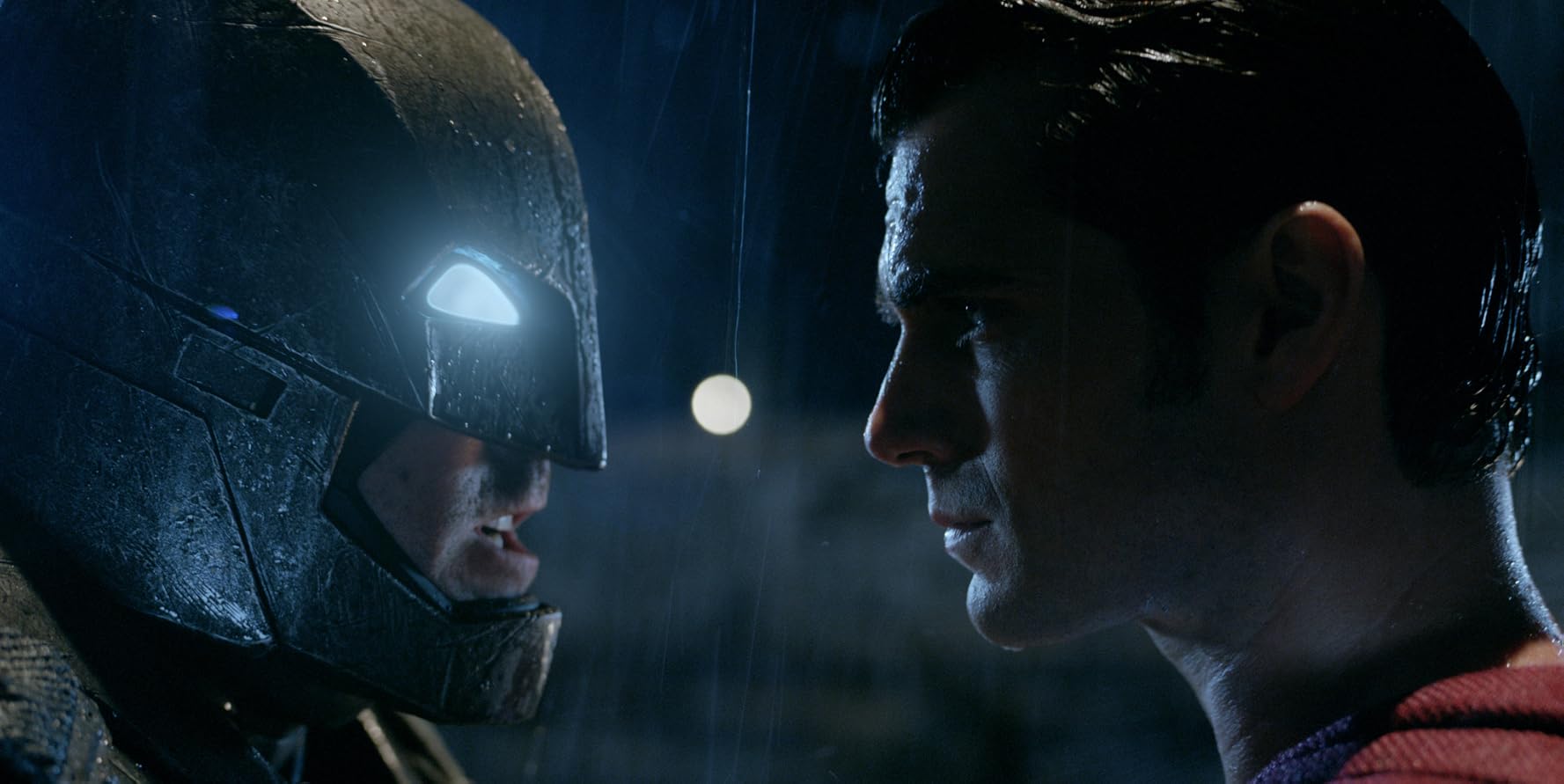
Ben Affleck and Henry Cavill in Batman v Superman: Dawn of Justice (2016)

But to reiterate a different point that I made in that Top 12 Films of 2019 list, I’d argue that another problem for the DCEU early on was that it tried a bit too hard to ‘not be Marvel’. And for the record, when I say “not be Marvel”, that’s primarily in reference to the long-standing stigma against the MCU films that claims that they’re nothing more than kid-friendly comedies, especially in the wake of Marvel being purchased by Disney in 2009. Now sure, it’s true that MCU films are usually light-hearted affairs that are often dominated by the comedic banter between characters, but if there’s one point that I’ve hopefully gotten across the most these past few years, it’s that they’re much more than just silly comedies. In fact, in the years since this mindset started becoming more common within the DCEU fandom, I believe that films like the culturally relevant Black Panther and the emotionally charged duology of Avengers: Infinity War and Avengers: Endgame have been more than enough proof against the claim that the MCU is ‘just for kids’. Nevertheless, it’s truly astounding how much the hardcore side of the DCEU fandom utterly despises the light-hearted style of the MCU films, almost as if they believe that dark and gritty narratives are the only worthy routes that a superhero film should take instead of being the fun and entertaining blockbusters that they normally are. As you might have guessed, this is one of the biggest reasons why the hardcore DCEU faithful usually prefer Zack Snyder’s DCEU films instead of some of the franchise’s more critically successful outings. In fact, even Snyder has distanced himself from the more light-hearted installments of the superhero genre by stating that it simply isn’t the kind of material that he prefers. And so, with all this in mind, I think it’s safe to say that the time has finally come for me to say something that I know damn well will outright infuriate the #ReleasetheSnyderCut faithful… and yet is very much something that needs to be said at this point. To be clear, what I’m about to say is not meant to be a personal dig against Snyder, especially given the circumstances behind his departure from Justice League. But at the end of the day… Zack Snyder probably wasn’t the best choice to be the director who was meant to spearhead the genesis and future of DC’s brand-new cinematic universe.

Ben Affleck and Zack Snyder in Batman v Superman: Dawn of Justice (2016)

Now to be clear, I’m not saying that I think Snyder is a terrible director. He’s certainly proven himself to be one of the best visually-driven filmmakers in the business and that is very much apparent in every film that he’s made. And yet, as great as he is as a visual director, he’s been less successful when it comes to story and characters. Some would say that his adaptation of Watchmen is the exception to this, but despite Snyder’s considerable efforts to stay faithful to Alan Moore and Dave Gibbons’ seminal graphic novel, many have argued that this was more from a visual perspective rather than a narrative one. But to go back to what I just mentioned earlier about Snyder’s preferences when it comes to superhero narratives, if he wants to do superhero films that are more like Watchmen, then that’s totally fine. He’s completely within his rights as a filmmaker to do those kinds of films. However, I also feel that this kind of nihilistic philosophy applies better to the likes of niche properties like 300 and Watchmen rather than mainstream characters like Batman and Superman that have appealed to audiences of all ages. This is especially the case with children because, despite what some members of the DCEU fandom may claim, comic-book superheroes are usually marketed towards the younger demographic. Batman v Superman: Dawn of Justice, by way of Snyder’s intended 3-hour cut, is not even close to being geared towards kids. Instead, it’s a dark, dour, and incredibly violent R-rated flick that sees the title characters act in generally unheroic ways. And it all culminates with one of the most idealistic heroes of the entire genre, Superman, dying in an incredibly gruesome manner just so they could pay homage to the infamous storyline from the comics in which he dies after an intense battle with Doomsday. Simply put, that probably wasn’t the best idea for a major studio tentpole release that was being marketed to the widest audience possible.
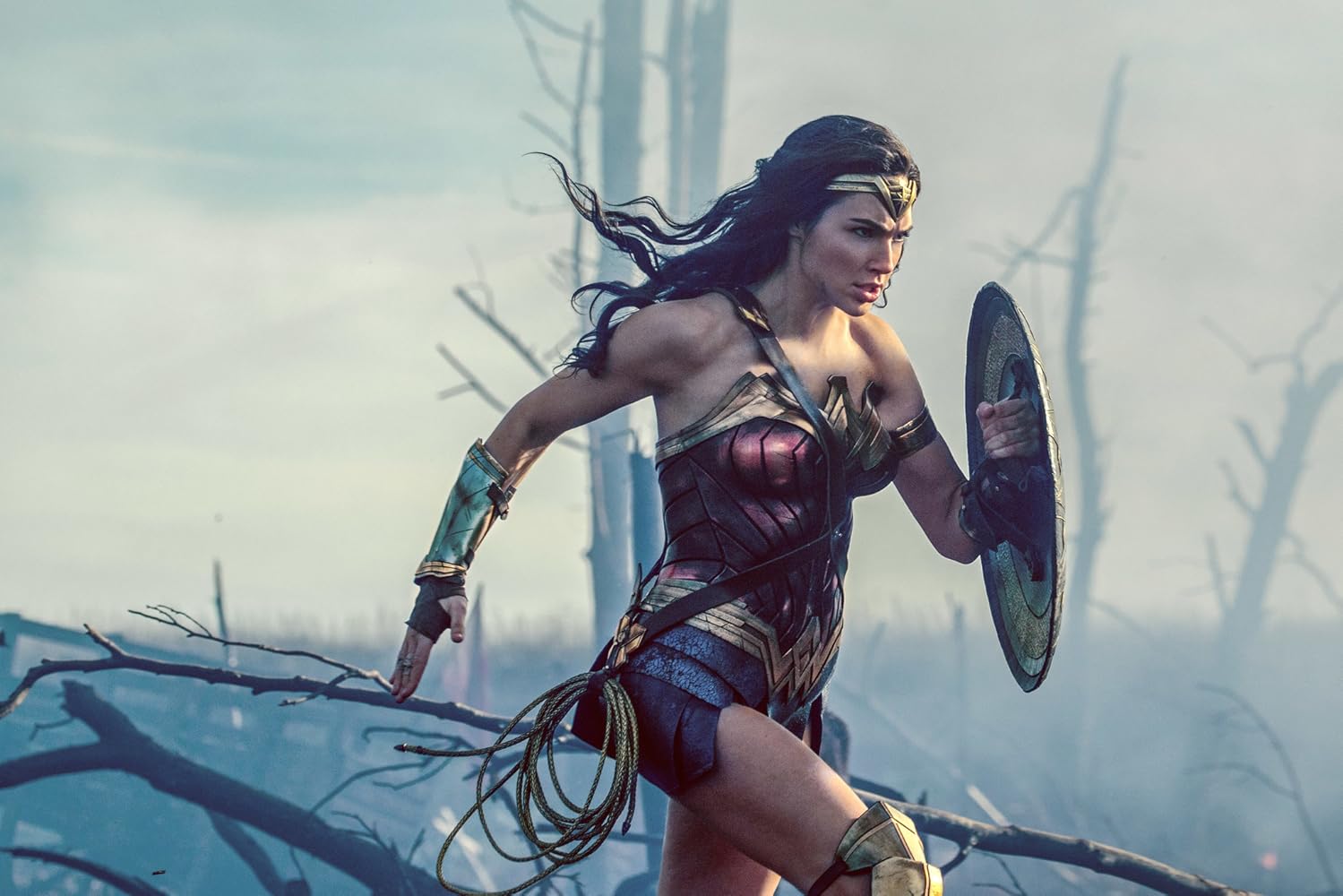
Gal Gadot in Wonder Woman (2017)

By comparison, other installments of the DCEU have done a far better job when it comes to developing these characters rather than just being a case of style over substance. Snyder may have been the one who brought Wonder Woman to the screen in Batman v Superman, but it was Patty Jenkins who made her a genuine icon and quite arguably the MVP of the franchise by way of her solo film. And while Snyder may have also set the stage for Aquaman’s franchise debut, it was James Wan who took Jason Momoa’s potentially controversial take on the character and turned him into the full-blown charismatic star of what ended up becoming the DCEU’s highest-grossing installment to date. In fact, I’d argue that the best DCEU film to date is one that Snyder had absolutely nothing to do with, Shazam. Some may refer to Shazam as the closest that the DCEU has ever gotten to replicating the MCU aesthetic, because aside from some incredibly dark moments that feel like they came straight out of a horror film, it’s easily the DCEU’s most light-hearted entry to date. But as I’ve said plenty of times by now, there’s a lot more to this than just colorful visuals and a plethora of jokes, as Shazam also fully succeeds at giving its title character a proper and emotionally cathartic character arc that’s perfectly synced with all the fun superhero escapades that he partakes in. Suffice it to say, this is something that you never really got out of the DCEU films that Snyder directed, and the one character who was hurt by this the most was Superman, thus resulting in his sacrifice at the end of Batman v Superman feeling incredibly hollow. And it’s a shame, really, because Henry Cavill has very much proven himself to be an incredibly charismatic actor thanks to films like The Man from UNCLE and Mission Impossible – Fallout. Thus, given the recent news that revealed that Cavill is set to return to the franchise after quite a few years where it was rumored that he was done playing Superman, I hope that he’ll have better material to work with going forward. Because, really, it’s saying something when his best performance in the role… was in Justice League. Yes, despite all the wonky CGI to remove his mustache and the fact that it contrasted heavily with how the character was portrayed in both Man of Steel and Batman v Superman, it is still the closest that Henry Cavill has ever gotten to matching Christopher Reeve’s iconic interpretation of the character.

Jason Momoa in Zack Snyder's Justice League (2021)

And so, given everything that I’ve gone through in today’s post, I must admit that the announcement that Zack Snyder’s Justice League will finally see the light of day is one that has left me with mixed feelings overall, and as you might have guessed, this largely has to do with the whole #ReleasetheSnyderCut movement. Now before I continue, let me just point out that I’m well aware that what I’m about to discuss doesn’t represent the entirety of those who were involved in the campaign for the release of Snyder’s version of the film. I know that a lot of people who participated in it simply did so because they wanted to see this version of the film released publicly, especially given all the tragic circumstances that led to Snyder’s departure from the production. On that note, quite arguably the best result to come from this campaign was that over $150,000 was raised for the American Foundation for Suicide Prevention. Unfortunately, as has usually been the case these past few years with incidents that are attributed to internet fandom, the more vocal and incredibly toxic members of the community have ultimately been the ones who have ended up dominating the discussion. Before the announcement that the film was finally going to get released, they attacked anyone who dared to suggest that the idea of releasing Snyder’s version of the film seemed impossible at the time given the status that it was in when he left the production. Many of them have also harassed Warner Bros. employees to the point where the former President of DC Entertainment, Diane Nelson, had to delete her Twitter account. But perhaps the biggest thing to note about this entire movement was how utterly persistent it was at times to the point where that hashtag was being pushed even when talking about things that had nothing to do with Justice League. Thus, as much as some will say that folks like this only represent a small part of the community, I do think that we’re at a point now where crap like this needs to be better addressed. Because at the end of the day, even the actions of a select number of ‘fans’ (a term that, as you might have guessed, I use very loosely here) has the potential to make us all look bad simply by association.


And as I’ve said plenty of times over the past few years, the hardcore faction of the DCEU fandom has become one of the most toxic internet groups in recent memory. If you were to ask me why, I’d say that it’s largely because of how they are fully devoted to what Zack Snyder had envisioned for the franchise. Thus, when anyone dares to come along and suggest that his DCEU films were far from perfect, his fans will come out of the woodwork, get incredibly infuriated about it, and try to pass off the utterly bogus conspiracy that critics of Snyder’s films were paid off by Disney and Marvel to make the MCU look better by comparison. Heck, even when the DC Extended Universe had a genuine hit on its hands, these folks still somehow managed to find something to be upset about. When Wonder Woman became the DCEU’s first critically acclaimed hit, a lot of Snyder fans tried to pin it all on him since he had a story credit instead of, you know, director Patty Jenkins. When Aquaman came out, the hardcore DCEU fandom attacked anyone who had predicted that the film wasn’t going to be a box-office hit and, as you might have guessed, lashed out at anyone who gave it a negative review. And don’t even get me started on how furious they were when Birds of Prey came out earlier this year rather than the films that they wanted like a sequel to Man of Steel or the Snyder Cut. But, of course, the biggest stunt that they’ve pulled (apart from their negative influence on the whole #ReleasetheSnyderCut situation, of course…) was when they tried to shut down Rotten Tomatoes in 2016 after Batman v Superman and Suicide Squad were both savaged by critics. Simply put, these folks haven’t responded well to the idea that the DC Extended Universe has worked a lot better when it isn’t going with the grim aesthetic that Snyder had established during the franchise’s early days.


But now this brings us to what has easily been the most concerning aspect of the announcement for Zack Snyder’s Justice League… the fact that it could potentially pave the way for more instances in the future where overly entitled fans aggressively demand changes to films when they don’t turn out exactly the way they wanted. In fact, I’d argue that, when it comes to films that have left some sort of impact on the film industry, Justice League has been one of the most prevalent examples in recent memory of a film that has left a negative impact because of how it has emboldened certain online crowds to endlessly vent about what could have been. Nowadays, whenever a deleted scene for a film is released, some folks will act like they were ‘robbed’ of a sequence that, 9 times out of 10, was cut for a legitimate reason (e.g. the deleted scene in Avengers: Endgame where the Avengers all take a knee to mourn Tony Stark right after he dies). And it’s all thanks to the film that, until Snyder’s version comes out next year, boasted one of the vastest and eclectic collections of sequences that were ultimately left on the cutting room floor. Sure enough, there have already been quite a few noteworthy examples recently of fans demanding alternate cuts. Staying in the DCEU for a moment, some have been pushing for the version of Suicide Squad that director David Ayer had originally developed before it was heavily compromised by studio interference. A few weeks after Star Wars: The Rise of Skywalker came out, rumors started floating around that director J.J. Abrams was forced to make some critical changes to the film in the wake of the polarizing reactions to The Last Jedi, resulting in the #ReleasetheJJCut hashtag becoming a thing. And finally, literally just a few days after I started writing this post, the next big fan campaign emerged when Star Wars fans started to push for director George Lucas’ original 4-hour cut of Episode III – Revenge of the Sith.

The toxic attitudes of modern film fan culture were directly parodied in 'Batman's Back Man', the fifth episode of the second season of the hit DC Universe animated series 'Harley Quinn'
Simply put, I wouldn’t be surprised if this isn’t the last time that we’ll be seeing fans getting this worked up over a film’s mythical alternate cut. And so, in conclusion, I will reiterate what I’ve said before in that when it comes to the announcement that Zack Snyder’s Justice League will finally get released, I am happy for Zack Snyder… and Zack Snyder only (and, by extension, everyone who had worked on the film before the reshoots). Despite my current feelings towards his DCEU films, I’m glad that he was able to find closure on a project that he never got the chance to finish. And yet, I simply can’t say the same for the DCEU fandom because as much as I know that many people who participated in this movement did so out of genuine appreciation for Snyder’s work, said movement was tainted by some utterly toxic jackasses who haven’t been able to fathom the possibility that his takes on these classic characters were inherently flawed. Plus, to be perfectly blunt, folks… I just got so damn tired of hearing about this film all the frigging time for the past two and a half years, especially whenever it threatened to overshadow the instances where the DCEU managed to achieve some genuine success. Now, to be clear, this doesn’t mean that I was ever against the notion of its release. Once it debuts on HBO Max next year, I assure you that I’ll watch it and will then give you a proper review/discussion post on it. However, this doesn’t excuse the fact that everything that surrounded its release is ultimately yet another example of the increasing sense of entitlement that is thoroughly plaguing modern fandom. We now live in an era where, for some inexplicable reason, some believe that the best way to express their disappointment over a film or TV show is to vehemently lash out at the filmmakers and studios who worked on them as if the fact that they didn’t live up to their oddly specific set of expectations is the equivalent of some kind of criminal offense. And yet, this is exactly the kind of deplorable behavior that I’m thoroughly against as a film critic because I believe that it’s a blatant sign of disrespect coming from people who think that they know better than those who work in the industry even though incidents like this very much prove otherwise.


That concludes this extensive discussion on the history behind Zack Snyder’s version of Justice League. Since this single post ultimately proved to be nearly as long as either of the lengthy write-ups that I did for Star Wars: The Rise of Skywalker and Avengers: Endgame in my Top 12 Films of 2019 list from a few months back, I’d like to thank all of you for sticking it out with me when it comes to this incredibly daunting beast of an editorial.

Monday, November 20, 2017

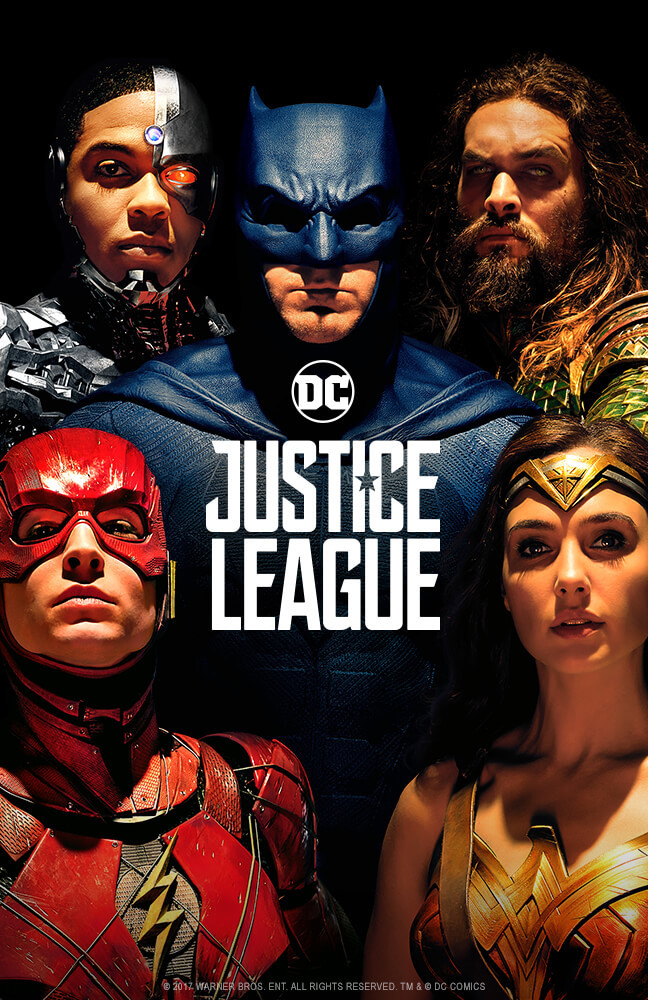
Justice League (2017) review


For the past decade, Marvel Studios has dominated the superhero film genre thanks to the Marvel Cinematic Universe, which was an unprecedented success story as nothing like it had ever been done before in the context of live-action films. After starting out strong with a series of solo outings that slowly but surely began to lay down the foundation for a larger universe, the MCU truly hit it big in 2012 when it brought all of its main heroes together in what ultimately became one of the landmark entries of the genre, The Avengers. But while the Avengers have undoubtedly become one of the most famous squads in the world of film, there is another superhero team that is arguably more iconic than them. I’m, of course, referring to DC Comics’ own legendary superhero group, the Justice League. Ever since the group’s initial creation in 1960 as a revamp of DC’s Justice Society of America, the Justice League, made up of several of the company’s most legendary heroes including the Holy Trinity of Superman, Batman, and Wonder Woman, has become a staple of the DC universe. Aside from their various runs in the comics, the team has also left its mark on other facets of pop culture, including several video games (e.g. the Injustice fighting games) and a bunch of hit TV shows, most notably the Justice League cartoons from the early 2000’s that were created by the team behind the iconic Batman: The Animated Series. And now almost six decades after their initial comic debut, the Justice League has finally hit the big-screen in DC’s highly-anticipated crossover event.

However, the journey that this film has gone on to make it to this point has been rather rocky, to say the least. A full decade prior to its release, a different iteration of Justice League was in the works under the direction of Mad Max creator George Miller. Ultimately, though, this version ended up falling by the wayside due in large part to the 2007-08 Writers’ Strike. It wouldn’t be until after Warner Bros and DC managed to successfully resurrect the Superman franchise in 2013 with Zack Snyder’s Man of Steel that the idea of a Justice League film was once again put into motion. And thus, the DC Extended Universe, DC and Warner Bros.’ answer to the MCU, was born; but again, things haven’t exactly gone smoothly for this franchise since its inception. While both Man of Steel and its 2016 follow-up Batman v. Superman: Dawn of Justice (which introduced Ben Affleck’s rendition of the titular Dark Knight) did perform solidly at the box-office, they also yielded an extremely polarizing response from both critics and audiences. Simply put, these films have had as many extremely devoted fans as they’ve had their extremely vocal critics. Thankfully, though, the franchise did manage to rebound a bit this year thanks to the long-awaited solo outing for DC’s legendary heroine, Wonder Woman, a well-deserved success story for everyone involved on that production, especially director Patty Jenkins and lead actress Gal Gadot. But now we turn our attention to director Zack Snyder’s third entry in the DCEU, Justice League, which… is once again proving to be quite controversial amongst critics. And to be perfectly blunt… this time I can see exactly where they’re coming from when it comes to this film’s biggest issues.

At the end of Batman v. Superman, Bruce Wayne AKA the Gotham City vigilante Batman (Ben Affleck) saw his faith in humanity restored following the noble sacrifice of his ‘nemesis’ turned ally Superman (Henry Cavill) against the monstrous creature known as Doomsday. Despite this, however, the world finds itself plunging into greater chaos following Superman’s death, effectively leaving it open for an invasion by the god-like being known as Steppenwolf (portrayed by Ciaran Hinds via motion-capture). Backed by his army of extraterrestrial creatures known as Parademons, Steppenwolf seeks to reclaim the three mysterious devices hidden on Earth known as ‘Mother Boxes’ that grant unparalleled power to those that use them. To deal with the invasion, Bruce and Diana Prince AKA the Amazonian warrior Wonder Woman (Gal Gadot) begin to recruit those who are just like them (referred to in the DC universe as ‘metahumans’) in order to form a team that’s powerful enough to take on Steppenwolf and his army in light of Superman’s absence. In the process, the two end up recruiting Arthur Curry AKA Aquaman, the ruler of the undersea kingdom of Atlantis (Jason Momoa), college student Barry Allen AKA the speedster known as ‘the Flash’ (Ezra Miller), and Victor Stone (Ray Fisher), a former football star who was turned into a cyborg after a near-fatal car accident.

Simply put, when this film focuses on what audiences came to see (namely, the Justice League in action), it does deliver on that front. There are tons of great character moments here and there to satisfy the DC Comics faithful who have been waiting to see these characters together onscreen for years. However... that doesn’t mean that this film is devoid of some major flaws. For one thing, it’s all over the place when it comes to its tone. This aspect of the DCEU has been a primary source of contention amongst critics as both Man of Steel and Batman v. Superman were heavily criticized for being too dour. Thankfully with this film, an attempt was at least made for it to be more light-hearted compared to its predecessors; and yet, despite this, its attempts at humor are hit and miss at best. It also tries to balance said humor with some of the more serious aspects of the plot, something that it doesn’t necessarily succeed at doing. Overall, it seems as if a lot of this film’s tonal issues were a direct result of the biggest moment that occurred during its production, when Snyder was forced to step away from the film due to the death of his daughter and Joss Whedon (who, of course, is no stranger to this genre) was brought in to oversee rewrites and reshoots. However, while watching this film, it becomes abundantly clear that Whedon was forcibly rushed when it came to the process of finishing it, resulting in not only those aforementioned tonal issues but also some dodgy CGI as well (e.g. the now-infamous attempts that were made to digitally remove the mustache that Henry Cavill had grown prior to reshoots that he had to keep for the upcoming Mission Impossible 6).

Among other things, this film is primarily tasked with serving as the proper ‘introduction’ of three new main characters to the DCEU; Flash, Aquaman, and Cyborg. Although the three of them had already technically been introduced in Batman v Superman via a series of brief cameos, this film serves as the first instance where they were each given a lead role. And overall, the film does do a decent job of establishing the DCEU’s iterations of these classic characters, as each main protagonist (both new and returning) does manage to get his or her own standout moment. Despite what I said before about the film’s humor being rather spotty, Ezra Miller’s Flash does get a lot of the best lines in the film as the inexperienced rookie who’s brought in to help deal with a daunting ‘save the world’ scenario. As for Aquaman, while it seems like a lot of his character development is being saved for his upcoming solo film next year, Jason Momoa does, at least, make a good first impression as DC’s often mocked aquatic-based superhero. Finally, with Cyborg, Ray Fisher does a good job of conveying the character’s inner turmoil given his tragic backstory. As for the returning heroes, both Gal Gadot and Ben Affleck are solid once again as Wonder Woman and Batman, respectively. Gadot continues to shine as the DCEU’s best protagonist, even amidst all of this film’s shortcomings, and Affleck still stands strong as the DCEU’s grizzled interpretation of the Dark Knight. And for those who weren’t too big on how Batman was portrayed in BvS, namely via his tendency to kill bad guys, you’ll be pleased to know that they do dial back on that characterization here.

Now, at the risk of delving into spoiler territory (though, really, everyone basically knew this already going in)… yes, Superman returns in this film after the character’s death in BvS. I won’t be getting into the exact specifics of how he’s brought back but I will say that, with this film, Henry Cavill has thankfully been given the chance to, shall we say, ‘act’ like Superman. Granted, I did think that he did a solid job in the previous two films that he appeared in but, at the same time, those films didn’t exactly give him the best material to work with, either. With Justice League, though, we finally get a Superman reminiscent of Christopher Reeve’s iconic iteration of the character from the original Superman films. But while all of the main leads get a solid amount of material to work with in this film, the same can’t be said for its supporting characters as they are all basically limited to ‘cameo’ appearances a la Flash, Aquaman, and Cyborg in BvS. This applies to not only returning DCEU players like Amy Adams as Lois Lane and Connie Nielsen as Diana’s mother Queen Hippolyta but also newcomers like Mera, Queen of Atlantis (Amber Heard), and J.K. Simmons’ version of Commissioner Jim Gordon, characters that are clearly being intended to have more substantial roles in future films. And as for the main villain, Steppenwolf… he’s practically a non-existent threat. Despite Ciaran Hinds’ best efforts in the role, the character gets nothing of value to work with here; no backstory, no sense of what he’s trying to accomplish, no indication of his relationship to another famous DC comics antagonist (and future big bad of the DCEU) Darkseid, etc.  In other words, he’s one of the genre’s weakest villains ever.

So before any of the hardcore DCEU fans out there get on my case because of what I’ve said in this review, let me be perfectly clear; I didn’t outright ‘dislike’ Justice League. As I said before, when it focuses on its titular squad of superheroes, it does lead to some great character moments between them. At the same time, though, the overall execution is quite sloppy. While I do appreciate the efforts that were made by Zack Snyder and company to avoid delving into the dour tone that many felt plagued Batman v Superman, the film still suffers from having a rather inconsistent tone. And while the main leads are all solid in their respective roles, the plot is basic, the humor is hit or miss, and the main villain is pathetically weak. In short, a lot of this feels rushed, which arguably isn’t that surprising seeing how this came out only one year after Batman v Superman. And while both Snyder and Joss Whedon tried their best to fix some of the most glaring issues that people have had with previous DCEU installments (save for Wonder Woman), it just wasn’t enough to overcome the immense time crunch that they were both clearly under. With that said, though, if you’re a long-time fan of DC and these characters, I bet that you’ll probably be satisfied with this long-awaited live-action adaptation of arguably the most famous superhero team in all of pop culture… who, quite frankly, deserved a hell of a lot better than what is practically the DC equivalent of Fan4stic. I wish I was kidding about that comparison, but I’m not; granted, it’s nowhere near as bad as Fan4stic, but it too is a case of a studio trying to salvage a reportedly disastrous cut of their tent-pole release only to make things worse in the process.


Rating: 2.5/5 (So yeah, my streak of giving every major superhero film this year a 5/5 rating officially ends here. Still, despite my issues with Justice League, this has been one of the genre’s greatest years ever, which is something that will certainly be emphasized in my impending ‘Best Films of the Year’ list. But as for this film… well, as much as I hate to say it, it is most likely going to end up appearing on… the other list…)

Wednesday, July 27, 2016

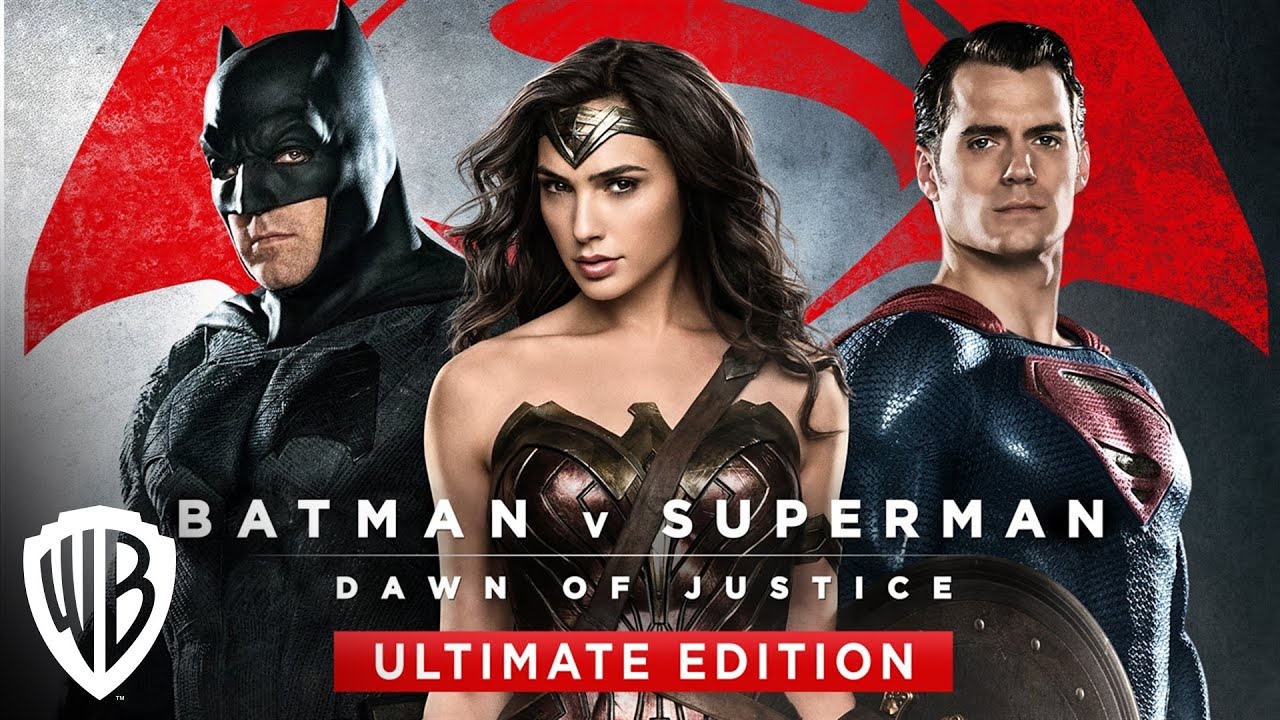
Batman v Superman: Dawn of Justice - ULTIMATE EDITION Review/Discussion


As many of you know, when Batman v Superman: Dawn of Justice was released in theaters this past March, things didn’t turn out as well as Warner Bros. had hoped for their big superhero epic that was set to start off DC’s own ‘Cinematic Universe’. The film was absolutely savaged by critics and even though, like its predecessor Man of Steel, it did have its fair share of fans this time around its critics were much more vocal in expressing their disdain for the film. And while it certainly did well at the box-office, grossing over $872 million worldwide, somehow it was still deemed a ‘box-office failure’ due to the fact that it didn’t reach the studio’s expected goal of $1 billion (this, folks, is why I’m not in the box-office industry… how nearly $900 million worldwide is supposed to be a failure is beyond me). But while many found the film to be quite underwhelming, a lot of folks were looking ahead to the film’s home media release. Because prior to the film’s theatrical release, director Zack Snyder had noted that his original cut of the film was around three hours long before it was cut down to the theatrical cut’s 151-minute runtime. But as for the original cut, Snyder confirmed that it would be released with the theatrical cut upon the film’s release to Blu-Ray, DVD, and digital outlets. And now with this new R-rated ‘Ultimate Edition’, fans finally get to see Snyder’s true vision for the film. So with that said, considering that I actually was a fan of the film’s theatrical cut, even when taking all of its faults into account, what are my thoughts on the ‘Ultimate Edition’? More importantly, can this new version of the film do enough to change the minds of those who didn’t like it the first time?

Well I’m pleased to report that the Ultimate Edition of Batman v Superman: Dawn of Justice IS indeed the superior cut. The main reason for this is simple; because the film is allowed to breathe at a run-time of just over three hours, the film’s plot flows much smoother than it did in the theatrical cut. As a result, certain scenes that some folks felt were rushed and underdeveloped have much more weight to them. For example, a commonly derided scene in the film was the opening action sequence in Africa, in which Superman saves Lois from a group of terrorists but is then deemed as the one responsible for a series of deaths that occurred during the attack. The Ultimate Edition shows more of this sequence, not only showing said deaths (many of which weren’t actually seen in the theatrical cut) but also giving audiences a greater sense of what really happened and how Lex Luthor used this incident to turn the world against Superman. On that note, Lex’s overall plan to combat Superman is much more detailed in this version, namely in regards to how he blackmails certain people into doing his dirty work as well as how Lois investigates the whole conspiracy. Remember the scene in the courtroom where Superman wasn’t able to detect the bomb hidden inside Wallace Keefe’s wheelchair? Well as explained in the Ultimate Edition, the chair was lead-lined so yes, there was a reason why Superman didn’t notice it. As far as the action is concerned, there’s not really that much added in this cut. There’s more of the Africa attack, which has quite a few cases of bloodshed as soldiers are shot by Anatoli and his men, and the scene in which Batman brutally takes down Anatoli and his men as he rescues Martha is certainly much more intense with shots that no doubt had to be cut to appease the censors. But for the most part, the new additions are mostly story based.  

Now with all of this said, I can’t really say that this film will completely win over everyone who wasn’t a fan of the film’s theatrical cut. Because in terms of overall execution, this newer cut still maintains the same general style/vision of its trimmed counterpart. It’s still very serious in tone with only a few quips from characters like Alfred and Perry White to lighten up the mood. Jesse Eisenberg’s polarizing portrayal of Lex Luthor is still the same polarizing performance that you either liked or were annoyed by. The highly anticipated fight between Batman and Superman is still only a small part of a bigger story and no the Ultimate Edition doesn’t add anything to that scene. And the whole scene in which Wonder Woman views the video files on other meta-humans like Flash and Aquaman is still done in the same manner. Like with Man of Steel, it really all comes down to how you view the way this film’s story is told. And as for me, as I’ve gone over before, I was fine with plenty of the choices that Snyder made with this film, from how they introduced the other members of the Justice League to, yes, even that controversial ‘Martha’ scene that the internet constantly mocked. At the end of the day, the most important thing that the Ultimate Edition does is that it fixes quite a few narrative issues that critics/audiences pointed out when it was released, namely in regards to Lex’s whole conspiracy plan. And the choppy editing that sometimes plagued the theatrical cut in scenes like the Africa attack is much smoother as a result.


So the big question now is why did Warner Bros end up cutting so much out of the film when it was released in theaters? At this point I’m sure that it wasn’t due to the stuff in the film that would’ve warranted an R-rating, like the bloodier action in Africa or the brief glimpse of Ben Affleck’s butt during a scene in which Bruce takes a shower, because those additions are only minor at best. And besides, as we all know, the MPAA can be pretty damn lenient when it comes to stuff like that. No at the end of the day the bigger concern was why they cut so much out of the film to the point where it hindered the plot. Well with that said, it’s pretty darn clear as to why Snyder was forced to cut out so much… time constraints. As Snyder himself put it, he just didn’t have the same kind of creative clout that someone like James Cameron has to the point where he could get his full 3-hour long cut of the film released. But the thing is… even though the Ultimate Edition is 30 minutes longer than the theatrical cut, I still would’ve gone to see the film in theaters if it was released in its uncut form. I would have totally sat in that theater for three hours if it meant that I would be able to see the film as Snyder fully envisioned it. I do agree with the argument that if this cut of the film was the one that was shown in theaters, I bet it would’ve done much better with critics. Granted, I don’t think that it would’ve been outright critically acclaimed like some of the MCU films but at the very least I think it would’ve at least been on the same level as its predecessor, hovering somewhere around the 50% range on Rotten Tomatoes. 

So with all of this in mind, here are my thoughts on how people will probably respond to this Ultimate Edition. If you were someone who absolutely hated the film and pretty much everything in it, then it’s safe to say that you’re probably not going to like this newer cut any better because it’s still the same kind of film as its theatrical cut. But if you’re someone who didn’t hate it but was more on the fence about it (in other words, you’d give it a rating somewhere around 2.5/5 or so), then I think that at the very least you’ll like this newer version a bit more because it does fix quite a few of the narrative issues that most people had with the film’s theatrical cut. And as for those who did love the film when it was released, well, this newer cut is just going to be even more satisfying. Now like I said before, I did like the film as it was in its theatrical cut. Yeah it did have some major problems when it came to editing and the narrative but I do feel that Snyder managed to overcome that, for the most part, with an excellent visual style, impressive debuts by Ben Affleck and Gal Gadot as Batman and Wonder Woman, respectively, and a strong third act with an effective emotional finale revolving around the death of Superman. Since the Ultimate Edition was released, I’ve seen quite a few people online say that they’re not going to watch the theatrical cut anymore now that this superior cut is out. As for me, I’m not going to outright disown that cut because as I’ve been saying numerous times, it wasn’t ‘that bad’. But at the end of the day, the Ultimate Edition really is the true version of Batman v Superman. Here’s hoping something like this doesn’t happen again with Justice League.   


Rating: Originally I gave Batman v Superman: Dawn of Justice, as it was when it was first released in theaters, a 3.5/5 rating. When I went to go see the film a second time, I actually bumped my rating up to a 4/5 because I got a greater understanding of the story’s emotional depth. So with all of that said, I will give the Ultimate Edition a 4.5/5 due to the fact that it did fix two major issues that most had with the film, resulting in a much stronger narrative.

Monday, April 4, 2016

Batman v Superman: Dawn of Justice SPOILER POST


“Black and Blue. Fight Night. The greatest Gladiator match in the history of the world. God vs. Man. Day vs. Knight. Son of Krypton vs. Bat of Gotham.”

(WARNING: SPOILERS AHEAD)

Friday, March 25, 2016

Batman v Superman: Dawn of Justice (2016) review (400th Post!!)


In June of 1938, DC Comics launched its Action Comics series, which introduced the character of Superman, the ‘alien’ being from the planet Krypton who was sent to Earth by his father Jor-El when the planet was on the brink of destruction. Adopted by the Kents, Superman spent much of his childhood living in Kansas under the name Clark Kent before taking on the public persona of Superman as an adult. In doing so, he not only became DC’s ‘first’ major superhero but also arguably the most famous superhero of all-time. Just a little less than a year later, in May of 1939, DC debuted the character of Batman in the 27th issue of their Detective Comics series. Batman, AKA Bruce Wayne, the billionaire playboy who took on the persona of ‘The Dark Knight’ after witnessing his parents’ murder at a young age, is arguably just as iconic as Superman if not more given all of the numerous adaptations of the character over the years from films to TV shows to video games. While DC Comics has created numerous superheroes over the years from Wonder Woman to the Flash to Green Lantern, Batman and Superman are easily the company’s most famous protagonists. That is very much exemplified by their track records on film because, to be perfectly frank, they are kind of the only major DC superheroes to find success in live-action on the big-screen. Superman pretty much kicked off the ‘superhero film genre’ with his 1978 titular film Superman, directed by Richard Donner, while Batman’s own titular outing from 1989, directed by Tim Burton, was another noteworthy entry for the genre. Both franchises experienced their own highs and lows over the years but they have also saw revivals in recent years. In the case of Batman, it was thanks to Christopher Nolan’s Dark Knight trilogy while Superman got a Dark Knight style reimagining in 2013 with Man of Steel.

Three years after Man of Steel, DC now begins its journey into establishing its own cinematic universe, just like Marvel has done over the past eight years, with the follow-up to Man of Steel, Batman v. Superman: Dawn of Justice. Man of Steel director Zack Snyder returns to direct as does the main cast of Man of Steel while Ben Affleck takes over for Christian Bale in the role of Batman. It is the first time that these titans of DC have appeared together in a live-action film so obviously there was a lot of hype surrounding the film because of that as well as the aforementioned fact that it’s meant to kick-start DC’s own cinematic universe. However, at the moment it is currently being slammed by critics, sporting only a measly 30% rating on Rotten Tomatoes (at the time I’m writing this). While this isn’t really that surprising seeing how Man of Steel also received mixed reviews from critics (that film has a 56% rating on RT) and was no doubt the most polarizing film of 2013, I assure you that this new film is nowhere near as bad as that RT rating suggests. Now don’t get me wrong as there are some issues with this film, namely in regards to the story and the editing. At the same time, though, there are genuinely some very good things about this film, particularly the visuals, the action sequences, and the performances of a few noteworthy newcomers to the DC ‘Extended Universe’ (that’s the term they’re going with for this new Cinematic Universe, from what I’ve heard). In other words, I’m certain that fans of the DC universe are going to be pretty satisfied with this long-awaited crossover involving the ‘Son of Krypton’ and the ‘Bat of Gotham’.

The film takes place 18 months after the events of Man of Steel, in which Superman (Henry Cavill) successfully prevented General Zod (Michael Shannon) from destroying the Earth in order to establish a new home for the people of Krypton. At the same time, however, Superman’s confrontation with Zod ended up causing a lot of collateral damage to the city of Metropolis. Because of this, Superman ends up becoming a controversial figure amongst various parties. One particular critic of Superman is Gotham billionaire Bruce Wayne (Ben Affleck), who of course as we know moonlights as Gotham’s vigilante Batman. Fearing that Superman, being an all-powerful alien, could pose a severe threat to the human race, Bruce begins an all-out defense against Superman, which soon sees the two superheroes coming into conflict with each other. At the same time, however, Metropolis tech mogul Lex Luthor (Jesse Eisenberg), who also views Superman as a threat as well as other ‘meta-humans’ currently out there, begins to experiment with both the remains of General Zod and the Kryptonian technology recovered from the battle of Metropolis, particularly the material known as Kryptonite, in order to combat Superman. Lex’s actions, which pose a threat to not just Batman and Superman but the whole world as well, soon force the two heroes to work together, serving as a precedent for future events in the DC universe.

So as far as this film’s primary issues are concerned, they mainly come from the story and the editing, particularly during the first twenty minutes or so. This film admittedly does start out on a bit of a rough note as the plot sort of goes in all directions in regards to what’s going on. Part of it does come from the editing, which can be rather choppy at times. In a way, that does sort of apply to the whole film; after all, this film does cover a lot of ground even in the fairly hefty span of 153 minutes. Not only does this film continue the story that began in Man of Steel but it also re-establishes the character of Batman while also setting up other characters like Wonder Woman (Gal Gadot). But ultimately, I did like how the film ‘set up’ the other characters. At the end of the day, this is still very much a Batman/Superman film and while I was worried that Batman was going to overshadow Superman in what was originally ‘his sequel’ (which I know some will deny but I do recall Zack Snyder stating at one point that he wanted to do a second Superman film before getting into anything Justice League related, and keep in mind that this was before it was revealed that Batman was going to be in it), the film actually is rather balanced in terms of their roles in the overall plot. Wonder Woman is basically the only other major DC lead superhero to have a ‘major’ role in the story but the film does feature some ‘cameo appearances’ from the likes of characters like Aquaman (Jason Momoa) and the Flash (Ezra Miller) and I do think that the film handled these ‘cameos’ well. They don’t overshadow Batman, Superman, or Wonder Woman, but they do their job in regards to setting them up for future films without them actually playing ‘a role’ in this film’s story. Stuff like this did keep me invested throughout even if the narrative did become rather unfocused at times.

But these problems do sort of become less prevalent as the film goes on and this is where Batman v Superman really starts to shine, namely in regards to its visuals. There’s no denying that Zack Snyder is one of the best ‘visual directors’ in the business. That is especially true whenever Snyder does a ‘comic-book’ film, like he did with 300 in 2007 and Watchmen in 2009. It’s been very much shown that Snyder really does have a talent in regards to translating the imagery of the comics to the big-screen and that once again shows with this film. So even if you’re not a big fan of this film, there’s no denying that it has one hell of an awesome visual style. That also translates well into the action sequences. Admittedly most of the action sequences are reserved for the third act of the film but when they do happen, they’re pretty darn epic, especially the fight sequences between Batman and Superman and quite frankly any action sequences involving Batman for that matter. Like Man of Steel, this film has attracted a considerable amount of flak for its overall tone; in other words, these films have been criticized for being ‘too grim’. However, I don’t entirely agree with that because while it is true that these films are much more serious compared to the lighter-hearted efforts of the Marvel Cinematic Universe, that doesn’t mean that they are completely ‘dour’. There are a few light-hearted quips peppered in here and there, particularly from Alfred (Jeremy Irons, who is, to put it simply, quite excellent in the role of Bruce Wayne’s trusty butler) and Perry White (Laurence Fishburne). Some of you might recall the rumor that DC was mandating a ‘no joke’ policy in regards to their upcoming films. Well based solely on this film I can tell you that this alleged ‘no joke’ mandate… was a load of bull.

Performance-wise, the returning cast of Man of Steel (Cavill, Amy Adams, Diane Lane, etc.) are as solid as they were in the first film. Ultimately though, the major focus for most people this time around was the newcomers; Affleck as Batman, Gadot as Wonder Woman, and Eisenberg as Lex Luthor. It’s pretty much guaranteed that any major superhero casting is going to be subjected to much scrutiny from comic book fans and Affleck’s casting as Batman is arguably the most controversial superhero casting of all-time. While Affleck has redeemed his career in recent years thanks to his directorial efforts with films like Argo and Gone Baby Gone, his previous turn in the superhero genre, 2003’s Daredevil, was clearly still in the minds of a lot of comic book fans. Thankfully, a lot of those critics are hopefully now eating their words because Affleck is superb as Batman. His take on the character is very much influenced by the older Bruce Wayne from Frank Miller’s iconic series The Dark Knight Returns and Affleck handles the role of the aged Batman perfectly. The controversy over Gal Gadot’s casting of Wonder Woman mainly stemmed from the fact that Gadot’s filmography prior to this film wasn’t necessarily that ‘illustrious’. But ultimately she is excellent in the role. Obviously she isn’t in it as much as Affleck or Cavill but once she ‘becomes’ Wonder Woman, man does she steal the show. And finally we come to Jesse Eisenberg as Lex Luthor, who of course attracted controversy on the grounds that some believed he ‘didn’t look the part’. As far as his performance in this film goes, it’s no doubt going to be one of the most polarizing elements of the film. Eisenberg does play the role in a fairly over-the-top manner. For some, this will be a bit ‘much’ but I will say that he does have some genuinely memorable moments from time to time and at the very least it feels like he’s at least doing something different in the role compared to what has come before.

At the end of the day, Batman v Superman: Dawn of Justice may be attracting a rather negative reaction from most critics but that doesn’t automatically mean that the developing DC ‘Extended Universe’ is in jeopardy. I have the feeling that the next two films in this franchise, Suicide Squad and Wonder Woman, are probably going to fare better with critics. Still, I do feel that some critics have been overly harsh on this film. Some critics will deny it but I assure you that I have some clearly biased reviews from people who kept s***ting on this film before they saw it; in other words, they went into it already intent on hating it and that’s just unfair. Anyone who’s been following this blog the past few years will know that I used to be pretty darn critical towards this film in the years leading up to its release, mainly after it was announced that Wonder Woman was going to be in this ‘Batman and Superman’ film. But ultimately I realized that I was being totally unjust towards the film by being overly critical towards it despite the fact that it wasn’t even out yet. I’ve made it clear that I’m a bigger fan of what Marvel Studios has been doing with their Cinematic Universe but that did not influence my thoughts on this film in any way. And ultimately I will say that I did like Batman v Superman: Dawn of Justice. Yes, there are some flaws, namely in regards to the film’s rather scrambled narrative. This is by no means a ‘perfect’ superhero film. But the things that this film does right truly are great, particularly the visuals, action sequences, and noteworthy performances from the likes of Ben Affleck and Gal Gadot, among others. A 30% on RT this is not… if you ask me, it should be in the same camp as Man of Steel and have a rating somewhere in the 50’s that represents the admittedly polarizing nature of the film. Ultimately though, I will say this… if you’re a fan of DC Comics, and if you did like Man of Steel I have the feeling that you’re really going to like this film no matter what the critics may say about it.

Rating: 3.5/5

Saturday, March 8, 2014

300: Rise of An Empire (2014) review


‘300’ may not have been Zack Snyder’s first film, but it was thanks to that film’s huge success that made Snyder as famous as he is today, whereas 2004’s ‘Dawn of the Dead’ was basically a good ‘first impression’. Since that film came out in 2007, other films have tried to copy the film’s unique visual style but none have really achieved the same level of success of Snyder’s film. Now, 7 years after the original came out, the fictionalized world of Frank Miller’s ‘300’ continues with ‘300: Rise of An Empire’. This one, like its predecessor, is also based on one of Miller’s graphic novels, ‘Xerxes’. However, at the time I am writing this, it has yet to be published and there is currently no word on when it will be released. Also, for this film, Snyder does not return to direct seeing how he has been busy with ‘Man of Steel’ and its upcoming sequel. So, in his place is director Noam Murro, whose only film to date is the 2008 dramedy ‘Smart People’. Yeah, you have to admit that’s kind of an ‘out of left field’ choice to take over this franchise but Murro succeeds in continuing the franchise the same way Snyder started it with the original ‘300’. Sure, it may not be the best written film ever but it is still very much entertaining to watch.

While it may seem like a sequel, ‘Rise of An Empire’ is actually more of an interquel, taking place during the events of the original ‘300’ although some scenes do take place before and after that film. This film begins during the Battle of Marathon, 10 years before the events of the first film, between the Athenians and the Persians. There, Greek general Themistocles (Sullivan Stapleton) kills Persian King Darius I. However, this event soon begins to set the groundwork for the war to come as Darius’ son Xerxes (Rodrigo Santoro) takes his father’s advice and becomes ‘the god king’ because it is the only way the Greeks can truly be defeated. As Xerxes begins his invasion on the people of Greece, Themistocles begins to rally the Athenian fleet as they begin their fight against the Persian naval fleet, led by Xerxes’ vengeful commander Artemisia (Eva Green), who seeks vengeance against Greece after her family was killed when she was younger (she herself actually being born a Greek).

Even with the change in direction, this film maintains the same highly stylized look of the original. However, Murro’s film is also noticeably much grittier in tone than Snyder’s film. For one thing, it doesn’t have the same exact level of mysticism as the original had during certain scenes. It’s clear that the original ‘300’ was more of a historical fantasy while this one feels just a bit more grounded in reality… though keep in mind, we’re still talking about a film with a king that’s eight feet tall and covered in piercings, amongst some other things, so it’s still very much an historical fantasy.  As such, in execution, this movie is just as awesomely entertaining as the original with all of its stylized action scenes that are full of slow-motion shots and digitized blood whenever someone is killed in battle. Yes, that admittedly does come at the expense of quality writing but then again, the original ‘300’ was also technically not that well-written either. But again like that film, this film’s not completely empty-minded. There are still the themes of honor and unity and as such, the movie’s not a total case of ‘style over substance’.

Still, many of the characters do fall rather flat, save for one character; Artemisia. Not only is she the standout character of the whole film, but Eva Green absolutely steals the show with her performance. She really gets into the role of this fierce and sexy commander of the Persian Naval Fleet and in a movie full of characters that don’t really get much character development, her character is easily the most fleshed out given her rather tragic backstory. She outshines everyone else in the cast, though that’s not to say some don’t give solid performances. Lead Sullivan Stapleton may not have the tenacity or bold attitude that Gerard Butler had as Leonidas, but he still does a rock solid job in the role for what he is given. The same can be said for the other members of the cast, including both returning characters (like Lena Headey as Leonidas’ widow, Queen Gorgo) and even some of the new characters (like Jack O’Connell as the son of one of Themistocles’ soldiers). Still, this movie belongs to Eva Green.

If you were a fan of the original ‘300’, I have the feeling that this film will very much satisfy you just as much as that film did. It’s just as entertaining and awesome as the original film and even though Zack Snyder does not direct this film, director Noam Murro still makes the movie feel very much like Snyder’s ‘300’. Yes, it’s not the best-written film ever and, when compared to the original, this suffers a bit more in regards to quality story and character development. Still, the film manages to be entertaining enough to the point where you can still have a good time with it while watching it. These ‘300’ films are some of the most perfect examples of ‘popcorn flicks’. Don’t get into this film expecting some quality writing because by the end of it, you’re going to leave pretty disappointed. This is just a fun and simple fantasy ‘swords and sandals’ flick and for some, that’s exactly what they came to see.


Rating: 3.5/5