Monday, December 31, 2018

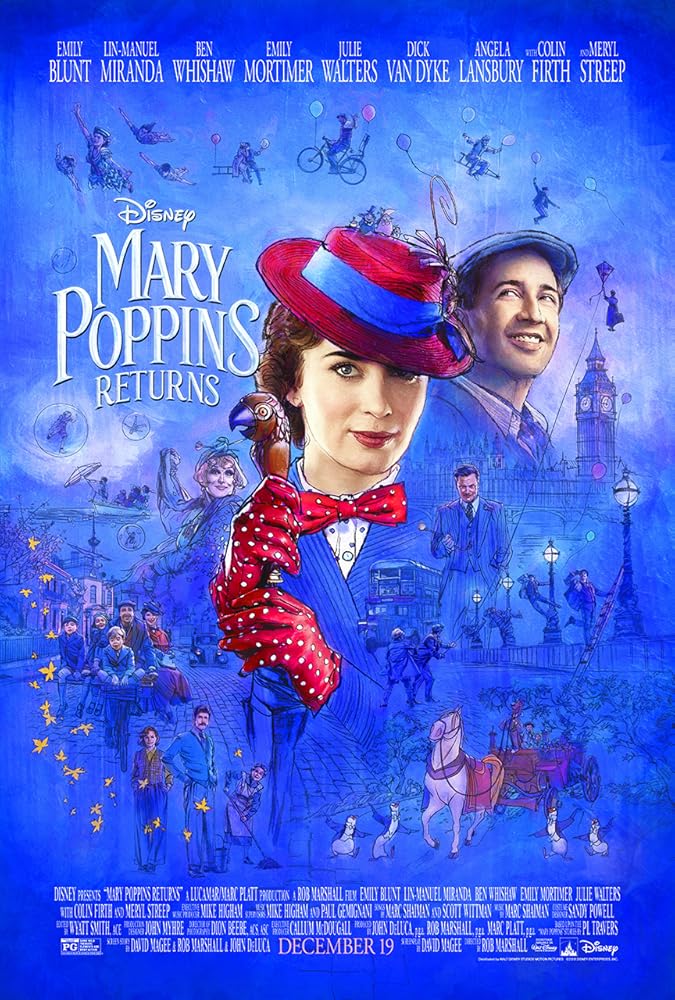
Mary Poppins Returns (2018) review

Colin Firth, Meryl Streep, Lin-Manuel Miranda, Emily Mortimer, Julie Walters, Ben Whishaw, and Emily Blunt in Mary Poppins Returns (2018)

Disney’s 1964 adaptation of P.L. Travers’ classic book series Mary Poppins is a film that needs no introduction. With a lovely visual style, iconic soundtrack by the Sherman brothers, and outstanding lead performances from Julie Andrews as the titular nanny and Dick Van Dyke as her lovable sidekick Bert, Mary Poppins is quite arguably the most beloved Disney film ever made. For starters, it achieved a studio record by earning 13 nominations at the 37th annual Academy Awards (including Best Picture) and ultimately won 5, with Andrews winning the Oscar for Best Actress. And with a total box-office gross of over $102 million achieved through its initial release and additional re-releases, it’s safe to say that this is a film that has continued to stand the test of time. One person who didn’t like the film, however, was P.L. Travers. As dramatized in the 2013 film Saving Mr. Banks, the film’s pre-production mostly consisted of disagreements between Travers and Walt Disney over changes that the latter and his team were making to her story. And because of all these creative conflicts, Travers forbid Disney from ever making a sequel… that is, until 2015, when the studio got the approval from Travers’ estate to do a sequel to the original classic. Under the direction of veteran filmmaker Rob Marshall, who’s no stranger to musicals having directed the 2002 Best Picture winner Chicago and Disney’s 2014 adaptation of the popular Broadway show Into the Woods, Mary Poppins Returns is not just a remake of the original Mary Poppins as many feared it would be when it was first announced. And while this new film does ultimately share quite a few things in common with its predecessor, it still comes together nicely for a truly heartwarming family flick.

It has been twenty-five years since Mary Poppins (Emily Blunt), the magical nanny who’s ‘practically perfect in every way’, came to the Banks family and changed their lives for the better. In the years since, Michael Banks (Ben Whishaw), who still lives at 17 Cherry Tree Lane, has started a family of his own with three kids, his daughter Annabel (Pixie Davies) and his two sons John (Nathanael Saleh) and Georgie (Joel Dawson). However, since the passing of his wife Kate one year prior, the family has been dealing with serious financial troubles which have only been made worse by the onslaught of the Great Depression. And to make matters worse, Michael is notified by his lawyers that he only has a few days to pay off the loan that he made after his wife’s passing or he and his family will be forced out of their home. To try and fix the problem, Michael and his sister Jane (Emily Mortimer) try to find the certificate that verifies their father’s shares at Fidelity Fiduciary Bank while Michael’s kids attempt to earn the money on their own accord. Luckily for all of them, Mary Poppins ends up coming back into the family’s lives, agreeing to look after Annabel, John, and Georgie while Michael and Jane deal with their current predicament. And just like their father and aunt before them, the new crop of Banks children discover the full extent of Mary Poppins’ magical abilities, which she uses with the help of a friendly lamplighter named Jack (Lin-Manuel Miranda) to turn their luck around.

Now let me start by saying that, while I usually try not to directly agree with popular opinion, I will admit that I do concur with one of the most common points that are being brought up about this film in that it has quite a bit in common with its predecessor. The main plot isn’t that different from the original save for a more tension-filled climax and a more pronounced villain. Heck, even the songs in this film’s soundtrack have similar set-ups to the ones from the original, from a show-stopping dance number to lighten the mood like ‘Step in Time’ to an uplifting grand finale tune a la ‘Let’s Go Fly a Kite’. And yet, despite all this, the film does a great job of maintaining the heartwarming atmosphere of the original Mary Poppins without being a direct carbon copy of it. Even with a similar plot, this new film is on par with the original when it comes to having a strong sense of emotional depth throughout via the Banks family’s current gloomy predicament and how they overcome it with the help of Mary Poppins. This is then matched nicely with all the whimsical adventures that Mary and the Banks children go on, and just like the original, this film boasts a gorgeous visual style throughout right down to the inclusion of a sequence where the characters interact with traditionally-animated characters. As for the soundtrack, courtesy of Hairspray songwriters Marc Shaiman and Scott Wittman, it generally matches the Sherman brothers’ soundtrack for the original film in terms of how perfectly well- balanced it is. In other words, there are just as many great emotional melodies in this (e.g. a heart-wrenching solo for Michael, ‘A Conversation’, and Mary Poppins’ big solo ‘The Place Where Lost Things Go’) as there are grandiose show-tunes (e.g. ‘Trip a Little Light Fantastic’ which, as previously mentioned, is basically this film’s version of ‘Step in Time’).

Clearly, a lot of expectations were set upon this film given the pedigree of its predecessor, and perhaps no one felt this greater than Emily Blunt when it came to her taking on the role of Mary Poppins from Julie Andrews. Luckily for Blunt, her take on the whimsical English nanny is a wonderful performance that fully allows her to make the part her own. Specifically, she gets to go off Travers’ books a bit more by having her Mary be a bit snarkier with the Banks family. However, the compassion that she has for them, AKA the one thing that made Andrews’ take on the character vastly different from the books but iconic nevertheless, is still there, providing a unique balance between book and film. And just like Andrews did with Dick Van Dyke all those years ago, Blunt works wonderfully off Lin-Manuel Miranda as this film’s ‘Bert’, Jack the lamplighter. But just like Blunt, Miranda manages to make his character more than just a copy of his predecessor, whether it’s through an opportunity for Miranda to show off his freestyle roots or a sweet little romance that forms between him and Jane. Speaking of the Banks children, both Ben Whishaw and Emily Mortimer are excellent in their respective roles, with Whishaw getting some of the most understated emotional moments in the film and Mortimer making the most out of what is basically the equivalent of Glynis Johns’ role from the original as Winifred Banks. The new Banks children are great as well thanks in large part to the strong sibling camaraderie between them that is apparent right out the gate. Lastly, just like the original, this film features some highly memorable cameos throughout, including Meryl Streep as Mary’s eccentric cousin/fix-it shop owner Topsy and even the one and only Dick Van Dyke as Fidelity Fiduciary Bank chairman Mr. Dawes Jr., a nod to his secondary role in the original as Mr. Dawes Sr.  

In short, it’s true that the new Mary Poppins has quite a lot in common with the original classic. Not only does it have a near-similar plot to its predecessor, but even its new soundtrack mirrors the original in terms of both song placement and premise. As such, the inevitable argument regarding this film’s necessity continues to be in play, especially given Disney’s current trend of revitalizing some of their classic stories for a new generation. But to be clear, this is not just a ‘remake’ of the original Mary Poppins (believe me, if it was, then it would’ve been dead in the water as soon as it was announced given how intense the internet gets about stuff like this). Yes, it feels like the original in a lot of ways, but considering how great the original Mary Poppins truly is, this isn’t such a bad thing in this instance. Under the solid direction of Rob Marshall, this film nobly follows in the footsteps of its predecessor when it comes to achieving that perfect balance of thoroughly emotional family drama and whimsical fantasy. The soundtrack by Marc Shaiman and Scott Wittman is quite arguably on par with the Sherman brothers’ iconic soundtrack from the original and the film maintains the same great visual style of its predecessor. And with a terrific ensemble cast headlined by Emily Blunt’s phenomenal turn as Mary Poppins, Mary Poppins Returns is easily one of the most delightful films to come out in recent years. Admittedly, I can’t say that it’s ‘better’ than the original, but it’s still very much a worthy follow-up to one of the most beloved Disney films of all-time. And to be perfectly frank, in these dark times that we’re currently facing, this is exactly the kind of film that we need right now.


Rating: 5/5!

Thursday, December 20, 2018

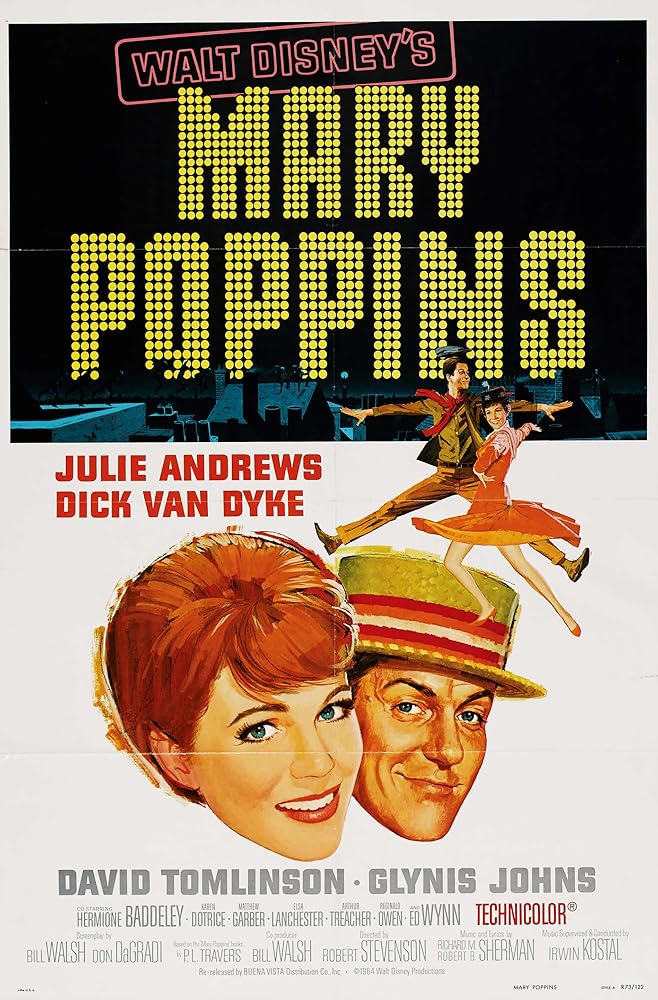
Mary Poppins (1964) review

Mary Poppins (1964)

In 2023, Walt Disney Pictures will celebrate its 100th year of operation, and what a century it has been. Since 1923, Disney has produced a countless array of cinematic classics. Obviously, they’re mainly known for their animated features, from the original masterpieces like Snow White and the Seven Dwarfs and Pinocchio to more recent classics like Zootopia and Frozen. But, of course, Disney’s also produced several live-action films that have been huge hits with both critics and audiences. And in 1964, Walt Disney and his team produced what is arguably the most beloved Disney film of all-time (yes, even more so than any of their animated films…), Mary Poppins. This adaptation of author P.L. Travers’ popular book series was a longtime passion project for Walt Disney after promising his daughters Diane and Sharon that he would make a film about it. However, as generally documented in the 2013 drama Saving Mr. Banks, Disney’s efforts to convince Travers to sign off on the film rights didn’t exactly go smoothly. Specifically, Travers disapproved of many of the changes that Disney and his team made to the story, including an overall dilution of the title character’s strict attitude, the music by Bob and Richard Sherman, and most notably, the big animated sequence involving dancing penguins. Nevertheless, Disney’s vision for the film ultimately won out and it went onto become a staple of the studio’s prestigious filmography, winning five Oscars out of the 13 that it was nominated for (a studio record) at that year’s ceremony. However, because Travers was so disenchanted by her experience with the studio, she forbade them from making any more sequels, a decision that stood for at least five decades. But now, 54 years after the original came out, Emily Blunt will take on the role of the nanny who’s ‘practically perfect in every way’ in the long-gestating sequel, Mary Poppins Returns. Before the new film hits theaters, however, it’s time to finally look at the original that still stands as one of the greatest films ever made.

(FUN FACT: Back in 2016, I was originally planning on including this film as a bonus review in my retrospective of Walt Disney Animation’s output from the ’60s and ’70s mostly due to its prominent animated sequence. However, I ultimately decided not to include it because Returns was already in pre-production at that point and I figured that I’d just save this for when it came out. Plus, given this film’s legacy, a full review of it felt much more appropriate instead of a smaller 1-2 paragraph review in a larger retrospective.)

At the home of the Banks family on 17 Cherry Tree Lane, things are in quite a state of disarray. With their father George (David Tomlinson) fully committed to his job as a banker and their mother Winifred (Glynis Johns) spending most of her time with the suffragette movement of the 1910’s, siblings Jane (Karen Dotrice) and Michael (Matthew Garber) constantly get into trouble due to a lack of any proper supervision. When it gets to the point where the family must find a new nanny, the two kids request one that’s more nurturing than the ones they’ve had before despite Mr. Banks being fully intent on finding a stricter nanny who will keep the two of them in line. Soon enough, their new nanny arrives in the form of the elegant (and ‘practically perfect in every way’) Mary Poppins (Julie Andrews), who matches Jane and Michael’s demands for a kinder nanny while still promising Mr. Banks that she will be firm with them when needed. And as Jane and Michael soon discover, Mary Poppins has quite a few magical tricks up her sleeve (and in her carpetbag) to help straighten them out along with the aid of Bert (Dick Van Dyke), a friendly jack-of-all-trades who they frequently interact with. Along the way, Mary’s magic even begins to rub off on Mr. Banks, who learns to find a greater appreciation for his family.  

Mary Poppins is quite arguably the very definition of a masterpiece. Under the wonderful direction of Disney mainstay Robert Stevenson, every aspect of this film is excellently crafted. Despite the issues that Travers had with the changes that Walt and his team made to her book, the film never loses sight of the heart of its story; in other words, Mary Poppins’ efforts to help revitalize the Banks family’s lives, especially in terms of the relationship that Jane and Michael have with their father. After all, as it was observed in Saving Mr. Banks, this story is arguably more about the redemption of Mr. Banks than the delightful adventures that his kids go on with their new nanny. And while the film’s cheery atmosphere was one of the most notable bits of divergence from the novel, which went about things in a more bitingly sharp manner, it just ends up making this one of the most pleasant films ever made. For starters, there are the film’s wonderful visual effects, which saw Disney and co. do everything from stop-motion animation to the art of combining live-action elements with animation that they’d already been doing marvelously for years. And then, of course, there’s the amazing soundtrack by Bob and Richard Sherman that runs the full emotional gamut when it comes to its tunes. For cheerful songs, there’s the toe-tapping ‘Step in Time’, the delightfully energetic melody that introduced audiences to the one and only word that is ‘Supercalifragilisticexpialidocious’, and the uplifting final melody ‘Let’s Go Fly a Kite’, just to name a select few. But then these tunes are perfectly balanced with some great emotional songs that are perhaps best exemplified by ‘Feed the Birds’, which is widely touted as being one of Walt’s all-time favorite songs.

As noted earlier, one of the biggest changes to Travers’ original story came via the overall characterization of her title character. Instead of the strict, no-nonsense nanny that was seen in the books, the film’s interpretation of Mary Poppins has a much warmer personality as per Jane and Michael’s request. But in this instance, the change does ultimately work because she still manages to be stern with them when the situation requires it while never once coming off as unlikable. Plus, the film still retains one of the character’s most definitive traits from the book through her consistent refusals to explain any of the magical things she does. And, of course, Julie Andrews is phenomenal in the role, exuding nothing but full charm whenever she’s on-screen. She also works wonderfully with Dick Van Dyke as the lovable Bert, and while nowadays his role in the film is arguably known more for his ‘infamous’ attempt at a cockney accent, his commitment to the role and infectious enthusiasm more than make up for it. After that, there are a wide array of memorable performances from main cast members like Karen Dotrice and Matthew Garber, who perfectly convey Jane and Michael’s childhood innocence, to memorable supporting players like Ed Wynn as the jovial Uncle Albert who loves to laugh. But to reference the ideas of Saving Mr. Banks one last time, arguably the biggest unsung hero of the cast is David Tomlinson, who handles Mr. Banks’ redemption arc with the utmost class.

Really, when it comes to this film, what more is there to say about it that hasn’t already been said by all the generations of people who have grown up with it and have then passed it on to their kids? Just like many of the early Disney animated classics like Snow White and Pinocchio, this is Walt Disney and his team at the top of their game, as they come together to craft a film that quite simply has it all. The film’s gorgeous visual style is strong throughout, Bob and Richard Sherman’s songs are catchy and iconic, and the film is stacked with outstanding performances headlined by the charismatic duo of Julie Andrews and Dick Van Dyke. And overall, the film works incredibly well even when considering all the creative conflicts that Walt Disney and P.L. Travers had during pre-production about the changes that were being made to her story. Because while Travers, of course, wasn’t too happy with the final film due to all its deviations from the source material, she would later admit that she eventually warmed up to it as time went on despite it still not being the most ideal interpretation of her work. As noted earlier, perhaps the biggest difference from the book is the film’s overall tone, as it dials back on the book’s harsher elements to create a more light-hearted affair that’s very much in line with the kind of films that Disney has always been known to make. As such, there are some out there who feel that the film is perhaps a bit ‘too’ sweet, even by Disney standards. And yet, when you have a film like this that’s so well-made and is always a delight to watch year in and year out, it’s easy to see why Mary Poppins still stands as one of the most beloved films to come from the world of Disney.  

Rating: 5/5!


Friday, December 14, 2018

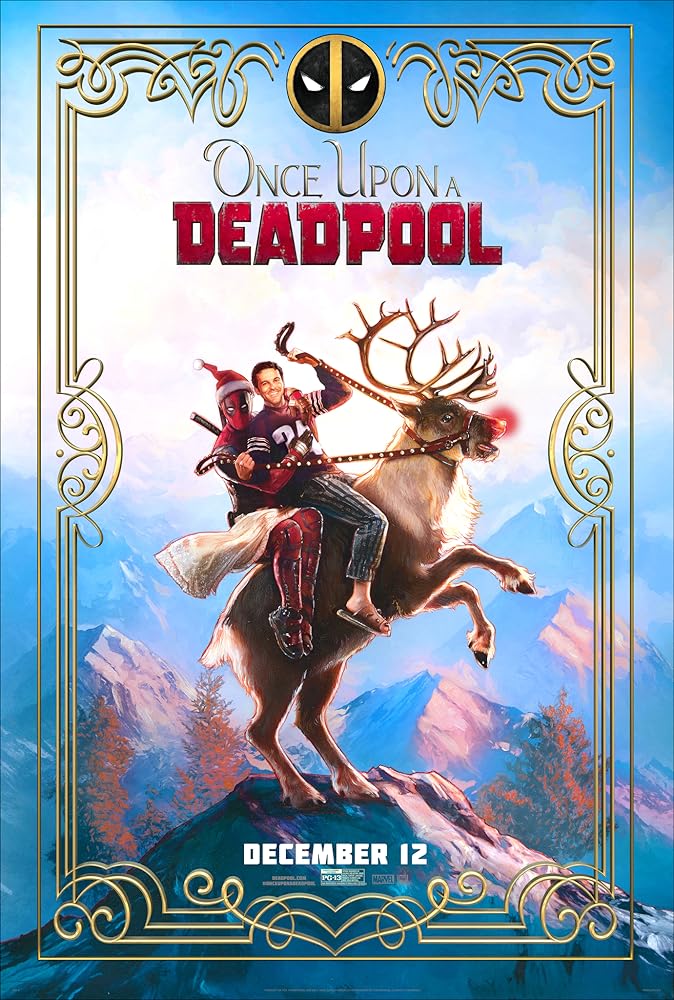
Once Upon a Deadpool - A Discussion

Fred Savage and Ryan Reynolds in Deadpool 2 (2018)

(DISCLAIMER: There will be spoilers regarding the plot of Deadpool 2 as I presume that most of you who are reading this have already seen the film. But in case you haven’t, the following link will direct you to my original non-spoiler review of the film from this past May.)

This holiday season, audiences are being treated to a unique kind of gift from the one and only Merc with a Mouth, Deadpool. Earlier this year, Wade Wilson returned to theaters with Deadpool 2, which saw him cross paths with the time-traveling soldier Cable, create the X-Force, and break the fourth wall further than he’s ever broken it before. And just like the original Deadpool, the film was a massive financial hit when it was released back in May. At the time that I’m writing this, it has grossed over $734 million worldwide, effectively making it the third highest-grossing entry in the X-Men film franchise as well as the third highest-grossing R-rated film of all-time. In terms of critical reception, the film ended up faring on par with the original, attracting a generally positive reaction from critics and audiences. There was some debate, however, as to whether the film was a ‘superior’ sequel. As for me, I’m part of the crowd who thinks that it is better than the first film. Despite a few awkward tonal shifts here and there, director David Leitch’s sequel took way more risks compared to the original. To be fair, though, the original Deadpool did do an admirable job working around the limitations of being the first major attempt at an R-rated superhero film post-Avengers. Ultimately, though, Deadpool 2 excels more thanks to more consistent humor, the wonderful additions of Josh Brolin as Cable and Zazie Beetz as Domino, and stronger emotional depth. But now we come to today’s topic, Once Upon a Deadpool, a new version of Deadpool 2 that promises to be the perfect holiday release for the whole family. Thus, instead of a traditional review (because I’ve already done that for this film), today’s post will be more of a discussion about this special re-release.  

Ryan Reynolds in Deadpool 2 (2018)

For all intent and purposes, Once Upon a Deadpool is indeed the PG-13 rated cut of Deadpool 2. It’s still the same story of Wade Wilson trying to protect a young mutant named Russell from Cable by forming his own superhero team, X-Force. And while most of his new team ends up being eradicated in a hilariously dark fashion, Deadpool ends up finding the one thing that he’s been missing all this time via the most important F-word of all, a family. After all, as he states in the opening sequence, Deadpool 2 is a family film, and Once Upon a Deadpool is easily its most ‘family-friendly’ version. While there are a few instances of heavier curse words, all F-bombs are either censored ‘TV-edit’ style or bleeped via Deadpool’s trusty censoring buzzer. Any instances of nudity (e.g. when Deadpool has his Basic Instinct moment after his legs start to regenerate) are blurred out. And finally, the most graphic bits of violence are obviously toned down. At the very least, most of the action sequences are kept intact, just without showing any blood spurts (e.g. Deadpool dodging Cable’s bullets on the prisoner convoy). But when it comes to the most graphic moments from the film, it does cut away before they happen, with the most prominent example being when Deadpool gets ripped in half by Juggernaut. All in all, the method in which this version of Deadpool 2 is toned down to a PG-13 rating is decently done, for the most part. I wouldn’t call it a complete success as there are a few instances where the censoring attempts are a bit more blatant than others but compared to other films that were originally R-rated but were then toned down to a PG-13 rating at the cost of hastily edited action sequences, it’s still an admirable attempt. And while I obviously don’t want every future R-rated film to have a toned-down PG-13 rated cut just so that they can appeal to a wider audience, it’s acceptable in this instance if only because of Deadpool’s potential appearances in future films.


But, of course, the most prominent addition to this cut of the film is its new framing device. In a homage to the 1987 classic The Princess Bride, Deadpool kidnaps (or, as he puts it, a case of ‘unsolicited location enhancement’) Fred Savage to tell him the story of Deadpool 2 in the same manner that Peter Falk told him the story of The Princess Bride all those years ago. Thus, just like in The Princess Bride, Savage pops up from time to time to comment on the current sequence, leading to some hilarious meta-commentary on everything from the film’s controversial fridging of Vanessa to the unexpected cameo by Brad Pitt as the Vanisher. And sure enough, these sequences are a brilliant addition. Even under the restrictions of the film’s new PG-13 rating, Deadpool’s comedic sensibilities are still on point throughout, which I’d argue is a testament to Ryan Reynolds’ own comedic talents and proves that, yes, Deadpool can indeed work well in a PG-13 environment. And, of course, Fred Savage also contributes heavily to these sequences’ success as his camaraderie with Reynolds is phenomenal. Really, the only disappointing thing about these sequences is that there aren’t more of them, as it would’ve been interesting to hear Savage’s thoughts on things like the abrupt deaths of the X-Force squad.        

Josh Brolin, Ryan Reynolds, Stefan Kapicic, Karan Soni, Julian Dennison, and Zazie Beetz in Deadpool 2 (2018)

In conclusion, Once Upon a Deadpool is admittedly a tough film to come up with an overall recommendation for. If the extreme blow-back to a 2016 petition requesting a PG-13 edit of the first Deadpool is any indication, a lot of fans aren’t exactly on board with the idea of the Merc with a Mouth being toned down to PG-13 material. And yet, with Disney’s impending purchase of Fox’s film division on the horizon, there’s a considerably high chance that it could happen. Granted, Disney CEO Bob Iger has stated that the plans are to maintain the franchise’s R-rating but given that the Marvel Cinematic Universe films are rated PG-13, I think it’s safe to say that Deadpool will be turned PG-13 whenever he makes a cameo in a non­-Deadpool film. As such, it can be argued that the main intent of Once Upon a Deadpool is to see if the character can work within the boundaries of a PG-13 rated superhero film. And as controversial of a claim as it’ll undoubtedly be for fans of the character, I think it works well. Now to be clear, I’m not saying that this is the definitive version of Deadpool 2. Clearly, the film was always intended to be R-rated, so if you want to see the film in its purest form, you’ll be better off watching the original theatrical cut or the ‘Super Duper $@%!#& Cut’ on Blu-Ray. However, the way in which this version of the film is cut down to meet PG-13 standards is, at the very least, better handled compared to other films that were forced down to the more family-friendly rating. Plus, the additional sequences involving Deadpool and Fred Savage are a delightful bonus. In short, as someone who isn’t religiously devoted to the belief that Deadpool should remain in an R-rated environment, I had as much fun with Once Upon a Deadpool as I did the original Deadpool 2. And while several critics have felt that this re-release was ‘unnecessary’, I’d argue that it isn’t because it’s not just a case of the filmmakers being forced to cut their film down just so that the studio can market it to a wider audience. Rather, this is ultimately a case of a film that is being toned down… but in this instance, the filmmakers are totally in on the joke.

Rating: My 4.5/5 rating from my original review of Deadpool 2 still stands even when considering what had to be cut from this version to make it PG-13, as the new scenes with Fred Savage do make up for what was taken out.


Ultimately, though, one of the biggest reasons to see Once Upon a Deadpool is for its final post-credit scene. I won’t spoil it for those who are planning on seeing it but believe me when I say that it’s practically worth the price of admission alone.


Wednesday, December 12, 2018

Bumblebee (2018) review

John Cena and Hailee Steinfeld in Bumblebee (2018)

There were several hit franchises that dominated 80’s pop culture, with most of them defined by their merchandising and popular animated TV show adaptations. One of these franchises was Transformers, which followed the adventures of the titular autonomous robotic organisms who were embroiled in a war between two rival factions known as the Autobots and Decepticons. The toy line was developed by Hasbro and Takara Tomy and served as a rebranding of the latter’s Diaclone toy line, and in turn, it was the inspiration for the popular animated series The Transformers, which ran from 1984 to 1987. The franchise would then continue over the years with new themes, shows, and even a feature film adaptation in 1986. And in 2007, the series made its live-action debut via director Michael Bay’s Transformers, which was a major commercial hit upon its release amidst decent but overall polarizing reviews. This reception quickly changed, however, once the film starting to get sequels. While they continued to be hits at the box office, critical reception only got worse with each new film, with most critics deeming them as some of the worst films of their respective years of release. But now, for the first time since the live-action series started more than a decade ago, there’s a new Transformers film hitting theaters that wasn’t directed by Michael Bay (who’s still involved as a producer). Instead, directorial duties go to Travis Knight, CEO of the stop-motion animation company Laika who recently made his directorial debut in 2016 with the critically-acclaimed Kubo and the Two Strings. And for his Transformers film, Knight goes back to basics with a prequel/spin-off centered on arguably the most popular Transformer of the series after Autobot leader Optimus Prime, the adorable yellow scout Bumblebee. What follows is a film that could very well win back those who were extremely unsatisfied by the previous Transformers films as Knight’s take on this long-running franchise is quite arguably far more respectable to its source material.

The year is 1986 and teenager Charlie Watson (Hailee Steinfeld) has just turned 18. Frustrated with her current predicament of not having a car, she ends up coming across a yellow Volkswagen beetle at a garage owned by her friend Hank (Len Cariou), who lets her have it on account of it being her birthday. However, as Charlie soon discovers, this is not just an ordinary car. Instead, it is an Autobot scout, B-127, who she ends up naming Bumblebee (initially voiced by Dylan O’Brien before reverting to the character’s film series trademark of communicating via the radio). As the two begin to bond, Bumblebee struggles to cope with a damaged memory core that was sustained following his arrival on Earth, and soon enough, Charlie ends up being roped into the mission that had brought Bumblebee to the planet in the first place. Specifically, a pair of Decepticons named Shatter (voiced by Angela Bassett) and Dropkick (voiced by Justin Theroux) arrive on Earth looking for Bumblebee, who supposedly has information about the current plans of his superior, Autobot leader Optimus Prime (voiced by Peter Cullen). Having speculated that the Autobots plan on establishing a new base of operations on Earth, the two form an ‘alliance’ with the government group known as Sector 7 to track down their target, claiming that the Autobots are the ones who will pose a threat to humanity. Thus, Charlie and Bumblebee now find themselves pursued by both the government and the Decepticons as the latter works to follow Optimus’ orders and protect Earth from this new alien threat.

One of the most common criticisms about the Transformers films has been their writing, usually due to instances where they try to over-complicate their plots. That isn’t the case with Bumblebee, though, as it opts for a far more simplified plot that pays clear homage to films like E.T. and The Iron Giant. There aren’t any ancient transformers or crazy government conspiracies to be found in this film; instead, it’s just a story about a girl who comes across an alien robot and the situations that they get into, several of which involve the government. Now with all this said, it should be noted that there are instances where this film is perhaps a bit ‘too’ simple. Its plot is as basic as you can get for a film like this and it’s also rather light on action sequences, with the biggest action set-pieces reserved for the climax. At the end of the day, though, the ‘back to basics’ approach that Travis Knight takes here is one that’s truly worth appreciating. For all intent and purposes, his style of direction arguably serves as a course correction for almost all the major issues that audiences have had with the Michael Bay-directed Transformers films. This film’s action sequences are a lot easier to comprehend and it isn’t overstuffed with Transformer characters. There are only a few in this film and the ones that are there aren’t just giant, grey-colored robots that all look the same. Plus, given that this is set in the ’80s, the character designs are primarily based on those from the era that Transformers fans refer to as ‘Generation 1’ AKA the earliest and perhaps most beloved incarnations of these characters. As such, for those who grew up with the original Transformers toys and their subsequent animated TV series adaptation, you’ll be pleased to know that these classic designs are well-executed in live-action form.

But while the film, in general, does dial back on almost all the extremes of Bay’s Transformers films, it’s still very limited in terms of character development. Simply put, the only two major characters in this film that get any attention are Charlie and Bumblebee. But for what it’s worth, the relationship that these two form over the course of the film is arguably its greatest strength. And while this may seem outlandish to some people given the previous films, it does, in fact, result in a Transformers film with actual heart that’s not just a case of ‘style over substance’. A lot of this is thanks to Hailee Steinfeld, who’s quite excellent as easily the best human lead to come from this series. Not only does she work well off the CG-created Bumblebee, but despite what was said earlier about the film being rather lacking in character development, she does get to work with the majority of what’s there. Most specifically, it’s established that following the recent passing of her father, she’s become quite emotionally distant from the rest of her family, especially after her mother Sally (Pamela Adlon) quickly remarried. And it is through her relationship with Bumblebee that Charlie manages to rebound from her recent loss, an arc that Steinfeld handles very well. As for the rest of the cast, they’re good in their respective roles despite not having as much to work with compared to Steinfeld. Perhaps the most prominent example of this is John Cena as Sector 7 agent John Burns. While Cena’s certainly proven himself as a solid actor in recent years, Burns only serves as an obstacle for Charlie and Bumblebee who had some previous experience with the latter as seen in the opening.

As I’ve noted numerous times in the past, I’m an unabashed fan of the live-action Transformers films. I still have highly positive feelings towards the original 2007 film and I’ve never ‘disliked’ any of the sequels even though I’m fully aware that I’m in the minority on that one. And with all this in mind, while it’s not necessarily my favorite entry in the series, I will agree that Bumblebee is undoubtedly the most well-made of the bunch. Under the confident direction of Travis Knight, almost all the major issues that fans have had with Michael Bay’s Transformers films are practically non-existent here. The action sequences are far more coherent from a filmmaking perspective and the plot isn’t overstuffed with overly complicated plot-lines, disposable characters, and awkward bits of humor (e.g. there are no pot-consuming mothers who wonder if their kids were masturbating in their bedrooms). And while the plot itself is easily the series’ most simplified to date… given the reception of the previous films, it’s safe to say that most audiences will not mind in the slightest. In other words, Bumblebee is a Transformers film made for Transformers fans by a Transformers fan. Not only does it base itself around the most popular era of the franchise, Generation 1, but thanks to a strong lead performance from Hailee Steinfeld, this film does boast the heartfelt narrative that many felt was severely lacking in the previous Transformers films. And while it’s currently unclear right now as to where the film series will be heading next following the underperformance of The Last Knight, if future films are anything like this one, then it’s safe to say that Transformers fans will be in for a real treat.

Rating: 4/5 

Monday, December 10, 2018

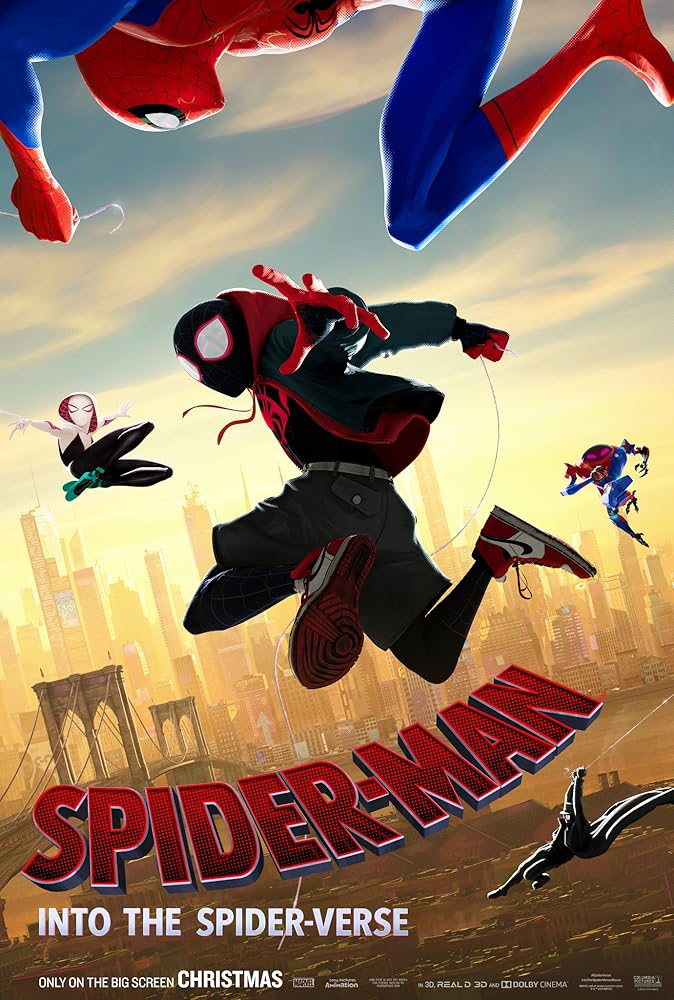
Spider-Man: Into the Spider-Verse (2018) review

Nicolas Cage, Stan Lee, Jake Johnson, Hailee Steinfeld, Shameik Moore, and Kimiko Glenn in Spider-Man: Into the Spider-Verse (2018)

In the world of Marvel Comics, Spider-Man is quite arguably the company’s most iconic superhero. Ever since his creation in 1962 by Stan Lee (R.I.P.) and Steve Ditko, everyone’s favorite web-slinger has made an incredible impact on readers worldwide and has had one of the most prominent roles in Marvel’s comic history. This, of course, has also translated quite well to his run on the big-screen, with Sam Raimi’s Spider-Man playing a major part in redefining the superhero film genre when it was released in 2002 and spawning a highly successful trilogy. Admittedly, the franchise then had to go through some tricky times in the early 2010s with an attempted series reboot that ultimately didn’t go anywhere, but the ‘second’ attempt at a live-action reboot is doing well so far. 2017’s Spider-Man: Homecoming was the highest-grossing superhero film of the year, and a large part of its success was thanks to Marvel Studios’ involvement with it. This was thanks to a deal that they made with Sony (who currently own the character’s film rights) that allowed Spider-Man the chance to finally participate in the Marvel Cinematic Universe. And while Spidey’s next adventure, Spider-Man: Far from Home, will be hitting theaters next summer, right now we’re getting something a little different from this long-running franchise in the form of an animated Spider-Man film, Spider-Man: Into the Spider-Verse. This new film, the latest from Sony Animation, primarily comes courtesy of the duo of Phil Lord and Chris Miller, both of whom are producing it while Lord is the primary screenwriter. And under their influence, Into the Spider-Verse is a highly entertaining spin on the Spider-Man mythos that boasts some of the best animation to come out of a film in recent years.

In the borough of Brooklyn, teenager Miles Morales (voiced by Shameik Moore) prepares to start school at the prestigious Visions Academy. However, while spending time with his uncle Aaron Davis (voiced by Mahershala Ali) one night, Miles is bitten by a radioactive spider that gives him the same spider-like abilities as the beloved hero Spider-Man AKA Peter Parker (voiced by Chris Pine). Unfortunately for Miles, Spider-Man ends up dying at the hands of crime-lord Wilson Fisk AKA Kingpin (voiced by Liev Schreiber), thus leaving Miles with the responsibility of continuing where his predecessor left off. But as it turns out, thanks to Fisk’s recent test of a device known as the Super Collider, the door has been opened to a wide variety of alternate dimensions. And because of this, Miles soon finds himself meeting another Peter Parker, this time a far more disheveled Peter B. Parker (voiced by Jake Johnson), who was transported to Miles’ dimension. Although initially hesitant to serve as the mentor of an up-and-coming Spider-Man, Peter B. agrees to help Miles learn the ins and outs of being a superhero, and together, the two work to ensure that Fisk doesn’t use the Super Collider for his sinister purposes. To do so, they must use it themselves so that Peter B. can return to his dimension after the two realize that he can’t stay in Miles’ dimension forever. This situation only becomes further complicated, however, by the arrival of other Spider-based superheroes from other dimensions, including Gwen Stacy AKA Spider-Gwen (voiced by Hailee Steinfeld).

Much has been said about this film’s animation, and sure enough, it’s undoubtedly one of its greatest aspects. The filmmakers and animators did such a phenomenal job when it comes to recreating, for lack of a better term, the ‘comic book’ style. This may be a computer-animated film, but practically every shot in this looks like it came from a traditionally-animated 2-D film that was straight-up ripped from the comics themselves. And while the main influence behind this film’s animation style is the works of artist Sara Pichelli, who helped co-create the character of Miles Morales with writer Brian Michael Bendis, the film does a great job when it comes to honoring the art styles of all the Spider-Men and Spider-Women who are featured in it. This great attention to detail also carries over well to the story, which is very well-handled especially considering that, on paper, it’s mostly just your basic superhero origin story. Simply put, it does go through all the usual plot developments in a story about a main protagonist who gains superpowers and is then immediately thrust into a situation where he initially struggles with learning how to use them properly. But thanks to the implementation of the ‘multi-verse’ plot-line, this film’s plot does have more of a unique flavor to it compared to other superhero origin stories. And, of course, being a project that was worked on by Phil Lord and Christopher Miller, this film’s humor is strong throughout. Whether it’s a bit of meta-commentary on Spider-Man’s pop-culture status or a visual sight gag that pays homage to the comics, this is up there with the likes of Thor: Ragnarok and Deadpool 2 as one of the funniest superhero films ever made.

Into the Spider-Verse has the distinction of being the first Spider-Man feature film to focus primarily on the character of Miles Morales, currently the most famous occupant of the Spider-Man persona aside from Peter Parker. While it has been reported that Morales will be implemented into the MCU in the future (his uncle Aaron appeared in Spider-Man: Homecoming played by Donald Glover, who happened to be one of the main inspirations behind the character), this film is ultimately the place where he gets to make a first impression. And overall, he does make a great first impression as the sympathetic up-and-coming superhero that he is, with Shameik Moore (star of 2015’s cult hit Dope) bringing much personality to the role. There’s also a lot of heart to this character as well, namely thanks to his relationships with his uncle Aaron (especially after Miles learns his uncle’s dark secret) and his father, police officer Jefferson Davis (voiced by Brian Tyree Henry). And as for the OG Spider-Man himself, Peter Parker, we get not one but two great and vastly different interpretations of the character. First, there’s Chris Pine, albeit in a very brief appearance, as a traditional Peter Parker who’s said to be an amalgamation of all the live-action interpretations of the character. And then for the rest of the film, we focus on the more bumbling Peter B. Parker, with Jake Johnson doing a fantastic job as a hilarious and far more apathetic take on this classic character. The other Spider-Man based heroes in this are major standouts as well, including Hailee Steinfeld as the badass Spider-Gwen, Nicolas Cage as the 1930’s-inspired Spider-Man Noir, and John Mulaney as, yes, Peter Porker the pig AKA Spider-Ham. And finally, in a manner akin to Vincent D’Onofrio’s critically-acclaimed take on the character in the recently canceled Daredevil series, Liev Schreiber’s Kingpin is a solid villain whose motivations for using the Super Collider are emotionally-driven.

Alternate universes have always been a long-standing aspect of superhero comics, effectively giving readers a wide array of unique spins on classic characters. On the big screen, however, there hasn’t really been any major attempts at a multiverse story arc when it comes to the current era of live-action superhero films. Granted, it has been done in superhero TV shows like DC’s current lineup of shows airing on the CW, but on film, the most prominent cases of audiences getting a different take on an established character are usually just whenever the role is recast. As such, it could be argued that Spider-Man: Into the Spider-Verse could potentially pave the way for future superhero films to tackle the multiverse concept. And even if it doesn’t, it is still one of the most electrifying superhero films of the modern era. While its main plot is a traditional superhero origin story, the added layer of the multiverse does give this film a lot more meat to it compared to other entries in the genre. And thanks to the involvement of Phil Lord and Chris Miller, this film’s humor is on point throughout while never losing sight of the heart of the story of how a kid from Brooklyn named Miles Morales became Spider-Man. But, of course, the biggest reason to see this film is for its amazing animation, as its impressive recreation of the classic comic-book style legitimately rivals the likes of Disney Animation and Pixar. As such, it seems like this year’s race for Best Animated Feature at the Oscars is shaping up to be an exciting 3-way competition between this, Ralph Breaks the Internet, and Incredibles 2. Regardless of who wins it all, however, Spider-Man: Into the Spider-Verse is a big win for Sony Animation… which is a big deal considering what happened last year with The Emoji Movie.  


Rating: 5/5!