Showing posts with label Zazie Beetz. Show all posts

Monday, October 14, 2019

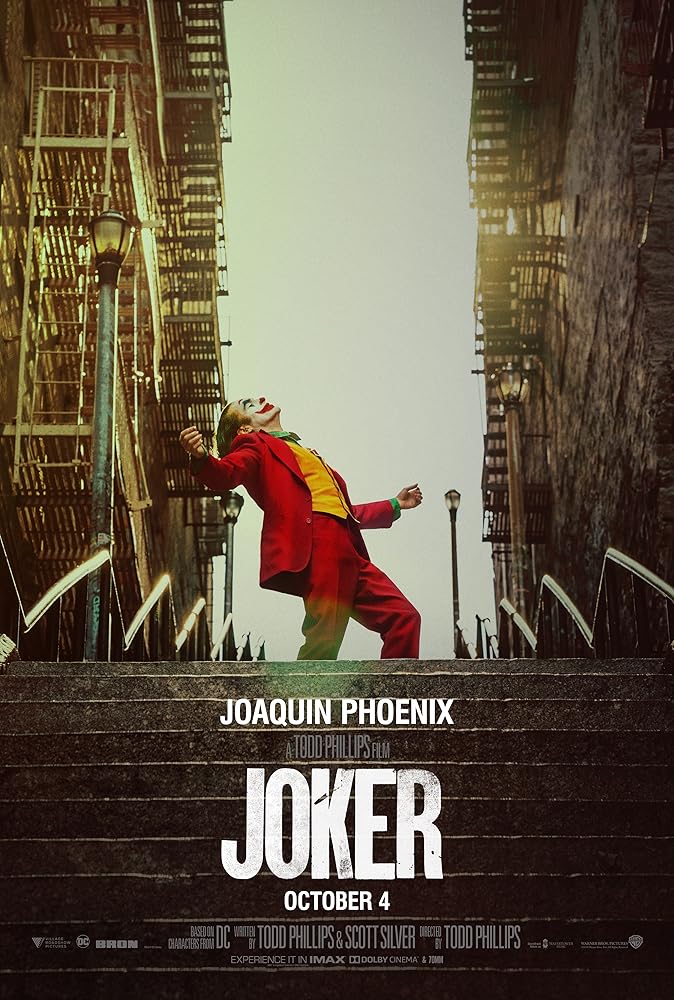
Joker (2019) review


Joaquin Phoenix in Joker (2019)

In the world of comics, Batman has always been one of the most prolific superheroes to come from the DC Comics Universe. Likewise, many would agree that he also boasts one of the greatest collection of supervillains AKA his ‘rogues gallery’, which is easy to see why when you have classic figures like Mr. Freeze, Two-Face, and Poison Ivy as part of this illustrious group… and yes, that’s just to name a few. However, when it comes to the Dark Knight’s definitive archnemesis, that honor goes to the one and only Clown Prince of Crime, the Joker. The Joker made his debut in the first issue of Batman’s original comic book series (which, for the record, does not count the Dark Knight’s official debut in Detective Comics #27) in 1940. And while it was initially planned to have the character killed off in that same issue, Whitney Ellsworth, DC’s editor at the time, overruled the decision, effectively allowing the Joker to become one of the most recognizable characters in all of comics. Since then, there have been numerous takes on the character though they all maintain the same general concept of a man who dresses like a clown and is a full-on murderous psychopath. On the big screen, actors like Cesar Romero, Jack Nicholson and Heath Ledger have all brought their own unique takes on the role to great success, with Ledger even winning a posthumous Oscar for his work on 2008’s The Dark Knight. In the world of animation, Mark Hamill’s critically acclaimed turn as the character in the iconic Batman: The Animated Series (plus later appearances in other forms of media, including the series’ 1993 feature-length spin-off Mask of the Phantasm and the Batman: Arkham video games) is often cited by fans as quite arguably the best on-screen interpretation of the character.

But now a new Joker is looking to make a name for himself in the pantheon of legendary Joker performances via the character’s first-ever solo film, simply and appropriately titled Joker. However, as cliché as it may sound, it should be made clear that this is not your typical comic book film. To the uninitiated, this may just seem like the newest installment of DC’s current film franchise, the DC Extended Universe. However, the fact that this one doesn’t star Jared Leto (who, of course, played the character in 2016’s Suicide Squad) in the title role proves that this isn’t the case. Instead, it’s Joaquin Phoenix who headlines this new project under the direction of Todd Phillips, who’s best known for his work on comedies (even though he’s recently gone on record stating that he doesn’t do those anymore for reasons that I won’t be getting into here) like the 2003 cult classic Old School and the 2009 smash hit The Hangover. It’s been said that this film is meant to be the first installment of a new line of films from DC that revolve around their characters and yet are not connected to the DC Extended Universe. Running under the label of ‘DC Black’, these new films would give filmmakers a chance to do more experimental takes on what is easily the biggest film genre there is without having to connect them to other films or set the groundwork for sequels. In other words, there’s been a lot said about Joker and how it could potentially impact the superhero genre going forward, and yet, despite a genuinely dedicated performance from Joaquin Phoenix, Joker isn’t exactly the game-changer that it aspires to be.

On the seedy streets of Gotham City in 1981, a man named Arthur Fleck (Joaquin Phoenix) can never seem to catch a break. Stuck in a dead-end job as a party clown and afflicted with a condition that causes him to laugh at inopportune moments, Arthur spends most of his time looking after his mentally and physically ill mother Penny (Frances Conroy). At the same time, Arthur also aspires to become a stand-up comedian like his idol, talk show host Murray Franklin (Robert De Niro). However, his first stand-up appearance doesn’t go very well and, to make matters worse, it ultimately becomes the butt of all jokes when Murray plays clips of it on his show. This, in turn, paves the way for even more bad things happening to Arthur. He is informed that he won’t be getting any more of his medication due to citywide budget cuts and ends up getting fired from his job when he accidentally drops a gun that was given to him by a co-worker during one of his gigs. And when he ends up reading one of the letters that his mother has been writing to her former boss Thomas Wayne (Brett Cullen) to ask for his help in getting the two of them out of their current life predicament, Arthur discovers the potential connection that he has to the billionaire. Thus, as his life continues to get more chaotic with each passing day, Arthur starts to embrace his dark side as he prepares to get revenge against all those who’ve wronged him. In the process, he even ends up inspiring a citywide revolt via his clown persona as the disgruntled citizens of Gotham start to fight back against the corruption in their city.   

If anything, Joker does deserve a lot of credit for how it genuinely delivers on its promise of not being a typical comic book film. Unlike most films from this genre, Joker doesn’t feature large-scale action sequences or flashy visuals. Instead, it’s a more traditional drama inspired by the likes of Taxi Driver and The King of Comedy, which makes a lot of sense when you consider that it was nearly produced by Martin Scorsese before he had to back out due to other commitments. This is also one of those films that rely on a slow burn narrative that, in this instance, is based entirely around Arthur’s descent into madness, and overall, it’s one of the better-handled aspects of the film since it’s properly maintained throughout without having to come at the cost of decent pacing. It also helps that the film sports some excellent cinematography from Todd Phillips’ frequent cinematographer Lawrence Sher and an appropriately sinister score by Icelandic composer Hildur Guðnadóttir. However, the film’s promising start ultimately paves the way for an extremely underwhelming finale that doesn’t even come close to being the intensely disturbing conclusion that it was seemingly building towards. In fact, without directly spoiling anything, one key action that Arthur does before the finale is the pinnacle of this film’s disturbing content. Plus, despite all the claims that this wasn’t going to abide by the superhero genre’s usual tropes, the film’s conclusion ends up shoehorning in what is quite arguably the most recognizable plot thread from the Batman mythos. Seriously, I don’t even need to mention what it is here because let’s face it, you already know exactly what I’m talking about.

At the very least, the film does manage to serve as a solid showcase for the genuinely superb performance by Joaquin Phoenix in the title role. While there is a lot to be discussed when it comes to how effective the film truly is at portraying people with a mental illness, Phoenix commands the screen and succeeds in crafting a character who effectively evolves from a sympathetic punching bag to a terrifying monster. However, because this is one of those cases where he’s always the primary focus of the film, everyone else in the cast gets far less to work with by comparison. Robert De Niro’s Murray Franklin is a prime example of this because no matter how much the film pays homage to The King of Comedy (in which De Niro played Rupert Pupkin, an obvious precursor to Arthur), De Niro isn’t in the film as much as you may think for a character that plays a pivotal role in Arthur’s downfall. The same goes for Brett Cullen as Thomas Wayne, whose role in the film is even smaller than De Niro’s and ends up going exactly as you’d expect for the father of Bruce Wayne (played here by Dante Pereira-Olsen in a small handful of scenes). But the one who gets it the worst is Zazie Beetz as Arthur’s neighbor Sophie, who ends up being his love interest… and that’s literally her entire role in a nutshell. And once the film gets to a major twist surrounding her relationship with Arthur, she’s out of the film completely. As such, Frances Conroy is technically the real female lead of the film as Arthur’s mother Penny, and she’s great in the role thanks to the solid mother-son relationship that she forms with Phoenix that undoubtedly gets tested when some of her dark secrets are revealed.

It goes without saying that Joker has been one of the most talked-about films of 2019. Many are predicting that this film could be a major game-changer for the superhero genre and even a potential frontrunner at this year’s Oscars. At the same time, though, it’s also amassed quite a lot of controversy due to the fear that it will inspire acts of violence in the real world. However, I ultimately find myself comparing it to another controversial film, 2014’s The Interview. Both films attracted some considerable controversy before their release to the point where things nearly got violent… and yet are so underwhelming that it makes you wonder why these were the films that nearly got folks riled up in the first place. Case in point, as much as Joker claims to be a fresh, new take on the superhero genre, it’s more like a hodgepodge of elements that were lifted from other, more successful films. Its dark and gritty take on Batman’s iconic nemesis doesn’t feel that far off from what Christopher Nolan and Heath Ledger did more than a decade prior with The Dark Knight. And as much as the film acts like it isn’t going to follow the usual narrative structure of other superhero films, it still feels the need to crowbar in the one Batman trope that anyone familiar with the character’s comic backstory will see coming more than a mile away. Sure, it does have the benefit of a terrific performance from Joaquin Phoenix in the title role, but all in all, Joker is a film that talks a big game but ultimately doesn’t have one.

Rating: 2/5

Friday, December 14, 2018

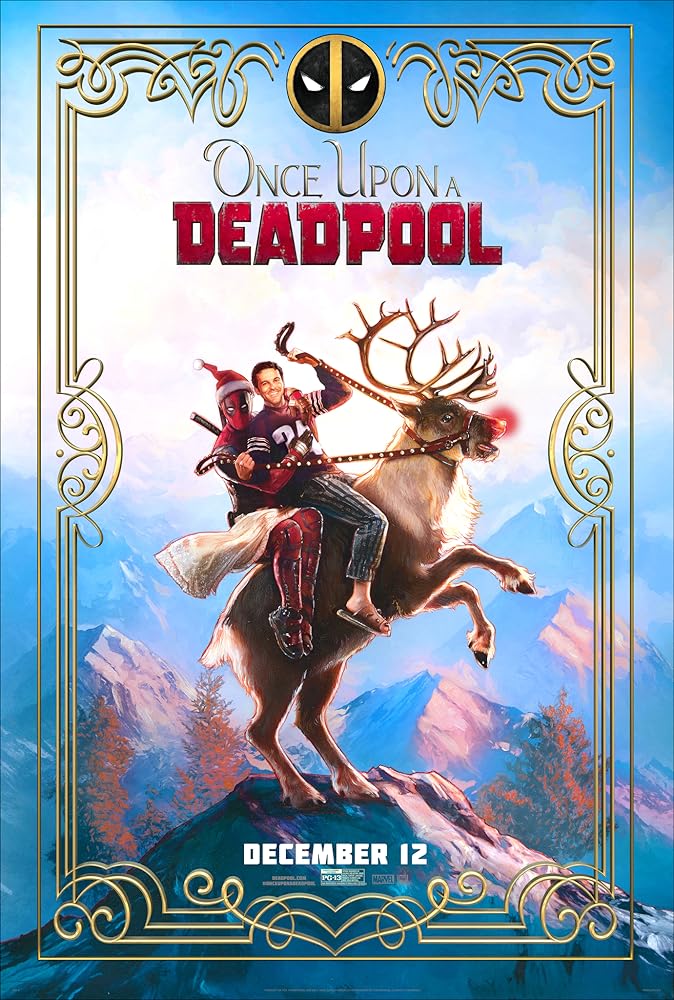
Once Upon a Deadpool - A Discussion

Fred Savage and Ryan Reynolds in Deadpool 2 (2018)

(DISCLAIMER: There will be spoilers regarding the plot of Deadpool 2 as I presume that most of you who are reading this have already seen the film. But in case you haven’t, the following link will direct you to my original non-spoiler review of the film from this past May.)

This holiday season, audiences are being treated to a unique kind of gift from the one and only Merc with a Mouth, Deadpool. Earlier this year, Wade Wilson returned to theaters with Deadpool 2, which saw him cross paths with the time-traveling soldier Cable, create the X-Force, and break the fourth wall further than he’s ever broken it before. And just like the original Deadpool, the film was a massive financial hit when it was released back in May. At the time that I’m writing this, it has grossed over $734 million worldwide, effectively making it the third highest-grossing entry in the X-Men film franchise as well as the third highest-grossing R-rated film of all-time. In terms of critical reception, the film ended up faring on par with the original, attracting a generally positive reaction from critics and audiences. There was some debate, however, as to whether the film was a ‘superior’ sequel. As for me, I’m part of the crowd who thinks that it is better than the first film. Despite a few awkward tonal shifts here and there, director David Leitch’s sequel took way more risks compared to the original. To be fair, though, the original Deadpool did do an admirable job working around the limitations of being the first major attempt at an R-rated superhero film post-Avengers. Ultimately, though, Deadpool 2 excels more thanks to more consistent humor, the wonderful additions of Josh Brolin as Cable and Zazie Beetz as Domino, and stronger emotional depth. But now we come to today’s topic, Once Upon a Deadpool, a new version of Deadpool 2 that promises to be the perfect holiday release for the whole family. Thus, instead of a traditional review (because I’ve already done that for this film), today’s post will be more of a discussion about this special re-release.  

Ryan Reynolds in Deadpool 2 (2018)

For all intent and purposes, Once Upon a Deadpool is indeed the PG-13 rated cut of Deadpool 2. It’s still the same story of Wade Wilson trying to protect a young mutant named Russell from Cable by forming his own superhero team, X-Force. And while most of his new team ends up being eradicated in a hilariously dark fashion, Deadpool ends up finding the one thing that he’s been missing all this time via the most important F-word of all, a family. After all, as he states in the opening sequence, Deadpool 2 is a family film, and Once Upon a Deadpool is easily its most ‘family-friendly’ version. While there are a few instances of heavier curse words, all F-bombs are either censored ‘TV-edit’ style or bleeped via Deadpool’s trusty censoring buzzer. Any instances of nudity (e.g. when Deadpool has his Basic Instinct moment after his legs start to regenerate) are blurred out. And finally, the most graphic bits of violence are obviously toned down. At the very least, most of the action sequences are kept intact, just without showing any blood spurts (e.g. Deadpool dodging Cable’s bullets on the prisoner convoy). But when it comes to the most graphic moments from the film, it does cut away before they happen, with the most prominent example being when Deadpool gets ripped in half by Juggernaut. All in all, the method in which this version of Deadpool 2 is toned down to a PG-13 rating is decently done, for the most part. I wouldn’t call it a complete success as there are a few instances where the censoring attempts are a bit more blatant than others but compared to other films that were originally R-rated but were then toned down to a PG-13 rating at the cost of hastily edited action sequences, it’s still an admirable attempt. And while I obviously don’t want every future R-rated film to have a toned-down PG-13 rated cut just so that they can appeal to a wider audience, it’s acceptable in this instance if only because of Deadpool’s potential appearances in future films.


But, of course, the most prominent addition to this cut of the film is its new framing device. In a homage to the 1987 classic The Princess Bride, Deadpool kidnaps (or, as he puts it, a case of ‘unsolicited location enhancement’) Fred Savage to tell him the story of Deadpool 2 in the same manner that Peter Falk told him the story of The Princess Bride all those years ago. Thus, just like in The Princess Bride, Savage pops up from time to time to comment on the current sequence, leading to some hilarious meta-commentary on everything from the film’s controversial fridging of Vanessa to the unexpected cameo by Brad Pitt as the Vanisher. And sure enough, these sequences are a brilliant addition. Even under the restrictions of the film’s new PG-13 rating, Deadpool’s comedic sensibilities are still on point throughout, which I’d argue is a testament to Ryan Reynolds’ own comedic talents and proves that, yes, Deadpool can indeed work well in a PG-13 environment. And, of course, Fred Savage also contributes heavily to these sequences’ success as his camaraderie with Reynolds is phenomenal. Really, the only disappointing thing about these sequences is that there aren’t more of them, as it would’ve been interesting to hear Savage’s thoughts on things like the abrupt deaths of the X-Force squad.        

Josh Brolin, Ryan Reynolds, Stefan Kapicic, Karan Soni, Julian Dennison, and Zazie Beetz in Deadpool 2 (2018)

In conclusion, Once Upon a Deadpool is admittedly a tough film to come up with an overall recommendation for. If the extreme blow-back to a 2016 petition requesting a PG-13 edit of the first Deadpool is any indication, a lot of fans aren’t exactly on board with the idea of the Merc with a Mouth being toned down to PG-13 material. And yet, with Disney’s impending purchase of Fox’s film division on the horizon, there’s a considerably high chance that it could happen. Granted, Disney CEO Bob Iger has stated that the plans are to maintain the franchise’s R-rating but given that the Marvel Cinematic Universe films are rated PG-13, I think it’s safe to say that Deadpool will be turned PG-13 whenever he makes a cameo in a non­-Deadpool film. As such, it can be argued that the main intent of Once Upon a Deadpool is to see if the character can work within the boundaries of a PG-13 rated superhero film. And as controversial of a claim as it’ll undoubtedly be for fans of the character, I think it works well. Now to be clear, I’m not saying that this is the definitive version of Deadpool 2. Clearly, the film was always intended to be R-rated, so if you want to see the film in its purest form, you’ll be better off watching the original theatrical cut or the ‘Super Duper $@%!#& Cut’ on Blu-Ray. However, the way in which this version of the film is cut down to meet PG-13 standards is, at the very least, better handled compared to other films that were forced down to the more family-friendly rating. Plus, the additional sequences involving Deadpool and Fred Savage are a delightful bonus. In short, as someone who isn’t religiously devoted to the belief that Deadpool should remain in an R-rated environment, I had as much fun with Once Upon a Deadpool as I did the original Deadpool 2. And while several critics have felt that this re-release was ‘unnecessary’, I’d argue that it isn’t because it’s not just a case of the filmmakers being forced to cut their film down just so that the studio can market it to a wider audience. Rather, this is ultimately a case of a film that is being toned down… but in this instance, the filmmakers are totally in on the joke.

Rating: My 4.5/5 rating from my original review of Deadpool 2 still stands even when considering what had to be cut from this version to make it PG-13, as the new scenes with Fred Savage do make up for what was taken out.


Ultimately, though, one of the biggest reasons to see Once Upon a Deadpool is for its final post-credit scene. I won’t spoil it for those who are planning on seeing it but believe me when I say that it’s practically worth the price of admission alone.


Thursday, May 24, 2018

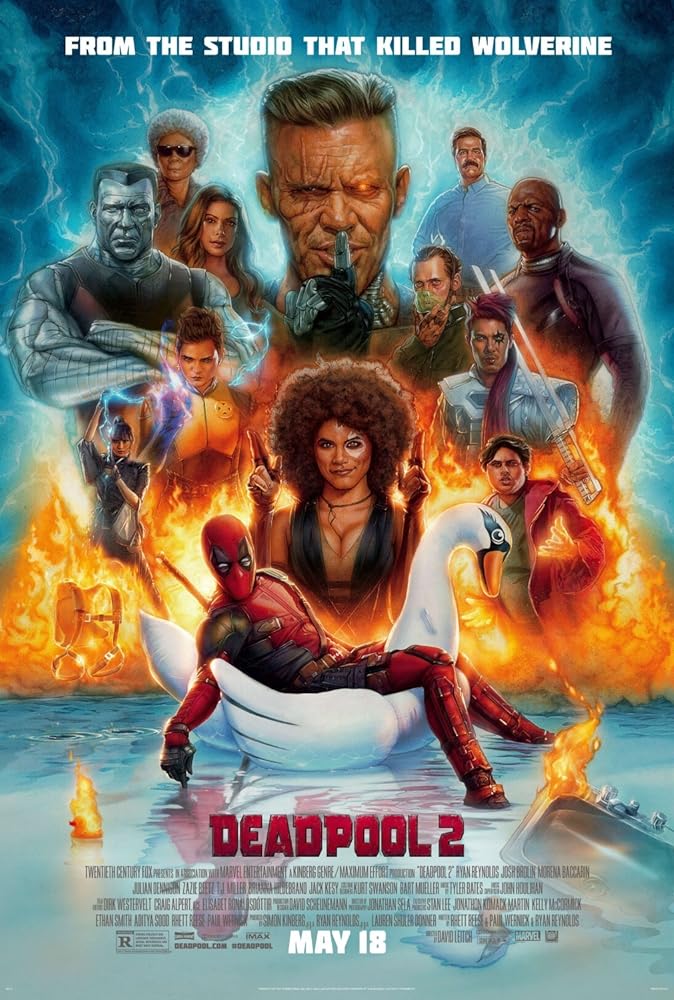
Deadpool 2 (2018) review

Brad Pitt, Josh Brolin, Ryan Reynolds, Terry Crews, Bill Skarsgård, Leslie Uggams, Morena Baccarin, Lewis Tan, Stefan Kapicic, Rob Delaney, Shioli Kutsuna, Julian Dennison, Zazie Beetz, and Brianna Hildebrand in Deadpool 2 (2018)

Calling the 2016 superhero film Deadpool a hit would be a massive understatement. Upon its release in February of that year, the X-Men spin-off broke all sorts of box-office records. Not only did it become the highest grossing X-Men film to date worldwide, but it also set various opening weekend records as A.) an R-rated superhero film B.) an R-rated film in general and C.) a film that was released in the supposedly ‘dead’ month of February, and that’s just to name a few. Simply put, audiences were delighted by this raunchy installment of the superhero genre, especially due to its more faithful take on the fan-favorite titular anti-hero after his infamous first live-action appearance in 2009’s X-Men Origins: Wolverine. And thus, everyone’s favorite fourth-wall breaking mutant is back in Deadpool 2 which, as promised in the previous film’s post-credits scene, sees the introduction of Deadpool’s most famous ally from the comics, Cable. This time around, though, former VFX artist Tim Miller is not back to direct after he backed out of the project early in its development due to creative conflicts with lead Ryan Reynolds over the direction that it was going in. Thankfully, a badass replacement was found rather quickly in long-time stunt coordinator David Leitch. Since 2014, Leitch has begun to transition into directing and has managed to make quite a name for himself in the process, having co-helmed the 2014 modern action classic John Wick alongside fellow stunt veteran Chad Stahelski and then making a solid solo directorial debut with last year’s action thriller Atomic Blonde. Ultimately, though, one question still stands. From the perspective of someone who admittedly ‘liked, but not loved’ the first Deadpool film, does this one manage to outshine its predecessor and truly live up to its mantle as an unrelenting, R-rated, meta-fueled superhero extravaganza?

Two years since he first started to operate as the mercenary Deadpool, cancer survivor Wade Wilson (Ryan Reynolds) continues to do what he does best; killing all the bad guys, constantly breaking the fourth wall (primarily to complain about how fellow mutant Wolverine always steals his thunder) and wooing his girlfriend Vanessa (Morena Baccarin). However, Deadpool soon finds himself crossing paths with Cable (Josh Brolin), a cybernetic soldier from the future. Having traveled back in time from his dystopian world, Cable is hellbent on eliminating a young mutant boy named Russell Collins (Julian Dennison), who calls himself ‘Firefist’ due to his ability to shoot fire from his hands, whom Deadpool ends up meeting during a ‘mission’ with his old X-Men ‘pals’ Colossus (Stefan Kapičić) and Negasonic Teenage Warhead (Brianna Hildebrand). As Deadpool soon learns, Cable’s primary reasoning for hunting Russell is that he will end up killing those who had abused him at a ‘Mutant Re-Education Center’ orphanage, which will then lead to him becoming a killer years later with Cable’s own future wife and daughter being two of his victims. And despite Cable proving to be a highly imposing threat, Deadpool, fueled by his desire to have a family of his own with Vanessa, decides to take on the responsibility of protecting Russell. To do so, he ends up forming a superhero team of his own known as X-Force, which includes the likes of EMP disrupter Bedlam (Terry Crews), acid-spewing Zeitgeist (Bill Skarsgård), and luck manipulator Domino (Zazie Beetz) to deal with the time-traveling warrior who looks a lot like the main antagonist from Avengers: Infinity War.

Despite a change in director, Deadpool 2 does not lose any of the spirit that helped make the first film such a worldwide phenomenon, as it still provides audiences with plenty of great fourth wall jokes that liven up the mood when paired against some of its graphically violent action sequences. But perhaps the best thing that this film does is that it truly lives up to its designation as an unfiltered, balls-to-the-wall (figuratively and literally with emphasis on the latter) R-rated superhero film when compared to the first Deadpool. As I noted a few years back in my review of the first film, while I did genuinely enjoy it thanks in large part to its well-handled humor, I didn’t quite see it as the ‘superhero genre game-changer’ that everyone regarded it as. Despite its various ways of subverting and poking fun at some of the genre’s most widely mocked tropes, its ‘origin story’ narrative ended up covering much of that ground anyway. Plus, the film’s lower budget compared to the likes of other films in the genre did end up rearing its ugly head at times, like during its obviously watered-down finale despite it being set on an MCU-style Helicarrier of all places. To be fair, though, this wasn’t technically the film’s fault as it was just a case of it being an ‘untested venture’ for the studio. Thankfully, that’s not as big of an issue with Deadpool 2, which sports a budget that’s almost double that of the first’s. Because of this, the film takes way more chances when it comes to satirizing the superhero genre that ends up leading to plenty of highly satisfying comedic payoffs. Really, the only thing holding it back is one key plot twist early on that affects some of the main characters. This twist, influenced by one of the genre’s most infamous tropes, ironically helps to give the film more of an emotional core than the first film while still robbing it of the most notable contribution to its predecessor’s most poignant moments while also causing a few instances of tonal inconsistency in the process.

Through it all, though, the film is undoubtedly bolstered by Ryan Reynolds’ phenomenal turn in the titular role, as his comedic timing is just as strong as it was in the first film. This is then balanced excellently with Josh Brolin in his second major role in a comic book film this year after he blew everyone away as Thanos in Avengers: Infinity War. While there are instances where Cable proves to be just as generally imposing as Thanos, here he is mostly used as the butt of several jokes from Deadpool, who of course is a constant thorn in his sides. Sadly, Morena Baccarin is once again heavily underused as Vanessa despite her genuinely wonderful chemistry with Reynolds. In fact, it’s quite frankly even worse here than in the first film (remember that ‘infamous trope’ I mentioned in the last paragraph? Yeah, it affects her the most…). Thankfully, this is ‘somewhat’ alleviated by the film’s other main female lead, Zazie Beetz as Domino. As soon as the character first appears on-screen, she is immediately established as a badass heroine (despite Deadpool’s claims that her ‘luck-based’ powers aren’t very cinematic) who more than manages to hold her own against Deadpool’s tomfoolery. Julian Dennison is also a major standout as the young mutant Russell as he unabashedly partakes in some of the film’s most risqué bits of humor. And because parts of the film have him utilized as an ‘antagonist’, that technically makes him a better villain than those from the previous film, especially when he partners up with [identity of the second villain in this film redacted due to spoilers; I will say, though, that just like how the first film redeemed Deadpool, this villain’s appearance in this film redeems his previous one]. Finally, you also have plenty of the great supporting roles returning from the first film, including the duo of Colossus and Negasonic Teenage Warhead (who don’t necessarily get as much to do this time around but still manage to have their own standout moments) and Karan Soni as Deadpool’s happy-go-lucky cab driver friend Dopinder.  

In conclusion, to answer the question that I laid out in the early parts of this review, I’m pleased to say that I did like Deadpool 2 more than the first film. Now again, this isn’t meant as a slight against the first Deadpool, which is still an enjoyable (and, most importantly, hilarious) entry in the superhero genre that allowed Ryan Reynolds the chance to give the titular character the proper film adaptation that he deserved. It’s just that, at the end of the day, Deadpool 2 doesn’t have to deal with the pressure of being an untested anomaly for both Fox and the superhero genre in general. After all, when the first Deadpool hit theaters in early 2016, it was at a time when R-rated superhero films weren’t yet considered as being ‘commercially viable’ ventures. But now that Fox has basically become the top purveyor of R-rated superhero films at this point thanks to both it and Logan, that means that Deadpool 2 is able to go above and beyond in terms of truly going ‘out there’ with its satirical takes on the genre, which it does with utter delight. This, in turn, allows Deadpool 2 to have some of the most consistently terrific humor to come out of a superhero film to the point where it even rivals the MCU’s trademark sense of humor. And just like the first film, this is then strengthened further by an excellent ensemble cast that’s headlined by Ryan Reynolds once again proving why his recent turns as the Merc with the Mouth have made him one of the genre’s most pitch-perfect casting decisions. With all this said, though, I’ll admit that I still don’t necessarily consider this to be the ‘best’ superhero film of the year as it does sort of suffer from a major plot twist that, from a narrative perspective, ironically also does a few good things in the process. But as far as being one of the most ‘fun’ installments of the genre, Deadpool 2 is certainly near the top of that list.


Rating: 4.5/5