Showing posts with label Josh Brolin. Show all posts

Friday, May 3, 2019

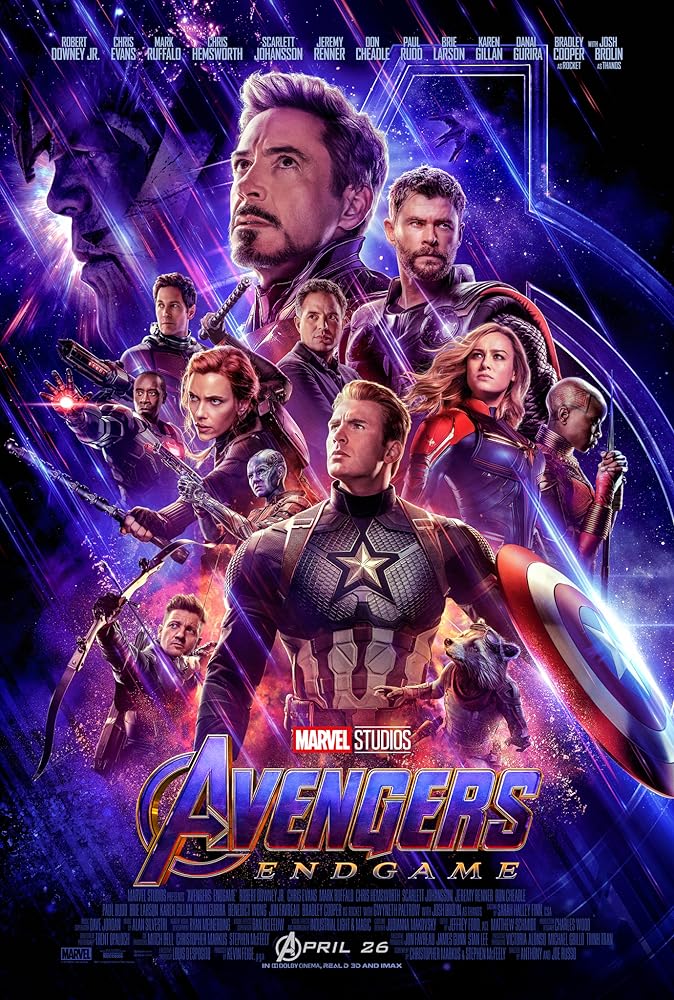
Avengers: Endgame (2019) review


Don Cheadle, Robert Downey Jr., Josh Brolin, Bradley Cooper, Chris Evans, Scarlett Johansson, Brie Larson, Jeremy Renner, Paul Rudd, Mark Ruffalo, Chris Hemsworth, Danai Gurira, and Karen Gillan in Avengers: Endgame (2019)

(I solemnly swear that there will be no major spoilers in this review. As with every review I do, there will be a general plot synopsis, but this one will be as light on the details as possible.)

After 11 years of phenomenal world-building and an endless array of excellent cinematic outings, the Marvel Cinematic Universe has finally reached the pinnacle of its ambitious narrative. Sometimes it’s crazy to think that it’s been that long since Tony Stark first announced to the world that he was Iron Man… and yet, here we are. Since the release of Iron Man back in 2008, audiences have been treated to one of the most rewarding cinematic experiences of all time as the MCU has very much set the new gold standard for shared universes. Sure, the idea of a shared universe is a media concept that has been around for decades, but the MCU easily outshines almost every other film franchise of this nature when it comes to its overall narrative and the ever-expansive scope of the world that it’s created. And while not every installment of the MCU has been a masterpiece, it can also be argued that none of them have been on the level of quality as some of the superhero genre’s most infamous outings (e.g. Batman and Robin, Catwoman, Fan4stic, etc.). With all that in mind, all eyes are now on the fourth Avengers film and the final installment of what Marvel Studios has now labeled as ‘The Infinity Saga’, Avengers: Endgame. This 22nd installment of the Marvel Cinematic Universe is the second half of a storyline that has been built up for a decade and officially got underway in last year’s Avengers: Infinity War. And after that film’s jaw-dropping finale, directors Joe and Anthony Russo (AKA the Russo brothers) are now tasked with bringing this epic story to its conclusion as our heroes do “whatever it takes” to avenge their fallen comrades. What follows is, as one can only expect from an MCU film at this point, an emotionally-charged superhero epic.  

At the end of Avengers: Infinity War, the Avengers found themselves dealt with the toughest loss that they’ve ever experienced. Despite their best efforts to prevent him from acquiring all six of the cosmic power sources known as Infinity Stones, Thanos the Mad Titan (Josh Brolin) managed to collect them all and use them to accomplish his plan to wipe out half the universe with just a single snap of his fingers using the Infinity Gauntlet. Thus, in the blink of an eye, the Avengers were forced to witness several of their friends and family erased from existence. After learning where Thanos ended up going afterward, Steve Rogers AKA Captain America (Chris Evans) leads a faction of Avengers that includes Natasha Romanoff AKA Black Widow (Scarlett Johansson), Thor the Asgardian God of Thunder (Chris Hemsworth), and new ally Carol Danvers AKA Captain Marvel (Brie Larson) to confront him. In the process, however, they discover that Thanos has destroyed the stones so that they couldn’t be used again to reverse his actions. All seems lost until Scott Lang AKA Ant-Man (Paul Rudd) manages to return from the Quantum Realm, which he had become trapped in at the end of Ant-Man and the Wasp when his allies fell victim to the snap. Having learned that time operates differently in the Quantum Realm, Scott proposes that they travel back in time and find the Infinity Stones before Thanos does so that they can hopefully use them to bring back those who were lost. Thus, Cap, Tony Stark AKA Iron Man (Robert Downey Jr.), and the other Avengers embark on their most important mission yet, which only becomes more complicated once Thanos discovers their plan.

Avengers: Endgame is a three-hour superhero epic, and it more than warrants its hefty runtime. As a follow-up to the events of Infinity War, it perfectly illustrates the devastating effects of what’s now known as ‘The Decimation’ on the MCU and, most importantly, its main protagonists. Just like its immediate predecessor, this film is easily one of the most emotional installments of a franchise that’s been very consistent over the years with its emotional depth. Sure, it still has all the usual aspects of an MCU film, from the snappy dialogue to the vibrant visuals, but just like every other entry in the franchise, the light-hearted elements of this film rarely have any sort of noticeable impact on its dramatic moments. In this instance, the urgency of the Avengers’ mission to ensure that ‘The Decimation’ will be reversed is strongly maintained throughout, along with the fact that because this is something that can’t easily be undone, it’s clear that they will have to make some sacrifices along the way. And because this mission sees them going back in time to key moments in the franchise’s history, this film is loaded with call-backs to previous films and a wide array of cameos. Sure, some may argue that this is blatant fan-service (which, to be fair, it technically is) whose success rate will depend on how familiar one is with the franchise, but at the same time, Marvel Studios has quite frankly earned the right to show off at this point given the continuing success of their franchise. And without spoiling anything, it all leads to one of the most satisfying bits of payoff ever witnessed on film.

Almost every MCU film to date (save for Incredible Hulk) has had the same casting director, Sarah Finn, and thanks to the woman who’s quite arguably the unsung hero of the franchise, we’ve experienced one of the best ensemble casts in cinematic history who continue to shine in every film that they appear in. I mean, there’s not much more that I can add to the discussion about how great this cast is that I haven’t already mentioned in previous reviews. Given the events of the previous film, this one focuses heavily on the original six Avengers from the first film, allowing for a perfect bookend to everything that they’ve helped create while also giving each member their own standout moment as has always been the case with these films. It also helps this film manage to be a bit more consistent with its character development when compared to Infinity War which, in that film’s defense, had a lot more characters to juggle and was more focused on Thanos’ quest for the Infinity Stones. And as one era of the franchise ends, those who will be headlining it for the next few years to come are equally outstanding. Brie Larson, for example, makes the most out of her surprisingly minor role in this film (which she notably filmed BEFORE Captain Marvel), once again exemplifying Carol Danvers’ strong charisma and powerful commanding presence. And, of course, we can’t forget about the MCU’s greatest villain, Thanos. Sure, he doesn’t play as prominent of a role in this film as he did in Infinity War, but he’s still given plenty of great emotional pathos and the film continues to epitomize why he’s truly the most dangerous adversary that the Avengers have ever faced.

Let’s be frank, folks, you know exactly what rating I’m going to be giving this film. It is, after all, the exact same rating that I’ve given to nearly half of the other films in this franchise. But as always, that’s ultimately more of a testament to what Marvel Studios has managed to pull off this past decade with their ambitious franchise. If Infinity War was a masterpiece of the superhero genre, then Endgame is MCU fandom nirvana. It more than does its job at being both a follow-up to Infinity War and the climactic outing of the ‘Infinity Saga’, as it provides great conclusions to some of the franchise’s longest-running storylines and character arcs. In other words, this is very much a love letter to the MCU’s devoted fanbase as it rewards those who’ve supported it over the years, especially those who’ve been there since the very beginning, with some of the most amazing imagery that the genre has ever seen. But amidst all the epic action, great humor, and massive amounts of grand fanservice, it still does everything that we’ve come to expect from this franchise’s extensive filmography. It fully endears us to its main protagonists, provides them with a well-layered and incredibly intimidating villain to face off against, and truly hits hard when it comes to its biggest emotional moments. Simply put, everything that happens in Avengers: Endgame is exactly what it needed to be, and because of this, it properly cements the Marvel Cinematic Universe as one of the most legendary franchises in the history of film.  

Rating: 5/5!

Friday, December 14, 2018

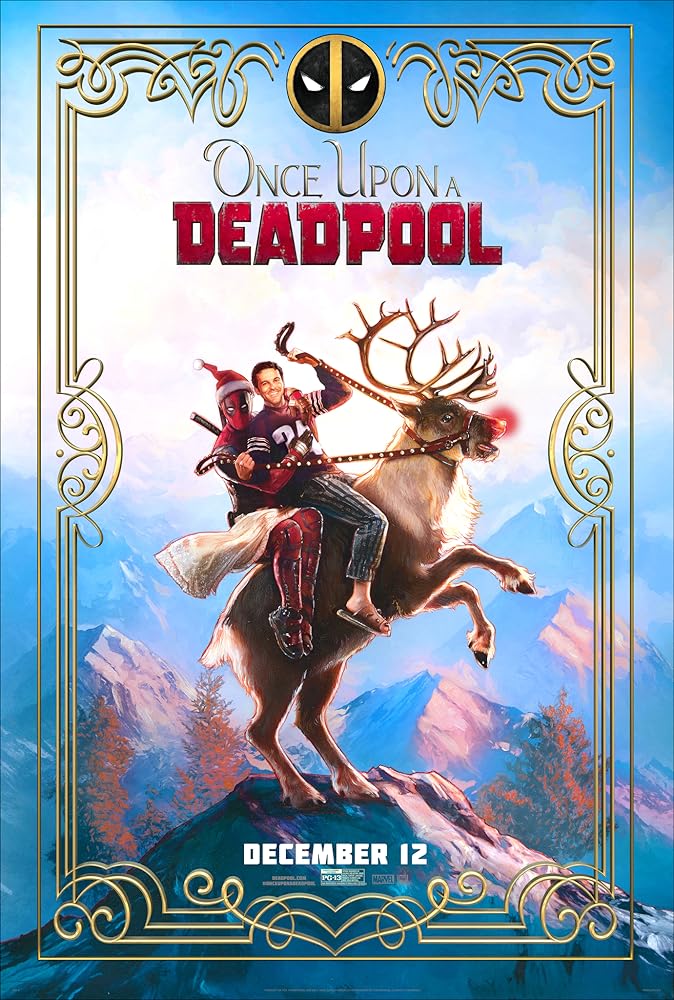
Once Upon a Deadpool - A Discussion

Fred Savage and Ryan Reynolds in Deadpool 2 (2018)

(DISCLAIMER: There will be spoilers regarding the plot of Deadpool 2 as I presume that most of you who are reading this have already seen the film. But in case you haven’t, the following link will direct you to my original non-spoiler review of the film from this past May.)

This holiday season, audiences are being treated to a unique kind of gift from the one and only Merc with a Mouth, Deadpool. Earlier this year, Wade Wilson returned to theaters with Deadpool 2, which saw him cross paths with the time-traveling soldier Cable, create the X-Force, and break the fourth wall further than he’s ever broken it before. And just like the original Deadpool, the film was a massive financial hit when it was released back in May. At the time that I’m writing this, it has grossed over $734 million worldwide, effectively making it the third highest-grossing entry in the X-Men film franchise as well as the third highest-grossing R-rated film of all-time. In terms of critical reception, the film ended up faring on par with the original, attracting a generally positive reaction from critics and audiences. There was some debate, however, as to whether the film was a ‘superior’ sequel. As for me, I’m part of the crowd who thinks that it is better than the first film. Despite a few awkward tonal shifts here and there, director David Leitch’s sequel took way more risks compared to the original. To be fair, though, the original Deadpool did do an admirable job working around the limitations of being the first major attempt at an R-rated superhero film post-Avengers. Ultimately, though, Deadpool 2 excels more thanks to more consistent humor, the wonderful additions of Josh Brolin as Cable and Zazie Beetz as Domino, and stronger emotional depth. But now we come to today’s topic, Once Upon a Deadpool, a new version of Deadpool 2 that promises to be the perfect holiday release for the whole family. Thus, instead of a traditional review (because I’ve already done that for this film), today’s post will be more of a discussion about this special re-release.  

Ryan Reynolds in Deadpool 2 (2018)

For all intent and purposes, Once Upon a Deadpool is indeed the PG-13 rated cut of Deadpool 2. It’s still the same story of Wade Wilson trying to protect a young mutant named Russell from Cable by forming his own superhero team, X-Force. And while most of his new team ends up being eradicated in a hilariously dark fashion, Deadpool ends up finding the one thing that he’s been missing all this time via the most important F-word of all, a family. After all, as he states in the opening sequence, Deadpool 2 is a family film, and Once Upon a Deadpool is easily its most ‘family-friendly’ version. While there are a few instances of heavier curse words, all F-bombs are either censored ‘TV-edit’ style or bleeped via Deadpool’s trusty censoring buzzer. Any instances of nudity (e.g. when Deadpool has his Basic Instinct moment after his legs start to regenerate) are blurred out. And finally, the most graphic bits of violence are obviously toned down. At the very least, most of the action sequences are kept intact, just without showing any blood spurts (e.g. Deadpool dodging Cable’s bullets on the prisoner convoy). But when it comes to the most graphic moments from the film, it does cut away before they happen, with the most prominent example being when Deadpool gets ripped in half by Juggernaut. All in all, the method in which this version of Deadpool 2 is toned down to a PG-13 rating is decently done, for the most part. I wouldn’t call it a complete success as there are a few instances where the censoring attempts are a bit more blatant than others but compared to other films that were originally R-rated but were then toned down to a PG-13 rating at the cost of hastily edited action sequences, it’s still an admirable attempt. And while I obviously don’t want every future R-rated film to have a toned-down PG-13 rated cut just so that they can appeal to a wider audience, it’s acceptable in this instance if only because of Deadpool’s potential appearances in future films.


But, of course, the most prominent addition to this cut of the film is its new framing device. In a homage to the 1987 classic The Princess Bride, Deadpool kidnaps (or, as he puts it, a case of ‘unsolicited location enhancement’) Fred Savage to tell him the story of Deadpool 2 in the same manner that Peter Falk told him the story of The Princess Bride all those years ago. Thus, just like in The Princess Bride, Savage pops up from time to time to comment on the current sequence, leading to some hilarious meta-commentary on everything from the film’s controversial fridging of Vanessa to the unexpected cameo by Brad Pitt as the Vanisher. And sure enough, these sequences are a brilliant addition. Even under the restrictions of the film’s new PG-13 rating, Deadpool’s comedic sensibilities are still on point throughout, which I’d argue is a testament to Ryan Reynolds’ own comedic talents and proves that, yes, Deadpool can indeed work well in a PG-13 environment. And, of course, Fred Savage also contributes heavily to these sequences’ success as his camaraderie with Reynolds is phenomenal. Really, the only disappointing thing about these sequences is that there aren’t more of them, as it would’ve been interesting to hear Savage’s thoughts on things like the abrupt deaths of the X-Force squad.        

Josh Brolin, Ryan Reynolds, Stefan Kapicic, Karan Soni, Julian Dennison, and Zazie Beetz in Deadpool 2 (2018)

In conclusion, Once Upon a Deadpool is admittedly a tough film to come up with an overall recommendation for. If the extreme blow-back to a 2016 petition requesting a PG-13 edit of the first Deadpool is any indication, a lot of fans aren’t exactly on board with the idea of the Merc with a Mouth being toned down to PG-13 material. And yet, with Disney’s impending purchase of Fox’s film division on the horizon, there’s a considerably high chance that it could happen. Granted, Disney CEO Bob Iger has stated that the plans are to maintain the franchise’s R-rating but given that the Marvel Cinematic Universe films are rated PG-13, I think it’s safe to say that Deadpool will be turned PG-13 whenever he makes a cameo in a non­-Deadpool film. As such, it can be argued that the main intent of Once Upon a Deadpool is to see if the character can work within the boundaries of a PG-13 rated superhero film. And as controversial of a claim as it’ll undoubtedly be for fans of the character, I think it works well. Now to be clear, I’m not saying that this is the definitive version of Deadpool 2. Clearly, the film was always intended to be R-rated, so if you want to see the film in its purest form, you’ll be better off watching the original theatrical cut or the ‘Super Duper $@%!#& Cut’ on Blu-Ray. However, the way in which this version of the film is cut down to meet PG-13 standards is, at the very least, better handled compared to other films that were forced down to the more family-friendly rating. Plus, the additional sequences involving Deadpool and Fred Savage are a delightful bonus. In short, as someone who isn’t religiously devoted to the belief that Deadpool should remain in an R-rated environment, I had as much fun with Once Upon a Deadpool as I did the original Deadpool 2. And while several critics have felt that this re-release was ‘unnecessary’, I’d argue that it isn’t because it’s not just a case of the filmmakers being forced to cut their film down just so that the studio can market it to a wider audience. Rather, this is ultimately a case of a film that is being toned down… but in this instance, the filmmakers are totally in on the joke.

Rating: My 4.5/5 rating from my original review of Deadpool 2 still stands even when considering what had to be cut from this version to make it PG-13, as the new scenes with Fred Savage do make up for what was taken out.


Ultimately, though, one of the biggest reasons to see Once Upon a Deadpool is for its final post-credit scene. I won’t spoil it for those who are planning on seeing it but believe me when I say that it’s practically worth the price of admission alone.


Thursday, May 24, 2018

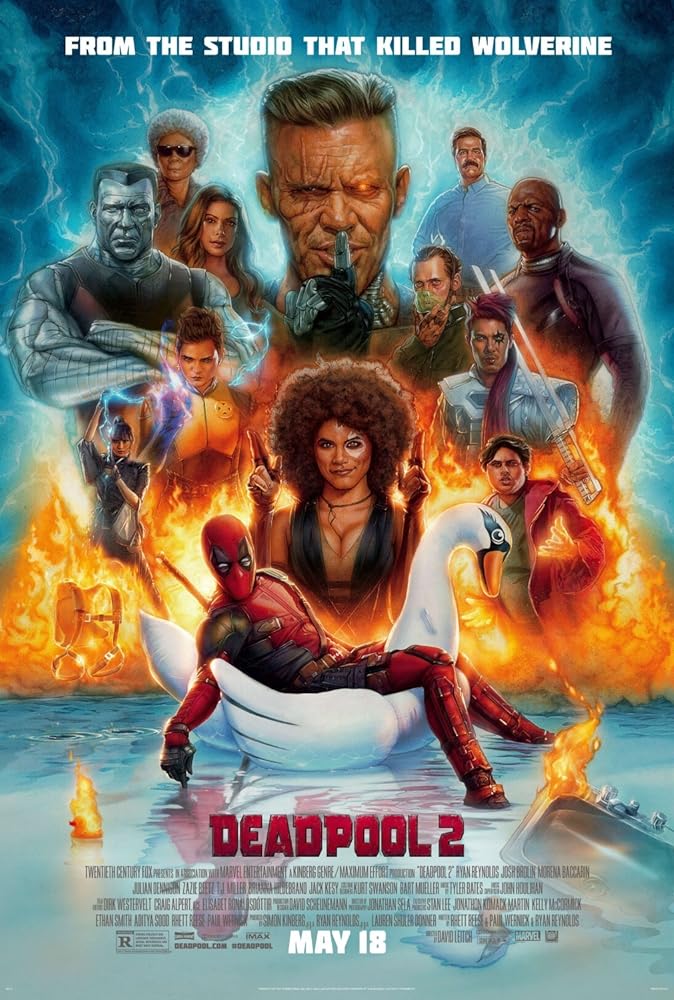
Deadpool 2 (2018) review

Brad Pitt, Josh Brolin, Ryan Reynolds, Terry Crews, Bill Skarsgård, Leslie Uggams, Morena Baccarin, Lewis Tan, Stefan Kapicic, Rob Delaney, Shioli Kutsuna, Julian Dennison, Zazie Beetz, and Brianna Hildebrand in Deadpool 2 (2018)

Calling the 2016 superhero film Deadpool a hit would be a massive understatement. Upon its release in February of that year, the X-Men spin-off broke all sorts of box-office records. Not only did it become the highest grossing X-Men film to date worldwide, but it also set various opening weekend records as A.) an R-rated superhero film B.) an R-rated film in general and C.) a film that was released in the supposedly ‘dead’ month of February, and that’s just to name a few. Simply put, audiences were delighted by this raunchy installment of the superhero genre, especially due to its more faithful take on the fan-favorite titular anti-hero after his infamous first live-action appearance in 2009’s X-Men Origins: Wolverine. And thus, everyone’s favorite fourth-wall breaking mutant is back in Deadpool 2 which, as promised in the previous film’s post-credits scene, sees the introduction of Deadpool’s most famous ally from the comics, Cable. This time around, though, former VFX artist Tim Miller is not back to direct after he backed out of the project early in its development due to creative conflicts with lead Ryan Reynolds over the direction that it was going in. Thankfully, a badass replacement was found rather quickly in long-time stunt coordinator David Leitch. Since 2014, Leitch has begun to transition into directing and has managed to make quite a name for himself in the process, having co-helmed the 2014 modern action classic John Wick alongside fellow stunt veteran Chad Stahelski and then making a solid solo directorial debut with last year’s action thriller Atomic Blonde. Ultimately, though, one question still stands. From the perspective of someone who admittedly ‘liked, but not loved’ the first Deadpool film, does this one manage to outshine its predecessor and truly live up to its mantle as an unrelenting, R-rated, meta-fueled superhero extravaganza?

Two years since he first started to operate as the mercenary Deadpool, cancer survivor Wade Wilson (Ryan Reynolds) continues to do what he does best; killing all the bad guys, constantly breaking the fourth wall (primarily to complain about how fellow mutant Wolverine always steals his thunder) and wooing his girlfriend Vanessa (Morena Baccarin). However, Deadpool soon finds himself crossing paths with Cable (Josh Brolin), a cybernetic soldier from the future. Having traveled back in time from his dystopian world, Cable is hellbent on eliminating a young mutant boy named Russell Collins (Julian Dennison), who calls himself ‘Firefist’ due to his ability to shoot fire from his hands, whom Deadpool ends up meeting during a ‘mission’ with his old X-Men ‘pals’ Colossus (Stefan Kapičić) and Negasonic Teenage Warhead (Brianna Hildebrand). As Deadpool soon learns, Cable’s primary reasoning for hunting Russell is that he will end up killing those who had abused him at a ‘Mutant Re-Education Center’ orphanage, which will then lead to him becoming a killer years later with Cable’s own future wife and daughter being two of his victims. And despite Cable proving to be a highly imposing threat, Deadpool, fueled by his desire to have a family of his own with Vanessa, decides to take on the responsibility of protecting Russell. To do so, he ends up forming a superhero team of his own known as X-Force, which includes the likes of EMP disrupter Bedlam (Terry Crews), acid-spewing Zeitgeist (Bill Skarsgård), and luck manipulator Domino (Zazie Beetz) to deal with the time-traveling warrior who looks a lot like the main antagonist from Avengers: Infinity War.

Despite a change in director, Deadpool 2 does not lose any of the spirit that helped make the first film such a worldwide phenomenon, as it still provides audiences with plenty of great fourth wall jokes that liven up the mood when paired against some of its graphically violent action sequences. But perhaps the best thing that this film does is that it truly lives up to its designation as an unfiltered, balls-to-the-wall (figuratively and literally with emphasis on the latter) R-rated superhero film when compared to the first Deadpool. As I noted a few years back in my review of the first film, while I did genuinely enjoy it thanks in large part to its well-handled humor, I didn’t quite see it as the ‘superhero genre game-changer’ that everyone regarded it as. Despite its various ways of subverting and poking fun at some of the genre’s most widely mocked tropes, its ‘origin story’ narrative ended up covering much of that ground anyway. Plus, the film’s lower budget compared to the likes of other films in the genre did end up rearing its ugly head at times, like during its obviously watered-down finale despite it being set on an MCU-style Helicarrier of all places. To be fair, though, this wasn’t technically the film’s fault as it was just a case of it being an ‘untested venture’ for the studio. Thankfully, that’s not as big of an issue with Deadpool 2, which sports a budget that’s almost double that of the first’s. Because of this, the film takes way more chances when it comes to satirizing the superhero genre that ends up leading to plenty of highly satisfying comedic payoffs. Really, the only thing holding it back is one key plot twist early on that affects some of the main characters. This twist, influenced by one of the genre’s most infamous tropes, ironically helps to give the film more of an emotional core than the first film while still robbing it of the most notable contribution to its predecessor’s most poignant moments while also causing a few instances of tonal inconsistency in the process.

Through it all, though, the film is undoubtedly bolstered by Ryan Reynolds’ phenomenal turn in the titular role, as his comedic timing is just as strong as it was in the first film. This is then balanced excellently with Josh Brolin in his second major role in a comic book film this year after he blew everyone away as Thanos in Avengers: Infinity War. While there are instances where Cable proves to be just as generally imposing as Thanos, here he is mostly used as the butt of several jokes from Deadpool, who of course is a constant thorn in his sides. Sadly, Morena Baccarin is once again heavily underused as Vanessa despite her genuinely wonderful chemistry with Reynolds. In fact, it’s quite frankly even worse here than in the first film (remember that ‘infamous trope’ I mentioned in the last paragraph? Yeah, it affects her the most…). Thankfully, this is ‘somewhat’ alleviated by the film’s other main female lead, Zazie Beetz as Domino. As soon as the character first appears on-screen, she is immediately established as a badass heroine (despite Deadpool’s claims that her ‘luck-based’ powers aren’t very cinematic) who more than manages to hold her own against Deadpool’s tomfoolery. Julian Dennison is also a major standout as the young mutant Russell as he unabashedly partakes in some of the film’s most risqué bits of humor. And because parts of the film have him utilized as an ‘antagonist’, that technically makes him a better villain than those from the previous film, especially when he partners up with [identity of the second villain in this film redacted due to spoilers; I will say, though, that just like how the first film redeemed Deadpool, this villain’s appearance in this film redeems his previous one]. Finally, you also have plenty of the great supporting roles returning from the first film, including the duo of Colossus and Negasonic Teenage Warhead (who don’t necessarily get as much to do this time around but still manage to have their own standout moments) and Karan Soni as Deadpool’s happy-go-lucky cab driver friend Dopinder.  

In conclusion, to answer the question that I laid out in the early parts of this review, I’m pleased to say that I did like Deadpool 2 more than the first film. Now again, this isn’t meant as a slight against the first Deadpool, which is still an enjoyable (and, most importantly, hilarious) entry in the superhero genre that allowed Ryan Reynolds the chance to give the titular character the proper film adaptation that he deserved. It’s just that, at the end of the day, Deadpool 2 doesn’t have to deal with the pressure of being an untested anomaly for both Fox and the superhero genre in general. After all, when the first Deadpool hit theaters in early 2016, it was at a time when R-rated superhero films weren’t yet considered as being ‘commercially viable’ ventures. But now that Fox has basically become the top purveyor of R-rated superhero films at this point thanks to both it and Logan, that means that Deadpool 2 is able to go above and beyond in terms of truly going ‘out there’ with its satirical takes on the genre, which it does with utter delight. This, in turn, allows Deadpool 2 to have some of the most consistently terrific humor to come out of a superhero film to the point where it even rivals the MCU’s trademark sense of humor. And just like the first film, this is then strengthened further by an excellent ensemble cast that’s headlined by Ryan Reynolds once again proving why his recent turns as the Merc with the Mouth have made him one of the genre’s most pitch-perfect casting decisions. With all this said, though, I’ll admit that I still don’t necessarily consider this to be the ‘best’ superhero film of the year as it does sort of suffer from a major plot twist that, from a narrative perspective, ironically also does a few good things in the process. But as far as being one of the most ‘fun’ installments of the genre, Deadpool 2 is certainly near the top of that list.


Rating: 4.5/5

Sunday, April 29, 2018

Avengers: Infinity War (2018) review

Don Cheadle, Robert Downey Jr., Josh Brolin, Paul Bettany, Chris Evans, Scarlett Johansson, Elizabeth Olsen, Chris Pratt, Mark Ruffalo, Zoe Saldana, Benedict Wong, Anthony Mackie, Chris Hemsworth, Dave Bautista, Benedict Cumberbatch, Chadwick Boseman, Sebastian Stan, Danai Gurira, Karen Gillan, Pom Klementieff, Letitia Wright, and Tom Holland in Avengers: Infinity War (2018)

(Fear not, my fellow MCU fans who have yet to see this film, as this review will not (I repeat… NOT) be addressing any major spoilers from it. I mean, heck, who do I think I am? That guy from Forbes who spoiled the ENTIRE FILM before it even came out?)

(Seriously, though, what the hell, Forbes?)

In just a few days, Marvel Studios’ 2008 blockbuster Iron Man will celebrate its 10th anniversary… and thinking about that is truly surreal as I still remember going to see that film in the theaters. And like many others at the time, I had no idea of what was about to unfold before our eyes. Back then, the live-action film side of the superhero genre almost entirely consisted of films based on a single character or a small group of heroes. At the time, no one had ever really attempted a massive crossover-centric franchise between multiple big-name comic icons aside from various animated films and TV shows. But after Marvel’s film division made a $525 million financing deal with Merrill Lynch in 2005 to distribute their own films instead of licensing them to other studios, a plan was put into motion to attempt a ‘cinematic universe’ featuring all the major superheroes whose film rights were still owned by Marvel at the time. In other words, they couldn’t immediately work with some of their biggest properties, including Spider-Man, the Fantastic Four, and the X-Men, as the former’s film rights were owned by Sony and the latter two’s rights were owned by Fox. Thus, they had to go with some of their lesser-known heroes to start off this new franchise of theirs… and yes, as crazy as it may seem, Iron Man was, technically speaking, a ‘lesser-known’ Marvel superhero prior to 2008. But, of course, that all changed when the character’s first feature film adaptation became one of the most critically/commercially successful films of the year. And it all concluded with a game-changing post-credits scene in which main protagonist Tony Stark was approached by Nick Fury, the head of the government organization known as S.H.I.E.L.D. who came to talk to him about the ‘Avenger Initiative’. Thus, a cinematic universe was born…

Since then, Marvel Studios has continued to deliver top quality superhero flicks year in and year out. And while not all their films have been runaway hits, they haven’t necessarily made a downright ‘horrible’ MCU film no matter what directorial conflict or issue with the studio’s now-defunct ‘creative committee’ has ever occurred. And really, the main reason why this franchise has worked as well as it has is that studio president Kevin Feige and his team have made a considerable effort to ensure that the franchise takes its time to develop the universe and its characters before bringing them all together in one film. That was the case with Phase 1 of the franchise, which culminated in the genre’s then-latest landmark installment, 2012’s The Avengers. The heroes of the MCU were then subjected to some darker storylines in Phase 2 before reuniting again for the equally darker Avengers follow-up, 2015’s Age of Ultron. And now, as we near the end of Phase 3, the Avengers are back for Marvel Studios’ biggest endeavor yet, Avengers: Infinity War. A true cinematic epic that has been a full decade in the making, this film sees the Avengers taking on their greatest threat yet, Thanos, who has been continuously built up ever since he first appeared in the first post-credits scene of the original Avengers. And while Joss Whedon isn’t behind the camera for this installment, a suitable pair of successors are in Joe and Anthony Russo, who have already given us two of the MCU’s greatest installments to date in 2014’s Captain America: The Winter Soldier and 2016’s Captain America: Civil War. Sure enough, they once again deliver with a truly jaw-dropping cinematic spectacle that pulls off some of the gutsiest moves that the superhero genre has ever seen.

Over the course of the past 18 installments of the Marvel Cinematic Universe, its various superheroes have come across a variety of powerful objects that were spawned from a series of gems known as Infinity Stones, which were formed in the wake of the Big Bang. And it is these six stones that attract the attention of one figure, Thanos the Mad Titan (Josh Brolin), an alien warlord from the planet Titan who embarks on a mission to retrieve them all so that he can achieve his lifelong ambition of wiping out half the universe. To make sure that this doesn’t happen, all the world’s heroes unite to prevent the Mad Titan from getting his hands on the stones. In New York, ‘genius, billionaire, playboy, philanthropist’ Tony Stark AKA Iron Man (Robert Downey Jr.) teams up with his teenaged protégé Peter Parker AKA Spider-Man (Tom Holland), sorcerers Dr. Stephen Strange (Benedict Cumberbatch) and Wong (Benedict Wong), and scientist Bruce Banner AKA the Hulk (Mark Ruffalo) to safeguard the Time Stone housed within Strange’s special artifact, the Eye of Agamotto. In the African nation of Wakanda, fugitives Steve Rogers (Chris Evans), Natasha Romanoff AKA Black Widow (Scarlett Johansson), Wanda Maximoff AKA Scarlet Witch (Elizabeth Olsen), and Sam Wilson AKA Falcon (Anthony Mackie) ally with Wakanda’s king T’Challa AKA Black Panther (Chadwick Boseman) to protect the artificial being Vision (Paul Bettany), who’s powered by the Mind Stone. And in the far reaches of space, the Guardians of the Galaxy, consisting of thief Peter Quill AKA Star-Lord (Chris Pratt), Thanos’ adopted daughter Gamora (Zoe Saldana), warrior Drax (Dave Bautista), weapons expert Rocket Raccoon (Bradley Cooper), tree creature Groot (Vin Diesel), and empath Mantis (Pom Klementieff) end up running into Thor the God of Thunder (Chris Hemsworth), who managed to survive an attack by the Mad Titan himself.

Now at this point in the MCU’s run, I will fully admit that I’m just becoming a broken record at this point when it comes to listing all the great things that one can expect in an MCU film. And sure enough, that’s once again the case with Infinity War. You have your amazing action sequences that are bolstered by outstanding visual effects while also showcasing the Russo brothers’ growing strengths as action directors after they originally got their start in comedy. You have the franchise’s great sense of humor that produces an endless array of classic moments that never once take away from the dramatic context of the plot. And in the case of these Avengers films, this great humor is then further fortified by all the terrific character interactions between all the franchise’s great heroes, from Iron Man and Doctor Strange to the trio of Thor, Rocket, and Groot… and yes, that’s only naming a few of this film’s noteworthy combinations. But then the Russo brothers take things one step further by pulling off one of the gutsiest endings that the superhero genre has ever seen. Now, obviously, I won’t reveal anything about what happens in it for those who haven’t seen the film yet, but you could say that it’s possibly a response to the long-standing (and rather questionable) argument that Marvel films don’t have any real stakes in them. And with that in mind, while I know that this ending will probably get reversed somehow in next year’s fourth Avengers film, it is handled perfectly in this film with such a strong sense of emotional poignancy that it rivals any major ‘awards season favorite’.

Given that most of this film’s ensemble cast has already been in at least three or more previous MCU films, there’s really no need to talk about their performances because they’re all just as great as they’ve always been. From the original Avengers squad to the Guardians of the Galaxy to more recently introduced heroes like Black Panther and the MCU’s rendition of Spider-Man, Marvel Studios has managed to create one of the most legendary ensemble casts in film history. Now, admittedly, despite all that, it should be noted that you shouldn’t go into this film expecting a lot of new bits of character development for these heroes as it’s more about the battle against Thanos. And because Infinity War does boast the largest cast of heroes that has ever been seen in a superhero film, some characters do get a little more attention than others, like Thor (who was confirmed by the Russos themselves as having the most screen-time of any main protagonist in the film), Gamora (given her connection to Thanos), and Star-Lord (due to the romance between him and Gamora). This, in turn, could very much perpetuate the ever-growing argument that the MCU is getting too overcrowded. However, just like in Age of Ultron, this ultimately isn’t that much of an issue in the long run because of one simple reason, and it’s the one that I’ve been referring to time and time again. Because all these characters have been given great bits of character development in previous MCU films, there’s not that much of a need for a lot of that in this film as it’d just bog down its proceedings to the point where it ruins the pacing. And just like the previous two Avengers films, at the very least every major superhero gets to have his or her standout moment whether it’s via a hilarious joke or a badass action sequence.    

And then there’s the big bad of this film AKA the one that the MCU has been teasing for years, Thanos. Given all that build-up, along with all the jokes that were made about the character’s initial inactivity during his cameo appearances in Guardians of the Galaxy and Age of Ultron, clearly expectations were high for the Mad Titan to truly leave a lasting impression on viewers. This was especially a matter of the utmost importance for many people after several past MCU villains have been heavily scrutinized by critics and audiences for not being as well-developed as the franchise’s protagonists. Thankfully, that’s not an issue here as Thanos does, indeed, live up to the hype as one of the MCU’s greatest villains. First off, the motion-capture effects used to turn Josh Brolin into the character are outstanding, truly showcasing how far the art form has evolved over the years especially when compared to Brolin’s previous appearances in the role. At the same time, Brolin himself is also phenomenal as one of the most emotionally-driven villains that the franchise has ever seen. Yes, there is quite a lot of emotional heft to Thanos’ arc in this film. Despite all the terrible things that he and his followers, the Children of Thanos (a rather underutilized but still all-around serviceable group of imposing subordinates), does to our heroes, much like Erik Killmonger in Black Panther you’re able to get a sense of how truly committed Thanos is to his goals. And as we soon find out, he ends up going to some incredibly dark places to achieve those goals. In other words, in a film that is full of so many great characters, Thanos might arguably be the most compelling figure of them all.

Anyone who knows me probably guessed beforehand that I was going to love this film seeing how I’ve never given any of the previous MCU films a negative review. But in this instance, I want to truly emphasize why this entry in the franchise is something special. Because for most of this film’s two and a half hour runtime, it gives us everything that fans of the MCU have come to love about the franchise. It has the great action sequences, the wonderful interactions between all its main characters, and an endless array of quotable lines. But then comes this film’s ending, which takes so many daunting risks for an MCU film and yet all of which end up paying off because of how well-handled it is. And even though it’ll probably get fixed somehow in the fourth Avengers film, and even though it comes in a film where character development for its well-established heroes is admittedly not its primary focus, it will still leave one hell of a lasting impact regardless of one’s overall views of the MCU. That is a testament to the phenomenal job that Kevin Feige and his team have done in creating a franchise that has taken its time when it comes to world-building. It is a testament to the amazing direction from the Russo brothers, who have given us three of the MCU’s greatest outings in just the past five years. And it is a testament to the sterling performances of the franchise’s top-notch cast of endearing main protagonists along with one of the best villains in the history of both the superhero genre and film in general. Simply put, for long-time fans of the MCU, Avengers: Infinity War is the culmination of one of the most rewarding cinematic experiences of all-time.

Rating: 5/5!