Showing posts with label Michael Fassbender. Show all posts

Thursday, June 27, 2019

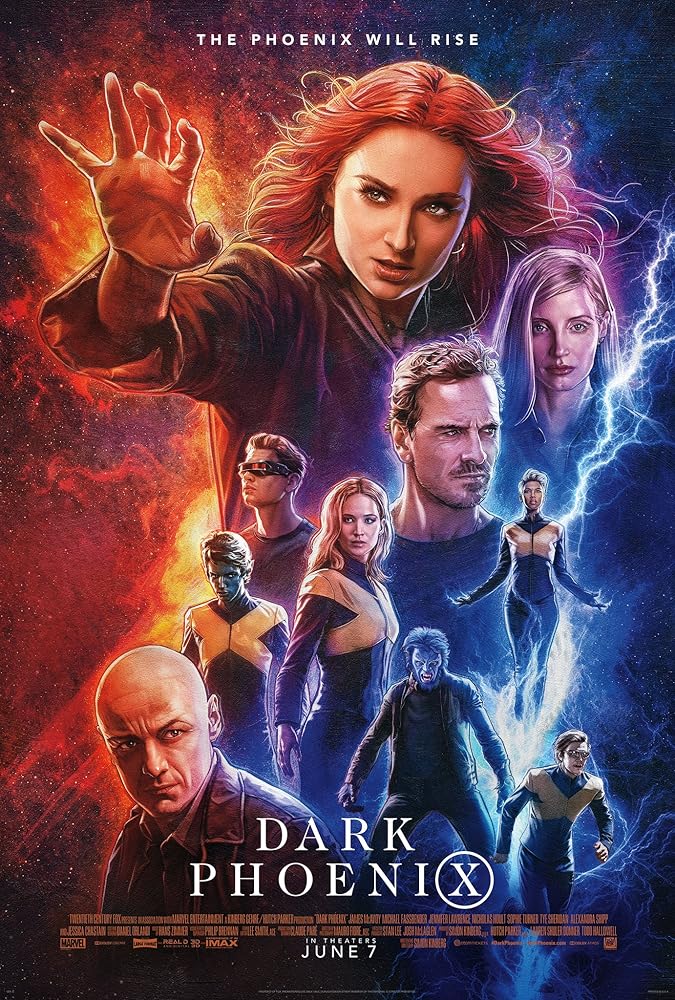
Dark Phoenix (2019) review


Nicholas Hoult, James McAvoy, Michael Fassbender, Evan Peters, Jessica Chastain, Jennifer Lawrence, Kodi Smit-McPhee, Alexandra Shipp, Sophie Turner, and Tye Sheridan in Dark Phoenix (2019)

In the early 2000s, the superhero film genre experienced a major resurgence thanks to three films that were all based on Marvel properties, which were also notably the first majorly successful live-action films that the company had ever produced after most of their previous efforts were underwhelming, to say the least. In fact, some of them were so disastrous that they didn’t even get a proper theatrical release (i.e. the infamous 1994 adaptation of The Fantastic Four). But then there was the trio of 1998’s Blade, Sam Raimi’s original Spider-Man in 2002, and the film that paved the way for today’s topic, X-Men, released in 2000 and directed by Bryan Singer. Despite both Singer and several of the film’s cast members admitting that they weren’t too familiar with the source material going in, the original X-Men was a solid critical and commercial success and helped the superhero genre evolve into the powerhouse that it still is today. Thus, the cast and crew returned for a sequel in 2003, X2: X-Men United, which was an even bigger hit and touted by many as a superior sequel. Not only that, but it ended on a note that teased a follow-up that would adapt one of the most famous X-Men storylines from the comics, The Dark Phoenix Saga, where X-Men member Jean Grey is corrupted by the full extent of her telepathic powers. However, as most of you know, this first adaptation turned out to be a bit of a disaster, mainly due to Singer backing out of the project to direct Superman Returns. Brett Ratner was hired in his place and the film that followed, 2006’s X-Men: The Last Stand, received a far more polarizing reaction from critics while being outright despised by fans for its handling of the Dark Phoenix storyline. This and the equally disastrous 2009 spin-off X-Men Origins: Wolverine effectively put the X-Men film franchise in a very rough spot for quite a few years.  

It wasn’t until 2011 when the series officially saw a comeback thanks to X-Men: First Class, a prequel/soft reboot directed by Matthew Vaughn that featured a cast of newcomers playing younger versions of the series’ established characters. And despite some initial skepticism from audiences, the film was a surprise critical and financial hit upon its release. This then paved the way for 2014’s X-Men: Days of Future Past, which saw Bryan Singer return to the franchise for the first time since X2 and combined the ensembles of both the original trilogy and First Class in a loose adaptation of the popular Days of Future Past storyline from the comics. The film also notably established a major bit of retconning by setting up an alternate continuity that ignored the events of The Last Stand. Because of this, writer/producer Simon Kinberg (who also wrote The Last Stand) hoped that this would pave the way for a more faithful Dark Phoenix adaptation in the future. And despite the generally mixed reaction towards the next installment of the franchise, 2016’s X-Men: Apocalypse, plans were officially set into motion for a new adaptation of the Dark Phoenix storyline. Not only that, but the film would also end up serving as Kinberg’s directorial debut after it was made clear that Apocalypse would be Singer’s last entry in the series. Thus, here we are now with the latest X-Men film, simply titled Dark Phoenix, and by all accounts, this will be the final installment of the main series (not counting the long-delayed New Mutants film that’s currently set for a 2020 release) following Disney’s purchase of 20th Century Fox earlier this year. And yet, despite this, reports of some extensive production issues, and an overall chilly reception, Dark Phoenix is ultimately another solid entry in the franchise even though I do agree that it still isn’t the proper Dark Phoenix Saga adaptation that it could’ve been.

It is 1992 and the relationship between humans and mutants has started to prosper thanks to the continued heroic efforts of telepath Charles Xavier (James McAvoy) and the X-Men. However, during a mission where the group rescues the crew of the space shuttle Endeavour, team member/telepath Jean Grey (Sophie Turner) endures the full force of a mysterious solar flare. Against all odds, Jean survives this event but her telepathic abilities end up getting amplified in the process, and to make matters worse, it also allows her to break a mental block that Charles had placed on her when she was younger to hide her memories of a car crash that she accidentally caused that resulted in the death of her mother. Thus, having realized that some of her most trusted allies have been keeping secrets from her, the more volatile aspects of Jean’s powers begin to take effect. This is then complicated further by the arrival of an alien race known as the D’Bari, led by the mysterious Vuk (Jessica Chastain), who seeks to harness Jean’s ‘Phoenix’ abilities for her own sinister purposes, resulting in the X-Men taking on their most perilous mission yet as they find themselves having to face one of their own. And if that wasn’t enough, Charles’ past efforts to ‘protect’ Jean end up causing a major divide amongst several members of the group, with the situation only being agitated further once the always unpredictable Erik Lehnsherr AKA Magneto (Michael Fassbender) gets involved.

As noted in the intro, one of the biggest issues that fans had with The Last Stand was its handling of the Dark Phoenix storyline, which was mainly due to it ultimately being a combination of two radically different storylines from the comics. The other storyline that was adapted for the film was Gifted, a six-part miniseries that was written by none other than Joss Whedon that focused on the introduction of a ‘mutant cure’, which meant that neither storyline got the proper attention that it should’ve since the film had to juggle them both at the same time. By comparison, this new film is technically a more faithful adaptation of the Dark Phoenix arc despite only having one major sequence that takes place in space and not including some of the storyline’s important characters. Namely, it doesn’t feature the Hellfire Club (although they did appear in First Class and were technically wiped out by the time Days of Future Past rolled around) and changes the prominently featured alien race from the Shi’ar to the D’Bari. However, a different issue then comes into play as the film doesn’t quite give this storyline the emotional poignancy that it could’ve had. It goes without saying that the transformation of Jean Grey from hero to villain proves to be devastating for the X-Men, especially her love interest Scott Summers AKA Cyclops (Tye Sheridan). But in the film, it’s treated like your standard hero/villain conflict, and thus, is quite lacking in terms of depth. At the very least, this film’s technical aspects fare a lot better. Despite this only being his first directorial effort, Simon Kinberg does a nice job with the action sequences and the whole film is backed by a suitably intense Hans Zimmer score.  

A lot has been said about how most of the main leads in this film who have been with the franchise for quite some time now are clearly not as enthusiastic about it as they were back then (that and a lot of jokes about how they still look as old as they did in First Class despite that being three films/in-universe decades ago). And yet, for what it’s worth, the returning leads of the franchise are still just as good as they’ve always been in these films, primarily because they continue to be the ones who get the most character development even though it does become a detriment to others. James McAvoy, for example, continues to shine as a more flawed Xavier compared to Patrick Stewart’s version of the character from the original trilogy, especially in this instance given that this whole plot is the result of his best intentions coming back to haunt him. Then there’s Michael Fassbender, who is still quite arguably the biggest standout of the First Class era ensemble as the emotionally charged Magneto. Jennifer Lawrence, meanwhile, continues to be solid as Mystique, who maintains the direction of her arc in Apocalypse by further embracing her leadership capabilities and being more protective of the younger members of the team. However, as some of this film’s trailers have implicated, her role in the plot is much smaller this time around. And finally, there’s Nicholas Hoult as Beast, who arguably gets the most prominent story arc that he’s ever had in this series due to his growing frustrations with Charles over his handling of Jean’s predicament and the devastating results that they yield.

Unfortunately, the newer members of the cast who had promising debuts in Apocalypse don’t get as much to work with this time around even though the First Class era films have done a lot better than the original trilogy when it comes to showing the X-Men working as a team. As alluded to earlier, Tye Sheridan doesn’t get any opportunities to truly delve into the emotional turmoil that Scott is going through over Jean’s actions even though he had one of the best emotional moments in Apocalypse when he learned about his brother Alex’s death. Alexandra Shipp also gets heavily underutilized as Storm, a fact that Shipp herself has openly acknowledged in recent interviews. Heck, we don’t even get a lot of fan-favorite Quicksilver (Evan Peters) this time around, which means that there’s sadly no new standout running sequence set to music like in the previous two films. At the very least, Sophie Turner does manage to do a solid job handling Jean’s psychological dilemma even if this film’s writing doesn’t exactly match her dedication to the role. But then we come to this film’s main antagonists, the D’Bari, who are, unfortunately, some of the weakest villains in the franchise’s history. Jessica Chastain does her best with what she’s given as their leader Vuk, but without much explanation of their backstory or their plans, they’re just a bunch of nameless thugs for the X-Men to fight. I will say, however, that the finale, where the X-Men fight the D’Bari on a train, is a solidly done action sequence, which is saying something considering that this was the biggest aspect of the film’s extensive reshoots due to the original ending supposedly being too similar to the likes of Captain Marvel and Captain America: Civil War.

At the time of this review’s publication, Dark Phoenix currently stands as the worst-received installment of the X-Men film franchise; yes, even more so than The Last Stand and X-Men Origins: Wolverine. And with a lackluster turn at the box-office (to the point where it will apparently be out of most theaters very soon), it’s clear that most audiences are just waiting for the series’ inevitable reboot into the Marvel Cinematic Universe. But is it really that bad? Well, not really. It’s competently made from a technical standpoint and everyone in it does a good job with the material that they’re given. However, while it’s far from being the disaster that many are saying it is, it’s still a sign that the X-Men franchise is running on fumes at this point. While it may technically be a more faithful adaptation of the Dark Phoenix Saga when compared to X-Men: The Last Stand, it never truly has the chance to delve into the psychological and emotional aspects of its storyline. In other words, as it is presented in this film, the conflict of Jean Grey going rogue has about as much urgency to it as Thor: The Dark World. With all this in mind, if this is truly meant to be the last installment of the X-Men film franchise as we’ve known it since the start of the new millennium, then I will openly admit that it’s probably for the best. And while I may be in the minority when it comes to liking this franchise, I do look forward to seeing how Kevin Feige and his team will incorporate these iconic characters into the MCU.

Rating: 4/5

Tuesday, May 23, 2017

Alien: Covenant (2017) review

Image result for Alien covenant poster

In 1979, Ridley Scott directed a sci-fi horror film that would go on to become one of the quintessential films of the sci-fi genre; Alien. It was then followed by Aliens, directed by James Cameron, in 1986; that film would also become one of the most critically acclaimed films of the genre. After that, though, the Alien franchise admittedly started to go downhill. Both 1992’s Alien 3, directed by David Fincher in his directorial debut, and 1997’s Alien: Resurrection, directed by Jean-Pierre Jeunet and written by pre-Buffy the Vampire Slayer Joss Whedon, went through rather tumultuous productions and that ultimately translated to both films’ mediocre reception amongst critics and audiences. And don’t get me started on the infamous crossover films that the series had with the Predator franchise in the early 2000’s. However, in 2012, the Alien franchise was revitalized by the man who started it all; Ridley Scott. That year saw the release of Prometheus, a pseudo-prequel to the original Alien that wasn’t directly tied to the events of that film but was still set in the same general universe. The film did perform solidly on both a critical and commercial level but would prove to be one of the most polarizing films of that year. It spawned an equal number of fans and dissenters, the latter of whom criticized it for leaving some plotlines unanswered in a philosophical-based plot focusing on the origins of humanity. And thus, here we are this year with Alien: Covenant. Scott returns to direct this follow-up to Prometheus, which claims that it’ll provide some of the answers to the unexplained mysteries of its immediate predecessor. Whether it does or not is ultimately up to the viewer, but Scott does deliver another enjoyable, if somewhat predictable, suspenseful adventure in this historic franchise.

In the year 2104, the colonization ship Covenant travels to a remote planet named Origae-6. Onboard are over 2,000 colonists, around 1,000 embryos, and a 15-man crew made up of advanced synthetic android Walter (Michael Fassbender) and several couples, including Captain Jacob (James Franco) and terraforming expert Daniels Branson (Katherine Waterston), First Mate Christopher (Billy Crudup) and biologist Karine Oram (Carmen Ejogo), and pilots Tennessee (Danny McBride) and Maggie Faris (Amy Seimetz). When a run-in with an unexpected neutrino blast severely damages the ship, even causing a few casualties in the process, the crew, forced out of stasis, begins to consider other options should something like this happen again. Specifically, they come across a mysterious transmission from a nearby planet that they learn has a seemingly viable atmosphere that they can potentially inhabit. Deciding that they’d rather not risk going through another stasis-based catastrophe, the crew heads down to the planet to investigate. However, once they arrive, they unknowingly unleash a collection of terrifying creatures that begin to hunt them down. Along the way, they also learn what happened to the surviving crew members of the Prometheus; Dr. Elizabeth Shaw (Noomi Rapace) and the android David (also played, once again, by Michael Fassbender).

As was the case with Alien and Prometheus, one of the absolute best parts about Alien: Covenant is its overall production design. From the scenic landscapes of the remote planet that the crew lands on to the cramped confines of the crew’s ship, as is tradition with the Alien films, the film has some excellent cinematography and special effects. Yes, the alien creatures are primarily CG this time around but from a technical perspective, this film is practically flawless. Admittedly, though, I don’t think that the film delivers on its intention of returning to the series’ horror roots. Sure, the action in Covenant outdoes any Alien film before it in terms of how gruesome it is, but overall, the film is more like Prometheus in that the plot is more based around mystery and suspense. And, for the most part, I do think that the film does succeed in having an engaging mystery plot. With that in mind, though, the question remains; does this deliver on its promise of answering some of the questions that were left unanswered by its predecessor? Well, I’m not entirely sure that it does, but it does continue to lay the groundwork for the events of the Alien franchise in fascinating ways. Though, admittedly, if I did have any gripes with the writing, it’s that the film ends on a rather lackluster note. For the record, this has nothing to do with the overall context of the plot or how it sets up a sequel; it’s more because of this one big reveal that the film ends on. And to be perfectly frank, without giving it away in this review, you’ll likely see this twist coming a mile away.

The film also boasts a solid ensemble cast. Sure, most of the characters are your typical ‘expendable’ crew members and the fact that there are around 15 ‘primary’ characters in this film sometimes makes it hard to keep track of all of them. However, at the same time, because most of them are paired up as couples, it does kind of make things a bit more interesting on an emotional level whenever one half of a couple is killed off. This is especially the case with Katherine Waterston’s character, Daniels. Right out the gate, she becomes one of the most sympathetic characters in the film, thanks in no small part to Waterston’s excellent performance in the role, after (Minor Spoiler!) her husband is killed in the neutrino blast incident that forces the Covenant crew out of stasis. But when chaos ensues, she easily slips into the same badass territory that the franchise’s iconic heroine, Ellen Ripley, has always been known for. Danny McBride is also great in an against-type role as pilot Tennessee, another likable member of the crew. And, of course, there’s Michael Fassbender, in a dual role, no less! He returns as Prometheus’ main android David, who’s still as enigmatic as ever and still one of the most fascinating characters in the entire franchise. At the same time, he also plays the Covenant’s android, Walter, who, despite being more advanced than David, still has some interesting quirks of his own. Fassbender does a great job of differentiating between the two characters and any scenes where the two share the screen together are a major highlight.

Well, it seems like we have another Prometheus on our hands as far as this film’s current critical reception is concerned. Just like its predecessor, I’ve seen plenty of responses towards this film, both positive and negative. So, where do I stand? Well, I’d say that I’m somewhere in the middle of this spectrum but am leaning more towards the positive camp. I can’t say that the film is perfect as there are some noticeable flaws, especially a rather predictable finale that’s based around an obvious twist. However, despite this, the film still manages to be an engrossing new story set within this universe, thanks in part to its solid ensemble cast and the same great technical merits of its predecessor. And, through it all, I’m still interested in seeing where they go from here (Scott has stated that a sequel is currently being prepped and will likely start production next year). Because despite the previously mentioned obvious twist that anchors the whole ending, to the film’s credit it does end on a rather ballsy note. And while it’s debatable over how much the film answers Prometheus’ mysteries, it’s still very interesting to see how it begins to set the stage for what we saw from the previous Alien films. Thus, while it won’t win over everyone who wasn’t a fan of Prometheus, Alien: Covenant is still an entertaining entry in this long-running franchise.


Rating: 4/5

Tuesday, May 16, 2017

Alien Series Retrospective (1979-2012)

Image result for alien series logo

In 1979, a sci-fi horror film was released to theaters, with one of the most iconic taglines in film history; ‘In Space, no one can hear you scream’. This tagline was for director Ridley Scott’s classic, Alien, a film that has gone on to become one of the most iconic films of the sci-fi genre while also spawning a highly successful media franchise in the years since. And this weekend, Scott returns to the franchise that he helped create with Alien: Covenant, a follow-up to the franchise’s 2012 ‘prequel’ Prometheus, which he also directed. By the looks of it, this new film is returning to the series’ original roots as an intense sci-fi horror flick. And in honor of its release, today we’ll be looking at the films in the Alien franchise when it was at its highest of highs… and its lowest of lows. Specifically, we’ll be looking at its four initial installments, which starred Sigourney Weaver in the role of Lt. Ellen Ripley, and Prometheus. I won’t be covering the two Alien vs. Predator crossover films that came out in 2004 and 2007, respectively, for multiple reasons. First off, if I did decide to cover these films, I’d have to look at the Predator films as well, and I’m saving that for the upcoming Predator film, directed by Shane Black, which isn’t set to come out until next summer. Also, I’m aware that both AvP films have attracted a generally negative reaction from both critics and audiences. So… I didn’t want to bother with them anyway. Though with that said, I guess that I will have to cover those eventually when I do that Predator post next year. Well, until then, grab your big guns and avoid those alien eggs because here is my look back at the films of the Alien franchise.

ALIEN (1979)

Image result for alien 1979 poster

We start things off, of course, with the original Alien from 1979; Ridley Scott’s classic tale of a spaceship crew who are awoken from stasis to investigate a mysterious transmission from an uncharted planet. This investigation, however, soon results in the crew being hunted by a terrifying alien creature that’s literally ‘birthed’ from one of their own crewmates. While initially polarizing amongst critics upon release, it has since gone on to become one of the most iconic films of the sci-fi genre, and rightfully so as it’s an excellently-made space-set chiller. A lot of this is due to Scott’s direction. His use of long, slow-moving, and uninterrupted takes helps add to the overall suspense, along with the general nature of the film’s setting. The film is primarily set within the dark and cramped confines of the crew’s ship, the Nostromo, and it results in an effectively intense and unsettling atmosphere because of the claustrophobic feeling throughout. Even moments that don’t involve the Alien, like when crew member Ash (Ian Holm) is revealed to be an android, have a great and suspenseful vibe to them. In fact, the Alien doesn’t even appear until just under an hour in. Like I said before, this is a slow-moving film but there’s never a dull moment in this. Thus, it’s easy to see why Alien is still regarded as one of the best films in both the science-fiction and horror genres. While I’m not that big a fan of the latter genre, this film does succeed in being a part of it thanks to Ridley Scott’s excellent direction and a solid cast that includes the likes of Sigourney Weaver, Tom Skerritt, Ian Holm, and John Hurt. Heck, this wouldn’t be the last time that a sci-fi film directed by Scott would overcome initial critical reception to become a seminal classic of the genre… but more on that when Blade Runner 2049 comes out.

Rating: 5/5!

ALIENS (1986)

Image result for aliens 1986 poster

After making a name for himself in 1984 with The Terminator, James Cameron was brought on to write and direct the follow-up to Alien, titled Aliens. However, Cameron faced some scrutiny during production from the primarily British crew, who felt that he was inexperienced for a project of this magnitude. However, upon release, Aliens would go on to become just as beloved as the original Alien. This, of course, leads to the primary debate of the franchise; Alien or Aliens? Me personally, I lean slightly more towards the latter. I’ll admit that this may be because I’m not a big horror fan but this shouldn’t take anything away from Ridley Scott’s masterpiece. As for Aliens, though, while Cameron does lean more towards the action genre in this sci-fi story, it doesn’t mean that he completely shies away from the franchise’s horror roots. There are still some incredibly tense and creepy moments throughout this film along with the same great dark and claustrophobic set designs that the first film had. Ultimately, though, this film is more action-oriented than the first and it delivers on that aspect brilliantly. Plus, this film has arguably the best ensemble cast in the history of the franchise. Of course, it’s all led by Sigourney Weaver as Ripley, who went from being the secondary protagonist of the original film to one of cinema’s most badass action heroines in this film. Heck, she was so good in this film that she got nominated for an Oscar for Best Actress, a rarity for the genre. But the rest of the cast is excellent as well, including Carrie Henn as the scared young girl Newt, who Ripley becomes a surrogate mother to, and Lance Henriksen as this film’s android, Bishop. Even minor characters like Hudson (the late Bill Paxton (RIP); “Game over, man, game over!”) and Vazquez (Jenette Goldstein) are extremely memorable. In short, Aliens is just as much of a masterpiece as its immediate predecessor, but if you forced me to choose one over the other, I’d go with Cameron’s sci-fi action epic.

Rating: 5/5!

ALIEN 3 (1992)

Image result for alien 3 poster

I’ve talked about this film before in my Directorial Retrospective on its director, David Fincher, way back in 2014 so I won’t repeat myself too much here. Bottom line; Alien 3 was, unfortunately, a disappointing follow-up to the first two Alien films, namely because it went through one of the most tumultuous productions of all time. Several writers and directors were brought in to try and figure out its overall plot, from William Gibson’s HIV-influenced storyline to Vincent Ward’s concept of a ‘wooden’ planet that held a monastery. Ultimately, David Fincher was brought in to direct; sadly, his directorial debut put him through hell. He was given little time to prepare and didn’t have a full script when filming began. To make matters worse, the studio blocked many of his ideas during the shoot; thus, it’s easy to see why Fincher has since disowned the film. I don’t blame him; the primary flaws of the film aren’t his fault. Alien 3 makes the questionable decision of going down a dark and gloomy route that goes against the optimistic ending of the previous film. Case in point, the opening scene sees most of the surviving cast of the previous film killed off, with Ripley being forced into an all-male prison. Of course, Fincher is well-known nowadays for his dreary thrillers but here, it just doesn’t translate as well. The supporting characters are all bland, partially because they’re predominantly a collection of similar-looking bald white men. Not to mention, these are all murderers, rapists, etc.; they’re not exactly a sympathetic bunch. Thankfully, Sigourney Weaver is still great as always as Ripley and the film’s ending is a highlight, as Ripley sacrifices herself when she learns that an Alien has manifested within her to keep the Weyland Corporation, the primary ‘evil corporation’ of the franchise, from using it for nefarious purposes. Had it not been for the next installment of the series, this would’ve at least ended the franchise on a decent note despite the film that it came from.

But now, let’s talk about the film’s alternate cut. Each of the first four Alien films has gotten a ‘Special Edition’ released over the years. But while the first two films didn’t add ‘that’ much to their Special Editions (though James Cameron and Sigourney Weaver have expressed preference towards the ‘Special Edition’ of Aliens for having more depth to it), the ‘Assembly Cut’ of Alien 3 adds in 30-plus minutes of material to try and improve upon the original theatrical cut. And for the most part, it does manage to do that. Some additions are welcome aesthetic changes, like having Ripley end up on the prison planet’s beach instead of being found in the crashed ship (which fixes a few plot-holes from the theatrical cut) and having the Alien emerge from an ox instead of a dog. But then there are some additions that improve the narrative, like a greater focus on the inmates’ religious beliefs and how Ripley’s arrival puts that into chaos, allowing for some additional character development for some of the main inmates. Crazed inmate Golic (Paul McGann), particularly, is focused on more in this version of the film as we see him become fascinated with the alien, so much so that he begins to compromise the protagonists’ efforts to destroy it. However, despite the improvements that it makes over the clearly truncated Theatrical Cut, I still can’t go as far as to say that it completely saves the film. Parts of it are still a chore to sit through, especially considering that the extended cut is almost two-and-a-half hours long. In conclusion, if you’re going to watch Alien 3, stick to the ‘Assembly Cut’ as it’s more in line with what Fincher was going for. Still, it isn’t enough to save the film, which will easily go down as one of the most hellish productions in film history, from being a mediocre conclusion to the Alien trilogy, a designation which lasted five years until…

Ratings: Theatrical Cut: 1.5/5 Assembly Cut: 2.5/5

ALIEN: RESURRECTION (1997)

Related image

While Alien 3 ended with the death of Ellen Ripley, the studio ended up reviving the franchise half a decade later with Alien: Resurrection. To bring back Sigourney Weaver, the plot involves scientists cloning Ripley, who gains ‘alien’ abilities due to her DNA being mixed with the Alien queen that was first introduced in Aliens. Like its predecessor, this film was primarily developed by a soon-to-be-famous filmmaker; in this case, the film’s writer, Joss Whedon, before he became known for his hit TV shows like Buffy the Vampire Slayer and way before The Avengers. And like with Fincher and Alien 3, the flaws of Resurrection are not primarily his fault. What we have here is a film that suffers from major tonal inconsistency. Whedon intended for the film to have a tongue-in-cheek feel to it; however, the film’s director, Jean-Pierre Jeunet (Amelie), decided to play everything straight-faced. Thus, the film maintains a ‘serious’ tone throughout despite various moments that are extremely over-the-top, especially those that involve Brad Dourif as one of the scientists in charge of the whole process. This over-the-top nature also extends to the cast. Sigourney Weaver is still just as great as she’s always been as Ripley but the rest of the cast is hit-and-miss because many are just hamming it up. And while the supporting characters are more memorable than the ones from Alien 3, they’re still a generally expendable group. Overall, Alien: Resurrection is more ‘enjoyable’ than Alien 3, partially because it doesn’t carry the same grim tone. However, the film’s tone is all over the place, resulting in unintentionally hilarious moments that were trying to be serious. Thus, what was intended to be a better conclusion to the series than its predecessor just made the whole situation worse.

Rating: 2/5

PROMETHEUS (2012)

Image result for prometheus poster

And finally, we conclude with the film that has become one of the most polarizing films in recent years; the pseudo-prequel to the Alien franchise, Prometheus. Ridley Scott returned to direct this film which, for the record, is not technically a prequel to the original Alien. It takes place in the same general universe as the other films but it is, ultimately, its own thing (e.g. this film does not take place on the same planet visited in the original Alien, despite the clear similarities). And to the film’s credit, it does a solid job of being its own separate story in this larger universe. Its overall plot, which delves into the mystery of humanity’s origins, is a fascinating one and I wouldn’t say that there’s a dull moment in the entire film. The production design is fantastic, particularly due to Scott emphasizing the use of as many practical effects as possible. And the film’s ensemble cast is solid as well, particularly Noomi Rapace as main protagonist Dr. Elizabeth Shaw, a much different kind of character compared to Ripley, Michael Fassbender as the enigmatic android David, and Idris Elba as the ship’s charismatic captain, Janek. But while the film is well-made on a technical level, its writing has been the main source of its polarizing response. Many have criticized the film for bringing up tons of questions that went unanswered. My thoughts on the matter? Well, I do agree that there are some plotlines that were only given vague explanations, like why the crew comes across a gigantic statue of a head during their mission. I think it’s safe to say that the ambition of the filmmakers might’ve surpassed what they could do in just one film. However, from the looks of it, Alien: Covenant will at least answer some of the unexplained mysteries that this film explored. And overall, I wasn’t too bothered by some of the more mysterious elements of the plot; I’d argue it makes the whole film more interesting. Thus, you can say that, overall, I’m still in the camp that likes this film. Admittedly, it may partially have to do with the fact that I have a personal connection to this film because it’s the first R-rated film I ever saw in theaters, but I do think that it’s still worth checking out if admittedly more for its technical aspects than the writing.

Rating: Way back in 2012, my first year on this blog, I had reviewed this film and gave it a 4.5/5 rating. Upon re-watch, I decided to lower that initial rating down to a 4/5 rating, which is still a strong rating on my scale.


"Final report of the commercial starship Nostromo, third officer reporting. The other members of the crew — Kane, Lambert, Parker, Brett, Ash and Captain Dallas — are dead. Cargo and ship destroyed. I should reach the frontier in about six weeks. With a little luck, the network will pick me up. This is Ripley, last survivor of the Nostromo, signing off."

Monday, April 24, 2017

Assassin's Creed (2016) review

Image result for assassin's creed poster

Film and video games; two of the most dominant forms of media in the world of pop culture. But when it comes to the many attempts to combine the two, the results have been less than satisfactory. Video games that are directly based on films or TV shows generally turn out to be mediocre titles that were clearly rushed out to profit off their source material. And as for films based on video games, well, it really says something when the best ‘video game films’ are films like Tron and Scott Pilgrim vs. The World that are NOT based on a pre-existing video game. From early efforts like Super Mario Bros. and Street Fighter to more recent disasters like the many, many abominable efforts from the infamous Uwe Boll, video game based films have had quite a rotten run when it comes to critical and audience reception. Will this bad luck ever change? Well, there were some who felt that last year, 2016, could’ve been the year that might have potentially turned the tide, as there were not one but two big-budget blockbusters based on popular video games that came out that year. The first was Duncan Jones’ Warcraft, based on Blizzard Entertainment’s worldwide phenomenon of a franchise. But while the film did well at the international box-office and seemingly pleased fans of the franchise, it was, as perhaps to be expected, savaged by critics. Thus, all eyes turned to the other big video game film adaptation of the year, Assassin’s Creed, based on the popular franchise of the same name from Ubisoft. Like Warcraft, there were some big names attached to it. Michael Fassbender starred in the lead role alongside Marion Cotillard, and the film was to be directed by Justin Kurzel, who Fassbender and Cotillard previously worked with on the 2015 remake of Macbeth. But, alas, upon release, the film got savaged by critics just like the many other films in its genre. So, the question is this; from the perspective of someone who was genuinely looking forward to this film, is it as bad as the critics say? Well… they’re not entirely wrong.

In the present day, prisoner Callum Lynch (Michael Fassbender) is slated for death via lethal injection on the charge of murder. However, instead of being executed, he is brought to a mysterious facility in Madrid, Spain. There, he learns from the head scientist in charge, Dr. Sofia Rikkin (Marion Cotillard), that he’s been selected by the organization that she works for, the Abstergo Foundation, to assist them in finding the fabled artifact known as the Apple of Eden, which has the power to control the free will of all humanity. To do so, Callum is put into a device known as the Animus that allows the user to relive the memories of their ancestors on a genetic level. In Callum’s case, he is inundated with the memories of his ancestor Aguilar de Nerha (also played by Fassbender), who lived during the Spanish Inquisition in 1492 and was a member of the brotherhood known as the Assassin’s Creed. And as Callum soon finds out, Abstergo is the present-day front for the Assassins’ greatest enemies, the Knights Templar, who plan on using the Apple to wipe out the entire brotherhood. Thus, as Callum is forced to cooperate with Abstergo (and therefore, the Templars) to find the Apple of Eden, due to Aguilar being one of the last known people to have had it in his possession, he begins to further embrace his Assassin roots as he soon leads his fellow Assassin prisoners in a revolt against their oppressors to prevent the Templars from eradicating their entire society.  

To the film’s credit, it looks decent enough from a visual standpoint. For the record, though, the film does utilize a considerable amount of CGI. Not only that, but it also goes for an odd visual aesthetic of having a lot of the action surrounded by a foggy haze. Still, it looks fine enough, at least when compared to a few other entries in the genre. Plus, when the film does go back in time to 1492 Spain, the action sequences do manage to capture the overall feel of the Assassin’s Creed games. Most notably, the big chase scene in the middle of the film is, if you ask me, ‘pure Assassin’s Creed’ and was single-handedly responsible for keeping me from giving this any lower of a rating than I ultimately did. With that in mind, the film does do a solid job at staying generally faithful to the overall lore of the series. Aside from changing the main protagonists around and doing an admittedly cool redesign to the Animus, in which the subject is lifted into the air instead of being restricted to a chair and is seen directly imitating their ancestor’s actions as they happen, this basically follows the same general plot of the first AC game. So, what could possibly go wrong? Well, sadly, there is one big problem with the film and it ends up being the same one that affected the 2015 reboot of Fantastic Four (which ironically, or unironically depending on who you ask, was made by the same studio). For some odd reason, the overall tone of the film is a dreary one. From having it open with a young Callum witnessing the death of his mother at his father’s hands to the already mentioned ‘foggy haze’ that surrounds the action sequences, the film is overly dark for no good reason. What should’ve been a fun action-adventure set across time ends up being a dreary tale that lacks any sort of emotional depth.

Thus, this weak story also ends up affecting its characters as well, all of whom are generally bland and underdeveloped. Callum Lynch is a rather generic protagonist who isn’t helped at all by the fact that, apparently, he killed someone. Yes, technically speaking, our main protagonist is a murderer. Not only that, this plotline is only brought up a few times during the film and is never fully delved into. His father Joseph’s (Brendan Gleeson, with a younger Joseph being portrayed by his son Brian Gleeson) murder of his mother gets more attention than the murder he was tied to, ironically making Joseph the most developed character in the entire film. His ancestor, Aguilar, gets even less character development. He’s the literal definition of the term ‘avatar’, which is basically one of the main concepts of the entire franchise but that’s still no excuse. He doesn’t get much screen-time either, as the film primarily focuses on Callum’s story. So, simply put, Ezio Auditore (the main protagonist of Assassin’s Creed II, Brotherhood, and Revelations) he is not. It’s a shame, really, because the film does feature a solid ensemble cast that includes the likes of Michael Fassbender, Marion Cotillard, and Jeremy Irons (who plays Sofia’s power-hungry father, Alan), just to name a few. All of them are fine enough in their respective roles but, as noted, none of them get anything substantial to work with.

As I noted in the intro, I was genuinely looking forward to this film. That is because, unlike Warcraft, I was much more familiar with the Assassin’s Creed franchise going in. At the time that I’m writing this, I have played through and completed the first four games in the series. Thus, I was hopeful that this could’ve been the film that was responsible for breaking the long-running curse of video game based films. Sadly… that ‘curse’ still stands. While I don’t think that it’s as bad as the film that I primarily compared it to in this review, the 2015 Fantastic Four reboot, it does make the same general mistakes as that film. Namely, it goes the odd route of maintaining a generally dour tone throughout. And while the Assassin’s Creed games aren’t exactly ‘light-hearted’ affairs, none of them (or, at least, the ones that I’ve played, as I just noted) went ‘this’ serious. Literally, the fact that the film, at the very least, stayed as faithful as it possibly could to the source material was the only thing that kept me from giving this the same rating that I gave the 2015 Fantastic Four reboot, 1/5. Still, I won’t lie, I was feeling rather empty by the time this film ended on a cliffhanger that was clearly meant to set up a sequel that will probably never come. And, thus, we’re still waiting for the first ‘truly good’ video game based film. Could it possibly happen? Well, I hate to say it but it might not ever come because, at this point in the genre’s history, Assassin’s Creed was basically the ‘make it or break it’ entry after the countless critical failures that came before. And with a dismal 17% on Rotten Tomatoes, it arguably sealed the genre’s fate for good.

Rating: 2.5/5


Friday, March 3, 2017

Top 10 Favorite Superhero Film/TV Casting Choices (Protagonists)

Image result for logan 2017

This weekend sees the release of the highly-anticipated superhero flick, Logan, the latest installment of the X-Men franchise. All the hype surrounding this film is due to it being the final appearance of Hugh Jackman in the title role of James ‘Logan’ Howlett AKA Wolverine, a role that he’s been occupying for almost two whole decades. He’s appeared in almost every X-Men film to date (possibly ‘every’ film if you somehow count Jackman’s photo cameo in Deadpool as a proper cameo, even though he’s not Wolverine in it), effectively making him one of the most iconic casting choices in the history of the superhero genre. So, with that in mind, today I’m going over one of the most important aspects of any great superhero film; casting. After all, it’s one of the primary decisions that goes into making any lead character in a superhero film or TV show work as well as they can and, for the most part, superhero films/TV shows have done a solid job with casting their main protagonists. Obviously, though, not every superhero film casting is going to be a success; there have been some disastrous casting choices in this genre over the years (e.g. George Clooney as Batman in Batman and Robin). That, and it’s undeniable that every superhero casting is going to subjected to a lot of premature backlash from fans who just don’t see that actor/actress in the role. Just look at what happened when Ben Affleck got cast as Batman. But, thankfully, a lot of these superhero films/TV shows have been much more successful in the past few years in terms of casting their protagonists. Thus, in honor of Logan’s release, I’m listing 10 of my personal favorite superhero portrayals from film and TV. Though I just want to note that, for this list, I’m only focusing on main protagonists of superhero films and TV shows, not the villains. Don’t worry, though, as I will do a ‘Top 10 Superhero Villain Performances’ post in the future; maybe even one on the best supporting characters from these films. Also, I’m not going to be doing this in any specific order aside from alternating between actors and actresses, as I wanted to split this up evenly amongst male and female leads, and the occasional connection between franchises. With that said, here are my Top 10 casting choices in superhero films and TV shows.

HONORABLE MENTIONS


Obviously, it was hard to narrow this down to 10 choices; thus, I’ve got quite a few Honorable Mentions to name. First up, we have my favorite Batman; Christian Bale from the Dark Knight trilogy. While many have given him flak for the infamous raspy voice that he uses while wearing the cowl, he’s probably gotten the most material to work with out of any Batman star to date. By comparison, Michael Keaton, who for the record was great in the role in the Tim Burton-directed films, was often underplayed in favor of the villains. And as for the voice, I don’t mind it; if it’s fun to imitate, then it’s all right by me (“SWEAR TO ME!!”). Then, there’s Mark Ruffalo as the Hulk in the recent MCU films, specifically the Avengers films. Ruffalo is the third actor to portray the character, after Eric Bana in the oft-forgotten Hulk film directed by Ang Lee from 2003 and Edward Norton, whom Ruffalo directly replaced in the role, in the also oft-forgotten MCU film The Incredible Hulk. And while both Bana and Norton did do solid jobs in the role, Ruffalo has easily been the best Bruce Banner to date, particularly due to his strong camaraderie with his co-stars. Going over into the X-Men franchise, you can’t forget about the ‘Merc with the Mouth’, Deadpool, played by Ryan Reynolds. Reynolds is arguably one of the most pitch-perfect superhero castings to date; heck, the comics directly referred to him when describing the character. And while, obviously, his first turn in the role, in X-Men Origins: Wolverine, was marred by major deviations from the source material, he got the chance to do the character justice in 2016’s smash hit Deadpool. Finally, we have one of the more ‘recent’ additions to the superhero genre; Tom Holland’s iteration of everyone’s favorite web-slinger, Peter Parker. While I’ll admit that I’m still a big fan of Andrew Garfield and am a bit disappointed that he didn’t get the chance to join the MCU once Marvel Studios struck a deal with Sony, Holland proved to be an excellent Spidey in Captain America: Civil War, nailing all the character’s defining traits.

And now, onto the main list…

MELISSA BENOIST – SUPERGIRL (SUPERGIRL)

Image result for melissa benoist supergirl

To start things off, we have one of the newest shining stars of the superhero genre. In 2015, Melissa Benoist, fresh off her leading role on the show Glee as well as a memorable supporting role in the film Whiplash, took on the role of Kara Danvers AKA Kara Zor-El, cousin of Kal-El AKA Superman, in the TV adaptation of Supergirl. Originally premiering on CBS, the show has since moved over to ‘The CW’, where it is a much more natural fit with the other superhero shows that have been developed for the network by Greg Berlanti and Andrew Kreisberg. As for Supergirl, like I said in my review of Season 1 this past April, while the show’s light-hearted nature does result in some extremely cheesy moments from time to time, its heart is always in the right place and, as such, represents a lot of the best parts of the superhero genre. And, of course, one of the best aspects of this series, in general, has been Benoist in the lead role. When she’s in her ‘civilian identity’, Kara Danvers, she absolutely lights up the screen with her charisma, as well as the adorable awkwardness that sometimes comes from her trying to act normal when working off those who don’t know that she’s Supergirl. But, once she puts on the suit and cape, that awkwardness melts away and she conveys such great strength and passion as National City’s beloved heroine. And even as Season 2 of Supergirl has been introducing new characters, as well as new plotlines for returning characters, Kara has still been the main focal point of the entire show, hence why she’s very much become one of the genre’s best protagonists.

CHRISTOPHER REEVE – SUPERMAN (SUPERMAN I-IV)

Image result for christopher reeve superman

Next up, we have the classic superhero film casting choice that started it all; Christopher Reeve as the Man of Steel himself, Superman. But it’s interesting to note that, at first, he wasn’t the original choice for the role. Initially, A-listers like Robert Redford, Burt Reynolds, and Paul Newman were considered for the part. But, when Richard Donner was brought in to direct the first Superman film in 1978, the filmmakers then switched gears and began searching for unknown actors. Reeve was in the running but was initially ignored for being too skinny. But, after going through a strict workout regime with David Prowse (AKA the original in-suit performer for Darth Vader in the Star Wars films) to gain the proper physique, Reeve finally got cast and, of course, absolutely killed it in the role. Simply put, he was the perfect embodiment of the beloved superhero; charismatic, good-looking, and noble in every way. And even when the series started to severely go downhill with the third and fourth films, with Reeve even having a story credit for the latter, he still always did a great job in the role. As such, his portrayal of Superman is so iconic that it is one that has admittedly been hard to top, though that’s not to say that there haven’t been other good portrayals of the character since Reeve. While he has been somewhat limited by certain narrative choices (e.g. a lack of given dialogue), I’d argue that Henry Cavill has done a good job so far as the character in the current-era DC Extended Universe films. However, like I said, sometimes he has been limited by the material that he’s been given, which is sad because his turn in 2015’s The Man from U.N.C.L.E. shows that he does have the proper charisma for the role. And then there’s Tyler Hoechlin, who I’d argue was very Reeve-esque during his turn in the role in Season 2 of Supergirl. In fact, dare I say it, Hoechlin’s been the best Superman since Reeve.

JENNIFER LAWRENCE – MYSTIQUE (X-MEN: FIRST CLASS, X-MEN: DAYS OF FUTURE PAST, X-MEN: APOCALYPSE)

Image result for jennifer lawrence mystique

I’m aware that this choice may be a bit controversial (I’ll explain why in a little bit) but I think that Jennifer Lawrence has done an excellent job in the role of the shape-shifting femme fatale Mystique in the First Class-era X-Men films. She first appeared in the series’ 2011 ‘reboot’ X-Men: First Class, which pulled an interesting narrative retcon by having her become the foster sister of Charles Xavier AKA Professor X. I say ‘interesting’ because, obviously, this wasn’t brought up at all in the original X-Men trilogy, even though the next film in the series ended up wiping those films from the continuity. However, I do think that it was an interesting story route. Because once Magneto enters the picture, Mystique finds herself conflicted between the ideologies of him and Charles. Specifically, this was due to a fear of how people would react to her in her natural blue (and, well, naked (no other way around it)) form. While Charles urged her to keep her blue form hidden, Magneto encouraged her to embrace it. Thus, at the end of the film, she ends up leaving with Erik, though it should be noted that Charles did encourage her to go with him because he knew that ‘it’s what she wanted’. This then leads into Days of Future Past, in which she becomes the main focal point of the plot as it's established that her assassination of scientist Bolivar Trask was the catalyst for the events that resulted in the desolate, dystopian future that part of the film is set in. Like First Class, a lot of her character development comes in the form of her ties to both Charles and Magneto. While her time with Magneto has led her into becoming more like the cold-blooded femme fatale that we saw in the original trilogy (it’s noted in the film that killing Trask would’ve been the moment when she truly became ‘Mystique’), it’s also clear that there’s still some humanity left in her, which Xavier uses to convince her to not kill Trask, partially by admitting his mistake in trying to control her life all these years. The result is easily Lawrence’s best performance in the role...

…which then brings us to Apocalypse, and this is where that ‘controversy’ that I mentioned earlier comes into play. Because, of course, as many of us know. Apocalypse ended up attracting a mixed response from critics and audiences upon release. And one of the reasons why was due to Lawrence. Quite a lot of critics felt that Lawrence phoned it in for Apocalypse; a sign of her showing growing disinterest in the franchise, partially due to having to go through the elaborate makeup process to get into character even though that process had become more simplified after First Class. As for me, though, I didn’t think she phoned it in; maybe I’m just not good at sensing this sort of thing but I thought she was just as good as she was in the other films (though I will say DOFP is still her best turn in the role). Not only that, but Apocalypse is, in a way, kind of her story. After unintentionally becoming a ‘hero’ following the events in Washington D.C. at the end of DOFP, she is seen to be maintaining a low profile while trying to protect some of her fellow mutants all over the world. But, once the ‘god’ mutant Apocalypse reawakens, she begins to embrace her role as the leader of the next generation of X-Men as she leads them into battle against him. And at the end of the film, she and Beast are seen training the team’s new recruits. Right now, it’s unclear where the franchise will go from here. Are they going to continue from where they left off in Apocalypse with the new cast? If so, hopefully, they let the new cast become the main characters of future films. The First Class-era was primarily based around Xavier, Mystique, and Magneto and while I won’t mind if they come back for future films in supporting roles, I think it’s safe to say that their story arcs are done for the most part. Still, I think Lawrence was an excellent addition to the First Class-era as the second iteration of Mystique. In fact, I kind of prefer her version of the character over Rebecca Romjin’s from the original trilogy. I’m not saying that Romjin was bad as Mystique but, like Christian Bale compared to Michael Keaton as Batman, I think Lawrence has just had better material to work with. Speaking of her two main co-stars…  

MICHAEL FASSBENDER AND JAMES MCAVOY– MAGNETO AND PROFESSOR X (X-MEN: FIRST CLASS, X-MEN: DAYS OF FUTURE PAST, X-MEN: APOCALYPSE)

Image result for michael fassbender james mcavoy x-men

From one First Class-era star to another, now we have the duo of Michael Fassbender and James McAvoy, who have been killing it in the roles of the metal-controlling mutant Erik Lehnsherr AKA Magneto and the world’s most powerful telepath, Charles Xavier AKA Professor X. In the original X-Men films, the characters were played by the legendary Ian McKellen and Patrick Stewart, respectively. Both did fantastic jobs in their roles but it’s come to the point where Fassbender and McAvoy have arguably outshined their predecessors thanks to the recent trilogy. First up, let’s talk about Fassbender as Magneto. In the three X-Men films that he’s appeared in, Fassbender has been the major standout of two of them. The first of these was First Class, which is fitting because, ultimately, First Class was Magneto’s story. While the film was solidly balanced in terms of the roles of him and Xavier, showing how the two first met, became friends, and were then divided on their views of humanity, a lot of the plot of First Class revolved around Magneto. The film opens with a re-do of the opening scene from the original X-Men film, in which a young Magneto is separated from his parents at Auschwitz and attracts attention by using his powers to bend a metal gate. This scene is then expanded upon by showing that this then led to Erik becoming a pawn of Nazi scientist and fellow mutant Sebastian Shaw. Shaw even kills Erik’s mother in his attempts to manipulate Erik into using his powers. Thus, most of the film sees Erik attempting to track down and kill Shaw, and despite Xavier’s attempts to dissuade him from this (“Killing Shaw will not bring you peace.”), Erik ignores the advice of his friend and kills Shaw, showing that while they may have been enemies, he did share his views on the divide between humans and mutants. And after accidentally causing Xavier to be paralyzed from the waist down, Magneto leaves to start his war against humanity for what they’ve done to him and his fellow mutants. 

Fassbender returned in Days of Future Past alongside Ian McKellen as the older Magneto. Sadly, the two never shared a scene together like James McAvoy and Patrick Stewart did in the film but it wasn’t a big loss and, seeing how the story takes place in two separate eras, you could say that it was much more plausible to have the two telepaths interact with each other instead of the two metal-benders. It’s also worth noting that, in this instance, Days of Future Past was more Xavier’s story than Magneto’s. Thus, Magneto was more of a supporting ‘protagonist’ (term used loosely because he is Magneto) this time around. Set primarily in the 70’s, he is first seen being held in prison for being the alleged assassin of John F. Kennedy as evident by the curvature of the bullet that killed him, although he later reveals that he was trying to save Kennedy because he learned that he too was a mutant. Wolverine, Xavier, and Beast (with the help of Quicksilver) break him out of prison so that they can acquire his help in preventing Mystique from killing Bolivar Trask. However, Magneto then betrays them by trying to kill Mystique instead, and once he learns about Trask’s newest invention, the Sentinels, he uses his powers to take control of them and, as usual, proceeds to go off against humanity. He tries to kill President Nixon and his Cabinet but Mystique prevents him from doing so, setting up the events of the sequel. In short, he may not have been the ‘main character’ this time around but Fassbender was still great in the role. And yes, I’m saying this even after he recently said in an interview that he feels like his performance in this film was mostly just him yelling at people (e.g. the scene where he gets hostile with Xavier while on a plane).   

Fassbender’s most recent appearance as Magneto in X-Men: Apocalypse saw him once again end up as the standout of the film, just like in First Class. And in this instance, it was by giving him the most emotional bits of character development in the film. Following the events of DOFP, it’s shown that Erik was forced to go on the run after the events in D.C. He ends up in Poland, where he takes on the name Henryk, gets a job, ironically as a metalworker, and starts up a family, with his wife, Magda, aware of his past and his daughter Nina being a mutant as well, with the ability to command animals. When he ends up inadvertently revealing his powers to his co-workers, he’s then ratted out to the police, who accidentally end up killing Magda and Nina when they confront him. As revenge, Erik kills them in the same manner that he killed Shaw in First Class; by forcing the Nazi coin that he was coerced into trying to manipulate right through them (literally). It’s easily the most emotional scene in the film and is the main reason why I completely disagree with the argument that Apocalypse lacked emotional depth. This then leads to him being approached by Apocalypse and persuaded into being the fourth member of the Horsemen. With enhanced powers (courtesy of Apocalypse) and a refueled hatred for humanity, Magneto works alongside Apocalypse in his plans to conquer the Earth but, after some convincing from Mystique and Quicksilver (who is revealed to be his son, though he doesn’t reveal that to Magneto just yet), Magneto comes to his senses to help the X-Men take down the god mutant. As the film ends, he heads out on his own once again after helping to rebuild the X-Mansion. Like I said earlier with Mystique, it’s unclear if this is the last time that we’ll be seeing Magneto for a while. But, if it is, at least we got a great trilogy-worth of performances from Michael Fassbender in the role.

And now let’s move onto James McAvoy as Xavier. I’ll admit that when First Class came out, I wasn’t exactly sure how I would feel about McAvoy in the role following Patrick Stewart’s excellent take on the character in the original X-Men trilogy. But, just like how the film ended up being a surprise success, he proved to be a great fit in the role. He had the ‘wise mentor’ persona down well but it was also kind of cool to see a young Xavier that, prior to the incident that cost him his legs, was a lot more high-spirited and even a bit of a party animal. That starts to change once he meets Magneto and becomes the leader of the first class of X-Men. But, of course, that friendship between Xavier and Magneto fades once their differing views on the human-mutant divide come into play, and the film ends with Xavier paralyzed from the waist down due to Magneto deflecting a bullet aimed at him. This, as well as the loss of his foster sister Mystique to Erik’s cause, affects him heavily, which we clearly see when he first appears in DOFP. 10 years after the events of First Class, it’s established that Xavier’s school for mutants was heavily shuttered by the Vietnam War. Thus, he’s become a bitter and pessimistic drunk due to the failure of his school. He’s also regained the use of his legs thanks to a serum made by Hank McCoy but this serum also suppresses his powers, which at this point he’s okay with so that he doesn’t have to endure the pain of listening to all the voices in his head anymore. But, when Wolverine comes into the picture to seek his help, Xavier ends up embarking on a journey to regain his faith in humanity. As I’ve said numerous times already, Xavier’s arc in this film is the reason why DOFP is ultimately his story and it results in McAvoy’s greatest performance in the role. That continues in Apocalypse, which sees Xavier finally adopt his definitive bald look. And of the trilogy’s three main leads, it seems like McAvoy is the most likely of them to return in a future film.  

CHLOE BENNET – QUAKE (MARVEL’S AGENTS OF SHIELD)

Image result for chloe bennet agents of shield

Going into the realm of superhero TV for my next pick, we’ve got the Inhuman agent of S.H.I.E.L.D. from Marvel’s Agents of SHIELD, Daisy Johnson AKA Quake, played by Chloe Bennet. Daisy has easily had one of the biggest arcs in the entire show. At first, we knew her as the mysterious hacker Skye, who Agent Phil Coulson recruited to join his team of S.H.I.E.L.D. agents despite her ties to the rogue hacktivist group, the Rising Tide. Soon, though, she proved herself to be a loyal S.H.I.E.L.D. agent as she helped Coulson and co. take down the growing threat of HYDRA within the organization. And then, in the show’s second season, things began to change once her real identity was revealed. In the Season 1 episode ‘Seeds’, we learn that Skye had been deemed as an 0-8-4 (S.H.I.E.L.D. code for ‘object of unknown origin’) when she was just a baby. Halfway through Season 2, in the episode ‘What They Become’, the truth behind her ‘unknown origin’ was revealed. A run-in with the mysterious substance known as Terrigen Mist revealed that she was a member of the race of powered beings known as Inhumans and that her real name was Daisy Johnson. Thus, the rest of Season 2 consisted of her struggling to embrace her newfound earthquake-causing powers. At one point, she ends up in the Inhuman paradise known as Afterlife, where she is reunited with her mother, Jiaying. However, when Jiaying’s intentions are shown to be quite sinister (e.g. planning to unleash the Terrigen Mist upon humanity), Daisy is forced to fight her own mother, reaffirming her loyalties to Coulson and S.H.I.E.L.D in the process.

By Season 3, we see that Daisy has embraced a newfound confidence in her Inhuman identity, as she helps S.H.I.E.L.D. search for and protect her fellow Inhumans from enemy threats. Some of these Inhumans are even recruited into a special team, the ‘Secret Warriors’. However, this season ended up putting Daisy through the emotional wringer. In the episode ‘Spacetime’, she received a vision from another Inhuman foretelling the impending death of a S.H.I.E.L.D. agent, which haunted her for the rest of the season. And then, if that wasn’t enough, two episodes later in ‘The Team’, it was revealed that she had been brainwashed by the ancient Inhuman creature known as Hive, who at that point had taken over the body of S.H.I.E.L.D. traitor/Hydra agent Grant Ward, who happened to be Daisy’s love interest back in Season 1 prior to that reveal. While she does get brought back to normal by the season’s end, we see that this ordeal has severely affected her on a mental level. And then, to make matters worse, the agent whose death she foresaw ends up being her new love interest, fellow Inhuman Lincoln Campbell. Thus, as Season 4 begins, it’s revealed that she has left S.H.I.E.L.D. and has become a vigilante known as ‘Quake’. Since the show’s currently in the middle of the fourth season, I won’t get into any major details in regards to what happens in it just yet (that is, of course, until my inevitable review of Season 4). While I will say, though, is that it’s quite interesting to see Daisy go down a darker route than before, haunted by some of the recent tragedies in her life.  

As I’ve stated numerous times in my annual season reviews of AoS, Daisy has consistently been one of my favorite characters on the show. Performance-wise, Bennet has done a fantastic job in the role, especially when handling the trademark snappy dialogue that’s usually seen in a Joss Whedon-produced show. At the same time, like I said before, Daisy’s also arguably gotten the most material to work with out of any character in the entire series. From her starting out as the mysterious hacker with the equally mysterious past to becoming the initially scared but later confident superhero who constantly fights for the safety and rights of her fellow Inhumans, she’s very much been the catalyst for the introduction of the Inhumans into the MCU. On that note, a new Inhumans show is set to come out this fall on ABC, after debuting the first two episodes in IMAX theaters. Presumably, this is a replacement for the Inhumans film that was originally announced as a part of Phase 3 of the MCU films but was then taken off the studio’s schedule last year. On that note, though, some of the crew at Marvel (e.g. producer Kevin Feige) have stated that this doesn’t mean that the project is ‘fully canceled’. What does that mean? Well, if you ask me, I’m guessing that this was probably because they figured that a TV show was a better way to properly introduce the series’ mythos to audiences. Either way, it’s also been stated that the new show is more of its own thing than an Agents of SHIELD spin-off, so it’s uncertain if Daisy will appear in it at any point. However, I hope that they figure out a way for her to appear in some way, even if it’s just for a cameo; because after all, it was primarily thanks to her that the Inhumans managed to get a proper introduction in the ever-expanding Marvel Cinematic Universe.

ROBERT DOWNEY JR. – IRON MAN (MARVEL CINEMATIC UNIVERSE)

Image result for robert downey jr iron man

Hands down, one of the most perfect casting choices in the history of the superhero genre. Nowadays, it’s hard to imagine anyone else in the role and that’s because RDJ was such a perfect live-action representation of the genius billionaire playboy philanthropist Tony Stark. And sure, maybe part of it was due to his infamous legal troubles in the past but, at the same time, it’s undeniable that this was the role that helped relaunch Downey Jr’s career. A lot of this was thanks to the solid emotional arc that Tony went through in the first film. After an incident in which he’s captured by terrorists and forced to build weapons for them, he instead builds a suit of armor and uses it to become the superhero known as Iron Man. The rest is history, and through it all, Downey Jr. has consistently maintained the character’s slightly arrogant but still all-around likable persona. Tony Stark’s also been through a lot in the MCU from a story perspective. For example, in Iron Man 3, he found himself having to come to grips with the fact that he’s just one small part of a larger universe; that and having to deal with the PTSD that came from his near-death experience in the first Avengers. And then, in Age of Ultron, he’s the one responsible for the creation of Ultron, the sentient A.I. hell-bent on world domination. Thus, when he decides to agree with the signing of the Sokovia Accords in Captain America: Civil War, it’s easy to see why he went this route. As my good friend and fellow film critic Matthew Goudreau has pointed out, a lot of the MCU has been Tony trying to atone for his mistakes. Because even when Civil War forced him into being the opposition to Captain America’s ‘Pro-Superheroes’ side, there were still times where you could sympathize with Tony’s stance on the matter, like when he learns that Cap’s friend Bucky was the one who killed his parents. So, in short, thanks to this great series-long arc, it’s easy to see why Tony Stark has been one of the most popular protagonists of the entire franchise. Because, after all, without Robert Downey Jr. and the original Iron Man, there probably wouldn’t have been an MCU in the first place. 

SCARLETT JOHANSSON – BLACK WIDOW (MARVEL CINEMATIC UNIVERSE)

Related image

Next up, we have the MCU’s first major female lead; Natasha Romanoff AKA Black Widow, played by Scarlett Johansson. Black Widow’s come a long way since her first appearance in Iron Man 2, especially because, admittedly, it took a little while before Johansson really settled into the role. That’s not to say that she was bad in Iron Man 2 but it’s clear that she was hindered by the generally cluttered nature of that film’s plot. Thankfully, that changed once she returned for the first Avengers. Because even though that film obviously saw her become one of many main characters, Johansson was clearly more comfortable in the role this time around, while Black Widow also got some nice material to work with in the film. For example, when fellow agent Clint Barton AKA Hawkeye was brainwashed by Loki, Romanoff showed some noticeable concern, implying a personal connection between the two. And while the next Avengers film revealed that Hawkeye was married to someone else, it’s clear that the two had some history, which would probably explain the line in the first Avengers in which the two bring up an old mission in Budapest, with Hawkeye noting that he remembers Budapest a lot differently than her. Then there was also the growing relationship between her and Bruce Banner. This relationship is focused on more in the sequel but it’s there nevertheless, with Black Widow being the one who first approached Bruce to join the Avengers. In her next appearance, she teamed up with Captain America in The Winter Soldier, serving as an excellent foil to Cap while still being just as badass as she’s been in the other films, so much so that I’d say this was Johansson’s best performance in the role.

And now, it’s time to once again bring up the controversy surrounding her role in Age of Ultron, and no, I’m not referring to the lack of Black Widow merchandise during the film’s release. I’m referring more to her role in the film itself, namely through her relationship with Bruce. As I just stated earlier, I wasn’t bothered by them being linked romantically because you can at least see hints of it in the first Avengers film. The other major problem that many people had with her role in the film came during a scene between her and Bruce in which she admits that she yearns for a normal life after everything she’s done. They particularly got worked up over a line where she tells him that ‘he’s not the only monster’ on the team, a reference to her days training in the Black Widow program, where she lost the ability to have kids. In the first few days of the film’s release, Joss Whedon was hounded with the severe blowback that came from this. However, I honestly don’t see what’s so bad about it; it didn’t diminish Natasha’s value to the team or anything. It was just her expressing her desire for a normal life, something that’s been so hard for her as of late. It also perfectly sets up why she, to the surprise of many, sided with Iron Man in Civil War; clearly, she’s ashamed of a lot of things that happened in her past. In other words, the ‘red on her ledger’ that was mentioned in the first Avengers. And even though her allegiance is with Iron Man in that film, it’s clear that she’s still close to Cap, as evident in the scene where she talks to him after Peggy Carter’s funeral and notes that she’s there so that he wouldn’t be alone. This friendship then comes into play later when she lets Cap and Bucky escape via Quinjet during the airport battle so they can go after Zemo. Now, of course, a lot of the discussion regarding Black Widow’s role in the MCU has stemmed from all the demand for a Black Widow film, which has yet to happen. I hope that it does happen but at the same time, I’m not furiously demanding it either. I’m sure that it’ll happen soon, thereby affirming Black Widow’s status as a vital part of the Marvel Cinematic Universe.

(P.S. I hear Joss Whedon is being considered for it; if so, let him do it!)

CHRIS EVANS – CAPTAIN AMERICA (MARVEL CINEMATIC UNIVERSE)

Image result for chris evans captain america

When cast in 2011’s Captain America: The First Avenger, Chris Evans took on the second major superhero role of his career as Steve Rogers AKA Captain America. He previously starred as Johnny Storm, AKA the Human Torch, in the 2005 Fantastic Four film and its 2007 sequel, Rise of the Silver Surfer. And while both films received mixed to negative reactions from critics and audiences, many agreed that he was at least one of its best parts. However, this may have also led to some backlash from fans when he was cast as Captain America due to the major differences between the two characters. But, in the end, Evans absolutely nailed it. Just like RDJ as Iron Man, he conveyed all the great character traits of the good-natured weakling from Brooklyn who, through science, becomes the physically enhanced soldier, Captain America. Also like RDJ, Evans has consistently maintained this persona throughout the entire franchise, even after the character gets sucked into modern times at the end of First Avenger. This subsequent ‘fish out of water’ characterization especially comes into play in Winter Soldier, where he finds that his old-school, ‘black and white’ war ideologies don’t match up with the more uncertain and less compromising attitudes of present day society. As such, it’ll be interesting to see where his story arc goes from here after Civil War, especially after the Russo brothers stated in an interview that he stopped being ‘Captain America’ after the scene in which he leaves his iconic shield behind after the final battle against Tony. Either way, Evans is yet another valuable part of the Marvel Universe and, dare I say, it may have gotten to the point where he’s even outshined RDJ as perhaps the franchise’s best lead.

HAYLEY ATWELL – PEGGY CARTER (MARVEL CINEMATIC UNIVERSE)

Related image

Ok, this is the only instance in which I’m technically cheating here by having a character on this list that isn’t primarily a ‘superhero’. However, because Peggy ended up becoming the lead of her own show, Agent Carter, I think that she deserves some recognition. Because although Agent Carter was sadly canceled after Season 2, it’s clear that the character has had a major impact on the genre without ever having superpowers. Hayley Atwell’s first appearance as the Strategic Scientific Reserve agent turned co-founder of S.H.I.E.L.D. was in Captain America: The First Avenger and right out of the gate, she established herself as one of the best ‘love interests’ of the superhero genre by being a love interest who was more than capable of taking care of things herself. Literally, her first scene in the film sees her punch a soldier right in the face when he tries to hit on her. She soon befriends Steve Rogers prior to his transformation into Captain America, admiring his intelligence, honesty, and bravery despite his scrawny build. This friendship soon leads into a romance that sadly ends in tragedy. In what is easily the most emotional scene of the film, Steve sacrifices himself by crashing the Red Skull’s plane into the Arctic while Peggy talks to him over the radio, trying to figure out a way to get him out of the situation. Obviously, we know that this didn’t end up killing Steve; it’s just that it led to him being frozen in time for nearly 7 decades (Saddest line in the entire film? “I had a date…”). Thankfully, for Steve, he learns that Peggy is still alive by the time that he’s thawed out, resulting in an emotionally heartbreaking scene in Winter Soldier in which the two are reunited but, sadly, Peggy is starting to suffer from Alzheimer’s. She finally passes away in Civil War, as her niece, Sharon Carter, delivers a touching eulogy at her funeral that inspires Cap to stand by his stance on the controversial Sokovia Accords (“Even if the whole world is telling you to move, it is your duty to plant yourself like a tree, look them in the eye and say, ‘No, you move’”)

2 years after the release of First Avenger, Atwell reprised her role as Peggy in one of Marvel’s One-Shot short films, Agent Carter, which was released on home media alongside Iron Man 3. The critical success of that short immediately led to the development of a TV series based around everyone’s favorite SSR operative, Marvel’s Agent Carter. Aired during the midseason break of Marvel Studios’ other ABC show, Agents of SHIELD, the series gave Atwell a true chance to shine in the role of Peggy, who in the show, set one year after the events of the film, continued to work for the SSR while also struggling to cope with the sexism of the era. But, even though she frequently found herself being undervalued by other members of the SSR, she truly proves herself by being the one who is primarily responsible for taking down the organization’s enemies. Really, the moment that truly defined her as one of the best characters in the MCU occurs in the Season 1 finale, ‘Valediction’. After taking down the organization known as Leviathan, Peggy earns the respect of her colleagues but the media ends up giving fellow SSR agent Jack Thompson the credit instead for stopping them. However, Peggy assures fellow agent Daniel Sousa that it doesn’t matter to her if she gets credit for what she does because no matter what, she ‘knows her value’. And that, ultimately, is why Peggy is one of the brightest stars of the MCU; she’s a strong-willed, no-nonsense woman in a time when no one expected much out of her. And while it’s sad that Agent Carter ended up getting canceled after only two seasons, especially after Season 2 ended on an unresolved cliffhanger, Peggy’s impact as a role model to women is undeniable.           

HUGH JACKMAN – WOLVERINE (X-MEN FILMS)

Image result for hugh jackman wolverine

And finally, we bring it all back to the one whose tenure in the role of his iconic character is coming to an end this weekend with Logan; Hugh Jackman as Wolverine. Though it’s interesting to note that when the original X-Men film was being made, Jackman wasn’t the first one that director Bryan Singer cast in the role. Dougray Scott was initially cast in the part before turning it down due to scheduling conflicts with a different blockbuster from that year, Mission Impossible 2. And with no disrespect to Mr. Scott, I think we can all agree that this was ultimately for the best. Because even though there may have probably been some dissent from some comic book fans due to a 6’2’’ Broadway star playing a character that’s 5’3’’ in the comics, Jackman absolutely nailed it in the role, from the stubborn attitude to the moments in which he’s fueled with berserker rage. Now, obviously, as many have pointed out, the films’ overt focus on Wolverine and his story sometimes led to the underdevelopment of other characters, particularly Cyclops (James Marsden), who was mainly there to be part of the love triangle that Wolverine and Jean Grey were also involved in. Nevertheless, it was never too much of a big loss thanks to Jackman’s consistently excellent performances in the role. It’s easy to see why he became the definitive star of the franchise, appearing in almost every single film in the series up until Logan. And whenever he wasn’t in a lead role, he just made an awesome cameo, like in First Class, where he tersely rebuffs the offer of Xavier and Magneto to join them, and Apocalypse, where he’s unleashed in his Weapon X form upon the forces of Colonel William Stryker. That and his scene in Apocalypse ends with a hilariously meta quote from Cyclops (“Hope that’s the last we’ve seen of that guy…”).     

If I had to pick Jackman’s best performance in the role (pre-Logan, even though by the time this is posted, I’ll have already seen the new film), it would have to be in Days of Future Past. And the main reason why is because this could’ve just easily been another case of Wolverine hogging the spotlight, as the film sees him being the one that is sent back in time instead of Kitty Pryde like it was in the comics (or Bishop in the case of the 90’s animated series). However, the film does explain the logistical reasoning behind this as it’s established that Wolverine’s healing abilities make him the only one who’s capable of surviving a trip that far back into the past. Not only that, but it’s also fun to see the hot-tempered Wolverine try and be the ‘patient and peaceful’ time-traveler who must convince people that he’s from the future, which obviously doesn’t always go well (“Peaceful thoughts…”). But the coolest thing about Wolverine’s role in the overall story is that he’s ultimately not the main character. Don’t get me wrong, he’s still a vital part of the story but in this instance, it’s a much more reserved role compared to the other films. Ultimately, Jackman ends up being the bridge between the original series and the First Class-era films and because the film basically serves as a send-off for the cast of the former, he lets the First Class-era stars like James McAvoy and Michael Fassbender lead the way. So, in short, while it may not have always been a smooth journey (*cough* Origins *cough*), Jackman will forever be known as one of the most iconic casting choices in the history of the superhero genre.


And those are 10 (technically 11 since I paired McAvoy and Fassbender together) of my personal favorite casting choices in the superhero film genre. Thanks for following along and be sure to sound off in the comments below with some of your favorite superhero casting choices, especially if they’re ones that I didn’t mention here.