Showing posts with label Hugh Jackman. Show all posts

Wednesday, January 3, 2018

Post-Christmas Short Review Triple Feature: 2017 Edition

In 2012, it was Les Misérables and Django Unchained. In 2013, it was The Wolf of Wall Street and American Hustle. In 2014, it was Into the Woods and The Imitation Game. In 2015, there was The Hateful Eight and The Big Short. And last year, 2016, we had Fences and La La Land. Yes, folks, it is that time of year again as I recently embarked on my annual Post-Christmas double feature run with my good friend and fellow film critic Matthew Goudreau of The Young Folks. This is something that we’ve been doing for the past few years now as a way of seeing some of the year’s biggest award contenders. As such, as I’ve done every year, I’ll be doing a quick pair of short reviews for these two films instead of two standard reviews so that I can have more time to start preparing for my annual ‘Top 12 Favorite Films of the Year’ list. But for these past few years, what originally began as a ‘Double Feature’ post soon turned into a ‘Triple Feature’ post because Matt and I often do this around the time of New Year’s Eve. And almost every year on that day, my family and I have a tradition of going to see a film as a nice way of closing out the year. Thus, today on Rhode Island Movie Corner, I’m officially kicking off my 2018 slate of posts* (not counting the second half of my ‘Worst of 2017’ list that was published a few days ago) by delving into the last three new releases that I saw in 2017, beginning with the two films that Matt and I saw on the day before New Year’s Eve.

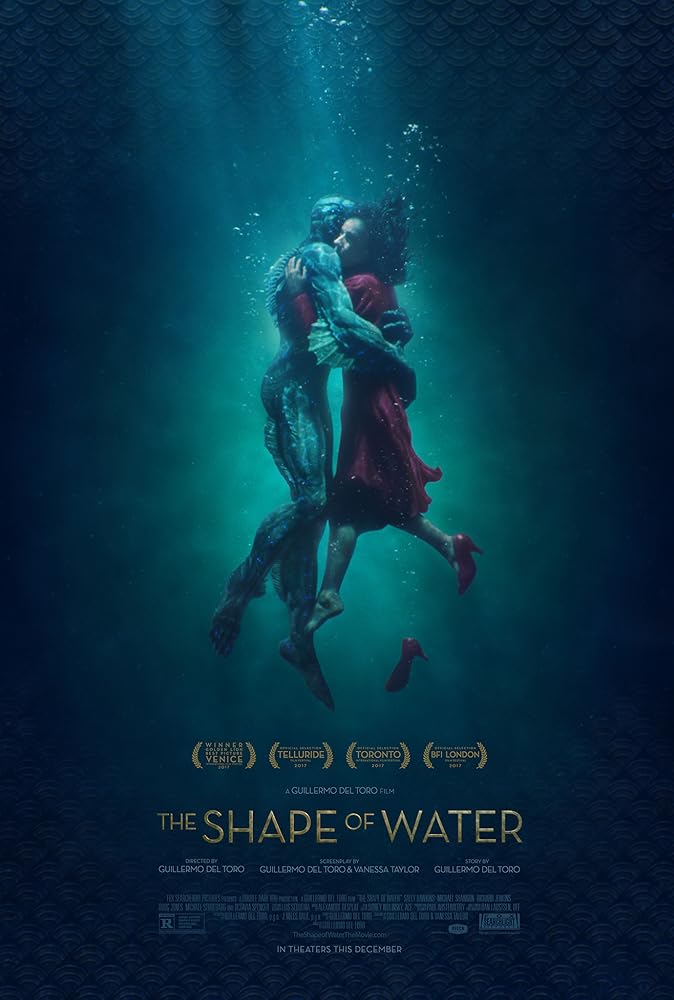
THE SHAPE OF WATER


First up, we have the latest film from director Guillermo Del Toro. Over the past few years, Del Toro has made quite a name for himself in the film industry particularly thanks to his work in the fantasy genre. This includes the likes of the original Hellboy from 2004, its 2008 sequel Hellboy II: The Golden Army, and 2006’s Pan’s Labyrinth, which ended up winning three Oscars at that year’s ceremony. And now Del Toro returns to the fantasy genre with another big awards contender, The Shape of Water, which tells the story of a mute woman named Elisa who forms a special bond with a humanoid-looking amphibious creature that’s being held captive at the government facility that she works at. In the process, however, she and the creature find themselves pursued by the vicious colonel who had captured the creature in the first place. All in all, the film is a charming fantasy flick that features some excellent cinematography and visual effects. This is especially worth noting considering the fact that this film was made on a modest budget of under $20 million. The film is also bolstered by a collection of strong performances from its ensemble cast. Sally Hawkins is incredibly charismatic as the mute Elisa while Michael Shannon is delightfully sinister as the main antagonist, Colonel Strickland. Richard Jenkins is also a major standout as Elisa’s closeted artist neighbor Giles as is Michael Stuhlbarg as a Russian scientist who, like Elisa, is more sympathetic to the creature in comparison to Strickland. And, of course, there’s Del Toro regular Doug Jones once again doing a phenomenal job under heavy makeup as the incredibly sympathetic ‘Asset’. With all this in mind, Guillermo Del Toro has very much hit it out of the park with this visually beautiful tale of a Beauty and her Beast.

Rating: 4.5/5

ALL THE MONEY IN THE WORLD


This is a film that has certainly attracted quite a lot of media attention these past few months. As many of you know, director Ridley Scott’s newest film, which delves into the true story of the infamous kidnapping of oil tycoon J. Paul Getty’s grandson John Paul Getty III, originally starred Kevin Spacey in the role of J. Paul Getty. That all changed, however, when Spacey became just the latest figure in the film industry to be hit with the ‘Weinstein effect’ and be accused of several incidents of sexual assault. Thus, in what was easily one of the most unprecedented moves ever seen in the entire industry, Scott straight-up recast the role and reshot major sequences of the film just one month prior to its release. And so, Christopher Plummer now stars in the role of J. Paul Getty; though, really, this change doesn’t have that much of an effect over the final film (aside from it being a different spin on the character) as Getty’s role in the film is minor at best. Still, Plummer does do an excellent job in the role of the cold and distant billionaire. Equally terrific in the film is Michelle Williams as Gail Harris, Getty’s former daughter-in-law who becomes extremely devoted to the process of finding her kidnapped son. These strong performances are easily the best part of the film, and for the most part, they make up for its biggest shortcoming, its sluggish pacing. Simply put, there are several instances where you can feel the brunt of the film’s near two and a half hour runtime, especially during the second act. That’s not to say, though, that the film doesn’t have its moments; and of course, at the end of the day, Ridley Scott deserves a heck of a lot of credit for managing to completely rework a sizable chunk of the film in such a short amount of time. While it’s by no means the best film that he’s ever done, All the Money in the World is still worth checking out if mainly for the phenomenal performances from Williams and Plummer.  

Rating: 3/5

THE GREATEST SHOWMAN


And finally, we have the last new film release that I saw in 2017 on New Year’s Eve, The Greatest Showman. This lavish period musical is based on the true story of the origins of the iconic Ringling Bros. and Barnum and Bailey circus… which ironically closed for good this past May due to decreasing ticket sales. Despite this, however, I was still very much looking forward to this film given the fond memories that I have of going to see the circus when I was younger. With that said, though, I should probably start this review by addressing the big elephant in the room that is this film’s portrayal of the circus’ founder, P.T. Barnum. While the film portrays Barnum as an endearing ‘nobody’ who managed to defy all odds and make a name for himself in the world of entertainment thanks to his circus, several people have pointed out that he was a far more ruthless entrepreneur than the film lets on. But while I do recognize the fact that this film isn’t exactly historically accurate, I still found it to be quite enjoyable thanks to its excellent and well-choreographed musical numbers courtesy of La La Land songwriters Benj Pasek and Justin Paul. Plus, the film also boasts a terrific ensemble cast highlighted by Hugh Jackman as P.T. Barnum, Michelle Williams (in her second major appearance in today’s post) as Barnum’s loving wife Charity, Zac Efron as a playwright who ends up becoming Barnum’s business partner, and Zendaya as one of the circus’ trapeze artists who falls in love with Efron’s character. In short, it is perfectly understandable if some may find this film’s messages of acceptance to be rather phony given the context of the true story that it’s based on. Still, if you’re just looking for a charming and original feel-good musical, then I have the feeling that you’ll enjoy The Greatest Showman regardless of how much it stretches the truth.


Rating: 5/5!

Saturday, March 4, 2017

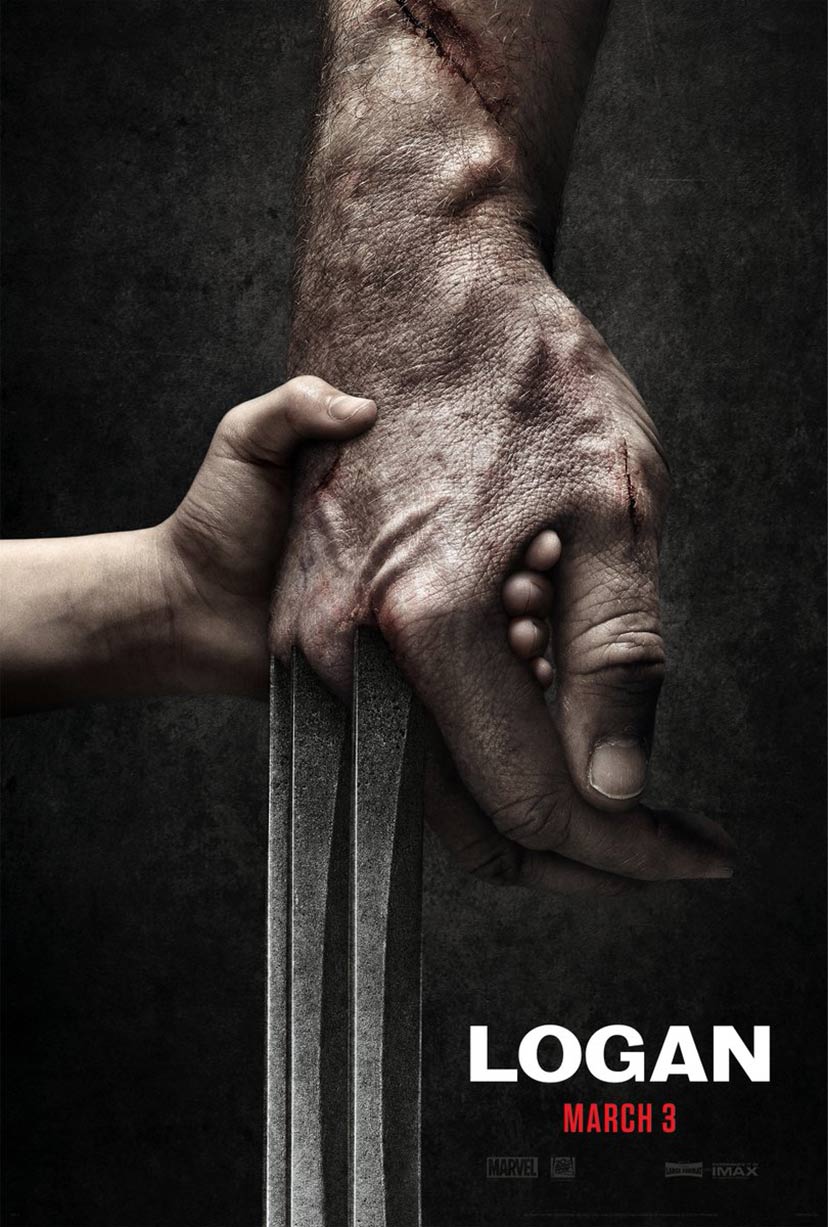
Logan (2017) review

Image result for logan poster

There have been many iconic superhero film casting choices over the years; Christopher Reeve as Superman, Robert Downey Jr. as Iron Man, the list goes on. But, easily, one of the most iconic casting choices of the entire genre, namely due to how long he’s been in the role, has been Hugh Jackman in the role of the clawed mutant James ‘Logan’ Howlett AKA Wolverine. Jackman was first cast in the role in Bryan Singer’s first X-Men film back in 2000, and while some may have taken issue with a 6’2’’ Broadway actor taking on the role of a character who is a full foot shorter by comparison in the comics, it would end up becoming the definitive role of Jackman’s career. He would then go on to reprise his role in almost every subsequent X-Men film, either in a leading role or an awesome cameo. The popularity of the character even resulted in a few spin-offs. However, the Wolverine spin-offs have been a bit more hit-and-miss. The first of these, 2009’s X-Men Origins: Wolverine, was savaged by both critics and audiences for its flawed screenplay, disastrous deviations from the comics (e.g. ‘Deadpool’, a term used loosely in this case), and for being overcrowded with other mutants. Even Jackman himself has admitted that it didn’t turn out as well as he had hoped. Thankfully, he managed to get Wolverine a much more satisfying spin-off in 2013 when he teamed up with director James Mangold (whom he had previously worked with on 2001’s Kate and Leopold) for The Wolverine, based off the popular 1982 limited series of the same name by Chris Claremont and Frank Miller. And while not perfect, it at least did better with critics and audiences compared to the previous film. However, the film truly shines with its unrated Extended Edition. Debuting with the film’s home media release, this was easily the superior cut of the film, partially because it gave fans some of the R-rated Wolverine action that they had been hoping for after many years of PG-13 rated Wolverine action in the previous films.

But, this year, fans of the character are finally getting what they’ve always wanted, as Mangold and Jackman team up once again for their second Wolverine solo film, this one simply titled Logan. Like The Wolverine, the film takes inspiration from a famous storyline in the comics; in this case, Old Man Logan, a 2008 mini-series by Mark Millar and Steve McNiven which centers on an aged Wolverine in an alternate future where supervillains have taken over the world. However, in this instance, the film is not a direct adaptation of the source material, probably because some of the key characters featured in that story are over at Marvel Studios. But, of course, most of the hype surrounding this film is due to one primary reason, and that is that it is set to be Hugh Jackman’s final outing in his career-defining role. As such, he and Mangold seek to give the iconic X-Men member a fitting onscreen send-off. And, thanks in part to the success of last year’s Deadpool, the two were given the chance to do what fans of the character have been demanding since Jackman first debuted in the role; an R-rated Wolverine film that wasn’t tied down by the limits of the PG-13 rating that was given to every other X-Men film to date (minus Deadpool, of course). Having now watched this film, I can safely say that it does live up to its status as a gritty and brutal R-rated Wolverine film. But, of course, now the big question remains; does this new film manage to not only be the best of the Wolverine films but also serve as a fitting send-off for one of the superhero genre’s greatest icons? The answer… is a resounding yes.

The year is 2029 and most of the mutant population has gone extinct. One of the last surviving mutants, Logan (Hugh Jackman) AKA Wolverine, now spends most of his days working as a chauffeur in Texas. He also looks after his increasingly senile friend, telepath Charles Xavier (Patrick Stewart), with the help of mutant tracker Caliban (Stephen Merchant) as it becomes clear that Logan himself is starting to age as well due to the diminishing nature of his healing powers as the result of poisoning caused by the adamantium in his body. One day, he is approached by a woman named Gabriela (Elizabeth Rodriguez) who asks for his help in escorting her and a young girl named Laura (Dafne Keen) to a place known as ‘Eden’ in North Dakota. Logan reluctantly accepts but Gabriela is soon murdered and he, Xavier, and Laura begin to be pursued by Donald Pierce (Boyd Holbrook), the ruthless, cybernetically-enhanced head of security of the company that Gabriela used to work for, Transigen. Logan learns that the company had been experimenting with mutant DNA on the children that they had been breeding. When the children were set to be killed following the completion of a different mutant project known as ‘X-24’, Gabriela helped several of the children escape, Laura being one of them. Not only that, but it’s revealed that Laura was bred with Wolverine’s DNA, resulting in her not only having the same abilities as him but also technically being his ‘daughter’. Now forced to go on the run, the trio embarks on a road trip across the country in hopes of finding the mythical ‘Eden’.

One of the coolest things about director James Mangold’s two entries in the superhero genre is that both films are more than just ‘superhero films’. The Wolverine, being set in Japan, utilized a lot of the elements that are commonly seen in samurai action films, especially from a stylistic perspective. And in the case of Logan, he basically made a superhero film that was a western, a genre that he’s certainly well-versed in having directed the 2007 remake of 3:10 to Yuma. It’s also worth noting that these last two Wolverine films don’t rely heavily on action sequences. Now, that’s not to say that they aren’t there because they are. But just keep in mind that this is a slow-moving film, especially considering that it’s over two hours long (admittedly, it may be just a tad bit overlong). But, that’s ultimately one of the key elements of the film’s narrative. The longer runtime allows you to become fully invested in the lead trio of Wolverine, Xavier, and Laura as they embark on their road-trip, so much so that even if you probably guessed in advance how it’s all going to end, the film ends on one of the best emotional notes in the history of the superhero genre. It also very much stands on its own compared to the other X-Men films; for one thing, they don’t tie it too much into the series’ overall continuity, which is probably for the best because it just would’ve sparked more debate over the series’ infamously convoluted canon. As for the action sequences, fans will be pleased to know that the film does live up to its status as an R-rated Wolverine film. These action sequences are intense and bloody and many of them will have you audibly saying ‘oh s***’ when they happen because of how brutal they are. Seriously, Mangold doesn’t hold back on them; not even Deadpool was this intense.

I’ve talked about how great Hugh Jackman has been in the role of Wolverine many, many times over the years (in fact, I just did so again the other day) so I’ll try not to repeat myself too much here. However, this may arguably be his greatest performance in the role to date and if so, it’s only fitting that it came from his last appearance as the character. Logan’s trademark hard-edged persona is still there, of course, but that’s well-mixed with the tragic nature of him being at a point in his life where he’s clearly past his prime. Patrick Stewart is also great as usual in the role of Xavier, whose role in the film is also one based in a tragic light as we sadly see the beloved telepath becoming more and more senile by the day. In fact, one of the darkest plot-points in the film establishes that Xavier inadvertently had a hand in the decimation of the mutant population due to the intense, seizure-induced psychic attacks that he now suffers from on a regular basis. Still, he works great off Logan, as always, and while the film does maintain a generally serious tone throughout, the R-rating does allow for some funny moments in which Stewart gets to be a bit cruder than he usually is in these films. The two are joined by newcomer Dafne Keen, who makes one hell of a great first impression in the role of the primarily mute but often quite volatile young girl who becomes the closest thing that Wolverine has ever had to a daughter. Stephen Merchant also has a memorable supporting role as Caliban, who had previously appeared in a much smaller role in X-Men: Apocalypse. As for the villains, they’re admittedly the weakest links of the film. Still, Boyd Holbrook proves to be an enjoyably despicable antagonist in the role of Donald Pierce, who’s shown to be quite a big fan of Ol’ Wolverine. The same can’t really be said, though, for Richard E. Grant, who plays Zander Rice, a scientist who is revealed to have an interesting personal connection to Wolverine. Despite this, he’s barely in the film.

Hugh Jackman has been in the role of Wolverine for nearly two decades. He was first cast in 1999 and has since appeared in all but one of the ten currently released films in the X-Men franchise. And with Logan, he and director James Mangold give the character the proper send-off that he deserves in a film that is pretty much the official finale of the original X-Men series. From an action perspective, this film delivers some of the most epic and brutal action sequences that the genre has ever seen. But, through all that bloodshed, stabbing, and numerous scenes of limbs being sliced off, the direction from Mangold is fantastic. This is an unrelentingly brutal but also fully emotional story in which the film’s [possibly] overlong runtime gives you plenty of time to care about the main characters in their endeavors. As such, if you’ve been a longtime fan of this franchise, it is practically guaranteed that you will get teary-eyed at one point or another while watching this film. Thus, not only is this the best Wolverine film, by far, but it’s one of the best installments of the entire X-Men series. Clearly, 2017’s lineup of live-action superhero films is off to a great start. And on that note, I’d like to salute the legend that is Hugh Jackman by saying thank you, Mr. Jackman, for all your contributions to both the X-Men franchise and the superhero genre in general. Because at the end of the day, the story of Weapon X ended on the best note possible.  
Rating: 5/5!

(P.S. When you go to see this film, be sure to get there in time before the film starts. Without giving anything away, there’s a special little clip that plays before the opening credits that’s sure to put a smile on your face.)

Friday, March 3, 2017

Top 10 Favorite Superhero Film/TV Casting Choices (Protagonists)

Image result for logan 2017

This weekend sees the release of the highly-anticipated superhero flick, Logan, the latest installment of the X-Men franchise. All the hype surrounding this film is due to it being the final appearance of Hugh Jackman in the title role of James ‘Logan’ Howlett AKA Wolverine, a role that he’s been occupying for almost two whole decades. He’s appeared in almost every X-Men film to date (possibly ‘every’ film if you somehow count Jackman’s photo cameo in Deadpool as a proper cameo, even though he’s not Wolverine in it), effectively making him one of the most iconic casting choices in the history of the superhero genre. So, with that in mind, today I’m going over one of the most important aspects of any great superhero film; casting. After all, it’s one of the primary decisions that goes into making any lead character in a superhero film or TV show work as well as they can and, for the most part, superhero films/TV shows have done a solid job with casting their main protagonists. Obviously, though, not every superhero film casting is going to be a success; there have been some disastrous casting choices in this genre over the years (e.g. George Clooney as Batman in Batman and Robin). That, and it’s undeniable that every superhero casting is going to subjected to a lot of premature backlash from fans who just don’t see that actor/actress in the role. Just look at what happened when Ben Affleck got cast as Batman. But, thankfully, a lot of these superhero films/TV shows have been much more successful in the past few years in terms of casting their protagonists. Thus, in honor of Logan’s release, I’m listing 10 of my personal favorite superhero portrayals from film and TV. Though I just want to note that, for this list, I’m only focusing on main protagonists of superhero films and TV shows, not the villains. Don’t worry, though, as I will do a ‘Top 10 Superhero Villain Performances’ post in the future; maybe even one on the best supporting characters from these films. Also, I’m not going to be doing this in any specific order aside from alternating between actors and actresses, as I wanted to split this up evenly amongst male and female leads, and the occasional connection between franchises. With that said, here are my Top 10 casting choices in superhero films and TV shows.

HONORABLE MENTIONS


Obviously, it was hard to narrow this down to 10 choices; thus, I’ve got quite a few Honorable Mentions to name. First up, we have my favorite Batman; Christian Bale from the Dark Knight trilogy. While many have given him flak for the infamous raspy voice that he uses while wearing the cowl, he’s probably gotten the most material to work with out of any Batman star to date. By comparison, Michael Keaton, who for the record was great in the role in the Tim Burton-directed films, was often underplayed in favor of the villains. And as for the voice, I don’t mind it; if it’s fun to imitate, then it’s all right by me (“SWEAR TO ME!!”). Then, there’s Mark Ruffalo as the Hulk in the recent MCU films, specifically the Avengers films. Ruffalo is the third actor to portray the character, after Eric Bana in the oft-forgotten Hulk film directed by Ang Lee from 2003 and Edward Norton, whom Ruffalo directly replaced in the role, in the also oft-forgotten MCU film The Incredible Hulk. And while both Bana and Norton did do solid jobs in the role, Ruffalo has easily been the best Bruce Banner to date, particularly due to his strong camaraderie with his co-stars. Going over into the X-Men franchise, you can’t forget about the ‘Merc with the Mouth’, Deadpool, played by Ryan Reynolds. Reynolds is arguably one of the most pitch-perfect superhero castings to date; heck, the comics directly referred to him when describing the character. And while, obviously, his first turn in the role, in X-Men Origins: Wolverine, was marred by major deviations from the source material, he got the chance to do the character justice in 2016’s smash hit Deadpool. Finally, we have one of the more ‘recent’ additions to the superhero genre; Tom Holland’s iteration of everyone’s favorite web-slinger, Peter Parker. While I’ll admit that I’m still a big fan of Andrew Garfield and am a bit disappointed that he didn’t get the chance to join the MCU once Marvel Studios struck a deal with Sony, Holland proved to be an excellent Spidey in Captain America: Civil War, nailing all the character’s defining traits.

And now, onto the main list…

MELISSA BENOIST – SUPERGIRL (SUPERGIRL)

Image result for melissa benoist supergirl

To start things off, we have one of the newest shining stars of the superhero genre. In 2015, Melissa Benoist, fresh off her leading role on the show Glee as well as a memorable supporting role in the film Whiplash, took on the role of Kara Danvers AKA Kara Zor-El, cousin of Kal-El AKA Superman, in the TV adaptation of Supergirl. Originally premiering on CBS, the show has since moved over to ‘The CW’, where it is a much more natural fit with the other superhero shows that have been developed for the network by Greg Berlanti and Andrew Kreisberg. As for Supergirl, like I said in my review of Season 1 this past April, while the show’s light-hearted nature does result in some extremely cheesy moments from time to time, its heart is always in the right place and, as such, represents a lot of the best parts of the superhero genre. And, of course, one of the best aspects of this series, in general, has been Benoist in the lead role. When she’s in her ‘civilian identity’, Kara Danvers, she absolutely lights up the screen with her charisma, as well as the adorable awkwardness that sometimes comes from her trying to act normal when working off those who don’t know that she’s Supergirl. But, once she puts on the suit and cape, that awkwardness melts away and she conveys such great strength and passion as National City’s beloved heroine. And even as Season 2 of Supergirl has been introducing new characters, as well as new plotlines for returning characters, Kara has still been the main focal point of the entire show, hence why she’s very much become one of the genre’s best protagonists.

CHRISTOPHER REEVE – SUPERMAN (SUPERMAN I-IV)

Image result for christopher reeve superman

Next up, we have the classic superhero film casting choice that started it all; Christopher Reeve as the Man of Steel himself, Superman. But it’s interesting to note that, at first, he wasn’t the original choice for the role. Initially, A-listers like Robert Redford, Burt Reynolds, and Paul Newman were considered for the part. But, when Richard Donner was brought in to direct the first Superman film in 1978, the filmmakers then switched gears and began searching for unknown actors. Reeve was in the running but was initially ignored for being too skinny. But, after going through a strict workout regime with David Prowse (AKA the original in-suit performer for Darth Vader in the Star Wars films) to gain the proper physique, Reeve finally got cast and, of course, absolutely killed it in the role. Simply put, he was the perfect embodiment of the beloved superhero; charismatic, good-looking, and noble in every way. And even when the series started to severely go downhill with the third and fourth films, with Reeve even having a story credit for the latter, he still always did a great job in the role. As such, his portrayal of Superman is so iconic that it is one that has admittedly been hard to top, though that’s not to say that there haven’t been other good portrayals of the character since Reeve. While he has been somewhat limited by certain narrative choices (e.g. a lack of given dialogue), I’d argue that Henry Cavill has done a good job so far as the character in the current-era DC Extended Universe films. However, like I said, sometimes he has been limited by the material that he’s been given, which is sad because his turn in 2015’s The Man from U.N.C.L.E. shows that he does have the proper charisma for the role. And then there’s Tyler Hoechlin, who I’d argue was very Reeve-esque during his turn in the role in Season 2 of Supergirl. In fact, dare I say it, Hoechlin’s been the best Superman since Reeve.

JENNIFER LAWRENCE – MYSTIQUE (X-MEN: FIRST CLASS, X-MEN: DAYS OF FUTURE PAST, X-MEN: APOCALYPSE)

Image result for jennifer lawrence mystique

I’m aware that this choice may be a bit controversial (I’ll explain why in a little bit) but I think that Jennifer Lawrence has done an excellent job in the role of the shape-shifting femme fatale Mystique in the First Class-era X-Men films. She first appeared in the series’ 2011 ‘reboot’ X-Men: First Class, which pulled an interesting narrative retcon by having her become the foster sister of Charles Xavier AKA Professor X. I say ‘interesting’ because, obviously, this wasn’t brought up at all in the original X-Men trilogy, even though the next film in the series ended up wiping those films from the continuity. However, I do think that it was an interesting story route. Because once Magneto enters the picture, Mystique finds herself conflicted between the ideologies of him and Charles. Specifically, this was due to a fear of how people would react to her in her natural blue (and, well, naked (no other way around it)) form. While Charles urged her to keep her blue form hidden, Magneto encouraged her to embrace it. Thus, at the end of the film, she ends up leaving with Erik, though it should be noted that Charles did encourage her to go with him because he knew that ‘it’s what she wanted’. This then leads into Days of Future Past, in which she becomes the main focal point of the plot as it's established that her assassination of scientist Bolivar Trask was the catalyst for the events that resulted in the desolate, dystopian future that part of the film is set in. Like First Class, a lot of her character development comes in the form of her ties to both Charles and Magneto. While her time with Magneto has led her into becoming more like the cold-blooded femme fatale that we saw in the original trilogy (it’s noted in the film that killing Trask would’ve been the moment when she truly became ‘Mystique’), it’s also clear that there’s still some humanity left in her, which Xavier uses to convince her to not kill Trask, partially by admitting his mistake in trying to control her life all these years. The result is easily Lawrence’s best performance in the role...

…which then brings us to Apocalypse, and this is where that ‘controversy’ that I mentioned earlier comes into play. Because, of course, as many of us know. Apocalypse ended up attracting a mixed response from critics and audiences upon release. And one of the reasons why was due to Lawrence. Quite a lot of critics felt that Lawrence phoned it in for Apocalypse; a sign of her showing growing disinterest in the franchise, partially due to having to go through the elaborate makeup process to get into character even though that process had become more simplified after First Class. As for me, though, I didn’t think she phoned it in; maybe I’m just not good at sensing this sort of thing but I thought she was just as good as she was in the other films (though I will say DOFP is still her best turn in the role). Not only that, but Apocalypse is, in a way, kind of her story. After unintentionally becoming a ‘hero’ following the events in Washington D.C. at the end of DOFP, she is seen to be maintaining a low profile while trying to protect some of her fellow mutants all over the world. But, once the ‘god’ mutant Apocalypse reawakens, she begins to embrace her role as the leader of the next generation of X-Men as she leads them into battle against him. And at the end of the film, she and Beast are seen training the team’s new recruits. Right now, it’s unclear where the franchise will go from here. Are they going to continue from where they left off in Apocalypse with the new cast? If so, hopefully, they let the new cast become the main characters of future films. The First Class-era was primarily based around Xavier, Mystique, and Magneto and while I won’t mind if they come back for future films in supporting roles, I think it’s safe to say that their story arcs are done for the most part. Still, I think Lawrence was an excellent addition to the First Class-era as the second iteration of Mystique. In fact, I kind of prefer her version of the character over Rebecca Romjin’s from the original trilogy. I’m not saying that Romjin was bad as Mystique but, like Christian Bale compared to Michael Keaton as Batman, I think Lawrence has just had better material to work with. Speaking of her two main co-stars…  

MICHAEL FASSBENDER AND JAMES MCAVOY– MAGNETO AND PROFESSOR X (X-MEN: FIRST CLASS, X-MEN: DAYS OF FUTURE PAST, X-MEN: APOCALYPSE)

Image result for michael fassbender james mcavoy x-men

From one First Class-era star to another, now we have the duo of Michael Fassbender and James McAvoy, who have been killing it in the roles of the metal-controlling mutant Erik Lehnsherr AKA Magneto and the world’s most powerful telepath, Charles Xavier AKA Professor X. In the original X-Men films, the characters were played by the legendary Ian McKellen and Patrick Stewart, respectively. Both did fantastic jobs in their roles but it’s come to the point where Fassbender and McAvoy have arguably outshined their predecessors thanks to the recent trilogy. First up, let’s talk about Fassbender as Magneto. In the three X-Men films that he’s appeared in, Fassbender has been the major standout of two of them. The first of these was First Class, which is fitting because, ultimately, First Class was Magneto’s story. While the film was solidly balanced in terms of the roles of him and Xavier, showing how the two first met, became friends, and were then divided on their views of humanity, a lot of the plot of First Class revolved around Magneto. The film opens with a re-do of the opening scene from the original X-Men film, in which a young Magneto is separated from his parents at Auschwitz and attracts attention by using his powers to bend a metal gate. This scene is then expanded upon by showing that this then led to Erik becoming a pawn of Nazi scientist and fellow mutant Sebastian Shaw. Shaw even kills Erik’s mother in his attempts to manipulate Erik into using his powers. Thus, most of the film sees Erik attempting to track down and kill Shaw, and despite Xavier’s attempts to dissuade him from this (“Killing Shaw will not bring you peace.”), Erik ignores the advice of his friend and kills Shaw, showing that while they may have been enemies, he did share his views on the divide between humans and mutants. And after accidentally causing Xavier to be paralyzed from the waist down, Magneto leaves to start his war against humanity for what they’ve done to him and his fellow mutants. 

Fassbender returned in Days of Future Past alongside Ian McKellen as the older Magneto. Sadly, the two never shared a scene together like James McAvoy and Patrick Stewart did in the film but it wasn’t a big loss and, seeing how the story takes place in two separate eras, you could say that it was much more plausible to have the two telepaths interact with each other instead of the two metal-benders. It’s also worth noting that, in this instance, Days of Future Past was more Xavier’s story than Magneto’s. Thus, Magneto was more of a supporting ‘protagonist’ (term used loosely because he is Magneto) this time around. Set primarily in the 70’s, he is first seen being held in prison for being the alleged assassin of John F. Kennedy as evident by the curvature of the bullet that killed him, although he later reveals that he was trying to save Kennedy because he learned that he too was a mutant. Wolverine, Xavier, and Beast (with the help of Quicksilver) break him out of prison so that they can acquire his help in preventing Mystique from killing Bolivar Trask. However, Magneto then betrays them by trying to kill Mystique instead, and once he learns about Trask’s newest invention, the Sentinels, he uses his powers to take control of them and, as usual, proceeds to go off against humanity. He tries to kill President Nixon and his Cabinet but Mystique prevents him from doing so, setting up the events of the sequel. In short, he may not have been the ‘main character’ this time around but Fassbender was still great in the role. And yes, I’m saying this even after he recently said in an interview that he feels like his performance in this film was mostly just him yelling at people (e.g. the scene where he gets hostile with Xavier while on a plane).   

Fassbender’s most recent appearance as Magneto in X-Men: Apocalypse saw him once again end up as the standout of the film, just like in First Class. And in this instance, it was by giving him the most emotional bits of character development in the film. Following the events of DOFP, it’s shown that Erik was forced to go on the run after the events in D.C. He ends up in Poland, where he takes on the name Henryk, gets a job, ironically as a metalworker, and starts up a family, with his wife, Magda, aware of his past and his daughter Nina being a mutant as well, with the ability to command animals. When he ends up inadvertently revealing his powers to his co-workers, he’s then ratted out to the police, who accidentally end up killing Magda and Nina when they confront him. As revenge, Erik kills them in the same manner that he killed Shaw in First Class; by forcing the Nazi coin that he was coerced into trying to manipulate right through them (literally). It’s easily the most emotional scene in the film and is the main reason why I completely disagree with the argument that Apocalypse lacked emotional depth. This then leads to him being approached by Apocalypse and persuaded into being the fourth member of the Horsemen. With enhanced powers (courtesy of Apocalypse) and a refueled hatred for humanity, Magneto works alongside Apocalypse in his plans to conquer the Earth but, after some convincing from Mystique and Quicksilver (who is revealed to be his son, though he doesn’t reveal that to Magneto just yet), Magneto comes to his senses to help the X-Men take down the god mutant. As the film ends, he heads out on his own once again after helping to rebuild the X-Mansion. Like I said earlier with Mystique, it’s unclear if this is the last time that we’ll be seeing Magneto for a while. But, if it is, at least we got a great trilogy-worth of performances from Michael Fassbender in the role.

And now let’s move onto James McAvoy as Xavier. I’ll admit that when First Class came out, I wasn’t exactly sure how I would feel about McAvoy in the role following Patrick Stewart’s excellent take on the character in the original X-Men trilogy. But, just like how the film ended up being a surprise success, he proved to be a great fit in the role. He had the ‘wise mentor’ persona down well but it was also kind of cool to see a young Xavier that, prior to the incident that cost him his legs, was a lot more high-spirited and even a bit of a party animal. That starts to change once he meets Magneto and becomes the leader of the first class of X-Men. But, of course, that friendship between Xavier and Magneto fades once their differing views on the human-mutant divide come into play, and the film ends with Xavier paralyzed from the waist down due to Magneto deflecting a bullet aimed at him. This, as well as the loss of his foster sister Mystique to Erik’s cause, affects him heavily, which we clearly see when he first appears in DOFP. 10 years after the events of First Class, it’s established that Xavier’s school for mutants was heavily shuttered by the Vietnam War. Thus, he’s become a bitter and pessimistic drunk due to the failure of his school. He’s also regained the use of his legs thanks to a serum made by Hank McCoy but this serum also suppresses his powers, which at this point he’s okay with so that he doesn’t have to endure the pain of listening to all the voices in his head anymore. But, when Wolverine comes into the picture to seek his help, Xavier ends up embarking on a journey to regain his faith in humanity. As I’ve said numerous times already, Xavier’s arc in this film is the reason why DOFP is ultimately his story and it results in McAvoy’s greatest performance in the role. That continues in Apocalypse, which sees Xavier finally adopt his definitive bald look. And of the trilogy’s three main leads, it seems like McAvoy is the most likely of them to return in a future film.  

CHLOE BENNET – QUAKE (MARVEL’S AGENTS OF SHIELD)

Image result for chloe bennet agents of shield

Going into the realm of superhero TV for my next pick, we’ve got the Inhuman agent of S.H.I.E.L.D. from Marvel’s Agents of SHIELD, Daisy Johnson AKA Quake, played by Chloe Bennet. Daisy has easily had one of the biggest arcs in the entire show. At first, we knew her as the mysterious hacker Skye, who Agent Phil Coulson recruited to join his team of S.H.I.E.L.D. agents despite her ties to the rogue hacktivist group, the Rising Tide. Soon, though, she proved herself to be a loyal S.H.I.E.L.D. agent as she helped Coulson and co. take down the growing threat of HYDRA within the organization. And then, in the show’s second season, things began to change once her real identity was revealed. In the Season 1 episode ‘Seeds’, we learn that Skye had been deemed as an 0-8-4 (S.H.I.E.L.D. code for ‘object of unknown origin’) when she was just a baby. Halfway through Season 2, in the episode ‘What They Become’, the truth behind her ‘unknown origin’ was revealed. A run-in with the mysterious substance known as Terrigen Mist revealed that she was a member of the race of powered beings known as Inhumans and that her real name was Daisy Johnson. Thus, the rest of Season 2 consisted of her struggling to embrace her newfound earthquake-causing powers. At one point, she ends up in the Inhuman paradise known as Afterlife, where she is reunited with her mother, Jiaying. However, when Jiaying’s intentions are shown to be quite sinister (e.g. planning to unleash the Terrigen Mist upon humanity), Daisy is forced to fight her own mother, reaffirming her loyalties to Coulson and S.H.I.E.L.D in the process.

By Season 3, we see that Daisy has embraced a newfound confidence in her Inhuman identity, as she helps S.H.I.E.L.D. search for and protect her fellow Inhumans from enemy threats. Some of these Inhumans are even recruited into a special team, the ‘Secret Warriors’. However, this season ended up putting Daisy through the emotional wringer. In the episode ‘Spacetime’, she received a vision from another Inhuman foretelling the impending death of a S.H.I.E.L.D. agent, which haunted her for the rest of the season. And then, if that wasn’t enough, two episodes later in ‘The Team’, it was revealed that she had been brainwashed by the ancient Inhuman creature known as Hive, who at that point had taken over the body of S.H.I.E.L.D. traitor/Hydra agent Grant Ward, who happened to be Daisy’s love interest back in Season 1 prior to that reveal. While she does get brought back to normal by the season’s end, we see that this ordeal has severely affected her on a mental level. And then, to make matters worse, the agent whose death she foresaw ends up being her new love interest, fellow Inhuman Lincoln Campbell. Thus, as Season 4 begins, it’s revealed that she has left S.H.I.E.L.D. and has become a vigilante known as ‘Quake’. Since the show’s currently in the middle of the fourth season, I won’t get into any major details in regards to what happens in it just yet (that is, of course, until my inevitable review of Season 4). While I will say, though, is that it’s quite interesting to see Daisy go down a darker route than before, haunted by some of the recent tragedies in her life.  

As I’ve stated numerous times in my annual season reviews of AoS, Daisy has consistently been one of my favorite characters on the show. Performance-wise, Bennet has done a fantastic job in the role, especially when handling the trademark snappy dialogue that’s usually seen in a Joss Whedon-produced show. At the same time, like I said before, Daisy’s also arguably gotten the most material to work with out of any character in the entire series. From her starting out as the mysterious hacker with the equally mysterious past to becoming the initially scared but later confident superhero who constantly fights for the safety and rights of her fellow Inhumans, she’s very much been the catalyst for the introduction of the Inhumans into the MCU. On that note, a new Inhumans show is set to come out this fall on ABC, after debuting the first two episodes in IMAX theaters. Presumably, this is a replacement for the Inhumans film that was originally announced as a part of Phase 3 of the MCU films but was then taken off the studio’s schedule last year. On that note, though, some of the crew at Marvel (e.g. producer Kevin Feige) have stated that this doesn’t mean that the project is ‘fully canceled’. What does that mean? Well, if you ask me, I’m guessing that this was probably because they figured that a TV show was a better way to properly introduce the series’ mythos to audiences. Either way, it’s also been stated that the new show is more of its own thing than an Agents of SHIELD spin-off, so it’s uncertain if Daisy will appear in it at any point. However, I hope that they figure out a way for her to appear in some way, even if it’s just for a cameo; because after all, it was primarily thanks to her that the Inhumans managed to get a proper introduction in the ever-expanding Marvel Cinematic Universe.

ROBERT DOWNEY JR. – IRON MAN (MARVEL CINEMATIC UNIVERSE)

Image result for robert downey jr iron man

Hands down, one of the most perfect casting choices in the history of the superhero genre. Nowadays, it’s hard to imagine anyone else in the role and that’s because RDJ was such a perfect live-action representation of the genius billionaire playboy philanthropist Tony Stark. And sure, maybe part of it was due to his infamous legal troubles in the past but, at the same time, it’s undeniable that this was the role that helped relaunch Downey Jr’s career. A lot of this was thanks to the solid emotional arc that Tony went through in the first film. After an incident in which he’s captured by terrorists and forced to build weapons for them, he instead builds a suit of armor and uses it to become the superhero known as Iron Man. The rest is history, and through it all, Downey Jr. has consistently maintained the character’s slightly arrogant but still all-around likable persona. Tony Stark’s also been through a lot in the MCU from a story perspective. For example, in Iron Man 3, he found himself having to come to grips with the fact that he’s just one small part of a larger universe; that and having to deal with the PTSD that came from his near-death experience in the first Avengers. And then, in Age of Ultron, he’s the one responsible for the creation of Ultron, the sentient A.I. hell-bent on world domination. Thus, when he decides to agree with the signing of the Sokovia Accords in Captain America: Civil War, it’s easy to see why he went this route. As my good friend and fellow film critic Matthew Goudreau has pointed out, a lot of the MCU has been Tony trying to atone for his mistakes. Because even when Civil War forced him into being the opposition to Captain America’s ‘Pro-Superheroes’ side, there were still times where you could sympathize with Tony’s stance on the matter, like when he learns that Cap’s friend Bucky was the one who killed his parents. So, in short, thanks to this great series-long arc, it’s easy to see why Tony Stark has been one of the most popular protagonists of the entire franchise. Because, after all, without Robert Downey Jr. and the original Iron Man, there probably wouldn’t have been an MCU in the first place. 

SCARLETT JOHANSSON – BLACK WIDOW (MARVEL CINEMATIC UNIVERSE)

Related image

Next up, we have the MCU’s first major female lead; Natasha Romanoff AKA Black Widow, played by Scarlett Johansson. Black Widow’s come a long way since her first appearance in Iron Man 2, especially because, admittedly, it took a little while before Johansson really settled into the role. That’s not to say that she was bad in Iron Man 2 but it’s clear that she was hindered by the generally cluttered nature of that film’s plot. Thankfully, that changed once she returned for the first Avengers. Because even though that film obviously saw her become one of many main characters, Johansson was clearly more comfortable in the role this time around, while Black Widow also got some nice material to work with in the film. For example, when fellow agent Clint Barton AKA Hawkeye was brainwashed by Loki, Romanoff showed some noticeable concern, implying a personal connection between the two. And while the next Avengers film revealed that Hawkeye was married to someone else, it’s clear that the two had some history, which would probably explain the line in the first Avengers in which the two bring up an old mission in Budapest, with Hawkeye noting that he remembers Budapest a lot differently than her. Then there was also the growing relationship between her and Bruce Banner. This relationship is focused on more in the sequel but it’s there nevertheless, with Black Widow being the one who first approached Bruce to join the Avengers. In her next appearance, she teamed up with Captain America in The Winter Soldier, serving as an excellent foil to Cap while still being just as badass as she’s been in the other films, so much so that I’d say this was Johansson’s best performance in the role.

And now, it’s time to once again bring up the controversy surrounding her role in Age of Ultron, and no, I’m not referring to the lack of Black Widow merchandise during the film’s release. I’m referring more to her role in the film itself, namely through her relationship with Bruce. As I just stated earlier, I wasn’t bothered by them being linked romantically because you can at least see hints of it in the first Avengers film. The other major problem that many people had with her role in the film came during a scene between her and Bruce in which she admits that she yearns for a normal life after everything she’s done. They particularly got worked up over a line where she tells him that ‘he’s not the only monster’ on the team, a reference to her days training in the Black Widow program, where she lost the ability to have kids. In the first few days of the film’s release, Joss Whedon was hounded with the severe blowback that came from this. However, I honestly don’t see what’s so bad about it; it didn’t diminish Natasha’s value to the team or anything. It was just her expressing her desire for a normal life, something that’s been so hard for her as of late. It also perfectly sets up why she, to the surprise of many, sided with Iron Man in Civil War; clearly, she’s ashamed of a lot of things that happened in her past. In other words, the ‘red on her ledger’ that was mentioned in the first Avengers. And even though her allegiance is with Iron Man in that film, it’s clear that she’s still close to Cap, as evident in the scene where she talks to him after Peggy Carter’s funeral and notes that she’s there so that he wouldn’t be alone. This friendship then comes into play later when she lets Cap and Bucky escape via Quinjet during the airport battle so they can go after Zemo. Now, of course, a lot of the discussion regarding Black Widow’s role in the MCU has stemmed from all the demand for a Black Widow film, which has yet to happen. I hope that it does happen but at the same time, I’m not furiously demanding it either. I’m sure that it’ll happen soon, thereby affirming Black Widow’s status as a vital part of the Marvel Cinematic Universe.

(P.S. I hear Joss Whedon is being considered for it; if so, let him do it!)

CHRIS EVANS – CAPTAIN AMERICA (MARVEL CINEMATIC UNIVERSE)

Image result for chris evans captain america

When cast in 2011’s Captain America: The First Avenger, Chris Evans took on the second major superhero role of his career as Steve Rogers AKA Captain America. He previously starred as Johnny Storm, AKA the Human Torch, in the 2005 Fantastic Four film and its 2007 sequel, Rise of the Silver Surfer. And while both films received mixed to negative reactions from critics and audiences, many agreed that he was at least one of its best parts. However, this may have also led to some backlash from fans when he was cast as Captain America due to the major differences between the two characters. But, in the end, Evans absolutely nailed it. Just like RDJ as Iron Man, he conveyed all the great character traits of the good-natured weakling from Brooklyn who, through science, becomes the physically enhanced soldier, Captain America. Also like RDJ, Evans has consistently maintained this persona throughout the entire franchise, even after the character gets sucked into modern times at the end of First Avenger. This subsequent ‘fish out of water’ characterization especially comes into play in Winter Soldier, where he finds that his old-school, ‘black and white’ war ideologies don’t match up with the more uncertain and less compromising attitudes of present day society. As such, it’ll be interesting to see where his story arc goes from here after Civil War, especially after the Russo brothers stated in an interview that he stopped being ‘Captain America’ after the scene in which he leaves his iconic shield behind after the final battle against Tony. Either way, Evans is yet another valuable part of the Marvel Universe and, dare I say, it may have gotten to the point where he’s even outshined RDJ as perhaps the franchise’s best lead.

HAYLEY ATWELL – PEGGY CARTER (MARVEL CINEMATIC UNIVERSE)

Related image

Ok, this is the only instance in which I’m technically cheating here by having a character on this list that isn’t primarily a ‘superhero’. However, because Peggy ended up becoming the lead of her own show, Agent Carter, I think that she deserves some recognition. Because although Agent Carter was sadly canceled after Season 2, it’s clear that the character has had a major impact on the genre without ever having superpowers. Hayley Atwell’s first appearance as the Strategic Scientific Reserve agent turned co-founder of S.H.I.E.L.D. was in Captain America: The First Avenger and right out of the gate, she established herself as one of the best ‘love interests’ of the superhero genre by being a love interest who was more than capable of taking care of things herself. Literally, her first scene in the film sees her punch a soldier right in the face when he tries to hit on her. She soon befriends Steve Rogers prior to his transformation into Captain America, admiring his intelligence, honesty, and bravery despite his scrawny build. This friendship soon leads into a romance that sadly ends in tragedy. In what is easily the most emotional scene of the film, Steve sacrifices himself by crashing the Red Skull’s plane into the Arctic while Peggy talks to him over the radio, trying to figure out a way to get him out of the situation. Obviously, we know that this didn’t end up killing Steve; it’s just that it led to him being frozen in time for nearly 7 decades (Saddest line in the entire film? “I had a date…”). Thankfully, for Steve, he learns that Peggy is still alive by the time that he’s thawed out, resulting in an emotionally heartbreaking scene in Winter Soldier in which the two are reunited but, sadly, Peggy is starting to suffer from Alzheimer’s. She finally passes away in Civil War, as her niece, Sharon Carter, delivers a touching eulogy at her funeral that inspires Cap to stand by his stance on the controversial Sokovia Accords (“Even if the whole world is telling you to move, it is your duty to plant yourself like a tree, look them in the eye and say, ‘No, you move’”)

2 years after the release of First Avenger, Atwell reprised her role as Peggy in one of Marvel’s One-Shot short films, Agent Carter, which was released on home media alongside Iron Man 3. The critical success of that short immediately led to the development of a TV series based around everyone’s favorite SSR operative, Marvel’s Agent Carter. Aired during the midseason break of Marvel Studios’ other ABC show, Agents of SHIELD, the series gave Atwell a true chance to shine in the role of Peggy, who in the show, set one year after the events of the film, continued to work for the SSR while also struggling to cope with the sexism of the era. But, even though she frequently found herself being undervalued by other members of the SSR, she truly proves herself by being the one who is primarily responsible for taking down the organization’s enemies. Really, the moment that truly defined her as one of the best characters in the MCU occurs in the Season 1 finale, ‘Valediction’. After taking down the organization known as Leviathan, Peggy earns the respect of her colleagues but the media ends up giving fellow SSR agent Jack Thompson the credit instead for stopping them. However, Peggy assures fellow agent Daniel Sousa that it doesn’t matter to her if she gets credit for what she does because no matter what, she ‘knows her value’. And that, ultimately, is why Peggy is one of the brightest stars of the MCU; she’s a strong-willed, no-nonsense woman in a time when no one expected much out of her. And while it’s sad that Agent Carter ended up getting canceled after only two seasons, especially after Season 2 ended on an unresolved cliffhanger, Peggy’s impact as a role model to women is undeniable.           

HUGH JACKMAN – WOLVERINE (X-MEN FILMS)

Image result for hugh jackman wolverine

And finally, we bring it all back to the one whose tenure in the role of his iconic character is coming to an end this weekend with Logan; Hugh Jackman as Wolverine. Though it’s interesting to note that when the original X-Men film was being made, Jackman wasn’t the first one that director Bryan Singer cast in the role. Dougray Scott was initially cast in the part before turning it down due to scheduling conflicts with a different blockbuster from that year, Mission Impossible 2. And with no disrespect to Mr. Scott, I think we can all agree that this was ultimately for the best. Because even though there may have probably been some dissent from some comic book fans due to a 6’2’’ Broadway star playing a character that’s 5’3’’ in the comics, Jackman absolutely nailed it in the role, from the stubborn attitude to the moments in which he’s fueled with berserker rage. Now, obviously, as many have pointed out, the films’ overt focus on Wolverine and his story sometimes led to the underdevelopment of other characters, particularly Cyclops (James Marsden), who was mainly there to be part of the love triangle that Wolverine and Jean Grey were also involved in. Nevertheless, it was never too much of a big loss thanks to Jackman’s consistently excellent performances in the role. It’s easy to see why he became the definitive star of the franchise, appearing in almost every single film in the series up until Logan. And whenever he wasn’t in a lead role, he just made an awesome cameo, like in First Class, where he tersely rebuffs the offer of Xavier and Magneto to join them, and Apocalypse, where he’s unleashed in his Weapon X form upon the forces of Colonel William Stryker. That and his scene in Apocalypse ends with a hilariously meta quote from Cyclops (“Hope that’s the last we’ve seen of that guy…”).     

If I had to pick Jackman’s best performance in the role (pre-Logan, even though by the time this is posted, I’ll have already seen the new film), it would have to be in Days of Future Past. And the main reason why is because this could’ve just easily been another case of Wolverine hogging the spotlight, as the film sees him being the one that is sent back in time instead of Kitty Pryde like it was in the comics (or Bishop in the case of the 90’s animated series). However, the film does explain the logistical reasoning behind this as it’s established that Wolverine’s healing abilities make him the only one who’s capable of surviving a trip that far back into the past. Not only that, but it’s also fun to see the hot-tempered Wolverine try and be the ‘patient and peaceful’ time-traveler who must convince people that he’s from the future, which obviously doesn’t always go well (“Peaceful thoughts…”). But the coolest thing about Wolverine’s role in the overall story is that he’s ultimately not the main character. Don’t get me wrong, he’s still a vital part of the story but in this instance, it’s a much more reserved role compared to the other films. Ultimately, Jackman ends up being the bridge between the original series and the First Class-era films and because the film basically serves as a send-off for the cast of the former, he lets the First Class-era stars like James McAvoy and Michael Fassbender lead the way. So, in short, while it may not have always been a smooth journey (*cough* Origins *cough*), Jackman will forever be known as one of the most iconic casting choices in the history of the superhero genre.


And those are 10 (technically 11 since I paired McAvoy and Fassbender together) of my personal favorite casting choices in the superhero film genre. Thanks for following along and be sure to sound off in the comments below with some of your favorite superhero casting choices, especially if they’re ones that I didn’t mention here.
Sunday, February 28, 2016

Eddie the Eagle (2016) review

eddie-the-eagle-poster

A lot of sports films have featured classic stories of underdogs; athletes who managed to defy all expectations to make their mark in sports history, whether it be a fictional character like Rocky Balboa in the Rocky films or a real-life person like Daniel ‘Rudy’ Ruettiger in Rudy. This film is an underdog story as well but not necessarily in the same way that other underdog sports stories are. The reason why this one is unique is because its main protagonist was by no means a ‘successful’ athlete if based solely on his career stats. And yet it was ultimately his story and determination to overcome all odds that resonated with fans the world over. This is Eddie the Eagle, the story of Michael ‘Eddie’ Edwards, the first major representative for Great Britain in Olympic ski jumping. Edwards competed in the 1988 Winter Olympics in Calgary, Canada, which was also the basis for another noteworthy underdog sports film, Cool Runnings, the story of the first Jamaican national bobsled team (clearly that year’s Olympics was full of many firsts). However, Edwards ultimately ended up coming in last in both the 70m and 90m ski jump events. In the end, though, he became a worldwide sensation not because of his achievements in the Games but because of his ‘never say die’ spirit that many felt represented the true spirit of the Olympics. This story is now represented on the big-screen with Taron Egerton taking on the role of Edwards and Hugh Jackman co-starring as Edwards’ coach, though not his actual real-life coach. To be perfectly frank, if you’ve seen a lot of sports films you’ll know what to expect from this film in terms of the plot. But even with that in mind, the film is ultimately much like Eddie himself; it may not raise the bar or anything but it very much has its heart in the right place.

Ever since he was a boy, Michael ‘Eddie’ Edwards (Taron Egerton) dreamed of becoming an Olympic athlete. However, that dream of his proves to be a rather difficult one to accomplish due to his general lack of athletic ability, which constantly results in his father Terry (Keith Allen) trying to get him to look for a ‘real job’ while his mother Janette (Jo Hartley) is much more supportive of his dream. Eventually Eddie realizes that he’d be much more suited for the Winter Olympics, so he takes up downhill skiing. But that ends up going nowhere for him either when he’s informed by the British Olympic Association that he won’t get the chance to qualify for the downhill skiing squad at the upcoming Winter Olympics in Calgary. Undeterred, Eddie switches to ski jumping, a sport that hasn’t seen a British competitor since 1929, and travels to Germany to train, despite the fact that he’s never done it before and is constantly told by others that ‘the time to start jumping is when you’re five or six’. While there, he meets Bronson Peary (Hugh Jackman), a former Olympic skiing champion who was kicked off of his squad by his coach Warren Sharp (Christopher Walken) as a result of misconduct and being ‘disrespectful of the sport’. Although unwilling to help at first, Eddie eventually manages to get Peary to help him train, or in other words to help him not crash every time he lands. But when the British Olympic Association initiates a rule change that initially prevents him from qualifying for the Olympics, Eddie is forced to work even harder in order to achieve his dream.

So yeah, ‘Eddie the Eagle’ can be a rather straight-forward story at times as far as sports films are concerned. Some will no doubt notice quite a few of the genre’s familiar tropes here, like the gruff and indifferent coach who eventually warms up to the main character by the end of the film or a moment where the main character fails to qualify for the next event but gets the chance to continue anyway by some sort of miracle. Plus, it should also be noted that this film apparently isn’t that historically accurate. According to Edwards himself, the film is only about 10-15% factual in regards to what really happened. For one thing, as noted earlier, Hugh Jackman’s character is entirely fictional whereas in reality Eddie had two coaches, John Viscome and Chuck Berghorn. But even with those two things in mind, ‘Eddie the Eagle’ is still a very satisfying feel-good sports ‘dramedy’ not because of the story but because of its spirit. After all, what was Eddie ‘The Eagle’ Edwards remembered for anyway? Not for his accomplishments in ski jumping but because of his heart. This guy may have never been the most talented skier in the world but he never gave up even when everyone kept telling him that he wasn’t going to amount to anything in the world of Olympic sports. That kind of attitude is one that many of us can take inspiration from and that I feel makes up for the film’s more formulaic moments. The film also maintains a solid light-hearted atmosphere throughout, which results in some very funny moments like when Eddie’s over-eagerness results in him deciding to immediately try bigger ski hills after just completing a single successful ski jump on the smaller hills.  

Taron Egerton had one hell of a breakout year in 2015 when he starred as Gary ‘Eggsy’ Unwin in Kingsman: The Secret Service (on a side note, this film is produced by Kingsman director Matthew Vaughn). Pretty much an unknown prior to the film’s release, Egerton ended up arguably outshining his more famous co-stars like Colin Firth and Michael Caine thanks to his strong charisma. That charisma also carries through into this film as well as he takes on a much different kind of character compared to Eggsy in Eddie Edwards, a role that’s more comedic in nature due to Eddie’s goofy antics and aforementioned occasional over-eagerness. Egerton has solid comic timing during the humorous parts of the film but also perfectly conveys Edwards’ steadfast spirit and everyman status, which makes you root for him the whole way. He’s backed by an equally terrific performance by Hugh Jackman as Eddie’s coach Bronson Peary. While he may be in the more traditional role of the washed-up former athlete who finds redemption through being a coach for the main character, that and his character isn’t even a real person, Jackman also maintains strong charisma throughout (he is Hugh Jackman, after all) and it actually is rather satisfying to see Peary go through his own arc of redemption by helping Eddie achieve his dreams. Plus, Egerton and Jackman have excellent chemistry, which is always a plus in films like this.     

Those who have seen enough sports films to point out all of the usual tropes of the genre are most certainly going to take note of this film’s more formulaic moments. And if you’re going into this film expecting a lot of historical accuracy, then you won’t find it here. But neither of those points should take away from this film’s biggest strength and that is the fact that it very much wears its heart on its sleeve. Sure it may focus on an athlete who never really achieved anything major from an actual athletic perspective but that athlete will win you over with his optimism and the conviction that he carries to never give up no matter the odds. And let’s face it, this type of message is most certainly a good thing in today’s increasingly cynical society. So quite simply, if you’re just looking for a nice and simple feel-good film, Eddie the Eagle is most certainly the kind of film for you. Its ‘never say die’ spirit is very much admirable, it maintains a solid light-hearted nature throughout that results in quite a few funny moments here and there, and it highly benefits from the strong camaraderie and performances of its leads, Taron Egerton and Hugh Jackman. I had a lot of fun watching this film and, heck, I’ll admit that I was this close to audibly cheering Eddie on during his big jump near the end of the film in the same way that one would root for Rocky Balboa as he goes the distance in the ring.  


Rating: 4.5/5

Saturday, October 10, 2015

Pan (2015) review


In 1904, author J.M. Barrie wrote the play ‘Peter Pan, or the Boy Who Wouldn’t Grow Up’, which was later published as a novel in 1911. The play/novel centered on the titular Peter Pan, a young boy who, as indicated by the title of the story, ‘never grew up’ and can fly as he has numerous adventures in the fantastical world of Neverland. Numerous stage productions of Barrie’s play have been put on over the years and the character of Peter Pan has also been brought to the big-screen multiple times. Most of you are probably familiar with the 1953 animated film from Disney but there were some other adaptations after that, including a 1991 sequel in director Steven Spielberg’s ‘Hook’ and a 2003 adaptation of the original story that many consider to be highly underrated as it was an underperformer at the box office when it was first released in theaters. This year sees the release of another take on the character of Peter Pan in the form of ‘Pan’, directed by Joe Wright, a director known for classical romance films like ‘Pride and Prejudice’ and ‘Anna Karenina’. As for ‘Pan’, it takes a different route from previous adaptations by serving as a prequel to the original story, showcasing how a young Peter first came to Neverland and how he first met the man who would later become his most notable adversary, Captain James Hook. But ultimately this new take on Peter Pan ends up majorly suffering from the curse of ‘prequelitis’ despite having a genuinely creative vision of this world.

The film begins as a young Peter is left at a London orphanage by his mother Mary (Amanda Seyfried). 12 years later, in the midst of World War II and the Blitz, Peter (Levi Miller) lives his average life in the orphanage, frequently getting into trouble with his caretakers while also yearning for the day when his mother will finally return for him. But then everything starts to change when, one night, Peter and some of the other orphans are taken from their beds by pirates in a flying pirate ship, which then takes them to the world of Neverland. There they are forced into being slaves for the ruthless pirate Blackbeard (Hugh Jackman), who has them mining all-day for the substance known as fairy dust so that he can stay young forever. Peter soon learns that he may just be the boy talked about in an ancient prophecy established by the natives of Neverland; the offspring of a human mother and a fairy father who can fly that will one day lead the native people of Neverland in an uprising against Blackbeard. This leads to him teaming up with fellow miner James Hook (Garrett Hedlund), and later warrior princess Tiger Lily (Rooney Mara), in order to stop Blackbeard before he ends up finding the secret fairy kingdom of Neverland.

There’s no denying that Joe Wright definitely put a lot of effort into bringing his vision of Peter Pan and the world of Neverland to life. This film’s biggest strength is easily its art/production design, which produces quite a lot of interesting visuals as well as some pretty fun action sequences, from a scene early on where a pirate ship flies through London while being chased by fighter pilots to a scene in which Hook and one of the natives fight on a bunch of trampolines. With that said, yes there is quite a lot of CGI in this film but unlike a lot of other critics, that is not my biggest issue with it. Ultimately the main issue comes with the writing. From a prequel standpoint, this film suffers from the same issue that plagued the ‘Star Wars’ prequels in that the references made to the original story, from the alligator that would go on to chase Hook to, of course, Tinker Bell, generally lack subtlety. Not only that, but the plot also feels a bit rushed, getting through key scenes quickly at the expense of character development. Obviously a key part to this story is the relationship between Peter and Hook but the film never once explores how the two end up becoming rivals, basically leaving that door open for a sequel that will probably never happen.

As far as the cast is concerned, Wright definitely selected a nice ensemble to fill out the main roles. As Peter Pan, Levi Miller brings the right amount of childlike innocence and charisma to the role. The same, save for the childlike innocence part, can be said for Garrett Hedlund as Hook. Clearly modeled after Han Solo (in fact, the main trio of Peter, Hook, and Tiger Lily are basically just Luke, Han, and Leia), Hedlund is very charismatic and energetic in the role and provides some of the film’s best comedic relief. The casting of Rooney Mara as Tiger Lily attracted quite a bit of controversy due to the fact that a Caucasian actress was cast in the role of a Native-American character. Not paying that any mind due to the fact that I never like to talk about race here, I will say that Mara is actually the biggest standout of the film, as she provides a much more serious and down-to-earth performance that actually contrasts pretty well with all of the chaos that goes on in this film. And then we come to Hugh Jackman as the main villain, Blackbeard… and as much as I hate to say it he’s the weakest link of the film. For the record, Jackman does bring the same level of enthusiasm and energy that he brings to a lot of his other roles and it’s clear that he’s really having fun in what is a rare villainous turn for him. I get that the character of Blackbeard was meant to be a fairly exaggerated villain and Jackman’s over-the-top performance matches up pretty well with the overall tone of the film but sometimes it’s just a bit too much, like when he and his lackeys start singing Nirvana’s ‘Smells Like Teen Spirit’ and Ramones’ ‘Blitzkrieg Bop’.

I really wanted to love ‘Pan’, I really did. I do remember watching the Disney film growing up and recently I’ve been really big on there being more PG-rated family films in an industry that’s lately been dominated with films that are rated PG-13 and up. But ultimately ‘Pan’ just ended up giving off a vibe similar to that of the ‘Star Wars’ prequels… and keep in mind that I don’t ‘hate’ those films like the majority of the internet does. Now I can’t fault this film for its creative vision because it is there. The film does carry the right spirit of adventure that’s necessary for this kind of story and the film’s unique production/art design does result in some fun moments from time to time. But at the end of the day ‘Pan’ is a prime case of a prequel that legitimately suffers from the curse of ‘prequelitis’, mostly due to a story that is rushed and references to the original source material that aren’t at all subtle. No it’s not the worst film that I’ve seen this year, heck it’s not even as bad as the 22% rating on RT currently suggests. But at the same time it wasn’t really a film that I was a big fan of either. It genuinely had good intentions to be a fun family film so for families, I actually do sort of recommend it even after all that I’ve just said about it. I have the feeling kids may like it. Ultimately though for me, it ended up being a rather muddled and misguided take on the classic story of Peter Pan even though its heart was in the right place. Dare I ask… why couldn’t this just be done by Disney?


Rating: 2/5

Sunday, March 8, 2015

Chappie (2015) review


South African director Neill Blomkamp made quite a first impression with his feature-length directorial debut, 2009’s ‘District 9’. What was at first just a $30 million sci-fi film with a relatively unknown cast ended up becoming the ‘sleeper hit’ of that year, grossing over $200 million worldwide and earning four Oscar nominations, including one for Best Picture. This effectively made Blomkamp, who had previously been chosen by Peter Jackson to direct a ‘Halo’ film that sadly never came to fruition, one of the hottest new directors at the time. However his immediate follow-up, 2013’s ‘Elysium’, ended up being a bit of a disappointment for most point, to the point where even Blomkamp himself has recently admitted that he sort of ‘f****d it up’. Now he’s back with his third film, ‘Chappie’ which, like ‘District 9’, is inspired by one of Blomkamp’s previous short films, in this case 2003’s ‘Tetra Vaal’. But considering the current consensus towards this film (30% on Rotten Tomatoes at the time I’m writing this), it’s looking like some people are now going to wonder if Blomkamp was just a ‘one-hit wonder’ director. Well, after seeing the film I actually have to disagree with that notion. As someone who hasn’t yet seen ‘District 9’, I was mildly entertained by ‘Elysium’ despite the fact that there wasn’t much about it that really stood out. ‘Chappie’, on the other hand, is actually quite entertaining. It may have some flaws in regards to the story but surprisingly it was actually a really engaging sci-fi film. If anything, I think it’s better than ‘Elysium’.

In the year 2016, the government of South Africa deploys a series of semi-A.I. programmed attack robots to use as a police force in order to deal with the city of Johannesburg’s overly high crime rate. While the robots do prove to be a success, their creator Deon Wilson (Dev Patel), an employee at the weapons manufacturing company that builds them, creates a new A.I. program that is able to think and feel. Despite resistance from both his boss Michelle Bradley (Sigourney Weaver) and rival engineer Vincent Moore (Hugh Jackman), the latter of whom has developed a different robot design controlled by humans instead of A.I., Deon steals one of the police robots so that he could test out his new software. However, he is then almost immediately kidnapped by a group of gangsters, Ninja and Yolandi (played by Watkin Tudor Jones (‘Ninja’) and Yolandi Visser from Die Antwoord), who want to use the robot to assist them in a heist so that they can pay off a debt to another gangster. Deon ends up installing his new program for them, resulting in a new A.I. system for the robot (portrayed through motion-capture by Sharlto Copley), who Yolandi names ‘Chappie’. As time goes on, Chappie does begin to develop human intelligence and emotions, all the while Ninja tries to toughen him up so that he can help them on their planned heist. But soon they all have to deal with the consequences that occur as a result of Deon’s actions against his company.

It’s clear that Blomkamp is a director that really does bring some unique concepts to his sci-fi films. In the case of ‘Chappie’, it’s all based around the idea of smart A.I. and the possibilities, good and bad, which can come from it. While it’s not really a social commentary like either ‘District 9’ or ‘Elysium’ were, it still offers an interesting take on this whole concept. Now with that said, the writing can be a bit of a mess at times, sometimes favoring action over story and character development. I mean at the end of the day, Chappie is really the only major character in this who gets any major development; everyone else is either flat or under-developed. However, I was actually surprised to find that I was really invested in the film. Both the visuals and the action sequences are pretty good and the film is backed by a really solid score from Hans Zimmer. Story-wise, despite the occasional shortcoming in regards to the writing, I still found the film to be very engaging, mainly because of the character of Chappie. I thought it was a pretty cool idea to have a more adult version of ‘Short Circuit’ but one where the main robot character actually learns about the world from bad influences while still maintaining a pretty likable persona that stems from his child-like innocence.

Clearly taking some inspiration from Andy Serkis, Sharlto Copley’s motion-capture work here as Chappie is quite phenomenal. Not only that, but he does a fantastic job in capturing Chappie’s initial innocence and naivety and then subsequent evolution into a ‘gangsta’. A key scene early on where Chappie gets into a troubling situation in a bad neighborhood actually resulted in me feeling legitimately sorry for him. As for the rest of the cast, while they don’t get as much to work with as Copley, a lot of them still do fine enough work here. Dev Patel is good in the role of Chappie’s ‘maker’ as is Hugh Jackman, as usual, even though his role as the film’s ‘villain’ is rather underdeveloped. As for Sigourney Weaver, she also does a good job though she really needs to find roles that don’t have her only appearing in a few scenes that results in her character contributing little to the actual plot, just like what happened last year with her role in ‘Exodus: Gods and Kings’. Oh yeah, and Die Antwoord is also in this as well. Now I had never really known anything about them before seeing this movie and with that said, it is rather weird to be watching these two appear in this movie, in which they basically play themselves. Quite frankly it’s the strangest ‘cross-promotion’ I’ve ever seen. I won’t really say that their work in this is ‘good’, heck early on Ninja comes off as being a major a-hole (and I’ve heard that apparently he was a pain in the ass for Blomkamp to work with on set), but they do serviceable enough jobs here. Still, I think it would’ve been better to get other actors to play these roles.

I was legitimately surprised by how much I actually did like ‘Chappie’, especially given the fact that I’ve never seen ‘District 9’, admittedly wasn’t the biggest fan of ‘Elysium’, and went into this not knowing what to expect given the mediocre reviews it has been getting. But in the end, if anything, it seriously isn’t as bad as some people are putting it out to be. It’s clear that Blomkamp is a great visual director who does bring unique ideas to the films that he makes. Both of these qualities are definitely on display here. His only problem at the moment, though, is that he really does need to work on his writing because ‘Chappie’ does fall flat at times, mainly due to some lackluster character development for any character that is not named Chappie. But at the same time, Chappie is a fairly compelling main character and Sharlto Copley’s mo-cap performance here is superb. In short, the film was actually pretty dang entertaining and I did like it more than ‘Elysium’. I don’t believe that Blomkamp is a ‘one-hit wonder’ as I’m sure a lot of people will begin to think following this film (again, haven’t seen ‘District 9’). I’m excited to see what he brings to that ‘Alien’ film he’s working on next, which he got as a result of sharing some of the concept art he made for it. Heck, maybe now Sigourney Weaver can actually get a role where she’s not only in the film for a few scenes. Though as evident from his last two films, I think it’s safe to say that he should bring in another writer who can help him strengthen up his writing.


Rating: 4/5

Tuesday, May 27, 2014

X-Men: Days of Future Past: SPOILER Post

WARNING!!!

The following post contains spoilers for the film ‘X-Men: Days of Future Past’. If you have not seen the film yet, please refer to my spoiler-free review of the film (link provided below) because I will be addressing key moments within the film. Continue at your own risk!


Like with pretty much every superhero film that comes out nowadays, there is quite a lot to talk about in regards to ‘X-Men: Days of Future Past’ that I just couldn’t talk about in a non-spoiler review… and I really mean it. Before I started writing this, I made a list of all of the points that I wanted to talk about in this post and there were at least 8 different elements of the film that I had listed that I wanted to talk about. So in that case, let’s not waste any time. Let’s delve further into what is no doubt the most anticipated film of the year for many people and why wouldn’t it be being that it’s an adaptation of an iconic ‘X-Men’ storyline, directed by the man who helmed the first two X-Men films (again like my previous review, I’m ignoring the allegations made against him because they don’t matter here), and stars a big ensemble cast of actors/actresses from both the original X-Men trilogy and the film ‘X-Men: First Class’ plus a few new additions as well. And at the end of the day, this film really delivers. Yes, ‘X-Men: Days of Future Past’ is not only one of the best X-Men films to date, possibly even the best, but easily one of the best films of this year so far.


So of course, this film features a big ensemble cast but at the end of the day, it mainly focuses on four characters; Wolverine, being that he’s the one who goes back in time to try and set things right, and the ‘First Class’ iterations of Professor X, Magneto, and Mystique. But the good thing here is that Wolverine doesn’t overshadow the other three which I’m aware is what some people were worried about and I can see why because Wolverine has basically been the main character of the film franchise since the beginning (he’s literally been in every film). Now, that’s not entirely a bad thing as Hugh Jackman has been fantastic in the role but in the original trilogy of films, he did overshadow some other members of the cast, most notably James Marsden as Cyclops. Here, his role in the film is handled very well while still serving as one of the main characters; Jackman of course is excellent again but he’s not the ‘main’ character in this film. Instead, he lets James McAvoy, Michael Fassbender, and Jennifer Lawrence lead the film. Plus, I have to say it is sort of funny how in a case like this where the X-Men of the future send someone back in time so that they can convince their younger selves to stop the dark future from happening, they end up sending the one member of the group who’s probably the least diplomatic out of all of them. Still, it fits well into the story considering that Wolverine, being the one who can heal himself, is the only one who could possibly survive going back many decades in time.


But of this cast, the biggest standout of the entire group would have to be James McAvoy as Xavier. In ‘X-Men: First Class’ the standout was easily Michael Fassbender as Magneto. Not only did he really channel Ian McKellen’s performance in the original X-Men trilogy through his own performance in that film, but it can be argued that ‘First Class’ was pretty much Magneto’s film as a lot of the story did revolve around him. Days of Future Past, on the other hand, is easily Xavier’s film. What I really love about both this film and ‘First Class’ is that this younger Xavier isn’t the Xavier from the original trilogy just yet. In ‘First Class’, he was a bit of a playboy before he ended up getting paralyzed and in ‘Days of Future Past’ it’s clear that everything that happened during the climax of the previous film has really hit him hard because he’s lost so much in the years since the whole Cuban Missile Crisis incident. He’s lost his best friend (Magneto), his foster sister (Mystique), and the use of his legs after a bullet deflected by Magneto ended up hitting him in his spine. However, in this film, we learn that because of a serum developed by Hank McCoy (Beast), he’s now able to walk again but he no longer has his telepathic powers. This, along with the closure of his school for gifted youngsters (partially due to the Vietnam War) has led to him giving up on his dream of humans and mutants living in harmony.


The writing for Xavier in this film is just fantastic as is McAvoy’s performance in the role. This Xavier has become a broken man after all that had happened to him in the previous film, meaning that he needs some guidance in order to get his life back on track and McAvoy perfectly captures the bitterness and frustration that the young Xavier is experiencing throughout this film. This film really shows the growth of Xavier as he slowly becomes the Xavier that we remembered from the previous trilogy. Speaking of which, let’s talk about that great scene between the Xavier of the past and the Xavier of the present/future (the latter of course being played by Patrick Stewart). This was just an excellent moment, mostly because the filmmakers weren’t trying to revel in the fact that they were able to get both Xaviers on screen together. It’s an effective character moment for the young Xavier as his future self inspires him to ‘hope again’ and this scene uses both the young and future Xaviers to great effect. Of course, as I said in my original review, Patrick Stewart and Ian McKellen are sort of just making cameos in this film, but regardless it was still great to see to these legends back in these roles once again. After all, this might actually be ‘the’ last time we’ll be seeing these two in these movies. We don’t know if that’s true yet, but if that ends up being the case, then I believe that they both went out on a very good note.


So while this movie is more focused on Xavier than Magneto this time, Michael Fassbender is of course excellent once again in the role. Heck, Magneto has his own qualms against Xavier for not being there to help him protect their fellow mutants. It’s revealed through some dialogue and some documents that Mystique comes across in Bolivar Trask’s office that pretty much every other mutant from ‘First Class’ aside from Xavier, Magneto, Mystique, Beast, and Havok (who makes a brief appearance in the scene where Mystique infiltrates a military camp in Vietnam) was killed, some of them through ‘Project Wideawake’, a military operation led by Trask, so this of course is keeping in line with Magneto’s views that humans are the enemy and this does help give a lot of contrast to his relationship with Xavier as he accuses him of failing their fellow mutants. Also excellent here is Jennifer Lawrence as Mystique; in fact, even better than in ‘First Class’. Here, we see her starting to become more like the Mystique from the original trilogy (as portrayed by Rebecca Romjin) in terms of her ‘cold-blooded killer’ nature. But at the same time, while her new outlook has certainly been influenced by her joining Magneto at the end of ‘First Class’, she’s still torn between the bitter views on humanity of Magneto and the compassionate/optimistic outlook on the future that Xavier has.


So seeing how this film mainly focuses on Wolverine, Xavier, Magneto, and Mystique, that means that most of the other members of the cast don’t get much to do by comparison. Probably the one who gets the most to do out of all of them is Nicholas Hoult as Beast (on that note, the makeup for him as Beast is much better here than it was in ‘First Class’) but even then he’s mainly just there to assist Xavier and Wolverine. As I said in the review, there’s also not really a definitive villain; Bolivar Trask is mostly just a side character. Still, that shouldn’t be held against this movie as Trask is in the film enough and of course Peter Dinklage is excellent as he usually is. Despite all of this, this is not that much of a problem because A.) The film does focus on the right characters, B.) Every member of the cast serves their purpose to the story well and C.) There actually isn’t any weak link in the cast. This is probably the first X-Men film where everyone in the cast is terrific. Unfortunately, some of the other X-Men movies, despite having really good casts, have each had their own ‘weak link’ in its cast, like January Jones in ‘X-Men: First Class’ or Svetlana Khodchenkova in ‘The Wolverine’. Here though, every member of the cast does a good job, even if some of them are only on screen for like a few minutes or so.


But an even greater aspect about this film in regards to its ensemble cast, which really help the action sequences in this movie stand out even more, is how it handles what can very much be referred to as the crucial dynamic of the ‘X-Men’ franchise; teamwork. Now most of the action sequences in this movie occur in the future and it is there where you really get to see the X-Men working together as a team. This whole team dynamic is done better here than in any of the other X-Men films that came before this one. And on that note, the action sequences in this film are terrific, especially the one at the end, which is easily the best climax out of any X-Men film as we cut back and forth between the past and the future as Wolverine, Xavier, and Beast look to stop Mystique and Magneto in 1973 while the X-Men of the future try to prevent the Sentinels from finding Kitty Pryde and Wolverine so that Kitty can keep Wolverine’s mind in the past long enough for him to complete his mission; otherwise, the future will stay the same and nothing will have been changed because of it. As noted before Wolverine goes back in time, this is pretty much the last chance they have in ending this war before it ever began so as a result, the final action sequence here is just fantastic in pretty much every aspect (pacing, cinematography, music, etc…).


Though easily one of the best moments in the entire film is the sequence with Quicksilver (Evan Peters) when he helps Wolverine, Xavier, and Beast break Magneto out of prison. You really have to feel bad for Peters considering all of the flak he got before this film came out. First, a lot of people were complaining about his character’s costume once it was first revealed and then he appeared in a Carl’s Jr ad which probably got even more negative attention, though I’ll admit that I’m not too certain as to why this ad in particular was ‘that bad’ (now the one with Mystique… that one I get but Quicksilver’s? Not really…). Of course, all of those complaints ultimately became pointless because the character was well-executed in the film. Peters really captures the character’s fun-loving but also occasionally pain in the ass personality and the scene where he’s running through the Pentagon preventing the guards from firing at Xavier, Magneto, and Wolverine is both fun and funny at the same time (he gives one guard a wedgie, he has another guard punch himself in the face, and this is all while he has headphones on and listening to Jim Croce’s ‘Time in a Bottle’… and that’s not even listing everything that happens during this scene). Heck, he even alludes to who his father may be when he mentions to Magneto that his mother ‘knew someone who could move metal (hint hint). It’s like the Hulk in ‘The Avengers’… Quicksilver’s not in the film that much but his scenes are so great that we’re left begging for more.


Now of course, one of the big things about this film is how it alters the timeline so much that certain events from ‘X-Men: The Last Stand’ and ‘X-Men Origins: Wolverine’ never occurred. In other words, the filmmakers were looking to fix the many problems that plagued both films in terms of the series’ timeline and in short, they do succeed here. In regards to erasing the events of ‘X3’, that occurs at the end of the film. After Wolverine returns to the future after his mission is over, he awakens back in Xavier’s school and finds that all of the other X-Men (including Storm, Beast, and Xavier) are all alive, and that also includes Jean Grey and Cyclops (both Famke Janssen and James Marsden reprise their roles here), who had both died in ‘The Last Stand’. As for ignoring ‘Origins’, that occurs at the very end of the film before the credits start rolling. Back in 1973, during the climax sequence in Washington, Magneto had impaled Wolverine with metal and thrown him into the Potomac River. He’s then recovered from the river by William Stryker (Josh Helman; on that note, the first scene between the two is very well-done as Wolverine initially starts to suffer some emotional turmoil when he (more specifically his future conscious) remembers what will happen between him and Stryker years later) who is then revealed to be Mystique in disguise. How this will affect Wolverine in the future is unclear but this can definitely be seen as an effort to negate the events of that film, just like the filmmakers had did just a few moments earlier in regards to ‘X3’.


Finally, let’s talk about the post-credits scene that is intended to set up the main villain for the next film; Apocalypse. Now, this scene is sort of similar to the post-credits scene with Thanos in ‘The Avengers’ in that you might have to read up on who this character is otherwise you might not realize who he is at first, though of course unlike ‘The Avengers’ it’s already been confirmed beforehand that the next film is going to be ‘X-Men: Apocalypse’ (set for a 2016 release) but one of my friends pointed out that the person featured in this post-credits scene doesn’t really look like Apocalypse from the comics (to quote him directly, he said that he looked like ‘some blue skinned 20 something in a robe’). Now, writer/producer Simon Kinberg has confirmed that an older actor will portray the character in the next film so we’ll just have to wait and see who will get cast in that role. Plus, comic book fans will no doubt note two things about this scene; that Apocalypse’s followers are calling him by his birth name (‘En Sabah Nur’) and that his servants, the Four Horsemen, are seen watching him from afar. And on that note, considering that Gambit is going to appear in the next film, maybe he’s one of them. Again, we’ll see how that turns out.