Showing posts with label Jessica Chastain. Show all posts

Thursday, September 12, 2019

It: Chapter Two (2019) review

Bill Skarsgård in It Chapter Two (2019)

Of the many novels that Stephen King has published during his career, one of his most popular has been his 1986 novel It, which followed a group of outcasted best friends from the town of Derry, Maine known as the Losers’ Club as they band together to fight a terrifying creature that usually inhabits the form of an evil clown named Pennywise. In 1990, the novel was adapted into a two-part miniseries that aired on ABC, and while several parts of the miniseries have dated considerably, it’s still fondly remembered by many of those who grew up with it thanks in large part to Tim Curry’s scene-stealing turn as Pennywise. But then, 27 years later (a fitting time-gap given that, in-universe, Pennywise is unleashed every 27 years), director Andy Muschietti was brought in to direct a new film adaptation of the novel. And instead of just cramming the 1,138-page novel into a single film, it was decided to split the story in half with the first of what would ultimately be two films focusing on the Losers’ Club when they’re kids. Upon its release, 2017’s It: Chapter One was a massive critical and commercial hit. Critics and audiences considered it to be one of the best adaptations of Stephen King’s work to date and it grossed over $700 million worldwide, effectively making it the highest-grossing horror film of all-time. But now the time has come to finish the story of the Losers’ Club’s encounters with Pennywise with It: Chapter Two. This time, the focus shifts onto the adult incarnations of our favorite Losers as they return to Derry to finish what they started, and despite facing the pressure of having to follow in the footsteps of one of the biggest horror films of recent years, It: Chapter Two is a highly satisfying and emotionally cathartic finale to its endearing tale of love, friendship… and a killer clown.  

It has been 27 years since the Losers’ Club managed to ward off the monstrous creature known as Pennywise the Dancing Clown (Bill Skarsgård) during the Summer of 1989. However, knowing that Pennywise probably wasn’t destroyed for good, they then proceed to make a blood oath where they promise to return to their hometown of Derry and confront him again if he ever came back. Sure enough, 27 years later in 2016, a new series of murders begin to occur all over Derry. Recognizing that this is all clearly Pennywise’s doing, Mike Hanlon (Isaiah Mustafa as an adult, Chosen Jacobs as a kid), the only member of the Losers’ Club to stay in Derry, gets back in touch with his old friends; Bill Denbrough (James McAvoy as an adult, Jaeden Martell (formerly Lieberher) as a kid), Beverly Marsh (Jessica Chastain as an adult, Sophia Lillis as a kid), Ben Hanscom (Jay Ryan as an adult, Jeremy Ray Taylor as a kid), Richie Tozier (Bill Hader as an adult, Finn Wolfhard as a kid),  Eddie Kaspbrak (James Ransone as an adult, Jack Dylan Grazer as a kid), and Stanley Uris (Andy Bean as an adult, Wyatt Oleff as a kid). And although many of them are hesitant to return home and deal with the most traumatizing part of their childhoods, the Losers’ Club eventually finds itself reunited after all these years. Once they’re back in Derry, the group quickly learns that it will take a lot more effort to defeat Pennywise this time, which includes them reflecting on pivotal moments from that fateful summer that they had somehow forgotten about after they had grown up and left Derry.

A lot has been said about It: Chapter Two’s runtime, which is fair considering that this film is nearly three hours long. Yes, they pack a lot into the second half of It, but this has proven to be the most polarizing aspect of the film amongst critics, and in some cases, I can see why. While the film doesn’t really drag at any point, there are a few instances here and there where they probably could’ve trimmed down certain parts that are potentially extraneous. Plus, the middle section of the film does tend to abide by a very specific formula. Namely, it keeps shifting around to almost every member of the Losers’ Club as they reflect upon a moment from their childhood when they were attacked by Pennywise before returning to the present where they experience yet another encounter with the Dancing Clown. Ultimately, though, these aren’t really that big of an issue since it all still revolves around a well-written and lovable collection of main characters in a film that dutifully retains the same great atmosphere of its predecessor. Unlike the 1990 miniseries, which had to cut certain bits out to appease network censors, the It films aren’t limited in any way when it comes to showcasing some of the most brutal and intense moments from the novel. Granted, it can be debated how truly effective these It films are when it comes to scares, but director Andy Muschietti does succeed in creating some truly suspenseful sequences whenever Pennywise attacks the Losers’ Club. Muschietti also deserves a lot of credit for his great comedic sensibilities as, just like its predecessor, It: Chapter Two boasts a great mix of lighthearted humor that helps to lighten up the mood and hilariously morbid dark comedy via Pennywise (e.g. a brilliant use of the Juice Newton cover of ‘Angel of the Morning’)   

And yet, perhaps the most important aspect of this film is its cast. For many people, one of the biggest shortcomings of the 1990 miniseries was its second half that followed the grown-up versions of the Losers’ Club. Despite having folks like John Ritter and Tim Reid in the ensemble, the adults never even came close to having the same solid camaraderie that their younger counterparts (played by the likes of Seth Green and Jonathan Brandis) had from the first half. Thus, you’ll be pleased to hear that this isn’t the case with It: Chapter Two. Right from the moment where they finally reunite, the adult members of the Losers’ Club achieve the same great camaraderie as their younger counterparts. And while it could be argued that, just like the first film, some get focused on more than others (namely, James McAvoy and Jessica Chastain as Bill and Beverly), it can also be argued that this film balances their roles in the plot a little better than last time. This time around, the two biggest standouts would have to be Bill Hader as Richie who, as to be expected, is the primary source of the film’s humor, and James Ransone as Eddie, who’s quite arguably the most pitch-perfect bit of casting when compared to his younger counterpart in what is already a flawlessly casted group of leads. But fear not, folks, as you still get plenty of scenes with the first film’s phenomenal group of young leads thanks to the many flashbacks that are in this half of the story. And, of course, there’s still Bill Skarsgård as these films’ delightfully unhinged version of Pennywise that provides a far more serious but still darkly comic take on the character compared to Tim Curry’s Pennywise from the miniseries.
   
If you’ve been following this site for a while, you’ll know that I’ve never been a big fan of horror films. However, at the very least, these past few years have given me some excellent horror films to help me become more accustomed to the genre, and it all started with It: Chapter One, which notably became the first horror film to grace my annual Top 12 Favorite Films of the Year list. Overall, I still stand by what I’ve said about it and how it is not only a great horror film but a great film in general thanks to its phenomenal emotional poignancy, excellent direction, and strong performances from its cast, and sure enough, that is also the case with It: Chapter Two. Now with that said, I will admit that I do understand why some feel that this isn’t exactly ‘as good’ as its predecessor. Namely, there are times where you do feel the weight of its hefty three-hour runtime and the occasional uniformity of its narrative. And yet, at the same time, the film still maintains all the great emotional beats that made its predecessor so fantastic. As I’ve said plenty of times these past few years, I’m at a point now with horror films where I’m more interested in their characters than the frightening situations that they end up in. And unlike the 90’s miniseries, this adaptation of It doesn’t underwhelm in the slightest when it comes to the adult incarnations of the Losers’ Club as they’re the same lovable bunch that they were when they were kids in the first film. Because of all this, the saga that is Andy Muschietti’s adaptation of It is now, collectively, my new favorite horror film of all-time. For those of you like me who aren’t too big on the horror genre, I’d say that these two films are a perfect place to start if you’re eager to get into horror films as they’re proof of how great films of this genre can truly be.  

Rating: 5/5!

Thursday, June 27, 2019

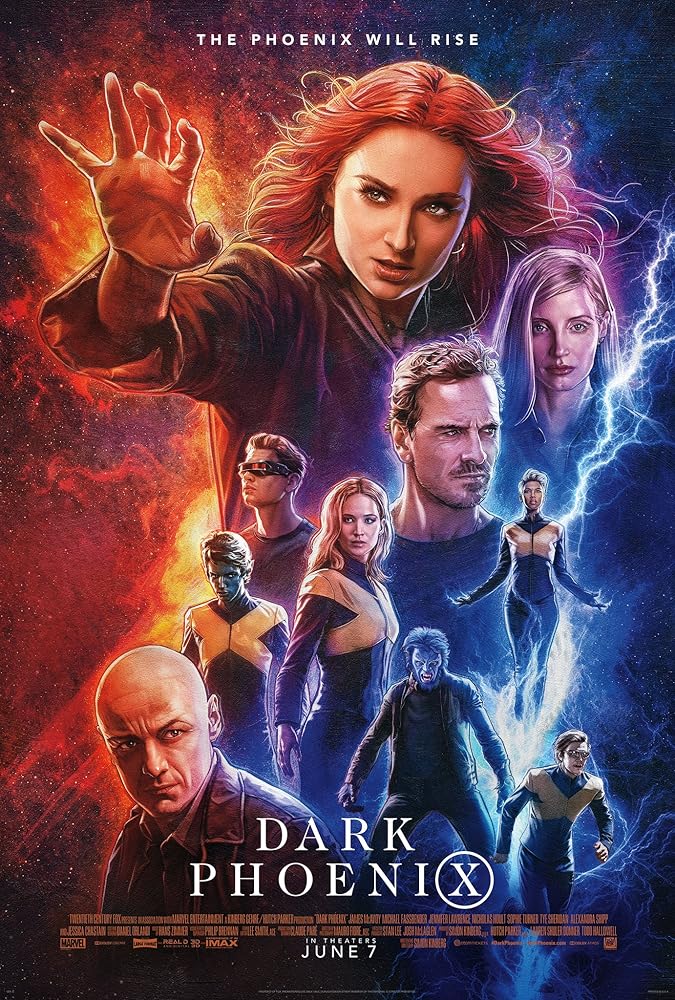
Dark Phoenix (2019) review


Nicholas Hoult, James McAvoy, Michael Fassbender, Evan Peters, Jessica Chastain, Jennifer Lawrence, Kodi Smit-McPhee, Alexandra Shipp, Sophie Turner, and Tye Sheridan in Dark Phoenix (2019)

In the early 2000s, the superhero film genre experienced a major resurgence thanks to three films that were all based on Marvel properties, which were also notably the first majorly successful live-action films that the company had ever produced after most of their previous efforts were underwhelming, to say the least. In fact, some of them were so disastrous that they didn’t even get a proper theatrical release (i.e. the infamous 1994 adaptation of The Fantastic Four). But then there was the trio of 1998’s Blade, Sam Raimi’s original Spider-Man in 2002, and the film that paved the way for today’s topic, X-Men, released in 2000 and directed by Bryan Singer. Despite both Singer and several of the film’s cast members admitting that they weren’t too familiar with the source material going in, the original X-Men was a solid critical and commercial success and helped the superhero genre evolve into the powerhouse that it still is today. Thus, the cast and crew returned for a sequel in 2003, X2: X-Men United, which was an even bigger hit and touted by many as a superior sequel. Not only that, but it ended on a note that teased a follow-up that would adapt one of the most famous X-Men storylines from the comics, The Dark Phoenix Saga, where X-Men member Jean Grey is corrupted by the full extent of her telepathic powers. However, as most of you know, this first adaptation turned out to be a bit of a disaster, mainly due to Singer backing out of the project to direct Superman Returns. Brett Ratner was hired in his place and the film that followed, 2006’s X-Men: The Last Stand, received a far more polarizing reaction from critics while being outright despised by fans for its handling of the Dark Phoenix storyline. This and the equally disastrous 2009 spin-off X-Men Origins: Wolverine effectively put the X-Men film franchise in a very rough spot for quite a few years.  

It wasn’t until 2011 when the series officially saw a comeback thanks to X-Men: First Class, a prequel/soft reboot directed by Matthew Vaughn that featured a cast of newcomers playing younger versions of the series’ established characters. And despite some initial skepticism from audiences, the film was a surprise critical and financial hit upon its release. This then paved the way for 2014’s X-Men: Days of Future Past, which saw Bryan Singer return to the franchise for the first time since X2 and combined the ensembles of both the original trilogy and First Class in a loose adaptation of the popular Days of Future Past storyline from the comics. The film also notably established a major bit of retconning by setting up an alternate continuity that ignored the events of The Last Stand. Because of this, writer/producer Simon Kinberg (who also wrote The Last Stand) hoped that this would pave the way for a more faithful Dark Phoenix adaptation in the future. And despite the generally mixed reaction towards the next installment of the franchise, 2016’s X-Men: Apocalypse, plans were officially set into motion for a new adaptation of the Dark Phoenix storyline. Not only that, but the film would also end up serving as Kinberg’s directorial debut after it was made clear that Apocalypse would be Singer’s last entry in the series. Thus, here we are now with the latest X-Men film, simply titled Dark Phoenix, and by all accounts, this will be the final installment of the main series (not counting the long-delayed New Mutants film that’s currently set for a 2020 release) following Disney’s purchase of 20th Century Fox earlier this year. And yet, despite this, reports of some extensive production issues, and an overall chilly reception, Dark Phoenix is ultimately another solid entry in the franchise even though I do agree that it still isn’t the proper Dark Phoenix Saga adaptation that it could’ve been.

It is 1992 and the relationship between humans and mutants has started to prosper thanks to the continued heroic efforts of telepath Charles Xavier (James McAvoy) and the X-Men. However, during a mission where the group rescues the crew of the space shuttle Endeavour, team member/telepath Jean Grey (Sophie Turner) endures the full force of a mysterious solar flare. Against all odds, Jean survives this event but her telepathic abilities end up getting amplified in the process, and to make matters worse, it also allows her to break a mental block that Charles had placed on her when she was younger to hide her memories of a car crash that she accidentally caused that resulted in the death of her mother. Thus, having realized that some of her most trusted allies have been keeping secrets from her, the more volatile aspects of Jean’s powers begin to take effect. This is then complicated further by the arrival of an alien race known as the D’Bari, led by the mysterious Vuk (Jessica Chastain), who seeks to harness Jean’s ‘Phoenix’ abilities for her own sinister purposes, resulting in the X-Men taking on their most perilous mission yet as they find themselves having to face one of their own. And if that wasn’t enough, Charles’ past efforts to ‘protect’ Jean end up causing a major divide amongst several members of the group, with the situation only being agitated further once the always unpredictable Erik Lehnsherr AKA Magneto (Michael Fassbender) gets involved.

As noted in the intro, one of the biggest issues that fans had with The Last Stand was its handling of the Dark Phoenix storyline, which was mainly due to it ultimately being a combination of two radically different storylines from the comics. The other storyline that was adapted for the film was Gifted, a six-part miniseries that was written by none other than Joss Whedon that focused on the introduction of a ‘mutant cure’, which meant that neither storyline got the proper attention that it should’ve since the film had to juggle them both at the same time. By comparison, this new film is technically a more faithful adaptation of the Dark Phoenix arc despite only having one major sequence that takes place in space and not including some of the storyline’s important characters. Namely, it doesn’t feature the Hellfire Club (although they did appear in First Class and were technically wiped out by the time Days of Future Past rolled around) and changes the prominently featured alien race from the Shi’ar to the D’Bari. However, a different issue then comes into play as the film doesn’t quite give this storyline the emotional poignancy that it could’ve had. It goes without saying that the transformation of Jean Grey from hero to villain proves to be devastating for the X-Men, especially her love interest Scott Summers AKA Cyclops (Tye Sheridan). But in the film, it’s treated like your standard hero/villain conflict, and thus, is quite lacking in terms of depth. At the very least, this film’s technical aspects fare a lot better. Despite this only being his first directorial effort, Simon Kinberg does a nice job with the action sequences and the whole film is backed by a suitably intense Hans Zimmer score.  

A lot has been said about how most of the main leads in this film who have been with the franchise for quite some time now are clearly not as enthusiastic about it as they were back then (that and a lot of jokes about how they still look as old as they did in First Class despite that being three films/in-universe decades ago). And yet, for what it’s worth, the returning leads of the franchise are still just as good as they’ve always been in these films, primarily because they continue to be the ones who get the most character development even though it does become a detriment to others. James McAvoy, for example, continues to shine as a more flawed Xavier compared to Patrick Stewart’s version of the character from the original trilogy, especially in this instance given that this whole plot is the result of his best intentions coming back to haunt him. Then there’s Michael Fassbender, who is still quite arguably the biggest standout of the First Class era ensemble as the emotionally charged Magneto. Jennifer Lawrence, meanwhile, continues to be solid as Mystique, who maintains the direction of her arc in Apocalypse by further embracing her leadership capabilities and being more protective of the younger members of the team. However, as some of this film’s trailers have implicated, her role in the plot is much smaller this time around. And finally, there’s Nicholas Hoult as Beast, who arguably gets the most prominent story arc that he’s ever had in this series due to his growing frustrations with Charles over his handling of Jean’s predicament and the devastating results that they yield.

Unfortunately, the newer members of the cast who had promising debuts in Apocalypse don’t get as much to work with this time around even though the First Class era films have done a lot better than the original trilogy when it comes to showing the X-Men working as a team. As alluded to earlier, Tye Sheridan doesn’t get any opportunities to truly delve into the emotional turmoil that Scott is going through over Jean’s actions even though he had one of the best emotional moments in Apocalypse when he learned about his brother Alex’s death. Alexandra Shipp also gets heavily underutilized as Storm, a fact that Shipp herself has openly acknowledged in recent interviews. Heck, we don’t even get a lot of fan-favorite Quicksilver (Evan Peters) this time around, which means that there’s sadly no new standout running sequence set to music like in the previous two films. At the very least, Sophie Turner does manage to do a solid job handling Jean’s psychological dilemma even if this film’s writing doesn’t exactly match her dedication to the role. But then we come to this film’s main antagonists, the D’Bari, who are, unfortunately, some of the weakest villains in the franchise’s history. Jessica Chastain does her best with what she’s given as their leader Vuk, but without much explanation of their backstory or their plans, they’re just a bunch of nameless thugs for the X-Men to fight. I will say, however, that the finale, where the X-Men fight the D’Bari on a train, is a solidly done action sequence, which is saying something considering that this was the biggest aspect of the film’s extensive reshoots due to the original ending supposedly being too similar to the likes of Captain Marvel and Captain America: Civil War.

At the time of this review’s publication, Dark Phoenix currently stands as the worst-received installment of the X-Men film franchise; yes, even more so than The Last Stand and X-Men Origins: Wolverine. And with a lackluster turn at the box-office (to the point where it will apparently be out of most theaters very soon), it’s clear that most audiences are just waiting for the series’ inevitable reboot into the Marvel Cinematic Universe. But is it really that bad? Well, not really. It’s competently made from a technical standpoint and everyone in it does a good job with the material that they’re given. However, while it’s far from being the disaster that many are saying it is, it’s still a sign that the X-Men franchise is running on fumes at this point. While it may technically be a more faithful adaptation of the Dark Phoenix Saga when compared to X-Men: The Last Stand, it never truly has the chance to delve into the psychological and emotional aspects of its storyline. In other words, as it is presented in this film, the conflict of Jean Grey going rogue has about as much urgency to it as Thor: The Dark World. With all this in mind, if this is truly meant to be the last installment of the X-Men film franchise as we’ve known it since the start of the new millennium, then I will openly admit that it’s probably for the best. And while I may be in the minority when it comes to liking this franchise, I do look forward to seeing how Kevin Feige and his team will incorporate these iconic characters into the MCU.

Rating: 4/5

Wednesday, August 2, 2017

Kathryn Bigelow/Mark Boal Double Feature Review

Image result for kathryn bigelow and mark boal

This weekend sees the release of the new crime drama, Detroit. Based on the infamous 12th Street Riot that occurred in Detroit, Michigan half a century ago in 1967, it is the latest film from director Kathryn Bigelow. Bigelow has been working in the film industry since 1978 and has often worked alongside her ex-husband, James Cameron. While most of her early works did not attract much attention at the box-office, many of them fared excellently with critics, including the 1987 vampire western Near Dark and the 1995 sci-fi thriller Strange Days. She also helmed the 1991 action thriller Point Break, a film that has gone on to become one of the most famous action films of the 90’s. But today, I won’t be doing a ‘Directorial Retrospective’ on Bigelow’s career, and that’s only because I don’t have enough time to get it done before Detroit is released. Instead, I’m going to focus solely on the last two films that she directed since they share a common factor, the same screenwriter. Both these films were written by Mark Boal who, prior to his work in the film industry, served as a journalist for the likes of Rolling Stone and Salon. Detroit serves as the third collaboration between the two and it’s a partnership that has earned them much critical praise. And from the looks of it, that hot streak will continue with Detroit. Thus, today on Rhode Island Movie Corner, I’ll be doing a double feature review of 2009’s The Hurt Locker, which won the Oscar that year for Best Picture, and 2012’s Zero Dark Thirty which, despite tons of critical praise, attracted a fair amount of controversy over one of the biggest aspects of its narrative.

THE HURT LOCKER (2009)

Image result for hurt locker poster

We start off today’s proceedings with 2009’s The Hurt Locker. Although technically a 2008 production, it didn’t see a wide release until the following year and, thus, it ended up being a contender during 2009’s awards season. And it did well during that awards season in a run that was capped off by it winning the Oscar for Best Picture. Kathryn Bigelow also became the first female director to win the Oscar for Best Director, and rightfully so. The Hurt Locker is a highly suspenseful war film, and not just because it focuses on the day-to-day proceedings of bomb disposal squadrons in Iraq. A lot of the film’s tension also stems from the personal conflicts that emerge within the film’s main squadron, who lose their leader due to an IED (Improvised Explosive Device) and get a new leader who’s more gung-ho by comparison. Each of the three main leads, Sgt. William James, Sgt. J.T. Sanborn and Specialist Owen Eldridge are well-layered protagonists who each go through their own personal dilemmas that are set against the backdrop of the Iraq War. This includes, but is not limited to, Eldridge’s guilt over his inability to protect his former squad leader and an incident where James attempts to get revenge for the apparent death of a young friend of his, who is revealed to still be alive much later. Bigelow does a fantastic job of showcasing how each of these three guys are affected by the horrors of war, which adds to the tension when you know that, in this environment, any of them could be killed at any moment. Plus, these three are portrayed excellently by Jeremy Renner, Anthony Mackie, and Brian Geraghty, respectively. In conclusion, as is the case with any Oscar year, there will most likely be some out there who question this film’s legitimacy as 2009’s Best Picture winner. In this case, though, I do think that it was well-deserving of its Oscar win thanks to its great tension and strong character development.

Rating: 4.5/5

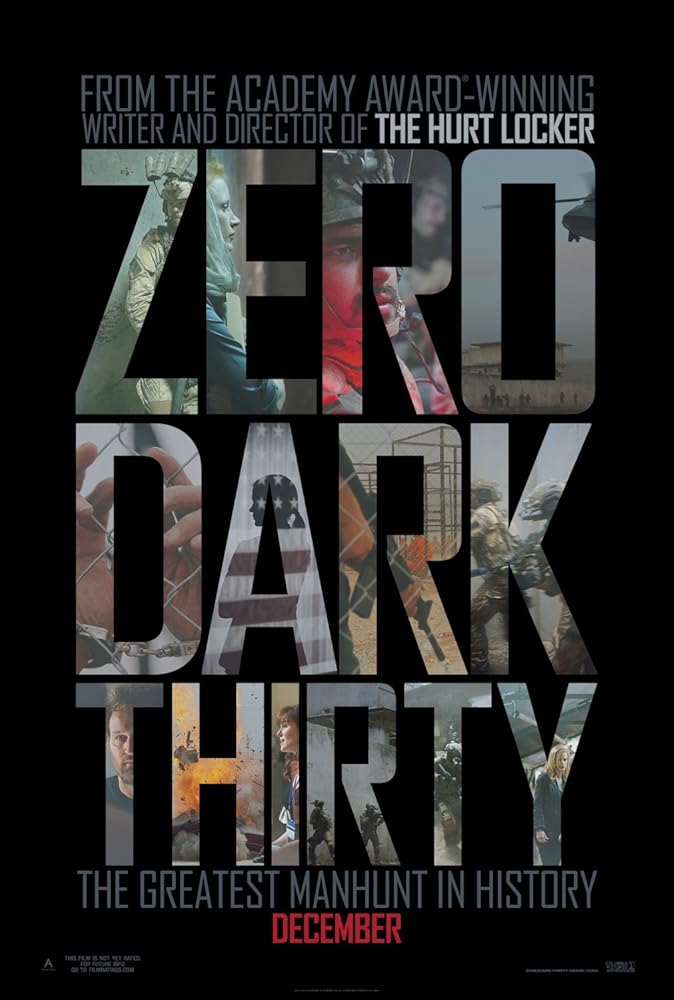
ZERO DARK THIRTY (2012)


After the success of The Hurt Locker, Kathryn Bigelow and Mark Boal teamed up once again in 2012 for a film based around one of the biggest recent events of that time; the successful operation where SEAL Team Six eliminated the notorious leader of al-Qaeda, Osama bin Laden. However, upon release, while the film was another critical success for the duo, it ended up attracting a considerable amount of controversy for various reasons. The biggest of these was due to sequences in the film where the main characters forcefully interrogate prisoners who are connected to al-Qaeda. This then led to some people arguing that the film carries a pro-torture mentality. Sometime after the film’s release, there was then another bit of controversy when some government officials claimed that the filmmakers weren’t given permission to use the classified information that was tied to the operation… as well as some backlash over the film’s use of audio recordings from September 11th in the intro. So yeah… this film was easily one of the most controversial films of that year. By comparison, the biggest controversies surrounding The Hurt Locker were a few post-release copyright/defamation lawsuits. Ultimately, though, I won’t be making any comments about any of this film’s controversies here today because I don’t like to get into politics when it comes to my reviews. Instead, I will say that, unfortunately, I found Zero Dark Thirty to be a rather dry political thriller. Now, to be clear, this is not an ‘action’ film; instead, it’s a political drama focusing on the behind-the-scenes efforts of those involved in the manhunt for Osama bin Laden. The big SEAL Team Six raid only takes up the final half-hour of the film. And that’s fine and all, but I feel that the film suffers from two big issues. With a runtime of over two and a half hours, it is way too overlong with a middle section that drags too much. It also doesn’t help that the film is severely lacking in terms of emotional attachment.

Now, for the record, I do get what Bigelow and Boal were going for with this film. Their intent was to show both the stress and the time-sensitive nature of the U.S. government’s hunt for Bin Laden following the September 11 attacks, a situation which becomes even more imperative with each subsequent terrorist attack that happens over the next decade. And for the most part, they do succeed in at least getting that across. I even get why this has been well-regarded as a thinking man’s political thriller. However, there’s ultimately a rather soulless feel to the whole proceedings, partially because it’s hard to connect with any of the main people involved in the operation. The only character in the entire film to get any major bit of character development is Jessica Chastain’s Maya, the young woman who dictates most of the operation. To her credit, Chastain is excellent in the role and while most of the other big names in the film are limited to smaller roles, they all do good jobs as well. This includes the likes of Jason Clarke, Mark Strong, Joel Edgerton, and Chris Pratt, just to name a few. However, by the end of this film, I found myself left with an empty feeling overall, even during its recreation of the attack on bin Laden’s compound. And the thing is, when this film first came out, I was really looking forward to it because, like many others, I had been caught up in the hype surrounding the country’s success in finally getting bin Laden. But for a film that was touted as the story of the ‘greatest manhunt in history’, said manhunt ended up being quite the underwhelming affair on the big screen.


Rating: 2.5/5

Monday, April 10, 2017

The Zookeeper's Wife (2017) Short Review

Image result for the zookeeper's wife poster

(Like my review of Hidden Figures a few months ago, this review will only be a short one because I’m currently working on a different post that’s set to come out this week.)

In The Zookeeper’s Wife, directed by Niki Caro (who will be directing the upcoming live-action remake of Disney’s Mulan) and based on the non-fiction novel of the same name by author Diane Ackerman, Jessica Chastain stars as Antonina Żabińska who, in the 1930’s, operated the Warsaw Zoo in Poland with her husband, Dr. Jan Żabiński (Johan Heldenbergh). Their peaceful lives are soon shattered, though, when the Nazis begin to invade Poland during World War II. An air raid on September 1st, 1939 ends up destroying most of their zoo. At the same time, Nazi forces begin to forcibly remove the country’s Jewish population from their homes and put them in a desolate ghetto. Realizing the horrible situation that the Jews are currently in, Antonina and Jan decide to make the bold attempt of trying to rescue Jewish children and adults by hiding them from the Nazis within their home at the zoo. Ultimately, they ended up taking in about 300 ‘guests’ during Germany’s occupation of their city. It’s a powerful true story and while I don’t think that the film fully succeeds in achieving the emotional depth that it’s trying to achieve, its heart is very much in the right place and the direction from Niki Caro is solid. It’s also well-acted, highlighted by the always reliable Jessica Chastain as Antonina and Daniel Brühl as Dr. Lutz Heck, ‘Hitler’s zoologist’ who soon comes into conflict, and even has a bit of romantic tension, with Antonina. So, in short, it’s not perfect but The Zookeeper’s Wife is still a poignant war drama that highlights a remarkable moment that came out of the horrors of World War II.   


Rating: 3.5/5

Monday, October 5, 2015

The Martian (2015) review

The Martian

Ridley Scott is without a doubt one of the most prolific directors working today in Hollywood. He’s directed numerous cinematic classics over the span of nearly four decades, from a pair of critically acclaimed sci-fi films in 1979’s ‘Alien’ and 1982’s ‘Blade Runner’ to 2000’s Best Picture-winning swords-and-sandals epic ‘Gladiator’. But in recent years, some may argue that Scott’s filmography has experienced a decline in terms of quality. His 2010 collaboration with his ‘Gladiator’ star Russell Crowe, ‘Robin Hood’, ended up being a critical/commercial disappointment upon release. He fared better, for the most part, in 2012 with ‘Prometheus’, a ‘prequel’ to the ‘Alien’ franchise that he had originally kick-started, but the film has since become one of the most polarizing films of the last few years. After that, his next two films, 2013’s ‘The Counselor’ and last year’s ‘Exodus: Gods and Kings’, both ended up getting generally trashed by critics. This year, however, it looks like Scott has a major success on his hands with his newest film, ‘The Martian’. Based off of the 2011 novel of the same name by Andy Weir, ‘The Martian’ centers on an astronaut who must survive on Mars after he gets left behind by his crew. What follows is a highly engaging and smartly written story of survival highlighted by a terrific lead performance.

The film opens up with the crew of the Ares III while they are in the middle of a manned mission on Mars. When an intense dust storm hits their area, they are forced to evacuate. However, during the return to their ship, astronaut Mark Watney (Matt Damon) is separated from the group when he gets knocked away by debris. Presumed dead, the rest of his crew, led by Ares III commander Melissa Lewis (Jessica Chastain), end up leaving the planet without him. But, unbeknownst to both them and NASA, Watney actually did survive and is now trapped on the Red Planet. With no way of contacting NASA and being forced to deal with the limited resources of his crew’s artificial habitat, which wasn’t designed to last for the amount of time it would take for another NASA mission to return for him, Watney is tasked with finding a way to grow food ‘on a planet where nothing grows’. Being an experienced botanist, Watney begins to ‘science the s*** out of the situation’ while also working to get back into contact with NASA. Once he manages to achieve both of these goals, the staff at NASA, as well as Watney’s crew, begin working on a way to get Watney home safe and sound.

This film has been getting a lot of attention for being ‘scientifically accurate’, from the way that Watney is able to produce water while on Mars to a scene in which he has to patch up his helmet when it cracks. And while it’s undoubtedly a very smart film, it never tries to overcomplicate matters. Some of the film’s scientific elements may fly over the heads of some people but at the same time it never talks down to them. Also, for a film that’s, at its core, a story of survival against all odds in one of the harshest environments imaginable, it’s actually not that intense, at least when compared to 2013’s big space survival film ‘Gravity’. Yes the main character is in a difficult situation and there are definitely some tense moments layered throughout the film but it ultimately maintains a generally light-hearted tone throughout, which is primarily due to Watney’s optimistic attitude, his witty video logs, and his clear disdain for Commander Lewis’ library of disco music. All of this results in a film that’s actually quite funny at times, which is something that one wouldn’t normally expect from director Ridley Scott as most of his other films are much more serious in tone.  

Obviously the key to the entire film is Matt Damon’s performance in the lead role of Watney and Damon more than succeeds in that regard. Damon of course is on his own for the majority of the film’s run-time and pretty much single-handedly carries the entire film on his back. As Watney, he’s very likable, even when he acts rather cocky, and you genuinely do root for him to succeed. Damon’s so good in this that the film’s ‘weakest’ points are basically the instances where he’s not on-screen. Now, for the record, I’m not completely criticizing the scenes of the film that focus on either some of the major employees at NASA, including NASA head Teddy Sanders (Jeff Daniels) and engineer Vincent Kapoor (Chiwetel Ejiofor), or the other members of Watney’s crew (Chastain, Kate Mara, Michael Pena, Sebastian Stan, and Aksel Hennie). The ensemble cast is great all around but perhaps there are just a bit too many characters to keep track of. Sure the film actually does manage to credit all of the major supporting characters in the film but at the end of the day, it is Watney who gets the most amount of character development. Again I’m not holding that against the film too much but admittedly the best scenes are with Watney and when he’s not on-screen, that’s when this almost two-and-a-half hour film tends to drag.

‘The Martian’ is a science-fiction film that very much emphasizes science over fiction. It’s a very smartly-written story that conveys its science in a way that’s easily accessible to the audience without ever becoming too convoluted. The film is consistently compelling throughout its hefty 141-minute runtime and is even rather humorous due to its light-hearted tone and witty screenplay courtesy of Drew Goddard. But at its core, it carries the simple themes of optimism, ingenuity, and the will of the human spirit to overcome adversity even when the odds are stacked against them. And as I’ve stated earlier this year in my review of ‘Tomorrowland’, we definitely need more sci-fi films like that; ones that convey messages/themes of hope and optimism over fear of the apocalypse. Matt Damon absolutely shines in the lead role of Mark Watney and is backed up by an excellent ensemble cast, even if at the end of the day he’s the one that gets the most attention and scenes without him tend to drag a little. Simply put, ‘The Martian’ is easily the best film that Ridley Scott has made in years; a very well-crafted sci-fi adventure/survival film that might even compel future generations to take up an interest in space.

Rating: 4.5/5


(P.S. This film has one of the most perfect end-credit songs ever!)

Monday, November 17, 2014

Interstellar: SPOILER Post

WARNING!!!

The following post contains spoilers for the film ‘Interstellar’. If you have not seen the film yet, avoid going any further for I will be discussing key plot-points of the film in great detail. If you don’t want to be spoiled, please refer to my spoiler-free review of the film (the link will be provided below)… and then go see the film because it’s really a one-of-a-kind cinematic experience that should not be missed.


I’ve been doing spoiler posts since 2013 but have mostly done them just for superhero films. I did do one for ‘Star Trek Into Darkness’, which focused on the big ‘villain identity’ reveal but aside from ‘Thor: The Dark World’ (because I felt that there wasn’t much to talk about with that film) and ‘Man of Steel’ (which, well, I guess you can say I just forgot to do), I’ve done spoiler posts for every major comic book film since ‘Iron Man 3’. But now having seen director Christopher Nolan’s latest film, ‘Interstellar’, I feel that it’s time for me to do another one. ‘Interstellar’ is a film that has certainly attracted a very polarizing reaction from both critics and audiences. As you remember from my review, I gave it a 5/5, meaning that I really loved the film but overall the general response that I’ve heard from people who did like it is that it was just ‘good, not great’. The big topic of debate amongst everyone is about the film’s ambitious scale and scope and whether or not it’s a little too ambitious… but I’m not really going to get into that. Instead, I’m just to going to talk about key parts of the film from the visual design to the performances from the cast to a certain cameo in the latter half of the film. Having now seen this film twice, I will note that while I don’t think it’s ‘perfect’, I still think it’s a fantastic sci-fi epic that not only features incredible visuals but also some great emotional resonance to back it all up. As I noted in my original review, even if you end up not liking the film as much as I did, I implore you all to see this film in theaters as it truly is a must-see film, regardless of what your opinion of it ends up being. So without further ado, let’s dive into Christopher Nolan’s newest sci-fi epic, ‘Interstellar’.  

THE VISUALS


Whether or not you actually liked the film, you can’t deny that the visuals are absolutely fantastic. Nolan has an eye for visuals, especially when it comes to practical visual effects as was previously exemplified in films like the ‘Dark Knight Trilogy’ and even ‘Inception’. And of course, that also applies to ‘Interstellar’ as well. Those dust storms on Earth? They actually created real dust storms that weren’t just added in later via CGI. The new planets that the crew of the Endurance travel to were all practical locations, resulting in incredibly striking visuals like a planet completely covered by water and an icy planet, which was filmed in Iceland. Then of course you have the visuals in space, especially when the characters travel through the wormhole, resulting in some of the most eye-popping visuals that I’ve ever seen in a movie. And from what I’ve heard, a lot of this was achieved by having the visual effects done beforehand and then displaying them for the actors so that they didn’t have to do anything against a green screen. Simply put, for a movie where the majority of the effects could’ve just been done with CGI, Nolan thankfully did not go that route resulting in some incredibly nice practical effects. It’ll be a legitimate travesty if this doesn’t earn this film an Oscar nomination for Best Visual Effects because they’re some of the best visual effects of the year.

PERFORMANCES


Nolan has always been good when it comes to the casts of his films and this one is no exception. While the whole ensemble cast is excellent, two performances in particular really stand out amongst the rest. The first is Matthew McConaughey in the lead role of Cooper. I’ll go into a little more depth about his character and his daughter’s arc in a little bit, but simply put, McConaughey has a great screen presence here and a very likable persona. The other major standout is Jessica Chastain in the role of Cooper’s daughter Murph, and on that note, I’d also like to highlight Mackenzie Foy who plays young Murph. Both do a phenomenal job at conveying the emotional turmoil/heartbreak that the character goes through in regards to Cooper leaving her at a young age (primarily in the case of Foy) and the belief that, after learning from Professor Brand (Michael Caine, in his usual top form) that the whole Endurance mission (‘Plan A’ compared to ‘Plan B’, which would have involved establishing a new colony via frozen embryos) wasn’t going to succeed and that the likelihood of humanity ever escaping Earth was slim, that her father may have known about it (which he didn’t, for the record) and left her and her brother behind to die on Earth.

A lot of Nolan’s detractors point out that he hasn’t done so well when it comes to writing female characters save for Selina Kyle in ‘The Dark Knight Rises’. I’d argue that Murph is actually one of the better female leads in a Christopher Nolan film to date along with Selina. Not only is her character pretty relatable given the circumstances of what happens to her in regards to her dad leaving her, but I also admire her dedication and commitment to trying to help figure out a way to save the human race. I can definitely see a bit of Jessica Chastain’s character Maya from ‘Zero Dark Thirty’ in Murph and while I’ll admit I wasn’t the hugest fan of that film, both this and ‘Zero Dark Thirty’ truly benefitted from Chastain’s performances. Anne Hathaway does a very good job as well as Professor Brand’s daughter Amelia, though she is kind of overshadowed by Chastain. As for rest of the cast, most of them don’t really get as much to work with as McConaughey and Chastain (save for Bill Irwin in a scene-stealing turn as one of the robots, TARS, who goes up into space with Cooper and his team), like Casey Affleck as Coop’s grown-up son Tom or Wes Bentley as Doyle, one of Cooper and Brand’s fellow astronauts. Still, it’s another great cast from top to bottom which once again highlights how Christopher Nolan is a fantastic actor-director.

EMOTIONAL DEPTH


Nolan has both huge fans and huge detractors and one of the main things that the latter group always points out when it comes to his films is that they’re more focused on the story than they are with the characters. Now I do see where they’re coming from but I’d also argue that they’re not entirely devoid of emotional depth and resonance. It’s just that, after re-watching his films, I realize that the emotional beats of his films are primarily focused around the main characters while the other supporting characters don’t get as much to work with. The main example I’d use for this would be ‘Inception’, where most of the dramatic moments in the film were based around Dom’s perspective whereas the other characters were really just there to fill out the cast. The same can kind of be said here as Cooper and Murph are the ones who get the bulk of ‘Interstellar’s more emotional moments. Still, I felt that it was done to great effect in regards to both of these characters. You really see how both are affected by Cooper’s decision to go into space; in the case of Cooper, it is how he’s forced to leave his kids behind and for Murph, it’s dealing with him leaving. The scene where Cooper tries to patch things up with Murph right before he leaves got me very emotional as we really see how pain both of them are going through on an emotional level.

However, there is one moment in particular that really stands out for me in regards to having great emotional resonance and that is the scene where Cooper and Brand return from Planet Miller to discover that 23 years have passed since they first left for the planet due to the fact that the planet is right next to a big black hole named Gargantua. Cooper goes through all of the messages sent to him by his kids, most of which are Tom telling him about everything that has happened since he’s been gone from how he got married to the death of grandpa Donald, moments that I’m pretty sure Coop wanted to be there for as shown through McConaughey’s emotional and heartbreaking reaction to all of this news. Then, he watches the first video sent to him by Murph, who’s now grown-up and who just so happens to be sending him on a message on the day of her birthday where she is now as old as he was when he first left and earlier in the scene where they were talking before he left, he told her that he might be back by this point but of course as we now know, he wasn’t able to get back in time for this. This scene once again shows the distress that Murph has gone through as a result of her dad leaving her for all of this time. Thankfully, the two do finally reunite at the end of the film, albeit when Murph is now an old woman (now played by Ellen Burstyn), and it is a very satisfying moment where father and daughter finally reunite after all these years. Say what you will about Nolan’s films lacking emotional development, but if you ask me, this film really delivers on emotional resonance in just the right way and at just the right moments in time.

THE SCORE


‘Interstellar’ serves as the fifth collaboration between Nolan and Hans Zimmer after his work on the ‘Dark Knight Trilogy’ and ‘Inception’ and as I stated in my original review, those who are worried that the score for ‘Interstellar’ will be similar to those films won’t have to worry because that is not the case here at all. I really loved Zimmer’s work on ‘Interstellar’ with some truly stand-out musical motifs throughout the film. The emotional and dramatic melodies were incredibly effective during the more emotional moments in the film along with the more tense melodies during the more intense sequences in the film. I’ve heard some people say that the score is too ‘bombastic’ (similar to what some have said with Zimmer’s other scores to Nolan films) but I’d argue that’s not actually the problem with it. Really, the downside to this brilliant score is that it results in what is unfortunately a major issue of the film, which is…

THE SOUND DESIGN


As many of you have already probably learned by now, the sound design for ‘Interstellar’ is, well, kind of piss-poor in some areas. This is primarily in regards to some of the more intense moments of the film. During these moments, the sound effects and, as noted, even the score can be overpowering to the point where you actually can’t hear any of the dialogue. And this isn’t just one single solitary instance in the film… there are at least three-four separate instances where this happens, like when the Endurance nears Gargantua or when Cooper and his kids are driving through a cornfield in pursuit of a surveillance drone. At first I thought it was just IMAX but after seeing it again in a regular theater, the same issue still occurred. Both times I saw this film, I saw it on, well, film so I’m wondering if the same issue occurs when it was projected digitally. If any of you have seen it this way, sound off in the comment section if the same problem with the sound design occurred while you were watching it. I know that Nolan and his crew were making a major effort to work on the sound design for the film but ultimately it ends up being rather problematic when it comes to some of the biggest moments in the film.

For my next point, I’d like to open with a ‘Team America: World Police’ quote…


MATT DAMON!!!


As many of you already know by now, the key cameo of the film is none other than Matt Damon in the role of Dr. Mann, a renowned member of NASA who had gone up into space during the Lazarus missions where he was sent to survey one of the planets in the galaxy that he and the other astronauts came to after going through the wormhole. However, as it turns out, Mann’s planet (the ice planet I mentioned earlier), isn’t hospitable for humanity in the slightest and that he was only faking the belief that the planet could sustain life just so that he could be rescued. Contrary to some critics, I actually found this part of the film to be incredibly fascinating even though I can see where some are coming from when they say that it felt like it felt like the story was taking a detour when they got to his part. I felt that it was incredibly interesting to have a character like Mann who had become heavily affected by the fact that he was all alone in a mysterious world, so much so to the point where he didn’t even set up a time to wake himself up when he went into hyper-sleep. Before this, Mann is frequently described as being ‘one of the best’ who inspired many and when he finally appears, we see that being up in space for so long has had a very negative effect on him to the point where he attempts to sabotage everything just so that he could be rescued. Ultimately, Cooper puts it best; Mann was a ‘f***ing coward’. I did like this aspect of the film and it was also nice to see Damon in a not-so-heroic role that contrasts quite a bit with a lot of the other roles that he has played over the years.   

THE CLIMAX


So now let’s talk about the climax of the film. After Mann reveals his true colors, he tries to escape but ends up getting killed when his ship imperfectly docks with the Endurance, which also results in it sustaining major damage. Coop and Brand manage to get it under control but find themselves with very little fuel so they decide to try and slingshot the ship around the black hole Gargantua so that they can reach the third planet, Edmunds. In order to lessen the ship’s weight, both TARS and Cooper detach from Endurance and they both fall into the black hole. They end up in a mysterious dimension where Cooper finds that he’s able to view Murph’s bedroom from her childhood at various points in time. Earlier there was discussion about who may have created the wormhole, possibly fifth-dimensional beings. Once in the black hole, Cooper realizes that he is in this ‘fifth-dimension’ and that these mysterious beings are actually humans from the future that are able to ‘communicate’ with others in the past. Cooper does this with Murph, effectively becoming the ‘Ghost’ that she thought she was hearing back when she was a kid, and years later when she’s all grown up, Cooper then relays the data that TARS had collected to her through Morse code, resulting in her figuring out the solution to save humanity and get them off of the dying Earth. Before leaving this ‘tesseract’, he also serves as the ‘being’ that Brand apparently comes into contact with when the crew of the Endurance first go through the wormhole.

Of course, because I’m no film scholar, I’m not going to try and analyze this sequence too much but I will say that, like with much of the movie, I found it to be incredibly fascinating. From a visual perspective it’s brilliant (obviously) but I also found it to be a unique plot-point and like the emotional satisfaction I felt when Cooper finally reunited with Murph at the end of the film, I found it very heart-warming and emotionally satisfying when it was revealed that Cooper was Murph’s ‘ghost’ allowing him to reconnect with her after all these years after they had parted on bad terms when he first went off into space. Not only does Coop reconnect with Murph but she is also able to finally figure out the problem that she has been trying to solve for a long time and she does so while also finally coming to terms with her emotions over her father leaving her. Now with that said, I do have to partially agree with something that YouTube movie critic Chris Stuckmann noted in his ‘Revisited’ review of the film (I’ll provide the link to it below) that this scene maybe would’ve worked a little better had this reveal not be primarily conveyed through exposition by Cooper and TARS instead of imagery, allowing the audience to figure out what is happening on their own. Now for the record, I’m not too bothered by the exposition, but I definitely see where he’s coming from and that this change would’ve made the scene a little more impactful which if you ask me it still very much is regardless of this.

IMAX AND 70/35 MM


Finally, I’d like to talk about what I believe is the best way to experience this movie; in IMAX. Nolan of course got the ball rolling for feature films to utilize IMAX cameras when he shot ‘The Dark Knight’ though I unfortunately never got the chance to see either that, ‘Dark Knight Rises’, or even last year’s big sci-fi hit ‘Gravity’ in IMAX. But this time I really made an effort to see this film in IMAX and boy does it deliver. Even with the problematic sound design, the film is truly a cinematic experience on the big IMAX screens. The already mentioned outstanding visuals stand out even more on the screen and while reading into the film’s production, it’s pretty cool how Nolan and cinematographer Hoyte van Hoytema utilized IMAX cameras for this film, reworking them so that they can be used in a handheld manner while shooting interior scenes. Also, if you get the chance, check out the film in the 70 or 35 mm formats as opposed to the new standard of digital projectors. Watching this film, both times in the film format, gave me quite a bit of nostalgic memories because I swear I can’t even remember the last time I saw a film in theaters that wasn’t projected digitally. And while I know that some movie theaters were really against having to project it the old-fashioned way, I’d say it actually looks much better on film. I don’t care if I sound an old man for saying that… it just does. Heck, I got a kick out of seeing those old cue marks (or as ‘Fight Club’ puts it, ‘cigarette burns’) to signify to the projectionist to change reels. I know that this old-school style of film projection is unfortunately becoming a dying art so kudos to filmmakers like Christopher Nolan, Quentin Tarantino, and J.J. Abrams who are still all activists in regards to this format.

Chris Stuckmann’s ‘REVISITED’ review of ‘Interstellar’


Sunday, November 9, 2014

Interstellar (2014) review


Christopher Nolan is a director who just makes excellent movies. He’s one of those directors who, in my opinion, has yet to make a bad film. Of course, many people will primarily recognize him as the man who revived the ‘Batman’ film franchise with the ‘Dark Knight’ trilogy which ran from 2005 to 2012. Those three films not only returned the series to its much darker roots but also differentiated themselves from other superhero movies by opting for a much more grounded tone. Not only is it the best superhero film trilogy ever made, but it’s also one of the best film trilogies period. But those aren’t the only great films that Nolan has made. He’s also helmed projects like ‘Memento’, ‘The Prestige’, and ‘Inception’, which were all very well-written films that didn’t talk down to the audience like some films admittedly do. That trend continues with Nolan’s newest film, and his first following the conclusion of the ‘Dark Knight’ trilogy, ‘Interstellar’. This is easily Nolan’s most ambitious film to date in regards to the film’s overall scope and scale. Heck, it’s even its longest film to date at 169 minutes, which beats his previous film, ‘The Dark Knight Rises’, by just four minutes. However, under his usual great direction, ‘Interstellar’ turns out to be a truly one-of-a-kind motion picture experience, especially in IMAX which is pretty much the best way to see this movie.

The film takes place in the near future, where the Earth’s resources are slowly but surely starting to diminish, mostly due to blight and dust storms. During this time of crisis, NASA seeks a way to try and save humanity and seemingly find a solution when they discover a wormhole near Saturn. They set up a mission to send a ship into space to go through the wormhole, following a series of similarly manned spacecraft which were all sent up some time ago, and survey new planets in order to find a suitable new home. To lead the mission, NASA recruits one of their former test pilots, Cooper (Matthew McConaughey), a widowed engineer who currently lives as a farmer with his father-in-law Donald (John Lithgow) and his two kids; his son Tom (Timothée Chalamet, later played by Casey Affleck) and his daughter Murph (Mackenzie Foy, later played by Jessica Chastain). Though he is rather reluctant to go at first due to the fact that he would be leaving his kids behind for an uncertain amount of time, Cooper agrees to lead the mission and heads up into space along with his fellow crew members, including Amelia Brand (Anne Hathaway), the daughter of one of NASA’s key professors (Michael Caine), Doyle (Wes Bentley), Romilly (David Gyasi), and robots TARS and CASE (voiced by Bill Irwin and Josh Stewart, respectively) in the hopes of finding a new habitable planet in order to save the human race.

‘Interstellar’ drew me in from the very beginning and I was hooked from beginning to end. From a technical perspective, the film is pretty much near-perfect. The visuals are outstanding, especially in the sequences that take place during space and when the characters go into the black hole, as is the cinematography in the first film since Nolan’s directorial debut to not be shot by Wally Pfister. As a director, Nolan has been known for using as much practical effects as possible and it seems like this is also the case, for the most part, in this film as well. The soundtrack by Hans Zimmer is also fantastic and those who are worried about the score sounding too similar to Zimmer’s work on Nolan’s other films will be pleased to know that this isn’t the case here. Now I did say ‘near-perfect’ earlier, and that is because the sound design for the film can be rather problematic at times. Sometimes the audio is so loud, due to either the film’s sound effects or sometimes even the score, that it’s hard to hear the dialogue. But ultimately, the best way to see this film is in IMAX. The visuals are even more eye-catching on the big screen and despite some issues with the sound design, sometimes you can even feel the theater shake during certain sequences like when the spaceships are launching. I also saw it in the 70 mm format which served as a nice bit of nostalgia for me seeing how this is probably the first film that I’ve seen in quite some time (geez, I sound old…) that wasn’t projected digitally. You could actually hear the projector running during moments of in-space silence.

One thing about Nolan’s films that his critics frequently bring up is that when it comes to his writing, he’s more focused on story than he is with characters. While I do certainly see where they’re coming from, I’d argue that his films aren’t entirely devoid of character and substance. It’s just that most of the emotional depth of his films mostly come from the arcs of the main characters while most of the side characters don’t get as much to work with in that regard, and this is sort of the case here with Cooper. However, the emotional resonance of his storyline, primarily his relationship with Murph and the conflict that he faces in regards to having to decide to leave his family in order to save the world, is actually really spot-on and I’ll admit that even I got a little emotional at times because of it. McConaughey of course has been on a big career comeback recently and this film is no exception as he gives one of the best performances of his career in this movie. And while it is true that McConaughey’s role does kind of overshadow every other character in the film, Nolan once again proves to be one of the best ‘actor’ directors in the business thanks to great performances from all involved including Anne Hathaway, Jessica Chastain, Bill Irwin (even though he’s just voicing a robot), and Michael Caine. There’s even a neat little cameo by someone you will no doubt recognize in the latter half of the film. Now despite Nolan’s knack for secrecy, you’ve probably already know who it is given the extremely spoiler-ific nature of the internet. Even I’ll admit I knew about it going in. Still, for anybody who doesn’t know about it already, I won’t spoil it here.

‘Interstellar’… is truly an outstanding film. While Nolan’s critics hate to hear the comparisons made between him and Stanley Kubrick, ‘Interstellar’ is very much inspired by Kubrick (namely his own sci-fi epic ‘2001: A Space Odyssey’) and it’s safe to say that this is Nolan’s ‘2001’. Its visuals are outstanding matched by the film’s overall scale and scope. It’s also certainly Nolan’s most ambitious film to date and while some may argue that the film bites off more than it can chew, I do feel that the film does manage to succeed in that regard more than it may fail. Not only that, but the movie does have enough emotional resonance through the arc of the character of Cooper thanks to both the writing and McConaughey’s excellent leading performance. Now I do realize that this is, at the moment, becoming one of the more polarizing films of the year and while I haven’t seen that many negative reviews, most of the positive reviews I’ve heard are describing the film as ‘good but not great’. I for one think it’s one of the best films of the year so far, but regardless of whether or not you end up liking the film, one thing’s for certain; it’s still very much a must-see in theaters, especially in IMAX and if you do have the opportunity to do so, preferably in 70 mm. It’s a film that truly delivers on spectacle and does manage to be more than just that.


Rating: 5/5!