Overall, I’d describe 2017 as a great year for film… and a terrible year for the film industry. And in terms of the latter, you all know exactly what I’m talking about. Early this past October, several sexual harassment and assault allegations were levied against longtime producer Harvey Weinstein. Like clockwork, this then led to other allegations against some of the biggest names in the industry, including Kevin Spacey, Louis C.K., and even Disney/Pixar mainstay John Lasseter just to name a few (emphasis on ‘just to name a few’). Now, as many of you know, I usually try to avoid delving into political discussions on this site… but, in this instance, the ‘Weinstein effect’ is such an unavoidable topic at this point that I feel that I at least have to say something about it. With that said, I’ll say this. At the very least, it’s clear that the film industry has begun to take major steps in fighting back against the sexual predators that have been a part of their community for years (e.g. when Ridley Scott removed Kevin Spacey from All the Money in the World, replacing him with Christopher Plummer). And while there are undeniably still a lot of ‘Harvey Weinstein’ types out there, there are also quite a lot of good people in the industry who are doing all that they can to get rid of the industry’s scum. In short, to quote a line from this year’s historical drama Detroit, ‘change is coming’; and to quote a widespread online hashtag, #TimesUp. With all that out of the way, it’s time to delve into my annual list in which I count down my picks for my Top 12 Favorite Films from this past year in film. For those who are new to this site, the main reason why I do a Top 12 instead of the more traditional Top 10 is so that I can honor even more of the many great films that I’ve seen over the last 12 months.
Before I begin, though, I must lay down my usual ground-rules for the following 4 posts. First off, I will warn you all ahead of time that these posts will be heavy on the spoilers. If you have not seen any of the films that will be appearing on this list, please refer to the non-spoiler reviews that I have made for them as I will be addressing some of their most critical moments in these posts. Said reviews will be provided via a series of web links that can be found at the start of each pick. The second thing to note about this list is that, like every year, I haven’t had the time to see every major film that had come out in 2017. Believe me, if I did have the time, then I would most surely try to see as many films as I possibly can before working on this list. However, that’s just not feasible at this point; thus, if you end up wondering why films like Get Out, Lady Bird, and The Big Sick aren’t on this list, this is the reason why. And this brings me to another point that I’ve unfortunately had to implement as one of my ground-rules in recent years. I want to make things perfectly clear; this list will be almost entirely dominated by films that fall into the category of big-budget, VFX-heavy blockbusters. I recognize that this will probably not sit very well with those who prefer films that come out of the independent market; however, that’s just how I roll right now. In fact, I’d argue that a lot of the films that will be appearing on this list (several of whom are remakes, sequels, reboots, etc.) are more than capable of standing toe to toe with whatever gets nominated for this year’s Best Picture category at the Oscars. And really, just because a film is ‘original’ or ‘independently made’ does not automatically make it ‘good’ (don’t make me have to bring up Mother again).
Finally, as always, there’s the most important ground-rule of all; please, please, PLEASE be respectful of other people’s opinions when it comes to discussing your favorite films of the year. I say this especially considering some of the unpleasant incidents that the film fan community has been involved in this past year (heck, I might even address some of them in this list). At the end of the day, we all need to remember that film is a subjective medium. In other words, not everyone is going to like the same thing; that’s why I don’t get too worked up about whatever film wins at all the big awards shows or the always controversial award season ‘snubs’. You can’t please everybody. With that in mind, I’m well-aware that not everyone reading these posts will be a fan of some of the films that will be appearing on this list. That is why I always refer to it as my ‘Favorite Films of the Year list’ instead of the more definitive-sounding ‘Best Films of the Year list’, so if there’s a film on this list that you weren’t a fan of, that’s totally fine. All the power to you, my friend. Just don’t be a jackass about it and harshly berate those who have a different opinion than yours. Trust me, I’ve been subjected to comments along the lines of ‘your opinion doesn’t matter’ quite a few times in the past and, simply put, it’s not fun. And now, with that long intro out of the way, I present you with my Top 12 Favorite Films of 2017. This is Part 1 of 4 and today we’ll be looking at picks #12-10.
But first, as always, let’s start with my Honorable Mentions. This year, I have 6 to name…
DUNKIRK
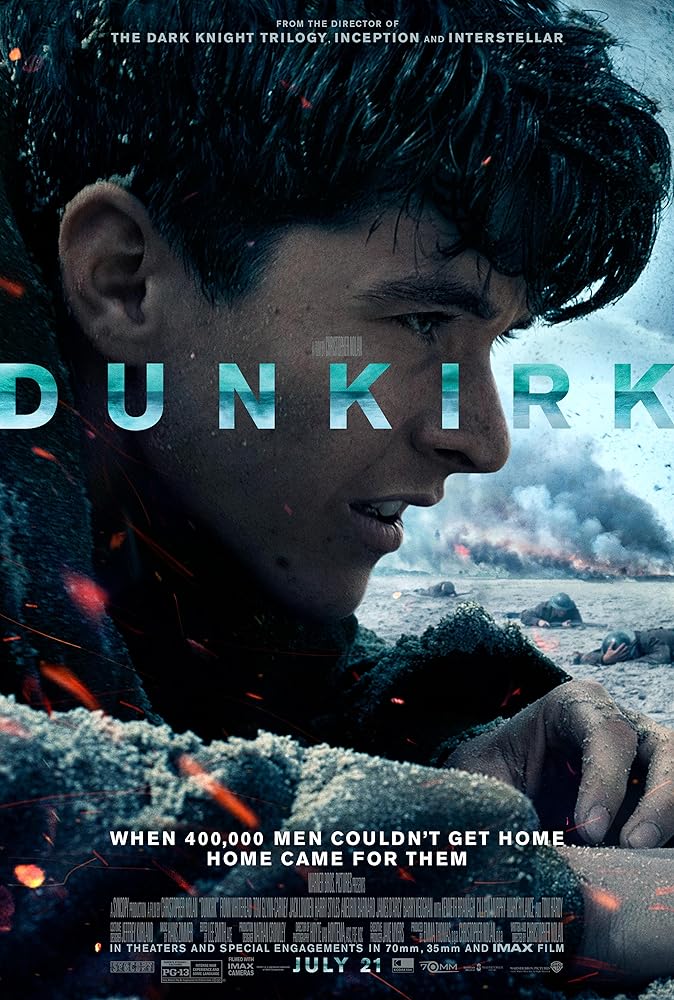
Some of you may be surprised to find that Christopher Nolan’s latest directorial effort did not crack the Top 12. After all, I have gone on record stating that Nolan is one of my favorite directors working today; as such, his films usually end up ranking high on these end-of-the-year lists for me. Case in point, his last film Interstellar was originally one of the two films that were tied for my favorite film of 2014… before I accepted the fact that I had pulled a major cop-out that year and then proceeded to put it back to the #2 spot. But as for Dunkirk, while I did like it, I’ll admit that it just wasn’t one of my absolute favorites from this past year. Still, Nolan’s take on the real-life evacuations that had occurred from upon the beaches of the titular Dunkirk, France during World War II is a well-crafted wartime thriller. While there was some initial skepticism over the fact that Nolan decided to limit the war action to a non-graphic PG-13 rating, he more than makes up for this with some of the most tension-filled action sequences of the year. And like any Nolan film, these sequences were done with practical effects and shot on film instead of digital, resulting in some amazing cinematography that makes this film quintessential viewing on the big screen. After all, if there’s one thing that Nolan has very much become known for these past few years, it’s his concentrated efforts to keep the art of theater-going alive with films that are best seen on the biggest screens around. Sure enough, like Interstellar, Dunkirk was an undisputed must-see in IMAX screened on 70 mm film.
THE DISASTER ARTIST
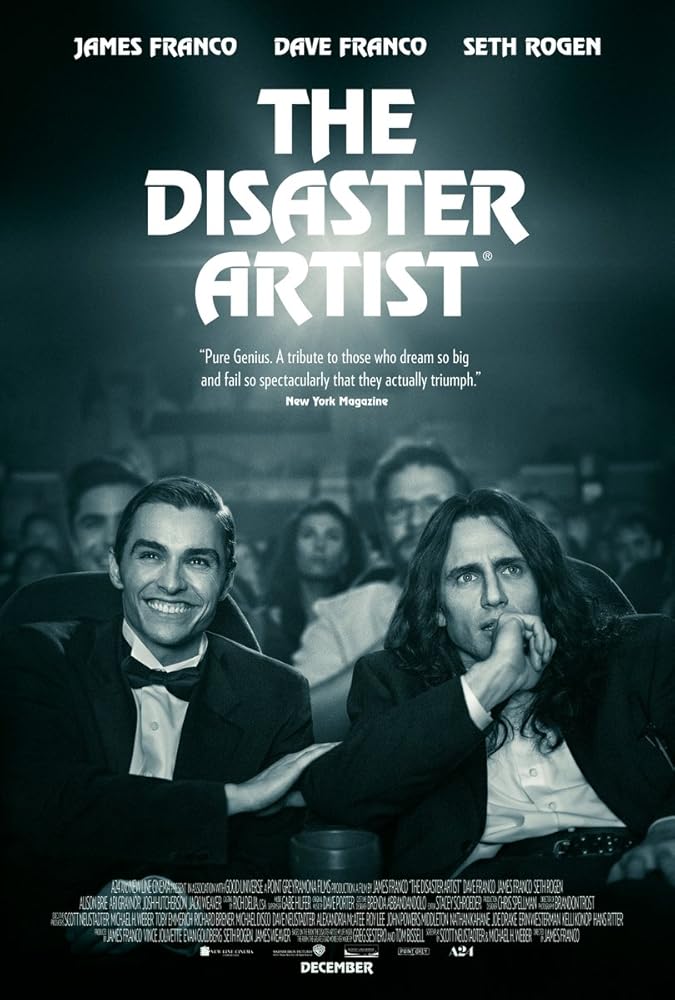
Many on the internet are familiar with the infamous 2003 flick The Room. Since its initial release, writer/director Tommy Wiseau’s bizarrely incoherent drama has gone on to become one of the most popular ‘so bad, it’s good’ films of all-time. And now, thanks to The Disaster Artist, based on the autobiography of the same name of Wiseau’s co-star Greg Sestero, we get to witness some of the madness that went into its production. James Franco not only directs the film but stars in it as well as the one and only Tommy Wiseau. And all in all, he does an excellent job in both roles, giving the film solid pacing and a consistent tone throughout while also perfectly capturing all aspects of Wiseau’s eccentric personality. This is paired nicely with Franco’s brother Dave and Seth Rogen’s equally excellent performances as Sestero and The Room’s script supervisor (and ‘alleged real director’) Sandy Schklair, respectively, both of whom serve as the straight men to Tommy’s antics. Ultimately, though, this film is a lot like Tim Burton’s 1994 biopic on another infamous filmmaker, Ed Wood. In other words, while the film fully acknowledges the fact that Tommy Wiseau is a bizarre individual who often acted in a tyrannical manner while directing The Room, it also sympathizes with him through his and Sestero’s journey of just trying to make it big in the film industry. Because of this, while The Room is still considered by many as one of the worst films of all-time (though in its case, that’s not entirely a bad thing), The Disaster Artist is a far different story.
BATTLE OF THE SEXES
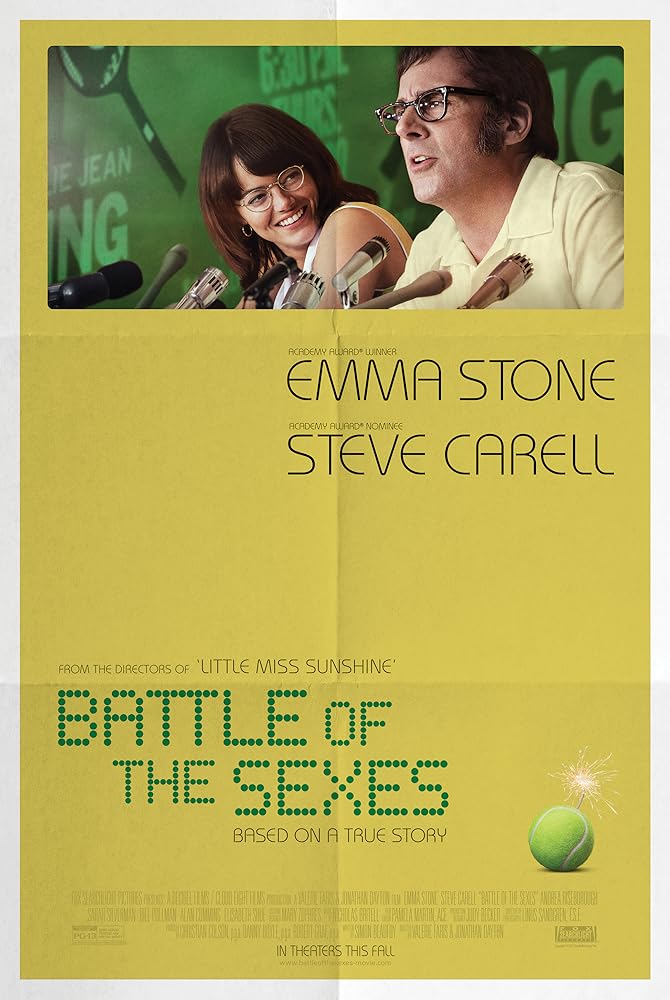
This film’s title says it all as it focuses on the iconic exhibition tennis match that it’s named after between Billie Jean King and Bobby Riggs. King’s victory in the 1973 match proved to be a landmark moment in the sport as it paved the way for female tennis players gaining greater respect in what was, at the time, a heavily male-dominated sport. Sure enough, co-directors Jonathan Dayton and Valerie Faris’ film explores the build-up to the event and how King worked tirelessly to fight for equal pay amongst her and her fellow players. This includes everything from the women-only tennis tournament established by her and reporter Gladys Heldman to the moment where she eventually has to accept Riggs’ offer to play him when one of her big rivals loses to him in an embarrassing blowout. Through it all, King proves to be an endearing protagonist who goes through quite a lot on an emotional level, namely when she begins to have an affair with her hairdresser Marilyn that ends up affecting her marriage to Larry King (For the record, not ‘that’ Larry King). Because of all of this, you find yourself fully rooting for her when she finally ends up competing against Riggs in the big ‘Battle of the Sexes’ exhibition match. And, of course, a lot of this is thanks to Emma Stone’s phenomenal performance as Billie Jean, though she’s also backed by an excellent supporting cast that includes Steve Carell as Riggs, Andrea Riseborough as Marilyn, and Alan Cumming as King’s fashion designer/friend Ted Tinling just to name a few. In short, Battle of the Sexes is quite a unique entry in the sports film genre as the main sport that it focuses on, tennis, is ultimately not its biggest focus; instead, it’s more about Billie Jean King and the impact that she left on the sport. And what an impact it was.
CAPTAIN UNDERPANTS: THE FIRST EPIC MOVIE
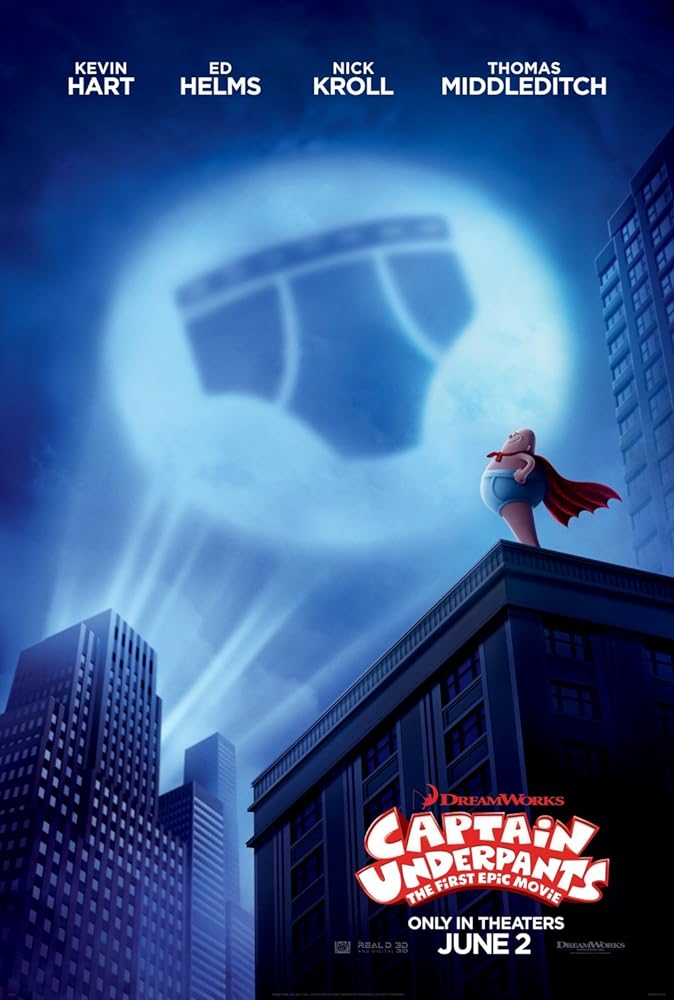
To answer your first question, yes, a film titled Captain Underpants is one of my favorite films of 2017. Like many others of my generation, I grew up reading author Dav Pilkey’s popular series of books about an elementary school principal who’s hypnotized into thinking that he is an underwear-themed superhero. Despite their admittedly juvenile sense of humor, the books featured fun characters mixed with clever writing that almost always broke the fourth wall. And even though the book series technically ended back in 2015, you may be surprised to find that its first film adaptation, courtesy of DreamWorks, is one of the most faithful film adaptations of any source material in recent years. While technically a combination of the plots of books 1 and 4 with the origin stories of the former and the main antagonist of the latter, writer Nicholas Stoller perfectly captures the spirit of the books right down to the implementation of the series’ most popular running gags. This includes everything from the read-throughs of main protagonists George Beard and Harold Hutchins’ homemade comics to, of course, Flip-O-Rama, the moments from the books where readers were encouraged to flip a pair of pages back and forth to simulate ‘extremely violent’ action sequences. Don’t even get me started on how excited I was when that scene popped up. But amidst all the toilet humor (figuratively and literally seeing how there are sentient toilets in this), the film also manages to capture the charm and heart of the books through the perfect representation of one of the franchise’s key elements, the friendship of George and Harold. Both Kevin Hart and Thomas Middleditch are fantastic in their respective roles as are Ed Helms in the dual role of Mr. Krupp/Captain Underpants and Nick Kroll as the film’s main antagonist Professor Poopypants (and yes, that’s his name…). Thus, to make a long story short (yes, that’s a reference to the books…), watching Captain Underpants: The First Epic Movie truly made me feel like a kid again. TRA LA LAAAAAA!!!
P.S. I was also glad to hear that there’ll be a Netflix series coming out sometime later this year that will continue the wacky adventures of our lovable main protagonists.
BABY DRIVER
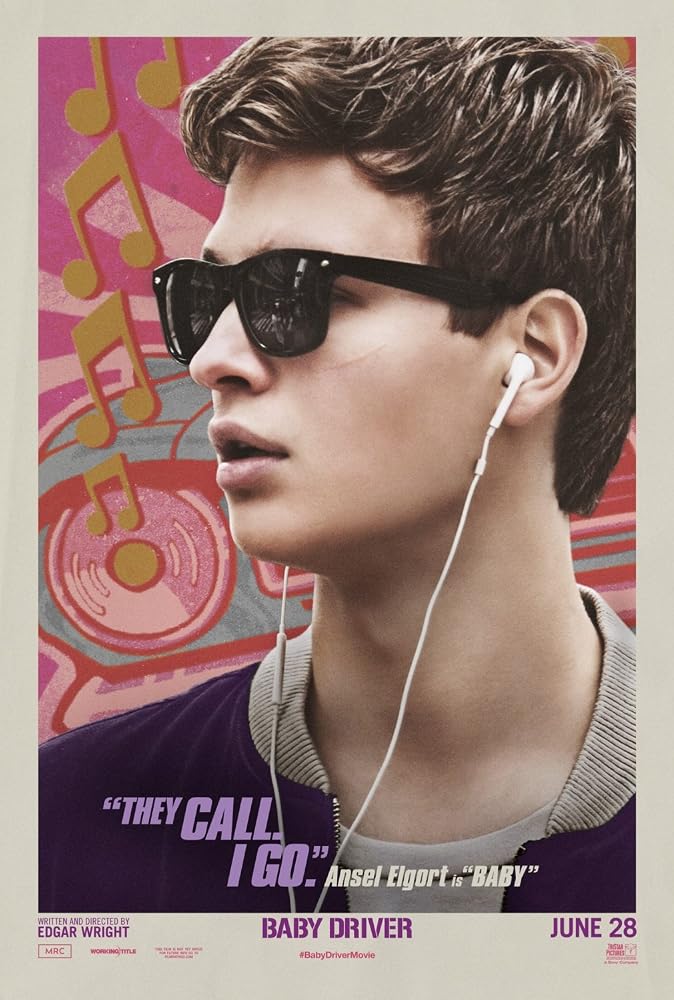
After enduring the whole debacle that arose from his involvement and ultimate departure from Marvel Studios’ Ant-Man, Edgar Wright was finally able to return to doing what he does best this year with his latest big-screen masterpiece, Baby Driver. Partially inspired by a music video that he directed for the band Mint Royale in 2003, the film is a high-octane crime thriller that boasts some fantastic car chases. Said car chases and all other subsequent action sequences are set perfectly to an equally outstanding soundtrack that rivals the Awesome Mixes from the Guardians of the Galaxy franchise as one of the best film soundtracks in recent years. Now, admittedly, the film’s plot, in which a good-natured young man who’s forced into being a getaway driver for a crime boss tries to get out of ‘the business’, is arguably one of the more straight-forward plots to come out of one of Wright’s films. Despite this, however, it all works out in the end thanks to Wright’s excellent direction, as he manages to craft some effectively suspenseful moments in the film’s second half despite what I just said about the plot being a tad bit predictable. Plus, the film boasts an excellent ensemble cast highlighted by Ansel Elgort as the charismatic protagonist Baby, Jon Hamm and newcomer Eiza Gonzalez as the wild couple of Buddy and Darling, and Jamie Foxx as the volatile Bats. All in all, Baby Driver was another welcome addition to Edgar Wright’s prestigious filmography and it ended up becoming his most commercially successful directorial outing to date, which I’d argue is a nice reward for him after everything that happened with Ant-Man.
KINGSMAN: THE GOLDEN CIRCLE

This film serves as a prime example of why I don’t take Rotten Tomatoes’ ratings that seriously. I mean, really, this film opens with an epic car chase set to Prince’s ‘Let’s Go Crazy’, concludes with an epic final shootout set to Elton John’s ‘Saturday Night’s Alright for Fighting’, and features the Rocket Man himself in an admittedly absurd but still all-around awesome cameo… and yet it only maintains a 51% rating on RT whereas something like Mother has a 69% rating? In all seriousness, I will admit that this year’s follow-up to director Matthew Vaughn’s 2015 outing Kingsman: The Secret Service is far from perfect. Sure, maybe the film is a bit overlong with a near two-and-a-half-hour runtime. And sure, maybe some of the new characters that are introduced in this film don’t get as much material to work with as they should (e.g. despite his prominent appearance in the marketing, Channing Tatum’s Agent Tequila is basically just a ‘cameo appearance’). Still, this film proves to be just as entertaining as its predecessor thanks to A.) its awesomely over-the-top action sequences and B.) the franchise’s phenomenal lead trio of Taron Egerton as Eggsy, Colin Firth as Harry Hart, and Mark Strong as Merlin. After his breakout turn in the previous film, Egerton has transitioned perfectly to the role of ‘leading man’ while Firth gets some excellent material to work with thanks to Harry’s ‘resurrection’ arc. And finally, Mark Strong is still just as big of a standout as always as Kingsman tech guru Merlin, who goes out on the most epic of notes with an emotionally stirring sacrifice set to John Denver’s ‘Country Roads, Take Me Home’. In conclusion, I’ll admit that my high praise for this film may have been partially influenced by the fact that it was the first new film that I saw after the torturous experience that I had while watching Mother; still, as a fan of the first Kingsman, I was more than satisfied with its equally entertaining follow-up despite its shortcomings.
And now we move onto this year’s Top 12, which starts off with a first for this annual list of mine… a horror film. As I’ve made it clear in the past, I’m not that big a fan of the horror genre. This explains why a lot of recent horror films usually end up on my ‘Worst of the Year’ lists (e.g. my #3 worst from this past year, Rings), which also means that it would take quite a lot for a film like this to crack my Top 12. And with this next film, that is exactly what happened…

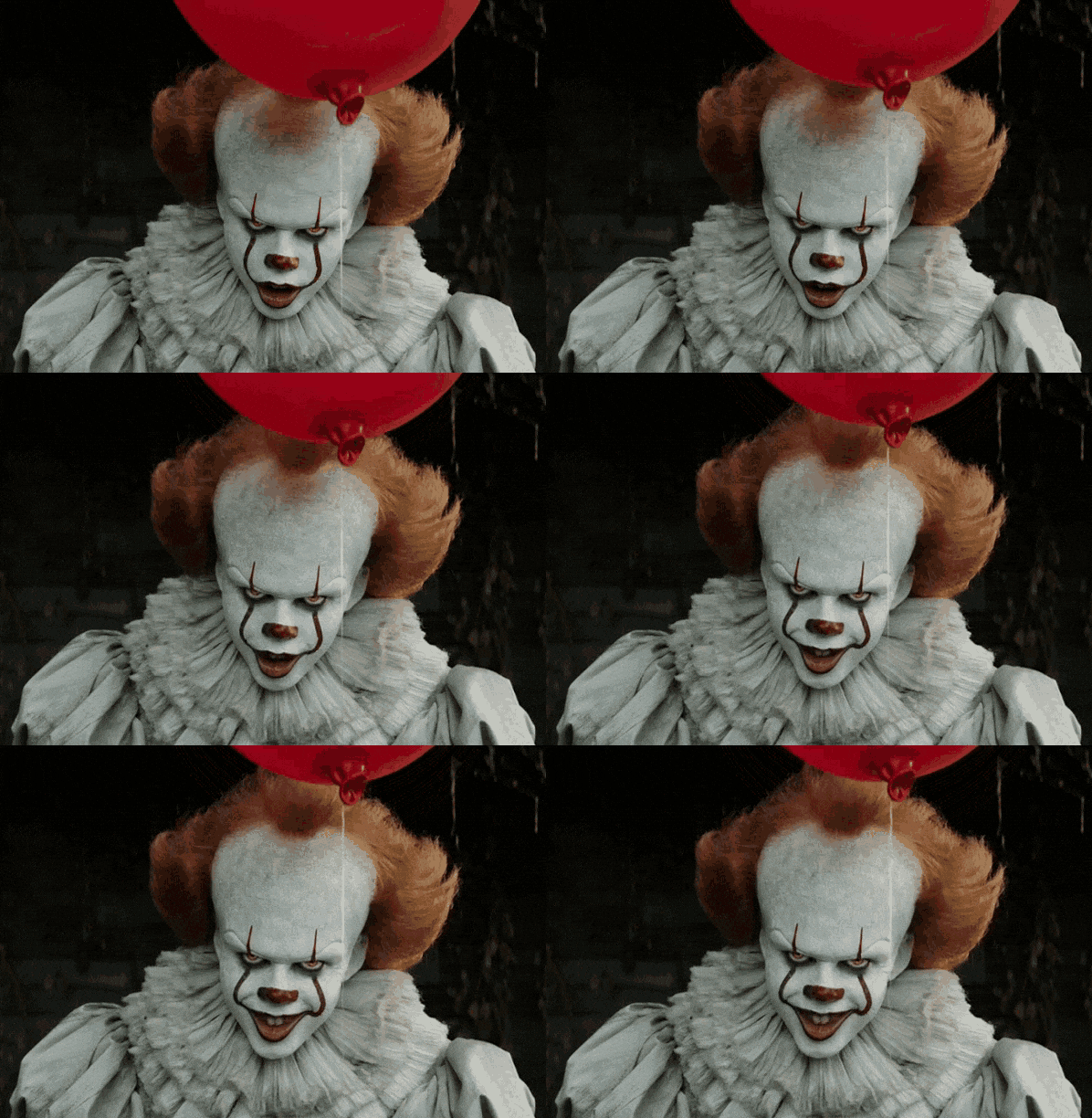
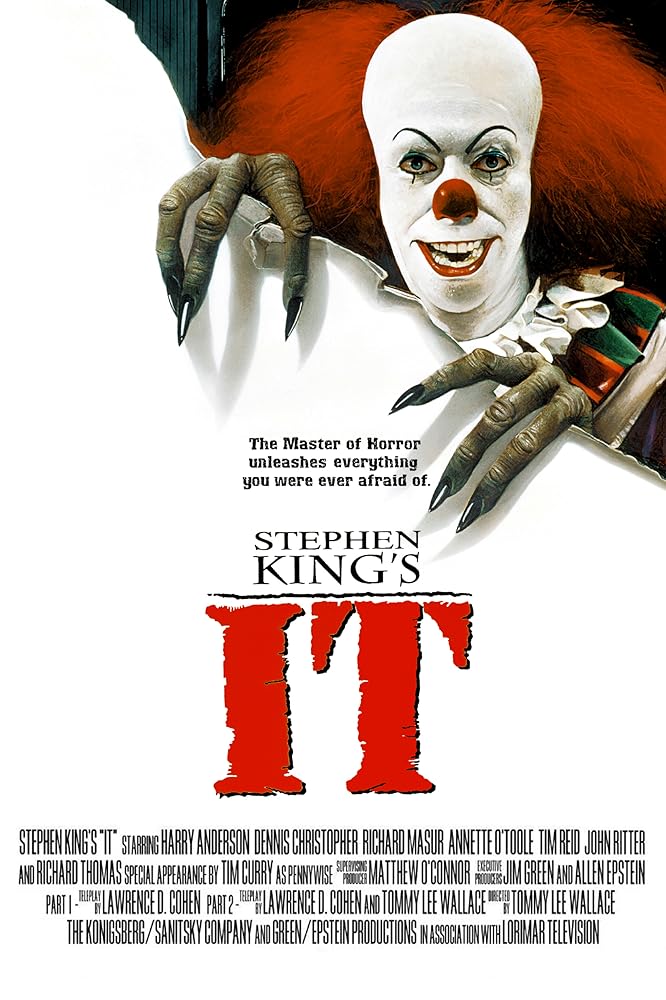
This year’s big film adaptation of Stephen King’s 1986 novel It was the second major adaptation of its source material following a two-part miniseries that aired on ABC in 1990. In preparation for the new film, I watched and reviewed the miniseries for this site. In that review, I noted that while I didn’t think that the miniseries was ‘terrible’, it also hasn’t aged that well. Really, the only notable thing about it nowadays is Tim Curry’s standout performance as the main antagonist, Pennywise the Dancing Clown. Suffice it to say, the film version of It is a far superior take on its source material. Because it only focuses on the first half of the story, it’s allowed to take its time when it comes to properly developing its main characters. And whereas the miniseries had to tone down some of the darkest elements of the novel to be suitable to air on national television, the film fully embraces its R rating to showcase some of the most disturbing moments from King’s novel. Granted, not every major sequence from the novel occurs in the film, most notably the infamous scene in which the seven kids partake in a massive orgy (and no, I’m not kidding about that one; quite frankly, I think many of us can agree that it was a good thing that this part was taken out), but the dark and foreboding atmosphere is still strong throughout. This, of course, is thanks in large part to Bill Skarsgard’s excellent turn in the role of Pennywise. Now, to be fair, I understand why some may still find Tim Curry’s take on Pennywise to be better given how Skarsgard isn’t given a lot of opportunities for comedy, which some feel is a vital part of being a clown. Still, in the context of this film, the darker take on the character works quite well as Skarsgard very much succeeds in giving off an unsettling vibe whenever he’s on-screen. In a lot of ways, it’s very similar to Heath Ledger’s iconic take on the Joker from The Dark Knight, which focused more on the character’s psychotic personality than his affinity for dark humor.
The real highlight of the film, however, is its group of main leads AKA the seven kids from the town of Derry, Maine who band together to form ‘the Losers’ Club’. For a cast that was made up of mostly newcomers, these seven young leads are all fantastic in their respective roles. Sure, the film does tend to focus on some of them more than others, namely Bill given what happens to his brother Georgie and Beverly, the lone girl of the group who deals with A.) being deemed a ‘slut’ at school and B.) her abusive father. Still, each of the kids does get their moment to shine in the film; more importantly, though, is the fact that you become fully endeared to them as the film goes on. Without this, you wouldn’t go ‘aww…’ at the moment when Ben saves Beverly by kissing her and she reveals to him that she knows that he was the one who wrote her a romantic poem. And you wouldn’t tear up at the part where, after the gang defeats Pennywise, Bill finds Georgie’s yellow raincoat, resulting in him finally coming to terms with his brother’s death at the hands of the demonic clown. And this, to me, is why this film works so well in contrast to other recent horror films. Oh sure, it does have some great horror moments, like the scene where Pennywise emerges from a projector to attack the kids (I won’t lie, I audibly yelled ‘Holy S***!’ in the theater when that happened; it’s THAT effective of a scene). But when it comes to some of the biggest flaws of a lot of modern horror films, easily one of the biggest comes in the form of stock, cliched characters who are just there to be killed by the bad guy. That’s not the case here, though, as you do care about these kids and root for them to succeed against Pennywise. Because of this, It is much more than just a ‘horror’ film; it’s a tale of friendship, young love, and overcoming one’s fears…that just so happens to involve a kid-eating clown. Thus, you don’t have to be a fan of the horror genre to appreciate how truly well-made of a film that this is.
One of the most famous films of all-time ended up getting a sequel this year. And despite having to follow in the footsteps of a landmark entry in the science-fiction genre, this next film more than managed to live up to the hefty expectations that were laid upon it.

I’ll openly admit that this past year was the first time that I watched Ridley Scott’s seminal 1982 classic, Blade Runner. Obviously, I made sure to check it out first before seeing its long-awaited sequel, Blade Runner 2049. And after watching the ‘Final Cut’ of the film, mainly because this was the one cut out of all of Blade Runner’s infamous various edits that Scott himself was the most involved in developing, I must say that I do agree with the consensus that it’s one of the best sci-fi films of all-time. This, of course, means that there was quite a lot of pressure put on the sequel to be just as successful, especially considering that it had been in the works for years. Thankfully, Arrival director Denis Villeneuve manages to live up to these lofty expectations, for the most part, with a highly engaging follow-up that respects its predecessor while also doing its own thing at the same time. In terms of the former, that primarily comes via the efforts to replicate the original’s classic visual style. While there have been quite a lot of advancements in the art of visual effects since the original Blade Runner came out, Villeneuve very much succeeds in recapturing the mesmerizing aura of the franchise’s iconic dystopian future setting. Because of this, Blade Runner 2049 is easily one of the best-looking films of the year thanks in large part to the amazing cinematography from the legendary Roger Deakins. From the impressive wide shots to the film’s rich and vibrant color palette, 2049 boasts plenty of great frame-worthy imagery. And it’s all backed, in turn, by a terrific score from the equally legendary Hans Zimmer and Zimmer protégé Benjamin Wallfisch (who also did the music for It).
As for the plot, it’s an effectively natural follow-up to the original as it sees new main protagonist K (Ryan Gosling) investigating a seemingly impossible development; a female Replicant who gave birth. This then leads to him crossing paths with the child’s father, who is none other than the original film’s main protagonist, ex-Blade Runner Rick Deckard, meaning that the pregnant Replicant was Deckard’s love interest from the first film, Rachael, who is revealed to have died in childbirth. Now, on that note, it should be noted that while Harrison Ford does return to reprise his role as Deckard, he ultimately doesn’t show up in the film until after the halfway point. Also, for those who were wondering, the film doesn’t really address the long-standing debate of whether Deckard is a Replicant himself, which was initially brought upon by the various interpretations of the first film’s ending depending on the cut of it that was viewed. Still, despite his limited screen-time, Harrison Ford is once again excellent in the role and is given a lot of great emotional material to work with. One of his best scenes comes when he finds himself taken captive by Replicant manufacturer Niander Wallace, who offers him a reward in exchange for information about his child. Said reward comes in the form of a clone of Rachael, which Deckard ultimately rejects when he points out that ‘her eyes were green’… which then leads to Wallace’s assistant Luv executing the clone point-blank. All in all, it’s an excellent sequence thanks to Ford’s excellent performance and the impressive visual effects work that was done to recreate Sean Young’s Rachael as she had looked in the first film. And for the record, yes, that wasn’t Sean Young reprising her role; it was just a digital double.
Gosling also gets some great material to work with as well, namely when K (who is immediately established as being a Replicant) starts to wonder if he’s the child of Deckard and Rachael because of one of his earliest memories involving a toy horse. This is ultimately proven false, though, as we learn that the child is Replicant memory scientist Dr. Ana Stelline (“All the best memories are hers…”). But when it comes to the film’s biggest standout, that honor goes to Ana de Armas as Joi, one of many from a line of holographic A.I. programs that has been retrofitted into being K’s girlfriend. Like the arc that Rachael went through in the first film when she began to realize that she’s a Replicant, Joi is easily one of the most complex characters in the entire film because of her desire to be ‘real’, to the point where she even hires a prostitute to project her form onto so that she can experience sex with K. Armas also has excellent chemistry with Gosling, so much so that the scene where her mobile unit (and, subsequently, her entire system) is destroyed by Luv is hands down one of the most heartbreaking scenes in the entire film. Speaking of Luv, Sylvia Hoeks is also a major standout as Wallace’s ruthless assistant who effectively blurs the line between loyal servant and a stone-cold killer. But as for Wallace, he’s ultimately the film’s weakest link. For the record, I don’t attribute this to Jared Leto’s performance in the role, which is something that I only bring up following all the backlash towards his controversial turn as the Joker in Suicide Squad. Really, the problem with this character is that he is vastly underdeveloped to the point where there is no resolution to his role in the plot, as he is never seen again after the ‘Rachael clone’ scene. Ironically, this is a lot like his turn in Suicide Squad… mainly because he only appears briefly in either film. Despite this, however, Blade Runner 2049 is an excellent film in every sense of the word. And while it sadly shared the same fate as its predecessor at the box-office, there’s a good chance that it’ll end up being regarded just as much as the original Blade Runner in the years to come.
Aside from the colossal disappointment that was Justice League, 2017 was one of the greatest years yet for the superhero genre; sure enough, all 5 of the other major superhero films from this past year will be appearing on this list. And to start things off at #10, we have the highly satisfying return to form of everyone’s favorite web-slinger.
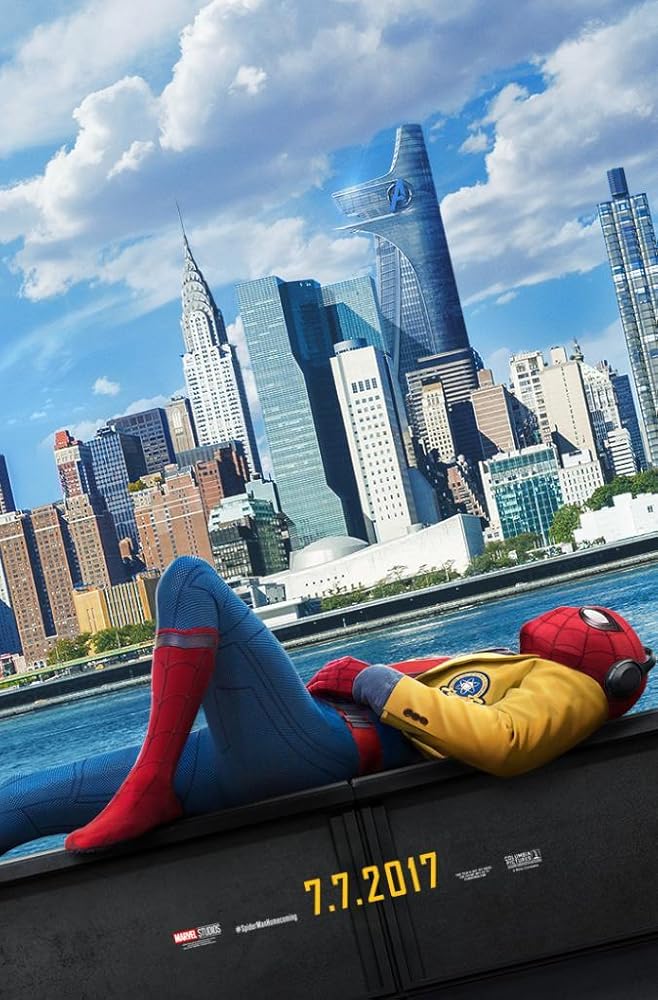
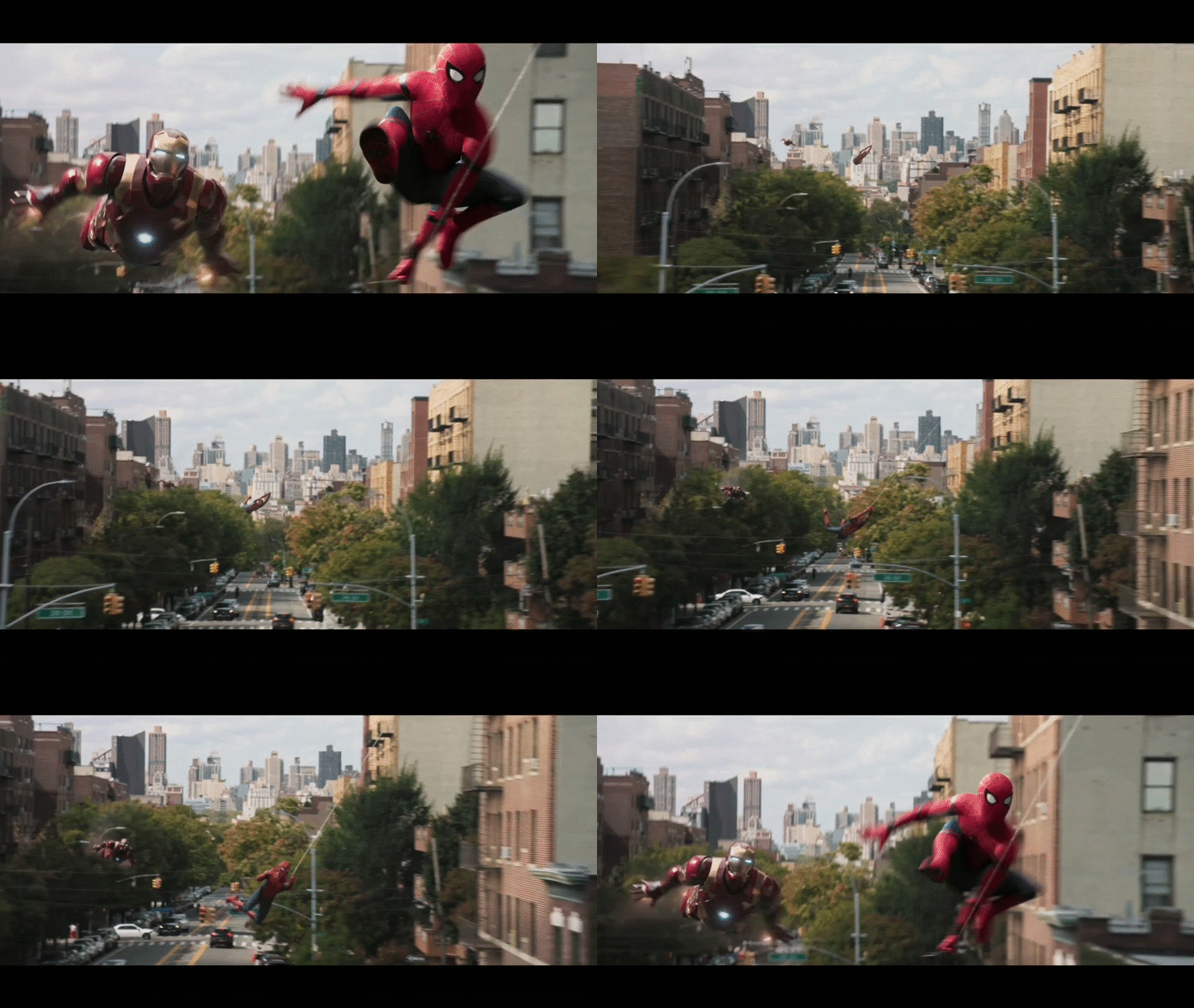
Spider-Man: Homecoming served as the second major reboot of the Spider-Man film franchise in half a decade… understandably, for some that’d be a cause for concern given how quickly this occurred following the previous franchise reboot back in 2012. However, if there’s one reason why I stayed optimistic about this new film in the months leading up to its release, it was all because of two words… Marvel Studios. Yes, thanks to a deal between Sony and Marvel, while Homecoming was released under the former’s banner, it also counts as a Marvel Cinematic Universe film. Ergo, it has all the great things that we’ve come to expect from the MCU; excellent characters, awesome action sequences, and solid humor. But this film also gives us something else, and that is one of the best character arcs of the entire franchise thanks to the terrific development of the MCU’s rendition of Peter Parker AKA Spider-Man. Of course, we were first introduced to Tom Holland’s take on Spider-Man in Captain America: Civil War, and it was clear right out of the gate that Marvel Studios was intent on keeping Peter in high school, something that was only briefly done in previous Spider-Man films. In the Raimi trilogy, Peter was only in high-school for the first half hour or so of the first film. And while the first Amazing Spider-Man film had Peter in high school throughout, he and Gwen Stacy then proceeded to graduate at the start of Amazing Spider-Man 2. In contrast, the MCU Peter is immediately established as still being a high school student when he ends up getting ‘recruited’ by Tony Stark AKA Iron Man to assist him in dealing with his conflict with Captain America.
This then paves the way for Peter’s main arc in Homecoming. After getting to fight alongside the Avengers, Peter immediately thinks that this means that he’s been brought in to join the team. Ultimately, though, he finds himself having to return to the role of being a ‘friendly neighborhood’ Spider-Man in his hometown of Queens under the ‘guidance’ of Tony and his bodyguard Happy Hogan. And thus, the bulk of the film revolves around Peter trying to prove himself while also coming to terms with the fact that, despite his enthusiasm for being a crime-fighting superhero, he is still just a kid in the larger Marvel Cinematic Universe. When he tries to stop some bad guys on the Staten Island Ferry, he nearly gets everyone on it killed before being saved by Tony, who quickly reprimands him for his reckless behavior and demands that he give back the suit that had been made for him for the airport battle in Civil War. And when Peter desperately pleads with him to let him keep the suit, stating that ‘he’s nothing without it’, Tony then sternly notes the following; “If you’re nothing without this suit, then you shouldn’t have it”. This whole bit serves as an excellent callback to Tony’s arc in Iron Man 3 in which he came to realize that his suit wasn’t the one thing that defined him; not to mention the fact that it also ties in nicely to the part where Peter remarks that he just wanted to be like Tony, who replies by stating that he wanted him ‘to be better’, clearly recognizing all his mistakes from past films. Later in the film, when Peter finds himself trapped under rubble in the lair of the film’s main antagonist Vulture, how does he react to it? By screaming out for help, fearful for his life. It isn’t until he sees his reflection in a pool of water intermixed with his homemade Spider-Man mask, along with remembering Tony’s stern words from earlier questioning his ‘need’ for the suit, that he’s able to regain his confidence and get himself out of this perilous situation. Simply put, this is hands down one of the best moments in the entire film (“Come on Peter! Come on Spider-Man! COME ON SPIDER-MAN!”)
While I’m still a fan of Andrew Garfield’s take on the character in the Amazing Spider-Man films, I cannot deny how fantastic of a job that Tom Holland has done as the MCU’s Spidey, as he perfectly nails the character’s charisma and comedic timing. As for Tony, some were concerned that Robert Downey Jr.’s presence in the film would end up placing a huge burden on Holland. Ultimately, though, this is not the case, as Tony does not have that big a role in the film and is utilized perfectly as Peter’s stern but sympathetic mentor figure. The same also applies to Jon Favreau in his first appearance in an MCU film since Iron Man 3 as Happy, who begrudgingly serves as the intermediary between the two. Another controversial casting choice occurred with Marisa Tomei as Aunt May, namely because she is the youngest actress who’s taken on the role in the live-action films. Ultimately, though, Tomei does a fine job in the role thanks in large part to her strong camaraderie with Holland. Plus, she also gets one of the best lines in the film at the very end when she finally learns that Peter is Spider-Man (“What the F…?! (*immediately cut to credits*)”). Holland is also backed by a solid supporting cast in the form of Peter’s high-school classmates. This includes Zendaya as the sarcastic Michelle, who’s ‘not obsessed with him… just very observant’, and Tony Revolori as Peter’s classic rival/bully Flash Thompson. It’s a shame, though, that he was subjected to a lot of hate from fans for being an ethnically different rendition of the character. Heck, even Zendaya got some of that backlash when it was reported that she may potentially be the MCU’s version of Mary Jane Watson, which was later proven false despite one line in the film where Michelle remarks that some people call her ‘MJ.’. And, of course, we can’t forget about Jacob Batalon as Peter’s best friend Ned, who is easily one of the MCU’s best ‘sidekick’ characters (“Guy in the Chair!!”)
But what about the main villain, Adrian Toomes AKA the Vulture, played by former Batman star Michael Keaton. Well, I’d say that Marvel Studios has done a far better job with their villains, who have often been the most maligned parts of any MCU film, since the start of Phase 3, and this was very much the case with Vulture. This is mainly thanks to the big twist near the tail-end of the film when Peter learns that Toomes is the father of his classmate/love interest Liz which, of course, also ties into the common plot thread of him having a personal connection to his foes. At the same time, it also continues the trend of Peter’s villains not necessarily being ‘evil’. In Toomes’ case, he was a former salvager who got screwed over by Stark Industries when he and his team tried to salvage remnants from the Battle of New York in the first Avengers, which then results in them moving into the business of making weapons out of Chitauri technology and selling them on the black market. Simply put, Keaton does an excellent job in the role, especially in terms of handling his character’s motivations (e.g. him trying to provide for his family). On that note, I also liked how the film handled the relationship between Peter and Liz. While never fully going down the same romantic path as Peter and Mary Jane from the Raimi trilogy or Peter and Gwen from the Amazing films, the film does a nice job of showcasing the solid connection that they have while also showing Peter’s inability to admit his feelings for her. It all ends on a bittersweet note when Peter is forced to ditch Liz at Homecoming to stop her father and she and her mother end up moving to Oregon following Toomes’ arrest. Finally, closing out the film’s excellent ensemble cast is Jennifer Connelly in a voice cameo as Karen, the A.I. in Peter’s suit that he unlocks once he and Ned disable the suit’s ‘Training Wheels Protocol’ security feature. Not only is it a fitting cameo seeing how Connelly is married to Paul Bettany AKA Tony Stark’s original A.I. Jarvis (now the Vision), but she also works well off Holland as a friendly figure for Peter to talk to while he’s out fighting crime.
I only have one major issue with this film, and that is that it’s arguably a bit too overlong. Now, for the record, the first time that I saw this film was at the end of a very long travel day as I had just arrived in Los Angeles for vacation; so, understandably, I was rather tired while watching it. However, upon re-watch, I found that this issue of mine still stood. The best way that I can describe it is like this; when the film gets to the titular Homecoming dance, there’s still about half an hour to go in a film that has already been going for quite a while with several big ‘finale-esque’ action set pieces (e.g. Peter rescuing his classmates at the Washington Monument). Still, the film is engaging throughout thanks to everything that I’ve mentioned so far; plus, keeping in line with the MCU’s habit of tackling different genres, director Jon Watts does a great job of making the film feel reminiscent of the many classic high school comedies written and directed by John Hughes. And that’s ultimately Spider-Man: Homecoming in a nutshell. While I wouldn’t necessarily call it the ‘best’ MCU film to date, I would argue that it’s one of the franchise’s best character-driven entries because of its phenomenal work in developing the franchise’s rendition of Spider-Man. All in all, it was a well-deserved success story for all involved. It gave Sony one of their most successful franchise outings to date following the polarizing Amazing Spider-Man duology while also continuing Marvel Studios’ hot streak on the big-screen that I will always argue is still going strong today. Not only that, but at the time that I’m writing this, Spider-Man: Homecoming stands as the highest-grossing superhero film of the year worldwide. Not bad for a film that served as its title character’s third major live-action iteration in the past decade.
And that’s the end of Part 1 of Rhode Island Movie Corner’s annual ‘Favorite Films of the Year’ list. Thanks for following along and be sure to check back in tomorrow for Part 2, in which I’ll be listing films #9-7.