Showing posts with label Jason Clarke. Show all posts

Saturday, October 13, 2018

First Man (2018) review


While he’s only had three feature films under his belt prior to this year, Damien Chazelle has quickly become one of the most prominent filmmakers in the entire industry. The Rhode Island native first got his start in 2009 with a black-and-white romantic jazz musical called Guy and Madeline on a Park Bench, which received great reviews after its premiere at the Tribeca Film Festival. Then, when Chazelle’s plans to make an even more lavish musical ran into some issues in terms of getting a studio to finance it, he then helmed the 2014 drama Whiplash about a jazz drummer who found himself constantly getting harassed by his abusive instructor. Like Guy and Madeline, the film was a big hit with critics and ended up earning three Oscars at that year’s Academy Awards, where it was also nominated for Best Picture. And with all that success, Chazelle was finally given the opportunity to do his big musical, which eventually turned in 2016’s La La Land. This charming tribute to classic cinematic musicals proved to be another critical hit for the young director as well as being his most commercially successful outing to date. And while nowadays it’s known more as ‘the film that almost won Best Picture’ following the infamous gaffe at the end of that year’s Oscars ceremony, it also won six other Oscars that night, with Chazelle becoming the youngest director ever to win Best Director. But now Chazelle and La La Land’s leading man Ryan Gosling are back with their next big project, First Man, a film that explores the story behind one of the most iconic moments in American history, the 1969 spaceflight of Apollo 11, where astronauts Neil Armstrong and Buzz Aldrin became the first men ever to walk on the moon. Gosling takes on the lead role of Armstrong in this adaptation of author James R. Hansen’s best-selling biography from 2005. And with tension-filled spaceflight sequences and a script that takes an unfiltered look into the mindset of an American hero, First Man turns out to be yet another masterpiece from Chazelle.

It is the 1960’s in America, and at the National Aeronautics and Space Administration agency, there is one important situation at hand; staying on top of the Russians during the Space Race. The situation becomes even more imperative when Russian cosmonaut Yuri Gagarin becomes the first man to ever make it into space in 1961, with NASA chief Deke Slayton (Kyle Chandler) immediately establishing NASA’s new goal of landing a man on the moon. During this time, one of the most committed members of NASA’s crew of pilots is Neil Armstrong (Ryan Gosling), who makes the conscientious decision to stay committed to helping NASA land a man on the moon even after he and his wife Janet (Claire Foy) suffer an unspeakable family tragedy. However, as Neil and the rest of his fellow NASA coworkers soon find out, this endeavor proves to be a lot more challenging than they initially anticipated. During the test phase known as Project Gemini, Neil and his fellow astronauts are subjected to life-and-death situations on a constant basis. And even after NASA transitions into the Apollo program, the first Apollo mission ends up being an unprecedented disaster when an onboard fire kills all three of its crew members during, of all things, a pre-launch test. This, in turn, effectively casts a dark cloud over the company in the eyes of the public, who feel that the country is wasting a lot of money on a seemingly impossible venture. However, NASA soldiers on, and Neil soon finds himself selected to lead the first official mission to the moon as part of the crew of Apollo 11.

The tension that Chazelle manages to craft for this film is second to none, which is even more impressive given that it’s based on such an iconic moment in this country’s history that basically anyone going into it knows exactly how it ends. He does this primarily through the film’s numerous flight sequences. Instead of relying on shots of the rocket ships’ exteriors like many other films with this premise, the film instead gets up close and personal with the astronauts housed within their interiors. And to be clear, this isn’t just a case where these flight sequences are nothing more than non-stop shaky cam, as it does make them more intense by highlighting what it must’ve been like cramped within those command modules. However, this sense of confinement isn’t the case for every spaceflight sequence in the film. Once it finally gets to the Apollo 11 mission, that’s when Chazelle and his usual crew (cinematographer Linus Sandgren, editor Tom Cross, and composer Justin Hurwitz) utilize more exterior shots, resulting in a truly grand finale with beautiful cinematography, tight editing, and epic music. And yes, this is very much one of those films that’s worth seeing in IMAX, as all the sequences that were set on the moon’s surface were filmed with IMAX cameras. This is then bolstered further by the film’s decision to not glamorize any of the events that led to the Apollo 11 mission. It clearly establishes that a lot of trial and error had to occur for the mission to be successful, and unfortunately, all this trial and error did lead to some men losing their lives.

The other key aspect of this film’s narrative is how it ultimately tells the story of Neil Armstrong. The film makes it clear from the very beginning that, unlike many of his fellow astronauts, Neil Armstrong was not a very outgoing person. He often distanced himself from others, even his friends and family at times, so that he can stay fully committed to fulfilling NASA’s goal of landing a man on the moon. Thus, it can be said that the film doesn’t necessarily show too much about its main character, but by the end of the film, you will genuinely understand where he is on an emotional level, primarily thanks to one crucial moment during the finale where Neil has a moment of true emotional catharsis. And performance-wise, Ryan Gosling handles all of this excellently, perfectly conveying the stoic persona of someone who’s very much a reluctant hero. Gosling also works well alongside his primary co-star, Claire Foy as Neil’s wife Janet, who’s put through the emotional ringer via the same stress that several of her fellow astronaut wives have gone through when fearing for their husbands’ lives. And although she does support Neil through and through, you can tell that there are instances where this is put to the test. Finally, while Gosling and Foy have the most prominent roles in the story, the film also boasts an excellent supporting cast. This includes, among others, Kyle Chandler as NASA chief Deke Slayton, Jason Clarke as Neil and Janet’s neighbor Ed White, who was one of the tragic figures of the Apollo 1 fire, and Corey Stoll as fellow Apollo 11 crew member Buzz Aldrin.   

Once again, Damien Chazelle delivers another outstanding directorial effort. First Man is an intense and emotionally raw look into the life of an American icon, and it does this in a manner that’s drastically different than most other biopics. It doesn’t romanticize any of the work that went into getting Neil Armstrong and Buzz Aldrin on the moon’s surface. It shows that the mission to land a man on the moon was incredibly dangerous and threatened the lives of the men who directly participated in it. But in showing all the failures, this then makes the success that was the Apollo 11 mission incredibly satisfying to behold on film, and on a technical level, the transition from intense, claustrophobic, and often perilous flights to the magnificent launch of Apollo 11 is outstanding. This film also succeeds in conveying the emotional turmoil that Neil Armstrong went through during this time. Just like how the film doesn’t romanticize the process that put him on the moon, this take on the life of one of the most famous figures in American history is unfiltered in its overall execution to show how the Apollo 11 mission allowed him to overcome one of the darkest moments in his life. In short, as someone who obviously wasn’t around when all this went down, I feel that this film does a fantastic job of conveying the aura of what it must’ve felt like at the time to witness, as Armstrong himself famously stated, that ‘one small step for man, one giant leap for mankind’. And because of this, I’d say that First Man is one of the most culturally relevant films in recent memory and a must-see on the big screen.


Rating: 5/5!

Wednesday, August 2, 2017

Kathryn Bigelow/Mark Boal Double Feature Review

Image result for kathryn bigelow and mark boal

This weekend sees the release of the new crime drama, Detroit. Based on the infamous 12th Street Riot that occurred in Detroit, Michigan half a century ago in 1967, it is the latest film from director Kathryn Bigelow. Bigelow has been working in the film industry since 1978 and has often worked alongside her ex-husband, James Cameron. While most of her early works did not attract much attention at the box-office, many of them fared excellently with critics, including the 1987 vampire western Near Dark and the 1995 sci-fi thriller Strange Days. She also helmed the 1991 action thriller Point Break, a film that has gone on to become one of the most famous action films of the 90’s. But today, I won’t be doing a ‘Directorial Retrospective’ on Bigelow’s career, and that’s only because I don’t have enough time to get it done before Detroit is released. Instead, I’m going to focus solely on the last two films that she directed since they share a common factor, the same screenwriter. Both these films were written by Mark Boal who, prior to his work in the film industry, served as a journalist for the likes of Rolling Stone and Salon. Detroit serves as the third collaboration between the two and it’s a partnership that has earned them much critical praise. And from the looks of it, that hot streak will continue with Detroit. Thus, today on Rhode Island Movie Corner, I’ll be doing a double feature review of 2009’s The Hurt Locker, which won the Oscar that year for Best Picture, and 2012’s Zero Dark Thirty which, despite tons of critical praise, attracted a fair amount of controversy over one of the biggest aspects of its narrative.

THE HURT LOCKER (2009)

Image result for hurt locker poster

We start off today’s proceedings with 2009’s The Hurt Locker. Although technically a 2008 production, it didn’t see a wide release until the following year and, thus, it ended up being a contender during 2009’s awards season. And it did well during that awards season in a run that was capped off by it winning the Oscar for Best Picture. Kathryn Bigelow also became the first female director to win the Oscar for Best Director, and rightfully so. The Hurt Locker is a highly suspenseful war film, and not just because it focuses on the day-to-day proceedings of bomb disposal squadrons in Iraq. A lot of the film’s tension also stems from the personal conflicts that emerge within the film’s main squadron, who lose their leader due to an IED (Improvised Explosive Device) and get a new leader who’s more gung-ho by comparison. Each of the three main leads, Sgt. William James, Sgt. J.T. Sanborn and Specialist Owen Eldridge are well-layered protagonists who each go through their own personal dilemmas that are set against the backdrop of the Iraq War. This includes, but is not limited to, Eldridge’s guilt over his inability to protect his former squad leader and an incident where James attempts to get revenge for the apparent death of a young friend of his, who is revealed to still be alive much later. Bigelow does a fantastic job of showcasing how each of these three guys are affected by the horrors of war, which adds to the tension when you know that, in this environment, any of them could be killed at any moment. Plus, these three are portrayed excellently by Jeremy Renner, Anthony Mackie, and Brian Geraghty, respectively. In conclusion, as is the case with any Oscar year, there will most likely be some out there who question this film’s legitimacy as 2009’s Best Picture winner. In this case, though, I do think that it was well-deserving of its Oscar win thanks to its great tension and strong character development.

Rating: 4.5/5

ZERO DARK THIRTY (2012)


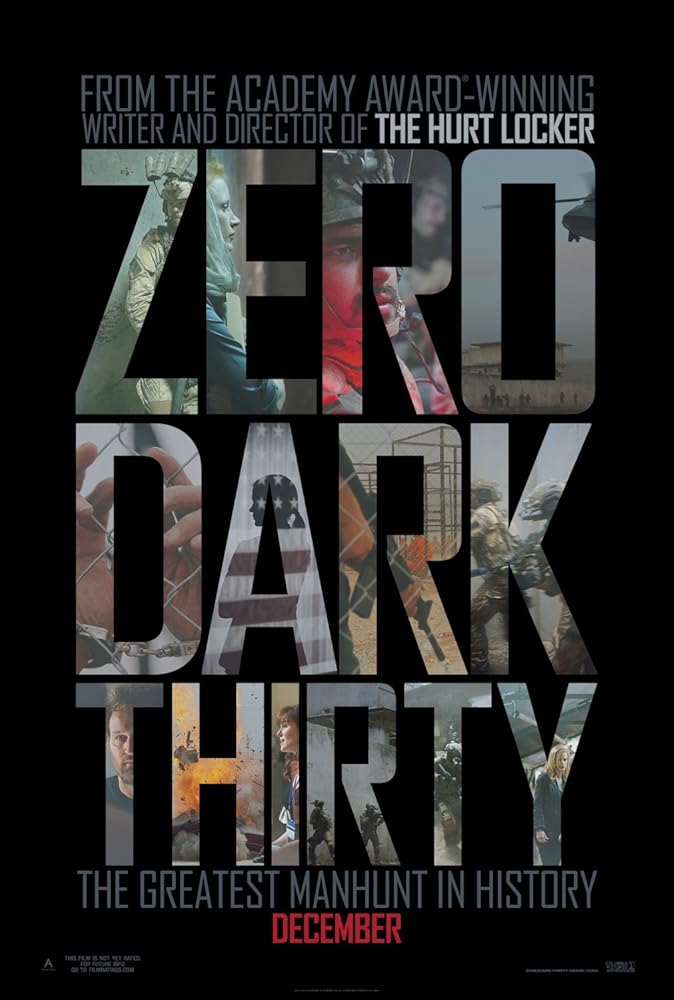
After the success of The Hurt Locker, Kathryn Bigelow and Mark Boal teamed up once again in 2012 for a film based around one of the biggest recent events of that time; the successful operation where SEAL Team Six eliminated the notorious leader of al-Qaeda, Osama bin Laden. However, upon release, while the film was another critical success for the duo, it ended up attracting a considerable amount of controversy for various reasons. The biggest of these was due to sequences in the film where the main characters forcefully interrogate prisoners who are connected to al-Qaeda. This then led to some people arguing that the film carries a pro-torture mentality. Sometime after the film’s release, there was then another bit of controversy when some government officials claimed that the filmmakers weren’t given permission to use the classified information that was tied to the operation… as well as some backlash over the film’s use of audio recordings from September 11th in the intro. So yeah… this film was easily one of the most controversial films of that year. By comparison, the biggest controversies surrounding The Hurt Locker were a few post-release copyright/defamation lawsuits. Ultimately, though, I won’t be making any comments about any of this film’s controversies here today because I don’t like to get into politics when it comes to my reviews. Instead, I will say that, unfortunately, I found Zero Dark Thirty to be a rather dry political thriller. Now, to be clear, this is not an ‘action’ film; instead, it’s a political drama focusing on the behind-the-scenes efforts of those involved in the manhunt for Osama bin Laden. The big SEAL Team Six raid only takes up the final half-hour of the film. And that’s fine and all, but I feel that the film suffers from two big issues. With a runtime of over two and a half hours, it is way too overlong with a middle section that drags too much. It also doesn’t help that the film is severely lacking in terms of emotional attachment.

Now, for the record, I do get what Bigelow and Boal were going for with this film. Their intent was to show both the stress and the time-sensitive nature of the U.S. government’s hunt for Bin Laden following the September 11 attacks, a situation which becomes even more imperative with each subsequent terrorist attack that happens over the next decade. And for the most part, they do succeed in at least getting that across. I even get why this has been well-regarded as a thinking man’s political thriller. However, there’s ultimately a rather soulless feel to the whole proceedings, partially because it’s hard to connect with any of the main people involved in the operation. The only character in the entire film to get any major bit of character development is Jessica Chastain’s Maya, the young woman who dictates most of the operation. To her credit, Chastain is excellent in the role and while most of the other big names in the film are limited to smaller roles, they all do good jobs as well. This includes the likes of Jason Clarke, Mark Strong, Joel Edgerton, and Chris Pratt, just to name a few. However, by the end of this film, I found myself left with an empty feeling overall, even during its recreation of the attack on bin Laden’s compound. And the thing is, when this film first came out, I was really looking forward to it because, like many others, I had been caught up in the hype surrounding the country’s success in finally getting bin Laden. But for a film that was touted as the story of the ‘greatest manhunt in history’, said manhunt ended up being quite the underwhelming affair on the big screen.


Rating: 2.5/5

Monday, July 13, 2015

Terminator Genisys: SPOILER POST

WARNING!!!

The following post contains spoilers for the film ‘Terminator: Genisys’. If you have not seen the film yet, please instead refer to my spoiler-free review of the film, of which a link will be provided below, as I will be discussing key plot points and elements of the film in spoiler-y detail.


Whenever I do a spoiler post for a film on this site, it is usually for a superhero film, having started with ‘Iron Man 3’ and most recently for ‘The Avengers: Age of Ultron’. I’ve only done one Spoiler Post for a non-superhero film and that was for ‘Star Trek Into Darkness’ in regards to the big ‘Khan’ reveal of that film. But today, I’m finally doing another non-superhero Spoiler Post and today’s subject is ‘Terminator: Genisys’, the fifth installment of a film franchise that many people feel should have ended after the series’ second entry, ‘Terminator 2: Judgment Day’. You can definitely tell that just by the reviews for ‘Genisys’, the under-performance of the film here in the U.S. box-office wise (thankfully it has fared much better overseas), and the overall uneasiness amongst film fans leading up to the film’s release due to the aforementioned feelings towards the franchise post-‘Terminator 2’. But, as you will recall from my original review for ‘Genisys’, I actually quite enjoyed it. Was it the absolute best entry in the franchise? No, not by a long shot. But of course what do you expect when James Cameron’s original two masterpieces were such hard acts to follow? Ultimately though I do feel that ‘Terminator: Genisys’ was a pretty darn entertaining sci-fi flick that perfectly balanced action and humor while also staying faithful to the legacy of the franchise’s first two installments. And it did this while also setting out on a unique new path brought on by none other than…

AN ALTERNATE TIMELINE


As I’ve no doubt stated in the past, one of my favorite films of the past few years has been the 2009 ‘Star Trek’ reboot, which made the bold move of creating a brand new alternate timeline. While this clearly was a controversial move in the minds of long-time ‘Star Trek’ fans, I for one was 100% supportive of this decision as I feel that the franchise can now move on in new directions without having to strictly adhere to series canon… and yes, I say that even after the last ‘Trek’ film, ‘Into Darkness’, proved to be even more polarizing amongst ‘Trek’ fans for its callbacks, though seriously not as many as ‘Trek’ fans claim, to ‘The Wrath of Khan’. Clearly the success of the ‘Trek’ films inspired Paramount when they developed ‘Terminator: Genisys’ as it too goes with the ‘alternate timeline’ storyline. The film opens up basically re-telling the original plot of the first ‘Terminator’ film but from the perspective of the future war. In the midst of the war against Skynet, resistance leader John Connor (Jason Clarke) learns of a plot by Skynet to send one of their Terminator robots back in time to the year 1984 to kill his mother Sarah, thereby erasing him from existence. John’s top lieutenant, Kyle Reese (Jai Courtney), volunteers to go back in time to save her. But once he gets into Skynet’s time machine, that’s when things start to change. Before leaving, he sees John being attacked by another ‘soldier’ (more on this character later) and before he arrives in 1984, he starts to have new memories of his childhood that are much different than what he previously remembered.

It is established at the beginning, through narration by Reese, that he was born in 2004 after Judgment Day, which for the record has been reverted back to the original August 1997 date from ‘Terminator 2’. In other words, this film straight up ignores ‘Terminator 3’ and ‘Salvation’, which had Judgment Day occur in July 2004. But now his childhood is different as the world, for some reason, hasn’t ended yet and his younger self repeatedly tells himself about how ‘he can shut down Skynet before it is born’ and that ‘Genisys is Skynet’. He arrives in 1984 and basically goes through the same beats that we saw in the first film. He steals a pair of pants from a bum (“That son of a bitch stole my pants”) and rushes into a store to avoid the cops. But this time the cop (Lee Byung-hun) happens to be a T-1000, the liquid metal shape-shifting Terminator who can take the form of anything it comes into contact with. Before the T-1000 can kill him, however, he is saved by Sarah, who is not the scared and vulnerable young woman who Kyle was expecting to find based on what he was told by John in the future. Instead, she is already a badass warrior who just so happens to be protected by a T-800 Terminator. Slowly realizing that he is now in a new alternate reality, Kyle learns that in 1973, Skynet had sent a T-1000 (presumably the same one that the trio deal with in 1984) back in time to kill Sarah when she was a child. However, a as of yet unconfirmed party sent back a T-800 to protect her, who ever since has trained her in combat to prepare her for the impending apocalypse.

Now this new ‘alternate timeline’ storyline has been referred to by some of the film’s biggest critics as ‘lousy fan-fiction’. But you know what? ‘Star Trek’ basically did the same thing and you don’t see anyone complain about that (Oh wait…). The fact of the matter is that, as I noted earlier, I don’t mind this at all because I like the idea of re-writing the canon to allow for new storyline possibilities that may or may not go down the familiar paths that we had seen in the first two ‘Terminator 2’ films. If this new alternate reality wasn’t real then this would be nothing more than a remake of the first film. Maybe then it would be ‘lousy fan-fiction’ like those critics say but as is, it is by no means that at all. I for one am intrigued to see what happens now for this film franchise as it begins to uncover some of the mysteries that are established in ‘Genisys’, like who is responsible for sending Sarah’s T-800 back in time. I also like how this film challenges some of the pre-conceived notions of what we saw before, namely in regards to the relationship between Sarah and Kyle. As we know from the first ‘Terminator’, the two of them ended up falling in love, resulting in the birth of John Connor. But in this film, that future relationship is put into question. For one thing, Kyle learns about his fate from the other timeline; that he dies protecting Sarah, and also has difficulty coming to terms with the fact that he’s John’s father. Throughout the film, Kyle and Sarah have, to put it lightly, a rather strenuous relationship. I mean at the end of the day, they do get together but seeing how Kyle doesn’t die in this film, it’ll be interesting to see where their relationship will go from there, especially since they come across his younger self and even go as far as giving him the memories that the grown-up Kyle experienced while traveling through time.

ARNOLD!!


Whether or not you like this film, you cannot deny that one of the absolute best things in the entire film is Arnold Schwarzenegger’s heralded return to the franchise that made him a star. He may not be the absolute best actor in the world but that correlates perfectly to his role in these films as a robot that has difficulties trying to fit in with humans. Seriously just admit that you at least laughed once when the T-800 tried to smile. And you know what? For a 67-year old, Arnold still manages to not only kick major ass in what is easily his most iconic role to date but also continues to excel in delivering memorable one-liners (“Old but not obsolete!”). The fight sequence between him and the younger-looking T-800 from 1984 is easily one of the biggest highlights of the entire film. And hey, at the end of the film, he basically becomes a T-1000, having been thrown in a vat of liquid metal by the T-3000 AKA John Connor (again, more on him later) so it’ll cool to see how that will affect the character in future films. He also gets major kudos for the solid father-daughter relationship between him and Sarah, which ultimately is the heart of the film. This leads perfectly into my next point…

SARAH AND ‘POPS’


I’m just going to throw this out there… at the end of the day, ‘Terminator: Genisys’ doesn’t really carry the same emotional depth of the first two ‘Terminator’ films. I’m not saying this as a criticism of the film; it’s just that the first two films, especially ‘Terminator 2’ with the father-son relationship of John Connor and the T-800, were so successful in this regard. But ‘Terminator Genisys’ still manages to have some good emotional depth, primarily in the form of the father-daughter relationship between Sarah and, as she refers to him as, ‘Pops’. I loved the back-and-forth between the two in scenes where they have arguments, like when ‘Pops’ brings up the awkward point about how Kyle and Sarah, as he puts it, are expected to ‘mate’. And while of course he’s a robot that doesn’t 100% grasp the concept of feelings and emotion, there are times where he clearly shows how much he cares about Sarah. One notable example of this occurs when Sarah, Kyle, and ‘Pops’ hide out in the latter’s secret base and Sarah notices that he still keeps photos of her as a child and drawings that she made of them. And while I’ll admit that going in I already knew that this T-800 wasn’t going to die like in ‘Terminator 2’ (or ‘Terminator 3’), the scene where he appears ready to sacrifice himself was handled great from an emotional standpoint, especially when he tells Kyle to ‘take care of my Sarah’.


Sarah Connor is, without a doubt, one of the best female action heroines of all-time and that legacy is done justice once again in this film thanks to Emilia Clarke’s excellent turn in the role. Like Linda Hamilton before her, she does a great job in giving Sarah both her confidence and fearlessness in combat while also doing a perfect job in capturing the character’s vulnerability. In ‘Terminator 2’, Sarah’s vulnerability came from her past experiences in the first ‘Terminator’ film and her distrust of John’s guardian T-800. In ‘Terminator: Genisys’, this is shown primarily through her relationships with both ‘Pops’ and Kyle. Relating to what I talked about in my Spoiler Post for ‘Avengers: Age of Ultron’ in regards to the controversy surrounding the character of Black Widow, I feel that, contrary to popular belief, it’s perfectly fine for female action heroes to show signs of vulnerability because it shows that they’re human. Nothing’s perfect and a character that is meant to be ‘perfect’ isn’t always the best-written character. I know that right now a lot of people on the internet are raving about the character of Furiosa from ‘Mad Max: Fury Road’ but at the end of the day, that character has nothing on Sarah Connor and this film is 100% proof of that.

KYLE REESE


In terms of respect/credibility, Jai Courtney has about as much respect from film fans as Shia LaBeouf or Sam Worthington… in other words, not very much. In fact, this makes ‘Terminator: Genisys’ the second instance in which Courtney has starred in a major film franchise in which the installment that he starred in was one of the worst-rated entries in the entire series, the other being ‘A Good Day to Die Hard’ and I’m pretty sure all of this makes some DC fans hesitant about his involvement in ‘Suicide Squad’. But I stand firm when I say that Courtney is not at all to blame for the shortcomings of ‘A Good Day to Die Hard’ and in response to some people who say that he ‘ruined’ Terminator too, let me be the first to say that this is not true. Contrary to popular opinion, I think Courtney did a fine job in this film. Was he the absolute best Kyle Reese ever? No, not at all, but I do feel that Courtney did a good job in the role as it was written in this film. In this film, Kyle Reese is basically the avatar for the audience as he traverses through this new alternate timeline trying to come to terms with what he’s dealing with. And ultimately Courtney was at his best when he was with Clarke and Schwarzenegger so at the end of the day, he serves his purpose in taking on this iconic role for the revival of the ‘Terminator’ franchise.

EVIL JOHN CONNOR?


It’s time to delve into what is arguably the most controversial element of the entire film, which first attracted controversy when many people (even director Alan Taylor) felt that it was spoiled in the film’s second trailer. And that is the reveal that in this film, John Connor, who is arguably the main protagonist of the entire series, has been turned into a Terminator by Skynet, effectively making him the main antagonist of this new film. Of course, as noted earlier, Kyle notices a mysterious figure grab John before he travels back to 1984 which then results in him ending up in a new timeline. After helping Sarah and ‘Pops’ defeat the T-1000 that’s after them, Kyle and Sarah travel forward in time to the year 2017 while Pops stays behind; in other words, he ‘takes the long way’ to reunite with them in the future. The two end up getting caught by the police but are then approached by John while they are in the hospital. All seems well, despite Kyle and Sarah questioning why he is there, until ‘Pops’ returns and shoots John, who then reveals his new Terminator form. Now he is the T-3000, having been turned into a Terminator by the mysterious figure who attacked him in the future through the use of Nano machines. He is also the only T-3000 in existence as any other attempts at creating this particular Terminator have failed as a result of the human subjects driven mad.

Now I’m not here to talk about the second trailer for the film and how many people feel it spoiled the big twist. Instead, I’m going to say this… as controversial as it is, I’m totally fine with this twist. I mean it’s not like the character of John Connor was ruined by having him be the villain in this film. It’s just an interesting new plotline that, to quote James Cameron, is “a riff against expectations” and also makes the threat a much more personal one for Kyle and Sarah to deal with given their connections to John Connor. As I stated in my original review, I’m also glad that this meant that Jason Clarke, one of the most underrated actors working today, had a much more substantial role than what the very first trailer for the film implied. At first I thought that John Connor would only appear in the scenes that took place in 2029 but thankfully that’s not the case. In fact I’m just going to say it… Jason Clarke has been the best John Connor to date, and yes that is even when taking the whole villain characterization into account. In early scenes before Connor’s transformation, Clarke does a great job in capturing John’s leadership qualities, which are most evident from his speech to his troops before they go off to fight Skynet. And after the big twist, Clarke ends up being a pretty darn entertaining and intimidating baddie, basically being like a much more advanced version of the T-1000 with the ability to regenerate and break apart into particles during combat, the latter of which produces a pretty cool visual for the action sequences.

Most badass 'walking away from an explosion' scene EVER!!!
MATT SMITH’S ROLE


And now to close off this Spoiler Post, let’s end by talking about the most notable secret of the entire film and that is Matt Smith’s (fresh off of his work as the Eleventh Doctor in ‘Doctor Who’) role in the film. Whereas the big ‘evil John Connor’ twist was revealed in the film’s second trailer, Smith’s role was kept secret up until the film’s release, which of course led to speculation over who he was playing in the film. The most common theory that I saw online was that he was John’s best friend Tim from ‘Terminator 2: Judgment Day’ which given the film’s decision to revert Judgment Day back to 1997 could’ve made sense. But in the end, he played a much different role in the film, one that will no doubt play a bigger role in the grand scheme of things because… he plays Skynet. Taking on the form of a super-advanced Terminator, the T-5000, he is the one responsible for turning John into a Terminator and it is implied that he has traveled through various timelines to get to this point. So obviously he’s the one who is primary responsible for the new alternate timeline and I think it’s safe to say that he will also be the primary villain for the rest of the series. Because while Kyle, Sarah, and ‘Pops’ destroy Cyberdyne and stop ‘Genisys’ AKA Skynet from going online, a mid-credits scene shows that Skynet’s primary core survived the events of the finale, meaning that Skynet isn’t defeated yet.

IN CONCLUSION


I know that I’m in the minority when it comes to liking this film. But having now seen the film twice in theaters, I am 100% serious when I say that this film is by no means as bad as critics, and the internet, are putting it out to be. Like I said before, it is by no means the best entry of the series but that’s just because the first two ‘Terminator’ films were so good that they set up insurmountable expectations for any subsequent entries in the franchise to have to live up to. But ultimately I concur with James Cameron in that this truly feels like the true ‘Terminator 3’. Ignoring the events of the original ‘Terminator 3’ and ‘Terminator Salvation’ and instead following off of the first two films, ‘Genisys’ does not go the same route of the former by pulling a shameless retcon that goes against what happened at the end of ‘Terminator 2’. Sure the ‘alternate timeline’ storyline is just as controversial but in my opinion that just made the story much interesting. Alan Taylor also deserves a lot of credit for almost perfectly recreating classic moments from the first ‘Terminator’ film save for a few cosmetic differences that are primarily due to that film being owned by another studio. So in conclusion, ‘Terminator Genisys’ may not be the absolute best film that has come out this summer but I still had loads of fun while watching it, which ultimately makes it one of the most underrated/underappreciated films of the year.

Saturday, July 4, 2015

Terminator: Genisys (2015) Review

Terminator Genisys (2015) Poster

What started out as a $6.4 million sci-fi film directed by a then unknown James Cameron has gone on to become one of the most iconic film franchises in pop culture history; the ‘Terminator’ franchise. With 1984’s ‘The Terminator’ and its even greater follow-up, 1991’s ‘Terminator 2: Judgment Day’, James Cameron gave us two of the most beloved sci-fi films of all-time. The second film in particular ended on a perfect note, tying up all loose ends so that there wouldn’t be any need to continue the franchise… but of course, as we all know, that wasn’t the end of the ‘Terminator’ franchise. Hollywood decided that they could continue the franchise despite the fact that ‘Terminator 2’ made it pretty hard for there to be any way to move on from its ending. But Hollywood found a way, resulting in 2003’s ‘Terminator 3: Rise of the Machines’ and 2009’s ‘Terminator Salvation’, neither of which achieved the same critical/commercial acclaim as the first two films. And now the franchise is back again with ‘Terminator: Genisys’… and yes, the subtitle is intentionally spelled that way. Like its immediate two predecessors, this film has been getting slammed by critics… but as for me, this is one of those cases where I seriously disagree with the general critical reception. Now let me be clear; this is by no means the best film in the series. But that doesn’t mean that it’s the ‘disaster’ that most of the internet believed it was going to be. Instead, ‘Terminator: Genisys’ ends up being a pretty darn entertaining summer popcorn flick that respects the lineage of Cameron’s films while going down a bold new route which will shape the franchise for years to come.

In the year 2029, the human resistance, led by John Connor (Jason Clarke), is at war with the self-aware A.I system known as Skynet, which wiped out most of humanity on what become known as Judgment Day; August 29, 1997 (note: the ‘original’ Judgment Day date and not the pushed-back July 25, 2004 date as was portrayed in ‘Terminator 3’ and ‘Salvation’). During an all-out ‘final offensive’ on Skynet, Connor and his soldiers learn of a plot by Skynet to send one of their humanoid robots, known as ‘Terminators’, back in time to the year 1984 to kill John’s mother Sarah, thereby erasing John from existence. John’s right-hand man, Kyle Reese (Jai Courtney), volunteers to go back in time to protect Sarah. But once he arrives in the year 1984, he is surprised to find that things are much more different than he expected. Most notably, Sarah (Emilia Clarke) is not the scared and vulnerable woman that he thought she was going to be based on what he was told about her by John in the future. Instead, Sarah is a trained warrior who, ever since she was a child, has been looked after by a reprogrammed T-800 Model 101 Terminator (Arnold Schwarzenegger) who was sent back in time to protect her. Now in a new timeline, Sarah, Kyle, and the Terminator travel into the future, 2017, in which Judgment Day has not yet happened, in an attempt to prevent Skynet (which in this timeline is under the guise of an advanced global operating system called ‘Genisys’ (hence the title of the film)), from taking over.

‘Terminator: Genisys’ basically pulls a ‘2009 Star Trek’ by resetting the original franchise timeline resulting in a brand new alternate timeline. And just like with ‘Star Trek’, I’m perfectly fine with this new idea as I think that it’ll be interesting to see where the franchise goes now without being tied down by the original timeline canon, like whether or not Sarah Connor and Kyle Reese will get together as they did in the original timeline, which of course resulted in the birth of John Connor. As for the film itself, ‘Genisys’ is, to put it quite simply, a very entertaining sci-fi action flick with a solid balance of humor and action. The action sequences, especially the fight between the old T-800 and the young T-800 in a sequence mirroring the original opening of ‘The Terminator’, and the visuals are both superb and just like what Colin Trevorrow did with ‘Jurassic World’, director Alan Taylor does an excellent job when it comes to respecting the two ‘Terminator’ films by James Cameron (in other words, this film basically ignores the events of ‘Rise of the Machines’ and ‘Salvation’ which, given the general reception of those two films, is for the best) through the film’s various callbacks. Now in terms of plot, yes it does get quite a bit overcomplicated at times, especially when it comes to the development of the new alternate universe that the characters now find themselves in. But as we all know, that’s something that just happens whenever you do a story based around time-travel.

For the first time since ‘Terminator 3’, Arnold Schwarzenegger returns to the role that basically made him the action icon that he is known as today; the T-800. And quite frankly, his return couldn’t be more welcome as even at the age of 67, he still manages to kick major ass. Equally kicking major ass in this film is Emilia Clarke, who confidently steps into the role of Sarah Connor, who once again stands out as one of the best female action heroines of all-time. As for Jai Courtney as Kyle Reese, while I can’t say that he’s the absolute best to have ever been in the role, he does a pretty good job here, mainly due to his strong camaraderie with both Clarke and Schwarzenegger once the three of them get together. Now normally I try to keep my main reviews spoiler-free but as many of you know, the second trailer for this film already revealed one of the main plot-points of the film so I guess it’s not that big of a deal in this scenario. And this particular plot-line is the reveal that John Connor has been turned into a Terminator by Skynet. And as controversial and a bit of a stretch as it may be, I’m totally fine with it, which may primarily be because I’m glad to see that Jason Clarke, who is easily one of the most underrated actors currently working today, in a much more substantial role than I thought he was going to have based solely on the first trailer. And to top it all off, there’s also a few noteworthy supporting turns, primarily J.K. Simmons as a police detective who ends up crossing paths with the main group in both 1984 and 2017 (note: the character is not played by Simmons in 1984) and Matt Smith as a character that, unlike the previously noted John Connor reveal, I won’t spoil the identity of here but suffice it to say will definitely be playing a major role in future installments.

Contrary to the 27% and 39% ratings that the film currently has on Rotten Tomatoes and Metacritic, respectively, I surprisingly really enjoyed ‘Terminator: Genisys’. It may be because I went into the film not knowing what to expect, especially given the polarizing reaction that the film had been getting from the internet in the months leading up to its release. But ultimately ‘Terminator: Genisys’ is by no means as bad as the internet is putting it out to be. Sure, the plot gets a little messy sometimes in regards to the establishing of the franchise’s new ‘alternate universe’. But it more than makes up for it with its great balance of action and humor, a solid group of leads, and for respectfully paying tribute to the first two films in the series while also managing to be different from those two films. Is it the best installment of the ‘Terminator’ franchise? Definitely not, but what do you expect when the first two films were such hard acts to follow? Ultimately though, ‘Genisys’ is easily the best ‘Terminator’ film since ‘Terminator 2’ and as controversial as it may be, I’m definitely interested to see where this franchise goes next now that it has gone the route of the ‘Star Trek’ franchise and can now go in new story directions without having to adhere to the original canon. But given the general reaction to ‘Genisys’ at the moment, hopefully the filmmakers do get that chance.


Rating: 4.5/5

Sunday, July 13, 2014

Dawn of the Planet of the Apes (2014) review


While I can’t say that 2011 was one of the best movie years in recent memory, I will say that it definitely had its fair share of surprisingly good films, like ‘The Muppets’ and ‘Fast Five’. But perhaps the biggest surprise of 2011 was ‘Rise of the Planet of the Apes’, a reboot of the ‘Planet of the Apes’ franchise most famous for the original 1968 film of the same name starring Charlton Heston and Roddy McDowall and perhaps most infamous for director Tim Burton’s critically maligned 2001 remake, which resulted in 20th Century Fox abandoning their plans for a sequel, resulting in this new film being made. I’m not sure how many of us were actually looking forward to it, but in the end the film turned out to be pretty darn good for a few reasons. Not only was the film well-written, giving us a group of characters that we really cared about, but it also featured a phenomenal, Oscar-worthy performance by Andy Serkis in the lead role of the genetically-enhanced ape Caesar. This year, Caesar returns in ‘Dawn of the Planet of the Apes’ once again played by Serkis. This time, however, there are a lot of changes in the cast and crew. Matt Reeves (‘Cloverfield’) takes over for Rupert Wyatt as director and a new ensemble cast takes over in a film that takes place many years after the events of ‘Rise’. But in the end, ‘Dawn’ manages to be one of the rare sequels that is superior to its predecessor as it is just as well-written, well-acted, and impactful as the film that came before it and quite frankly does those things even better.

At the end of ‘Rise’, the ALZ-113 virus, developed by the biotech company Gen-Sys, began to spread across the world after an airline pilot became infected with it after coming into contact with a Gen-Sys employee that was the first human to truly become exposed to it. As this film begins, it is now 10 years later and the virus (AKA the ‘Simian Flu’) has spread all over the world eliminating most of the human population. While all of this is going on a community of apes, led by Caesar (Andy Serkis), have made a living in the Muir Woods but their peaceful home is soon invaded by a group of humans who are among those who survived the virus and are currently living in a safe-haven in nearby San Francisco. In order to keep the community’s power running as it is soon set to run out in a few weeks, its co-founder, Malcolm (Jason Clarke), leads a small group into the forest to try and find a dam that could provide them the power they need. But the only problem is that it’s located right near where the apes have set up their home, resulting in them having to go through it in order to reach the dam. Malcolm and his group do initially manage to gain the apes’ trust, but soon this peaceful truce comes to a standstill when one of Caesar’s ‘allies’ starts a war against the humans, who themselves have been preparing for war in fear of an attack by the apes.

‘Dawn of the Planet of the Apes’ effectively ups the scale and scope of the previous film, as you would normally expect sequels to do. But just like the previous film, the writing is the film’s greatest strength because it gives us characters that we really care about. For the first fifteen minutes or so of the film, the focus is entirely set on Caesar and the apes and because of this we are allowed to become fully immersed in the world of the apes and become attached to them. The visual effects for the apes are even better than they were in the previous film and will completely make you forget that these apes are just computer generated creatures pretty much as soon as the film begins. But of course, we do become invested in the human characters as well, specifically Malcolm, his wife Ellie (Keri Russell), and their son Alexander (Kodi Smit-McPhee), who take over for the main characters of the previous film, who by this point have been dead for years being that they were at ‘ground zero’ when the Simian Flu first hit. In this film, we get to see how both sides, though different in many ways and generally mistrusting of each other for obvious reasons (the humans blame the apes for the virus (even though it actually isn’t their fault being that it was developed by Gen-Sys) and the apes are fearing about what the humans would do to them given the mistreatment that some of them were given back before the virus first spread), are basically striving for the same thing; they’re both just trying to survive in this post-virus world.

Ever since ‘The Two Towers’ was released, everyone has been asking the following question and after seeing this film, I do feel that I have to bring it up again here; why hasn’t Andy Serkis won an Oscar yet? Once again, he is phenomenal in this and in my opinion, this is the best role of his career; yes, I think he’s even better in these movies than he was in ‘Lord of the Rings’, one of the reasons being that if you really think about it, Caesar is a little more layered of a character than Gollum was. In fact, I think this is the film where Serkis gives his best overall performance to date. A key scene near the end of the film involving Caesar and his son Blue Eyes actually made me kind of emotional and that’s a testament to how truly great of an actor Andy Serkis is. I also have to give both of these recent ‘Apes’ films a lot of credit for getting a really good cast of human characters that aren’t necessarily a group of ‘A-list’ actors. I mean, of this cast, the one that most audiences would recognize would probably be Gary Oldman (who is of course excellent in this in a role that is actually much more complex than you might expect) but overall everyone does a very good job in this. Jason Clarke (who’s definitely one of the most underrated actors working today) comes off as very natural and likable in his role as does Keri Russell and Kodi Smit-McPhee. Clarke and Serkis in particular work off each other really well here, more so than Franco and Serkis in ‘Rise’.

‘Dawn of the Planet of the Apes’ is one of the rare sequels that actually manages to outshine its predecessor, which was also just as great for similar reasons. The direction by Matt Reeves is fantastic, as is the writing that allows us to sympathize with the key protagonists from both of the ‘sides’ in this movie; the humans and the apes. And after the film’s opening sequence, we are already invested in the characters and are fully immersed in their world. These two groups are both just trying to survive and in the post-‘Simian Flu’ world that they live in, that doesn’t really come so easily. Of course, Andy Serkis steals the show (seriously Academy, give this man an Oscar because he’s been long overdue for one) but is backed up by a terrific cast. All in all, ‘Dawn of the Planet of the Apes’ is one of the best summer blockbusters of this year and also one of the best sequels in recent memory because it does what good sequels do; expand on the universe as well as the overall scale and scope while also maintaining the great writing from the previous film. I know that some people are going to try and compare this film with a certain summer blockbuster that came out a few weeks ago (which I won’t name here but you might already know what film I’m talking about) given the very negative critical reaction towards that film but I’m not going to be one of those people seeing how I was one of those who did like the film and I’m also not one who compares films that often. But for the record, yes I will agree that ‘Dawn’ is the better film.


Rating: 5/5!