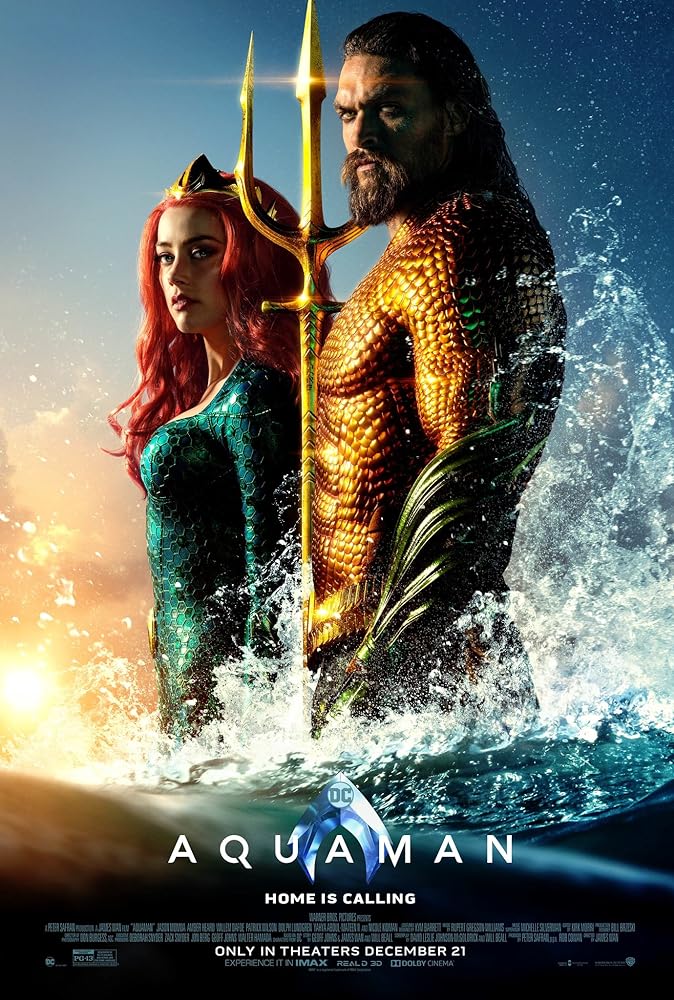
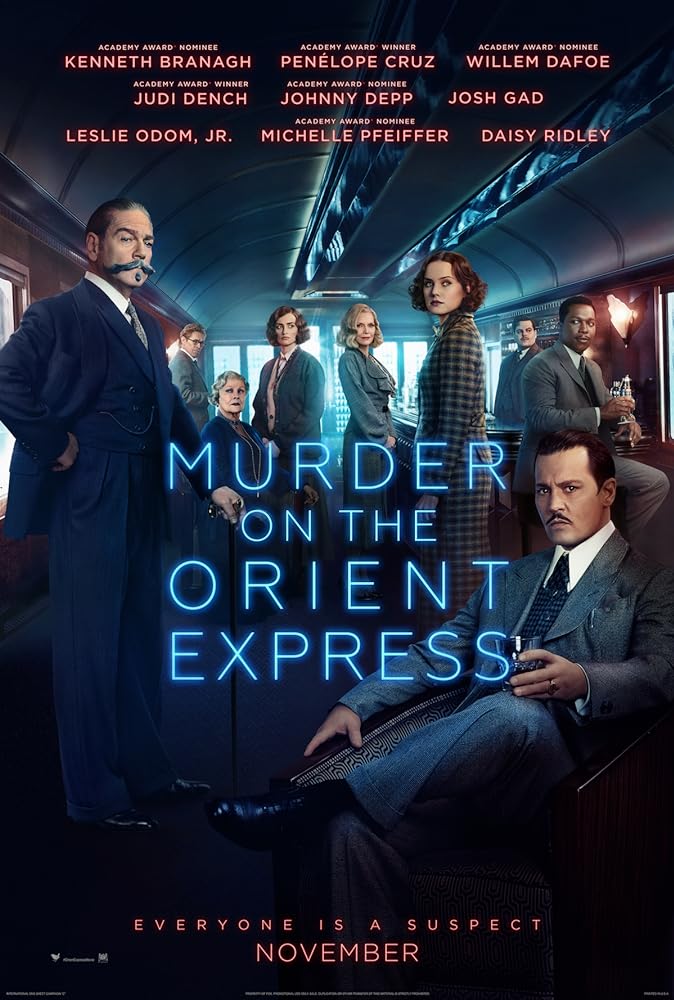
The time has come, once again, for the newest installment of the Marvel Cinematic Universe. This time around, it’s the highly-anticipated return of everyone’s favorite ragtag bunch of intergalactic a-holes, the Guardians of the Galaxy. Yes, Guardians of the Galaxy Vol. 2 hits theaters this weekend and is sure to provide us with another awesome space adventure set to a kick-ass soundtrack. And in honor of its impending release, today I’ll be doing a Top 10 list that I promised to do two months ago. Back in March, right before the release of Logan, I did a list of 10 of my favorite performances from superhero films and TV shows. However, that list focused entirely on ‘lead performances’, from Hugh Jackman as Wolverine to Chris Evans as Captain America. Today, I’m switching things around and will be discussing my Top 10 favorite villains from superhero films and TV shows. Because for many people, a great villain is just as important as a great hero. And I guess you can say that’s why, as I’ve gone over numerous times before in the past, the MCU has always gotten flak for its villains. However, as I’ve also stated before, I don’t think ‘all’ of the MCU villains are bad; in fact, I’d say some are rather underrated. But, for the record, don’t worry, this list won’t be made up entirely of MCU villains. I’ve got a few DC villains in there as well along with some non-MCU Marvel film villains. And unlike last time, where I didn’t do any specific rankings, this one will be an official ‘Top 10’. So, without further ado, it’s time to discuss the most notable adversaries of our favorite superheroes. These are my Top 10 favorite villains from superhero films and TV shows.
HONORABLE MENTIONS

For this list, I’ve got 5 Honorable Mentions to name. First off, from DC, we have an oldie but a classic; Gene Hackman as Superman’s arch-nemesis, Lex Luthor, from the original Superman films. Hackman was excellent in the part, giving the maniacal businessman an enjoyably campy vibe while, from a casting perspective, also giving the first Superman film some legitimacy (in a time before superhero films were as big as they are now) alongside Marlon Brando as Superman’s father Jor-El, hence why the two of them were given top billing over Superman himself, the then-unknown Christopher Reeve. He would then go on to appear in the second and fourth films of the original series, though on the former he did not film any scenes with director Richard Lester after the whole incident that resulted in original director Richard Donner, who directed the first film, getting fired from it. He even provided the voice for the other antagonist in Superman IV: The Quest for Peace, Nuclear Man… though the less said about Nuclear Man and that film in general, the better. Next up, also from DC, we have the ‘unsung hero’ of The Dark Knight’s fantastic ensemble cast; Aaron Eckhart as Harvey Dent AKA Two-Face. Obviously, with this film, everyone remembers Heath Ledger as the Joker but Eckhart’s take on the charming district attorney who is slowly driven to madness, especially after he ends up heavily disfigured by an explosion, was equally terrific. His fall from grace was incredibly well-handled and would set the stage for an unforgettable finale in which Batman ends up taking the blame for Harvey’s actions so that he can protect his image as Gotham’s ‘White Knight’ after everything that the city just went through with the Joker.

And now we head over to Marvel with Daniel Bruhl’s turn as Helmut Zemo in Captain America: Civil War. As I noted before, at first I felt that he was the weakest link of the film, namely because he was barely in it. However, because the overarching conflict between the Avengers in that film was so terrifically handled, I felt that this wasn’t that big of a problem. But, upon re-watch, I realized A. that he was better than I initially gave him credit for and B. why a lot of people were viewing him as one of the better villains of the MCU. Now, granted, I don’t want every MCU villain to be like him and have a minimal role in their respective films but, technically speaking, he’s arguably the most successful MCU villain to date. Because while he is taken into custody at the end of the film, he did technically succeed in his goal to tear the Avengers apart to avenge the death of his family, who died during the Battle of Sokovia in Age of Ultron. In short, it was another perfect example of how the events of Civil War were the culmination of everything that has happened so far in the MCU up to that point; in this instance, the Avengers, despite their best intentions, inadvertently created the monster that would end up tearing them apart. His monologue to Black Panther during the climax is particularly chilling (“And the Avengers? They went home.”) Next up, from the first Captain America film (disclaimer: I’m talking about The First Avenger, not the god-awful 1990 film), Hugo Weaving as the Red Skull. Simply put, Weaving was just perfectly cast in the role as his sinister presence was felt throughout the entire film. It’s a shame, then, that it looks like he won’t be returning to the MCU anytime soon. And, finally, from X-Men: First Class, Kevin Bacon as the leader of the Hellfire Club, Sebastian Shaw. Like Weaving’s Red Skull, Shaw was a sinister antagonist, with the cool mutant ability to be able to absorb any form of energy and then expel it in the form of devastating energy blasts. Not only that, but he had a big personal connection to Magneto as we see that he was once an associate of the Nazis who conducted experiments on Erik when he was a young prisoner at Auschwitz.
And now, onto the Top 10!
10. BRETT DALTON – GRANT WARD/HIVE (MARVEL’S AGENTS OF S.H.I.E.L.D)

First up, we have Brett Dalton’s dual performance as S.H.I.E.L.D. agent turned HYDRA mole Grant Ward and the ancient Inhuman Hive from Marvel’s Agents of S.H.I.E.L.D. As many of you know, Marvel Studios’ first foray into television had a rather rocky start. While critical reception was solid (well, if you looked at the show’s Season 1 RT score, at least), audiences were far more critical of the show in its initial run for various reasons which, from what I can gather, range from its attempts to tie into the MCU films to the supposedly bland main characters. And of the series’ initial 6 leads, Brett Dalton got arguably the most flak as Grant Ward, the stern, by-the-book S.H.I.E.L.D. agent who is recruited to join the new team of agents led by Phil Coulson tasked with investigating superhuman-related cases following the Battle of New York in the first Avengers. However, I’d argue that Ward had some great moments in the early stretches of Season 1, mainly due to the humor that came at his expense for being so damn serious, like in the pilot episode when he and Coulson are interrogating Skye and Coulson uses truth serum on him instead of her. Apparently, though, that truth serum was fake based on what Ward tells Skye two episodes later. Still, it leads to a funny scene in which Skye and Ward end up switching roles and she ends up interrogating him about everything from his time in the field to whether his grandmother knows about what he does (“Gramsy?”). Another great humorous moment involving Ward occurs in Episode 6, ‘FZZT’, in which a running gag occurs where Fitz and Simmons imitate Ward in a boastful manner (“I’m agent Grant Ward, and I [insert badass move here]”). This then culminates in a charming scene near the end of the episode where, after Ward saves Simmons when she falls from the team’s plane, he even does it himself.
And then came Episode 17, ‘Turn, Turn, Turn’, the first episode of the series to come out after Captain America: The Winter Soldier. Thus, because that film revolved heavily around S.H.I.E.L.D., the episode implemented the film’s big twist in which we learn that the organization HYDRA, which Captain America fought during World War II, had infiltrated and taken over S.H.I.E.L.D. And as many will argue, this is the moment where the show effectively redeemed itself after its slow start. It is during this episode where we learn a stunning twist; that Ward was a HYDRA mole working alongside his mentor, John Garrett, played by the late Bill Paxton, who was also revealed to be a HYDRA agent. Thus, the HYDRA twist arguably helped Ward just as much as it did the show itself. After being taken into S.H.I.E.L.D. custody at the end of Season 1, he became the show’s wild card, leaving both the characters and us, the viewers, unsure of what he’s going to do next. And when he does do something, boy does he not hold back. He kills Coulson’s love interest Rosalind, locks Fitz and Simmons into a medical chamber and launches it into the ocean, resulting in Fitz suffering brain damage when he sacrifices himself to save them, and does many other despicable things to Coulson and co. along the way. In short, he was quite a despicable villain but I’d argue that perhaps the best villains are the ones that we love to hate. And if you ask me, Ward fit that bill perfectly as the diabolical foil to Coulson’s team. And it’s even more of a personal matter because of how closely tied Ward was to the team before the big reveal. Just look at the scene in Season 2 when Fitz confronts the imprisoned Ward over the incident that caused him brain damage.

Ward’s story ultimately came to an end in Season 3, during which he worked to reassemble HYDRA following its collapse over the course of the previous seasons. During the season, he worked alongside fellow HYDRA agent Gideon Malick to bring back the ancient Inhuman Hive, whose worshippers were the original founders of HYDRA, to Earth. Coulson and co. eventually interfered with their plan, with Coulson finally killing Ward on the alien planet Maveth, where Hive was located. However, unbeknownst to them, Hive did end up escaping the planet and had taken over Ward’s body. Thus, with this twist, Dalton changed things up with his performance as he took on this new villainous role. Hive was a more stoic being compared to Ward, always speaking in a calm and collected tone, and Dalton handled this transition perfectly. He was also quite an intimidating threat to Coulson’s team, with the ability to coerce his fellow Inhumans into working for him. As such, one stretch of the season saw Daisy, who Ward was romantically tied to back in Season 1 before the big HYDRA reveal, put under Hive’s control. Thankfully, she was brought back to normal by season’s end and Hive was destroyed before he could take over the world by turning all of humanity into Inhumans. And thus, Brett Dalton’s excellent run on the show came to an end… or did it? Yes, right now, Agents of S.H.I.E.L.D. is currently amid a story arc set within a virtual world known as ‘the Framework’, which has allowed Dalton to return to the series as the Framework version of Ward, who let’s just say is still very much the Ward that we’ve come to known over the previous seasons though in an unexpected way.
9. WILLEM DAFOE – THE GREEN GOBLIN (SAM RAIMI’S SPIDER-MAN TRILOGY)

While I’m sure that quite a few will write off his performance in Sam Raimi’s first Spider-Man film as being ‘too goofy’, as well as having an overly cheesy costume to match, I’d argue that Willem Dafoe’s take on Spidey’s classic nemesis Norman Osborn AKA ‘The Green Goblin’ is still an iconic one in the history of the superhero film genre. Yes, that costume is admittedly rather silly, especially when you look at the initial concept art for the character’s costume design. However, Dafoe clearly had a lot of fun in the role; sure, he was completely hamming it up but in a good way. Still, at the same time, he did manage to have a few subtle moments here and there, primarily during scenes with his son, Peter Parker’s best friend Harry. Thus, his death at the end of the first film (by the way, I always love the moment where, right before he gets hit with his own glider, he remarks “Oh…”) would set the stage for the destruction of Peter and Harry’s friendship, as Harry vowed revenge against Spider-Man for the death of his father, even though Spider-Man wasn’t directly responsible for Norman’s death. Of course, this got a lot more complicated when Harry found out that his best friend was Spider-Man in the second film. Thus, during the ending of Spider-Man 2, Dafoe returns in a cameo as he appears to his son in a vision, yelling at him to avenge his death (“AVENGE ME!”). This leads to Harry discovering his father’s Green Goblin equipment and becoming the new ‘Green Goblin’ in Spider-Man 3. Dafoe, of course, would return once more in that film in another cameo/vision, reminding Harry of his vendetta against Peter after being temporarily stricken with amnesia. It goes to show how vital Norman Osborn was to the original Spider-Man trilogy, hence why he lands the Number 9 spot on this list.
8. JAMES SPADER – ULTRON (AVENGERS: AGE OF ULTRON)

I can tell that this pick’s probably going to be rather controversial, and that’s for two main reasons. First off, it’d be because, obviously, some people felt that Age of Ultron was a disappointing follow-up to the original Avengers. But, at the same time, it seems like some weren’t expecting the route that James Spader would ultimately take when playing the crazed sentient android, Ultron. The film’s first trailer implied him to be a serious threat, especially given the use of a dreary version of the classic song ‘I’ve Got No Strings’ from Pinocchio. But in the film, while Ultron is still a major threat to the Avengers, Spader ended up giving the character a surprisingly more comedic spin… and yet, I’m totally fine with that as I feel that it made him incredibly memorable. From him temporarily forgetting the word ‘children’ when remarking about how people make… ‘smaller people’, to his immediate apology to Ulysses Klaue after cutting off his arm (“Ooh, I’m sorry… I’m sure that’s going to be okay!”), he’s an absolute riot. I mean, I find it interesting that the previous MCU villain, Ronan from Guardians of the Galaxy, got flak for being ‘too serious’ and yet Ultron was given flak for being the total opposite. Expectations, am I right? Seriously, though, like Green Goblin, when given a genuinely serious moment, Spader handles it excellently, like Ultron’s first encounter with the Avengers in which he rambles about how he ‘had to kill the other guy’ [Jarvis] and remarks that they’re all ‘killers’. In short, Spader was excellently cast in the part and while it may not have been what some were expecting, his take on Ultron is undoubtedly an unforgettable one.
7. MICHAEL SHANNON – GENERAL ZOD (MAN OF STEEL)

Another possibly controversial argument here, but taking the Number 7 spot on this list is Michael Shannon’s take on the notorious Kryptonian warlord, General Zod… and yes, I do kind of prefer his take on the character over Terence Stamp’s more iconic portrayal of Zod in Superman II (and, also, the opening of the first Superman). For the record, nothing against Stamp’s take on the character, as it is genuinely iconic (“Kneel before Zod!”), but I’d argue that Shannon’s version of the character had a bit more depth to him. As much I hate to say it, Stamp’s Zod is perhaps a bit one-note; he’s basically just a simple tyrannical figure hellbent on world domination. Shannon’s Zod, though, is one of the best examples in recent memory of a villain who tries to justify that what he does is for the greater good. In a similar manner to the original Superman films, Man of Steel opens with Zod attempting a coup on the rulers of Krypton. But in this case, he, like his former associate Jor-El, is aware that the planet of Krypton is on the verge of destruction and is also trying to save it. It’s just that, to do so, he attempts to start a new world order that will eradicate the ‘degenerative’ bloodlines that led to Krypton’s ruin. Obviously, that fails and Krypton’s ruling council sentence him and his subordinates to the Phantom Zone, just like Zod and his crew in the original Superman films. And in both cases, they’re ironically spared from the destruction of Krypton. Once freed from his prison, Zod and his cronies then begin anew on their quest to rebuild their race, ultimately coming to Earth and coming into conflict with Jor-El’s son, Kal-El AKA Superman. Cue a big fight in the city of Metropolis culminating in that infamous neck snap scene which isn’t really that big of a deal because Superman literally did the same kind of thing (albeit without snapping any necks, but you get the point) to Zod in Superman II. And while Michael Shannon did not film any scenes for Batman v Superman: Dawn of Justice, Zod’s body became a crucial plot-point in that film as Lex Luthor used it to create the creature Doomsday.
6. ALFRED MOLINA – DOCTOR OCTOPUS (SPIDER-MAN 2)

As implicated earlier with the Green Goblin, a common plot thread amongst Spider-Man’s adversaries is that many happen to have a personal connection to him in some form. In this case, Dr. Otto Octavius, played by Alfred Molina, is a famous nuclear scientist who also happens to be Peter Parker’s idol. For his latest experiment, Octavius attempts to create a sustainable fusion reactor with the aid of robotic, A.I.-controlled arms. Sadly, the initial experiment goes wrong, resulting in his wife Rosalie’s death and the loss of control over the arms, which are now fused directly to his spine. As such, the arms begin to take on a mind of their own, corrupting him into committing criminal acts so that he can re-do the experiment. Out of all the villains in the Spider-Man films who are referred to as ‘sympathetic’ figures, Octavius is easily the most successful of the bunch. When we first meet him, he is shown to be a brilliant and likable guy who tragically loses everything in a single moment. Ironically, this more sympathetic portrayal is far different compared to how the character is usually portrayed in the comics, and yet here, it works, thanks in no small part to Molina’s excellent performance in the role. He handles Octavius’ fall from grace brilliantly, culminating in his ultimate redemption when he sacrifices his life to prevent the experiment from destroying New York, proclaiming that he ‘will not die a monster’. Plus, the character’s certainly a memorable baddie from a visual perspective thanks to his robotic, tentacle-like arms, hence the nickname ‘Dr. Octopus’. Clearly, a lot of complex visual effects work went into designing the tentacles and those effects still hold up well today. Thus, ‘Doc Ock’ lands the Number 6 spot on this list and, therefore, still stands as the greatest foe that Spider-Man has ever faced on film.
5. GUY PEARCE – ALDRICH KILLIAN (IRON MAN 3)
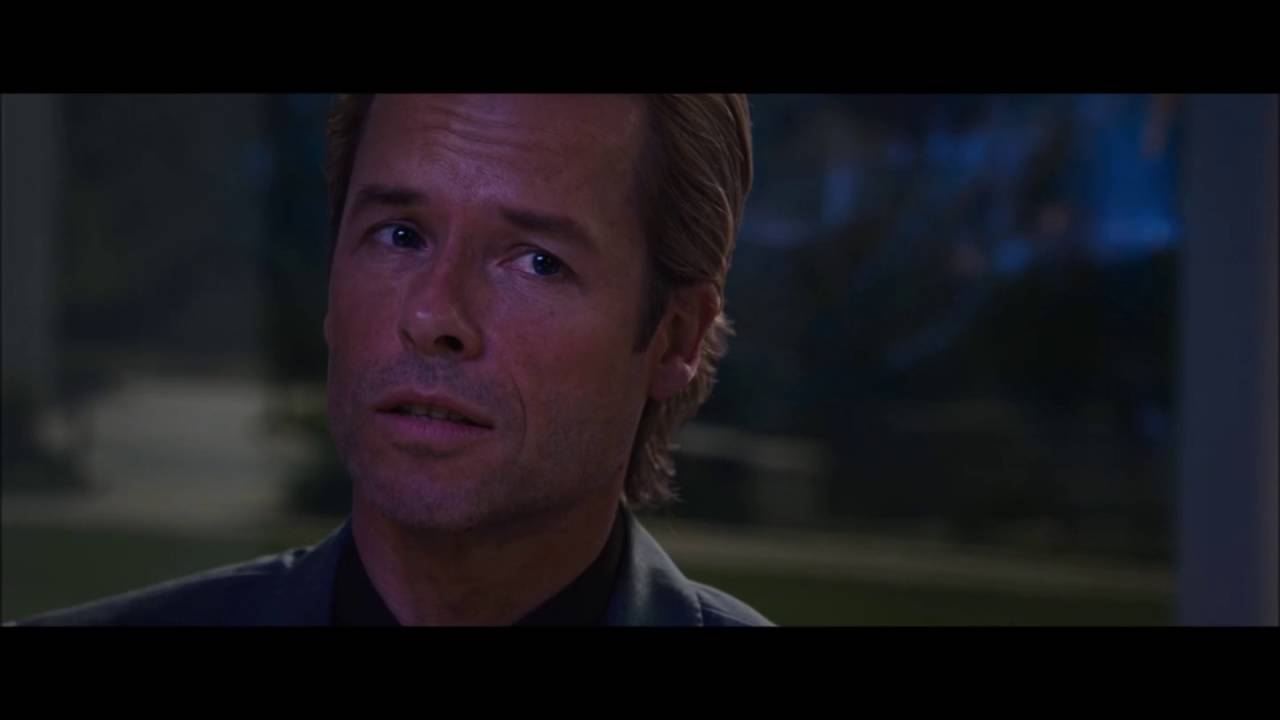
Ooh, boy… when it comes to MCU film villains, this one’s even more controversial than Ultron and you all know why.
Iron Man 3 attracted major blowback from comic book fans over its big bait-and-switch on the identity of the film’s true main villain. Initially, we were all led to assume that Ben Kingsley was playing the role of ‘The Mandarin’, the leader of the terrorist group known as the ‘Ten Rings’ that was directly responsible for Tony Stark’s kidnapping in the first
Iron Man film. However, when Tony finally confronted him, we saw that he was, in fact, nothing more than a drunken British actor named Trevor Slattery. The ‘true’ Mandarin (and I use the term ‘true’ loosely as the MCU One-Shot
All Hail the King implied that there is indeed a ‘Mandarin’ out there) was, in fact, Aldrich Killian, head of the organization A.I.M. (Advanced Idea Mechanics) who Tony had crossed paths with years ago at a New Year’s Eve party in Switzerland. Obviously, this was a major deviation from the comics, hence why it was such a controversial plot twist once it became known. I mean, I think it’s safe to say that in recent years, the superhero film genre has been under greater scrutiny to be more faithful to the comics because of incidents like this. And yet, in this case… it works. Now, my best friend and fellow film critic Matthew Goudreau of
The Young Folks recently did an editorial on why Killian was, in his opinion, the best MCU villain to date. I’ll be providing a link to that
here because, to be perfectly blunt, Matt does a much better job than I’ll ever do at explaining why Killian is such an underrated antagonist. Still, here are my two cents on the whole debacle.
First off, as many have pointed out, it’s probably for the best that they didn’t do a fully ‘comics-accurate’ portrayal of the Mandarin. This is mainly because of the character’s generally racist characterization in the comics being a villain of Chinese descent. Clearly, it was a better idea for writer/director Shane Black and co-writer Drew Pearce to do something different with the character, which they did. Second, from a story perspective, this twist ends up making Killian one of the most complex villains in the entire MCU. By having Slattery appear on TV as ‘The Mandarin’, he could maintain an anonymous identity as the true mastermind behind the series of explosions caused by his company’s malfunctioning product, Extremis. Instead of it becoming known that Extremis is an incredibly faulty product, Killian has them pegged as terrorist attacks orchestrated by Slattery’s ‘Mandarin’. Thus, this plan of his, as you might have guessed, shares some noticeable similarities to real-life perceptions towards the War on Terror. And yes, during the final battle, he boldly proclaims that ‘he is the Mandarin’ but, again, as All Hail the King points out, clearly, he isn’t and the real Mandarin is out there somewhere. Will we ever see this character in a future MCU film? At this point, it’s unsure but nevertheless, this whole charade that Killian puts on proves to be an unforgettable one and it’s all buoyed by an excellent performance from Guy Pearce in the role. Plus, can we just take a moment to appreciate the fact that they managed to keep this whole plot twist secret throughout the entire marketing campaign? In today’s age of social media, where anything about a film could potentially get leaked online, we genuinely had no idea that this was going to happen. It’s just like what Slattery said in one of his performances as the fake Mandarin; truly, we ‘never saw this coming’.
4. TOM HIDDLESTON – LOKI (MARVEL CINEMATIC UNIVERSE)

Yeah, some of you probably guessed that good ol’ Loki would make it on this list somewhere. I mean, let’s be honest, most on the internet would argue that Loki is the only real standout villain of the MCU films (emphasis on ‘films’, as we’ll see in a bit). Tom Hiddleston set the bar so dang high with his turn as Thor’s devious adopted brother in the first Avengers film that any other MCU film villain was considered a disappointment if they weren’t even remotely as well-received as Loki was. He basically became the ‘gold standard’ when it came to the MCU’s rogues’ gallery. And yet… he only lands the number 4 spot on this list. Why? Well, possible controversy in 3, 2, 1… I only thought he was an ‘okay’ villain in his first appearance in the first Thor film. Don’t get me wrong, right out the gate Hiddleston proved to be an excellent fit in the role and, therefore, made Loki a very memorable adversary for Thor, especially considering their status as brothers. Plus, his overall scheme in that film, in which he gets Thor banished to Earth and stripped of his powers so that, with him out of the way, he could prove himself worthy to their father, Odin, and become king of Asgard, was at least a solid one. However, once Thor did get his powers back, it seemed like Loki wasn’t much of a challenge for him; in other words, he kind of defeated him rather easily. Thus, I feel that in that film, Loki was more of a memorable villain in terms of his primary characterization, especially once he learns that he was, in fact, the son of the leader of Asgard’s mortal enemies the Frost Giants and that he was adopted by Odin following the big war between the two groups centuries earlier. It’s really a testament to how the Shakespearean overtones imbued by director Kenneth Branagh really helped give a story that could’ve been written off as cheesy some effective emotional depth.
However, at the end of Thor, the post-credits scene revealed that Loki survived his apparent demise when he fell into the abyss following the destruction of Asgard’s source of transportation across the Nine Realms, the Bifrost Bridge. This, of course, set the stage for his return in the first Avengers and, yeah, that was where he really began to stand out. He hits the ground running as soon as he arrives on Earth via a wormhole created by the mysterious artifact known as the Tesseract, claiming that he’s come ‘burdened with glorious purpose’. And, yes, the overall plot of the first Avengers was quite simple; Loki comes down to Earth with an army, the Chitauri, and the Avengers team up to stop him. But, at the same time, Hiddleston imbued the character with, dare I say, a newfound swagger that wasn’t apparent in the first Thor. Thus, it’s easy to see why the character became so popular amongst fans. This led to an increased amount of screen-time in the next Thor film, Thor: The Dark World. However, I think it’s safe to say that this came at the expense of the film’s actual villain, Malekith, resulting in him becoming the worst villain to date in the MCU films. This kind of correlates to my overall thoughts on Loki in the MCU. Yes, he is a great character and, as you could tell from this list and how it is ranked, he is my favorite MCU ‘film’ villain. However, unlike most on the internet, that doesn’t mean that I hold other MCU film villains to what I’d like to call the ‘Loki Standard’. Not every villain needs to be like Loki and ‘too much Loki’, as seen in Thor: The Dark World, isn’t exactly a good thing. Still, it’ll be interesting to see what they do next with the character in Thor: Ragnarok, especially considering that the ending of Thor: The Dark World saw him take control of Asgard over Odin.
3. VINCENT D’ONOFRIO – WILSON FISK (MARVEL’S DAREDEVIL)

While the MCU film villains are constantly subjected to high scrutiny, the villains of Marvel Studios’ Netflix shows have fared much better with critics and audiences. You could say that it’s because the Netflix shows allow for more character development in a 13-episode season compared to a two-hour film. But, either way you look at it, the MCU Netflix villains have become just as popular as Loki, if not arguably more popular, and starting off that trend was Vincent D’Onofrio as Wilson Fisk, known in the comics as ‘The Kingpin’, in Daredevil. D’Onofrio was a perfect fit for the role, being no stranger to villain roles as evident from films like Men in Black and The Cell. When the show needed him to be intense, he brought the intensity in spades (e.g. when he kills a guy by slamming his head in with a car door, beheading him in the process). At the same time, though, there were instances where he could be regarded as a sympathetic character. In the best episode of Season 1, Episode 8, ‘Shadows in the Glass’, we learn that he had a rough upbringing in Hell’s Kitchen and this eventually led to him killing his abusive father. Plus, despite all the criminal acts that he does throughout the course of the show, we even get to see a bit of humanity in him through his blossoming relationship with art gallery curator Vanessa Marianna. Case in point, remember the moment when he frantically tries to keep her alive when she ends up getting poisoned at a gala? Moments like this made Fisk one of the MCU’s most complex villains to date and even though he’s sent to jail by Daredevil at the end of Season 1, he made an unforgettable return midway through Season 2, during which he partook in a brief partnership with Frank Castle AKA ‘The Punisher’ and had an intense confrontation with Matt Murdock.
2. HEATH LEDGER/MARK HAMILL – THE JOKER (THE DARK KNIGHT/DC ANIMATION)
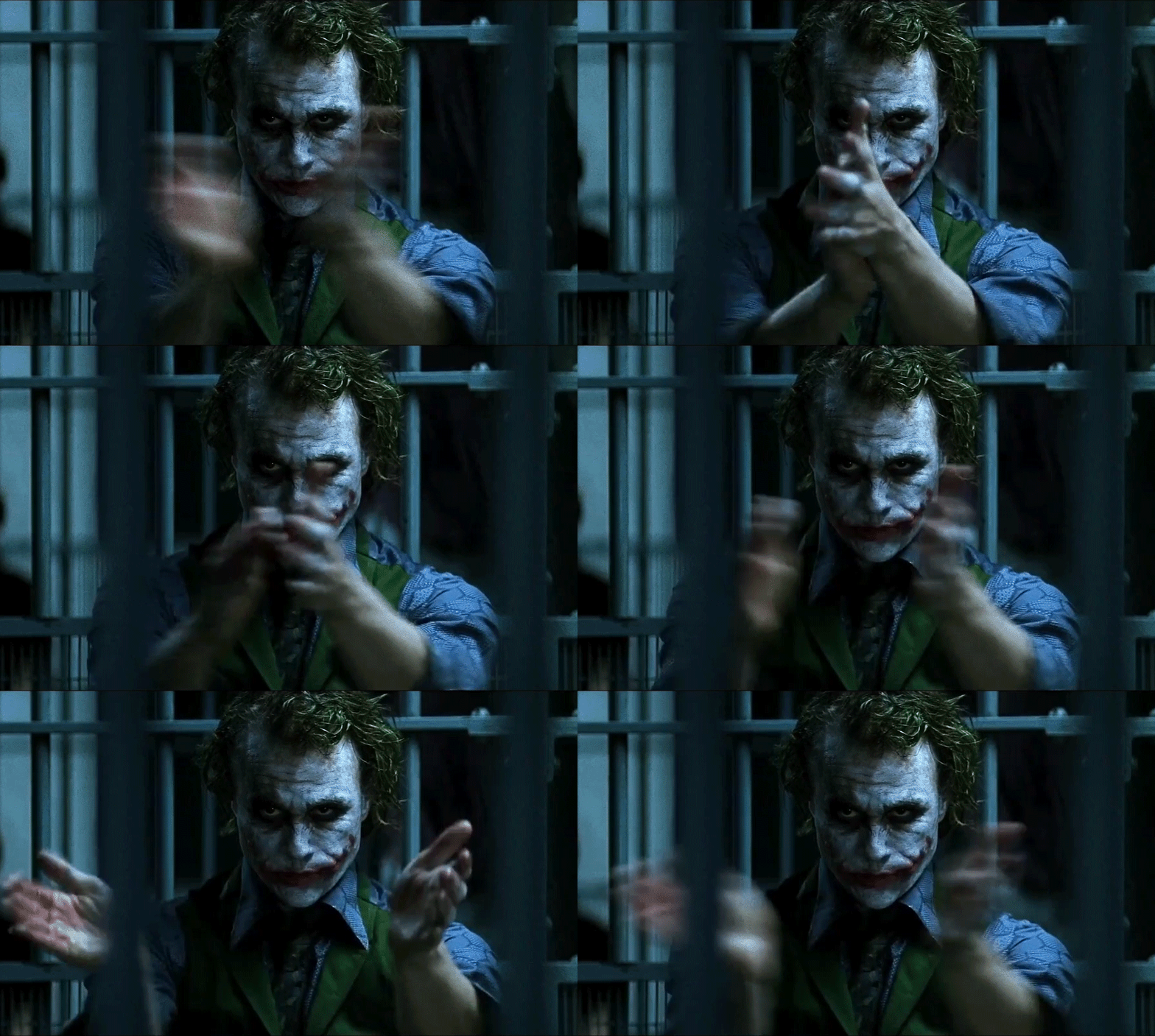
Yep, you can’t do a list like this without including Batman’s most iconic adversary, the Joker. But wait a second… two Jokers? Yes, I’ll admit I’m cheating a bit here by picking two Jokers instead of one, but I wanted to highlight arguably the two most popular iterations of the Clown Prince of Crime. After all, it really is a testament to the fact that the Joker has been played by numerous actors over the years, both in live-action and animation. And, for the most part, almost all of them have proven to be great in their own unique ways. But for this list, I narrowed it down to two picks, one from the live-action films and one from animation. First up, there’s Heath Ledger’s unforgettable turn in Christopher Nolan’s The Dark Knight, which earned him the Oscar for Best Supporting Actor though, sadly, it was posthumously earned as he passed away before the film’s release in January 2008. And as we all know, what ended up being one of the last performances of his career would ultimately be one of his best, as he gave Batman a truly intimidating opponent to face in that film. Now, for the record, Jack Nicholson’s equally iconic take on the character in Tim Burton’s first Batman film from 1989 was just as excellent, but I think Ledger’s Joker edges Nicholson’s out by a slight margin and primarily because of his overall characterization. In Burton’s Batman, we knew a lot about Joker before his transformation. Originally, he was Jack Napier, the right-hand man of Gotham’s main crime boss, Carl Grissom, before Grissom betrayed him once he found out that Jack was romantically involved with his mistress Alicia. During a botched raid, Napier crosses paths with Batman and ends up falling into a vat of chemicals, effectively turning him into the Joker that we all know. Not only that but in a deviation from the source material, we learn that he was the one who killed Bruce Wayne’s parents, the catalyst that led to him becoming Batman. Thus, these two were responsible for making each other who they are today.
With Ledger’s Joker, though, his origin is completely unexplained. There have been theories that have been spread around the internet, including one that suggests that he’s a former soldier with PTSD (which would explain why he’s so familiar with explosives), but in the context of the film itself, he’s a complete mystery. Just look at his trademark action of telling stories about how he got his scars; they’re different each time. One time, he mentions that they came from an alcoholic father and another time, he talks about a wife who he tried to please after she too got scarred up. Moments like these are why Ledger’s Joker is a much more intimidating figure than Nicholson’s Joker; the unpredictability of his actions makes him terrifying because he’s capable of striking at any given time. Plus, at the end of the day, the Joker technically wins even though he ends up in custody. Because even though Batman tells him that Gotham is full of people ‘ready to believe in good’, he reveals that he still has his ‘ace in the hole’; his successful corruption of Harvey Dent, leading to Dent’s fall from grace as he adopts the persona Two-Face. By proving that even the best people are capable of being corrupted, he will break the spirit of Gotham’s citizens for good once the details of Dent’s actions become known. It’s only through Batman’s decision to take the fall for Dent that this is prevented, at least until The Dark Knight Rises when Bane publicly reveals this lie that Batman and Commissioner Jim Gordon had been orchestrating for eight years. Thus, what Ledger and Nolan created became one of the most iconic villains in the history of the superhero film genre.

Now, let’s move over to animation, where there have been plenty of actors who have played the Joker over the years, including Michael Emerson in the two-part adaptation of The Dark Knight Returns and Zach Galifianakis in The LEGO Batman Movie. However, many will agree that the best take on the character came from the critically acclaimed Batman: The Animated Series from the 90’s, where he was voiced by Mark Hamill. Yes, the same man who gave us Luke Skywalker could also be quite the diabolical villain and as fans of Batman: The Animated Series will argue, Hamill was not only the best Joker in animation but arguably the best Joker period. He just absolutely nailed the role, from the mannerisms to the voice; you name it, he brought it and, thus, delivered ‘total anarchy’ every time he appeared. And even after Batman: The Animated Series came to an end, he would go on to play the part in other projects. In the original ‘DC Animated Universe’ that Batman: The Animated Series was a part of, he would also appear in films like Mask of the Phantasm and Batman Beyond: Return of the Joker. Many years later, he would partake in one of the character’s most iconic storylines from the comics in the film adaptation of The Killing Joke. It’s a shame, then, that the film didn’t live up to the quality of his performance. Thankfully, there’s also Rocksteady Studios’ critically acclaimed video game trilogy, the Batman: Arkham series. While voice actor Troy Baker played the part in the non-Rocksteady produced outing Arkham Origins, Hamill would return to his iconic role in 2009’s Arkham Asylum, 2011’s Arkham City, and 2015’s Arkham Knight, once again bringing the anarchy and solidifying his status as the definitive animated Joker.
1. DAVID TENNANT – KILGRAVE (MARVEL’S JESSICA JONES)

While Daredevil is, at the time I’m writing this, my favorite entry in Marvel Studios’ lineup of Netflix shows, the main villain of Season 1 of Jessica Jones, the infamous Kilgrave, takes the Number 1 spot on this list. Because while Vincent D’Onofrio’s take on Wilson Fisk was phenomenal, David Tennant managed to take his antagonist to the next level. How? Well, by being one of the most diabolical villains that the genre has ever seen. First off, there’s his main power of controlling people’s minds. And when he does so, he can force his minions to do some truly messed up things, from committing suicide to killing someone. In the latter case, he does this to Jessica when he forces her to kill a woman who, as it turns out, was Luke Cage’s wife, Reva. Plus, it also becomes clear that he sexually abused her while she was under his control, making him even more despicable. So, with that in mind, it’s a testament to David Tennant’s talents as an actor that he still manages to exude some charisma in the role, namely through some dark humor. Don’t get me wrong, though, this isn’t a case like Wilson Fisk; Kilgrave is still a full-on scumbag at the end of the day. But he’s easily one of the best examples in recent memory of a villain who’s so reprehensible and yet totally commands the screen whenever he appears. And that’s why he ultimately lands the Number 1 spot on this list, as he truly is one of the most intimidating and unpredictable villains that the superhero genre has ever seen.
And those are my Top 10 favorite villains from superhero films and TV shows. Be sure to sound off in the comments below with your favorite villains from the superhero genre, especially if I didn’t bring them up here.