Showing posts with label Jason Momoa. Show all posts

Thursday, January 10, 2019

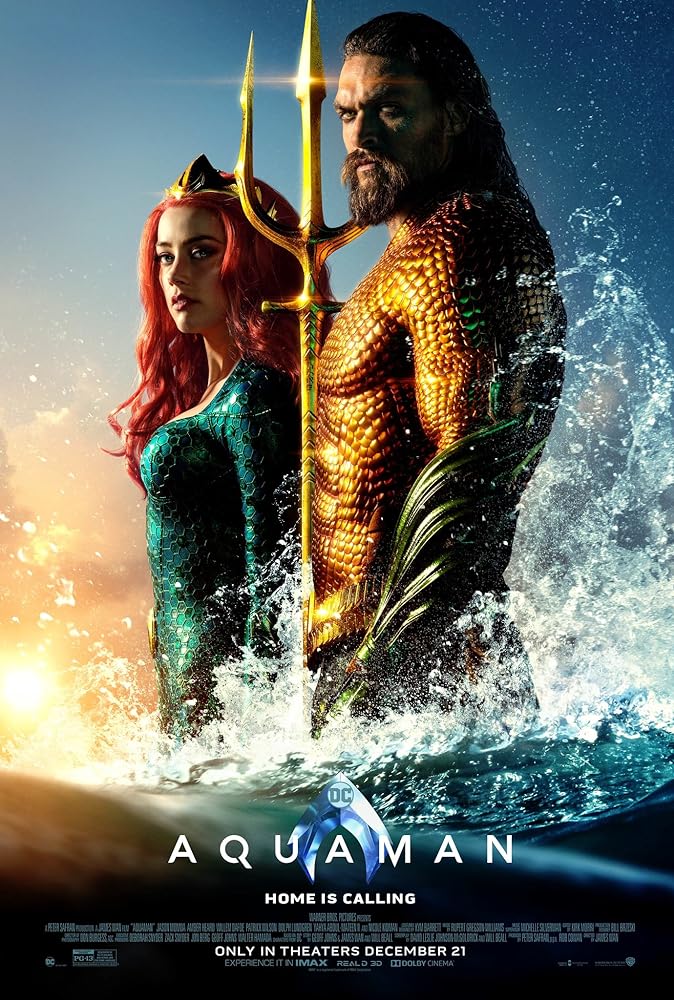
Aquaman (2018) review

Jason Momoa and Amber Heard in Aquaman (2018)

In 1941, writer Mort Weisinger and artist Paul Norris created the character of Aquaman, the king of the underwater kingdom of Atlantis with the ability to communicate with the various creatures of the sea. Over the next few decades, Aquaman’s role in the DC Comics universe began to grow significantly to the point where he became one of the seven founding members of the Justice League, and he has continued to be one of DC’s most prominent superheroes ever since. But as for his overall reception amongst audiences… well, that one’s a bit more complicated because, despite his long history in the world of comics, Aquaman has been deemed ‘a joke’ in the pop cultural zeitgeist for supposedly being nothing more than ‘the guy who talks to fish’. This was mainly brought on by the character’s roles in his titular animated series from 1967 and the Hanna-Barbera produced Super Friends series that ran from 1973 to 1986. And despite DC’s efforts to work around this image through various reboots and such, shows like Robot Chicken and The Big Bang Theory continue to enforce this long-standing view on DC’s aquatic superhero. As for getting the King of Atlantis on the big-screen, that journey has been just as bumpy. Simply put, it’s truly saying something when the most prominent on-screen appearance of Aquaman prior to 2016… was the in-universe feature film directed by James Cameron in HBO’s hit series Entourage where he was played by the series’ main protagonist Vincent Chase.

But things finally changed when DC began to develop its own cinematic universe a la Marvel. Game of Thrones alum Jason Momoa was cast in the role of Arthur Curry AKA Aquaman and made his first appearance in the DC Extended Universe via a cameo in 2016’s Batman v Superman: Dawn of Justice. There, he first appeared alongside Ezra Miller’s Flash and Ray Fisher’s Cyborg in a series of videos that Batman had uncovered (and were then subsequently viewed by Wonder Woman) from the files of Lex Luthor’s company LexCorp on their investigations into the presence of ‘metahumans’ AKA the franchise’s term for super-heroes. Momoa was then promoted to one of the lead roles in the 2017 follow-up Justice League, and while neither film fared very well with critics, Momoa did manage to work well alongside his co-stars. But now The King of the Seven Seas finally gets the chance to grace his own solo film with the sixth installment of the DC Extended Universe, Aquaman. Horror veteran James Wan steps in to direct a film that certainly has quite a lot of baggage behind it going in. For starters, like Wonder Woman, it finds itself tasked with getting the franchise back on track after the considerably disappointing critical and financial performance of Justice League. But, of course, as it’s been made clear in this intro, possibly its biggest hurdle is proving that one of the most widely-mocked superheroes of all-time can be taken seriously. And with strong visuals and a well-balanced tone and atmosphere, it can be argued that Wan did succeed in that regard.

Arthur Curry (Jason Momoa) was born as a child of two worlds. This became the case when his father Thomas (Temuera Morrison), a lighthouse keeper from Maine, rescued a woman from a violent storm in 1985. Little did he know that the woman, Atlanna (Nicole Kidman), is the queen of the underwater kingdom of Atlantis. And as she later tells their son Arthur, he’ll eventually grow up to become the one who will unite their two worlds. However, after she ends up leaving both him and his father to return to Atlantis, Arthur ends up ignoring his Atlantean heritage over the years as he becomes the legendary warrior of the sea, Aquaman. Eventually, though, Arthur finds himself having to finally face his destiny when Mera (Amber Heard), princess of the Atlantean kingdom of Xebel, comes to him and warns about his half-brother Orm (Patrick Wilson), the current ruler of Atlantis who plans on initiating a war against the surface world. Specifically, Orm seeks to gain the support of at least four of the other kingdoms of Atlantis so that he can have a grand army and be granted the title of ‘Ocean Master’. And when it becomes clear that Arthur isn’t exactly prepared to take down Orm with his mother’s trident as his only weapon, he and Mera end up on an adventure around the world to find the trident that belonged to King Atlan (Graham McTavish), the original king of Atlantis. Because as it’s established by Arthur’s mentor Nuidis Vulko (Willem Dafoe), Atlantis’ royal advisor, Atlan’s trident is Arthur’s only hope of reclaiming his birthright as the true king of Atlantis.

Aquaman is truly an ambitious entry in the superhero genre as far as its action set-pieces are concerned. This film is full of incredibly elaborate action sequences that feature everything from sweeping camera movements to some very impressive long-takes. And while quite a lot of these action sequences are filled to the brim with CGI creatures in what is usually an equally CG-based environment, the visual effects team clearly brought their A-game to this project. When these effects are combined with Don Burgess’ solid cinematography, it results in some of the most incredibly striking visuals to ever grace a superhero film. Plus, as was the case when the Russo brothers first started to direct MCU films or when Christopher Nolan went from Batman Begins to The Dark Knight, this film’s action sequences show the growth that James Wan has clearly made as an action director after his previous foray into the genre, 2015’s Furious 7. And as far as this film’s tone is concerned, those who were put off by the dour proceedings of Zack Snyder’s DCEU films will be pleased to know that this film is ultimately more in line with the much more successful Wonder Woman in that department. While it does treat the storyline of Aquaman uniting the kingdoms of Atlantis as seriously as possible, the film maintains a fun, light-hearted atmosphere throughout that harkens back to classics like the Indiana Jones films, especially during Arthur and Mera’s journey around the world to find King Atlan’s trident.  

From what I’ve gathered, it seems like Jason Momoa’s first major DCEU appearance in Justice League was decently well-received. Some may have been a bit turned off by Momoa giving the character a ‘surfer bro’ personality, but he managed to do his best with the limited material that he was given. Thankfully, though, as was the case with Gal Gadot when she got her own solo film as Wonder Woman, Momoa fares a lot better in his own solo film, as the character development that he didn’t get in Justice League is finally put in here with the conflict of him being a child of two worlds and how he ends up becoming the reluctant hero of Atlantis. All of this is handled very well and it’s clear that Momoa is having a lot more fun this time around as his comedic banter is much stronger here than it was in Justice League. In fact, it even gets to the point where the character’s controversial ‘surfer bro’ persona feels much more natural when compared to his previous appearances in the franchise. Amber Heard also thankfully gets a much more fruitful role here than she did in Justice League as Mera. In that film, she was a blank slate in what was literally her only scene in the damn film when Steppenwolf attacked Atlantis to collect one of the Mother Boxes. Here, she’s a confident, no-nonsense badass who is repeatedly shown to be much more adept than Arthur at practically everything while also getting a nice little arc in which their adventure allows her to gain a greater appreciation for the human world. And thanks to their characters’ strong back-and-forth dynamic, Heard and Momoa have excellent chemistry. They’re then backed by a solid supporting cast that includes Willem Dafoe as Arthur’s loyal mentor Nuidis Vulko, Nicole Kidman as Arthur’s mother Atlanna, whose role in the film is thankfully not just a brief cameo limited to flashbacks to Arthur’s youth, and Dolph Lundgren in another solid turn this year after Creed II as Mera’s father, King Nereus of Xebel.  

And then you have the film’s two main villains… who, sadly, are the weakest links in the film despite good performances from their respective actors. First, there’s Aquaman’s most famous enemy from the comics, mercenary David Kane AKA Black Manta (Yahya Abdul-Mateen II). And to the character’s credit, the film does set up Kane incredibly well, with his conflict with Aquaman ultimately defined by one gutsy move that Arthur makes during their first encounter that heavily affects Kane on an emotional level. After that, once Kane puts on his signature suit, it leads to one heck of a confrontation with Aquaman and Mera in what is easily one of the film’s best action sequences… a shame, then, that this is the only key scene in the film with him in the suit. In other words, if you’ve seen any of the trailers for this film, then you’ve seen the bulk of Black Manta’s role in it. Thus, the honor of being the film’s main antagonist instead goes to Aquaman’s half-brother Orm AKA the ‘Ocean Master’. Overall, James Wan regular Patrick Wilson is solid in the role even if it is just him spending most of the time unabashedly hamming it up. Plus, the rivalry that the two Atlantean siblings have due to their shared heritage does provide Orm with some decent character development. The issue with him, however, is that while he does have a more substantial role in the plot than Black Manta, said role still feels very limited due to the film focusing more on Aquaman and Mera. And because of this, Orm ends up being the kind of villain who talks a big game instead of legitimately having one.

Well, with a decent RT score and a box-office total that’s undoubtedly going to go past $1 billion soon, it’s clear that Aquaman has been one of the better-received installments of the DC Extended Universe. And while I wouldn’t necessarily call it the ‘best’ DCEU film to date, it’s still a very welcome breath of fresh air after the highly disappointing affair that was Justice League. Simply put, director James Wan does manage to succeed, for the most part, when it comes to taking one of the most widely mocked characters in pop culture history and giving him a film adaptation that treats him respectfully. After all, in a time where the superhero genre has given us films that feature talking raccoons and heroes who can shrink to the size of insects, I think it’s safe to say that the idea of an ocean-based superhero who talks to marine life isn’t such a ridiculous concept anymore. And his first solo film achieves this by being, to be perfectly blunt, the kind of film that Warner Bros. and DC should’ve been making all along instead of just trying to copy what Christopher Nolan did with the Dark Knight trilogy. Instead of an overly dark and dour drama a la Batman v Superman, Aquaman is a bright and colorful superhero epic with impressive visuals and action sequences that are paired nicely with a solid tone that skillfully balances effective drama with genre-friendly humor. And just like Wonder Woman, this film gives its title character (and his leading lady) the proper character development that they didn’t get in previous DCEU films where they were just one part of a larger ensemble. In short, if there’s one thing that films like Wonder Woman and Aquaman prove, it is that the DC Extended Universe is truly at its best when it isn’t trying to take itself so seriously.


Rating: 4.5/5

Monday, November 20, 2017

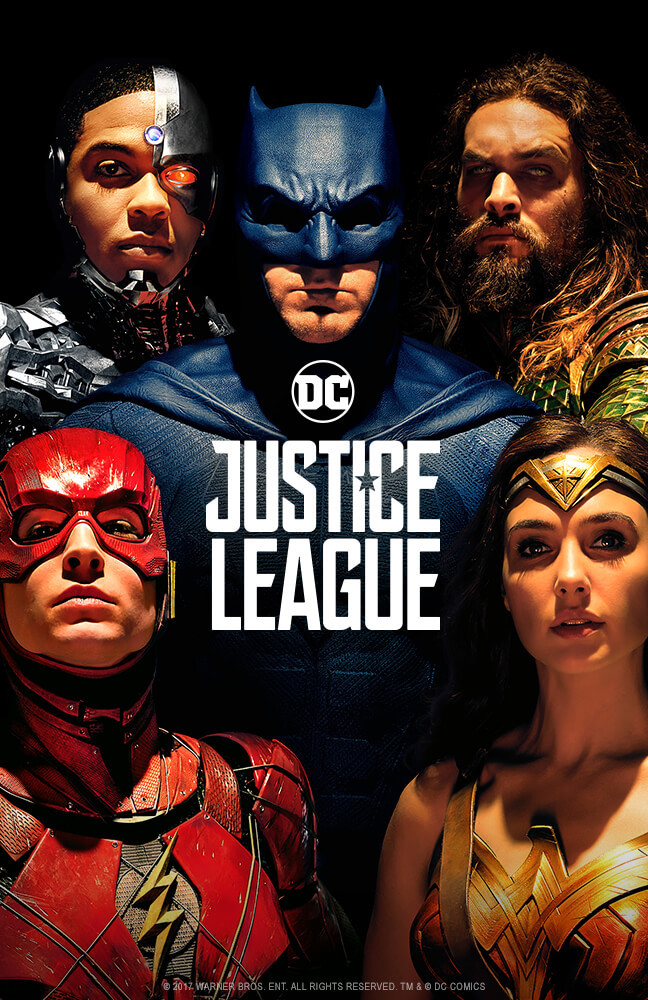
Justice League (2017) review


For the past decade, Marvel Studios has dominated the superhero film genre thanks to the Marvel Cinematic Universe, which was an unprecedented success story as nothing like it had ever been done before in the context of live-action films. After starting out strong with a series of solo outings that slowly but surely began to lay down the foundation for a larger universe, the MCU truly hit it big in 2012 when it brought all of its main heroes together in what ultimately became one of the landmark entries of the genre, The Avengers. But while the Avengers have undoubtedly become one of the most famous squads in the world of film, there is another superhero team that is arguably more iconic than them. I’m, of course, referring to DC Comics’ own legendary superhero group, the Justice League. Ever since the group’s initial creation in 1960 as a revamp of DC’s Justice Society of America, the Justice League, made up of several of the company’s most legendary heroes including the Holy Trinity of Superman, Batman, and Wonder Woman, has become a staple of the DC universe. Aside from their various runs in the comics, the team has also left its mark on other facets of pop culture, including several video games (e.g. the Injustice fighting games) and a bunch of hit TV shows, most notably the Justice League cartoons from the early 2000’s that were created by the team behind the iconic Batman: The Animated Series. And now almost six decades after their initial comic debut, the Justice League has finally hit the big-screen in DC’s highly-anticipated crossover event.

However, the journey that this film has gone on to make it to this point has been rather rocky, to say the least. A full decade prior to its release, a different iteration of Justice League was in the works under the direction of Mad Max creator George Miller. Ultimately, though, this version ended up falling by the wayside due in large part to the 2007-08 Writers’ Strike. It wouldn’t be until after Warner Bros and DC managed to successfully resurrect the Superman franchise in 2013 with Zack Snyder’s Man of Steel that the idea of a Justice League film was once again put into motion. And thus, the DC Extended Universe, DC and Warner Bros.’ answer to the MCU, was born; but again, things haven’t exactly gone smoothly for this franchise since its inception. While both Man of Steel and its 2016 follow-up Batman v. Superman: Dawn of Justice (which introduced Ben Affleck’s rendition of the titular Dark Knight) did perform solidly at the box-office, they also yielded an extremely polarizing response from both critics and audiences. Simply put, these films have had as many extremely devoted fans as they’ve had their extremely vocal critics. Thankfully, though, the franchise did manage to rebound a bit this year thanks to the long-awaited solo outing for DC’s legendary heroine, Wonder Woman, a well-deserved success story for everyone involved on that production, especially director Patty Jenkins and lead actress Gal Gadot. But now we turn our attention to director Zack Snyder’s third entry in the DCEU, Justice League, which… is once again proving to be quite controversial amongst critics. And to be perfectly blunt… this time I can see exactly where they’re coming from when it comes to this film’s biggest issues.

At the end of Batman v. Superman, Bruce Wayne AKA the Gotham City vigilante Batman (Ben Affleck) saw his faith in humanity restored following the noble sacrifice of his ‘nemesis’ turned ally Superman (Henry Cavill) against the monstrous creature known as Doomsday. Despite this, however, the world finds itself plunging into greater chaos following Superman’s death, effectively leaving it open for an invasion by the god-like being known as Steppenwolf (portrayed by Ciaran Hinds via motion-capture). Backed by his army of extraterrestrial creatures known as Parademons, Steppenwolf seeks to reclaim the three mysterious devices hidden on Earth known as ‘Mother Boxes’ that grant unparalleled power to those that use them. To deal with the invasion, Bruce and Diana Prince AKA the Amazonian warrior Wonder Woman (Gal Gadot) begin to recruit those who are just like them (referred to in the DC universe as ‘metahumans’) in order to form a team that’s powerful enough to take on Steppenwolf and his army in light of Superman’s absence. In the process, the two end up recruiting Arthur Curry AKA Aquaman, the ruler of the undersea kingdom of Atlantis (Jason Momoa), college student Barry Allen AKA the speedster known as ‘the Flash’ (Ezra Miller), and Victor Stone (Ray Fisher), a former football star who was turned into a cyborg after a near-fatal car accident.

Simply put, when this film focuses on what audiences came to see (namely, the Justice League in action), it does deliver on that front. There are tons of great character moments here and there to satisfy the DC Comics faithful who have been waiting to see these characters together onscreen for years. However... that doesn’t mean that this film is devoid of some major flaws. For one thing, it’s all over the place when it comes to its tone. This aspect of the DCEU has been a primary source of contention amongst critics as both Man of Steel and Batman v. Superman were heavily criticized for being too dour. Thankfully with this film, an attempt was at least made for it to be more light-hearted compared to its predecessors; and yet, despite this, its attempts at humor are hit and miss at best. It also tries to balance said humor with some of the more serious aspects of the plot, something that it doesn’t necessarily succeed at doing. Overall, it seems as if a lot of this film’s tonal issues were a direct result of the biggest moment that occurred during its production, when Snyder was forced to step away from the film due to the death of his daughter and Joss Whedon (who, of course, is no stranger to this genre) was brought in to oversee rewrites and reshoots. However, while watching this film, it becomes abundantly clear that Whedon was forcibly rushed when it came to the process of finishing it, resulting in not only those aforementioned tonal issues but also some dodgy CGI as well (e.g. the now-infamous attempts that were made to digitally remove the mustache that Henry Cavill had grown prior to reshoots that he had to keep for the upcoming Mission Impossible 6).

Among other things, this film is primarily tasked with serving as the proper ‘introduction’ of three new main characters to the DCEU; Flash, Aquaman, and Cyborg. Although the three of them had already technically been introduced in Batman v Superman via a series of brief cameos, this film serves as the first instance where they were each given a lead role. And overall, the film does do a decent job of establishing the DCEU’s iterations of these classic characters, as each main protagonist (both new and returning) does manage to get his or her own standout moment. Despite what I said before about the film’s humor being rather spotty, Ezra Miller’s Flash does get a lot of the best lines in the film as the inexperienced rookie who’s brought in to help deal with a daunting ‘save the world’ scenario. As for Aquaman, while it seems like a lot of his character development is being saved for his upcoming solo film next year, Jason Momoa does, at least, make a good first impression as DC’s often mocked aquatic-based superhero. Finally, with Cyborg, Ray Fisher does a good job of conveying the character’s inner turmoil given his tragic backstory. As for the returning heroes, both Gal Gadot and Ben Affleck are solid once again as Wonder Woman and Batman, respectively. Gadot continues to shine as the DCEU’s best protagonist, even amidst all of this film’s shortcomings, and Affleck still stands strong as the DCEU’s grizzled interpretation of the Dark Knight. And for those who weren’t too big on how Batman was portrayed in BvS, namely via his tendency to kill bad guys, you’ll be pleased to know that they do dial back on that characterization here.

Now, at the risk of delving into spoiler territory (though, really, everyone basically knew this already going in)… yes, Superman returns in this film after the character’s death in BvS. I won’t be getting into the exact specifics of how he’s brought back but I will say that, with this film, Henry Cavill has thankfully been given the chance to, shall we say, ‘act’ like Superman. Granted, I did think that he did a solid job in the previous two films that he appeared in but, at the same time, those films didn’t exactly give him the best material to work with, either. With Justice League, though, we finally get a Superman reminiscent of Christopher Reeve’s iconic iteration of the character from the original Superman films. But while all of the main leads get a solid amount of material to work with in this film, the same can’t be said for its supporting characters as they are all basically limited to ‘cameo’ appearances a la Flash, Aquaman, and Cyborg in BvS. This applies to not only returning DCEU players like Amy Adams as Lois Lane and Connie Nielsen as Diana’s mother Queen Hippolyta but also newcomers like Mera, Queen of Atlantis (Amber Heard), and J.K. Simmons’ version of Commissioner Jim Gordon, characters that are clearly being intended to have more substantial roles in future films. And as for the main villain, Steppenwolf… he’s practically a non-existent threat. Despite Ciaran Hinds’ best efforts in the role, the character gets nothing of value to work with here; no backstory, no sense of what he’s trying to accomplish, no indication of his relationship to another famous DC comics antagonist (and future big bad of the DCEU) Darkseid, etc.  In other words, he’s one of the genre’s weakest villains ever.

So before any of the hardcore DCEU fans out there get on my case because of what I’ve said in this review, let me be perfectly clear; I didn’t outright ‘dislike’ Justice League. As I said before, when it focuses on its titular squad of superheroes, it does lead to some great character moments between them. At the same time, though, the overall execution is quite sloppy. While I do appreciate the efforts that were made by Zack Snyder and company to avoid delving into the dour tone that many felt plagued Batman v Superman, the film still suffers from having a rather inconsistent tone. And while the main leads are all solid in their respective roles, the plot is basic, the humor is hit or miss, and the main villain is pathetically weak. In short, a lot of this feels rushed, which arguably isn’t that surprising seeing how this came out only one year after Batman v Superman. And while both Snyder and Joss Whedon tried their best to fix some of the most glaring issues that people have had with previous DCEU installments (save for Wonder Woman), it just wasn’t enough to overcome the immense time crunch that they were both clearly under. With that said, though, if you’re a long-time fan of DC and these characters, I bet that you’ll probably be satisfied with this long-awaited live-action adaptation of arguably the most famous superhero team in all of pop culture… who, quite frankly, deserved a hell of a lot better than what is practically the DC equivalent of Fan4stic. I wish I was kidding about that comparison, but I’m not; granted, it’s nowhere near as bad as Fan4stic, but it too is a case of a studio trying to salvage a reportedly disastrous cut of their tent-pole release only to make things worse in the process.


Rating: 2.5/5 (So yeah, my streak of giving every major superhero film this year a 5/5 rating officially ends here. Still, despite my issues with Justice League, this has been one of the genre’s greatest years ever, which is something that will certainly be emphasized in my impending ‘Best Films of the Year’ list. But as for this film… well, as much as I hate to say it, it is most likely going to end up appearing on… the other list…)