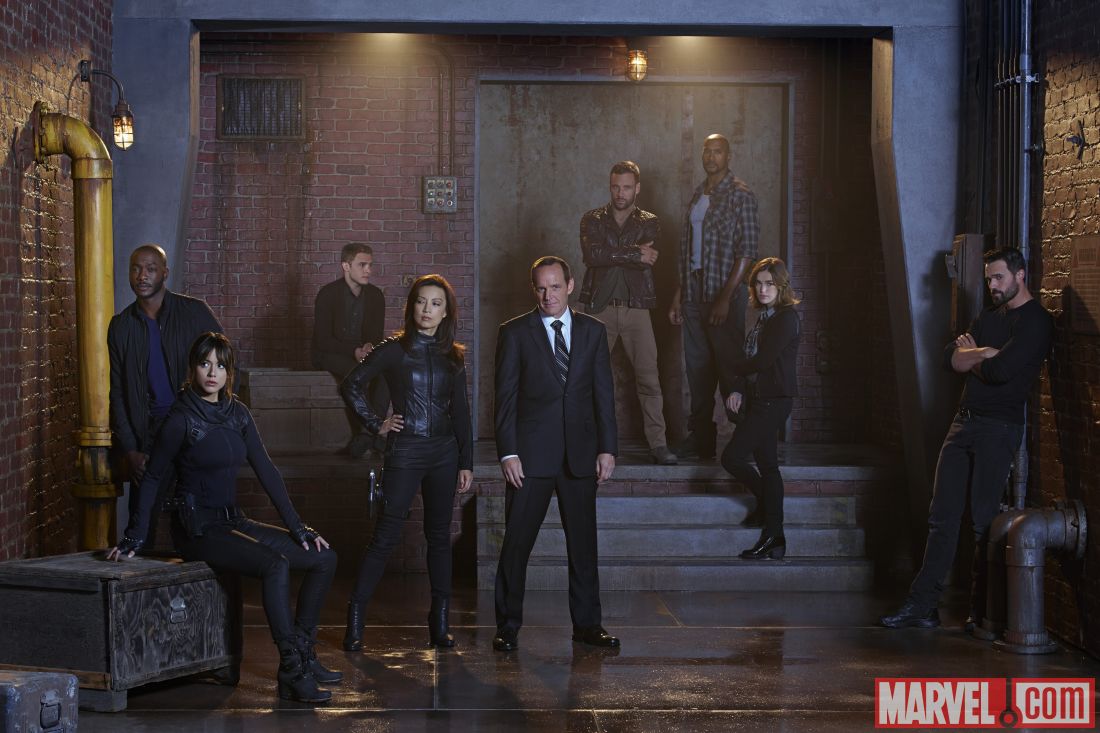
Showing posts with label Brett Dalton. Show all posts

Wednesday, May 3, 2017

Top 10 Favorite Superhero Film/TV Villains

The time has come, once again, for the newest installment of the Marvel Cinematic Universe. This time around, it’s the highly-anticipated return of everyone’s favorite ragtag bunch of intergalactic a-holes, the Guardians of the Galaxy. Yes, Guardians of the Galaxy Vol. 2 hits theaters this weekend and is sure to provide us with another awesome space adventure set to a kick-ass soundtrack. And in honor of its impending release, today I’ll be doing a Top 10 list that I promised to do two months ago. Back in March, right before the release of Logan, I did a list of 10 of my favorite performances from superhero films and TV shows. However, that list focused entirely on ‘lead performances’, from Hugh Jackman as Wolverine to Chris Evans as Captain America. Today, I’m switching things around and will be discussing my Top 10 favorite villains from superhero films and TV shows. Because for many people, a great villain is just as important as a great hero. And I guess you can say that’s why, as I’ve gone over numerous times before in the past, the MCU has always gotten flak for its villains. However, as I’ve also stated before, I don’t think ‘all’ of the MCU villains are bad; in fact, I’d say some are rather underrated. But, for the record, don’t worry, this list won’t be made up entirely of MCU villains. I’ve got a few DC villains in there as well along with some non-MCU Marvel film villains. And unlike last time, where I didn’t do any specific rankings, this one will be an official ‘Top 10’. So, without further ado, it’s time to discuss the most notable adversaries of our favorite superheroes. These are my Top 10 favorite villains from superhero films and TV shows.

HONORABLE MENTIONS


For this list, I’ve got 5 Honorable Mentions to name. First off, from DC, we have an oldie but a classic; Gene Hackman as Superman’s arch-nemesis, Lex Luthor, from the original Superman films. Hackman was excellent in the part, giving the maniacal businessman an enjoyably campy vibe while, from a casting perspective, also giving the first Superman film some legitimacy (in a time before superhero films were as big as they are now) alongside Marlon Brando as Superman’s father Jor-El, hence why the two of them were given top billing over Superman himself, the then-unknown Christopher Reeve. He would then go on to appear in the second and fourth films of the original series, though on the former he did not film any scenes with director Richard Lester after the whole incident that resulted in original director Richard Donner, who directed the first film, getting fired from it. He even provided the voice for the other antagonist in Superman IV: The Quest for Peace, Nuclear Man… though the less said about Nuclear Man and that film in general, the better. Next up, also from DC, we have the ‘unsung hero’ of The Dark Knight’s fantastic ensemble cast; Aaron Eckhart as Harvey Dent AKA Two-Face. Obviously, with this film, everyone remembers Heath Ledger as the Joker but Eckhart’s take on the charming district attorney who is slowly driven to madness, especially after he ends up heavily disfigured by an explosion, was equally terrific. His fall from grace was incredibly well-handled and would set the stage for an unforgettable finale in which Batman ends up taking the blame for Harvey’s actions so that he can protect his image as Gotham’s ‘White Knight’ after everything that the city just went through with the Joker.


And now we head over to Marvel with Daniel Bruhl’s turn as Helmut Zemo in Captain America: Civil War. As I noted before, at first I felt that he was the weakest link of the film, namely because he was barely in it. However, because the overarching conflict between the Avengers in that film was so terrifically handled, I felt that this wasn’t that big of a problem. But, upon re-watch, I realized A. that he was better than I initially gave him credit for and B. why a lot of people were viewing him as one of the better villains of the MCU. Now, granted, I don’t want every MCU villain to be like him and have a minimal role in their respective films but, technically speaking, he’s arguably the most successful MCU villain to date. Because while he is taken into custody at the end of the film, he did technically succeed in his goal to tear the Avengers apart to avenge the death of his family, who died during the Battle of Sokovia in Age of Ultron. In short, it was another perfect example of how the events of Civil War were the culmination of everything that has happened so far in the MCU up to that point; in this instance, the Avengers, despite their best intentions, inadvertently created the monster that would end up tearing them apart. His monologue to Black Panther during the climax is particularly chilling (“And the Avengers? They went home.”) Next up, from the first Captain America film (disclaimer: I’m talking about The First Avenger, not the god-awful 1990 film), Hugo Weaving as the Red Skull. Simply put, Weaving was just perfectly cast in the role as his sinister presence was felt throughout the entire film. It’s a shame, then, that it looks like he won’t be returning to the MCU anytime soon. And, finally, from X-Men: First Class, Kevin Bacon as the leader of the Hellfire Club, Sebastian Shaw. Like Weaving’s Red Skull, Shaw was a sinister antagonist, with the cool mutant ability to be able to absorb any form of energy and then expel it in the form of devastating energy blasts. Not only that, but he had a big personal connection to Magneto as we see that he was once an associate of the Nazis who conducted experiments on Erik when he was a young prisoner at Auschwitz.

And now, onto the Top 10!

10. BRETT DALTON – GRANT WARD/HIVE (MARVEL’S AGENTS OF S.H.I.E.L.D)

Image result for brett dalton grant ward

First up, we have Brett Dalton’s dual performance as S.H.I.E.L.D. agent turned HYDRA mole Grant Ward and the ancient Inhuman Hive from Marvel’s Agents of S.H.I.E.L.D. As many of you know, Marvel Studios’ first foray into television had a rather rocky start. While critical reception was solid (well, if you looked at the show’s Season 1 RT score, at least), audiences were far more critical of the show in its initial run for various reasons which, from what I can gather, range from its attempts to tie into the MCU films to the supposedly bland main characters. And of the series’ initial 6 leads, Brett Dalton got arguably the most flak as Grant Ward, the stern, by-the-book S.H.I.E.L.D. agent who is recruited to join the new team of agents led by Phil Coulson tasked with investigating superhuman-related cases following the Battle of New York in the first Avengers. However, I’d argue that Ward had some great moments in the early stretches of Season 1, mainly due to the humor that came at his expense for being so damn serious, like in the pilot episode when he and Coulson are interrogating Skye and Coulson uses truth serum on him instead of her. Apparently, though, that truth serum was fake based on what Ward tells Skye two episodes later. Still, it leads to a funny scene in which Skye and Ward end up switching roles and she ends up interrogating him about everything from his time in the field to whether his grandmother knows about what he does (“Gramsy?”). Another great humorous moment involving Ward occurs in Episode 6, ‘FZZT’, in which a running gag occurs where Fitz and Simmons imitate Ward in a boastful manner (“I’m agent Grant Ward, and I [insert badass move here]”). This then culminates in a charming scene near the end of the episode where, after Ward saves Simmons when she falls from the team’s plane, he even does it himself.

And then came Episode 17, ‘Turn, Turn, Turn’, the first episode of the series to come out after Captain America: The Winter Soldier. Thus, because that film revolved heavily around S.H.I.E.L.D., the episode implemented the film’s big twist in which we learn that the organization HYDRA, which Captain America fought during World War II, had infiltrated and taken over S.H.I.E.L.D. And as many will argue, this is the moment where the show effectively redeemed itself after its slow start. It is during this episode where we learn a stunning twist; that Ward was a HYDRA mole working alongside his mentor, John Garrett, played by the late Bill Paxton, who was also revealed to be a HYDRA agent. Thus, the HYDRA twist arguably helped Ward just as much as it did the show itself. After being taken into S.H.I.E.L.D. custody at the end of Season 1, he became the show’s wild card, leaving both the characters and us, the viewers, unsure of what he’s going to do next. And when he does do something, boy does he not hold back. He kills Coulson’s love interest Rosalind, locks Fitz and Simmons into a medical chamber and launches it into the ocean, resulting in Fitz suffering brain damage when he sacrifices himself to save them, and does many other despicable things to Coulson and co. along the way. In short, he was quite a despicable villain but I’d argue that perhaps the best villains are the ones that we love to hate. And if you ask me, Ward fit that bill perfectly as the diabolical foil to Coulson’s team. And it’s even more of a personal matter because of how closely tied Ward was to the team before the big reveal. Just look at the scene in Season 2 when Fitz confronts the imprisoned Ward over the incident that caused him brain damage.

Image result for brett dalton hive

Ward’s story ultimately came to an end in Season 3, during which he worked to reassemble HYDRA following its collapse over the course of the previous seasons. During the season, he worked alongside fellow HYDRA agent Gideon Malick to bring back the ancient Inhuman Hive, whose worshippers were the original founders of HYDRA, to Earth. Coulson and co. eventually interfered with their plan, with Coulson finally killing Ward on the alien planet Maveth, where Hive was located. However, unbeknownst to them, Hive did end up escaping the planet and had taken over Ward’s body. Thus, with this twist, Dalton changed things up with his performance as he took on this new villainous role. Hive was a more stoic being compared to Ward, always speaking in a calm and collected tone, and Dalton handled this transition perfectly. He was also quite an intimidating threat to Coulson’s team, with the ability to coerce his fellow Inhumans into working for him. As such, one stretch of the season saw Daisy, who Ward was romantically tied to back in Season 1 before the big HYDRA reveal, put under Hive’s control. Thankfully, she was brought back to normal by season’s end and Hive was destroyed before he could take over the world by turning all of humanity into Inhumans. And thus, Brett Dalton’s excellent run on the show came to an end… or did it? Yes, right now, Agents of S.H.I.E.L.D. is currently amid a story arc set within a virtual world known as ‘the Framework’, which has allowed Dalton to return to the series as the Framework version of Ward, who let’s just say is still very much the Ward that we’ve come to known over the previous seasons though in an unexpected way.

9. WILLEM DAFOE – THE GREEN GOBLIN (SAM RAIMI’S SPIDER-MAN TRILOGY)

Image result for willem dafoe green goblin

While I’m sure that quite a few will write off his performance in Sam Raimi’s first Spider-Man film as being ‘too goofy’, as well as having an overly cheesy costume to match, I’d argue that Willem Dafoe’s take on Spidey’s classic nemesis Norman Osborn AKA ‘The Green Goblin’ is still an iconic one in the history of the superhero film genre. Yes, that costume is admittedly rather silly, especially when you look at the initial concept art for the character’s costume design. However, Dafoe clearly had a lot of fun in the role; sure, he was completely hamming it up but in a good way. Still, at the same time, he did manage to have a few subtle moments here and there, primarily during scenes with his son, Peter Parker’s best friend Harry. Thus, his death at the end of the first film (by the way, I always love the moment where, right before he gets hit with his own glider, he remarks “Oh…”) would set the stage for the destruction of Peter and Harry’s friendship, as Harry vowed revenge against Spider-Man for the death of his father, even though Spider-Man wasn’t directly responsible for Norman’s death. Of course, this got a lot more complicated when Harry found out that his best friend was Spider-Man in the second film. Thus, during the ending of Spider-Man 2, Dafoe returns in a cameo as he appears to his son in a vision, yelling at him to avenge his death (“AVENGE ME!”). This leads to Harry discovering his father’s Green Goblin equipment and becoming the new ‘Green Goblin’ in Spider-Man 3. Dafoe, of course, would return once more in that film in another cameo/vision, reminding Harry of his vendetta against Peter after being temporarily stricken with amnesia. It goes to show how vital Norman Osborn was to the original Spider-Man trilogy, hence why he lands the Number 9 spot on this list.  

8. JAMES SPADER – ULTRON (AVENGERS: AGE OF ULTRON)

Image result for ultron age of ultron

I can tell that this pick’s probably going to be rather controversial, and that’s for two main reasons. First off, it’d be because, obviously, some people felt that Age of Ultron was a disappointing follow-up to the original Avengers. But, at the same time, it seems like some weren’t expecting the route that James Spader would ultimately take when playing the crazed sentient android, Ultron. The film’s first trailer implied him to be a serious threat, especially given the use of a dreary version of the classic song ‘I’ve Got No Strings’ from Pinocchio. But in the film, while Ultron is still a major threat to the Avengers, Spader ended up giving the character a surprisingly more comedic spin… and yet, I’m totally fine with that as I feel that it made him incredibly memorable. From him temporarily forgetting the word ‘children’ when remarking about how people make… ‘smaller people’, to his immediate apology to Ulysses Klaue after cutting off his arm (“Ooh, I’m sorry… I’m sure that’s going to be okay!”), he’s an absolute riot. I mean, I find it interesting that the previous MCU villain, Ronan from Guardians of the Galaxy, got flak for being ‘too serious’ and yet Ultron was given flak for being the total opposite. Expectations, am I right? Seriously, though, like Green Goblin, when given a genuinely serious moment, Spader handles it excellently, like Ultron’s first encounter with the Avengers in which he rambles about how he ‘had to kill the other guy’ [Jarvis] and remarks that they’re all ‘killers’. In short, Spader was excellently cast in the part and while it may not have been what some were expecting, his take on Ultron is undoubtedly an unforgettable one. 

7. MICHAEL SHANNON – GENERAL ZOD (MAN OF STEEL)

Image result for general zod man of steel

Another possibly controversial argument here, but taking the Number 7 spot on this list is Michael Shannon’s take on the notorious Kryptonian warlord, General Zod… and yes, I do kind of prefer his take on the character over Terence Stamp’s more iconic portrayal of Zod in Superman II (and, also, the opening of the first Superman). For the record, nothing against Stamp’s take on the character, as it is genuinely iconic (“Kneel before Zod!”), but I’d argue that Shannon’s version of the character had a bit more depth to him. As much I hate to say it, Stamp’s Zod is perhaps a bit one-note; he’s basically just a simple tyrannical figure hellbent on world domination. Shannon’s Zod, though, is one of the best examples in recent memory of a villain who tries to justify that what he does is for the greater good. In a similar manner to the original Superman films, Man of Steel opens with Zod attempting a coup on the rulers of Krypton. But in this case, he, like his former associate Jor-El, is aware that the planet of Krypton is on the verge of destruction and is also trying to save it. It’s just that, to do so, he attempts to start a new world order that will eradicate the ‘degenerative’ bloodlines that led to Krypton’s ruin. Obviously, that fails and Krypton’s ruling council sentence him and his subordinates to the Phantom Zone, just like Zod and his crew in the original Superman films. And in both cases, they’re ironically spared from the destruction of Krypton. Once freed from his prison, Zod and his cronies then begin anew on their quest to rebuild their race, ultimately coming to Earth and coming into conflict with Jor-El’s son, Kal-El AKA Superman. Cue a big fight in the city of Metropolis culminating in that infamous neck snap scene which isn’t really that big of a deal because Superman literally did the same kind of thing (albeit without snapping any necks, but you get the point) to Zod in Superman II. And while Michael Shannon did not film any scenes for Batman v Superman: Dawn of Justice, Zod’s body became a crucial plot-point in that film as Lex Luthor used it to create the creature Doomsday.

6. ALFRED MOLINA – DOCTOR OCTOPUS (SPIDER-MAN 2)

Image result for dr octopus spider man 2

As implicated earlier with the Green Goblin, a common plot thread amongst Spider-Man’s adversaries is that many happen to have a personal connection to him in some form. In this case, Dr. Otto Octavius, played by Alfred Molina, is a famous nuclear scientist who also happens to be Peter Parker’s idol. For his latest experiment, Octavius attempts to create a sustainable fusion reactor with the aid of robotic, A.I.-controlled arms. Sadly, the initial experiment goes wrong, resulting in his wife Rosalie’s death and the loss of control over the arms, which are now fused directly to his spine. As such, the arms begin to take on a mind of their own, corrupting him into committing criminal acts so that he can re-do the experiment. Out of all the villains in the Spider-Man films who are referred to as ‘sympathetic’ figures, Octavius is easily the most successful of the bunch. When we first meet him, he is shown to be a brilliant and likable guy who tragically loses everything in a single moment. Ironically, this more sympathetic portrayal is far different compared to how the character is usually portrayed in the comics, and yet here, it works, thanks in no small part to Molina’s excellent performance in the role. He handles Octavius’ fall from grace brilliantly, culminating in his ultimate redemption when he sacrifices his life to prevent the experiment from destroying New York, proclaiming that he ‘will not die a monster’. Plus, the character’s certainly a memorable baddie from a visual perspective thanks to his robotic, tentacle-like arms, hence the nickname ‘Dr. Octopus’. Clearly, a lot of complex visual effects work went into designing the tentacles and those effects still hold up well today. Thus, ‘Doc Ock’ lands the Number 6 spot on this list and, therefore, still stands as the greatest foe that Spider-Man has ever faced on film.

5. GUY PEARCE – ALDRICH KILLIAN (IRON MAN 3)
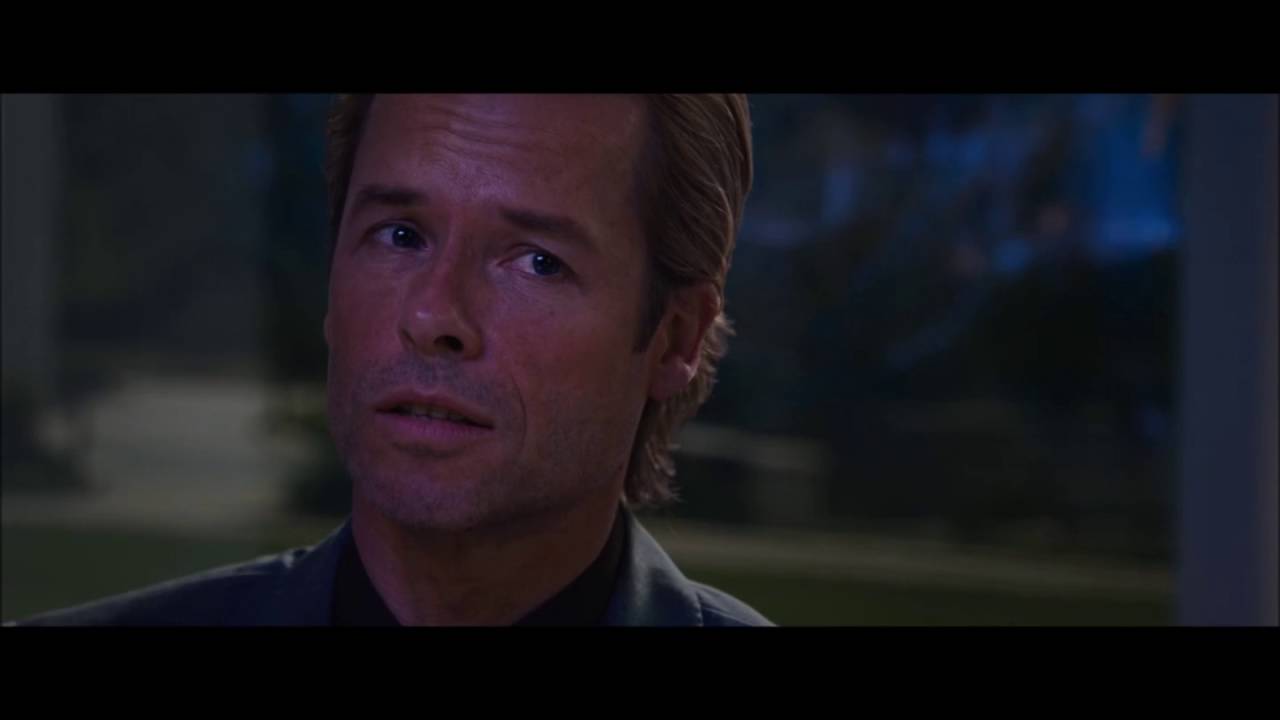
Image result for aldrich killian iron man 3

Ooh, boy… when it comes to MCU film villains, this one’s even more controversial than Ultron and you all know why. Iron Man 3 attracted major blowback from comic book fans over its big bait-and-switch on the identity of the film’s true main villain. Initially, we were all led to assume that Ben Kingsley was playing the role of ‘The Mandarin’, the leader of the terrorist group known as the ‘Ten Rings’ that was directly responsible for Tony Stark’s kidnapping in the first Iron Man film. However, when Tony finally confronted him, we saw that he was, in fact, nothing more than a drunken British actor named Trevor Slattery. The ‘true’ Mandarin (and I use the term ‘true’ loosely as the MCU One-Shot All Hail the King implied that there is indeed a ‘Mandarin’ out there) was, in fact, Aldrich Killian, head of the organization A.I.M. (Advanced Idea Mechanics) who Tony had crossed paths with years ago at a New Year’s Eve party in Switzerland. Obviously, this was a major deviation from the comics, hence why it was such a controversial plot twist once it became known. I mean, I think it’s safe to say that in recent years, the superhero film genre has been under greater scrutiny to be more faithful to the comics because of incidents like this. And yet, in this case… it works. Now, my best friend and fellow film critic Matthew Goudreau of The Young Folks recently did an editorial on why Killian was, in his opinion, the best MCU villain to date. I’ll be providing a link to that here because, to be perfectly blunt, Matt does a much better job than I’ll ever do at explaining why Killian is such an underrated antagonist. Still, here are my two cents on the whole debacle.

First off, as many have pointed out, it’s probably for the best that they didn’t do a fully ‘comics-accurate’ portrayal of the Mandarin. This is mainly because of the character’s generally racist characterization in the comics being a villain of Chinese descent. Clearly, it was a better idea for writer/director Shane Black and co-writer Drew Pearce to do something different with the character, which they did. Second, from a story perspective, this twist ends up making Killian one of the most complex villains in the entire MCU. By having Slattery appear on TV as ‘The Mandarin’, he could maintain an anonymous identity as the true mastermind behind the series of explosions caused by his company’s malfunctioning product, Extremis. Instead of it becoming known that Extremis is an incredibly faulty product, Killian has them pegged as terrorist attacks orchestrated by Slattery’s ‘Mandarin’. Thus, this plan of his, as you might have guessed, shares some noticeable similarities to real-life perceptions towards the War on Terror. And yes, during the final battle, he boldly proclaims that ‘he is the Mandarin’ but, again, as All Hail the King points out, clearly, he isn’t and the real Mandarin is out there somewhere. Will we ever see this character in a future MCU film? At this point, it’s unsure but nevertheless, this whole charade that Killian puts on proves to be an unforgettable one and it’s all buoyed by an excellent performance from Guy Pearce in the role. Plus, can we just take a moment to appreciate the fact that they managed to keep this whole plot twist secret throughout the entire marketing campaign? In today’s age of social media, where anything about a film could potentially get leaked online, we genuinely had no idea that this was going to happen. It’s just like what Slattery said in one of his performances as the fake Mandarin; truly, we ‘never saw this coming’.

4. TOM HIDDLESTON – LOKI (MARVEL CINEMATIC UNIVERSE)

Image result for loki marvel cinematic universe

Yeah, some of you probably guessed that good ol’ Loki would make it on this list somewhere. I mean, let’s be honest, most on the internet would argue that Loki is the only real standout villain of the MCU films (emphasis on ‘films’, as we’ll see in a bit). Tom Hiddleston set the bar so dang high with his turn as Thor’s devious adopted brother in the first Avengers film that any other MCU film villain was considered a disappointment if they weren’t even remotely as well-received as Loki was. He basically became the ‘gold standard’ when it came to the MCU’s rogues’ gallery. And yet… he only lands the number 4 spot on this list. Why? Well, possible controversy in 3, 2, 1… I only thought he was an ‘okay’ villain in his first appearance in the first Thor film. Don’t get me wrong, right out the gate Hiddleston proved to be an excellent fit in the role and, therefore, made Loki a very memorable adversary for Thor, especially considering their status as brothers. Plus, his overall scheme in that film, in which he gets Thor banished to Earth and stripped of his powers so that, with him out of the way, he could prove himself worthy to their father, Odin, and become king of Asgard, was at least a solid one. However, once Thor did get his powers back, it seemed like Loki wasn’t much of a challenge for him; in other words, he kind of defeated him rather easily. Thus, I feel that in that film, Loki was more of a memorable villain in terms of his primary characterization, especially once he learns that he was, in fact, the son of the leader of Asgard’s mortal enemies the Frost Giants and that he was adopted by Odin following the big war between the two groups centuries earlier. It’s really a testament to how the Shakespearean overtones imbued by director Kenneth Branagh really helped give a story that could’ve been written off as cheesy some effective emotional depth.

However, at the end of Thor, the post-credits scene revealed that Loki survived his apparent demise when he fell into the abyss following the destruction of Asgard’s source of transportation across the Nine Realms, the Bifrost Bridge. This, of course, set the stage for his return in the first Avengers and, yeah, that was where he really began to stand out. He hits the ground running as soon as he arrives on Earth via a wormhole created by the mysterious artifact known as the Tesseract, claiming that he’s come ‘burdened with glorious purpose’. And, yes, the overall plot of the first Avengers was quite simple; Loki comes down to Earth with an army, the Chitauri, and the Avengers team up to stop him. But, at the same time, Hiddleston imbued the character with, dare I say, a newfound swagger that wasn’t apparent in the first Thor. Thus, it’s easy to see why the character became so popular amongst fans. This led to an increased amount of screen-time in the next Thor film, Thor: The Dark World. However, I think it’s safe to say that this came at the expense of the film’s actual villain, Malekith, resulting in him becoming the worst villain to date in the MCU films. This kind of correlates to my overall thoughts on Loki in the MCU. Yes, he is a great character and, as you could tell from this list and how it is ranked, he is my favorite MCU ‘film’ villain. However, unlike most on the internet, that doesn’t mean that I hold other MCU film villains to what I’d like to call the ‘Loki Standard’. Not every villain needs to be like Loki and ‘too much Loki’, as seen in Thor: The Dark World, isn’t exactly a good thing. Still, it’ll be interesting to see what they do next with the character in Thor: Ragnarok, especially considering that the ending of Thor: The Dark World saw him take control of Asgard over Odin.

3. VINCENT D’ONOFRIO – WILSON FISK (MARVEL’S DAREDEVIL)

Image result for wilson fisk daredevil netflix

While the MCU film villains are constantly subjected to high scrutiny, the villains of Marvel Studios’ Netflix shows have fared much better with critics and audiences. You could say that it’s because the Netflix shows allow for more character development in a 13-episode season compared to a two-hour film. But, either way you look at it, the MCU Netflix villains have become just as popular as Loki, if not arguably more popular, and starting off that trend was Vincent D’Onofrio as Wilson Fisk, known in the comics as ‘The Kingpin’, in Daredevil. D’Onofrio was a perfect fit for the role, being no stranger to villain roles as evident from films like Men in Black and The Cell. When the show needed him to be intense, he brought the intensity in spades (e.g. when he kills a guy by slamming his head in with a car door, beheading him in the process). At the same time, though, there were instances where he could be regarded as a sympathetic character. In the best episode of Season 1, Episode 8, ‘Shadows in the Glass’, we learn that he had a rough upbringing in Hell’s Kitchen and this eventually led to him killing his abusive father. Plus, despite all the criminal acts that he does throughout the course of the show, we even get to see a bit of humanity in him through his blossoming relationship with art gallery curator Vanessa Marianna. Case in point, remember the moment when he frantically tries to keep her alive when she ends up getting poisoned at a gala? Moments like this made Fisk one of the MCU’s most complex villains to date and even though he’s sent to jail by Daredevil at the end of Season 1, he made an unforgettable return midway through Season 2, during which he partook in a brief partnership with Frank Castle AKA ‘The Punisher’ and had an intense confrontation with Matt Murdock. 

2. HEATH LEDGER/MARK HAMILL – THE JOKER (THE DARK KNIGHT/DC ANIMATION)
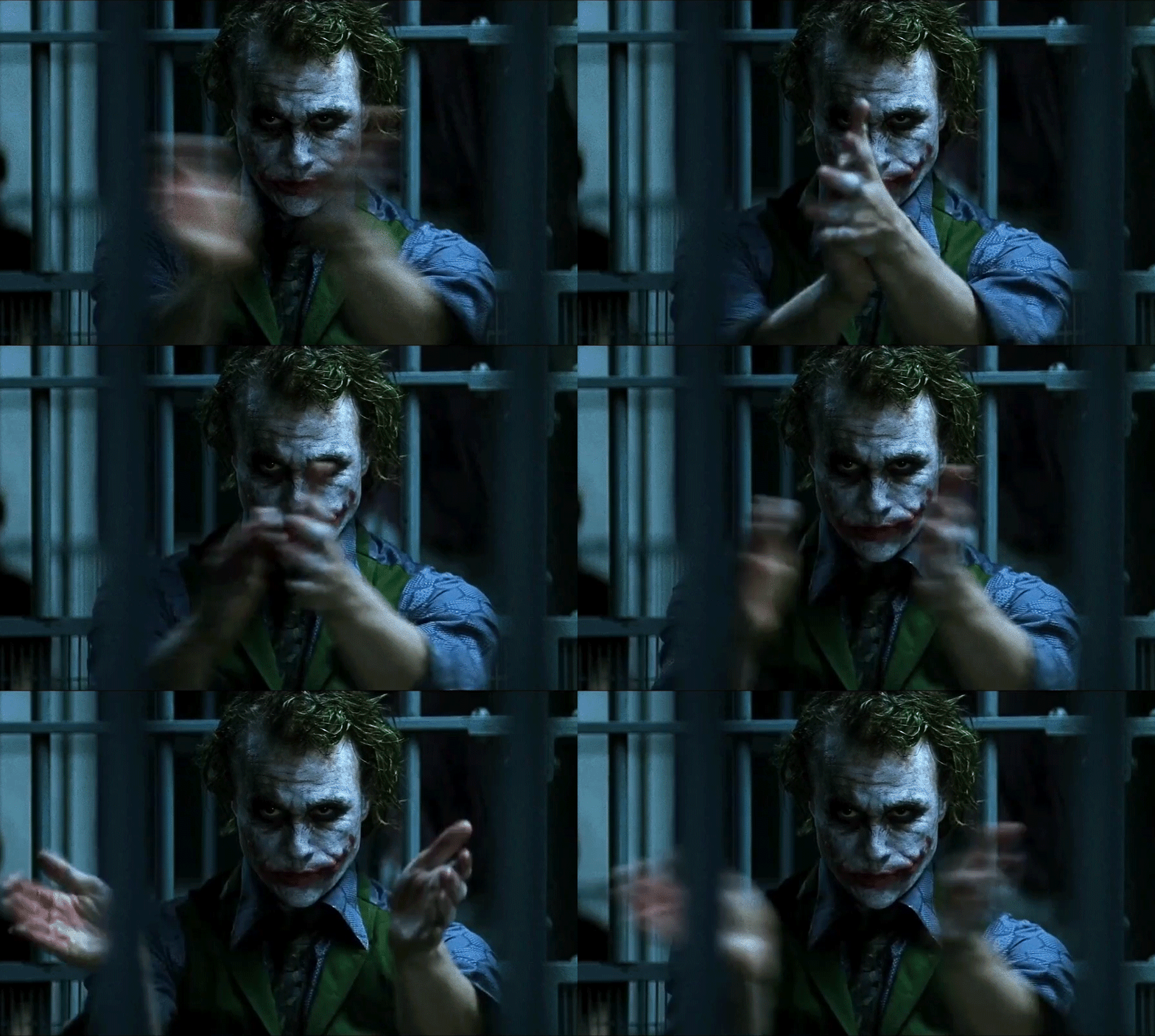
Image result for heath ledger joker

Yep, you can’t do a list like this without including Batman’s most iconic adversary, the Joker. But wait a second… two Jokers? Yes, I’ll admit I’m cheating a bit here by picking two Jokers instead of one, but I wanted to highlight arguably the two most popular iterations of the Clown Prince of Crime. After all, it really is a testament to the fact that the Joker has been played by numerous actors over the years, both in live-action and animation. And, for the most part, almost all of them have proven to be great in their own unique ways. But for this list, I narrowed it down to two picks, one from the live-action films and one from animation. First up, there’s Heath Ledger’s unforgettable turn in Christopher Nolan’s The Dark Knight, which earned him the Oscar for Best Supporting Actor though, sadly, it was posthumously earned as he passed away before the film’s release in January 2008. And as we all know, what ended up being one of the last performances of his career would ultimately be one of his best, as he gave Batman a truly intimidating opponent to face in that film. Now, for the record, Jack Nicholson’s equally iconic take on the character in Tim Burton’s first Batman film from 1989 was just as excellent, but I think Ledger’s Joker edges Nicholson’s out by a slight margin and primarily because of his overall characterization. In Burton’s Batman, we knew a lot about Joker before his transformation. Originally, he was Jack Napier, the right-hand man of Gotham’s main crime boss, Carl Grissom, before Grissom betrayed him once he found out that Jack was romantically involved with his mistress Alicia. During a botched raid, Napier crosses paths with Batman and ends up falling into a vat of chemicals, effectively turning him into the Joker that we all know. Not only that but in a deviation from the source material, we learn that he was the one who killed Bruce Wayne’s parents, the catalyst that led to him becoming Batman. Thus, these two were responsible for making each other who they are today.

With Ledger’s Joker, though, his origin is completely unexplained. There have been theories that have been spread around the internet, including one that suggests that he’s a former soldier with PTSD (which would explain why he’s so familiar with explosives), but in the context of the film itself, he’s a complete mystery. Just look at his trademark action of telling stories about how he got his scars; they’re different each time. One time, he mentions that they came from an alcoholic father and another time, he talks about a wife who he tried to please after she too got scarred up. Moments like these are why Ledger’s Joker is a much more intimidating figure than Nicholson’s Joker; the unpredictability of his actions makes him terrifying because he’s capable of striking at any given time. Plus, at the end of the day, the Joker technically wins even though he ends up in custody. Because even though Batman tells him that Gotham is full of people ‘ready to believe in good’, he reveals that he still has his ‘ace in the hole’; his successful corruption of Harvey Dent, leading to Dent’s fall from grace as he adopts the persona Two-Face. By proving that even the best people are capable of being corrupted, he will break the spirit of Gotham’s citizens for good once the details of Dent’s actions become known. It’s only through Batman’s decision to take the fall for Dent that this is prevented, at least until The Dark Knight Rises when Bane publicly reveals this lie that Batman and Commissioner Jim Gordon had been orchestrating for eight years. Thus, what Ledger and Nolan created became one of the most iconic villains in the history of the superhero film genre.

Image result for joker batman animated series

Now, let’s move over to animation, where there have been plenty of actors who have played the Joker over the years, including Michael Emerson in the two-part adaptation of The Dark Knight Returns and Zach Galifianakis in The LEGO Batman Movie. However, many will agree that the best take on the character came from the critically acclaimed Batman: The Animated Series from the 90’s, where he was voiced by Mark Hamill. Yes, the same man who gave us Luke Skywalker could also be quite the diabolical villain and as fans of Batman: The Animated Series will argue, Hamill was not only the best Joker in animation but arguably the best Joker period. He just absolutely nailed the role, from the mannerisms to the voice; you name it, he brought it and, thus, delivered ‘total anarchy’ every time he appeared. And even after Batman: The Animated Series came to an end, he would go on to play the part in other projects. In the original ‘DC Animated Universe’ that Batman: The Animated Series was a part of, he would also appear in films like Mask of the Phantasm and Batman Beyond: Return of the Joker. Many years later, he would partake in one of the character’s most iconic storylines from the comics in the film adaptation of The Killing Joke. It’s a shame, then, that the film didn’t live up to the quality of his performance. Thankfully, there’s also Rocksteady Studios’ critically acclaimed video game trilogy, the Batman: Arkham series. While voice actor Troy Baker played the part in the non-Rocksteady produced outing Arkham Origins, Hamill would return to his iconic role in 2009’s Arkham Asylum, 2011’s Arkham City, and 2015’s Arkham Knight, once again bringing the anarchy and solidifying his status as the definitive animated Joker. 

1. DAVID TENNANT – KILGRAVE (MARVEL’S JESSICA JONES)

Image result for kilgrave jessica jones

While Daredevil is, at the time I’m writing this, my favorite entry in Marvel Studios’ lineup of Netflix shows, the main villain of Season 1 of Jessica Jones, the infamous Kilgrave, takes the Number 1 spot on this list. Because while Vincent D’Onofrio’s take on Wilson Fisk was phenomenal, David Tennant managed to take his antagonist to the next level. How? Well, by being one of the most diabolical villains that the genre has ever seen. First off, there’s his main power of controlling people’s minds. And when he does so, he can force his minions to do some truly messed up things, from committing suicide to killing someone. In the latter case, he does this to Jessica when he forces her to kill a woman who, as it turns out, was Luke Cage’s wife, Reva. Plus, it also becomes clear that he sexually abused her while she was under his control, making him even more despicable. So, with that in mind, it’s a testament to David Tennant’s talents as an actor that he still manages to exude some charisma in the role, namely through some dark humor. Don’t get me wrong, though, this isn’t a case like Wilson Fisk; Kilgrave is still a full-on scumbag at the end of the day. But he’s easily one of the best examples in recent memory of a villain who’s so reprehensible and yet totally commands the screen whenever he appears. And that’s why he ultimately lands the Number 1 spot on this list, as he truly is one of the most intimidating and unpredictable villains that the superhero genre has ever seen.

And those are my Top 10 favorite villains from superhero films and TV shows. Be sure to sound off in the comments below with your favorite villains from the superhero genre, especially if I didn’t bring them up here.


Thursday, May 14, 2015

Agents of S.H.I.E.L.D.: Season 2 (2014-15) Review

(WARNING: SPOILERS AHEAD)


I’m forever going to be disappointed by the fact that ‘Agents of S.H.I.E.L.D.’ didn’t get the attention it deserved when it first debuted in September 2013. I guess you can say that it was just due to overly high expectations being that this was the first time that the Marvel Cinematic Universe had taken a step into the superhero TV series market, a market that, obviously, they had no prior experience with. The bottom line, though, is that overhyping anything (movies, TV shows, boxing matches, etc…) is never a good thing and quite frankly that is why I think the show didn’t get a lot of positive buzz early on. But being a fan from the get-go, I stuck with it in the hopes that the show would be able to prove its biggest critics wrong. Thank god then for ‘Captain America: The Winter Soldier’. Not only was it one of the MCU’s best films to date, but it also gave this show the much-needed boost that it needed with its big twist revolving around HYDRA’s takeover of S.H.I.E.L.D.. That of course carried over to ‘Agents of S.H.I.E.L.D.’ as the characters now found themselves in a very dangerous situation unsure of who to trust and without many of their fancy S.H.I.E.L.D. resources to help them. While I will always defend the first half of Season 1 as being better than most people gave it credit for, suffice it to say that the show really got going after the big HYDRA reveal and thanks to it, we S.H.I.E.L.D. fans were graced with another season of this great show.

So now with Season 2 of ‘Agents of S.H.I.E.L.D.’, the stakes are obviously much higher for newly appointed director of S.H.I.E.L.D., Phil Coulson, and his team. Not only do they have to deal with the remaining forces of HYDRA that are still out there, but now they must operate while they’re fugitives of the government due to the fact that, at the end of ‘Winter Soldier’, all of the organization’s secrets were leaked to the public by Captain America and his team in their attack against HYDRA. But as Coulson and his team soon find out, there’s a lot more for them to deal with this season than just HYDRA. Not only do they soon come into conflict with a different faction of S.H.I.E.L.D. that is heavily opposed to Coulson’s methods but also a new race of beings with special powers known as ‘the Inhumans’. These Inhumans are primed to get their own film adaptation in the MCU in 2019. But thanks to this series, people like me who were unfamiliar with this group (similar to how most people were probably not familiar with ‘Guardians of the Galaxy’ when their film adaptation was first announced) are given a proper introduction four years early. It may seem like a lot for one show to handle in just a single season, but thanks to the great writing, well-rounded characters, and phenomenal cast, Season 2 of ‘Agents of S.H.I.E.L.D.’ effectively allows this series to finally take its rightful place as a true force to be reckoned with amongst the current crop of superhero TV series. 


At the end of Season 1, after defeating the organization known as Project Centipede and their leader, ex-S.H.I.E.L.D. turned HYDRA agent John Garrett, Agent Phil Coulson (Clark Gregg) was promoted to the role of Director of S.H.I.E.L.D. by Nick Fury and tasked with rebuilding the organization following its fall into disarray after the events of ‘Winter Soldier’. As Season 2 begins, Coulson and his team; Melinda May (Ming-Na Wen), Skye (Chloe Bennet), Leo Fitz (Iain De Caestecker), Jemma Simmons (Elizabeth Henstridge), Antoine Triplett (B.J. Britt) and new members Lance Hunter (Nick Blood) and Bobbi Morse (Adrianne Palicki) begin to hunt down the remaining forces of HYDRA. While this is going on, Coulson, who has been compulsively carving alien symbols as a result of the GH-325 drug that was used to resurrect him after he was killed by Loki in the first ‘Avengers’, discovers that these symbols are actually a map to a mysterious city. Not wanting HYDRA to find it first, Coulson and his team begin to search for it in order to uncover its secrets. But once they do, the situation is forever changed when Skye suddenly gains new powers as a result of a mysterious object known as ‘the Diviner’. As the revelation of these new powers start to test the relationships between her and her teammates, she soon gets involved with the group of beings, known as the Inhumans, who are also given special powers like her. But soon their peaceful way of life is put into jeopardy when S.H.I.E.L.D. discovers their secret safe haven.

Now that the odds are very much against Coulson and his team, the stakes are definitely much higher than they were back in Season 1. Simply put, a lot of things happen during this season; HYDRA, Inhumans, ‘the real S.H.I.E.L.D.’, etc. It may seem like a lot for just one season but the show does a really nice job at balancing all of these storylines out while still maintaining enough focus on its main characters. And with the introduction of the Inhumans, a whole new fascinating side to the Marvel Cinematic Universe is revealed, with Skye, who is revealed to be the character ‘Daisy Johnson’ (AKA Quake) from the comics, being impacted the most out of any character on the show. Since the first season, Skye has always been one of my favorite characters and this revelation really helps her character grow even more as she tries to come to terms with her newfound powers. As this series has gone on, I’ve realized that one of the best elements of the show has been the relationship between Skye and Coulson, which has a very noticeable ‘father-daughter’ feel to it thanks to Gregg and Bennet’s great chemistry. Though this does make things a little more complicated with the introduction of Skye’s real parents; her father, mad doctor Cal (Kyle MacLachlan), and her mother, fellow Inhuman Jiaying (Dichen Lachman). The whole storyline with Cal in particular is really one of the best parts of the season, as MacLachlan really shines in the role of Skye’s crazed father while at the same time also making us feel sorry for him at times given the fact that he just wants to be with his family again.


One of the other great things about this show is that there are many times where it has this` ‘morally gray’ vibe to it. One of the key themes of the series is how at times we question if S.H.I.E.L.D. is doing the right thing, especially now that the whole ‘HYDRA took over S.H.I.E.L.D.’ reveal has come into play. Not only that, but there are many instances where the main characters begin to question their teammates’ motives. Skye’s transformation and the introduction of what its members refer to as ‘the ‘real’ S.H.I.E.L.D.’ are obviously the major examples of this but while those two situations are primarily based around Coulson and Skye, that doesn’t mean that they’re the only ones who get attention in this show. As I noted last season, the original six leads were all developed incredibly well with a great ensemble cast to play them. And this season continues that streak, as every main member of the group gets their own chance to shine. This includes a crucial episode that finally revealed the secret behind May’s past (and why she got the nickname ‘The Calvary’) and the numerous occasions where we, the audience, were hit with the feels as Fitz struggles to overcome the injuries that he was stricken with at the end of Season 1 thanks to Grant Ward (Brett Dalton), his former teammate who was revealed to be an agent of HYDRA. And oh yeah, we can’t forget Ward, who’s still a factor in all of this out with his agenda. 

The new additions to the cast are also excellent. The new additions to the main cast, Nick Blood and Adrianne Palicki, pretty much immediately make a great first impression. While Hunter’s true allegiances were put into question in the first few episodes, thankfully that doubt was put to rest and he officially joined the team. And like Gregg, Bennet, and many other Whedon regulars before him, Blood easily becomes well-versed in the Whedon-esque style of dialogue, resulting in him getting a lot of the best lines in the show. As for Palicki, she immediately makes one hell of a first impression in her debut episode in the role of the badass Bobbi Morse AKA Mockingbird. As I noted a few days ago in my Spoiler Post for ‘Age of Ultron’, this is just further proof that Marvel has actually done a really excellent job with their female leads, especially the ones on their TV shows. It’s also good to see that, compared to DC after the whole fiasco with the canceled ‘Wonder Woman’ series, Marvel has given Palicki much better treatment as far as her role in ‘Agents of S.H.I.E.L.D.’ is concerned. This season also gave us a number of memorable ‘S.H.I.E.L.D. adversaries’, including Whedon vet Reed Diamond as Dr. Daniel Whitehall, MacLachlan and Lachman, as noted earlier, as Skye’s parents, and Edward James Olmos as Robert Gonzales, one of the heads of ‘the real S.H.I.E.L.D.’.


Big changes came to ‘Agents of S.H.I.E.L.D.’ following the release of ‘Captain America: The Winter Soldier’ and that has helped the series quite a lot. Story-wise, the whole ‘HYDRA’ twist gave the series the boost that it needed to stand toe to toe with the other big superhero TV series currently on right now, namely CW’s one-two punch of ‘Arrow’ and ‘Flash’. To put it simply, quite a lot of things happened this season. We were introduced to the Inhumans, Skye was revealed to be one of them, and the characters’ relationships were put to the test in the increasingly morally gray world that is the ‘post-Winter Soldier’ Marvel Cinematic Universe. And based on how Season 2 ends, it’s safe to say that Season 3 is going to be even bigger, with Ward taking control of HYDRA for ‘closure’ (AKA revenge) against S.H.I.E.L.D. and the reveal that a bunch of crystals containing the substance known as the Terrigen Mist, which mutates anyone who is an Inhuman (and kills anyone who isn’t), has been leaked into the ocean, has been consumed by fish, and has finally been transferred into fish oil pills. Oh yeah and let’s not forget to mention the beast of a cliffhanger at the very end of the finale when Simmons is sucked into the mysterious Kree weapon that S.H.I.E.L.D. had found that could’ve been used to destroy the Inhumans. Seriously, can Season 3 come any sooner?

Final Season Rating: 5/5!

And now, just like I did last season, here are my Top 5 favorite episodes of the season but of course, first let’s start with the Honorable Mentions…

SHADOWS


Season 2 got off to a really nice start with the premiere episode, ‘Shadows’, which effectively showcases how much things have changed for Coulson and his team since we last saw them at the end of Season 1, with Coulson now faced with the task of trying to rebuild S.H.I.E.L.D. after the whole HYDRA fiasco. But the most interesting thing about this episode is that, for the first episode of the new season, it didn’t really end on a high note for the protagonists. The bulk of the episode has them going after a mysterious object known as the Obelisk but even though they do acquire it, it is then immediately taken from them by Carl ‘Crusher’ Creel, a man who has the ability to absorb the properties of whatever he touches and who also kills a few S.H.I.E.L.D. agents in the process, including Agent Hartley who’s played by Lucy Lawless in a very brief ‘cameo’ (she does return later on in a flashback in the episode ‘One Door Closes’). This episode also illustrates the fact that now, as the title suggests, S.H.I.E.L.D. must act ‘in shadows’ now that they can’t rely on the government to help them anymore. All in all, this episode perfectly highlights both the heightened stakes and the darker turns to come out of this second season.

A HEN IN THE WOLF HOUSE


Early on in the season, Simmons had gone undercover at HYDRA but in this episode, her cover is at risk of being blown when HYDRA learns about the situation, while not immediately realizing that she is the mole within their system. Simmons tries to maintain her cover but attracts the suspicion of agent Bobbi Morse. Thankfully, Morse is revealed to also be a S.H.I.E.L.D. agent working as a mole in HYDRA and helps Simmons escape from HYDRA’s forces once they learn that she’s the mole. This episode is one of the best primarily thanks to Morse’s bad-ass introduction. And as noted earlier, it’s nice to see that Adrianne Palicki got a much more substantial role as far as superhero TV series are concerned after the fiasco surrounding the unaired ‘Wonder Woman’ pilot she starred in.

AFTERSHOCKS


‘Aftershocks’ was the first episode of the 2015 run of the series, following the ‘Agent Carter’ mini-series, and was coming off of an episode where, to put it quite simply, a lot of s*** went down. One of those events was the tragic passing of Tripp and his death is felt throughout this episode, especially when the team starts to argue with each other over the situation. But of course the other big part of this episode is Skye’s initial dealings with the powers she acquired while down in the secret Alien city. When Fitz discovers this, he keeps her newfound abilities secret from the rest of the team, especially after Simmons remarks that people like Raina (Ruth Negga), who was also ‘changed’ by the Terrigen Mist along with Skye, should be ‘put down’. Speaking of Raina, we also see her struggle with her new mutation which gives her a thorn/spike-like appearance (and yes, there is a ‘Sonic the Hedgehog’ reference in a later episode). I’d also like to point out that this may actually be the most violent episode of the series to date as we do see blood spatter when Raina kills a few S.H.I.E.L.D. agents. All in all, you really felt the weight of all that happened in the last episode here, and that’s why it’s another stand-out episode from this season while continuing to build up the debut of the Inhumans.

WHO YOUR REALLY ARE


And that was followed by another solid episode in the form of ‘Who You Really Are’, which featured a cameo by Lady Sif (Jaimie Alexander), who suddenly arrives on Earth suffering from amnesia. The amnesia is so bad that she doesn’t even remember who Thor is. But anyway, in this episode, S.H.I.E.L.D. aids Sif in tracking down a Kree who is hunting down whoever was recently affected by the Terrigen Mist; he’s also the one responsible for Sif’s amnesia. Of course, as we all know, that person just so happens to be Skye, whose powers are finally revealed to the team sans Fitz due to him learning about it in the last episode. She is nearly killed by the Kree but he is defeated by Morse. This, however, changes things as now the rest of the team start to become fearful in regards to her new abilities. The relationship between Fitz and Simmons is also strained due to Fitz not telling Simmons the truth though as noted earlier, given the fact that in the last episode she said that she believed that people like that should be put down, can you blame him?

FACE MY ENEMY


One of the best earlier episodes of the season, ‘Face My Enemy’ has Coulson and his team going undercover at a fundraising event in order to find a painting that has the same alien symbols that Coulson has been carving engraved on it. Sort of a ‘Mission Impossible/Avengers’ (not those Avengers, for the record; the British TV series ‘The Avengers’) style plot, the episode started off with some fun banter between Coulson and May, including one of the rare times May is seen laughing, which she immediately follows up with by telling Coulson “her face hurts”. But the best part of the episode is the final fight between May and Agent 33, who had taken on May’s voice and appearance with the help of special S.H.I.E.L.D. technology. Simply put, it’s a fight between Ming Na and Ming Na and it’s one of the best-shot action sequences of not just the season, but the whole series. This is the first of three episodes this season directed by Kevin Tancharoen, brother of series co-creator Maurissa Tancharoen and spoilers, all 3 of his episodes are in this psuedo-Top 10 list of the best 'AoS' episodes from Season 2

And now, here are my Top 5 favorite episodes from Season 2... 

5. ONE OF US


Also directed by Kevin Tancharoen, this episode belonged to Kyle MacLachlan as Cal, in which he recruits a group of ‘Gifted’ individuals to take on S.H.I.E.L.D.. As noted earlier, his crazed nature results in some of the best moments of the season while at the same time also making us feel sorry for him at times due to him wanting to re-connect with Skye. It all culminates in a pretty cool final battle at a football stadium in what is revealed to be Coulson’s hometown of Manitowoc, Wisconsin. This episode also serves as the introduction of May’s ex-husband Andrew Garner (Blair Underwood), who is brought in to assess Skye’s new powers and although he warns Coulson that Skye should leave S.H.I.E.L.D., Coulson decides to go against his suggestion. Also there’s this…


4. THE DIRTY HALF DOZEN


This episode, the third of which Kevin Tancharoen directed, succeeds in being both incredibly nostalgic for fans of the series as well as being fairly awkward at times. The nostalgic factor comes from the fact that in this episode, Coulson enlists his original team, including Ward, for a mission to free Mike Peterson (AKA Deathlok) and Inhuman Lincoln Campbell (Luke Mitchell) from HYDRA’s custody. The awkward part of this, as you might have guessed, comes from the fact that, you know, Ward betrayed the team. The scene where he tries to apologize to the team for all that he did is the pinnacle of how awkward this situation gets. I mean while there is, for some reason, a part of me that kind of wants things to go back to the way they were for Coulson’s team, it’s hard to excuse Ward for all that he’s done since the episode ‘Turn, Turn, Turn’. It’s so messed up that Simmons, in a rather disturbing move, actually tries to kill Ward but ends up killing HYDRA agent Bakshi instead when the latter sacrifices himself to save Ward. Being the final episode before ‘Avengers: Age of Ultron’ was released here in North America, the episode ends on a nice set-up for the film as Coulson gives Maria Hill the location of HYDRA leader Baron von Strucker’s secret base so that the Avengers can go stop him.

3. WHAT THEY BECOME


This was the first ‘big’ episode of the season, as quite a lot happened in this episode, which revolved around Coulson and his team trying to reach the secret alien city before HYDRA. To start things off, Skye is finally reintroduced to her real father and we learn the true identities of both of them. His name is Calvin Zabo (AKA ‘Mister Hyde’ from the comics) and we learn that Skye’s real name is Daisy Johnson (AKA ‘Quake’ from the comics). This then leads to Skye going down into the alien city where she, along with Raina, is transformed by the Terrigen Mist that came from the Obelisk everyone had been after during the first half of the season. The finale in which this occurs is one of the most epic moments of the entire season, especially the part when Skye erupts out of the cocoon she had become encased in with her new earthquake powers. Unfortunately, this episode also ends on a sad note as Tripp, who had tried to save Skye when she and Raina started to become encased in cocoons, dies as a result of coming into contact with the Terrigen Mist. It’s even sadder because Tripp was quite frankly one of the coolest/bad-ass characters in the show, having made quite a nice impression after first debuting in Season 1. I was hoping that this season he would be promoted to the position of ‘series regular’ but of course, this is a Whedon production so you know that not everyone is going to get out of this alive. As the final episode of the season’s 2014 run, it definitely left us fans with one hell of a cliffhanger. At least we had ‘Agent Carter’ to hold us over until the series returned in March.

2. MELINDA


Easily one of the most emotional episodes of the entire season is ‘Melinda’, in which we finally learn the truth about what happened years earlier in Bahrain where she earned the nickname ‘The Calvary’, which Skye also learns about from her mother Jiaying. After single-handedly storming a building full of bad guys, May fought a member of the Inhumans who had been stealing Terrigen crystals for her daughter, who in turn had her mother hurt others to feed on their pain. May is then forced to kill not only the mother, but also the daughter as well. As this series has gone on, we the audience have been slowly learning more and more about what really happened to May in Bahrain that had forever changed her into the stone-cold bad-ass that she is today. And with this emotional gut-punch of an episode, now we know why.

1.     S.O.S.: PARTS 1 AND 2


And finally we have what is, in my opinion, not only the best episode of this season but also one of the best TV season finales that I’ve ever seen: the two-parter ‘S.O.S.’. This season has been building up to an inevitable war between S.H.I.E.L.D. and the Inhumans. It finally gets started when Jiaying fools everyone into thinking that she had been shot by agent Gonzales when in reality she killed Gonzales and ‘framed’ him for ‘trying’ to kill her. The ruse is so initially effective that even Skye believes it at first. But, after witnessing her mother kill Raina, who had tried to convince Skye of her mother’s true motives, Skye finally learns the truth and, along with Coulson and his team, try to stop Jiaying and the Inhumans from unleashing the Terrigen Mist upon the world, which would kill anyone who isn’t Inhuman. This finale has it all; great writing, exceptional character development, awesome action sequences, as well as plenty of very emotional moments, mostly courtesy of Cal, who is forced to come to terms with the fact that his wife must be stopped. And he does just that, killing her when she attempts to kill Skye. At the end of it all, S.H.I.E.L.D. wipes his memory allowing him to finally be at peace in his life. And given some of the big developments that occur at the end of this episode, from Ward basically taking over HYDRA to Simmons getting absorbed by the mysterious Kree weapon, it’s clear that Season 3 is going to be big. But as for Season 2, ‘S.O.S.’ ends this great second season of this great show on the best note. And that is why it is the best episode of Season 2 of ‘Agents of S.H.I.E.L.D.’.


Also, Fitz has the best line of the whole episode…


Sunday, May 18, 2014

Agents of S.H.I.E.L.D.: Season 1 Review/Final Sum-Up

(WARNING: SPOILERS (!) for both ‘Captain America: The Winter Soldier’ and ‘Agents of S.H.I.E.L.D.’ ahead!!)


After 22 episodes, the first season of Marvel’s ‘Agents of S.H.I.E.L.D.’ has finally come to an end and boy what a run it has been. In just one season, this spinoff of the Marvel Cinematic Universe was able to establish itself within the continuity of the films and provide an intriguing look into the world through the eyes of normal people, without the need to have the series be centered around a superhero… but then again, that may be the reason why, early on, this show experienced a bit of a struggle critically. It did get fairly good reviews from critics, but it seems as if most audiences weren’t too thrilled by it and from what I kept hearing about online, the word ‘disappointing’ was brought up quite a bit for the first few episodes. But, as the season progressed, those rather negative reviews began to disappear and this show really started to get good once ‘Captain America: The Winter Soldier’ hit theaters, a film that really left quite an impact on both the whole universe and, more importantly, S.H.I.E.L.D. This of course played a huge part in the last few episodes of the show though in the end, I will always defend the first half of this season as being far better than what many were initially saying about it.

First off, I have to address the following sad truth; just like ‘Star Wars Episode I’ and ‘The Dark Knight Rises’, this show was WAY too overhyped and as I’ve noted before in the past, overhyping anything will result in it never turning out as well as we all want it to be. I will admit that I too was really anticipating the show, but this was more a case of me not knowing what we would be getting from this show. We knew that it would revolve around Agent Coulson (Clark Gregg), returning after apparently dying at the hands of Loki in ‘The Avengers’, and a team of agents as they investigated all of the strange occurrences that went on following the ‘Battle of New York’ but we really didn’t know how this show would handle that scenario and for what it’s worth… I found myself really enjoying the show on a whole. I really liked the idea of a show that explored an established universe further and that we would be able to spend more time in this universe than we would normally get from a two-hour film and while it would be nice to see one of the superheroes from the movies appear from time to time, the show would be able to work if the characters were compelling enough to follow.


But on that note that was sort of the problem that a lot of people apparently had with the show; that it didn’t really feel like it was taking place in the same world as the MCU films and that, aside from Coulson, the other characters were rather bland… well, that’s where I highly disagree because the six main characters in this show were the main reason why I loved it so much. Why would I even be watching this show if I hadn’t cared about the characters so much? To quote Coulson from Episode 14 (T.A.H.I.T.I), they were a ‘family’ and that is why I found them all to be very compelling characters because they had such a great ‘familial bond’. In my review of the pilot episode, I mainly focused on Clark Gregg and Chloe Bennet as the standouts of the cast and over the course of the season, I really liked the connection that Coulson and Skye had, sort of like a ‘father-daughter’ bond, which would make sense considering that the main reason why Skye joined S.H.I.E.L.D. so that she could look for her parents (and it’ll be interesting to see who they are because, in the penultimate episode of the season, it was revealed by one of the main antagonists Raina (Ruth Negga) that Skye’s parents were ‘monsters’ and in the finale Raina visits a man who is apparently Skye’s father). But of course like with pretty much every Whedon production, the whole cast is fantastic with each member standing out in their own unique way. That family dynamic was so strong that when a key twist happened revealing the true nature of one of the characters, it was genuinely surprising and also gut-wrenching at the same time.

This twist occurred in Episode 17, ‘Turn, Turn, Turn’, the first episode following the release of ‘Captain America: The Winter Soldier’, the film where we learned that the organization HYDRA had infiltrated S.H.I.E.L.D., and by the end of the film, S.H.I.E.L.D. was in disarray. In this episode of the show, Coulson and the team learn about this and by the end of it, Coulson sums it up perfectly by saying that their next goal is to ‘survive’, because they know that HYDRA is now a major threat once again. Throughout the season, the team has been investigating into the identity of a mysterious figure known as ‘the Clairvoyant’ who has been seeing ‘everything’ and in this episode, that character was revealed to be John Garrett (Bill Paxton, an excellent addition to the cast for the second half of the season), a S.H.I.E.L.D. revealed to be an agent for HYDRA. While he is taken in custody at the end of the episode, we learn that Agent Ward was also a HYDRA mole as he frees Garrett, setting the stage for the rest of the season. I’ve heard a lot of people say that Ward was a ‘dull’ character up until this point and while I disagree with that (I feel that Brett Dalton was very charismatic in the role), this was a great turn of events and helped establish a great character arc for Ward, who was only arrested in the final episode so I’ll be interested to see what happens after that for him and if he will still play a part in the show.


I will admit that in the first few episodes, some of the six main leads weren’t really given much to do, specifically Fitz and Simmons. While Coulson, May, Ward, and Skye were all given solid screen time  and character development for the first five episodes or so, Fitz and Simmons were just really stuck in the background just doing their jobs and nothing else. Thankfully, that changed with Episodes 6 and 7 (‘F.Z.Z.T.’ and ‘The Hub’ respectively) where the two of them really shined and by episode 8 ‘The Well’ I had become completely invested in all six members of the team and I think that it was that episode that really got me invested in the show as a whole as well… even though this was still around the time when most people weren’t too fond of the show. So when did the show itself start to get really good? Well, I think it was right around the time ‘Captain America: The Winter Soldier’ came out, ‘Turn, Turn, Turn’ to be exact, the first episode in the series that really felt like a continuation of the films and giving us a really well-written episode where Coulson and his team deal with the fact that HYDRA has infiltrated S.H.I.E.L.D. and having it end with us learning that one of the six characters that we had grown so attached to was actually with the bad guys. This made for one of the best hours of television this past year.

But no matter what, I will still stand by the first few episodes of this season, when most people were saying that the show was either disappointing or that, to be frank, it just sucked. I just feel that the show was being unfairly criticized for not living up to the lofty expectations that we were all setting for it. Sure, it would’ve been nice to have seen a few more superheroes from time to time, but to me this show is a great example of how you can do a show within a pre-established universe, and a superhero universe at that, and not have it focus on certain characters if you have great writing and I feel that this show fit the bill for that. I didn’t mind the whole idea of them doing a ‘baddie of the week’ thing for the first few episodes and I wasn’t annoyed by them having to frequently reference the films because it did kind of have to do so anyway. After all, this show doesn’t have as big of a budget as the films so we can’t have something as big as ‘The Avengers’ every week (I’m also saying this in response to the numerous criticisms about the show’s visual effects that I kept seeing early on in the season… I thought the visual effects were actually pretty good for a show of this magnitude). It seems like they’re moving away from that, which they certainly did in the second half of this season, but I won’t mind too much if these kinds of episodes still occur from time to time down the road.


I’m really glad to see that this show has really attracted much more positive reactions in recent episodes. But, at the same time, I’m also rather bummed that it did take a long time for that to happen because this is one of those cases, like with another Marvel property, ‘Iron Man 3’, where I feel like this show was better than what everybody was saying about it. Sure, I’m not going to say this show is ‘as good’ as ‘The Avengers’ or any of the MCU films but it really doesn’t have to be. It serves its purpose by running parallel to the films but for also exploring this universe not through the eyes of someone like Iron Man or Captain America but from regular people like everyone’s favorite agent of S.H.I.E.L.D., Phil Coulson, and the team of agents that he leads to ‘protect the ordinary from the extraordinary’. This was really the only show these last few months that I watched on a regular basis (sorry fans of ‘Arrow’, but I have no interest in that show at this time) and I’m really excited to see that it has been renewed for a second season (along with another Marvel series, ‘Agent Carter’, that I’m also really interested in seeing as well). I can’t wait to see what happens next on this show and I’m hoping that it will gain a much bigger fan base next season so that it won’t end up like the last few shows that Joss Whedon has produced, like ‘Firefly’ or ‘Dollhouse’; prematurely canceled…

And now, I close this out with my Top 5 personal favorite episodes from Season 1… but first, some honorable mentions…

‘PILOT’


While I was very positive towards the pilot episode of the show, directed by Joss Whedon, it misses out on being in the Top 5 because, like with a lot of other great shows, while it gets the ball rolling, some of the later episodes were just better than this one. However, I still enjoy the pilot episode very much as it introduces us to the team, has plenty of funny moments (like when Ward is injected with the ‘truth serum’ that apparently wasn’t real as we learn two episodes later in ‘The Asset’), and paves the way for a few intriguing character mysteries, most importantly how Coulson survived his death in ‘Avengers’. It did what pilot episodes are supposed to do… set the stage for what will come in later episodes.

‘F.Z.Z.T.’


Earlier I mentioned that in the first few episodes of the show, Fitz and Simmons really didn’t get much to do and that changed with this episode (as well as the next one ‘The Hub’ which isn’t an Honorable Mention or in my Top 5) where both of them really shined, especially Simmons, who in this episode ends up getting infected by a virus that has been killing people that came from a Chitauri helmet recovered from the ‘Battle of New York’. We really see the connection that Simmons has with Fitz, who risks his own life to help his friend before she ends up being a victim of the virus as well. Both Iain De Caestecker and Elizabeth Henstridge did phenomenal jobs in this episode, which at the time I proclaimed to be the best episode yet… though some even better episodes soon came afterwards.

‘REPAIRS’


It’s safe to say that Agent Melinda May (Ming-Na Wen) has been one of the most popular new characters on this show, and I can see why. Ming-Na gives the character a real badass but also stoic persona that makes you interested in finding out what happened to her a while back that led to her initially not wanting to go back into the field back in Episode 1 (and heck, even why she’s known as ‘The Calvary’). This episode gave us our first clue into her past as the team investigates a series of explosions that are linked to a girl named Hannah, though we learn that they were actually caused by one of her co-workers, who was actually trying to protect her. Definitely one of the best episodes of the first half of this season, ‘Repairs’ was a very good episode giving us insight into one of the most popular characters on the show though it does feel like there’s more to May than what we learned from this episode.

‘END OF THE BEGINNING’


The final episode that aired before the release of ‘Captain America 2’, this episode was the first time where the writers really hinted at the darker things that were occurring in the Marvel Cinematic Universe as Coulson, his team, and their allies begin searching for the Clairvoyant. This episode has a lot of great character moments, some interesting reveals (like how May was in contact with Nick Fury because he had her keeping watch over Coulson following his resurrection), and a pretty effective and creepy cameo from Brad Dourif as a man who was suspected to be the Clairvoyant… until we learn that the Clairvoyant was actually amongst them the whole time and was even an Agent of S.H.I.E.L.D. It ends on a great cliffhanger as the team finds themselves in a situation where they have absolutely no idea what’s going on… until the next episode, of course.

Top 5 Favorite Episodes

5. THE WELL (Episode 8)


No, you didn’t read that wrong, one of my favorite episodes of this season was episode 8, ‘The Well’, which was promoted as being a tie-in to the then recently released ‘Thor: The Dark World’… though, as the critics as this episode will no doubt point out, this didn’t really connect that much to the film. The episode revolved around Coulson’s team who are basically brought in to ‘clean up’ the mess after the final battle of ‘Thor 2’, and they come across a mysterious Asgardian staff that gives its user super strength but also fuels them with rage… yeah, I don’t recall anything like that being mentioned or shown in ‘Thor 2’… but anyway, despite the fact that this episode didn’t really tie-in to the movie that much, I really enjoyed this episode for other reasons. As I mentioned earlier, it was at this point in the season when I truly became invested in the six main characters and I felt that this episode offered a solid story arc for Ward as we began to delve into his troubled past… which came into play yet again in a later episode, ‘Ragtag’. Overall, this was a nice little character-driven episode with some great direction from ‘Star Trek’ alum Jonathan Frakes.

Plus, considering how Ward was acting like an angry Bruce Banner at points, I couldn’t resist making this joke via Twitter…


4. T.R.A.C.K.S. (Episode 13)


Here we had a pretty darn good episode where the team boards a train as part of their investigation of the Clairvoyant. There were a few aspects of this episode that I really liked; I liked how it continuously returned to a certain moment, giving us the full picture of the situation that Coulson’s team was getting into as all of them were split up into teams (plus we had a nice little cameo from good old Stan Lee… that’s always nice). The episode also ended on a pretty shocking cliffhanger as Skye ends up getting shot twice by one of the bad guys, Ian Quinn, and is left for dead by him until Coulson and the rest of the team find her. This leads into the next episode, T.A.H.I.T.I, where the stakes were pretty high as they were trying to find a way to save Skye which ended up with them giving her the same drug that S.H.I.E.L.D. used on Coulson when he was near death. Plus, as we learned from the last episode ‘Seeds’, there’s more to Skye than meets the eye in that she’s actually an ‘0-8-4’, an object of unknown origin similar to the device that the team found in Episode 2, fittingly titled ‘0-8-4’. Overall, ‘T.R.A.C.K.S.’ was another solid episode that had us on the edge of our seats as it ended up until the next episode aired a few weeks later.

3. NOTHING PERSONAL (Episode 20)


I’ve heard a lot of people say that the weakest part of ‘The Avengers’ was the character Maria Hill (played by Cobie Smulders). While I’m fine with Smulders in the role and her role in the film as a whole, I can sort of see what everyone’s talking about as it sort of feels like this character was possibly one of the last additions made to the film and ended up getting lost amongst everything else that was going on in that film. But recently Smulders has really gotten more comfortable in the role via her next appearances within the MCU, especially in ‘Agents of S.H.I.E.L.D.’. She has a great moment in the pilot where she remarks about Thor’s arms after Ward questions whether Thor is actually a god. She makes a return to the series in ‘Nothing Personal’ and has another great moment in the second half of this episode when she pulls a ‘verbal smack down’ on Ward (at this point, Coulson and the rest of the team have learned that he’s with HYDRA), allowing Coulson to sneak onto the plane so that he can rescue Skye. An even bigger moment in this episode is when Coulson learns that he was in charge of the T.A.H.I.T.I. operation that brought him back to life. Overall, this episode was full of great reveals, some great scenes between Ward and Skye, and possibly Cobie Smulders’ stand-out appearance as Maria Hill.

2. THE ONLY LIGHT IN THE DARKNESS (Episode 19)


This episode takes the cake for some of the most heartbreaking moments we’ve witnessed this season. In this episode, we finally meet Coulson’s cellist ex-girlfriend who was first hinted at in ‘Avengers’, Audrey Nathan (played by Whedon regular Amy Acker) as Coulson, Fitz, Simmons, and Agent Antoine Triplett (B.J. Britt; hopefully he becomes a regular next season) travel to Portland, Oregon to save Audrey from a man named Marcus Daniels (known as ‘Blackout’ in the comics) who obsesses over her. The material involving Coulson and Audrey’s relationship is the highlight of the episode and is some really, really sad stuff as Audrey tells Simmons about what happened when she learned about Coulson’s ‘death’, saying that now she feels like he’s ‘watching over her’… and the sad irony is that Coulson is leading the mission to protect her and she doesn’t know about it. It gets even more heart-wrenching after Coulson and the team defeat Daniels. Audrey gets knocked out and before they leave, Coulson comforts her, again without her knowing he’s alive. Seriously, this was a sad episode but also one full of some fun MCU references (including references to ‘Winter Soldier’ and Bruce Banner (heck, Simmons even makes a ‘Doctor Who’ reference at one point)). I hope they bring back Audrey in future episodes, not only because Amy Acker was fantastic in the role, but I’m hoping that Coulson will eventually get the chance to reveal to her that he’s alive. The writers owe us that much after continuously pulling our heartstrings during this episode.

1. TURN, TURN, TURN (Episode 17)


Yeah, you can’t really argue against this one. ‘Turn, Turn, Turn’ was the best episode of the season and as many of the early critics of the show noted, this episode was when the show finally started to get really good and of course, while I’ll defend that the first half of the season was better than it was credited as, this was definitely the game-changer episode of this season, perfectly tying into ‘Captain America: The Winter Soldier’. Now that HYDRA has taken over S.H.I.E.L.D., this episode follows the group that definitely has the biggest connection to S.H.I.E.L.D., Coulson’s team, as they try to survive after learning this. Not only that, but this episode has some great surprising moments, including when Garrett was revealed to be the Clairvoyant and, most importantly, when Ward reveals his true colors. This was a fantastic hour of television in every way.


Final Season Rating: 4.5/5