Showing posts with label Michelle Pfeiffer. Show all posts

Saturday, November 2, 2019

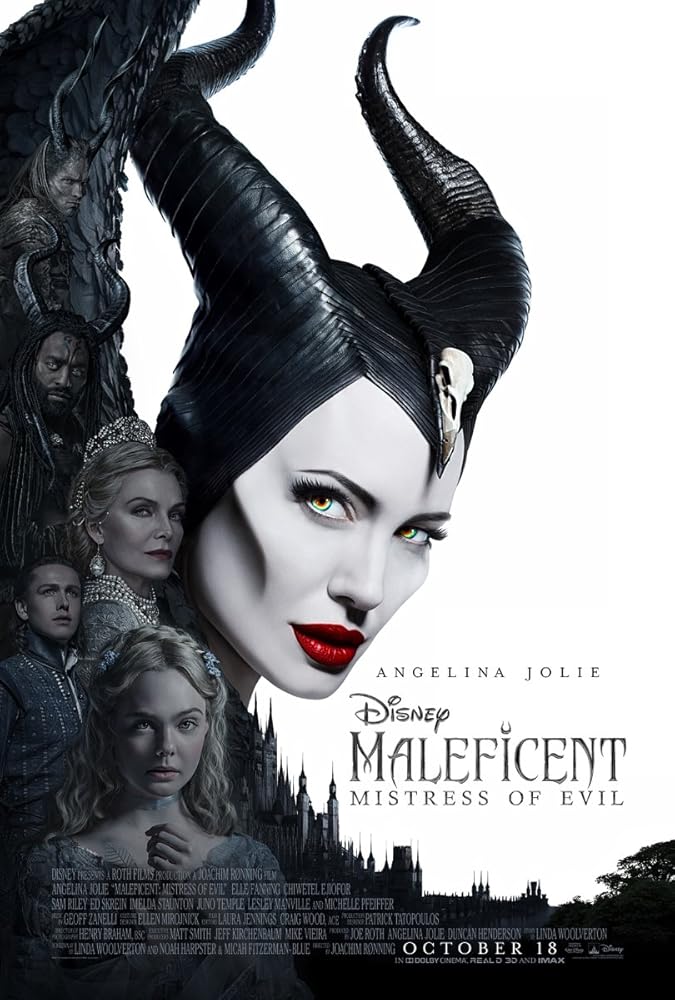
Maleficent: Mistress of Evil (2019) review


Michelle Pfeiffer, Angelina Jolie, Chiwetel Ejiofor, Elle Fanning, Ed Skrein, and Harris Dickinson in Maleficent: Mistress of Evil (2019)

In 2014, Disney released their then-latest live-action remake of one of their animated classics, Maleficent. The film served as a reimagining of the studio’s 1959 film Sleeping Beauty, but as the title suggests, the focus was shifted from the titular ‘Sleeping Beauty’ AKA Princess Aurora to its iconic villainess, Maleficent. However, instead of just simply maintaining the character’s villainous nature from the original film, Maleficent ended up going a radically different route and turned the character into a tragic anti-hero whose actions served as an act of revenge against those who wronged her while also forming a genuine mother-daughter relationship with Aurora. As you might have guessed, this new characterization didn’t exactly go over well with everyone, thus contributing to the film’s overall mixed reception. And yet, that didn’t stop it from being a massive hit at the box-office where it grossed over $758 million worldwide, effectively continuing the financial hot streak of Disney’s live-action remakes. Thus, half a decade after the original’s release, the ‘Mistress of All Evil’ (and yes, I will use that title in this instance even though this version of the character isn’t a villain) is now back in a new film, Maleficent: Mistress of Evil, albeit with a notable change in director. Whereas the first film served as the directorial debut of production designer Robert Stromberg, this film is directed by Joachim Rønning, who’s fresh off directing the fifth Pirates of the Caribbean film with long-time directing partner Espen Sandberg (though, to be clear, this one is Rønning only). And while Mistress of Evil does continue to go with its polarizing heroic rendition of its main character, those who were fans of the first film will find this to be yet another solidly entertaining dark fantasy all bolstered once again by Angelina Jolie’s truly excellent turn in the title role.

It has been five years since the powerful Dark Fey Maleficent (Angelina Jolie) saved Princess Aurora (Elle Fanning) from the death-like sleeping curse that she had inflicted upon her as a baby due in large part to the motherly affection that she had developed for the young Princess. Since then, Aurora has dutifully served as the ruler of Maleficent’s kingdom, the Moors, and on one faithful day, her dashing suitor Prince Phillip (Harris Dickinson, taking over for Brenton Thwaites from the previous film) asks for her hand in marriage. Despite Maleficent’s objections over this due to her own past experiences with love, Aurora convinces her to travel to Phillip’s home, the Kingdom of Ulstead, and meet with his parents, King John (Robert Lindsay) and Queen Ingrith (Michelle Pfeiffer). However, this doesn’t end up going very well as Maleficent soon begins to feel threatened by Ingrith, especially after she claims that this union will result in her becoming the mother that Aurora ‘never had’. Thus, when Maleficent lashes out at this remark in a manner that seemingly curses King John into a perpetual sleep like she did with Aurora, she becomes vilified by Ingrith, who promptly begins to mount an all-out war against the Moors. During this time, Maleficent also ends up coming across other Dark Feys, led by the duo of Conall (Chiwetel Ejiofor) and Borra (Ed Skrein), who find themselves in disagreement over this impending conflict. Whereas Borra is hellbent on wiping out humanity to save their kind, Conall believes that Maleficent’s the only one who can use her powers to unite the two sides.

One of the things that these Maleficent films have always excelled at is their phenomenal production design. Sure, just like practically every other recent live-action Disney remake of the past few years, they mainly utilize CG to craft their environment and the non-human creatures that inhabit it, but they still succeed immensely when it comes to bringing the truly unique fantasy world that they’ve created to life. Plus, when compared to the ‘arguably a bit too dark’ aesthetic of Tim Burton’s Alice in Wonderland (not counting its follow-up Alice Through the Looking Glass since it did, at least, brighten things up considerably), these two films manage to achieve a good mix between dark and atmospheric and bright and colorful. But just like the first film, Maleficent: Mistress of Evil stumbles a little when it comes to its story. While it does notably have the benefit of not having to adhere to any specific bit of source material since it obviously did the whole Sleeping Beauty arc in the previous film, everything here is still rather basic in terms of plot. But perhaps the most disappointing aspect of this film is that there aren’t as many scenes with Maleficent and Aurora together, which I only bring up because the whole mother-daughter relationship between them was very much the heart of the first film. Thankfully, they aren’t separated for the whole film and the biggest scenes that directly involve the two of them are easily amongst its best moments. Plus, despite boasting a longer runtime than its predecessor (Mistress of Evil runs a little under two hours whereas the first was only an hour and a half long), the film still retains the solidly breezy pacing that served the first film nicely.

But, of course, the biggest highlight of these films is the continuously excellent work by Angelina Jolie in the title role. Even if you aren’t a fan of how these films eschew Maleficent’s villainous characterization from the original Sleeping Beauty, there’s no denying that Jolie perfectly nails the role in every possible way. She obviously has the look down, excellently maintains the character’s classic mannerisms, and in the context of these films, has a solid on-screen camaraderie with Elle Fanning that impeccably illustrates the strong relationship between Maleficent and Aurora. It is this relationship that has arguably made Fanning’s take on Aurora superior to her animated counterpart, and this is well-reflected in the sequel thanks to a noticeably matured turn from Fanning performance-wise. Another key returning player from the previous film is Sam Riley as Maleficent’s raven confidante Diaval, and while the character does get somewhat sidelined in the same way that the film doesn’t have a lot of scenes between Maleficent and Aurora, Riley still excels at making Diaval a fully endearing sidekick. Speaking of sidekicks, the film also makes the wise decision to downplay Aurora’s three pixie caretakers; Knotgrass (Imelda Staunton), Thistlewit (Juno Temple), and Flittle (Lesley Manville). In retrospect, I admit that I may have been a bit harsh on these three in my review of the original Maleficent back in 2014, but I still stand by what I said about how they ended up being one of the weaker aspects of that film due to them being portrayed as far ditsier than their animated counterparts. Sure, the trio of Flora, Fauna, and Merryweather had their silly moments (e.g. their squabble over the color of Aurora’s dress), but the first Maleficent arguably went a bit too far with their humor in its attempt to show that Maleficent was a far better caretaker for Aurora than they were. Thankfully, that’s not as big of an issue this time around because while these three do still maintain their bumbling personas, they don’t play as big of a role in the story this time.  

There is one notable change regarding the returning cast of characters, however, as Harris Dickinson takes over the role of Prince Phillip from Brenton Thwaites due to scheduling conflicts for the latter. Thankfully, this change doesn’t affect the film in any notable way as Dickinson has solid chemistry with Fanning and it also helps that Phillip has a larger role in the story this time (even if it’s still a generally minor supporting role) whereas Thwaites’ Phillip only appeared in two major scenes near the tail-end of the previous film. As for new characters, the biggest addition, of course, is Michelle Pfeiffer as Phillip’s mother and, subsequently, the film’s main antagonist, Queen Ingrith. And while it would’ve been nice to have some more scenes where Pfeiffer and Jolie interact with each other directly (if only for the opportunity to see more of these two iconic actresses together onscreen), Pfeiffer brings a great commanding presence to the role that fits nicely with the backstory and motivations that she’s given. Finally, closing out the new cast of characters is the duo of Chiwetel Ejiofor and Ed Skrein as Maleficent’s fellow Dark Feys Conall and Borra. Both are natural fits in their respective roles, with Ejiofor being the noble leader and Skrein being the fierce warrior. However, you may be surprised to learn that Ejiofor doesn’t factor into the film as much as its marketing may have implied to the point where Skrein arguably ends up having more screen-time than him.

As I’ve been alluding to throughout this review, the overall reception of these Maleficent films is primarily dependent on one’s views of their radically different portrayal of the title character. Thanks to her role in the original Sleeping Beauty, Maleficent has consistently been regarded as one of the greatest villains in a Disney animated film. In contrast to that, the Maleficent films make her the main character of the story and portray her in a generally more heroic manner. Thus, if you’re not a fan of this characterization, you’re better off sticking with the original Sleeping Beauty and various other bits of Disney media that maintain her villainous status; in fact, you’ll probably wonder why this sequel decided to go with the Mistress of Evil subtitle even though it isn’t an accurate descriptor for this iteration of the character. But for those who were fans of 2014’s Maleficent, you’ll be pleased to know that this film does continue to maintain many of the aspects that made its predecessor such a big hit with audiences. Its visual effects and production design are still second to none, Angelina Jolie continues to prove why she was born to play the title role, and it’s easy to appreciate these films’ commitment to their female-led narratives. The only major downside to this film is that it doesn’t provide as many heartwarming moments between Maleficent and Aurora as there were in the first film, which is why I admittedly wouldn’t call Mistress of Evil a ‘superior sequel’. Ultimately, though, this does not prevent the film from being yet another solid live-action outing from Disney.

Rating: 4/5

Sunday, July 8, 2018

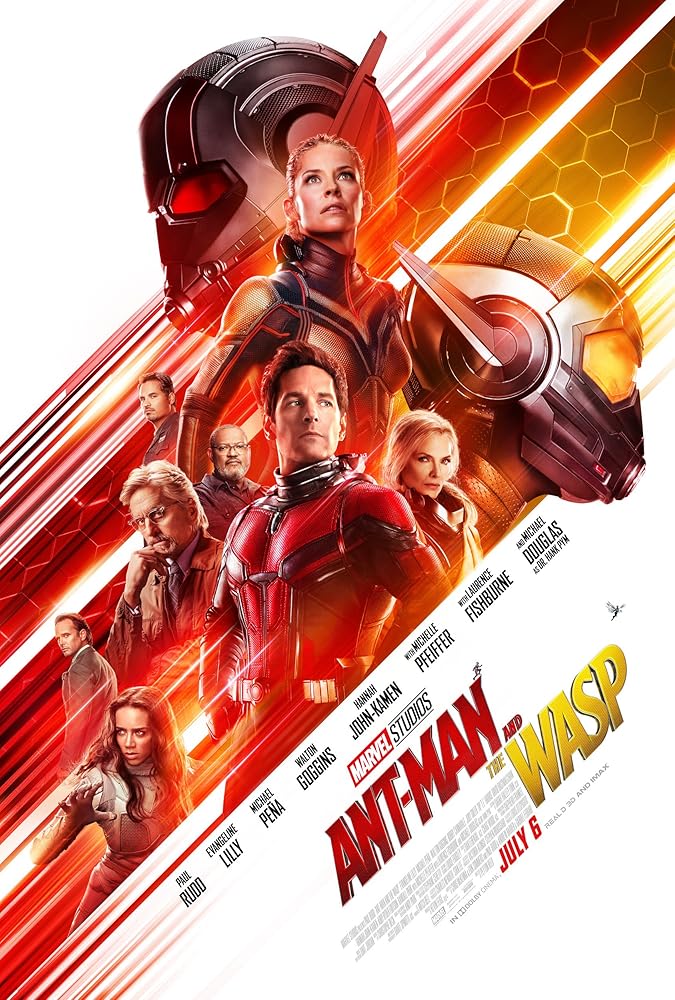
Ant-Man and the Wasp (2018) review

Michael Douglas, Michelle Pfeiffer, Laurence Fishburne, Walton Goggins, Michael Peña, Paul Rudd, Evangeline Lilly, and Hannah John-Kamen in Ant-Man and the Wasp (2018)

Marvel Studios’ 2015 release Ant-Man went through what is easily one of the most publicized productions of any film in the Marvel Cinematic Universe. For starters, the film had been in the works since 2006 before the MCU was even a thing… and yet ultimately ended up being released more than a decade later as the final installment of Phase Two of the franchise. But, of course, the biggest news story surrounding the film occurred in May of 2014, when it was announced that the film’s director was backing out of the project due to creative differences with the studio. And while the development of ‘directors leaving projects’ has always been commonplace in the film industry, the fact that the director in question was film fan favorite Edgar Wright, who had been working on it since the beginning, effectively cast a dark shadow over the film that sadly hasn’t left it even after its release. Thankfully, though, director Peyton Reed managed to fill in Wright’s spot with ease, delivering another fun entry in this legendary franchise that reveled in the endless possibilities that came from a plot about a superhero who could shrink in size. Cut to three years later and the titular superhero is back after his cameo appearance in 2016’s Captain America: Civil War with Ant-Man and the Wasp. As the title suggests, this film sees Ant-Man team up with his most famous superhero partner from the comics, the Wasp. And without the shadow of Edgar Wright’s ties to the project bearing down on him this time, Peyton Reed succeeds in crafting a superior sequel.  

During the events of Captain America: Civil War, ex-criminal turned superhero Scott Lang AKA Ant-Man (Paul Rudd) allied with Captain America in the feud that the Avengers had gotten into over the creation of the Sokovia Accords. Cut to two years later and Scott is now stuck under house arrest because of his participation in the incident. However, just a few days before his house arrest is over, Scott is approached once more by his colleagues Hope Van Dyne (Evangeline Lilly), who has now taken on the superhero identity of ‘the Wasp’, and her father Hank Pym (Michael Douglas), the creator of the Ant-Man technology and its original user. Since Scott managed to escape from the microverse known as the Quantum Realm during the finale of the previous film, Hank and Hope are now optimistic about the possibility of finding Hank’s wife (and Hope’s mother) Janet Van Dyne AKA the original Wasp (Michelle Pfeiffer), who disappeared into it in 1987. This plan of theirs is furthered strengthened when it’s revealed that Scott is beginning to become ‘connected’ to Janet on a mental level, thus allowing them the opportunity to figure out where she is. Unfortunately for the trio, the process ends up getting complicated by a mysterious woman named Ava Starr AKA Ghost (Hannah John-Kamen), who’s capable of phasing through objects due to an incident from her past where she was exposed to the Quantum Realm. After learning that Ava intends to use Janet to cure her condition, Scott, Hope, and Hank find themselves in a race against time to rescue Janet first when it becomes clear that Ava’s plan would result in her death.

So… seeing how we’re twenty films into the MCU at this point, I’m not going to bore you with the same points about this franchise that I’ve brought up in almost every single MCU film review that I’ve done. Thus, let’s just get it out of the way now… great action sequences, awesome visual effects, plenty of great humor while still finding enough time for some highly effective emotional moments for its characters, yadda yadda yadda, moving on. The main thing to note about this sequel is how it showcases a greater sense of confidence from Peyton Reed as a director. Obviously, in the case of the first film, he was brought on to fix the situation that Marvel Studios had gotten themselves into after the rather scandalous departure of Edgar Wright. And while Reed certainly managed to deliver an entertaining superhero film against all the pressure that he was clearly being put through by those who weren’t too happy about Wright’s departure, this film shows that he has improved on practically everything that he did with the first film. The action sequences are more kinetic, the humor and writing are both sharper, and the film in general benefits from stronger pacing whereas the first film admittedly took a while before it truly got going. But just like the first film, this film spends plenty of time having fun with all the various situations that Scott and Hope get into with their shrinking abilities, like whenever they blow up a tiny object to gigantic size (e.g. a PEZ dispenser). And, of course, we can’t forget about Ant-Man’s new ability to grow large himself (as previously witnessed during what is arguably the most iconic moment from the airport battle in Captain America: Civil War), which is also utilized perfectly here. Simply put, the Ant-Man films have boasted some of the MCU’s most creative action sequences which, given this franchise, is saying a lot.

Paul Rudd is phenomenal once again in the lead role of Scott Lang AKA Ant-Man, with arguably some of the best comedic timing of any lead in the MCU while also continuing to maintain Scott’s general likability as a well-meaning family man who tends to screw up a lot. But, of course, the most hyped member of this film’s cast is Evangeline Lilly, who finally gets the chance to get into all that great superhero action as the Wasp after it was built up in the first film’s mid-credits scene in which Hank gives Hope a new prototype of Janet’s old Wasp suit. And simply put, she kills it in the role; in fact, it could very well be argued that she even outshines Rudd. Still, the film does do a nice job of balancing out their roles in the story and the two do sport excellent chemistry, something that was only briefly covered in the first film. Speaking of the first film, all the major returning players who return for this film are great once again. As Hank Pym, Michael Douglas continues to be an absolute pro when it comes to delivering snarky quips, especially whenever he’s paired with Rudd. There’s also the returning trio of Scott Lang’s ex-thief pals (or as Hank calls them, ‘those three wombats’), who ironically now run their own security company. While T.I. and David Dastmalchian don’t get as much to do this time around, they still have their moments as Dave and Kurt, respectively. And, of course, we can’t forget about Michael Pena as the always-hilarious, happy-go-lucky Luis, the first film’s biggest scene-stealer. Sure enough, Pena once again gets a lot of this film’s best lines.  

As for this film’s newcomers, quite arguably the most prominent is the official debut of the original Wasp, Janet Van Dyne (not counting her cameo appearance in the first Ant-Man during a flashback). And without spoiling anything, the term ‘cameo’ applies to her role here as well as she’s only in it for about ten minutes. Still, for what it’s worth, Michelle Pfeiffer makes the most out of her limited screen-time and I’m confident that we’ll be seeing more of her in future films. DC Extended Universe transplant Laurence Fishburne also makes the most out of a rather small supporting role as Hank’s old partner Bill Foster, who fans of the comics will recognize as one of several who took on the superhero mantle of ‘Goliath’. Finally, when it comes to this film’s villains, there are two major threats who clash with Scott and Hope. While this does mean that they don’t necessarily stand out as much as other recent MCU villains, they’re still both solid enough in the context of this film’s story. First, there’s Walton Goggins as Sonny Burch, a black-market criminal who tries to steal Hank’s technology. It’s a minor role, for sure, but Goggins’ Southern charm helps a lot in the long run. And then there’s Hannah John-Kamen as Ava/Ghost, one of the MCU’s more ‘sympathetic’ villains given her tragic backstory. Thus, instead of just being a typical villain trying to take over the world, she’s just trying to find a cure for her condition, unaware that her plan to fix it would negatively affect several people. John-Kamen (who’s been having a breakout year after appearing in other blockbuster projects like Tomb Raider and Ready Player One) handles the role excellently and the effects used to create her phasing ability pave the way for some awesome visuals and action sequences.   

While some felt that the first Ant-Man didn’t add much to the larger world of the MCU, I’d argue that it had a different goal in mind; to serve as a much-needed change of pace after the large-scaled (no pun intended) affairs of Avengers: Age of Ultron, which came out just a few months prior. Sure enough, Ant-Man and the Wasp fulfills that same purpose in arguably an even greater fashion. I mean, let’s face it, after all the craziness that we went through with Avengers: Infinity War, it’s great that this film scales things back for a much more light-hearted adventure that once again highlights how solo films are still vital to the growth of the Marvel Cinematic Universe (though, for the record, without spoiling anything… this does address Infinity War). At the same time, the film also manages to be a superior sequel to what was already a solid entry in this franchise. No longer undermined by the question of ‘What would Edgar Wright have done?’, this film gives Peyton Reed the chance to make an Ant-Man film all his own, resulting in a sequel that boasts a sharper screenplay and more elaborate visuals and action sequences that don’t lose sight of the best parts of the first film. Plus, there’s also the immense satisfaction of getting to see Evangeline Lilly’s Hope Van Dyne finally get the chance to shine as one of the MCU’s greatest female heroines yet, something that Lilly undeniably revels in. Because of all this, Ant-Man and the Wasp is yet another success for Marvel Studios, who have now reached the unparalleled milestone of having 20 feature films that have all been positively reviewed by most critics and audiences. Admittedly, I wouldn’t call this the best MCU film to date (or even the best MCU film that came out this year, for that matter), but it’s still loads of fun to watch.


Rating: 4.5/5

Wednesday, November 15, 2017

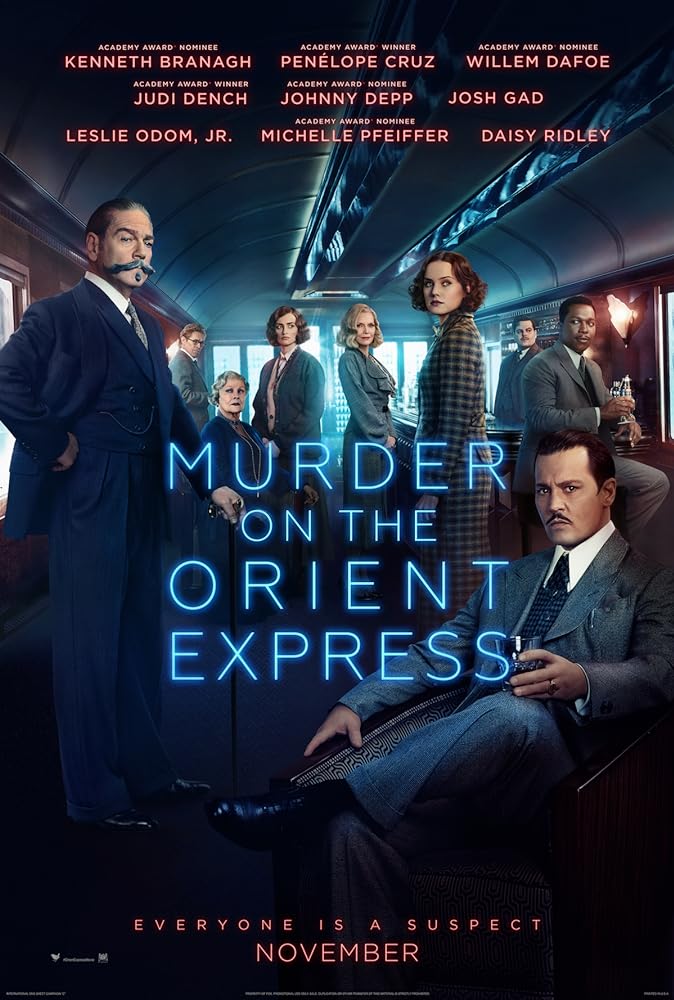
Murder on the Orient Express (2017) review


When it comes to some of the most famous authors of all time, Agatha Christie is undoubtedly one of the most legendary in that field. Over the span of several decades, the late English author was well-known for writing several classic mystery stories, so much so that she currently holds the record as the best-selling novelist of all time with over 2 billion copies of her work sold. And in her first novel, 1920’s The Mysterious Affair at Styles, readers were introduced to arguably her most famous creation, the Belgian detective known as Hercule Poirot. Poirot went on to appear in 33 of Christie’s novels, her 1930 play Black Coffee, and over 50 of her short stories. But as for the most famous story that he ever appeared in, that honor goes to Christie’s 1934 novel Murder on the Orient Express, in which the detective with the well-groomed mustache found himself dealing with, as the title suggests, a murder mystery onboard the titular Orient Express. This particular Christie story has already been adapted to the screen several times over the years, including a star-studded 1974 film adaptation directed by Sidney Lumet and an episode of the long-running British TV series Agatha Christie’s Poirot. But now Poirot is back on the big-screen once again in a brand new take on this iconic story, with Sir Kenneth Branagh taking on the role of the legendary detective. He also serves as the director of this new film which, like the 1974 adaptation, also features a star-studded cast. And overall, despite some of its shortcomings, this new version of Murder on the Orient Express does manage to be a solid adaptation of its source material.

As the film begins, we are introduced to the man himself, Hercule Poirot (Kenneth Branagh), the most famous detective in the world. The year is 1933 and despite Poirot’s plans to go on holiday after his most recent case in Jerusalem, he receives a telegram demanding that he return to London to take on a new case. To get there, Poirot’s friend Bouc (Tom Bateman) offers him a compartment on the luxurious Orient Express, which Bouc has just been appointed the director of. Whilst onboard, Poirot is joined by an eclectic group of passengers, including young governess Mary Debenham (Daisy Ridley), American socialite Caroline Hubbard (Michelle Pfeiffer), and immoral businessman Samuel Ratchett (Johnny Depp). Ratchett ends up approaching Poirot and asks him to be his bodyguard as he fears that he’s in danger. Poirot refuses but, soon enough, Ratchett is found dead in his cabin from several stab wounds. When the Orient Express is forced to make an unscheduled pit stop due to an avalanche, Poirot quickly begins to investigate the cause of Ratchett’s death. Deducing that one of their fellow passengers was responsible for the crime, Poirot works tirelessly in order to figure out which one of them is the murderer. And as he soon finds out, this case ends up having some noticeable connections to a highly public kidnapping/murder case that had occurred a few years back.

Now, just a quick disclaimer; at the time that I’m writing this, I have not read the original Murder on the Orient Express novel. I also haven’t watched any of the previous adaptations of this story, which of course includes the last major feature film adaptation from 1974. And from what I’ve read online, comparisons between this film and its various predecessors have been quite common. Thus, given what I just said about my general unfamiliarity with the source material, unfortunately, I can’t really add much to that discussion. What I will say, though, is that Branagh does do a good job in making this film an engaging murder mystery, and because I didn’t really know anything about the plot before seeing it, it allowed me to go into the film without already knowing the final outcome. With that in mind, however, I am aware that some have been rather mixed on the ending, not because it changes anything (from what I’ve read, it seems like Branagh stayed generally faithful to the source material) but more in the case of how Branagh handles it as director. Some have felt that the ending diminishes the impact of the final reveal by way of how Poirot ultimately responds to it. And despite this being my first major experience with this classic murder mystery story, I will admit that I did find that the ending didn’t quite have the impact that it wanted to leave on the audience. Still, at the very least, the build-up to the final reveal is well-handled and the film is well-made on a technical level, benefitting especially from some great cinematography from Branagh regular Haris Zambarloukos that was shot on 65 mm film a la Dunkirk.

As noted earlier, the 1974 adaptation of Murder on the Orient Express featured an all-star cast that included the likes of Albert Finney in the role of Poirot, Lauren Bacall, John Gielgud, and Sean Connery just to name a few. The same applies to this new version as well, with names like Penelope Cruz, Willem Dafoe, Josh Gad, Judi Dench, and Johnny Depp… and again, that’s just to name a few. And, of course, Kenneth Branagh not only directs the film but stars in it as well as the one and only Hercule Poirot. Branagh does a great job in the role, excellently conveying both Poirot’s wisdom and eccentric nature, two traits that very much help him when it comes to solving cases. As for the rest of the cast, they’re all great as well but they admittedly don’t have as much to work with compared to Branagh. Now, to be fair, it can be argued that this is just a consequence of being a story in which there are 12 primary suspects. Still, aside from a select few like Gad and Ridley’s characters, most of their roles in the film are basically just limited to one or two major scenes that they share with Poirot, who interrogates them all one at a time. Ultimately, though, if I had to pick the biggest standouts of the supporting cast, that would include Michelle Pfeiffer as the headstrong Mrs. Hubbard, Judi Dench as the pushy Princess Dragomiroff, and Leslie Odom Jr. as the often put-upon Dr. Arbuthnot.

So as I’ve made it clear, this film basically served as my introduction to Agatha Christie’s Murder on the Orient Express. As such, I can’t really say much about how this version of the story compares to other adaptations of it because simply put, I haven’t seen any of them. With that said, though, I am aware that some have been critical of this adaptation for not really doing anything new with the source material. And, of course, some have also taken issue with the ending, which I’ll admit is an argument that I do sort of agree with in terms of how it kind of lessens the final resolution of the main conflict. Still, for the most part, I found this to be a solidly made mystery thriller. While the plot does maintain a ‘slow burn’ style of pacing throughout, there is never a dull moment in this film. And like many of Branagh’s films (e.g. his remake of Cinderella and the first Thor film), this film does benefit from some solid production value, namely in regards to the cinematography, and an excellent ensemble cast. In short, if you’re like me and you’re not too familiar with the original source material going in, at the very least this film serves as a nice way of introducing newcomers to Christie’s work. And given that the film ends with a nod to another Poirot story, the potential is there for a sequel or two adapting other classic Christie novels. But if you are familiar with this story and the previous adaptations of it, this adaptation may seem a bit more questionable given everything that’s come before it. Overall, though, this film does succeed when it comes to being an entertaining popcorn flick that’s worth checking out on the big screen.


Rating: 4/5

Monday, September 18, 2017

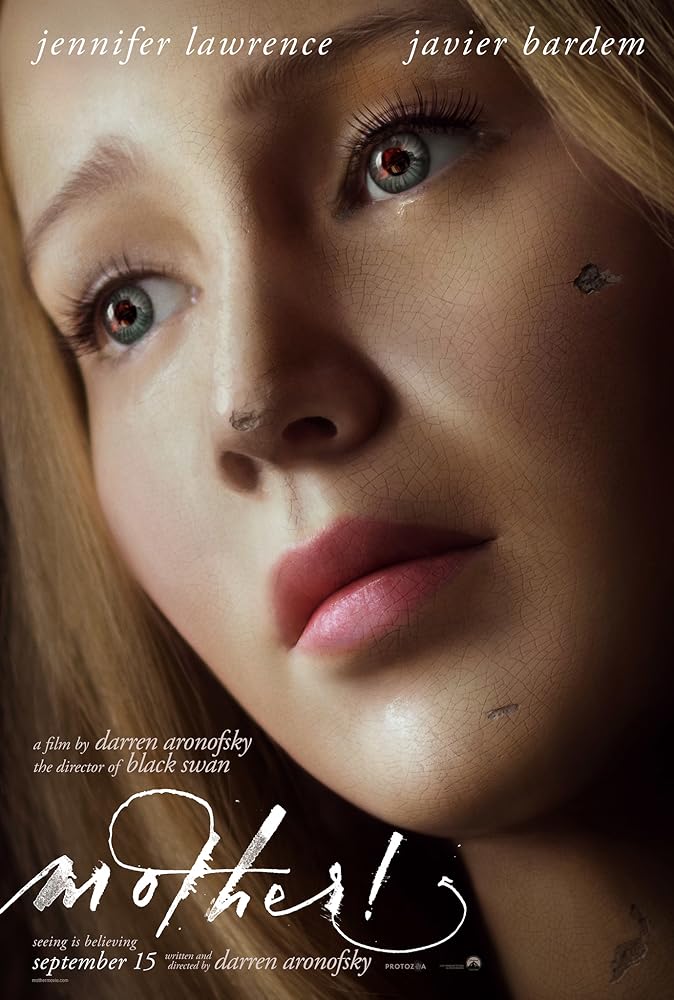
mother! (2017) review


Director Darren Aronofsky has become well-known for his work on psychological dramas that delve into the psyches of their main protagonists. However, while several of his films have done excellently with critics, they’ve also attracted tons of controversy for various reasons, usually because of how insane some of them get. His sophomore directorial effort, 2000’s Requiem for a Dream, was deemed too intense for audiences, thus initially earning an NC-17 rating from the MPAA. Aronofsky refuted the decision, but his appeal was denied and the film was instead released unrated by its distributor. While his 2010 effort, Black Swan, did earn Natalie Portman an Oscar for Best Actress, it also led to some debate over how much of the ballet dancing in the film was done by Portman herself. And as for his most recent film, 2014’s Noah, it ended up being banned in several countries due to Aronofsky’s radical take on the story of Noah’s Ark, while also turning out to be his most commercially successful film to date. And from the looks of it, this trend of Aronofsky’s polarizing output continues with his latest film, Mother. Headlined by the ensemble of Jennifer Lawrence, Javier Bardem, Ed Harris, and Michelle Pfeiffer, Mother is a psychological ‘horror’ film that’s steeped in biblical allegories. However, that hasn’t stopped the film from attracting an extremely polarizing response from critics, and given that it was handed the worst rating possible from the marketing research firm CinemaScore, an F, it’s also proven to be quite divisive amongst audiences as well. As for me? Well, unfortunately, I find that I lean heavily towards the side that gave this film an ‘F’.

In a quaint, little-secluded area, a young woman (Jennifer Lawrence) lives with her husband (Javier Bardem), who’s a poet, in their newly renovated home. The young woman has spent much of her time working on the remodeling so that they can have a perfect home, even though it becomes clear that this isolation has had a negative effect on her husband’s work. However, their idyllic home life is soon threatened by the arrival of some unwanted guests. First, a doctor (Ed Harris) arrives at the house, having been led to assume that it was a bed and breakfast. He also mentions that he’s a big fan of the husband’s work. Later, the doctor’s wife (Michelle Pfeiffer) arrives as well, and while there, she begins to question the young woman about why she and her husband have yet to have kids. This, obviously, begins to freak the young woman out but, to both her surprise and dismay, her husband is extremely welcoming of their new guests. And soon enough, more people start to arrive on the premises just so that they can meet with the husband. Thus, as the young woman begins to become more and more stressed due to all the unwelcome guests in her home, it also starts to have quite an effect on her relationship with her husband, especially after she does indeed become pregnant.

As noted in the intro (and without giving anything major away from the plot), this film’s story is basically one big biblical allegory. If you’re familiar with some of the most famous stories from the bible, then you’ll probably recognize them here by way of how they’re represented in the film’s characters. This includes everyone from the older couple that comes to visit the main characters’ home to their two sons (played by real-life brothers Domhnall and Brian Gleeson) and, of course, the titular ‘mother’ and her husband. And to this film’s credit, I do think that it’s an interesting way in going about telling a Bible-influenced story in a modern context. However, the way in which Aronofsky goes about it is what ultimately ruins it. Part of this is due to the often-temperamental cinematography by Aronofsky regular Matthew Libatique. Said cinematography involves tons of close-up shots and quite a bit of erratic/shaky camera movement, the latter of which becomes a huge problem when things get nuts in this film. And believe me, this film gets nuts, mainly during its second half where to be perfectly frank, it goes off the frigging wall… which, as you might have guessed, is not a good thing in this case. This film also utilizes Aronofsky’s quick-cut style of editing that was apparent in Requiem for a Dream, though it mostly comes into play during the more chaotic moments of the narrative. So, in other words, pair rapidly cutting editing with erratic cinematography and you have a film that can make you feel quite nauseous at times because it’s moving around so much, thereby giving you barely any time to try and grasp just what the heck is happening onscreen. 

It’s a shame, really, that this film is the disaster that it is because everyone in the cast is solid in their respective roles. At the very least, they all do a fine enough job at conveying the traits of the biblical characters that they’re meant to be representing. While not necessarily the best performance of her career, Jennifer Lawrence does do a fine job in the ‘title role’. She holds her own for sure, especially given that the film mainly revolves around her, but she’s also quite good whenever she’s working off one of her co-stars, like the always charismatic Javier Bardem. With that said, though, prior to its release, there was some controversy over the fact that Lawrence’s main romantic lead in this film is 21 years her senior. However, if anything, the film does sort of address this and, again, without giving anything away, it ends up making a bit more sense once you realize who Bardem’s character is meant to be. The other couple in this film, played by Ed Harris and Michelle Pfeiffer, provide an interesting contrast to the main couple given their overall characterizations. Harris’ character is more of a charming stranger while Pfeiffer’s character is far colder, the latter of which is seen whenever Pfeiffer interacts with Lawrence. Both Harris and Pfeiffer are great in their respective roles, with Harris providing some nice charisma while Pfeiffer is great at conveying an incredibly uncomfortable, steely persona. Ultimately, though, these solid performances aren’t enough to save this dreadful material.

Now, to be fair, I can at least see why some have reacted positively towards this film. I can see why they’ve found it to be an artistically fascinating and refreshingly original film in today’s current market. Ultimately, though, I did not see ‘exactly’ what they saw with this film. Now, to be clear, this wasn’t a situation where I just didn’t get what was going on (for the most part…). I did, at least, understand all the biblical references that this film was conveying. However, it’s ultimately the overall execution of it all that just makes this an incredibly frustrating film to watch. Because while the cast does do a good job with what they’re given, Aronofsky’s direction and the erratic cinematography end up turning this film into a chaotic mess. I mean, for the record, I do think that this is an interesting way to do a modern take on a story that’s heavily influenced by the bible. However, as much as I hate to say it, this probably would’ve worked a hell of a lot better under a different director; say, David Fincher or someone similar. Because as is, this is just an incoherent and all-around ugly film that’s way too surreal for its own good to the point where it comes off as being extremely pretentious. Now, again, if you liked this film, then all the power to you. But as for me, though, this ended up being one of the most emotionally-draining films that I’ve ever had to sit through because of everything that I’ve covered in this review… ugh, thank god this comes out this Friday.


Rating: 0.5/5