Showing posts with label Christopher Robin. Show all posts

Monday, August 24, 2020

Ranking the Live-Action Disney Remakes

I’m going to start this post off with a quick disclaimer. If you’re someone who is by no means a fan of Disney’s recent trend of producing live-action remakes of their animated classics, you’re not going to get much out of this post since it will be a generally positive take on these films. Yes, since 2010, Disney’s live-action output has primarily been focused on live-action re-imaginings of some of their most iconic animated films. However, while these films have been quite successful at the box-office, they’ve been far more polarizing in terms of their overall reception. While general audiences seem to be fairly receptive towards these new spins on Disney classics, there are a sizable number of folks who have been highly critical of this trend for the exact same reason that folks would take issue with any remake in general. Why would anyone even bother remaking something that’s been regarded by many as an undisputed classic? And yet, as someone who recognizes that the original animated films will always be there regardless of how these new films turn out (which is why I’m thankful for the advent of Disney+, which prominently features both incarnations of the films that have recently gotten the live-action treatment), these recent remakes have never bothered me in the slightest. In fact, I’ve recently started to detest the use of the adjective ‘unnecessary’ when it comes to reviews because I feel that it’s become one of the most overused words in critical vernacular, especially since you could easily apply it to any film that comes out and not just the ones that are remakes/sequels/reboots. In other words, while many of these films are re-imagining some of my favorite Disney films of all-time, I try not to let my affinity for the originals overly cloud my judgment towards the remakes because I personally feel that doing so would be largely unfair to them. And so, with that in mind and in honor of the latest Disney remake Mulan’s impending ‘Premier Access’ release on Disney+, today I’m ranking these live-action remakes from ‘least favorite’ to ‘favorite’. While their placement on this list will primarily stem from overall preference, I will also factor in their efforts to present a new spin on their classic stories.

Before we begin, though, I just need to lay out the ground rules for this list. For starters, I won’t be including the two sequels that were spawned from these recent remakes, 2016’s Alice Through the Looking Glass and 2019’s Maleficent: Mistress of Evil. The reason for this is quite simple; from a subjective standpoint, they’re not ‘remakes’ anymore. Instead, they’re just ‘sequels’ to the remakes. However, I will briefly address them when I go over their predecessors. Also, for this list, I’m only going to be focusing on the remakes that have been released since 2010 since this is when this current trend first began to take shape. Because of this, there are two films from the ’90s that won’t be appearing on this list even though they are technically the first big Disney remakes. The first is the original live-action remake of The Jungle Book (that’s right, Jon Favreau’s version wasn’t the first time that a live-action adaptation of Disney’s Jungle Book was made) which was directed by Stephen Sommers and released in 1994. Admittedly, I haven’t seen it at the time that I’m writing this, but I’ll probably do some kind of post on both it and a different Disney-produced Jungle Book film from the ’90s, 1998’s The Jungle Book: Mowgli’s Story, in the future, perhaps when the sequel to Favreau’s Jungle Book comes out. The other big remake that won’t be included here is the 1996 adaptation of 101 Dalmatians, but again, that’s because I’m saving my thoughts on that film and its 2000 sequel, 102 Dalmatians, for a different occasion; in this case, the upcoming spin-off Cruella that will hit theaters next May. Lastly, while it does technically count as a ‘live-action remake’ and can genuinely be considered as a part of this recent subgenre, I’m also not going to include the 2016 remake of Pete’s Dragon since it’s a remake of a live-action film rather than an animated one. Yes, for this list, I’m mainly focusing on the live-action remakes of animated Disney films, and while two of them are technically more like ‘sequels’ than ‘remakes’, I believe that they still count here given that they are primarily based on their animated counterparts. And so, without further ado, I present my current rankings of the live-action Disney remakes that have been released since 2010.   

10. ALICE IN WONDERLAND

Mia Wasikowska in Alice in Wonderland (2010)

We start things off with the first big live-action reimagining of a Disney classic from this modern era, Tim Burton’s Alice in Wonderland. This is the first of the two films that I mentioned earlier that are more like ‘sequels’ rather than ‘remakes’ as it follows a teenaged Alice returning to the world of Wonderland (referred to in-universe as ‘Underland’). Like the original animated film, Burton ultimately went with a combination of elements from both the original Alice’s Adventures in Wonderland novel and its sequel, Through the Looking Glass, rather than just being a direct adaptation of the source material. And right off the bat, the best thing that I can say about this film is that it’s another prime example of why Burton is one of the greatest visual directors in the industry. While the film’s visuals do feel a bit excessive at times due to the scenes in Underland being almost entirely green-screen based, they’re still very much the best part of the film as they wonderfully capture the eccentric nature of the Wonderland setting through the equally eccentric style of Tim Burton. Because of this, it’s easy to see why this film won Oscars for both its production and costume design and how its production designer would go on to direct his own live-action Disney remake a few years later. That said, though, there are a few instances where Burton’s style arguably goes a bit too far for a film that’s primarily geared towards younger audiences. In other words, moments where creatures get their eyes poked out and a scene where Alice crosses a moat filled with the heads of the Queen of Hearts’ victims do make you wonder how the film was able to get away with its PG rating. But despite this and an often-uneven plot (which, yes, is saying something for an Alice in Wonderland film), the film still manages to be another solid outing from Burton, especially thanks to its cast. Helena Bonham Carter is an absolute standout as the figuratively and literally big-headed tyrant the Red Queen and the film sports an impressively stacked voice cast with big names like Stephen Fry and Alan Rickman.

Thus, while it wasn’t exactly a runaway hit with critics, Tim Burton’s Alice in Wonderland was a smash hit financially as it managed to gross over $1 billion worldwide. This has mainly been attributed to the general lack of competition that it faced upon its release in the Spring of 2010 and the boost that came from 3-D ticket sales since this was right when the 3-D format was experiencing its peak resurgence. Because of this, a sequel was eventually made in 2016, Alice Through the Looking Glass, under the direction of James Bobin, who was fresh off the 2011 Muppets film and its 2014 sequel, Muppets Most Wanted (Burton was still heavily involved as a producer). Like its predecessor, though, it didn’t do too well with critics, and unlike its predecessor, it was a rather notorious underperformer at the box-office. But while we’re not going to spend too much time comparing these two films, I will say that there are two things that the sequel does better than the original. First off, it boasts a brighter visual style that is still a lot of CGI overload, to be fair, but is all-around more pleasant to look at. It also means that there aren’t really any moments that push its PG rating like Burton’s film did. The other key advantage is that since the first film was primarily focused on Alice finding the confidence to help her Underland friends stop the Red Queen, she is a far more confident lead in Through the Looking Glass, which is well-reflected by Mia Wasikowska’s excellent performance in the role. And so, with all this in mind, while the live-action Alice in Wonderland films are far from being my favorites when it comes to Disney’s recent live-action output, I don’t necessarily ‘dislike’ them, either. They may be far from perfect, but as much as they do have their incredibly vocal critics (especially those who love taking these films to task for not being the most faithful adaptations of their source material), there’s no denying that they also have their fair share of fans.    

9. LADY AND THE TRAMP

Lady and the Tramp (2019)

The most recent film on our list, Lady and the Tramp was one of the many exclusive titles that debuted on Disney+ the day of its launch, and I won’t lie, it was, in fact, the first ‘Disney+ Original’ that I watched. While most of the attention that day was directed towards the pilot episode of The Mandalorian, I was genuinely looking forward to the live-action remake of one of Disney Animation’s most underrated projects. To be clear, I’m not saying that the original Lady and the Tramp is a forgotten entry in the Disney canon, but you could also argue that it often gets overshadowed by the other Disney films of the decade such as Cinderella, Alice in Wonderland, and Peter Pan. Nevertheless, it’s a charming love story that was nicely translated into a live-action film by director Charlie Bean. Now admittedly, there aren’t many deviations from the original film, with the biggest changes consisting of minor things such as giving the dog-catcher a more prominent villain role and changing the song sung by Aunt Sarah’s pair of troublemaking cats in light of the original’s often-accused case of racist stereotyping. But even though this does make this version of Lady and the Tramp one of the more straight-forward installments of the recent Disney remakes, that’s not such a bad thing in this instance. Whereas almost all the other remakes are big-budget, CGI-heavy flicks, the Lady and the Tramp remake is refreshingly simple in its approach since the original film was more of a light-hearted romp with the period setting of a classic 1900’s Midwestern town. It also helps that the filmmakers utilized actual dogs to help bring the characters to life even though it goes without saying that CGI was used for the process of making them talk. All in all, this is just an incredibly cute and harmless film that does a nice job in recapturing the charm of its source material’s timeless romance.   

8. DUMBO
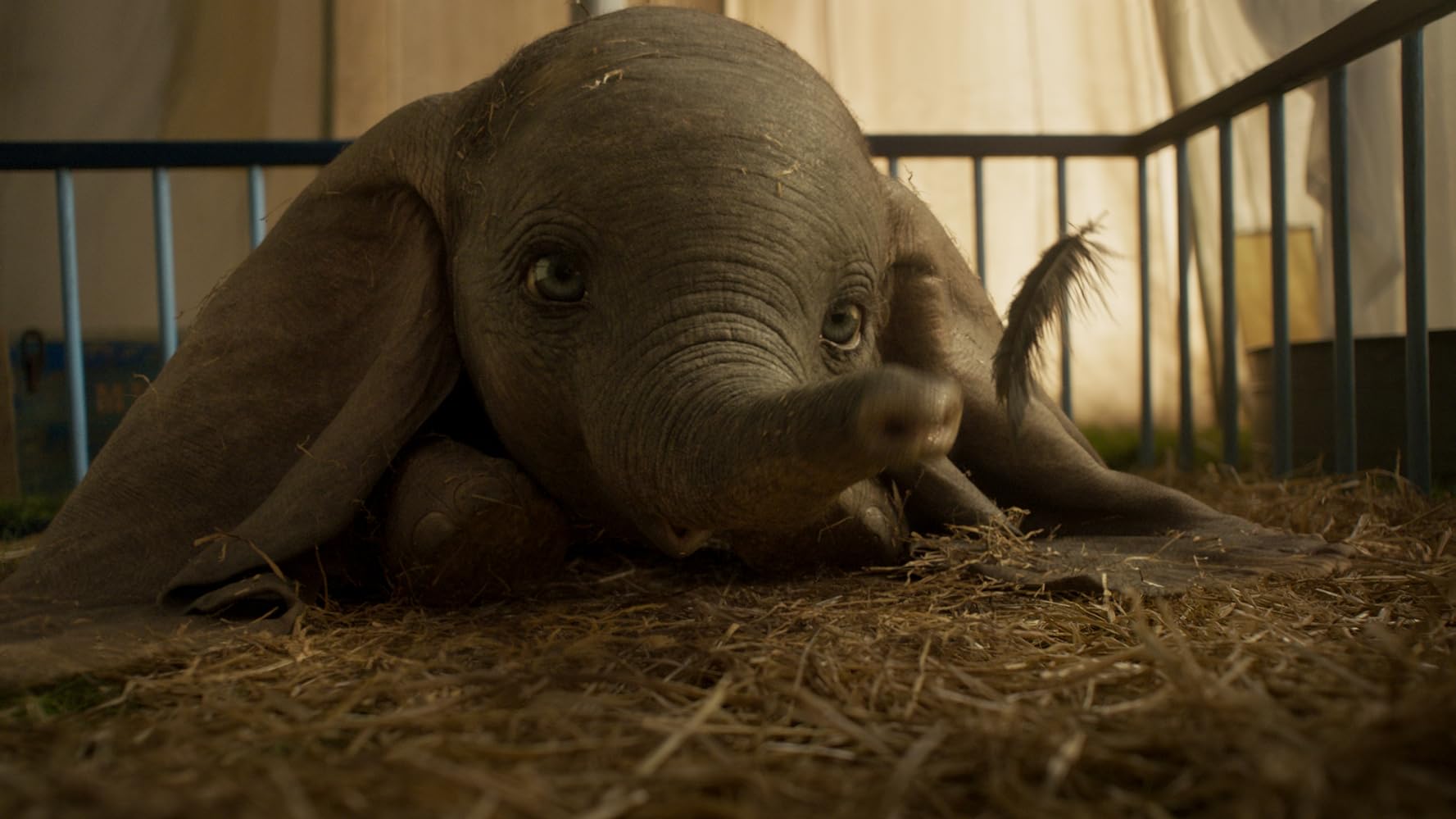
Dumbo (2019)

In 2019, Tim Burton took on his second major live-action Disney remake with Dumbo. Admittedly, the story of a lovable circus elephant who uses his big ears to fly may have seemed like an odd choice for Burton to direct, but at the same time, it did fit his usual M.O. of stories about misfit characters. Thus, while Burton’s Dumbo doesn’t feature his traditional gothic style, its visuals are still very much on point throughout as they do a wonderful job of capturing the bright and majestic visual aesthetic of the circuses of yesteryear. The film also has the benefit of having greater opportunities for new material when compared to some of the other remakes on this list since the original Dumbo is one of Disney’s more simpler-plotted affairs, especially due to its short 64-minute runtime. As such, all the key moments from the original such as Dumbo’s mother being put into captivity after causing a ruckus and the moment where Dumbo first publicly showcases his flying ability during a clown act are covered in just the first forty minutes. After that, a new subplot occurs when a greedy theme park entrepreneur purchases Dumbo for use in his circus while the members of Dumbo’s original circus troupe work to free his mom from her captivity at the entrepreneur’s amusement park. The remake also focuses more on the story’s human characters, namely WWI veteran Holt Farrier and his two kids Milly and Joe, who take the place of Timothy Q. Mouse from the original as Dumbo’s primary allies since this film doesn’t feature any talking animals. However, the new material that’s added in ends up feeling just as simplistic as the original film’s plot which, to be fair, was reportedly the point according to screenwriter Ehren Kruger. Ultimately, though, Dumbo still works quite well as a good-natured family film with a solid cast headlined by Burton regulars such as Michael Keaton and Danny DeVito and some fun nods to the original, including the infamous pink elephants.

7. MALEFICENT

Angelina Jolie in Maleficent (2014)

Since Tim Burton’s Alice in Wonderland is technically more of a sequel than a remake, one could argue that 2014’s Maleficent is where this current crop of live-action Disney remakes truly got started. Under the direction of Alice in Wonderland’s production designer Robert Stromberg, the film serves as a live-action reimagining of Disney Animation’s 1959 outing Sleeping Beauty that, as the title suggests, mainly focuses on the story’s iconic villainess, Maleficent. However, instead of just having her be the main antagonist, the film turns her into more of an anti-hero whose actions against Princess Aurora and her family were the result of her getting revenge against Aurora’s father, her former love interest, for stealing her fairy wings. And while she does curse Aurora to fall into an eternal slumber on her 16th birthday, she ends up developing a motherly connection to her to the point where she’s ultimately the one who saves her from the curse. As you might have guessed, those who prefer Maleficent’s traditionally villainous persona weren’t too pleased with this interpretation of the character, but overall, I think that it’s a uniquely fascinating take on Maleficent and the mother-daughter relationship that forms between her and Aurora is genuinely sweet. But, of course, the biggest highlight of the film is Angelina Jolie in the title role as she perfectly encapsulates the look and persona of the ‘Mistress of All Evil’… even if that designation doesn’t necessarily apply to this version of the character. Thus, Maleficent turned out to be a big hit with audiences upon its release in the summer of 2014, ultimately grossing over $758 million worldwide. This effectively paved the way for a sequel in 2019, Maleficent: Mistress of Evil, which was generally on par with its predecessor in terms of quality while also expanding upon its fantasy world, namely by introducing more members of Maleficent’s race, the Dark Feys. Really, the only major disappointment with the sequel was that there were fewer scenes between Maleficent and Aurora. Nevertheless, the Maleficent films are a solid duology of fantasy flicks that pride themselves on being female-driven stories.

6. THE LION KING
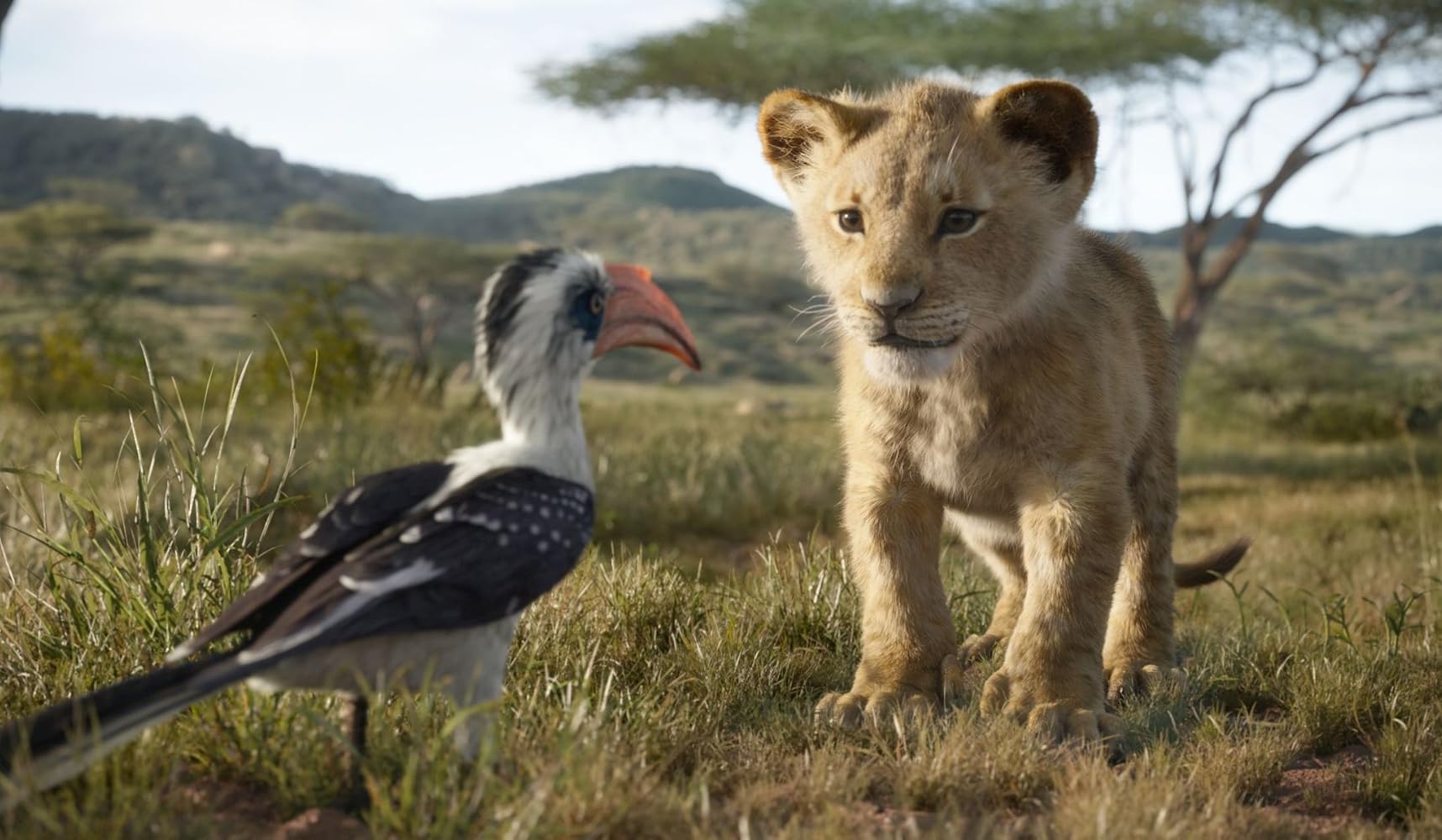
John Oliver and JD McCrary in The Lion King (2019)

Now I’ll be the first to admit that Jon Favreau’s CGI-based remake of The Lion King (which admittedly makes this one a bit questionable to include on this list since it’s not really live-action but arguably still counts based on its status as a remake) is quite arguably the most straight-forward remake of this bunch when it comes to retelling the original film’s story. Apart from some minor additions like an earlier introduction for adult Nala and a rivalry between her and Shenzi the hyena, this is the exact same story as the 1994 film with the exact same story beats. In other words, the biggest difference between the two films is that Favreau’s version is CGI whereas the original was traditionally animated. But while this has made the new Lion King one of the most controversial installments yet of the recent Disney remakes, I’d argue that it still manages to be a solid enough film. Like Favreau’s other big remake, The Jungle Book, much of this is due to the utterly impressive visual effects that do such an incredible job in maintaining their photorealistic nature. And while this does mean that the film lacks the more extravagant moments of the original (i.e. there’s no scene of Timon distracting hyenas by donning a grass skirt and dancing the hula (although there is a brilliant substitute bit for that part)), the attention to detail is truly spot on. Plus, I’d argue that the film still manages to hit the right emotional beats from Mufasa’s death to the moment where Simba speaks with the spirit of his father. And so, if anything, I’d say that at the very least, the new Lion King succeeds as a demonstration of how far CGI has truly come in the past few years. Obviously, I’m not saying that it’s ‘better’ than the 1994 film, but with phenomenal visuals and a great voice cast that includes the likes of Donald Glover, Chiwetel Ejiofor, Billy Eichner, Seth Rogen, and the Queen Bey herself, Beyonce, it’s also quite far from being completely worthless. And yes, this is all coming from someone who lists the original Lion King as his favorite Disney animated film of all-time, but as I’ve made it clear already, just because it’s my favorite doesn’t mean that I was going to hold that against this new film. Still, I will admit that the fact that it is largely note-for-note the same as its traditionally animated counterpart does keep me from putting it any higher on this list.

5. CHRISTOPHER ROBIN

Ewan McGregor and Jim Cummings in Christopher Robin (2018)

Christopher Robin is the other film on this list that’s more of a sequel rather than a remake as it revolves around a grown-up Christopher Robin being reunited with Winnie the Pooh and the rest of the Hundred Acre Wood gang. But, of course, it still counts on this list since it utilizes much of the iconography from Disney’s interpretation of Winnie the Pooh, and since Winnie the Pooh was such a significant part of my childhood, this was easily one of my most anticipated films of 2018. At the end of the day, I’m happy to report that it did not disappoint. Christopher Robin is an incredibly poignant story about the tragedy that is the loss of childhood innocence through the harsh but sadly natural process of growing up. But while this ordeal ends up being an incredibly rough one for Christopher Robin (e.g. losing his father at a young age, enduring the horrors of World War II, etc.), it is what also makes his eventual reconciliation with his friends and family incredibly cathartic. Ewan McGregor does a fantastic job in the title role and when it comes to his Hundred Acre Wood friends, it was only appropriate that they bring back Jim Cummings, the voice of Pooh and Tigger for many a generation (mine included), for his iconic roles. Now admittedly, many have noted that Christopher Robin sports a rather bleak tone, which is true if focusing solely on the first half of the film before Christopher Robin regains his childhood innocence. After that, the film takes on a more light-hearted tone and the scenes where Pooh and company get into all sorts of adventures in London are purely delightful. And really, that perfectly sums up the film in general. It’s a truly delightful family flick that’s fully bolstered by the ever-enduring charm of its timeless characters to be another great Winnie the Pooh story.  

4. ALADDIN

Mena Massoud in Aladdin (2019)

As I’ve mentioned plenty of times before, director Guy Ritchie’s live-action remake of Aladdin ended up being quite a noteworthy success story even though, before its release, it was quite possibly the most scrutinized installment yet of these equally scrutinized remakes. Simply put, it was almost as if this film could never catch a break as it caught flak for various reasons ranging from certain casting choices to the infamous first reveal of Will Smith’s Genie in his traditional blue form. But when it finally came out, it managed to earn over $1 billion worldwide while also doing decently enough with critics, many of whom felt that it turned out to be much better than they initially anticipated. And if you ask me, that means that this film deserves a lot of credit for managing to avoid being the disaster that many predicted it would be. Now as far as being a remake of its animated counterpart, Aladdin is in the same boat as Lady and the Tramp and The Lion King by not making a lot of radical changes to the original story of a good-natured thief who tries to woo the Princess of Agrabah with the help of a wisecracking Genie. Despite this, however, one great change that it does make is letting Princess Jasmine play a far more proactive role in the story. With no disrespect to her animated counterpart, this is the best incarnation of the character to date, especially thanks to Naomi Scott doing a phenomenal job in the role. Meanwhile, Mena Massoud shines in what is surely going to be his breakout role as Aladdin while Will Smith, despite all the pressure that stemmed from having to follow in the footsteps of Robin Williams’ iconic rendition of the Genie in the original animated film, successfully delivers his own, unique take on the character. Ultimately, the only thing that holds this film back is its mediocre interpretation of Jafar, which is primarily due to this version’s more grounded take on the character. But at the end of the day, the live-action Aladdin ends up being a lot of fun, and while it may have seemed like a weird choice to have it done by a director who’s known more for making gritty crime dramas, Guy Ritchie does a highly respectable job when it comes to maintaining the original’s great atmosphere and unforgettable musical numbers.  

3. THE JUNGLE BOOK

The Jungle Book (2016)

Out of all these films, Jon Favreau’s The Jungle Book is arguably the best example of a live-action Disney remake that isn’t fully tied to its animated counterpart. While it’s still very much the story of a young boy named Mowgli who is raised by wolves in the jungles of India and pursued by the sinister tiger Shere Kahn, it’s ultimately a combination of the 1967 animated film and Rudyard Kipling’s original novel. In other words, it only features three of the songs from the animated film (“Bare Necessities”, “I Wanna Be Like You”, and “Trust in Me”) and places greater emphasis on the dramatic parts of the story such as Mowgli’s history with Shere Kahn, who killed his human father, and the dangerous power of ‘Man’s Red Flower’, fire. Favreau does an excellent job of balancing these two aspects of the story, resulting in some excellent emotional moments (e.g. when Mowgli first leaves for the man-village and says goodbye to his adoptive wolf mother Raksha) while also featuring plenty of great homages to the original. But, of course, the most notable aspect of this film is its extensive use of CGI to bring both its animals and its jungle landscapes to life. And because Favreau’s VFX team did such an outstanding job with the visuals (which ended up netting them the Oscar that year for Best Visual Effects), sometimes it’s easy to forget that Neel Sethi, who plays Mowgli, is literally the only ‘real’ thing on-screen 95% of the time. All this and a top-notch voice cast that includes big names like Bill Murray, Ben Kingsley, Idris Elba, and Lupita Nyong’o helps make this adaptation of Rudyard Kipling’s classic story a full-blown visual masterpiece. And as I noted back in the intro, Favreau and screenwriter Justin Marks are currently prepping a sequel that, according to Marks, could potentially incorporate some of the unused elements from the animated film’s original screenplay by Bill Peet that was ultimately rejected by Walt Disney himself for being too dark.

2. CINDERELLA

Richard Madden and Lily James in Cinderella (2015)

No matter how much these live-action Disney remakes get ragged on by their biggest critics, there will always be the select few that were genuinely well-received, and the one that started it all for this group was Kenneth Branagh’s 2015 remake of Cinderella. Unlike both Alice in Wonderland and Maleficent, which received mixed reviews upon their release, Cinderella fared quite well with critics and became the first of these remakes to secure a ‘Fresh’ rating on Rotten Tomatoes. And just like Christopher Robin, this was another one of my most anticipated films back when it was coming out due to the original Cinderella being one of my all-time favorite Disney films growing up. All in all, Branagh’s remake does a wonderful job of bringing this classic story to life. Sure, it’s another case where the remake is predominately faithful to its animated counterpart without many significant changes, but in this instance, the changes that it does make are some of the best to come from any of these recent remakes. Easily the best example of this is how it expands upon the relationship between Cinderella and Prince Charming, namely by having them meet before the ball, which also allows the latter to be a more fleshed-out character compared to his animated counterpart. And while Cinderella continues to get a lot of flak nowadays for allegedly being ‘too passive’ of a protagonist, I still stand by what I’ve been saying these past few years in that her unshakably optimistic nature in the face of all the crap she’s put through makes her a far better heroine than she’s often given credit for. Sure enough, this is well-reflected in the live-action remake, especially thanks to Lily James’ outstanding turn in the role. The same goes for Richard Madden as the superior version of Prince Charming, Cate Blanchett as the unforgettably sinister Lady Tremaine, and Helena Bonham Carter in a scene-stealing turn as Cinderella’s Fairy Godmother. And so, with a phenomenal cast, gorgeous production design, and all-around excellent direction from Kenneth Branagh, the live-action Cinderella is one of the most uplifting films to have come out in recent years.

1. BEAUTY AND THE BEAST
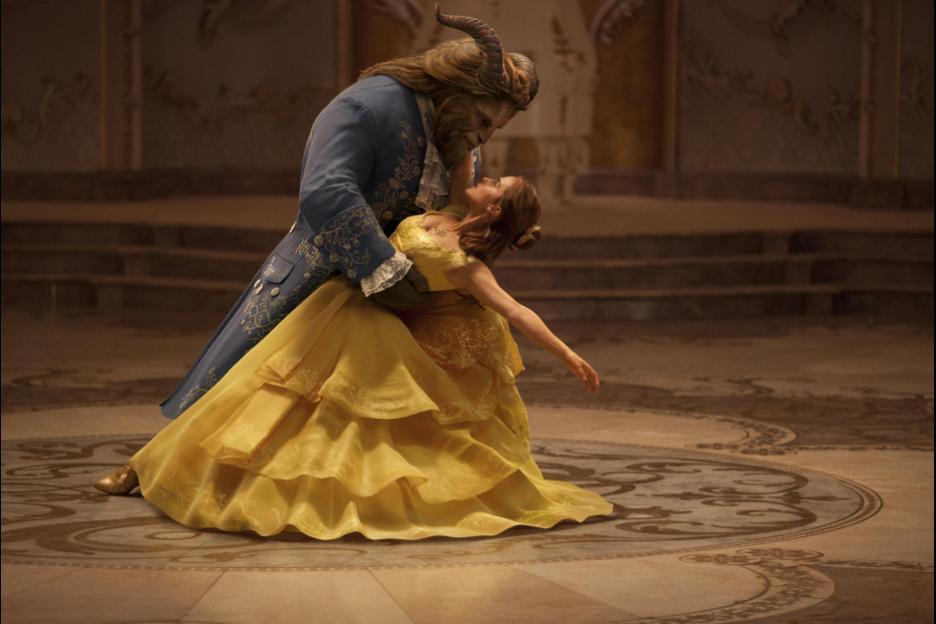
Emma Watson and Dan Stevens in Beauty and the Beast (2017)

To be perfectly blunt, folks, I have the feeling that this film’s placement at the top spot on this list is going to garner some controversy given its usual reception. Let me put it this way; when it first came out, it did relatively well with critics. It currently boasts a 71% rating on Rotten Tomatoes, which is a decently solid score for a film to have on that site, and it also grossed over $1 billion worldwide, effectively making it the second-highest-grossing film of 2017 behind only Star Wars: The Last Jedi. In other words, it was, at the very least, clearly a big hit with audiences. However, I think it’s safe to say that this was the film that fully intensified the utter contempt that the ‘Disney remake’ critics have towards this trend, especially due to the legendary reputation of the film that this remake was adapted from. Before 2017, all the live-action Disney remakes were based on older animated films such as Alice in Wonderland and Cinderella. As such, one could argue that the overall expectations for them weren’t as intense given how long it has been since their releases. Beauty and the Beast, on the other hand, was the most recent Disney animated feature to get the live-action treatment at that point and it also happens to be one of the studio’s most beloved outings. It is, after all, the first animated film that was ever nominated for Best Picture at the Oscars, a distinction that only two other films have achieved since then. As such, this remake clearly faced stricter expectations because of how much the original has meant to my generation, and the same can also be said for the remakes of Aladdin and The Lion King that would come out later and would end up garnering far more polarizing reactions from critics. Thus, despite what I just said about the film maintaining a solid rating on Rotten Tomatoes, I wouldn’t be surprised if many of those who gave it a ‘Fresh’ review aren’t as positive about it nowadays. And yet, I’m not afraid to admit that I still love this film.

Yes, this is yet another instance of a remake that doesn’t make a lot of changes to the original’s story, but overall, I was genuinely fine with the updates that they did make. This includes, among other things, Belle being an inventor just like her father (played excellently by Kevin Kline in a uniquely more subdued take on ‘crazy old Maurice’) and her discovery as to why he has been overly protective of her all these years after her mom died from the Plague. I also loved all the new songs that were made for this remake, especially the Beast’s new solo, ‘Evermore’. And while I’m well aware that much of the criticisms towards this film have been directed towards Emma Watson in the lead role of Belle, namely due to her singing, I still think that she does a fantastic job in the role if we’re talking about all the other things that have made Belle one of the most popular Disney princesses. She’s then backed by a phenomenal supporting cast that includes Dan Stevens as the Beast, Luke Evans and Josh Gad as the scene-stealing duo of Gaston and LeFou (so much so that they’re going to get their own Disney+ series) and the likes of Ewan McGregor, Emma Thompson, and Ian McKellen as the Beast’s servants. In short, I will fully admit that there’s probably quite a bit of bias behind my decision to place this film at the #1 spot on this list. I saw it twice in theaters, with the first time being in IMAX at the film’s ‘Fan Event’ screening on my birthday. I also bought the soundtrack on iTunes not long afterward and loved the film so much that my mom asked one of her co-workers to pick it up on Blu-Ray and ship it to us so we could get the special Best Buy Steelbook*. In other words, I know that I’m probably in the minority when it comes to liking this film, which has certainly faced tons of scrutiny over the ‘necessity’ of its existence and has often been negatively compared to its animated counterpart. And yet, as this entire list has hopefully established by now, I don’t really care about any of that stuff, even if this is another case like The Lion King since the original Beauty and the Beast is one of my Top 5 favorite Disney films. Ultimately, though, that doesn’t prevent the live-action Beauty and the Beast from legitimately being one of my favorite films of the 2010s.

*(By the time that I was fully intent on getting the Steelbook, it wasn’t available at any of the Best Buy stores that were near our home in Rhode Island, hence why we needed to have my mom’s co-worker pick it up for us in Wisconsin where he’s from. As our way of saying thanks, we then proceeded to get him his own Steelbook copy of the film. In other words, as a friendly piece of advice for all you Blu-Ray enthusiasts out there, if you’re ever interested in getting a film’s Steelbook release, be sure to pre-order it in advance because it could very well go out of stock as soon as it hits the shelves, especially if it’s for a highly popular film like one of the MCU films or, say, a billion-dollar grossing remake of a Disney classic…)

And that concludes my rankings list of all the major live-action Disney remakes that have been released since 2010. Thanks for following along and be sure to be on the lookout for my review of the next big live-action Disney remake, Mulan, not too long after the film makes its Disney+ debut on September 4th.

Sunday, March 17, 2019

TOP 12 FAVORITE FILMS OF 2018: #12-10 + Honorable Mentions


Honestly, at this point, there’s no need to address the overall quality of a year based on the films that were released during that time. There are always going to be a lot of great films that come out every year for every demographic of every genre. Instead, I’m going to use this intro to comment on how 2018 proved… that fandoms are REALLY starting to get problematic. In the past, I’ve lamented on how sometimes people on the internet tend to forget that film is a subjective medium, meaning that no single film is going to be well-received by everyone. This past year, however, has bear witness to some of the most extreme cases of ‘fan reactions’ that I’ve ever seen in my time as a film critic. Basically, thanks to various factors that include the continued popularity of series like CinemaSins and the actions of a certain political figure who shall not be named, film discourse has erupted into a series of violent outbursts towards things that seriously don’t require that kind of intense reaction. Don’t even get me started on how many actors/actresses have been forced off social media this past year due to the intense harassment that they’ve received from online trolls either due to a comment that they’ve made on our current political landscape or because they allegedly ‘ruined’ something that these trolls liked. Now let me be clear… I know damn well that these misogynistic, homophobic, xenophobic ‘fans’ (the term ‘fans’ used VERY loosely in this case) only make up a small portion of the various fandoms that make up our current pop cultural zeitgeist. Still, it’s imperative at this point that the film fan community distance itself from this kind of behavior because I strongly believe that it’s only going to get worse if left unchecked. With that out of the way, it’s time to delve into my Top 12 Favorite Films from 2018. For those who are new to this site, the reason why I do a Top 12 list instead of the more traditional Top 10 is that it allows me the chance to talk about more of the great films that I loved from this past year. It may have also had something to do with the fact that I launched this site in 2012 and I did a Top 12 that year just for the occasion.  

As always, though, we must first lay down the primary ground-rules that I have for this list. The first is quite simple; to fully address the films that will be featured on this list, I will be delving into their biggest spoilers. Thus, in case some of you haven’t seen the films that I’ll be discussing here, don’t worry, because I will be providing links to my original non-spoiler reviews of these films. Next, as is the case with any year, I’m unable to see every major film that is released in theaters. Granted, I did join the AMC Theaters’ A-List program this year, which allows me to see more films at a fraction of the cost (Disclaimer: Not a Promotion). However, you also must factor in my recent job as a Cast Member working at Disney World, which took up a lot of my time this past year. Thus, if you’re wondering why films like Roma, Won’t You Be My Neighbor, or The Favourite aren’t on this list, then that’s the reason why. This then brings me to a ground-rule that I’ve had to implement in recent years which admittedly is more of a disclaimer. As some of you may have gathered by the films that I usually cover on this site, this list will mostly consist of blockbuster-type films, many of which are sequels, reboots, remakes, etc. I know that this won’t fly well with film buffs who tend to stick towards the independent side of the industry, but to put it simply, that’s just not the market that I follow as a film critic. Granted, that doesn’t mean that I won’t cover those kinds of films. It’s just that these situations occur on a rarer basis.

Plus, to be perfectly frank, I feel that the independent side of the industry tends to spawn a frustratingly condescending attitude towards blockbuster-type projects. Now to be clear, even someone like me knows that blockbuster films usually aren’t meant to be deep, thought-provoking dramas, but at the same time, that doesn’t mean that they can’t. And every year, we do have a few blockbuster-level films that I’d argue are more than capable of standing toe to toe with whatever gets nominated for Best Picture at the Oscars (this year, especially, with a certain superhero flick…). Plus, as last year’s mother proved, just because a film is ‘original’ or ‘independently produced’ doesn’t automatically make it good. And lastly, we have the most important point of all; please, please, PLEASE be respectful of other folks’ opinions. If that mini-rant that I had earlier wasn’t enough of an indication, this past year has been extremely trying when it comes to some of the most hostile fandom-related incidents in recent memory. I mean, do I really have to keep bringing this up, folks? If you didn’t like any of the films that I’m about to discuss, then that’s totally fine. All the power to you! Just don’t be a jerkass to those that did like them, because if you ask me, the greatest sin that any film critic/fan can do is make others feel bad for having a different opinion. And so, without further ado, let’s start delving into this list. This is Part 1 of 4 and today we’ll be discussing films 12-10.

But first, let’s discuss my 6 Honorable Mentions…

HONORABLE MENTIONS


Johnny Depp, Jude Law, Dan Fogler, William Nadylam, Alison Sudol, Eddie Redmayne, Katherine Waterston, Claudia Kim, Zoë Kravitz, Ezra Miller, and Callum Turner in Fantastic Beasts: The Crimes of Grindelwald (2018)

For starters, yes, I’m part of the crowd that did like the second installment of the Fantastic Beasts series even though it ended up being the worst-received installment to date of J.K. Rowling’s Wizarding World franchise. And to be fair, this one’s far from being the series’ best installment as it does feel like the ‘middle chapter’ of its larger story. The plot is rather minimal, not every plot-line gets the attention that it deserves (e.g. Queenie being coerced into joining Grindelwald’s cause after getting into a fight with Jacob over their future), and the ending is a bit too anticlimactic. In short, this is a film that’s clearly more focused on setting up the next installments of the franchise, and while I’m fine with most of the big twists that are revealed here (e.g. the troubled Credence being told that he’s [supposedly] a long-lost member of the Dumbledore family), the screenplay still could’ve benefitted from a few extra rewrites. And yet, despite its narrative shortcomings, everything else that’s great about this franchise is still there, for the most part. The world-building is still as strong as it’s always been and the same goes for the gorgeous production design and solid visual effects work. Eddie Redmayne, Katherine Waterston, Alison Sudol, and Dan Fogler are still excellent as Newt, Tina, Queenie, and Jacob, respectively, and are joined by some excellent newcomers headlined by Jude Law making the most out of his admittedly minor role as a young Dumbledore. And while I want to reiterate that this isn’t meant to be a defense of any of his recent actions, Johnny Depp does do a good job in the title role of Grindelwald. Obviously, his casting has been the cause of much scrutiny, but as strange as it may seem, none of this film’s shortcomings are directly his fault. As such, I’m still on board with this franchise… though, hopefully, the next film gets the narrative back on track.


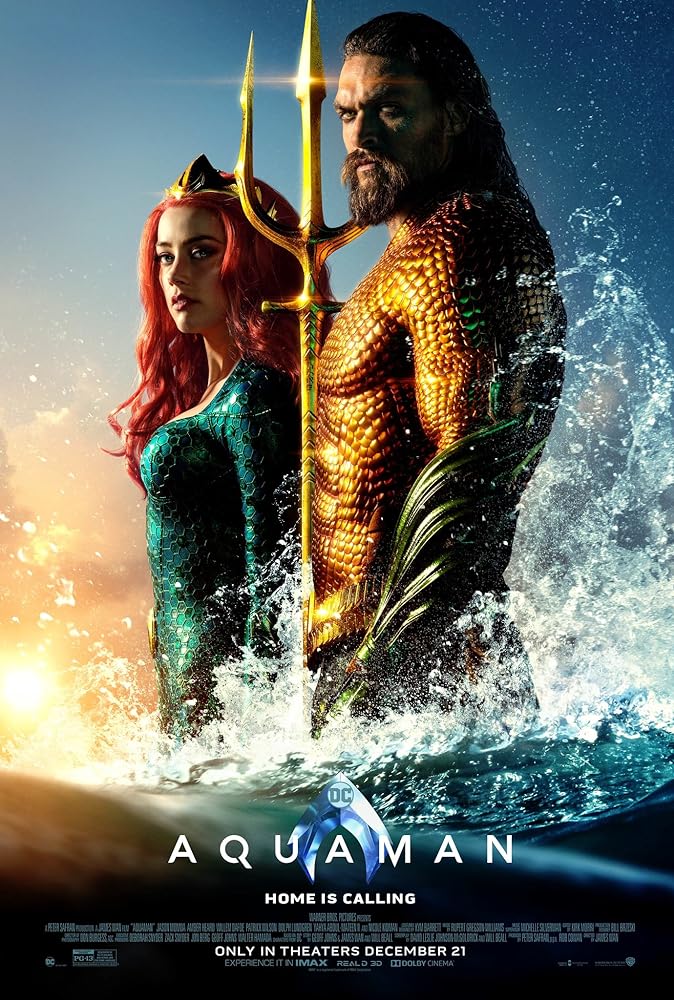
Jason Momoa and Amber Heard in Aquaman (2018)

Hey Aquaman, aren’t you glad that I decided to see your big solo film first before starting this list? I certainly didn’t do it for the DCEU fandom, who continue to be one of the most toxic fandoms of recent memory by A.) harping on those who didn’t think that this would be a box-office hit and B.) once again crapping on those who didn’t like it even though the film did fare decently with critics. To make a long story short, Aquaman is indeed one of the best installments of the DCEU. It completely forgoes the Zack Snyder aesthetic that made past films visually impressive but emotionally empty in favor of a light-hearted adventure atmosphere with some solid emotional depth and incredibly vibrant visual effects that effectively bring the world of Atlantis to life. The arc of seeing Aquaman rise to become the ruler of Atlantis is incredibly satisfying, and Jason Momoa is finally given the chance to shine in the title role. The same goes for Amber Heard as the film’s phenomenal female lead, Mera, as both she and Momoa manage to overcome their underwhelming debuts in Justice League where they were mostly just there to do cool stuff. Here, they get the same amount of proper character development that Gal Gadot got as Wonder Woman in her solo film, which is very much welcome. Really, my only issue with the film is that the villains (Ocean-Master and Black Manta) were a little underwhelming. Not terrible, mind you, as they are, at least, better-written than most villains in the genre. Still, they’re a tad bit underused in the grand scheme of things. Ultimately though, Aquaman is a very entertaining entry in the superhero genre and it’s cool to see that it ended up becoming a massive box-office success. It joined the billion-dollar club and even surpassed Christopher Nolan’s Dark Knight films at the worldwide box-office. Yes, the character that was once considered ‘a joke’ now claims the distinction of having the highest-grossing DC Comics based film of all time.


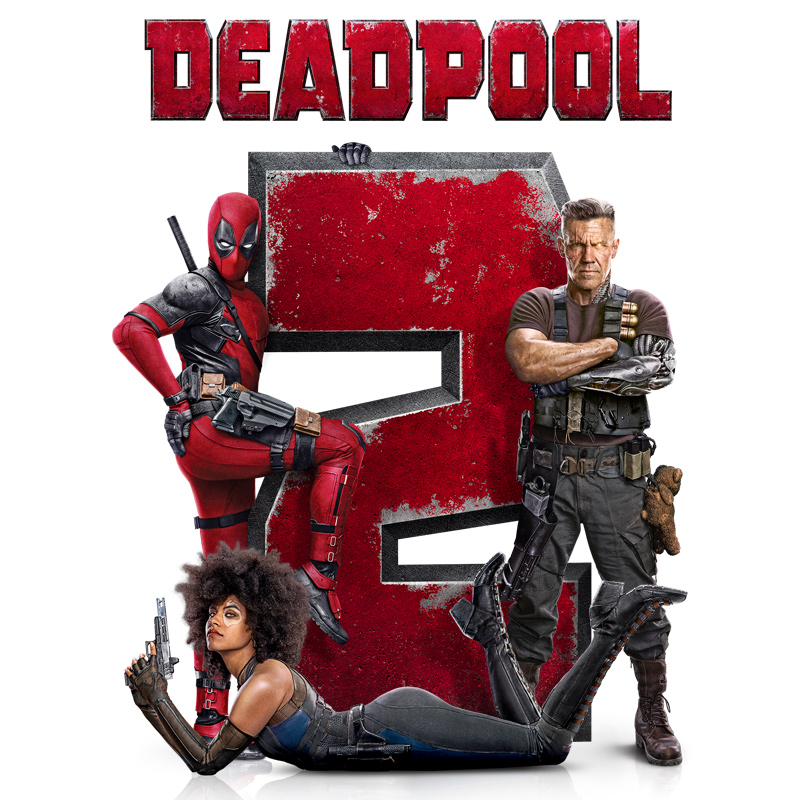
Josh Brolin, Ryan Reynolds, and Zazie Beetz in Deadpool 2 (2018)

As I’ve stated numerous times before, while I did enjoy the first Deadpool film, I wasn’t necessarily in love with it as much as the rest of the internet. While it was a very entertaining superhero flick that gave Ryan Reynolds the chance to finally do justice to the title character, it still felt like it adhered a bit too close to some of the common superhero film tropes that it was directly satirizing. As such, director David Leitch’s follow-up does take a lot more risks even if they don’t all work (e.g. killing off Deadpool’s fiancé Vanessa at the beginning, though thankfully she’s brought back at the end when Deadpool uses Cable’s time-traveling device). And despite some awkward tonal shifts here and there, Deadpool 2 also boasts far stronger emotional depth. Whereas the first film was primarily about Deadpool learning to become a hero, this one focuses on him finding a family and gaining a true sense of belonging, proving that even an unapologetically raunchy superhero like Deadpool can hit you with the feels. Ryan Reynolds continues to be outstanding in the title role while the additions of Josh Brolin (in his second awesome superhero role of 2018; more on the other one later…) as the time-traveling Cable and Zazie Beetz as the lucky Domino just sweeten the deal even further. Thus, as you might have guessed, I consider Deadpool 2 to be a superior sequel. Again, nothing against the original Deadpool as it did get the ball rolling for this proper take on the fan-favorite Marvel anti-hero. It’s just that the sequel is more like what the first film was trying to be but wasn’t necessarily able to reach due in part to it being the first major R-rated superhero film of the MCU era.  


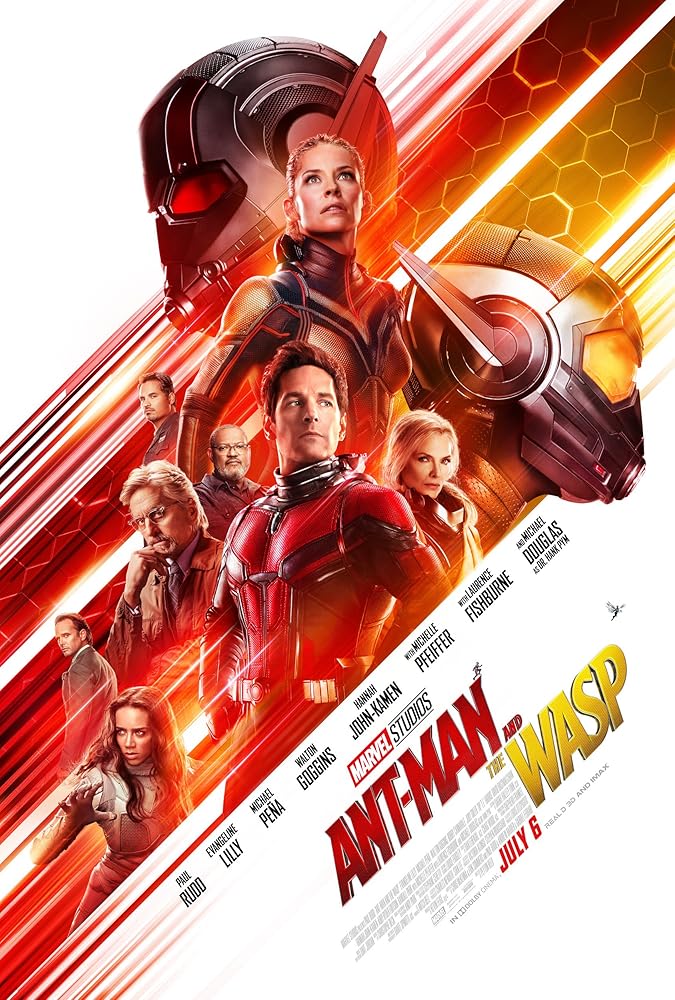
Michael Douglas, Michelle Pfeiffer, Laurence Fishburne, Walton Goggins, Michael Peña, Paul Rudd, Evangeline Lilly, and Hannah John-Kamen in Ant-Man and the Wasp (2018)

Despite being yet another critical and commercial hit for Marvel Studios, Ant-Man and the Wasp ended up getting overshadowed by the other two MCU films of 2018. To be fair, though, it’s probably not that surprising considering that the other two were a culturally relevant mega-hit and the franchise’s largest crossover to date, respectively. Still, that’s not to say that it isn’t yet another entertaining installment of the MCU. Now that he’s no longer burdened with the pressure of being ‘the guy who replaced Edgar Wright’ on the original Ant-Man, director Peyton Reed manages to craft a more confident sequel that boasts flashier visuals and action sequences. The humor is just as on-point as it’s always been in the MCU and the main plot-line of Hank Pym and Hope Van Dyne trying to find his wife/her mother Janet Van Dyne AKA the original Wasp (played excellently in her admittedly limited screen-time by Michelle Pfeiffer) provides the film with that trademark MCU emotional poignancy. Ultimately, though, the biggest highlight of the film is getting to see Evangeline Lilly finally have the chance to get in on the action as the new Wasp, and simply put, she kills it. But, of course, Paul Rudd is still wonderful as well as Scott Lang AKA Ant-Man, who continues to be one of the MCU’s most relatable protagonists as the well-meaning family man who screws up more than he should. Because of all this, Ant-Man and the Wasp once again proves that solo superhero films are just as important as the big ensemble films. And just like how the first Ant-Man served as a welcome change of pace after the grand-scale escapades of Avengers: Age of Ultron, this film does lighten the mood after the emotional carnage that we experienced in the previous MCU film… even when considering this film’s mid-credits scene, which reiterates the gravity of what happened in the other film.


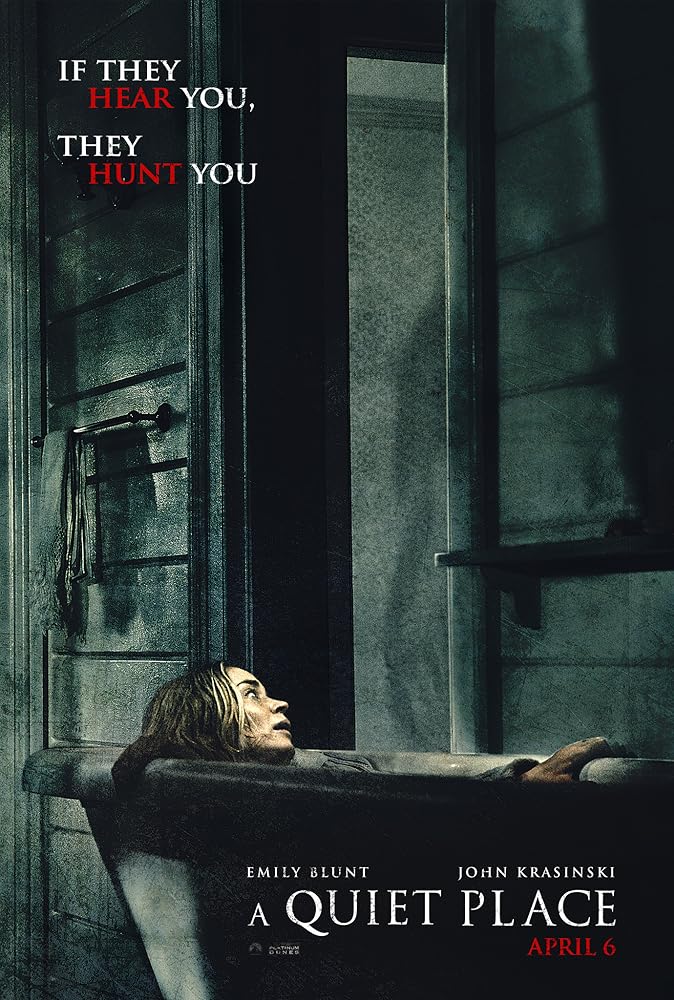
Emily Blunt in A Quiet Place (2018)

Over the course of this past year, I’ve repeatedly mentioned the one thing that I’ve found to be a key contributor to a great horror film, having characters that you care about as they endure various horrific events. That is very much the case in director John Krasinski’s highly successful silence-based horror-thriller A Quiet Place, in which a family tries to survive an alien invasion where the alien creatures can detect them via loud noises. The gut-wrenching opening sequence where the youngest son Beau is killed by one of the aliens immediately establishes the family’s sympathetic nature and is one of the many sources of the film’s strong emotional depth. This is then further exemplified by the plot-line of the father, Lee (Krasinski), trying to mend his relationship with his deaf daughter Regan (Millicent Simmonds), who feels responsible for Beau’s death as she had given him the toy rocket that had alerted the alien. It all culminates in what is easily the most emotional moment of the film where Lee nobly sacrifices himself to save his kids from the aliens but not before reassuring Regan that he’s always loved her. And that ultimately ties into what A Quiet Place is truly about as it’s not just a horror-thriller about sound-detecting aliens. It’s about parents trying to protect their kids from the harsh world that they live in… and yes, that makes this film incredibly timely. And thanks to strong direction from Krasinski, pitch-perfect sound design to portray a reality where silence is the key to survival, and phenomenal performances from Krasinski, his real-life wife Emily Blunt, Simmonds, and Noah Jupe, A Quiet Place is one of the best-written horror films to come out in recent years.  


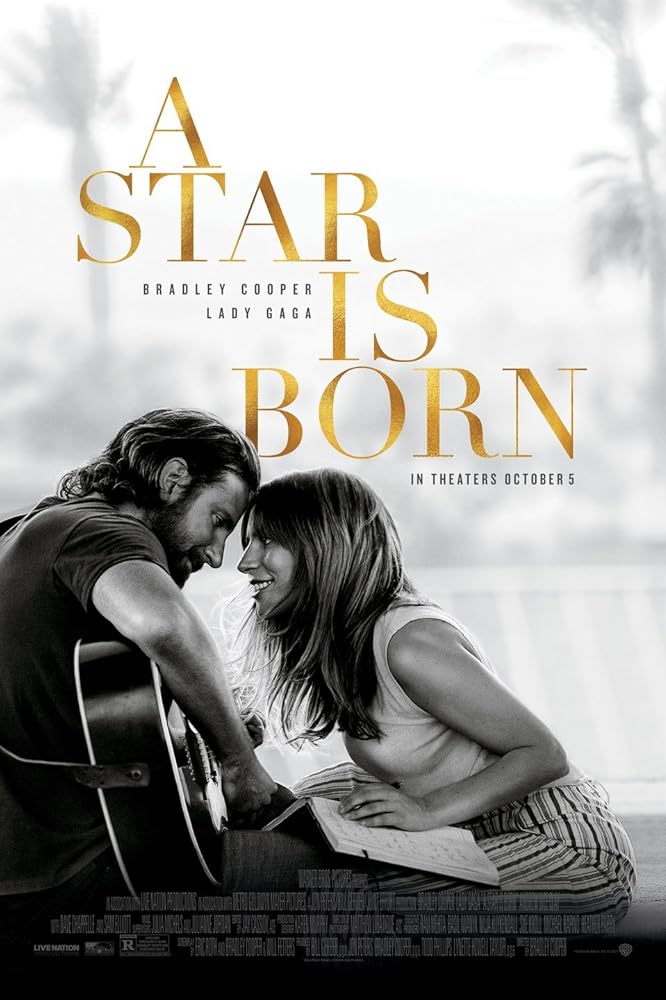
Bradley Cooper and Lady Gaga in A Star Is Born (2018)

Because this is the fourth film version of A Star is Born, it admittedly follows the same general plotline of its story’s previous adaptations. It’s the story of an aging rock-star who romances (and later marries) an aspiring ingenue while also helping her make a name for herself in the music industry. But while her star is on the rise, his ends up going on the decline and the film ultimately ends with him tragically committing suicide, which is then followed by a heart-wrenching performance from his wife, who now publicly goes by her husband’s last name. And yet, even with its traditional narrative, the film benefits from amazing direction from Bradley Cooper, who makes one hell of an impressive directorial debut with this tightly-scripted and emotionally poignant musical drama. It’s a love story that hits all the right emotional notes, whether it’s the charming first interactions of its main protagonists or the heartbreaking ways in which this story of star-crossed lovers reaches its conclusion. The film also benefits from some of the best romantic chemistry in recent memory between Bradley Cooper and Lady Gaga. Cooper is his usual charismatic self as rock-star Jackson Maine while Gaga majorly impresses in her first leading role as up-and-coming singer/songwriter Ally (e.g. her performance of the film’s final song, ‘I’ll Never Love Again’, which was filmed just hours after her best friend died from cancer). They’re then backed by a solid supporting cast that includes Anthony Ramos as Ally’s best friend Ramon, Andrew Dice Clay as her supportive father Lorenzo, and most of all, Sam Elliott, who also gets to partake in some of the film’s biggest emotional moments as Jackson’s brother/manager Bobby. In short, calling this a successful directorial debut from Bradley Cooper would be a massive understatement, and it’s easy to see why it’s touted as one of 2018’s best.

And now we officially kick off the Top 12 with a film that truly deserved to do better than it ultimately did. Despite having to endure all the scandals that were spawned from a controversial change in direction halfway through filming, the film managed to be another entertaining installment of its historic franchise. Sadly, though, it ended up massively under-performing at the box-office, and while I know that this is going to be a ‘hot take’, I primarily attribute this to the toxic side of its franchise’s fandom that, over the past year, has made it very difficult for folks for me to consider themselves a ‘fan’ of this franchise.
   

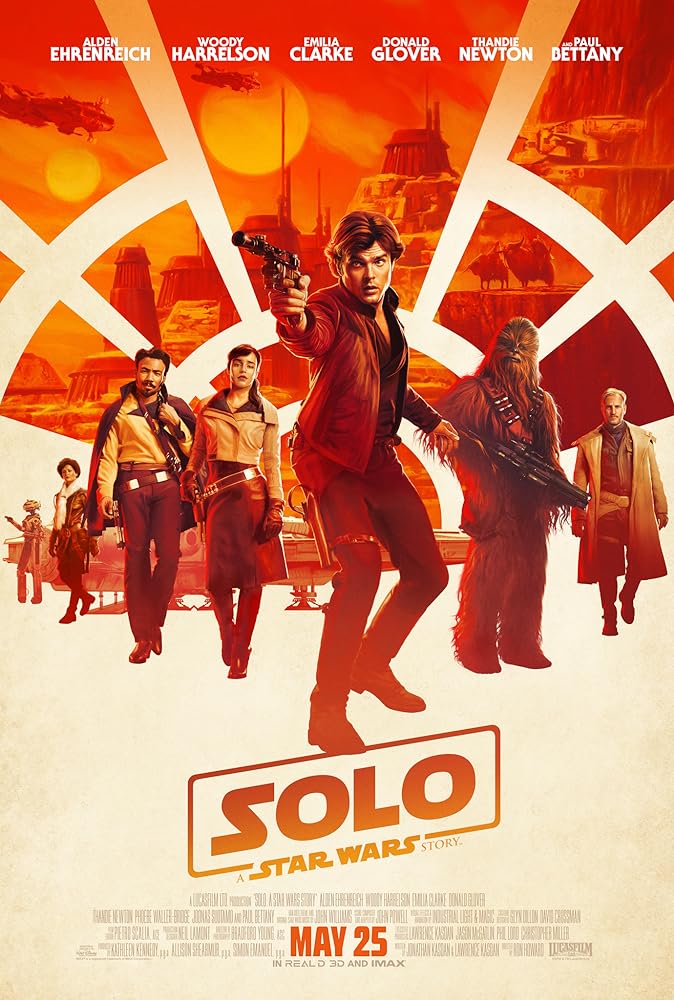
Woody Harrelson, Thandie Newton, Donald Glover, Alden Ehrenreich, Phoebe Waller-Bridge, Emilia Clarke, and Joonas Suotamo in Solo: A Star Wars Story (2018)

As I’ve mentioned a few times this past year, the Star Wars franchise is in an odd place right now… and yet, ironically, it has nothing to do with the films themselves. Ever since Disney took over the franchise in 2012, the newer Star Wars films have consistently done well with critics and audiences. But then came Star Wars: The Last Jedi in 2017… and most of you reading this already know what happened there. Despite many critics praising director Rian Johnson’s unique take on the franchise, it attracted a CONSIDERABLY hostile backlash from certain audiences, and even after more than a year since the film’s release, I still don’t necessarily understand what these folks were so mad about because their reasonings are all over the place. But one thing that is certain is that ever since the film’s release, those ‘fans’ (and I use that term very, very loosely) have launched an all-out war against Disney and Lucasfilm for this alleged ‘crime against humanity’. Their ‘acts of justice’ have included the following; sending death threats to producer Kathleen Kennedy, Johnson, and any other major female figure associated with the franchise, petitioning to remove The Last Jedi from canon, attempting to remake it (yes, seriously…), forcing The Last Jedi star Kelly Marie Tran off social media, etc. In other words, remember what I said in the intro to this post about the terrible fandom-related incidents from this past year? Well, this was what I was mainly referring to, and it’s obviously put a ton of unwarranted pressure on J.J. Abrams and his crew when it comes to Episode IX and making sure that it isn’t as polarizing. And as for the second installment of the franchise’s line of spin-offs, Solo: A Star Wars Story, it seems as if all that Last Jedi backlash ended up hurting it quite a bit.

Now obviously there’s a bit more to this than just the Last Jedi debacle, as this film attracted quite a bit of negative attention when it was announced that its directors, Phil Lord and Chris Miller, were basically kicked off the project due to creative differences with Lucasfilm. And even though the studio ended up rebounding from this by hiring the legendary Ron Howard to take over, the damage was already done. Star Wars fans were already skeptical of a ‘prequel’ film based around Han Solo (arguably the franchise’s most beloved character) to begin with, and Lord and Miller’s involvement was practically the only thing keeping them onboard given the duo’s tendency to make the most out of questionable concepts. And yet, at the end of the day, the final film is nowhere near the disaster that some thought it would be. Is it the best installment of the series? No, not even close, but at the same time, it still manages to be a fun little Star Wars film with a sci-fi western vibe. It’s decently edited and despite having to face the burden of following in the footsteps of Harrison Ford, Alden Ehrenreich does a solid job as a younger iteration of Han Solo. He’s then backed by an excellent supporting cast that includes Donald Glover as a young Lando Calrissian, Emilia Clarke as Han’s original love interest Qi’ra, and Woody Harrelson as Han’s mentor Tobias Beckett. The film even ends with an awesome and genuinely unexpected cameo when it’s revealed that Qi’ra is secretly in cahoots with none other than Darth Maul, which ties into the various Star Wars animated series like Clone Wars that revealed that he survived his apparent demise at the end of The Phantom Menace.

In short, Ron Howard managed to come in and overcome the messy situation that this film had gotten into after the whole Lord and Miller incident with relative ease. Unfortunately, upon its release, Solo did not do well at the box-office. It may have had a $100 million opening during Memorial Day weekend, but it ultimately grossed around $392 million on a hefty $275 million budget, a final total that paled in comparison with the last 3 Disney-backed Star Wars films, each of which grossed over $1 billion worldwide. Some attributed this to ‘Star Wars fatigue’, as it was released just five months after The Last Jedi instead of being released during December just like the other recent Star Wars films… but I take issue with that notion for one simple reason. If there’s such a thing as ‘Star Wars fatigue’, then how the hell is Marvel getting away with releasing 2-3 MCU films a year, plus all the other superhero films from the likes of DC, Fox, and Sony? By comparison, despite the short window between the releases of The Last Jedi and Solo, there’s only been one Star Wars film a year since Disney took over the franchise. Because of this, the continued argument of ‘superhero fatigue’ that has been in play since 2015 makes a lot more sense than ‘Star Wars fatigue’ (words cannot describe how much it kills me to have to put that in writing given my feelings towards that damn superhero fatigue argument). While I know that it’s not necessarily the main reason, I do believe that one of the key factors to Solo’s underperformance was the venomous side of the Star Wars fandom who decided to boycott the film as their cheap way of getting back at the studio for The Last Jedi. And that’s a damn shame because Solo didn’t deserve that. With that said, would it have been nice to see Phil Lord and Chris Miller’s version of the film? Yes! But just like Marvel Studios and the Edgar Wright/Ant-Man debacle, Lucasfilm moved on and Lord and Miller moved on. Thus, in the years to come, I do hope that Solo will be given more of a chance in the eyes of the Star Wars fandom.

During last year’s Top 12 list, I briefly talked about a recently trending point that’s been brought up in film discussion that I’m not a fan of; the ‘it’s not as fresh as the original’ argument. This is basically an extension of the ‘it’s not as good as the original’ argument but with a more cynical twist in which a film gets knocked just for being a sequel. And in 2018, my number 11 pick was arguably the most affected by it.


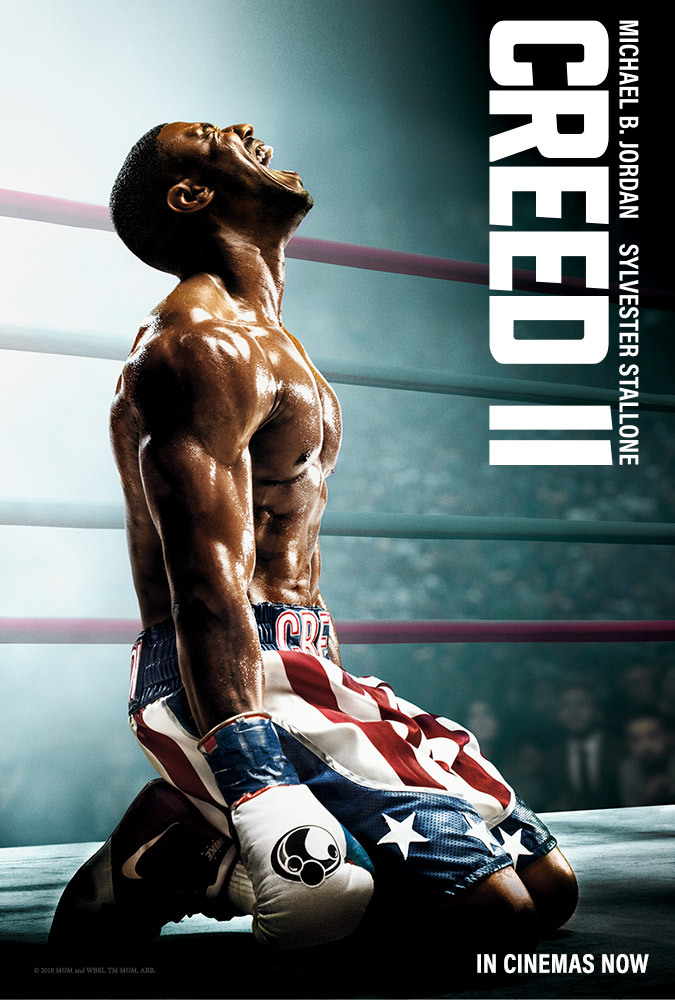
Michael B. Jordan in Creed II (2018)

Upon its release, Creed II got knocked a bit (no pun intended) for being a bit too predictable with its plot. But to that, I ask the following… who goes into a Rocky film expecting original plots? In fact, even the first Creed shared a lot in common with the original Rocky by being the story of an unknown who surprisingly manages to go the distance against the heavyweight champ and ultimately wins over the crowd despite losing the fight. Really, the reason why that film worked as well as it did was thanks to strong direction from Ryan Coogler and excellent performances from Michael B. Jordan, Sylvester Stallone, and Tessa Thompson. And because of this, the film very much revitalized its iconic franchise for a new generation while still respecting its roots. This is once again the case with Creed II, even though it wasn’t directed by Coogler this time due to his commitment to a certain superhero flick. Newcomer Steven Caple Jr. does do an excellent job in his place, however, and while there aren’t any major long-take fight scenes like in the previous film, the fight scenes in this film are still fantastic. Most importantly, though, the film continues to emphasize what is truly the most important aspect of the Rocky franchise, its characters. Having Adonis Creed take on Viktor Drago, the son of Ivan Drago AKA the man who killed Adonis’ father Apollo in Rocky IV, obviously makes this one of the most emotionally-charged entries in the entire franchise because of the intense history between these two families. Sure, Viktor isn’t the steroid-laden tank that his father was in Rocky IV, but that doesn’t make him any less of an imposing adversary for Adonis in the ring given that his father is his trainer.

Simply put, Adonis is very much put through the emotional wringer here. Just like Rocky in Rocky II, Creed II has Adonis endure some of the toughest challenges of his life. His first fight with Viktor ends up going so poorly that he receives one of the worst beatings that anyone has ever gotten in this series. And while he and his fiancé Bianca end up having a baby girl, Amara, they’re hit with a devastating bit of news when they learn that she was born deaf, a trait inherited from Bianca’s progressive hearing loss. But, of course, as is usually the case with these films, it all turns out okay in the end and everything that Adonis goes through in this film allows us to be fully behind him when he goes into the rematch against Viktor. A lot of this is thanks to Michael B. Jordan, who continues to shine as Adonis thanks to his natural charisma. He also continues to have excellent chemistry with Tessa Thompson who, in just two films, has managed to be more than just Adonis’ Adrian because of the considerable effort made by the writers to ensure that she’s just involved with Adonis’ decision-making as he is. After all, as one key scene in this film clearly dictates, they’re truly ‘a team’. And then, of course, you have Sylvester Stallone returning as Rocky Balboa, and while he doesn’t get the same kind of emotional material that he got in the previous film when he was diagnosed with non-Hodgkin’s lymphoma, he still gets to partake in some of the film’s biggest emotional scenes. This mainly stems from A.) his hesitancy to help Adonis train for his fight with Viktor because of everything that he and Apollo went through when they each fought Ivan and B.) the scene at the end where he finally reunites with his son Robert, with Milo Ventimiglia making a cameo reprising his role from Rocky Balboa.

But perhaps the most fascinating part about this film is how it manages to humanize, of all people, Ivan Drago. Yes, the same man who, in his previous appearance in Rocky IV, was basically just the final boss of an old-school video game. Here, he attempts to regain the glory that he had lost after his defeat to Rocky by training his son Viktor to challenge Adonis. But as Viktor himself points out, it seems highly questionable for his father to try and win back the same people who had shunned him, including his ex-wife Ludmilla (played once again by Brigette Nielsen), who left Ivan and Viktor when the latter was just a baby. This ultimately comes to a head during the second Creed-Drago match. After Adonis manages to knock down Viktor (a moment that’s perfectly tuned with the reprisal of the classic Rocky theme, which is used much more prominently here than in the previous film), Ludmilla leaves before the fight is over, effectively dampening Viktor’s spirits. Thus, as Adonis starts to gain the upper hand against Viktor, Ivan ends up throwing in the towel to prevent anything bad from happening to his son, a moment that effectively humbles them both. And once again, this ultimately ties into what these films have truly been about. They’re not the kind of films that are intent on re-inventing the wheel when it comes to their plots. Instead, they serve as emotionally poignant crowd-pleasers that inspire their fans to be like Rocky and Adonis and overcome seemingly insurmountable odds. And because of this, Creed II is another excellent addition to this legendary franchise.

My Number 10 pick was undoubtedly one of my most anticipated of the year given my deeply personal history with the franchise that it’s connected to.


Ewan McGregor, Brad Garrett, Jim Cummings, and Nick Mohammed in Christopher Robin (2018)

On the surface, this may just seem like the latest installment of Disney’s recent string of live-action remakes. And yet, while it is technically a live-action take on one of Disney’s beloved IP’s, this isn’t a remake of any prior film. Instead, it’s a unique new spin on Winnie the Pooh that focuses on Pooh’s titular best friend, now grown up, as he finds himself reunited with his friends from the Hundred Acre Wood as they try and help him regain his lost sense of imagination. Seeing Christopher Robin go through all sorts of devastating moments in his life at the beginning of the film, from having to grow up faster than expected following the death of his father to enlisting in the army and fighting in World War II despite missing the birth of his daughter Madeline, immediately gives this story its emotional poignancy. Simply put, it’s a story about the dangers of growing up and the importance of friends and family, which the film handles very well. However, some have argued that this was perhaps a bit too dour of a story for a Winnie the Pooh film. And to be perfectly fair, the first half of the film does maintain a generally grim atmosphere even when Christopher Robin returns to the Hundred Acre Wood for the first time since he was a kid. However, this is only the case for the first half of the film, and it does keep in line with the arc that Christopher Robin goes through. Once he starts regaining his childhood spirit (after a considerably tough scene where he yells at Pooh, which is then followed by a very dark nightmare involving Heffalumps), the film shifts gears and returns to the charming escapades that the Winnie the Pooh series has always been known for. And the finale in which Pooh, Tigger, Piglet, and Eeyore travel to London to try and ‘save’ Christopher Robin paves the way for some great humorous scenes by way of their interactions with the real world.

Ewan McGregor headlines the cast as Christopher Robin and does a fantastic job in the role. His interactions with Pooh and company feel incredibly natural and he works quite well with Christopher Robin’s big character arc. He also has excellent chemistry with Hayley Atwell, who admittedly doesn’t get as much to work with by comparison but still does a great job as Christopher Robin’s wife Evelyn. The same goes for Bronte Carmichael as their daughter Madeline, who shares a lot of scenes with Pooh and the gang and gets some nice emotional material of her own to work with through the conflict that she and her father get into over his plans to have her go to boarding school. As for Pooh and his friends, the film does a nice job of translating these beloved characters into a live-action setting, as their live-action redesigns don’t stray too far from what audiences are used to. And even though the film focuses more on the quartet of Pooh, Tigger, Piglet, and Eeyore while the rest of the Hundred Acre Wood gang (Rabbit, Owl, Kanga, and Roo) play more of a cameo role in the story, their charming personalities are still fully intact thanks to the solid performances from the film’s voice cast. Said cast is, of course, highlighted by the one and only Jim Cummings reprising his long-time roles as Pooh and Tigger, and… simply put, the positive reactions that this film’s teaser trailer got should give you an idea of why this was such a big deal for many people. For lack of a better term, he is the Pooh and Tigger of my generation, and his return to these iconic roles was the icing on the cake for yet another delightful installment of a series that’s near and dear to my heart.


And that concludes Part 1 of Rhode Island Movie Corner’s list of my Top 12 Favorite Films of 2018. Thanks for following along and be sure to check back in tomorrow for Part 2, where I’ll be listing films 9 through 7.

Monday, August 6, 2018

Christopher Robin (2018) review

Ewan McGregor, Brad Garrett, Jim Cummings, and Nick Mohammed in Christopher Robin (2018)

I’ve gone on record numerous times about how Winnie the Pooh played a major part in my childhood, and I know that I’m not the only one out there who will say that. Ever since Walt Disney acquired the film rights to author A.A. Milne’s classic book series about a lovable teddy bear named Pooh in 1961, Winnie the Pooh has been one of Disney’s longest-running franchises, delighting audiences young and old with its timeless morals and endearing characters. The three initial Winnie the Pooh featurettes that Disney and his team produced in the 60’s/70’s went on to become one of the studio’s official animated features, 1977’s The Many Adventures of Winnie the Pooh. A spiritual sequel, simply titled Winnie the Pooh, was released in 2011 through there were also a few theatrical spin-offs from the early 2000’s like The Tigger Movie and Piglet’s Big Movie. On the small screen, Pooh has been a part of quite a few classic animated series like The New Adventures of Winnie the Pooh and Welcome to Pooh Corner. And in Disney parks all over the world, Pooh and his friends in the Hundred Acre Wood are the stars of their own attractions, primarily a dark ride inspired by their 1977 feature film debut. But now Pooh and company are back on the big screen in a new live-action adventure, Christopher Robin. While one could technically designate this film as the latest entry in Disney’s current line of live-action remakes of their classic animated films, it’s not really that kind of film. Instead, it’s a genuinely new spin on the franchise as it follows Pooh’s cherished human friend, the titular Christopher Robin, as he ends up reuniting with all his childhood friends who help him regain the imaginative spirit that he had lost after growing up. One thing that hasn’t been lost, though, is the iconic charm and sense of childhood innocence that has defined this franchise from the very beginning and is now represented beautifully in its first major foray into the realm of live-action films.

As a kid, Christopher Robin spent most of his days playing with his friends in the Hundred Acre Wood, including his best friend, a stuffed teddy bear ‘of very little brain’ named Winnie the Pooh (voiced by Jim Cummings). Eventually, though, Christopher Robin ends up leaving for boarding school, and despite promising Pooh that he’ll never forget him and the rest of the Hundred Acre gang, life soon forces Christopher to grow up faster than anticipated. Years later, Christopher (Ewan McGregor) works as the efficiency manager at a luggage company and is so consumed with work that he’s unable to spend quality time with his wife Evelyn (Hayley Atwell) and their daughter Madeline (Bronte Carmichael). This is further complicated when his boss, Giles Winslow Jr. (Mark Gatiss), forces him to come up with a method of cutting costs, which forces him to forego travel plans with his family to their summer cottage in Sussex. But then, out of the blue, Christopher soon finds himself reunited with his old pal Winnie the Pooh, who has somehow managed to appear in London. After learning that Pooh has come seeking his help in trying to find the rest of the Hundred Acre gang, who have all mysteriously vanished, Christopher tags along on the trip back to the Hundred Acre Wood. There, he soon manages to reunite with the rest of his old friends, including the hyperactive bouncer Tigger (also voiced by Jim Cummings), the timid but warm-hearted Piglet (voiced by Nick Mohammed), and the often-depressed donkey Eeyore (voiced by Brad Garrett) just to name a few. But when Christopher finds himself forced to return to London to meet his work deadline, Pooh and the gang embark on an adventure of their own to help their longtime friend and hopefully get him to once again find his sense of imagination that he had lost many years ago.

Some critics have been rather iffy on this film’s overall tone, specifically due to some of the more somber parts of the story. And while I will admit that some parts of this film do give off somewhat of a dreary vibe (e.g. when Pooh and Christopher Robin return to the Hundred Acre Wood, the place is completely engulfed in fog), that doesn’t mean that this carries over for the whole film. Simply put, when this film focuses on Pooh and his friends getting into all sorts of adventures both in the Hundred Acre Wood and out in the streets of London, it fully succeeds at being a delightfully whimsical time. The juxtaposition of these classic characters interacting with people and objects in the real world produces plenty of great comedic moments. Plus, the transition from animation to live-action did not result in these characters losing any of the lovable personality traits that have made them the childhood icons that they are. The CGI used to bring them to life is quite nice, especially when it comes to capturing their trademark ‘stuffed animal’ look. And, of course, being a Winnie the Pooh story, this film isn’t afraid to utilize some of the franchise’s most iconic bits of imagery or some of the classic tunes that came courtesy of the Sherman brothers (surviving brother Richard even returns to write some new songs). Ultimately, though, these primarily serve as complements to an emotionally poignant story that does a wonderful job when it comes to delving into the dangers of growing up too fast.

Headlining the film as the adult Christopher Robin, Ewan McGregor does a wonderful job working off his ‘animated’ co-stars while also working wonderfully with the character’s arc of regaining his childhood innocence even after going through all the perils of adulthood, allowing him to reclaim the special bonds that he has with both the Hundred Acre gang and his wife and daughter. On that note, admittedly Hayley Atwell doesn’t get as much to work with by comparison as his wife Evelyn (technically speaking, newcomer Bronte Carmichael gets more to do as their daughter Madeline), but she does have nice chemistry with McGregor. As for the voice cast bringing Pooh and friends to life, some may be a bit disappointed to learn that the film doesn’t necessarily focus on all of them. Pooh, Piglet, Tigger, and Eeyore get the most screen-time while others like Owl (voiced by Toby Jones), Rabbit (voiced by Peter Capaldi), and Kanga (voiced by Sophie Okonedo) are somewhat relegated to ‘cameo’ appearances. Still, all these voice actors do a nice job in their respective roles, especially given that some of them are newcomers to the franchise. And it’s all headlined, of course, by the one and only Jim Cummings returning to reprise his iconic roles of both Winnie the Pooh and Tigger; roles that, for the record, he has been doing for three decades at this point. For a while, though, it seemed like he was only going to voice Pooh with Chris O’Dowd being cast as Tigger. But after some underwhelming reactions from test screenings, O’Dowd willingly stepped down to let Cummings voice Tigger as well. And simply put, Cummings is still just as utterly delightful as ever when it comes to making these two some of the most beloved characters in all of pop culture.

Well, it should probably come as no surprise that I adored this film. I recognize that there’s probably quite a bit of bias in that statement given my deeply personal connection to this franchise, but Christopher Robin is genuinely quite the heartwarming affair. All in all, it more than fulfills its purpose of being a touching story that tugs at the heartstrings by being a parable about one man’s struggle to regain some of the humanity that he had lost in the transition from childhood to adulthood. It just so happens that this film is also a part of one of Disney’s most beloved franchises, Winnie the Pooh. Thus, for fans of the Winnie the Pooh franchise, this film gives them plenty of great new material with all the characters that they know and love. Yes, there are a few ‘dark’ moments in this film, but nothing worse than any of the ‘dark’ moments that we’ve seen from other facets of this franchise. And just like another recent film that saw classic characters undergo a change in design, 2015’s The Peanuts Movie, Pooh and his friends did not lose any of their charm and heart when they made the transition from animation to live-action CGI characters. In short, Christopher Robin is the very definition of a ‘feel-good’ film, and I think that many will agree that we certainly need more films like this in this current day and age. This one accomplishes that by celebrating some of the most beloved characters of all-time (and yes, I know that I’m directly quoting this film’s marketing campaign), effectively delighting both longtime fans and those who are being introduced to them for the very first time.


Rating: 5/5!