Showing posts with label Aladdin. Show all posts

Monday, August 24, 2020

Ranking the Live-Action Disney Remakes

I’m going to start this post off with a quick disclaimer. If you’re someone who is by no means a fan of Disney’s recent trend of producing live-action remakes of their animated classics, you’re not going to get much out of this post since it will be a generally positive take on these films. Yes, since 2010, Disney’s live-action output has primarily been focused on live-action re-imaginings of some of their most iconic animated films. However, while these films have been quite successful at the box-office, they’ve been far more polarizing in terms of their overall reception. While general audiences seem to be fairly receptive towards these new spins on Disney classics, there are a sizable number of folks who have been highly critical of this trend for the exact same reason that folks would take issue with any remake in general. Why would anyone even bother remaking something that’s been regarded by many as an undisputed classic? And yet, as someone who recognizes that the original animated films will always be there regardless of how these new films turn out (which is why I’m thankful for the advent of Disney+, which prominently features both incarnations of the films that have recently gotten the live-action treatment), these recent remakes have never bothered me in the slightest. In fact, I’ve recently started to detest the use of the adjective ‘unnecessary’ when it comes to reviews because I feel that it’s become one of the most overused words in critical vernacular, especially since you could easily apply it to any film that comes out and not just the ones that are remakes/sequels/reboots. In other words, while many of these films are re-imagining some of my favorite Disney films of all-time, I try not to let my affinity for the originals overly cloud my judgment towards the remakes because I personally feel that doing so would be largely unfair to them. And so, with that in mind and in honor of the latest Disney remake Mulan’s impending ‘Premier Access’ release on Disney+, today I’m ranking these live-action remakes from ‘least favorite’ to ‘favorite’. While their placement on this list will primarily stem from overall preference, I will also factor in their efforts to present a new spin on their classic stories.

Before we begin, though, I just need to lay out the ground rules for this list. For starters, I won’t be including the two sequels that were spawned from these recent remakes, 2016’s Alice Through the Looking Glass and 2019’s Maleficent: Mistress of Evil. The reason for this is quite simple; from a subjective standpoint, they’re not ‘remakes’ anymore. Instead, they’re just ‘sequels’ to the remakes. However, I will briefly address them when I go over their predecessors. Also, for this list, I’m only going to be focusing on the remakes that have been released since 2010 since this is when this current trend first began to take shape. Because of this, there are two films from the ’90s that won’t be appearing on this list even though they are technically the first big Disney remakes. The first is the original live-action remake of The Jungle Book (that’s right, Jon Favreau’s version wasn’t the first time that a live-action adaptation of Disney’s Jungle Book was made) which was directed by Stephen Sommers and released in 1994. Admittedly, I haven’t seen it at the time that I’m writing this, but I’ll probably do some kind of post on both it and a different Disney-produced Jungle Book film from the ’90s, 1998’s The Jungle Book: Mowgli’s Story, in the future, perhaps when the sequel to Favreau’s Jungle Book comes out. The other big remake that won’t be included here is the 1996 adaptation of 101 Dalmatians, but again, that’s because I’m saving my thoughts on that film and its 2000 sequel, 102 Dalmatians, for a different occasion; in this case, the upcoming spin-off Cruella that will hit theaters next May. Lastly, while it does technically count as a ‘live-action remake’ and can genuinely be considered as a part of this recent subgenre, I’m also not going to include the 2016 remake of Pete’s Dragon since it’s a remake of a live-action film rather than an animated one. Yes, for this list, I’m mainly focusing on the live-action remakes of animated Disney films, and while two of them are technically more like ‘sequels’ than ‘remakes’, I believe that they still count here given that they are primarily based on their animated counterparts. And so, without further ado, I present my current rankings of the live-action Disney remakes that have been released since 2010.   

10. ALICE IN WONDERLAND

Mia Wasikowska in Alice in Wonderland (2010)

We start things off with the first big live-action reimagining of a Disney classic from this modern era, Tim Burton’s Alice in Wonderland. This is the first of the two films that I mentioned earlier that are more like ‘sequels’ rather than ‘remakes’ as it follows a teenaged Alice returning to the world of Wonderland (referred to in-universe as ‘Underland’). Like the original animated film, Burton ultimately went with a combination of elements from both the original Alice’s Adventures in Wonderland novel and its sequel, Through the Looking Glass, rather than just being a direct adaptation of the source material. And right off the bat, the best thing that I can say about this film is that it’s another prime example of why Burton is one of the greatest visual directors in the industry. While the film’s visuals do feel a bit excessive at times due to the scenes in Underland being almost entirely green-screen based, they’re still very much the best part of the film as they wonderfully capture the eccentric nature of the Wonderland setting through the equally eccentric style of Tim Burton. Because of this, it’s easy to see why this film won Oscars for both its production and costume design and how its production designer would go on to direct his own live-action Disney remake a few years later. That said, though, there are a few instances where Burton’s style arguably goes a bit too far for a film that’s primarily geared towards younger audiences. In other words, moments where creatures get their eyes poked out and a scene where Alice crosses a moat filled with the heads of the Queen of Hearts’ victims do make you wonder how the film was able to get away with its PG rating. But despite this and an often-uneven plot (which, yes, is saying something for an Alice in Wonderland film), the film still manages to be another solid outing from Burton, especially thanks to its cast. Helena Bonham Carter is an absolute standout as the figuratively and literally big-headed tyrant the Red Queen and the film sports an impressively stacked voice cast with big names like Stephen Fry and Alan Rickman.

Thus, while it wasn’t exactly a runaway hit with critics, Tim Burton’s Alice in Wonderland was a smash hit financially as it managed to gross over $1 billion worldwide. This has mainly been attributed to the general lack of competition that it faced upon its release in the Spring of 2010 and the boost that came from 3-D ticket sales since this was right when the 3-D format was experiencing its peak resurgence. Because of this, a sequel was eventually made in 2016, Alice Through the Looking Glass, under the direction of James Bobin, who was fresh off the 2011 Muppets film and its 2014 sequel, Muppets Most Wanted (Burton was still heavily involved as a producer). Like its predecessor, though, it didn’t do too well with critics, and unlike its predecessor, it was a rather notorious underperformer at the box-office. But while we’re not going to spend too much time comparing these two films, I will say that there are two things that the sequel does better than the original. First off, it boasts a brighter visual style that is still a lot of CGI overload, to be fair, but is all-around more pleasant to look at. It also means that there aren’t really any moments that push its PG rating like Burton’s film did. The other key advantage is that since the first film was primarily focused on Alice finding the confidence to help her Underland friends stop the Red Queen, she is a far more confident lead in Through the Looking Glass, which is well-reflected by Mia Wasikowska’s excellent performance in the role. And so, with all this in mind, while the live-action Alice in Wonderland films are far from being my favorites when it comes to Disney’s recent live-action output, I don’t necessarily ‘dislike’ them, either. They may be far from perfect, but as much as they do have their incredibly vocal critics (especially those who love taking these films to task for not being the most faithful adaptations of their source material), there’s no denying that they also have their fair share of fans.    

9. LADY AND THE TRAMP

Lady and the Tramp (2019)

The most recent film on our list, Lady and the Tramp was one of the many exclusive titles that debuted on Disney+ the day of its launch, and I won’t lie, it was, in fact, the first ‘Disney+ Original’ that I watched. While most of the attention that day was directed towards the pilot episode of The Mandalorian, I was genuinely looking forward to the live-action remake of one of Disney Animation’s most underrated projects. To be clear, I’m not saying that the original Lady and the Tramp is a forgotten entry in the Disney canon, but you could also argue that it often gets overshadowed by the other Disney films of the decade such as Cinderella, Alice in Wonderland, and Peter Pan. Nevertheless, it’s a charming love story that was nicely translated into a live-action film by director Charlie Bean. Now admittedly, there aren’t many deviations from the original film, with the biggest changes consisting of minor things such as giving the dog-catcher a more prominent villain role and changing the song sung by Aunt Sarah’s pair of troublemaking cats in light of the original’s often-accused case of racist stereotyping. But even though this does make this version of Lady and the Tramp one of the more straight-forward installments of the recent Disney remakes, that’s not such a bad thing in this instance. Whereas almost all the other remakes are big-budget, CGI-heavy flicks, the Lady and the Tramp remake is refreshingly simple in its approach since the original film was more of a light-hearted romp with the period setting of a classic 1900’s Midwestern town. It also helps that the filmmakers utilized actual dogs to help bring the characters to life even though it goes without saying that CGI was used for the process of making them talk. All in all, this is just an incredibly cute and harmless film that does a nice job in recapturing the charm of its source material’s timeless romance.   

8. DUMBO
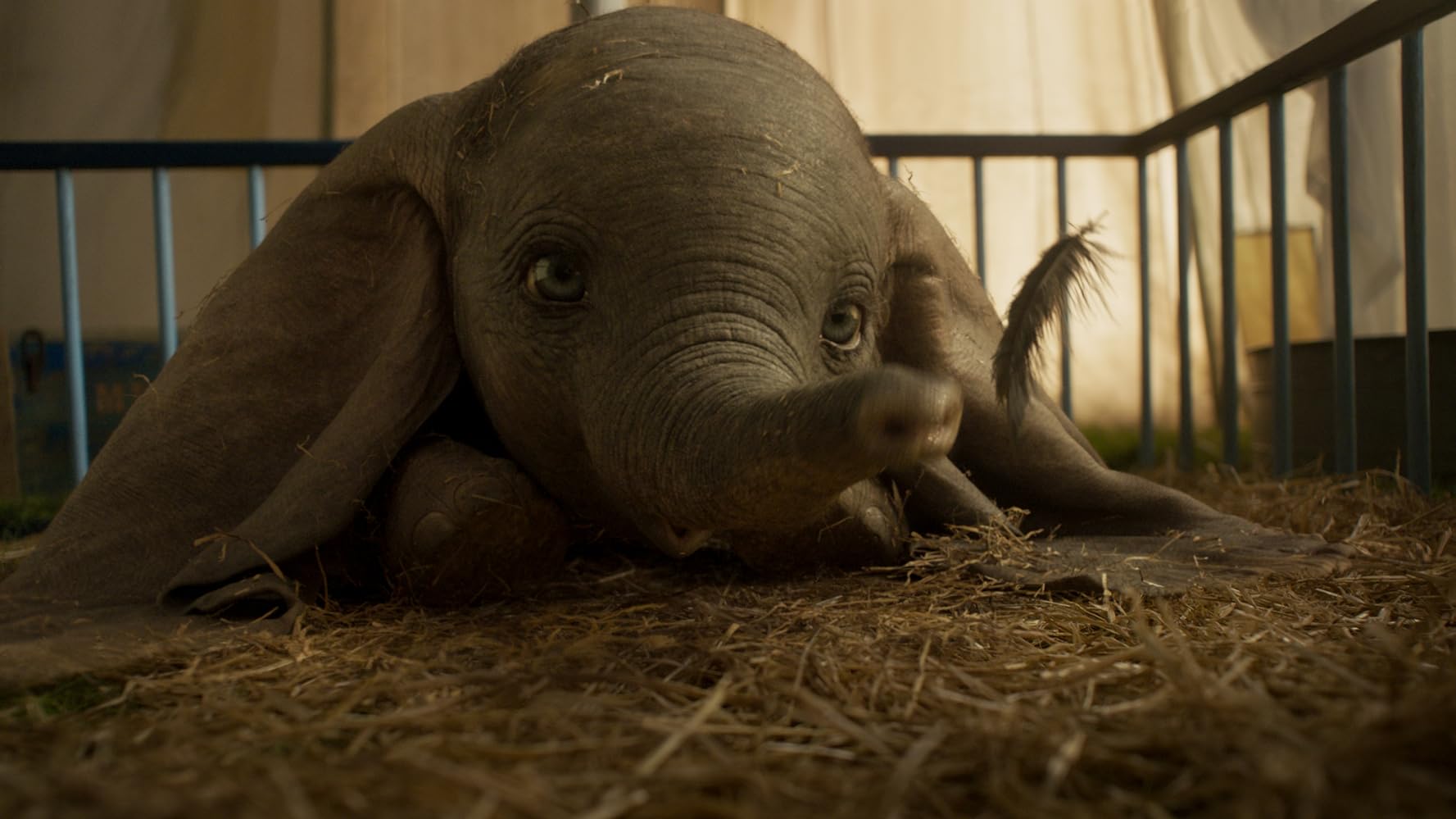
Dumbo (2019)

In 2019, Tim Burton took on his second major live-action Disney remake with Dumbo. Admittedly, the story of a lovable circus elephant who uses his big ears to fly may have seemed like an odd choice for Burton to direct, but at the same time, it did fit his usual M.O. of stories about misfit characters. Thus, while Burton’s Dumbo doesn’t feature his traditional gothic style, its visuals are still very much on point throughout as they do a wonderful job of capturing the bright and majestic visual aesthetic of the circuses of yesteryear. The film also has the benefit of having greater opportunities for new material when compared to some of the other remakes on this list since the original Dumbo is one of Disney’s more simpler-plotted affairs, especially due to its short 64-minute runtime. As such, all the key moments from the original such as Dumbo’s mother being put into captivity after causing a ruckus and the moment where Dumbo first publicly showcases his flying ability during a clown act are covered in just the first forty minutes. After that, a new subplot occurs when a greedy theme park entrepreneur purchases Dumbo for use in his circus while the members of Dumbo’s original circus troupe work to free his mom from her captivity at the entrepreneur’s amusement park. The remake also focuses more on the story’s human characters, namely WWI veteran Holt Farrier and his two kids Milly and Joe, who take the place of Timothy Q. Mouse from the original as Dumbo’s primary allies since this film doesn’t feature any talking animals. However, the new material that’s added in ends up feeling just as simplistic as the original film’s plot which, to be fair, was reportedly the point according to screenwriter Ehren Kruger. Ultimately, though, Dumbo still works quite well as a good-natured family film with a solid cast headlined by Burton regulars such as Michael Keaton and Danny DeVito and some fun nods to the original, including the infamous pink elephants.

7. MALEFICENT

Angelina Jolie in Maleficent (2014)

Since Tim Burton’s Alice in Wonderland is technically more of a sequel than a remake, one could argue that 2014’s Maleficent is where this current crop of live-action Disney remakes truly got started. Under the direction of Alice in Wonderland’s production designer Robert Stromberg, the film serves as a live-action reimagining of Disney Animation’s 1959 outing Sleeping Beauty that, as the title suggests, mainly focuses on the story’s iconic villainess, Maleficent. However, instead of just having her be the main antagonist, the film turns her into more of an anti-hero whose actions against Princess Aurora and her family were the result of her getting revenge against Aurora’s father, her former love interest, for stealing her fairy wings. And while she does curse Aurora to fall into an eternal slumber on her 16th birthday, she ends up developing a motherly connection to her to the point where she’s ultimately the one who saves her from the curse. As you might have guessed, those who prefer Maleficent’s traditionally villainous persona weren’t too pleased with this interpretation of the character, but overall, I think that it’s a uniquely fascinating take on Maleficent and the mother-daughter relationship that forms between her and Aurora is genuinely sweet. But, of course, the biggest highlight of the film is Angelina Jolie in the title role as she perfectly encapsulates the look and persona of the ‘Mistress of All Evil’… even if that designation doesn’t necessarily apply to this version of the character. Thus, Maleficent turned out to be a big hit with audiences upon its release in the summer of 2014, ultimately grossing over $758 million worldwide. This effectively paved the way for a sequel in 2019, Maleficent: Mistress of Evil, which was generally on par with its predecessor in terms of quality while also expanding upon its fantasy world, namely by introducing more members of Maleficent’s race, the Dark Feys. Really, the only major disappointment with the sequel was that there were fewer scenes between Maleficent and Aurora. Nevertheless, the Maleficent films are a solid duology of fantasy flicks that pride themselves on being female-driven stories.

6. THE LION KING
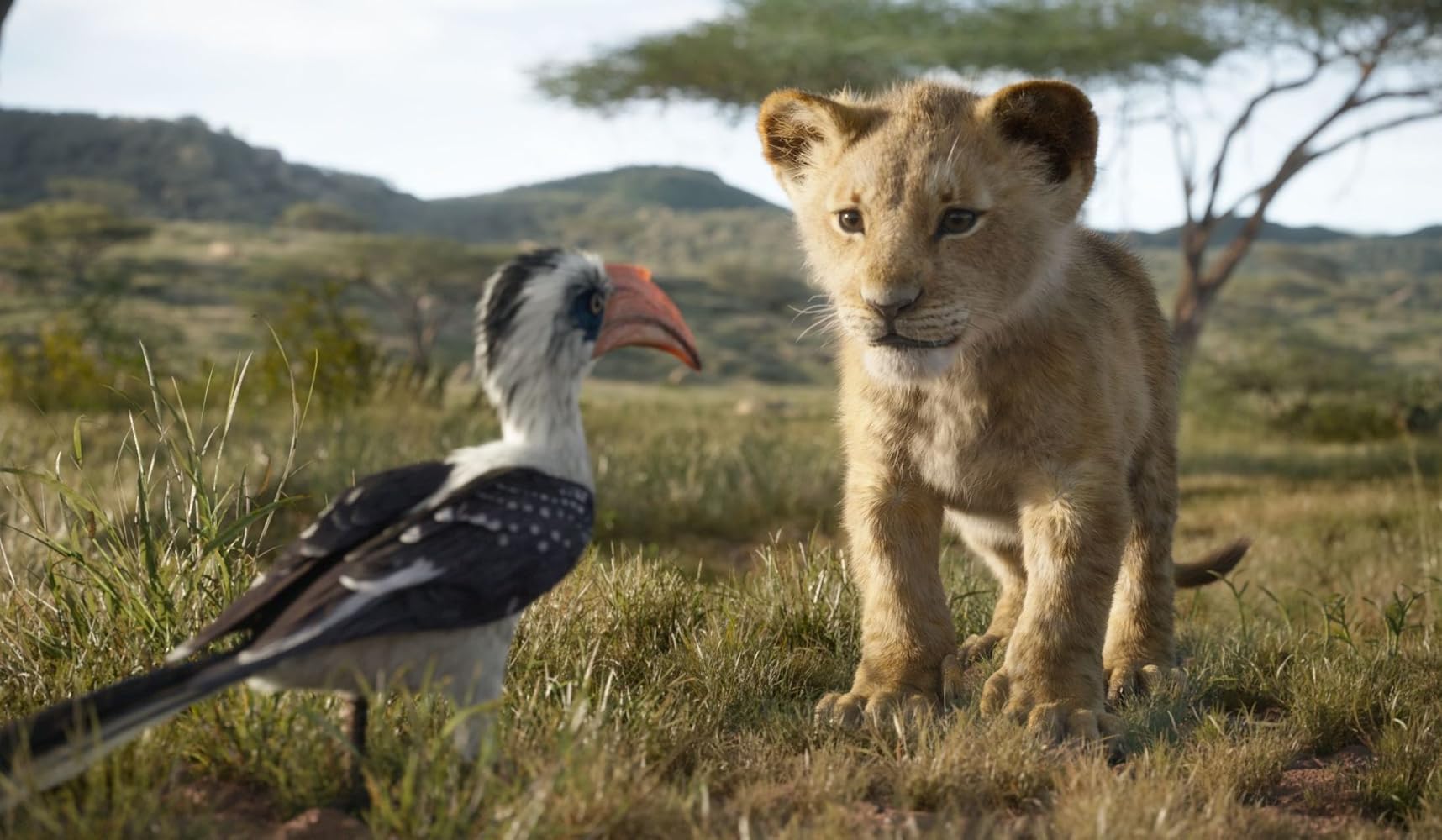
John Oliver and JD McCrary in The Lion King (2019)

Now I’ll be the first to admit that Jon Favreau’s CGI-based remake of The Lion King (which admittedly makes this one a bit questionable to include on this list since it’s not really live-action but arguably still counts based on its status as a remake) is quite arguably the most straight-forward remake of this bunch when it comes to retelling the original film’s story. Apart from some minor additions like an earlier introduction for adult Nala and a rivalry between her and Shenzi the hyena, this is the exact same story as the 1994 film with the exact same story beats. In other words, the biggest difference between the two films is that Favreau’s version is CGI whereas the original was traditionally animated. But while this has made the new Lion King one of the most controversial installments yet of the recent Disney remakes, I’d argue that it still manages to be a solid enough film. Like Favreau’s other big remake, The Jungle Book, much of this is due to the utterly impressive visual effects that do such an incredible job in maintaining their photorealistic nature. And while this does mean that the film lacks the more extravagant moments of the original (i.e. there’s no scene of Timon distracting hyenas by donning a grass skirt and dancing the hula (although there is a brilliant substitute bit for that part)), the attention to detail is truly spot on. Plus, I’d argue that the film still manages to hit the right emotional beats from Mufasa’s death to the moment where Simba speaks with the spirit of his father. And so, if anything, I’d say that at the very least, the new Lion King succeeds as a demonstration of how far CGI has truly come in the past few years. Obviously, I’m not saying that it’s ‘better’ than the 1994 film, but with phenomenal visuals and a great voice cast that includes the likes of Donald Glover, Chiwetel Ejiofor, Billy Eichner, Seth Rogen, and the Queen Bey herself, Beyonce, it’s also quite far from being completely worthless. And yes, this is all coming from someone who lists the original Lion King as his favorite Disney animated film of all-time, but as I’ve made it clear already, just because it’s my favorite doesn’t mean that I was going to hold that against this new film. Still, I will admit that the fact that it is largely note-for-note the same as its traditionally animated counterpart does keep me from putting it any higher on this list.

5. CHRISTOPHER ROBIN

Ewan McGregor and Jim Cummings in Christopher Robin (2018)

Christopher Robin is the other film on this list that’s more of a sequel rather than a remake as it revolves around a grown-up Christopher Robin being reunited with Winnie the Pooh and the rest of the Hundred Acre Wood gang. But, of course, it still counts on this list since it utilizes much of the iconography from Disney’s interpretation of Winnie the Pooh, and since Winnie the Pooh was such a significant part of my childhood, this was easily one of my most anticipated films of 2018. At the end of the day, I’m happy to report that it did not disappoint. Christopher Robin is an incredibly poignant story about the tragedy that is the loss of childhood innocence through the harsh but sadly natural process of growing up. But while this ordeal ends up being an incredibly rough one for Christopher Robin (e.g. losing his father at a young age, enduring the horrors of World War II, etc.), it is what also makes his eventual reconciliation with his friends and family incredibly cathartic. Ewan McGregor does a fantastic job in the title role and when it comes to his Hundred Acre Wood friends, it was only appropriate that they bring back Jim Cummings, the voice of Pooh and Tigger for many a generation (mine included), for his iconic roles. Now admittedly, many have noted that Christopher Robin sports a rather bleak tone, which is true if focusing solely on the first half of the film before Christopher Robin regains his childhood innocence. After that, the film takes on a more light-hearted tone and the scenes where Pooh and company get into all sorts of adventures in London are purely delightful. And really, that perfectly sums up the film in general. It’s a truly delightful family flick that’s fully bolstered by the ever-enduring charm of its timeless characters to be another great Winnie the Pooh story.  

4. ALADDIN

Mena Massoud in Aladdin (2019)

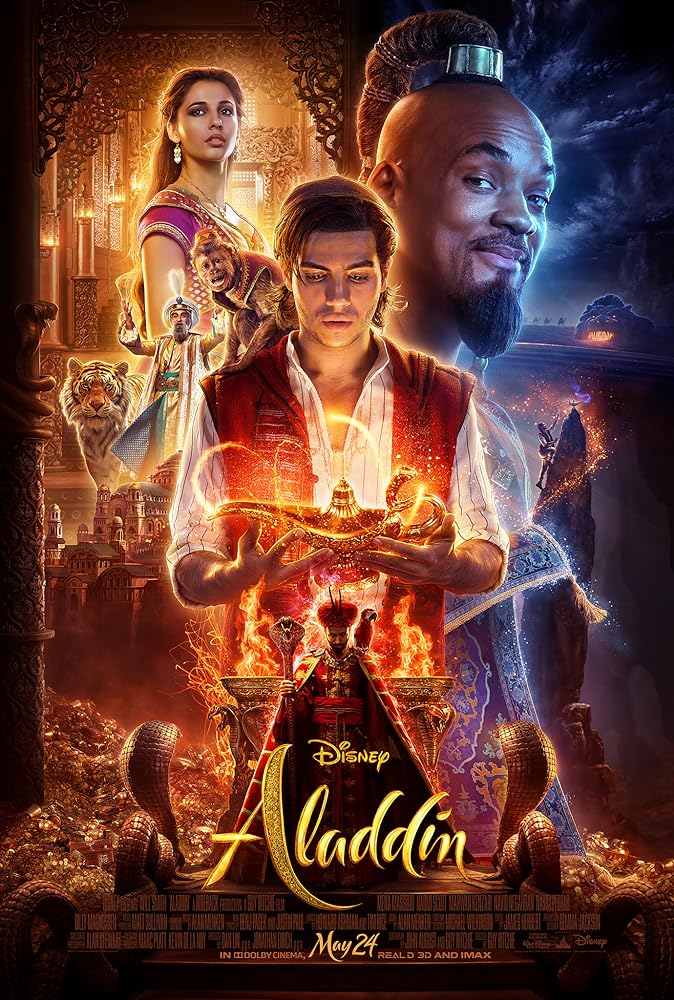
As I’ve mentioned plenty of times before, director Guy Ritchie’s live-action remake of Aladdin ended up being quite a noteworthy success story even though, before its release, it was quite possibly the most scrutinized installment yet of these equally scrutinized remakes. Simply put, it was almost as if this film could never catch a break as it caught flak for various reasons ranging from certain casting choices to the infamous first reveal of Will Smith’s Genie in his traditional blue form. But when it finally came out, it managed to earn over $1 billion worldwide while also doing decently enough with critics, many of whom felt that it turned out to be much better than they initially anticipated. And if you ask me, that means that this film deserves a lot of credit for managing to avoid being the disaster that many predicted it would be. Now as far as being a remake of its animated counterpart, Aladdin is in the same boat as Lady and the Tramp and The Lion King by not making a lot of radical changes to the original story of a good-natured thief who tries to woo the Princess of Agrabah with the help of a wisecracking Genie. Despite this, however, one great change that it does make is letting Princess Jasmine play a far more proactive role in the story. With no disrespect to her animated counterpart, this is the best incarnation of the character to date, especially thanks to Naomi Scott doing a phenomenal job in the role. Meanwhile, Mena Massoud shines in what is surely going to be his breakout role as Aladdin while Will Smith, despite all the pressure that stemmed from having to follow in the footsteps of Robin Williams’ iconic rendition of the Genie in the original animated film, successfully delivers his own, unique take on the character. Ultimately, the only thing that holds this film back is its mediocre interpretation of Jafar, which is primarily due to this version’s more grounded take on the character. But at the end of the day, the live-action Aladdin ends up being a lot of fun, and while it may have seemed like a weird choice to have it done by a director who’s known more for making gritty crime dramas, Guy Ritchie does a highly respectable job when it comes to maintaining the original’s great atmosphere and unforgettable musical numbers.  

3. THE JUNGLE BOOK

The Jungle Book (2016)

Out of all these films, Jon Favreau’s The Jungle Book is arguably the best example of a live-action Disney remake that isn’t fully tied to its animated counterpart. While it’s still very much the story of a young boy named Mowgli who is raised by wolves in the jungles of India and pursued by the sinister tiger Shere Kahn, it’s ultimately a combination of the 1967 animated film and Rudyard Kipling’s original novel. In other words, it only features three of the songs from the animated film (“Bare Necessities”, “I Wanna Be Like You”, and “Trust in Me”) and places greater emphasis on the dramatic parts of the story such as Mowgli’s history with Shere Kahn, who killed his human father, and the dangerous power of ‘Man’s Red Flower’, fire. Favreau does an excellent job of balancing these two aspects of the story, resulting in some excellent emotional moments (e.g. when Mowgli first leaves for the man-village and says goodbye to his adoptive wolf mother Raksha) while also featuring plenty of great homages to the original. But, of course, the most notable aspect of this film is its extensive use of CGI to bring both its animals and its jungle landscapes to life. And because Favreau’s VFX team did such an outstanding job with the visuals (which ended up netting them the Oscar that year for Best Visual Effects), sometimes it’s easy to forget that Neel Sethi, who plays Mowgli, is literally the only ‘real’ thing on-screen 95% of the time. All this and a top-notch voice cast that includes big names like Bill Murray, Ben Kingsley, Idris Elba, and Lupita Nyong’o helps make this adaptation of Rudyard Kipling’s classic story a full-blown visual masterpiece. And as I noted back in the intro, Favreau and screenwriter Justin Marks are currently prepping a sequel that, according to Marks, could potentially incorporate some of the unused elements from the animated film’s original screenplay by Bill Peet that was ultimately rejected by Walt Disney himself for being too dark.

2. CINDERELLA

Richard Madden and Lily James in Cinderella (2015)

No matter how much these live-action Disney remakes get ragged on by their biggest critics, there will always be the select few that were genuinely well-received, and the one that started it all for this group was Kenneth Branagh’s 2015 remake of Cinderella. Unlike both Alice in Wonderland and Maleficent, which received mixed reviews upon their release, Cinderella fared quite well with critics and became the first of these remakes to secure a ‘Fresh’ rating on Rotten Tomatoes. And just like Christopher Robin, this was another one of my most anticipated films back when it was coming out due to the original Cinderella being one of my all-time favorite Disney films growing up. All in all, Branagh’s remake does a wonderful job of bringing this classic story to life. Sure, it’s another case where the remake is predominately faithful to its animated counterpart without many significant changes, but in this instance, the changes that it does make are some of the best to come from any of these recent remakes. Easily the best example of this is how it expands upon the relationship between Cinderella and Prince Charming, namely by having them meet before the ball, which also allows the latter to be a more fleshed-out character compared to his animated counterpart. And while Cinderella continues to get a lot of flak nowadays for allegedly being ‘too passive’ of a protagonist, I still stand by what I’ve been saying these past few years in that her unshakably optimistic nature in the face of all the crap she’s put through makes her a far better heroine than she’s often given credit for. Sure enough, this is well-reflected in the live-action remake, especially thanks to Lily James’ outstanding turn in the role. The same goes for Richard Madden as the superior version of Prince Charming, Cate Blanchett as the unforgettably sinister Lady Tremaine, and Helena Bonham Carter in a scene-stealing turn as Cinderella’s Fairy Godmother. And so, with a phenomenal cast, gorgeous production design, and all-around excellent direction from Kenneth Branagh, the live-action Cinderella is one of the most uplifting films to have come out in recent years.

1. BEAUTY AND THE BEAST
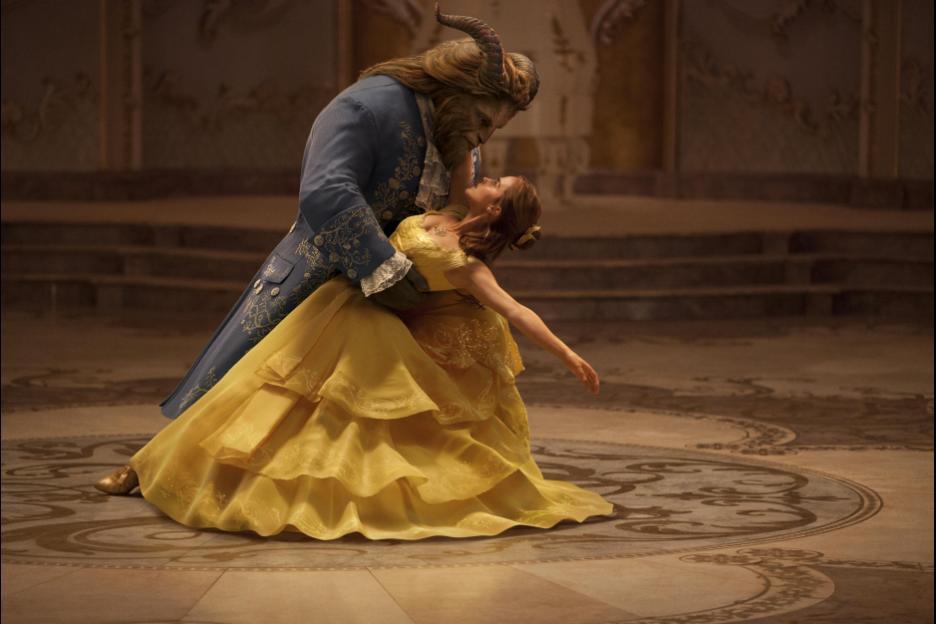
Emma Watson and Dan Stevens in Beauty and the Beast (2017)

To be perfectly blunt, folks, I have the feeling that this film’s placement at the top spot on this list is going to garner some controversy given its usual reception. Let me put it this way; when it first came out, it did relatively well with critics. It currently boasts a 71% rating on Rotten Tomatoes, which is a decently solid score for a film to have on that site, and it also grossed over $1 billion worldwide, effectively making it the second-highest-grossing film of 2017 behind only Star Wars: The Last Jedi. In other words, it was, at the very least, clearly a big hit with audiences. However, I think it’s safe to say that this was the film that fully intensified the utter contempt that the ‘Disney remake’ critics have towards this trend, especially due to the legendary reputation of the film that this remake was adapted from. Before 2017, all the live-action Disney remakes were based on older animated films such as Alice in Wonderland and Cinderella. As such, one could argue that the overall expectations for them weren’t as intense given how long it has been since their releases. Beauty and the Beast, on the other hand, was the most recent Disney animated feature to get the live-action treatment at that point and it also happens to be one of the studio’s most beloved outings. It is, after all, the first animated film that was ever nominated for Best Picture at the Oscars, a distinction that only two other films have achieved since then. As such, this remake clearly faced stricter expectations because of how much the original has meant to my generation, and the same can also be said for the remakes of Aladdin and The Lion King that would come out later and would end up garnering far more polarizing reactions from critics. Thus, despite what I just said about the film maintaining a solid rating on Rotten Tomatoes, I wouldn’t be surprised if many of those who gave it a ‘Fresh’ review aren’t as positive about it nowadays. And yet, I’m not afraid to admit that I still love this film.

Yes, this is yet another instance of a remake that doesn’t make a lot of changes to the original’s story, but overall, I was genuinely fine with the updates that they did make. This includes, among other things, Belle being an inventor just like her father (played excellently by Kevin Kline in a uniquely more subdued take on ‘crazy old Maurice’) and her discovery as to why he has been overly protective of her all these years after her mom died from the Plague. I also loved all the new songs that were made for this remake, especially the Beast’s new solo, ‘Evermore’. And while I’m well aware that much of the criticisms towards this film have been directed towards Emma Watson in the lead role of Belle, namely due to her singing, I still think that she does a fantastic job in the role if we’re talking about all the other things that have made Belle one of the most popular Disney princesses. She’s then backed by a phenomenal supporting cast that includes Dan Stevens as the Beast, Luke Evans and Josh Gad as the scene-stealing duo of Gaston and LeFou (so much so that they’re going to get their own Disney+ series) and the likes of Ewan McGregor, Emma Thompson, and Ian McKellen as the Beast’s servants. In short, I will fully admit that there’s probably quite a bit of bias behind my decision to place this film at the #1 spot on this list. I saw it twice in theaters, with the first time being in IMAX at the film’s ‘Fan Event’ screening on my birthday. I also bought the soundtrack on iTunes not long afterward and loved the film so much that my mom asked one of her co-workers to pick it up on Blu-Ray and ship it to us so we could get the special Best Buy Steelbook*. In other words, I know that I’m probably in the minority when it comes to liking this film, which has certainly faced tons of scrutiny over the ‘necessity’ of its existence and has often been negatively compared to its animated counterpart. And yet, as this entire list has hopefully established by now, I don’t really care about any of that stuff, even if this is another case like The Lion King since the original Beauty and the Beast is one of my Top 5 favorite Disney films. Ultimately, though, that doesn’t prevent the live-action Beauty and the Beast from legitimately being one of my favorite films of the 2010s.

*(By the time that I was fully intent on getting the Steelbook, it wasn’t available at any of the Best Buy stores that were near our home in Rhode Island, hence why we needed to have my mom’s co-worker pick it up for us in Wisconsin where he’s from. As our way of saying thanks, we then proceeded to get him his own Steelbook copy of the film. In other words, as a friendly piece of advice for all you Blu-Ray enthusiasts out there, if you’re ever interested in getting a film’s Steelbook release, be sure to pre-order it in advance because it could very well go out of stock as soon as it hits the shelves, especially if it’s for a highly popular film like one of the MCU films or, say, a billion-dollar grossing remake of a Disney classic…)

And that concludes my rankings list of all the major live-action Disney remakes that have been released since 2010. Thanks for following along and be sure to be on the lookout for my review of the next big live-action Disney remake, Mulan, not too long after the film makes its Disney+ debut on September 4th.

Wednesday, April 15, 2020

TOP 12 FAVORITE FILMS OF 2019: #6-4

Welcome back to Rhode Island Movie Corner’s annual end-of-the-year list in which I’m counting down my Top 12 Favorite Films of 2019. This is Part 3 of 4, and at this point, we’re now halfway through the list. Thus, today we’ll be delving into films #6-4, but if you haven’t checked out the last two parts of this list, just head to the links that will be provided directly below to check out the 6 films that I listed as my Honorable Mentions and films #12-7. And so, without further ado, let us return to the list…

Well, since Part 2 began with a Disney remake, it’s only fitting that Part 3 starts with another Disney remake, and while the original Lion King may be my favorite Disney animated film of all-time, you may be surprised to find that its new CGI adaptation wasn’t my favorite Disney remake from this past year. Instead, that honor goes to the remake of my #4 favorite Disney animated film which, just like the Lion King remake, endured some controversy upon its release. But unlike The Lion King remake, the controversies surrounding this film were much more than just the simple debate over its necessity.

6. ALADDIN

Will Smith, Alan Tudyk, Navid Negahban, Numan Acar, Marwan Kenzari, Naomi Scott, Mena Massoud, Adam Alzoubi, and Nathaniel Ellul in Aladdin (2019)

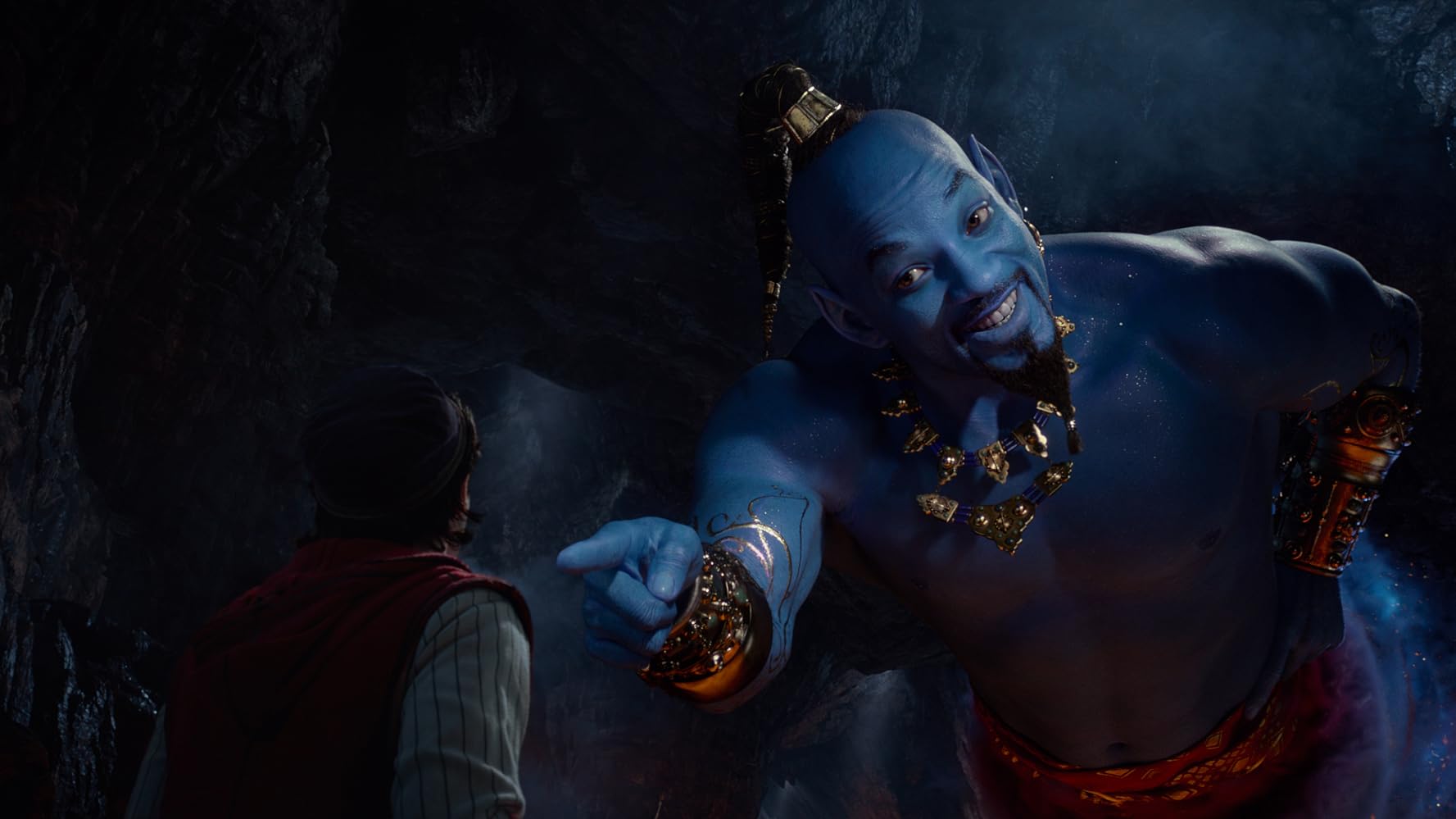
While all these recent Disney live-action remakes have endured tons of controversy from those who question the decision to remake classic animated films, the live-action remake of Aladdin has probably been the most controversial of the bunch to date as it was dealt with a lot of backlash prior to its release for various reasons. First, there was some controversy over a few of its casting choices, namely Naomi Scott as Princess Jasmine and Billy Magnussen as one of her potential suitors, Prince Anders. While Scott does arguably look a lot like her animated counterpart, she technically isn’t of Middle Eastern descent (in reality, she’s primarily of Indian descent). However, Magnussen was easily the most controversial casting of the whole film because while he only appears in a few scenes… he’s still the ‘token white guy’ in a film that revolves around a cast of Arab characters. Another big controversy emerged during the film’s production when it was reported that several Caucasian extras were being made-up to look Middle Eastern. For obvious reasons, this attracted quite a lot of negative press, though Disney would later comment on the matter by saying that this was only for safety precautions and wasn’t a dominant aspect of production. But then, of course, the biggest controversy that this film faced was when a ‘Special Look’ trailer for the film was released in February 2019. The teaser trailer had already come out in October 2018, and yet, it didn’t really attract any negative reactions since it was one of those trailers that didn’t really show anything major. But as for this ‘Special Look’ trailer, it gave us our first look of Will Smith as the Genie in his traditional blue form after previous promo materials showed him in the human disguise that he adopts for much of the film. And to put it simply, this first look did not go over well with the internet who, like the initial design of Sonic the Hedgehog in his feature film, turned it into the butt of many jokes.

In other words, for about a whole month, Aladdin was sporting one hell of a negative reputation online, with many predicting that it would be a straight-up disaster. However, the film’s luck did begin to change, for the most part, when its theatrical trailer was released in March. As theatrical trailers often do when compared to teaser trailers, this one gave us our best look yet at the film. It notably served as the first instance where both Mena Massoud and Naomi Scott had any spoken lines in the marketing, it didn’t rely as much on Genie’s blue form in favor of his human disguise, and it was also a solid showcase of what Will Smith was bringing to the role of Genie. And while a promo clip of Smith’s version of ‘Prince Ali’ proved to be yet another source of online controversy due to how a lot of people negatively compared it to the version from the original, the film ultimately fared okay with critics upon its release. While critical reception wasn’t great, per se, a lot of critics did feel that the film turned out to be much better than they thought it would be going in. But perhaps the most impressive aspect of this film’s overall performance was how it managed to maintain a consistent run at the box-office, which ultimately resulted in it joining the billion-dollar club. Some have attributed this to the fact that several of the films that came out over the next few weeks after Aladdin’s release ended up being rather notorious flops at the box-office. At the same time, though, one could also say that Aladdin managed to maintain its solid run thanks to positive word-of-mouth which, may I remind you, was something that it didn’t exactly have up until the release of its theatrical trailer. With all this in mind, I do genuinely think that it was very impressive that Aladdin managed to pull this off given all the hurdles that it had to overcome. It also must’ve been good for director Guy Ritchie who, despite having a considerably long career in the industry, had just come off a huge box-office flop in 2017 with the failed franchise starter that was King Arthur: Legend of the Sword.

But with that said, some did find the hiring of Ritchie as the film’s director rather odd given that he’s primarily known for gritty crime dramas. However, Ritchie’s also known for having a flashy directorial style, which does contribute nicely to the film’s action set-pieces (e.g. any instance where Aladdin traverses through Agrabah to escape from the guards). Overall, Ritchie does a solid job translating this Disney classic into a live-action context. Like the Beauty and the Beast remake, it doesn’t make any major deviations from the original’s plot but many of the new story elements that it does incorporate are solidly handled, such as giving Jasmine a new best friend in her handmaiden Dalia. And while I know that a lot of people dinged the film for its CGI (as I undoubtedly alluded to earlier with all the jokes about Genie’s blue look), the rest of the film’s production design still feels very much on point with the original’s visual aesthetic. But, of course, we can’t forget about Aladdin’s classic soundtrack courtesy of Alan Menken, the late Howard Ashman, and Tim Rice, which gets an excellent update courtesy of this remake. All the classic songs from the original return, with some of them receiving updated lyrics thanks to La La Land and Greatest Showman songwriters Benj Pasek and Justin Paul. Pasek and Paul also developed two new songs for the remake; sadly, though, one of them ended up getting cut. The song in question is ‘Desert Moon’, a duet for Aladdin and Jasmine that was meant to occur during the sequence where Aladdin is captured by Jafar and escorted to the Cave of Wonders to collect the lamp. And while it was ultimately cut for time, traces of it can still be heard throughout the film (where it’s established as being a melody that Aladdin and Jasmine remember from their childhood) and this lovely little duet was ultimately released to the public when the film hit the home video market. Thus, the final film only has one new song, a solo for Jasmine titled ‘Speechless’. That said, this new song is phenomenal as it perfectly encapsulates Jasmine’s new character arc in this film (which I’ll be delving into more in just a little bit).

However, it goes without saying that the most talked-about aspect of this film was the daunting task of finding someone to play the Genie. Let’s face it, folks, when people talk about Aladdin, the first thing that usually comes to mind is Robin Williams’ iconic turn as the pop-culture spewing magical being with ‘phenomenal cosmic power’. Williams’ performance is so revered that anyone who stood in for him in TV shows and video games basically just mirrored his take on the character. Thus, I can only imagine the pressure that Will Smith must’ve been under as the first ‘truly new’ cinematic interpretation of the character. But as I’ve said before, I feel that the key to this role is finding someone who has an unmistakable screen presence, and Will Smith is one of those actors. Because of this, Smith does, indeed, kill it in the role and thoroughly succeeds at making this version of the Genie his own. For starters, Smith makes the wise decision to not utilize Robin Williams’ penchant for impressions, which obviously set the groundwork for much of Genie’s humor. Instead, Smith relies on his classic ‘Fresh Prince’ persona, effectively making his Genie arguably more of a wisecracker than Williams’ Genie was while still maintaining an excellent friendship with Aladdin. One key aspect to that is how this Genie consistently emphasizes the dangers of falling victim to the greed that can stem from all the potential that comes from the idea of three wishes. This then ties in nicely to the dilemma of Aladdin believing that he needs to maintain the lie of him being Prince Ali, which means that, just like the original film, he tells Genie that he can’t use his third wish to free him as promised. And while the original film just had Genie mad at Aladdin for going back on his promise, Smith’s Genie takes this in a different direction by reminding Aladdin of everything that he stands to lose if the truth ever comes out. And if that wasn’t enough, Genie also points out that Aladdin is the first master he’s had in 10,000 years that he truly considers as ‘a friend’ and even states that he no longer cares about Aladdin using his last wish to set him free. In other words, Genie isn’t mad about all this; he’s disappointed that Aladdin is heading down the wrong road. Thankfully, though, Aladdin does manage to come to his senses by the end and, true to his word, sets Genie free so that he can live a human life married to Jasmine’s handmaiden Dalia.

Because of all this, Smith’s take on the Genie is easily the best part of this film. However, he is then backed by equally terrific turns by Mena Massoud and Naomi Scott as Aladdin and Jasmine. Massoud is appropriately charismatic as Aladdin and the greater emphasis on him nearly succumbing to the selfish mindset of his new princely status pairs well with the character’s classic arc of having to learn that the way to win over Jasmine is by being himself rather than trying to be someone he’s not. But when it comes to the biggest standout of the film (arguably even more so than Smith, even), that honor goes to Naomi Scott since Jasmine really benefits from a new characterization in this remake. Instead of just being stuck in the process of having to marry a prince by law, this version of the character yearns to become the first Sultana in her kingdom’s history because of her immense devotion to the people of Agrabah. However, this idea is rejected by both her father and Jafar, the latter of whom suggests that’s it better for her to “be seen and not heard”. This, of course, then paves the way for her new solo, ‘Speechless’, where she thoroughly rejects this notion, which mainly comes into play when Jafar appoints himself as the new Sultan after gaining control of the Genie’s lamp. As she’s being forced out of the palace, she fights back and convinces Hakim, the head of the palace guards, to maintain his loyalty to her family instead of Jafar. And while this is ultimately followed by Jafar using his second wish to become a powerful sorcerer and regain control of the situation, it is still an empowering moment nevertheless and Jasmine also gets to have a bit more involvement in the final confrontation with Jafar when she and Aladdin try to escape with the lamp. By the end of it all, her father relents on his initial aversion to her desires (which was primarily fueled by how he had been trying to protect her after the death of her mother) and tells her that she will become the next Sultan, which also allows her to change the law so that she can marry Aladdin. Now, to be clear, everything that I just said isn’t meant to be a dig against Jasmine’s portrayal in the original film because I still consider her as one of my favorite Disney princesses thanks to everything that Linda Larkin brought to the role. However, I would argue that this is one of those rare cases where a Disney remake manages to improve on something from its source material.

In contrast, the one weak link of this film is, sadly, the new interpretation of Jafar. Going off my review from last May, I don’t necessarily ‘dislike’ the live-action incarnation of Agrabah’s devious vizier since Marwan Kenzari does a fine enough job with what he’s given and I do genuinely like some of the ways in which this version of the story expands upon his character. Namely, he’s established as someone who used to be a thief like Aladdin but conned his way into becoming the sultan’s most trusted advisor. However, he doesn’t take kindly to the idea of ‘being second’, hence his scheme to take over Agrabah. That’s fine and all, but because the film goes for a more grounded approach to the character, he doesn’t get the chance to be as memorably over-the-top as his animated counterpart. Part of this can be attributed to how his loyal parrot Iago is also heavily subdued in his new characterization; instead of being a fully talking parrot, this Iago is just a regular parrot who primarily just repeats what other people say. That said, though, he still manages to get in some highly effective sarcastic quips here and there, like when he tricks Prince Anders into trying to pet Rajah, which obviously doesn’t end well for him. Ultimately, though, this is just a minor setback for what is primarily a solidly entertaining new spin on this classic installment of the Disney Renaissance. Just like the remake of The Lion King, this doesn’t mean that I think it’s better than the original, but like I’ve said before, the fact that we can still access the original films via services like Disney+ means that there’s no need to fear of the idea that these remakes are replacing them. Plus, as I mentioned earlier, I’m genuinely glad that this film managed to do so well because… again, let’s face it, it was THIS close to being a disaster. With that in mind, I’m curious to see what they’re going to do with the sequel that was recently announced since it was confirmed that it wouldn’t be adapting either of the original film’s follow-ups. Sure, this means that we sadly won’t be getting a remake of Aladdin and the King of Thieves (which I think most would agree is one of the best (if not the best) of the infamous direct-to-video Disney sequels), but it’s nice to know that this sequel is genuinely making the effort to take things in a new direction when it comes to continuing this story.

2019 was easily one of the best years in the Marvel Cinematic Universe’s run. Not only did this year see the fitting conclusion of the franchise’s current arc, but all three of Marvel Studios’ 2019 theatrical releases managed to gross at least $1 billion worldwide. This, of course, includes our #5 film, which delivers one of the most thrilling adventures yet for its iconic title character… and considering what film it was immediately following in the footsteps of, that’s saying a lot!

Calling Spider-Man’s debut in the MCU one of the most anticipated moments in the history of the superhero film genre would be a massive understatement. After years of being absent from the franchise due to Sony’s ownership of the character’s film rights, a deal was made between Marvel Studios and Sony that would let the latter retain the rights but give the former creative control over future Spider-Man films, thus allowing Spidey to officially join the MCU. And so, Tom Holland’s incarnation of everyone’s favorite web-slinger officially made his debut in 2016’s Captain America: Civil War, which established him as an enthusiastic protégé of Tony Stark. Now with that said, I’m fully aware that a lot of people aren’t a fan of this new interpretation of the character given how closely tied he is to Iron Man… however, it is also worth noting that this was the second cinematic reboot of the character in less than a decade. Thus, I’d argue that Marvel Studios made the right decision to not rehash the character’s origin story that we’ve seen dozens of times at this point. Instead, they set a unique new path for the character while still acknowledging where he came from without having to show us him getting bit by a radioactive spider or Uncle Ben’s tragic death. It also helped that Tom Holland proved to be a fantastic fit in the role as he perfectly nailed both Spider-Man’s knack for wise-cracks and Peter Parker’s innocently nerdy persona. This effectively set the stage for his first solo film, 2017’s Spider-Man: Homecoming, which proved to be yet another exceptional outing for the MCU in which Peter desperately tried to prove himself worthy of joining the Avengers before having to learn the hard way that he’s just a kid in a much larger world of superheroes. Upon its release, Homecoming managed to be the highest-grossing superhero film of the year (which is saying something given that it came out the same year as Guardians of the Galaxy Vol. 2 and Wonder Woman) and it ended up taking the #10 spot in my Top 12 list that year.

Holland, of course, would then return to reprise his role in the two-parter that was Avengers: Infinity War and Avengers: Endgame which, simply put, put him through quite the emotional wringer. In Infinity War, he was finally made an Avenger… before he became one of the many victims of Thanos’ snap. He was thankfully brought back in Endgame… but then had to witness the death of his father figure, Tony Stark, up close and personal. Thus, this sets up the main premise of Far From Home, in which Peter heads off on a vacation to Europe with his classmates, hopeful that this will give him a chance to take a break from his superhero responsibilities. Unfortunately for him, that doesn’t turn out to be the case as he’s forced to help Nick Fury and Maria Hill deal with a group of beings known as the Elementals that came from another dimension due to the cosmic implications of the Snap. Sure, Fury and Hill are shown to have a new ally in Quentin Beck AKA Mysterio, a superhero from the same dimension that the Elementals came from, but as Peter soon learns, he’s the only superhero affiliated with the Avengers who can help at the moment since practically everyone else is unavailable. This perfectly exemplifies the state of the MCU after the immediate events of Infinity War and Endgame while also setting up Peter’s big arc in this film in which he must grapple with the one question that everyone wants to know. Given his considerable connection to Tony Stark, is he going to be the next Iron Man? It’s a question that haunts Peter throughout the entire film, especially since tributes to Tony can be seen in almost every country he visits, which really stresses the fact that the man who made the MCU what it is today is truly gone.

All the emotional stress that Peter’s under ultimately comes to a head when Happy Hogan comes to rescue him after enduring one of the worst beatdowns that he’s ever gotten as Spider-Man. After momentarily lashing out at Happy about how much he’s screwed up, Peter then relents and, for the first time in the entire film, truly mourns Tony’s death and how he doesn’t know if he can be the next Iron Man. It is here where Happy tells him the one thing that he desperately needed to hear… that he isn’t going to be the next Iron Man and that no one could live up to Tony Stark’s legacy… not even Tony. Happy then points out that, despite all the times that his best friend second-guessed himself, the one thing that Tony never doubted was putting his faith in Peter. And the way Happy sees it, Tony wouldn’t have made his final sacrifice if Peter wasn’t around to be there after he was gone. As you might have guessed, this is easily the most emotional moment in the film and it also helps to illustrate why it’s perfectly okay to have this version of Peter be closely connected to Iron Man. Going into Homecoming, there was some concern that since Tony was going to be in that film, there was a possibility that he would steal the spotlight from Peter. Thankfully, that was not the case as Tony’s role in that film was more of an extended cameo while still giving us just enough of our favorite ‘genius, billionaire, playboy, philanthropist’. In doing so, it let Peter’s arc of trying to prove to everyone that he was more than just Iron Man’s apprentice properly play out. The same situation applies to Far From Home, albeit without an appearance by Tony for obvious reasons. And to top off this terrific scene, we have an utterly heartwarming moment where Peter begins to develop a new suit as Happy watches on with a look of approval. He then proceeds to put on some music, AC/DC’s ‘Back in Black’, which eagle-eyed fans will recognize as the first bit of music we ever heard in an MCU film back in the first Iron Man which, of course, was directed by Happy himself, Jon Favreau. It’s so satisfying that we can forgive Peter for thinking that it’s a Led Zeppelin song.

As for the rest of the film, Far From Home very much continues what I’d argue is a recent tradition of the MCU by being a superior sequel to what was already a fantastic first film. We’ve seen this before with the likes of Guardians of the Galaxy Vol. 2, Captain America: The Winter Soldier, and Ant-Man and the Wasp, just to name a few. Sure enough, Far From Home is another prime example of this as it takes everything that was great about Spider-Man: Homecoming and polishes it up even further with sharper action sequences (thanks in large part to its international setting, which is used to great effect from a visual standpoint) and a tighter script. As some of you might recall, my only real issue with Homecoming was that it felt a little overlong in places to the point where some of its action sequences felt like they could’ve easily been the finales for other superhero films. By comparison, Far From Home flows a lot better narratively and is also quite arguably up there with Sam Raimi’s Spider-Man 2 as one of the best interpretations of Peter having to balance his superhero work with his normal life which, in this film, primarily stems from the blossoming romance between him and MJ. The chemistry between Tom Holland and Zendaya is excellent, and while MJ doesn’t exactly get as involved in the action as Gwen Stacy did in the Amazing Spider-Man films, she still benefits nicely from how her role gets expanded upon here compared to Homecoming. Plus, when Peter tries to tell her that he’s Spider-Man, she immediately figures it out before he even says it since it’s “kind of obvious”.

But now let’s delve into one of the best elements of the film, Jake Gyllenhaal as Quentin Beck AKA Mysterio. Now, despite what I mentioned earlier about how he’s introduced as a hero from another dimension who’s helping Peter and company deal with the Elementals… let’s face it, anyone who has read any Spider-Man comics knows that he’s full of crap. Sure enough, Beck’s ruse is eventually revealed, effectively establishing him as the main antagonist. And yet, despite the obviousness of this reveal, the film does manage to work around this by giving Beck a new characterization that feels very appropriate in the context of the MCU. Instead of just being a failed actor turned special effects artist, this version of Beck is revealed to be a former employee of Stark Industries who developed the revolutionary holographic system that Tony had shown off in Captain America: Civil War. And to put it simply, Beck didn’t take too kindly to Tony giving it the unfortunate acronym of ‘B.A.R.F.’. Thus, after being fired for being too mentally unstable, he’s now assembled a group of other former Stark employees (including, of all people, William Riva (Peter Billingsley), that one scientist who got yelled at by Obadiah Stane back in the first Iron Man) to fool the world into thinking he’s the next great superhero. He made up both his ‘hero from another dimension’ backstory and the Elementals and his plans are strengthened further when Peter entrusts him with glasses given to him by Tony that are linked to a powerful A.I. system named E.D.I.T.H. (AKA Even Dead I’m The Hero) that commands a line of drones. Now with all this in mind, I’m aware that many have questioned why Tony decided to give this unparalleled source of weaponry to a teenager who clearly doesn’t know how to use it properly, as evident from the sequence where he nearly unleashes a drone strike on his classmate/romantic rival Brad Davis. And yes, I’m also aware that this is now the fifth or so MCU villain whose entire motivations stem from them being wronged by Tony, as was the case with the likes of Aldrich Killian, Obadiah Stane, and even Peter’s previous cinematic foe Adrian Toomes.

However, the key thing to take from all this is how brilliantly handled this incarnation of Mysterio is even if it’s not exactly a completely comic-accurate version of the character, and of course, a lot of this is thanks to Jake Gyllenhaal’s outstanding performance in the role. Gyllenhaal’s strong charisma is on full display throughout, which certainly makes the moments where Beck is pulling off his elaborate ruse feel genuinely convincing to the unassuming. And as for the sequences where we see Beck’s naturally unhinged mental state… well, Gyllenhaal has also proven himself to be one of the best in the business when it comes to playing characters who aren’t all there mentally. Because of this, he’s easily one of the most pitch-perfect casting choices in the history of the superhero film genre, and if you want to talk about one of the best sequences in the genre’s history, look no further than the scene where he unleashes a massive illusion-based trap upon Peter. This is up there with any magic-based sequence from Doctor Strange as one of the most visually stunning set pieces in the history of the MCU, from the army of Spider-Men that spawn from glass shards and attack Peter to him standing on top of fallen statues depicting the other Avengers. But if you want to talk about the biggest gut-punch of this sequence, how about putting Peter right in front of Tony’s grave, Beck suggesting that he’d still be alive if Peter was “good enough”, and then unleashing an undead Iron Man on him? I mean… damn! Oh, and to conclude this little nightmare trip, Beck puts Peter right in front of an oncoming train… the train wins. But then to contrast that, another excellent sequence is when Peter is facing down a bunch of drones to get to Beck and utilizes his Spider-Sense (which is humorously referred to by both Aunt May and Happy as his ‘Peter Tingle’) to defeat them. This is just another phenomenal sequence when it comes to the visuals, editing, sound design, etc.

And if that wasn’t enough, this film also sports two of the franchise’s best post-credits scenes. Now admittedly, many of the recent MCU post-credits scenes have opted to be humorous codas (e.g. Captain America’s ‘patience’ monologue from Homecoming) instead of teasing future installments of the franchise as much as they did back in the day. But with Far From Home, both of its post-credit scenes opt for the latter approach and deliver two of the most jaw-dropping twists in recent MCU history. First, we have the mid-credits scene, where a doctored video that Beck made prior to his supposed death (I say ‘supposed’ because while E.D.I.T.H. tells Peter that it’s not an illusion, I’m sure I’m not the only one who believes that this doesn’t necessarily mean that it can’t still be one) is released to the public. In the video, Beck pins his entire plan on Spider-Man before revealing that Spider-Man’s real name… is Peter Parker. Cue an appropriate ‘WTF!’ reaction from Peter (which, might I add, perfectly mirrors Aunt May’s reaction to seeing Peter in the Spider-Man suit right at the end of Homecoming) and we have a brilliant bit of set-up for the next film. Spider-Man’s real identity is now out in the open and he’s about to be in a whole lot of trouble. Plus, this sequence even gives us one of the best bits of fanservice in recent memory by having the video be made public by none other than everyone’s favorite irate media personality, J. Jonah Jameson, played once again by J.K. Simmons for the first time in a live-action film since Sam Raimi’s Spider-Man 3. The Daily Bugle may be a website this time around in accordance with our current times, but it still very much fits the character, especially if you’re like me and played the recent Spider-Man game on PS4 where he’s a loud-mouthed radio host.

But then, if that wasn’t enough, we also have the film’s post-credits scene, which starts out simple enough with Nick Fury and Maria Hill driving through a city… that is, until they shapeshift and are revealed to be the Skrulls Talos and his wife Soren from Captain Marvel. They then proceed to contact the real Nick Fury, inform him of everything that’s recently gone down, and suggest that it’s time for him to come back. We then cut to Fury getting up from a beach chair on a simulated beach and walking through a giant Skrull ship. What does this mean? Well, we don’t know just yet, and given Marvel’s tendency for complete secrecy when it comes to these films, they’re probably not going to tell us anything anytime soon. One popular theory is that this is setting up an adaptation of the comic storyline known as Secret Invasion, where Skrulls are revealed to have taken the places of numerous Marvel superheroes. If so, it’ll be interesting to see how the MCU handles this, especially since most of the Skrulls that we’ve seen so far from the MCU are nobler in nature compared to what we usually see from their race in the comics. Whatever the case may be, though, one thing’s for certain; Spider-Man: Far From Home is a premier installment of the Marvel Cinematic Universe and a terrific epilogue to the Infinity Saga. In fact, I can safely say that it’s managed to break my Top 5 when it comes to the franchise while also becoming my new favorite Spider-Man film. Going off of what I said in my lead-in to this section, the fact that it managed to pull all this off despite being the first MCU film after Endgame (and, for that matter, the first Spider-Man film after the universally-acclaimed Into the Spider-Verse) is a testament to the fact that it’s a sharply-written and all-around well-made film.

My pick for Number 4 is a film that admittedly had to overcome a few hurdles prior to its release, namely all the skepticism that the internet had towards it given the immense legacy of the films that came before it. And yet, I’d say that it was because of that very legacy that the film managed to be another smash hit that proved why the franchise that it’s a part of is one of the all-time greats.

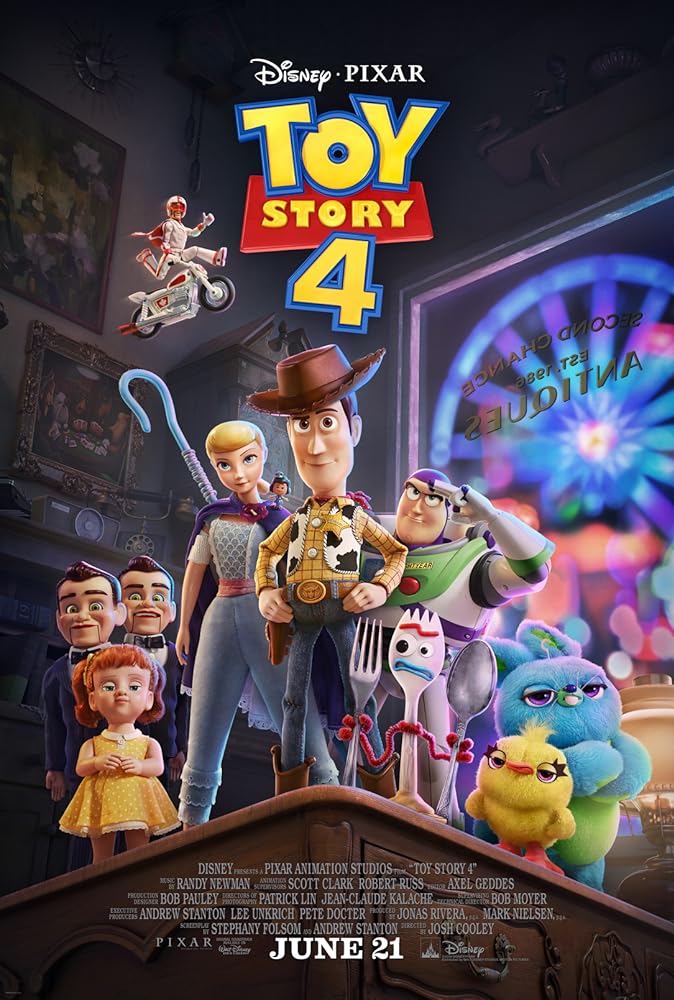
I still remember when this film was first announced all the way back in 2014. To put it simply, the internet wasn’t exactly thrilled about this development. In fact, I’d dare say that a lot of people were quite angry about this. The reasoning behind all their frustrations was quite simple, really; why even do a fourth Toy Story film when the last one was quite arguably the perfect conclusion to the adventures of Andy Davis’ toys? And while I’m sure I’ve established by now that I’m not someone who harps on a film for being ‘unnecessary’ since I feel that this term has become grossly overused nowadays, even I have to admit that I totally understand why because… yeah, 2010’s Toy Story 3 genuinely was the end of an era. It provided a wholly satisfying conclusion to our favorite toys’ relationship with their original owner, Andy, who gives them away to a young girl named Bonnie so that they can be given the love and attention that they deserve while he heads off to college. For those who grew up with the original trilogy, there couldn’t have been a better ending for these beloved characters, which effectively made Toy Story one of the rare trilogies where every installment was outstanding and the third one wasn’t a victim of the dreaded ‘threequel curse’. And that, folks, was the biggest hurdle that Toy Story 4 had to overcome; the fact that most people felt that, aside from the shorts and TV specials that Pixar produced between 2011 and 2014, the franchise had reached its logical conclusion. However, Pixar soldiered on as they legitimately felt that they had managed to find another story that was worth telling… and yet, there were still a few road-bumps that they encountered on the way. Namely, there was a point where they had to rewrite about 75% of the script, with many of the contributions that had come from the writing duo of Rashida Jones and Will McCormack being scrapped due to creative differences. Ultimately, though, Toy Story 4 managed to prove quite a lot of its critics wrong upon its release as it maintained the same critical acclaim as its predecessors and was the franchise’s second entry to reach $1 billion worldwide. It also became the studio’s tenth film to win the Oscar for Best Animated Feature… even if some Oscar voters wanted to see a non-Pixar film win the award for once.

Easily the most talked-about aspect of the film going into it was the return of one of the series’ most iconic supporting characters, Bo Peep. Prior to this film, Annie Potts’ sweet-natured shepherdess hadn’t had a major role in a Toy Story film since Toy Story 2 two full decades ago. In Toy Story 3, it’s established that Bo was one of the various members of the gang who was given away as the years went on (sure enough, this new film opens with that very moment). But in Toy Story 4, Woody reunites with Bo for the first time in several years, and as we soon find out, she’s not the same porcelain figurine that she used to be. In the years since she left the Davis home, she’s become an adventurous lost toy who now works to ensure that other lost toys are taken in by new owners. And while her being written out of Toy Story 3 was due to concerns over her fragile nature as the porcelain figurine of a baby lamp (which also explained why she didn’t get too involved in the plots of the first two films), this has not stopped her from becoming a fully capable action heroine. Whenever a part of her breaks off, she just laughs it off like it’s nothing and promptly tapes it back together. Because of all this, Bo has now been upgraded into being the film’s female lead, and it’s a wonderful new development for her. And yet, arguably the best part about Bo’s new characterization is that for all the great things that it does for her, it also doesn’t betray what came before. In other words, while it’s firmly established that Bo’s adventures have led to her adopting a new philosophy on what it means to be a toy, she’s still very much the good-natured gal that we know and love from the first two films.

Now if there’s one caveat to this new adventure, it’s that, because of the way that the story is structured, it primarily focuses on Woody, Bo, Buzz, and the new characters that they meet along the way. As such, fans of the franchise may be incredibly disappointed to know that this film doesn’t spend too much time with the rest of the gang. While Woody and company are off on their adventure, the others are stuck with Bonnie’s family in their RV. This may have had something to do with the unfortunate passing of Don Rickles, Mr. Potato Head’s voice actor, in 2017 even though they were able to keep Rickles in the role via archival recordings. However, regardless if this had any sort of impact on the production, many of the franchise’s most iconic characters are still basically relegated to cameos. But at the very least, they’re not completely ignored and several of them do get to have their own standout moments here and there. Case in point, they’re responsible for one of the best running gags in the film when Bonnie’s stuffed unicorn Buttercup suggests that they get her dad arrested so that the family doesn’t leave town before Woody’s group comes back. And while this idea is immediately shot down by everyone else, the plan that they ultimately go with does result in Bonnie’s dad getting into trouble with the cops (“Dad’s totally going to jail!”). It also helps that the new characters that they introduce in this film are genuinely excellent. I mean, let’s face it, folks, the Toy Story franchise has always done a wonderful job when it comes to the new characters that they introduce in each film even if they’re just a one-off character who doesn’t return for the next installment (e.g. Stinky Pete, Ken, Lotso, etc.). Sure enough, Toy Story 4 valiantly continues this grand tradition.

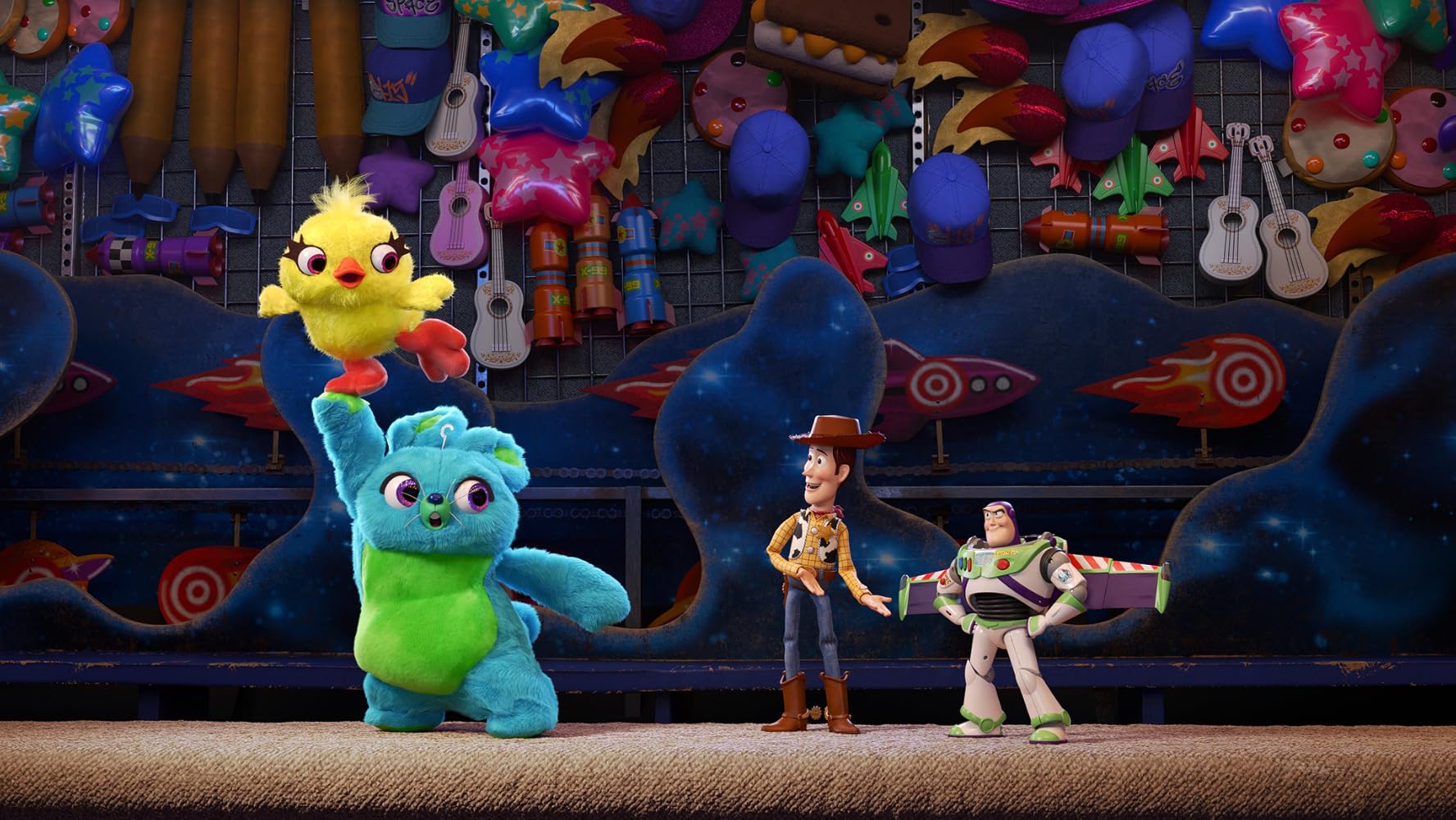
It all starts with Forky, a hand-made spork figure that Bonnie makes on her first day of kindergarten who questions why he’s alive and consistently tries to get thrown into the trash. Yes, the basis behind much of Toy Story 4’s plot is a living spork’s existential crisis and its totally brilliant, but through it all, Tony Hale does a wonderful job making Forky a fully endearing character thanks in large part to his adorably innocent nature. Then there’s the duo of Ducky and Bunny, a pair of carnival plushies who get involved when Buzz unintentionally takes their spot as the top prize at a shooting gallery game. The camaraderie between these two is outstanding (which makes perfect sense given that they’re voiced by Key and Peele) and the plans that they come up with to solve a situation are priceless (e.g. two words… Plush Rush). Bo also gets a fun new sidekick in Pet Patrol officer Giggle McDimples (voiced by Ally Maki); she may be the smallest character in the history of the franchise, but that doesn’t stop her from being a delightfully chipper and all-around badass confidante for our favorite shepherdess. And, of course, we can’t forget about Canada’s greatest stuntman, Duke Caboom, voiced by the breathtaking star that is Keanu Reeves. Duke’s backstory is both tragic and hilarious in that he was abandoned by his owner Rejean just because he couldn’t do the stunt jumps seen in his own toy commercial. Nevertheless, this is a perfect role for Reeves, and I won’t lie, Duke is indeed my favorite of the new characters. But perhaps the most fascinating of these new characters is the one who is initially implied to be the main antagonist, Christina Hendricks’ Gabby Gabby.

We first meet Gabby Gabby when Woody and Forky end up in an antique store that Bo’s lamp happens to be in. She is revealed to have a talking pull-string feature like Woody, but unfortunately, her voice box is damaged. Thus, she immediately attempts to acquire Woody’s voice box, and when he escapes from her ventriloquist minions, the Bensons, they proceed to capture Forky, which puts Woody in quite the pickle since he’s fully committed to getting Forky back to Bonnie. However, it is through conversations between Gabby and Forky that we start to understand her motivations. Namely, she’s eager to have a properly working voice box so that she can be adopted by Harmony, the granddaughter of the antique store’s owner. And because of Forky’s innocuous nature, he reveals to her what he knows about Woody since he’s known him his whole life (“Two days!”), especially his connection to his past owner Andy since Woody accidentally name-dropped him instead of Bonnie during one of their conversations. Gabby then uses this information to convince Woody to give her a chance so that she can experience the same joy that Woody experienced with Andy. But while he does ultimately agree to help her out and give her his voice box, her dreams are utterly shattered when Harmony flat-out rejects her. Luckily for her, Woody manages to convince her that she can find a different kid, and while the initial plan is to have her get taken in by Bonnie, Gabby ultimately decides to go to a kid at the nearby carnival who’s gotten lost. And so, with all that in mind, Gabby Gabby is ultimately not a villain in the same vein of Sid, Stinky Pete, and Lotso. Instead, she’s just a misunderstood doll who just wants to experience what almost every toy wants; the joy of being loved by a kid.

This correlates perfectly to the key theme of Toy Story 4, which is finding one’s purpose in life. For Woody, his purpose has always been the simple idea of being there for his owner, but as the film begins, we see that he must now grapple with the fact that he’s no longer ‘the favorite’. And yet, when Forky comes into the picture, Woody immediately takes on the responsibility of ensuring that nothing happens to him since he recognizes how much Forky means to Bonnie. Thus, it goes without saying that Toy Story 4 hits just as hard as its predecessors when it comes to its emotional moments. Heck, this film hits you with the feels right out the gate by showing the exact moment when Bo was given away, and while Woody does offer to help her stick around, she resists because she understands that it’s time for her to move on. After all, she technically wasn’t Andy’s toy; she belonged to his sister Molly, who had simply outgrown her at that point. And while Bo even offers Woody the chance to join her, he declines because, as we all know, he was deeply loyal to Andy. It’s why he accidentally name-drops him instead of Bonnie when talking to Forky; even after all this time, it’s clear that Woody’s still having trouble moving on. Aside from that, there’s the previously mentioned character arc for Gabby Gabby, which triumphantly overcomes the low point of her being rejected by Harmony by ending on an uplifting note when she decides to go and comfort the lost kid. Even smaller moments like Bonnie’s uneasiness over starting Kindergarten or Woody reminding Bo of how her lamp was a great source of comfort to Molly when she was younger are just as effectively poignant.

But, of course, nothing tops the film’s finale, which was so devastating that both Tom Hanks and Tim Allen went on record stating how difficult it was for them to record it. After he and the gang manage to get Forky back to Bonnie, Woody’s forced to bid farewell to Bo once again. But as he begins to head back to the RV, Buzz re-assures him that she’ll be okay… except in this instance, he was talking about Bonnie. And so, Woody decides to stay with Bo and promptly bids an emotional farewell to the rest of the gang, who also get to have their moment to reunite with Bo for the first time in years. As the gang heads off with Bonnie and her family, Rex asks if this means that Woody is now a ‘lost toy’, to which Buzz responds that he isn’t… not anymore. Really, there’s not much more that I can add here other than that I feel this is one of those emotionally cathartic endings that may be bittersweet in many ways but also quite touching in others. In conclusion, let’s rewind back to what I noted in the intro to this section where the initial response to a fourth Toy Story film was based primarily around one question. Was there truly anything left to say with these characters when the previous film ended the way that it did? This is something that can honestly be debated until the cows come home, but for my money, Toy Story 4 managed to deliver in every possible way. Just like any great Pixar film, it is full of gorgeous animation, fully endearing characters, and a strong story that’s steeped in emotional poignancy. Because of all this, it’s safe to say that Toy Story is easily one of the best animated franchises in the medium’s history. Pixar’s attempts at doing sequels to their other films may have been hit-or-miss, depending on who you ask, but they’ve never faltered with Toy Story.

And that concludes Part 3 of Rhode Island Movie Corner’s Top 12 Favorite Films of 2019. Thanks for following along and be sure to check back in tomorrow for the Grand Finale, where I honor my Top 3 favorite films from this past year.

Tuesday, September 17, 2019

Favorite Films of Summer 2019 - As Voted By You!


While this isn’t the fifth installment of Rhode Island Movie Corner’s annual End of Summer Fan Poll, it has officially been five years since I started doing this event back in 2014. Aside from it being a unique little project to do for this site, one of the main reasons why I do this every year is because it provides a positive outlook on the various films that came out during the summer, which isn’t always easy to come by online. Now with that said, I’m well aware that this summer was a rather rough one from a financial perspective for several films, especially if they weren’t a superhero film or Disney release. Ultimately, though, this poll is intended to combat the increasingly negative attitudes of modern film fandom (which, believe me, are only getting worse…) by showing love to any film that gets a vote in it regardless of its overall quality. And I must say… this was one hell of a year for this little Fan Poll of ours. Thanks to your contributions, we managed to set a record when it comes to responses with 89 (!) votes going to 17 different films, a tally that far surpasses the previous record of 60 votes that was set by the 2017 edition of this poll. Thus, as always, I want to express nothing but thanks to everyone who voted and those who helped spread the poll around. And now, with all that out of the way, it’s time to delve into this year’s big winners. Without further ado, these are the most popular films from the Summer of 2019 as voted by you lovely folks, the readers…

THE FOLLOWING 4 FILMS EARNED ONE VOTE APIECE

POKEMON: DETECTIVE PIKACHU

Ryan Reynolds, Kathryn Newton, and Justice Smith in Pokémon Detective Pikachu (2019)

After years and years of disastrous adaptations that have left many fans disappointed, the genre of live-action films based on video games finally experienced its first genuine success story this year with Pokémon: Detective Pikachu. And as I’ve said plenty of times before, it managed to do so by simply being a solidly faithful adaptation of its source material, which isn’t always something that films from this genre tend to do. Now, of course, just like the various animated Pokémon films that have come out over the years, this film is still primarily geared towards fans of the franchise thanks in large part to the numerous references that it makes to practically every facet of the Pokémon universe. However, those who aren’t as familiar with the series will still find this to a very enjoyable film since it maintains a strong emotional hook throughout via main protagonist Tim Goodman’s quest to discover what happened to his missing father. It also helps that the film is headlined by the excellent lead duo of Justice Smith in the role of Tim and Ryan Reynolds as the voice of the titular ‘Detective Pikachu’, as their excellent camaraderie manages to make up for the generally predictable nature of the film’s mystery plot. And because of this, Pokémon: Detective Pikachu is well-worth the distinction of being the first truly great live-action film based on a video game. Plus, if the other live-action Pokémon films that are currently in development end up being just as solid as Detective Pikachu (including an adaptation of Pokémon Red/Blue and a Mewtwo film), then a promising new film franchise has been born.       

THE SECRET LIFE OF PETS 2

Patton Oswalt in The Secret Life of Pets 2 (2019)

In 2016, Illumination released the first installment of their next big attempt at a major IP after Despicable Me, The Secret Life of Pets. Upon its release, the film was a massive hit at the box-office as it grossed over $875 million worldwide, effectively paving the way for a sequel in 2019. Like the first film, Secret Life of Pets 2 follows a bunch of pets and the various escapades that they get into when their owners aren’t around, primarily focusing on a Jack Russell Terrier named Max as he attempts to adjust to the newest addition to his owner Katie’s family, her infant son Liam. Most of the main cast from the first film returned to reprise their respective roles save for Max, with Patton Oswalt taking over the role from Louis C.K. for… obvious reasons. Meanwhile, newcomers to the cast included Tiffany Haddish as a Shih Tzu named Daisy and Harrison Ford as a sheepdog named Rooster. But despite these new additions and the same generally decent reviews as its predecessor, Secret Life of Pets 2 surprisingly underperformed at the box-office, only grossing over $425 million worldwide. Granted, it wasn’t necessarily a flop since it had a modest budget of $80 million, but it was still less than half of what the first film managed to pull off. One could say that this was simply a case of diminishing returns, especially for a series that isn’t exactly as popular as other animated franchises including Illumination’s own Despicable Me franchise. Still, for what it’s worth, based on what I’ve witnessed since I started working at the Universal Orlando Resort (where we regularly sell Secret Life of Pets merchandise), it does seem like younger audiences are still very enthusiastic about these films.

YESTERDAY

Himesh Patel in Yesterday (2019)

Amidst all this summer’s superhero epics and animated flicks, one little romantic comedy managed to pull off a genuinely solid run at the box-office. The film in question is Yesterday, the latest film from director Danny Boyle that was written by Richard Curtis, who directed the 2003 holiday cult classic Love Actually, and based around the iconic music of the most legendary band of all-time, the Beatles. In the film, newcomer Himesh Patel plays a struggling musician named Jack who finds himself in a peculiar situation after he ends up in a bicycle accident during a mysterious worldwide blackout. When Jack recovers from his injuries, he quickly discovers that he is the only one on Earth who knows who the Beatles are. Thus, he starts to take credit for their songs, effectively allowing him to get signed to a lucrative record deal; at the same time, though, he quickly finds himself having to deal with the pressures of stardom, which begin to take a toll on his relationship with his childhood friend/love interest Ellie (Lily James). Upon its release, Yesterday did generally well with critics, who found the film to be very charming but lamented the fact that it didn’t quite live up to the full potential of its premise. Nevertheless, the film did quite well for itself financially as it maintained a consistent spot in the domestic Top 10 for several weeks on its way to grossing over $134 million worldwide. In other words, audiences found this film to be a highly enjoyable crowd-pleaser that effectively utilized the iconic works of John Lennon, Paul McCartney, Ringo Starr, and George Harrison.   

GOOD BOYS

Brady Noon, Jacob Tremblay, and Keith L. Williams in Good Boys (2019)

In 2007, Seth Rogen and Evan Goldberg had their big breakout hit as a writing duo with the coming-of-age comedy Superbad, effectively paving the way for them becoming two of the most prominent writers/producers of R-rated comedies in recent years. And while they only produced their latest endeavor, Good Boys, it still very much feels like the kind of films that they’re known for. Good Boys serves as the directorial debut of Gene Stupnitsky, who spent several years writing multiple episodes of The Office with his writing partner Lee Eisenberg. In the film, Jacob Tremblay, Keith L. Williams and Brady Noon star as a trio of best friends in the sixth grade who are hoping to learn how to kiss in time for their first middle-school party. Their efforts to do so end up leading them on a wild journey that sees them getting into all sorts of hi-jinx, including trying to recover a valuable drone from their neighbors and accidentally coming into possession of drugs, among other things. After making its debut at this year’s SXSW Film Festival back in March, Good Boys officially hit theaters in the middle of August to generally solid reviews. Critics felt that the film was a solid comedic romp that, while perhaps a bit too raunchy at times, still managed to have a good heart to it. The film has also done quite well at the box-office having currently grossed over $91 million worldwide on a $20 million budget. In fact, its $21 million opening weekend proved to be quite a big deal as it became the first R-rated comedy since The Boss back in 2016 to open at #1 domestically, thus making it another big win for producers Seth Rogen and Evan Goldberg and their production company Point Grey Pictures.

5 FILMS EARNED TWO VOTES

THE INTRUDER

Dennis Quaid in The Intruder (2019)

One interesting thing to note about The Intruder is that it originally wasn’t meant to be a summer release as it was initially set to come out on April 26th. However, since a certain blockbuster ended up following the same route as its immediate predecessor from the year before by coming out a week earlier than its initial release date (and yes, like last year, that doesn’t disqualify it from this poll), that presented a bit of a complication. After all, it’s practically common knowledge at this point that you don’t try to compete against films from that franchise during their opening weekends. Thus, The Intruder was moved a week back to take the now open May 3rd slot, and while that other blockbuster ultimately retained its spot at #1 that weekend, it managed to place second with an $11 million opening weekend on route to a respectable $36.5 million worldwide gross, which was quite good for a film whose budget was under $10 million. However, the film itself, which follows a couple played by Michael Ealy and Meagan Good who find themselves terrorized by the previous owner of their new house, didn’t fare as well with critics. Simply put, most found the plot to be mediocre and, at worst, laughably absurd. If anything, though, many agreed that the best part of the film was Dennis Quaid’s delightfully over-the-top performance as the crazy ex-homeowner. Thus, while critics may have found The Intruder to be one of the prime examples of a forgettable summer release, the fact that it got two votes here means that some people out there found it to be a decent little popcorn flick. 
   
A DOG’S JOURNEY

Kathryn Prescott in A Dog's Journey (2019)

(Huh, look at that, two Dennis Quaid films in a row…)

Back in January 2017, a film adaptation of author W. Bruce Cameron’s 2010 novel A Dog’s Purpose was released in theaters. Like the book, the film focused on a dog named Bailey (voiced by Josh Gad) who embarked on a fascinating journey where he kept being reincarnated as other dogs while still maintaining the memories of his past lives and his former owners. While the film did about as well as you’d expect from a January release when it came to critics, it did manage to gross over $205 million worldwide despite nearly getting derailed by an animal abuse controversy that, thankfully for the sake of the animals, was ultimately proven to be fabricated. This, of course, then led to the development of a sequel based on Cameron’s 2012 follow-up, A Dog’s Journey. Once again, Josh Gad stars as the voice of Bailey as he continues his adventures across various lives while also focusing on his efforts to look after his original owner’s granddaughter. Dennis Quaid also returns as Bailey’s original owner Ethan, though there was a notable change in director. Instead of veteran filmmaker Lasse Hallstrom, directorial duties went to Gail Mancuso, a long-time TV director who’s worked on the likes of Friends, 30 Rock, and Modern Family. Upon its release, A Dog’s Journey fared a little better with critics this time around with several agreeing that, at the very least, it was a touching little pet drama despite being overly sentimental. And while it didn’t do as well at the box-office compared to its predecessor (although it did do well in China, who’s been touted as the key reason behind the first film’s international success), it still did around $64 million. It was also the second of three major films this year that were based around dogs in which audiences could listen to their inner thoughts. The first was an adaptation of a different W. Bruce Cameron novel, A Dog’s Way Home, which came out in January. The second was a different book-to-film adaptation, The Art of Racing in the Rain, which came out a few months after A Dog’s Journey in August.

BOOKSMART

Beanie Feldstein and Kaitlyn Dever in Booksmart (2019)

Currently being touted as one of the best films of the year, Booksmart served as the directorial debut of actress Olivia Wilde and is clearly on its way to becoming the latest coming-of-age comedy classic. The film stars Kaitlyn Dever and Beanie Feldstein as best friends Amy and Molly, who are about to graduate from high school. However, when they realize that they probably spent way too much time being Grade-A students instead of having fun like the rest of their classmates, the two decide to finally partake in one night of unabashed partying. As noted earlier, this film proved to be quite a big deal after it debuted at SXSW. Critics deemed it as an absolute comedic riot with excellent performances from Dever and Feldstein in the lead roles and a break-out turn by Billie Lourd as Amy and Molly’s unpredictable classmate Gigi. However, upon its theatrical release in May, the conversation then began to shift into how it wasn’t exactly a hit at the box-office. To be clear, it genuinely did okay for itself on a modest $6 million budget, ultimately grossing around $26 million. However, many industry experts felt that the film was considerably undermined by the fact that it didn’t opt for a limited release before it expanded into a wide release a la 2017’s Best Picture nominee Lady Bird. Instead, it went straight for the wide release during a time of multiple big-name blockbusters, including two that ended up doing at least $1 billion. And yet, for what it’s worth, Booksmart is still one of the best-reviewed films of 2019 and will most likely get some major attention during this year’s awards season.  

SPIDER-MAN: FAR FROM HOME

Tom Holland in Spider-Man: Far from Home (2019)

So… our boy Spidey has been in quite a major pickle recently, hasn’t he? I won’t get into specifics here, but in case you haven’t heard, the deal between Marvel Studios and Sony that allowed Spider-Man to join the MCU has officially stalled. This means that, until further notice, all future Spider-Man films will be made solely by Sony and, unfortunately, everyone’s favorite web-slinger will not be appearing in a future MCU film anytime soon. However, like I said before, that’s the most that I’ll say about this predicament, for now, other than the fact that I’m just hoping Disney and Sony will eventually work something out. If anything, Spider-Man: Far From Home isn’t a bad one to end on when it comes to Spider-Man’s tenure in the MCU (though, hopefully not in a permanent sense) since it’s easily one of the best Spider-Man films to date. As the first MCU film to come out after Avengers: Endgame, it perfectly serves its purpose as an epilogue to the Infinity Saga’s grand finale by showing how Peter must now overcome the trauma and guilt that he feels after Tony Stark’s death. What follows is yet another case of a superior MCU sequel with greater action sequences and a tighter script (yes, I’ve seen all the jokes about how Tony Stark trusted his top-of-the-line A.I. system to a high-school student… it isn’t that big of an issue, internet…). It also boasts one of the MCU’s best villains to date in Jake Gyllenhaal’s Quentin Beck AKA Mysterio. Sure, anyone who knows Mysterio’s role in the comics saw this coming a mile away, but the film manages to work around this by giving him a solid new backstory as a disgruntled former Stark Industries employee. It also helps that Jake Gyllenhaal proves to be one of the most pitch-perfect casting choices in the history of the superhero film genre as the slightly disturbed illusionist, and because of all this, Spider-Man: Far From Home has legitimately become one of my Top 5 favorite MCU films to date.

HOBBS AND SHAW

Jason Statham and Dwayne Johnson in Fast & Furious Presents: Hobbs & Shaw (2019)

Many agree that the introduction of Dwayne Johnson as the hard-boiled Diplomatic Security Service agent Luke Hobbs in 2011’s Fast Five was a key factor behind the Fast and Furious franchise’s unexpected resurgence. And now, eight years after his debut, Hobbs has taken on the honor of headlining the franchise’s first big spin-off alongside Jason Statham’s Deckard Shaw, who also became a breakout character for the franchise after starting out as its then-newest villain before rather controversially transitioning into being more of an anti-hero. Together and under the direction of veteran stuntman turned filmmaker David Leitch, Hobbs and Shaw prove to be the best mismatched duo since the days of Martin Riggs and Roger Murtagh from the Lethal Weapon series. Sure, just like the other recent Fast and Furious films, Hobbs and Shaw isn’t afraid to bask in the franchise’s increasingly ludicrous plots to the point where it’s practically a superhero film at this point given that the main antagonist is a genetically enhanced super-soldier. But for fans of the franchise, this film does continue to maintain everything that they love about it from the solid action sequences to the incredibly cheesy but still entertaining comedic banter. And as to be expected, Dwayne Johnson and Jason Statham headline the project excellently while being backed by an equally terrific female lead in Vanessa Kirby’s Hattie Shaw AKA Deckard’s sister. In short, while it’s unclear at the moment how Johnson and Statham’s commitment to this spin-off will affect next year’s Fast and Furious 9 (especially after the scandalous feud between Johnson and Vin Diesel during the production of Fate of the Furious), Hobbs and Shaw is another highly entertaining installment from this all-out beast of a franchise.

THESE NEXT 2 FILMS EARNED FOUR VOTES

JOHN WICK: CHAPTER 3 – PARABELLUM

Keanu Reeves, Yayan Ruhian, and Cecep Arif Rahman in John Wick: Chapter 3 - Parabellum (2019)

John Wick: Chapter 3 – Parabellum was notably the first installment from the John Wick franchise to see a summer release since the first John Wick came out in the fall of 2014 while 2017’s John Wick: Chapter 2 hit theaters in February of that year. As such, it’s easy to see why it did so well in this year’s poll given how John Wick is easily one of the best action franchises around. Every installment of the series is a finely tuned action-thriller with phenomenal direction from Chad Stahelski (who, like his uncredited co-director on the first John Wick, David Leitch, is also a veteran stuntman turned filmmaker) and an outstanding turn from everyone’s favorite ‘breathtaking’ action star Keanu Reeves in the title role. And while a lot of action films these days tend to rely on shaky-cam and quick cuts, the John Wick films instead opt for well-shot and excellently choreographed action sequences that are made even better by the fact that Reeves and his co-stars do almost all their own stunts. As for Chapter 3 – Parabellum, it’s yet another excellent installment of a franchise that has impressively managed to craft a seamless narrative throughout its films where each subsequent installment is directly instigated by the events of its immediate predecessor. And while this one is perhaps a bit too overlong for what is arguably one of the franchise’s simpler plotlines, it’s still an absolute blast to watch and, as you might have guessed, ends on a note that perfectly sets up a fourth film that’s slated for a May 2021 release. Thus, I think it’s safe to assume that if Chapter 4 ends up being just as excellent as the first three films, it’s going to fare quite nicely in the 2021 iteration of our annual poll.  

LATE NIGHT

Emma Thompson and Mindy Kaling in Late Night (2019)

Late Night serves as the feature-length screenwriting debut of Mindy Kaling, who has already amassed a sizable resume as a screenwriter having written several episodes of The Office (which she, of course, also starred in as Kelly Kapoor) and creating her hit show The Mindy Project. In Late Night, she stars as Molly, the newest addition to the writing staff of longtime talk show host Katherine Newbury (played by Emma Thompson). When Katherine learns that she’s potentially getting replaced due to her show’s declining ratings, she starts relying more on Molly’s input (especially since she’s her only female writer) to figure out a way to appeal to a wider audience. When Late Night premiered at the Sundance Film Festival back in January, it quickly became one of the most talked-about releases from this year’s festival slate. It also made Sundance history from a financial standpoint when its U.S. distribution rights were acquired by Amazon Studios for a record-setting $13 million. It ultimately saw a wide release in June, where it did about the same as Booksmart at the box-office with a worldwide gross of around $19.9 million. Just like Booksmart, it wasn’t necessarily a bad outcome for a film with a low budget that was under $10 million, but some did consider its overall performance to be underwhelming given how much money Amazon put up for its distribution rights. Critically, though, the film was very well-received, with many touting it for its sharply written script and an excellent cast. All this certainly helped it become the best performing film in this year’s poll that wasn’t a blockbuster.

In the past, I’ve mentioned that my original hope for this annual poll was to have a ranked list of the most popular films. Ultimately, though, I realized that this would be a rather difficult thing to come by since multiple films can end up having the same number of votes. I did manage to have a Top 5 in 2017, however, and lo and behold, the same situation happened again this year. Thus, without further ado, here are your Top 5 Favorite Films from the Summer of 2019…

TIED FOR FIFTH PLACE WITH SEVEN VOTES EACH

ALADDIN

Will Smith and Mena Massoud in Aladdin (2019)

To reiterate what I said a few months back in my annual Midyear Recap, I do consider it a genuinely impressive feat that the live-action remake of Aladdin managed to gross over $1 billion worldwide. Obviously, it was going to do well at the box-office regardless given how well Disney’s other live-action remakes have done these past few years, but at the same time, this was quite arguably the most scrutinized of the bunch to date, especially after the first reveal of Will Smith in Genie’s traditional blue form. And while critics were ultimately mixed on the film when it came out, it clearly did well enough with audiences to prove that, at the very least, it managed to win over some of its biggest critics. It’s also worth noting that the film’s impressively consistent run at the box-office was partially due to some of the various critical/commercial underperformers that came out the first few weeks after its release. Ultimately, though, the key thing to take from this film is that it’s just another example of why these live-action Disney remakes aren’t as big of a deal as some people are making them out to be online. Instead of trying to ‘replace’ the films that they’re based on, they simply serve as enjoyable companion pieces to their classic animated counterparts, and that is very much the case with Aladdin. Obviously, its biggest hurdle was trying to respectfully follow in the footsteps of Robin Williams’ iconic turn as the Genie from the original film, which it manages to pull off thanks to an excellent turn from Will Smith in the role, who’s then backed by equally charismatic performances by Mena Massoud and Naomi Scott as Aladdin and Jasmine. Scott, especially, is a major standout thanks to the great new characterization for Jasmine that allows her to have a far more proactive role in the story. Because of all this, Aladdin was a very fun time to be had at the cinema and a solid new take on Disney’s 1992 animated classic. However, as we’ll soon find out, a different Disney remake basically ended up stealing its thunder.

TOY STORY 4

Tom Hanks, Tim Allen, Keegan-Michael Key, and Jordan Peele in Toy Story 4 (2019)

Like Aladdin, there was quite a bit of skepticism surrounding Toy Story 4, although in this case, it was more to do with people feeling that the series had already reached its appropriate conclusion with Toy Story 3 back in 2010. However, Pixar ultimately managed to prove why Toy Story continues to be their studio’s premier franchise as Toy Story 4 is yet another one of their masterpieces. Just like the previous 3 films, Toy Story 4 boasts an excellent script with strong themes that, in this instance, primarily focus on coming to terms with one’s purpose in life. In doing so, the film continues to maintain the franchise’s strong emotional poignancy (right down to an ending that will surely hit hard for Toy Story fans) while still providing them with another fun adventure with its lovable cast of characters. Admittedly, it probably could’ve given the long-time supporting characters of the franchise more to do (which I presume was partially due to the passing of Don Rickles (Mr. Potato Head) in 2017), but great new characters like Tony Hale’s Forky and Keanu Reeves’ Duke Caboom do make up for this, for the most part. Plus, you also have the very welcome return of Bo Peep after she was absent from the third film in what is easily her most substantial role to date in these films. In short, Toy Story 4 is certainly another example of how the internet tends to scrutinize Pixar sequels a lot more than their other films to the point where Pixar even had to announce that this will be their last sequel for a while. And yet, if there’s anything else that this film proves, it’s that they’ve never once faltered when it comes to Toy Story, which is quite arguably the best animated franchise around.

IN FOURTH PLACE, WITH 8 VOTES

ROCKETMAN

Taron Egerton in Rocketman (2019)

To go off something that I mentioned in my review for this film, it’s rather funny to note all the similarities between Rocketman and last year’s Best Picture nominee Bohemian Rhapsody. Both are musical biopics about legendary British musicians who are also gay men, both were directed by Dexter Fletcher in some capacity (partially for Bohemian Rhapsody, fully for Rocketman), and both feature John Reid as a character as portrayed by a Game of Thrones star. Things start to differ, however, in terms of their overall reception. While Bohemian Rhapsody wasn’t necessarily panned by critics, it did get a lot of flak over its portrayal of Freddie Mercury, although that didn’t stop it from surprisingly managing to gross over $900 million worldwide. By comparison, Rocketman didn’t reach those same financial heights (only amassing $193 million worldwide) but was far better received, and even as someone who did like Bohemian Rhapsody, it’s easy to see why. While it does occasionally abide by the typical tropes of the musical biopic genre, Fletcher imbues the musical numbers with a fantastical visual style that very much captures the spirit of Elton John’s music. And it’s all headlined by a phenomenal lead performance by Taron Egerton in the title role as he perfectly personifies John’s eccentric persona while also effectively conveying the emotional struggles that he goes through when it comes to the relationships that he has with his friends and family. Thus, whereas other musical biopics tend to get dinged for feeling more like the CliffNotes version of their subjects’ lives, Rocketman avoids all that to become one of the genre’s most openly honest outings.

WITH 11 VOTES, THIRD PLACE GOES TO…

ONCE UPON A TIME IN HOLLYWOOD

Brad Pitt and Leonardo DiCaprio in Once Upon a Time... in Hollywood (2019)

As I hinted at in my intro post for this year’s poll, I figured that Quentin Tarantino’s latest film would do quite well here. Simply put, Tarantino films are practically guaranteed to be a hit with both critics and audiences, and sure enough, Once Upon a Time in Hollywood has been touted as one of this year’s biggest Oscar candidates… which effectively makes this all awkward for me since I’m one of the rare people who found it to be quite underwhelming. Like I said in my review for this film, its biggest issue is that it’s incredibly unfocused in terms of its story. The main plot of an aging TV star hoping to stay relevant in an ever-changing industry does, at least, feel like a Tarantino-type plot and perfectly conveys his intent of celebrating the Golden Age of Hollywood. However, it’s the inclusion of Charles Manson and his infamous cult that ends up making it all problematic since their role in the story feels like an afterthought. It also doesn’t help that the film barely gives any screen-time to the Manson family’s most well-known victim Sharon Tate despite an incredibly dedicated performance by Margot Robbie in the role. And because of this, the film’s big ending that’s set on the night of Tate’s murder but ends up pulling the same trick as Inglourious Basterds by changing history and having the main characters kill the Manson subordinates who partook in that night’s murders ultimately feels cheap. It’s sad, really, because the film still has all the hallmarks of a classic Tarantino film while featuring a solid ensemble cast headlined by the great duo of Leonardo DiCaprio and Brad Pitt. Ultimately, though, Once Upon a Time in Hollywood simply lacks the bite of other Tarantino films.  

THIS YEAR’S RUNNER-UP, WITH 15 VOTES

THE LION KING

JD McCrary in The Lion King (2019)

I have the feeling that this particular result will be heavily controversial for various reasons ranging from the fact that this is another Disney remake we’re talking about to how it managed to outdo an original film like Once Upon a Time in Hollywood when it comes to votes. In other words, Jon Favreau’s photorealistic remake of The Lion King has easily proven to be one of the most controversial Disney remakes yet due to how it ultimately ‘remakes’ its source material. For the most part, the biggest changes that this version makes stem from the shift from traditional animation to CGI as the story is almost entirely the same as the original animated film save for some minor cosmetic changes. As such, this inevitably brings up the usual argument that critics of Disney’s live-action remakes (even though this one technically isn’t live-action save for the opening shot) have in that they never capture the same spirit of their animated predecessors. Still, for what it’s worth, it could be argued that this new Lion King does deserves some credit for not attempting to make any radical changes to the story while still managing to hit all its big emotional moments in an effective manner. Plus, it genuinely is one of the best-looking films of the year thanks to the same top-quality visual effects that headlined Favreau’s remake of The Jungle Book while also boasting a fun cast highlighted by the scene-stealing duo of Billy Eichner and Seth Rogen as Timon and Pumbaa. In short, I recognize that I may be heavily biased in this situation since the original Lion King is my favorite Disney animated film of all-time, but I quite enjoyed this new take on it simply because I knew that it wasn’t going to replace the original.

AND FINALLY, THIS YEAR’S CHAMPION INSTANTLY BROKE LAST YEAR’S RECORD SET BY BLACKKKLANSMAN WITH 19 VOTES OVERALL. IT WAS ALSO THE CLEAR FRONT-RUNNER THIS YEAR, EFFECTIVELY GIVING ITS FRANCHISE ITS FIRST UNDISPUTED CHAMPION IN OUR ANNUAL POLL. YES, FOLKS, I’M SURE YOU KNOW EXACTLY WHAT FILM THIS IS…

AVENGERS: ENDGAME


I mean, was there ever any doubt? Not only is Avengers: Endgame easily the biggest MCU film to date, but it also ended up making history when it dethroned James Cameron’s Avatar to officially become the highest-grossing film of all-time, and if you ask me, it was well-deserving of this honor. I know that I say this all the time when it comes to MCU films, but it goes without saying that Endgame is yet another example of how this franchise has managed to achieve a perfect blend of amazing action sequences, sharp humor, and powerful character moments steeped in emotional poignancy. And as the finale to what Marvel Studios has now designated as ‘the Infinity Saga’, Endgame brilliantly sets the stage for future MCU films while also effectively tying up many of the franchise’s longest-running plotlines and providing cathartic finales for many of the characters that started it all. In other words, Avengers: Endgame is literally the very definition of everything that has made Marvel Studios the undisputed champion of the superhero film genre, and because of this, it more than deserves some attention at the Oscars this year including, hopefully, a Best Picture nomination. Yeah, I know that it probably won’t win since, apparently, some Academy members don’t respect ‘money-grabs’, but if Black Panther can win a couple Oscars at last year’s ceremony, why not Endgame? And while there may be a bizarre collection of fans out there who act like it isn’t that great (I’ll elaborate on these ‘stans’ some other time), Endgame truly is a landmark entry in the superhero genre.

This concludes the 2019 edition of Rhode Island Movie Corner’s annual End of Summer Fan Poll. Once again, a very special thanks to everyone who participated in this year’s event, and for those who didn’t get the chance to partake in it, feel free to sound off in the comments below with your favorite films from this past Summer.