Showing posts with label 12-10. Show all posts

Monday, April 13, 2020

Top 12 FAVORITE FILMS OF 2019: #12-10 + Honorable Mentions


As you might recall, the intro to my ‘Top 12 Favorite Films of 2018’ list mainly consisted of some particularly critical statements on the current state of film fandom. Fueled in large part by the explosively divisive reaction to 2017’s Star Wars: The Last Jedi, the internet quickly forgot the age-old rule of film (“Everything is subjective”) and devolved into a series of violent online feuds and unnecessarily cruel attacks against members of the film industry. Well, folks, I’m sorry to say that this only got WORSE in 2019 as practically every major film fandom there is got corrupted by some of the most toxic ‘fans’ (a term I use very loosely) that I’ve ever seen in the decade that I’ve spent as a film critic. As I’ve said plenty of times before, it’s perfectly okay if you find yourself in a situation where you didn’t quite like a film since film itself is a subjective medium. What I don’t understand, however, is why certain folks on the internet feel that the best way to express their views on the matter is to vehemently attack those responsible for making the films as if they’ve committed a crime against humanity or something. And sadly, you can see this toxic behavior practically anywhere you look online. For example, if you go on YouTube and type in a member of the film industry who’s deemed ‘problematic’ in the eyes of these ‘internet types’ (e.g. Lucasfilm president Kathleen Kennedy, Last Jedi director Rian Johnson, Captain Marvel’s Brie Larson, etc.), you’ll find nothing but an endless array of their racist, misogynistic garbage flooding the top search results. It goes without saying that crap like this has made my job as a film critic a hell of a lot harder than it has ever been in the past and was one of the main reasons why I decided not to do a ‘Top 10 Worst of 2019’ list. Simply put, I just didn’t want to contribute to all that negativity. And yet, that won’t stop me from doing my annual retrospective on the year prior to give you all my Top 12 Favorite Films of 2019.

Why a Top 12 instead of the traditional Top 10? Well, as long-time readers know, this was mainly started as an inside joke to tie into the fact that I started this site in 2012. But in the years since, I’ve found that doing a Top 12 allows me to talk about even more of the great films that I see every year. But before we begin, I must do what I always do and lay down my ground rules for this annual list. First off, a fair warning for those who haven’t seen any of the films that I’ll be discussing as these posts will be filled to the brim with spoilers. In other words, the biggest moments in 2019’s biggest films will be addressed in full detail. Thus, if you haven’t seen some of the films that I’ll be talking about, don’t worry because I will be providing links to my spoiler-free reviews of them throughout these next few posts. Just look for the film posters as that’s where these links will be located. Secondly, as you could probably notice by the smaller number of posts that I’ve published in 2019, I don’t always have the time to go to the theater, which means that I haven’t seen every new noteworthy release. This explains why you won’t see films like this year’s Best Picture winner Parasite, the Safdie Brothers’ Uncut Gems which garnered some major awards buzz for Adam Sandler, or the Fred Rogers biopic A Beautiful Day in the Neighborhood on this list, just to name a few. To be clear, though, that’s only because I haven’t had the time to see them yet. With that in mind, I also need to point out the fact that this list will be almost entirely made up of sequels, remakes, and basically any film that falls into the ‘blockbuster’ category. I know that this probably won’t sit well with those who prefer indie films and films that offer more ‘original’ stories, but those just aren’t the films that I tend to go see regularly. Plus, let’s be frank, I’m not really in the mood to get mercilessly grilled for liking a film that some may describe as “an example of the film industry at its worst”.  

Finally, I can’t stress enough about what is probably the most important rule to remember of them all, especially nowadays… just be respectful of other folks’ opinions. I mean, seriously, I frequently find it hard to believe that, from an internet perspective, this is apparently nigh impossible to do. I know damn well that there will be folks out there who will disagree with some of the choices on my list, especially since I am including a few films that weren’t necessarily well-received. Likewise, there were a few films this year that were massive hits… but I admittedly wasn’t as big on them compared to others (e.g. Quentin Tarantino’s latest, Once Upon a Time in Hollywood, and the billion-dollar grossing phenomenon that was Joker). And yet, this doesn’t mean that I’m going to give people a hard time for liking or disliking a certain film because I understand that films will always fare differently with different people. Sadly, not everyone online shares that same sentiment, and while a lot of this tends to come from the obnoxious trolls that I mentioned earlier, you may be surprised to find that, sometimes, this can also come from those who aren’t racist misogynists. And as you might have guessed, I will certainly be addressing a lot of the questionable online behavior that I’ve seen over the past year during this list. Thus, with all that introductory information out of the way, it’s time to finally get this party started as I present Rhode Island Movie Corner’s Top 12 Favorite Films of 2019. Today’s post will be the first of four that will be published over the next few days that will be covering three films apiece. It all begins with Part 1, where we’ll be delving into films #12-10.  

As always, though, we start things off with my Honorable Mentions. For this year’s list, I have 6 films to name…
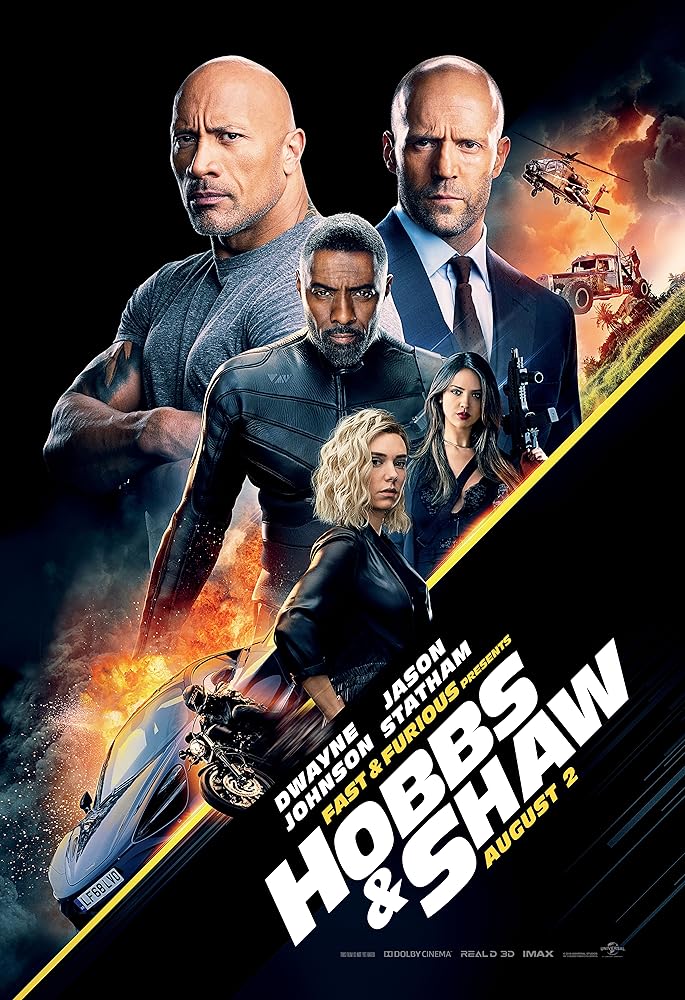
If my previous reviews of this franchise are any indication, I’ve been a consistent fan of the Fast and the Furious franchise, especially since its unexpected resurgence in 2011. Many will agree that one of the key factors to this was the introduction of Dwayne Johnson to the franchise’s ensemble cast as the no-nonsense DSS agent Luke Hobbs. And thanks to the introduction of Jason Statham’s imposing villain turned controversial anti-hero Deckard Shaw in Furious 7, Johnson soon found himself an excellent co-star to share the screen with, leading to the franchise’s first official spin-off, Hobbs and Shaw. Under the solid direction of David Leitch, who’s quickly becoming one of the best action directors in the business, Hobbs and Shaw continues to provide fans of the franchise with everything that it’s known for, especially when it comes to its trademark action sequences that constantly defy all logic. In fact, this film manages to take the series’ already ludicrous plots to a whole new level by introducing a sinister organization known as Eteon that’s represented by Brixton Lore (Idris Elba), a cybernetically-enhanced super-soldier who literally refers to himself as ‘Black Superman’. Although to be fair, it’s been a perpetual running gag at this point about how many predict that this series will probably go to space someday, so it’s arguably not that surprising that this spin-off is practically a superhero film. Nevertheless, Johnson and Statham once again prove why they’ve been such a dynamic duo in these films and are then backed by an equally strong female lead in Vanessa Kirby’s Hattie Shaw, Deckard’s sister. The film even does a better job than most of the other Fast and Furious films when it comes to conveying the franchise’s long-running theme of the importance of family. In short, yes, this is as mindless of an action blockbuster as you can get at this point, but when it comes to the behemoth of a franchise that it stems from, it goes without saying that you should already know exactly what you’re going to get going into it.
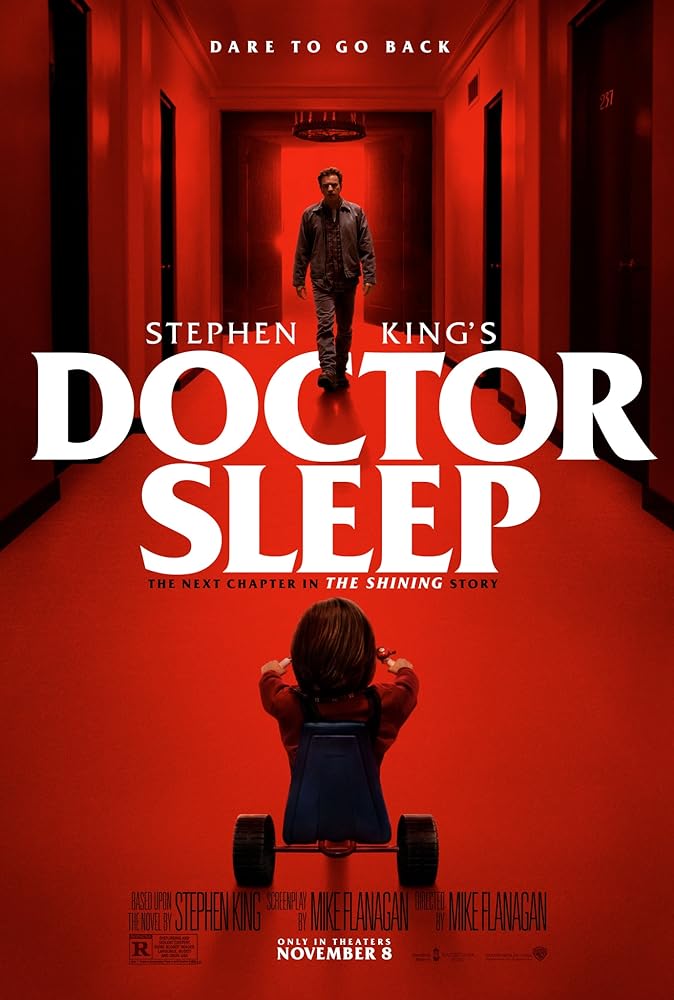
The first of two Stephen King adaptations that will be making an appearance on this list, Doctor Sleep is a follow-up to King’s 1977 classic The Shining. However, director Mike Flanagan’s adaptation is a film that respects both the novel that precedes its source material and director Stanley Kubrick’s 1980 film adaptation of it, which still stands as one of the most iconic horror films of all-time despite being one of King’s most despised adaptations of his work. While the imagery that Flanagan relies on obviously stems from Kubrick’s film, he goes about this story of a now grown-up Danny Torrance overcoming the trauma of his time spent at the Overlook Hotel with the kind of emotional poignancy that King is known for. This extends all the way to the film’s finale, which notably deviates from King’s 2013 novel and instead opts for an ending that honors his version of The Shining. Whereas Kubrick’s film concluded with Jack Torrance freezing to death in the snow, King’s version ends with him sacrificing himself to destroy the Overlook. Thus, in this film, Dan ends up taking his father’s place when it comes to the task of ensuring that the horrors of the Overlook will never harm anyone again, even if it comes at the cost of his own life. And while the film’s finale somewhat devolves into one Shining callback after another (e.g. The Grady Twins, the bloody elevator, etc.), Flanagan’s direction is phenomenal throughout and Ewan McGregor is fantastic in the role of Dan Torrance. He’s then backed by an equally terrific pair of performances from newcomer Kyliegh Curran as young ‘Shining’ prodigy Abra and Rebecca Ferguson as the film’s sinister antagonist, Rose the Hat. Because of all this, Doctor Sleep is another prime example of why the horror genre has been in a state of resurgence these past few years thanks to incredibly well-made films such as this one.
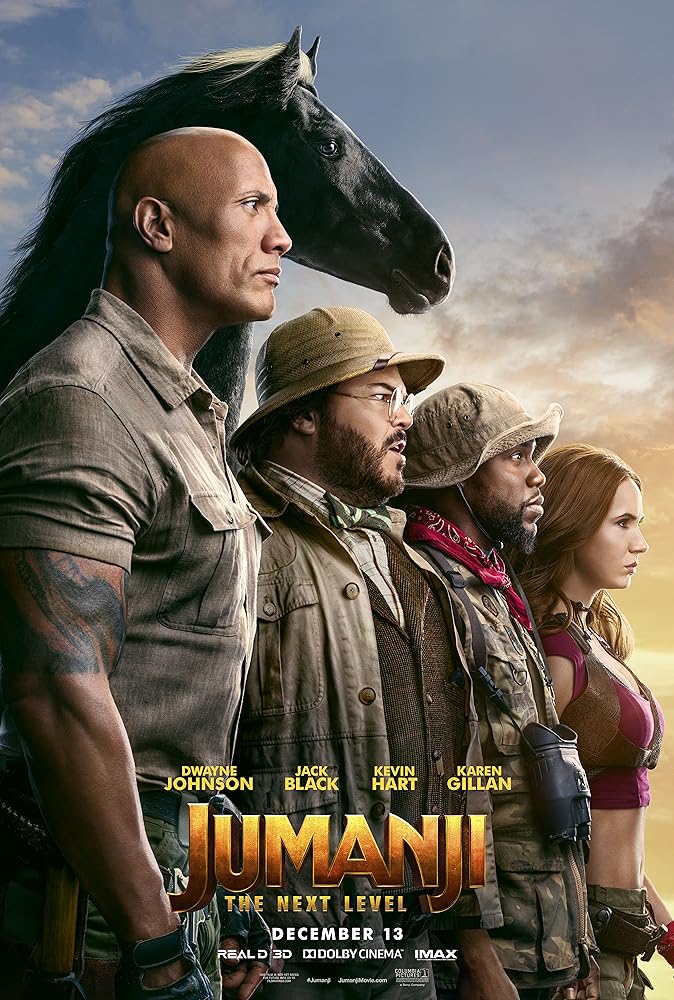
If there’s one major advantage that Jumanji: The Next Level has over its predecessor, 2017’s Jumanji: Welcome to the Jungle, it’s that it doesn’t have to deal with any of the awkward bits of set-up that came from that film. The early sequences of Welcome to the Jungle before the main characters were sucked into Jumanji were the weaker parts of that film due to their generally flat humor and the fact that the lead quartet of Spencer, Martha, Fridge, and Bethany hadn’t yet gotten the solid character development that they would come across while trapped in the game. Thus, since The Next Level does continue from where its predecessor left off, the main protagonists are a much more likable group this time around and the early scenes before they head back into Jumanji flow a lot better because of this. But, of course, the biggest highlight of these new Jumanji films is getting to see Dwayne Johnson, Jack Black, Kevin Hart, and Karen Gillan taking on the personalities of those who inhabit their in-game avatars. And because the addition of new characters and the somewhat glitched status of the game means that they occasionally switch avatars, these four get to partake in some fun body swaps along the way. Highlights include the spot-on impressions of Danny DeVito from both Johnson and new addition Awkwafina as thief Ming Lightfoot and Fridge fully relishing in the chance to play as Gillan’s dance-fighting commando Ruby Roundhouse. And while The Next Level does admittedly rehash almost the exact same plot as its predecessor (right down to having a practically non-existent villain), it’s still a highly entertaining watch thanks to the phenomenal camaraderie of its main leads, top-notch humor, and excellent action sequences. Thus, I will argue that the third installment of this blossoming franchise is its best installment yet.

As Youtuber Patrick (H) Willems points out in his video ‘The Broken Formula of Music Biopics’, the musical biopic genre often abides by the same narrative tropes, from montages of an artist’s success that don’t really delve into their creative process to their subject’s struggles with a drug addiction. And while the Elton John biopic Rocketman does delve into some of those familiar tropes, director Dexter Fletcher manages to make the most out of them. For starters, John’s lesser moments are emphasized just as much as his career’s many highlights, right down to the opening sequence where he goes into rehab and admits every single one of his addictions from drugs to his shopaholic tendencies. The film also covers his struggles with his identity as a gay man much better than 2018’s Freddie Mercury/Queen biopic Bohemian Rhapsody, allowing us to truly sympathize with him when things get rough (e.g. him trying to tell his mother, who admits that she already knew and suggests that he’s setting himself up for a lonely life). This helps to make the film’s ending where he finally begins to get his life back on track incredibly satisfying and can best be summed up by the fully cathartic moment where he sees a vision of his younger self who promptly asks, “When are you going to hug me?”. And through it all, Taron Egerton is utterly phenomenal in the title role as he perfectly conveys all that emotional depth while also delivering amazing covers of John’s iconic songs. Because of all this, Rocketman is easily one of the best films to come from the musical biopic genre thanks to its strong visual style that perfectly matches the extravagant stage presence of the one and only Elton John and a highly reverent take on everything that he went through to become one of the all-time greats.

This is notably the first instance where a John Wick film has appeared on this annual list. I didn’t see the first John Wick in theaters back in 2014 and while I did see its 2017 follow-up Chapter 2 in theaters, it just missed out on making my Honorable Mentions for that year’s list. That’s not the case with Chapter 3 – Parabellum, however, and I’m damn glad that I can finally devote a section of these lists to one of the best action franchises there is. Even at three films in, the John Wick films haven’t even remotely lost a beat when it comes to their amazing action sequences as director Chad Stahelski once again ensures that they’re all incredibly well-shot and brilliantly choreographed. Keanu Reeves is phenomenal as always in the title role while being backed by a great ensemble cast made up of series regulars like Ian McShane and Lance Reddick and newcomers like Halle Berry and Mark Dacascos. And while Chapter 3 may be a tad bit overlong for what is arguably the simplest plot of this series so far, with John Wick on the run from practically every member of the assassin underworld, that same sense of simplicity has also been a key factor to this series’ success. In fact, one of the things that impresses me the most about the John Wick films is how each installment naturally continues the story of the legendary Baba Yaga, with the second and third films continuing right where their immediate predecessors left off. And while I’m sure that I wasn’t the only one who initially thought that Parabellum was being set up to be the finale to this ‘trilogy’, the film ends on yet another exciting cliffhanger as John and the Bowery King prepare for war against the High Table. Sure enough, John Wick: Chapter 4 is now in the works for a 2021 release, and if it’s anything like the three films that came before it, don’t be surprised if it ends up landing a key spot on that year’s ‘Best of’ list.

It’s really saying something about the current state of film fandom when Captain Marvel, the first female-led installment of the MCU, somehow became one of its most controversial installments for reasons that didn’t even have anything to do with the film itself. Instead, this all started when lead actress Brie Larson made some completely innocuous comments about the need for a more diversified collection of reporters and film critics. For some reason, the same misogynistic man-babies who got mad at Star Wars: The Last Jedi interpreted these comments as sexist, prompting a lot of that clickbait garbage that I mentioned back in the intro. Thankfully, though, this ultimately meant nothing in the long run as the film became the 7th installment of the MCU to gross $1 billion worldwide, and rightfully so. Now to start things off, I will openly admit that while I do genuinely love this film, I don’t consider it to be one of the ‘best’ installments of the MCU. Like the first Ant-Man, it takes a little bit for the film to get going and its big twist in which the faction of Skrulls led by Talos are revealed to be peaceful refugees hiding from the sinister Kree Empire yields mixed results when it comes to its overall execution. On the one hand, it’s a neat idea to have a noble group of Skrulls in contrast to their traditionally villainous portrayals in the comics and Ben Mendelsohn is phenomenal in the role of Talos. However, this twist also ends up severely hindering the real villains of the film, Carol Danvers’ former Kree squad Starforce, since they barely get any screen-time beforehand. Their leader Yon-Rogg (Jude Law) does get a pass, however, since the film properly establishes a teacher-mentor relationship between him and Carol and their final conflict is truly a memorable one. Instead of a more traditional final brawl like we usually see in these films, Yon-Rogg declares that he’s proud of Carol’s personal growth and requests another one of their usual sparring matches… which concludes with Carol promptly knocking him on his ass with just one photon blast, indisputably confirming that she no longer has anything to prove to him.

On that note, Brie Larson does an excellent job in the title role of Carol Danvers AKA Captain Marvel. While I’m aware that some were thrown off by Carol’s overly snarky attitude, I’d argue that it’s very appropriate for a character who’s spent most of her life being told what to do. Because of this, her transformation into the MCU’s newest heroine is one of the most satisfying superhero origin stories in recent memory. Whether it’s the words of encouragement that she gets from her best friend Maria Rambeau or the montage where we see that she always got back up whenever she was knocked down, this is what ultimately provides the film with that trademark emotional poignancy that we’ve fully come to expect from the MCU. And for most of the film, she’s backed excellently by MCU mainstay Samuel L. Jackson in what is easily his most substantial role to date as Nick Fury. Since this film takes place in the mid-’90s before most of the other films in the MCU, Marvel Studios’ impressive de-aging technology is used to its fullest extent to de-age Jackson for an era before Fury became the director of S.H.I.E.L.D. This film even lets us see how Fury lost his left eye by means of arguably the film’s biggest standout, Goose the Cat AKA Goose the Flerken. And yes, I know that some found this reveal to be rather lame (especially given the line in Captain America: The Winter Soldier where Fury remarks that “the last time [he] trusted someone, [he] lost an eye…”), but if you ask me, it’s utterly hilarious (“MOTHERFLERKEN!!!”). In conclusion, like with the whole debacle that arose over Star Wars: The Last Jedi, I know that the faction of trolls who tried to ruin this film’s reputation is just a small part of our current online film fandom. Nevertheless, it’s incredibly frustrating that they continue to be such an infuriating nuisance online, which they once again proved in this instance by making Captain Marvel, through no fault of its own, a source of intense scandal.

And now we officially move on to the Top 12, which begins the same way that it did in 2017 with a horror film. As I’ve made it clear in the past, I’m admittedly not that big a fan of horror films. Despite this, however, these past few years have allowed me to gain a greater appreciation for the genre thanks to both James A. Janisse and Chelsea Rebecca’s YouTube channel Dead Meat and, of course, the many great horror films that have come out over the past few years. This includes our #12 film, which is the latest directorial outing from one of the most exciting new filmmakers in the industry.
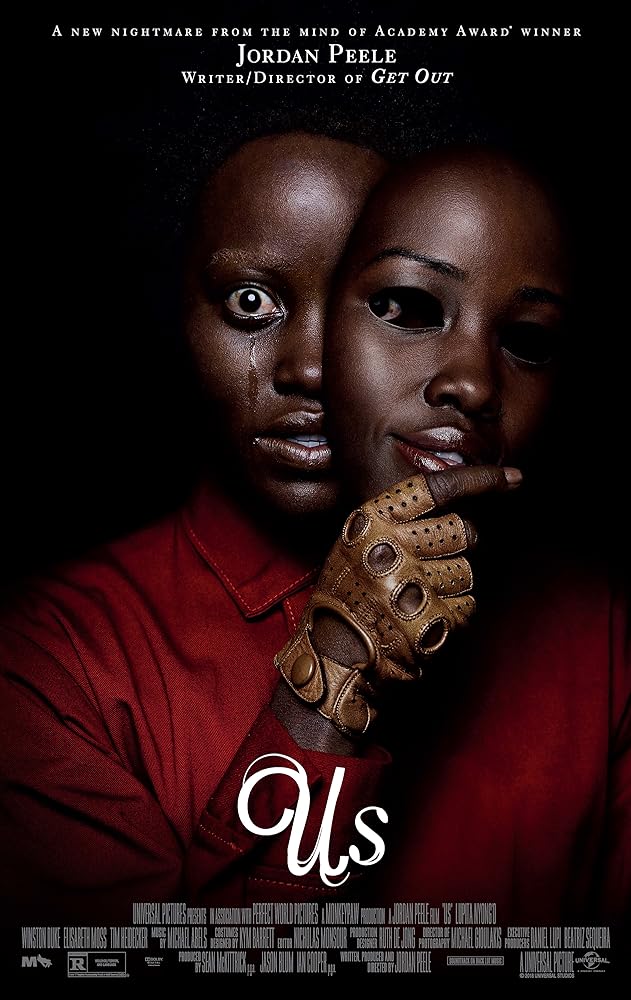
12. US

Lupita Nyong'o in Us (2019)

Us serves as the sophomore directorial effort of the one and only Jordan Peele after his 2017 smash hit Get Out, which went on to win the Oscar that year for Best Original Screenplay. However, I’ll admit that I didn’t go see it in theaters when it came out that March since that was before the point when I truly started to get into the horror genre. Ultimately, though, I did make sure to see it before that year’s Oscars, and like many others, I found it to be one of the best films of 2017. And because of this, I knew that there was no way that I was going to miss seeing Us in theaters because I knew that it would elicit an excellent theater-going experience, which it very much did. One particular moment that I still remember is when an audience member yelled “Get ‘em, M’Baku!”, in reference to lead actor Winston Duke’s breakout role in Black Panther, during the scene where the Wilson family is first attacked by their Tethered doppelgangers. As that moment suggests, Us clearly lived up to Get Out’s status as a premier film to see with a crowd, but when it comes to the films themselves, they couldn’t be any more different. Get Out, of course, was a psychological horror-thriller that focused on the ever so timely topic of modern-day racism. Us, by comparison, is a far more traditional type of horror film but is just as well-layered as Get Out was when it comes to its relevant themes. In this instance, Us revolves around the concept of class discrimination with the film’s main antagonists, the Tethered, being a vastly underprivileged group of clones who have been stuck in underground tunnels for many years after the government put an end to the failed experiment that had spawned them in the first place. As the film’s main antagonist Red later reveals, the Tethered were meant to be a means of controlling those who lived up above, with two different bodies sharing the same soul.

But while Us certainly delivers on the intense horror action that fans of this genre crave, it also gives Jordan Peele a chance to showcase the style of humor that he’s been well-known for his entire career. The Wilson family’s strong camaraderie ends up being the primary source of the film’s best humorous moments, including the big debate that they get into at one point over how many Tethered beings that they’ve killed. But, of course, the biggest aspect of this film is that each cast member plays both their main character and their Tethered doppelganger. It’s a complex undertaking, for sure, but thanks to the strong work from Peele and his crew, any scene where the characters directly share the screen with their Tethered doubles are well put-together and everyone is phenomenal in their dual roles. It’s all headlined by Lupita Nyong’o’s outstanding lead turn as main protagonist Adelaide and the Tethered’s sinister leader Red, which paves the way for one hell of a plot twist following the finale, in which Adelaide heads into the underground tunnels to confront Red after she kidnaps her son Jason. The final fight between these two is easily the best part of the film thanks to everything from the pitch-perfect editing and fight choreography to composer Michael Abels’ chilling use of the song “I Got 5 on It” by Luniz in his score. And after all that she and her family have been through throughout this film, Adelaide finally brings this nightmare to an end by killing Red and rescuing Jason. But as the Wilson family drives away from all the carnage on the Santa Cruz boardwalk, Adelaide then begins to reflect on the first time that she ever crossed paths with Red back in 1986.

When she was a little girl, Adelaide wandered into a deserted funhouse where she came across a girl who looked just like her. As we’re initially led to believe, this incident traumatized Adelaide so much that it left her silent for many years. But at the very end, we see what really happened when Adelaide ran into this doppelganger… who promptly choked her out, dragged her down to the underground tunnels, and took her place up in the real world. Yes, the Adelaide that we’ve been following this whole time was her Tethered while Red was the original Adelaide who had become the de facto leader of the Tethered and orchestrated their whole plot as a means of revenge. It’s a brilliant twist that, upon re-watch, was set up and teased perfectly, whether it’s the fact that Red’s the only Tethered who could speak (albeit in a raspy voice stemming from her injuries) or the various instances where Adelaide makes the same kind of animalistic grunts that the non-speaking Tethered make. It’s also impressive how this twist effectively makes Adelaide and Red both the protagonist and antagonist of their respective situations, with the former managing to become the first Tethered who successfully seized the chance to live a normal life even if it screws over the real Adelaide in the process. With all this in mind, it’s easy to see why Us was yet another Grade-A effort from Jordan Peele, whose sharp attention to detail when it comes to his scripts has yielded two of the most well-written horror films in recent memory.

At Number 11, we have the first animated film on this list with the latest installment of a truly delightful franchise. Sadly, though, it can also be described as a prime example of a film that, upon its release, was criminally overlooked for reasons that I find highly questionable.
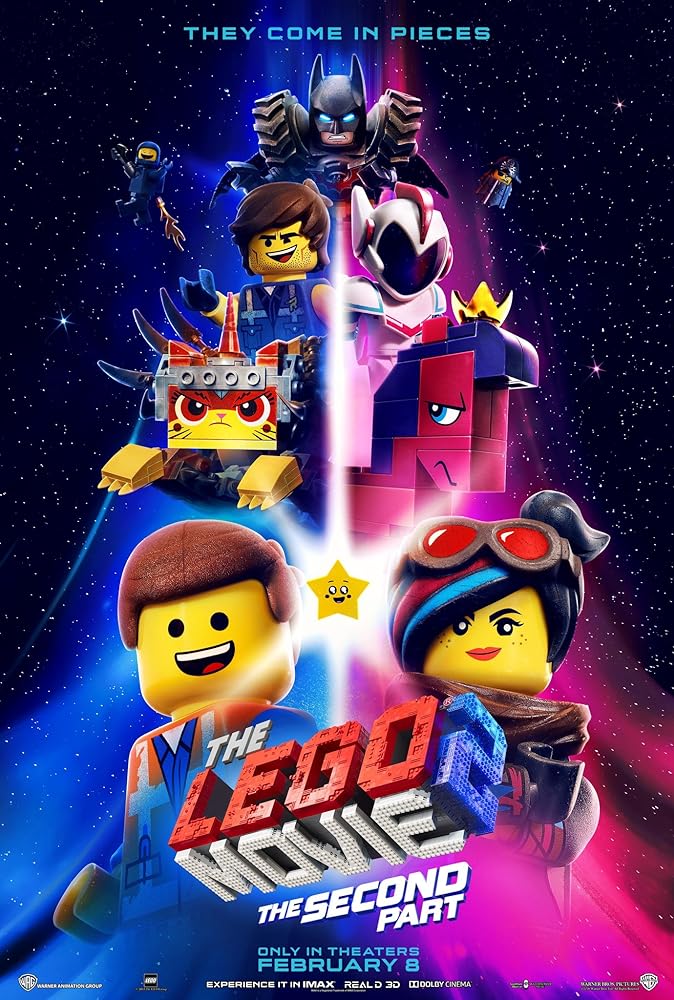
In 2014, Phil Lord and Chris Miller took a project that many figured would be nothing but a cynical cash-grab and turned it into a beautifully animated film that was both effortlessly funny and wholly heartwarming. That film was The LEGO Movie, which was the first official theatrically released film based on the beloved line of plastic construction toys. Three years later, the film got a spin-off centered on one of its most popular characters, Will Arnett’s LEGO Batman. And while The LEGO Batman Movie was far more humor-oriented (complete with an endless array of nods to practically every facet of the Dark Knight’s extensive lore), it still delivered the strong emotional poignancy that helped make its predecessor the masterpiece that it was. But that wasn’t the only LEGO film of 2017 as there was also The LEGO Ninjago Movie, an adaptation of the company’s widely popular Ninjago line. However, this one did not do as well with critics and audiences compared to the previous two films, and yet, while I’ll admit that I didn’t see it in theaters, I did end up liking it when I eventually saw it on digital. Granted, I wouldn’t call it the ‘best-written’ of these recent LEGO films, but it still had the series’ trademark sense of humor and the main plot of a son trying to reconnect with his father (who just so happens to be an evil warlord) paved the way for some hard-hitting emotional moments. But now we’ve finally returned to the side of the franchise that started it all with The LEGO Movie 2: The Second Part, and while Lord and Miller weren’t the directors this time around, they were still heavily involved with the production as its producers and primary screenwriters.

The LEGO Movie 2 does an excellent job continuing the story of the LEGO universe as envisioned by a young boy named Finn who, at the end of the previous film, was told that his younger sister Bianca would soon be joining in on his playtime. Thus, in the LEGO world, invaders from the planet Duplo arrive and terrorize the city of Bricksburg, effectively turning it into a Mad Max-style post-apocalyptic wasteland, Apocalypseburg. And if that wasn’t enough, the main characters soon find themselves kidnapped by General Sweet Mayhem on behalf of Queen Watevra Wa’Nabi of the Systar System, prompting Emmet to try and rescue them with the help of ‘galaxy defending, archeologist, cowboy, and raptor trainer’ Rex Dangervest. However, as Emmet and his girlfriend Lucy/Wyldstyle soon discover, the residents of the Systar System only want to establish a peaceful relationship with them (which is reflected in the real world by Bianca’s attempts to spend time with her brother) even if they weren’t exactly good at illustrating their peaceful intentions. Instead, it’s revealed that Rex is trying to cause the destruction of both their universes AKA ‘Armamageddon’, which is represented by Finn and Bianca’s mother reprimanding the two for their squabbling and forcing them to put away their toys. Rex is then revealed to be a future version of Emmet who became a cynical shell of his former self after being abandoned for years and vowed to change all that via a time travel machine made out of the DeLorean, Bill and Ted’s phone booth, the TARDIS, H.G. Wells’ Time Machine, “Whatever Skynet’s been using”, and the hot tub from Hot Tub Time Machine.

There’s a lot to unpack from all this, but the key thing to take from it is how Lord, Miller and director Mike Mitchell manage to craft a story that provides some nice contrast to what we saw from the original film. Specifically, they challenge the notion that people might’ve gotten from the first film’s catchy anthem ‘Everything is Awesome’ by showing that ‘Everything’s Not Awesome’ but that’s okay because it’s better to stick together through thick and thin. In other words, whereas the first film primarily served as a celebration of creativity, the second film honors the importance of togetherness in the face of toxic attitudes like the one that Rex maintains throughout the film. And through it all, The LEGO Movie 2 maintains everything that we’ve come to expect from this franchise. It boasts amazing animation that deftly honors the stop-motion animation style that has defined numerous LEGO fan films and the franchise’s trademark sense of humor continues to be strong throughout, whether it’s thanks to the cavalcade of fourth wall jokes or the film’s hilarious musical numbers. Yes, The LEGO Movie 2 features a full soundtrack of original songs from comedian/songwriter Jon Lajoie and they’re all excellent. There’s Queen Watevra Wa’Nabi’s opening number ‘Not Evil’, where she assures the gang that she’s totally not an evil queen despite the ‘super evil’ vibes that she’s giving off. She also headlines a hilarious duet with Batman, ‘Gotham City Guys’, where she tricks him into proposing to her by acting like she prefers guys like his long-time rival Superman, complete with references to every single live-action incarnation of Batman up to that point. And just like the first film, there’s a fully intentional earworm of a song that’s meant to rival ‘Everything is Awesome’ appropriately titled ‘Catchy Song’… and yes, it does indeed live up to that reputation by easily being a song that’s “going to get stuck inside your heaaaaaaaaaaaaaaaaaad!”

Any way you look at it, The LEGO Movie 2 is another masterpiece from this awesome franchise… so it’s sad, then, to know that it just didn’t do too well at the box-office. To be clear, the film did solidly with critics even if a lot of them felt that ‘it wasn’t as fresh as the first film’ which, as some of you might recall, is a recently trending bit of film criticism that I’m not a fan of. Simply put, just say that it’s not as good as its predecessor; don’t ding it just because it’s a sequel. Anyway, upon its release, the film barely managed to do better than The LEGO Ninjago Movie financially as it only grossed around $191 million worldwide, which is a far cry from what the original LEGO Movie and The LEGO Batman Movie pulled off several years prior. Many have attributed this to the idea of ‘franchise fatigue’… which, I won’t lie, kind of rubs me the wrong way because I really don’t see why this would be such a big deal in this instance. Superhero fatigue? Yes, it’s a concept that’s the absolute bane of my existence, but as much as I hate to say it, it’s a reasonable possibility given how prevalent the superhero genre has been this past decade. Star Wars fatigue? Again, I don’t buy it since it’s not like the recent films have flooded the market or anything, but given that Star Wars is quite arguably the biggest franchise there is, it’s perfectly understandable if some folks have found themselves overwhelmed by the yearly release schedule that they’ve been on recently. By comparison, there have only been four of these recent LEGO films since 2014, and apart from LEGO Batman and LEGO Ninjago both coming out in 2017, they’ve all been released a few years apart from each other.  

And if that wasn’t enough, this film’s overall underperformance effectively made it the last entry in the series to be produced by Warner Bros., who would end up relinquishing their distribution rights several months later. At this time, future LEGO films will be made by Universal, and while I’m sure that they will be just as great as the ones that we’ve gotten, I have the feeling that a major series overhaul is about to happen because of all this. Sure, there’s a second LEGO Batman film that’s reportedly in the works, but since Warner Bros. is behind all the big DC Comics projects on both the big and small screen, this could potentially end up being a bit of a problem from a legal perspective. There’s also that Billion Brick Race project that’s been in development for years now, but at this point, who even knows if that’s still a thing? At the very least, there may be a chance that Phil Lord and Chris Miller might still be involved with the franchise since they recently agreed to a production deal with Universal. Nevertheless, it’s completely unclear right now what’s going to happen to this franchise going forward. Now with all this said, I recognize that it’s necessary, sometimes, for certain franchises to take a break when they start to suffer from diminishing returns. Simply put, it’s a natural consequence of an always-evolving industry. But at the end of the day, I just don’t understand why the LEGO Movie franchise deserved such a tragic fate when there literally wasn’t anything wrong with it. Case in point, The LEGO Movie 2 is endearing to a fault and so well-written that it fully succeeds at being both a light-hearted comedy and a timely parable of optimism.

To start off this year’s Top 10, we have, admittedly, the only entry on this list that scored a Best Picture nomination at this year’s Oscars. And yet, it’s easy to see why given how this film more than delivers when it comes to its pure, kinetic thrills.

There’s a lot to love about director James Mangold’s dramatization of the long-standing feud between two of the most famous car manufacturers in the industry, specifically focusing on Ford’s historic victory at the 24 Hours of Le Mans race in 1966 that promptly brought an end to Ferrari’s six-year winning streak there. Thanks to Mangold’s excellent direction, the film boasts amazing racing sequences that are made even better by the fact that they were all done practically. However, the film also benefits greatly from strong pacing and editing, meaning that even with a hefty two-and-a-half-hour runtime, there’s never a dull moment. A lot of this is thanks to how the film effectively manages to be a thoroughly engaging ‘David and Goliath’ story on two different fronts. While it is primarily focused on Ford’s efforts to beat Ferrari at its own game, it’s also very much about the two men who made it all happen, car designer/engineer Carroll Shelby and driver Ken Miles. These two men weren’t exactly in line with Ford’s squeaky-clean image (as seen by their many conflicts with Ford VP Leo Beebe that usually revolve around the decision to have Miles be one of their drivers at Le Mans), but they knew that the only way to beat Ferrari was to challenge that status quo. Their excellent camaraderie is on full display throughout, especially thanks to Matt Damon and Christian Bale’s outstanding turns as Shelby and Miles, respectively. Shelby’s dignified Southern charm and Miles’ brash British attitude provide an all-around fun dynamic that promptly builds to a finale that manages to go down a few routes that a lot of other films in its genre wouldn’t normally go.

Given that this is a film based on a true story, it goes without saying that the film ends exactly the way you’d think going in by showing Ford finally beating Ferrari at Le Mans. And yet, it’s not exactly a ‘happy ending’ because while Miles dominates most of the race, he’s pressured by the Ford higher-ups to slow down so that the other two Ford drivers can catch up to him and they can cross the finish line together. While this decision clearly angers our two main protagonists, Miles does end up managing to be a team player in this instance and eases up on his lead so that Ford can have their picture-perfect moment… which then results in one of the other Ford drivers being named the winner of the race on a technicality. Undeterred, Miles and Shelby begin to prepare for next year’s race… but this ends in tragedy when Miles is killed in a fiery car crash during a test drive. In another biopic, a moment like this would’ve been relegated to the closing bits of text that pop up on-screen before the credits. But in this case, the film continues from that moment, ultimately concluding with Shelby visiting Miles’ widow Mollie and her son Peter (who was there when his father died, making Miles’ death even more tragic) and giving the latter the wrench that Miles threw at him before the race seen at the beginning of the film. This final moment truly illustrates how James Mangold managed to find the emotionally poignant human element in this iconic focal point in the history of auto racing. And because of this, Ford v Ferrari manages to find that perfect balance between being a well-made drama that managed to attract some major attention at the Oscars this year and a highly-entertaining crowd-pleaser that doesn’t require a background in automobile racing to appreciate such an incredible film.

And that concludes Part 1 of Rhode Island Movie Corner’s Top 12 Favorite Films of 2019. Thanks for following along and be sure to check back in tomorrow for Part 2, where I’ll be delving into films #9-7.

Sunday, March 17, 2019

TOP 12 FAVORITE FILMS OF 2018: #12-10 + Honorable Mentions


Honestly, at this point, there’s no need to address the overall quality of a year based on the films that were released during that time. There are always going to be a lot of great films that come out every year for every demographic of every genre. Instead, I’m going to use this intro to comment on how 2018 proved… that fandoms are REALLY starting to get problematic. In the past, I’ve lamented on how sometimes people on the internet tend to forget that film is a subjective medium, meaning that no single film is going to be well-received by everyone. This past year, however, has bear witness to some of the most extreme cases of ‘fan reactions’ that I’ve ever seen in my time as a film critic. Basically, thanks to various factors that include the continued popularity of series like CinemaSins and the actions of a certain political figure who shall not be named, film discourse has erupted into a series of violent outbursts towards things that seriously don’t require that kind of intense reaction. Don’t even get me started on how many actors/actresses have been forced off social media this past year due to the intense harassment that they’ve received from online trolls either due to a comment that they’ve made on our current political landscape or because they allegedly ‘ruined’ something that these trolls liked. Now let me be clear… I know damn well that these misogynistic, homophobic, xenophobic ‘fans’ (the term ‘fans’ used VERY loosely in this case) only make up a small portion of the various fandoms that make up our current pop cultural zeitgeist. Still, it’s imperative at this point that the film fan community distance itself from this kind of behavior because I strongly believe that it’s only going to get worse if left unchecked. With that out of the way, it’s time to delve into my Top 12 Favorite Films from 2018. For those who are new to this site, the reason why I do a Top 12 list instead of the more traditional Top 10 is that it allows me the chance to talk about more of the great films that I loved from this past year. It may have also had something to do with the fact that I launched this site in 2012 and I did a Top 12 that year just for the occasion.  

As always, though, we must first lay down the primary ground-rules that I have for this list. The first is quite simple; to fully address the films that will be featured on this list, I will be delving into their biggest spoilers. Thus, in case some of you haven’t seen the films that I’ll be discussing here, don’t worry, because I will be providing links to my original non-spoiler reviews of these films. Next, as is the case with any year, I’m unable to see every major film that is released in theaters. Granted, I did join the AMC Theaters’ A-List program this year, which allows me to see more films at a fraction of the cost (Disclaimer: Not a Promotion). However, you also must factor in my recent job as a Cast Member working at Disney World, which took up a lot of my time this past year. Thus, if you’re wondering why films like Roma, Won’t You Be My Neighbor, or The Favourite aren’t on this list, then that’s the reason why. This then brings me to a ground-rule that I’ve had to implement in recent years which admittedly is more of a disclaimer. As some of you may have gathered by the films that I usually cover on this site, this list will mostly consist of blockbuster-type films, many of which are sequels, reboots, remakes, etc. I know that this won’t fly well with film buffs who tend to stick towards the independent side of the industry, but to put it simply, that’s just not the market that I follow as a film critic. Granted, that doesn’t mean that I won’t cover those kinds of films. It’s just that these situations occur on a rarer basis.

Plus, to be perfectly frank, I feel that the independent side of the industry tends to spawn a frustratingly condescending attitude towards blockbuster-type projects. Now to be clear, even someone like me knows that blockbuster films usually aren’t meant to be deep, thought-provoking dramas, but at the same time, that doesn’t mean that they can’t. And every year, we do have a few blockbuster-level films that I’d argue are more than capable of standing toe to toe with whatever gets nominated for Best Picture at the Oscars (this year, especially, with a certain superhero flick…). Plus, as last year’s mother proved, just because a film is ‘original’ or ‘independently produced’ doesn’t automatically make it good. And lastly, we have the most important point of all; please, please, PLEASE be respectful of other folks’ opinions. If that mini-rant that I had earlier wasn’t enough of an indication, this past year has been extremely trying when it comes to some of the most hostile fandom-related incidents in recent memory. I mean, do I really have to keep bringing this up, folks? If you didn’t like any of the films that I’m about to discuss, then that’s totally fine. All the power to you! Just don’t be a jerkass to those that did like them, because if you ask me, the greatest sin that any film critic/fan can do is make others feel bad for having a different opinion. And so, without further ado, let’s start delving into this list. This is Part 1 of 4 and today we’ll be discussing films 12-10.

But first, let’s discuss my 6 Honorable Mentions…

HONORABLE MENTIONS


Johnny Depp, Jude Law, Dan Fogler, William Nadylam, Alison Sudol, Eddie Redmayne, Katherine Waterston, Claudia Kim, Zoë Kravitz, Ezra Miller, and Callum Turner in Fantastic Beasts: The Crimes of Grindelwald (2018)

For starters, yes, I’m part of the crowd that did like the second installment of the Fantastic Beasts series even though it ended up being the worst-received installment to date of J.K. Rowling’s Wizarding World franchise. And to be fair, this one’s far from being the series’ best installment as it does feel like the ‘middle chapter’ of its larger story. The plot is rather minimal, not every plot-line gets the attention that it deserves (e.g. Queenie being coerced into joining Grindelwald’s cause after getting into a fight with Jacob over their future), and the ending is a bit too anticlimactic. In short, this is a film that’s clearly more focused on setting up the next installments of the franchise, and while I’m fine with most of the big twists that are revealed here (e.g. the troubled Credence being told that he’s [supposedly] a long-lost member of the Dumbledore family), the screenplay still could’ve benefitted from a few extra rewrites. And yet, despite its narrative shortcomings, everything else that’s great about this franchise is still there, for the most part. The world-building is still as strong as it’s always been and the same goes for the gorgeous production design and solid visual effects work. Eddie Redmayne, Katherine Waterston, Alison Sudol, and Dan Fogler are still excellent as Newt, Tina, Queenie, and Jacob, respectively, and are joined by some excellent newcomers headlined by Jude Law making the most out of his admittedly minor role as a young Dumbledore. And while I want to reiterate that this isn’t meant to be a defense of any of his recent actions, Johnny Depp does do a good job in the title role of Grindelwald. Obviously, his casting has been the cause of much scrutiny, but as strange as it may seem, none of this film’s shortcomings are directly his fault. As such, I’m still on board with this franchise… though, hopefully, the next film gets the narrative back on track.


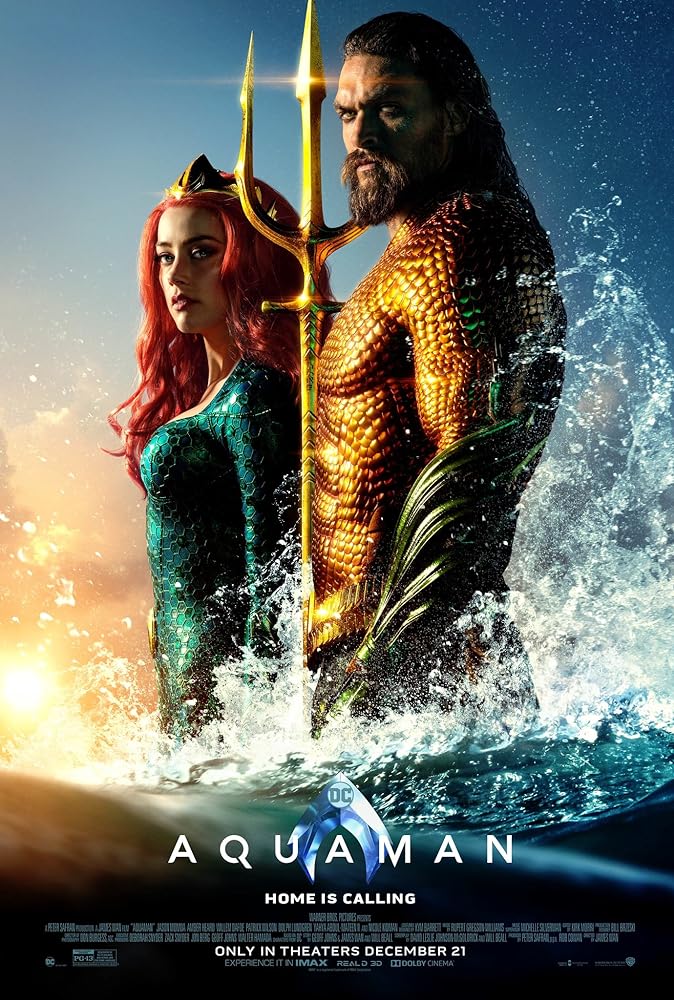
Jason Momoa and Amber Heard in Aquaman (2018)

Hey Aquaman, aren’t you glad that I decided to see your big solo film first before starting this list? I certainly didn’t do it for the DCEU fandom, who continue to be one of the most toxic fandoms of recent memory by A.) harping on those who didn’t think that this would be a box-office hit and B.) once again crapping on those who didn’t like it even though the film did fare decently with critics. To make a long story short, Aquaman is indeed one of the best installments of the DCEU. It completely forgoes the Zack Snyder aesthetic that made past films visually impressive but emotionally empty in favor of a light-hearted adventure atmosphere with some solid emotional depth and incredibly vibrant visual effects that effectively bring the world of Atlantis to life. The arc of seeing Aquaman rise to become the ruler of Atlantis is incredibly satisfying, and Jason Momoa is finally given the chance to shine in the title role. The same goes for Amber Heard as the film’s phenomenal female lead, Mera, as both she and Momoa manage to overcome their underwhelming debuts in Justice League where they were mostly just there to do cool stuff. Here, they get the same amount of proper character development that Gal Gadot got as Wonder Woman in her solo film, which is very much welcome. Really, my only issue with the film is that the villains (Ocean-Master and Black Manta) were a little underwhelming. Not terrible, mind you, as they are, at least, better-written than most villains in the genre. Still, they’re a tad bit underused in the grand scheme of things. Ultimately though, Aquaman is a very entertaining entry in the superhero genre and it’s cool to see that it ended up becoming a massive box-office success. It joined the billion-dollar club and even surpassed Christopher Nolan’s Dark Knight films at the worldwide box-office. Yes, the character that was once considered ‘a joke’ now claims the distinction of having the highest-grossing DC Comics based film of all time.


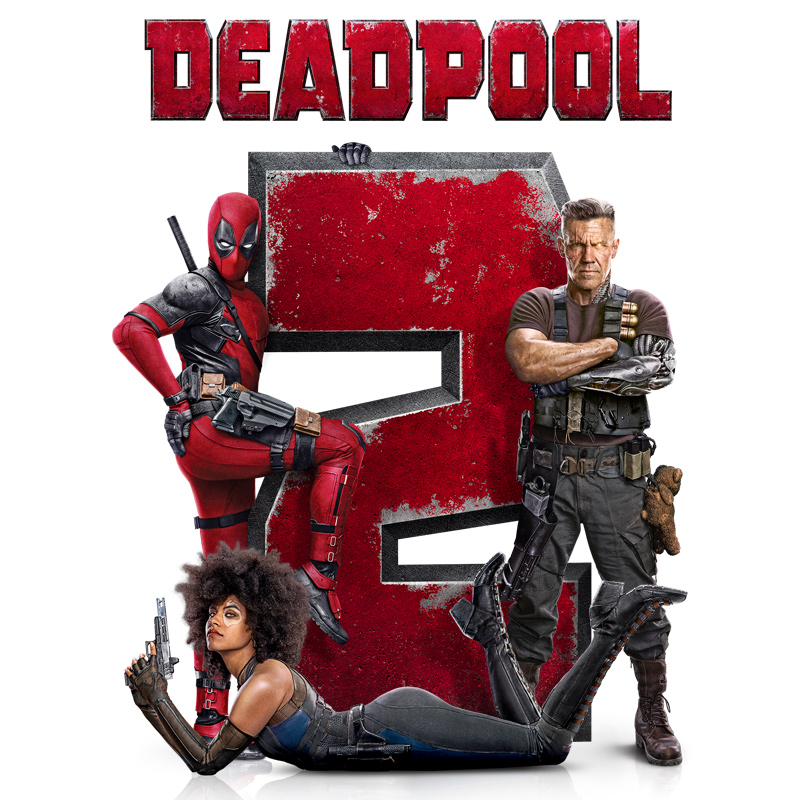
Josh Brolin, Ryan Reynolds, and Zazie Beetz in Deadpool 2 (2018)

As I’ve stated numerous times before, while I did enjoy the first Deadpool film, I wasn’t necessarily in love with it as much as the rest of the internet. While it was a very entertaining superhero flick that gave Ryan Reynolds the chance to finally do justice to the title character, it still felt like it adhered a bit too close to some of the common superhero film tropes that it was directly satirizing. As such, director David Leitch’s follow-up does take a lot more risks even if they don’t all work (e.g. killing off Deadpool’s fiancé Vanessa at the beginning, though thankfully she’s brought back at the end when Deadpool uses Cable’s time-traveling device). And despite some awkward tonal shifts here and there, Deadpool 2 also boasts far stronger emotional depth. Whereas the first film was primarily about Deadpool learning to become a hero, this one focuses on him finding a family and gaining a true sense of belonging, proving that even an unapologetically raunchy superhero like Deadpool can hit you with the feels. Ryan Reynolds continues to be outstanding in the title role while the additions of Josh Brolin (in his second awesome superhero role of 2018; more on the other one later…) as the time-traveling Cable and Zazie Beetz as the lucky Domino just sweeten the deal even further. Thus, as you might have guessed, I consider Deadpool 2 to be a superior sequel. Again, nothing against the original Deadpool as it did get the ball rolling for this proper take on the fan-favorite Marvel anti-hero. It’s just that the sequel is more like what the first film was trying to be but wasn’t necessarily able to reach due in part to it being the first major R-rated superhero film of the MCU era.  


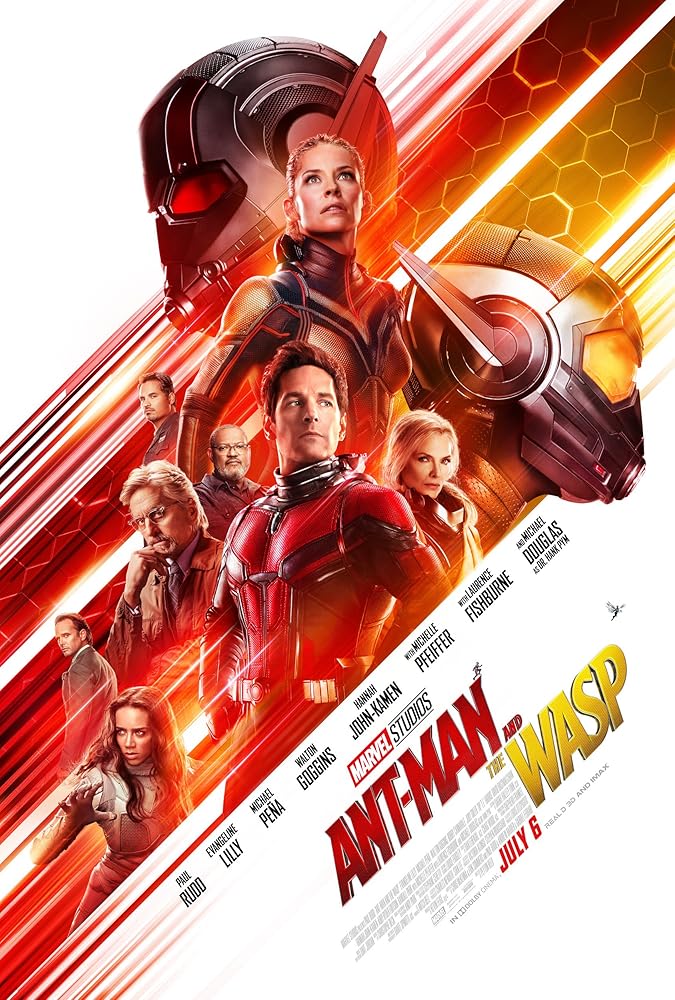
Michael Douglas, Michelle Pfeiffer, Laurence Fishburne, Walton Goggins, Michael Peña, Paul Rudd, Evangeline Lilly, and Hannah John-Kamen in Ant-Man and the Wasp (2018)

Despite being yet another critical and commercial hit for Marvel Studios, Ant-Man and the Wasp ended up getting overshadowed by the other two MCU films of 2018. To be fair, though, it’s probably not that surprising considering that the other two were a culturally relevant mega-hit and the franchise’s largest crossover to date, respectively. Still, that’s not to say that it isn’t yet another entertaining installment of the MCU. Now that he’s no longer burdened with the pressure of being ‘the guy who replaced Edgar Wright’ on the original Ant-Man, director Peyton Reed manages to craft a more confident sequel that boasts flashier visuals and action sequences. The humor is just as on-point as it’s always been in the MCU and the main plot-line of Hank Pym and Hope Van Dyne trying to find his wife/her mother Janet Van Dyne AKA the original Wasp (played excellently in her admittedly limited screen-time by Michelle Pfeiffer) provides the film with that trademark MCU emotional poignancy. Ultimately, though, the biggest highlight of the film is getting to see Evangeline Lilly finally have the chance to get in on the action as the new Wasp, and simply put, she kills it. But, of course, Paul Rudd is still wonderful as well as Scott Lang AKA Ant-Man, who continues to be one of the MCU’s most relatable protagonists as the well-meaning family man who screws up more than he should. Because of all this, Ant-Man and the Wasp once again proves that solo superhero films are just as important as the big ensemble films. And just like how the first Ant-Man served as a welcome change of pace after the grand-scale escapades of Avengers: Age of Ultron, this film does lighten the mood after the emotional carnage that we experienced in the previous MCU film… even when considering this film’s mid-credits scene, which reiterates the gravity of what happened in the other film.


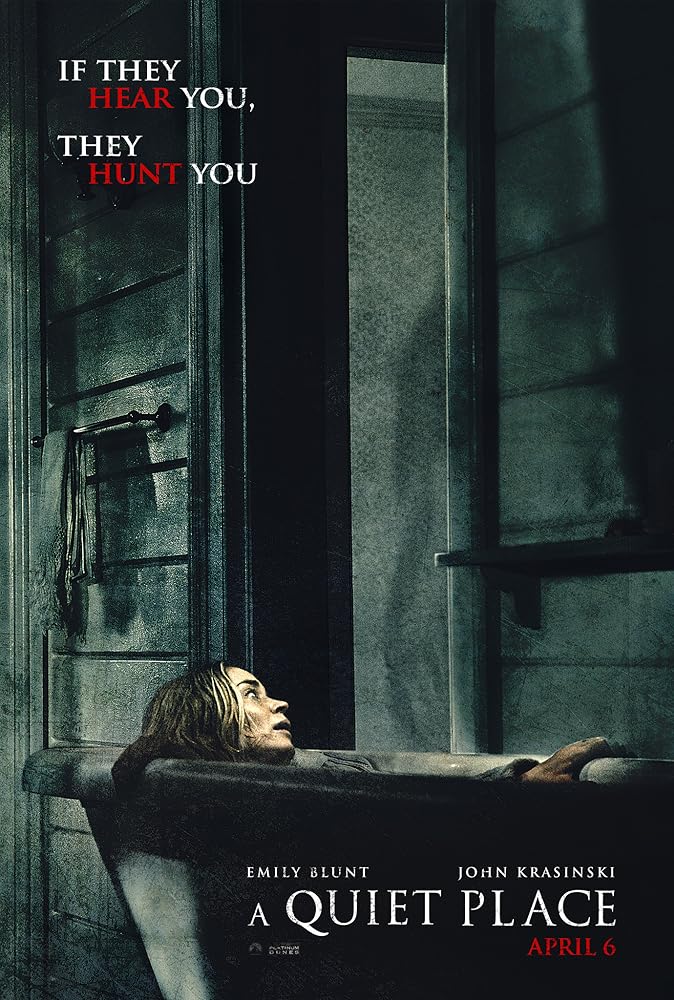
Emily Blunt in A Quiet Place (2018)

Over the course of this past year, I’ve repeatedly mentioned the one thing that I’ve found to be a key contributor to a great horror film, having characters that you care about as they endure various horrific events. That is very much the case in director John Krasinski’s highly successful silence-based horror-thriller A Quiet Place, in which a family tries to survive an alien invasion where the alien creatures can detect them via loud noises. The gut-wrenching opening sequence where the youngest son Beau is killed by one of the aliens immediately establishes the family’s sympathetic nature and is one of the many sources of the film’s strong emotional depth. This is then further exemplified by the plot-line of the father, Lee (Krasinski), trying to mend his relationship with his deaf daughter Regan (Millicent Simmonds), who feels responsible for Beau’s death as she had given him the toy rocket that had alerted the alien. It all culminates in what is easily the most emotional moment of the film where Lee nobly sacrifices himself to save his kids from the aliens but not before reassuring Regan that he’s always loved her. And that ultimately ties into what A Quiet Place is truly about as it’s not just a horror-thriller about sound-detecting aliens. It’s about parents trying to protect their kids from the harsh world that they live in… and yes, that makes this film incredibly timely. And thanks to strong direction from Krasinski, pitch-perfect sound design to portray a reality where silence is the key to survival, and phenomenal performances from Krasinski, his real-life wife Emily Blunt, Simmonds, and Noah Jupe, A Quiet Place is one of the best-written horror films to come out in recent years.  


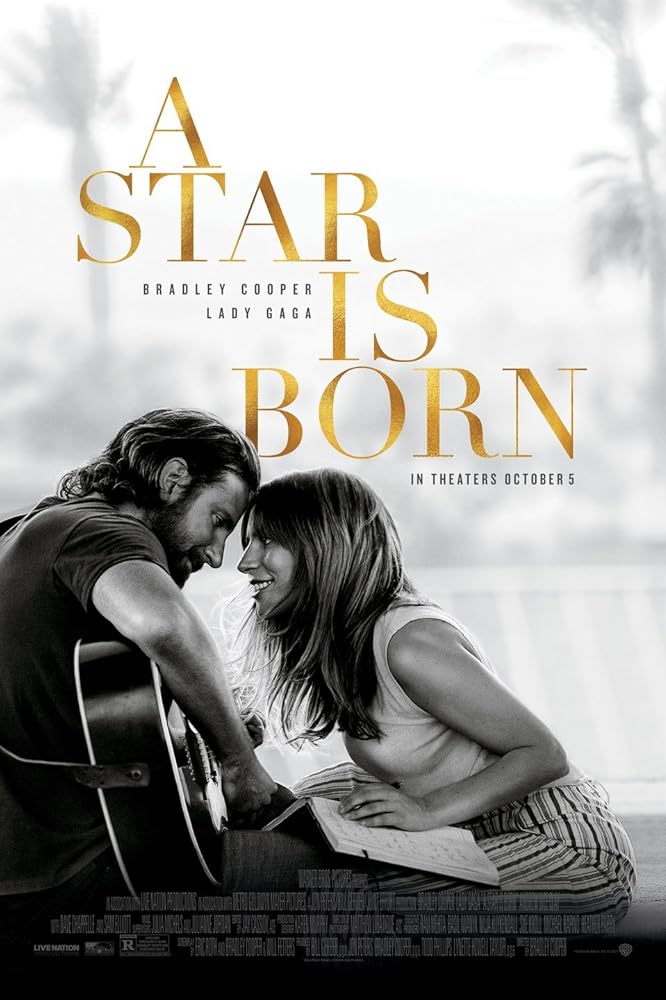
Bradley Cooper and Lady Gaga in A Star Is Born (2018)

Because this is the fourth film version of A Star is Born, it admittedly follows the same general plotline of its story’s previous adaptations. It’s the story of an aging rock-star who romances (and later marries) an aspiring ingenue while also helping her make a name for herself in the music industry. But while her star is on the rise, his ends up going on the decline and the film ultimately ends with him tragically committing suicide, which is then followed by a heart-wrenching performance from his wife, who now publicly goes by her husband’s last name. And yet, even with its traditional narrative, the film benefits from amazing direction from Bradley Cooper, who makes one hell of an impressive directorial debut with this tightly-scripted and emotionally poignant musical drama. It’s a love story that hits all the right emotional notes, whether it’s the charming first interactions of its main protagonists or the heartbreaking ways in which this story of star-crossed lovers reaches its conclusion. The film also benefits from some of the best romantic chemistry in recent memory between Bradley Cooper and Lady Gaga. Cooper is his usual charismatic self as rock-star Jackson Maine while Gaga majorly impresses in her first leading role as up-and-coming singer/songwriter Ally (e.g. her performance of the film’s final song, ‘I’ll Never Love Again’, which was filmed just hours after her best friend died from cancer). They’re then backed by a solid supporting cast that includes Anthony Ramos as Ally’s best friend Ramon, Andrew Dice Clay as her supportive father Lorenzo, and most of all, Sam Elliott, who also gets to partake in some of the film’s biggest emotional moments as Jackson’s brother/manager Bobby. In short, calling this a successful directorial debut from Bradley Cooper would be a massive understatement, and it’s easy to see why it’s touted as one of 2018’s best.

And now we officially kick off the Top 12 with a film that truly deserved to do better than it ultimately did. Despite having to endure all the scandals that were spawned from a controversial change in direction halfway through filming, the film managed to be another entertaining installment of its historic franchise. Sadly, though, it ended up massively under-performing at the box-office, and while I know that this is going to be a ‘hot take’, I primarily attribute this to the toxic side of its franchise’s fandom that, over the past year, has made it very difficult for folks for me to consider themselves a ‘fan’ of this franchise.
   

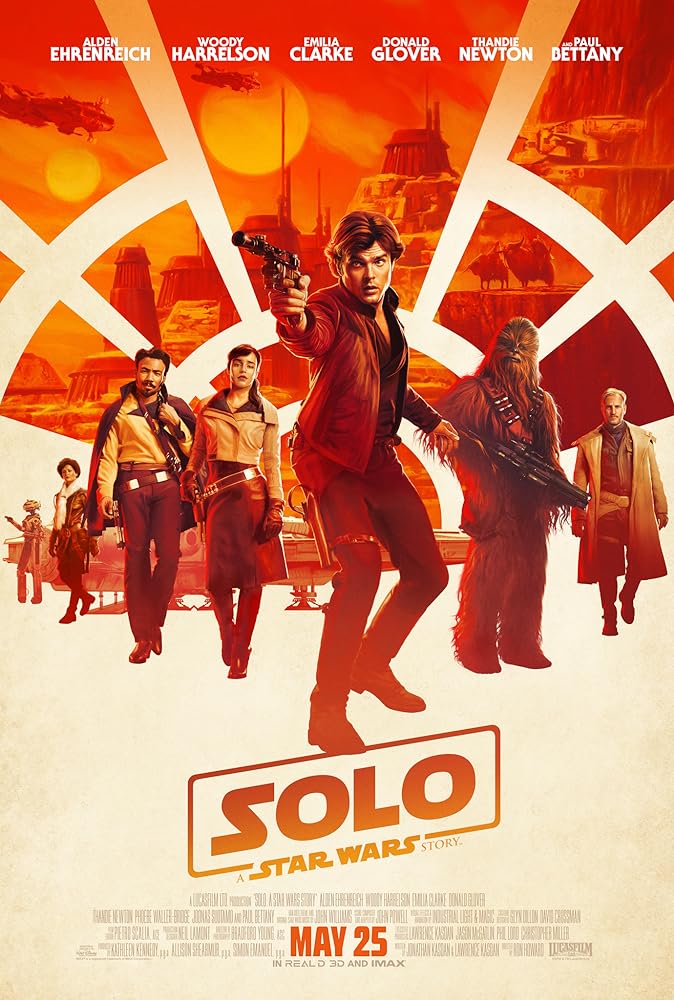
Woody Harrelson, Thandie Newton, Donald Glover, Alden Ehrenreich, Phoebe Waller-Bridge, Emilia Clarke, and Joonas Suotamo in Solo: A Star Wars Story (2018)

As I’ve mentioned a few times this past year, the Star Wars franchise is in an odd place right now… and yet, ironically, it has nothing to do with the films themselves. Ever since Disney took over the franchise in 2012, the newer Star Wars films have consistently done well with critics and audiences. But then came Star Wars: The Last Jedi in 2017… and most of you reading this already know what happened there. Despite many critics praising director Rian Johnson’s unique take on the franchise, it attracted a CONSIDERABLY hostile backlash from certain audiences, and even after more than a year since the film’s release, I still don’t necessarily understand what these folks were so mad about because their reasonings are all over the place. But one thing that is certain is that ever since the film’s release, those ‘fans’ (and I use that term very, very loosely) have launched an all-out war against Disney and Lucasfilm for this alleged ‘crime against humanity’. Their ‘acts of justice’ have included the following; sending death threats to producer Kathleen Kennedy, Johnson, and any other major female figure associated with the franchise, petitioning to remove The Last Jedi from canon, attempting to remake it (yes, seriously…), forcing The Last Jedi star Kelly Marie Tran off social media, etc. In other words, remember what I said in the intro to this post about the terrible fandom-related incidents from this past year? Well, this was what I was mainly referring to, and it’s obviously put a ton of unwarranted pressure on J.J. Abrams and his crew when it comes to Episode IX and making sure that it isn’t as polarizing. And as for the second installment of the franchise’s line of spin-offs, Solo: A Star Wars Story, it seems as if all that Last Jedi backlash ended up hurting it quite a bit.

Now obviously there’s a bit more to this than just the Last Jedi debacle, as this film attracted quite a bit of negative attention when it was announced that its directors, Phil Lord and Chris Miller, were basically kicked off the project due to creative differences with Lucasfilm. And even though the studio ended up rebounding from this by hiring the legendary Ron Howard to take over, the damage was already done. Star Wars fans were already skeptical of a ‘prequel’ film based around Han Solo (arguably the franchise’s most beloved character) to begin with, and Lord and Miller’s involvement was practically the only thing keeping them onboard given the duo’s tendency to make the most out of questionable concepts. And yet, at the end of the day, the final film is nowhere near the disaster that some thought it would be. Is it the best installment of the series? No, not even close, but at the same time, it still manages to be a fun little Star Wars film with a sci-fi western vibe. It’s decently edited and despite having to face the burden of following in the footsteps of Harrison Ford, Alden Ehrenreich does a solid job as a younger iteration of Han Solo. He’s then backed by an excellent supporting cast that includes Donald Glover as a young Lando Calrissian, Emilia Clarke as Han’s original love interest Qi’ra, and Woody Harrelson as Han’s mentor Tobias Beckett. The film even ends with an awesome and genuinely unexpected cameo when it’s revealed that Qi’ra is secretly in cahoots with none other than Darth Maul, which ties into the various Star Wars animated series like Clone Wars that revealed that he survived his apparent demise at the end of The Phantom Menace.

In short, Ron Howard managed to come in and overcome the messy situation that this film had gotten into after the whole Lord and Miller incident with relative ease. Unfortunately, upon its release, Solo did not do well at the box-office. It may have had a $100 million opening during Memorial Day weekend, but it ultimately grossed around $392 million on a hefty $275 million budget, a final total that paled in comparison with the last 3 Disney-backed Star Wars films, each of which grossed over $1 billion worldwide. Some attributed this to ‘Star Wars fatigue’, as it was released just five months after The Last Jedi instead of being released during December just like the other recent Star Wars films… but I take issue with that notion for one simple reason. If there’s such a thing as ‘Star Wars fatigue’, then how the hell is Marvel getting away with releasing 2-3 MCU films a year, plus all the other superhero films from the likes of DC, Fox, and Sony? By comparison, despite the short window between the releases of The Last Jedi and Solo, there’s only been one Star Wars film a year since Disney took over the franchise. Because of this, the continued argument of ‘superhero fatigue’ that has been in play since 2015 makes a lot more sense than ‘Star Wars fatigue’ (words cannot describe how much it kills me to have to put that in writing given my feelings towards that damn superhero fatigue argument). While I know that it’s not necessarily the main reason, I do believe that one of the key factors to Solo’s underperformance was the venomous side of the Star Wars fandom who decided to boycott the film as their cheap way of getting back at the studio for The Last Jedi. And that’s a damn shame because Solo didn’t deserve that. With that said, would it have been nice to see Phil Lord and Chris Miller’s version of the film? Yes! But just like Marvel Studios and the Edgar Wright/Ant-Man debacle, Lucasfilm moved on and Lord and Miller moved on. Thus, in the years to come, I do hope that Solo will be given more of a chance in the eyes of the Star Wars fandom.

During last year’s Top 12 list, I briefly talked about a recently trending point that’s been brought up in film discussion that I’m not a fan of; the ‘it’s not as fresh as the original’ argument. This is basically an extension of the ‘it’s not as good as the original’ argument but with a more cynical twist in which a film gets knocked just for being a sequel. And in 2018, my number 11 pick was arguably the most affected by it.


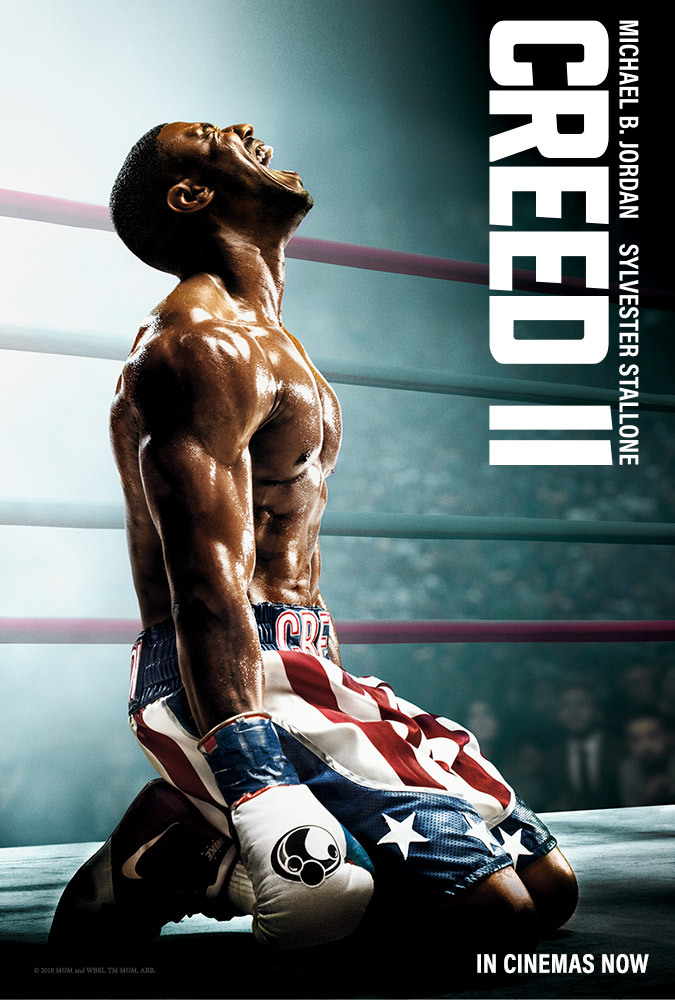
Michael B. Jordan in Creed II (2018)

Upon its release, Creed II got knocked a bit (no pun intended) for being a bit too predictable with its plot. But to that, I ask the following… who goes into a Rocky film expecting original plots? In fact, even the first Creed shared a lot in common with the original Rocky by being the story of an unknown who surprisingly manages to go the distance against the heavyweight champ and ultimately wins over the crowd despite losing the fight. Really, the reason why that film worked as well as it did was thanks to strong direction from Ryan Coogler and excellent performances from Michael B. Jordan, Sylvester Stallone, and Tessa Thompson. And because of this, the film very much revitalized its iconic franchise for a new generation while still respecting its roots. This is once again the case with Creed II, even though it wasn’t directed by Coogler this time due to his commitment to a certain superhero flick. Newcomer Steven Caple Jr. does do an excellent job in his place, however, and while there aren’t any major long-take fight scenes like in the previous film, the fight scenes in this film are still fantastic. Most importantly, though, the film continues to emphasize what is truly the most important aspect of the Rocky franchise, its characters. Having Adonis Creed take on Viktor Drago, the son of Ivan Drago AKA the man who killed Adonis’ father Apollo in Rocky IV, obviously makes this one of the most emotionally-charged entries in the entire franchise because of the intense history between these two families. Sure, Viktor isn’t the steroid-laden tank that his father was in Rocky IV, but that doesn’t make him any less of an imposing adversary for Adonis in the ring given that his father is his trainer.

Simply put, Adonis is very much put through the emotional wringer here. Just like Rocky in Rocky II, Creed II has Adonis endure some of the toughest challenges of his life. His first fight with Viktor ends up going so poorly that he receives one of the worst beatings that anyone has ever gotten in this series. And while he and his fiancé Bianca end up having a baby girl, Amara, they’re hit with a devastating bit of news when they learn that she was born deaf, a trait inherited from Bianca’s progressive hearing loss. But, of course, as is usually the case with these films, it all turns out okay in the end and everything that Adonis goes through in this film allows us to be fully behind him when he goes into the rematch against Viktor. A lot of this is thanks to Michael B. Jordan, who continues to shine as Adonis thanks to his natural charisma. He also continues to have excellent chemistry with Tessa Thompson who, in just two films, has managed to be more than just Adonis’ Adrian because of the considerable effort made by the writers to ensure that she’s just involved with Adonis’ decision-making as he is. After all, as one key scene in this film clearly dictates, they’re truly ‘a team’. And then, of course, you have Sylvester Stallone returning as Rocky Balboa, and while he doesn’t get the same kind of emotional material that he got in the previous film when he was diagnosed with non-Hodgkin’s lymphoma, he still gets to partake in some of the film’s biggest emotional scenes. This mainly stems from A.) his hesitancy to help Adonis train for his fight with Viktor because of everything that he and Apollo went through when they each fought Ivan and B.) the scene at the end where he finally reunites with his son Robert, with Milo Ventimiglia making a cameo reprising his role from Rocky Balboa.

But perhaps the most fascinating part about this film is how it manages to humanize, of all people, Ivan Drago. Yes, the same man who, in his previous appearance in Rocky IV, was basically just the final boss of an old-school video game. Here, he attempts to regain the glory that he had lost after his defeat to Rocky by training his son Viktor to challenge Adonis. But as Viktor himself points out, it seems highly questionable for his father to try and win back the same people who had shunned him, including his ex-wife Ludmilla (played once again by Brigette Nielsen), who left Ivan and Viktor when the latter was just a baby. This ultimately comes to a head during the second Creed-Drago match. After Adonis manages to knock down Viktor (a moment that’s perfectly tuned with the reprisal of the classic Rocky theme, which is used much more prominently here than in the previous film), Ludmilla leaves before the fight is over, effectively dampening Viktor’s spirits. Thus, as Adonis starts to gain the upper hand against Viktor, Ivan ends up throwing in the towel to prevent anything bad from happening to his son, a moment that effectively humbles them both. And once again, this ultimately ties into what these films have truly been about. They’re not the kind of films that are intent on re-inventing the wheel when it comes to their plots. Instead, they serve as emotionally poignant crowd-pleasers that inspire their fans to be like Rocky and Adonis and overcome seemingly insurmountable odds. And because of this, Creed II is another excellent addition to this legendary franchise.

My Number 10 pick was undoubtedly one of my most anticipated of the year given my deeply personal history with the franchise that it’s connected to.


Ewan McGregor, Brad Garrett, Jim Cummings, and Nick Mohammed in Christopher Robin (2018)

On the surface, this may just seem like the latest installment of Disney’s recent string of live-action remakes. And yet, while it is technically a live-action take on one of Disney’s beloved IP’s, this isn’t a remake of any prior film. Instead, it’s a unique new spin on Winnie the Pooh that focuses on Pooh’s titular best friend, now grown up, as he finds himself reunited with his friends from the Hundred Acre Wood as they try and help him regain his lost sense of imagination. Seeing Christopher Robin go through all sorts of devastating moments in his life at the beginning of the film, from having to grow up faster than expected following the death of his father to enlisting in the army and fighting in World War II despite missing the birth of his daughter Madeline, immediately gives this story its emotional poignancy. Simply put, it’s a story about the dangers of growing up and the importance of friends and family, which the film handles very well. However, some have argued that this was perhaps a bit too dour of a story for a Winnie the Pooh film. And to be perfectly fair, the first half of the film does maintain a generally grim atmosphere even when Christopher Robin returns to the Hundred Acre Wood for the first time since he was a kid. However, this is only the case for the first half of the film, and it does keep in line with the arc that Christopher Robin goes through. Once he starts regaining his childhood spirit (after a considerably tough scene where he yells at Pooh, which is then followed by a very dark nightmare involving Heffalumps), the film shifts gears and returns to the charming escapades that the Winnie the Pooh series has always been known for. And the finale in which Pooh, Tigger, Piglet, and Eeyore travel to London to try and ‘save’ Christopher Robin paves the way for some great humorous scenes by way of their interactions with the real world.

Ewan McGregor headlines the cast as Christopher Robin and does a fantastic job in the role. His interactions with Pooh and company feel incredibly natural and he works quite well with Christopher Robin’s big character arc. He also has excellent chemistry with Hayley Atwell, who admittedly doesn’t get as much to work with by comparison but still does a great job as Christopher Robin’s wife Evelyn. The same goes for Bronte Carmichael as their daughter Madeline, who shares a lot of scenes with Pooh and the gang and gets some nice emotional material of her own to work with through the conflict that she and her father get into over his plans to have her go to boarding school. As for Pooh and his friends, the film does a nice job of translating these beloved characters into a live-action setting, as their live-action redesigns don’t stray too far from what audiences are used to. And even though the film focuses more on the quartet of Pooh, Tigger, Piglet, and Eeyore while the rest of the Hundred Acre Wood gang (Rabbit, Owl, Kanga, and Roo) play more of a cameo role in the story, their charming personalities are still fully intact thanks to the solid performances from the film’s voice cast. Said cast is, of course, highlighted by the one and only Jim Cummings reprising his long-time roles as Pooh and Tigger, and… simply put, the positive reactions that this film’s teaser trailer got should give you an idea of why this was such a big deal for many people. For lack of a better term, he is the Pooh and Tigger of my generation, and his return to these iconic roles was the icing on the cake for yet another delightful installment of a series that’s near and dear to my heart.


And that concludes Part 1 of Rhode Island Movie Corner’s list of my Top 12 Favorite Films of 2018. Thanks for following along and be sure to check back in tomorrow for Part 2, where I’ll be listing films 9 through 7.

Sunday, January 8, 2017

TOP 12 FAVORITE FILMS OF 2016: #12-10 + Honorable Mentions

Image result for 2016 films

2016… was an odd year for film. Now, for the record, I don’t mean that in terms of the films that we got this year. I mean more in terms of ‘how’ people viewed the year in regards to the films that came out. By the time that summer was over, there were countless articles online expressing severe disappointment with this year’s line of summer blockbusters. Now, as I’ve stated before, I thought that this year’s summer film slate was perfectly fine, though, clearly, I’m in the minority on that. But then that negative stance started to go away once this year’s award contenders started to come out. Thus, most of the ‘year in review’ posts that I’ve seen recently are now saying that, overall, this has been a great year for film. I mean, it’s sort of a complete 180 considering what the consensus was like a few months ago, right? Anyway, I too agree that 2016 was a great year for film. But, again, I’m one of those people who thinks that it was great for most of the year, not just the final third. If anything, a lot of these films served as a temporary reprieve for when it came to having to deal with some of the terrible things that happened this past year (e.g. all the major celebrity deaths that are no doubt going to produce the longest ‘In Memoriam’ segment in Oscars history at this year’s show, politics, etc.). So, with all that said, it’s time to end this gut-punch of a year on a good note with my annual ‘Top 12 Favorite Films of the Year’ list. Now for those of you who are new to this site, the reason why I do a ‘Top 12’ list instead of a ‘Top 10’ is simple. While it was originally done as a joke to tie into the fact that I started this site in 2012 (Get it, 12 films for 2012?), it’s basically become my thing ever since. That’s because doing a Top 12 list allows me to cover more of the great films that I saw this year compared to if I had done a Top 10.

As always, though, I must start things off by listing the usual disclaimers that I make every year when it comes to this list. First, I must warn you that this entire list will be one big spoiler post. I will be discussing key moments from these films in considerable detail, so just be sure to tread carefully if you haven’t seen any of these films prior to reading these posts. Don’t worry, I will provide links to my ‘non-spoiler’ reviews throughout these four posts for you to use if you want to avoid any spoiler talk. Second, as with any year, I’ve not seen every single film that’s come out in 2016. So, if you’re wondering why films like Silence, Hell or High Water, or American Honey aren’t here, odds are that either I haven’t seen them or they just didn’t make the list. And yes, on that note, most of the films in my list will be of the ‘blockbuster’ variety. I apologize in advance to those who prefer films from the indie scene, but for now, that’s just not my thing. Don’t worry, though, for I do have a few indie hits here and there on this list, at least more compared to last year’s list which was pretty much all blockbusters. Finally, as always, please be respectful of each other’s opinions. I recognize that some of the choices on this list are going to be rather controversial given their overall critical and audience reception. And that’s perfectly fine; after all, film is a subjective thing. Just don’t be a jerk and give others (or me, for that matter) flak for liking a film that you didn’t like and vice versa. With all that out of the way, it’s time to kick off Rhode Island Movie Corner’s four-part series of my Top 12 Favorite Films from 2016. This is Part 1 of 4 and today I’ll be listing films #12-10.

But first, as always, let’s start with my Honorable Mentions. And because there were a lot of great films this year, I have 7 to mention…

HONORABLE MENTIONS

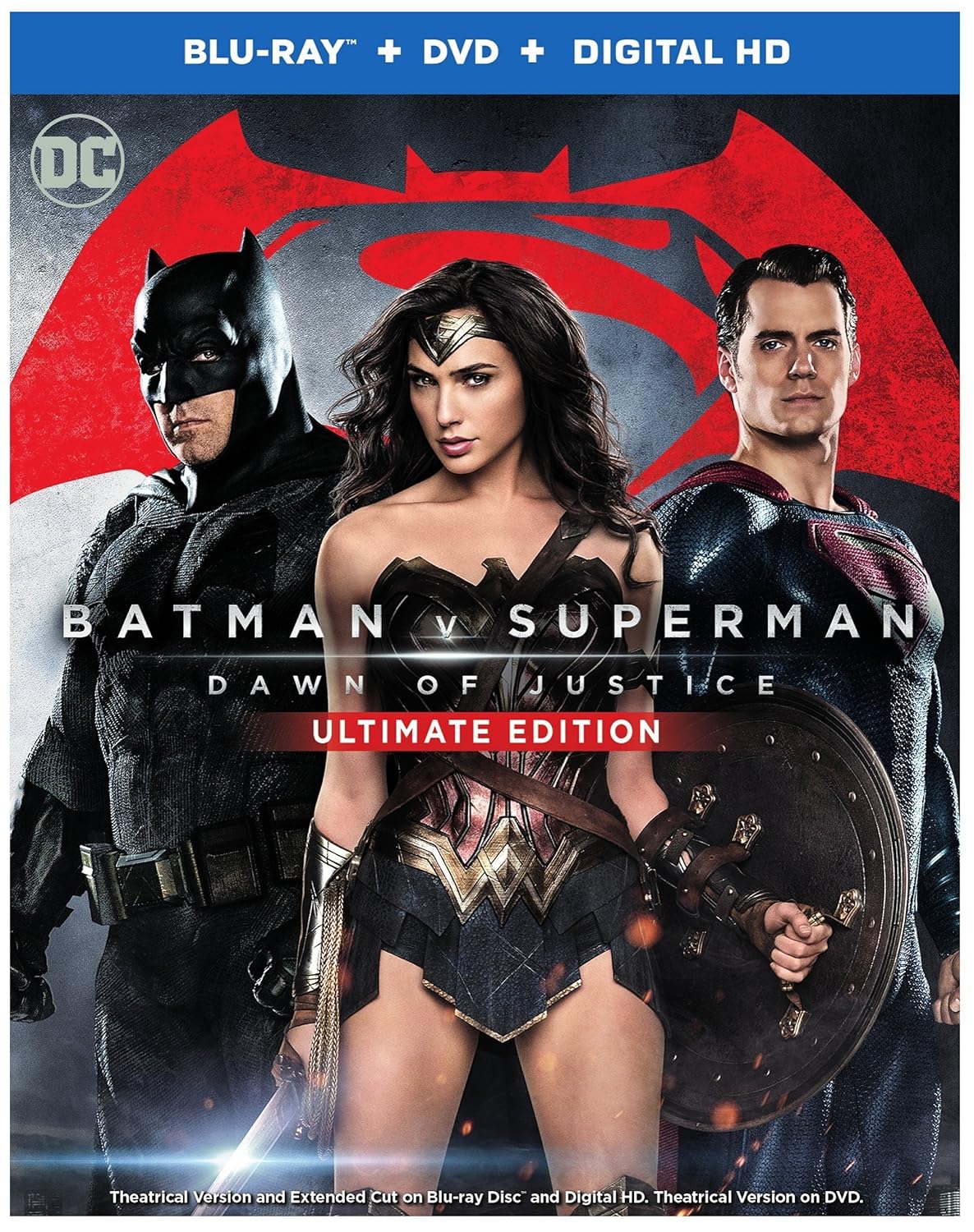
BATMAN V SUPERMAN: DAWN OF JUSTICE (ULTIMATE EDITION)

Image result for batman v superman dawn of justice ultimate edition

Again, let me be clear, the three-hour ‘Ultimate Edition’ of the film that was released on Blu-Ray. I’m not referring to the 151-minute cut that was released in theaters, even though I’m one of the rare people who did like that version of the film. Still, there’s no denying that the Ultimate Edition of Batman v Superman: Dawn of Justice improved upon many of the Theatrical Cut’s faults, especially in terms of the story. Some scenes in the Theatrical Cut felt rather disjointed in terms of how they were edited and how certain plot-points felt under-developed. Thankfully, that wasn’t as big of an issue with the Ultimate Edition, which adds in the missing scenes that better explained the plot. Granted, the Ultimate Edition won’t change the minds of everyone who disliked the Theatrical Cut. Certain elements of Zack Snyder’s direction that some fans may have been iffy on are still there. However, like Man of Steel, I feel that this film gets way too much flak. Whereas many saw it as a gloomy and messy story, I felt that it was a visually spectacular superhero epic with awesome action sequences and excellent character moments, including the death of Superman and, yes, even the infamous ‘Martha’ moment. Seriously, consider the context of that moment and you’ll see why it’s such an emotionally powerful scene. It’s a shame, then, that the ‘Ultimate Edition’ of the film wasn’t the one released in theaters, apparently because Zack Snyder just didn’t have the clout to have the full three-hour cut be used. Newsflash, Warner Bros, we would’ve been totally fine with having to sit through a three-hour film just so that we could know that this was the version of the film that Snyder intended. If you want your DC Extended Universe to truly succeed following the franchise’s rough 2016, you’re going to need to have more faith in your directors.

THE BFG

Image result for the bfg poster

The one and only Steven Spielberg gave us an incredibly charming family-friendly adventure this year in the form of The BFG, an adaptation of legendary author Roald Dahl’s classic novel of the same name from 1982. Under the Disney banner, Spielberg does a fantastic job of recreating the delightfully wacky visuals of Dahl’s writing on the big-screen. There’s quite a lot of visual effects in this film and they’re all excellent. And while fans of the book may be disappointed to find that the film doesn’t really embrace the darker elements of the story (I admittedly wouldn’t know having never read the book), the story is still a charming adventure that is full of heart, especially thanks to the lead duo of Sophie and the BFG. Newcomer Ruby Barnhill makes an excellent screen debut as young Sophie while Mark Rylance (in his second outing with Spielberg after his Oscar-winning turn in Bridge of Spies) makes the BFG a character that truly lives up to his title as the ‘Big Friendly Giant’. Really, the only thing holding this film back, in my opinion, is that the villainous giant characters who oppose our two heroes were rather underdeveloped. Plus, the ending in which the evil giants are defeated by the British army also felt rather anti-climactic. But, despite all that, this is easily one of the best family films to come out in recent years. It’s a shame, then, that it didn’t really do so well at the box-office; it made its budget back but just barely. With that said, do yourselves a favor and check out this highly-underrated Disney flick. Speaking of Disney…

PETE’S DRAGON

Image result for pete's dragon poster

Of all of Disney’s recent live-action remakes, this one is notable because it’s not based on one of the studio’s animated features. Instead, it’s based on a 1977 live-action/animated hybrid musical that may have initially received mixed reviews but has since gone on to amass a sizable cult following. And I bet that this new version will attract a similar fan-base in the years to come. It’s a different spin on the story of a young orphan named Pete and his best friend, a green dragon named Elliot. For one thing, it isn’t a musical and while that meant that some fans of the original viewed this as ‘Pete’s Dragon in name only’, director David Lowery gives us an endearing fantasy story that mixes child-like imagination with solid themes that older audiences can appreciate. And just like how The BFG benefitted greatly from the lead duo of Sophie and the BFG, the heart of Pete’s Dragon mainly stems from the duo of Pete and Elliot. Oakes Fegley carries a lot of the film by himself as Pete while Elliot proves to be one of the most endearing CG-created characters in the history of film. These two are such a great duo that I guarantee you that the ending, in which the two sadly go their separate ways, will bring a tear to your eye. Pair them with a solid supporting cast that includes Bryce Dallas Howard and Robert Redford and you have yet another great 2016 effort from Disney. Not only that, but this also continued the studio’s hot-streak with their live-action remakes. They managed to go 2 for 2 this year with their big live-action remakes, once again proving that the many upcoming remakes on Disney’s slate do have the potential to be excellent. What about that other one, you ask? Well, that one’s coming up much later in the list.

EDDIE THE EAGLE

Image result for eddie the eagle poster

This was definitely one of my biggest ‘surprises’ of the year. Eddie the Eagle, on paper, is just your standard sports flick with the usual tropes of the genre; the grumpy mentor, the training montage, the moment where it looks like all is lost but then a miracle happens that allows the main character to keep competing, etc. However, this film is so damn charming that you can kind of ignore the similarities to other sports films. That is because, as cliché as it may sound, this is not your typical sports story. Michael ‘Eddie’ Edwards was not your typical all-star athlete. While he was the first British Olympic ski jumper in nearly six decades, he finished last in the two main events that he participated in at the 1988 Winter Olympics. However, his likability and ‘never say die’ attitude made him a fan favorite and that translates well into the film adaptation, even if it’s not a 100% accurate representation of its true story. Taron Egerton, fresh off his star-making turn in Kingsman: The Secret Service, does an excellent job in the role and makes Eddie an incredibly endearing protagonist. He also works well with Hugh Jackman, who stars as Eddie’s coach, albeit not Edwards’ real-life coach. Together, they form a great student-coach relationship and the film maintains a solidly light-hearted atmosphere throughout with some great bits of humor peppered in here and there. My favorite humorous moments in the film are when Eddie successfully completes one ski jump and then decides to immediately try a larger ski hill after just one jump. In conclusion, Eddie the Eagle may be a traditional sports film but you will find yourself cheering Eddie on once the finale rolls around.

X-MEN: APOCALYPSE

Image result for x-men apocalypse poster

I’m just going to be frank here… I will NEVER forgive the internet for what it did to this film. Despite being the follow-up to one of the BEST superhero films of all-time, X-Men: Days of Future Past, this film got totally shafted by the internet in terms of hype. Yeah, I get that this was the year of Batman v Superman, Captain America: Civil War, and Suicide Squad, but pretty much ever since the internet first started to relentlessly mock the first photo of Apocalypse for looking like the villain from the first Power Rangers film, X-Men: Apocalypse suddenly became the ‘forgotten’ entry in 2016’s superhero slate. And that’s a damn shame because I’d argue the film is great. Is it as great as Days of Future Past? No, but I think that it’s not too far off in terms of quality. It’s just another highly satisfying X-Men adventure with excellent action sequences and great character moments. I don’t really agree with the arguments claiming that this film lacks emotional depth and is too overloaded with action sequences. After all, this film is called X-Men: Apocalypse, not X-Men: Minor Incident. And as for emotional depth, the emotional moments with Magneto (e.g. when he loses his wife and daughter) are quite powerful. Sure, I get why some felt that the story was too predictable for what was the ninth entry in the X-Men franchise, but the always great direction from Bryan Singer (the unsung hero of the superhero genre, I might add) makes up for it. And the excellent new representations of classic characters like Jean Grey, Cyclops, and Nightcrawler proves that this series still has the potential to continue in exciting new directions. Hell, I liked this film more than Deadpool… yeah, I said it!

HACKSAW RIDGE

Image result for hacksaw ridge poster

Mel Gibson returned to the director’s chair this year for the first time in a full decade after his previous effort, 2006’s Apocalypto. And he returned to directing with a bang thanks to the ‘true story’ war film Hacksaw Ridge. The film tells the story of Desmond Doss, an Army soldier who attracted a considerable amount of controversy when he refused to carry a gun into battle due to his religious beliefs. He was branded a coward but he soldiered on (no pun intended) as a conscientious objector and ended up becoming a hero when he saved countless lives during an intense skirmish in the Battle of Okinawa. Admittedly, some parts of the opening are a bit cheesy, namely, the parts where Desmond romances his future wife Dorothy, but that all changes once the action sequences roll around. The battle at Hacksaw Ridge, a tall cliff face that the U.S. Army had to climb to reach the Japanese forces, features some of the best war sequences ever put to film. These super-intense bits of action really showcase Gibson’s talents as a director when it comes to shooting action sequences. But, through it all, the film also gives a great protagonist to latch onto during all this in Desmond. Excellently played by Andrew Garfield, Doss’ convictions make him a sympathetic character through and through. Plus, it could be said that we could all learn from this man who did his duty as a member of the U.S. Army in a way that wasn’t the norm. After all, in doing so, he became the first (and, to date, only) conscientious objector to receive the Medal of Honor. Because of this, Hacksaw Ridge is one hell of a comeback for Mel Gibson as well as being one of the best war films in recent years.

DOCTOR STRANGE

Image result for dr strange poster

Yes, folks, this is one of the rare occurrences where an MCU film just barely missed out on being in my Top 12. However, that’s not to say that it wasn’t a great film… because it was. Doctor Strange is yet another excellent entry in the MCU. Sure, the story may have been a bit standard at this point in the superhero film genre but, at the same time, the things that it introduces in the Marvel Cinematic Universe tease exciting possibilities for future films. The film serves as our introduction to the mystical side of the MCU and, thus, results in plenty of awesome visuals. The MCU films have always done a great job when it comes to visual effects but with this film, the visual effects team truly went above and beyond with the visuals, producing some of the most surreal but visually beautiful action sequences in the entire franchise. And of course, like with any MCU film, the writing is solid, the humor is well-handled, and the cast is excellent. Benedict Cumberbatch does a fantastic job in the title role and Chiwetel Ejiofor, while perhaps a bit underutilized as Karl Mordo, is set-up terrifically to be the villain that he’s known to be in the comics. Tilda Swinton does manage to overcome a decent amount of the negative buzz that stemmed from the ‘whitewashing’ controversy surrounding her casting in the role of the Ancient One with an admirably dignified performance while Mads Mikkelsen proves to be one of the better MCU villains as Kaecilius. Granted, I wouldn’t say that he’s one of the absolute best MCU villains but he does get more material to work with compared to others, including the one that he almost played, Malekith from Thor: The Dark World. Yeah… he was better off in Doctor Strange. So, in conclusion, thanks to this film, Marvel Studios’ hot streak continued once again and the titular sorcerer proved to be a welcome addition to the MCU.

And now, finally, it’s time to get onto the list. Kicking things off at Number 12 is the second of Disney Animation’s pair of 2016 releases. It’s a rare occasion for the studio to have two major animated films come out in one year and an even greater achievement considering how great both films turned out (and yes, the other one’s coming up later in this list…)

12. MOANA

Image result for moana poster

The best thing about Moana is that it does a fantastic job of representing the primary culture of its setting; Polynesia. It’s very clear that the filmmakers made a considerable amount of effort to accurately translate Polynesian culture to the big-screen and it shows. Moana is brought to us by the duo of John Musker and Ron Clements, the same duo who brought us some of the studio’s biggest hits of the Disney Renaissance, including The Little Mermaid and Aladdin. And while this is their first computer-animated film, the transition that they make from traditional animation to computer animation is a smooth one. The animation is as great as you’d expect from Disney and there are even a few bits of traditional animation thrown in here as well, mostly via Maui’s sentient tattoos. As for the story, it’s an entertaining ocean adventure that’s bolstered by the film’s excellent titular heroine, Moana. Newcomer Auli’i Cravalho makes a fantastic screen debut in the role, making Moana a likable and spunky protagonist through and through. However, I must ask, is it possible for us to praise Moana without crapping on previous Disney heroines in the process, particularly the Disney princesses? I mean, I’ve been seeing this quite a bit in regards to how some critics have been addressing her in their reviews. There’s been a lot of buzz surrounding the fact that Moana is a Disney princess without a love interest. Yeah… so? Elsa didn’t have a love interest in Frozen. Neither did Merida from Brave, for that matter. Don’t get me wrong, it’s great that they let Moana fully be the hero of her own story, and she’s a great protagonist to boot. But just because most of the other Disney princesses ended up in relationships doesn’t mean they’re terrible by comparison.

Anyway, Moana is paired excellently with the film’s other main character, Maui, the charismatic demi-god voiced by the king of charisma himself, Dwayne Johnson. These two work off each other very well, especially when it comes to Moana having to constantly keep Maui’s ego in line. And while Maui does start off as an egotistical protagonist who’s mainly looking to reclaim his former glory, he does learn to become more selfless as the film goes on. As for the film’s side characters, admittedly they’re not as prominent compared to other Disney films because the focus is more on Moana and Maui. Still, there are a few memorable side characters here and there, including a villainous crab named Tamatoa (voiced by Jemaine Clement) who sings an unforgettable David Bowie-esque song called ‘Shiny’. Speaking of music, as one would expect from a classic Disney film, the film’s soundtrack is excellent. In this case, the soundtrack was handled primarily by the one and only Lin-Manuel Miranda (you may have heard of his Broadway sensation, Hamilton) and, dare I say, I think that this soundtrack even managed to surpass Frozen. To name a few of the soundtrack’s best songs, there’s Moana’s solo ‘How Far I’ll Go’, an emotionally-fueled anthem, ‘You’re Welcome’, which perfectly encapsulates the character of Maui and is also pretty much the perfect song for someone like ‘The Rock’ to sing, and, as mentioned before, the glam rock inspired tune ‘Shiny’. With all this in mind, Moana is yet another excellent addition to the Disney animated canon that keeps the studio’s current hot streak running strong. But, if I had to compare this to the other Disney animated film of the year, I’ll admit that I prefer that one by a slim margin. But, again, both films are fantastic.

Ok, I’ll admit, some of you probably guessed ahead of time that this next one would be on the list somewhere…


Image result for rogue one poster

Disney’s new line of Star Wars films started off on a great note last year with Star Wars: The Force Awakens, which was a whirlwind success with both critics and audiences (*someone brings up the ‘it’s too much like A New Hope’ argument* I SAID WHIRLWIND SUCCESS, DAMN IT!). But as for this year’s franchise outing, Rogue One, it too had a lot to live up to. It was to be the first installment of a new series of spin-off films set within the Star Wars universe, allowing for new stories that didn’t adhere to the typical story structure of the saga films. Thankfully, this new line of films started off on a great note with Rogue One. Directed by Gareth Edwards, it went into the details surrounding one of the crucial plot-points established in the opening crawl of A New Hope; how the Rebel Alliance acquired the plans to the Death Star. And how did they do it? It was all done by a ragtag team led by Jyn Erso, the daughter of one of the Death Star’s key engineers, Galen Erso. Admittedly, the film takes a bit to get going, namely due to it jumping around to multiple planets quite a few times in just the first few minutes. But, once the main cast of characters is fully assembled, that’s when the film finally starts to pick up the pace. And while I can’t really say that this film has the franchise’s best cast of characters, the cast is still solid throughout. Felicity Jones does an excellent job in the role of Jyn, finding a nice mix between the spunk that Daisy Ridley brought to the role of Rey in The Force Awakens and the roguish nature that always defined Han Solo. She’s backed by a solid supporting cast that includes Diego Luna as Captain Cassian Andor, who serves as a nice contrast to Jyn being the Rebel soldier who is sometimes forced to follow orders that he doesn’t agree with, Alan Tudyk as the film’s main droid K-2SO, a far more sarcastic droid compared to the other major droids of the Star Wars universe, and Donnie Yen as the badass, Force-tuned, blind warrior Chirrut Ȋmwe. He also gets the best line in the film when one of Saw Gerrera’s soldiers puts a bag over his head. (“Are you kidding me? I’m blind!”)

Sure, some characters don’t get as much to work with compared to others, namely the ‘main villain’ of the film, Director Orson Krennic (Ben Mendelsohn), who’s basically just ‘there’ for the most part, but, again, the cast is solid throughout. And while I will give the edge to The Force Awakens in terms of it having a better story and cast of characters, there are some legitimately effective emotional moments in this film. A lot of them come courtesy of Jyn’s father Galen, played by Mads Mikkelsen. There are two specific scenes that I’d like to point out in regards to this. One of these is the scene where Jyn listens to the message in which Galen reveals the secret flaw of the Death Star, a vulnerability in the station’s main reactor that Luke utilized when he destroyed it in A New Hope, while also reaffirming that he still loves his daughter. The other moment is his last scene in the film where he finally reunites with Jyn (his ‘Stardust’, a pet name that comes into play later when Jyn and Cassian use it to find the Death Star plans) but dies soon after. On that note, this film did have a major hurdle to overcome being that it’s primarily set before the events of Episode IV: A New Hope. Considering that none of these main characters appear in that film, it may have been easy to figure out going in that, spoilers, they all die at the end. But, to the film’s credit, it did manage to do just enough to make the ‘Rogue One’ crew an endearing group, particularly during the final battle. You get to see the sacrifices that every character makes so that they can successfully steal the plans to the Death Star, from defecting Empire pilot Bodhi Rook (Riz Ahmed) having to go out into the action to get the equipment needed to transmit a message to the Rebel Alliance to Chirrut walking out, while right in the middle of an intense fire-fight, to pull the master switch that allows them to transmit said message. 

On that note, for a film that started off on a slow note and had what some may argue was just an ‘ok’ second half, it’s all worth it just for this film’s finale. The final battle on the paradise-like planet of Scarif, in which the ‘Rogue One’ crew embarks on a suicide mission to retrieve the Death Star plans, is easily the best part of the film. If there’s one major advantage that I’d give this film over The Force Awakens, it is that it has arguably some of the best action sequences in the entire franchise. The third act is worth the price of admission alone. These scenes are well-shot, well-edited, and deliver one hell of an epic space/land battle. And then there’s the big scene with Darth Vader. Yes, the iconic Sith Lord makes a brief appearance in this film, an appearance which mainly comes into play during the finale when he boards a Rebel ship and slaughters a whole group of rebel soldiers to try and retrieve the Death Star plans. Some may be disappointed that he isn’t in this more (he’s only in it for like four minutes or so) but, thanks solely to this scene, we can now forget about that one time where he once said that he didn’t like sand… or that time he yelled ‘NOOOO!!!!’… or the other time he yelled ‘NOOO!!!’, bottom line, Darth Vader was made badass again. On that note, some have warned that this film may be too intense for younger viewers, probably due to things like that big Vader scene or the intense results of the Death Star using its weapon. Whereas in A New Hope the effects of the weapon were seen from afar, here we see them up close. In other words, you truly see the devastation unleashed by it. But, if you ask me, I don’t think the action was ‘that intense’. Don’t get me wrong, some of the fire-fights are undeniably intense, particularly during the finale, but not necessarily to the point where they’re graphic or anything. I’d say it’s suitable enough for, I don’t know, kids 8 and up?

Finally, I should probably address the ‘elephant in the room’ that is the CGI-based recreations of characters from A New Hope; specifically, Grand Moff Tarkin, as played by the late Peter Cushing, and a young Carrie Fisher as Princess Leia. This has easily been the most polarizing aspect of the film, with some questioning the ethical nature of bringing back a character as played specifically by an actor who had been dead for years. At first, that was solely the case with Tarkin, given that Peter Cushing passed away in 1994, but with the tragic passing of Carrie Fisher a few weeks ago, now the same question could arguably be raised with Leia as well, However, personally, I wasn’t too bothered by it. The reason why I say that is because we now live in an era where visual effects are fully capable of effectively re-creating actors in a certain state via CGI. Just look at what Marvel Studios did when they de-aged Michael Douglas for Ant-Man. But, also, in the case of Tarkin and Leia, it isn’t like this is anything new. There have been plenty of times in the past where filmmakers had to use CGI to replicate a recently deceased actor. Other cases of this include Oliver Reed in Gladiator and Brandon Lee in The Crow. Granted, those were more cases of having to do it for ‘recently deceased’ actors, which isn’t the case with Peter Cushing as Tarkin, but the point remains. And for the most part, the visual effects used to recreate Tarkin and Leia were solid. Sure, perhaps more in the case of Leia than Tarkin but still a good attempt nevertheless and, in a way, the final scene with Leia now has a touchingly poignant effect to it in the wake of Fisher’s passing. So, in conclusion, that’s Rogue One. It may not be perfect but it’s still a well-made entry in the Star Wars franchise that exemplifies the great potential that these upcoming spin-offs have.

Just a quick heads-up; my Number 10 pick may be a bit controversial given who directed it as well as the real-life event that it focuses on. Just throwing that out there…


Image result for 13 hours poster

Yep… a Michael Bay film lands a spot in my Top 12 list. Most unorthodox! Well, as I’ve said many times in the past, I am a fan of most of Bay’s films. I’m not one of those many people on the internet who think that he’s the worst director in the industry… far from it. And this film is a prime example of Bay at his best. 13 Hours tells the true story of what happened on September 11, 2012, when an American diplomatic compound in Benghazi, Libya was attacked by Libyan militia. Obviously, this incident attracted a lot of political controversy back here in the States. However, I think that Bay made the right decision by not focusing too much on the political aspect of the incident. Instead, he focuses on those who were there when it happened, namely the six-man security team of Tyrone S. Woods, Jack Silva, Mark ‘Oz’ Geist, John ‘Tig’ Tiegen, Kris ‘Tanto’ Paronto, and Dave ‘Boon’ Benton who put their lives at risk defending those stuck at the compound. And while the film is still very much your usual dose of Bayhem (in other words, the action is focused on more than the story and characters), the six main leads, led by John Krasinski in an against-type role as Jack and James Badge Dale, who’s been a great supporting actor in films like The Walk and Iron Man 3, in the lead role of Tyrone, all work off each other very well. And I’ll admit, there was a legitimate scene where I got a bit teary-eyed; the scene where Tyrone and Glen Doherty (Toby Stephens) are killed during the final assault on the compound. Yes, there’s a tear-jerker moment in a Michael Bay film; you don’t hear that brought up a lot, now, do you? In short, like 2014’s American Sniper, this isn’t a story about the politics; it’s about the men who were there. That needs to be remembered.

That’s the end of Part 1. Thanks for following along and be sure to check back tomorrow for Part 2, in which I’ll be listing films #9-7.