Showing posts with label Alice in Wonderland. Show all posts

Monday, August 24, 2020

Ranking the Live-Action Disney Remakes

I’m going to start this post off with a quick disclaimer. If you’re someone who is by no means a fan of Disney’s recent trend of producing live-action remakes of their animated classics, you’re not going to get much out of this post since it will be a generally positive take on these films. Yes, since 2010, Disney’s live-action output has primarily been focused on live-action re-imaginings of some of their most iconic animated films. However, while these films have been quite successful at the box-office, they’ve been far more polarizing in terms of their overall reception. While general audiences seem to be fairly receptive towards these new spins on Disney classics, there are a sizable number of folks who have been highly critical of this trend for the exact same reason that folks would take issue with any remake in general. Why would anyone even bother remaking something that’s been regarded by many as an undisputed classic? And yet, as someone who recognizes that the original animated films will always be there regardless of how these new films turn out (which is why I’m thankful for the advent of Disney+, which prominently features both incarnations of the films that have recently gotten the live-action treatment), these recent remakes have never bothered me in the slightest. In fact, I’ve recently started to detest the use of the adjective ‘unnecessary’ when it comes to reviews because I feel that it’s become one of the most overused words in critical vernacular, especially since you could easily apply it to any film that comes out and not just the ones that are remakes/sequels/reboots. In other words, while many of these films are re-imagining some of my favorite Disney films of all-time, I try not to let my affinity for the originals overly cloud my judgment towards the remakes because I personally feel that doing so would be largely unfair to them. And so, with that in mind and in honor of the latest Disney remake Mulan’s impending ‘Premier Access’ release on Disney+, today I’m ranking these live-action remakes from ‘least favorite’ to ‘favorite’. While their placement on this list will primarily stem from overall preference, I will also factor in their efforts to present a new spin on their classic stories.

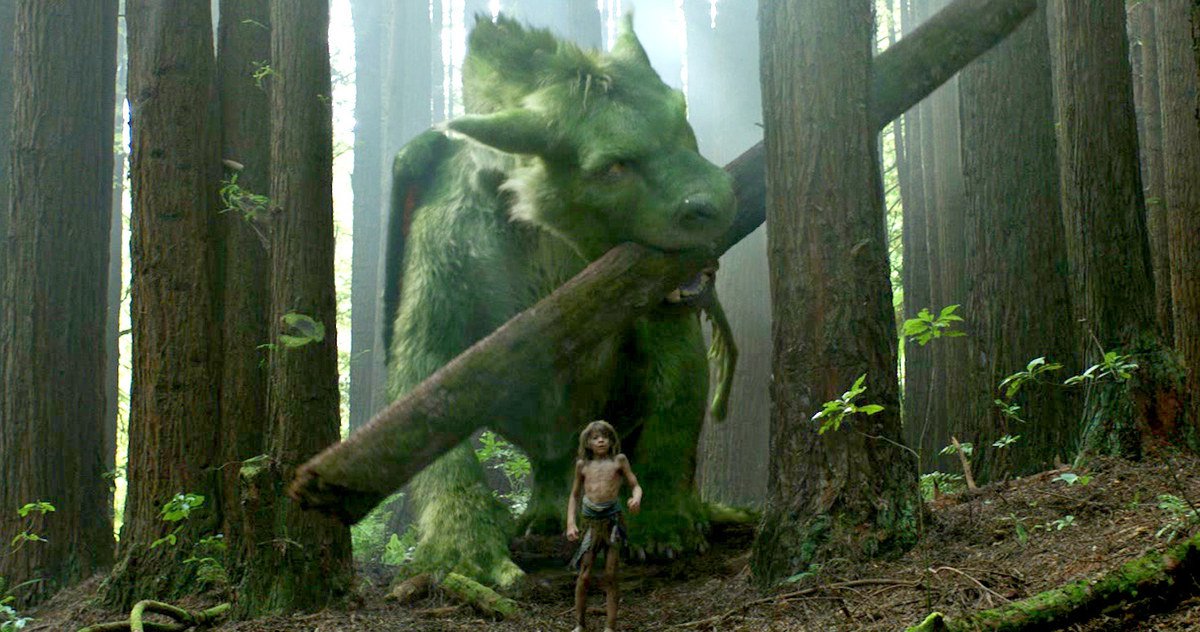
Before we begin, though, I just need to lay out the ground rules for this list. For starters, I won’t be including the two sequels that were spawned from these recent remakes, 2016’s Alice Through the Looking Glass and 2019’s Maleficent: Mistress of Evil. The reason for this is quite simple; from a subjective standpoint, they’re not ‘remakes’ anymore. Instead, they’re just ‘sequels’ to the remakes. However, I will briefly address them when I go over their predecessors. Also, for this list, I’m only going to be focusing on the remakes that have been released since 2010 since this is when this current trend first began to take shape. Because of this, there are two films from the ’90s that won’t be appearing on this list even though they are technically the first big Disney remakes. The first is the original live-action remake of The Jungle Book (that’s right, Jon Favreau’s version wasn’t the first time that a live-action adaptation of Disney’s Jungle Book was made) which was directed by Stephen Sommers and released in 1994. Admittedly, I haven’t seen it at the time that I’m writing this, but I’ll probably do some kind of post on both it and a different Disney-produced Jungle Book film from the ’90s, 1998’s The Jungle Book: Mowgli’s Story, in the future, perhaps when the sequel to Favreau’s Jungle Book comes out. The other big remake that won’t be included here is the 1996 adaptation of 101 Dalmatians, but again, that’s because I’m saving my thoughts on that film and its 2000 sequel, 102 Dalmatians, for a different occasion; in this case, the upcoming spin-off Cruella that will hit theaters next May. Lastly, while it does technically count as a ‘live-action remake’ and can genuinely be considered as a part of this recent subgenre, I’m also not going to include the 2016 remake of Pete’s Dragon since it’s a remake of a live-action film rather than an animated one. Yes, for this list, I’m mainly focusing on the live-action remakes of animated Disney films, and while two of them are technically more like ‘sequels’ than ‘remakes’, I believe that they still count here given that they are primarily based on their animated counterparts. And so, without further ado, I present my current rankings of the live-action Disney remakes that have been released since 2010.   

10. ALICE IN WONDERLAND

Mia Wasikowska in Alice in Wonderland (2010)

We start things off with the first big live-action reimagining of a Disney classic from this modern era, Tim Burton’s Alice in Wonderland. This is the first of the two films that I mentioned earlier that are more like ‘sequels’ rather than ‘remakes’ as it follows a teenaged Alice returning to the world of Wonderland (referred to in-universe as ‘Underland’). Like the original animated film, Burton ultimately went with a combination of elements from both the original Alice’s Adventures in Wonderland novel and its sequel, Through the Looking Glass, rather than just being a direct adaptation of the source material. And right off the bat, the best thing that I can say about this film is that it’s another prime example of why Burton is one of the greatest visual directors in the industry. While the film’s visuals do feel a bit excessive at times due to the scenes in Underland being almost entirely green-screen based, they’re still very much the best part of the film as they wonderfully capture the eccentric nature of the Wonderland setting through the equally eccentric style of Tim Burton. Because of this, it’s easy to see why this film won Oscars for both its production and costume design and how its production designer would go on to direct his own live-action Disney remake a few years later. That said, though, there are a few instances where Burton’s style arguably goes a bit too far for a film that’s primarily geared towards younger audiences. In other words, moments where creatures get their eyes poked out and a scene where Alice crosses a moat filled with the heads of the Queen of Hearts’ victims do make you wonder how the film was able to get away with its PG rating. But despite this and an often-uneven plot (which, yes, is saying something for an Alice in Wonderland film), the film still manages to be another solid outing from Burton, especially thanks to its cast. Helena Bonham Carter is an absolute standout as the figuratively and literally big-headed tyrant the Red Queen and the film sports an impressively stacked voice cast with big names like Stephen Fry and Alan Rickman.

Thus, while it wasn’t exactly a runaway hit with critics, Tim Burton’s Alice in Wonderland was a smash hit financially as it managed to gross over $1 billion worldwide. This has mainly been attributed to the general lack of competition that it faced upon its release in the Spring of 2010 and the boost that came from 3-D ticket sales since this was right when the 3-D format was experiencing its peak resurgence. Because of this, a sequel was eventually made in 2016, Alice Through the Looking Glass, under the direction of James Bobin, who was fresh off the 2011 Muppets film and its 2014 sequel, Muppets Most Wanted (Burton was still heavily involved as a producer). Like its predecessor, though, it didn’t do too well with critics, and unlike its predecessor, it was a rather notorious underperformer at the box-office. But while we’re not going to spend too much time comparing these two films, I will say that there are two things that the sequel does better than the original. First off, it boasts a brighter visual style that is still a lot of CGI overload, to be fair, but is all-around more pleasant to look at. It also means that there aren’t really any moments that push its PG rating like Burton’s film did. The other key advantage is that since the first film was primarily focused on Alice finding the confidence to help her Underland friends stop the Red Queen, she is a far more confident lead in Through the Looking Glass, which is well-reflected by Mia Wasikowska’s excellent performance in the role. And so, with all this in mind, while the live-action Alice in Wonderland films are far from being my favorites when it comes to Disney’s recent live-action output, I don’t necessarily ‘dislike’ them, either. They may be far from perfect, but as much as they do have their incredibly vocal critics (especially those who love taking these films to task for not being the most faithful adaptations of their source material), there’s no denying that they also have their fair share of fans.    

9. LADY AND THE TRAMP

Lady and the Tramp (2019)

The most recent film on our list, Lady and the Tramp was one of the many exclusive titles that debuted on Disney+ the day of its launch, and I won’t lie, it was, in fact, the first ‘Disney+ Original’ that I watched. While most of the attention that day was directed towards the pilot episode of The Mandalorian, I was genuinely looking forward to the live-action remake of one of Disney Animation’s most underrated projects. To be clear, I’m not saying that the original Lady and the Tramp is a forgotten entry in the Disney canon, but you could also argue that it often gets overshadowed by the other Disney films of the decade such as Cinderella, Alice in Wonderland, and Peter Pan. Nevertheless, it’s a charming love story that was nicely translated into a live-action film by director Charlie Bean. Now admittedly, there aren’t many deviations from the original film, with the biggest changes consisting of minor things such as giving the dog-catcher a more prominent villain role and changing the song sung by Aunt Sarah’s pair of troublemaking cats in light of the original’s often-accused case of racist stereotyping. But even though this does make this version of Lady and the Tramp one of the more straight-forward installments of the recent Disney remakes, that’s not such a bad thing in this instance. Whereas almost all the other remakes are big-budget, CGI-heavy flicks, the Lady and the Tramp remake is refreshingly simple in its approach since the original film was more of a light-hearted romp with the period setting of a classic 1900’s Midwestern town. It also helps that the filmmakers utilized actual dogs to help bring the characters to life even though it goes without saying that CGI was used for the process of making them talk. All in all, this is just an incredibly cute and harmless film that does a nice job in recapturing the charm of its source material’s timeless romance.   

8. DUMBO
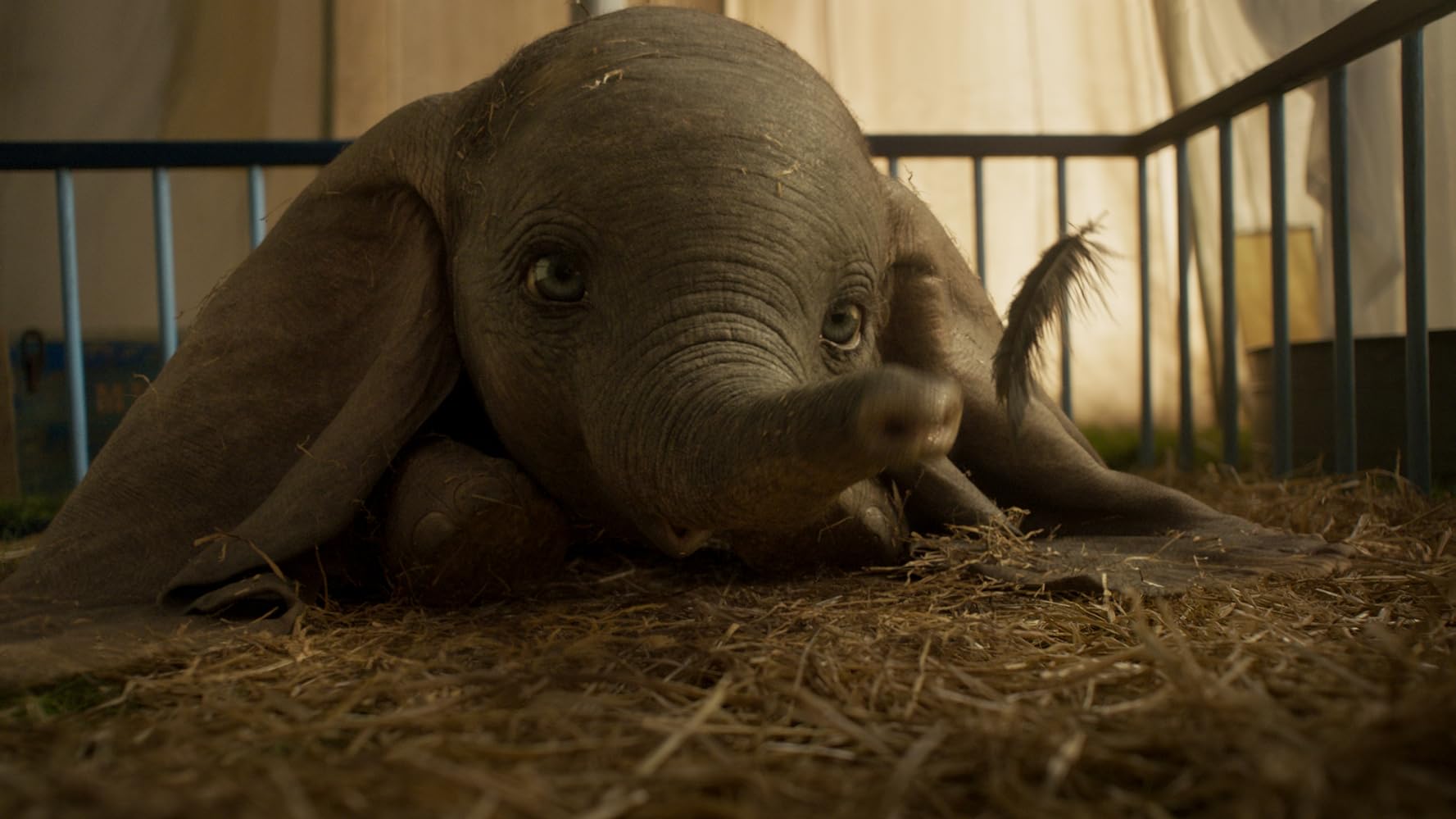
Dumbo (2019)

In 2019, Tim Burton took on his second major live-action Disney remake with Dumbo. Admittedly, the story of a lovable circus elephant who uses his big ears to fly may have seemed like an odd choice for Burton to direct, but at the same time, it did fit his usual M.O. of stories about misfit characters. Thus, while Burton’s Dumbo doesn’t feature his traditional gothic style, its visuals are still very much on point throughout as they do a wonderful job of capturing the bright and majestic visual aesthetic of the circuses of yesteryear. The film also has the benefit of having greater opportunities for new material when compared to some of the other remakes on this list since the original Dumbo is one of Disney’s more simpler-plotted affairs, especially due to its short 64-minute runtime. As such, all the key moments from the original such as Dumbo’s mother being put into captivity after causing a ruckus and the moment where Dumbo first publicly showcases his flying ability during a clown act are covered in just the first forty minutes. After that, a new subplot occurs when a greedy theme park entrepreneur purchases Dumbo for use in his circus while the members of Dumbo’s original circus troupe work to free his mom from her captivity at the entrepreneur’s amusement park. The remake also focuses more on the story’s human characters, namely WWI veteran Holt Farrier and his two kids Milly and Joe, who take the place of Timothy Q. Mouse from the original as Dumbo’s primary allies since this film doesn’t feature any talking animals. However, the new material that’s added in ends up feeling just as simplistic as the original film’s plot which, to be fair, was reportedly the point according to screenwriter Ehren Kruger. Ultimately, though, Dumbo still works quite well as a good-natured family film with a solid cast headlined by Burton regulars such as Michael Keaton and Danny DeVito and some fun nods to the original, including the infamous pink elephants.

7. MALEFICENT

Angelina Jolie in Maleficent (2014)

Since Tim Burton’s Alice in Wonderland is technically more of a sequel than a remake, one could argue that 2014’s Maleficent is where this current crop of live-action Disney remakes truly got started. Under the direction of Alice in Wonderland’s production designer Robert Stromberg, the film serves as a live-action reimagining of Disney Animation’s 1959 outing Sleeping Beauty that, as the title suggests, mainly focuses on the story’s iconic villainess, Maleficent. However, instead of just having her be the main antagonist, the film turns her into more of an anti-hero whose actions against Princess Aurora and her family were the result of her getting revenge against Aurora’s father, her former love interest, for stealing her fairy wings. And while she does curse Aurora to fall into an eternal slumber on her 16th birthday, she ends up developing a motherly connection to her to the point where she’s ultimately the one who saves her from the curse. As you might have guessed, those who prefer Maleficent’s traditionally villainous persona weren’t too pleased with this interpretation of the character, but overall, I think that it’s a uniquely fascinating take on Maleficent and the mother-daughter relationship that forms between her and Aurora is genuinely sweet. But, of course, the biggest highlight of the film is Angelina Jolie in the title role as she perfectly encapsulates the look and persona of the ‘Mistress of All Evil’… even if that designation doesn’t necessarily apply to this version of the character. Thus, Maleficent turned out to be a big hit with audiences upon its release in the summer of 2014, ultimately grossing over $758 million worldwide. This effectively paved the way for a sequel in 2019, Maleficent: Mistress of Evil, which was generally on par with its predecessor in terms of quality while also expanding upon its fantasy world, namely by introducing more members of Maleficent’s race, the Dark Feys. Really, the only major disappointment with the sequel was that there were fewer scenes between Maleficent and Aurora. Nevertheless, the Maleficent films are a solid duology of fantasy flicks that pride themselves on being female-driven stories.

6. THE LION KING
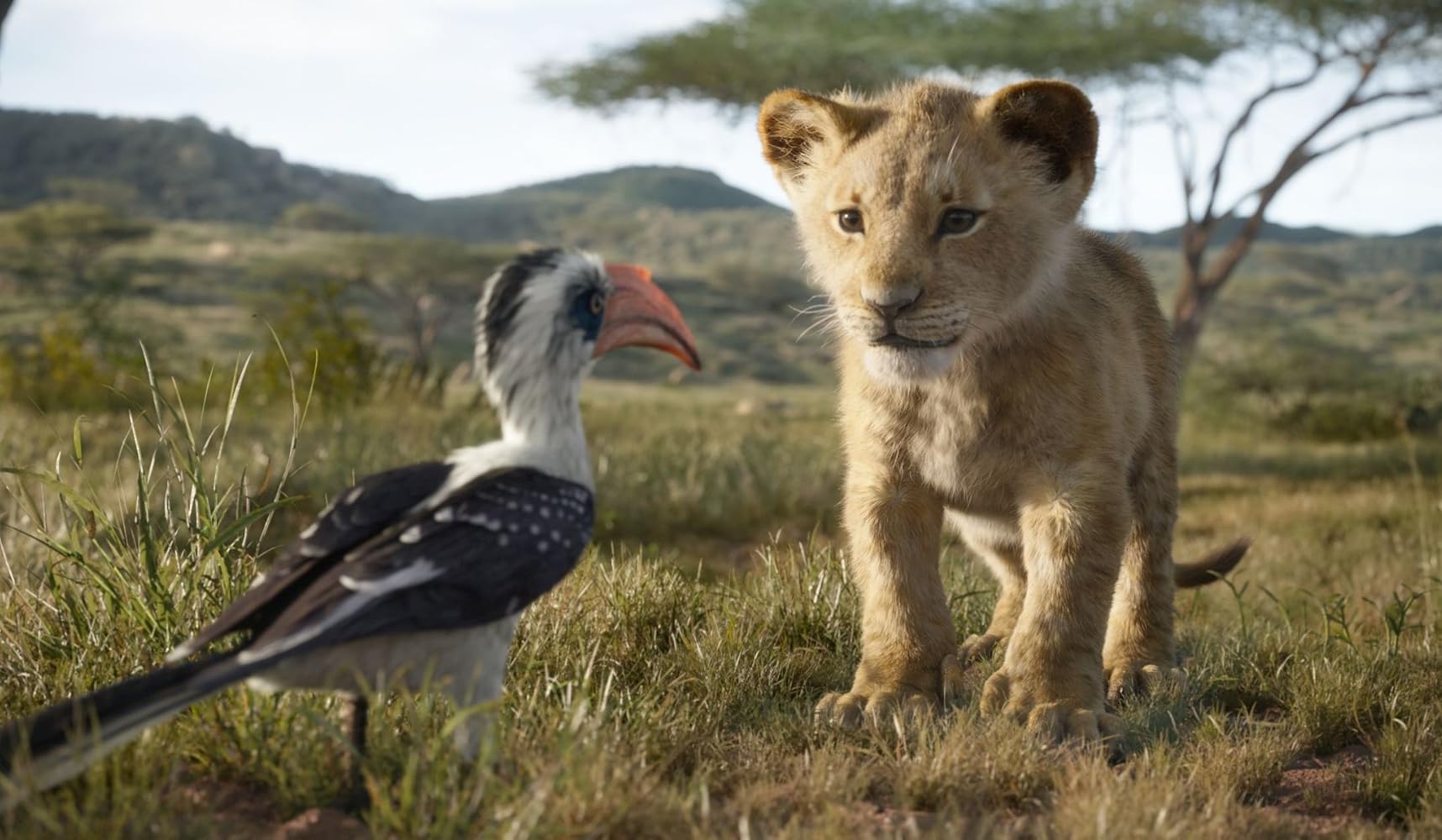
John Oliver and JD McCrary in The Lion King (2019)

Now I’ll be the first to admit that Jon Favreau’s CGI-based remake of The Lion King (which admittedly makes this one a bit questionable to include on this list since it’s not really live-action but arguably still counts based on its status as a remake) is quite arguably the most straight-forward remake of this bunch when it comes to retelling the original film’s story. Apart from some minor additions like an earlier introduction for adult Nala and a rivalry between her and Shenzi the hyena, this is the exact same story as the 1994 film with the exact same story beats. In other words, the biggest difference between the two films is that Favreau’s version is CGI whereas the original was traditionally animated. But while this has made the new Lion King one of the most controversial installments yet of the recent Disney remakes, I’d argue that it still manages to be a solid enough film. Like Favreau’s other big remake, The Jungle Book, much of this is due to the utterly impressive visual effects that do such an incredible job in maintaining their photorealistic nature. And while this does mean that the film lacks the more extravagant moments of the original (i.e. there’s no scene of Timon distracting hyenas by donning a grass skirt and dancing the hula (although there is a brilliant substitute bit for that part)), the attention to detail is truly spot on. Plus, I’d argue that the film still manages to hit the right emotional beats from Mufasa’s death to the moment where Simba speaks with the spirit of his father. And so, if anything, I’d say that at the very least, the new Lion King succeeds as a demonstration of how far CGI has truly come in the past few years. Obviously, I’m not saying that it’s ‘better’ than the 1994 film, but with phenomenal visuals and a great voice cast that includes the likes of Donald Glover, Chiwetel Ejiofor, Billy Eichner, Seth Rogen, and the Queen Bey herself, Beyonce, it’s also quite far from being completely worthless. And yes, this is all coming from someone who lists the original Lion King as his favorite Disney animated film of all-time, but as I’ve made it clear already, just because it’s my favorite doesn’t mean that I was going to hold that against this new film. Still, I will admit that the fact that it is largely note-for-note the same as its traditionally animated counterpart does keep me from putting it any higher on this list.

5. CHRISTOPHER ROBIN

Ewan McGregor and Jim Cummings in Christopher Robin (2018)

Christopher Robin is the other film on this list that’s more of a sequel rather than a remake as it revolves around a grown-up Christopher Robin being reunited with Winnie the Pooh and the rest of the Hundred Acre Wood gang. But, of course, it still counts on this list since it utilizes much of the iconography from Disney’s interpretation of Winnie the Pooh, and since Winnie the Pooh was such a significant part of my childhood, this was easily one of my most anticipated films of 2018. At the end of the day, I’m happy to report that it did not disappoint. Christopher Robin is an incredibly poignant story about the tragedy that is the loss of childhood innocence through the harsh but sadly natural process of growing up. But while this ordeal ends up being an incredibly rough one for Christopher Robin (e.g. losing his father at a young age, enduring the horrors of World War II, etc.), it is what also makes his eventual reconciliation with his friends and family incredibly cathartic. Ewan McGregor does a fantastic job in the title role and when it comes to his Hundred Acre Wood friends, it was only appropriate that they bring back Jim Cummings, the voice of Pooh and Tigger for many a generation (mine included), for his iconic roles. Now admittedly, many have noted that Christopher Robin sports a rather bleak tone, which is true if focusing solely on the first half of the film before Christopher Robin regains his childhood innocence. After that, the film takes on a more light-hearted tone and the scenes where Pooh and company get into all sorts of adventures in London are purely delightful. And really, that perfectly sums up the film in general. It’s a truly delightful family flick that’s fully bolstered by the ever-enduring charm of its timeless characters to be another great Winnie the Pooh story.  

4. ALADDIN

Mena Massoud in Aladdin (2019)

As I’ve mentioned plenty of times before, director Guy Ritchie’s live-action remake of Aladdin ended up being quite a noteworthy success story even though, before its release, it was quite possibly the most scrutinized installment yet of these equally scrutinized remakes. Simply put, it was almost as if this film could never catch a break as it caught flak for various reasons ranging from certain casting choices to the infamous first reveal of Will Smith’s Genie in his traditional blue form. But when it finally came out, it managed to earn over $1 billion worldwide while also doing decently enough with critics, many of whom felt that it turned out to be much better than they initially anticipated. And if you ask me, that means that this film deserves a lot of credit for managing to avoid being the disaster that many predicted it would be. Now as far as being a remake of its animated counterpart, Aladdin is in the same boat as Lady and the Tramp and The Lion King by not making a lot of radical changes to the original story of a good-natured thief who tries to woo the Princess of Agrabah with the help of a wisecracking Genie. Despite this, however, one great change that it does make is letting Princess Jasmine play a far more proactive role in the story. With no disrespect to her animated counterpart, this is the best incarnation of the character to date, especially thanks to Naomi Scott doing a phenomenal job in the role. Meanwhile, Mena Massoud shines in what is surely going to be his breakout role as Aladdin while Will Smith, despite all the pressure that stemmed from having to follow in the footsteps of Robin Williams’ iconic rendition of the Genie in the original animated film, successfully delivers his own, unique take on the character. Ultimately, the only thing that holds this film back is its mediocre interpretation of Jafar, which is primarily due to this version’s more grounded take on the character. But at the end of the day, the live-action Aladdin ends up being a lot of fun, and while it may have seemed like a weird choice to have it done by a director who’s known more for making gritty crime dramas, Guy Ritchie does a highly respectable job when it comes to maintaining the original’s great atmosphere and unforgettable musical numbers.  

3. THE JUNGLE BOOK

The Jungle Book (2016)

Out of all these films, Jon Favreau’s The Jungle Book is arguably the best example of a live-action Disney remake that isn’t fully tied to its animated counterpart. While it’s still very much the story of a young boy named Mowgli who is raised by wolves in the jungles of India and pursued by the sinister tiger Shere Kahn, it’s ultimately a combination of the 1967 animated film and Rudyard Kipling’s original novel. In other words, it only features three of the songs from the animated film (“Bare Necessities”, “I Wanna Be Like You”, and “Trust in Me”) and places greater emphasis on the dramatic parts of the story such as Mowgli’s history with Shere Kahn, who killed his human father, and the dangerous power of ‘Man’s Red Flower’, fire. Favreau does an excellent job of balancing these two aspects of the story, resulting in some excellent emotional moments (e.g. when Mowgli first leaves for the man-village and says goodbye to his adoptive wolf mother Raksha) while also featuring plenty of great homages to the original. But, of course, the most notable aspect of this film is its extensive use of CGI to bring both its animals and its jungle landscapes to life. And because Favreau’s VFX team did such an outstanding job with the visuals (which ended up netting them the Oscar that year for Best Visual Effects), sometimes it’s easy to forget that Neel Sethi, who plays Mowgli, is literally the only ‘real’ thing on-screen 95% of the time. All this and a top-notch voice cast that includes big names like Bill Murray, Ben Kingsley, Idris Elba, and Lupita Nyong’o helps make this adaptation of Rudyard Kipling’s classic story a full-blown visual masterpiece. And as I noted back in the intro, Favreau and screenwriter Justin Marks are currently prepping a sequel that, according to Marks, could potentially incorporate some of the unused elements from the animated film’s original screenplay by Bill Peet that was ultimately rejected by Walt Disney himself for being too dark.

2. CINDERELLA

Richard Madden and Lily James in Cinderella (2015)

No matter how much these live-action Disney remakes get ragged on by their biggest critics, there will always be the select few that were genuinely well-received, and the one that started it all for this group was Kenneth Branagh’s 2015 remake of Cinderella. Unlike both Alice in Wonderland and Maleficent, which received mixed reviews upon their release, Cinderella fared quite well with critics and became the first of these remakes to secure a ‘Fresh’ rating on Rotten Tomatoes. And just like Christopher Robin, this was another one of my most anticipated films back when it was coming out due to the original Cinderella being one of my all-time favorite Disney films growing up. All in all, Branagh’s remake does a wonderful job of bringing this classic story to life. Sure, it’s another case where the remake is predominately faithful to its animated counterpart without many significant changes, but in this instance, the changes that it does make are some of the best to come from any of these recent remakes. Easily the best example of this is how it expands upon the relationship between Cinderella and Prince Charming, namely by having them meet before the ball, which also allows the latter to be a more fleshed-out character compared to his animated counterpart. And while Cinderella continues to get a lot of flak nowadays for allegedly being ‘too passive’ of a protagonist, I still stand by what I’ve been saying these past few years in that her unshakably optimistic nature in the face of all the crap she’s put through makes her a far better heroine than she’s often given credit for. Sure enough, this is well-reflected in the live-action remake, especially thanks to Lily James’ outstanding turn in the role. The same goes for Richard Madden as the superior version of Prince Charming, Cate Blanchett as the unforgettably sinister Lady Tremaine, and Helena Bonham Carter in a scene-stealing turn as Cinderella’s Fairy Godmother. And so, with a phenomenal cast, gorgeous production design, and all-around excellent direction from Kenneth Branagh, the live-action Cinderella is one of the most uplifting films to have come out in recent years.

1. BEAUTY AND THE BEAST
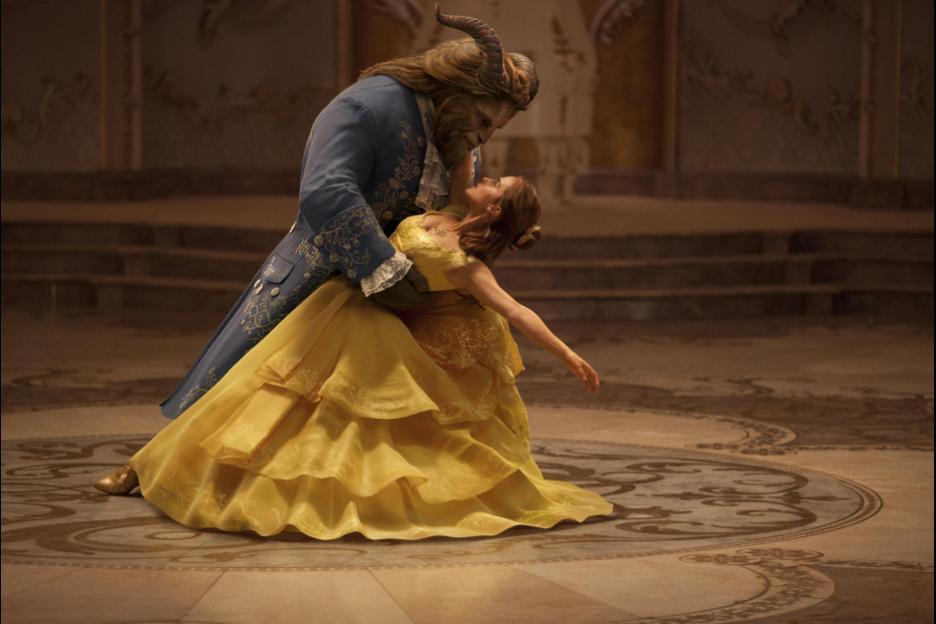
Emma Watson and Dan Stevens in Beauty and the Beast (2017)

To be perfectly blunt, folks, I have the feeling that this film’s placement at the top spot on this list is going to garner some controversy given its usual reception. Let me put it this way; when it first came out, it did relatively well with critics. It currently boasts a 71% rating on Rotten Tomatoes, which is a decently solid score for a film to have on that site, and it also grossed over $1 billion worldwide, effectively making it the second-highest-grossing film of 2017 behind only Star Wars: The Last Jedi. In other words, it was, at the very least, clearly a big hit with audiences. However, I think it’s safe to say that this was the film that fully intensified the utter contempt that the ‘Disney remake’ critics have towards this trend, especially due to the legendary reputation of the film that this remake was adapted from. Before 2017, all the live-action Disney remakes were based on older animated films such as Alice in Wonderland and Cinderella. As such, one could argue that the overall expectations for them weren’t as intense given how long it has been since their releases. Beauty and the Beast, on the other hand, was the most recent Disney animated feature to get the live-action treatment at that point and it also happens to be one of the studio’s most beloved outings. It is, after all, the first animated film that was ever nominated for Best Picture at the Oscars, a distinction that only two other films have achieved since then. As such, this remake clearly faced stricter expectations because of how much the original has meant to my generation, and the same can also be said for the remakes of Aladdin and The Lion King that would come out later and would end up garnering far more polarizing reactions from critics. Thus, despite what I just said about the film maintaining a solid rating on Rotten Tomatoes, I wouldn’t be surprised if many of those who gave it a ‘Fresh’ review aren’t as positive about it nowadays. And yet, I’m not afraid to admit that I still love this film.

Yes, this is yet another instance of a remake that doesn’t make a lot of changes to the original’s story, but overall, I was genuinely fine with the updates that they did make. This includes, among other things, Belle being an inventor just like her father (played excellently by Kevin Kline in a uniquely more subdued take on ‘crazy old Maurice’) and her discovery as to why he has been overly protective of her all these years after her mom died from the Plague. I also loved all the new songs that were made for this remake, especially the Beast’s new solo, ‘Evermore’. And while I’m well aware that much of the criticisms towards this film have been directed towards Emma Watson in the lead role of Belle, namely due to her singing, I still think that she does a fantastic job in the role if we’re talking about all the other things that have made Belle one of the most popular Disney princesses. She’s then backed by a phenomenal supporting cast that includes Dan Stevens as the Beast, Luke Evans and Josh Gad as the scene-stealing duo of Gaston and LeFou (so much so that they’re going to get their own Disney+ series) and the likes of Ewan McGregor, Emma Thompson, and Ian McKellen as the Beast’s servants. In short, I will fully admit that there’s probably quite a bit of bias behind my decision to place this film at the #1 spot on this list. I saw it twice in theaters, with the first time being in IMAX at the film’s ‘Fan Event’ screening on my birthday. I also bought the soundtrack on iTunes not long afterward and loved the film so much that my mom asked one of her co-workers to pick it up on Blu-Ray and ship it to us so we could get the special Best Buy Steelbook*. In other words, I know that I’m probably in the minority when it comes to liking this film, which has certainly faced tons of scrutiny over the ‘necessity’ of its existence and has often been negatively compared to its animated counterpart. And yet, as this entire list has hopefully established by now, I don’t really care about any of that stuff, even if this is another case like The Lion King since the original Beauty and the Beast is one of my Top 5 favorite Disney films. Ultimately, though, that doesn’t prevent the live-action Beauty and the Beast from legitimately being one of my favorite films of the 2010s.

*(By the time that I was fully intent on getting the Steelbook, it wasn’t available at any of the Best Buy stores that were near our home in Rhode Island, hence why we needed to have my mom’s co-worker pick it up for us in Wisconsin where he’s from. As our way of saying thanks, we then proceeded to get him his own Steelbook copy of the film. In other words, as a friendly piece of advice for all you Blu-Ray enthusiasts out there, if you’re ever interested in getting a film’s Steelbook release, be sure to pre-order it in advance because it could very well go out of stock as soon as it hits the shelves, especially if it’s for a highly popular film like one of the MCU films or, say, a billion-dollar grossing remake of a Disney classic…)

And that concludes my rankings list of all the major live-action Disney remakes that have been released since 2010. Thanks for following along and be sure to be on the lookout for my review of the next big live-action Disney remake, Mulan, not too long after the film makes its Disney+ debut on September 4th.

Tuesday, March 14, 2017

In Defense of Disney's Live-Action Remakes

(Disclaimer: As some of you will recognize, this is not the first time that this specific post has been published. A few weeks ago, I submitted a different form of this post to the animation website Rotoscopers. I knew that it would spark some controversy there due to those who aren’t big on Disney’s remake run, but I wanted to point out some positives about the company’s current live-action film strategy and try to reason that it’s not the worst thing in the world. I would like to thank the team at Rotoscopers for publishing my post and will be dedicating this new version of it to them. I will also be providing a link to the Rotoscopers post for you folks to check out if you haven’t already. The major difference between the two versions of this post is simple; with Rotoscopers, I had to keep it to a specific word limit. Here, expect a much longer post that’s much more in line with the usual content that I post here.)

2017-beauty-and-beast

This weekend sees the release of one of the year’s most highly anticipated films; Disney’s Beauty and the Beast. The film is a live-action adaptation of the studio’s beloved animated masterpiece of the same name from 1991 and is the latest in a growing line of new adaptations of classic Disney stories. For you see, Disney’s current live-action film slate is primarily based around one thing; live-action remakes/re-imaginings of their animated classics. This trend first got started in 2010 with Tim Burton’s Alice in Wonderland, a pseudo-follow-up to the studio’s animated take on the Lewis Carroll story of the same name from 1951. While the film received mixed reviews from both critics and audiences, it was a smash hit at the box office, as it managed to gross over $1 billion worldwide. Four years later, that commercial success continued with Maleficent, a ‘re-imagining’ of Disney’s 1959 effort, Sleeping Beauty. It was the same situation; the film attracted a polarizing reception but was a major box-office hit. One year later, Disney then released a remake of Cinderella but unlike the previous two films, this one not only did well at the box office but it was also the first to be generally well-received by critics. Because of this, Disney then proceeded to announce a wide slew of remakes/re-imaginings over the next few months for films like Mulan, Winnie the Pooh, Dumbo, and so on and so forth. It’s honestly gotten to the point where almost every single Disney animated classic has a remake that has either come out, is slated to come out, or is currently in the works.

But, as some of you might have guessed, this slew of ‘remake announcements’ hasn’t gone over entirely well with everybody. Namely, there are quite a few people on the internet who are not a fan of Disney’s current live-action film strategy for various reasons, including the obvious argument of ‘why remake a classic’ and the fact that these remakes are now the primary projects on the studio’s schedule instead of original films. In fact, some of my good friends in the blogger community are in this exact crowd. As for me, though, I’m eagerly looking forward to a lot of these new remakes because of the great potential that they have. Now, for the record, I’m well-aware of an old quote from Walt Disney himself in which he remarked that ‘you can’t top pigs with pigs’, which basically asserted his own theory on the idea of sequels after he produced several sequels to the studio’s 1933 classic short, Three Little Pigs, that weren’t as successful as the original. But that was a different time; nowadays, nothing is ‘truly original’ anymore, meaning that stuff like this is bound to happen. Now, let me be clear, I love seeing an original film as much as the next person. Heck, my #8 favorite film from last year was Swiss Army Man. However, I’m not one of those people who outright condemns sequels, reboots, and remakes just because they exist. Thus, today on Rhode Island Movie Corner, I’ll be listing three reasons as to why I’m enthusiastic towards the upcoming line of Disney’s ‘live-action remakes’. Again, let me be clear; I understand where those who are against the remakes are coming from but, please, hear me out on this for a moment.

REASON #1: MANY OF THE RECENT REMAKES HAVE BEEN GOOD

Image result for Jungle Book 2016

Now, of course, this is an argument that can be quite subjective, just like film itself, hence why I decided to start this post with this argument right out the gate. There is no such thing as a ‘universally beloved’ film; every film has its critic and the recent Disney remakes are no exception to this. However, some of the most recent remakes in this lineup have genuinely been a success with BOTH critics and audiences. And again, as I noted earlier, this wasn’t initially the case. Both Alice in Wonderland and Maleficent were polarizing, to say the least, and believe me when I say that I have come across opinions on both sides of the spectrum. I have seen plenty of people who have expressed absolute contempt for these remakes. But, at the same time, I’ve also come across quite a few people that absolutely love these films. Therefore, it makes a lot more sense to me now why Alice in Wonderland managed to gross over a billion back in 2010; there were some people out there who did really like it. Same situation with Maleficent, which overcame its mixed reception to gross over $750 million worldwide and end up as the 4th highest-grossing film of 2014. So, in short, while the films may not have done well with critics, they were doing well with audiences and, if you ask me, that usually matters more; knowing that audiences were enjoying it. Clearly, most audiences aren’t bothered by these remakes coming out and, if you ask me, why rain on their parade?   

But then when Cinderella came out, things were a little different as the critical reception was far more positive compared to Alice and Maleficent. Maintaining a solid 83% on Rotten Tomatoes and with over $500 million worldwide, it was very much the first in this line of Disney remakes that was a true bona fide success from a critical standpoint and not just a commercial one. Again, it did have its critics (believe me, I’ve gotten some flak from some people online for liking this film) but it ultimately proved that, if anything, these remakes could be fantastic. And then, in 2016, audiences were treated to not one but two highly successful adaptations of classic Disney films (note: before any of you bring up the critically-bashed sequel to Alice in Wonderland, Alice Through the Looking Glass, that doesn’t really count in this instance because it’s primarily a sequel). Director Jon Favreau’s adaptation of The Jungle Book was one of the best-reviewed films of 2016 and it grossed nearly $1 billion worldwide. And then, near the tail-end of the summer, there was Pete’s Dragon. It didn’t reach the same commercial heights of the other remakes, which is understandable considering that it’s based on a Disney film that isn’t as well-known compared to something like The Jungle Book, but it too was well-received by most critics and it did manage to break even with around $140 million worldwide on a modest $65 million budget. Now, let me be clear, I’m not saying that all the upcoming Disney remakes are going to be successful with both critics and audiences. There probably will be some critical duds here and there. However, no matter how well or how bad these upcoming remakes fare with critics, the previous three Disney remakes will stand as genuine success stories and proof that not only can they be done, but done well.

REASON #2: THERE IS POTENTIAL FOR NEW TAKES ON THESE STORIES

Image result for Pete's Dragon 2016

To me, the best thing that a ‘remake’ can do is offer a new take on a classic story. And that’s one of the key reasons as to why I am genuinely looking forward to most of these Disney remakes. While some will no doubt share many similarities with their animated predecessors, it’s not like they’re going to be ‘note-for-note’ copies or anything. The only real instance in which I’ve seen this happen is director Gus Van Sant’s 1998 remake of Psycho and the critical bashing that film got is a good reason, I’d say, as to why you don’t see a lot of ‘note-for-note’ remakes. Alice in Wonderland, for example, was a ‘continuation’ of the original story while Maleficent was the story of Sleeping Beauty told from the perspective of the titular villain, Maleficent. Say what you will about the films themselves but the decision to tell these stories from a different angle was, at the very least, ‘something different’. The other big Disney remake of this nature, which ultimately ended up being the most different from its predecessor, was Pete’s Dragon. Instead of being a musical like the original 1977 film was, the new adaptation was more of a drama. And while this may have ticked off some fans of the original, to the point where some even referred to the new film as ‘Pete’s Dragon in name only’, again, it was ‘something different’. Jon Favreau took a similar approach with The Jungle Book. While there were some elements of the original animated film that were featured in the new version (e.g. its most popular songs), Favreau also utilized elements from Rudyard Kipling’s original story to create something along the lines of a hybrid between the film’s two primary source materials.

Now, admittedly, the 2015 remake of Cinderella was basically just the same general story as its predecessor; a young girl is subjected to relentless cruelty from her wicked stepmother and stepsisters but her life then changes once she meets a charming prince. So, of course, some of you may ask “Well, why the heck did they remake it, then?” But, you see, they did throw in a few new things here and there to differentiate itself from the original, like having scenes with young Ella and her parents (whereas in the original, these scenes were just part of the opening narration, sans her mother) and additional scenes between her and the Prince prior to the Ball instead of just having them first meet at said Ball. Stuff like this, especially the latter, did help the film expand upon the story of the original which, as great as it is, is admittedly a product of its time. And, overall, it’s clear that a similar method is going on with the new Beauty and the Beast. While still the same story of a young woman who slowly falls in love with the monstrous-looking prince of an enchanted castle, there are a few changes that have been made here and there to make it its own thing; most notably, Belle is now an inventor just like her father. Now, for the record, I’m not saying that these changes are going to automatically improve upon the original, nor am I expecting the new film to be ‘better’ than the original. Instead, I view it in the same way that I do the other Disney remakes; as a nice complement to the original that can stand on its own merit alongside the original. On that note…

REASON #3: NOTHING. IS. GETTING. REPLACED!

Image result for beauty and the beast old new

This is the one point that I feel should be stressed ad nauseam… because, clearly, this is the one thing that those who are against the Disney remakes fear the most when it comes to them. They fear that these remakes are the studio’s way of ‘erasing’ the original animated films from existence, implying that animation is inferior to live-action/CG. Trust me when I say that this is not the case whatsoever. This isn’t like the original Star Wars trilogy, where George Lucas has continually made changes to the films without ever giving us any chance of viewing them in their original format. No matter what happens with these remakes, the originals will still be there at the end of the day. Case in point, the original Beauty and the Beast was just given a fancy new 25th-anniversary Blu-Ray right in time for the release of the new film. They also released the original Jungle Book on Blu-Ray a few years ago; sure, it may have been two whole years before Jon Favreau’s live-action version and it’s since gone back into the Disney Vault but, again, it shows that Disney still cares about the original versions. Yes, there have been a few behind-the-scenes videos in which those working on the new BATB (namely, director Bill Condon) say stuff along the lines of ‘technology allows us to do things we couldn’t do in 1991’ but that’s just the marketing material talking. Not once have they ever said ‘we’re trying to replace the original film’. In fact, most of those who’ve worked on these Disney remakes have made it clear in interviews that they adore the original films and were doing their best to try and live up to their reputation.   

And at the end of the day, if any of these upcoming remakes don’t turn out so good, so what? It’s not like they’re ‘metaphorical murder’ or anything (note: that phrase ‘metaphorical murder’ was an actual comment made by a critic of the Disney remakes). The reputation of their original sources won’t be tarnished by them; heck, if anything, they’d just end up making the originals even better by comparison. This is a mentality that’s been around for pretty much every other remake, reboot, and so on and so forth that’s come out in the past few years, not just the ones from Disney. Whenever one’s announced, the internet reacts to it like it caused the plague or something. But, really, that’s all that it is; a mentality, not a reality. Sure, some remakes are more questionable than others but it’s not like there’s some law out there that states that a certain film can’t be remade. The worst possible outcome would be that it’s just a lame remake, nothing else. Heck, this backlash towards the Disney remakes is honestly not too far off from what happened with the new Ghostbusters film. As we all know by now, when that film was first announced, it was absolutely savaged by the internet, particularly from angry fanboys who just couldn’t handle the fact that their favorite franchise was being brought back (and don’t get me started about when they found out that women were starring in it). But, it came out, and it did ok with critics. More important, though, is the fact that all copies of the original Ghostbusters films did not spontaneously combust into flames as was feared. And guess what? Neither did any of the Disney animated films when their live-action remakes were released.


In fact, some of the most beloved films of all time just so happen to be remakes. John Carpenter’s The Thing? Remake. The Departed? It’s a remake of a Hong Kong film from 2002 named Infernal Affairs. And the classic Wizard of Oz that we all know and love from 1939? That was the 11th film adaptation of L. Frank Baum’s books (and it sure as hell wasn’t the last either)! Bottom line, just because Disney’s releasing a bunch of remakes doesn’t mean that they consider animation to be inferior. In fact, I think it’s safe to say that films like Frozen, Zootopia, and Moana are more than enough proof that animation is still Disney’s primary source of film output. Now, I’ll admit that I do think that Disney probably should’ve been a bit more conservative when it came to announcing all these remakes. It probably would’ve been better if they had announced like one or two a year instead of, you know, a new one every other week. Still, I think it’s exciting that we’re getting new takes on the classic stories of our childhoods that will help introduce them to a new generation. Just remember that the original films still exist, okay guys? Because if there’s any real sign of these films being overshadowed by their new live-action counterparts, it’s more the internet’s fault and not Disney’s (Remember when all those videos bashing The Jungle Book came out before the remake's release? Well the same thing just happened again with Beauty and the Beast.). And to those who aren’t big on these upcoming remakes, that’s fine; no one’s forcing you to watch them. Just let those who are excited for them have their fun, okay?

Wednesday, October 5, 2016

Disney Retrospective: The 50's


Welcome back to Rhode Island Movie Corner’s ongoing series of Disney Retrospectives, in which I look back upon the many, many animated films that have been produced by Walt Disney Animation Studios. And today, we’ve actually come to the final part of this series as we’ll be covering the final collection of Disney animated films that I’ve yet to address; the Disney films that came out during the 50’s. Last time around I covered Disney’s first 11 features, which of course started with 1937’s Snow White and the Seven Dwarfs and was then followed by the likes of Pinocchio, Fantasia, and Bambi. But then came World War II, which resulted in not only some of the studio’s staff members being drafted but also certain overseas markets being cut off. As a result, most of the Disney animated features during the 40’s were low-budget ‘package films’, a series of animated shorts that were not usually connected narratively. This included projects like Saludos Amigos, Fun and Fancy Free, and The Adventures of Ichabod and Mr. Toad just to name a few. It wouldn’t be until the 50’s when the studio returned to doing full-length feature films. And I must say, out of all of the decades that make up Disney Animation’s long history, the 50’s might arguably be the studio’s most iconic period. Obviously nowadays the decade that most Disney fans are probably familiar with is the 90’s AKA ‘the Disney Renaissance’. But as far as the 50’s is concerned, while there were only five films that were released during this time, pretty much all of them are considered to be some of the studio’s most classic films. So with that said, it’s time to look back upon the decade where the young woman put on the glass slipper, the girl fell down the rabbit hole, and the boy who never grew up explored the world of Never Land. These are the Disney Animated films of the 50’s.

CINDERELLA (1950)

Image result for Cinderella 1950 poster

You might recall that I was a really, really big fan of Kenneth Branagh’s live-action reimagining of this film that was released last year. One of the reasons why I was really looking forward to it was because Disney’s original take on the story of Cinderella was actually one of my favorite Disney films growing up. And even though nowadays I sort of lean towards the live-action version for its improvements over the original film, namely a more developed relationship between Cinderella and Prince Charming, that doesn’t mean that I don’t still appreciate the great things that came from this Disney classic. It’s got some really nice animation, especially in regards to the creation of grand and gigantic rooms. It’s got a great collection of songs from Cinderella’s sweet melody ‘A Dream is a Wish Your Heart Makes’ to the Fairy Godmother’s bubbly tune ‘Bibbidi Bobbidi Boo’. As noted before, Cinderella is generally viewed as one of the more passive Disney princesses, with some claiming that she does nothing the whole film and then gets rescued by Prince Charming at the end of it. But as I’ve also noted before, I believe that there’s more to her character than that. She deserves a lot of credit for managing to endure all of the crap that her stepmother and stepsisters put her through while still maintaining an optimistic outlook on life. That is why she’s one of the best Disney princesses in my opinion. And of course this film has plenty of great side characters as well from the aforementioned Fairy Godmother to Cinderella’s wicked stepmother Lady Tremaine to Cinderella’s friendly mouse friends, especially Jaq and Gus. So in short, I guess you can say that this is one of my all-time favorite Disney films; one that now has an excellent live-action version to serve as a companion piece, not as a replacement!

Rating: 5/5!

ALICE IN WONDERLAND (1951)

Image result for alice in wonderland 1951 poster

Also commonly known as the film that many love to joke about in regards to them claiming that Walt and his team were totally on drugs when they made it, Alice in Wonderland is exactly what you’d expect from a film adaptation of Lewis Carroll’s classic story of a young girl’s adventures in the wacky world of Wonderland. It’s a world that is full of crazy characters in nonsensical situations and as a result, this film boasts some of the studio’s absolute best animation. Simply put, the animators perfectly captured the surreal imagery of the story as the animation is the perfect combination of vibrant colors and zany visuals. As for the plot, while I’ve never read Carroll’s original book, it seems as if the film follows the same general non-linear plot of the book in that it’s mostly just Alice getting into various situations and meeting a wide variety of goofy characters. Speaking of characters, Alice herself is a likable lead, voiced excellently by Kathryn Beaumont who would go on to voice another main character in the next Disney film. And of course the film also has plenty of memorable side characters, from the mischievous, always-grinning Cheshire Cat to the foul-tempered Queen of Hearts, who always orders “Off with their Heads!” whenever someone gets on her bad side. Alice in Wonderland is generally considered to be one of Disney’s finest animated classics and I can totally see why. All in all, it’s a very charming and light-hearted adventure through the strange world of Wonderland complete with a fun cast of characters and the studio’s usual excellent animation.

Rating: 4/5

PETER PAN (1953)

Image result for peter pan 1953 poster

In 1953, Walt Disney Animation brought J.M. Barrie’s iconic play/novel Peter Pan to life in what is generally considered to be the most famous adaptation to date of ‘the boy who would never grow up’. This was the final Disney animated film that was primarily supervised by Disney’s original core team of animators AKA ‘The Nine Old Men’. It was also notably the last film that Disney released as part of their distribution deal with RKO Pictures. Since then, the studio has released all of their films under their own distributor, Buena Vista. In that regard, this is certainly a great one to end on when it comes to the Disney/RKO partnership. That’s because Peter Pan is easily one of Disney’s best films. It really does have it all. All of the main characters are great, from Peter Pan to Wendy (voiced by Kathryn Beaumont in her second major Disney Animation film role) to Tinker Bell and so on and so forth. The villains are absolutely terrific. The notorious Captain Hook and his main lackey Mr. Smee are two of Disney’s most hilarious villains. They work off each other so well as the two bumbling buffoons that they are. Just look at the scenes in which Hook tries to avoid being eaten by a hungry crocodile. The soundtrack is excellent as well. The main theme ‘You Can Fly’ is simply iconic but ‘Following the Leader’ is a pretty darn fun song as well. Sure, in hindsight the film gets a lot of flak nowadays for its arguably fairly racist/stereotypical portrayal of Never Land’s Indians and it’s completely understandable if some people are offended by this. But aside from that, it’s pretty easy to see why Peter Pan is commonly regarded as one of the most famous films in the Disney canon. It’s just a really fun adventure that is guaranteed to capture the imaginations of young and old.

Rating: 5/5!

LADY AND THE TRAMP (1955)

Image result for lady and the tramp 1955 poster

Sandwiched in between two of the most famous Disney animated films of all-time is 1955’s Lady and the Tramp, which is actually based off of a story titled Happy Dan, The Whistling Dog that was written by Ward Greene and published in Cosmopolitan magazine. The film focuses on the romance that develops between Lady, the beloved cocker spaniel of an upper-class family, and Tramp, a stray mutt. The romance that forms between the two of them is pretty nice, highlighted by the iconic ‘Bella Notte’ sequence in which they share a romantic candlelit spaghetti dinner while being serenaded by the owner of the Italian restaurant that provided them the food. Simply put, this is one of the most iconic ‘love story’ moments in the history of film. But the rest of the film is quite solid as well. One of the most interesting elements of the story is the fact that the majority of the film is seen from the perspective of the dogs. Lady refers to her owners as ‘Jim Dear’ and ‘Darling’ because that’s what they frequently call each other from her point of view. And when they have a baby, Lady doesn’t initially realize it at first when she finds that they start to become rather distant and we also see how the baby’s arrival ultimately affects her relationship with her owners. Granted, I wouldn’t really call this one of Disney’s absolute ‘best’ films. The story is rather simple and it is sort of like Alice in Wonderland in that it’s mostly just a random collection of moments involving the main characters. Still, with a likable lead duo, a solidly developed romance, and the usual nice Disney animation, Lady and the Tramp is still a pretty darn classic entry in the Disney canon.

Rating: 4/5

SLEEPING BEAUTY (1959)

Image result for sleeping beauty 1959 poster

From an artistic perspective, Sleeping Beauty is definitely one of the most beautifully animated films that Disney has ever made. It was the second film that they’d ever shot in widescreen, after Lady and the Tramp, and the results really are fantastic. The grand landscapes that come from the format are excellent and have an excellent painting-like quality to them. The film also has some excellent music, which was adopted from Tchaikovsky’s 1890 ballet of the same name. ‘Once Upon a Dream’ is definitely a classic Disney love song. But when it comes to the writing, admittedly it’s rather flawed in some parts, namely the main characters. Princess Aurora is unfortunately one of the weaker Disney princesses, though that’s mostly just due to the fact that she spends a good chunk of the film asleep. Her prince, Phillip, is also a bit underwritten at times; in fact, once he goes off to rescue Aurora he never says anything for the remainder of the film. But despite a rather underdeveloped pair of leads, the film does have a great cast of side characters. The three fairies, Flora, Fauna, and Merryweather are an excellent trio who work off each other well when it comes to the three of them trying to raise Aurora in secret without the help of their magic. And of course, there’s the main villain, Maleficent. Sure her motivations are rather weak, as she does what she does only because she wasn’t invited to the party celebrating the birth of Aurora, but her elegance and magical abilities easily make her one of Disney’s greatest villains. In short, Sleeping Beauty may not be perfect but it’s still a very enjoyable entry in the Disney canon. While it doesn’t really do much for its two main protagonists, the main villain, side characters, music, and animation do make up for that for the most part. Ultimately, though, Sleeping Beauty was actually an underperformer at the box office upon initial release, effectively resulting in Disney moving away from adapting fairy tales until The Little Mermaid three whole decades later.

Rating: 4/5


And with that, Rhode Island Movie Corner’s ‘Disney Retrospective’ series officially comes to a close. As always, be sure to sound off in the comments below in regards to your own thoughts on the films discussed here today and be sure to also check out the previous Disney Retrospectives that I’ve done in the links below. However, this is not the end of my discussion of Disney Animation for now. You may have noticed in a few of the previous ‘Disney Retrospectives’ that I mentioned that I have something BIG planned for next month. Well, since we’ve reached the end of these Retrospectives, I figured that it’s time to finally reveal my big plan… so be sure to check back tomorrow for the big announcement of what is coming to Rhode Island Movie Corner this November.


Wednesday, September 28, 2016

Directorial Retrospective: Tim Burton

Image result for Tim Burton

It’s time once again, folks, for another Directorial Retrospective here on Rhode Island Movie Corner. We’ve covered an eclectic bunch of filmmakers over the course of this ongoing series. Since it was started in March 2014, we’ve looked back upon the filmographies of filmmakers like DC’s current top director Zack Snyder, the master of ‘Bayhem’ himself Michael Bay, David Fincher, the man behind dark thrillers like Se7en and Zodiac, Christopher Nolan, the man who revived the Batman franchise with his Dark Knight trilogy, and master of snappy dialogue Quentin Tarantino. And today’s subject is yet another highly notable filmmaker; the master of quirky macabre himself, Tim Burton. His newest film, an adaptation of Ransom Riggs’ Miss Peregrine’s Home for Peculiar Children, hits theaters this weekend so I thought it’d be the perfect time to look back upon the filmography of the director who is well known for his uniquely dark and gothic style… and for repeatedly casting Johnny Depp in his films. He’s had quite a long career, having been directing feature films since 1985. And he has also worked in the film industry long before that, including a brief stint as an animator for Disney. Since then, he’s done quite a lot of different films, from superhero flicks to stop-motion animated films to even a few biopics. And while critical reception towards his films has tended to stray a bit more negative with his more recent efforts, there’s no denying that Burton’s trademark visual style will always be something to look forward to with each new film that he does, hence why he’s one of my favorite directors. So with that said, it’s time to look back upon the filmography of Tim Burton… and for the record, this will only count films that he himself directed. So even though it’s a major part of Burton’s filmography to the point where some might actually confuse it as being directed by him, I will not be covering The Nightmare Before Christmas in today’s post.

PEE-WEE’S BIG ADVENTURE (1985)

Image result for pee wee big adventure poster

After spending a few years as an animator for Disney, working on films like The Fox and the Hound and even Tron, Tim Burton was hired by comedian Paul Reubens to direct the first feature-length film starring the latter’s highly popular stage character; Pee-Wee Herman. The end result was Pee-Wee’s Big Adventure, an extremely charming family film that very much set the stage for what we would come to expect from the master of macabre on an annual basis. The film is full of Burton’s trademark surreal and kooky imagery (e.g. the production design), which sometimes results in some really freaky scenes, namely the scene in which Pee-Wee gets a ride from a truck driver named Large Marge (who is later revealed to be a ‘ghost’) and she pulls one hell of a scary Claymation face at him. But at its core, this film very much wears its heart on its sleeve. Paul Reubens of course is excellent as Pee-Wee, the innocent man-child embarking on the journey of a lifetime to retrieve his most valuable possession; his bike. And that journey is a very fun one to go on as it is full of memorable characters and moments, from the scene in which Pee-Wee dances to the song ‘Tequila’ in order to appease a bunch of bikers to the scene where, while suffering from a temporary case of amnesia, he notes that ‘he remembers the Alamo’. It all culminates in a fun chase involving Pee-Wee and security guards through the Warner Bros. studio lot. With this film, Burton manages to capture a perfect slice of Americana and as a result, Pee-Wee’s Big Adventure definitely stands out as one of his most entertaining directorial efforts. It’s interesting to note that when Reubens first developed the character, originally his style of humor was a bit more adult. That changed with this film and the subsequent TV series Pee-Wee’s Playhouse and as a result, Pee-Wee very much became a cultural icon for both young and old. That was very much clear to me when I saw how positive the crowd was at a screening for the very enjoyable follow-up, Pee-Wee’s Big Holiday, at SXSW this past March. People love Pee-Wee Herman and this film is a prime example why.

Rating: 4/5

BEETLEJUICE (1988)

Image result for beetlejuice poster

Following his work on Pee-Wee, Burton then took on an original project in the form of Beetlejuice. The film centers around a couple from Connecticut, Adam and Barbara Maitland, who unexpectedly pass away after a car accident. Somehow still connected to the human world, they are then forced to deal with the unwelcome arrival of a new family, the Deetz family, that moves into their house. Looking to get rid of them, they consider getting help from the titular supernatural ‘exorcist’ Betelgeuse (note: that’s how his name is spelled in the film) played by Michael Keaton. But as it turns out, Betelgeuse proves to be quite a handful. This film is an absolute visual delight, which of course is something that you can always expect from a Burton film. Not only that but this is a PG-rated horror film (back when filmmakers were able to get away with that) that greatly appeals to both young and old, especially thanks to Michael Keaton’s excellent turn in the title role. Sure he may not actually be in the film as much as you think (he’s only in it for less than 20 minutes) but he’s an absolute comedic riot from beginning to end. It very much showcased the versatility of Keaton’s acting chops, which should’ve been enough proof that he was more than capable of taking on the lead role in Burton’s next film (more on that in a sec). But the rest of the cast is really solid as well; Geena Davis, Alec Baldwin, Jeffrey Jones, Catherine O’Hara, and Winona Ryder in one of her earliest roles. In short, with an excellent visual style and a scene-stealing performance from Michael Keaton in the title role, Beetlejuice is definitely a classic in Tim Burton’s directorial career. What more can be said but… “Day-o, day-o, Daylight come and me wan’ go home”

Rating: 5/5!

BATMAN (1989)

Image result for batman 1989 poster

Having talked about this film before in my retrospective onthe Batman franchise back in May 2014, I’ll keep things rather brief this time around in detailing Tim Burton’s 1989 adaptation of the popular DC Comics character of the same name. This film is very much one of the pioneering entries of the superhero genre, namely in regards to it establishing a much more serious tone than the more light-hearted and sometimes very campy superhero film/TV projects of years past, especially those that involved Batman. As for the film itself, it’s admittedly become rather dated in certain parts, namely from the odd choice of having a soundtrack full of Prince songs. However, it still holds up in quite a few other places, namely in regards to its lead performances. Michael Keaton, despite being the original archetype of a controversial superhero film casting choice, proved to be an excellent Batman thanks to his ability to be totally unassuming while as Batman’s true identity, billionaire Bruce Wayne. But the real star of the show is Jack Nicholson as the Joker. Nicholson very much steals the show as the eccentric villain but the film does do a solid job of balancing out the roles of Batman and the Joker in the story (at least when compared to the other Burton Batman film… more on that in a bit). I also like how this film does connect the two characters by showing that both were responsible for making them who they are today; the Joker, back when he was known as ‘Jack Napier’, is revealed to be the mugger who killed Bruce’s parents while Batman is the one who knocks Napier into a vat of chemicals, which turns him into the Joker. Sure the part about the Joker killing the Waynes obviously isn’t ‘comic-accurate’ but in the case of the 80’s era Batman films, I think it’s a decent plot twist. In short, despite the parts of it that haven’t aged very well, Burton’s Batman is still a pretty solid entry in the superhero genre and will always be one of the most important as it helped kick-start a new generation of films for the genre while reaffirming Batman’s status as one of the genre’s most popular characters.

Rating: 4.5/5

EDWARD SCISSORHANDS (1990)

Image result for edward scissorhands poster

Edward Scissorhands is easily one of Tim Burton’s most personal films. Keeping in line with Burton’s tendency to focus on outcasts (e.g. Pee-Wee, Batman, etc.), the film tells the story of the titular Edward, an artificial man whose inventor died before he was finished, resulting in him having scissor-like tools for hands. Found alone in the inventor’s abandoned mansion by the local Avon saleswoman, Edward soon finds himself being introduced to suburban life. What follows is quite simply one of Burton’s absolute best films. Of course visually the film is excellent, from Burton’s typical ‘dark’ visuals to the intentionally cheesy pastel colors that are used for the houses in the suburb. But at its core, the film also very much wears its heart on its sleeve by allowing us, the audience, to fully sympathize with Edward. This was the first collaboration between Tim Burton and Johnny Depp and the latter delivers one of the best performances of his career as the titular character. He’s very much an endearing character and it’s fun to watch him interact with the real world. Obviously though, his ‘scissor hands’ prove to be a problem at times, sometimes leading to unfortunate situations. And I won’t lie… the ending to this film is quite the emotional one as Edward accepts his fate as an outsider and shares one final moment with the girl he fell in love with, Kim, played by Winona Ryder who also does a fantastic job here as well. In short, Edward Scissorhands is a very touching and beautiful tale of, to quote the film’s theatrical poster, ‘an uncommonly gentle man’. This is arguably Tim Burton’s masterpiece.

Rating: 5/5!

BATMAN RETURNS (1992)

Image result for batman return poster

This might be a rather controversial opinion but unfortunately I don’t think that Burton’s second Batman film, 1992’s Batman Returns, holds up very well after all of these years. This was very much a case in which Burton was given perhaps way too much creative control over the project because while the film once again carries his trademark style, it goes a bit overboard this time around. It legitimately gets to the point where it actually proved to be rather controversial amongst parents, to the point where McDonald’s canceled their Happy Meal toy-line for the film, who didn’t want their kids to see it due to more intense scenes of violence and even a few sexual innuendos. And yeah, all of the sexual references do feel quite out of place. Seriously the whole scene in which Catwoman and the Penguin meet for the first time is pretty much nothing but sex talk (Penguin: “Just the pussy I’ve been looking for”). But another issue with the film is that it actually restricts the role of Batman in the story despite the fact that, you know, he’s supposed to be the main character of the damn film. Clearly Tim Burton wasn’t that big a fan of the character because in both films, the villains technically get more screen-time than the Dark Knight himself. It may have worked fine in the previous film as a result of the solid balance between Michael Keaton and Jack Nicholson and their overall roles in the plot but here Keaton really doesn’t get much to do this time around. Instead, the focus shifts more towards Danny DeVito’s Penguin and Michelle Pfeiffer’s Catwoman, who are admittedly rather ‘meh’ villains at best.

DeVito’s take on the Penguin very much contrasts with the typical portrayal of the character in the comics. Instead of being a classy mobster and a ‘gentleman of crime’, this film envisions the character as a deformed/creepy ‘sideshow freak’ who plots to kidnap/drown all of Gotham’s first born sons. And while the film does try to make the audience feel sorry for him at times due to his tragic backstory as an orphan and scenes in which he is ridiculed, his generally detestable nature and, you know, the aforementioned ‘killing first born sons’ scheme basically negates any of the film’s attempts at doing just that. At the very least, DeVito is still pretty memorable in the role. As for Pfeiffer as Catwoman, her overall role in the plot lacks focus at times but she is very much one of the film’s biggest standouts as the iconic ‘cat burglar’. Christopher Walken also proves to be quite memorable as the other ‘villain’ of the film, businessman Max Schreck. But as I stated earlier, an overt focus on the villains, not enough Batman, and an overuse of Burton’s visual style results in a film that’s way too dark and actually rather dull for the most part. As far as the pre-Nolan era Batman films are concerned, I actually prefer Joel Schumacher’s first Batman film, 1995’s Batman Forever, over Returns. And I know that seems like blasphemy to some people but A.) at least I didn’t say Batman and Robin, am I right? And B.) as cheesy as Schumacher’s films are compared to Burton’s films, Forever actually focused on Batman even with its dual villains (which actually became the trend for all future Batman films leading up to Batman v Superman). So unfortunately, due to a lack of focus, especially in regards to its titular protagonist, as well as an overly dark style, Batman Returns was a pretty lackluster follow-up to the 1989 Batman.

Rating: 2.5/5

ED WOOD (1994)

Image result for ed wood poster 1994

Serving as Tim Burton’s very first R-rated feature, Ed Wood tells the true story of filmmaker Edward D. Wood Jr., who in the 50’s became known for directing a bunch of films that would become regarded as some of the worst of all-time, namely due to his tendency to shoot fast and on the cheap. Specifically, this film focuses on the productions of three of his most famous films; 1953’s Glen or Glenda, 1955’s Bride of the Monster, and 1959’s Plan 9 from Outer Space. However, despite the poor reception that his films have garnered over the years, this film actually doesn’t try to demonize him. Instead, it celebrates him not by the merit of his work but through his passion for the art. No matter what the struggle, whether it was his producers constantly giving him notes or him not having enough money for filming, he mustered on because he loved doing what he was doing. As a result, up-and-coming filmmakers will no doubt connect with this film and more importantly the dreams of its main character and the idea that one’s visions are worth fighting for, the latter of which is told to Wood by none other than Orson Welles (played by Vincent D’Onofrio but voiced by Maurice LaMarche in a memorable cameo). But the film itself is also a highly entertaining biopic that’s very well-shot with its great use of black-and-white and its great attention to detail in regards to recreating the low-budget stylings of Wood’s films. Johnny Depp absolutely shines in the role of Ed Wood while Martin Landau absolutely transforms into horror icon Bela Lugosi in his Oscar-winning turn. Ed Wood is a film that both celebrates and makes fun of its title character. It recognizes that his films weren’t really of the best quality but it celebrates him for his unabashed passion. The end result is definitely another one of Burton’s best… and also one of his most underrated because it didn’t do so well commercially. Regardless, film fans will no doubt love this clearly unconventional love letter to the art of filmmaking.

Rating: 5/5!

MARS ATTACKS! (1996)

Image result for mars attacks poster

Based on the ‘infamous’ sci-fi themed trading cards of the same name that were produced in 1962, Mars Attacks!... is a very, very goofy film. That’s the key thing to remember when it comes to this film; it is absolutely ridiculous from beginning to end. With this film, Tim Burton very much made a sci-fi B-movie. From the intentionally cheesy visual effects (that were originally meant to be done via stop-motion animation before being changed to CGI in order to keep costs down) to the massive ensemble cast portraying a group of straight-up stereotypical characters, this is very much paying homage to the sci-fi B-movies of the 50’s. And when I say massive ensemble cast, I mean ‘massive ensemble cast’. You got Jack Nicholson (in two different roles, no less…), Glenn Close, Annette Bening, Pierce Brosnan, Danny DeVito, Sarah Jessica Parker, Martin Short, Michael J. Fox… and that’s seriously just to name a few. Admittedly the film takes a little while to get going as it doesn’t really get into anything alien-related until half an hour in. But once they do officially bring in the aliens and they start blowing s*** up… yeah that’s when the film starts to get really entertaining. Like the other big alien sci-fi flick that was released in 1996, Independence Day, this is very much an unadulterated popcorn flick. It is completely silly and the scenes in which the aliens attack are completely chaotic… and this film is very much self-aware of that. It clearly knows how goofy it is. I mean for crying out loud the way the aliens in this film are killed is via Slim Whitman’s ‘Indian Love Call’. In short, do not go into this film expecting Oscar-worthy material because you obviously aren’t going to get any of that here. It’s pretty darn mindless and completely cheesy from beginning to end… and it’s so damn entertaining. What more can be said but… Ack Ack! Ack Ack!

Rating: 3.5/5

SLEEPY HOLLOW (1999)

Image result for sleepy hollow 1999 poster

Burton’s first major R-rated ‘horror’ film, Sleepy Hollow is a unique spin on the classic short story ‘The Legend of Sleepy Hollow’ by Washington Irving, which was most famously adapted by Disney in 1949. Burton’s version takes it in a much darker direction while also straying in certain ways from the original plot. Namely, this film re-imagines the character of Ichabod Crane as a police constable who investigates into a series of killings in Sleepy Hollow that were supposedly committed by the mythical ‘Headless Horseman’. But ultimately this film isn’t as much of a ‘horror’ film as you might expect. It certainly has some dark moments as well as a solid atmosphere but overall the film actually sort of maintains a rather campy tone. That’s pretty much Burton’s filmography in a nutshell. Even with all of his films’ dark undertones and creepy imagery, they tend to be very light-hearted in tone to the point where some might find the humor in his films to be a bit too silly at times. But in the case of Sleepy Hollow, perhaps that was the point. This could be seen as an ode to the classic horror films produced by Hammer Films, namely from a stylistic perspective, and if you’re able to accept all of the goofy moments in this film, you’ll find it to be a pretty entertaining horror adventure. Depp is solid as Ichabod and is joined by an impressive ensemble cast that includes Christina Ricci, Michael Gambon, and even Christopher Walken, yes Christopher Walken, as the Headless Horseman. So in short, I suggest that you go into this not taking it too seriously and not expecting it to be a straight-up horror film because if you do, you might be rather disappointed.

Rating: 3.5/5

PLANET OF THE APES (2001)

Image result for planet of the apes poster 2001

Just like Burton’s Batman films, I had gone over this film before in a previous post. In this case it was my retrospective on the Planet of the Apes franchise back in 2014 so, again, I’m going to keep things simple on this one. Basically, this was a case in which Burton wasn’t really the best choice to helm a film like this. This remake of the 1968 sci-fi classic Planet of the Apes doesn’t really feel much like a Burton film at all. Seriously if it wasn’t for the fact that Burton is one of those filmmakers who always does opening credits in his films, you’d swear it was directed by someone like Steven Spielberg. This is probably the most ‘Anti-Burton’ esque film of his career and it really shows. It’s also quite dull for the most part and most of the actors’ performances reflect that, namely Mark Wahlberg in the lead role of astronaut Leo Davidson. The only real standout member of the cast is Tim Roth as the main villain, General Thade. And of course, as many have pointed out, the film’s biggest disaster comes in the form of its ending. Simply put, it makes no sense as there was no indication as to how Thade managed to escape from the imprisonment that he ended up in during the final battle and was able to basically become the leader of an all-ape Earth. While Burton claims that this was meant to set up a sequel, that sequel never came to be and instead the franchise rebooted with the Andy Serkis-led Rise and Dawn of the Planet of the Apes, which to put it bluntly are very much superior films. I’ll admit I don’t dislike this film as much as most of the internet does but there’s no denying that it was a pretty darn lackluster remake and one that Burton probably shouldn’t have decided to take on as it ends up being the least ‘Burton’ esque of his entire career.

Rating: 2/5

BIG FISH (2003)

Image result for big fish poster

In a way, Big Fish is Tim Burton’s Forrest Gump. Both films center around an individual and the fantastical adventures that this person has during his life. However, this film is so much more than just ‘Tim Burton’s Forrest Gump’. It is a particularly personal tale of a man who tries to reconnect with his father during the latter’s final days, as he feels that he doesn’t really know anything about his father as the result of all of the ‘tall tales’ that he often tells. So is the tale of Edward Bloom, who according to his stories met a giant, worked in a traveling circus, and caught a big catfish using his wedding ring as a lure, among other things. All of this results in an extremely charming ‘fantasy drama’ that very much maintains Burton’s knack for a unique visual style. The film also has a terrific ensemble cast, including Ewan McGregor as young Edward, Albert Finney as old Edward, Billy Crudup as Edward’s son Will, Jessica Lange as Edward’s wife Sandra, Alison Lohman as young Sandra (and seriously talk about one of the most pitch-perfect ‘younger version of a character’ castings ever because Lohman so closely resembles Lange in this film), Marion Cotillard as Will’s wife Josephine, Danny DeVito, Steve Buscemi, Helena Bonham Carter, and so on and so forth. I’ll admit that when it came to this particular entry in Burton’s filmography, I went into it fairly blind. I had heard about it before but never really knew much about it. And that ultimately was the lead-in to how I first watched this film… and I was pleasantly amused by what I saw. Overall I do think that it’s one of Burton’s best films; certainly one of his more underrated efforts. It’s very much a Burton film but one that has a strong emotional core as shown through the reconciliation of Edward and Will Bloom. If you haven’t seen this one before, this is one that I do highly recommend.

Rating: 4.5/5

CHARLIE AND THE CHOCOLATE FACTORY (2005)

Image result for charlie and the chocolate factory poster

And now we come to what is, in my opinion, one of the most underrated films of the 21st century. Sure it did well at the box-office and it fared perfectly fine with critics but it seems to me that you don’t really see this film talked about that much in a positive manner nowadays. I find that this is mostly due to the result of comparisons between this film and its predecessor, 1971’s Willy Wonka and the Chocolate Factory, and I can only imagine how much more frequent these comparisons have become in the wake of the recent passing of the original film’s Willy Wonka, Gene Wilder (R.I.P.). But when it comes to this new adaptation of Roald Dahl’s classic children’s novel, I feel that Burton’s version is arguably just as great as the original film. Now the main reason why this film tends to get a lot of flak nowadays is Johnny Depp’s turn in the role of Willy Wonka. And yes, I’ll admit that there is a quite noticeable awkwardness to his performance as Wonka, with Depp’s version of the character acting very ‘Michael Jackson’-y throughout. Not only that, but compared to Gene Wilder’s Wonka, Depp’s Wonka doesn’t really seem to care that much about the kids who win the Golden Tickets even though, as we all know, the whole point of the ‘factory tour’ was that he was trying to find an heir. However, I don’t think that he’s outright terrible in the role. He legitimately does have his moments from time to time, which admittedly is due to the fact that, as noted earlier, this Wonka can be rather awkward at times, like when he tries to sound hip while talking to Mike Teavee. And for the record I don’t care how stupid it is, I always laugh when he says ‘Slide me some skin, soul brother!’ I also think that it’s actually pretty cool that the film decides to explore the character’s back-story, namely his rocky relationship with his father Wilbur (Christopher Lee).  

Ultimately, though, one of the main reasons as to why I feel that this version is just as good as the original is the fact that this version is actually much more faithful to the novel. That’s nothing against the 1971 film, for the record, but admittedly that version did deviate from the source material quite a bit, from Charlie’s father being ‘absent’ to having the character of Slugworth, Wonka’s candy-making rival, blackmailing the kids into stealing Everlasting Gobstoppers. Simply put, there’s a good reason why Dahl wasn’t too big on that version, to the point where he refused to have an adaptation made of the sequel novel, Charlie and the Great Glass Elevator. As for the newer film, while there are still some changes (e.g. the aforementioned added back-story given to Wonka), it does stick to the plot of the novel a lot more. Plus, as one would expect from a Tim Burton film, it’s an absolute visual delight from beginning to end, especially once the characters enter Wonka’s fabled chocolate factory. From the elaborate rooms of the factory to the Oompa Loompa songs done by Danny Elfman that were lifted straight from the books, this is a very entertaining film that is very much a Burton film in every way. It’s a shame, then, that the film doesn’t get a lot of positive attention nowadays. And don’t get me wrong, if I were to compare the two Chocolate Factory films, the original is still the better film; it’s a classic in every sense of the word. However, that doesn’t mean that Burton’s take on the story isn’t worth checking out too. Ignoring Johnny Depp’s take on Willy Wonka for a moment, the film primarily shines thanks to its faithfulness to the source material and Burton’s always terrific visual style. This was always a personal favorite of mine growing up and as a result, I’d argue that it’s just as good as the original and is most certainly better than the internet frequently puts it out to be.

Rating: 5/5! (Yes, 5/5!)

CORPSE BRIDE (2005)

Image result for corpse bride poster

While 1993’s The Nightmare Before Christmas obviously still stands as the most famous stop-motion animated film that Tim Burton was involved with, there is a common misnomer that he himself directed the film. However, while the film very much felt like a Burton film in every way, it was Henry Selick who directed the film while Burton only produced it. 2005’s Corpse Bride was Burton’s first true stop-motion animated directorial effort. Released just a few months after Charlie and the Chocolate Factory and co-directed by Mike Johnson, who was an animator for both Nightmare and the other stop-motion film directed by Selick and produced by Burton, James and the Giant Peach, the film’s animation was done by none other than the current top dogs of stop-motion animation, Laika Entertainment. As a result, the stop-motion animation is just as terrific as it has been in their more recent efforts. Design-wise, this is a Burton film through and through and it maintains his trademark dark and quirky gothic style complete with some fun bits of humor, some legitimate emotional moments, and a collection of toe-tapping songs provided by, who else, Danny Elfman. The story, in which a young man named Victor (voiced by Johnny Depp) accidentally ends up ‘marrying’ a ‘corpse bride’ named Emily (voiced by Helena Bonham Carter), is an enjoyably original ‘fairy tale’-like story and Depp and Bonham Carter do a really nice job in regards to making their characters a likable lead duo, particularly Bonham Carter as Emily. I wouldn’t go as far as to say this is Burton’s ‘best’ stop-motion animated film, as a result of it being perhaps a little underwritten in some parts (i.e. the villain), but it’s still a very enjoyable 75-minute affair that is pure Burton in every sense of the word.

Rating: 4/5

SWEENEY TODD: THE DEMON BARBER OF FLEET STREET (2007)

Image result for sweeney todd poster

For his next film, Burton took on his first full-blown musical with an adaptation of Stephen Sondheim’s 1979 Tony Award winning musical, Sweeney Todd: The Demon Barber of Fleet Street. Johnny Depp (of course) stars as the titular Sweeney Todd AKA Benjamin Barker, a London barber who enacts his revenge against those who wronged him in the past, namely the Judge that banished him due to the affections that he had for Todd’s wife, by killing them during appointments with him. All the while his assistant, Mrs. Lovett (Helena Bonham Carter, of course), uses the bodies for her meat pies. Like Sleepy Hollow, this is very much an R-rated Tim Burton film; violent and bloody. But also like that film, the graphic violence of this film’s story is, in a way, played up more for camp. All of this comes together in yet another delightfully visual flick, courtesy of Burton, while also being well-balanced by Sondheim’s music. And said music is handled very well by the cast, even Johnny Depp who is obviously not known for doing musicals. Probably my favorite songs from the soundtrack include the piece ‘Johanna’, sung first as a solo by sailor Anthony (Jamie Campbell Bower) as he becomes enamored by Todd’s titular daughter and later done as a quartet involving Anthony, Todd, Mrs. Lovett, and a beggar woman, and ‘Pretty Women’, a duet between Todd and his arch-enemy, Judge Turpin (Alan Rickman). As someone who is a fan of musicals, I feel that this is definitely up there as one of the best of the past few years. It was certainly an ‘against-type’ kind of film for Burton but ultimately the dark nature of the musical’s plot ended up matching perfectly with his directorial style. As a result, the film is a delightfully campy but stylistically terrific experience.

Rating: 4.5/5

ALICE IN WONDERLAND (2010)

Image result for alice in wonderland 2010 poster

Burton’s slew of polarizing ‘remakes’ continued with Alice in Wonderland, the first of Disney’s current trend of live-action re-imaginings of their animated classics. In this case, however, Burton’s Alice is actually a ‘pseudo-sequel’ to the events of Lewis Carroll’s original novel and, in turn, the original Disney animated film from 1951. The film sees a teenaged Alice return to Wonderland (referred to in the film as ‘Underland’) where she finds herself caught in the middle of a conflict between the Red Queen (Helena Bonham Carter) and the White Queen (Anne Hathaway) for control of Underland. As noted before in my review of the sequel, while Burton’s film proved to be quite polarizing amongst critics and audiences, it did somehow manage to reach a billion at the box-office. So to reiterate another point from that review, that means that while this film very much has its critics, it also has its fans and I’m not afraid to admit that I am a fan of these live-action Alice films. Sure they do have some noticeable flaws, namely in regards to the writing. In the case of this film, the plot does seem a bit too complicated at times for a story that’s usually portrayed as being nothing more than a series of random encounters that Alice has in the world of Wonderland (sorry, Underland). All this stuff about her having to live up to the prophecy of her being the one who slays the Jabberwocky kind of hinders the film because Alice ends up spending most of the film unsure of herself and constantly denying what’s going on by saying that she’s only in a dream. It wouldn’t be until the next film when Alice truly became a confident heroine. It should also be noted that perhaps Burton’s ‘dark’ style was a bit overdone in this film as it maintains a generally diluted color scheme throughout. Not only that, but there are a few scenes that do kind of push the limit of the PG rating, most infamously a scene in which Alice traverses the Red Queen’s moat on the heads of her victims.

But despite the flaws of its script, I still found the film to be fairly enjoyable. Even with the rather gloomy color scheme, the visual effects and overall production design in this film truly are fantastic. Sure they may get a little overbearing after a while, namely due to the fact that almost all of the scenes set in Underland were pretty much shot entirely on a green-screen, but this film still very much succeeds in regards to its visual style. As with the cast, they’re perfectly fine. As noted earlier, Mia Wasikowska’s Alice stood out more as a lead heroine in the sequel but she’s still fine here. The same can be said for Johnny Depp as the Mad Hatter. Of the ‘human’ cast, the biggest standout of the film is Helena Bonham Carter as the Red Queen. Simply put, the character is an extremely over-the-top villain and Carter absolutely steals the spotlight whenever she’s on screen. But the film also has a pretty impressive voice cast who take on the roles of the various creatures of Underland, including Stephen Fry as the Cheshire Cat and Alan Rickman as Absolem the Caterpillar. So in short, while this film certainly isn’t perfect it’s not one of the worst things either (the same can be said for its sequel but we’re not talking about that one today seeing how it wasn’t directed by Burton). If you’re someone who’s a big fan of the Carroll books, I’m pretty confident that you’re going to absolutely detest this film for all of the changes made to the world of Wonderland and its characters. But if you’re willing to accept some of the stranger elements of this particular adaptation, it’s ultimately harmless. I’ll admit I’m still sort of boggled by the fact that this film managed to gross over $1 billion at the box office despite its generally mixed to negative reception but like I’ve saying over and over again, these films ‘do’ have their fans so there’s at least one legit reason why it was able to reach that mark.

Rating: 3.5/5

DARK SHADOWS (2012)

Image result for dark shadows poster

The most recent collaboration between Tim Burton and Johnny Depp to date, Dark Shadows is based on the gothic soap opera of the same name created by Dan Curtis that ran from 1966 to 1971. The film, however, is unfortunately a rather bland affair despite the best efforts of Burton and the film’s cast. The biggest problem with the film is that it is very uneven, primarily in tone. The film mostly tries to be a comedy with its ‘fish out of water’ plot of Barnabas Collins (Depp) adapting to modern life in 1972 after being buried alive for nearly two centuries after being turned into a vampire by a vengeful witch. However, at times the film also tries to be a dark horror flick and while that actually does keep in line with the show’s original tone, it means that the film is constantly off tonally. And even then, the humor in the film is pretty lackluster. There are a few legit chuckles here and there but ultimately most of the jokes fall flat. This general unevenness also extends to the writing as well. Focused primarily on Barnabas and the conflict that he has with the witch who turned him into a vampire, Angelique (played by Eva Green, who enjoyably vamps it up in the role), certain members of the cast end up getting severely underused as a result. This includes Jonny Lee Miller as Roger Collins, to the point where he’s literally written out of the film entirely before it’s over, and Chloe Grace Moretz as Elizabeth Collins’ (Michelle Pfeiffer, who’s easily one of the biggest standouts of the film) daughter Carolyn who without giving it away has a rather big reveal at the end that comes right out of nowhere. So unfortunately, Dark Shadows ends up being a really disappointing effort from the duo of Burton and Depp. While I’m sure that they put their all into it, and the film certainly does have Burton’s trademark visual style along with a pretty nice 70’s rock soundtrack, the film ultimately suffers from a severe lack of focus when it comes to trying to figure out just what it wants to be.

Rating: 2/5

FRANKENWEENIE (2012)

Image result for frankenweenie poster

In 1984, back when he was still working at Disney, Tim Burton directed a 30-minute black-and-white short film titled Frankenweenie about a boy named Victor Frankenstein who, in the footsteps of his namesake from the classic novel Frankenstein by Mary Shelley, re-animates his dog Sparky with electricity after he is hit by a car. However, this ended up getting Burton fired from Disney because the studio felt that he had wasted company resources on a project that they felt they couldn’t market to their usual target audience. However, the short film was eventually released on home video, albeit partially censored, and 28 years later, after Burton re-teamed with Disney to make Alice in Wonderland, Burton returned to his original story to make a feature-length black and white stop-motion animated remake. In preparation for this film, I did watch the original short film and I must say that it’s quite good. Even as a fairly short 30-minute film, it was very much one of the early showcases of Burton’s talents as a director. The same can be said for the remake as well. Obviously some things had to be added to meet a longer run-time, namely a subplot in which Victor’s classmates re-animate their own pets, but the same solid story, which at its core is a heartwarming ‘boy and his dog’ story but is also a fun homage to classic monster films, namely Frankenstein of course, is still very much there. The stop-motion animation is excellent, especially thanks to the film maintaining the original’s black and white color scheme, and, of course, perfectly captures Burton’s gothic and quirky style. So in short, Tim Burton’s feature-length take on Frankenweenie is definitely another one of his best films as it’s also another one of his most personal efforts. I’m not going to compare this film to its live-action predecessor but I will say that both are very good and showcase his talents as a filmmaker.

Rating: 4.5/5

BIG EYES (2014)

Image result for big eyes poster

After a long string of remakes and adaptations of various bits of media, Tim Burton scaled back things quite a bit for his next film. With a small $10 million budget, Burton helmed the second biopic of his career in 2014 with Big Eyes. This film tells the true story of artist Margaret Keane, who is most well-known for her portraits of ‘big-eyed waifs’ that became hugely popular during the 60’s. However, as it turns out, during their successful run the whole world was led to believe that they were actually done by her husband Walter Keane. It’s a fascinating story with a terrific arc for Margaret as she learns to stand up for herself in order to get the credit that she truly deserves for her ‘big eyes’. Amy Adams is absolutely fantastic in the role of Margaret, making her an incredibly endearing person with the aforementioned terrific character arc. Christoph Waltz is also fantastic in the role of Walter, as Waltz’s charisma perfectly fits Walter’s talent for showmanship, hence why he was able to turn Margaret’s paintings into the global phenomenon that they became despite the fact that he was taking all the credit for it. Stylistically, Burton definitely toned down a lot of his usual visual directing habits for this film, restricting it to mostly scenes in which Margaret imagines other people having big eyes like the children in her paintings. But despite that, it still very much feels like a Burton film and it sports a nicely bright color scheme that no doubt matches the art seen on screen. At the end of the day, what ultimately mattered was the story of what Margaret Keane had to go through, namely dealing with her credit-stealing husband, in order for her to take full credit for her work. And as a result, Big Eyes is definitely one of Burton’s best films. It’s certainly one of his most scaled-back efforts from a filmmaking perspective but considering the increasingly negative opinion towards his more recent big-budget efforts, I have the feeling that many people were happy to see him dial it back with this film.


Rating: 5/5!