Showing posts with label Dumbo. Show all posts

Monday, August 24, 2020

Ranking the Live-Action Disney Remakes

I’m going to start this post off with a quick disclaimer. If you’re someone who is by no means a fan of Disney’s recent trend of producing live-action remakes of their animated classics, you’re not going to get much out of this post since it will be a generally positive take on these films. Yes, since 2010, Disney’s live-action output has primarily been focused on live-action re-imaginings of some of their most iconic animated films. However, while these films have been quite successful at the box-office, they’ve been far more polarizing in terms of their overall reception. While general audiences seem to be fairly receptive towards these new spins on Disney classics, there are a sizable number of folks who have been highly critical of this trend for the exact same reason that folks would take issue with any remake in general. Why would anyone even bother remaking something that’s been regarded by many as an undisputed classic? And yet, as someone who recognizes that the original animated films will always be there regardless of how these new films turn out (which is why I’m thankful for the advent of Disney+, which prominently features both incarnations of the films that have recently gotten the live-action treatment), these recent remakes have never bothered me in the slightest. In fact, I’ve recently started to detest the use of the adjective ‘unnecessary’ when it comes to reviews because I feel that it’s become one of the most overused words in critical vernacular, especially since you could easily apply it to any film that comes out and not just the ones that are remakes/sequels/reboots. In other words, while many of these films are re-imagining some of my favorite Disney films of all-time, I try not to let my affinity for the originals overly cloud my judgment towards the remakes because I personally feel that doing so would be largely unfair to them. And so, with that in mind and in honor of the latest Disney remake Mulan’s impending ‘Premier Access’ release on Disney+, today I’m ranking these live-action remakes from ‘least favorite’ to ‘favorite’. While their placement on this list will primarily stem from overall preference, I will also factor in their efforts to present a new spin on their classic stories.

Before we begin, though, I just need to lay out the ground rules for this list. For starters, I won’t be including the two sequels that were spawned from these recent remakes, 2016’s Alice Through the Looking Glass and 2019’s Maleficent: Mistress of Evil. The reason for this is quite simple; from a subjective standpoint, they’re not ‘remakes’ anymore. Instead, they’re just ‘sequels’ to the remakes. However, I will briefly address them when I go over their predecessors. Also, for this list, I’m only going to be focusing on the remakes that have been released since 2010 since this is when this current trend first began to take shape. Because of this, there are two films from the ’90s that won’t be appearing on this list even though they are technically the first big Disney remakes. The first is the original live-action remake of The Jungle Book (that’s right, Jon Favreau’s version wasn’t the first time that a live-action adaptation of Disney’s Jungle Book was made) which was directed by Stephen Sommers and released in 1994. Admittedly, I haven’t seen it at the time that I’m writing this, but I’ll probably do some kind of post on both it and a different Disney-produced Jungle Book film from the ’90s, 1998’s The Jungle Book: Mowgli’s Story, in the future, perhaps when the sequel to Favreau’s Jungle Book comes out. The other big remake that won’t be included here is the 1996 adaptation of 101 Dalmatians, but again, that’s because I’m saving my thoughts on that film and its 2000 sequel, 102 Dalmatians, for a different occasion; in this case, the upcoming spin-off Cruella that will hit theaters next May. Lastly, while it does technically count as a ‘live-action remake’ and can genuinely be considered as a part of this recent subgenre, I’m also not going to include the 2016 remake of Pete’s Dragon since it’s a remake of a live-action film rather than an animated one. Yes, for this list, I’m mainly focusing on the live-action remakes of animated Disney films, and while two of them are technically more like ‘sequels’ than ‘remakes’, I believe that they still count here given that they are primarily based on their animated counterparts. And so, without further ado, I present my current rankings of the live-action Disney remakes that have been released since 2010.   

10. ALICE IN WONDERLAND

Mia Wasikowska in Alice in Wonderland (2010)

We start things off with the first big live-action reimagining of a Disney classic from this modern era, Tim Burton’s Alice in Wonderland. This is the first of the two films that I mentioned earlier that are more like ‘sequels’ rather than ‘remakes’ as it follows a teenaged Alice returning to the world of Wonderland (referred to in-universe as ‘Underland’). Like the original animated film, Burton ultimately went with a combination of elements from both the original Alice’s Adventures in Wonderland novel and its sequel, Through the Looking Glass, rather than just being a direct adaptation of the source material. And right off the bat, the best thing that I can say about this film is that it’s another prime example of why Burton is one of the greatest visual directors in the industry. While the film’s visuals do feel a bit excessive at times due to the scenes in Underland being almost entirely green-screen based, they’re still very much the best part of the film as they wonderfully capture the eccentric nature of the Wonderland setting through the equally eccentric style of Tim Burton. Because of this, it’s easy to see why this film won Oscars for both its production and costume design and how its production designer would go on to direct his own live-action Disney remake a few years later. That said, though, there are a few instances where Burton’s style arguably goes a bit too far for a film that’s primarily geared towards younger audiences. In other words, moments where creatures get their eyes poked out and a scene where Alice crosses a moat filled with the heads of the Queen of Hearts’ victims do make you wonder how the film was able to get away with its PG rating. But despite this and an often-uneven plot (which, yes, is saying something for an Alice in Wonderland film), the film still manages to be another solid outing from Burton, especially thanks to its cast. Helena Bonham Carter is an absolute standout as the figuratively and literally big-headed tyrant the Red Queen and the film sports an impressively stacked voice cast with big names like Stephen Fry and Alan Rickman.

Thus, while it wasn’t exactly a runaway hit with critics, Tim Burton’s Alice in Wonderland was a smash hit financially as it managed to gross over $1 billion worldwide. This has mainly been attributed to the general lack of competition that it faced upon its release in the Spring of 2010 and the boost that came from 3-D ticket sales since this was right when the 3-D format was experiencing its peak resurgence. Because of this, a sequel was eventually made in 2016, Alice Through the Looking Glass, under the direction of James Bobin, who was fresh off the 2011 Muppets film and its 2014 sequel, Muppets Most Wanted (Burton was still heavily involved as a producer). Like its predecessor, though, it didn’t do too well with critics, and unlike its predecessor, it was a rather notorious underperformer at the box-office. But while we’re not going to spend too much time comparing these two films, I will say that there are two things that the sequel does better than the original. First off, it boasts a brighter visual style that is still a lot of CGI overload, to be fair, but is all-around more pleasant to look at. It also means that there aren’t really any moments that push its PG rating like Burton’s film did. The other key advantage is that since the first film was primarily focused on Alice finding the confidence to help her Underland friends stop the Red Queen, she is a far more confident lead in Through the Looking Glass, which is well-reflected by Mia Wasikowska’s excellent performance in the role. And so, with all this in mind, while the live-action Alice in Wonderland films are far from being my favorites when it comes to Disney’s recent live-action output, I don’t necessarily ‘dislike’ them, either. They may be far from perfect, but as much as they do have their incredibly vocal critics (especially those who love taking these films to task for not being the most faithful adaptations of their source material), there’s no denying that they also have their fair share of fans.    

9. LADY AND THE TRAMP

Lady and the Tramp (2019)

The most recent film on our list, Lady and the Tramp was one of the many exclusive titles that debuted on Disney+ the day of its launch, and I won’t lie, it was, in fact, the first ‘Disney+ Original’ that I watched. While most of the attention that day was directed towards the pilot episode of The Mandalorian, I was genuinely looking forward to the live-action remake of one of Disney Animation’s most underrated projects. To be clear, I’m not saying that the original Lady and the Tramp is a forgotten entry in the Disney canon, but you could also argue that it often gets overshadowed by the other Disney films of the decade such as Cinderella, Alice in Wonderland, and Peter Pan. Nevertheless, it’s a charming love story that was nicely translated into a live-action film by director Charlie Bean. Now admittedly, there aren’t many deviations from the original film, with the biggest changes consisting of minor things such as giving the dog-catcher a more prominent villain role and changing the song sung by Aunt Sarah’s pair of troublemaking cats in light of the original’s often-accused case of racist stereotyping. But even though this does make this version of Lady and the Tramp one of the more straight-forward installments of the recent Disney remakes, that’s not such a bad thing in this instance. Whereas almost all the other remakes are big-budget, CGI-heavy flicks, the Lady and the Tramp remake is refreshingly simple in its approach since the original film was more of a light-hearted romp with the period setting of a classic 1900’s Midwestern town. It also helps that the filmmakers utilized actual dogs to help bring the characters to life even though it goes without saying that CGI was used for the process of making them talk. All in all, this is just an incredibly cute and harmless film that does a nice job in recapturing the charm of its source material’s timeless romance.   

8. DUMBO
Dumbo (2019)

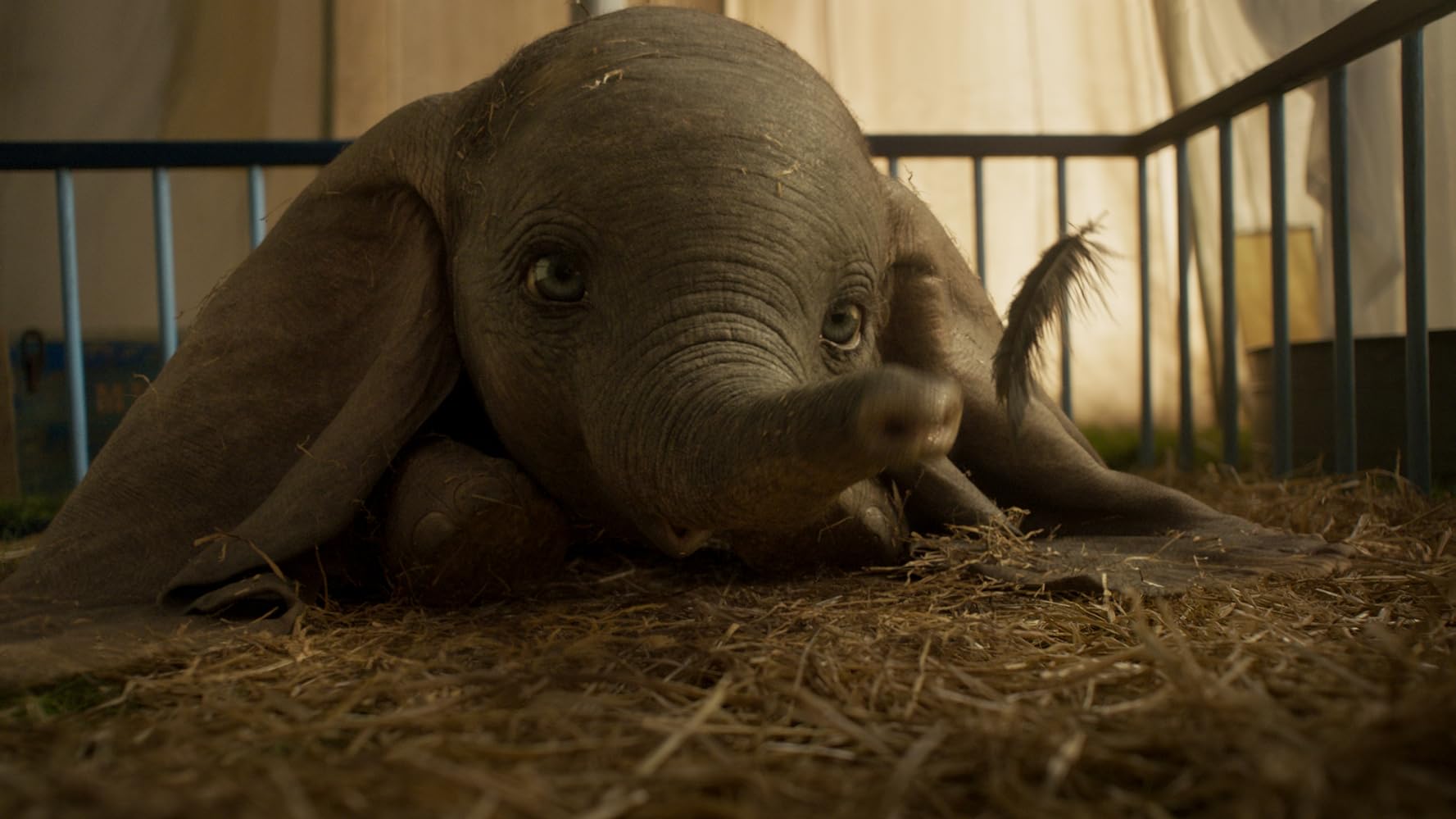
In 2019, Tim Burton took on his second major live-action Disney remake with Dumbo. Admittedly, the story of a lovable circus elephant who uses his big ears to fly may have seemed like an odd choice for Burton to direct, but at the same time, it did fit his usual M.O. of stories about misfit characters. Thus, while Burton’s Dumbo doesn’t feature his traditional gothic style, its visuals are still very much on point throughout as they do a wonderful job of capturing the bright and majestic visual aesthetic of the circuses of yesteryear. The film also has the benefit of having greater opportunities for new material when compared to some of the other remakes on this list since the original Dumbo is one of Disney’s more simpler-plotted affairs, especially due to its short 64-minute runtime. As such, all the key moments from the original such as Dumbo’s mother being put into captivity after causing a ruckus and the moment where Dumbo first publicly showcases his flying ability during a clown act are covered in just the first forty minutes. After that, a new subplot occurs when a greedy theme park entrepreneur purchases Dumbo for use in his circus while the members of Dumbo’s original circus troupe work to free his mom from her captivity at the entrepreneur’s amusement park. The remake also focuses more on the story’s human characters, namely WWI veteran Holt Farrier and his two kids Milly and Joe, who take the place of Timothy Q. Mouse from the original as Dumbo’s primary allies since this film doesn’t feature any talking animals. However, the new material that’s added in ends up feeling just as simplistic as the original film’s plot which, to be fair, was reportedly the point according to screenwriter Ehren Kruger. Ultimately, though, Dumbo still works quite well as a good-natured family film with a solid cast headlined by Burton regulars such as Michael Keaton and Danny DeVito and some fun nods to the original, including the infamous pink elephants.

7. MALEFICENT

Angelina Jolie in Maleficent (2014)

Since Tim Burton’s Alice in Wonderland is technically more of a sequel than a remake, one could argue that 2014’s Maleficent is where this current crop of live-action Disney remakes truly got started. Under the direction of Alice in Wonderland’s production designer Robert Stromberg, the film serves as a live-action reimagining of Disney Animation’s 1959 outing Sleeping Beauty that, as the title suggests, mainly focuses on the story’s iconic villainess, Maleficent. However, instead of just having her be the main antagonist, the film turns her into more of an anti-hero whose actions against Princess Aurora and her family were the result of her getting revenge against Aurora’s father, her former love interest, for stealing her fairy wings. And while she does curse Aurora to fall into an eternal slumber on her 16th birthday, she ends up developing a motherly connection to her to the point where she’s ultimately the one who saves her from the curse. As you might have guessed, those who prefer Maleficent’s traditionally villainous persona weren’t too pleased with this interpretation of the character, but overall, I think that it’s a uniquely fascinating take on Maleficent and the mother-daughter relationship that forms between her and Aurora is genuinely sweet. But, of course, the biggest highlight of the film is Angelina Jolie in the title role as she perfectly encapsulates the look and persona of the ‘Mistress of All Evil’… even if that designation doesn’t necessarily apply to this version of the character. Thus, Maleficent turned out to be a big hit with audiences upon its release in the summer of 2014, ultimately grossing over $758 million worldwide. This effectively paved the way for a sequel in 2019, Maleficent: Mistress of Evil, which was generally on par with its predecessor in terms of quality while also expanding upon its fantasy world, namely by introducing more members of Maleficent’s race, the Dark Feys. Really, the only major disappointment with the sequel was that there were fewer scenes between Maleficent and Aurora. Nevertheless, the Maleficent films are a solid duology of fantasy flicks that pride themselves on being female-driven stories.

6. THE LION KING
John Oliver and JD McCrary in The Lion King (2019)

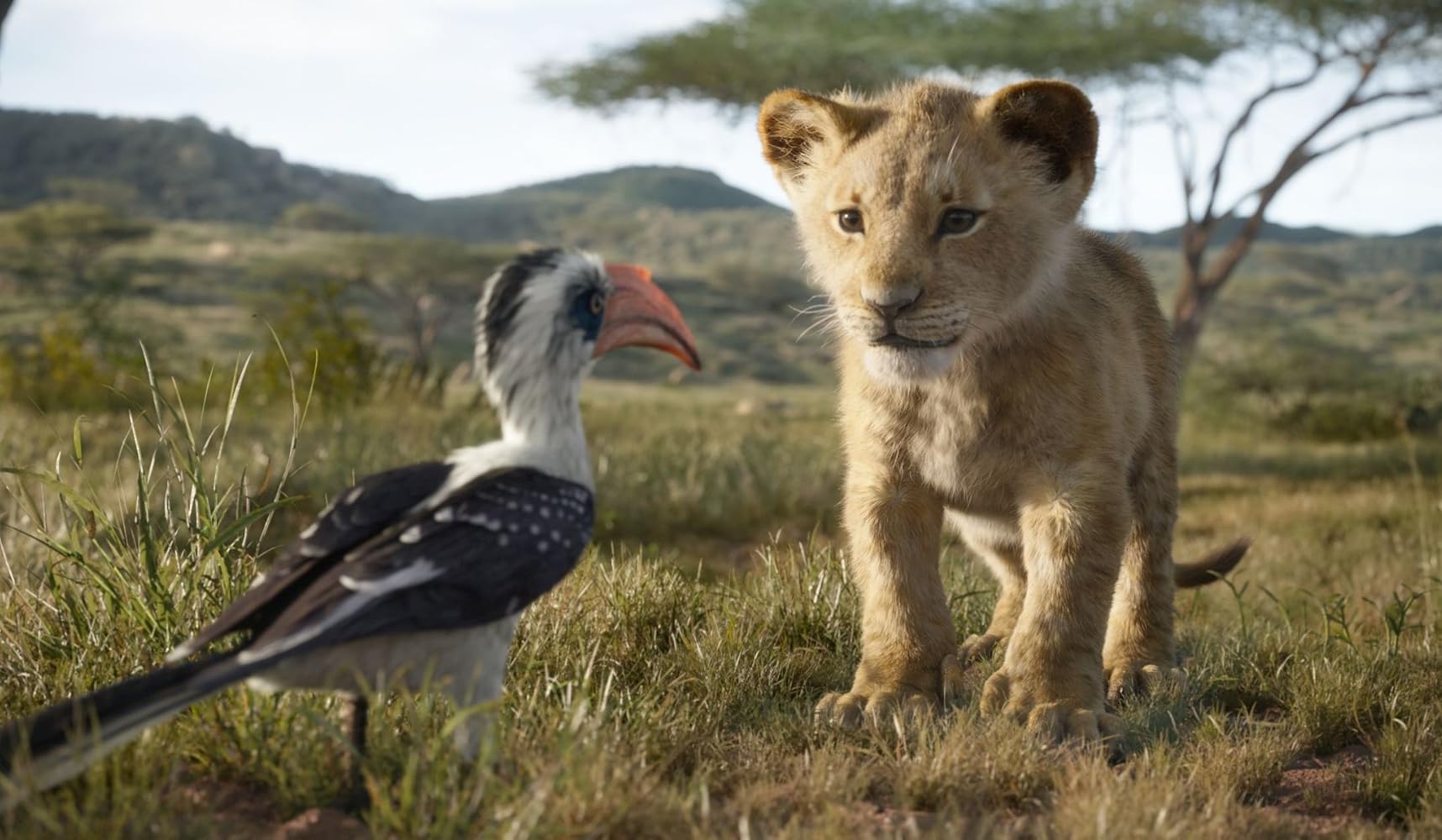
Now I’ll be the first to admit that Jon Favreau’s CGI-based remake of The Lion King (which admittedly makes this one a bit questionable to include on this list since it’s not really live-action but arguably still counts based on its status as a remake) is quite arguably the most straight-forward remake of this bunch when it comes to retelling the original film’s story. Apart from some minor additions like an earlier introduction for adult Nala and a rivalry between her and Shenzi the hyena, this is the exact same story as the 1994 film with the exact same story beats. In other words, the biggest difference between the two films is that Favreau’s version is CGI whereas the original was traditionally animated. But while this has made the new Lion King one of the most controversial installments yet of the recent Disney remakes, I’d argue that it still manages to be a solid enough film. Like Favreau’s other big remake, The Jungle Book, much of this is due to the utterly impressive visual effects that do such an incredible job in maintaining their photorealistic nature. And while this does mean that the film lacks the more extravagant moments of the original (i.e. there’s no scene of Timon distracting hyenas by donning a grass skirt and dancing the hula (although there is a brilliant substitute bit for that part)), the attention to detail is truly spot on. Plus, I’d argue that the film still manages to hit the right emotional beats from Mufasa’s death to the moment where Simba speaks with the spirit of his father. And so, if anything, I’d say that at the very least, the new Lion King succeeds as a demonstration of how far CGI has truly come in the past few years. Obviously, I’m not saying that it’s ‘better’ than the 1994 film, but with phenomenal visuals and a great voice cast that includes the likes of Donald Glover, Chiwetel Ejiofor, Billy Eichner, Seth Rogen, and the Queen Bey herself, Beyonce, it’s also quite far from being completely worthless. And yes, this is all coming from someone who lists the original Lion King as his favorite Disney animated film of all-time, but as I’ve made it clear already, just because it’s my favorite doesn’t mean that I was going to hold that against this new film. Still, I will admit that the fact that it is largely note-for-note the same as its traditionally animated counterpart does keep me from putting it any higher on this list.

5. CHRISTOPHER ROBIN

Ewan McGregor and Jim Cummings in Christopher Robin (2018)

Christopher Robin is the other film on this list that’s more of a sequel rather than a remake as it revolves around a grown-up Christopher Robin being reunited with Winnie the Pooh and the rest of the Hundred Acre Wood gang. But, of course, it still counts on this list since it utilizes much of the iconography from Disney’s interpretation of Winnie the Pooh, and since Winnie the Pooh was such a significant part of my childhood, this was easily one of my most anticipated films of 2018. At the end of the day, I’m happy to report that it did not disappoint. Christopher Robin is an incredibly poignant story about the tragedy that is the loss of childhood innocence through the harsh but sadly natural process of growing up. But while this ordeal ends up being an incredibly rough one for Christopher Robin (e.g. losing his father at a young age, enduring the horrors of World War II, etc.), it is what also makes his eventual reconciliation with his friends and family incredibly cathartic. Ewan McGregor does a fantastic job in the title role and when it comes to his Hundred Acre Wood friends, it was only appropriate that they bring back Jim Cummings, the voice of Pooh and Tigger for many a generation (mine included), for his iconic roles. Now admittedly, many have noted that Christopher Robin sports a rather bleak tone, which is true if focusing solely on the first half of the film before Christopher Robin regains his childhood innocence. After that, the film takes on a more light-hearted tone and the scenes where Pooh and company get into all sorts of adventures in London are purely delightful. And really, that perfectly sums up the film in general. It’s a truly delightful family flick that’s fully bolstered by the ever-enduring charm of its timeless characters to be another great Winnie the Pooh story.  

4. ALADDIN

Mena Massoud in Aladdin (2019)

As I’ve mentioned plenty of times before, director Guy Ritchie’s live-action remake of Aladdin ended up being quite a noteworthy success story even though, before its release, it was quite possibly the most scrutinized installment yet of these equally scrutinized remakes. Simply put, it was almost as if this film could never catch a break as it caught flak for various reasons ranging from certain casting choices to the infamous first reveal of Will Smith’s Genie in his traditional blue form. But when it finally came out, it managed to earn over $1 billion worldwide while also doing decently enough with critics, many of whom felt that it turned out to be much better than they initially anticipated. And if you ask me, that means that this film deserves a lot of credit for managing to avoid being the disaster that many predicted it would be. Now as far as being a remake of its animated counterpart, Aladdin is in the same boat as Lady and the Tramp and The Lion King by not making a lot of radical changes to the original story of a good-natured thief who tries to woo the Princess of Agrabah with the help of a wisecracking Genie. Despite this, however, one great change that it does make is letting Princess Jasmine play a far more proactive role in the story. With no disrespect to her animated counterpart, this is the best incarnation of the character to date, especially thanks to Naomi Scott doing a phenomenal job in the role. Meanwhile, Mena Massoud shines in what is surely going to be his breakout role as Aladdin while Will Smith, despite all the pressure that stemmed from having to follow in the footsteps of Robin Williams’ iconic rendition of the Genie in the original animated film, successfully delivers his own, unique take on the character. Ultimately, the only thing that holds this film back is its mediocre interpretation of Jafar, which is primarily due to this version’s more grounded take on the character. But at the end of the day, the live-action Aladdin ends up being a lot of fun, and while it may have seemed like a weird choice to have it done by a director who’s known more for making gritty crime dramas, Guy Ritchie does a highly respectable job when it comes to maintaining the original’s great atmosphere and unforgettable musical numbers.  

3. THE JUNGLE BOOK

The Jungle Book (2016)

Out of all these films, Jon Favreau’s The Jungle Book is arguably the best example of a live-action Disney remake that isn’t fully tied to its animated counterpart. While it’s still very much the story of a young boy named Mowgli who is raised by wolves in the jungles of India and pursued by the sinister tiger Shere Kahn, it’s ultimately a combination of the 1967 animated film and Rudyard Kipling’s original novel. In other words, it only features three of the songs from the animated film (“Bare Necessities”, “I Wanna Be Like You”, and “Trust in Me”) and places greater emphasis on the dramatic parts of the story such as Mowgli’s history with Shere Kahn, who killed his human father, and the dangerous power of ‘Man’s Red Flower’, fire. Favreau does an excellent job of balancing these two aspects of the story, resulting in some excellent emotional moments (e.g. when Mowgli first leaves for the man-village and says goodbye to his adoptive wolf mother Raksha) while also featuring plenty of great homages to the original. But, of course, the most notable aspect of this film is its extensive use of CGI to bring both its animals and its jungle landscapes to life. And because Favreau’s VFX team did such an outstanding job with the visuals (which ended up netting them the Oscar that year for Best Visual Effects), sometimes it’s easy to forget that Neel Sethi, who plays Mowgli, is literally the only ‘real’ thing on-screen 95% of the time. All this and a top-notch voice cast that includes big names like Bill Murray, Ben Kingsley, Idris Elba, and Lupita Nyong’o helps make this adaptation of Rudyard Kipling’s classic story a full-blown visual masterpiece. And as I noted back in the intro, Favreau and screenwriter Justin Marks are currently prepping a sequel that, according to Marks, could potentially incorporate some of the unused elements from the animated film’s original screenplay by Bill Peet that was ultimately rejected by Walt Disney himself for being too dark.

2. CINDERELLA

Richard Madden and Lily James in Cinderella (2015)

No matter how much these live-action Disney remakes get ragged on by their biggest critics, there will always be the select few that were genuinely well-received, and the one that started it all for this group was Kenneth Branagh’s 2015 remake of Cinderella. Unlike both Alice in Wonderland and Maleficent, which received mixed reviews upon their release, Cinderella fared quite well with critics and became the first of these remakes to secure a ‘Fresh’ rating on Rotten Tomatoes. And just like Christopher Robin, this was another one of my most anticipated films back when it was coming out due to the original Cinderella being one of my all-time favorite Disney films growing up. All in all, Branagh’s remake does a wonderful job of bringing this classic story to life. Sure, it’s another case where the remake is predominately faithful to its animated counterpart without many significant changes, but in this instance, the changes that it does make are some of the best to come from any of these recent remakes. Easily the best example of this is how it expands upon the relationship between Cinderella and Prince Charming, namely by having them meet before the ball, which also allows the latter to be a more fleshed-out character compared to his animated counterpart. And while Cinderella continues to get a lot of flak nowadays for allegedly being ‘too passive’ of a protagonist, I still stand by what I’ve been saying these past few years in that her unshakably optimistic nature in the face of all the crap she’s put through makes her a far better heroine than she’s often given credit for. Sure enough, this is well-reflected in the live-action remake, especially thanks to Lily James’ outstanding turn in the role. The same goes for Richard Madden as the superior version of Prince Charming, Cate Blanchett as the unforgettably sinister Lady Tremaine, and Helena Bonham Carter in a scene-stealing turn as Cinderella’s Fairy Godmother. And so, with a phenomenal cast, gorgeous production design, and all-around excellent direction from Kenneth Branagh, the live-action Cinderella is one of the most uplifting films to have come out in recent years.

1. BEAUTY AND THE BEAST
Emma Watson and Dan Stevens in Beauty and the Beast (2017)

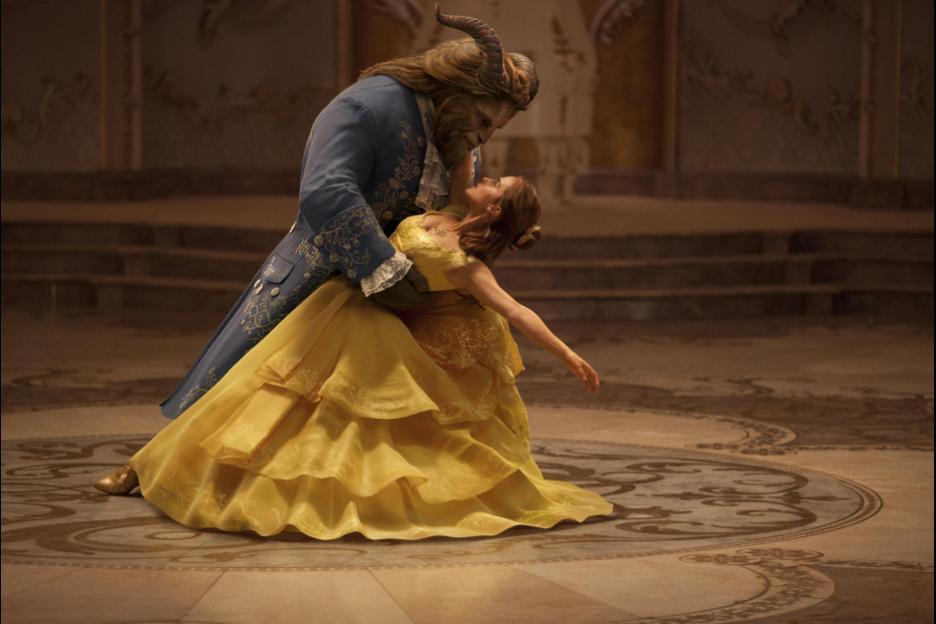
To be perfectly blunt, folks, I have the feeling that this film’s placement at the top spot on this list is going to garner some controversy given its usual reception. Let me put it this way; when it first came out, it did relatively well with critics. It currently boasts a 71% rating on Rotten Tomatoes, which is a decently solid score for a film to have on that site, and it also grossed over $1 billion worldwide, effectively making it the second-highest-grossing film of 2017 behind only Star Wars: The Last Jedi. In other words, it was, at the very least, clearly a big hit with audiences. However, I think it’s safe to say that this was the film that fully intensified the utter contempt that the ‘Disney remake’ critics have towards this trend, especially due to the legendary reputation of the film that this remake was adapted from. Before 2017, all the live-action Disney remakes were based on older animated films such as Alice in Wonderland and Cinderella. As such, one could argue that the overall expectations for them weren’t as intense given how long it has been since their releases. Beauty and the Beast, on the other hand, was the most recent Disney animated feature to get the live-action treatment at that point and it also happens to be one of the studio’s most beloved outings. It is, after all, the first animated film that was ever nominated for Best Picture at the Oscars, a distinction that only two other films have achieved since then. As such, this remake clearly faced stricter expectations because of how much the original has meant to my generation, and the same can also be said for the remakes of Aladdin and The Lion King that would come out later and would end up garnering far more polarizing reactions from critics. Thus, despite what I just said about the film maintaining a solid rating on Rotten Tomatoes, I wouldn’t be surprised if many of those who gave it a ‘Fresh’ review aren’t as positive about it nowadays. And yet, I’m not afraid to admit that I still love this film.

Yes, this is yet another instance of a remake that doesn’t make a lot of changes to the original’s story, but overall, I was genuinely fine with the updates that they did make. This includes, among other things, Belle being an inventor just like her father (played excellently by Kevin Kline in a uniquely more subdued take on ‘crazy old Maurice’) and her discovery as to why he has been overly protective of her all these years after her mom died from the Plague. I also loved all the new songs that were made for this remake, especially the Beast’s new solo, ‘Evermore’. And while I’m well aware that much of the criticisms towards this film have been directed towards Emma Watson in the lead role of Belle, namely due to her singing, I still think that she does a fantastic job in the role if we’re talking about all the other things that have made Belle one of the most popular Disney princesses. She’s then backed by a phenomenal supporting cast that includes Dan Stevens as the Beast, Luke Evans and Josh Gad as the scene-stealing duo of Gaston and LeFou (so much so that they’re going to get their own Disney+ series) and the likes of Ewan McGregor, Emma Thompson, and Ian McKellen as the Beast’s servants. In short, I will fully admit that there’s probably quite a bit of bias behind my decision to place this film at the #1 spot on this list. I saw it twice in theaters, with the first time being in IMAX at the film’s ‘Fan Event’ screening on my birthday. I also bought the soundtrack on iTunes not long afterward and loved the film so much that my mom asked one of her co-workers to pick it up on Blu-Ray and ship it to us so we could get the special Best Buy Steelbook*. In other words, I know that I’m probably in the minority when it comes to liking this film, which has certainly faced tons of scrutiny over the ‘necessity’ of its existence and has often been negatively compared to its animated counterpart. And yet, as this entire list has hopefully established by now, I don’t really care about any of that stuff, even if this is another case like The Lion King since the original Beauty and the Beast is one of my Top 5 favorite Disney films. Ultimately, though, that doesn’t prevent the live-action Beauty and the Beast from legitimately being one of my favorite films of the 2010s.

*(By the time that I was fully intent on getting the Steelbook, it wasn’t available at any of the Best Buy stores that were near our home in Rhode Island, hence why we needed to have my mom’s co-worker pick it up for us in Wisconsin where he’s from. As our way of saying thanks, we then proceeded to get him his own Steelbook copy of the film. In other words, as a friendly piece of advice for all you Blu-Ray enthusiasts out there, if you’re ever interested in getting a film’s Steelbook release, be sure to pre-order it in advance because it could very well go out of stock as soon as it hits the shelves, especially if it’s for a highly popular film like one of the MCU films or, say, a billion-dollar grossing remake of a Disney classic…)

And that concludes my rankings list of all the major live-action Disney remakes that have been released since 2010. Thanks for following along and be sure to be on the lookout for my review of the next big live-action Disney remake, Mulan, not too long after the film makes its Disney+ debut on September 4th.

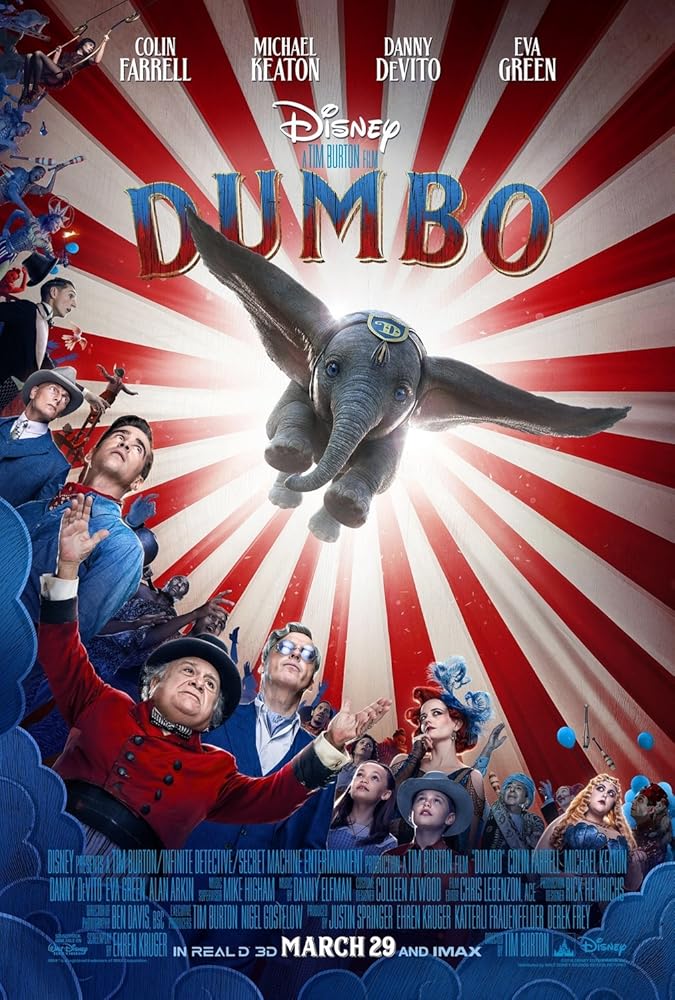
Thursday, April 4, 2019

Dumbo (2019) review

Danny DeVito, Danny Elfman, Michael Keaton, Colin Farrell, Derek Frey, Rick Heinrichs, Ehren Kruger, Chris Lebenzon, Deobia Oparei, Roshan Seth, Ben Davis, Eva Green, Joseph Gatt, Frank Bourke, Sharon Rooney, Ragevan Vasan, Nico Parker, Finley Hobbins, and Zenaida Alcalde in Dumbo (2019)

It’s safe to say that out of all the live-action remakes that Disney has been making since 2010, Dumbo has been one of the more controversial entries to come from this venture. A lot of this stems from the legacy of its source material, which was Disney Animation’s 4th official feature. The original Dumbo was released in 1941 and provided the studio a way to recoup from the financial losses of their previous outing, 1940’s Fantasia, by being a far more simplified project from a production standpoint. Nevertheless, the film went on to become yet another classic for the studio and has continued to be a staple of Disney’s pop-cultural identity, including the creation of one of the most iconic attractions at Disney theme parks, Dumbo the Flying Elephant. In other words, while a lot of animation fans have been against the idea of remaking Disney’s animated classics, to begin with, it probably doesn’t help that this latest live-action remake happens to be one that’s using one of the studio’s Golden Age features as its source material. There was also some skepticism when it was announced who was directing it, Tim Burton, effectively making this the second live-action Disney remake that he’s directed after 2010’s Alice in Wonderland. Sure, Burton may be one of the most iconic directors in the industry, but his recent directorial efforts haven’t necessarily been as successful as his earlier outings. And yet, you may be surprised to find that Dumbo kind of fits perfectly into Burton’s directorial wheelhouse. Thus, while it may not be perfect, this new take on the story of a lovable flying elephant manages to be a charming endeavor complete with Burton’s trademark visual flair.   

Following the end of World War I, veteran Holt Farrier (Colin Farrell) returns to his old job as one of the performers for the Medici Brothers’ family circus. Unfortunately, the circus has fallen on hard times recently to the point where owner Max Medici (Danny DeVito) had to sell the horses that were key to Holt’s original act after the death of his wife. Thus, Medici assigns Holt to be the circus’ new elephant handler, and as luck would have it, one of the elephants, Jumbo, ends up giving birth to a young calf. However, when it’s discovered that the young elephant has abnormally large ears, thus earning him the derogatory nickname of ‘Dumbo’, Medici tries to keep this a secret from the public to avoid any potential humiliation. Things begin to change, however, when Holt’s daughter Milly (Nico Parker) and son Joe (Finley Hobbins) discover that Dumbo can fly with the help of his ears and a single feather. Thus, when Dumbo’s ability is eventually revealed to the public, he quickly becomes a sensation. This ends up attracting the attention of theme park tycoon V.A. Vandevere (Michael Keaton), who offers Medici a business partnership to have Dumbo perform at the circus at his lavish theme park, Dreamland. There, he’s partnered with Dreamland’s star performer, trapeze artist Colette Marchant (Eva Green), to become what Vandevere hopes will be his latest and greatest attraction. However, when it’s discovered that Dumbo’s mom is being held in one of Dreamland’s exhibits, the Farriers and their friends begin to formulate a plan so that they can reunite the young elephant with his mama.

To this film’s credit, it arguably has a lot more opportunities to do something new with the story of Dumbo when compared to most other Disney live-action remakes. At just 64 minutes long, the original Dumbo is one of Disney Animation’s shortest features and, as a result, is very simply-plotted. In fact, the iconic moment where Dumbo discovers his flying ability doesn’t even occur until the very end of the film. Thus, the remake does expand upon this plot to the point where almost all the major moments from the original film, including Dumbo’s mom being locked up for attacking people, the famous ‘clown firefighter’ circus act where Dumbo flies in the circus for the first time, and of course, the ‘Baby Mine’ sequence are covered in just the first half hour. Admittedly, though, the new stuff that is added in to bolster the narrative for a longer runtime is sort of in the same simplistic vein. Compared to the original, this version relies a lot more on its human characters, thus meaning that there aren’t any talking animals; no baby-delivering storks, no ostracizing adult elephants, and no Timothy Q. Mouse (though he is alluded to, for the record). Despite this, however, the new plot that’s built around them is a rather basic ‘stop the corrupt businessman’ storyline that doesn’t really give these new human characters a lot to work with. Ultimately, though, there are still plenty of great moments of emotional poignancy in this film, and yes, many of them involve the adorable CGI elephant that shares its name.

As with any Tim Burton film, one of the biggest reasons to watch this new take on Dumbo is to see the latest showcase of that lavish visual style that he’s well-known for. And while this one doesn’t rely on his usual gothic imagery, it still manages to capture the majestic atmosphere of a classic circus of yesteryear with its bright color scheme and grand locales. Plus, unlike Burton’s previous Disney remake, Alice in Wonderland, this film has a far more balanced mix of practical sets and CG imagery instead of being a case of actors in front of a green-screen for a good chunk of the runtime. Speaking of actors, this film’s cast manages to do solid jobs in their respective roles even though, as noted earlier, they don’t really have a lot of material to work with. Much of the main cast is made up of Burton’s most frequent collaborators. Danny DeVito, for example, provides much of the film’s comic relief as the occasionally bumbling Medici while Eva Green (one of Burton’s newer regulars) gets a decent little arc in which her character Colette slowly but surely warms up to the little flying elephant. Meanwhile, Michael Keaton manages to overcome his character’s straight-forward ‘corrupt businessman’ persona thanks to his slick charisma. And yes, I too am amazed that this Disney-released film managed to get away with a villain character who’s clearly meant to be a caricature of Walt Disney himself. Finally, closing out the main cast is Colin Farrell as Holt Farrier and Nico Parker and Finley Hobbins as his children Milly and Joe, all of whom help bolster the film’s big emotional moments due to them taking on the role that Timothy Q. Mouse had in the original as Dumbo’s biggest allies.

As noted in the intro, there was quite a bit of skepticism when it was announced that Tim Burton would be directing this film because it didn’t seem like the kind of project that he’s known for doing. And yet, it ironically makes perfect sense for him to direct Dumbo because the character’s status as an outsider amongst his peers at the circus due to his large ears ties very effectively into Burton’s tendency to do films about outcast-type characters as evident from the likes of Edward Scissorhands and his two Batman films, and that’s just to name a few. Sure enough, this new take on Dumbo once again succeeds in endearing audiences to its titular protagonist. And while the new stuff that’s added in to buff up the plot is ironically just as simple in execution when compared to everything that we got from the hour-long 1941 original, its heart is very much in the right place. Plus, as one would expect from a Tim Burton production, its gorgeous visuals are second to none right down to the various nods to the original… and yes, that includes a reference to the infamous ‘Pink Elephants on Parade’ sequence. In short, while I’m not saying that it’s ‘better’ than the original Dumbo, it’s still a worthy adaptation of a Disney classic. And as anyone who’s been following this blog for a while will recall, this sums up my views on Disney’s live-action remakes in a nutshell. Contrary to what some may claim, these aren’t meant to be ‘replacements’ for their animated counterparts. Instead, they’re simply interesting new takes on these iconic stories, and regardless of how they turn out, the originals will still be there at the end of the day for both young and old to enjoy. And while this film does break the streak of well-received remakes that the studio has been experiencing since 2015’s Cinderella, I’m still genuinely looking forward to all the new spins on the animated classics of my childhood.


Rating: 4/5

Saturday, September 3, 2016

Disney Retrospective: The 30's and 40's


Welcome back to Rhode Island Movie Corner’s ongoing series of Disney Retrospectives in which I look back upon the many, many animated classics that have been made by Walt Disney Animation Studios. Previously I’ve covered the Disney films that have come out during the 90’s, the 2000’s to today, the 60’s and 70’s, and the 80’s. And today, we’re going back to the beginning of it all as we’ll be covering the first few feature-length animated films that Walt Disney and his team produced. Before 1937, the studio was known solely for their short films, namely those starring Mickey Mouse as well as their famous musical series Silly Symphonies. But that changed when Walt decided to adapt the classic Brothers Grimm fairy tale Snow White into a feature-length film. At first, Walt’s plan was met with much doubt and the industry originally referred to it as ‘Walt’s Folly’. But of course, we all know that it did not end up as a folly. Instead, it kick-started the studio’s prestigious line of animated films that is still going strong today. Of course we’ll looking at that first film today but it happens to be the only Disney animated feature film of that decade. So today I’m also adding in the 10 subsequent Disney films that came out during the 40’s. It was an interesting decade for the studio and one that was also unfortunately hampered by World War II. In fact, World War II affected things so much (e.g. animators getting drafted, overseas markets being cut off) that many of Disney’s animated features released during this time weren’t even full stories. Instead, they were known as ‘package films’, consisting of a series of vignettes that weren’t usually connected narratively. It wouldn’t be until the 50’s when Disney returned to the feature-length narrative. We’ve got a lot to talk about today so let’s not waste any more time. These are ‘the first 11’ feature-length animated films produced by Walt Disney Animation Studios.

SNOW WHITE AND THE SEVEN DWARFS (1937)

Image result for snow white and the seven dwarfs poster

Of course we start things off with the film that started it all for Walt Disney Animation Studios. As I just noted in the intro, at first people thought that it couldn’t be done but Walt and his team very much made it happen. And so, Snow White and the Seven Dwarfs became the first ever feature-length traditionally animated film, though not the very first animated film as some claim it is as there were a few animated films that were made prior to it (sadly most of them are now lost). And I must say that for a film that will officially be eight decades old starting next year (seriously, Eight. Decades. Old!), it still holds up extremely well. I mean sure, compared to a lot of the Disney films that would come after it, it’s certainly much simpler in terms of story and design but it’s still an excellent animated film regardless. It has plenty of memorable characters, especially the titular seven dwarfs (My personal favorite, you ask? I’d probably say either Dopey or Grumpy), some really nice music highlighted by the iconic ‘Heigh Ho!’, and of course excellent animation that still looks good today. And while Snow White and the Evil Queen may not be as developed as some of the other Disney princesses/villains are, respectively, they’re still pretty great characters with Snow White being rightfully kind and the Queen being delightfully evil just as her ‘title’ suggests. All in all, this is still a great film and one that is very much recommended. In fact, it’s kind of a must-see in that regard if you ask me because of its place in the history of both animated films and Walt Disney Animation. Even though Disney has come a long way since Snow White, it will always remain as one of the main highlights of the studio’s prestigious resume. After all, they probably wouldn’t be where they are today if it wasn’t for this film.

Rating: 5/5!

PINOCCHIO (1940)

Image result for pinocchio disney poster

It is often said that that you get better and better as you go on and that is definitely true in regards to what happened with Disney in 1940 when they released their second feature-length animated film, Pinocchio. Obviously Snow White is still very much an animated masterpiece but as for Pinocchio… I’d argue that it’s actually even better than Snow White. It’s one of Disney’s Top 10 best for sure. Every aspect of this film is terrific. It’s full of memorable and lovable characters, from Pinocchio to Jiminy Cricket to Geppetto to his two pets Figaro and Cleo. Pinocchio himself has a really solid arc in this as he learns to be ‘brave, truthful, and unselfish’ in order for him to truly become a real boy and the lessons that he learns in the film are good lessons for kids as well. As for the main song of the film, ‘When You Wish Upon a Star’? Well, what hasn’t been said about it… it’s one of the best Disney songs ever. Why else would it be the company’s flagship theme and after watching this film again, I was very much reminded why. Now I’ve heard some of the complaints about how this song could send a bad message to kids but I never really felt that it did because not only is the song a really sweet melody but it’s not like it’s telling kids that all that they need to do for things to get better is to wish upon a star. I’m pretty sure that wasn’t the intention. Instead, the idea of the song is keeping hope alive even in the darkest of times. It’s like what Andy Dufresne says in The Shawshank Redemption, “Hope is a good thing, maybe the best of things, and no good thing ever dies.” And to me, this song very much personifies that belief.

This film may not have a ‘main villain’ (though with that said, there are a few antagonistic characters from the duo of Honest John and Gideon to Stromboli to the Coachman that owns Pleasure Island who at one point makes one of the scariest faces ever) or a lot of songs but in this case it’s not really needed because the characters are so likable and the writing is rock solid. Plus, this film is not afraid to get dark sometimes and I mean dark. Whether it’s because of a giant man-eating whale or a place called ‘Pleasure Island’ where kids are turned into donkeys to be used as slaves in salt mines and the main bad guy involved in this scheme actually sort of gets away with it because we’re left to presume that the kids who were turned into donkeys aren’t getting rescued or are going to be changed back into normal kids anytime soon, there are some pretty darn messed up moments in this film. Though with that said, I’m aware that the book this was based on, The Adventures of Pinocchio by Carlo Collodi, is even darker. Like for example in the book, the character of the Cricket is killed after trying to give some advice to Pinocchio… thankfully that didn’t happen in the film. To put it simply, Pinocchio has to learn his life lessons the hard way in this film. He’s nearly subjected to a hard life of showbiz, is nearly turned into a ‘jackass’, and is nearly eaten by a whale. But even with all of the dark imagery in this film, it still has a great message for kids and the happy ending in this is very satisfying. All in all, this is an absolute must-see in regards to Disney’s animated filmography… actually no, that’s an understatement. It’s a requirement that you watch this film and then years later show it to your kids because it’s one of the best animated films of all time and easily one of Disney’s best.

Rating: 5/5!

FANTASIA (1940)

Image result for fantasia poster

For his third animated feature, Walt Disney took a much different approach than what he had done before. Instead of having a single story, Fantasia is a series of animated ‘short films’ set to classical music performed by the Philadelphia Orchestra, led by legendary conductor Leopold Stokowski, with the entire ‘feature’ being hosted by the Master of Ceremonies, music critic Deems Taylor (Though for the record, beginning with the film’s 60th anniversary release, Taylor’s vocals were redubbed by prominent Disney voice-over artist Corey Burton due to the fact that the original audio tracks for Taylor’s narration had deteriorated beyond use at that point). Originally just one single short that was meant to revive the popularity of Mickey Mouse, rising production costs eventually led to the short being reworked into a whole film of animated shorts. However, when the film was first released, unfortunately it was a severe underperformer at the box-office. This was namely due to the expenses that arose over producing a special ‘roadshow’ release as well as the start of World War II, which kept the film from being released in European markets. However, the film did do better when it ended up getting re-released multiple times over the years. And although the critical reception towards the film was initially rather polarizing, it has since become regarded as one of the studio’s finest efforts. And having recently watched this film for the first time (having actually seen part of the ‘sequel’, Fantasia 2000, first when I was younger), I must say that I do pretty much agree with this statement.

Obviously this is a much different kind of animated film than what most are probably used to given the fact that it’s primarily music based. In fact, the combination of animation and classical music was actually an issue upon initial release with fans of the music. But really that’s what makes this film so breathtaking in the first place because the classical music does match perfectly with the classic Disney animation. The end result is a vibrant array of animated sequences that carry a very nice natural feel to them. If I have to choose my ‘favorite’ sequences from this film, I have two particular favorites. The first is the second sequence set to Tchaikovsky’s ‘Nutcracker Sequence’, which in turn is set to the changing seasons of the year and a series of dances involving flora and fauna. My other favorite sequence is the one that was responsible for this film being made in the first place; ‘The Sorcerer’s Apprentice’. It’s a very energetic piece that stars Mickey Mouse as he tries to perform the magic of his master Yen Sid (guess what his name is when spelled backwards?) but ends up causing a whole lot of trouble when the magic starts to get out of hand. But really, all of the sequences in this film are terrific in terms of both animation and how they’re paired with classical music. In short, Fantasia is a Disney film that admittedly isn’t for everyone. But if you’re willing to give it a try, I have a feeling that you’re probably going to like it. And while Walt Disney may not have gotten the chance to fully enact his plan of turning this film into an anthology series, with new editions of the film being released every few years with new sequences added, this film definitely stands as one of his finest projects.

Rating: 4.5/5

DUMBO (1941)

Image result for dumbo poster

As the result of Fantasia being a box-office flop upon initial release, Disney decided to go a much simpler route with their next film, Dumbo. At just one hour and four minutes, it’s one of the shortest Disney films ever made. But even with that simplicity in mind, Dumbo is still a very charming and colorful animated film about a misfit circus elephant, who is given the titular nickname of Dumbo due to his big ears, that discovers that those ears allow him to fly. However, Dumbo actually isn’t the primary focus of the film. In fact, the whole part of him flying only occurs in the final five minutes of the film. Instead the film spends a lot of time showcasing the other acts of the circus, allowing for some really fun and zany visuals involving Dumbo’s fellow circus performers. And of course, if we are talking about visuals, we cannot forget about the film’s infamous sequence in which Dumbo and his friend, Timothy Q. Mouse, accidentally get drunk (yes drunk) from drinking out of a champagne filled bucket and start seeing pink elephants ‘on parade’. Talk about one of the most surreal moments in animated history. There’s also a nice little emotional element to the film in the form of Dumbo’s relationship with his mother, who he is separated from after she is locked up for attacking a circusgoer when he mocks her son. I guarantee you that you’re probably going to get rather emotional during the scene where she comforts him while still locked up in her cage. Ultimately, Dumbo may not be Disney’s most ‘profound’ animated film but it’s still one that the whole family can enjoy, even when taking its simplicity into account.

Rating: 4/5

BAMBI (1942)

Image result for bambi poster


Now that I’ve gotten that out of the way, let’s talk about Disney’s fifth feature-length animated film, Bambi… which, let’s be honest, is nowadays usually remembered primarily for the scene in which Bambi’s mother is killed by hunters, a scene which certainly must’ve emotionally scarred a lot of young kids when they first watched it (myself included, probably). But beyond that, Bambi is actually a really beautiful animated film. Like Dumbo, the plot is fairly simple; it’s the story of how the young Bambi grows up to become the protector of the forest AKA ‘the Great Prince’. This was pretty much the first time that Disney did a ‘coming of age’ story and it’s handled excellently. We’re fully engrossed by Bambi’s growth into adulthood, from him learning to walk and talk to him dealing with the tragic loss of his mother to him falling love with a female deer named Faline and later having to fight another deer for her affections. The film also does a great job in establishing its villain; ‘man’. They’re never seen in the film but their presence is very much felt throughout, the obvious example being, well, you know what. In short, Bambi is like Dumbo in that it is a very simple story. However, also like Dumbo, the film also very much wears its heart on its sleeve and there is a genuine charm factor to the simplicity of watching Bambi grow up. Pair that with some of the studio’s most absolutely gorgeous animation and it’s quite easy to see why this is widely regarded as another one of Walt’s masterpieces. 

Rating: 4.5/5

SALUDOS AMIGOS (1942)

Image result for saludos amigos poster

Ok, show of hands… who actually knew about this film before I brought it up here just now? If you didn’t then don’t worry because I was in the exact same boat as you when I first heard about this film. It was sometime in 2010, a year which saw the release of the studio’s 50th animated feature, Tangled. I remember looking through the studio’s filmography, seeing Saludos Amigos, and being completely surprised about the fact that it was an official entry in the Disney canon because I had never heard about it before that point. Seriously I was more familiar with this film’s successor and that was without me ever seeing the latter, mind you. So with all of that said… what exactly is this film then? Well, in 1941, Walt Disney and his team of animators went on a goodwill tour of South America as part of the ‘Good Neighbor Policy’ that had been implemented by President Franklin D. Roosevelt. World War II had already been happening for a few years but this was before the Japanese’s attack on Pearl Harbor on December 7th, 1941 that effectively resulted in the U.S. joining in on the fight. Because some of the governments in Latin America had ties with the Nazis, the U.S. looked to counteract those ties and Walt Disney was chosen as an ambassador for the U.S. due to the fact that many of his studio’s characters, especially Mickey Mouse, were very popular in Latin America. This goodwill tour resulted in not one but two Disney films inspired by Latin America; Saludos Amigos and The Three Caballeros. Saludos Amigos would also serve as the very first in the series of package films that would become Disney’s primary source of production during the 40’s.

Admittedly there’s not much that I can really say about this film. At just 42 minutes long, this admittedly feels more like a bonus feature that you’d find on a DVD/Blu-Ray. It’s more or less just a series of animated shorts as well as some live-action footage of Disney and his team exploring South America. But while this particular entry in the Disney canon may lack quite a bit in terms of content, the quality of said content more than makes up for the shorter run-time. I feel that fans of animation will really like this film as it showcases a prime example of how some animated films utilize the method of location scouting to help inspire their animators. Other Disney films like The Emperor’s New Groove and Frozen had utilized location scouting to great effect and this can also be said for this film. The animation is excellent and does a nice job in capturing the beauty of Latin America. Not only that but the four sequences featured in this film are all quite charming. This includes a segment in which Donald Duck explores the area of Lake Titicaca, a segment centered around a small airplane named Pedro that travels across the Andes in order to collect mail, a segment that feels very reminiscent of Disney’s ‘How To’ series in which Goofy, as an American cowboy, spends some time living the life of the Latin American equivalent of a cowboy, gauchos, and the final sequence in which an animator brings to life the city of Brazil which is then explored by Donald and a new character, a parrot named Jose Carioca. All in all, Saludos Amigos is a very pleasant Disney flick that will no doubt appeal greatly to fans of animation. However, at the same time this is not one that I can easily recommend to most people due to the fact that it is just a 42-minute feature. 

Rating: 3/5

THE THREE CABALLEROS (1944)

Image result for the three caballeros poster

Of the two Disney films that were produced as a result of the aforementioned goodwill tour that Disney and his crew went on, The Three Caballeros definitely has more to offer than Saludos Amigos, especially due to the fact that it is a feature-length affair. And overall, Caballeros is just as solid as Saludos when it comes to its content. Like Saludos, the film and its animation do a really nice job in bringing the world of Latin America to life in animated form. The group of shorts that this film features are all pretty nice, from the one in which a penguin decides to migrate to a warmer climate to the one in which a little boy comes across a winged donkey. It’s also pretty cool when the animation is combined with live-action sequences, something that Disney very much perfected. These segments are all connected to a simple plot in which Donald Duck has a bunch of adventures with his Latin American friends, including Jose Carioca, who of course was first introduced in Saludos Amigos, and a new character in the form of the energetic rooster Panchito. Together they come to form the titular musical group, paving the way for a fun musical number and some nice camaraderie amongst themselves. It’s also interesting to note how Donald is basically ‘on the prowl’ for most of the film, pining over every woman he comes across. All in all, The Three Caballeros is a very lively animated affair. Admittedly it may prove to become rather tiring for some due to the fact that it never really lets up at any point, especially during the finale where, simply put, all hell breaks loose. But its Latin American flair certainly allows it to stand out amongst its fellow Disney animated films. And while I don’t like to compare films that much, I will say that this film has a ‘slight’ edge over its predecessor only because it has more to offer content-wise.

Rating: 3.5/5

MAKE MINE MUSIC (1946)

Image result for make mine music poster

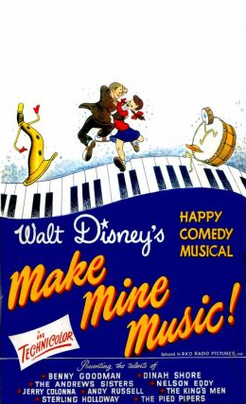
Make Mine Music is an interesting entry in the Disney canon because, technically speaking, it’s kind of like a spiritual sequel to Fantasia. It follows the same general formula of that film by being a series of animated segments set to music. However, instead of being set to classical music, the segments in this film are mostly set to more contemporary music. There are 9 segments in total, though originally there was actually another segment titled The Martins and the Coys, which depicted a feud between the Hatfields and McCoys. This segment was cut from the home media release in North America and the other areas in the NTSC region due to its heavy use of gunplay. It’s nothing too crazy now but then again this segment does end with most of the characters dying so I do kind of understand why it got cut. Instead the film now starts with Blue Bayou, a segment originally intended for Fantasia. The original version, set to ‘Clair de Lune’, still exists and while both versions of it are nice, admittedly the one for Fantasia is the superior version. All the Cats Join In is a toe-tapping swinging tune set to a sequence based around teens in the 1940’s. It’s also fun how the animation in this sequence is done ‘on-the-spot’ as we see a pencil create all of the visuals. Without You is a somber ballad set to some nice animation that has a pretty cool paint-like look to it, which is the result of the segment’s rainy backdrop. Casey at the Bat is easily one of the big highlights of the film. Admittedly it’s not really a musical segment as the poem the segment is based on is only recited. Still, this is definitely one of the best segments of the entire film thanks to its fast-paced antics and plenty of humorous moments.

Two Silhouettes is simply a pair of ballet dancers. This sequence was done in rotoscope (aka animating over live-action footage) with the dancers only seen in silhouette, hence the title of the segment. Peter and the Wolf is another classic segment highlighted by the original composition’s unique method of having each character in the piece, from Peter to the bird to the hunters to the wolf, represented by a different musical instrument. After You’ve Gone is another lively segment in which a group of anthropomorphized instruments get into all sorts of shenanigans. Then there’s Johnnie Fedora and Alice Bluebonnet, a tale of two hats at a department store, a fedora and a bluebonnet (hence the title), who fall in love but get separated when the latter is bought, resulting in the fedora (once he’s bought) trying to find her again. It’s a cute little sequence that, having looked at it from a modern perspective, reminds me of the Pixar short The Blue Umbrella that was released with Monsters University. Finally, there’s The Whale Who Wanted to Sing at the Met, in which a giant Sperm Whale named Willie is shown to be a very talented opera singer. Sadly, the tale ends on a tragic note but it’s still an excellent story highlighted by the fact that all of the voices were done by one man, Nelson Eddy. So in short, Make Mine Music’s collection of segments is pretty solid with my personal favorites being Casey and The Whale. My only real problem with this film is that some of the segments are rather short. Segments like Casey, The Whale, and Peter and the Wolf are all fairly lengthy while basically all of the other segments are less than five minutes each. As a result, admittedly I don’t think this film leaves as big of a long-lasting impression compared to its ‘spiritual predecessor’ Fantasia. Regardless, though, this is yet another highly entertaining Disney animated flick that benefits greatly from its selection of shorts.

Rating: 4/5

FUN AND FANCY FREE (1947)

Image result for fun and fancy free poster

Out of all of these Disney ‘package films’, Fun and Fancy Free was the one that I watched the most when I was younger. In fact, it was sort of the only one of those films that I had watched in its entirety… from what I can remember. But even with that said, this was certainly one Disney film that I watched quite a few times back then on VHS (ah, the good old days…). And upon re-watch, it’s still one of my favorites. Unlike the other ‘package films’, this film only consists of two half-hour long animated segments. However, I’d argue that both of these stories are pretty darn memorable. After an opening introduction from everyone’s favorite conscience Jiminy Cricket, the first of these two segments are played, Bongo. Narrated by Dinah Shore and based off of the children’s story Little Bear Bongo by Sinclair Lewis, the short follows a circus bear named Bongo who dreams of living free and in the wild instead of being a caged circus animal. When he does get that chance, he meets a pretty girl bear named Lulubelle but ends up getting into a love triangle with her other suitor, the brutish Lumpjaw, which of course then leads to a fight between the two males. While certainly a fairly simple short, it’s still pretty darn charming and Dinah Shore’s lovely voice serves as a nice complement to the visuals. Heck, there’s even a pretty darn funny musical number during this segment in which Bongo learns that, apparently, the way that bears express their love for one another is by slapping each other, which at first he does not get when Lulubelle starts slapping him around.

The other short, Mickey and the Beanstalk, is narrated by ventriloquist Edgar Bergen who is shown in live-action sequences telling the story to child actress Luana Patten at her birthday party. As you probably deduced form the title, this is an adaptation of the classic fairy tale Jack and the Beanstalk but one that stars the trio of Mickey Mouse, Donald Duck, and Goofy. This was also notably the last time that Walt Disney himself voiced Mickey, though some lines were done by his replacement Jimmy MacDonald. This is the best of the two segments if you ask me. I’ve always loved the animated shorts centering around Mickey, Donald, and Goofy and this is definitely a classic with a wide array of funny moments, from a scene where Donald actually goes berserk as a result of him dealing with hunger to the scenes where the trio interact with the giant Willie, who has the power to shape-shift into anything he pleases. Really the only downside to this part of the film is, believe it or not, the scenes with Bergen. I can’t really explain why but even as a kid I found these scenes to be rather dull and perhaps even a bit drawn out. Thankfully there is an alternative. On Netflix there are a series of ‘collections’ of Disney animated shorts. One of these collections contains Mickey and the Beanstalk except this version is narrated by Ludwig von Drake and his beetle assistant Herman, which I feel are a better narrator duo. Still, despite my issues with the Bergen scenes, I can safely say that Fun and Fancy Free is my favorite of these Disney ‘package films’. I wouldn’t go as far as to say it’s one of the company’s best ‘animated features’ but this one does bring back fond memories of watching it back when VHS was still relevant.

Rating: 4.5/5

MELODY TIME (1948)

Image result for melody time poster

Remember when I said that Make Mine Music is sort of like a ‘spiritual sequel’ to Fantasia? Well, 1948’s Melody Time is basically Make Mine Music’s ‘spiritual sequel’. It’s the same general premise; a series of animated shorts set mostly to contemporary music. This time, however, there are only seven segments but as a result, they’re much longer than some of the sequences in Make Mine Music. It opens with Once Upon a Wintertime, in which a pair of young couples (a human couple and a rabbit couple) enjoy a nice day of ice skating. Before I ever saw this film, I remember first seeing this ‘sequence’ on one of the Disney Sing Along Songs videos. As for its use in this film, I really like it, especially for its wintry setting. Bumble Boogie is an enjoyably chaotic sequence. It follows a single bumblebee as he wards off a bunch of instruments as they perform, fittingly enough, Flight of the Bumblebee. Like Blue Bayou in Make Mine Music, this segment was originally considered for Fantasia. Then there’s The Legend of Johnny Appleseed. This one’s a really great one, establishing a nice atmosphere and providing us with a fun retelling of the story of the legendary farmer who brought apple trees to various areas of the United States. Plus, the main song of this sequence, performed by Dennis Day (who voices the narrator (a ‘settler’), Johnny Appleseed, and the friendly angel who sends Johnny on his way), is quite catchy. Little Toot is a charming little tale of a tugboat who tries to stay out of trouble and act more like his father.

Trees is an animated adaptation of the 1913 poem of the same name by Joyce Kilmer. It’s quite arguably the most beautifully animated out of all of the segments in this film with some terrific nature animation. That is then followed by Blame it on the Samba, a toe-tapping segment in which Donald Duck, Jose Carioca, and the rowdy Aracuan bird that was first seen in The Three Caballeros have a fun time dancing to the samba. Like The Three Caballeros, it also features some scenes in which the animated characters interact with live-action people and as noted earlier it’s always really cool to see this implemented in a film. Finally, there’s Pecos Bill, another retelling of a legendary folktale, this one of the cowboy who had many adventures in Texas. This one is also pretty fun and features some good humorous moments. It’s the longest of the 7 segments and even features some live-action parts starring the segment’s narrator(s), Roy Rogers and the Sons of the Pioneers, as they tell the story to Bobby Driscoll (who starred in some notable live-action Disney films including Song of the South and Treasure Island and was the original voice for Disney’s Peter Pan) and Luana Patten (who of course had been in the previous Disney animated film Fun and Fancy Free). So with that said, Melody Time, like its ‘spiritual predecessor’, has a great array of animated shorts. But if I had to pick the better of the two films, I’d actually go with Melody Time. As I noted before, this one doesn’t have as many segments as Make Mine Music but this allows for the segments to be longer and as a result, I find them to be much more memorable. Ultimately, though, both are pretty darn good.  

Rating: 4.5/5

THE ADVENTURES OF ICHABOD AND MR. TOAD (1949)

Image result for the adventures of ichabod and mr. toad poster

The Adventures of Ichabod and Mr. Toad is probably the most famous of the 40’s Disney ‘package films’ and it is understandable why. Like Fun and Fancy Free, this consists of two 30-minute short films and also like that film, both segments are incredibly memorable. The first of these is The Wind in the Willows, based off of the children’s novel of the same name by Kenneth Grahame and narrated by perhaps the most iconic on-screen Sherlock Holmes of them all, Basil Rathbone. It tells the tale of J. Thaddeus Toad, a rambunctious adventurer who becomes fascinated with motor cars. His obsession with them ends up resulting in him buying a car from a pack of weasels in exchange for the deed to his home, Toad Hall. However, this ends up backfiring on him and he is arrested on the charge of ‘car theft’. This is a very entertaining and light-hearted short full of fun characters and plenty of humorous scenes. Probably my favorite moment in the short is when Mr. Toad’s horse friend Cyril is on the witness stand defending him in court. When the judge pressures him into explaining how Toad acquired the motor car, Cyril responds by saying that he did it ‘the honest way’. And when the judge asks what the honest way is, Cyril jokingly responds “Haha, I thought you would’ve known that, guvnor!” But the finale in which Toad and friends try to steal the deed from the weasels and their leader, a conniving con man named Mr. Winky, is also full of humorous moments as well, being just as mad-cap as any other scene like it in Disney animation. Simply put, this whole story is enjoyably loony.

The other short is Washington Irving’s The Legend of Sleepy Hallow, narrated by Bing Crosby. It’s the tale of schoolteacher Ichabod Crane and his run-in with the infamous spook, the Headless Horsemen. This segment actually starts off a lot like The Wind in the Willows and sets up a light-hearted tale in which we see Ichabod interact with the people of Sleepy Hollow, cross paths with the burly town hero Brom Bones, and fall in love with Katrina van Tassel, the daughter of a rich farmer. All of this is set quite well to a bunch of catchy tunes provided by Bing ‘boo boo boo boo boo boo’ Crosby. But this is ultimately just set-up for a particularly spooky finale in which Ichabod is confronted by the Headless Horsemen. Said finale is set up very well and establishes a really cool dark atmosphere. On a side note, as Channel Awesome’s Doug Walker pointed out in his review of the film, it’s interesting to note that despite the fact that he’s the main character in the piece, Ichabod is actually a rather smug egotist. Sure he may act like a charmer amongst the ladies of Sleepy Hollow but he also mooches off of people and when he decides to romantically pursue Katrina, he envisions himself taking over her father’s farm. This is a case where Ichabod’s ‘antagonist’ Brom Bones is actually sort of a more likable character… strange, right? Anyway, The Adventures of Ichabod and Mr. Toad is another excellent entry in Disney’s line of package films. Both of its stories are quite excellent and because one is more zany and fast-paced while the other establishes a spooky atmosphere, that actually results in a neatly balanced double feature.

Rating: 4.5/5


And that, folks, is the end of this Disney Retrospective of Walt Disney Animation’s first 11 animated features. As always, thanks for following along with me on this journey through the history of Disney Animation. We’ve got one more of these to go before the big Disney related thing that I have planned for this blog in November. You can expect the final installment of these Disney Retrospectives sometime next month. Until then, as always, what are your thoughts on the Disney films discussed here today? Be sure to sound off in the comments below.