Friday, January 26, 2018

TOP 12 FAVORITE FILMS OF 2017: #6-4

Welcome back to Rhode Island Movie Corner’s big end-of-the-year list in which I count down my picks for my Top 12 Favorite Films of 2017. This is Part 3 of 4 and today we’re kicking off the second half of this list by looking at films #6-4. If you missed the first half of this list, click the following links below to be directed over to the previous two parts. But for now, it’s time to get back to the list…


(Also, quick disclaimer, if you’re not a fan of the superhero genre, you might want to skip this one as today’s post will be entirely devoted to superhero films…)

When it came to November’s big superhero-oriented releases, most people were mainly looking forward to Justice League. At the end of the day, though, who would’ve thought that the equivalent of a sci-fi buddy road trip comedy would end up being vastly superior to it?


Chris Hemsworth in Thor: Ragnarok (2017)

Thor: Ragnarok is hands down the best Thor film to date; obviously, though, many will argue that this isn’t saying much. While the first Thor did manage to keep its title character from becoming a total joke in the eyes of most audiences, it’s not really brought up much nowadays when people talk about the best MCU films. And as for Thor: The Dark World… well, most people consider it to be the weakest installment of the entire Marvel Cinematic Universe. Thankfully, Ragnarok manages to avoid going down that road again by fully embracing the sillier aspects of its premise and setting. By comparison, the first two Thor films worked to maintain a balance between having their plots be set on both Earth and Thor’s home-world of Asgard. And while I personally didn’t mind the parts of the films that were set on Earth, the same can’t be said for other folks. Ragnarok, on the other hand, is set almost entirely off-Earth, resulting in the best use yet of its cosmic setting while also having the most consistent humor of any film in the Thor franchise. Yes, Thor: Ragnarok is full to the brim with the MCU’s trademark humor; this, however, has proven to be a rather controversial development amongst some fans for one main reason. In the comics, the concept of ‘Ragnarok’, AKA the destruction of Asgard, was treated in a generally serious manner. In contrast, Thor: Ragnarok is a lot more comedic-based. However, that doesn’t mean that this is all that the film has going for it.

Oh sure, the film has plenty of great humorous moments, so much so that I can literally do an entire Spoiler Post based solely on them. There’s the extended version of the Doctor Strange mid-credits scene, complete with Strange submitting Loki to the torture of having to fall non-stop through an alternate dimension (“I have been falling… FOR THIRTY MINUTES!”). There’s the scene where Thor tries to calm Hulk down by using Black Widow’s ‘Sun’s Getting Real Low’ routine from Age of Ultron… only to get smashed around a la Loki in the first Avengers, complete with Loki himself excitedly reacting to the fact that he’s not on the receiving end of that beatdown this time ("Yeah!! That's how it feels!!"). And, of course, there’s everything that involves the always hilarious Jeff Goldblum as the Grandmaster, ruler of the planet of Sakaar, including the film’s post-credits scene (“It’s a tie!”). But that doesn’t mean that the film doesn’t have any effective emotional moments, like the scene where Thor and Loki share one last moment with their father Odin before his death. But when it comes to the best emotional moment in the film, I’d say that honor goes to the scene between Thor and Loki in an elevator as they head to the Grandmaster’s ship hangar. When Loki remarks that he’s planning on staying on Sakaar, Thor agrees with his plan as he notes that he once thought the world of Loki and figured that they would be fighting side-by-side until Loki’s treacherous nature was truly revealed, a comment that Loki responds to in a hesitant manner. And while the scene does culminate in a funny gag in which Thor and Loki fool some guards with their ‘Get Help’ routine, this doesn’t take away from the feels that were on display in that elevator scene. And, really, who doesn’t find their ‘Get Help’ routine funny?

In all seriousness, though, when the film does tackle the subject of Ragnarok and the takeover of Asgard by Hela the Goddess of Death (a solid member of the MCU’s rogues’ gallery thanks in large part to Cate Blanchett’s excellent performance in the role), it does treat these narrative developments in a serious nature. In fact, the film isn’t even afraid to pull a few shocking punches here and there. As soon as she gets to Asgard, Hela kills off the Warriors 3 (sans Lady Sif because Jaimie Alexander was unable to return due to scheduling conflicts). During the final battle, Thor ends up losing his right eye a la Odin. But perhaps most notably is the simple fact that Ragnarok does, indeed, occur. Yes, the film doesn’t end on a cliched note by having Thor save Asgard from destruction. Following a vision that he has of Odin, Thor realizes that the heart of Asgard lies within its people and that the kingdom’s destruction is the only way of stopping Hela. Thus, he and his allies unleash the demonic creature Surtur who then swiftly proceeds to destroy Asgard. And sure, like the elevator scene, this moment also features a humorous joke in which Thor’s Kronan ally Korg (played by the film’s director, Taika Waititi) remarks that Asgard can be rebuilt if the foundations are still there… only to retract his statement when the kingdom is truly destroyed. At the same time, though, Waititi does deserve a lot of credit for pulling off such a ballsy move in the MCU. Plus, it’s hard not to appreciate all the little details that he put into the film as well, including a scene that straight-up parodies the infamous tunnel scene from Willy Wonka and the Chocolate Factory. In short, yes, Thor: Ragnarok is undeniably one of the most comedic entries in the MCU. But I must ask… why is that such a bad thing when it is handled so well here? Because thanks to some excellent action sequences and some of the best performances that Chris Hemsworth and Mark Ruffalo have had in the roles of Thor and Hulk, respectively, Thor: Ragnarok is a total blast from beginning to end.
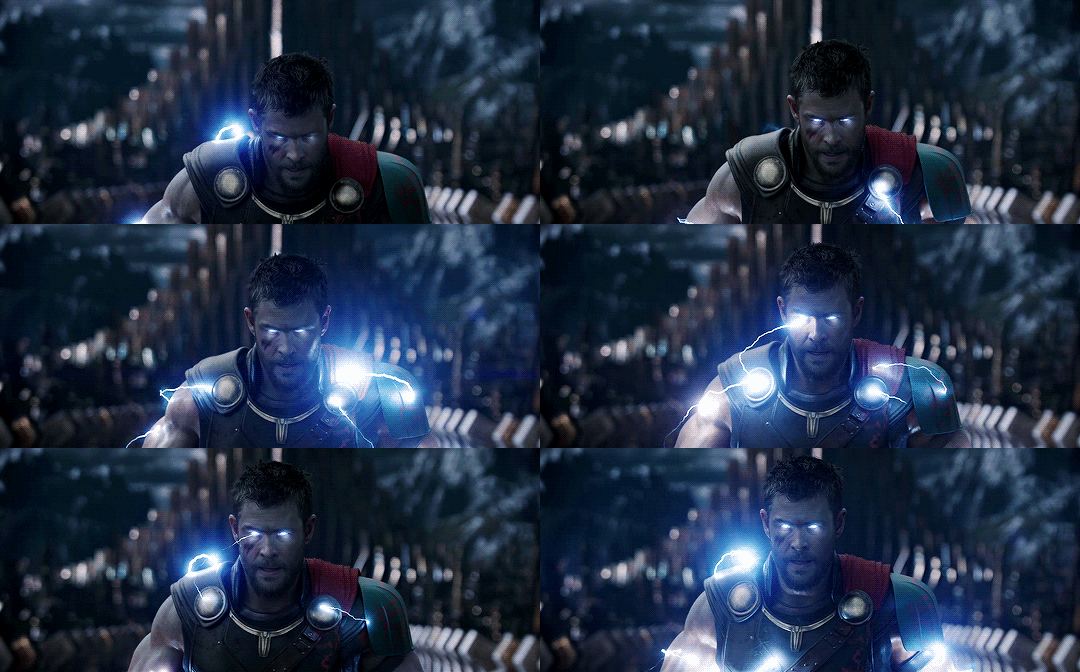
Image result for thor ragnarok gif

At the #5 spot, we have a very special entry in the superhero genre, as it served as the last hurrah for one of the genre’s greatest leads. Thankfully, this film managed to give him the finale that he deserved after 17 years in the role.

5. LOGAN

Logan (2017)

Ever since he was first cast in the role of Wolverine in the original film adaptation of X-Men back in 2000, Hugh Jackman has undeniably been one of the biggest standouts of the entire X-Men film franchise. He was so popular, in fact, that he ended up getting his own line of Wolverine spin-off films. However, the overall critical response to these spin-off films has been mixed at best. Despite all the hype surrounding it, many were ultimately disappointed at 2009’s X-Men Origins Wolverine for its unfocused narrative, mediocre effects, and its infamous handling of the character of Deadpool. 2013’s The Wolverine, based on the comics storyline in which Wolverine travels to Japan, fared a lot better by comparison but still wasn’t that big of a critical success. But thanks to the success of Deadpool, Jackman and The Wolverine director James Mangold were given the opportunity to give the character of Wolverine a proper send-off with Logan, which was announced as being Jackman’s final outing in his iconic role. And if there was one crucial thing that helped Jackman and Mangold in making this the best Wolverine film yet, it was the fact that they were able to make it an R-rated superhero film. Yes, after years of seeing Wolverine partake in primarily bloodless action sequences, this film allowed him to utilize his famous claws to their full potential, resulting in a full array of unabashedly gory action sequences. But just like the previously mentioned War for the Planet of the Apes, this film also boasts a poignant story full of well-layered characters that very much matches the quality of its action sequences.

Set in a future where most of the mutant community has been wiped out, the film sees an aging Wolverine embarking on a journey with Professor Charles Xavier, whose mental state has degraded considerably, to protect a young mutant girl named Laura from an evil corporation that has been using mutant DNA to create a group of young mutants to be used as warriors. Logan also learns that Laura was created specifically from his DNA, effectively making him her ‘father’; in other words, she is Wolverine’s famous clone from the comics, X-23. What follows is a journey that quite frankly puts them all through the emotional wringer. To call Logan and Xavier’s road to ruin in this film tragic would be an understatement, especially for the latter. In contrast to his calm and hopeful attitude from previous films, the Xavier in this film is a broken man who speaks in a cruder manner than we’ve ever seen before. Simply put, Patrick Stewart is as great as he’s always been in the role but, suffice it to say, it’s not an easy performance to watch either, especially once it’s revealed that his mental seizures, which causes him to lose control of his telepathic powers, ended up killing multiple members of the X-Men years prior. And Xavier’s death in the film is just as tragic, as he is unceremoniously killed at the hands at X-24, the violent clone of Wolverine who closely resembles his younger self. On that note, Hugh Jackman is also just as phenomenal as he’s always been as Wolverine. And in this film, he’s arguably at the best that he’s ever been in the role thanks to the excellent arc that the character goes through in which he once again finds something that’s worth fighting for. That something is the matter of protecting Laura and her fellow young mutants from the sinister corporation known as Transigen. Laura herself is easily the film’s biggest standout thanks to a terrific performance from newcomer Dafne Keen, and I think many will agree with me in saying that she’s poised to have a future in both this franchise and the film industry in general.

My only real complaint with this film is that the villains are a little mediocre. Now, admittedly, I don’t necessarily think this about X-24 or Transigen’s cybernetic head of security Donald Pierce. Jackman handles the dual role of Logan’s clone quite well as X-24 proves to be quite the intimidating threat. And Boyd Holbrook is perfectly fine as the enjoyably despicable Pierce, who constantly proves to be a thorn in Logan’s side throughout the entire film. Ultimately, when I say that this film’s villains are mediocre, I’m mainly referring to the character of Zander Rice, the head scientist behind Transigen’s mutant experiments. There is some backstory established for the character in which it’s revealed that Logan had killed his father during his escape from the Weapon X facility at Alkali Lake (as previously seen in X-Men: Apocalypse). But in this film, he shows up briefly in the finale to talk to Logan… who promptly kills him not long after. I also think that this slow-moving, near two-and-a-half-hour film maybe loses a bit of steam near the end, but that doesn’t mean that I think that it drags at any point. Because at the end of it all, this film concludes on one of the genre’s greatest emotional moments. After Logan and Laura manage to defeat X-24, who ends up impaling Logan on a tree branch, Logan finally succumbs to his wounds right when Laura acknowledges him as ‘Daddy’. This is then followed by her and her fellow young mutants giving him a proper burial, which culminates in her moving the cross at his grave on its side so that it looks like an ‘X’. And thus, the most famous X-Man of all ends his run in the franchise in the best way possible. With that said, on behalf of my fellow superhero film fanatics, I’d like to thank Hugh Jackman for everything that he has done with this character.

Image result for logan 2017 film gif

Now I realize that there have been quite a few instances in these past few posts where I’ve heavily bashed the weak link of the superhero genre’s 2017 film slate, Justice League. Fear not, though, DCEU fans, as your franchise’s other big 2017 release, which is hands down its greatest installment to date, ends up taking a prime spot on this list.
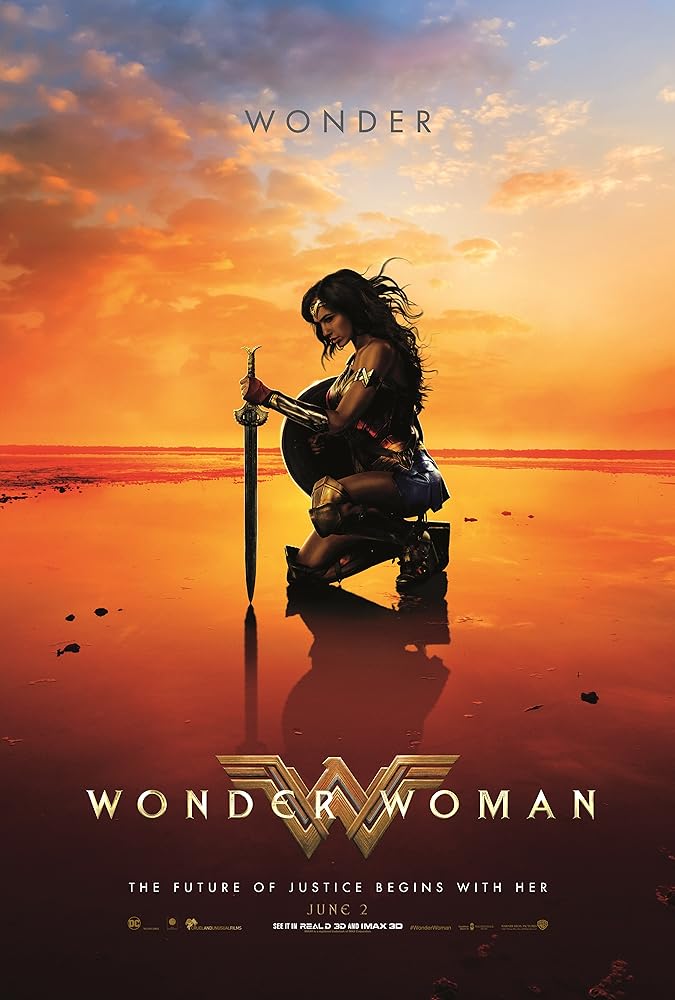
I cannot stress it enough how big of a success that Wonder Woman truly was for everyone who was involved with it. For starters, it was the DCEU’s most critically acclaimed outing to date and rightfully so. Even as someone who does like Man of Steel and both cuts of Batman v. Superman: Dawn of Justice (yes, even the theatrical cut…), it’s hard to deny that Wonder Woman manages to avoid quite a few of those films’ shortcomings to produce the franchise’s most high-spirited installment yet. Of course, this film serves as the long-awaited solo outing for DC’s iconic heroine following her cameo appearance in Batman v Superman while also being the first major female-led superhero film of the genre’s modern era (i.e. circa 2008). And thanks to the wonderful direction from Patty Jenkins, the film is an excellent representation of its title character. Unlike the dark and serious tone of previous DCEU films, Wonder Woman maintains a more light-hearted tone throughout with a lot more humorous dialogue, which mainly stems from the various ways in which Diana responds to things in the real world (e.g. a newborn baby and ice cream, just to name a few). The action sequences are excellent, highlighted by what is easily one of the best scenes in the entire film in which Diana traverses through ‘No Man’s Land’ to take on the German forces in a small village known as Veld. But at its core, the film also has a great heart to it all, and this is mainly thanks to Gal Gadot’s fantastic performance in the role of the titular Amazonian warrior princess from the hidden island of Themyscira.

Now, of course, as many of us know, when Gadot was first cast in the role of Wonder Woman for BvS, she was subjected to the typical backlash that any major superhero film casting gets from fans of the comics. In her case, it was mainly for two reasons. First, some felt that she wasn’t the best pick for the role performance-wise given that, at the time of her casting, she was mainly known for her supporting role as Gisele in the Fast and Furious franchise and not much else. The other reason was, unfortunately, a more sexist one as there were a few jerks out there who were critical of Gadot’s physical appearance in relation to how the character traditionally looks in the comments. Heck, some people even insulted Gadot’s brief tenure in her native country of Israel’s military. As for me, though, there was one moment where I became fully convinced that she was the perfect choice for the role, and it wasn’t even an onscreen moment. Instead, it was when I attended a panel that she appeared at during the 2016 Rhode Island Comic-Con. In the span of a half-hour, I could see that she perfectly conveyed the charisma and all-around warmth that have always been defining traits of the character in the comics. And while Gadot was already one of the biggest standouts of Batman v Superman, it was ultimately through her own solo film where she was truly given the chance to shine. This is mainly thanks to the terrific arc that Diana has in the film where, after initially being unaware of what life is like outside of Themyscira, she ends up bearing witness to the darker side of humanity when she is forced to deal with the pressing matter that is World War I.

She’s backed by an equally excellent supporting cast headlined by Chris Pine as Diana’s love interest, pilot Steve Trevor. Thankfully, the film manages to avoid having Steve overshadow Diana in her own film (something that was apparently the case with a prior Wonder Woman screenplay written by Joss Whedon, which is all that I’m going to say about that, for the record, as that one never got made) while still making him her equal in terms of his role in the plot. This remains consistent throughout the entire film all the way up to his heroic sacrifice during the final battle when he detonates a plane full of poison gas at a safe altitude. And despite Diana’s initial despair over these turn of events, it ultimately ends up being the nobility of Steve’s actions that manages to convince her that, contrary to what it may seem, there is still a sense of good left in humanity. The two of them are, in turn, joined by an equally memorable group of allies in their band of specialists consisting of Said Taghmaoui as the fast-talking spy Sameer, Ewen Bremmer as the shell-shocked sharpshooter Charlie, and Eugene Brave Rock as the stoic smuggler Chief. As for Diana’s allies from her home in Themyscira, Connie Nielsen is excellent as Diana’s mother, Queen Hippolyta. While her role in the film is arguably rather brief, as she doesn’t appear again after Diana and Steve leave for Europe, she does a great job as the noble ruler of Themyscira who desperately tries to keep her daughter from learning the truth about the outside world and her ultimate purpose in it. The same goes for Robin Wright as Diana’s aunt, General Antiope, who trains her to become an Amazonian warrior. Again, it’s a relatively small role in a larger film, but Wright leaves such a great impression in her brief amount of screen-time, so much so that the scene where she is killed by a German soldier to shield Diana from an oncoming bullet is genuinely one of the best emotional moments in the film.

Like Logan, though, this film’s weakest links are its villains; though, again, I wouldn’t go as far as to call them ‘terrible’. First off, there’s Danny Huston as the brutish German general Ludendorff who orchestrates a scheme to keep the war going at a time when it’s on the brink of conclusion. Huston’s fine in the role but said role is basically just a straight-forward bait-and-switch antagonist for Diana to take down. Elena Anaya gets a bit more interesting material to work with as Ludendorff’s enigmatic chemist, Dr. Isabel Maru AKA Doctor Poison, who develops a deadlier form of mustard gas capable of causing even more death and destruction in the war. Unfortunately, she’s somewhat waylaid by the character’s limited screen-time. Finally, there’s the main villain of the film, Ares the God of War. Initially assumed to be dead following an encounter with Zeus, as explained via backstory that Hippolyta tells Diana when she’s a child, he is later revealed to be alive having taken the identity of Sir Patrick Morgan (David Thewlis), one of Diana and Steve’s diplomatic allies in Europe. To the film’s credit, the big twist surrounding the reveal of Ares’ identity is handled decently, namely given the fact that Diana was initially led to believe that Ludendorff was Ares and that killing him would immediately end the war, only to discover that this wasn’t the case. Ultimately, though, the final fight between Diana and Ares boils down to a rather simplistic visual-heavy battle. Despite this, though, Wonder Woman was an undisputed delight that ended up giving the DCEU its best film to date. I’m serious, DCEU fans, you really should be grateful for everything that this film did right as it’s quite arguably the only genuinely successful film that the franchise has had at this point.
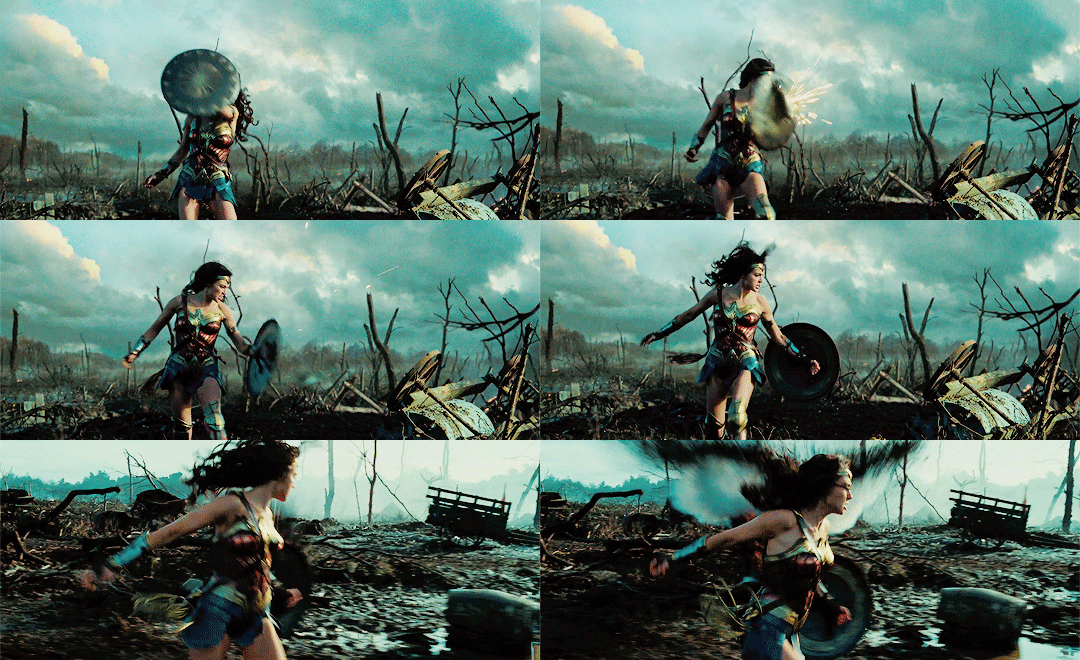
Image result for wonder woman 2017 gif

And that’s the end of Part 3 of Rhode Island Movie Corner’s annual ‘Favorite Films of the Year’ list. Thanks for following along and be sure to check back tomorrow for this list’s big finale, where I’ll be listing my Top 3 Favorite Films from this past year. What film will end up taking the #1 spot? Stay tuned…

Thursday, January 25, 2018

TOP 12 FAVORITE FILMS OF 2017: #9-7

Welcome back to Rhode Island Movie Corner’s big end-of-the-year list in which I count down my picks for my Top 12 Favorite Films of 2017. This is Part 2 of 4 and today we’ll be looking at films #9-7. If you missed Part 1 of this list, in which I listed my 6 Honorable Mentions and films #12-10, click the link below to check it out first. But for now, it’s time to get back to the list…
Last year, the charming original musical La La Land, which featured songs from the songwriting duo of Benj Pasek and Justin Paul, landed at the #4 spot in my ‘Favorite Films of 2016’ list. And what do we have here at my #9 spot on this year’s list? Why we have a charming original musical that features songs from the songwriting duo of Benj Pasek and Justin Paul. Quite fitting, don’t you think?


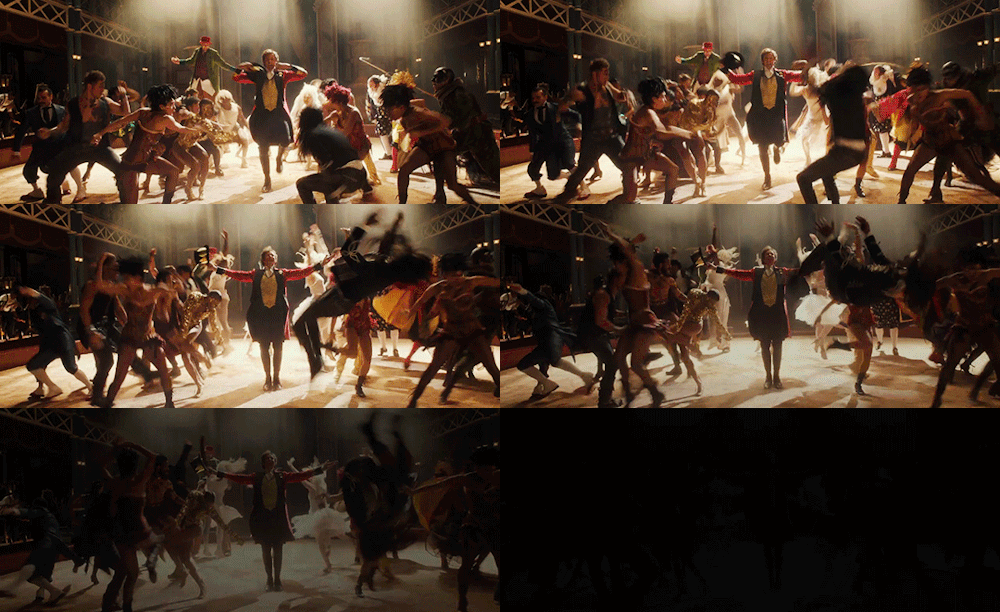
The Greatest Showman (2017)

Now, like the quick review that I did for this film a few weeks back, I feel that I must start this section off by addressing the big elephant in the room that is the film’s portrayal of its main protagonist, P.T. Barnum. The Greatest Showman is inspired by the origin story of the iconic Ringling Bros. and Barnum and Bailey Circus, which ironically closed for good this past May. But while the film portrays Barnum as an affable family man who was just trying to make it in life, many have noted that he wasn’t exactly as endearing in real life as he is in the film. As many have pointed out, P.T. Barnum was an incredibly cut-throat businessman who exploited the people who performed in his circus for money. As such, it’s understandable if some may feel that the film’s messages of accepting one’s self and celebrating the best parts of humanity to be disingenuous given that Barnum wasn’t exactly one to follow these ideals in real life. However, I don’t think that this hurts the film as much as some may claim. After all, films that are ‘based on true stories’ usually aren’t 100% accurate about the real-life events that they’re focusing on. Just look at films like The Social Network, which delved into the origins of the popular social media network Facebook yet portrayed its creator Mark Zuckerberg as a socially awkward figure who was overly judgmental of others. Basically, what I’m trying to say here is that it’s rare to see a ‘true story’ film be an entirely accurate rendition of real events, which is why I’m genuinely puzzled as to why this film was put under so much scrutiny for the artistic licenses that it took.

When it comes to being exactly what it’s intended to be, a musical, The Greatest Showman fully succeeds at being one thanks to a strong visual style and excellently choreographed musical numbers. And it’s all bolstered by an excellent ensemble cast highlighted by Hugh Jackman in the role of P.T. Barnum. Despite what I said earlier about how the film portrays him in a radically different light, Jackman is charismatic as always as he perfectly conveys Barnum’s showman skills that were noted in an interview as being reminiscent of former Apple CEO Steve Jobs’ showmanship. Jackman also has excellent chemistry with Michelle Williams, who plays Barnum’s loving wife Charity, and while that basically sums up her role in the film in a nutshell, like all her other onscreen performances Williams handles it greatly for what is basically her first major role in an onscreen musical. Another big standout is Zac Efron, who plays a playwright named Phillip Carlyle who becomes Barnum’s main business partner (in other words, he’s meant to represent Barnum’s real-life business partner, James Anthony Bailey). He too is incredibly charismatic while also having solid chemistry with Zendaya, who plays a trapeze artist named Anne Wheeler who he falls in love with. And when it comes to the film’s biggest standout, look no further than Broadway veteran Keala Settle as ‘the Bearded Lady’, who headlines the film’s main song ‘This is Me’. On that note, this film’s biggest strength is its soundtrack. Alongside ‘This is Me’, whose sequence in the film is an undisputed highlight, other standout tunes include ‘The Other Side’, performed by Jackman and Efron during the scene where Barnum tries to convince Carlyle to join the circus, and the film’s show-stopping opening/closing number, ‘The Greatest Show’. Because of all this, The Greatest Showman is easily shaping up to be one of the most underrated films of this past year. Sure, it may not exactly be historically accurate, but if you’re just looking for an entertaining musical that both kids and adults can enjoy, then I’m sure that you’ll be more than satisfied with this film.

Image result for the greatest showman gif

To be perfectly blunt, 2017 was not that good of a year for the animation genre. While there were solid hits like Captain Underpants and Cars 3, there were also some major stinkers like The Nut Job 2: Nutty by Nature and, of course, The Emoji Movie. Thus, leave it to old reliable, Pixar, to give us what is easily the best animated film of the year.

8. COCO

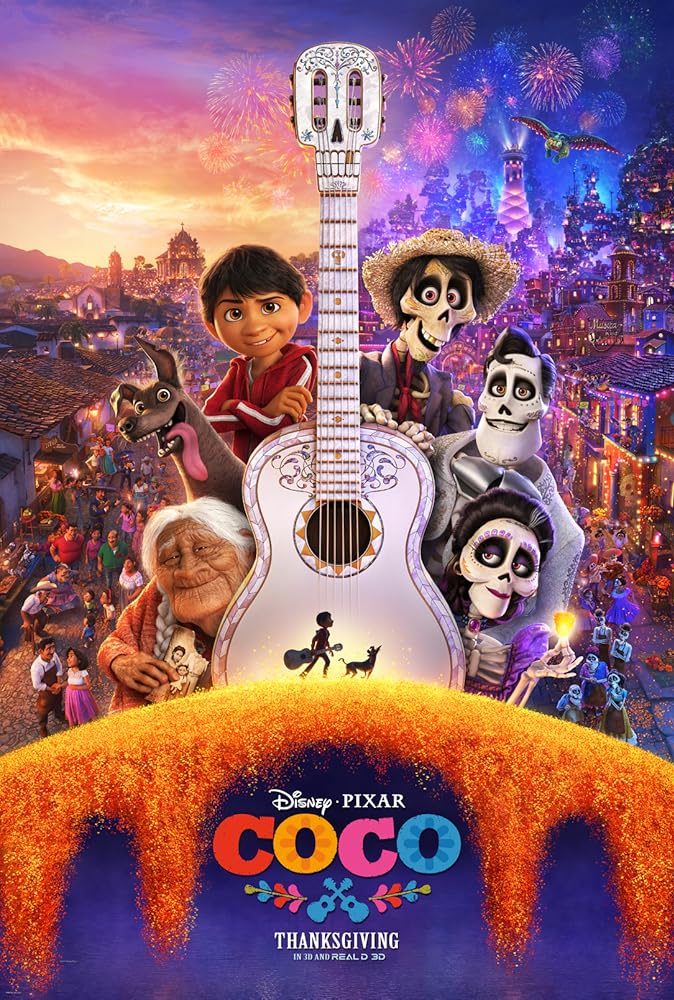
Coco (2017)

Coco served as the latest directorial outing for longtime Pixar filmmaker Lee Unkrich. Having been involved with Pixar ever since they started making feature films, Unkrich first got his start as one of their primary editors before being promoted to the position of co-director on films like Toy Story 2, Monsters Inc., and Finding Nemo. He was finally promoted to the role of the main director on Pixar’s big critical/commercial sensation Toy Story 3, one of only three animated films that got nominated for Best Picture at the Academy Awards. And for his latest film, Coco, Unkrich takes us on a journey that is inspired by the most famous Mexican holiday of all-time, Día de Muertos AKA the Day of the Dead. However, there was some initial skepticism amongst those who were fearful about Pixar’s handling of such an important aspect of Mexican culture, especially after Pixar’s parent company Disney tried to acquire the trademark for the phrase ‘Día de Los Muertos’. Thankfully, these fears were ultimately proven unfounded, as Coco treats its subject matter with the respect that it deserves. Of course, like any great Pixar film, Coco boasts gorgeous animation that brings the world of the Land of the Dead to life in so many great ways. The film also features a great ensemble cast of characters headlined by the likable main protagonist Miguel and the charismatic Land of the Dead trickster Hector. Newcomer Anthony Gonzalez and Gael Garcia Bernal are both excellent in their respective roles while also being backed by a solid supporting cast that includes Benjamin Bratt as famous musician Ernesto de la Cruz and Alanna Ubach as Miguel’s stern but caring great-great grandmother Imelda.

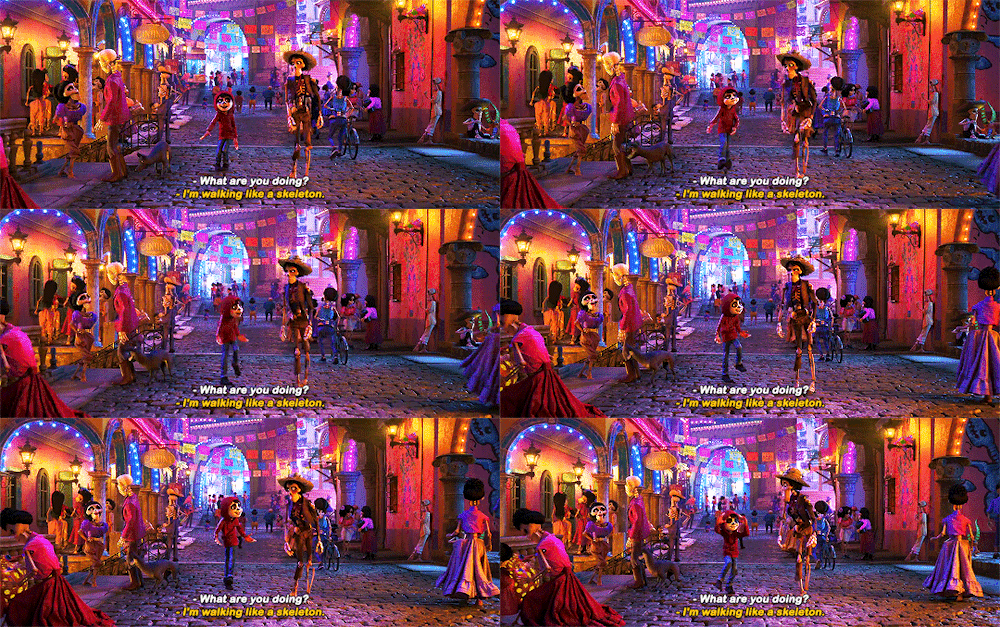
But, of course, also like any great Pixar film, Coco is bolstered by an emotionally poignant story that is tied to the most important aspect of the Día de Muertos ceremonies, the importance of family. The bulk of the film’s plot revolves around Miguel trying to prove to his family that he’s meant to be a musician despite his family’s decades-long ban on music after his great-great-grandfather left to pursue a career in music. Miguel is then led to believe that his great-great-grandfather is none other than the legendary Ernesto de la Cruz, which eventually leads to him traveling to the Land of the Dead in the hopes of finding his idol to help prove his family wrong. However, Miguel soon learns that his idol is not who he’s cracked up to be (a plot twist that ironically ended up mirroring real life after Pixar CEO John Lasseter became tied to the ‘Weinstein effect’ epidemic) and that Hector is his real great-great-grandfather. And while Miguel has spent much of the film trying to distance himself from his music-hating family, they end up becoming vital to his efforts of exposing de la Cruz’s secrets, namely how he poisoned Hector, the real creative force behind his music, when the latter tried to return to his family. This, of course, then leads to the biggest emotional moment in the film in which Miguel saves Hector from being forgotten in the Land of the Living by singing ‘Remember Me’, a song that Hector had written for his daughter, to his great-grandmother Coco. Though I must add that Hector’s own performance of the song to the infant Coco in a flashback prior to the moment when he left to pursue his career in music is another great emotional moment as well. Bottom line, Coco is an effectively emotional film, making it one of the purest examples of why Pixar has continued to be one of the most dominant animation studios in the entire industry.

Image result for pixar coco gif

Over the past few years, we’ve been treated to one of the most surprisingly effective franchise revivals thanks to the return of a long-running sci-fi franchise, which continued this year with another emotionally powerful blockbuster.


Andy Serkis and Amiah Miller in War for the Planet of the Apes (2017)

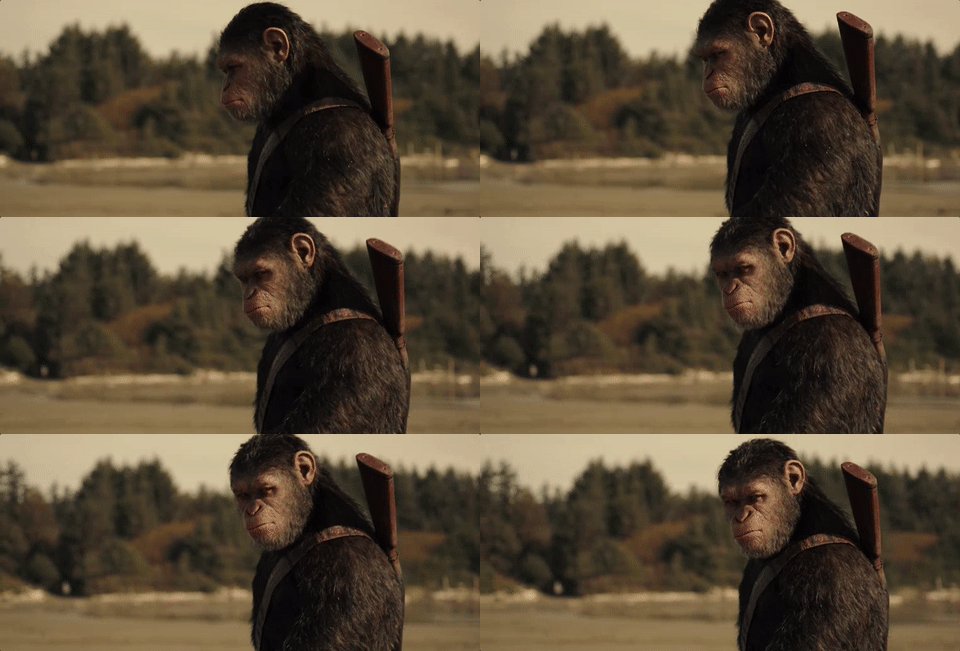
2011’s Rise of the Planet of the Apes was easily one of the most surprisingly good releases of that year. Featuring new advancements in the art of performance-capture visual effects and a terrific performance from mo-cap king Andy Serkis in the role of the intelligent ape Caesar, the film was a solid critical/commercial hit and was lauded for its emotional depth. This was then followed by a superior sequel in 2014’s Dawn of the Planet of the Apes, where director Matt Reeves managed to up the emotional depth of Rise to even greater levels, resulting in a film where the story and characters were just as well-handled as its amazing visual effects. Sure enough, this hot streak for the franchise managed to continue with the third entry in the reboot series, War for the Planet of the Apes. Reeves returns as director and once again does a phenomenal job of balancing the impressive visuals with an emotionally-charged plot and well-layered characters. For one thing, War is arguably the darkest entry in the series to date, as it involves Caesar embarking on a quest for revenge against a vicious colonel and his military faction Alpha-Omega after the former kills his wife Cornelia and his older son Blue Eyes. Along the way, Caesar is also haunted by the events of Dawn, namely the fact that he was forced to kill his traitorous former ally Koba who returns in this film via a series of hallucinations. But while the film certainly maintains a grim tone throughout, there are some elements in it that help to lighten the mood at the right times, namely Steve Zahn’s ‘Bad Ape’ who gets a lot of the best humorous moments in the film (e.g. when he’s looking through a pair of binoculars the wrong way (“Oh no! Why so Small?”))

One of the best aspects of Dawn was how there was a good balance in terms of character development for both the human and ape characters. This was best reflected in Gary Oldman’s character Dreyfus who, despite serving as an ‘enemy’ of the apes, wasn’t necessarily an antagonistic figure. And while Woody Harrelson’s Colonel is by no means a ‘sympathetic’ character, War does continue the franchise’s recent trend of making its main human characters just as well-layered as the apes. Harrelson does a phenomenal job as the film’s main antagonist, who is so relentless in his efforts to wipe out the apes that he even executes his own men when they became infected with a mutated strain of the Simian Flu that started this whole conflict in the first place. This brings us to the other big human character in the film, a mute young girl (Amiah Miller) who was affected by the Simian Flu. She ends up becoming a friend of the Apes and is later named ‘Nova’ by her new ‘guardian’, Caesar’s loyal adviser Maurice. And yes, fans of the franchise will no doubt recognize that name as she is the younger self of Linda Harrison’s character from the original Planet of the Apes. But, of course, at the end of the day, War for the Planet of the Apes’ main purpose is to serve as a perfect conclusion to the arc of Caesar. After managing to save his fellow Apes from Alpha-Omega, Caesar dies peacefully from the injuries that he sustained during the battle after Maurice assures him that his son Cornelius “will know who was father”. With that in mind, I’m curious as to how this series may potentially continue after this. Could we possibly end up getting a new take on the original Planet of the Apes story in which an astronaut returns to Earth unaware that it has been taken over by apes? This plot-thread was potentially established in Rise, after all, and despite Caesar’s death in this film, there’s a possibility for Serkis to return for this supposed fourth film albeit in a different role (e.g. a fully grown-up Cornelius). Ultimately, though, if this truly is the last installment of the reboot series, then at the very least it went out on the best note possible.

Image result for war for the planet of the apes gif

And that’s the end of Part 2 of Rhode Island Movie Corner’s annual ‘Favorite Films of the Year’ list. Thanks for following along and be sure to check back in tomorrow for Part 3, in which I’ll be listing films #6-4.

Wednesday, January 24, 2018

TOP 12 FAVORITE FILMS OF 2017: #12-10 + Honorable Mentions


Overall, I’d describe 2017 as a great year for film… and a terrible year for the film industry. And in terms of the latter, you all know exactly what I’m talking about. Early this past October, several sexual harassment and assault allegations were levied against longtime producer Harvey Weinstein. Like clockwork, this then led to other allegations against some of the biggest names in the industry, including Kevin Spacey, Louis C.K., and even Disney/Pixar mainstay John Lasseter just to name a few (emphasis on ‘just to name a few’). Now, as many of you know, I usually try to avoid delving into political discussions on this site… but, in this instance, the ‘Weinstein effect’ is such an unavoidable topic at this point that I feel that I at least have to say something about it. With that said, I’ll say this. At the very least, it’s clear that the film industry has begun to take major steps in fighting back against the sexual predators that have been a part of their community for years (e.g. when Ridley Scott removed Kevin Spacey from All the Money in the World, replacing him with Christopher Plummer). And while there are undeniably still a lot of ‘Harvey Weinstein’ types out there, there are also quite a lot of good people in the industry who are doing all that they can to get rid of the industry’s scum. In short, to quote a line from this year’s historical drama Detroit, ‘change is coming’; and to quote a widespread online hashtag, #TimesUp. With all that out of the way, it’s time to delve into my annual list in which I count down my picks for my Top 12 Favorite Films from this past year in film. For those who are new to this site, the main reason why I do a Top 12 instead of the more traditional Top 10 is so that I can honor even more of the many great films that I’ve seen over the last 12 months.

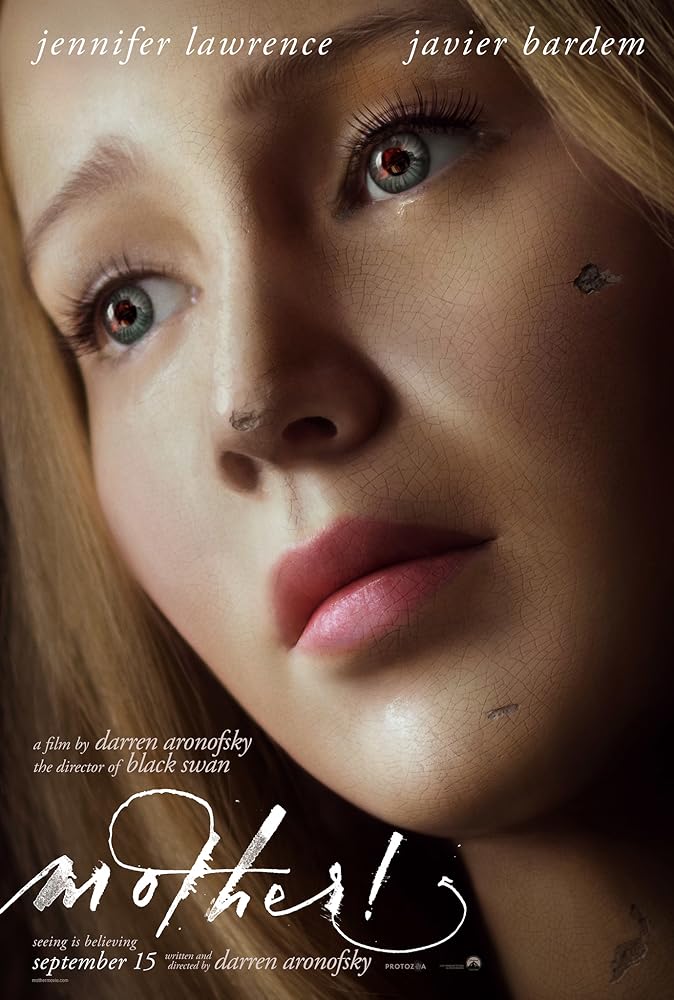
Before I begin, though, I must lay down my usual ground-rules for the following 4 posts. First off, I will warn you all ahead of time that these posts will be heavy on the spoilers. If you have not seen any of the films that will be appearing on this list, please refer to the non-spoiler reviews that I have made for them as I will be addressing some of their most critical moments in these posts. Said reviews will be provided via a series of web links that can be found at the start of each pick. The second thing to note about this list is that, like every year, I haven’t had the time to see every major film that had come out in 2017. Believe me, if I did have the time, then I would most surely try to see as many films as I possibly can before working on this list. However, that’s just not feasible at this point; thus, if you end up wondering why films like Get Out, Lady Bird, and The Big Sick aren’t on this list, this is the reason why. And this brings me to another point that I’ve unfortunately had to implement as one of my ground-rules in recent years. I want to make things perfectly clear; this list will be almost entirely dominated by films that fall into the category of big-budget, VFX-heavy blockbusters. I recognize that this will probably not sit very well with those who prefer films that come out of the independent market; however, that’s just how I roll right now. In fact, I’d argue that a lot of the films that will be appearing on this list (several of whom are remakes, sequels, reboots, etc.) are more than capable of standing toe to toe with whatever gets nominated for this year’s Best Picture category at the Oscars. And really, just because a film is ‘original’ or ‘independently made’ does not automatically make it ‘good’ (don’t make me have to bring up Mother again).

Finally, as always, there’s the most important ground-rule of all; please, please, PLEASE be respectful of other people’s opinions when it comes to discussing your favorite films of the year. I say this especially considering some of the unpleasant incidents that the film fan community has been involved in this past year (heck, I might even address some of them in this list). At the end of the day, we all need to remember that film is a subjective medium. In other words, not everyone is going to like the same thing; that’s why I don’t get too worked up about whatever film wins at all the big awards shows or the always controversial award season ‘snubs’. You can’t please everybody. With that in mind, I’m well-aware that not everyone reading these posts will be a fan of some of the films that will be appearing on this list. That is why I always refer to it as my ‘Favorite Films of the Year list’ instead of the more definitive-sounding ‘Best Films of the Year list’, so if there’s a film on this list that you weren’t a fan of, that’s totally fine. All the power to you, my friend. Just don’t be a jackass about it and harshly berate those who have a different opinion than yours. Trust me, I’ve been subjected to comments along the lines of ‘your opinion doesn’t matter’ quite a few times in the past and, simply put, it’s not fun. And now, with that long intro out of the way, I present you with my Top 12 Favorite Films of 2017. This is Part 1 of 4 and today we’ll be looking at picks #12-10.

But first, as always, let’s start with my Honorable Mentions. This year, I have 6 to name…

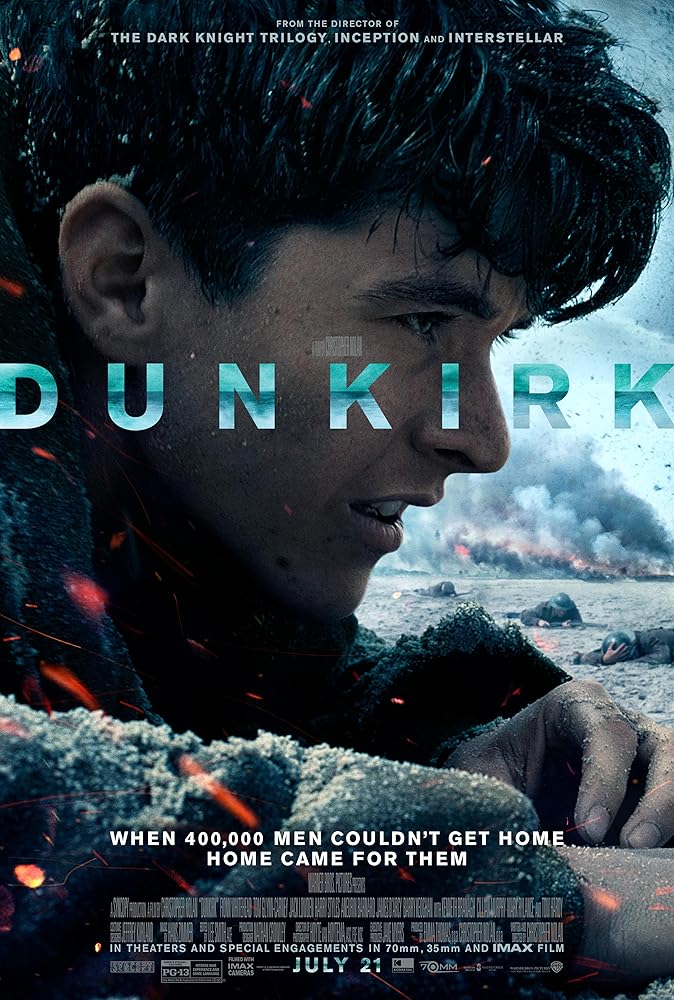
DUNKIRK

Fionn Whitehead in Dunkirk (2017)

Some of you may be surprised to find that Christopher Nolan’s latest directorial effort did not crack the Top 12. After all, I have gone on record stating that Nolan is one of my favorite directors working today; as such, his films usually end up ranking high on these end-of-the-year lists for me. Case in point, his last film Interstellar was originally one of the two films that were tied for my favorite film of 2014… before I accepted the fact that I had pulled a major cop-out that year and then proceeded to put it back to the #2 spot. But as for Dunkirk, while I did like it, I’ll admit that it just wasn’t one of my absolute favorites from this past year. Still, Nolan’s take on the real-life evacuations that had occurred from upon the beaches of the titular Dunkirk, France during World War II is a well-crafted wartime thriller. While there was some initial skepticism over the fact that Nolan decided to limit the war action to a non-graphic PG-13 rating, he more than makes up for this with some of the most tension-filled action sequences of the year. And like any Nolan film, these sequences were done with practical effects and shot on film instead of digital, resulting in some amazing cinematography that makes this film quintessential viewing on the big screen. After all, if there’s one thing that Nolan has very much become known for these past few years, it’s his concentrated efforts to keep the art of theater-going alive with films that are best seen on the biggest screens around. Sure enough, like Interstellar, Dunkirk was an undisputed must-see in IMAX screened on 70 mm film.

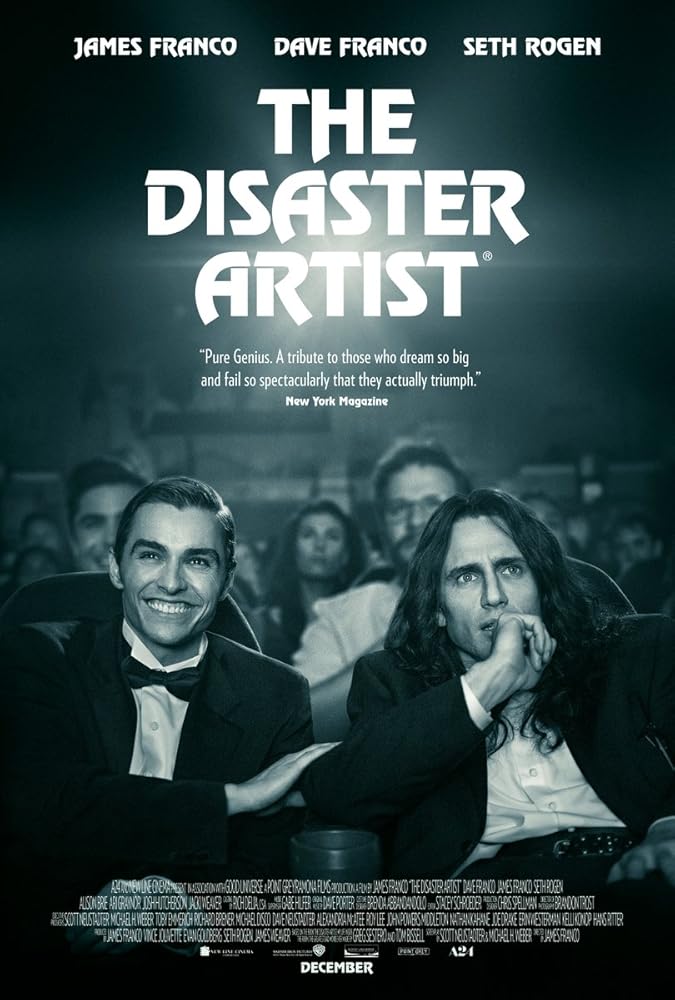
THE DISASTER ARTIST

James Franco, Seth Rogen, Zac Efron, and Dave Franco in The Disaster Artist (2017)

Many on the internet are familiar with the infamous 2003 flick The Room. Since its initial release, writer/director Tommy Wiseau’s bizarrely incoherent drama has gone on to become one of the most popular ‘so bad, it’s good’ films of all-time. And now, thanks to The Disaster Artist, based on the autobiography of the same name of Wiseau’s co-star Greg Sestero, we get to witness some of the madness that went into its production. James Franco not only directs the film but stars in it as well as the one and only Tommy Wiseau. And all in all, he does an excellent job in both roles, giving the film solid pacing and a consistent tone throughout while also perfectly capturing all aspects of Wiseau’s eccentric personality. This is paired nicely with Franco’s brother Dave and Seth Rogen’s equally excellent performances as Sestero and The Room’s script supervisor (and ‘alleged real director’) Sandy Schklair, respectively, both of whom serve as the straight men to Tommy’s antics. Ultimately, though, this film is a lot like Tim Burton’s 1994 biopic on another infamous filmmaker, Ed Wood. In other words, while the film fully acknowledges the fact that Tommy Wiseau is a bizarre individual who often acted in a tyrannical manner while directing The Room, it also sympathizes with him through his and Sestero’s journey of just trying to make it big in the film industry. Because of this, while The Room is still considered by many as one of the worst films of all-time (though in its case, that’s not entirely a bad thing), The Disaster Artist is a far different story.

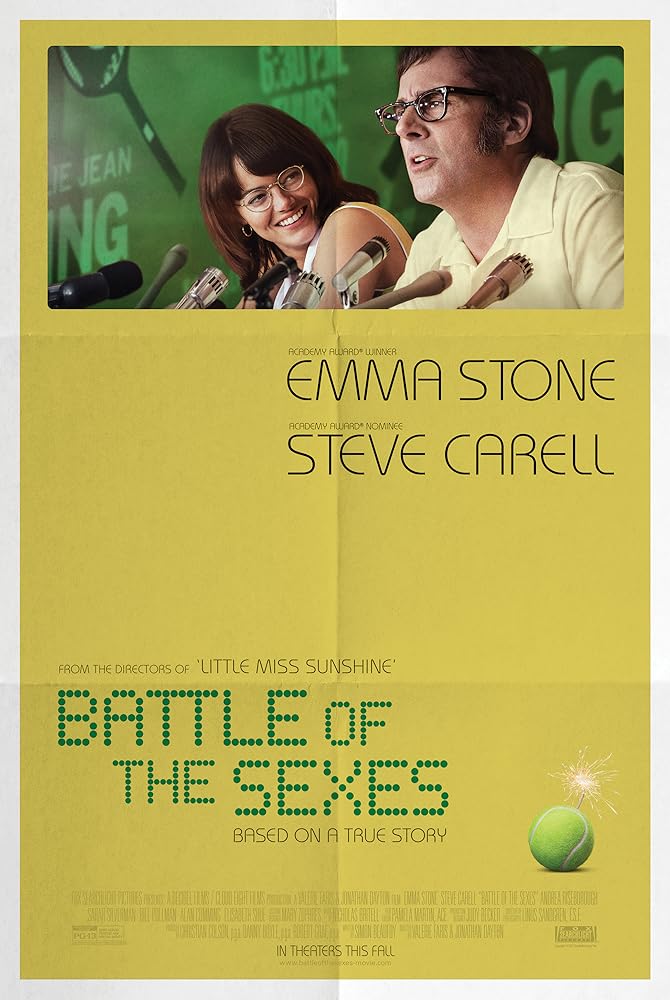
BATTLE OF THE SEXES

Elisabeth Shue, Bill Pullman, Alan Cumming, Steve Carell, Sarah Silverman, Emma Stone, and Andrea Riseborough in Battle of the Sexes (2017)

This film’s title says it all as it focuses on the iconic exhibition tennis match that it’s named after between Billie Jean King and Bobby Riggs. King’s victory in the 1973 match proved to be a landmark moment in the sport as it paved the way for female tennis players gaining greater respect in what was, at the time, a heavily male-dominated sport. Sure enough, co-directors Jonathan Dayton and Valerie Faris’ film explores the build-up to the event and how King worked tirelessly to fight for equal pay amongst her and her fellow players. This includes everything from the women-only tennis tournament established by her and reporter Gladys Heldman to the moment where she eventually has to accept Riggs’ offer to play him when one of her big rivals loses to him in an embarrassing blowout. Through it all, King proves to be an endearing protagonist who goes through quite a lot on an emotional level, namely when she begins to have an affair with her hairdresser Marilyn that ends up affecting her marriage to Larry King (For the record, not ‘that’ Larry King). Because of all of this, you find yourself fully rooting for her when she finally ends up competing against Riggs in the big ‘Battle of the Sexes’ exhibition match. And, of course, a lot of this is thanks to Emma Stone’s phenomenal performance as Billie Jean, though she’s also backed by an excellent supporting cast that includes Steve Carell as Riggs, Andrea Riseborough as Marilyn, and Alan Cumming as King’s fashion designer/friend Ted Tinling just to name a few. In short, Battle of the Sexes is quite a unique entry in the sports film genre as the main sport that it focuses on, tennis, is ultimately not its biggest focus; instead, it’s more about Billie Jean King and the impact that she left on the sport. And what an impact it was.

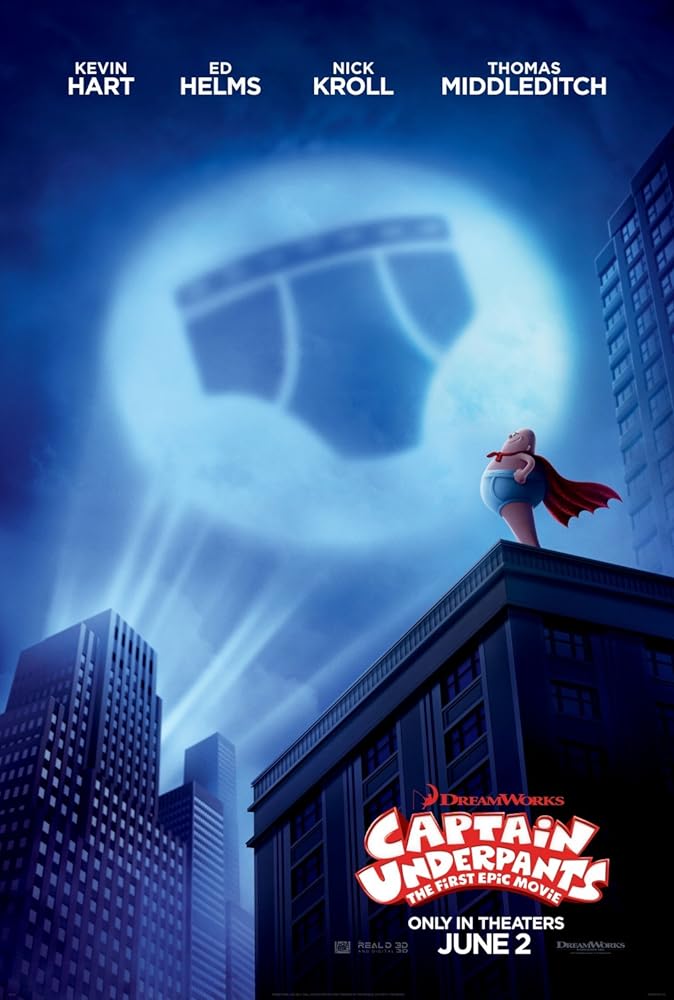
CAPTAIN UNDERPANTS: THE FIRST EPIC MOVIE

Ed Helms in Captain Underpants: The First Epic Movie (2017)

To answer your first question, yes, a film titled Captain Underpants is one of my favorite films of 2017. Like many others of my generation, I grew up reading author Dav Pilkey’s popular series of books about an elementary school principal who’s hypnotized into thinking that he is an underwear-themed superhero. Despite their admittedly juvenile sense of humor, the books featured fun characters mixed with clever writing that almost always broke the fourth wall. And even though the book series technically ended back in 2015, you may be surprised to find that its first film adaptation, courtesy of DreamWorks, is one of the most faithful film adaptations of any source material in recent years. While technically a combination of the plots of books 1 and 4 with the origin stories of the former and the main antagonist of the latter, writer Nicholas Stoller perfectly captures the spirit of the books right down to the implementation of the series’ most popular running gags. This includes everything from the read-throughs of main protagonists George Beard and Harold Hutchins’ homemade comics to, of course, Flip-O-Rama, the moments from the books where readers were encouraged to flip a pair of pages back and forth to simulate ‘extremely violent’ action sequences. Don’t even get me started on how excited I was when that scene popped up. But amidst all the toilet humor (figuratively and literally seeing how there are sentient toilets in this), the film also manages to capture the charm and heart of the books through the perfect representation of one of the franchise’s key elements, the friendship of George and Harold. Both Kevin Hart and Thomas Middleditch are fantastic in their respective roles as are Ed Helms in the dual role of Mr. Krupp/Captain Underpants and Nick Kroll as the film’s main antagonist Professor Poopypants (and yes, that’s his name…). Thus, to make a long story short (yes, that’s a reference to the books…), watching Captain Underpants: The First Epic Movie truly made me feel like a kid again. TRA LA LAAAAAA!!!

P.S. I was also glad to hear that there’ll be a Netflix series coming out sometime later this year that will continue the wacky adventures of our lovable main protagonists.

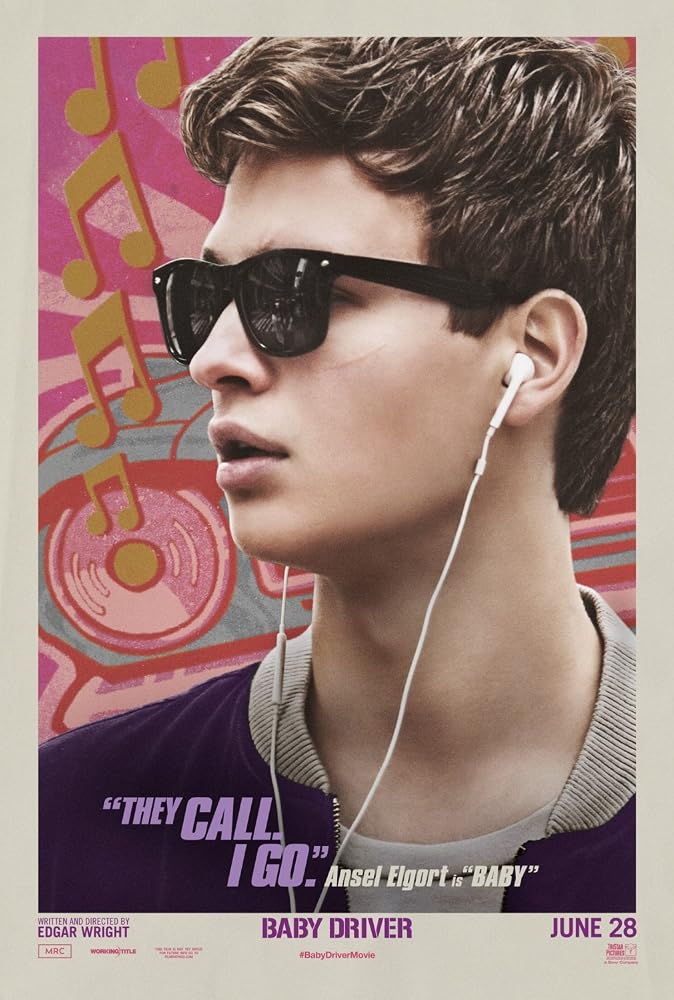
BABY DRIVER

Ansel Elgort in Baby Driver (2017)

After enduring the whole debacle that arose from his involvement and ultimate departure from Marvel Studios’ Ant-Man, Edgar Wright was finally able to return to doing what he does best this year with his latest big-screen masterpiece, Baby Driver. Partially inspired by a music video that he directed for the band Mint Royale in 2003, the film is a high-octane crime thriller that boasts some fantastic car chases. Said car chases and all other subsequent action sequences are set perfectly to an equally outstanding soundtrack that rivals the Awesome Mixes from the Guardians of the Galaxy franchise as one of the best film soundtracks in recent years. Now, admittedly, the film’s plot, in which a good-natured young man who’s forced into being a getaway driver for a crime boss tries to get out of ‘the business’, is arguably one of the more straight-forward plots to come out of one of Wright’s films. Despite this, however, it all works out in the end thanks to Wright’s excellent direction, as he manages to craft some effectively suspenseful moments in the film’s second half despite what I just said about the plot being a tad bit predictable. Plus, the film boasts an excellent ensemble cast highlighted by Ansel Elgort as the charismatic protagonist Baby, Jon Hamm and newcomer Eiza Gonzalez as the wild couple of Buddy and Darling, and Jamie Foxx as the volatile Bats. All in all, Baby Driver was another welcome addition to Edgar Wright’s prestigious filmography and it ended up becoming his most commercially successful directorial outing to date, which I’d argue is a nice reward for him after everything that happened with Ant-Man.

KINGSMAN: THE GOLDEN CIRCLE

Colin Firth, Julianne Moore, Mark Strong, Channing Tatum, and Taron Egerton in Kingsman: The Golden Circle (2017)

This film serves as a prime example of why I don’t take Rotten Tomatoes’ ratings that seriously. I mean, really, this film opens with an epic car chase set to Prince’s ‘Let’s Go Crazy’, concludes with an epic final shootout set to Elton John’s ‘Saturday Night’s Alright for Fighting’, and features the Rocket Man himself in an admittedly absurd but still all-around awesome cameo… and yet it only maintains a 51% rating on RT whereas something like Mother has a 69% rating? In all seriousness, I will admit that this year’s follow-up to director Matthew Vaughn’s 2015 outing Kingsman: The Secret Service is far from perfect. Sure, maybe the film is a bit overlong with a near two-and-a-half-hour runtime. And sure, maybe some of the new characters that are introduced in this film don’t get as much material to work with as they should (e.g. despite his prominent appearance in the marketing, Channing Tatum’s Agent Tequila is basically just a ‘cameo appearance’). Still, this film proves to be just as entertaining as its predecessor thanks to A.) its awesomely over-the-top action sequences and B.) the franchise’s phenomenal lead trio of Taron Egerton as Eggsy, Colin Firth as Harry Hart, and Mark Strong as Merlin. After his breakout turn in the previous film, Egerton has transitioned perfectly to the role of ‘leading man’ while Firth gets some excellent material to work with thanks to Harry’s ‘resurrection’ arc. And finally, Mark Strong is still just as big of a standout as always as Kingsman tech guru Merlin, who goes out on the most epic of notes with an emotionally stirring sacrifice set to John Denver’s ‘Country Roads, Take Me Home’. In conclusion, I’ll admit that my high praise for this film may have been partially influenced by the fact that it was the first new film that I saw after the torturous experience that I had while watching Mother; still, as a fan of the first Kingsman, I was more than satisfied with its equally entertaining follow-up despite its shortcomings.

And now we move onto this year’s Top 12, which starts off with a first for this annual list of mine… a horror film. As I’ve made it clear in the past, I’m not that big a fan of the horror genre. This explains why a lot of recent horror films usually end up on my ‘Worst of the Year’ lists (e.g. my #3 worst from this past year, Rings), which also means that it would take quite a lot for a film like this to crack my Top 12. And with this next film, that is exactly what happened…

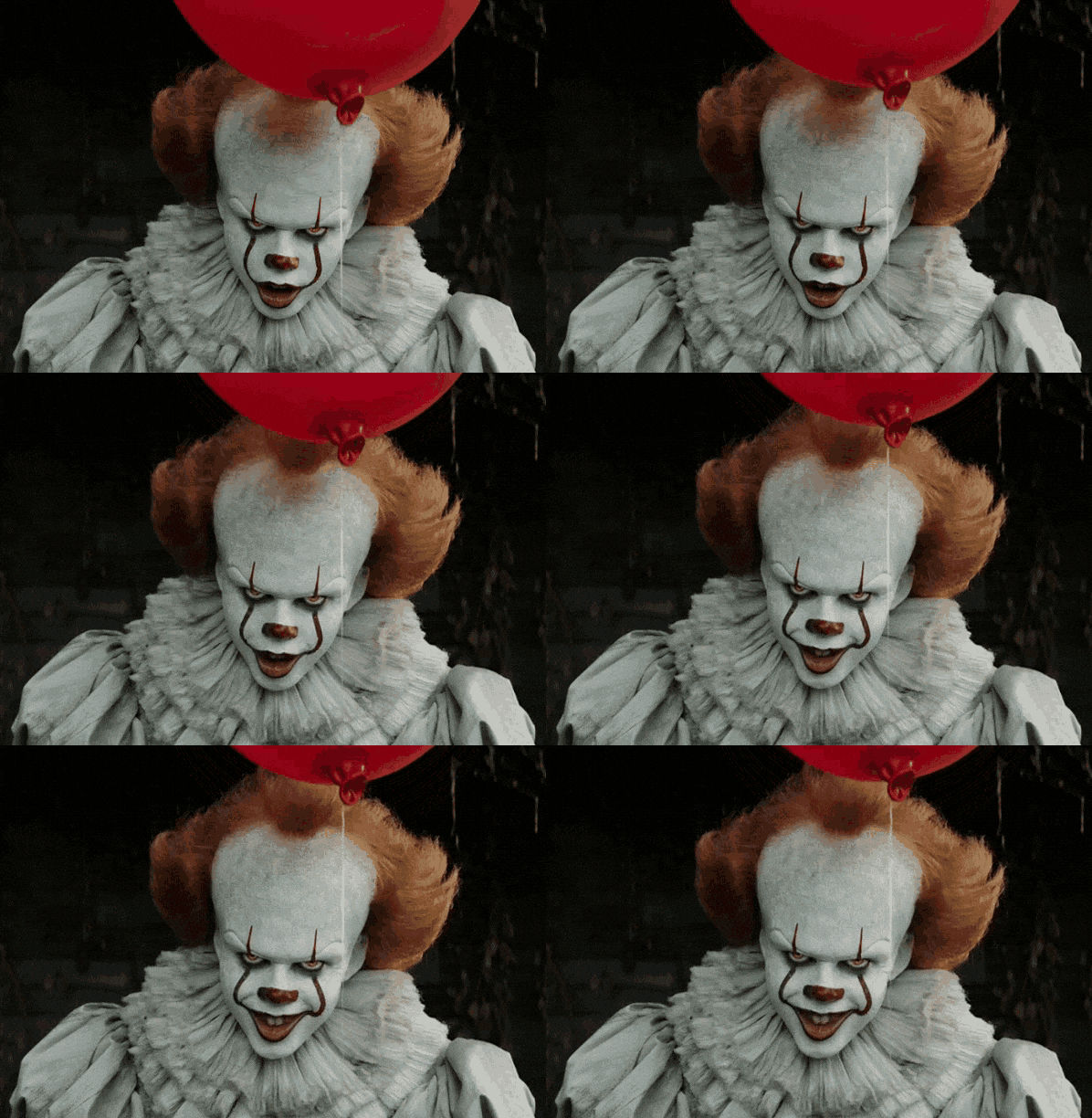
12. IT

Bill Skarsgård and Jackson Robert Scott in It (2017)

This year’s big film adaptation of Stephen King’s 1986 novel It was the second major adaptation of its source material following a two-part miniseries that aired on ABC in 1990. In preparation for the new film, I watched and reviewed the miniseries for this site. In that review, I noted that while I didn’t think that the miniseries was ‘terrible’, it also hasn’t aged that well. Really, the only notable thing about it nowadays is Tim Curry’s standout performance as the main antagonist, Pennywise the Dancing Clown. Suffice it to say, the film version of It is a far superior take on its source material. Because it only focuses on the first half of the story, it’s allowed to take its time when it comes to properly developing its main characters. And whereas the miniseries had to tone down some of the darkest elements of the novel to be suitable to air on national television, the film fully embraces its R rating to showcase some of the most disturbing moments from King’s novel. Granted, not every major sequence from the novel occurs in the film, most notably the infamous scene in which the seven kids partake in a massive orgy (and no, I’m not kidding about that one; quite frankly, I think many of us can agree that it was a good thing that this part was taken out), but the dark and foreboding atmosphere is still strong throughout. This, of course, is thanks in large part to Bill Skarsgard’s excellent turn in the role of Pennywise. Now, to be fair, I understand why some may still find Tim Curry’s take on Pennywise to be better given how Skarsgard isn’t given a lot of opportunities for comedy, which some feel is a vital part of being a clown. Still, in the context of this film, the darker take on the character works quite well as Skarsgard very much succeeds in giving off an unsettling vibe whenever he’s on-screen. In a lot of ways, it’s very similar to Heath Ledger’s iconic take on the Joker from The Dark Knight, which focused more on the character’s psychotic personality than his affinity for dark humor.

The real highlight of the film, however, is its group of main leads AKA the seven kids from the town of Derry, Maine who band together to form ‘the Losers’ Club’. For a cast that was made up of mostly newcomers, these seven young leads are all fantastic in their respective roles. Sure, the film does tend to focus on some of them more than others, namely Bill given what happens to his brother Georgie and Beverly, the lone girl of the group who deals with A.) being deemed a ‘slut’ at school and B.) her abusive father. Still, each of the kids does get their moment to shine in the film; more importantly, though, is the fact that you become fully endeared to them as the film goes on. Without this, you wouldn’t go ‘aww…’ at the moment when Ben saves Beverly by kissing her and she reveals to him that she knows that he was the one who wrote her a romantic poem. And you wouldn’t tear up at the part where, after the gang defeats Pennywise, Bill finds Georgie’s yellow raincoat, resulting in him finally coming to terms with his brother’s death at the hands of the demonic clown. And this, to me, is why this film works so well in contrast to other recent horror films. Oh sure, it does have some great horror moments, like the scene where Pennywise emerges from a projector to attack the kids (I won’t lie, I audibly yelled ‘Holy S***!’ in the theater when that happened; it’s THAT effective of a scene). But when it comes to some of the biggest flaws of a lot of modern horror films, easily one of the biggest comes in the form of stock, cliched characters who are just there to be killed by the bad guy. That’s not the case here, though, as you do care about these kids and root for them to succeed against Pennywise. Because of this, It is much more than just a ‘horror’ film; it’s a tale of friendship, young love, and overcoming one’s fears…that just so happens to involve a kid-eating clown. Thus, you don’t have to be a fan of the horror genre to appreciate how truly well-made of a film that this is.

Image result for it 2017 gif

One of the most famous films of all-time ended up getting a sequel this year. And despite having to follow in the footsteps of a landmark entry in the science-fiction genre, this next film more than managed to live up to the hefty expectations that were laid upon it.


Harrison Ford, Jared Leto, Ryan Gosling, and Ana de Armas in Blade Runner 2049 (2017)

I’ll openly admit that this past year was the first time that I watched Ridley Scott’s seminal 1982 classic, Blade Runner. Obviously, I made sure to check it out first before seeing its long-awaited sequel, Blade Runner 2049. And after watching the ‘Final Cut’ of the film, mainly because this was the one cut out of all of Blade Runner’s infamous various edits that Scott himself was the most involved in developing, I must say that I do agree with the consensus that it’s one of the best sci-fi films of all-time. This, of course, means that there was quite a lot of pressure put on the sequel to be just as successful, especially considering that it had been in the works for years. Thankfully, Arrival director Denis Villeneuve manages to live up to these lofty expectations, for the most part, with a highly engaging follow-up that respects its predecessor while also doing its own thing at the same time. In terms of the former, that primarily comes via the efforts to replicate the original’s classic visual style. While there have been quite a lot of advancements in the art of visual effects since the original Blade Runner came out, Villeneuve very much succeeds in recapturing the mesmerizing aura of the franchise’s iconic dystopian future setting. Because of this, Blade Runner 2049 is easily one of the best-looking films of the year thanks in large part to the amazing cinematography from the legendary Roger Deakins. From the impressive wide shots to the film’s rich and vibrant color palette, 2049 boasts plenty of great frame-worthy imagery. And it’s all backed, in turn, by a terrific score from the equally legendary Hans Zimmer and Zimmer protégé Benjamin Wallfisch (who also did the music for It).

As for the plot, it’s an effectively natural follow-up to the original as it sees new main protagonist K (Ryan Gosling) investigating a seemingly impossible development; a female Replicant who gave birth. This then leads to him crossing paths with the child’s father, who is none other than the original film’s main protagonist, ex-Blade Runner Rick Deckard, meaning that the pregnant Replicant was Deckard’s love interest from the first film, Rachael, who is revealed to have died in childbirth. Now, on that note, it should be noted that while Harrison Ford does return to reprise his role as Deckard, he ultimately doesn’t show up in the film until after the halfway point. Also, for those who were wondering, the film doesn’t really address the long-standing debate of whether Deckard is a Replicant himself, which was initially brought upon by the various interpretations of the first film’s ending depending on the cut of it that was viewed. Still, despite his limited screen-time, Harrison Ford is once again excellent in the role and is given a lot of great emotional material to work with. One of his best scenes comes when he finds himself taken captive by Replicant manufacturer Niander Wallace, who offers him a reward in exchange for information about his child. Said reward comes in the form of a clone of Rachael, which Deckard ultimately rejects when he points out that ‘her eyes were green’… which then leads to Wallace’s assistant Luv executing the clone point-blank. All in all, it’s an excellent sequence thanks to Ford’s excellent performance and the impressive visual effects work that was done to recreate Sean Young’s Rachael as she had looked in the first film. And for the record, yes, that wasn’t Sean Young reprising her role; it was just a digital double.

Gosling also gets some great material to work with as well, namely when K (who is immediately established as being a Replicant) starts to wonder if he’s the child of Deckard and Rachael because of one of his earliest memories involving a toy horse. This is ultimately proven false, though, as we learn that the child is Replicant memory scientist Dr. Ana Stelline (“All the best memories are hers…”). But when it comes to the film’s biggest standout, that honor goes to Ana de Armas as Joi, one of many from a line of holographic A.I. programs that has been retrofitted into being K’s girlfriend. Like the arc that Rachael went through in the first film when she began to realize that she’s a Replicant, Joi is easily one of the most complex characters in the entire film because of her desire to be ‘real’, to the point where she even hires a prostitute to project her form onto so that she can experience sex with K. Armas also has excellent chemistry with Gosling, so much so that the scene where her mobile unit (and, subsequently, her entire system) is destroyed by Luv is hands down one of the most heartbreaking scenes in the entire film. Speaking of Luv, Sylvia Hoeks is also a major standout as Wallace’s ruthless assistant who effectively blurs the line between loyal servant and a stone-cold killer. But as for Wallace, he’s ultimately the film’s weakest link. For the record, I don’t attribute this to Jared Leto’s performance in the role, which is something that I only bring up following all the backlash towards his controversial turn as the Joker in Suicide Squad. Really, the problem with this character is that he is vastly underdeveloped to the point where there is no resolution to his role in the plot, as he is never seen again after the ‘Rachael clone’ scene. Ironically, this is a lot like his turn in Suicide Squad… mainly because he only appears briefly in either film. Despite this, however, Blade Runner 2049 is an excellent film in every sense of the word. And while it sadly shared the same fate as its predecessor at the box-office, there’s a good chance that it’ll end up being regarded just as much as the original Blade Runner in the years to come. 

Image result for blade runner 2049 gif

Aside from the colossal disappointment that was Justice League, 2017 was one of the greatest years yet for the superhero genre; sure enough, all 5 of the other major superhero films from this past year will be appearing on this list. And to start things off at #10, we have the highly satisfying return to form of everyone’s favorite web-slinger.


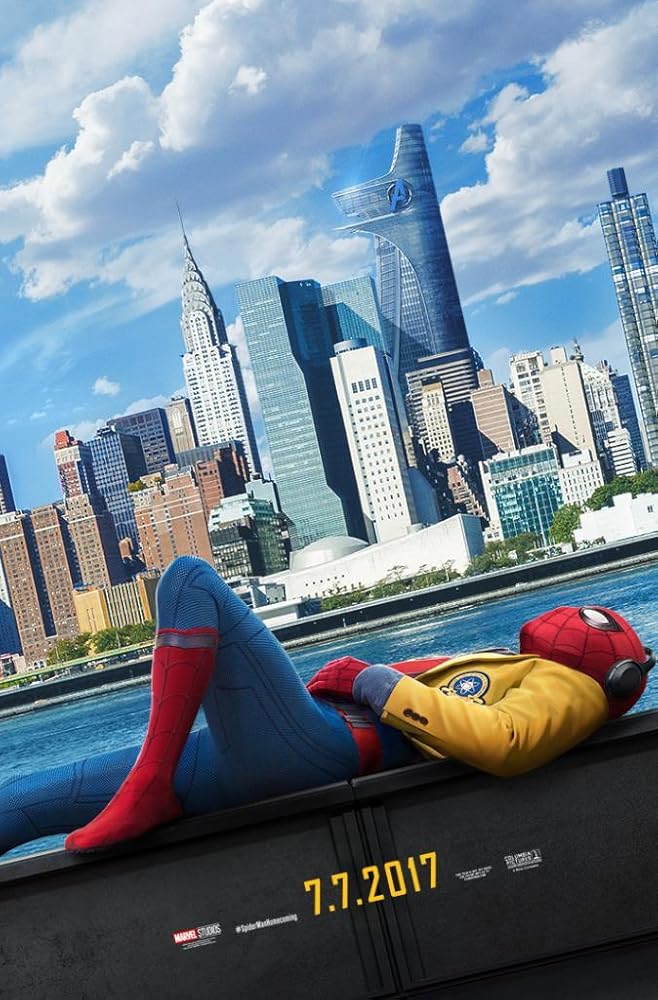
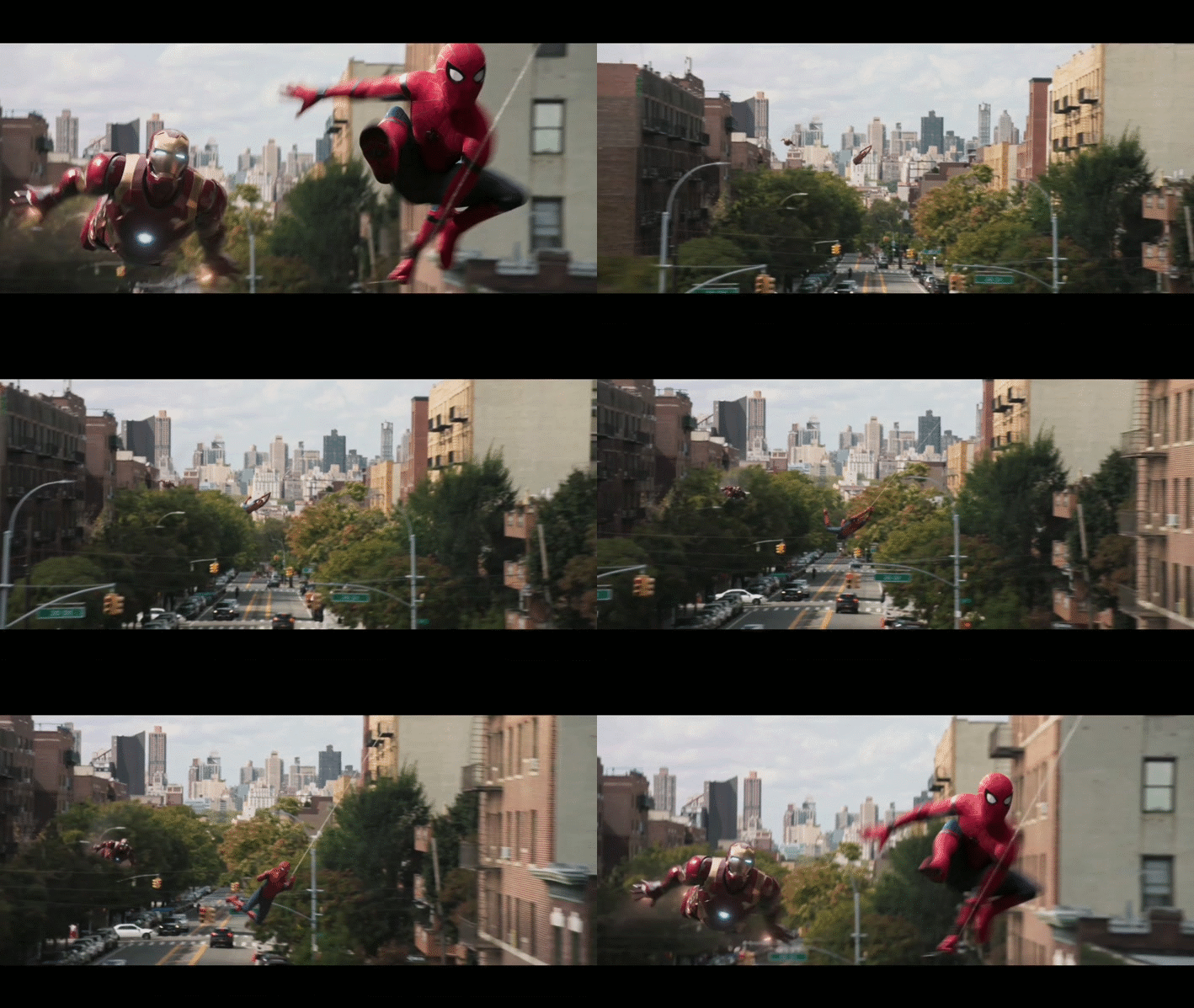
Tom Holland in Spider-Man: Homecoming (2017)

Spider-Man: Homecoming served as the second major reboot of the Spider-Man film franchise in half a decade… understandably, for some that’d be a cause for concern given how quickly this occurred following the previous franchise reboot back in 2012. However, if there’s one reason why I stayed optimistic about this new film in the months leading up to its release, it was all because of two words… Marvel Studios. Yes, thanks to a deal between Sony and Marvel, while Homecoming was released under the former’s banner, it also counts as a Marvel Cinematic Universe film. Ergo, it has all the great things that we’ve come to expect from the MCU; excellent characters, awesome action sequences, and solid humor. But this film also gives us something else, and that is one of the best character arcs of the entire franchise thanks to the terrific development of the MCU’s rendition of Peter Parker AKA Spider-Man. Of course, we were first introduced to Tom Holland’s take on Spider-Man in Captain America: Civil War, and it was clear right out of the gate that Marvel Studios was intent on keeping Peter in high school, something that was only briefly done in previous Spider-Man films. In the Raimi trilogy, Peter was only in high-school for the first half hour or so of the first film. And while the first Amazing Spider-Man film had Peter in high school throughout, he and Gwen Stacy then proceeded to graduate at the start of Amazing Spider-Man 2. In contrast, the MCU Peter is immediately established as still being a high school student when he ends up getting ‘recruited’ by Tony Stark AKA Iron Man to assist him in dealing with his conflict with Captain America.

This then paves the way for Peter’s main arc in Homecoming. After getting to fight alongside the Avengers, Peter immediately thinks that this means that he’s been brought in to join the team. Ultimately, though, he finds himself having to return to the role of being a ‘friendly neighborhood’ Spider-Man in his hometown of Queens under the ‘guidance’ of Tony and his bodyguard Happy Hogan. And thus, the bulk of the film revolves around Peter trying to prove himself while also coming to terms with the fact that, despite his enthusiasm for being a crime-fighting superhero, he is still just a kid in the larger Marvel Cinematic Universe. When he tries to stop some bad guys on the Staten Island Ferry, he nearly gets everyone on it killed before being saved by Tony, who quickly reprimands him for his reckless behavior and demands that he give back the suit that had been made for him for the airport battle in Civil War. And when Peter desperately pleads with him to let him keep the suit, stating that ‘he’s nothing without it’, Tony then sternly notes the following; “If you’re nothing without this suit, then you shouldn’t have it”. This whole bit serves as an excellent callback to Tony’s arc in Iron Man 3 in which he came to realize that his suit wasn’t the one thing that defined him; not to mention the fact that it also ties in nicely to the part where Peter remarks that he just wanted to be like Tony, who replies by stating that he wanted him ‘to be better’, clearly recognizing all his mistakes from past films. Later in the film, when Peter finds himself trapped under rubble in the lair of the film’s main antagonist Vulture, how does he react to it? By screaming out for help, fearful for his life. It isn’t until he sees his reflection in a pool of water intermixed with his homemade Spider-Man mask, along with remembering Tony’s stern words from earlier questioning his ‘need’ for the suit, that he’s able to regain his confidence and get himself out of this perilous situation. Simply put, this is hands down one of the best moments in the entire film (“Come on Peter! Come on Spider-Man! COME ON SPIDER-MAN!”)

While I’m still a fan of Andrew Garfield’s take on the character in the Amazing Spider-Man films, I cannot deny how fantastic of a job that Tom Holland has done as the MCU’s Spidey, as he perfectly nails the character’s charisma and comedic timing. As for Tony, some were concerned that Robert Downey Jr.’s presence in the film would end up placing a huge burden on Holland. Ultimately, though, this is not the case, as Tony does not have that big a role in the film and is utilized perfectly as Peter’s stern but sympathetic mentor figure. The same also applies to Jon Favreau in his first appearance in an MCU film since Iron Man 3 as Happy, who begrudgingly serves as the intermediary between the two. Another controversial casting choice occurred with Marisa Tomei as Aunt May, namely because she is the youngest actress who’s taken on the role in the live-action films. Ultimately, though, Tomei does a fine job in the role thanks in large part to her strong camaraderie with Holland. Plus, she also gets one of the best lines in the film at the very end when she finally learns that Peter is Spider-Man (“What the F…?! (*immediately cut to credits*)”). Holland is also backed by a solid supporting cast in the form of Peter’s high-school classmates. This includes Zendaya as the sarcastic Michelle, who’s ‘not obsessed with him… just very observant’, and Tony Revolori as Peter’s classic rival/bully Flash Thompson. It’s a shame, though, that he was subjected to a lot of hate from fans for being an ethnically different rendition of the character. Heck, even Zendaya got some of that backlash when it was reported that she may potentially be the MCU’s version of Mary Jane Watson, which was later proven false despite one line in the film where Michelle remarks that some people call her ‘MJ.’. And, of course, we can’t forget about Jacob Batalon as Peter’s best friend Ned, who is easily one of the MCU’s best ‘sidekick’ characters (“Guy in the Chair!!”) 

But what about the main villain, Adrian Toomes AKA the Vulture, played by former Batman star Michael Keaton. Well, I’d say that Marvel Studios has done a far better job with their villains, who have often been the most maligned parts of any MCU film, since the start of Phase 3, and this was very much the case with Vulture. This is mainly thanks to the big twist near the tail-end of the film when Peter learns that Toomes is the father of his classmate/love interest Liz which, of course, also ties into the common plot thread of him having a personal connection to his foes. At the same time, it also continues the trend of Peter’s villains not necessarily being ‘evil’. In Toomes’ case, he was a former salvager who got screwed over by Stark Industries when he and his team tried to salvage remnants from the Battle of New York in the first Avengers, which then results in them moving into the business of making weapons out of Chitauri technology and selling them on the black market. Simply put, Keaton does an excellent job in the role, especially in terms of handling his character’s motivations (e.g. him trying to provide for his family). On that note, I also liked how the film handled the relationship between Peter and Liz. While never fully going down the same romantic path as Peter and Mary Jane from the Raimi trilogy or Peter and Gwen from the Amazing films, the film does a nice job of showcasing the solid connection that they have while also showing Peter’s inability to admit his feelings for her. It all ends on a bittersweet note when Peter is forced to ditch Liz at Homecoming to stop her father and she and her mother end up moving to Oregon following Toomes’ arrest. Finally, closing out the film’s excellent ensemble cast is Jennifer Connelly in a voice cameo as Karen, the A.I. in Peter’s suit that he unlocks once he and Ned disable the suit’s ‘Training Wheels Protocol’ security feature. Not only is it a fitting cameo seeing how Connelly is married to Paul Bettany AKA Tony Stark’s original A.I. Jarvis (now the Vision), but she also works well off Holland as a friendly figure for Peter to talk to while he’s out fighting crime.

I only have one major issue with this film, and that is that it’s arguably a bit too overlong. Now, for the record, the first time that I saw this film was at the end of a very long travel day as I had just arrived in Los Angeles for vacation; so, understandably, I was rather tired while watching it. However, upon re-watch, I found that this issue of mine still stood. The best way that I can describe it is like this; when the film gets to the titular Homecoming dance, there’s still about half an hour to go in a film that has already been going for quite a while with several big ‘finale-esque’ action set pieces (e.g. Peter rescuing his classmates at the Washington Monument). Still, the film is engaging throughout thanks to everything that I’ve mentioned so far; plus, keeping in line with the MCU’s habit of tackling different genres, director Jon Watts does a great job of making the film feel reminiscent of the many classic high school comedies written and directed by John Hughes. And that’s ultimately Spider-Man: Homecoming in a nutshell. While I wouldn’t necessarily call it the ‘best’ MCU film to date, I would argue that it’s one of the franchise’s best character-driven entries because of its phenomenal work in developing the franchise’s rendition of Spider-Man. All in all, it was a well-deserved success story for all involved. It gave Sony one of their most successful franchise outings to date following the polarizing Amazing Spider-Man duology while also continuing Marvel Studios’ hot streak on the big-screen that I will always argue is still going strong today. Not only that, but at the time that I’m writing this, Spider-Man: Homecoming stands as the highest-grossing superhero film of the year worldwide. Not bad for a film that served as its title character’s third major live-action iteration in the past decade.

Image result for spider-man homecoming gif

And that’s the end of Part 1 of Rhode Island Movie Corner’s annual ‘Favorite Films of the Year’ list. Thanks for following along and be sure to check back in tomorrow for Part 2, in which I’ll be listing films #9-7.

Wednesday, January 3, 2018

Post-Christmas Short Review Triple Feature: 2017 Edition

In 2012, it was Les Misérables and Django Unchained. In 2013, it was The Wolf of Wall Street and American Hustle. In 2014, it was Into the Woods and The Imitation Game. In 2015, there was The Hateful Eight and The Big Short. And last year, 2016, we had Fences and La La Land. Yes, folks, it is that time of year again as I recently embarked on my annual Post-Christmas double feature run with my good friend and fellow film critic Matthew Goudreau of The Young Folks. This is something that we’ve been doing for the past few years now as a way of seeing some of the year’s biggest award contenders. As such, as I’ve done every year, I’ll be doing a quick pair of short reviews for these two films instead of two standard reviews so that I can have more time to start preparing for my annual ‘Top 12 Favorite Films of the Year’ list. But for these past few years, what originally began as a ‘Double Feature’ post soon turned into a ‘Triple Feature’ post because Matt and I often do this around the time of New Year’s Eve. And almost every year on that day, my family and I have a tradition of going to see a film as a nice way of closing out the year. Thus, today on Rhode Island Movie Corner, I’m officially kicking off my 2018 slate of posts* (not counting the second half of my ‘Worst of 2017’ list that was published a few days ago) by delving into the last three new releases that I saw in 2017, beginning with the two films that Matt and I saw on the day before New Year’s Eve.

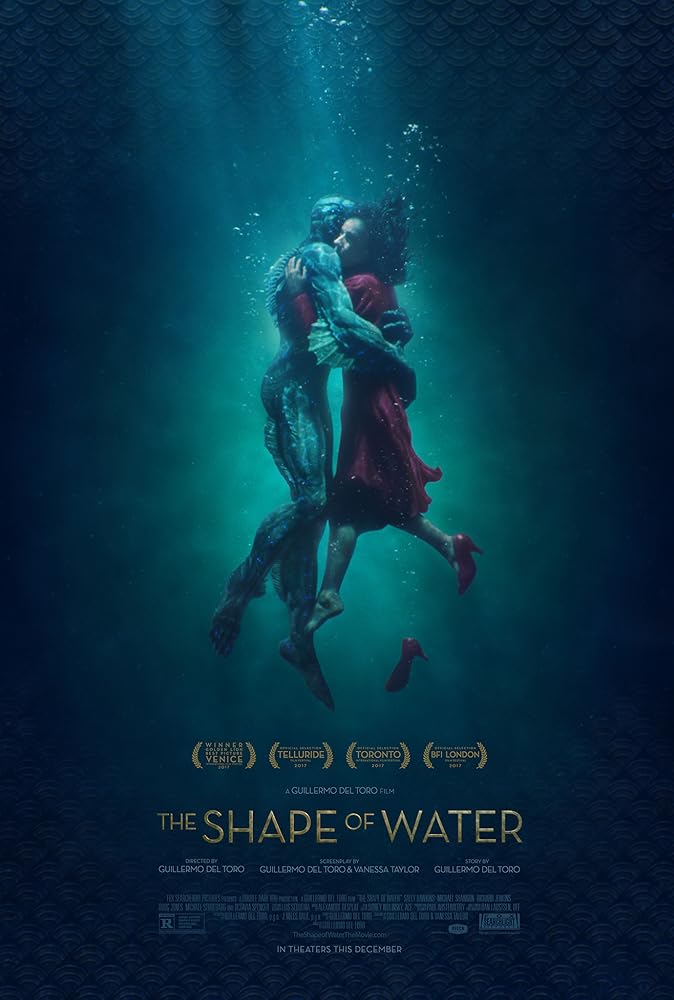
THE SHAPE OF WATER


First up, we have the latest film from director Guillermo Del Toro. Over the past few years, Del Toro has made quite a name for himself in the film industry particularly thanks to his work in the fantasy genre. This includes the likes of the original Hellboy from 2004, its 2008 sequel Hellboy II: The Golden Army, and 2006’s Pan’s Labyrinth, which ended up winning three Oscars at that year’s ceremony. And now Del Toro returns to the fantasy genre with another big awards contender, The Shape of Water, which tells the story of a mute woman named Elisa who forms a special bond with a humanoid-looking amphibious creature that’s being held captive at the government facility that she works at. In the process, however, she and the creature find themselves pursued by the vicious colonel who had captured the creature in the first place. All in all, the film is a charming fantasy flick that features some excellent cinematography and visual effects. This is especially worth noting considering the fact that this film was made on a modest budget of under $20 million. The film is also bolstered by a collection of strong performances from its ensemble cast. Sally Hawkins is incredibly charismatic as the mute Elisa while Michael Shannon is delightfully sinister as the main antagonist, Colonel Strickland. Richard Jenkins is also a major standout as Elisa’s closeted artist neighbor Giles as is Michael Stuhlbarg as a Russian scientist who, like Elisa, is more sympathetic to the creature in comparison to Strickland. And, of course, there’s Del Toro regular Doug Jones once again doing a phenomenal job under heavy makeup as the incredibly sympathetic ‘Asset’. With all this in mind, Guillermo Del Toro has very much hit it out of the park with this visually beautiful tale of a Beauty and her Beast.

Rating: 4.5/5

ALL THE MONEY IN THE WORLD


This is a film that has certainly attracted quite a lot of media attention these past few months. As many of you know, director Ridley Scott’s newest film, which delves into the true story of the infamous kidnapping of oil tycoon J. Paul Getty’s grandson John Paul Getty III, originally starred Kevin Spacey in the role of J. Paul Getty. That all changed, however, when Spacey became just the latest figure in the film industry to be hit with the ‘Weinstein effect’ and be accused of several incidents of sexual assault. Thus, in what was easily one of the most unprecedented moves ever seen in the entire industry, Scott straight-up recast the role and reshot major sequences of the film just one month prior to its release. And so, Christopher Plummer now stars in the role of J. Paul Getty; though, really, this change doesn’t have that much of an effect over the final film (aside from it being a different spin on the character) as Getty’s role in the film is minor at best. Still, Plummer does do an excellent job in the role of the cold and distant billionaire. Equally terrific in the film is Michelle Williams as Gail Harris, Getty’s former daughter-in-law who becomes extremely devoted to the process of finding her kidnapped son. These strong performances are easily the best part of the film, and for the most part, they make up for its biggest shortcoming, its sluggish pacing. Simply put, there are several instances where you can feel the brunt of the film’s near two and a half hour runtime, especially during the second act. That’s not to say, though, that the film doesn’t have its moments; and of course, at the end of the day, Ridley Scott deserves a heck of a lot of credit for managing to completely rework a sizable chunk of the film in such a short amount of time. While it’s by no means the best film that he’s ever done, All the Money in the World is still worth checking out if mainly for the phenomenal performances from Williams and Plummer.  

Rating: 3/5

THE GREATEST SHOWMAN


And finally, we have the last new film release that I saw in 2017 on New Year’s Eve, The Greatest Showman. This lavish period musical is based on the true story of the origins of the iconic Ringling Bros. and Barnum and Bailey circus… which ironically closed for good this past May due to decreasing ticket sales. Despite this, however, I was still very much looking forward to this film given the fond memories that I have of going to see the circus when I was younger. With that said, though, I should probably start this review by addressing the big elephant in the room that is this film’s portrayal of the circus’ founder, P.T. Barnum. While the film portrays Barnum as an endearing ‘nobody’ who managed to defy all odds and make a name for himself in the world of entertainment thanks to his circus, several people have pointed out that he was a far more ruthless entrepreneur than the film lets on. But while I do recognize the fact that this film isn’t exactly historically accurate, I still found it to be quite enjoyable thanks to its excellent and well-choreographed musical numbers courtesy of La La Land songwriters Benj Pasek and Justin Paul. Plus, the film also boasts a terrific ensemble cast highlighted by Hugh Jackman as P.T. Barnum, Michelle Williams (in her second major appearance in today’s post) as Barnum’s loving wife Charity, Zac Efron as a playwright who ends up becoming Barnum’s business partner, and Zendaya as one of the circus’ trapeze artists who falls in love with Efron’s character. In short, it is perfectly understandable if some may find this film’s messages of acceptance to be rather phony given the context of the true story that it’s based on. Still, if you’re just looking for a charming and original feel-good musical, then I have the feeling that you’ll enjoy The Greatest Showman regardless of how much it stretches the truth.


Rating: 5/5!

Monday, January 1, 2018

Top 10 WORST Films of 2017: Part 2 (#5-1)

Welcome back to Rhode Island Movie Corner’s annual End of the Year list in which I count down my picks for the Top 10 Worst Films of 2017. This is the second half of a two-part series and today I’ll be delving into my Top 5 worst from this past year in film. If you want to see picks #10-6, click here to be directed over to Part 1. But for now, it’s time to get back to the list…

As I said back in Part 1, I found a lot of the films that ended up on this year’s list to be more ‘disappointing’ than ‘anger-inducing’. This very much applies to my Number 5 pick given all of the big names that were involved with it.

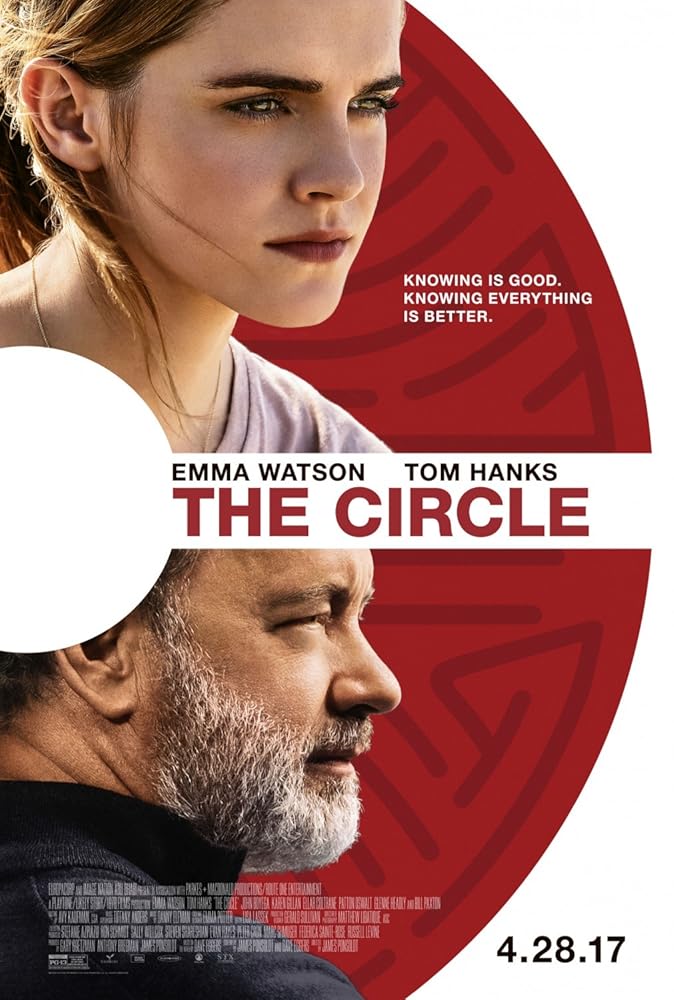
5. THE CIRCLE


This was a film that had quite the cast and crew attached to it. With big names like Emma Watson, Tom Hanks, John Boyega, and Bill Paxton (in his final film appearance following his passing this past February) in the cast and indie sensation James Ponsoldt behind the camera, there was some genuine potential for The Circle to be a solid film inspired by the ongoing controversy of internet privacy. Sadly, the film just ends up being a lackluster thriller that feels like a severely truncated adaptation of its source material. Now, granted, like I said in my original review for this film, I haven’t read Dave Eggers’ original novel upon which this film is based; however, I have read through its plot synopsis. In the process, I noticed that the film leaves out some big moments from the novel. One of these involves the character Annie (Karen Gillan), the best friend of the main protagonist, Mae. While Annie is the one who helps Mae land a job at the big tech magnate ‘The Circle’, she begins to become jealous of Mae when she starts to become more popular within the company’s ranks. Thus, she decides to volunteer to test out one of the company’s new products known as PastPerfect, which tracks their users’ family history, as a way of improving her standing within the company. However, this ends up bringing some of her family’s disturbing history to light, which stresses her out so much that she ends up in a catatonic state. By contrast, her fate in the film is a lot less grim, as she just decides to leave the company when the stress of all of the traveling that she has to do for work becomes too much for her to bear. Still, the way in which this all plays out in the novel definitely would’ve helped in giving the film adaptation a bit more edge to it.

The other big change from the novel mainly stems from how it all ends. Mae ends up meeting one of the Circle’s original founders, Ty (John Boyega, who is SEVERELY underused in this film), who warns her about some of the company’s darker practices. In the film, this ultimately concludes with the two of them publicly exposing all of this and ruining the reputations of Circle CEO’s Eamon Bailey (Tom Hanks who, to be perfectly frank, is quite miscast in the role of the supposed ‘villain’) and Tom Stenton (Patton Oswalt, who’s also arguably quite miscast). In the novel, however, it’s a different story; Mae ends up siding with Eamon and Tom when Ty comes to her with this information. In other words, the main character of the story arguably ends up going down quite the sinister path by embracing the idea of a fully transparent world regardless of the consequences that would inevitably come from it. This doesn’t happen in the film, which ultimately leads to what is probably its biggest shortcoming; at the end of the day, the overall stakes in this film are quite unclear. Even when Mae and Ty one-up Eamon and Tom at the end of it all, you really don’t get the sense of what all of this was meant to accomplish because it seems like nothing really changes. In short, this film ultimately lacks a lot of its source material’s edge, as it seems as if these changes were made primarily to make it more appealing to audiences. And while I’m not necessarily ‘against’ this decision, it certainly hurt the film from a narrative perspective while also limiting its stacked ensemble cast due to the weakened material.

This next film was my #1 worst of the year for quite a few months. But while it did manage to avoid ‘that’ spot by year’s end, that doesn’t mean that I’ll be giving it a free pass.

4. BAYWATCH


Despite its high placement on this list, I will openly admit that I still think that it’s a bummer that this film turned out the way that it did. I still remember how, prior to its release, it was being built up as the big comedy of the summer thanks to one heck of a major marketing blitz. And with big names like Dwayne Johnson and Zac Efron in the cast, what could possibly go wrong? Well, for one thing, this film had one of the worst ‘hit-miss’ ratios of any comedy that I’ve ever seen, with almost all of its jokes proving to be massive duds.  Like CHiPS, this film attempts to take the premise of an old TV series and give it a hard-R raunchy vibe that’s very much in line with modern R-rated comedies. In the process, though, it just makes the whole film a bit too mean-spirited and also rather sexist. And for the record, when I say ‘sexist’, I don’t primarily mean in regards to how this film is based on a show that was heavily known for showing off sexy female lifeguards. Instead, the biggest reason why this film proves to quite sexist is that, aside from main leads Johnson and Efron, none of the film’s female leads get any sort of good material to work with. This includes Alexandria Daddario as Summer Quinn, Kelly Rohrbach as C.J. Parker (AKA Pamela Anderson’s character from the original series), and Priyanka Chopra as the main antagonist Victoria Leeds. Bottom line, it’s arguably quite unbelievable that this film managed to screw up this much, but alas, here we are. Like I said in my original review for the film, I have never watched the original Baywatch TV series before, and while this film won’t completely turn me off from ever checking it out in the future, it’s safe to say that it certainly isn’t a good representation of its source material.

Well, I guess you can say that it’s only fitting that we’d eventually get to a horror film; they do often appear on this list, after all. And in this instance, we have the latest entry in a franchise that had seemed dead for more than a decade.

3. RINGS


Now this is a film that has been in development for quite a long time as the latest installment of a horror franchise from the early 2000’s. It all began in 2002 when director Gore Verbinski, one year prior to starting the Pirates of the Caribbean franchise, helmed an Americanized remake of the 1998 Japanese horror film Ring. This tale of a cursed videotape that kills those who watch it after seven days was one of the most critically acclaimed horror films of its time, and for the most part, the American remake fared just as well with critics and audiences. While I personally didn’t find it to be that ‘scary’, it did benefit from having an effectively creepy atmosphere along with a strong lead performance from Naomi Watts as reporter Rachel Keller, the main protagonist. Three years later, the remake got a sequel, The Ring Two. However, even though it was helmed by Hideo Nakata, director of the original Ring, it was a fairly mediocre sequel that suffered heavily from its bland script. This brings us back to this year’s Rings which, as noted earlier, had basically been in development hell for several years. For such a long time, it was unclear if it was ever going to get made or if Naomi Watts would return to reprise her role as Rachel; heck, at one point, there was apparently plans to have it be filmed in 3-D. Ultimately, though, Watts did not return for this film, which takes place more than a decade after the events of the previous films. And yet, even after all that time… this film is heavily dated.

For one thing, even though the film is set in modern times, it still relies heavily on the franchise’s original concept of a cursed videotape… even though VHS has been an obsolete format for quite a few years at this point. Oh sure, they do implement a few modern twists into this idea by the end, namely when the infamous ‘Ring’ video gets uploaded online and goes viral, but for the most part, the plot feels just as obsolete as that original cursed videotape. As for the rest of the film, it’s just your basic horror film with wooden characters, bland direction, and so on and so forth. Heck, it even goes as far as to blatantly copy a story concept from the 2016 horror-thriller Don’t Breathe. For those who don’t remember, that film revolved around a trio of thieves who attempted to rob a blind man’s house only to discover that the blind man was more than capable of dealing with them. And what do we have in this film? Why we have a blind man who knows how to defend himself against intruders. Yes, part of the plot involves the main characters visiting a blind priest played by Vincent D’Onofrio. This priest is eventually revealed to be the man who had raped the mother of the series’ main antagonist, Samara, thereby resulting in her birth. There’s even a sequence set in the priest’s house that’s in the dark; you seriously can’t get any more obvious than that. And that really sums up Rings in a nutshell; for a film that took such a long time to get made, it clearly shows in the final product that it’s incredibly behind in the times when it comes to its franchise’s place in the horror genre.

Oh boy… we’re back to this franchise…

2. FIFTY SHADES DARKER


Yes, 2017 saw the latest installment of the Fifty Shades of Grey franchise AKA the series that initially began as Twilight fan-fiction. While author E.L. James’ highly controversial erotic romance series has not been well-received by most critics, it has done quite well commercially. Case in point, while the series’ first film adaptation was touted by many as one of the worst films of 2015, it grossed over half a billion dollars worldwide. As many of you will no doubt recall, that film ultimately landed at the #6 spot in my ‘Worst of 2015’ list. But as for its sequel, it ends up at a much higher spot because even with a change in director, with James Foley (director of the 1992 cult classic Glengarry Glen Ross) now at the helm, it does not improve upon its equally terrible predecessor. It’s the same stuff that we saw before; awful dialogue, stilted acting, and watered-down sex scenes that don’t reach the ridiculous lengths of what was described in the books (Disclaimer: Still haven’t read them and still don’t ever plan to). But this film, especially, highlights what is easily one of the worst aspects of this entire series; the general indecisiveness of its main characters, namely female lead Anastasia Steele. At the end of the first film, Ana decided to break things off with her ‘boyfriend’ Christian Grey when she found that she was unable to deal with being his BDSM submissive. However, in this film, she ends up getting back together with him despite the fact that Christian is still a douchebag stalker who is clearly wrong for her. And yet, the film ends with him proposing to her, setting up the stage for this series’ finale (thankfully…), Fifty Shades Freed. It’ll be hitting theaters next month and, suffice it to say, will probably end up appearing on my ‘Worst of 2018’ list.

Well, we started off this list on a controversial note with Justice League, so it’s only fitting that we end it with an equally controversial #1 pick. Now I know what some of you may be thinking… why would my pick for the worst film of 2017 possibly be controversial? Usually, most people would agree with me in saying that the film in question was one of the worst of the year, right? Well… not in this instance; this film actually did do fairly well with critics. But as for me… well, I’m on the side that gave this film the rare ‘F’ rating on CinemaScore.

1. MOTHER!


Yes, Darren Aronofsky’s latest polarizing directorial effort is my pick for the worst film of 2017. In fact… this was one of the worst films that I’ve ever seen, period. As I said a few months back, this was one of the most excruciating experiences that I’ve ever had as a film critic in terms of both having to sit through this god-awful mess of a film and then having to write about it. Now, before any of those out there who did like this film tries to get on my case about this, let me make one thing perfectly clear. This is not a situation where ‘I didn’t understand what was going on’ because I did. I knew that this film was intended to be a biblical allegory utilizing some of the most famous figures from the Bible and implementing them into a modern context. Jennifer Lawrence’s character is Mother Nature, Javier Bardem’s character is God, Michelle Pfeiffer and Ed Harris represent Adam and Eve, and their two sons played by real-life brothers Domhnall and Brian Gleeson are Cain and Abel. However, the only reason why I knew that is because I accidentally stumbled across information that explains who Bardem was meant to be portraying just prior to seeing the film. With that in mind, if you’re going into this film completely blind (which is something that I know quite a few film fans are trying to do nowadays in these spoiler-heavy times), it’s quite possible that you won’t even know what the heck is happening in it. And even if you do know what’s supposed to be going on in this film, there are still quite a lot of things in it that make no frigging sense. Like at one point, Bardem’s character’s publisher (Kristen Wiig) starts executing a bunch of random strangers during a get-together. Why? It’s never explained. And trust me when I say that this is only the tip of the iceberg when it comes to a film that is, to reference a common military slang term, truly FUBAR.

I will say this, though; to the film’s credit, everyone in the cast does a solid job in their respective roles. If anything, they do succeed in conveying the traits of the biblical figures that they’re meant to represent. However, this is ultimately all for naught in this pretentious mess of a film that features some truly obnoxious cinematography and editing. In short, it’s because of films like this that I usually don’t watch a lot of art-house films. Granted, that’s not to say that I would dismiss the genre completely because of this film (just look at my ‘Best of 2016’ list when I ranked Swiss Army Man at #8). And again, I do recognize why others would like a film like this. But if you ask me, this film is a terrible representative for its genre, as it is way too extreme in its overall execution to the point where it also comes off as being quite sexist. Jennifer Lawrence did state, after all, that the film’s plot was basically about the ‘raping of Mother Nature’; suffice it to say, she was right about that. Now for the record, I’m saying all of this while being fully aware of the fact that this has very much become one of those films where those who liked it are being quite critical towards those who didn’t like it. This is, after all, an original film that took some risks and yet was generally ignored by theatergoers. Well, to that I’ll say the same thing that I said about The Emoji Movie back in Part 1… this is not the film to get that worked up over. If anything, it proves that just because a film is ‘original’ or ‘independently made’, that doesn’t automatically make it good.


And those are my Top 10 Worst Films of 2017. Like I always say, it’s great to get this list out of the way first so that you don’t have to think about the year’s biggest stinkers any further. Thanks for following along and feel free to sound off in the comments below with your own picks for the Worst Films of 2017. Also, be sure to stay tuned for my next big end-of-the-year list in which I’ll be counting down my favorite films from this past year. You can all expect that series of posts sometime in the next few weeks.