Showing posts with label Man of Steel. Show all posts

Wednesday, June 3, 2020

The Snyder Cut is Coming

Zack Snyder's Justice League (2021)

For the past two and a half years, one of the most talked-about films in recent memory has been the DC Extended Universe’s 2017 outing, Justice League… and not exactly for the best reasons. Simply put, the film that was released to theaters was far from being the version of it that director Zack Snyder had envisioned after he was forced to step away from the production due to deeply tragic circumstances. And because of this, the film was yet another critical flop for the DCEU at a time where they were struggling immensely to match the utterly dominant success of the Marvel Cinematic Universe. It also ended up being a rather notorious financial flop as it was unable to break-even on its hefty $300 million budget. But while the DCEU has since managed to move on from this with more critically and financially successful outings, fans of both the franchise and Zack Snyder immediately began pushing for the release of his version of Justice League, with the hashtag #ReleasetheSnyderCut quickly becoming a staple of modern fandom’s vernacular. Their efforts to get this version of the film released ranged from letter-writing campaigns to earning the full support of several key figures in the industry, including those who worked on the film and, of course, Zack Snyder himself. And after all this time, this fabled cut of the film will finally see the light of day as Snyder recently announced that it will make its official debut on WarnerMedia’s new streaming service, HBO Max, in 2021. However, as genuinely great as it is that Snyder has finally been given the chance to showcase his version of Justice League, today we’re going to delve a bit further into everything that led to this exact moment. In doing so, not only will we reiterate exactly why the DCEU has often struggled to match the quality of the MCU, but we’ll also be addressing how a lot of this movement has been fueled by incredibly toxic fans who have very much paved the way for this current age of toxic fandom.
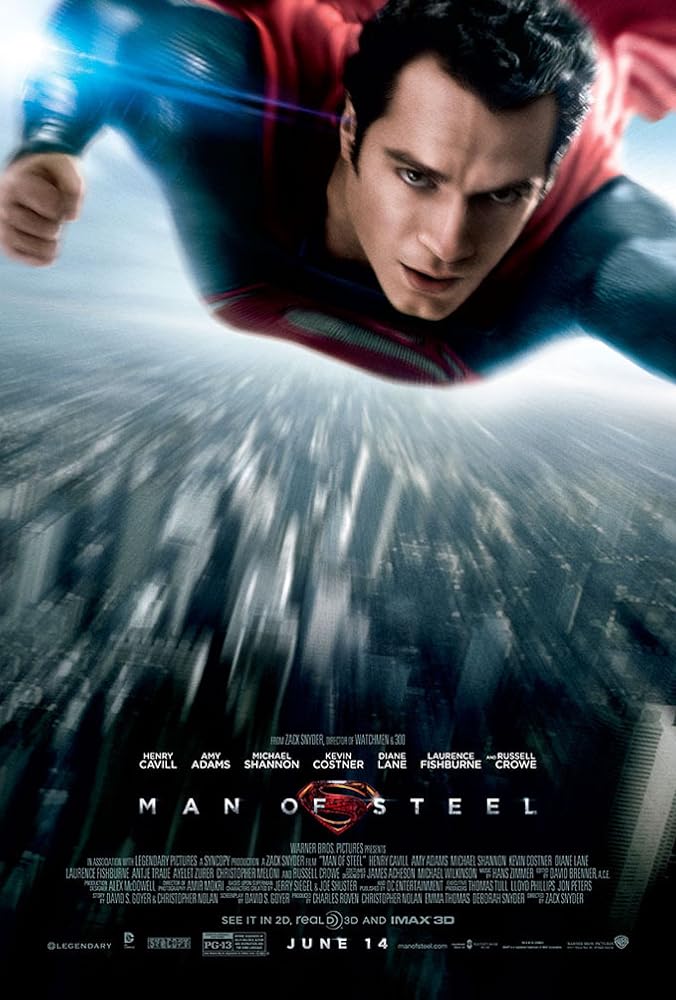
 Kevin Costner, Russell Crowe, Laurence Fishburne, Christopher Meloni, Amy Adams, Henry Cavill, Richard Schiff, Michael Shannon, Ayelet Zurer, Dylan Sprayberry, Samantha Win, and Rebecca Buller in Man of Steel (2013)

First off, let’s start by going over Zack Snyder’s affiliation with the DCEU, which officially began in 2013 with the Superman reboot Man of Steel. For both DC and Warner Bros, this was their second major attempt at a reboot of the Superman franchise after their previous attempt, 2006’s Superman Returns, was both a critical and financial underperformer. Luckily for them, this was right around the time that Christopher Nolan had just completed working on his trilogy of Batman films, AKA the Dark Knight trilogy, which were easily some of the most critically-acclaimed and financially successful superhero films at the time. Because of this, Nolan was brought on to spearhead Man of Steel’s production, which meant that while he wasn’t going to direct it, he would still be heavily involved with it with the expectation that it would match the overall atmosphere of the Dark Knight trilogy. Nolan reteamed with his Dark Knight trilogy co-writer David S. Goyer to write the film, and after considering filmmakers like Darren Aronofsky, Matt Reeves, and Ben Affleck (who, of course, would factor into the franchise at a later date), Zack Snyder was chosen to direct the film. At this point, Snyder was easily one of the studio’s most prominent filmmakers with hits such as the 2007 adaptation of Frank Miller’s 300 and his incredibly ambitious adaptation of the seminal graphic novel Watchmen by Alan Moore and Dave Gibbons. Sure, he had just come off a rather notorious critical and financial flop with 2011’s Sucker Punch, based on his own original concept, but that didn’t stop Snyder in the slightest from taking the helm on the next major incarnation of the Last Son of Krypton.

Henry Cavill in Man of Steel (2013)

Man of Steel was easily one of the most anticipated films of 2013, and upon its release… it ended up being arguably the most polarizing film of that year. Critics and audiences were truly split down the middle when it came to their thoughts on the film, namely due to how Snyder (and, by extension, Nolan and Goyer) delivered a radically different take on the title character. For some folks, they were totally fine with this as they felt that it was something that Superman needed for what was meant to be a more modernized take on the character. For others, however, it was a bit too much, especially due to things like the film’s utilization of destruction imagery that felt too similar to 9/11 and the controversial moment where Superman kills the main antagonist, General Zod, by snapping his neck despite his traditional ‘no-killing’ mandate from the comics. Nevertheless, the film was a solid hit at the box-office and grossed over $668 million worldwide, thus paving the way for Warner Bros to immediately begin laying the groundwork for its own cinematic universe to rival the MCU. While it was initially implied that the plan was to do at least one more Superman-centric feature before getting into the whole ‘cinematic universe’ angle, that idea seemed to change when the first details of the film were revealed at the 2013 San Diego Comic-Con. After having Harry Lennix (who played General Swanwick in Man of Steel) set the mood by reciting a passage from the iconic miniseries that was Frank Miller’s The Dark Knight Returns, it was instantly made clear that the next installment of the DC Extended Universe would be a crossover between Batman and Superman. And since Christian Bale had already completed his turn as Batman in Nolan’s Dark Knight trilogy, this new film would serve as the official debut of the DCEU’s interpretation of the Dark Knight that would be heavily inspired by the grizzled and jaded version of the character from Dark Knight Returns.

Ben Affleck in Batman v Superman: Dawn of Justice (2016)

After a highly publicized casting search that included names like Josh Brolin and Jon Hamm, Ben Affleck was officially cast as Bruce Wayne AKA Batman. Admittedly, though, Affleck’s casting initially drew an intensely negative response from fans, namely due to his disastrous previous role in a superhero film when he played Marvel’s Daredevil in the 2003 film of the same name. At the same time, though, Affleck was experiencing a major career resurrection thanks to his work as a director on Gone Baby Gone, The Town, and 2012’s Best Picture winner, Argo. Thus, the most exciting aspect of Affleck’s casting was that it immediately led to him being given the opportunity to direct the first solo outing for his version of the character. After that, further announcements then revealed that Batman wasn’t going to be the only new superhero appearing in the film. First, it was announced that the third and final member of DC’s ‘Trinity’, Wonder Woman, would make her debut in the film as well, which would also be the character’s first official appearance in a live-action film. Gal Gadot was cast in the role and, like Affleck, experienced some harshly negative blowback from fans when the initial news broke of her involvement. Soon afterward, it was then revealed that The Flash (Ezra Miller), Aquaman (Jason Momoa), and Cyborg (Ray Fisher) would all make cameos as well to build up hype for their larger roles in the upcoming Justice League film which, of course, Zack Snyder was also slated to direct. Thus, while a lot of the build-up for the film was clearly impacted by the polarizing nature of Man of Steel and how fans reacted to Snyder’s casting choices, Batman v Superman: Dawn of Justice was still widely considered to be one of the most highly anticipated films of 2016. At this point, it was now very much clear that it was meant to be the official kick-starter for Warner Bros and DC’s own, unique spin on a superhero-centric cinematic universe.

Ben Affleck, Henry Cavill, and Gal Gadot in Batman v Superman: Dawn of Justice (2016)

The film finally hit theaters on March 25th, 2016, and if you thought that the reception towards Man of Steel was rough… well, it was about to get a whole lot worse for DC and Warner Bros. Upon its release, Batman v Superman was utterly savaged by critics who felt that the story was incredibly convoluted and that the film itself was far too dour. Simply put, this wasn’t even close to being the same kind of situation that Man of Steel ended up in where there was a genuine 50/50 split between its fans and its critics. When it came to Batman v Superman… most people hated it. This also translated to its run at the box-office where, despite a $166 million opening weekend and a worldwide gross of over $873 million worldwide, it was considered a financial disappointment since it didn’t reach the studio’s projected total of $1 billion. By comparison, the MCU’s big ensemble picture of that year, Captain America: Civil War, instantly outmatched BvS in every conceivable way with a $179 million opening weekend, a worldwide gross of over $1.1 billion, and perhaps most importantly, vastly superior reviews from critics and audiences. However, when it comes to Dawn of Justice’s initial release, it soon became known that some of its biggest shortcomings weren’t exactly Zack Snyder’s fault when it was revealed that he was forced to cut around half an hour of what was originally meant to be a three-hour film. It was reported that the biggest reason for this decision was that the studio was uncertain about the original cut’s box-office potential, especially since it would’ve garnered an R rating instead of the more genre-friendly PG-13 rating. Luckily for Snyder, he was able to make his version available to the public when the ‘Ultimate Edition’ of the film was released on Blu-Ray and digital. And upon its release, many agreed that while it may not have been enough to sway the film’s most vocal critics, it was, at the very least, a far superior cut since many of the sequences that were taken out resulted in the theatrical cut suffering from some significant plot-holes.

Ben Affleck in Batman v Superman: Dawn of Justice (2016)

Despite this, however, the damage was already done. Batman v Superman: Dawn of Justice was meant to be DC and Warner Bros’ answer to what Marvel Studios had managed to accomplish with the Marvel Cinematic Universe… and it ended up being one of the most despised blockbusters of recent memory. As you might have guessed, this immediately began to impact future installments of the franchise. The other big DCEU release of 2016, Suicide Squad, ended up having a troubled production largely due to the studio’s efforts to try and address many of the issues that critics had with Batman v Superman. And yet, as a result, Suicide Squad yielded the exact same results as BvS; it was commercially successful but critically panned. Luckily for both DC and Warner Bros, they did end up having their first big hit the following year with Wonder Woman. Not only did it manage to avoid any of the issues that BvS and Suicide Squad endured during its production, but it was easily the most well-received installment of the franchise to date as it was widely touted for forgoing the overly grim atmosphere of the franchise’s previous installments. And from the looks of it, it seemed like this would also be the case with the DCEU’s other big 2017 release, especially since this was going to be the biggest one of them all, Justice League. Following all the intense criticism that stemmed from Batman v Superman’s overly dour tone, it was widely reported that Justice League was not going to end up the same way and would be far lighter in tone by comparison. And while later reports noted that the film would have to undergo some major reshoots after early test screenings didn’t go too well, everything seemed to be going all right for the production. But then, of course, as we all know, it all came crumbling down, and unfortunately, it all began with a devastating family tragedy.


On March 12th, 2017, Snyder’s 20-year-old daughter Autumn committed suicide. While Snyder did continue to work on Justice League for the next two months, he and his wife Deborah (his long-time producer) then proceeded to announce that they would be stepping away from the production in the wake of the loss of their daughter. And so, Joss Whedon, who had already been brought on to help work on script re-writes, was put in charge of both the reshoots and post-production. Whedon, of course, was already quite familiar with the superhero genre thanks to his work as the director of the first two Avengers films, and before the film’s release, it was reported that Whedon would be doing his best to maintain the vision that Snyder had for the film. But when the film finally came out… it ended up telling a completely different story. Immediately upon its release, both critics and audiences noted how the film was an absolute mess in terms of its tone. And while it was initially reported that Whedon’s additions to the film would be generally minor at best, it was very much clear that he had re-shot much of the film and that only a few moments in it were leftover from Snyder’s version, resulting in a complete hodge-podge of clashing directorial visions. Thus, Justice League became yet another critical flop for the DCEU, and even worse, this time it was also a financial flop since it wasn’t able to break-even on its $300 million budget, which made it one of the most expensive films of all-time. And because of its failure, the entire franchise was put through a complete reshuffle. Key figures like Geoff Johns and Jon Berg left the studio while plans for a Justice League sequel were canceled in favor of solo films that didn’t rely on the shared universe narrative. And in 2019, after he had already stepped down from directing the next Batman film, Ben Affleck announced that he was officially stepping down from the title role. Thus, Robert Pattinson will now take on the role of Batman for director Matt Reeves in The Batman, which is set to hit theaters on October 1st, 2021.

Jason Momoa, Gal Gadot, Ezra Miller, and Ray Fisher in Zack Snyder's Justice League (2021)

Now for the record, today’s post is not going to delve into the specific details of the changes that Whedon made to Justice League and the noteworthy scenes from Snyder’s version that were left out. Simply put, that’s another post for another time. But to sum up everything that we’ve gone through so far, I think it’s safe to say that of the three DC Extended Universe films that Zack Snyder has directed, his first one, Man of Steel, was the only entry where he wasn’t considerably hindered by studio interference. But because Man of Steel was so polarizing due to its radically different take on Superman, I can imagine that Warner Bros began to show some concern over the direction that the franchise was heading in, especially since it wasn’t as financially successful as Nolan’s Dark Knight trilogy despite his direct involvement in it. Perhaps that is one of the reasons why Batman was brought in for the next film to try and improve its box-office potential even if it came at the cost of not doing a proper follow-up to Man of Steel. But, of course, the biggest story that came out of Batman v Superman: Dawn of Justice’s production was how Snyder was forced to cut out a full half-hour of the film. It’s been rumored that another big reason why he had to do this was that, supposedly, he didn’t have the same kind of directorial clout that someone like James Cameron has to make a massive three-hour blockbuster. However, this also meant that the sequences that were being cut were ones that were utterly pivotal to the story, resulting in some incredibly egregious plot-holes. Thankfully, this ended up being one of those cases where this occurred near the end of production, effectively allowing Snyder to release his version of the film on home video without the need for any extensive reworking of the theatrical cut. Unfortunately, the same can’t be said for Justice League. His version of it was far from finished when he stepped away from production and would’ve required a lot of extra money to finish a film that was already sporting one of the largest budgets in film history. With that in mind, it goes without saying that many of the issues with Justice League are ones that can’t be attributed to Snyder since he had nothing to do with the theatrical cut due to immensely tragic circumstances that were far beyond his control.

Ben Affleck, Henry Cavill, and Gal Gadot in Justice League (2017)

However, if you’ll allow me to debunk one of the biggest myths that has been perpetrated by the DCEU fandom, it’s the idea that all the film’s problems were entirely Joss Whedon’s fault. Ever since the theatrical cut’s release, Whedon has been the primary target of the #ReleasetheSnyderCut faithful for ‘destroying’ Snyder’s vision with the new material that he shot. However, what these folks tend to overlook is the fact that, in a scenario that was obviously much different than what happened with Snyder, Whedon was also heavily screwed over by the production. In his case, it primarily stemmed from the fact that the two months of reshoots that he presided over began in July of 2017… just 4 months before the film’s November release date. And so, given all the information that has revealed that Snyder’s contributions to the theatrical cut only amounted to a few select scenes, this means that Whedon had to rework almost all of what was set to be one of Warner Bros’ biggest tent-pole releases in less than half a year. In other words, all those criticisms surrounding the film’s mediocre visual effects suddenly make a lot more sense when you realize that the VFX artists who worked on it had barely any time to finish them. Now to be clear, everything that I just brought up here doesn’t mean that I’m ‘defending’ the changes that Joss Whedon made to the film. While I am a fan of much of Whedon’s work from Firefly and its film adaptation Serenity to, of course, his Avengers films, even I can agree that this is some of his worst material when it comes to the snappy dialogue that he’s well-known for. But at the end of the day, you can’t really blame the theatrical cut of Justice League solely on him since it’s very much clear that time wasn’t on his side.

Jason Momoa, Gal Gadot, Ezra Miller, and Ray Fisher in Justice League (2017)

Ultimately, the failure of Justice League was mainly the result of Warner Bros not recognizing the fact that they were clearly rushing it so that they could compete with the Avengers films that Marvel Studios was making. They were so locked in on that November 2017 release date that it didn’t even matter that the reshoots for it couldn’t happen until July of that year. This, of course, spawned one of the biggest stories that surrounded these reshoots; the fact that it occurred during the production of a different film, Mission Impossible – Fallout, which Superman himself, Henry Cavill, was also starring in. He also notably sported a mustache for that film, and Paramount (the studio behind the Mission Impossible franchise) wasn’t keen on having Cavill shave it off for the Justice League reshoots. Thus, Cavill had to keep his facial hair for the reshoots, resulting in the most widely mocked visual effects in the entire film… the CGI that had to be used to erase it off his face. Clearly, Warner Bros should’ve just pushed the film back to 2018 so that Zack and Deborah Snyder would have enough time to mourn the loss of their daughter and properly return to the production. After all, that’s exactly what happened with both of Snyder’s previous DCEU films so that he and his crew could have more time to work on them. Man of Steel was originally set to come out at the end of 2012 before it was pushed back to June 2013. And as for Batman v Superman, it was originally meant to come out in July 2015 before being pushed back nearly a full year and ultimately settling for its final March 2016 release date. Now admittedly, at the time of Justice League’s release, 2018 was shaping up to be an incredibly packed year for the superhero genre. The MCU had the next Avengers film, Infinity War, along with Black Panther and Ant-Man and the Wasp, the X-Men franchise was set to release its next main installment, Dark Phoenix, along with the sequel to Deadpool and a spin-off, The New Mutants, Sony had the Spider-Man spin-off Venom and even the DCEU had its next big release, Aquaman. And yet, not long into 2018, both Dark Phoenix and The New Mutants were pushed back (Dark Phoenix to 2019, New Mutants… well, we’ll get to that one another time). So yeah… there really wasn’t any kind of excuse at this point as to why Warner Bros didn’t just delay Justice League back a year.

Justice League (2017)

But at the end of the day, these disastrous results were exactly what Warner Bros and DC needed so that they could finally realize that they were foolishly rushing the development of the DC Extended Universe. Instead of efficiently building up the franchise with solo installments that both properly introduced us to its main protagonists and gradually expanded the universe like the MCU did, they decided to just skip ahead to Justice League after only a few films. Thus, when Justice League came out, Batman, Wonder Woman and Superman were the only members of the titular group to have had major roles in previous installments while the Flash, Aquaman, and Cyborg were basically making their official franchise debuts with almost little to no buildup. Sure, they had all previously appeared in Batman v Superman and Flash had also made an appearance in Suicide Squad, but only as minor (and nearly inconsequential) cameos. In other words, to reiterate a point that I made a few months back in my Top 12 Films of 2019 list when I ranked Shazam at the #7 spot, it was like if Marvel had decided to do the first Avengers film right after Iron Man 2, completely ignoring Thor and Captain America’s first solo features. If that was the case, then the only instances that would’ve hinted at their future appearances would’ve been the prototype of Cap’s shield seen in Tony Stark’s basement and the post-credits scene of Iron Man 2 where Agent Coulson arrives at the crash site of Thor’s hammer, Mjolnir. Thankfully, though, Marvel Studios was smart enough to not do that. Unfortunately, you can’t really say the same for the DCEU since, apparently, they didn’t want to be bogged down by what they perceived to be the increasingly routine nature of traditional superhero origin stories.
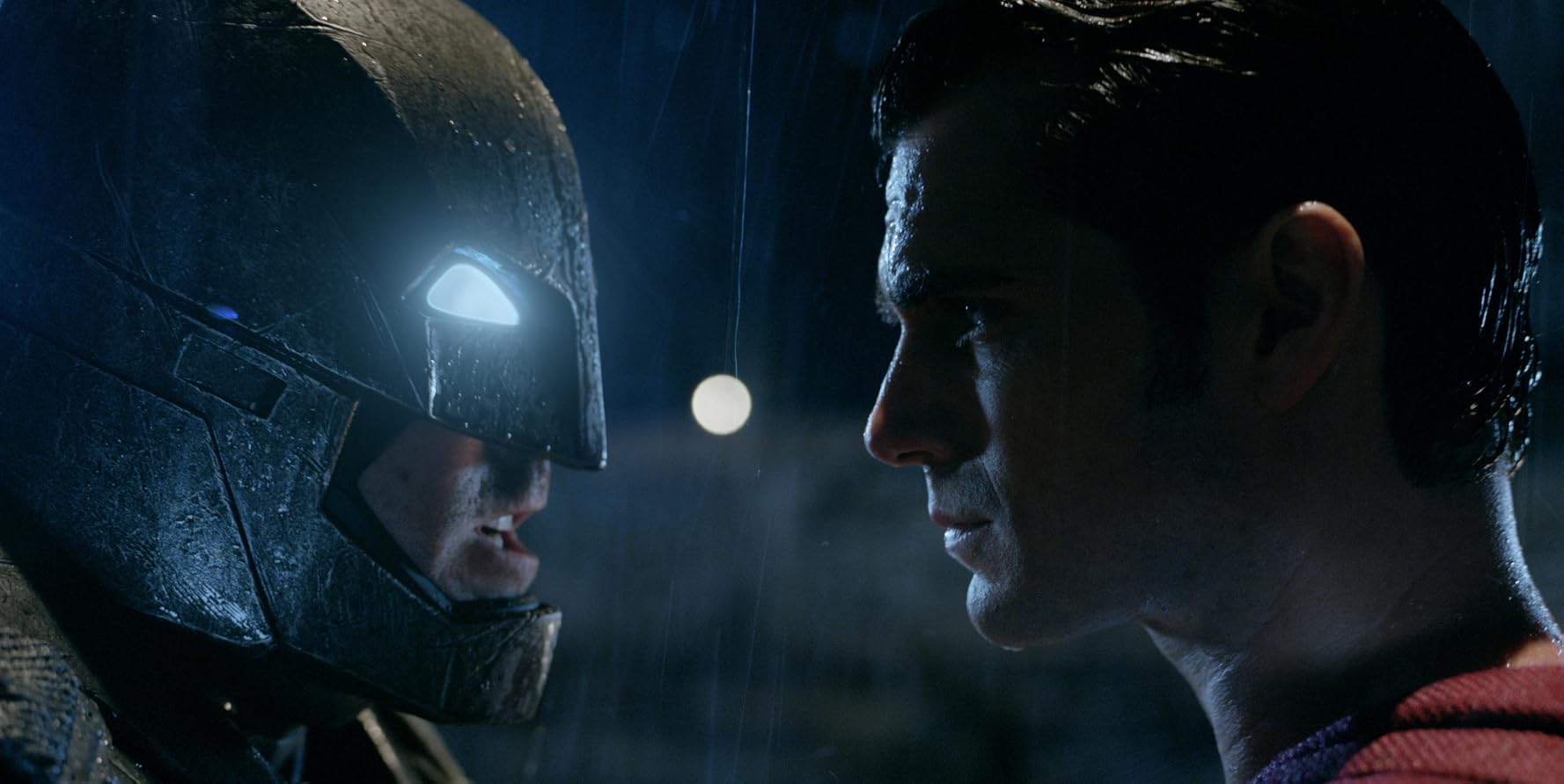
Ben Affleck and Henry Cavill in Batman v Superman: Dawn of Justice (2016)

But to reiterate a different point that I made in that Top 12 Films of 2019 list, I’d argue that another problem for the DCEU early on was that it tried a bit too hard to ‘not be Marvel’. And for the record, when I say “not be Marvel”, that’s primarily in reference to the long-standing stigma against the MCU films that claims that they’re nothing more than kid-friendly comedies, especially in the wake of Marvel being purchased by Disney in 2009. Now sure, it’s true that MCU films are usually light-hearted affairs that are often dominated by the comedic banter between characters, but if there’s one point that I’ve hopefully gotten across the most these past few years, it’s that they’re much more than just silly comedies. In fact, in the years since this mindset started becoming more common within the DCEU fandom, I believe that films like the culturally relevant Black Panther and the emotionally charged duology of Avengers: Infinity War and Avengers: Endgame have been more than enough proof against the claim that the MCU is ‘just for kids’. Nevertheless, it’s truly astounding how much the hardcore side of the DCEU fandom utterly despises the light-hearted style of the MCU films, almost as if they believe that dark and gritty narratives are the only worthy routes that a superhero film should take instead of being the fun and entertaining blockbusters that they normally are. As you might have guessed, this is one of the biggest reasons why the hardcore DCEU faithful usually prefer Zack Snyder’s DCEU films instead of some of the franchise’s more critically successful outings. In fact, even Snyder has distanced himself from the more light-hearted installments of the superhero genre by stating that it simply isn’t the kind of material that he prefers. And so, with all this in mind, I think it’s safe to say that the time has finally come for me to say something that I know damn well will outright infuriate the #ReleasetheSnyderCut faithful… and yet is very much something that needs to be said at this point. To be clear, what I’m about to say is not meant to be a personal dig against Snyder, especially given the circumstances behind his departure from Justice League. But at the end of the day… Zack Snyder probably wasn’t the best choice to be the director who was meant to spearhead the genesis and future of DC’s brand-new cinematic universe.

Ben Affleck and Zack Snyder in Batman v Superman: Dawn of Justice (2016)

Now to be clear, I’m not saying that I think Snyder is a terrible director. He’s certainly proven himself to be one of the best visually-driven filmmakers in the business and that is very much apparent in every film that he’s made. And yet, as great as he is as a visual director, he’s been less successful when it comes to story and characters. Some would say that his adaptation of Watchmen is the exception to this, but despite Snyder’s considerable efforts to stay faithful to Alan Moore and Dave Gibbons’ seminal graphic novel, many have argued that this was more from a visual perspective rather than a narrative one. But to go back to what I just mentioned earlier about Snyder’s preferences when it comes to superhero narratives, if he wants to do superhero films that are more like Watchmen, then that’s totally fine. He’s completely within his rights as a filmmaker to do those kinds of films. However, I also feel that this kind of nihilistic philosophy applies better to the likes of niche properties like 300 and Watchmen rather than mainstream characters like Batman and Superman that have appealed to audiences of all ages. This is especially the case with children because, despite what some members of the DCEU fandom may claim, comic-book superheroes are usually marketed towards the younger demographic. Batman v Superman: Dawn of Justice, by way of Snyder’s intended 3-hour cut, is not even close to being geared towards kids. Instead, it’s a dark, dour, and incredibly violent R-rated flick that sees the title characters act in generally unheroic ways. And it all culminates with one of the most idealistic heroes of the entire genre, Superman, dying in an incredibly gruesome manner just so they could pay homage to the infamous storyline from the comics in which he dies after an intense battle with Doomsday. Simply put, that probably wasn’t the best idea for a major studio tentpole release that was being marketed to the widest audience possible.
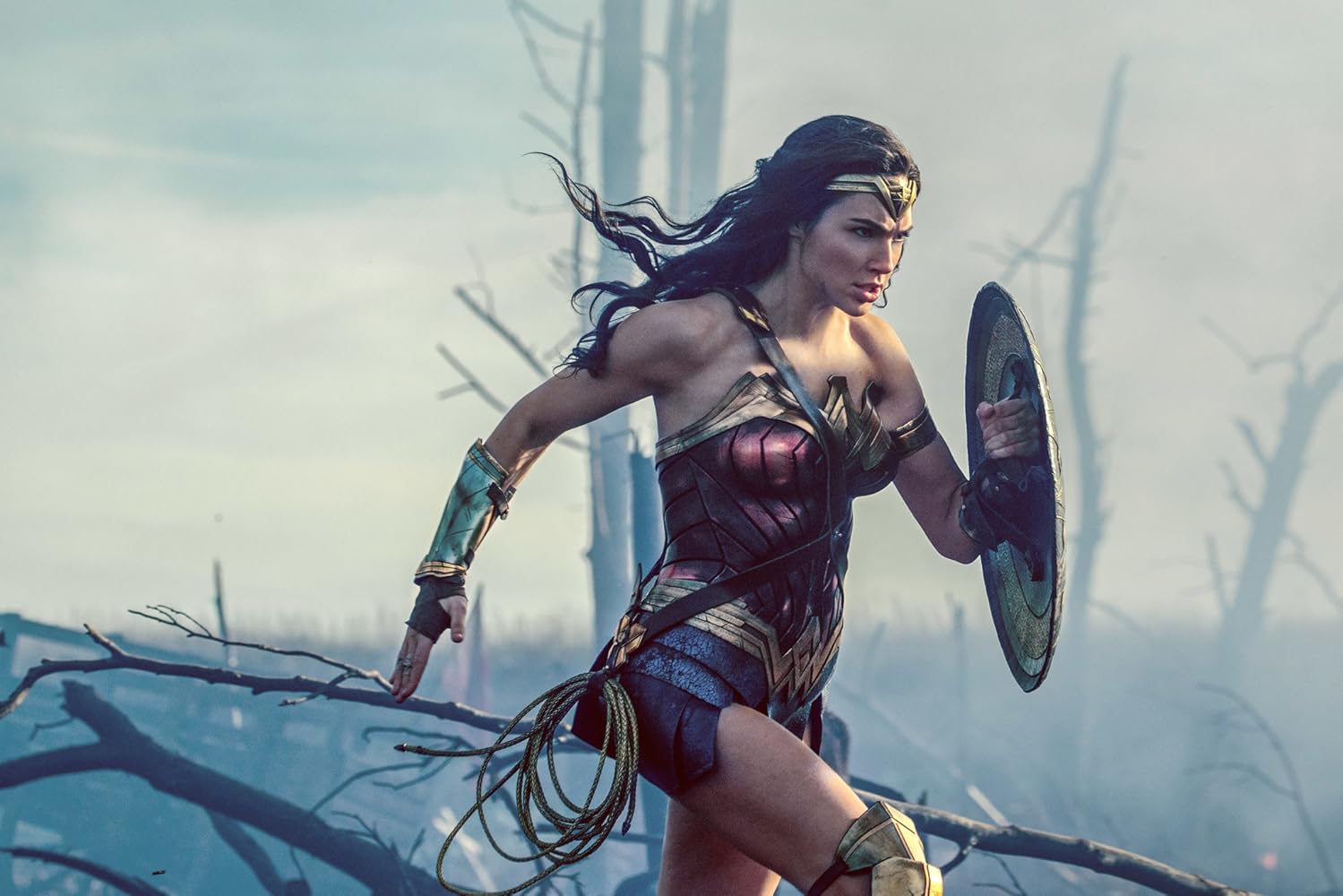
Gal Gadot in Wonder Woman (2017)

By comparison, other installments of the DCEU have done a far better job when it comes to developing these characters rather than just being a case of style over substance. Snyder may have been the one who brought Wonder Woman to the screen in Batman v Superman, but it was Patty Jenkins who made her a genuine icon and quite arguably the MVP of the franchise by way of her solo film. And while Snyder may have also set the stage for Aquaman’s franchise debut, it was James Wan who took Jason Momoa’s potentially controversial take on the character and turned him into the full-blown charismatic star of what ended up becoming the DCEU’s highest-grossing installment to date. In fact, I’d argue that the best DCEU film to date is one that Snyder had absolutely nothing to do with, Shazam. Some may refer to Shazam as the closest that the DCEU has ever gotten to replicating the MCU aesthetic, because aside from some incredibly dark moments that feel like they came straight out of a horror film, it’s easily the DCEU’s most light-hearted entry to date. But as I’ve said plenty of times by now, there’s a lot more to this than just colorful visuals and a plethora of jokes, as Shazam also fully succeeds at giving its title character a proper and emotionally cathartic character arc that’s perfectly synced with all the fun superhero escapades that he partakes in. Suffice it to say, this is something that you never really got out of the DCEU films that Snyder directed, and the one character who was hurt by this the most was Superman, thus resulting in his sacrifice at the end of Batman v Superman feeling incredibly hollow. And it’s a shame, really, because Henry Cavill has very much proven himself to be an incredibly charismatic actor thanks to films like The Man from UNCLE and Mission Impossible – Fallout. Thus, given the recent news that revealed that Cavill is set to return to the franchise after quite a few years where it was rumored that he was done playing Superman, I hope that he’ll have better material to work with going forward. Because, really, it’s saying something when his best performance in the role… was in Justice League. Yes, despite all the wonky CGI to remove his mustache and the fact that it contrasted heavily with how the character was portrayed in both Man of Steel and Batman v Superman, it is still the closest that Henry Cavill has ever gotten to matching Christopher Reeve’s iconic interpretation of the character.

Jason Momoa in Zack Snyder's Justice League (2021)

And so, given everything that I’ve gone through in today’s post, I must admit that the announcement that Zack Snyder’s Justice League will finally see the light of day is one that has left me with mixed feelings overall, and as you might have guessed, this largely has to do with the whole #ReleasetheSnyderCut movement. Now before I continue, let me just point out that I’m well aware that what I’m about to discuss doesn’t represent the entirety of those who were involved in the campaign for the release of Snyder’s version of the film. I know that a lot of people who participated in it simply did so because they wanted to see this version of the film released publicly, especially given all the tragic circumstances that led to Snyder’s departure from the production. On that note, quite arguably the best result to come from this campaign was that over $150,000 was raised for the American Foundation for Suicide Prevention. Unfortunately, as has usually been the case these past few years with incidents that are attributed to internet fandom, the more vocal and incredibly toxic members of the community have ultimately been the ones who have ended up dominating the discussion. Before the announcement that the film was finally going to get released, they attacked anyone who dared to suggest that the idea of releasing Snyder’s version of the film seemed impossible at the time given the status that it was in when he left the production. Many of them have also harassed Warner Bros. employees to the point where the former President of DC Entertainment, Diane Nelson, had to delete her Twitter account. But perhaps the biggest thing to note about this entire movement was how utterly persistent it was at times to the point where that hashtag was being pushed even when talking about things that had nothing to do with Justice League. Thus, as much as some will say that folks like this only represent a small part of the community, I do think that we’re at a point now where crap like this needs to be better addressed. Because at the end of the day, even the actions of a select number of ‘fans’ (a term that, as you might have guessed, I use very loosely here) has the potential to make us all look bad simply by association.


And as I’ve said plenty of times over the past few years, the hardcore faction of the DCEU fandom has become one of the most toxic internet groups in recent memory. If you were to ask me why, I’d say that it’s largely because of how they are fully devoted to what Zack Snyder had envisioned for the franchise. Thus, when anyone dares to come along and suggest that his DCEU films were far from perfect, his fans will come out of the woodwork, get incredibly infuriated about it, and try to pass off the utterly bogus conspiracy that critics of Snyder’s films were paid off by Disney and Marvel to make the MCU look better by comparison. Heck, even when the DC Extended Universe had a genuine hit on its hands, these folks still somehow managed to find something to be upset about. When Wonder Woman became the DCEU’s first critically acclaimed hit, a lot of Snyder fans tried to pin it all on him since he had a story credit instead of, you know, director Patty Jenkins. When Aquaman came out, the hardcore DCEU fandom attacked anyone who had predicted that the film wasn’t going to be a box-office hit and, as you might have guessed, lashed out at anyone who gave it a negative review. And don’t even get me started on how furious they were when Birds of Prey came out earlier this year rather than the films that they wanted like a sequel to Man of Steel or the Snyder Cut. But, of course, the biggest stunt that they’ve pulled (apart from their negative influence on the whole #ReleasetheSnyderCut situation, of course…) was when they tried to shut down Rotten Tomatoes in 2016 after Batman v Superman and Suicide Squad were both savaged by critics. Simply put, these folks haven’t responded well to the idea that the DC Extended Universe has worked a lot better when it isn’t going with the grim aesthetic that Snyder had established during the franchise’s early days.


But now this brings us to what has easily been the most concerning aspect of the announcement for Zack Snyder’s Justice League… the fact that it could potentially pave the way for more instances in the future where overly entitled fans aggressively demand changes to films when they don’t turn out exactly the way they wanted. In fact, I’d argue that, when it comes to films that have left some sort of impact on the film industry, Justice League has been one of the most prevalent examples in recent memory of a film that has left a negative impact because of how it has emboldened certain online crowds to endlessly vent about what could have been. Nowadays, whenever a deleted scene for a film is released, some folks will act like they were ‘robbed’ of a sequence that, 9 times out of 10, was cut for a legitimate reason (e.g. the deleted scene in Avengers: Endgame where the Avengers all take a knee to mourn Tony Stark right after he dies). And it’s all thanks to the film that, until Snyder’s version comes out next year, boasted one of the vastest and eclectic collections of sequences that were ultimately left on the cutting room floor. Sure enough, there have already been quite a few noteworthy examples recently of fans demanding alternate cuts. Staying in the DCEU for a moment, some have been pushing for the version of Suicide Squad that director David Ayer had originally developed before it was heavily compromised by studio interference. A few weeks after Star Wars: The Rise of Skywalker came out, rumors started floating around that director J.J. Abrams was forced to make some critical changes to the film in the wake of the polarizing reactions to The Last Jedi, resulting in the #ReleasetheJJCut hashtag becoming a thing. And finally, literally just a few days after I started writing this post, the next big fan campaign emerged when Star Wars fans started to push for director George Lucas’ original 4-hour cut of Episode III – Revenge of the Sith.

The toxic attitudes of modern film fan culture were directly parodied in 'Batman's Back Man', the fifth episode of the second season of the hit DC Universe animated series 'Harley Quinn'
Simply put, I wouldn’t be surprised if this isn’t the last time that we’ll be seeing fans getting this worked up over a film’s mythical alternate cut. And so, in conclusion, I will reiterate what I’ve said before in that when it comes to the announcement that Zack Snyder’s Justice League will finally get released, I am happy for Zack Snyder… and Zack Snyder only (and, by extension, everyone who had worked on the film before the reshoots). Despite my current feelings towards his DCEU films, I’m glad that he was able to find closure on a project that he never got the chance to finish. And yet, I simply can’t say the same for the DCEU fandom because as much as I know that many people who participated in this movement did so out of genuine appreciation for Snyder’s work, said movement was tainted by some utterly toxic jackasses who haven’t been able to fathom the possibility that his takes on these classic characters were inherently flawed. Plus, to be perfectly blunt, folks… I just got so damn tired of hearing about this film all the frigging time for the past two and a half years, especially whenever it threatened to overshadow the instances where the DCEU managed to achieve some genuine success. Now, to be clear, this doesn’t mean that I was ever against the notion of its release. Once it debuts on HBO Max next year, I assure you that I’ll watch it and will then give you a proper review/discussion post on it. However, this doesn’t excuse the fact that everything that surrounded its release is ultimately yet another example of the increasing sense of entitlement that is thoroughly plaguing modern fandom. We now live in an era where, for some inexplicable reason, some believe that the best way to express their disappointment over a film or TV show is to vehemently lash out at the filmmakers and studios who worked on them as if the fact that they didn’t live up to their oddly specific set of expectations is the equivalent of some kind of criminal offense. And yet, this is exactly the kind of deplorable behavior that I’m thoroughly against as a film critic because I believe that it’s a blatant sign of disrespect coming from people who think that they know better than those who work in the industry even though incidents like this very much prove otherwise.


That concludes this extensive discussion on the history behind Zack Snyder’s version of Justice League. Since this single post ultimately proved to be nearly as long as either of the lengthy write-ups that I did for Star Wars: The Rise of Skywalker and Avengers: Endgame in my Top 12 Films of 2019 list from a few months back, I’d like to thank all of you for sticking it out with me when it comes to this incredibly daunting beast of an editorial.

Friday, March 25, 2016

Batman v Superman: Dawn of Justice (2016) review (400th Post!!)


In June of 1938, DC Comics launched its Action Comics series, which introduced the character of Superman, the ‘alien’ being from the planet Krypton who was sent to Earth by his father Jor-El when the planet was on the brink of destruction. Adopted by the Kents, Superman spent much of his childhood living in Kansas under the name Clark Kent before taking on the public persona of Superman as an adult. In doing so, he not only became DC’s ‘first’ major superhero but also arguably the most famous superhero of all-time. Just a little less than a year later, in May of 1939, DC debuted the character of Batman in the 27th issue of their Detective Comics series. Batman, AKA Bruce Wayne, the billionaire playboy who took on the persona of ‘The Dark Knight’ after witnessing his parents’ murder at a young age, is arguably just as iconic as Superman if not more given all of the numerous adaptations of the character over the years from films to TV shows to video games. While DC Comics has created numerous superheroes over the years from Wonder Woman to the Flash to Green Lantern, Batman and Superman are easily the company’s most famous protagonists. That is very much exemplified by their track records on film because, to be perfectly frank, they are kind of the only major DC superheroes to find success in live-action on the big-screen. Superman pretty much kicked off the ‘superhero film genre’ with his 1978 titular film Superman, directed by Richard Donner, while Batman’s own titular outing from 1989, directed by Tim Burton, was another noteworthy entry for the genre. Both franchises experienced their own highs and lows over the years but they have also saw revivals in recent years. In the case of Batman, it was thanks to Christopher Nolan’s Dark Knight trilogy while Superman got a Dark Knight style reimagining in 2013 with Man of Steel.

Three years after Man of Steel, DC now begins its journey into establishing its own cinematic universe, just like Marvel has done over the past eight years, with the follow-up to Man of Steel, Batman v. Superman: Dawn of Justice. Man of Steel director Zack Snyder returns to direct as does the main cast of Man of Steel while Ben Affleck takes over for Christian Bale in the role of Batman. It is the first time that these titans of DC have appeared together in a live-action film so obviously there was a lot of hype surrounding the film because of that as well as the aforementioned fact that it’s meant to kick-start DC’s own cinematic universe. However, at the moment it is currently being slammed by critics, sporting only a measly 30% rating on Rotten Tomatoes (at the time I’m writing this). While this isn’t really that surprising seeing how Man of Steel also received mixed reviews from critics (that film has a 56% rating on RT) and was no doubt the most polarizing film of 2013, I assure you that this new film is nowhere near as bad as that RT rating suggests. Now don’t get me wrong as there are some issues with this film, namely in regards to the story and the editing. At the same time, though, there are genuinely some very good things about this film, particularly the visuals, the action sequences, and the performances of a few noteworthy newcomers to the DC ‘Extended Universe’ (that’s the term they’re going with for this new Cinematic Universe, from what I’ve heard). In other words, I’m certain that fans of the DC universe are going to be pretty satisfied with this long-awaited crossover involving the ‘Son of Krypton’ and the ‘Bat of Gotham’.

The film takes place 18 months after the events of Man of Steel, in which Superman (Henry Cavill) successfully prevented General Zod (Michael Shannon) from destroying the Earth in order to establish a new home for the people of Krypton. At the same time, however, Superman’s confrontation with Zod ended up causing a lot of collateral damage to the city of Metropolis. Because of this, Superman ends up becoming a controversial figure amongst various parties. One particular critic of Superman is Gotham billionaire Bruce Wayne (Ben Affleck), who of course as we know moonlights as Gotham’s vigilante Batman. Fearing that Superman, being an all-powerful alien, could pose a severe threat to the human race, Bruce begins an all-out defense against Superman, which soon sees the two superheroes coming into conflict with each other. At the same time, however, Metropolis tech mogul Lex Luthor (Jesse Eisenberg), who also views Superman as a threat as well as other ‘meta-humans’ currently out there, begins to experiment with both the remains of General Zod and the Kryptonian technology recovered from the battle of Metropolis, particularly the material known as Kryptonite, in order to combat Superman. Lex’s actions, which pose a threat to not just Batman and Superman but the whole world as well, soon force the two heroes to work together, serving as a precedent for future events in the DC universe.

So as far as this film’s primary issues are concerned, they mainly come from the story and the editing, particularly during the first twenty minutes or so. This film admittedly does start out on a bit of a rough note as the plot sort of goes in all directions in regards to what’s going on. Part of it does come from the editing, which can be rather choppy at times. In a way, that does sort of apply to the whole film; after all, this film does cover a lot of ground even in the fairly hefty span of 153 minutes. Not only does this film continue the story that began in Man of Steel but it also re-establishes the character of Batman while also setting up other characters like Wonder Woman (Gal Gadot). But ultimately, I did like how the film ‘set up’ the other characters. At the end of the day, this is still very much a Batman/Superman film and while I was worried that Batman was going to overshadow Superman in what was originally ‘his sequel’ (which I know some will deny but I do recall Zack Snyder stating at one point that he wanted to do a second Superman film before getting into anything Justice League related, and keep in mind that this was before it was revealed that Batman was going to be in it), the film actually is rather balanced in terms of their roles in the overall plot. Wonder Woman is basically the only other major DC lead superhero to have a ‘major’ role in the story but the film does feature some ‘cameo appearances’ from the likes of characters like Aquaman (Jason Momoa) and the Flash (Ezra Miller) and I do think that the film handled these ‘cameos’ well. They don’t overshadow Batman, Superman, or Wonder Woman, but they do their job in regards to setting them up for future films without them actually playing ‘a role’ in this film’s story. Stuff like this did keep me invested throughout even if the narrative did become rather unfocused at times.

But these problems do sort of become less prevalent as the film goes on and this is where Batman v Superman really starts to shine, namely in regards to its visuals. There’s no denying that Zack Snyder is one of the best ‘visual directors’ in the business. That is especially true whenever Snyder does a ‘comic-book’ film, like he did with 300 in 2007 and Watchmen in 2009. It’s been very much shown that Snyder really does have a talent in regards to translating the imagery of the comics to the big-screen and that once again shows with this film. So even if you’re not a big fan of this film, there’s no denying that it has one hell of an awesome visual style. That also translates well into the action sequences. Admittedly most of the action sequences are reserved for the third act of the film but when they do happen, they’re pretty darn epic, especially the fight sequences between Batman and Superman and quite frankly any action sequences involving Batman for that matter. Like Man of Steel, this film has attracted a considerable amount of flak for its overall tone; in other words, these films have been criticized for being ‘too grim’. However, I don’t entirely agree with that because while it is true that these films are much more serious compared to the lighter-hearted efforts of the Marvel Cinematic Universe, that doesn’t mean that they are completely ‘dour’. There are a few light-hearted quips peppered in here and there, particularly from Alfred (Jeremy Irons, who is, to put it simply, quite excellent in the role of Bruce Wayne’s trusty butler) and Perry White (Laurence Fishburne). Some of you might recall the rumor that DC was mandating a ‘no joke’ policy in regards to their upcoming films. Well based solely on this film I can tell you that this alleged ‘no joke’ mandate… was a load of bull.

Performance-wise, the returning cast of Man of Steel (Cavill, Amy Adams, Diane Lane, etc.) are as solid as they were in the first film. Ultimately though, the major focus for most people this time around was the newcomers; Affleck as Batman, Gadot as Wonder Woman, and Eisenberg as Lex Luthor. It’s pretty much guaranteed that any major superhero casting is going to be subjected to much scrutiny from comic book fans and Affleck’s casting as Batman is arguably the most controversial superhero casting of all-time. While Affleck has redeemed his career in recent years thanks to his directorial efforts with films like Argo and Gone Baby Gone, his previous turn in the superhero genre, 2003’s Daredevil, was clearly still in the minds of a lot of comic book fans. Thankfully, a lot of those critics are hopefully now eating their words because Affleck is superb as Batman. His take on the character is very much influenced by the older Bruce Wayne from Frank Miller’s iconic series The Dark Knight Returns and Affleck handles the role of the aged Batman perfectly. The controversy over Gal Gadot’s casting of Wonder Woman mainly stemmed from the fact that Gadot’s filmography prior to this film wasn’t necessarily that ‘illustrious’. But ultimately she is excellent in the role. Obviously she isn’t in it as much as Affleck or Cavill but once she ‘becomes’ Wonder Woman, man does she steal the show. And finally we come to Jesse Eisenberg as Lex Luthor, who of course attracted controversy on the grounds that some believed he ‘didn’t look the part’. As far as his performance in this film goes, it’s no doubt going to be one of the most polarizing elements of the film. Eisenberg does play the role in a fairly over-the-top manner. For some, this will be a bit ‘much’ but I will say that he does have some genuinely memorable moments from time to time and at the very least it feels like he’s at least doing something different in the role compared to what has come before.

At the end of the day, Batman v Superman: Dawn of Justice may be attracting a rather negative reaction from most critics but that doesn’t automatically mean that the developing DC ‘Extended Universe’ is in jeopardy. I have the feeling that the next two films in this franchise, Suicide Squad and Wonder Woman, are probably going to fare better with critics. Still, I do feel that some critics have been overly harsh on this film. Some critics will deny it but I assure you that I have some clearly biased reviews from people who kept s***ting on this film before they saw it; in other words, they went into it already intent on hating it and that’s just unfair. Anyone who’s been following this blog the past few years will know that I used to be pretty darn critical towards this film in the years leading up to its release, mainly after it was announced that Wonder Woman was going to be in this ‘Batman and Superman’ film. But ultimately I realized that I was being totally unjust towards the film by being overly critical towards it despite the fact that it wasn’t even out yet. I’ve made it clear that I’m a bigger fan of what Marvel Studios has been doing with their Cinematic Universe but that did not influence my thoughts on this film in any way. And ultimately I will say that I did like Batman v Superman: Dawn of Justice. Yes, there are some flaws, namely in regards to the film’s rather scrambled narrative. This is by no means a ‘perfect’ superhero film. But the things that this film does right truly are great, particularly the visuals, action sequences, and noteworthy performances from the likes of Ben Affleck and Gal Gadot, among others. A 30% on RT this is not… if you ask me, it should be in the same camp as Man of Steel and have a rating somewhere in the 50’s that represents the admittedly polarizing nature of the film. Ultimately though, I will say this… if you’re a fan of DC Comics, and if you did like Man of Steel I have the feeling that you’re really going to like this film no matter what the critics may say about it.

Rating: 3.5/5

Thursday, March 6, 2014

Director Retrospective: Zack Snyder


‘300: Rise of An Empire’, the sequel to 2007’s smash hit ‘300’, hits theaters this weekend. However, instead of doing a full review of the previous film, I decided to do something a little different. Instead, I decided to do a retrospective of the films of its director, Zack Snyder. Snyder may not be directing this new ‘300’ but is still very much involved with the project, serving as both a producer and co-writer. Snyder’s come a long way since the original ‘300’, which at the time was only his second film. Now, he’s right in the middle of the developing DC Comics Cinematic Universe after getting it started last year with ‘Man of Steel’. His directorial filmography is rather small (only 6 films to date that have currently been released) but these films cover a fairly wide variety of genres, from horror films to superhero films. Those are the films we’ll be looking at today. However, I’ll saving one of the films for a full review that will be coming out in the next few days. Why? Well, because I have a bit of a history with this film as I once called it the ‘Worst’ film of its year. I didn’t want to watch it again, but I’m willing to do it just for you guys.

DAWN OF THE DEAD (2004)


For what was Zack Snyder’s first film, it was one that could have possibly ended his career right then and there. Why? Well, that’s because his first film was a remake of one of the most famous horror films of all time, George Romero’s 1978 classic ‘Dawn of the Dead’. As we all know, remakes are usually frowned upon, especially if they are remakes of classic horror films. But in the case of Snyder’s ‘Dawn of the Dead’, it turned out to be one of the better horror remakes to have ever come out, especially in recent years. Now first let me start by saying that I haven’t seen the original ‘Dawn of the Dead’ so I’m unable to compare it to the original, something I don’t really like to do anyway when talking about remakes unless it’s really necessary. As far as I can tell, it retains the same general plot of the original (a group of survivors hiding in a mall during a zombie outbreak) but Snyder manages to do enough to make it its own film, like by having fast zombies instead of slow ones. In the end, I’m sure that the original is still the better film as admittedly this one does drags at times and there are a few too many characters to follow. Still, Snyder manages to give us a horror film that is entertaining and sometimes even very suspenseful. Simply put, it’s one of the few good horror remakes.

Rating: 3.5/5

300 (2007)


While ‘Dawn of the Dead’ received some pretty good reviews, it was really ‘300’ that made Snyder as famous as he is now and why not? ‘300’ is, to put it bluntly, just awesome. It’s a visually stunning and downright fun popcorn flick, and one that’s also pretty dang quotable. I mean come on, who hasn’t at least once yelled ‘THIS… IS… SPARTA!!!’ (It’s such a memorable moment). Yes, the movie can sometimes be a bit cheesy as a lot of dialogue consists of the characters just yelling everything (that aforementioned ‘SPARTA’ included). It’s also clear that, while this is technically based on a ‘true event’, this film isn’t exactly historically accurate. After all, this is primarily based off of the graphic novel of the same name by Frank Miller and while I haven’t read it (which is actually a pattern I’m starting to notice in regards to Snyder’s films), it feels Snyder kept the film as faithful to the graphic novel as he possibly could. Also, while the movie is admittedly a case of ‘style over substance’, that’s not to say that it’s completely empty-minded. There are still some pretty strong themes here and there, like honor and the will to stand up for your people against all odds, which was the exact situation King Leonidas and his men faced when they went up against the much larger Persian army. ‘300’ is epic and awesome and we wouldn’t take it any other way.

Rating: 4/5

WATCHMEN (2009)


(Note: The following review is for the ‘Director’s Cut’ of the film. I had seen the film before on TV and if I’m right, I was watching the theatrical cut. However, my friend Matt recommended that I watch the Director’s Cut, which he feels is the superior version… so here we go.)


After the massive success of ‘300’, Snyder moved on to another graphic novel adaptation, though I think it’s safe to say that this one was clearly more notable than Frank Miller’s story… Alan Moore’s ‘Watchmen’, regarded by many as the greatest graphic novel of all-time; film adaptations were attempted before by directors like Terry Gilliam, Paul Greengrass, and Darren Aronofsky, but many deemed the story to be ‘unfilmable’. Lo and Behold, it was Snyder who finally solved the problem with his take on the story. Now, for the record… I have not read the graphic novel… I know, trust me, I’ll get onto that. But as for the film itself, ‘Watchmen’ is one damn good movie. Like ‘300’ it’s visually beautiful and incredibly entertaining. However, unlike ‘300’, this one benefits from far better writing, case in point being the graphic novel itself.

For someone who is rather unfamiliar with the source material it’s a quite fascinating story of superheroes where only one of them actually has superpowers while the others are more like vigilantes… and they don’t always do the ‘right things’. For example, you have a character named ‘The Comedian’ (played by Jeffrey Dean Morgan, who is perhaps the biggest standout of the film even though most of his scenes are just flashbacks as his character is killed at the beginning of the film) who is pretty darn unsympathetic and yet that’s mainly because he is someone who had basically become disillusioned with the ideas of life and the American Dream. It isn’t until the end of his life when he finally expresses remorse for what he’s done; and that’s just one of a whole group of interesting characters. Is it completely faithful to the graphic novel? Not really, but Snyder did his best to make this story work on film and some of the liberties that he took with it (like showing the death of the Comedian or not using the ‘alien invasion’ at the end of the film) actually do work out for the better. I agree with my friend Matt in that the ‘Director’s Cut’ is the superior version of the film as the scenes that were added into this version help the movie as a whole flow much better. The theatrical cut is still a pretty good movie, but this is the version that I mainly recommend.

Rating (Director’s Cut): 4.5/5

LEGEND OF THE GUARDIANS: THE OWLS OF GA’HOOLE (2010)


Next up we have ‘Legend of the Guardians: The Owls of Ga’Hoole’, based off of the ‘Guardians of Ga’Hoole’ book series by author Kathryn Lasky. I do remember reading these books when I was younger, although I don’t recall actually finishing any of them. But anyway, our focus is one the film adaptation which, from what I can tell, covers the plot of the first three books in the series (‘The Capture’, ‘The Journey’, and ‘The Rescue’). I have to say that I was surprised when I first heard that Snyder was directing this film, primarily because this was after he had come off of two R-rated films in ‘300’ and ‘Watchmen’, films that certainly garnered that high rating. To date, this is the only film he has made that has been given a rating lower than ‘PG-13’, and it’s an animated movie at that… this animated film is also one of the most underrated films of its genre. It features some incredibly beautiful animation, especially during the flight scenes. Snyder’s trademark slow-motion style is perfect for this kind of film. This aspect of his filmmaking has never really bothered me, except when it’s overused (see next film for proof of that). But in the case of this film, it really works and, well, is also rather necessary seeing how it would be kind of hard to tell what was going on without the use of slow-motion during the owl fight scenes. The story may be just a BIT standard, but the animation is outstanding and this film also boasts an impressive voice cast, including the likes of Helen Mirren, Joel Edgerton, Hugo Weaving, and Geoffrey Rush. Bottom line, this is one animated film that I feel has gotten overlooked. It is really worth checking out.

Rating: 4/5

SUCKER PUNCH (2011)


...Full Review Coming Soon…

MAN OF STEEL (2013)


Originally, I actually wasn’t going to cover this film in this retrospective because I already had just a few weeks ago when I did my ‘Top 12 Films of the Year’ posts and I didn’t want to repeat myself too much. But, upon request, I decided to include it after all. The following is basically serving as a quick sum-up of what I’ve said before.

‘Man of Steel’, probably the most polarizing film of 2013. People either loved it or hated it and after two viewings, I found myself firmly fitting into the former group. This was a fresh new take on the character of Superman and his lore; one that was pretty much the first film to treat him more than just an icon. That’s nothing against the Christopher Reeve films or the character of Superman as a whole. But let’s be honest, a character that is pretty much invincible can get a little boring after a while. That is why I really liked how this film did an excellent job of showing Clark Kent’s struggles trying to fit in on Earth even though he’s from another world. Henry Cavill, while not given much to say in the role of Superman, is fantastic and the first actor that can really stand toe to toe with Reeve’s iconic turn in the role as far as performances are concerned. The whole cast is terrific from Superman’s two fathers (Jonathan Kent (played by Kevin Costner) and Jor-El (played by Russell Crowe)) to Michael Shannon as General Zod. While Terrence Stamp’s Zod from ‘Superman II’ is still the most memorable interpretation of the character, Shannon’s Zod is far-better written as a ‘misguided villain’ who thinks he’s doing what is right when it really isn’t.

As for the ‘collateral damage’ that has perhaps been the most controversial aspect of this film, I’m not too bothered by it. I mean yes, the city of Metropolis pretty much gets annihilated during the finale and most of the damage does come from Superman flying around and fighting Zod and his soldiers. But at the same time, you don’t see someone actually dying as a result of Superman. It’s Zod who’s responsible for most of the ‘death and destruction’ that occurs during those scenes. At the same time though, maybe the sequel will do something that can address this, maybe through the introduction of this universe’s Lex Luthor (to be played by Jesse Eisenberg). I can definitely see Lex using this event as part of his plan to get rid of Superman. Then we come to that controversial neck-snapping committed by Superman against Zod… again, I’m not bothered by it because while I am aware that in the comics Superman does not kill, this scene can serve as the catalyst that results in him never doing that again… and for the record you do see him show remorse for doing it afterwards.

So, in the end, I realize this new Superman is not for everyone and I understand. It was a new take on the character and I can see how some of the things in this movie might turn some people off. But at the same time, you do have to appreciate that the filmmakers did do something new instead of retreading familiar territory (looking at you, ‘Superman Returns’). That is why I view ‘Man of Steel’ as one of the best superhero films of 2013 alongside ‘Iron Man 3’. At the same time though, I’m kind of worried about the route they’re currently taking with the sequel which, until an official title is confirmed, I’m referring to as ‘Batman vs. Superman Featuring Wonder Woman and whoever else they want to add into it’.


Rating: 4.5/5

Friday, January 3, 2014

TOP 12 FAVORITE FILMS OF 2013: #9-7

Welcome back to Rhode Island Movie Corner’s end-of-the-year list of my Top 12 Favorite Films of 2013. This is Part 2, and today I’m listing Films 9-7.

I’ve gone on record saying that I’m more of a Marvel fan than DC. I’m not saying anything bad against DC. It’s just that Marvel’s had a better track record as far as their filmography is concerned. Also, I’m rather worried that DC might be rushing towards a ‘Justice League’ movie without properly developing it first. But DC fans rejoice because this year, for the first time since 2008, you finally have the best superhero film of the year… though 50% of you will no doubt disagree with me.

9. MAN OF STEEL


AKA the most polarizing film of the year; people either loved or hated this movie. There was no middle ground when it came to this one… and as far as me and my friend Matt was concerned, we’re on the side of those who loved it. He even calls it the best superhero film since ‘Spider-Man 2’. While I don’t necessarily think that this is the best of the genre, there are still many reasons as to why I think this is a terrific superhero film. The first, and most important, is that perhaps for the first time ever in these, ‘Superman’ is portrayed as more than just an icon. Don’t get me wrong, ‘Superman’ is an iconic superhero and Christopher Reeve was fantastic in the original ‘Superman’ movies (even the crappy ones). But let’s be honest, he’s not the most ‘interesting’ superhero out there. We’re talking about a character that’s pretty much invincible whose only weakness is the substance known as Kryptonite (and even that is kind of lame because it makes Superman too weak to do anything… thankfully it wasn’t even in this movie). That can get rather boring after a while when nothing can stop him. So I’m relieved that this film was the first where Superman was given real proper character development.

His struggles living amongst us on Earth actually make him pretty relatable, even though he is an alien from another world. He’s a fish out of water, and we see how he grows into the hero that we all know and love. Many have argued which of Superman’s two identities are his true ‘mask’; Superman or Clark Kent. As this movie shows, I believe that they are one in the same. Superman is a character with incredible abilities and that makes him a hero in the eyes of humanity but at the same time, he was born and raised in the town of Smallville and as such, grew up with the middle-American values that came from him being the son of Jonathan and Martha Kent. Let’s look at that controversial moment after Clark saves his classmates when their bus crashes into a lake. When Jonathan tells him that he has to hide his powers, Clark asks him what he was ‘supposed to do’… just let them die? Jonathan replies with a simple, ‘Maybe…’, but that doesn’t mean that he was saying that Clark should have just let them die; he’s just worried about how the world will react when they find out about his son’s powers. The same scenario applies to the scene where he dies in a tornado. I don’t see that scene as a pointless self-sacrifice. Again, he was worried about Clark’s secret getting out so he made sure that Clark did not try and save him, even though he obviously could. As such, this is one of the most emotional moments in any film this year and in fact I’d say this death was better handled here than in the original Superman movie.

Speaking of death, let’s talk about what is probably the most controversial aspect of the film; the apparent ‘collateral damage’ that Superman causes during his fight with General Zod and his army of Kryptonians. There’s no denying it, Metropolis gets annihilated during the final battle; there’s plenty of property damage and a lot of people probably died as a result of it. But here’s the thing… did anyone actually die as a result of Superman flying around and fighting Zod and his army? If there was, then I didn’t see it. Maybe some did, but thankfully the filmmakers didn’t show it. Most of the death and destruction was caused by Zod, not Superman. How about the just as controversial scene where Superman defeats Zod by snapping his neck and killing him? Yes, I’m aware that Superman is a character that doesn’t kill. With that said, this scene can hopefully establish that in future movies and let’s face it Superman didn’t really have any other choice. Zod was about to kill some innocent civilians and even if Superman tried to stop him, he would probably keep trying to do it. And you know, in the last ‘Superman’ film to star Zod, Superman did kind of kill him in that one too. Just saying…

In the lead role of Superman, Henry Cavill is excellent; he doesn’t say much but he is still very charming and likable. As Lois Lane, Amy Adams has great chemistry with Cavill and I did like that, in this continuity, Lois actually figures out that Clark is Superman… and thank god they didn’t use the ‘mind erasing kiss’ plot point from the theatrical cut of ‘Superman II’. Russell Crowe and Kevin Costner are both fantastic as Superman’s two fathers, Jor El and Pa Kent, respectively. They both influence Superman’s actions throughout the course of the film, and in the case of Jonathan, no it’s not letting people die as I already established. The bottom line here is that this is a new take on the character of Superman and regardless of your opinion on the film; you can’t fault the filmmakers for trying something different. I’ll admit that I was rather hesitant about this film going in, if mainly because of director Zack Snyder’s previous film and my pick for the worst film of 2011, ‘Sucker Punch’. In that sense, let me just say that, Mr. Snyder, you proved me wrong.  

Number 8 is the next entry in a series that, coincidentally, held this exact same spot in last year’s list. It’s at this spot again this year, though this entry is actually vastly superior to its predecessor.

8. THE HUNGER GAMES: CATCHING FIRE


I really did like the first ‘Hunger Games’ movie, even with some of its flaws. That is because, after a horrendous series known as ‘Twilight’, this series that was also based off of a popular young adult book series had far better writing and a superior female lead in Katniss Everdeen. Still, the first film did have the whole thing about the shaky camera work during the actual Hunger Games. I didn’t really mind it that much, but there’s no denying that it was present. ‘Catching Fire’ on the other hand is a vastly superior movie and it’s interesting to note that, from what I’ve heard, this is sort of the least favorite book in the series for most people and yet, depending on how Parts 1 and 2 of ‘Mockingjay’ turn out, this might end up being the best in the whole film series. For one thing, you’ll be pleased to hear that the shaky cam and fast editing is no longer a problem here. I guess you can attribute that to the fact that in this film, the other competitors in this film’s Hunger Games are all adults so it’s not as brutal compared to them being kids in the first film.

But aside from that, this film really manages to explore the universe much more. It’s probably because the filmmakers had a better budget this time around, but regardless you get a greater sense of the turmoil amongst the districts of Panem. That idea of ‘expansion’ also extends to the character development, particularly the relationship between Katniss and Peeta. I love that the writers did remember to add in that plot point about how Katniss played up their relationship in the last movie to the audience, something that the last film did not include at all. Jennifer Lawrence is once again outstanding as Katniss, and Josh Hutcherson really shines this time around as Peeta. Of course, the rest of the cast is excellent as well, from the returning players (Woody Harrelson, Elizabeth Banks, Donald Sutherland, etc…) to the new additions (Sam Claflin, Jena Malone, Phillip Seymour Hoffman, etc…). Many consider ‘Harry Potter and the Prisoner of Azkaban’ to be the film that really got the Harry Potter franchise to where it is today and in that regard, ‘Catching Fire’ is the Hunger Games’ ‘Prisoner of Azkaban’. Nothing against Gary Ross and what he did in the first movie, but Francis Lawrence ended up making the superior film.

Number 7 is easily the most underrated movie of the year. It did get good reviews but it wasn’t really a big hit at the box office.

7. RUSH


Now at first glance from a box-office perspective, ‘Rush’ may not initially seem like a box-office flop. It earned $90 million worldwide, surpassing its $38 million budget. But take away exactly 70.1% of that gross and you’ll see that, here in America, it only grossed about $26 million. I’m guessing the main reason why this film didn’t do so well here in the states is similar to why 2011’s ‘Warrior’ didn’t do so well. I’m pretty sure that Formula One Racing is not exactly the most popular sport here. But there’s more that this movie has in comparison to ‘Warrior’ besides the fact that it wasn’t a bit hit stateside. ‘Rush’ is the story of the rivalry between F1 racers James Hunt and Niki Lauda during the 1976 season, a season where they both experienced their own personal highs and lows and yet neither is portrayed as the bad guy. They’re both very compelling people and you root for both of them at the same time. Not only that, but they are both totally different people. Hunt is the playboy with something to prove while Lauda is the calculating precisionist whose life is put on the line after a near-fatal accident at the German Grand Prix. Not only are these two characters very compelling to watch, but Chris Hemsworth and Daniel Bruhl are both outstanding in the roles. I’ll admit that I’m not a big fan of director Ron Howard’s work (‘The Grinch’ is a Christmas classic and ‘Apollo 13’ is terrific, but ‘The Dilemma’? Ugh.), but this easily one of his best films to date and one that is highly underrated as far as its box-office performance in North America is concerned.

Check back tomorrow for Part 3, for Numbers 6-4.

Saturday, August 24, 2013

Ben Affleck as Batman?


DC Comics and Warner Bros made headlines at this year’s San Diego Comic Con when they announced that the sequel to ‘Man of Steel’, which is set to come out in 2015, will also feature Batman as well, taking inspiration from (but not directly adapting) Frank Miller’s acclaimed graphic novel ‘The Dark Knight Returns’. However, DC needed to find a new actor to play Batman after Christian Bale stepped down from the role following the completion of Christopher Nolan’s ‘Dark Knight Trilogy’. So the search was on to find the next Batman. Names like Josh Brolin, Ryan Gosling, and Jon Hamm were thrown in the mix as potential candidates to play Batman and it was reported that Warner Bros was looking for an older actor to take on the role. Last Thursday, Warner Bros announced that they had found the next actor to play Batman. Their choice… Ben Affleck?

It’s kind of interesting that, in the end, Affleck was cast because in recent years, he’s been more known as a director. In fact, he was once approached to direct both ‘Man of Steel’ and ‘Justice League’ but now, instead of being behind the camera for a DC superhero film, he’ll be in front of the camera instead as the Caped Crusader. As you might have guessed, this news has received a rather mixed reception from audiences; some are okay with it and arguably most are against it. This is most likely because of Affleck’s previous work in a superhero film, 2003’s ‘Daredevil’, a film that didn’t fare well with either critics or audiences, with Affleck usually being one of the reasons why most hated it. As for me, I didn’t think that the film (not a great superhero film, but not the worst either) was entirely Affleck’s fault and that is why I am supportive of Warner Bros’ decision to have him play Batman.

I am a fan of Ben Affleck, mainly his recent work as a director on films like ‘Gone Baby Gone’, ‘The Town’, and ‘Argo’. But even though he’s been more known for his directing in recent years, he has improved as an actor as well. He’s done very good jobs in both ‘The Town’ and ‘Argo’ and that is because he doesn’t try to steal the show in those movies. He lets his supporting actors do that for him, like Jeremy Renner in ‘The Town’ and John Goodman and Alan Arkin in ‘Argo’. Was he the best choice for Batman? No, there are far better choices like Jon Hamm, Karl Urban, and Josh Brolin. But for the record, Affleck isn’t the worst choice either. Apparently, they were considering Tyler Posey from the new ‘Teen Wolf’ series and while I’ve never watched the show, something tells me that this would have turned out much worse had he been cast in the part.

I’m hopeful that Affleck will do well in the part because after all, there have been a few instances where a questionable casting choice in a superhero film turns out to do very well in the role. Back when Heath Ledger was cast as the Joker, not everyone was in support of this casting choice. But in the end, Ledger ended up stealing the show in ‘The Dark Knight’. There were some who were against the casting of Chris Evans as Captain America and look how that turned out. Heck, even a former Batman was in the same situation. When Michael Keaton was cast as Batman in Tim Burton’s first Batman film, there was a negative reaction to it because of Keaton’s previous work in comedies, namely 1983’s ‘Mr. Mom’. But in the end, Keaton is arguably still the best Batman since 1989. The bottom line is that pretty much any major casting in a superhero film is going to attract a mixed response and when you get down to it, it all just depends on the actor/actress’ performance in the film and the ‘Batman/Superman’ film won’t be coming out until 2015. Just reserve your judgment until you see the film.  

Saturday, July 20, 2013

DC Comics' Comic-Con 2013 Announcements


Over the last few days, I’ve been working on this little editorial about whether or not Hollywood is spending way too much on films that perform poorly at the box office; mainly after hearing that ‘R.I.P.D.’, a film with a budget of $130 million, is only set to gross about $17 million. But… something happened today at San Diego Comic Con International and because of it, that first editorial might not happen now because… well, let me just say that the next few years are going to be pretty sweet in regards to comic book films. The news came from DC Comics’ film division, and while only one film was officially confirmed at Comic Con, there are also two films that are reportedly in production. The first film is a crossover that will star arguably the two most famous heroes in DC’s lineup. The second film is the first solo film for a key member of the ‘Justice League’. Finally, the ‘Justice League’ movie that DC has been working on for a few years might finally be coming together.


In terms of films, DC has been having a pretty good year so far. Their main film this year, ‘Man of Steel’, has been performing very well at the box office. It has grossed over $600 million worldwide despite receiving mixed reviews from critics (and partially from audiences as well). Obviously, this has led to DC green-lighting a sequel. Director Zack Snyder and writer David S. Goyer would both return for this new movie and after seeing ‘Man of Steel’, I have the upmost faith in them because, as that film proves, they were the right men for the job. But today, during DC’s Comic-Con press conference, Zack Snyder revealed some major details about this upcoming film, which is now set to come out in 2015. He introduced Harry Lennix (who played Colonel Swanwick in the film) to the stage, where he read a short passage. The passage is as follows…

“I want you to remember, Clark, in all the years to come, in all your most private moments. I want you to remember my hand at your throat. I want you to remember the one man who beat you.”


DC fans should recognize this as a passage from Frank Miller’s highly acclaimed graphic novel, 1986’s ‘The Dark Knight Returns’. So why did they quote a line from a Batman story when this is supposed to be a Superman film? Well, that’s because the next ‘Man of Steel’ film will be a crossover between Superman and Batman. DC fans, rejoice! As mentioned earlier, Snyder will return to direct and stars Henry Cavill, Amy Adams, Laurence Fishburne, and Diane Lane will reprise their roles as Superman, Lois Lane, Perry White, and Martha Kent, respectively. As for Batman, seeing how Christian Bale recently confirmed that he will not be involved with any of DC’s future film projects; a new Batman will be cast. However, while a new actor will don the cape and cowl, ‘Dark Knight Trilogy’ director Christopher Nolan and his wife, producer Emma Thomas, will serve as executive producers; this continues Nolan’s run with DC, despite reports that Nolan did not want to be involved with more DC films.

Where do I even begin with this? This has to be one of the most exciting stories to come out in the last few years in terms of comic book films. I’m pretty sure that many comic book fans were anticipating a crossover film between these two icons and even though it was only confirmed today, this is an idea that has been in the works for quite some time. In fact, before Christopher Nolan made ‘Batman Begins’, a Superman/Batman crossover was pitched in 2001 by Andrew Kevin Walker (writer of 1995’s ‘Seven’). Obviously, as we know now, this project never happened but now things have changed, albeit a different team working on it. Another positive thing about this is that this is the perfect place to introduce the actor that will take over for Christian Bale in the role of Batman. But who will DC cast? Back when George Miller was working on a potential ‘Justice League’ film, Armie Hammer was cast as Batman. While that project was cancelled and ‘The Lone Ranger’ is currently performing poorly at the box office, he’s still my top pick for the part.


After this highly anticipated crossover, the next DC film will reportedly be a ‘Flash’ movie, which will come out in 2016. This is the one DC solo superhero film they really needed to make before ‘Justice League’. I know a lot of people are wondering about a possible ‘Wonder Woman’ movie, but I think that a ‘Flash’ movie is a safer bet for DC. Also, in the 70+ years that this character has been around, there has never been a live-action ‘Flash’ movie. Sure, there was a short lived TV series that aired for only one season from 1990 to 1991, and the character made cameo appearances on the show ‘Smallville’, but he has never been in a live-action movie. That means that this character is long overdue for one. As for casting, I’d recommend someone like Bradley Cooper or Ryan Gosling as I feel that either of those two would be a perfect fit for the character.


Speaking of ‘Justice League’, that was the last of the three movies that were revealed to be in production, and this film will hit theaters in 2017. While I certainly am excited for the Batman/Superman crossover, I’d say the ‘Justice League’ news is the most satisfying, because now it is clear that DC is taking their time in developing a Cinematic Universe. If you remember, back in 2012, DC had planned a live-action Justice League film for a 2015 release, so they could directly compete with ‘Avengers 2’ (UPDATE: just confirmed to be titled ‘Avengers: Age of Ultron’) but when that initial plan was announced, I feared that DC was just rushing this film into production just so that the movie could come out the same year as ‘Avengers 2’. Keep in mind; at the time that this announcement was made, ‘Man of Steel’ wasn’t even out yet and DC had no other film plans at that point. Thankfully, that did not end up happening (reportedly the first draft of the screenplay was tossed out) and now, thanks to these upcoming DC movies, I’m more at ease about the possibility of a live-action Justice League film.

Before I conclude this editorial, I just want to point something out; in terms of the ‘rivalry’ between Marvel and DC in regards to their films, I mainly lean towards Marvel. I’m not saying that DC’s movies were bad. In fact, for the most part, they have been really good, namely Christopher Nolan’s ‘Dark Knight’ trilogy and ‘Man of Steel’. It’s just that, for the longest time, I feared that DC was going too fast in order to make a Justice League movie that would directly compete with ‘Avengers 2’. But while ‘Avengers 2’ is probably my most anticipated film of 2015 (keep in mind, that’s two years from now), today’s news might change things down the road. After all, why wouldn’t I be excited about a Superman/Batman crossover? Not only that, but this film will be followed by a ‘Flash’ movie in 2016 and a ‘Justice League’ movie in 2017. DC, I have to hand it to you, you finally got on the right track and I eagerly await these next three films. It’s a good day to be a fan of comic book films.