Showing posts with label Batman v Superman. Show all posts

Wednesday, June 3, 2020

The Snyder Cut is Coming

Zack Snyder's Justice League (2021)

For the past two and a half years, one of the most talked-about films in recent memory has been the DC Extended Universe’s 2017 outing, Justice League… and not exactly for the best reasons. Simply put, the film that was released to theaters was far from being the version of it that director Zack Snyder had envisioned after he was forced to step away from the production due to deeply tragic circumstances. And because of this, the film was yet another critical flop for the DCEU at a time where they were struggling immensely to match the utterly dominant success of the Marvel Cinematic Universe. It also ended up being a rather notorious financial flop as it was unable to break-even on its hefty $300 million budget. But while the DCEU has since managed to move on from this with more critically and financially successful outings, fans of both the franchise and Zack Snyder immediately began pushing for the release of his version of Justice League, with the hashtag #ReleasetheSnyderCut quickly becoming a staple of modern fandom’s vernacular. Their efforts to get this version of the film released ranged from letter-writing campaigns to earning the full support of several key figures in the industry, including those who worked on the film and, of course, Zack Snyder himself. And after all this time, this fabled cut of the film will finally see the light of day as Snyder recently announced that it will make its official debut on WarnerMedia’s new streaming service, HBO Max, in 2021. However, as genuinely great as it is that Snyder has finally been given the chance to showcase his version of Justice League, today we’re going to delve a bit further into everything that led to this exact moment. In doing so, not only will we reiterate exactly why the DCEU has often struggled to match the quality of the MCU, but we’ll also be addressing how a lot of this movement has been fueled by incredibly toxic fans who have very much paved the way for this current age of toxic fandom.
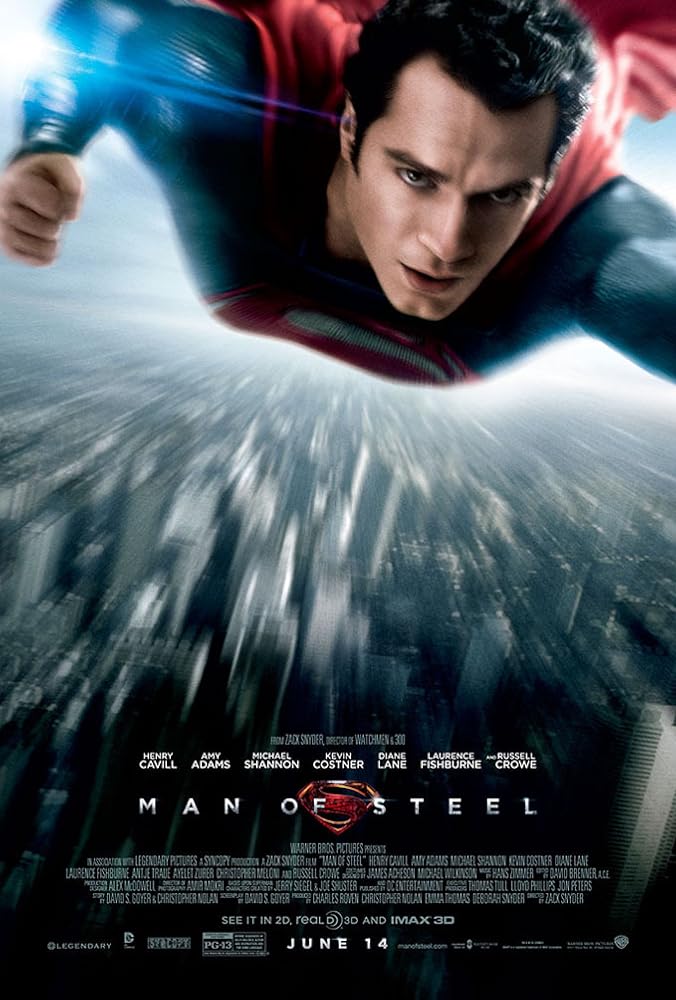
 Kevin Costner, Russell Crowe, Laurence Fishburne, Christopher Meloni, Amy Adams, Henry Cavill, Richard Schiff, Michael Shannon, Ayelet Zurer, Dylan Sprayberry, Samantha Win, and Rebecca Buller in Man of Steel (2013)

First off, let’s start by going over Zack Snyder’s affiliation with the DCEU, which officially began in 2013 with the Superman reboot Man of Steel. For both DC and Warner Bros, this was their second major attempt at a reboot of the Superman franchise after their previous attempt, 2006’s Superman Returns, was both a critical and financial underperformer. Luckily for them, this was right around the time that Christopher Nolan had just completed working on his trilogy of Batman films, AKA the Dark Knight trilogy, which were easily some of the most critically-acclaimed and financially successful superhero films at the time. Because of this, Nolan was brought on to spearhead Man of Steel’s production, which meant that while he wasn’t going to direct it, he would still be heavily involved with it with the expectation that it would match the overall atmosphere of the Dark Knight trilogy. Nolan reteamed with his Dark Knight trilogy co-writer David S. Goyer to write the film, and after considering filmmakers like Darren Aronofsky, Matt Reeves, and Ben Affleck (who, of course, would factor into the franchise at a later date), Zack Snyder was chosen to direct the film. At this point, Snyder was easily one of the studio’s most prominent filmmakers with hits such as the 2007 adaptation of Frank Miller’s 300 and his incredibly ambitious adaptation of the seminal graphic novel Watchmen by Alan Moore and Dave Gibbons. Sure, he had just come off a rather notorious critical and financial flop with 2011’s Sucker Punch, based on his own original concept, but that didn’t stop Snyder in the slightest from taking the helm on the next major incarnation of the Last Son of Krypton.

Henry Cavill in Man of Steel (2013)

Man of Steel was easily one of the most anticipated films of 2013, and upon its release… it ended up being arguably the most polarizing film of that year. Critics and audiences were truly split down the middle when it came to their thoughts on the film, namely due to how Snyder (and, by extension, Nolan and Goyer) delivered a radically different take on the title character. For some folks, they were totally fine with this as they felt that it was something that Superman needed for what was meant to be a more modernized take on the character. For others, however, it was a bit too much, especially due to things like the film’s utilization of destruction imagery that felt too similar to 9/11 and the controversial moment where Superman kills the main antagonist, General Zod, by snapping his neck despite his traditional ‘no-killing’ mandate from the comics. Nevertheless, the film was a solid hit at the box-office and grossed over $668 million worldwide, thus paving the way for Warner Bros to immediately begin laying the groundwork for its own cinematic universe to rival the MCU. While it was initially implied that the plan was to do at least one more Superman-centric feature before getting into the whole ‘cinematic universe’ angle, that idea seemed to change when the first details of the film were revealed at the 2013 San Diego Comic-Con. After having Harry Lennix (who played General Swanwick in Man of Steel) set the mood by reciting a passage from the iconic miniseries that was Frank Miller’s The Dark Knight Returns, it was instantly made clear that the next installment of the DC Extended Universe would be a crossover between Batman and Superman. And since Christian Bale had already completed his turn as Batman in Nolan’s Dark Knight trilogy, this new film would serve as the official debut of the DCEU’s interpretation of the Dark Knight that would be heavily inspired by the grizzled and jaded version of the character from Dark Knight Returns.

Ben Affleck in Batman v Superman: Dawn of Justice (2016)

After a highly publicized casting search that included names like Josh Brolin and Jon Hamm, Ben Affleck was officially cast as Bruce Wayne AKA Batman. Admittedly, though, Affleck’s casting initially drew an intensely negative response from fans, namely due to his disastrous previous role in a superhero film when he played Marvel’s Daredevil in the 2003 film of the same name. At the same time, though, Affleck was experiencing a major career resurrection thanks to his work as a director on Gone Baby Gone, The Town, and 2012’s Best Picture winner, Argo. Thus, the most exciting aspect of Affleck’s casting was that it immediately led to him being given the opportunity to direct the first solo outing for his version of the character. After that, further announcements then revealed that Batman wasn’t going to be the only new superhero appearing in the film. First, it was announced that the third and final member of DC’s ‘Trinity’, Wonder Woman, would make her debut in the film as well, which would also be the character’s first official appearance in a live-action film. Gal Gadot was cast in the role and, like Affleck, experienced some harshly negative blowback from fans when the initial news broke of her involvement. Soon afterward, it was then revealed that The Flash (Ezra Miller), Aquaman (Jason Momoa), and Cyborg (Ray Fisher) would all make cameos as well to build up hype for their larger roles in the upcoming Justice League film which, of course, Zack Snyder was also slated to direct. Thus, while a lot of the build-up for the film was clearly impacted by the polarizing nature of Man of Steel and how fans reacted to Snyder’s casting choices, Batman v Superman: Dawn of Justice was still widely considered to be one of the most highly anticipated films of 2016. At this point, it was now very much clear that it was meant to be the official kick-starter for Warner Bros and DC’s own, unique spin on a superhero-centric cinematic universe.

Ben Affleck, Henry Cavill, and Gal Gadot in Batman v Superman: Dawn of Justice (2016)

The film finally hit theaters on March 25th, 2016, and if you thought that the reception towards Man of Steel was rough… well, it was about to get a whole lot worse for DC and Warner Bros. Upon its release, Batman v Superman was utterly savaged by critics who felt that the story was incredibly convoluted and that the film itself was far too dour. Simply put, this wasn’t even close to being the same kind of situation that Man of Steel ended up in where there was a genuine 50/50 split between its fans and its critics. When it came to Batman v Superman… most people hated it. This also translated to its run at the box-office where, despite a $166 million opening weekend and a worldwide gross of over $873 million worldwide, it was considered a financial disappointment since it didn’t reach the studio’s projected total of $1 billion. By comparison, the MCU’s big ensemble picture of that year, Captain America: Civil War, instantly outmatched BvS in every conceivable way with a $179 million opening weekend, a worldwide gross of over $1.1 billion, and perhaps most importantly, vastly superior reviews from critics and audiences. However, when it comes to Dawn of Justice’s initial release, it soon became known that some of its biggest shortcomings weren’t exactly Zack Snyder’s fault when it was revealed that he was forced to cut around half an hour of what was originally meant to be a three-hour film. It was reported that the biggest reason for this decision was that the studio was uncertain about the original cut’s box-office potential, especially since it would’ve garnered an R rating instead of the more genre-friendly PG-13 rating. Luckily for Snyder, he was able to make his version available to the public when the ‘Ultimate Edition’ of the film was released on Blu-Ray and digital. And upon its release, many agreed that while it may not have been enough to sway the film’s most vocal critics, it was, at the very least, a far superior cut since many of the sequences that were taken out resulted in the theatrical cut suffering from some significant plot-holes.

Ben Affleck in Batman v Superman: Dawn of Justice (2016)

Despite this, however, the damage was already done. Batman v Superman: Dawn of Justice was meant to be DC and Warner Bros’ answer to what Marvel Studios had managed to accomplish with the Marvel Cinematic Universe… and it ended up being one of the most despised blockbusters of recent memory. As you might have guessed, this immediately began to impact future installments of the franchise. The other big DCEU release of 2016, Suicide Squad, ended up having a troubled production largely due to the studio’s efforts to try and address many of the issues that critics had with Batman v Superman. And yet, as a result, Suicide Squad yielded the exact same results as BvS; it was commercially successful but critically panned. Luckily for both DC and Warner Bros, they did end up having their first big hit the following year with Wonder Woman. Not only did it manage to avoid any of the issues that BvS and Suicide Squad endured during its production, but it was easily the most well-received installment of the franchise to date as it was widely touted for forgoing the overly grim atmosphere of the franchise’s previous installments. And from the looks of it, it seemed like this would also be the case with the DCEU’s other big 2017 release, especially since this was going to be the biggest one of them all, Justice League. Following all the intense criticism that stemmed from Batman v Superman’s overly dour tone, it was widely reported that Justice League was not going to end up the same way and would be far lighter in tone by comparison. And while later reports noted that the film would have to undergo some major reshoots after early test screenings didn’t go too well, everything seemed to be going all right for the production. But then, of course, as we all know, it all came crumbling down, and unfortunately, it all began with a devastating family tragedy.


On March 12th, 2017, Snyder’s 20-year-old daughter Autumn committed suicide. While Snyder did continue to work on Justice League for the next two months, he and his wife Deborah (his long-time producer) then proceeded to announce that they would be stepping away from the production in the wake of the loss of their daughter. And so, Joss Whedon, who had already been brought on to help work on script re-writes, was put in charge of both the reshoots and post-production. Whedon, of course, was already quite familiar with the superhero genre thanks to his work as the director of the first two Avengers films, and before the film’s release, it was reported that Whedon would be doing his best to maintain the vision that Snyder had for the film. But when the film finally came out… it ended up telling a completely different story. Immediately upon its release, both critics and audiences noted how the film was an absolute mess in terms of its tone. And while it was initially reported that Whedon’s additions to the film would be generally minor at best, it was very much clear that he had re-shot much of the film and that only a few moments in it were leftover from Snyder’s version, resulting in a complete hodge-podge of clashing directorial visions. Thus, Justice League became yet another critical flop for the DCEU, and even worse, this time it was also a financial flop since it wasn’t able to break-even on its $300 million budget, which made it one of the most expensive films of all-time. And because of its failure, the entire franchise was put through a complete reshuffle. Key figures like Geoff Johns and Jon Berg left the studio while plans for a Justice League sequel were canceled in favor of solo films that didn’t rely on the shared universe narrative. And in 2019, after he had already stepped down from directing the next Batman film, Ben Affleck announced that he was officially stepping down from the title role. Thus, Robert Pattinson will now take on the role of Batman for director Matt Reeves in The Batman, which is set to hit theaters on October 1st, 2021.

Jason Momoa, Gal Gadot, Ezra Miller, and Ray Fisher in Zack Snyder's Justice League (2021)

Now for the record, today’s post is not going to delve into the specific details of the changes that Whedon made to Justice League and the noteworthy scenes from Snyder’s version that were left out. Simply put, that’s another post for another time. But to sum up everything that we’ve gone through so far, I think it’s safe to say that of the three DC Extended Universe films that Zack Snyder has directed, his first one, Man of Steel, was the only entry where he wasn’t considerably hindered by studio interference. But because Man of Steel was so polarizing due to its radically different take on Superman, I can imagine that Warner Bros began to show some concern over the direction that the franchise was heading in, especially since it wasn’t as financially successful as Nolan’s Dark Knight trilogy despite his direct involvement in it. Perhaps that is one of the reasons why Batman was brought in for the next film to try and improve its box-office potential even if it came at the cost of not doing a proper follow-up to Man of Steel. But, of course, the biggest story that came out of Batman v Superman: Dawn of Justice’s production was how Snyder was forced to cut out a full half-hour of the film. It’s been rumored that another big reason why he had to do this was that, supposedly, he didn’t have the same kind of directorial clout that someone like James Cameron has to make a massive three-hour blockbuster. However, this also meant that the sequences that were being cut were ones that were utterly pivotal to the story, resulting in some incredibly egregious plot-holes. Thankfully, this ended up being one of those cases where this occurred near the end of production, effectively allowing Snyder to release his version of the film on home video without the need for any extensive reworking of the theatrical cut. Unfortunately, the same can’t be said for Justice League. His version of it was far from finished when he stepped away from production and would’ve required a lot of extra money to finish a film that was already sporting one of the largest budgets in film history. With that in mind, it goes without saying that many of the issues with Justice League are ones that can’t be attributed to Snyder since he had nothing to do with the theatrical cut due to immensely tragic circumstances that were far beyond his control.

Ben Affleck, Henry Cavill, and Gal Gadot in Justice League (2017)

However, if you’ll allow me to debunk one of the biggest myths that has been perpetrated by the DCEU fandom, it’s the idea that all the film’s problems were entirely Joss Whedon’s fault. Ever since the theatrical cut’s release, Whedon has been the primary target of the #ReleasetheSnyderCut faithful for ‘destroying’ Snyder’s vision with the new material that he shot. However, what these folks tend to overlook is the fact that, in a scenario that was obviously much different than what happened with Snyder, Whedon was also heavily screwed over by the production. In his case, it primarily stemmed from the fact that the two months of reshoots that he presided over began in July of 2017… just 4 months before the film’s November release date. And so, given all the information that has revealed that Snyder’s contributions to the theatrical cut only amounted to a few select scenes, this means that Whedon had to rework almost all of what was set to be one of Warner Bros’ biggest tent-pole releases in less than half a year. In other words, all those criticisms surrounding the film’s mediocre visual effects suddenly make a lot more sense when you realize that the VFX artists who worked on it had barely any time to finish them. Now to be clear, everything that I just brought up here doesn’t mean that I’m ‘defending’ the changes that Joss Whedon made to the film. While I am a fan of much of Whedon’s work from Firefly and its film adaptation Serenity to, of course, his Avengers films, even I can agree that this is some of his worst material when it comes to the snappy dialogue that he’s well-known for. But at the end of the day, you can’t really blame the theatrical cut of Justice League solely on him since it’s very much clear that time wasn’t on his side.

Jason Momoa, Gal Gadot, Ezra Miller, and Ray Fisher in Justice League (2017)

Ultimately, the failure of Justice League was mainly the result of Warner Bros not recognizing the fact that they were clearly rushing it so that they could compete with the Avengers films that Marvel Studios was making. They were so locked in on that November 2017 release date that it didn’t even matter that the reshoots for it couldn’t happen until July of that year. This, of course, spawned one of the biggest stories that surrounded these reshoots; the fact that it occurred during the production of a different film, Mission Impossible – Fallout, which Superman himself, Henry Cavill, was also starring in. He also notably sported a mustache for that film, and Paramount (the studio behind the Mission Impossible franchise) wasn’t keen on having Cavill shave it off for the Justice League reshoots. Thus, Cavill had to keep his facial hair for the reshoots, resulting in the most widely mocked visual effects in the entire film… the CGI that had to be used to erase it off his face. Clearly, Warner Bros should’ve just pushed the film back to 2018 so that Zack and Deborah Snyder would have enough time to mourn the loss of their daughter and properly return to the production. After all, that’s exactly what happened with both of Snyder’s previous DCEU films so that he and his crew could have more time to work on them. Man of Steel was originally set to come out at the end of 2012 before it was pushed back to June 2013. And as for Batman v Superman, it was originally meant to come out in July 2015 before being pushed back nearly a full year and ultimately settling for its final March 2016 release date. Now admittedly, at the time of Justice League’s release, 2018 was shaping up to be an incredibly packed year for the superhero genre. The MCU had the next Avengers film, Infinity War, along with Black Panther and Ant-Man and the Wasp, the X-Men franchise was set to release its next main installment, Dark Phoenix, along with the sequel to Deadpool and a spin-off, The New Mutants, Sony had the Spider-Man spin-off Venom and even the DCEU had its next big release, Aquaman. And yet, not long into 2018, both Dark Phoenix and The New Mutants were pushed back (Dark Phoenix to 2019, New Mutants… well, we’ll get to that one another time). So yeah… there really wasn’t any kind of excuse at this point as to why Warner Bros didn’t just delay Justice League back a year.

Justice League (2017)

But at the end of the day, these disastrous results were exactly what Warner Bros and DC needed so that they could finally realize that they were foolishly rushing the development of the DC Extended Universe. Instead of efficiently building up the franchise with solo installments that both properly introduced us to its main protagonists and gradually expanded the universe like the MCU did, they decided to just skip ahead to Justice League after only a few films. Thus, when Justice League came out, Batman, Wonder Woman and Superman were the only members of the titular group to have had major roles in previous installments while the Flash, Aquaman, and Cyborg were basically making their official franchise debuts with almost little to no buildup. Sure, they had all previously appeared in Batman v Superman and Flash had also made an appearance in Suicide Squad, but only as minor (and nearly inconsequential) cameos. In other words, to reiterate a point that I made a few months back in my Top 12 Films of 2019 list when I ranked Shazam at the #7 spot, it was like if Marvel had decided to do the first Avengers film right after Iron Man 2, completely ignoring Thor and Captain America’s first solo features. If that was the case, then the only instances that would’ve hinted at their future appearances would’ve been the prototype of Cap’s shield seen in Tony Stark’s basement and the post-credits scene of Iron Man 2 where Agent Coulson arrives at the crash site of Thor’s hammer, Mjolnir. Thankfully, though, Marvel Studios was smart enough to not do that. Unfortunately, you can’t really say the same for the DCEU since, apparently, they didn’t want to be bogged down by what they perceived to be the increasingly routine nature of traditional superhero origin stories.
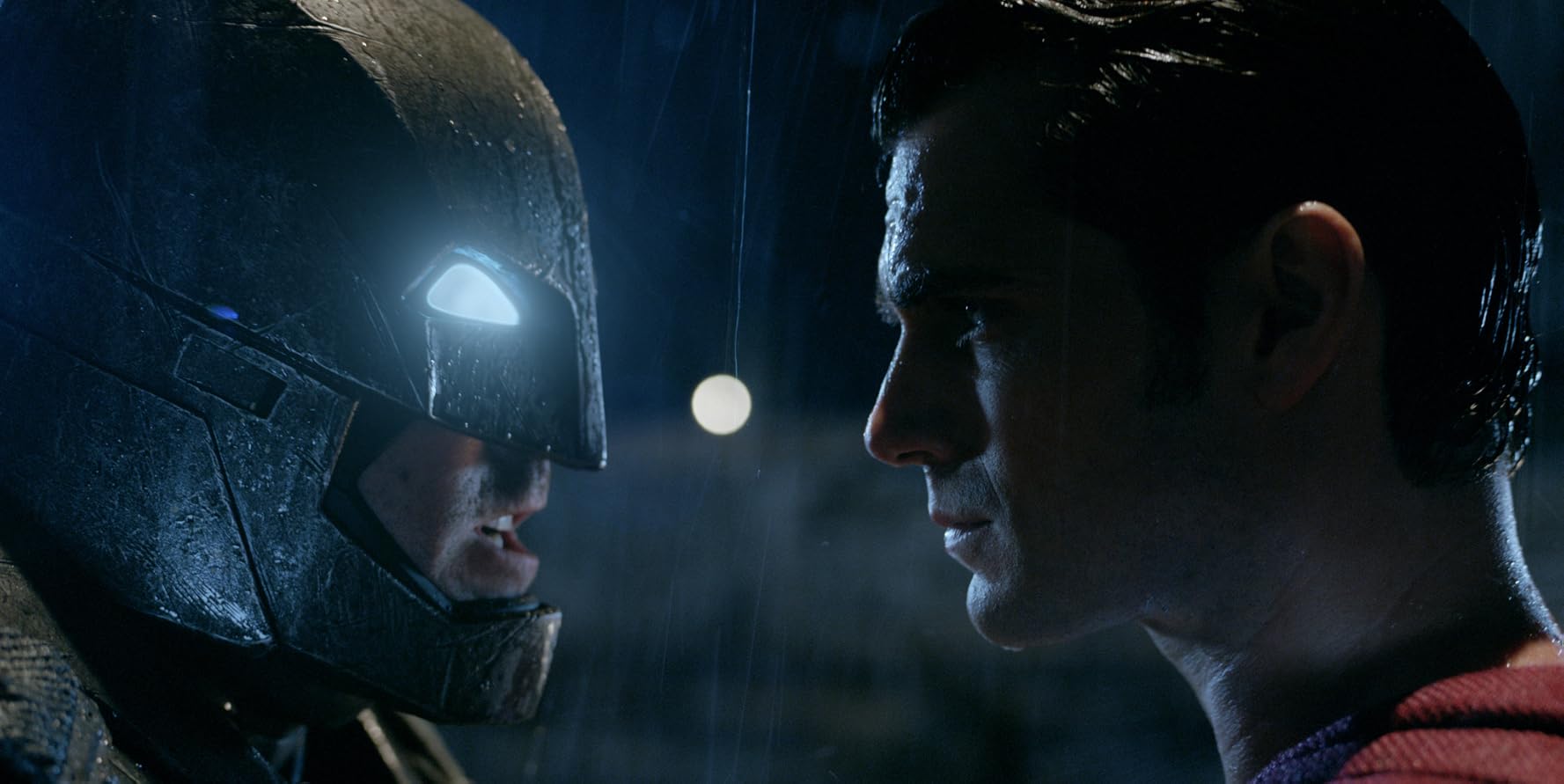
Ben Affleck and Henry Cavill in Batman v Superman: Dawn of Justice (2016)

But to reiterate a different point that I made in that Top 12 Films of 2019 list, I’d argue that another problem for the DCEU early on was that it tried a bit too hard to ‘not be Marvel’. And for the record, when I say “not be Marvel”, that’s primarily in reference to the long-standing stigma against the MCU films that claims that they’re nothing more than kid-friendly comedies, especially in the wake of Marvel being purchased by Disney in 2009. Now sure, it’s true that MCU films are usually light-hearted affairs that are often dominated by the comedic banter between characters, but if there’s one point that I’ve hopefully gotten across the most these past few years, it’s that they’re much more than just silly comedies. In fact, in the years since this mindset started becoming more common within the DCEU fandom, I believe that films like the culturally relevant Black Panther and the emotionally charged duology of Avengers: Infinity War and Avengers: Endgame have been more than enough proof against the claim that the MCU is ‘just for kids’. Nevertheless, it’s truly astounding how much the hardcore side of the DCEU fandom utterly despises the light-hearted style of the MCU films, almost as if they believe that dark and gritty narratives are the only worthy routes that a superhero film should take instead of being the fun and entertaining blockbusters that they normally are. As you might have guessed, this is one of the biggest reasons why the hardcore DCEU faithful usually prefer Zack Snyder’s DCEU films instead of some of the franchise’s more critically successful outings. In fact, even Snyder has distanced himself from the more light-hearted installments of the superhero genre by stating that it simply isn’t the kind of material that he prefers. And so, with all this in mind, I think it’s safe to say that the time has finally come for me to say something that I know damn well will outright infuriate the #ReleasetheSnyderCut faithful… and yet is very much something that needs to be said at this point. To be clear, what I’m about to say is not meant to be a personal dig against Snyder, especially given the circumstances behind his departure from Justice League. But at the end of the day… Zack Snyder probably wasn’t the best choice to be the director who was meant to spearhead the genesis and future of DC’s brand-new cinematic universe.

Ben Affleck and Zack Snyder in Batman v Superman: Dawn of Justice (2016)

Now to be clear, I’m not saying that I think Snyder is a terrible director. He’s certainly proven himself to be one of the best visually-driven filmmakers in the business and that is very much apparent in every film that he’s made. And yet, as great as he is as a visual director, he’s been less successful when it comes to story and characters. Some would say that his adaptation of Watchmen is the exception to this, but despite Snyder’s considerable efforts to stay faithful to Alan Moore and Dave Gibbons’ seminal graphic novel, many have argued that this was more from a visual perspective rather than a narrative one. But to go back to what I just mentioned earlier about Snyder’s preferences when it comes to superhero narratives, if he wants to do superhero films that are more like Watchmen, then that’s totally fine. He’s completely within his rights as a filmmaker to do those kinds of films. However, I also feel that this kind of nihilistic philosophy applies better to the likes of niche properties like 300 and Watchmen rather than mainstream characters like Batman and Superman that have appealed to audiences of all ages. This is especially the case with children because, despite what some members of the DCEU fandom may claim, comic-book superheroes are usually marketed towards the younger demographic. Batman v Superman: Dawn of Justice, by way of Snyder’s intended 3-hour cut, is not even close to being geared towards kids. Instead, it’s a dark, dour, and incredibly violent R-rated flick that sees the title characters act in generally unheroic ways. And it all culminates with one of the most idealistic heroes of the entire genre, Superman, dying in an incredibly gruesome manner just so they could pay homage to the infamous storyline from the comics in which he dies after an intense battle with Doomsday. Simply put, that probably wasn’t the best idea for a major studio tentpole release that was being marketed to the widest audience possible.
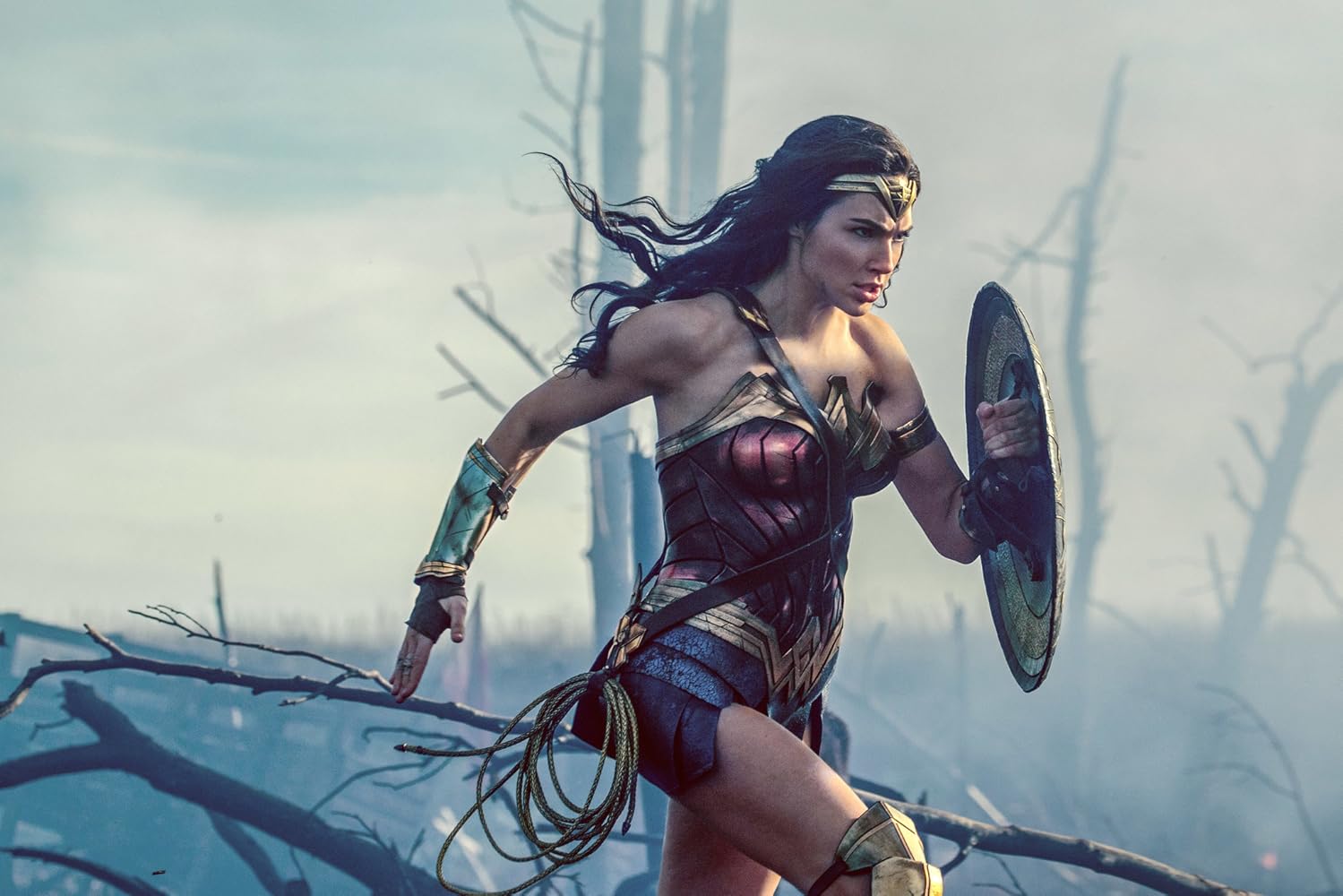
Gal Gadot in Wonder Woman (2017)

By comparison, other installments of the DCEU have done a far better job when it comes to developing these characters rather than just being a case of style over substance. Snyder may have been the one who brought Wonder Woman to the screen in Batman v Superman, but it was Patty Jenkins who made her a genuine icon and quite arguably the MVP of the franchise by way of her solo film. And while Snyder may have also set the stage for Aquaman’s franchise debut, it was James Wan who took Jason Momoa’s potentially controversial take on the character and turned him into the full-blown charismatic star of what ended up becoming the DCEU’s highest-grossing installment to date. In fact, I’d argue that the best DCEU film to date is one that Snyder had absolutely nothing to do with, Shazam. Some may refer to Shazam as the closest that the DCEU has ever gotten to replicating the MCU aesthetic, because aside from some incredibly dark moments that feel like they came straight out of a horror film, it’s easily the DCEU’s most light-hearted entry to date. But as I’ve said plenty of times by now, there’s a lot more to this than just colorful visuals and a plethora of jokes, as Shazam also fully succeeds at giving its title character a proper and emotionally cathartic character arc that’s perfectly synced with all the fun superhero escapades that he partakes in. Suffice it to say, this is something that you never really got out of the DCEU films that Snyder directed, and the one character who was hurt by this the most was Superman, thus resulting in his sacrifice at the end of Batman v Superman feeling incredibly hollow. And it’s a shame, really, because Henry Cavill has very much proven himself to be an incredibly charismatic actor thanks to films like The Man from UNCLE and Mission Impossible – Fallout. Thus, given the recent news that revealed that Cavill is set to return to the franchise after quite a few years where it was rumored that he was done playing Superman, I hope that he’ll have better material to work with going forward. Because, really, it’s saying something when his best performance in the role… was in Justice League. Yes, despite all the wonky CGI to remove his mustache and the fact that it contrasted heavily with how the character was portrayed in both Man of Steel and Batman v Superman, it is still the closest that Henry Cavill has ever gotten to matching Christopher Reeve’s iconic interpretation of the character.

Jason Momoa in Zack Snyder's Justice League (2021)

And so, given everything that I’ve gone through in today’s post, I must admit that the announcement that Zack Snyder’s Justice League will finally see the light of day is one that has left me with mixed feelings overall, and as you might have guessed, this largely has to do with the whole #ReleasetheSnyderCut movement. Now before I continue, let me just point out that I’m well aware that what I’m about to discuss doesn’t represent the entirety of those who were involved in the campaign for the release of Snyder’s version of the film. I know that a lot of people who participated in it simply did so because they wanted to see this version of the film released publicly, especially given all the tragic circumstances that led to Snyder’s departure from the production. On that note, quite arguably the best result to come from this campaign was that over $150,000 was raised for the American Foundation for Suicide Prevention. Unfortunately, as has usually been the case these past few years with incidents that are attributed to internet fandom, the more vocal and incredibly toxic members of the community have ultimately been the ones who have ended up dominating the discussion. Before the announcement that the film was finally going to get released, they attacked anyone who dared to suggest that the idea of releasing Snyder’s version of the film seemed impossible at the time given the status that it was in when he left the production. Many of them have also harassed Warner Bros. employees to the point where the former President of DC Entertainment, Diane Nelson, had to delete her Twitter account. But perhaps the biggest thing to note about this entire movement was how utterly persistent it was at times to the point where that hashtag was being pushed even when talking about things that had nothing to do with Justice League. Thus, as much as some will say that folks like this only represent a small part of the community, I do think that we’re at a point now where crap like this needs to be better addressed. Because at the end of the day, even the actions of a select number of ‘fans’ (a term that, as you might have guessed, I use very loosely here) has the potential to make us all look bad simply by association.


And as I’ve said plenty of times over the past few years, the hardcore faction of the DCEU fandom has become one of the most toxic internet groups in recent memory. If you were to ask me why, I’d say that it’s largely because of how they are fully devoted to what Zack Snyder had envisioned for the franchise. Thus, when anyone dares to come along and suggest that his DCEU films were far from perfect, his fans will come out of the woodwork, get incredibly infuriated about it, and try to pass off the utterly bogus conspiracy that critics of Snyder’s films were paid off by Disney and Marvel to make the MCU look better by comparison. Heck, even when the DC Extended Universe had a genuine hit on its hands, these folks still somehow managed to find something to be upset about. When Wonder Woman became the DCEU’s first critically acclaimed hit, a lot of Snyder fans tried to pin it all on him since he had a story credit instead of, you know, director Patty Jenkins. When Aquaman came out, the hardcore DCEU fandom attacked anyone who had predicted that the film wasn’t going to be a box-office hit and, as you might have guessed, lashed out at anyone who gave it a negative review. And don’t even get me started on how furious they were when Birds of Prey came out earlier this year rather than the films that they wanted like a sequel to Man of Steel or the Snyder Cut. But, of course, the biggest stunt that they’ve pulled (apart from their negative influence on the whole #ReleasetheSnyderCut situation, of course…) was when they tried to shut down Rotten Tomatoes in 2016 after Batman v Superman and Suicide Squad were both savaged by critics. Simply put, these folks haven’t responded well to the idea that the DC Extended Universe has worked a lot better when it isn’t going with the grim aesthetic that Snyder had established during the franchise’s early days.


But now this brings us to what has easily been the most concerning aspect of the announcement for Zack Snyder’s Justice League… the fact that it could potentially pave the way for more instances in the future where overly entitled fans aggressively demand changes to films when they don’t turn out exactly the way they wanted. In fact, I’d argue that, when it comes to films that have left some sort of impact on the film industry, Justice League has been one of the most prevalent examples in recent memory of a film that has left a negative impact because of how it has emboldened certain online crowds to endlessly vent about what could have been. Nowadays, whenever a deleted scene for a film is released, some folks will act like they were ‘robbed’ of a sequence that, 9 times out of 10, was cut for a legitimate reason (e.g. the deleted scene in Avengers: Endgame where the Avengers all take a knee to mourn Tony Stark right after he dies). And it’s all thanks to the film that, until Snyder’s version comes out next year, boasted one of the vastest and eclectic collections of sequences that were ultimately left on the cutting room floor. Sure enough, there have already been quite a few noteworthy examples recently of fans demanding alternate cuts. Staying in the DCEU for a moment, some have been pushing for the version of Suicide Squad that director David Ayer had originally developed before it was heavily compromised by studio interference. A few weeks after Star Wars: The Rise of Skywalker came out, rumors started floating around that director J.J. Abrams was forced to make some critical changes to the film in the wake of the polarizing reactions to The Last Jedi, resulting in the #ReleasetheJJCut hashtag becoming a thing. And finally, literally just a few days after I started writing this post, the next big fan campaign emerged when Star Wars fans started to push for director George Lucas’ original 4-hour cut of Episode III – Revenge of the Sith.

The toxic attitudes of modern film fan culture were directly parodied in 'Batman's Back Man', the fifth episode of the second season of the hit DC Universe animated series 'Harley Quinn'
Simply put, I wouldn’t be surprised if this isn’t the last time that we’ll be seeing fans getting this worked up over a film’s mythical alternate cut. And so, in conclusion, I will reiterate what I’ve said before in that when it comes to the announcement that Zack Snyder’s Justice League will finally get released, I am happy for Zack Snyder… and Zack Snyder only (and, by extension, everyone who had worked on the film before the reshoots). Despite my current feelings towards his DCEU films, I’m glad that he was able to find closure on a project that he never got the chance to finish. And yet, I simply can’t say the same for the DCEU fandom because as much as I know that many people who participated in this movement did so out of genuine appreciation for Snyder’s work, said movement was tainted by some utterly toxic jackasses who haven’t been able to fathom the possibility that his takes on these classic characters were inherently flawed. Plus, to be perfectly blunt, folks… I just got so damn tired of hearing about this film all the frigging time for the past two and a half years, especially whenever it threatened to overshadow the instances where the DCEU managed to achieve some genuine success. Now, to be clear, this doesn’t mean that I was ever against the notion of its release. Once it debuts on HBO Max next year, I assure you that I’ll watch it and will then give you a proper review/discussion post on it. However, this doesn’t excuse the fact that everything that surrounded its release is ultimately yet another example of the increasing sense of entitlement that is thoroughly plaguing modern fandom. We now live in an era where, for some inexplicable reason, some believe that the best way to express their disappointment over a film or TV show is to vehemently lash out at the filmmakers and studios who worked on them as if the fact that they didn’t live up to their oddly specific set of expectations is the equivalent of some kind of criminal offense. And yet, this is exactly the kind of deplorable behavior that I’m thoroughly against as a film critic because I believe that it’s a blatant sign of disrespect coming from people who think that they know better than those who work in the industry even though incidents like this very much prove otherwise.


That concludes this extensive discussion on the history behind Zack Snyder’s version of Justice League. Since this single post ultimately proved to be nearly as long as either of the lengthy write-ups that I did for Star Wars: The Rise of Skywalker and Avengers: Endgame in my Top 12 Films of 2019 list from a few months back, I’d like to thank all of you for sticking it out with me when it comes to this incredibly daunting beast of an editorial.

Sunday, January 8, 2017

TOP 12 FAVORITE FILMS OF 2016: #12-10 + Honorable Mentions

Image result for 2016 films

2016… was an odd year for film. Now, for the record, I don’t mean that in terms of the films that we got this year. I mean more in terms of ‘how’ people viewed the year in regards to the films that came out. By the time that summer was over, there were countless articles online expressing severe disappointment with this year’s line of summer blockbusters. Now, as I’ve stated before, I thought that this year’s summer film slate was perfectly fine, though, clearly, I’m in the minority on that. But then that negative stance started to go away once this year’s award contenders started to come out. Thus, most of the ‘year in review’ posts that I’ve seen recently are now saying that, overall, this has been a great year for film. I mean, it’s sort of a complete 180 considering what the consensus was like a few months ago, right? Anyway, I too agree that 2016 was a great year for film. But, again, I’m one of those people who thinks that it was great for most of the year, not just the final third. If anything, a lot of these films served as a temporary reprieve for when it came to having to deal with some of the terrible things that happened this past year (e.g. all the major celebrity deaths that are no doubt going to produce the longest ‘In Memoriam’ segment in Oscars history at this year’s show, politics, etc.). So, with all that said, it’s time to end this gut-punch of a year on a good note with my annual ‘Top 12 Favorite Films of the Year’ list. Now for those of you who are new to this site, the reason why I do a ‘Top 12’ list instead of a ‘Top 10’ is simple. While it was originally done as a joke to tie into the fact that I started this site in 2012 (Get it, 12 films for 2012?), it’s basically become my thing ever since. That’s because doing a Top 12 list allows me to cover more of the great films that I saw this year compared to if I had done a Top 10.

As always, though, I must start things off by listing the usual disclaimers that I make every year when it comes to this list. First, I must warn you that this entire list will be one big spoiler post. I will be discussing key moments from these films in considerable detail, so just be sure to tread carefully if you haven’t seen any of these films prior to reading these posts. Don’t worry, I will provide links to my ‘non-spoiler’ reviews throughout these four posts for you to use if you want to avoid any spoiler talk. Second, as with any year, I’ve not seen every single film that’s come out in 2016. So, if you’re wondering why films like Silence, Hell or High Water, or American Honey aren’t here, odds are that either I haven’t seen them or they just didn’t make the list. And yes, on that note, most of the films in my list will be of the ‘blockbuster’ variety. I apologize in advance to those who prefer films from the indie scene, but for now, that’s just not my thing. Don’t worry, though, for I do have a few indie hits here and there on this list, at least more compared to last year’s list which was pretty much all blockbusters. Finally, as always, please be respectful of each other’s opinions. I recognize that some of the choices on this list are going to be rather controversial given their overall critical and audience reception. And that’s perfectly fine; after all, film is a subjective thing. Just don’t be a jerk and give others (or me, for that matter) flak for liking a film that you didn’t like and vice versa. With all that out of the way, it’s time to kick off Rhode Island Movie Corner’s four-part series of my Top 12 Favorite Films from 2016. This is Part 1 of 4 and today I’ll be listing films #12-10.

But first, as always, let’s start with my Honorable Mentions. And because there were a lot of great films this year, I have 7 to mention…

HONORABLE MENTIONS

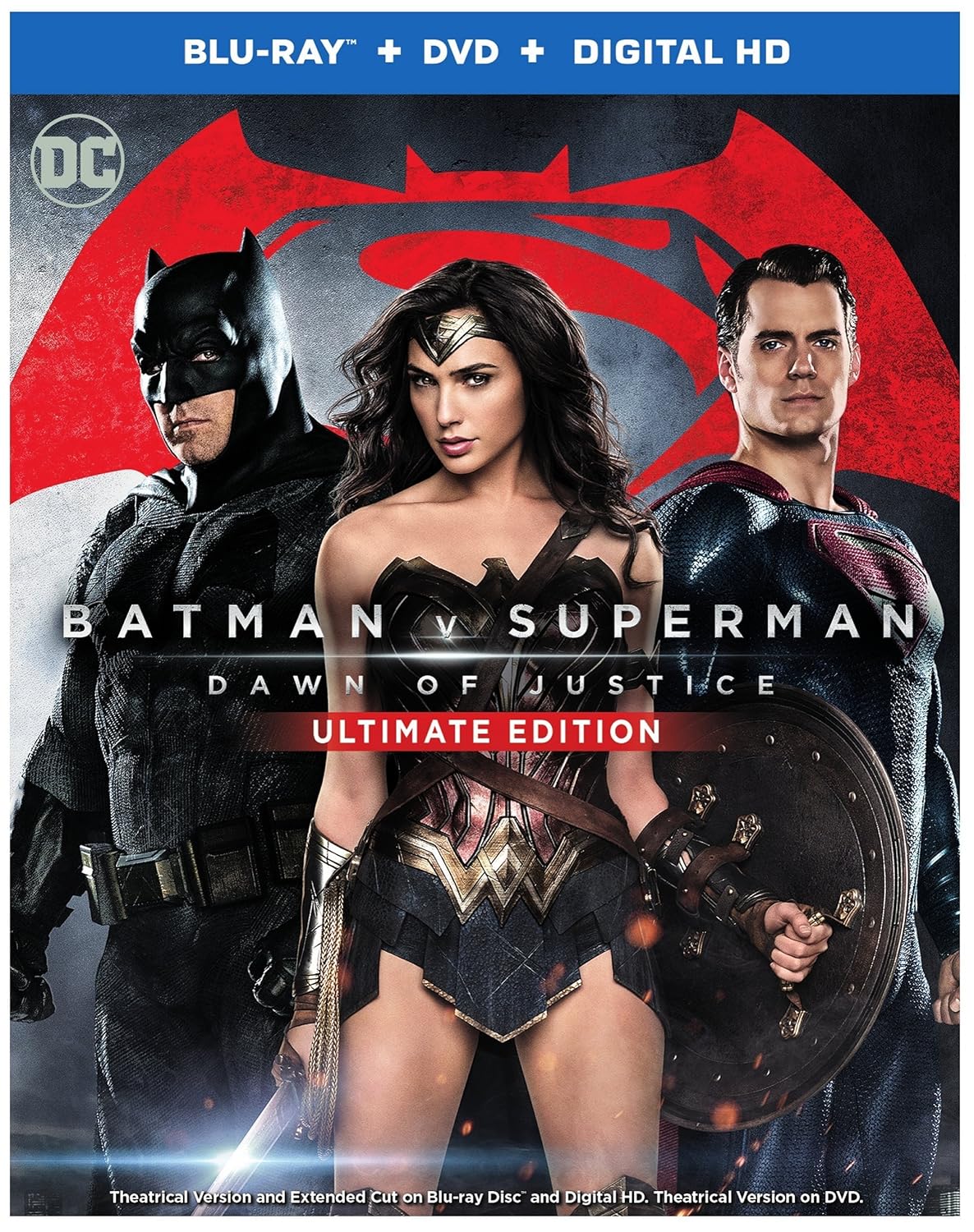
BATMAN V SUPERMAN: DAWN OF JUSTICE (ULTIMATE EDITION)

Image result for batman v superman dawn of justice ultimate edition

Again, let me be clear, the three-hour ‘Ultimate Edition’ of the film that was released on Blu-Ray. I’m not referring to the 151-minute cut that was released in theaters, even though I’m one of the rare people who did like that version of the film. Still, there’s no denying that the Ultimate Edition of Batman v Superman: Dawn of Justice improved upon many of the Theatrical Cut’s faults, especially in terms of the story. Some scenes in the Theatrical Cut felt rather disjointed in terms of how they were edited and how certain plot-points felt under-developed. Thankfully, that wasn’t as big of an issue with the Ultimate Edition, which adds in the missing scenes that better explained the plot. Granted, the Ultimate Edition won’t change the minds of everyone who disliked the Theatrical Cut. Certain elements of Zack Snyder’s direction that some fans may have been iffy on are still there. However, like Man of Steel, I feel that this film gets way too much flak. Whereas many saw it as a gloomy and messy story, I felt that it was a visually spectacular superhero epic with awesome action sequences and excellent character moments, including the death of Superman and, yes, even the infamous ‘Martha’ moment. Seriously, consider the context of that moment and you’ll see why it’s such an emotionally powerful scene. It’s a shame, then, that the ‘Ultimate Edition’ of the film wasn’t the one released in theaters, apparently because Zack Snyder just didn’t have the clout to have the full three-hour cut be used. Newsflash, Warner Bros, we would’ve been totally fine with having to sit through a three-hour film just so that we could know that this was the version of the film that Snyder intended. If you want your DC Extended Universe to truly succeed following the franchise’s rough 2016, you’re going to need to have more faith in your directors.

THE BFG

Image result for the bfg poster

The one and only Steven Spielberg gave us an incredibly charming family-friendly adventure this year in the form of The BFG, an adaptation of legendary author Roald Dahl’s classic novel of the same name from 1982. Under the Disney banner, Spielberg does a fantastic job of recreating the delightfully wacky visuals of Dahl’s writing on the big-screen. There’s quite a lot of visual effects in this film and they’re all excellent. And while fans of the book may be disappointed to find that the film doesn’t really embrace the darker elements of the story (I admittedly wouldn’t know having never read the book), the story is still a charming adventure that is full of heart, especially thanks to the lead duo of Sophie and the BFG. Newcomer Ruby Barnhill makes an excellent screen debut as young Sophie while Mark Rylance (in his second outing with Spielberg after his Oscar-winning turn in Bridge of Spies) makes the BFG a character that truly lives up to his title as the ‘Big Friendly Giant’. Really, the only thing holding this film back, in my opinion, is that the villainous giant characters who oppose our two heroes were rather underdeveloped. Plus, the ending in which the evil giants are defeated by the British army also felt rather anti-climactic. But, despite all that, this is easily one of the best family films to come out in recent years. It’s a shame, then, that it didn’t really do so well at the box-office; it made its budget back but just barely. With that said, do yourselves a favor and check out this highly-underrated Disney flick. Speaking of Disney…

PETE’S DRAGON

Image result for pete's dragon poster

Of all of Disney’s recent live-action remakes, this one is notable because it’s not based on one of the studio’s animated features. Instead, it’s based on a 1977 live-action/animated hybrid musical that may have initially received mixed reviews but has since gone on to amass a sizable cult following. And I bet that this new version will attract a similar fan-base in the years to come. It’s a different spin on the story of a young orphan named Pete and his best friend, a green dragon named Elliot. For one thing, it isn’t a musical and while that meant that some fans of the original viewed this as ‘Pete’s Dragon in name only’, director David Lowery gives us an endearing fantasy story that mixes child-like imagination with solid themes that older audiences can appreciate. And just like how The BFG benefitted greatly from the lead duo of Sophie and the BFG, the heart of Pete’s Dragon mainly stems from the duo of Pete and Elliot. Oakes Fegley carries a lot of the film by himself as Pete while Elliot proves to be one of the most endearing CG-created characters in the history of film. These two are such a great duo that I guarantee you that the ending, in which the two sadly go their separate ways, will bring a tear to your eye. Pair them with a solid supporting cast that includes Bryce Dallas Howard and Robert Redford and you have yet another great 2016 effort from Disney. Not only that, but this also continued the studio’s hot-streak with their live-action remakes. They managed to go 2 for 2 this year with their big live-action remakes, once again proving that the many upcoming remakes on Disney’s slate do have the potential to be excellent. What about that other one, you ask? Well, that one’s coming up much later in the list.

EDDIE THE EAGLE

Image result for eddie the eagle poster

This was definitely one of my biggest ‘surprises’ of the year. Eddie the Eagle, on paper, is just your standard sports flick with the usual tropes of the genre; the grumpy mentor, the training montage, the moment where it looks like all is lost but then a miracle happens that allows the main character to keep competing, etc. However, this film is so damn charming that you can kind of ignore the similarities to other sports films. That is because, as cliché as it may sound, this is not your typical sports story. Michael ‘Eddie’ Edwards was not your typical all-star athlete. While he was the first British Olympic ski jumper in nearly six decades, he finished last in the two main events that he participated in at the 1988 Winter Olympics. However, his likability and ‘never say die’ attitude made him a fan favorite and that translates well into the film adaptation, even if it’s not a 100% accurate representation of its true story. Taron Egerton, fresh off his star-making turn in Kingsman: The Secret Service, does an excellent job in the role and makes Eddie an incredibly endearing protagonist. He also works well with Hugh Jackman, who stars as Eddie’s coach, albeit not Edwards’ real-life coach. Together, they form a great student-coach relationship and the film maintains a solidly light-hearted atmosphere throughout with some great bits of humor peppered in here and there. My favorite humorous moments in the film are when Eddie successfully completes one ski jump and then decides to immediately try a larger ski hill after just one jump. In conclusion, Eddie the Eagle may be a traditional sports film but you will find yourself cheering Eddie on once the finale rolls around.

X-MEN: APOCALYPSE

Image result for x-men apocalypse poster

I’m just going to be frank here… I will NEVER forgive the internet for what it did to this film. Despite being the follow-up to one of the BEST superhero films of all-time, X-Men: Days of Future Past, this film got totally shafted by the internet in terms of hype. Yeah, I get that this was the year of Batman v Superman, Captain America: Civil War, and Suicide Squad, but pretty much ever since the internet first started to relentlessly mock the first photo of Apocalypse for looking like the villain from the first Power Rangers film, X-Men: Apocalypse suddenly became the ‘forgotten’ entry in 2016’s superhero slate. And that’s a damn shame because I’d argue the film is great. Is it as great as Days of Future Past? No, but I think that it’s not too far off in terms of quality. It’s just another highly satisfying X-Men adventure with excellent action sequences and great character moments. I don’t really agree with the arguments claiming that this film lacks emotional depth and is too overloaded with action sequences. After all, this film is called X-Men: Apocalypse, not X-Men: Minor Incident. And as for emotional depth, the emotional moments with Magneto (e.g. when he loses his wife and daughter) are quite powerful. Sure, I get why some felt that the story was too predictable for what was the ninth entry in the X-Men franchise, but the always great direction from Bryan Singer (the unsung hero of the superhero genre, I might add) makes up for it. And the excellent new representations of classic characters like Jean Grey, Cyclops, and Nightcrawler proves that this series still has the potential to continue in exciting new directions. Hell, I liked this film more than Deadpool… yeah, I said it!

HACKSAW RIDGE

Image result for hacksaw ridge poster

Mel Gibson returned to the director’s chair this year for the first time in a full decade after his previous effort, 2006’s Apocalypto. And he returned to directing with a bang thanks to the ‘true story’ war film Hacksaw Ridge. The film tells the story of Desmond Doss, an Army soldier who attracted a considerable amount of controversy when he refused to carry a gun into battle due to his religious beliefs. He was branded a coward but he soldiered on (no pun intended) as a conscientious objector and ended up becoming a hero when he saved countless lives during an intense skirmish in the Battle of Okinawa. Admittedly, some parts of the opening are a bit cheesy, namely, the parts where Desmond romances his future wife Dorothy, but that all changes once the action sequences roll around. The battle at Hacksaw Ridge, a tall cliff face that the U.S. Army had to climb to reach the Japanese forces, features some of the best war sequences ever put to film. These super-intense bits of action really showcase Gibson’s talents as a director when it comes to shooting action sequences. But, through it all, the film also gives a great protagonist to latch onto during all this in Desmond. Excellently played by Andrew Garfield, Doss’ convictions make him a sympathetic character through and through. Plus, it could be said that we could all learn from this man who did his duty as a member of the U.S. Army in a way that wasn’t the norm. After all, in doing so, he became the first (and, to date, only) conscientious objector to receive the Medal of Honor. Because of this, Hacksaw Ridge is one hell of a comeback for Mel Gibson as well as being one of the best war films in recent years.

DOCTOR STRANGE

Image result for dr strange poster

Yes, folks, this is one of the rare occurrences where an MCU film just barely missed out on being in my Top 12. However, that’s not to say that it wasn’t a great film… because it was. Doctor Strange is yet another excellent entry in the MCU. Sure, the story may have been a bit standard at this point in the superhero film genre but, at the same time, the things that it introduces in the Marvel Cinematic Universe tease exciting possibilities for future films. The film serves as our introduction to the mystical side of the MCU and, thus, results in plenty of awesome visuals. The MCU films have always done a great job when it comes to visual effects but with this film, the visual effects team truly went above and beyond with the visuals, producing some of the most surreal but visually beautiful action sequences in the entire franchise. And of course, like with any MCU film, the writing is solid, the humor is well-handled, and the cast is excellent. Benedict Cumberbatch does a fantastic job in the title role and Chiwetel Ejiofor, while perhaps a bit underutilized as Karl Mordo, is set-up terrifically to be the villain that he’s known to be in the comics. Tilda Swinton does manage to overcome a decent amount of the negative buzz that stemmed from the ‘whitewashing’ controversy surrounding her casting in the role of the Ancient One with an admirably dignified performance while Mads Mikkelsen proves to be one of the better MCU villains as Kaecilius. Granted, I wouldn’t say that he’s one of the absolute best MCU villains but he does get more material to work with compared to others, including the one that he almost played, Malekith from Thor: The Dark World. Yeah… he was better off in Doctor Strange. So, in conclusion, thanks to this film, Marvel Studios’ hot streak continued once again and the titular sorcerer proved to be a welcome addition to the MCU.

And now, finally, it’s time to get onto the list. Kicking things off at Number 12 is the second of Disney Animation’s pair of 2016 releases. It’s a rare occasion for the studio to have two major animated films come out in one year and an even greater achievement considering how great both films turned out (and yes, the other one’s coming up later in this list…)

12. MOANA

Image result for moana poster

The best thing about Moana is that it does a fantastic job of representing the primary culture of its setting; Polynesia. It’s very clear that the filmmakers made a considerable amount of effort to accurately translate Polynesian culture to the big-screen and it shows. Moana is brought to us by the duo of John Musker and Ron Clements, the same duo who brought us some of the studio’s biggest hits of the Disney Renaissance, including The Little Mermaid and Aladdin. And while this is their first computer-animated film, the transition that they make from traditional animation to computer animation is a smooth one. The animation is as great as you’d expect from Disney and there are even a few bits of traditional animation thrown in here as well, mostly via Maui’s sentient tattoos. As for the story, it’s an entertaining ocean adventure that’s bolstered by the film’s excellent titular heroine, Moana. Newcomer Auli’i Cravalho makes a fantastic screen debut in the role, making Moana a likable and spunky protagonist through and through. However, I must ask, is it possible for us to praise Moana without crapping on previous Disney heroines in the process, particularly the Disney princesses? I mean, I’ve been seeing this quite a bit in regards to how some critics have been addressing her in their reviews. There’s been a lot of buzz surrounding the fact that Moana is a Disney princess without a love interest. Yeah… so? Elsa didn’t have a love interest in Frozen. Neither did Merida from Brave, for that matter. Don’t get me wrong, it’s great that they let Moana fully be the hero of her own story, and she’s a great protagonist to boot. But just because most of the other Disney princesses ended up in relationships doesn’t mean they’re terrible by comparison.

Anyway, Moana is paired excellently with the film’s other main character, Maui, the charismatic demi-god voiced by the king of charisma himself, Dwayne Johnson. These two work off each other very well, especially when it comes to Moana having to constantly keep Maui’s ego in line. And while Maui does start off as an egotistical protagonist who’s mainly looking to reclaim his former glory, he does learn to become more selfless as the film goes on. As for the film’s side characters, admittedly they’re not as prominent compared to other Disney films because the focus is more on Moana and Maui. Still, there are a few memorable side characters here and there, including a villainous crab named Tamatoa (voiced by Jemaine Clement) who sings an unforgettable David Bowie-esque song called ‘Shiny’. Speaking of music, as one would expect from a classic Disney film, the film’s soundtrack is excellent. In this case, the soundtrack was handled primarily by the one and only Lin-Manuel Miranda (you may have heard of his Broadway sensation, Hamilton) and, dare I say, I think that this soundtrack even managed to surpass Frozen. To name a few of the soundtrack’s best songs, there’s Moana’s solo ‘How Far I’ll Go’, an emotionally-fueled anthem, ‘You’re Welcome’, which perfectly encapsulates the character of Maui and is also pretty much the perfect song for someone like ‘The Rock’ to sing, and, as mentioned before, the glam rock inspired tune ‘Shiny’. With all this in mind, Moana is yet another excellent addition to the Disney animated canon that keeps the studio’s current hot streak running strong. But, if I had to compare this to the other Disney animated film of the year, I’ll admit that I prefer that one by a slim margin. But, again, both films are fantastic.

Ok, I’ll admit, some of you probably guessed ahead of time that this next one would be on the list somewhere…


Image result for rogue one poster

Disney’s new line of Star Wars films started off on a great note last year with Star Wars: The Force Awakens, which was a whirlwind success with both critics and audiences (*someone brings up the ‘it’s too much like A New Hope’ argument* I SAID WHIRLWIND SUCCESS, DAMN IT!). But as for this year’s franchise outing, Rogue One, it too had a lot to live up to. It was to be the first installment of a new series of spin-off films set within the Star Wars universe, allowing for new stories that didn’t adhere to the typical story structure of the saga films. Thankfully, this new line of films started off on a great note with Rogue One. Directed by Gareth Edwards, it went into the details surrounding one of the crucial plot-points established in the opening crawl of A New Hope; how the Rebel Alliance acquired the plans to the Death Star. And how did they do it? It was all done by a ragtag team led by Jyn Erso, the daughter of one of the Death Star’s key engineers, Galen Erso. Admittedly, the film takes a bit to get going, namely due to it jumping around to multiple planets quite a few times in just the first few minutes. But, once the main cast of characters is fully assembled, that’s when the film finally starts to pick up the pace. And while I can’t really say that this film has the franchise’s best cast of characters, the cast is still solid throughout. Felicity Jones does an excellent job in the role of Jyn, finding a nice mix between the spunk that Daisy Ridley brought to the role of Rey in The Force Awakens and the roguish nature that always defined Han Solo. She’s backed by a solid supporting cast that includes Diego Luna as Captain Cassian Andor, who serves as a nice contrast to Jyn being the Rebel soldier who is sometimes forced to follow orders that he doesn’t agree with, Alan Tudyk as the film’s main droid K-2SO, a far more sarcastic droid compared to the other major droids of the Star Wars universe, and Donnie Yen as the badass, Force-tuned, blind warrior Chirrut ÈŠmwe. He also gets the best line in the film when one of Saw Gerrera’s soldiers puts a bag over his head. (“Are you kidding me? I’m blind!”)

Sure, some characters don’t get as much to work with compared to others, namely the ‘main villain’ of the film, Director Orson Krennic (Ben Mendelsohn), who’s basically just ‘there’ for the most part, but, again, the cast is solid throughout. And while I will give the edge to The Force Awakens in terms of it having a better story and cast of characters, there are some legitimately effective emotional moments in this film. A lot of them come courtesy of Jyn’s father Galen, played by Mads Mikkelsen. There are two specific scenes that I’d like to point out in regards to this. One of these is the scene where Jyn listens to the message in which Galen reveals the secret flaw of the Death Star, a vulnerability in the station’s main reactor that Luke utilized when he destroyed it in A New Hope, while also reaffirming that he still loves his daughter. The other moment is his last scene in the film where he finally reunites with Jyn (his ‘Stardust’, a pet name that comes into play later when Jyn and Cassian use it to find the Death Star plans) but dies soon after. On that note, this film did have a major hurdle to overcome being that it’s primarily set before the events of Episode IV: A New Hope. Considering that none of these main characters appear in that film, it may have been easy to figure out going in that, spoilers, they all die at the end. But, to the film’s credit, it did manage to do just enough to make the ‘Rogue One’ crew an endearing group, particularly during the final battle. You get to see the sacrifices that every character makes so that they can successfully steal the plans to the Death Star, from defecting Empire pilot Bodhi Rook (Riz Ahmed) having to go out into the action to get the equipment needed to transmit a message to the Rebel Alliance to Chirrut walking out, while right in the middle of an intense fire-fight, to pull the master switch that allows them to transmit said message. 

On that note, for a film that started off on a slow note and had what some may argue was just an ‘ok’ second half, it’s all worth it just for this film’s finale. The final battle on the paradise-like planet of Scarif, in which the ‘Rogue One’ crew embarks on a suicide mission to retrieve the Death Star plans, is easily the best part of the film. If there’s one major advantage that I’d give this film over The Force Awakens, it is that it has arguably some of the best action sequences in the entire franchise. The third act is worth the price of admission alone. These scenes are well-shot, well-edited, and deliver one hell of an epic space/land battle. And then there’s the big scene with Darth Vader. Yes, the iconic Sith Lord makes a brief appearance in this film, an appearance which mainly comes into play during the finale when he boards a Rebel ship and slaughters a whole group of rebel soldiers to try and retrieve the Death Star plans. Some may be disappointed that he isn’t in this more (he’s only in it for like four minutes or so) but, thanks solely to this scene, we can now forget about that one time where he once said that he didn’t like sand… or that time he yelled ‘NOOOO!!!!’… or the other time he yelled ‘NOOO!!!’, bottom line, Darth Vader was made badass again. On that note, some have warned that this film may be too intense for younger viewers, probably due to things like that big Vader scene or the intense results of the Death Star using its weapon. Whereas in A New Hope the effects of the weapon were seen from afar, here we see them up close. In other words, you truly see the devastation unleashed by it. But, if you ask me, I don’t think the action was ‘that intense’. Don’t get me wrong, some of the fire-fights are undeniably intense, particularly during the finale, but not necessarily to the point where they’re graphic or anything. I’d say it’s suitable enough for, I don’t know, kids 8 and up?

Finally, I should probably address the ‘elephant in the room’ that is the CGI-based recreations of characters from A New Hope; specifically, Grand Moff Tarkin, as played by the late Peter Cushing, and a young Carrie Fisher as Princess Leia. This has easily been the most polarizing aspect of the film, with some questioning the ethical nature of bringing back a character as played specifically by an actor who had been dead for years. At first, that was solely the case with Tarkin, given that Peter Cushing passed away in 1994, but with the tragic passing of Carrie Fisher a few weeks ago, now the same question could arguably be raised with Leia as well, However, personally, I wasn’t too bothered by it. The reason why I say that is because we now live in an era where visual effects are fully capable of effectively re-creating actors in a certain state via CGI. Just look at what Marvel Studios did when they de-aged Michael Douglas for Ant-Man. But, also, in the case of Tarkin and Leia, it isn’t like this is anything new. There have been plenty of times in the past where filmmakers had to use CGI to replicate a recently deceased actor. Other cases of this include Oliver Reed in Gladiator and Brandon Lee in The Crow. Granted, those were more cases of having to do it for ‘recently deceased’ actors, which isn’t the case with Peter Cushing as Tarkin, but the point remains. And for the most part, the visual effects used to recreate Tarkin and Leia were solid. Sure, perhaps more in the case of Leia than Tarkin but still a good attempt nevertheless and, in a way, the final scene with Leia now has a touchingly poignant effect to it in the wake of Fisher’s passing. So, in conclusion, that’s Rogue One. It may not be perfect but it’s still a well-made entry in the Star Wars franchise that exemplifies the great potential that these upcoming spin-offs have.

Just a quick heads-up; my Number 10 pick may be a bit controversial given who directed it as well as the real-life event that it focuses on. Just throwing that out there…


Image result for 13 hours poster

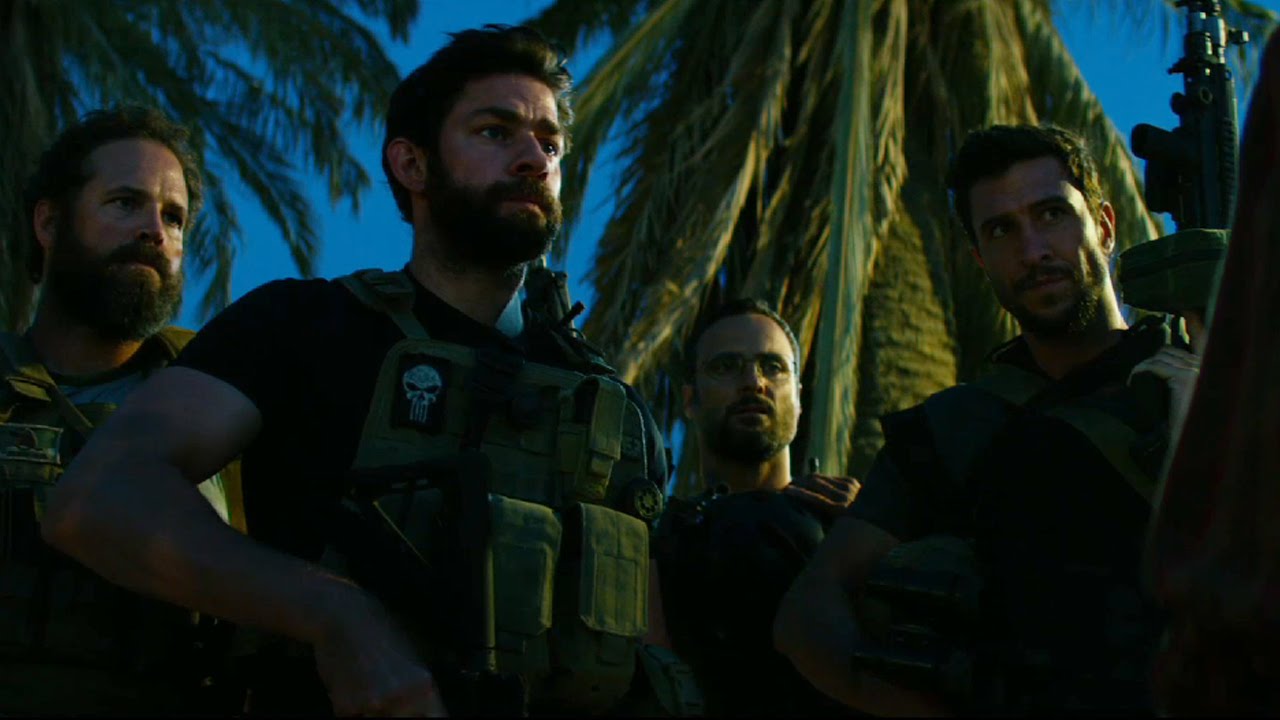
Yep… a Michael Bay film lands a spot in my Top 12 list. Most unorthodox! Well, as I’ve said many times in the past, I am a fan of most of Bay’s films. I’m not one of those many people on the internet who think that he’s the worst director in the industry… far from it. And this film is a prime example of Bay at his best. 13 Hours tells the true story of what happened on September 11, 2012, when an American diplomatic compound in Benghazi, Libya was attacked by Libyan militia. Obviously, this incident attracted a lot of political controversy back here in the States. However, I think that Bay made the right decision by not focusing too much on the political aspect of the incident. Instead, he focuses on those who were there when it happened, namely the six-man security team of Tyrone S. Woods, Jack Silva, Mark ‘Oz’ Geist, John ‘Tig’ Tiegen, Kris ‘Tanto’ Paronto, and Dave ‘Boon’ Benton who put their lives at risk defending those stuck at the compound. And while the film is still very much your usual dose of Bayhem (in other words, the action is focused on more than the story and characters), the six main leads, led by John Krasinski in an against-type role as Jack and James Badge Dale, who’s been a great supporting actor in films like The Walk and Iron Man 3, in the lead role of Tyrone, all work off each other very well. And I’ll admit, there was a legitimate scene where I got a bit teary-eyed; the scene where Tyrone and Glen Doherty (Toby Stephens) are killed during the final assault on the compound. Yes, there’s a tear-jerker moment in a Michael Bay film; you don’t hear that brought up a lot, now, do you? In short, like 2014’s American Sniper, this isn’t a story about the politics; it’s about the men who were there. That needs to be remembered.

That’s the end of Part 1. Thanks for following along and be sure to check back tomorrow for Part 2, in which I’ll be listing films #9-7.

Wednesday, July 27, 2016

Batman v Superman: Dawn of Justice - ULTIMATE EDITION Review/Discussion


As many of you know, when Batman v Superman: Dawn of Justice was released in theaters this past March, things didn’t turn out as well as Warner Bros. had hoped for their big superhero epic that was set to start off DC’s own ‘Cinematic Universe’. The film was absolutely savaged by critics and even though, like its predecessor Man of Steel, it did have its fair share of fans this time around its critics were much more vocal in expressing their disdain for the film. And while it certainly did well at the box-office, grossing over $872 million worldwide, somehow it was still deemed a ‘box-office failure’ due to the fact that it didn’t reach the studio’s expected goal of $1 billion (this, folks, is why I’m not in the box-office industry… how nearly $900 million worldwide is supposed to be a failure is beyond me). But while many found the film to be quite underwhelming, a lot of folks were looking ahead to the film’s home media release. Because prior to the film’s theatrical release, director Zack Snyder had noted that his original cut of the film was around three hours long before it was cut down to the theatrical cut’s 151-minute runtime. But as for the original cut, Snyder confirmed that it would be released with the theatrical cut upon the film’s release to Blu-Ray, DVD, and digital outlets. And now with this new R-rated ‘Ultimate Edition’, fans finally get to see Snyder’s true vision for the film. So with that said, considering that I actually was a fan of the film’s theatrical cut, even when taking all of its faults into account, what are my thoughts on the ‘Ultimate Edition’? More importantly, can this new version of the film do enough to change the minds of those who didn’t like it the first time?

Well I’m pleased to report that the Ultimate Edition of Batman v Superman: Dawn of Justice IS indeed the superior cut. The main reason for this is simple; because the film is allowed to breathe at a run-time of just over three hours, the film’s plot flows much smoother than it did in the theatrical cut. As a result, certain scenes that some folks felt were rushed and underdeveloped have much more weight to them. For example, a commonly derided scene in the film was the opening action sequence in Africa, in which Superman saves Lois from a group of terrorists but is then deemed as the one responsible for a series of deaths that occurred during the attack. The Ultimate Edition shows more of this sequence, not only showing said deaths (many of which weren’t actually seen in the theatrical cut) but also giving audiences a greater sense of what really happened and how Lex Luthor used this incident to turn the world against Superman. On that note, Lex’s overall plan to combat Superman is much more detailed in this version, namely in regards to how he blackmails certain people into doing his dirty work as well as how Lois investigates the whole conspiracy. Remember the scene in the courtroom where Superman wasn’t able to detect the bomb hidden inside Wallace Keefe’s wheelchair? Well as explained in the Ultimate Edition, the chair was lead-lined so yes, there was a reason why Superman didn’t notice it. As far as the action is concerned, there’s not really that much added in this cut. There’s more of the Africa attack, which has quite a few cases of bloodshed as soldiers are shot by Anatoli and his men, and the scene in which Batman brutally takes down Anatoli and his men as he rescues Martha is certainly much more intense with shots that no doubt had to be cut to appease the censors. But for the most part, the new additions are mostly story based.  

Now with all of this said, I can’t really say that this film will completely win over everyone who wasn’t a fan of the film’s theatrical cut. Because in terms of overall execution, this newer cut still maintains the same general style/vision of its trimmed counterpart. It’s still very serious in tone with only a few quips from characters like Alfred and Perry White to lighten up the mood. Jesse Eisenberg’s polarizing portrayal of Lex Luthor is still the same polarizing performance that you either liked or were annoyed by. The highly anticipated fight between Batman and Superman is still only a small part of a bigger story and no the Ultimate Edition doesn’t add anything to that scene. And the whole scene in which Wonder Woman views the video files on other meta-humans like Flash and Aquaman is still done in the same manner. Like with Man of Steel, it really all comes down to how you view the way this film’s story is told. And as for me, as I’ve gone over before, I was fine with plenty of the choices that Snyder made with this film, from how they introduced the other members of the Justice League to, yes, even that controversial ‘Martha’ scene that the internet constantly mocked. At the end of the day, the most important thing that the Ultimate Edition does is that it fixes quite a few narrative issues that critics/audiences pointed out when it was released, namely in regards to Lex’s whole conspiracy plan. And the choppy editing that sometimes plagued the theatrical cut in scenes like the Africa attack is much smoother as a result.


So the big question now is why did Warner Bros end up cutting so much out of the film when it was released in theaters? At this point I’m sure that it wasn’t due to the stuff in the film that would’ve warranted an R-rating, like the bloodier action in Africa or the brief glimpse of Ben Affleck’s butt during a scene in which Bruce takes a shower, because those additions are only minor at best. And besides, as we all know, the MPAA can be pretty damn lenient when it comes to stuff like that. No at the end of the day the bigger concern was why they cut so much out of the film to the point where it hindered the plot. Well with that said, it’s pretty darn clear as to why Snyder was forced to cut out so much… time constraints. As Snyder himself put it, he just didn’t have the same kind of creative clout that someone like James Cameron has to the point where he could get his full 3-hour long cut of the film released. But the thing is… even though the Ultimate Edition is 30 minutes longer than the theatrical cut, I still would’ve gone to see the film in theaters if it was released in its uncut form. I would have totally sat in that theater for three hours if it meant that I would be able to see the film as Snyder fully envisioned it. I do agree with the argument that if this cut of the film was the one that was shown in theaters, I bet it would’ve done much better with critics. Granted, I don’t think that it would’ve been outright critically acclaimed like some of the MCU films but at the very least I think it would’ve at least been on the same level as its predecessor, hovering somewhere around the 50% range on Rotten Tomatoes. 

So with all of this in mind, here are my thoughts on how people will probably respond to this Ultimate Edition. If you were someone who absolutely hated the film and pretty much everything in it, then it’s safe to say that you’re probably not going to like this newer cut any better because it’s still the same kind of film as its theatrical cut. But if you’re someone who didn’t hate it but was more on the fence about it (in other words, you’d give it a rating somewhere around 2.5/5 or so), then I think that at the very least you’ll like this newer version a bit more because it does fix quite a few of the narrative issues that most people had with the film’s theatrical cut. And as for those who did love the film when it was released, well, this newer cut is just going to be even more satisfying. Now like I said before, I did like the film as it was in its theatrical cut. Yeah it did have some major problems when it came to editing and the narrative but I do feel that Snyder managed to overcome that, for the most part, with an excellent visual style, impressive debuts by Ben Affleck and Gal Gadot as Batman and Wonder Woman, respectively, and a strong third act with an effective emotional finale revolving around the death of Superman. Since the Ultimate Edition was released, I’ve seen quite a few people online say that they’re not going to watch the theatrical cut anymore now that this superior cut is out. As for me, I’m not going to outright disown that cut because as I’ve been saying numerous times, it wasn’t ‘that bad’. But at the end of the day, the Ultimate Edition really is the true version of Batman v Superman. Here’s hoping something like this doesn’t happen again with Justice League.   


Rating: Originally I gave Batman v Superman: Dawn of Justice, as it was when it was first released in theaters, a 3.5/5 rating. When I went to go see the film a second time, I actually bumped my rating up to a 4/5 because I got a greater understanding of the story’s emotional depth. So with all of that said, I will give the Ultimate Edition a 4.5/5 due to the fact that it did fix two major issues that most had with the film, resulting in a much stronger narrative.

Friday, July 1, 2016

2016 Midyear Recap


Well here we are at the halfway point of 2016. And for those who have following this blog for the past few years, you know what that means. As is tradition this time of the year, today I will be going through all of the films that I’ve seen so far over these past six months. And this year actually gave me a few more films to talk about than usual as a result of me getting the opportunity to go to this year’s SXSW Film Festival in Austin, Texas this past March. There I got to see quite a few new films before they were released in theaters. Some of them have already seen a theatrical release and others are still on the way. But for now, it’s time to go through the good and the bad of what has been a pretty solid year for film so far. Of course there have been a few ‘stinkers’ here and there but, as always, there have been plenty of great films to balance all of that out. Now usually when I do these ‘Recap’ posts, I simply go from my least favorite films of the year to my Top 5 favorites so far. Admittedly though, in past years it was never really in a 100% ‘exact’ order. So to help keep things in check this time around, I’ve been maintaining a rankings list of every new film that I see this year (note: anything that can be credited as a ‘2016’ theatrical release) on my Letterboxd account (click here for the link). Now this isn’t the first time that I’ve done this. I did something similar in 2011 back before I started this blog, when I was writing reviews on Rotten Tomatoes. However, things got a little complicated by year’s end due to me not keeping much track of the ratings that I was giving to the films that I saw that year, as well as sometimes even forgetting to update the list from time to time. So this year, thankfully, things have gone much smoother in terms of me keeping a general record of what I’ve seen. So with all of that out of the way, let’s look back upon my 2016 ‘year in film’ so far. 

Before I begin, I’ll briefly go over the one film that I’ve seen this year that I haven’t given a rating to yet but will do so once it comes out. This is due to the fact that I initially saw it when it was in its ‘rough cut’ status.

SAUSAGE PARTY


When I saw this at SXSW, I only saw its Rough Cut. The film wasn’t completed yet (something that Seth Rogen and Evan Goldberg made very much clear when they were introducing the film) so there were quite a few frames of animation that weren’t completed at that time. So because of it, I decided not to give it a rating when I did my SXSW Recap but I promise that I will once the film comes out in its completed form. So with that said, what I can say about the film based on what I saw? Well, it’s very much a Seth Rogen/Evan Goldberg comedy. The film is full of their style of humor so if you’re not a fan of that kind of humor (e.g. expect plenty of pot jokes) you might not get very much out of this film. However, it’s certainly shaping up to be one of the most unique animated films in recent memory. It very much is an R-rated animated film even though the style seemingly evokes a Disney-esque atmosphere. But while the film may be about a bunch of talking food items a la something like Toy Story, it doesn’t end up being a light-hearted romp once the groceries learn of what really happens when they are bought by humans…. They get eaten. What follows is a very unique adventure full of food puns and outrageous moments that have to be seen to be believed. Case in point, the finale of the film, which I won’t spoil here but needless to say… it’s something. Despite the fact that I only saw its ‘Rough Cut’, if I had to give the film a rating right then and there I would probably give it somewhere around a 3.5/5. But for now, you’re just going to have to wait and see what my rating will officially be for it when Sausage Party is unleashed upon the world on August 12th.  

WORST FILM OF THE YEAR (SO FAR)

LONDON HAS FALLEN


2013 saw the release of not one but two different Die Hard-esque action films set in the White House. Of those two, the bigger hit was director Antoine Fuqua’s Olympus Has Fallen and the success of that film has now led to a sequel. But without Fuqua behind the camera this time around, London Has Fallen proves to be one heck of a disastrous sequel to a film that, to be perfectly frank, I actually thought was the lesser of the two 2013 White House-set action films. I mean it’s bad enough that the film has fairly lousy action sequences (as well as some pretty weak CGI) and a stupid plot. However, as many have pointed out, the biggest problem with the film is that it ends up one of the most culturally offensive films in recent memory. And the big reason for that is because it portrays the city of London as basically being totally inept when it comes to dealing with terrorist attacks. It’s even more of a problem considering that this was released only a few months after the Paris attacks this past November. The film very much has a ‘America! F*** Yeah!’ attitude to it but that’s not a good thing in this case (unless you’re a Donald Trump supporter... I wish I was kidding but this film seriously feels like it represents Trump’s vision of the world). Like I said before, while I didn’t ‘dislike’ Olympus Has Fallen, I actually preferred Roland Emmerich’s White House Down because I felt that Olympus tried to be way too serious at times for a film that was basically ‘Die Hard in the White House’. And while London doesn’t try to be as serious as its predecessor for the most part, it ends up being worse primarily due to how insultingly xenophobic it is.

OTHER DISAPPOINTING/MEDIOCRE RELEASES

GODS OF EGYPT


The latest film from director Alex Proyas, most known for cult hits like 1994’s The Crow and 1998’s Dark City, experienced quite a bit of controversy in the weeks leading up to its release due to the fact that the film, despite being set in Egypt (as well as being directed by an Egypt-born director), starred a pre-dominantly white cast. But as someone who doesn’t like to get into a lot of race-related discussion when it comes to film, that lack of diversity wasn’t the only problem that this film had to deal with. To put it simply, Gods of Egypt is an undercooked, and in some cases even a bit ‘overdone’, fantasy epic that I think it’s safe to say has nothing in common with actual Egyptian history with all of the crazy visuals that this film creates, including the metallic-looking Iron Man esque armor that the Egyptian gods wear in battle. Most of the action sequences are just nothing but CGI overload and the cast is generally wasted; some of them are legitimately trying (e.g. Game of Thrones’ Nikolaj Coster-Waldau as Horus) while others over-act like crazy (e.g. Gerard Butler as the main villain, Set). The film tries to be a fun action-adventure flick but ultimately it ends up being extremely corny with all of its attempts at humorous banter. And because the film does focus more on its visuals, there’s little to no character development. While I personally hate to see films ‘bomb’ at the box-office, even if it’s a film I don’t like, as soon as I saw the trailer for this film I pretty much knew that it was going to do poorly at the box-office… and it did. It barely managed to earn back its $140 million budget.

HARDCORE HENRY


At the very least, I will give Hardcore Henry credit for having a genuinely original concept for an action film. All of the action in this film was filmed in the first-person perspective, putting the audience in the shoes of its titular character, a cybernetically enhanced man named Henry, as he tore through Moscow in order to rescue his wife Estelle from the villainous telepathic warlord Akan. However, as unique as its method of shooting is, this film is absolutely dumb as hell. The film’s ‘avatar’, Henry, is just that... an empty shell. And despite the fact that Danila Kozlovsky does manage to be a pretty charismatic ‘love to hate him’ villain, Akan is given no backstory whatsoever, including how he somehow manages to have Jedi-like telekinetic powers. The only one who gets any shred of character development, if any, is Sharlto Copley as Henry’s main ally Jimmy, who keeps dying but manages to keep coming back somehow in different personas. As for the action, while it does give the film a unique ‘style’, it does get tiring after a while due to it hitting the same general note over and over again. And while the film does live up to its title of being ‘hardcore’ given how brutal the action can be, it also comes off as being quite immature at times. I’m going to be totally honest with you folks… when I saw this at SXSW, I left before the Q&A after the film because I was feeling so winded as a result of what I just saw. I even got ‘interviewed’ by a few people working for the distributor who asked me my thoughts on the film. Simply put, it’s probably a good thing that I didn’t give my ‘full thoughts’ on the film in that moment. I mean I think it’ll be cool if someone tries to do another ‘first-person’ action film in the future but hopefully that person remembers to actually give that film a well-written story with characters whom we actually give a crap about. 

NEIGHBORS 2: SORORITY RISING


I hate to have to put Neighbors 2 in my ‘Worst of the Year’ list at this point because I was generally looking forward to the film having been a fan of the original Neighbors. It was a well-balanced comedy that benefitted heavily from not outright demonizing the fraternity that served as ‘antagonists’ to Seth Rogen and Rose Byrne’s characters. Not only that, but the solid representation of the brotherhood of fraternities (which I can at least verify due to one of my best friends being a Sigma Chi alumnus) will no doubt help in regards to making it a new essential college flick. And for the record, the sequel is very much capable of becoming that kind of film as well. This time around, the focus is on a sorority and once again director Nicholas Stoller does do a solid job in not outright vilifying the sorority and establishing a clearly solid sisterhood amongst its members. And like the first film, there are definitely some very funny moments in this film, namely through the pranks that the two sides commit against each other just like in the previous film. However, this time around I found that the jokes were much more hit and miss. For one thing, the climax is much more anti-climactic than the epically hilarious fight between Mac and Teddy in the first film, even though the message that this film’s climax conveys is genuinely appreciated. And while the pro-feminism vibe that the film creates is well-handled for the most part, sometimes the film rather annoyingly hits you over the head with it even after getting its point across earlier. In short, Neighbors 2 is by no means a ‘bad’ film but unfortunately I was rather disappointed by this lackluster sequel.    

NOTEWORTHY RECOMMENDATIONS

INDEPENDENCE DAY: RESURGENCE


This film has been subjected to some particularly harsh reviews these past few days, with some calling it ‘boring’ and others just calling it ‘one of the worst films of the year’. However, is the long-awaited sequel to 1996’s smash hit Independence Day really as bad as those recent reviews suggest? Not really. I mean sure, at the end of the day this film is just as silly and cheesy as its predecessor. In fact, it’s so cheesy that save for the modern-era visual effects, it sometimes feels like it was made in the 90’s when the original came out. And yet, even with all of that said and the fact that the film does start off on a rather slow note, I’ll admit that I was totally engrossed by it by the end. Yeah it’s silly and there’s not much in terms of plot and character development but the action sequences are pretty solid and the visual effects up the ante of the previous film when it comes to epic alien vs. humanity action. It certainly isn’t ‘boring’, that’s for sure. There may not be any Will Smith this time around but Jeff Goldblum and Bill Pullman are back and are just as enjoyable as they were in the first film. So in short, it could be argued that perhaps this sequel came out way too late. It’s been 20 years since the original Independence Day and blockbusters have come quite a long way since then so maybe a film like this doesn’t really cut it anymore for most people. However, this is far from being an outright ‘terrible’ film; it’s just a fun, mindless popcorn flick and there’s nothing really wrong with that, if you ask me. And even though the film does end on a quite blatant ‘sequel-baiting’ note, I won’t lie in saying that I’m genuinely interested in seeing how Emmerich and co-writer Dean Devlin plan on finishing this so-called trilogy. Though hopefully if a sequel does get made it won’t take 20 years this time.

MONEY MONSTER


George Clooney and Julia Roberts star in Jodie Foster’s newest directorial effort, Money Monster, in which they play the host and producer of a popular finance TV show that gets hijacked during a live broadcast by a gunman. As I noted in my review for the film, it’s very much reminiscent of Sidney Lumet’s 1975 classic Dog Day Afternoon, namely due to the fact that it’s a story of a televised standoff between a gunman and the police in which it’s revealed that the gunman isn’t such a bad guy and is only doing what he’s doing because he was wronged by ‘the establishment’. Foster establishes a solid amount of tension during the scenes in which Clooney’s character, as aided by Roberts’ character, attempts to negotiate with the gunman (Jack O’Connell) and the three leads all do a phenomenal job, particularly Jack O’Connell as the young gunman who we do come to sympathize with as the plot unfolds. Admittedly the film does kind of lose a bit of steam by the end of it as a result of the characters leaving the confines of the TV studio and heading out into the streets of New York. This is namely due to the fact that the conspiracy plot that the film tries to uncover regarding the company that O’Connell’s character foolishly invested in before it was hit by a major stock market crash is rather underdeveloped. Still, the aforementioned stand-off scenes in the TV studio are very well-directed and thanks to that and a terrific trio of leads, Money Monster proves to be a very solid thriller. It’s by no means one of the best films in its genre but it still does its job in being an entertaining popcorn flick.   

TEENAGE MUTANT NINJA TURTLES: OUT OF THE SHADOWS


Despite receiving the same level of critical thrashing as producer Michael Bay’s Transformers films, 2014’s Teenage Mutant Ninja Turtles, a flawed but enjoyable film that at the very least didn’t pull the controversial ‘alien’ origin story retcon that had been brought up in pre-production, was a solid commercial hit, resulting in a sequel that thankfully feels more like a proper TMNT film. For one thing, the film introduces some of the franchise’s classic characters including the mutant duo of Bebop and Rocksteady, who are definitely a major highlight of the film, and the vigilante Casey Jones, enthusiastically played by Arrow’s Stephen Amell. But ultimately the best thing about this film, at least when compared to the previous film, is that it feels much more like a proper TMNT film, placing more focus on the Turtles instead of April O’Neil, as was the case in the first film. This time around, the Turtles are the stars (and are once again one of the best parts of the film thanks to their excellent camaraderie with each other) while the human characters are relegated to supporting roles. And sure, at the end of the day, this film is just as mindless and silly as its predecessor. But of course, that’s always been this franchise in a nutshell and at the very least this film has a much more fitting/light-hearted ‘we know that this is totally silly’ vibe. By comparison, the first film tried to be way too serious at times for a film called Teenage Mutant Ninja Turtles. Thankfully that’s not the case this time around. It’s still not perfect by any means but at the very least I’m confident that fans of TMNT who weren’t too big on the previous film will be much more satisfied with this new film.

DON’T BREATHE


A film I got to see early at SXSW before it’s released this August, Don’t Breathe is the latest film from director Fede Alvarez, who Sam Raimi selected to helm the remake of Evil Dead back in 2013. The two team up again for this new film, which also sees the return of the new Evil Dead’s leading lady, Jane Levy. The film centers on a group of delinquent burglars (played by Levy, Dylan Minnette, and Daniel Zovatto) who attempt to rob a blind old army vet (Stephen Lang). However, they soon learn that this old man isn’t as helpless as he may seem and now find themselves stuck inside his house while he’s in the middle of hunting them down. Now despite the fact that the film is being labeled as a horror film, I’ll admit that it’s more of a thriller-type story in its overall execution and on that note, it does have some legitimately tense moments, particularly a scene in which Levy and Minnette’s characters find themselves stuck in the Old Man’s basement in pitch-black darkness, effectively putting them at his level seeing only what he can ‘see’. Jane Levy and Dylan Minnette both do solid jobs but Stephen Lang is the big standout in what was quite a physically demanding performance. Sure it’s not really much of a horror film and character development is rather lackluster, as can be common with horror films, but overall Don’t Breathe is a pretty solid and intimidating thriller. In short, it should end up as a pretty decent commercial hit when it’s released on August 26th.

THE FINEST HOURS


Disney’s The Finest Hours is the true story of ‘the most daring rescue in U.S. Coast Guard history’, when crewman Bernard Webber and his four-man team rescued the 32 survivors of the SS Pendleton, an oil tanker that was split in half during a particularly brutal winter storm off the coast of Cape Cod. And while some have argued that the film doesn’t really do enough to honor Webber and his crew’s accomplishments, I think that the film does a fine enough job in portraying their heroism. Scenes in which Webber and co. traverse through the rough waters of the Atlantic, particularly the infamous ‘Chatham Bar’ that is capable of running ships aground even in the best of conditions, are suitably thrilling as are scenes in which the crew of the Pendleton work together in order to keep the half of the tanker that they’re stuck on afloat for as long as possible. Sure the film’s plot may be a bit straight-forward at times (e.g. Webber’s fiancé Miriam is reduced to a ‘50’s era housewife’ role, though Chris Pine and Holliday Grainger do have a solid romantic chemistry that results in some very sweet moments) but the courage and indomitable will of those caught up in this whole situation is very much clear throughout. With some solid visual effects work for the sequences set at sea and excellent performances from the two leads, Chris Pine as Webber and Casey Affleck as Ray Sybert, the Pendleton’s engineer who ended up becoming the leader of the crew due to the captain being lost on the other half of the ship, The Finest Hours is a solid, old-fashioned historical thriller. Like I said in my review, I’m always interested in real-life stories like this that took place in my home region of New England.

MIDNIGHT SPECIAL


Another film I got to see at SXSW prior to its theatrical release, director Jeff Nichols’ Midnight Special is a quite unique entry in the sci-fi genre. But at its core, the film tells a very human story of a father, Roy (Michael Shannon), going on the run in order to protect his son, Alton (Jaeden Lieberher), who’s shown to have a very unique power, from the government. The best way to go into this film is to know little about it beforehand because it does hold your interest throughout and you’re curious as to where the plot is going to go in regards to the truth behind this young boy’s powers. Admittedly the film doesn’t answer all of the mysteries that it sets up but even with that in mind, it’s still a very fascinating film regardless. Plus, it’s very much an actors’ showcase. Michael Shannon, Joel Edgerton (who plays Roy’s friend/accomplice Lucas), Kirsten Dunst (who plays Alton’s mother Sarah), Adam Driver (who plays an FBI agent, Paul Sevier, who investigates into the matter and quite frankly has a lot of funny moments due to his occasional awkwardness), and Jaeden Lieberher all do fantastic jobs in their respective roles. In short, for what was director Jeff Nichols’ first big ‘studio’ picture, following his previous efforts which include 2011’s Take Shelter and 2012’s Mud, Midnight Special is definitely one of the most original films of the year and one that fans of the sci-fi genre are sure to love.   

ALICE THROUGH THE LOOKING GLASS


Believe it or not, I actually saw this film twice in theaters. The first time was during its opening weekend because even though this film was subjected to the same level of critical mauling as its 2010 predecessor, I was generally interested in seeing it and I did end up liking it. And then, I ended up seeing it a second time as part of a doubleheader with a certain animated film that’s going to appear much later on in this list at the only drive-in theater still operating in Rhode Island. And yes… I still liked it. Now like I said in my review of the film, I very much recognize that these live-action Alice in Wonderland films have their extremely vocal critics and to be perfectly frank, this new film won’t do much to change the minds of the uninitiated. However, at the same time, these films undeniably also have their fans and I’m not afraid to admit that I’m one of them. Sure, like its predecessor, this film’s plot is very loopy and the extensive use of CGI can be a bit of an eyesore at times. However, also like its predecessor, the film does benefit from a solid visual style and even with its shortcomings in terms of the writing, I’d dare argue that there were even a few legitimate heartfelt moments in this film. But ultimately there are two primary reasons why this film actually manages to outdo its predecessor. For one thing, director James Bobin gives the film a much more family-friendly vibe, as evident not only in the brighter color scheme but also in regards to not pulling any of the punches that the previous film did that made you question why it was rated PG (e.g. Alice walking on the heads of the Red Queen’s victims to cross her moat). But another great thing is that, while in the first film she was a rather unsure protagonist due to her constantly doubting her destiny of defeating the Jabberwocky, Alice is a much more confident protagonist this time around, something that’s very much reflected in Mia Wasikowska’s equally more confident performance. In short, this film may not be perfect but I did enjoy it enough that I will buy it on Blu-Ray when it comes out. That’s usually the case when I see a film twice in theaters.    

(Note: My second viewing of the film resulted in my original 3.5/5 rating going up to a 4/5)

10 CLOVERFIELD LANE


For years there was much talk about a potential sequel to 2008’s J.J. Abrams-produced found footage monster film Cloverfield. However, due to Abrams, director Matt Reeves, and screenwriter Drew Goddard having other commitments, it seemed as if that wasn’t going to happen anytime soon. Then, just this past January, J.J. pulled a fast one on us by unveiling that a ‘sequel’ was indeed coming… in just two months in the form of 10 Cloverfield Lane. However, this was not a direct sequel to Cloverfield because while it does share a similar premise of characters reacting to a ‘major incident’, this film does not feature the monster seen in the original film and instead focuses on a young woman who finds herself trapped inside a bunker with a mysterious stranger in the wake of a supposed nuclear attack. What follows is an extremely tense and claustrophobic thriller and features excellent performances from Mary Elizabeth Winstead, whose character is a smart and strong-willed female lead, and John Goodman, who absolutely steals the show as the aforementioned ‘mysterious stranger’ that Winstead’s character ends up being stuck with. Admittedly, though, the film does kind of lose a bit of steam at the end when it introduces the main threat; aliens. Now for the record I’m not saying that this twist came out of nowhere or anything but the film really doesn’t do much to explain anything about them to the point where they kind of seemed like an afterthought. But despite that, 10 Cloverfield Lane is still a very well-made, arguably Hitchcockian, thriller and I’m very much interested in how this, in following the original Cloverfield, could lead into a very unique anthology series focusing on different kinds of ‘monster threats’. Because after all, as the film’s tagline states, ‘Monsters come in Many Forms’.

DEADPOOL


Kicking off 2016’s spread of Marvel/DC superhero films was Deadpool and boy was it one heck of a start for the genre this year. Released in February right around Valentine’s Day weekend, the film went onto become the highest-grossing R-rated film of all-time. And while it’s technically a ‘spin-off’ of the X-Men franchise, it ended up becoming the franchise’s highest-grossing entry to date and you can definitely see why it was such a huge hit with audiences. After the fan favorite ‘Merc with a Mouth’ was handled poorly in his live-action debut, 2009’s X-Men Origins: Wolverine in which the filmmakers did away with all of the character’s trademark elements/quirks (namely his ‘mouth’), Ryan Reynolds was finally given the chance to do the character justice on the big-screen after the highly enthusiastic response to leaked test footage made by director Tim Miller convinced Fox to go ahead with an unapologetically R-rated superhero flick starring Deadpool. And yes folks, this film very much lives up to its status as an R-rated superhero flick as it is full of bloody violence and crude/sexual humor. Because after all, that is very much representative of the character in the comics. You should’ve seen how angry fans got when a petition was launched for a toned-down PG-13 rated cut for younger audiences, even though it wasn’t intended to ‘replace’ the R-rated version and would have at least been a noble effort from the filmmakers (who respectfully admitted that a PG-13 cut wasn’t really ‘possible’ by that point) to give younger fans of the character (and yes, they are out there) something they could enjoy. Regardless, this film very much did justice to everybody’s favorite fourth-wall breaking, chimichanga-loving, bigmouth mercenary, with Ryan Reynolds finally getting the chance to shine in a superhero film after previous attempts like Green Lantern failed to attract much positive attention from critics and audiences.

However, I don’t really see this film as being much of a total ‘game-changer’ for the superhero genre as a lot of critics/fans have argued since its release. Now don’t get me wrong, Deadpool is a very, very entertaining entry in the superhero genre and thanks to the character’s trademark meta humor, it’s up there with Guardians of the Galaxy as one of the funniest superhero films to date. However, the only real ‘game-changing’ thing about this film… is that it’s rated R. Because while it definitely delivers on an accurate representation of its titular character, the plot is very basic, Ed Skrein’s Ajax is a rather weak villain whose only real memorable quirk is that his real name is ‘Francis’ (“He got Ajax from the dish soap!”), and Morena Baccarin is unfortunately wasted in the role of Deadpool’s girlfriend Vanessa, who is a mutant shape-shifter in the comics but ends up being just a straight-up damsel in distress. Sure the film pokes fun at the superhero genre but a lot of times it also ends up pulling the same conventions that it’s mocking. While I do recognize that having a complex plot isn’t really the point for a film like this, hopefully the sequel does do more to truly go all the way with its attempts to subvert the genre. But again, let me be clear, this film is still a very fun ride and if this means that there will be more R-rated superhero films because of how successful it was at the box-office then by all means. But to reiterate the point that I made in my review, that shouldn’t mean that every future superhero film from here on out should be rated R just because the fanboys want that more. Because at the end of the day, at least when talking about this year’s slate of superhero films, I’m going to be remembering the so-called ‘toothless’ PG-13 rated superhero films more. Speaking of which…  

BATMAN V SUPERMAN: DAWN OF JUSTICE


First off, yes, I liked this film better than Deadpool. And second, yes I did like the highly controversial DC Comics superhero epic, Batman v Superman: Dawn of Justice. Like its immediate predecessor, 2013’s Man of Steel, this film has been quite the polarizing flick amongst both critics and audiences. Though this time around, critical reception has been much more negative by comparison. The film does have its loyal fans but it also has a substantially large amount of extremely vocal dissenters. And while it’s certainly not a box-office failure, grossing nearly $900 million worldwide, Warner Bros. was expecting it to do much better than that (i.e. $1 billion worldwide, as was the case with the last two Dark Knight films). However, at the very least, this film certainly isn’t as bad as its incredibly low RT score of 27% implicates. And sure, it definitely has some major flaws, namely due to issues that come from the film’s rather messy screenplay and occasionally erratic editing. As a result of both of these problems, some elements to the plot aren’t really delved into that much, namely how Lex Luthor (And for the record, I was fine with Jesse Eisenberg as Lex. He may be a bit too goofy for some but he does have his moments, including an epically savage bit of trolling that is directed towards a senator) orchestrates his whole villainous plot against Superman. And just like with Man of Steel, some will take issue with the film’s generally serious tone. It’s not completely ‘dour’ as some critics are saying, primarily thanks to some funny quips here and there from characters like Perry White and Alfred, but it certainly ain’t no MCU film either when it comes to ‘light-hearted’ moments.

However, even with all of this said, there’s no denying that director Zack Snyder gives the film such an awesome visual style that’s straight out of the comics. And despite the film’s script issues, the finale is pretty darn epic and I’d argue that the film had plenty of solid emotional moments, even that controversial ‘Martha’ scene that, like the equally infamous neck-snapping scene in Man of Steel, isn’t as bad as some put it out to be. Ben Affleck and Gal Gadot manage to prove their critics wrong by absolutely stealing the show as the new Batman and Wonder Woman, respectively. In short, despite its faults, Batman v Superman was still a pretty solid effort in the superhero genre and I’m at least confident that the upcoming Extended Cut that will debut with the film’s home media release will be a superior version, as was the case with another Snyder film’s Extended Cut, Watchmen (Disclaimer: It was officially released online right around the time that I was writing this and from what I hear, it IS a superior cut that still may not win over ‘everybody’ but at least fixes plenty of the narrative problems that people had with the film. Good to hear!) And as for the future of DC’s developing ‘Cinematic Universe’, while this film may not have fared well with critics it’s not the end of the world just yet. We still have Suicide Squad later this summer and then Wonder Woman next year. And as for the upcoming Justice League film, which will once again be directed by Snyder, current reports suggest that the filmmakers are at least aware of the issues people had with BvS and with the promotion of DC’s Chief Creative Officer Geoff Johns to basically become the company’s ‘Kevin Feige’, I’m confident that things will be much smoother for DC’s films here on out.  

IN A VALLEY OF VIOLENCE


Director Ti West, who’s mostly been known for horror films including 2011’s The Innkeepers and a segment in 2012’s horror anthology V/H/S, takes on the western genre with In a Valley of Violence. Ethan Hawke stars as a drifter who enacts revenge upon the deputies of a run-down western town after they commit a horrible deed against him. But while the film very much has the usual Western feel to it, one of the most interesting parts about it is that it actually has a pretty decent sense of humor. This humor primarily comes from the fact that once Hawke’s character starts to enact his revenge upon the town’s deputies, it becomes very much apparent that the latter party clearly wasn’t prepared for something like this so a lot of the humor is the result of them frantically scrambling around the town trying to stay alive. Ethan Hawke is great as the drifter as is John Travolta as the town’s Marshal. The same can be said the rest of the cast, including James Ransome as the Marshal’s son (and the film’s main antagonist) Gilly and Karen Gillan and Taissa Farmiga as a pair of sisters who operate the town’s hotel; Gillan’s character being Gilly’s fiancé and Farmiga’s character becoming Hawke’s character’s primary ally during all of this. Pair that with an excellent score by Jeff Grace that’s very reminiscent of Ennio Morricone’s Oscar-winning score from The Hateful Eight and you have a very unique and original entry in the Western genre. In a Valley of Violence will be released in theaters on September 16th. Hopefully when it’s released there won’t be any theater issues like the one I witnessed when I saw the film at SXSW in which a distracting patron was tossed out for using his phone during most of the screening.

EVERYBODY WANTS SOME!!


Director Richard Linklater’s newest film is a spiritual sequel to his 1993 classic Dazed and Confused. While not featuring the same characters from that film (e.g. there’s no Matthew McConaughey going “Alright alright alright!” or Ben Affleck ready to paddle young incoming freshmen), Everybody Wants Some does follow the same general story structure as its ‘spiritual predecessor’. There’s not much of an actual plot and it’s more like a series of events involving a bunch of various characters; in this case the members of a college baseball team during the last weekend of the summer before the semester starts. But like Dazed and Confused, the film very much succeeds through how it establishes a fun and light-hearted atmosphere throughout. While the main characters in this film are ‘jocks’ and occasionally act as such (e.g. sometimes they can be jerks), they do manage to be a fun group to hang out with. Plus, the main cast of leads, which mostly consists of unknowns with the biggest name being Glee’s Blake Jenner as the film’s main character Jake, do have excellent camaraderie with each other. Admittedly I wouldn’t say that this film isn’t really ‘thought provoking’ or anything but it’s still a genuinely fun ride throughout with plenty of memorable moments, including a ‘rap number’ performed by the cast during the credits that I’d argue is guaranteed to put a smile on your face. Simply put, as he did with Dazed and Confused, Richard Linklater gives us a very nostalgic-fueled ride complete with an awesome 80’s rock soundtrack. In short, this very much is the 80’s equivalent of Dazed and Confused. 

NOW YOU SEE ME 2


I quite enjoyed 2013’s magic caper thriller Now You See Me. Despite some flaws, namely in regards to a lack of focus on what should’ve been the film’s primary group of protagonists, the Four Horsemen, the film was full of really cool magic-based visuals and was an all-around solid and entertaining thriller. I guess you could say that as someone who grew up with the Harry Potter franchise, I’ve always been interested in magic-based stories. As for the sequel, it actually does manage to be the superior film. As noted earlier, one of the issues with the original film was that it tried to balance out the screen-time between the Four Horsemen and the FBI agents pursuing them and admittedly the film spent more time with the FBI agents, which definitely came as a detriment to the Horsemen. Now that lead FBI agent Dylan Rhodes is revealed to be the de facto leader of the Horsemen, this film is allowed to spend much more time focusing on them, allowing for better character development, and the cool magic-assisted heists that they pull off. But director Jon Chu then takes it one step further by giving the film a much more energetic tone compared to the first film that helps keep things running smoothly at all times. Like its predecessor, Now You See Me 2’s plot is full of twists and turns. And while your results may vary in regards to how well you think they were all pulled off, Now You See Me 2 succeeds in not only being another entertaining magic-based thriller but one that actually manages to outdo its already solid predecessor by improving on some of the previous film’s flaws. 

EDDIE THE EAGLE


Now on the surface, Eddie the Eagle is very much what you’d expect from a film in the sports genre. Story-wise it does carry quite a few of the traditional sports film conventions, from the gruff coach that warms up to the main character by the end to a moment where it looks like the main character’s ‘Cinderella story’ is over but then by some miracle it is able to continue after all. But despite the fact that it is a generally straight-forward sports flick, Eddie the Eagle is a really entertaining film that very much wears its heart on its sleeve. It very much represents what made its protagonist, Eddie ‘the Eagle’ Edwards’, such a popular figure in the media. Because while Edwards was never a really successful athlete, coming in last in both of the events he participated in at the 1988 Winter Olympics, he very much won over the audience with his unabashed optimism and ‘never say die’ spirit, two things that athletes of any sport can no doubt learn from. Sure the film isn’t necessarily ‘historically accurate’ in regards to telling Edwards’ story but it still maintains a solid light-hearted atmosphere throughout with a solid sense of humor (e.g. when Eddie decides to immediately do a jump from a higher ski hill after successfully pulling off a single jump from a smaller ski hill). Pair that with excellent performances from Taron Egerton as Eddie and Hugh Jackman as Eddie’s coach (albeit a fictional one but that’s beside the point) and you have one very entertaining sports flick. Sure at times it becomes your traditional underdog sports flick but it’s still a very well-made and all-around feel-good story regardless.

X-MEN: APOCALYPSE


Well you’ve heard me talk about this film quite a lot these past few weeks. It all began when I did a post on the primary reasons why I was extremely frustrated with the internet for basically giving this film the complete shaft when it came to hype, at least when compared to the other superhero film releases of the year. From all of the idiotic/premature backlash at the film’s main villain’s design to the aggravating argument that the film wasn’t doing enough to stand out in the increasingly scrutinized superhero film genre, I’ve slowly realized that these X-Men films have been subjected to much, much scrutiny despite all of the good things that have come out of them, especially in recent years. And poor Bryan Singer, despite everything that he’s done for this franchise and the genre in general, has never gotten the credit that he truly deserves as one of the genre’s most important pioneers. Ultimately all of that undermining very much affected the film upon the release, as it was subjected to mediocre reviews… and suffice it to say I don’t really get some of these ‘issues’. Overloaded with action? The film’s called X-Men: Apocalypse, not X-Men: Minor Incident. There’s no emotional drive? Well the scenes where Magneto loses his family and Cyclops learns of his brother’s death pretty much negate that whole argument. Was that Wolverine scene just ‘fan-service’? Maybe, but who cares? It was awesome! In short, this is yet another super entertaining Bryan Singer directed X-Men film full of great characters, epic moments, and hilarious bits of dialogue. And sure, maybe Apocalypse wasn’t as big of a villain as fans were hoping but he’s far from being an ‘mediocre’ villain. In short, I’m quite frankly pissed that this film has been so criminally undervalued both prior to and after its release. No this didn’t set the franchise back a decade as some have stated. Instead, it’s just an extremely underrated entry in both the X-Men franchise and the superhero genre in general. I can’t say it’s ‘better’ than Days of Future Past but hey, that’s a tough act to follow.

13 HOURS: THE SECRET SOLDIERS OF BENGHAZI


Quite frankly one of the best films that I’ve ever seen released in January, a time where new releases are generally rather mediocre in quality, 13 Hours is proof that director Michael Bay is very much capable of directing a film that isn’t just explosions galore with little to no plot. 13 Hours is easily Bay’s most mature film to date, telling the true story of what happened on the night of September 11, 2012 when a military security team were forced to combat waves of Islamist militants that were attacking the American diplomatic compound in Benghazi, Libya. This incident has become a major point of political controversy here in the U.S. but the film wisely doesn’t go into too much detail over that kind of stuff. Instead, it focuses on the six men who put their lives on the line to protect their fellow Americans. Of course, like with any Michael Bay film, this film is non-stop action but it also allows for some breaks between the action to establish the camaraderie between the six men. That camaraderie is legitimately strong and the six leads are all great, especially John Krasinski in a very much ‘against type’ role and James Badge Dale, who finally gets to take on a lead role after having established himself as an excellent character actor in films like Iron Man 3 and The Walk. So while the politics behind this incident are arguable until the cows come home, 13 Hours decides to focus more on the humanity of its real-life story and I’ll admit, there was even a scene in here that made me rather teary-eyed… and yes, this occurred in a Michael Bay film of all places. As a result, it’s easily one of Bay’s best films… and I know that for many, that won’t be saying much.

MY TOP 5 OF THE YEAR (SO FAR)

(SPOILERS- 4 out of these next 5 were released by Disney... and for the record, no I was not ‘paid’ by them. They’ve just had a really good year so far.)

5. THE JUNGLE BOOK


Following in the footsteps of the first well-reviewed Disney live-action remake, last year’s Cinderella, The Jungle Book once again proves that the slew of upcoming Disney live-action remakes aren’t, in any way, a completely lost cause. Director Jon Favreau brings us a new spin on Rudyard Kipling’s classic novel that both respects the original animated Disney classic that came before it as well as well as being its own thing, namely by implementing more of the story elements from Kipling’s novel. It’s not a musical like the animated film but still has familiar beats like some of the film’s classic songs (e.g. ‘Bare Necessities’ and ‘I Wanna Be Like You’). Visually, the film is one of the absolute best-looking films of the year. And that’s saying a lot considering that the entire film was shot on a soundstage in L.A. with Mowgli being the only major human character (and, technically speaking, ‘real’ element) in the entire film. But everything does look excellent, especially the photo-realistic animals. These animals are portrayed by an excellent ensemble cast, with every major player being a perfect fit for the role, from Bill Murray as Baloo to Christopher Walken as King Louie. And despite the aforementioned fact that he’s the only human in the film and he’s basically interacting with characters who aren’t really there until post-production, Neel Sethi manages to make it all convincing as Mowgli. In short, like Cinderella, the new Jungle Book proves to be a solid compliment to the animated classic that it’s inspired from without over-shadowing it, which is the fear that some animation buffs have had in regards to all of these upcoming Disney remakes… that they’re going to ‘replace’ the original films. But like with most remakes, that’s not the case at all.

4. FINDING DORY


2003’s Finding Nemo is easily one of Pixar’s most beloved films and for many fans, one of the absolute best parts of the film was the forgetful but cheerfully optimistic Dory, voiced by Ellen DeGeneres. 13 years later, Ellen’s iconic character took center stage in her own sequel, Finding Dory, a film that proves that Pixar can do high-quality sequels to their films outside of the Toy Story franchise. Instead of just rehashing the same plot from Finding Nemo, this film instead focuses on a new story in which Dory travels the ocean in order to find her long-lost parents. And this story ends up being just as charming and heartfelt as the previous film, placing great emphasis on themes such as the strength of family and teamwork and the idea of embracing one’s faults instead of being ashamed of them, which of course in Dory’s case has always been her short-term memory. Ellen is once again phenomenal as Dory and the film also introduces plenty of great new characters who are just as lovable as the original protagonists, including Modern Family’s Ed O’Neill as a curmudgeonly octopus named Hank and It’s Always Sunny in Philadelphia’s Kaitlin Olson as Dory’s childhood friend Destiny, a near-sighted whale shark. Pair all of this with Pixar’s always great animation (in fact, I’d say the Finding films have been some of the studio’s most gorgeous looking films animation wise) and you have an excellent animated flick that is full of heart and once again proves that Dory is easily the franchise’s most beloved character.

3. DEMOLITION


I will openly admit that Demolition is a rather odd film to talk about because it’s a dramedy centered around an investment banker who has to come to terms with the recent loss of his wife. And I know what some of you may be thinking… how the heck is a film about a guy whose wife had just died supposed to be funny? Well, simply put, the humor in this film never comes from that part of the plot. Instead it comes from all of the odd ways in which the main protagonist, Davis (Jake Gyllenhaal), copes with his loss, from writing a complaint letter to a vending machine company solely because of one of their machines failed to work for him at the most inopportune moment to taking apart the bathroom stalls at his workplace. Obviously his methods of coping are in no way ‘normal’ and when other characters get angry at him for it, namely his father-in-law Phil (played brilliantly by Chris Cooper, who gives arguably the most emotional performance in the entire film), you do understand where those people are coming from. But even with this in mind, Davis still proves to be a very likable lead and Jake Gyllenhaal is excellent in the role, especially due to his great comedic timing. But don’t worry because the film is not all about the comedy. Once the film’s third act kicks in, the humor is downplayed and the film finally starts to really focus in on the dramatic elements of the story. And it actually does manage to not be jarring because we’ve had so much fun following Davis’ crazy antics that by the time he finally starts to really cope with the loss of his wife, we fully sympathize with him and the emotional catharsis that he comes to is very effective. Somehow, someway, this film manages to pull off one of the most daunting balancing acts of all-time as far as being a ‘dramedy’ is concerned. That is why it was my favorite film at this year’s SXSW Festival. 

2. ZOOTOPIA


Disney Animation’s modern age revival continues with yet another fantastic animated feature in the form of directors Rich Moore and Byron Howard’s Zootopia. I mean, it’s already great enough that the film was well-animated, featured an excellent cast of characters voiced by an equally excellent ensemble voice cast, and was, at its core, an entertaining ‘buddy cop’ story. That alone would be more than enough to make it an excellent entry in the Disney animated canon. But then there’s more to Disney’s 55th animated feature that truly makes it stand out and that is the fact that this film also succeeds in terms of its strong themes. The idea of combatting racism and prejudice is very much present in this film, from the ‘predator-prey’ esque relationships between certain animals to the conflict that emerges between main characters Judy Hopps and Nick Wilde as a result of rabbits like Judy being generally distrusting of foxes like Nick by nature. And let’s be honest… in a time where a certain racist bigot is one of the primary nominees in this year’s presidential election, this film’s messages are something that a lot of people should really take note from. These messages come together along with all of the film’s aforementioned strengths and the end result is a fantastic animated feature that very much appeals to both kids and adults, something that has always been one of the main reasons as to why Disney’s animated films so iconic. And now Zootopia stands alongside Frozen as the two Disney ‘Revival Era’ animated features that have joined the billion-dollar club and rightfully so. Not only is it one of the best Disney animated films of the past few years, it’s also one of the studio’s best period.  

1. CAPTAIN AMERICA: CIVIL WAR


I know, I know… I’m quite predictable at times, aren’t I? Actually, I’ve only been able to see Civil War once since it’s been in theaters, which is the first time that this happened to me with an MCU film since Thor: The Dark World. The reason why? Well, it’s just simply because I was rather busy dealing with school and the slew of new releases since then actually didn’t give me much time to see it again. Still, as you can probably guess, I absolutely loved the latest installment of the MCU, the first of Phase 3. After doing a phenomenal job with The Winter Soldier, the Russo brothers once again deliver an exciting as well as effectively dramatic superhero flick in which the Avengers find themselves on opposite sides of an impending act that looks to regulate superhero activity in the wake of all of the incidents that they’ve been involved in. While the film is very much inspired by the Civil War storyline from the comics, the film wisely doesn’t try to be a very faithful adaptation, which I think many will agree is a good thing considering the comics’ generally polarizing reception. Instead of being a direct adaptation, this film keeps the same idea but implements it into the canon of the Marvel Cinematic Universe, reflecting everything that’s happened in the past 12 films. And while it seems as if the comics portrayed Iron Man in a much more villainous role in this story, the film thankfully doesn’t go that route and actually manages to give both ‘Team Cap’ and ‘Team Iron Man’ legit points to stand on instead of just favoring one over the other. And amidst all of the excellent action in this film, in fact I’d argue this is one of the best MCU films to date in terms of action, there are plenty of effective and emotional character moments which very much benefit from how well all of these characters have been developed over the course of the previous 12 films. The finale in particular where a certain bombshell of a reveal is brought up is particularly emotionally powerful.


There was a lot of talk about why the film was called Captain America: Civil War even though it was practically another Avengers-level film given how many characters were in it. Somehow the Russo brothers actually managed to keep it focused mainly on Cap while still giving solid screen-time to everyone else. It certainly shows that they’re very much capable of handling a massive ensemble cast like this one, which is good considering that they’re going to be doing the next Avengers film. The cast is of course as excellent as they’ve always been and new additions like Chadwick Boseman as Black Panther and Tom Holland as the new Spider-Man (who’s arguably the best Spidey to date, which for me is actually saying a lot considering how big a fan I was of Andrew Garfield’s version of the character) are excellent additions. The only major downside of the film to me was its ‘main villain’, Zemo. Ironically, it seems as if Zemo is actually one of the best-received MCU villains to date but as someone who defends many of the other MCU villains as being way better than the internet constantly puts them out to be, I didn’t really think Zemo was ‘one of the best’. I mean I get why people feel he’s one of the best considering that he’s technically the most successful MCU villain to date due to the fact that his plan of turning the Avengers against each other technically did work. However, he’s barely in the film to make much of an impact outside of the plot. Thankfully, like Winter Soldier, this film manages to get by without really focusing much on a villain as the film instead focuses more on the protagonists and the conflict that emerges between them. I’ll admit I may be looking into this too much and as noted earlier I’ve only seen the film once so far. Still, thanks to this film, Phase 3 of the MCU is off to an excellent start and if anyone dares to pull that damn ‘superhero fatigue’ argument that refuses to go away, just remind them of how successful Civil War, the 13th (!!) MCU film, has done both critically (it’s the best reviewed superhero film of the year so far) and commercially (it’s the fourth MCU film to join the billion-dollar club).


And that has been 2016 for me so far in terms of film. There have been plenty of great films so far this year and there will no doubt be plenty more on the way, from the 1920’s set American spin-off of Harry Potter, Fantastic Beasts and Where to Find Them, to the next installment of the Star Trek franchise, Star Trek Beyond, to Disney’s next big animated feature, Moana. And of course there’s also the first big spin-off of the Star Wars franchise, Rogue One. So what have been some of your favorite films of the year up to this point? Be sure to sound off in the comments below.