Showing posts with label Rocketman. Show all posts

Monday, April 13, 2020

Top 12 FAVORITE FILMS OF 2019: #12-10 + Honorable Mentions


As you might recall, the intro to my ‘Top 12 Favorite Films of 2018’ list mainly consisted of some particularly critical statements on the current state of film fandom. Fueled in large part by the explosively divisive reaction to 2017’s Star Wars: The Last Jedi, the internet quickly forgot the age-old rule of film (“Everything is subjective”) and devolved into a series of violent online feuds and unnecessarily cruel attacks against members of the film industry. Well, folks, I’m sorry to say that this only got WORSE in 2019 as practically every major film fandom there is got corrupted by some of the most toxic ‘fans’ (a term I use very loosely) that I’ve ever seen in the decade that I’ve spent as a film critic. As I’ve said plenty of times before, it’s perfectly okay if you find yourself in a situation where you didn’t quite like a film since film itself is a subjective medium. What I don’t understand, however, is why certain folks on the internet feel that the best way to express their views on the matter is to vehemently attack those responsible for making the films as if they’ve committed a crime against humanity or something. And sadly, you can see this toxic behavior practically anywhere you look online. For example, if you go on YouTube and type in a member of the film industry who’s deemed ‘problematic’ in the eyes of these ‘internet types’ (e.g. Lucasfilm president Kathleen Kennedy, Last Jedi director Rian Johnson, Captain Marvel’s Brie Larson, etc.), you’ll find nothing but an endless array of their racist, misogynistic garbage flooding the top search results. It goes without saying that crap like this has made my job as a film critic a hell of a lot harder than it has ever been in the past and was one of the main reasons why I decided not to do a ‘Top 10 Worst of 2019’ list. Simply put, I just didn’t want to contribute to all that negativity. And yet, that won’t stop me from doing my annual retrospective on the year prior to give you all my Top 12 Favorite Films of 2019.

Why a Top 12 instead of the traditional Top 10? Well, as long-time readers know, this was mainly started as an inside joke to tie into the fact that I started this site in 2012. But in the years since, I’ve found that doing a Top 12 allows me to talk about even more of the great films that I see every year. But before we begin, I must do what I always do and lay down my ground rules for this annual list. First off, a fair warning for those who haven’t seen any of the films that I’ll be discussing as these posts will be filled to the brim with spoilers. In other words, the biggest moments in 2019’s biggest films will be addressed in full detail. Thus, if you haven’t seen some of the films that I’ll be talking about, don’t worry because I will be providing links to my spoiler-free reviews of them throughout these next few posts. Just look for the film posters as that’s where these links will be located. Secondly, as you could probably notice by the smaller number of posts that I’ve published in 2019, I don’t always have the time to go to the theater, which means that I haven’t seen every new noteworthy release. This explains why you won’t see films like this year’s Best Picture winner Parasite, the Safdie Brothers’ Uncut Gems which garnered some major awards buzz for Adam Sandler, or the Fred Rogers biopic A Beautiful Day in the Neighborhood on this list, just to name a few. To be clear, though, that’s only because I haven’t had the time to see them yet. With that in mind, I also need to point out the fact that this list will be almost entirely made up of sequels, remakes, and basically any film that falls into the ‘blockbuster’ category. I know that this probably won’t sit well with those who prefer indie films and films that offer more ‘original’ stories, but those just aren’t the films that I tend to go see regularly. Plus, let’s be frank, I’m not really in the mood to get mercilessly grilled for liking a film that some may describe as “an example of the film industry at its worst”.  

Finally, I can’t stress enough about what is probably the most important rule to remember of them all, especially nowadays… just be respectful of other folks’ opinions. I mean, seriously, I frequently find it hard to believe that, from an internet perspective, this is apparently nigh impossible to do. I know damn well that there will be folks out there who will disagree with some of the choices on my list, especially since I am including a few films that weren’t necessarily well-received. Likewise, there were a few films this year that were massive hits… but I admittedly wasn’t as big on them compared to others (e.g. Quentin Tarantino’s latest, Once Upon a Time in Hollywood, and the billion-dollar grossing phenomenon that was Joker). And yet, this doesn’t mean that I’m going to give people a hard time for liking or disliking a certain film because I understand that films will always fare differently with different people. Sadly, not everyone online shares that same sentiment, and while a lot of this tends to come from the obnoxious trolls that I mentioned earlier, you may be surprised to find that, sometimes, this can also come from those who aren’t racist misogynists. And as you might have guessed, I will certainly be addressing a lot of the questionable online behavior that I’ve seen over the past year during this list. Thus, with all that introductory information out of the way, it’s time to finally get this party started as I present Rhode Island Movie Corner’s Top 12 Favorite Films of 2019. Today’s post will be the first of four that will be published over the next few days that will be covering three films apiece. It all begins with Part 1, where we’ll be delving into films #12-10.  

As always, though, we start things off with my Honorable Mentions. For this year’s list, I have 6 films to name…
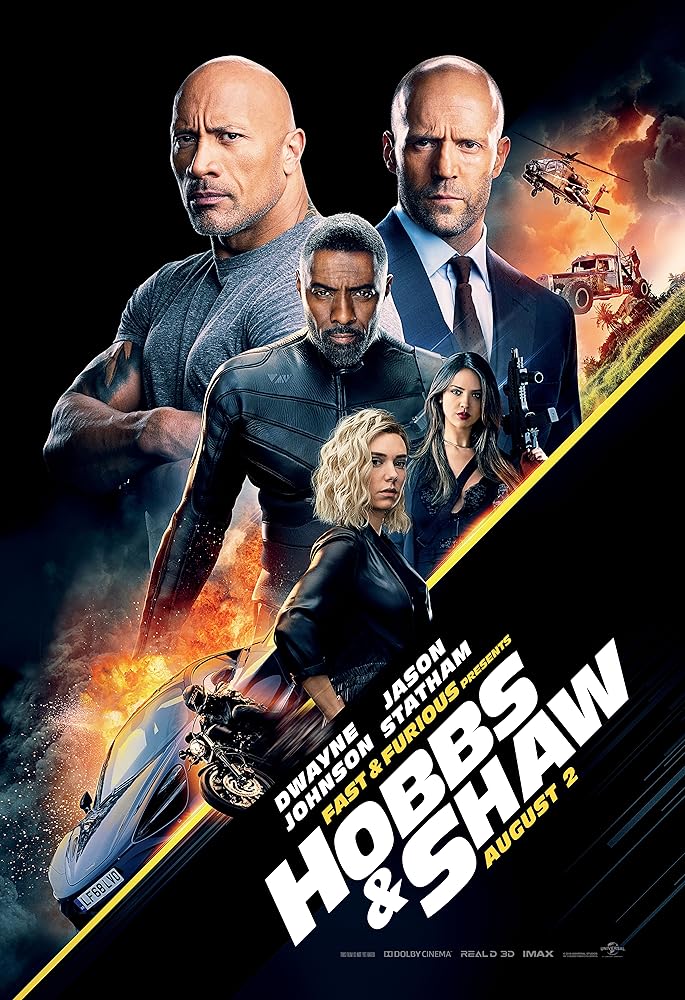
If my previous reviews of this franchise are any indication, I’ve been a consistent fan of the Fast and the Furious franchise, especially since its unexpected resurgence in 2011. Many will agree that one of the key factors to this was the introduction of Dwayne Johnson to the franchise’s ensemble cast as the no-nonsense DSS agent Luke Hobbs. And thanks to the introduction of Jason Statham’s imposing villain turned controversial anti-hero Deckard Shaw in Furious 7, Johnson soon found himself an excellent co-star to share the screen with, leading to the franchise’s first official spin-off, Hobbs and Shaw. Under the solid direction of David Leitch, who’s quickly becoming one of the best action directors in the business, Hobbs and Shaw continues to provide fans of the franchise with everything that it’s known for, especially when it comes to its trademark action sequences that constantly defy all logic. In fact, this film manages to take the series’ already ludicrous plots to a whole new level by introducing a sinister organization known as Eteon that’s represented by Brixton Lore (Idris Elba), a cybernetically-enhanced super-soldier who literally refers to himself as ‘Black Superman’. Although to be fair, it’s been a perpetual running gag at this point about how many predict that this series will probably go to space someday, so it’s arguably not that surprising that this spin-off is practically a superhero film. Nevertheless, Johnson and Statham once again prove why they’ve been such a dynamic duo in these films and are then backed by an equally strong female lead in Vanessa Kirby’s Hattie Shaw, Deckard’s sister. The film even does a better job than most of the other Fast and Furious films when it comes to conveying the franchise’s long-running theme of the importance of family. In short, yes, this is as mindless of an action blockbuster as you can get at this point, but when it comes to the behemoth of a franchise that it stems from, it goes without saying that you should already know exactly what you’re going to get going into it.
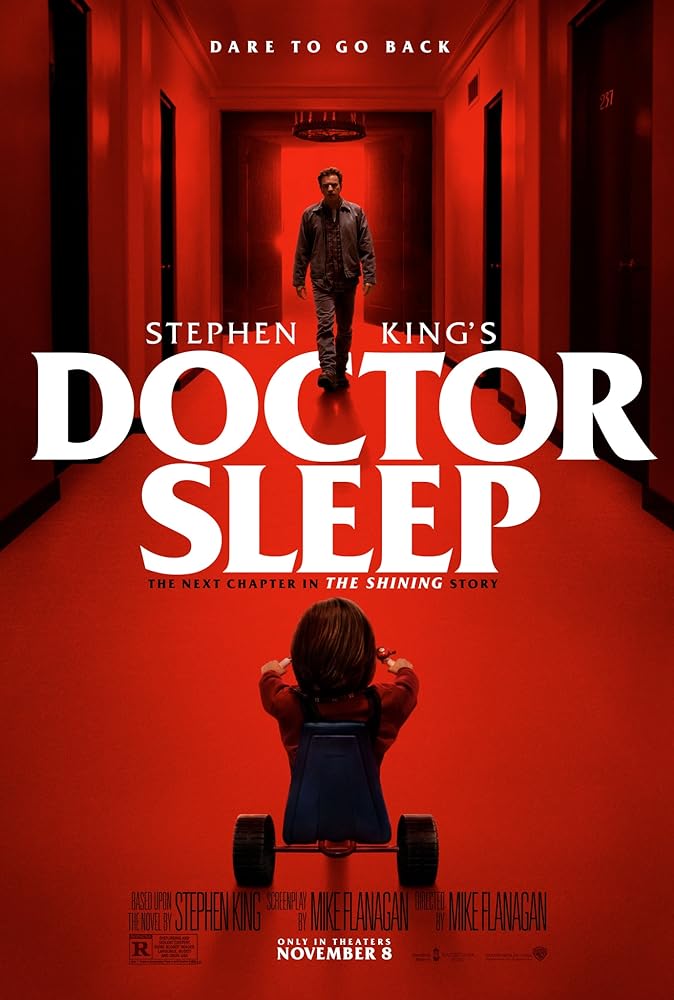
The first of two Stephen King adaptations that will be making an appearance on this list, Doctor Sleep is a follow-up to King’s 1977 classic The Shining. However, director Mike Flanagan’s adaptation is a film that respects both the novel that precedes its source material and director Stanley Kubrick’s 1980 film adaptation of it, which still stands as one of the most iconic horror films of all-time despite being one of King’s most despised adaptations of his work. While the imagery that Flanagan relies on obviously stems from Kubrick’s film, he goes about this story of a now grown-up Danny Torrance overcoming the trauma of his time spent at the Overlook Hotel with the kind of emotional poignancy that King is known for. This extends all the way to the film’s finale, which notably deviates from King’s 2013 novel and instead opts for an ending that honors his version of The Shining. Whereas Kubrick’s film concluded with Jack Torrance freezing to death in the snow, King’s version ends with him sacrificing himself to destroy the Overlook. Thus, in this film, Dan ends up taking his father’s place when it comes to the task of ensuring that the horrors of the Overlook will never harm anyone again, even if it comes at the cost of his own life. And while the film’s finale somewhat devolves into one Shining callback after another (e.g. The Grady Twins, the bloody elevator, etc.), Flanagan’s direction is phenomenal throughout and Ewan McGregor is fantastic in the role of Dan Torrance. He’s then backed by an equally terrific pair of performances from newcomer Kyliegh Curran as young ‘Shining’ prodigy Abra and Rebecca Ferguson as the film’s sinister antagonist, Rose the Hat. Because of all this, Doctor Sleep is another prime example of why the horror genre has been in a state of resurgence these past few years thanks to incredibly well-made films such as this one.
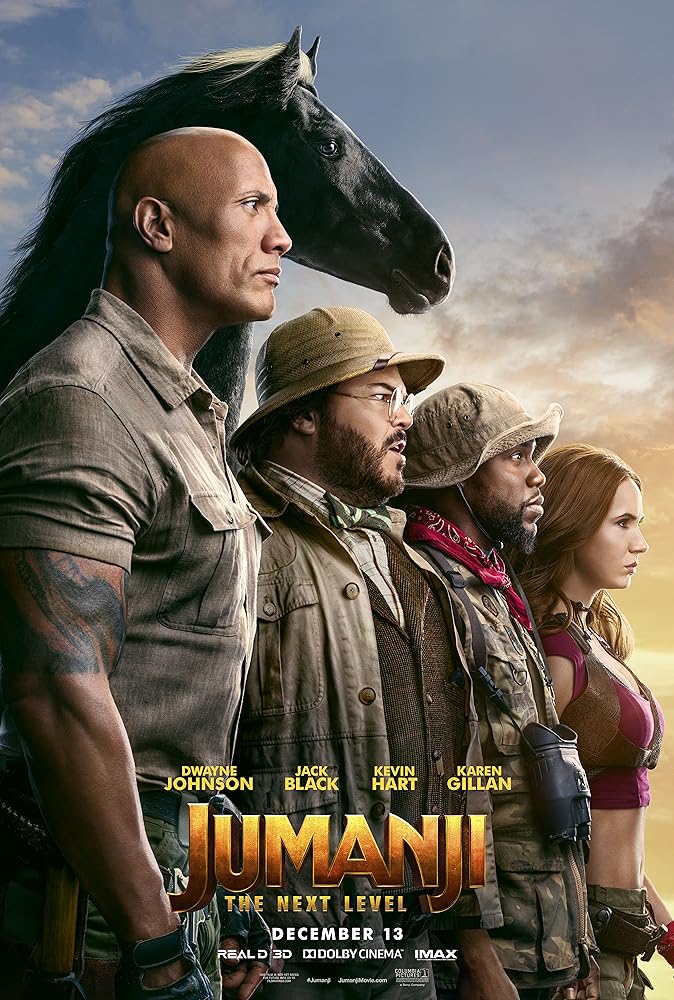
If there’s one major advantage that Jumanji: The Next Level has over its predecessor, 2017’s Jumanji: Welcome to the Jungle, it’s that it doesn’t have to deal with any of the awkward bits of set-up that came from that film. The early sequences of Welcome to the Jungle before the main characters were sucked into Jumanji were the weaker parts of that film due to their generally flat humor and the fact that the lead quartet of Spencer, Martha, Fridge, and Bethany hadn’t yet gotten the solid character development that they would come across while trapped in the game. Thus, since The Next Level does continue from where its predecessor left off, the main protagonists are a much more likable group this time around and the early scenes before they head back into Jumanji flow a lot better because of this. But, of course, the biggest highlight of these new Jumanji films is getting to see Dwayne Johnson, Jack Black, Kevin Hart, and Karen Gillan taking on the personalities of those who inhabit their in-game avatars. And because the addition of new characters and the somewhat glitched status of the game means that they occasionally switch avatars, these four get to partake in some fun body swaps along the way. Highlights include the spot-on impressions of Danny DeVito from both Johnson and new addition Awkwafina as thief Ming Lightfoot and Fridge fully relishing in the chance to play as Gillan’s dance-fighting commando Ruby Roundhouse. And while The Next Level does admittedly rehash almost the exact same plot as its predecessor (right down to having a practically non-existent villain), it’s still a highly entertaining watch thanks to the phenomenal camaraderie of its main leads, top-notch humor, and excellent action sequences. Thus, I will argue that the third installment of this blossoming franchise is its best installment yet.

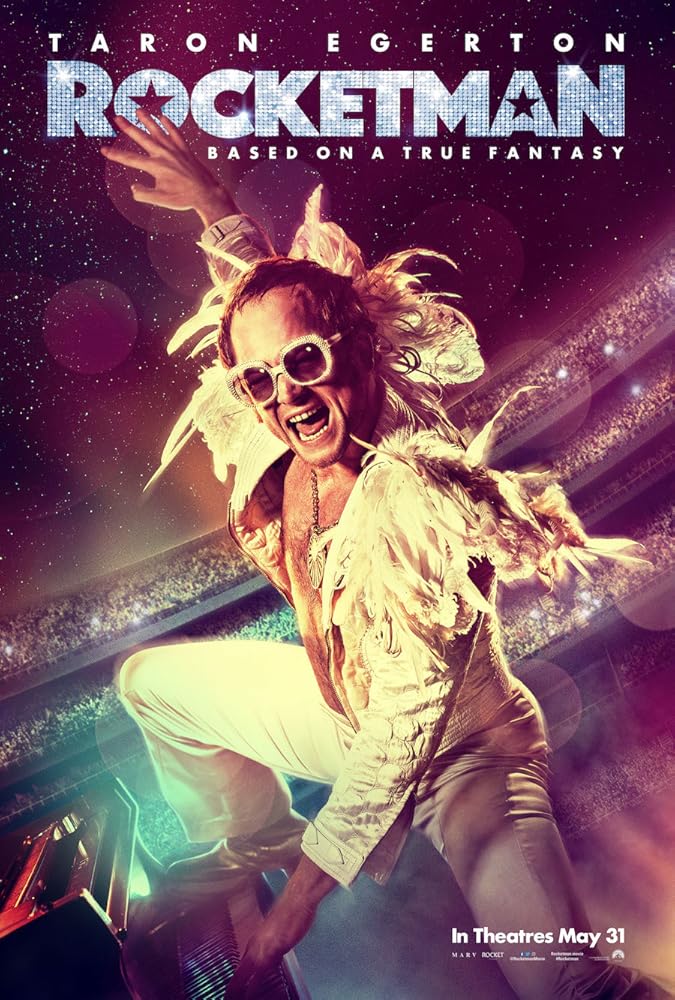
As Youtuber Patrick (H) Willems points out in his video ‘The Broken Formula of Music Biopics’, the musical biopic genre often abides by the same narrative tropes, from montages of an artist’s success that don’t really delve into their creative process to their subject’s struggles with a drug addiction. And while the Elton John biopic Rocketman does delve into some of those familiar tropes, director Dexter Fletcher manages to make the most out of them. For starters, John’s lesser moments are emphasized just as much as his career’s many highlights, right down to the opening sequence where he goes into rehab and admits every single one of his addictions from drugs to his shopaholic tendencies. The film also covers his struggles with his identity as a gay man much better than 2018’s Freddie Mercury/Queen biopic Bohemian Rhapsody, allowing us to truly sympathize with him when things get rough (e.g. him trying to tell his mother, who admits that she already knew and suggests that he’s setting himself up for a lonely life). This helps to make the film’s ending where he finally begins to get his life back on track incredibly satisfying and can best be summed up by the fully cathartic moment where he sees a vision of his younger self who promptly asks, “When are you going to hug me?”. And through it all, Taron Egerton is utterly phenomenal in the title role as he perfectly conveys all that emotional depth while also delivering amazing covers of John’s iconic songs. Because of all this, Rocketman is easily one of the best films to come from the musical biopic genre thanks to its strong visual style that perfectly matches the extravagant stage presence of the one and only Elton John and a highly reverent take on everything that he went through to become one of the all-time greats.

This is notably the first instance where a John Wick film has appeared on this annual list. I didn’t see the first John Wick in theaters back in 2014 and while I did see its 2017 follow-up Chapter 2 in theaters, it just missed out on making my Honorable Mentions for that year’s list. That’s not the case with Chapter 3 – Parabellum, however, and I’m damn glad that I can finally devote a section of these lists to one of the best action franchises there is. Even at three films in, the John Wick films haven’t even remotely lost a beat when it comes to their amazing action sequences as director Chad Stahelski once again ensures that they’re all incredibly well-shot and brilliantly choreographed. Keanu Reeves is phenomenal as always in the title role while being backed by a great ensemble cast made up of series regulars like Ian McShane and Lance Reddick and newcomers like Halle Berry and Mark Dacascos. And while Chapter 3 may be a tad bit overlong for what is arguably the simplest plot of this series so far, with John Wick on the run from practically every member of the assassin underworld, that same sense of simplicity has also been a key factor to this series’ success. In fact, one of the things that impresses me the most about the John Wick films is how each installment naturally continues the story of the legendary Baba Yaga, with the second and third films continuing right where their immediate predecessors left off. And while I’m sure that I wasn’t the only one who initially thought that Parabellum was being set up to be the finale to this ‘trilogy’, the film ends on yet another exciting cliffhanger as John and the Bowery King prepare for war against the High Table. Sure enough, John Wick: Chapter 4 is now in the works for a 2021 release, and if it’s anything like the three films that came before it, don’t be surprised if it ends up landing a key spot on that year’s ‘Best of’ list.

It’s really saying something about the current state of film fandom when Captain Marvel, the first female-led installment of the MCU, somehow became one of its most controversial installments for reasons that didn’t even have anything to do with the film itself. Instead, this all started when lead actress Brie Larson made some completely innocuous comments about the need for a more diversified collection of reporters and film critics. For some reason, the same misogynistic man-babies who got mad at Star Wars: The Last Jedi interpreted these comments as sexist, prompting a lot of that clickbait garbage that I mentioned back in the intro. Thankfully, though, this ultimately meant nothing in the long run as the film became the 7th installment of the MCU to gross $1 billion worldwide, and rightfully so. Now to start things off, I will openly admit that while I do genuinely love this film, I don’t consider it to be one of the ‘best’ installments of the MCU. Like the first Ant-Man, it takes a little bit for the film to get going and its big twist in which the faction of Skrulls led by Talos are revealed to be peaceful refugees hiding from the sinister Kree Empire yields mixed results when it comes to its overall execution. On the one hand, it’s a neat idea to have a noble group of Skrulls in contrast to their traditionally villainous portrayals in the comics and Ben Mendelsohn is phenomenal in the role of Talos. However, this twist also ends up severely hindering the real villains of the film, Carol Danvers’ former Kree squad Starforce, since they barely get any screen-time beforehand. Their leader Yon-Rogg (Jude Law) does get a pass, however, since the film properly establishes a teacher-mentor relationship between him and Carol and their final conflict is truly a memorable one. Instead of a more traditional final brawl like we usually see in these films, Yon-Rogg declares that he’s proud of Carol’s personal growth and requests another one of their usual sparring matches… which concludes with Carol promptly knocking him on his ass with just one photon blast, indisputably confirming that she no longer has anything to prove to him.

On that note, Brie Larson does an excellent job in the title role of Carol Danvers AKA Captain Marvel. While I’m aware that some were thrown off by Carol’s overly snarky attitude, I’d argue that it’s very appropriate for a character who’s spent most of her life being told what to do. Because of this, her transformation into the MCU’s newest heroine is one of the most satisfying superhero origin stories in recent memory. Whether it’s the words of encouragement that she gets from her best friend Maria Rambeau or the montage where we see that she always got back up whenever she was knocked down, this is what ultimately provides the film with that trademark emotional poignancy that we’ve fully come to expect from the MCU. And for most of the film, she’s backed excellently by MCU mainstay Samuel L. Jackson in what is easily his most substantial role to date as Nick Fury. Since this film takes place in the mid-’90s before most of the other films in the MCU, Marvel Studios’ impressive de-aging technology is used to its fullest extent to de-age Jackson for an era before Fury became the director of S.H.I.E.L.D. This film even lets us see how Fury lost his left eye by means of arguably the film’s biggest standout, Goose the Cat AKA Goose the Flerken. And yes, I know that some found this reveal to be rather lame (especially given the line in Captain America: The Winter Soldier where Fury remarks that “the last time [he] trusted someone, [he] lost an eye…”), but if you ask me, it’s utterly hilarious (“MOTHERFLERKEN!!!”). In conclusion, like with the whole debacle that arose over Star Wars: The Last Jedi, I know that the faction of trolls who tried to ruin this film’s reputation is just a small part of our current online film fandom. Nevertheless, it’s incredibly frustrating that they continue to be such an infuriating nuisance online, which they once again proved in this instance by making Captain Marvel, through no fault of its own, a source of intense scandal.

And now we officially move on to the Top 12, which begins the same way that it did in 2017 with a horror film. As I’ve made it clear in the past, I’m admittedly not that big a fan of horror films. Despite this, however, these past few years have allowed me to gain a greater appreciation for the genre thanks to both James A. Janisse and Chelsea Rebecca’s YouTube channel Dead Meat and, of course, the many great horror films that have come out over the past few years. This includes our #12 film, which is the latest directorial outing from one of the most exciting new filmmakers in the industry.
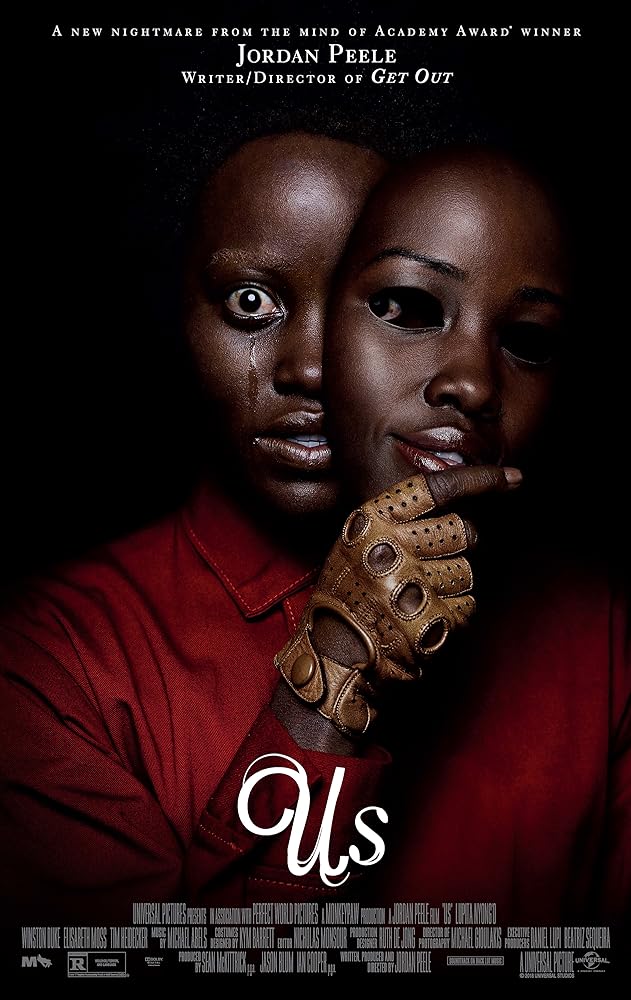
12. US

Lupita Nyong'o in Us (2019)

Us serves as the sophomore directorial effort of the one and only Jordan Peele after his 2017 smash hit Get Out, which went on to win the Oscar that year for Best Original Screenplay. However, I’ll admit that I didn’t go see it in theaters when it came out that March since that was before the point when I truly started to get into the horror genre. Ultimately, though, I did make sure to see it before that year’s Oscars, and like many others, I found it to be one of the best films of 2017. And because of this, I knew that there was no way that I was going to miss seeing Us in theaters because I knew that it would elicit an excellent theater-going experience, which it very much did. One particular moment that I still remember is when an audience member yelled “Get ‘em, M’Baku!”, in reference to lead actor Winston Duke’s breakout role in Black Panther, during the scene where the Wilson family is first attacked by their Tethered doppelgangers. As that moment suggests, Us clearly lived up to Get Out’s status as a premier film to see with a crowd, but when it comes to the films themselves, they couldn’t be any more different. Get Out, of course, was a psychological horror-thriller that focused on the ever so timely topic of modern-day racism. Us, by comparison, is a far more traditional type of horror film but is just as well-layered as Get Out was when it comes to its relevant themes. In this instance, Us revolves around the concept of class discrimination with the film’s main antagonists, the Tethered, being a vastly underprivileged group of clones who have been stuck in underground tunnels for many years after the government put an end to the failed experiment that had spawned them in the first place. As the film’s main antagonist Red later reveals, the Tethered were meant to be a means of controlling those who lived up above, with two different bodies sharing the same soul.

But while Us certainly delivers on the intense horror action that fans of this genre crave, it also gives Jordan Peele a chance to showcase the style of humor that he’s been well-known for his entire career. The Wilson family’s strong camaraderie ends up being the primary source of the film’s best humorous moments, including the big debate that they get into at one point over how many Tethered beings that they’ve killed. But, of course, the biggest aspect of this film is that each cast member plays both their main character and their Tethered doppelganger. It’s a complex undertaking, for sure, but thanks to the strong work from Peele and his crew, any scene where the characters directly share the screen with their Tethered doubles are well put-together and everyone is phenomenal in their dual roles. It’s all headlined by Lupita Nyong’o’s outstanding lead turn as main protagonist Adelaide and the Tethered’s sinister leader Red, which paves the way for one hell of a plot twist following the finale, in which Adelaide heads into the underground tunnels to confront Red after she kidnaps her son Jason. The final fight between these two is easily the best part of the film thanks to everything from the pitch-perfect editing and fight choreography to composer Michael Abels’ chilling use of the song “I Got 5 on It” by Luniz in his score. And after all that she and her family have been through throughout this film, Adelaide finally brings this nightmare to an end by killing Red and rescuing Jason. But as the Wilson family drives away from all the carnage on the Santa Cruz boardwalk, Adelaide then begins to reflect on the first time that she ever crossed paths with Red back in 1986.

When she was a little girl, Adelaide wandered into a deserted funhouse where she came across a girl who looked just like her. As we’re initially led to believe, this incident traumatized Adelaide so much that it left her silent for many years. But at the very end, we see what really happened when Adelaide ran into this doppelganger… who promptly choked her out, dragged her down to the underground tunnels, and took her place up in the real world. Yes, the Adelaide that we’ve been following this whole time was her Tethered while Red was the original Adelaide who had become the de facto leader of the Tethered and orchestrated their whole plot as a means of revenge. It’s a brilliant twist that, upon re-watch, was set up and teased perfectly, whether it’s the fact that Red’s the only Tethered who could speak (albeit in a raspy voice stemming from her injuries) or the various instances where Adelaide makes the same kind of animalistic grunts that the non-speaking Tethered make. It’s also impressive how this twist effectively makes Adelaide and Red both the protagonist and antagonist of their respective situations, with the former managing to become the first Tethered who successfully seized the chance to live a normal life even if it screws over the real Adelaide in the process. With all this in mind, it’s easy to see why Us was yet another Grade-A effort from Jordan Peele, whose sharp attention to detail when it comes to his scripts has yielded two of the most well-written horror films in recent memory.

At Number 11, we have the first animated film on this list with the latest installment of a truly delightful franchise. Sadly, though, it can also be described as a prime example of a film that, upon its release, was criminally overlooked for reasons that I find highly questionable.
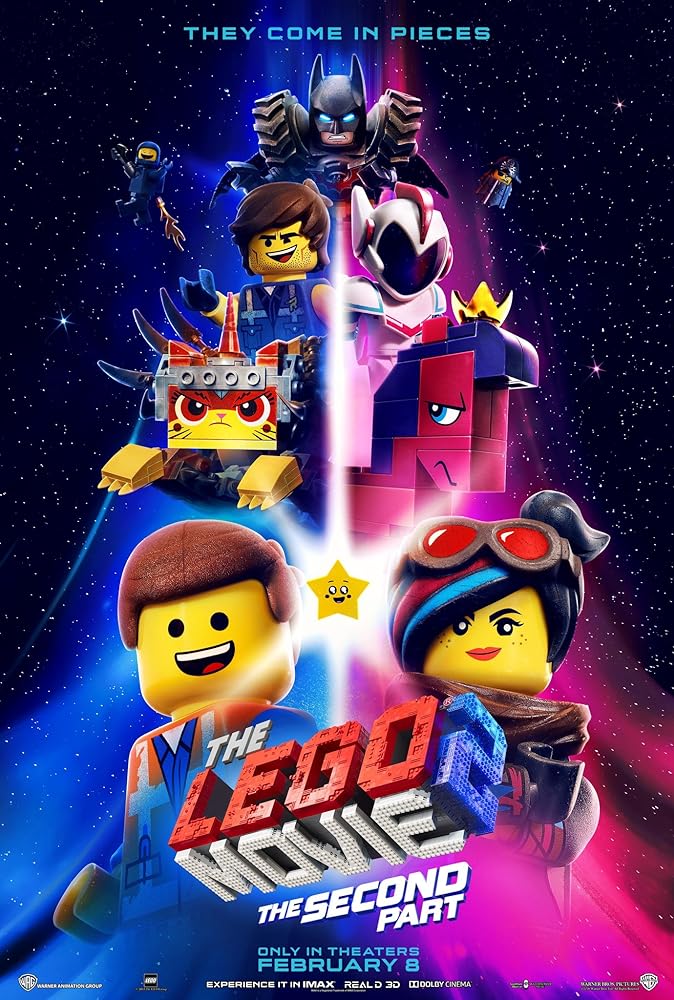
In 2014, Phil Lord and Chris Miller took a project that many figured would be nothing but a cynical cash-grab and turned it into a beautifully animated film that was both effortlessly funny and wholly heartwarming. That film was The LEGO Movie, which was the first official theatrically released film based on the beloved line of plastic construction toys. Three years later, the film got a spin-off centered on one of its most popular characters, Will Arnett’s LEGO Batman. And while The LEGO Batman Movie was far more humor-oriented (complete with an endless array of nods to practically every facet of the Dark Knight’s extensive lore), it still delivered the strong emotional poignancy that helped make its predecessor the masterpiece that it was. But that wasn’t the only LEGO film of 2017 as there was also The LEGO Ninjago Movie, an adaptation of the company’s widely popular Ninjago line. However, this one did not do as well with critics and audiences compared to the previous two films, and yet, while I’ll admit that I didn’t see it in theaters, I did end up liking it when I eventually saw it on digital. Granted, I wouldn’t call it the ‘best-written’ of these recent LEGO films, but it still had the series’ trademark sense of humor and the main plot of a son trying to reconnect with his father (who just so happens to be an evil warlord) paved the way for some hard-hitting emotional moments. But now we’ve finally returned to the side of the franchise that started it all with The LEGO Movie 2: The Second Part, and while Lord and Miller weren’t the directors this time around, they were still heavily involved with the production as its producers and primary screenwriters.

The LEGO Movie 2 does an excellent job continuing the story of the LEGO universe as envisioned by a young boy named Finn who, at the end of the previous film, was told that his younger sister Bianca would soon be joining in on his playtime. Thus, in the LEGO world, invaders from the planet Duplo arrive and terrorize the city of Bricksburg, effectively turning it into a Mad Max-style post-apocalyptic wasteland, Apocalypseburg. And if that wasn’t enough, the main characters soon find themselves kidnapped by General Sweet Mayhem on behalf of Queen Watevra Wa’Nabi of the Systar System, prompting Emmet to try and rescue them with the help of ‘galaxy defending, archeologist, cowboy, and raptor trainer’ Rex Dangervest. However, as Emmet and his girlfriend Lucy/Wyldstyle soon discover, the residents of the Systar System only want to establish a peaceful relationship with them (which is reflected in the real world by Bianca’s attempts to spend time with her brother) even if they weren’t exactly good at illustrating their peaceful intentions. Instead, it’s revealed that Rex is trying to cause the destruction of both their universes AKA ‘Armamageddon’, which is represented by Finn and Bianca’s mother reprimanding the two for their squabbling and forcing them to put away their toys. Rex is then revealed to be a future version of Emmet who became a cynical shell of his former self after being abandoned for years and vowed to change all that via a time travel machine made out of the DeLorean, Bill and Ted’s phone booth, the TARDIS, H.G. Wells’ Time Machine, “Whatever Skynet’s been using”, and the hot tub from Hot Tub Time Machine.

There’s a lot to unpack from all this, but the key thing to take from it is how Lord, Miller and director Mike Mitchell manage to craft a story that provides some nice contrast to what we saw from the original film. Specifically, they challenge the notion that people might’ve gotten from the first film’s catchy anthem ‘Everything is Awesome’ by showing that ‘Everything’s Not Awesome’ but that’s okay because it’s better to stick together through thick and thin. In other words, whereas the first film primarily served as a celebration of creativity, the second film honors the importance of togetherness in the face of toxic attitudes like the one that Rex maintains throughout the film. And through it all, The LEGO Movie 2 maintains everything that we’ve come to expect from this franchise. It boasts amazing animation that deftly honors the stop-motion animation style that has defined numerous LEGO fan films and the franchise’s trademark sense of humor continues to be strong throughout, whether it’s thanks to the cavalcade of fourth wall jokes or the film’s hilarious musical numbers. Yes, The LEGO Movie 2 features a full soundtrack of original songs from comedian/songwriter Jon Lajoie and they’re all excellent. There’s Queen Watevra Wa’Nabi’s opening number ‘Not Evil’, where she assures the gang that she’s totally not an evil queen despite the ‘super evil’ vibes that she’s giving off. She also headlines a hilarious duet with Batman, ‘Gotham City Guys’, where she tricks him into proposing to her by acting like she prefers guys like his long-time rival Superman, complete with references to every single live-action incarnation of Batman up to that point. And just like the first film, there’s a fully intentional earworm of a song that’s meant to rival ‘Everything is Awesome’ appropriately titled ‘Catchy Song’… and yes, it does indeed live up to that reputation by easily being a song that’s “going to get stuck inside your heaaaaaaaaaaaaaaaaaad!”

Any way you look at it, The LEGO Movie 2 is another masterpiece from this awesome franchise… so it’s sad, then, to know that it just didn’t do too well at the box-office. To be clear, the film did solidly with critics even if a lot of them felt that ‘it wasn’t as fresh as the first film’ which, as some of you might recall, is a recently trending bit of film criticism that I’m not a fan of. Simply put, just say that it’s not as good as its predecessor; don’t ding it just because it’s a sequel. Anyway, upon its release, the film barely managed to do better than The LEGO Ninjago Movie financially as it only grossed around $191 million worldwide, which is a far cry from what the original LEGO Movie and The LEGO Batman Movie pulled off several years prior. Many have attributed this to the idea of ‘franchise fatigue’… which, I won’t lie, kind of rubs me the wrong way because I really don’t see why this would be such a big deal in this instance. Superhero fatigue? Yes, it’s a concept that’s the absolute bane of my existence, but as much as I hate to say it, it’s a reasonable possibility given how prevalent the superhero genre has been this past decade. Star Wars fatigue? Again, I don’t buy it since it’s not like the recent films have flooded the market or anything, but given that Star Wars is quite arguably the biggest franchise there is, it’s perfectly understandable if some folks have found themselves overwhelmed by the yearly release schedule that they’ve been on recently. By comparison, there have only been four of these recent LEGO films since 2014, and apart from LEGO Batman and LEGO Ninjago both coming out in 2017, they’ve all been released a few years apart from each other.  

And if that wasn’t enough, this film’s overall underperformance effectively made it the last entry in the series to be produced by Warner Bros., who would end up relinquishing their distribution rights several months later. At this time, future LEGO films will be made by Universal, and while I’m sure that they will be just as great as the ones that we’ve gotten, I have the feeling that a major series overhaul is about to happen because of all this. Sure, there’s a second LEGO Batman film that’s reportedly in the works, but since Warner Bros. is behind all the big DC Comics projects on both the big and small screen, this could potentially end up being a bit of a problem from a legal perspective. There’s also that Billion Brick Race project that’s been in development for years now, but at this point, who even knows if that’s still a thing? At the very least, there may be a chance that Phil Lord and Chris Miller might still be involved with the franchise since they recently agreed to a production deal with Universal. Nevertheless, it’s completely unclear right now what’s going to happen to this franchise going forward. Now with all this said, I recognize that it’s necessary, sometimes, for certain franchises to take a break when they start to suffer from diminishing returns. Simply put, it’s a natural consequence of an always-evolving industry. But at the end of the day, I just don’t understand why the LEGO Movie franchise deserved such a tragic fate when there literally wasn’t anything wrong with it. Case in point, The LEGO Movie 2 is endearing to a fault and so well-written that it fully succeeds at being both a light-hearted comedy and a timely parable of optimism.

To start off this year’s Top 10, we have, admittedly, the only entry on this list that scored a Best Picture nomination at this year’s Oscars. And yet, it’s easy to see why given how this film more than delivers when it comes to its pure, kinetic thrills.

There’s a lot to love about director James Mangold’s dramatization of the long-standing feud between two of the most famous car manufacturers in the industry, specifically focusing on Ford’s historic victory at the 24 Hours of Le Mans race in 1966 that promptly brought an end to Ferrari’s six-year winning streak there. Thanks to Mangold’s excellent direction, the film boasts amazing racing sequences that are made even better by the fact that they were all done practically. However, the film also benefits greatly from strong pacing and editing, meaning that even with a hefty two-and-a-half-hour runtime, there’s never a dull moment. A lot of this is thanks to how the film effectively manages to be a thoroughly engaging ‘David and Goliath’ story on two different fronts. While it is primarily focused on Ford’s efforts to beat Ferrari at its own game, it’s also very much about the two men who made it all happen, car designer/engineer Carroll Shelby and driver Ken Miles. These two men weren’t exactly in line with Ford’s squeaky-clean image (as seen by their many conflicts with Ford VP Leo Beebe that usually revolve around the decision to have Miles be one of their drivers at Le Mans), but they knew that the only way to beat Ferrari was to challenge that status quo. Their excellent camaraderie is on full display throughout, especially thanks to Matt Damon and Christian Bale’s outstanding turns as Shelby and Miles, respectively. Shelby’s dignified Southern charm and Miles’ brash British attitude provide an all-around fun dynamic that promptly builds to a finale that manages to go down a few routes that a lot of other films in its genre wouldn’t normally go.

Given that this is a film based on a true story, it goes without saying that the film ends exactly the way you’d think going in by showing Ford finally beating Ferrari at Le Mans. And yet, it’s not exactly a ‘happy ending’ because while Miles dominates most of the race, he’s pressured by the Ford higher-ups to slow down so that the other two Ford drivers can catch up to him and they can cross the finish line together. While this decision clearly angers our two main protagonists, Miles does end up managing to be a team player in this instance and eases up on his lead so that Ford can have their picture-perfect moment… which then results in one of the other Ford drivers being named the winner of the race on a technicality. Undeterred, Miles and Shelby begin to prepare for next year’s race… but this ends in tragedy when Miles is killed in a fiery car crash during a test drive. In another biopic, a moment like this would’ve been relegated to the closing bits of text that pop up on-screen before the credits. But in this case, the film continues from that moment, ultimately concluding with Shelby visiting Miles’ widow Mollie and her son Peter (who was there when his father died, making Miles’ death even more tragic) and giving the latter the wrench that Miles threw at him before the race seen at the beginning of the film. This final moment truly illustrates how James Mangold managed to find the emotionally poignant human element in this iconic focal point in the history of auto racing. And because of this, Ford v Ferrari manages to find that perfect balance between being a well-made drama that managed to attract some major attention at the Oscars this year and a highly-entertaining crowd-pleaser that doesn’t require a background in automobile racing to appreciate such an incredible film.

And that concludes Part 1 of Rhode Island Movie Corner’s Top 12 Favorite Films of 2019. Thanks for following along and be sure to check back in tomorrow for Part 2, where I’ll be delving into films #9-7.

Tuesday, September 17, 2019

Favorite Films of Summer 2019 - As Voted By You!


While this isn’t the fifth installment of Rhode Island Movie Corner’s annual End of Summer Fan Poll, it has officially been five years since I started doing this event back in 2014. Aside from it being a unique little project to do for this site, one of the main reasons why I do this every year is because it provides a positive outlook on the various films that came out during the summer, which isn’t always easy to come by online. Now with that said, I’m well aware that this summer was a rather rough one from a financial perspective for several films, especially if they weren’t a superhero film or Disney release. Ultimately, though, this poll is intended to combat the increasingly negative attitudes of modern film fandom (which, believe me, are only getting worse…) by showing love to any film that gets a vote in it regardless of its overall quality. And I must say… this was one hell of a year for this little Fan Poll of ours. Thanks to your contributions, we managed to set a record when it comes to responses with 89 (!) votes going to 17 different films, a tally that far surpasses the previous record of 60 votes that was set by the 2017 edition of this poll. Thus, as always, I want to express nothing but thanks to everyone who voted and those who helped spread the poll around. And now, with all that out of the way, it’s time to delve into this year’s big winners. Without further ado, these are the most popular films from the Summer of 2019 as voted by you lovely folks, the readers…

THE FOLLOWING 4 FILMS EARNED ONE VOTE APIECE

POKEMON: DETECTIVE PIKACHU

Ryan Reynolds, Kathryn Newton, and Justice Smith in Pokémon Detective Pikachu (2019)

After years and years of disastrous adaptations that have left many fans disappointed, the genre of live-action films based on video games finally experienced its first genuine success story this year with Pokémon: Detective Pikachu. And as I’ve said plenty of times before, it managed to do so by simply being a solidly faithful adaptation of its source material, which isn’t always something that films from this genre tend to do. Now, of course, just like the various animated Pokémon films that have come out over the years, this film is still primarily geared towards fans of the franchise thanks in large part to the numerous references that it makes to practically every facet of the Pokémon universe. However, those who aren’t as familiar with the series will still find this to a very enjoyable film since it maintains a strong emotional hook throughout via main protagonist Tim Goodman’s quest to discover what happened to his missing father. It also helps that the film is headlined by the excellent lead duo of Justice Smith in the role of Tim and Ryan Reynolds as the voice of the titular ‘Detective Pikachu’, as their excellent camaraderie manages to make up for the generally predictable nature of the film’s mystery plot. And because of this, Pokémon: Detective Pikachu is well-worth the distinction of being the first truly great live-action film based on a video game. Plus, if the other live-action Pokémon films that are currently in development end up being just as solid as Detective Pikachu (including an adaptation of Pokémon Red/Blue and a Mewtwo film), then a promising new film franchise has been born.       

THE SECRET LIFE OF PETS 2

Patton Oswalt in The Secret Life of Pets 2 (2019)

In 2016, Illumination released the first installment of their next big attempt at a major IP after Despicable Me, The Secret Life of Pets. Upon its release, the film was a massive hit at the box-office as it grossed over $875 million worldwide, effectively paving the way for a sequel in 2019. Like the first film, Secret Life of Pets 2 follows a bunch of pets and the various escapades that they get into when their owners aren’t around, primarily focusing on a Jack Russell Terrier named Max as he attempts to adjust to the newest addition to his owner Katie’s family, her infant son Liam. Most of the main cast from the first film returned to reprise their respective roles save for Max, with Patton Oswalt taking over the role from Louis C.K. for… obvious reasons. Meanwhile, newcomers to the cast included Tiffany Haddish as a Shih Tzu named Daisy and Harrison Ford as a sheepdog named Rooster. But despite these new additions and the same generally decent reviews as its predecessor, Secret Life of Pets 2 surprisingly underperformed at the box-office, only grossing over $425 million worldwide. Granted, it wasn’t necessarily a flop since it had a modest budget of $80 million, but it was still less than half of what the first film managed to pull off. One could say that this was simply a case of diminishing returns, especially for a series that isn’t exactly as popular as other animated franchises including Illumination’s own Despicable Me franchise. Still, for what it’s worth, based on what I’ve witnessed since I started working at the Universal Orlando Resort (where we regularly sell Secret Life of Pets merchandise), it does seem like younger audiences are still very enthusiastic about these films.

YESTERDAY

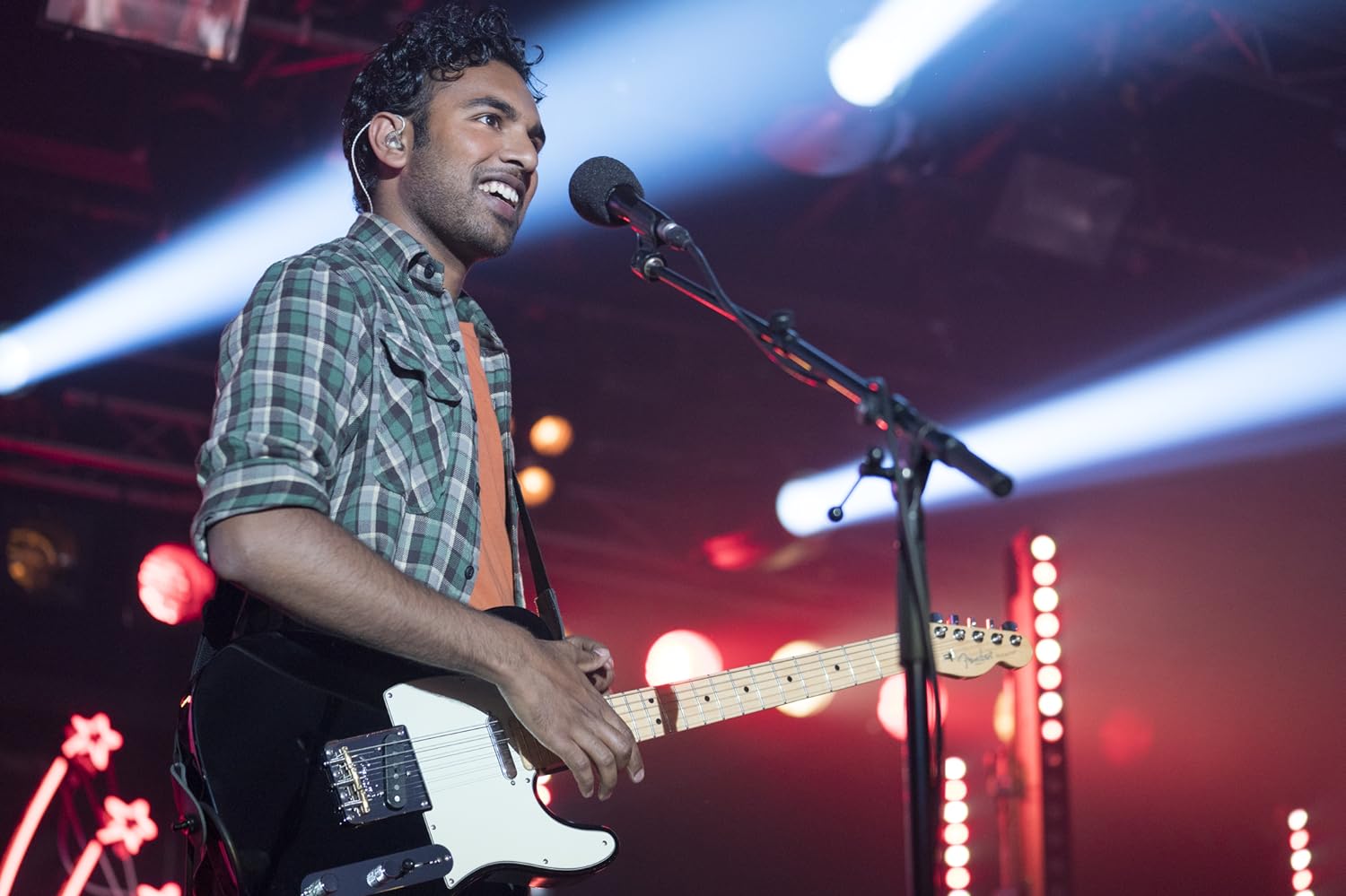
Himesh Patel in Yesterday (2019)

Amidst all this summer’s superhero epics and animated flicks, one little romantic comedy managed to pull off a genuinely solid run at the box-office. The film in question is Yesterday, the latest film from director Danny Boyle that was written by Richard Curtis, who directed the 2003 holiday cult classic Love Actually, and based around the iconic music of the most legendary band of all-time, the Beatles. In the film, newcomer Himesh Patel plays a struggling musician named Jack who finds himself in a peculiar situation after he ends up in a bicycle accident during a mysterious worldwide blackout. When Jack recovers from his injuries, he quickly discovers that he is the only one on Earth who knows who the Beatles are. Thus, he starts to take credit for their songs, effectively allowing him to get signed to a lucrative record deal; at the same time, though, he quickly finds himself having to deal with the pressures of stardom, which begin to take a toll on his relationship with his childhood friend/love interest Ellie (Lily James). Upon its release, Yesterday did generally well with critics, who found the film to be very charming but lamented the fact that it didn’t quite live up to the full potential of its premise. Nevertheless, the film did quite well for itself financially as it maintained a consistent spot in the domestic Top 10 for several weeks on its way to grossing over $134 million worldwide. In other words, audiences found this film to be a highly enjoyable crowd-pleaser that effectively utilized the iconic works of John Lennon, Paul McCartney, Ringo Starr, and George Harrison.   

GOOD BOYS

Brady Noon, Jacob Tremblay, and Keith L. Williams in Good Boys (2019)

In 2007, Seth Rogen and Evan Goldberg had their big breakout hit as a writing duo with the coming-of-age comedy Superbad, effectively paving the way for them becoming two of the most prominent writers/producers of R-rated comedies in recent years. And while they only produced their latest endeavor, Good Boys, it still very much feels like the kind of films that they’re known for. Good Boys serves as the directorial debut of Gene Stupnitsky, who spent several years writing multiple episodes of The Office with his writing partner Lee Eisenberg. In the film, Jacob Tremblay, Keith L. Williams and Brady Noon star as a trio of best friends in the sixth grade who are hoping to learn how to kiss in time for their first middle-school party. Their efforts to do so end up leading them on a wild journey that sees them getting into all sorts of hi-jinx, including trying to recover a valuable drone from their neighbors and accidentally coming into possession of drugs, among other things. After making its debut at this year’s SXSW Film Festival back in March, Good Boys officially hit theaters in the middle of August to generally solid reviews. Critics felt that the film was a solid comedic romp that, while perhaps a bit too raunchy at times, still managed to have a good heart to it. The film has also done quite well at the box-office having currently grossed over $91 million worldwide on a $20 million budget. In fact, its $21 million opening weekend proved to be quite a big deal as it became the first R-rated comedy since The Boss back in 2016 to open at #1 domestically, thus making it another big win for producers Seth Rogen and Evan Goldberg and their production company Point Grey Pictures.

5 FILMS EARNED TWO VOTES

THE INTRUDER

Dennis Quaid in The Intruder (2019)

One interesting thing to note about The Intruder is that it originally wasn’t meant to be a summer release as it was initially set to come out on April 26th. However, since a certain blockbuster ended up following the same route as its immediate predecessor from the year before by coming out a week earlier than its initial release date (and yes, like last year, that doesn’t disqualify it from this poll), that presented a bit of a complication. After all, it’s practically common knowledge at this point that you don’t try to compete against films from that franchise during their opening weekends. Thus, The Intruder was moved a week back to take the now open May 3rd slot, and while that other blockbuster ultimately retained its spot at #1 that weekend, it managed to place second with an $11 million opening weekend on route to a respectable $36.5 million worldwide gross, which was quite good for a film whose budget was under $10 million. However, the film itself, which follows a couple played by Michael Ealy and Meagan Good who find themselves terrorized by the previous owner of their new house, didn’t fare as well with critics. Simply put, most found the plot to be mediocre and, at worst, laughably absurd. If anything, though, many agreed that the best part of the film was Dennis Quaid’s delightfully over-the-top performance as the crazy ex-homeowner. Thus, while critics may have found The Intruder to be one of the prime examples of a forgettable summer release, the fact that it got two votes here means that some people out there found it to be a decent little popcorn flick. 
   
A DOG’S JOURNEY

Kathryn Prescott in A Dog's Journey (2019)

(Huh, look at that, two Dennis Quaid films in a row…)

Back in January 2017, a film adaptation of author W. Bruce Cameron’s 2010 novel A Dog’s Purpose was released in theaters. Like the book, the film focused on a dog named Bailey (voiced by Josh Gad) who embarked on a fascinating journey where he kept being reincarnated as other dogs while still maintaining the memories of his past lives and his former owners. While the film did about as well as you’d expect from a January release when it came to critics, it did manage to gross over $205 million worldwide despite nearly getting derailed by an animal abuse controversy that, thankfully for the sake of the animals, was ultimately proven to be fabricated. This, of course, then led to the development of a sequel based on Cameron’s 2012 follow-up, A Dog’s Journey. Once again, Josh Gad stars as the voice of Bailey as he continues his adventures across various lives while also focusing on his efforts to look after his original owner’s granddaughter. Dennis Quaid also returns as Bailey’s original owner Ethan, though there was a notable change in director. Instead of veteran filmmaker Lasse Hallstrom, directorial duties went to Gail Mancuso, a long-time TV director who’s worked on the likes of Friends, 30 Rock, and Modern Family. Upon its release, A Dog’s Journey fared a little better with critics this time around with several agreeing that, at the very least, it was a touching little pet drama despite being overly sentimental. And while it didn’t do as well at the box-office compared to its predecessor (although it did do well in China, who’s been touted as the key reason behind the first film’s international success), it still did around $64 million. It was also the second of three major films this year that were based around dogs in which audiences could listen to their inner thoughts. The first was an adaptation of a different W. Bruce Cameron novel, A Dog’s Way Home, which came out in January. The second was a different book-to-film adaptation, The Art of Racing in the Rain, which came out a few months after A Dog’s Journey in August.

BOOKSMART

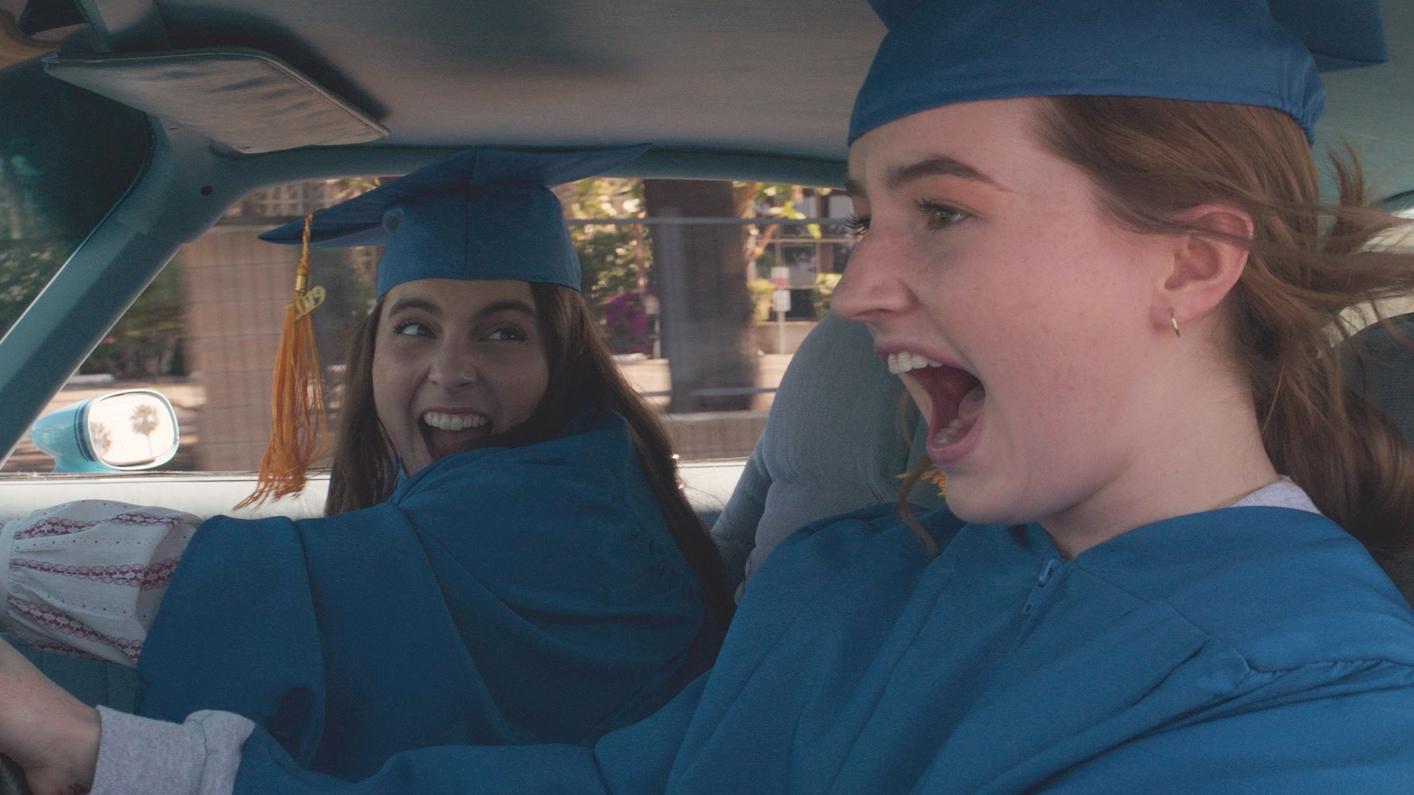
Beanie Feldstein and Kaitlyn Dever in Booksmart (2019)

Currently being touted as one of the best films of the year, Booksmart served as the directorial debut of actress Olivia Wilde and is clearly on its way to becoming the latest coming-of-age comedy classic. The film stars Kaitlyn Dever and Beanie Feldstein as best friends Amy and Molly, who are about to graduate from high school. However, when they realize that they probably spent way too much time being Grade-A students instead of having fun like the rest of their classmates, the two decide to finally partake in one night of unabashed partying. As noted earlier, this film proved to be quite a big deal after it debuted at SXSW. Critics deemed it as an absolute comedic riot with excellent performances from Dever and Feldstein in the lead roles and a break-out turn by Billie Lourd as Amy and Molly’s unpredictable classmate Gigi. However, upon its theatrical release in May, the conversation then began to shift into how it wasn’t exactly a hit at the box-office. To be clear, it genuinely did okay for itself on a modest $6 million budget, ultimately grossing around $26 million. However, many industry experts felt that the film was considerably undermined by the fact that it didn’t opt for a limited release before it expanded into a wide release a la 2017’s Best Picture nominee Lady Bird. Instead, it went straight for the wide release during a time of multiple big-name blockbusters, including two that ended up doing at least $1 billion. And yet, for what it’s worth, Booksmart is still one of the best-reviewed films of 2019 and will most likely get some major attention during this year’s awards season.  

SPIDER-MAN: FAR FROM HOME

Tom Holland in Spider-Man: Far from Home (2019)

So… our boy Spidey has been in quite a major pickle recently, hasn’t he? I won’t get into specifics here, but in case you haven’t heard, the deal between Marvel Studios and Sony that allowed Spider-Man to join the MCU has officially stalled. This means that, until further notice, all future Spider-Man films will be made solely by Sony and, unfortunately, everyone’s favorite web-slinger will not be appearing in a future MCU film anytime soon. However, like I said before, that’s the most that I’ll say about this predicament, for now, other than the fact that I’m just hoping Disney and Sony will eventually work something out. If anything, Spider-Man: Far From Home isn’t a bad one to end on when it comes to Spider-Man’s tenure in the MCU (though, hopefully not in a permanent sense) since it’s easily one of the best Spider-Man films to date. As the first MCU film to come out after Avengers: Endgame, it perfectly serves its purpose as an epilogue to the Infinity Saga’s grand finale by showing how Peter must now overcome the trauma and guilt that he feels after Tony Stark’s death. What follows is yet another case of a superior MCU sequel with greater action sequences and a tighter script (yes, I’ve seen all the jokes about how Tony Stark trusted his top-of-the-line A.I. system to a high-school student… it isn’t that big of an issue, internet…). It also boasts one of the MCU’s best villains to date in Jake Gyllenhaal’s Quentin Beck AKA Mysterio. Sure, anyone who knows Mysterio’s role in the comics saw this coming a mile away, but the film manages to work around this by giving him a solid new backstory as a disgruntled former Stark Industries employee. It also helps that Jake Gyllenhaal proves to be one of the most pitch-perfect casting choices in the history of the superhero film genre as the slightly disturbed illusionist, and because of all this, Spider-Man: Far From Home has legitimately become one of my Top 5 favorite MCU films to date.

HOBBS AND SHAW

Jason Statham and Dwayne Johnson in Fast & Furious Presents: Hobbs & Shaw (2019)

Many agree that the introduction of Dwayne Johnson as the hard-boiled Diplomatic Security Service agent Luke Hobbs in 2011’s Fast Five was a key factor behind the Fast and Furious franchise’s unexpected resurgence. And now, eight years after his debut, Hobbs has taken on the honor of headlining the franchise’s first big spin-off alongside Jason Statham’s Deckard Shaw, who also became a breakout character for the franchise after starting out as its then-newest villain before rather controversially transitioning into being more of an anti-hero. Together and under the direction of veteran stuntman turned filmmaker David Leitch, Hobbs and Shaw prove to be the best mismatched duo since the days of Martin Riggs and Roger Murtagh from the Lethal Weapon series. Sure, just like the other recent Fast and Furious films, Hobbs and Shaw isn’t afraid to bask in the franchise’s increasingly ludicrous plots to the point where it’s practically a superhero film at this point given that the main antagonist is a genetically enhanced super-soldier. But for fans of the franchise, this film does continue to maintain everything that they love about it from the solid action sequences to the incredibly cheesy but still entertaining comedic banter. And as to be expected, Dwayne Johnson and Jason Statham headline the project excellently while being backed by an equally terrific female lead in Vanessa Kirby’s Hattie Shaw AKA Deckard’s sister. In short, while it’s unclear at the moment how Johnson and Statham’s commitment to this spin-off will affect next year’s Fast and Furious 9 (especially after the scandalous feud between Johnson and Vin Diesel during the production of Fate of the Furious), Hobbs and Shaw is another highly entertaining installment from this all-out beast of a franchise.

THESE NEXT 2 FILMS EARNED FOUR VOTES

JOHN WICK: CHAPTER 3 – PARABELLUM

Keanu Reeves, Yayan Ruhian, and Cecep Arif Rahman in John Wick: Chapter 3 - Parabellum (2019)

John Wick: Chapter 3 – Parabellum was notably the first installment from the John Wick franchise to see a summer release since the first John Wick came out in the fall of 2014 while 2017’s John Wick: Chapter 2 hit theaters in February of that year. As such, it’s easy to see why it did so well in this year’s poll given how John Wick is easily one of the best action franchises around. Every installment of the series is a finely tuned action-thriller with phenomenal direction from Chad Stahelski (who, like his uncredited co-director on the first John Wick, David Leitch, is also a veteran stuntman turned filmmaker) and an outstanding turn from everyone’s favorite ‘breathtaking’ action star Keanu Reeves in the title role. And while a lot of action films these days tend to rely on shaky-cam and quick cuts, the John Wick films instead opt for well-shot and excellently choreographed action sequences that are made even better by the fact that Reeves and his co-stars do almost all their own stunts. As for Chapter 3 – Parabellum, it’s yet another excellent installment of a franchise that has impressively managed to craft a seamless narrative throughout its films where each subsequent installment is directly instigated by the events of its immediate predecessor. And while this one is perhaps a bit too overlong for what is arguably one of the franchise’s simpler plotlines, it’s still an absolute blast to watch and, as you might have guessed, ends on a note that perfectly sets up a fourth film that’s slated for a May 2021 release. Thus, I think it’s safe to assume that if Chapter 4 ends up being just as excellent as the first three films, it’s going to fare quite nicely in the 2021 iteration of our annual poll.  

LATE NIGHT

Emma Thompson and Mindy Kaling in Late Night (2019)

Late Night serves as the feature-length screenwriting debut of Mindy Kaling, who has already amassed a sizable resume as a screenwriter having written several episodes of The Office (which she, of course, also starred in as Kelly Kapoor) and creating her hit show The Mindy Project. In Late Night, she stars as Molly, the newest addition to the writing staff of longtime talk show host Katherine Newbury (played by Emma Thompson). When Katherine learns that she’s potentially getting replaced due to her show’s declining ratings, she starts relying more on Molly’s input (especially since she’s her only female writer) to figure out a way to appeal to a wider audience. When Late Night premiered at the Sundance Film Festival back in January, it quickly became one of the most talked-about releases from this year’s festival slate. It also made Sundance history from a financial standpoint when its U.S. distribution rights were acquired by Amazon Studios for a record-setting $13 million. It ultimately saw a wide release in June, where it did about the same as Booksmart at the box-office with a worldwide gross of around $19.9 million. Just like Booksmart, it wasn’t necessarily a bad outcome for a film with a low budget that was under $10 million, but some did consider its overall performance to be underwhelming given how much money Amazon put up for its distribution rights. Critically, though, the film was very well-received, with many touting it for its sharply written script and an excellent cast. All this certainly helped it become the best performing film in this year’s poll that wasn’t a blockbuster.

In the past, I’ve mentioned that my original hope for this annual poll was to have a ranked list of the most popular films. Ultimately, though, I realized that this would be a rather difficult thing to come by since multiple films can end up having the same number of votes. I did manage to have a Top 5 in 2017, however, and lo and behold, the same situation happened again this year. Thus, without further ado, here are your Top 5 Favorite Films from the Summer of 2019…

TIED FOR FIFTH PLACE WITH SEVEN VOTES EACH

ALADDIN

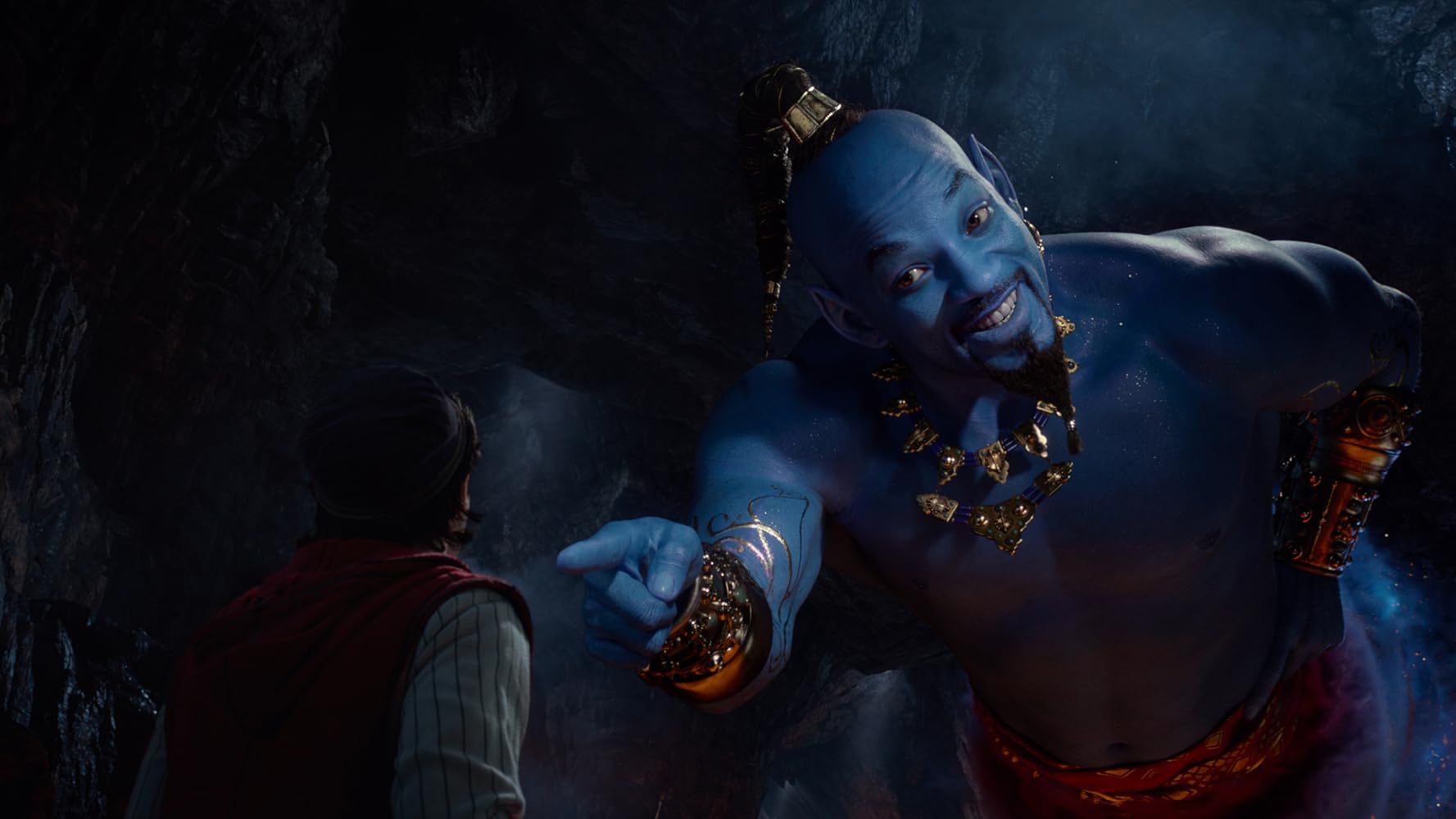
Will Smith and Mena Massoud in Aladdin (2019)

To reiterate what I said a few months back in my annual Midyear Recap, I do consider it a genuinely impressive feat that the live-action remake of Aladdin managed to gross over $1 billion worldwide. Obviously, it was going to do well at the box-office regardless given how well Disney’s other live-action remakes have done these past few years, but at the same time, this was quite arguably the most scrutinized of the bunch to date, especially after the first reveal of Will Smith in Genie’s traditional blue form. And while critics were ultimately mixed on the film when it came out, it clearly did well enough with audiences to prove that, at the very least, it managed to win over some of its biggest critics. It’s also worth noting that the film’s impressively consistent run at the box-office was partially due to some of the various critical/commercial underperformers that came out the first few weeks after its release. Ultimately, though, the key thing to take from this film is that it’s just another example of why these live-action Disney remakes aren’t as big of a deal as some people are making them out to be online. Instead of trying to ‘replace’ the films that they’re based on, they simply serve as enjoyable companion pieces to their classic animated counterparts, and that is very much the case with Aladdin. Obviously, its biggest hurdle was trying to respectfully follow in the footsteps of Robin Williams’ iconic turn as the Genie from the original film, which it manages to pull off thanks to an excellent turn from Will Smith in the role, who’s then backed by equally charismatic performances by Mena Massoud and Naomi Scott as Aladdin and Jasmine. Scott, especially, is a major standout thanks to the great new characterization for Jasmine that allows her to have a far more proactive role in the story. Because of all this, Aladdin was a very fun time to be had at the cinema and a solid new take on Disney’s 1992 animated classic. However, as we’ll soon find out, a different Disney remake basically ended up stealing its thunder.

TOY STORY 4

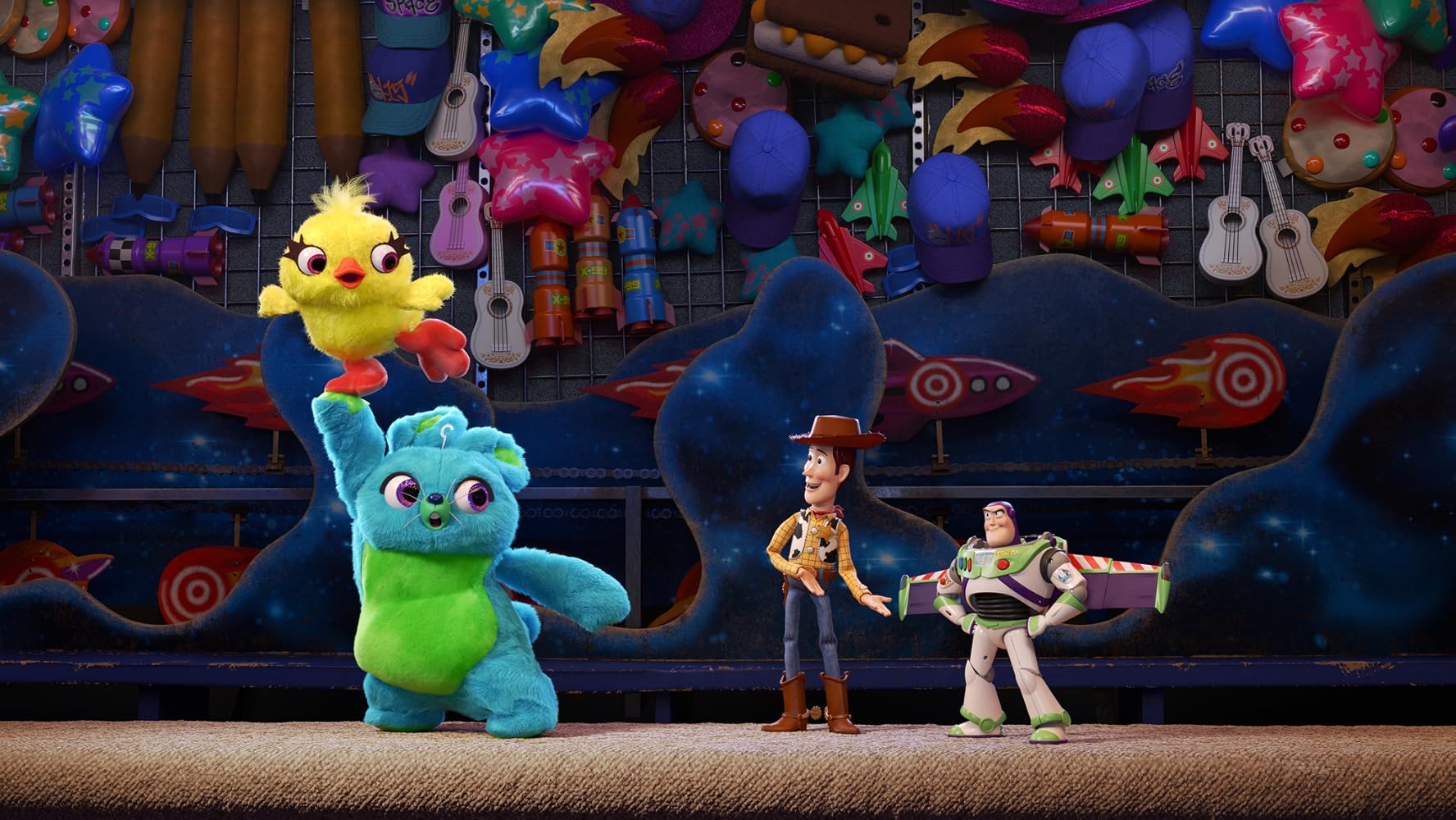
Tom Hanks, Tim Allen, Keegan-Michael Key, and Jordan Peele in Toy Story 4 (2019)

Like Aladdin, there was quite a bit of skepticism surrounding Toy Story 4, although in this case, it was more to do with people feeling that the series had already reached its appropriate conclusion with Toy Story 3 back in 2010. However, Pixar ultimately managed to prove why Toy Story continues to be their studio’s premier franchise as Toy Story 4 is yet another one of their masterpieces. Just like the previous 3 films, Toy Story 4 boasts an excellent script with strong themes that, in this instance, primarily focus on coming to terms with one’s purpose in life. In doing so, the film continues to maintain the franchise’s strong emotional poignancy (right down to an ending that will surely hit hard for Toy Story fans) while still providing them with another fun adventure with its lovable cast of characters. Admittedly, it probably could’ve given the long-time supporting characters of the franchise more to do (which I presume was partially due to the passing of Don Rickles (Mr. Potato Head) in 2017), but great new characters like Tony Hale’s Forky and Keanu Reeves’ Duke Caboom do make up for this, for the most part. Plus, you also have the very welcome return of Bo Peep after she was absent from the third film in what is easily her most substantial role to date in these films. In short, Toy Story 4 is certainly another example of how the internet tends to scrutinize Pixar sequels a lot more than their other films to the point where Pixar even had to announce that this will be their last sequel for a while. And yet, if there’s anything else that this film proves, it’s that they’ve never once faltered when it comes to Toy Story, which is quite arguably the best animated franchise around.

IN FOURTH PLACE, WITH 8 VOTES

ROCKETMAN

Taron Egerton in Rocketman (2019)

To go off something that I mentioned in my review for this film, it’s rather funny to note all the similarities between Rocketman and last year’s Best Picture nominee Bohemian Rhapsody. Both are musical biopics about legendary British musicians who are also gay men, both were directed by Dexter Fletcher in some capacity (partially for Bohemian Rhapsody, fully for Rocketman), and both feature John Reid as a character as portrayed by a Game of Thrones star. Things start to differ, however, in terms of their overall reception. While Bohemian Rhapsody wasn’t necessarily panned by critics, it did get a lot of flak over its portrayal of Freddie Mercury, although that didn’t stop it from surprisingly managing to gross over $900 million worldwide. By comparison, Rocketman didn’t reach those same financial heights (only amassing $193 million worldwide) but was far better received, and even as someone who did like Bohemian Rhapsody, it’s easy to see why. While it does occasionally abide by the typical tropes of the musical biopic genre, Fletcher imbues the musical numbers with a fantastical visual style that very much captures the spirit of Elton John’s music. And it’s all headlined by a phenomenal lead performance by Taron Egerton in the title role as he perfectly personifies John’s eccentric persona while also effectively conveying the emotional struggles that he goes through when it comes to the relationships that he has with his friends and family. Thus, whereas other musical biopics tend to get dinged for feeling more like the CliffNotes version of their subjects’ lives, Rocketman avoids all that to become one of the genre’s most openly honest outings.

WITH 11 VOTES, THIRD PLACE GOES TO…

ONCE UPON A TIME IN HOLLYWOOD

Brad Pitt and Leonardo DiCaprio in Once Upon a Time... in Hollywood (2019)

As I hinted at in my intro post for this year’s poll, I figured that Quentin Tarantino’s latest film would do quite well here. Simply put, Tarantino films are practically guaranteed to be a hit with both critics and audiences, and sure enough, Once Upon a Time in Hollywood has been touted as one of this year’s biggest Oscar candidates… which effectively makes this all awkward for me since I’m one of the rare people who found it to be quite underwhelming. Like I said in my review for this film, its biggest issue is that it’s incredibly unfocused in terms of its story. The main plot of an aging TV star hoping to stay relevant in an ever-changing industry does, at least, feel like a Tarantino-type plot and perfectly conveys his intent of celebrating the Golden Age of Hollywood. However, it’s the inclusion of Charles Manson and his infamous cult that ends up making it all problematic since their role in the story feels like an afterthought. It also doesn’t help that the film barely gives any screen-time to the Manson family’s most well-known victim Sharon Tate despite an incredibly dedicated performance by Margot Robbie in the role. And because of this, the film’s big ending that’s set on the night of Tate’s murder but ends up pulling the same trick as Inglourious Basterds by changing history and having the main characters kill the Manson subordinates who partook in that night’s murders ultimately feels cheap. It’s sad, really, because the film still has all the hallmarks of a classic Tarantino film while featuring a solid ensemble cast headlined by the great duo of Leonardo DiCaprio and Brad Pitt. Ultimately, though, Once Upon a Time in Hollywood simply lacks the bite of other Tarantino films.  

THIS YEAR’S RUNNER-UP, WITH 15 VOTES

THE LION KING

JD McCrary in The Lion King (2019)

I have the feeling that this particular result will be heavily controversial for various reasons ranging from the fact that this is another Disney remake we’re talking about to how it managed to outdo an original film like Once Upon a Time in Hollywood when it comes to votes. In other words, Jon Favreau’s photorealistic remake of The Lion King has easily proven to be one of the most controversial Disney remakes yet due to how it ultimately ‘remakes’ its source material. For the most part, the biggest changes that this version makes stem from the shift from traditional animation to CGI as the story is almost entirely the same as the original animated film save for some minor cosmetic changes. As such, this inevitably brings up the usual argument that critics of Disney’s live-action remakes (even though this one technically isn’t live-action save for the opening shot) have in that they never capture the same spirit of their animated predecessors. Still, for what it’s worth, it could be argued that this new Lion King does deserves some credit for not attempting to make any radical changes to the story while still managing to hit all its big emotional moments in an effective manner. Plus, it genuinely is one of the best-looking films of the year thanks to the same top-quality visual effects that headlined Favreau’s remake of The Jungle Book while also boasting a fun cast highlighted by the scene-stealing duo of Billy Eichner and Seth Rogen as Timon and Pumbaa. In short, I recognize that I may be heavily biased in this situation since the original Lion King is my favorite Disney animated film of all-time, but I quite enjoyed this new take on it simply because I knew that it wasn’t going to replace the original.

AND FINALLY, THIS YEAR’S CHAMPION INSTANTLY BROKE LAST YEAR’S RECORD SET BY BLACKKKLANSMAN WITH 19 VOTES OVERALL. IT WAS ALSO THE CLEAR FRONT-RUNNER THIS YEAR, EFFECTIVELY GIVING ITS FRANCHISE ITS FIRST UNDISPUTED CHAMPION IN OUR ANNUAL POLL. YES, FOLKS, I’M SURE YOU KNOW EXACTLY WHAT FILM THIS IS…

AVENGERS: ENDGAME


I mean, was there ever any doubt? Not only is Avengers: Endgame easily the biggest MCU film to date, but it also ended up making history when it dethroned James Cameron’s Avatar to officially become the highest-grossing film of all-time, and if you ask me, it was well-deserving of this honor. I know that I say this all the time when it comes to MCU films, but it goes without saying that Endgame is yet another example of how this franchise has managed to achieve a perfect blend of amazing action sequences, sharp humor, and powerful character moments steeped in emotional poignancy. And as the finale to what Marvel Studios has now designated as ‘the Infinity Saga’, Endgame brilliantly sets the stage for future MCU films while also effectively tying up many of the franchise’s longest-running plotlines and providing cathartic finales for many of the characters that started it all. In other words, Avengers: Endgame is literally the very definition of everything that has made Marvel Studios the undisputed champion of the superhero film genre, and because of this, it more than deserves some attention at the Oscars this year including, hopefully, a Best Picture nomination. Yeah, I know that it probably won’t win since, apparently, some Academy members don’t respect ‘money-grabs’, but if Black Panther can win a couple Oscars at last year’s ceremony, why not Endgame? And while there may be a bizarre collection of fans out there who act like it isn’t that great (I’ll elaborate on these ‘stans’ some other time), Endgame truly is a landmark entry in the superhero genre.

This concludes the 2019 edition of Rhode Island Movie Corner’s annual End of Summer Fan Poll. Once again, a very special thanks to everyone who participated in this year’s event, and for those who didn’t get the chance to partake in it, feel free to sound off in the comments below with your favorite films from this past Summer.

Monday, June 17, 2019

Rocketman (2019) review


Taron Egerton in Rocketman (2019)

What more can be said about Elton John that hasn’t been said already? For the past five decades, he’s been one of the most iconic figures of the entire music industry. With over 300 million records sold worldwide, he’s currently amongst the Top 5 best-selling artists of all-time with classic hits like “I’m Still Standing”, “Goodbye Yellow Brick Road”, and “Tiny Dancer”, and of course, that’s just to name a few. Aside from that, he’s also provided the soundtracks for films like Disney Animation’s smash hit The Lion King and DreamWorks Animation’s The Road to El Dorado as well as the music for Tony Award-winning hits like Aida and Billy Elliot: The Musical. Outside of the world of music, he’s also played a huge role in combatting HIV/AIDS through the Elton John AIDS Foundation, which has raised over $450 million since 1992. And now the story of his life is being brought to the big screen in a film that shares the name of his 1972 classic, Rocketman. John serves as an executive producer on this production while his husband David Furnish is one of the film’s main producers. Directorial duties, meanwhile, go to Dexter Fletcher, a long-time veteran of the film industry who started out as an actor but has recently transitioned into directing with films like Wild Bill and Eddie the Eagle. It’s also worth noting that this isn’t Fletcher’s first time working on a musical biopic as he came on board to finish last year’s Queen biopic Bohemian Rhapsody after Bryan Singer was fired two weeks prior to the end of filming. And while that film may have ultimately attracted a mixed critical reception, Rocketman has been fittingly praised as a lively musical fantasy all topped off by a phenomenal lead performance by Taron Egerton as the one and only ‘Rocket Man’.

In the county of Middlesex, England, a young Reginald Dwight (Matthew Illesley as a young boy, Kit Connor as a teenager) starts to develop a passion for music. And while he doesn’t get much encouragement from his emotionally distant mother Sheila Eileen (Bryce Dallas Howard) and his frequently absentee father Stanley (Steven Mackintosh) due to his time in the Royal Air Force, his loving grandmother Ivy (Gemma Jones) brings him to lessons at the Royal Academy of Music. Several years later, ‘Reggie’ (Taron Egerton) decides to embark on a solo career after spending several years with the R&B band Bluesology. He ends up changing his name to ‘Elton John’ and is signed to a deal with publisher Dick James (Stephen Graham) and manager Ray Williams (Charlie Rowe). He is then paired with songwriter Bernie Taupin (Jamie Bell) and the two begin to craft multiple hit tunes that turn Elton into one of the biggest recording artists in the world. During this time, he also strikes up a relationship with John Reid (Richard Madden), who not only becomes his new manager but also his lover as Elton begins to further embrace his identity as a homosexual. In the process, however, Elton starts to develop nasty drinking and drug habits that threaten to undermine his relationships with his friends and family.  

It’s been said that musical biopics tend to be one of the trickier film genres to truly get right. While there have been plenty of well-received musical biopics over the years like the Johnny Cash biopic Walk the Line and the N.W.A. biopic Straight Outta Compton, many have noted that almost all these films tend to abide by the genre’s typical tropes. This includes everything from segments where the main characters fall on hard times (usually due to drug use) before going back to doing what they do best to montages that cover their rise to fame without really delving into how that came to be. By comparison, Rocketman goes about things a little bit differently. To be clear, it’s still very much a traditional musical biopic that goes through the genre’s usual story beats. However, director Dexter Fletcher manages to work around this by giving the film a fun visual style, and that’s very much apparent in its musical numbers. Some sequences see Elton performing alongside his younger self and in another, his performance of ‘Crocodile Rock’ is such a big hit that it briefly results in him and everyone in the audience levitating into the air. But most importantly, all of them do a great job in capturing Elton John’s signature flashy style, and this is then matched by the film’s excellent handling of his story. Compared to some of the other films of this genre, Rocketman is a lot more upfront about the various struggles that its subject has gone through, namely Elton’s drug and alcohol addictions. Plus, whereas Bohemian Rhapsody was widely criticized for its handling of the portrayal of Freddie Mercury’s sexuality, Rocketman is more open about Elton John’s, resulting in stronger emotional poignancy.

In a way, the stars were truly aligned when it came to Taron Egerton playing the role of Elton John. Not only did John have a notable cameo in Kingsman: The Golden Circle (Kingsman director Matthew Vaughn also happens to be one of this film’s producers), but Egerton performed a standout cover of “I’m Still Standing” in Illumination’s Sing. Thus, it goes without saying that Egerton does a fantastic job performing all of John’s classic songs. At the same time, he also does a great job when it comes to both replicating John’s extravagant stage presence and conveying the emotional turmoil that John sometimes found himself in. He also benefits greatly from the strong connections that he creates with his co-stars, namely Jamie Bell as John’s long-time partner Bernie Taupin and Richard Madden as his manager/lover John Reid. Thanks to a strong performance from Bell and the excellent camaraderie that he and Egerton share, the film does a wonderful job exemplifying the strength of Elton and Bernie’s friendship, especially due to it establishing that the latter is quite arguably the only one to fully accept Elton’s sexuality. This is then effectively contrasted with Elton’s relationship with John Reid who, despite forming a romantic relationship with him, proves to be a considerably toxic toll on his life. In other words, it’s a role that provides a nice change of pace for Richard Madden, who’s usually known for playing more heroic characters (e.g. Prince Charming in Cinderella).

In January 2018, Elton John announced that following a three-year Farewell Tour, he would officially be retiring from touring to spend more time with his family. As such, now is quite arguably a perfect time to attempt an Elton John biopic, and the one that we get is easily one of the best of the musical biopic genre. Even as someone who has gone on record saying that I did like last year’s Bohemian Rhapsody, I do concur that it wasn’t exactly the definitive Queen/Freddie Mercury biopic that it could’ve been. With that in mind, Rocketman does go about the whole ‘musical biopic’ thing a lot better even if it still abides by the genre’s well-established tropes. However, unlike some of the other musical biopics that have been made over the years, Rocketman is one of the genre’s most openly honest affairs as it balances out its emphasis on Elton John’s career highs and lows so that we can fully understand everything that made him the legend that he is today. And thanks to some excellent direction from Dexter Fletcher and a visual style that deftly honors its subject’s eccentric flair, Rocketman more than lives up to its tagline of being based on a ‘true fantasy’. But, of course, the biggest highlight of this film is its star, as all the charisma that made Taron Egerton the breakout star of the Kingsman franchise is on full display in what is easily the best performance of his career to date. As such, don’t be surprised if he ends up being a major frontrunner in next year’s Best Actor race just like Rami Malek was last year after playing Freddie Mercury in Bohemian Rhapsody
  
Rating: 4.5/5