Showing posts with label Danny Glover. Show all posts

Tuesday, December 24, 2019

Jumanji: The Next Level (2019) review


Jack Black, Kevin Hart, Dwayne Johnson, and Karen Gillan in Jumanji: The Next Level (2019)

Of the many classic children’s books that author Chris Van Allsburg has written, one of his most famous is 1981’s Jumanji. The story follows two kids named Judy and Peter as they come across a magical jungle-themed board game named Jumanji that forces them to endure realistic versions of the various obstacles that they come across in the game. Upon publication, the book was so successful that it earned Van Allsburg his first Caldecott Medal for being the year’s ‘most distinguished American picture book for children’. In 1995, the book was adapted into a feature film by former VFX artist turned director Joe Johnston that starred Robin Williams in the role of a man who ends up trapped inside the game for 26 years. And while the film didn’t necessarily do too hot with critics, it was a sizable hit at the box-office and is still very much regarded as a beloved 90’s classic. Thus, it was that legacy that made fans quite skeptical towards the announcement that a new take on Jumanji was in the works, especially since it was first announced only a year after Williams’ tragic death in 2014. And yet, instead of being a straight-forward remake of the original, 2017’s Jumanji: Welcome to the Jungle was a sequel that re-imagined the world of Jumanji as a video game that the film’s main protagonists get sucked into. Upon its release, the film surprised many by doing solidly with critics and managing some impressive staying power at the box-office as it grossed nearly $1 billion worldwide. And because of this, a sequel was promptly put into development once again directed by veteran comedy director Jake Kasdan and headlined by the quartet of Dwayne Johnson, Kevin Hart, Jack Black, and Karen Gillan. Sure enough, all this talent in front of and behind the camera results in yet another highly entertaining popcorn flick even if it does retread a lot of familiar territories.

It has been three years since high school students Spencer Gilpin (Alex Wolff), Martha Kaply (Morgan Turner), Anthony ‘Fridge’ Johnson (Ser’Darius Blain), and Bethany Walker (Madison Iseman) were sucked into the dangerous world of the video game Jumanji and turned into the game’s eclectic group of playable avatars. The four teens ultimately managed to escape their predicament by coming together as a group, which effectively changed their lives for the better once they got out. However, while his friends have all managed to move on with their lives, Spencer finds himself having a lot more trouble when it comes to re-adjusting back to life in the real world. Thus, Martha, Fridge and Bethany soon discover that Spencer ended up ‘fixing’ the game (which they had destroyed at the end of the previous film) and has gone back into it, forcing them to go back in as well to rescue him. Upon their return, however, they quickly realize that things are a bit different this time in the world of Jumanji. While Martha reprises her role as dance-fighting commando Ruby Roundhouse (Karen Gillan), Fridge ends up switching to the role of cartographer/curvy genius Professor Shelly Oberon (Jack Black). And instead of having Spencer and Bethany by their side out the starting gate, the two learn that Spencer’s crotchety grandfather Eddie (Danny DeVito) and his estranged friend Milo Walker (Danny Glover) have been sucked into the game as well. Now Eddie inhabits the role of Dr. Smolder Bravestone (Dwayne Johnson), the strong, muscular archeologist with the power of smoldering intensity, while Milo becomes Bravestone’s ‘backpack guy’, zoologist/weapons specialist Franklin ‘Mouse’ Finbar (Kevin Hart). And so, Martha and Fridge are now forced to adjust to the personalities of their new comrades as they set out to find Spencer and Bethany, which involves them embarking on another adventure to save Jumanji from an imposing new threat.   

Jumanji: The Next Level is admittedly one of those cases of a sequel that doesn’t try to deviate too far from the things that made its predecessor the massive hit that it was. Namely, it retains almost the exact same general plot structure of its predecessor right down to its main conflict of the group trying to stop a bad guy who stole a mythical jewel. And just like Welcome to the Jungle, most of this film’s humor is still based around how the main characters’ personalities are translated to their video game avatars. That said, though, the best aspect of Jumanji: Welcome to the Jungle was its humor, which means that The Next Level is just as much of a top-notch comedic riot throughout. It also helps that this film properly retains the solid character development that the lead quartet of Spencer, Martha, Fridge, and Bethany gained in the previous film. Whereas the pre-game sequences of Welcome to the Jungle were some of the weakest moments in that film, those same moments flow a lot better in this film (as does the humor in those parts) because of the main characters’ vastly improved camaraderie. In other words, if there are two things that The Next Level does better than its predecessor, it’s that the humor is a lot more consistent this time around and the main characters get to start out as the endearing quartet that they were at the end of the previous film. And while that technically means that the new character development that they get in this film isn’t necessarily as substantial as what they had in the previous film, it still results in another entertaining adventure with a feel-good ending. Plus, despite its adherence to the previous film’s formula, The Next Level does switch things up in the best way that it possibly can by trading the previous film’s jungle setting for fun, new action set-pieces in both the desert and the wintry mountains.

It goes without saying that one of the best aspects of Welcome to the Jungle was getting to see the lead quartet of Dwayne Johnson, Jack Black, Kevin Hart, and Karen Gillan take on the personas of their real-world counterparts, whether it was Dwayne Johnson acting like an easily scared nerd or Jack Black embodying a self-absorbed teenaged girl. Sure enough, this concept is once again handled brilliantly in The Next Level as each member of the quartet gets to take on a new personality over the course of their latest adventure. The hilarious results that stem from this are so delightful, in fact, that I can’t even mention them all here (outside of Johnson and Hart’s spot-on impressions of Danny DeVito and Danny Glover, respectively) because I’d be delving into spoiler territory. But just like before, these four have an utterly phenomenal camaraderie that’s also well-reflected by their real-world counterparts as Alex Wolff, Morgan Turner, Ser’Darius Blain, and Madison Iseman all benefit greatly from the solid character development that they got from the previous film. Meanwhile, Danny DeVito and Danny Glover are a fun pair of additions to the ensemble (in their admittedly minor roles outside of the time their characters spend in Jumanji) as is Awkwafina as the game’s newest avatar, thief Ming Lightfoot.  Unfortunately, as was the case with the previous film, The Next Level’s biggest shortcoming is its villain, warlord Jurgen the Brutal. Sure, it’s revealed that Jurgen was the one who killed Dr. Smolder Bravestone’s parents in a ‘cut-scene’ flashback, but just like with Bobby Cannavale’s Van Pelt from Welcome to the Jungle, Jurgen is adversely affected by his generally limited role in the plot despite Game of Thrones alum Rory ‘The Hound’ McCann’s best efforts in the role.

Jumanji: Welcome to the Jungle was easily one of the most entertaining films of 2017. Sure, it may not have been the most thought-provoking film to come out of the action-adventure genre, but the phenomenal comedic performances from Dwayne Johnson, Jack Black, Kevin Hart, and Karen Gillan effectively made it a good, old-fashioned crowd-pleaser. Thus, while it doesn’t exactly reinvent the wheel when it comes to its writing, Jumanji: The Next Level dutifully retains everything that made its predecessor such a big hit, resulting in an arguably superior follow-up. Even though it does repeat practically every major story beat from its predecessor, The Next Level does have the advantage when it comes to not having to deal with the more awkward bits of set-up from Welcome to the Jungle. And because of this, the whole film flows a lot better when it comes to its humor, pacing, and overall camaraderie between its main characters. This, in turn, also helps when it comes to the film maintaining the simple but effectively heartwarming emotional beats that have always been an element of these films, like in the original Jumanji when Alan Parrish learned about how much things changed when he got sucked into the game. Because of all this, Jumanji: The Next Level is another solid entry in this growing franchise, although I will say that if they end up doing another one, they should probably try to do something a little different story-wise. One way could involve the incorporation of elements from the original book’s 2002 follow-up Zathura, which had a pair of brothers go through a similar scenario but with a space-themed board game. That book got an enjoyable albeit commercially underrated film adaptation in 2005 via director Jon Favreau, and while Favreau did try to distance it from the original Jumanji film since he wasn’t a fan of it, it could be fun to see a new spin on Zathura that’s in line with what we’ve gotten from these last two Jumanji films.

Rating: 4.5/5

Thursday, September 13, 2018

Predator: Series Retrospective


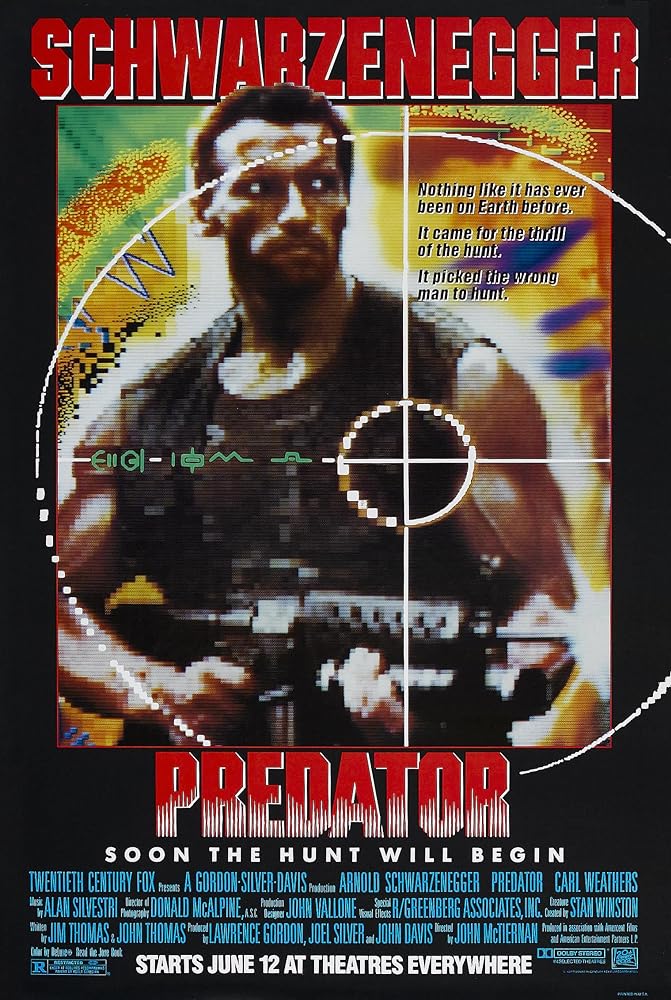
Last year, I did a retrospective on the classic sci-fi horror franchise, Alien, in time for the release of its latest installment, Alien: Covenant. In that post, I noted that I wasn’t going to be covering the franchise’s two crossover films that it was a part of because I’d have to cover the other franchise that was involved in them, and I was planning on saving that for the release of that franchise’s latest installment. Well, as you might have guessed, the time has finally come for that new installment, so today we’re covering another classic sci-fi horror franchise, Predator. Beginning with the 1987 classic of the same name starring Arnold Schwarzenegger, this series introduced audiences to a ferocious alien creature who hunted other species for sport. The original went on to spawn a sequel in 1990, which notably featured an Alien Easter egg. This, of course, then paved the way for a big crossover franchise between the two classic sci-fi antagonists that was headlined by two feature films in the early 2000’s. The Predator series then saw a return to the big screen in 2010 with the franchise’s first solo installment in two decades. And now the series is back again this year with a new film, simply titled The Predator. The film is the latest outing from director Shane Black, which is a notably fitting choice as Black had played a supporting role in the original film, which happened to come out the same year as the film that launched his career as a writer, Lethal Weapon. Thus, without further ado, it’s time to ‘GET TO THE CHOPPA!’ as we look at the three films in the Predator franchise and the two crossover films that it appeared in alongside the Xenomorphs from Alien.

(Disclaimer: For today’s retrospective, I’ll be going over these five films in the order of their release instead of just focusing on the solo films first and then the Alien vs Predator films)

PREDATOR (1987)

Arnold Schwarzenegger in Predator (1987)

It all begins, of course, with the original Predator, which served as the first studio project for director John McTiernan, who would later go on to direct a few other classic action films like Die Hard and The Hunt for Red October. And while critics weren’t initially big on the film when it first came out, it has since been regarded as one of the greatest action films of all-time, which is easy to see why when watching it. Predator boasts a lot of great build-up when it comes to introducing its title character. For starters, the film doesn’t even start out as a science-fiction film, instead opting for a more straight-forward action film complete with one of the most adrenaline-pumping shootouts to ever come out of the 80’s. But after that, the film then effectively transitions into sci-fi horror and does a great job of establishing the imposing threat that is the titular Predator, which ended up undergoing a major cosmetic change during production. Originally, the creature had a more lobster-like design with movements provided by none other than Jean-Claude Van Damme. However, when it became apparent that this design was far from being a legitimate threat to a bunch of characters who were played by bodybuilders like Arnold Schwarzenegger and Jesse Ventura, the creature got a redesign from legendary effects artist Stan Winston. Winston even got a little help from frequent collaborator James Cameron, who suggested mandibles on the creature. What comes out of it is one of the most iconic alien creatures of all-time who helps to make this film a highly compelling ‘cat and mouse’ story. Thus, with great action sequences and a solid ensemble cast headlined by Schwarzenegger and Carl Weathers, Predator managed to overcome all its various production issues (e.g. having to change the title character’s design halfway through, filming in intense heat in the jungles of Mexico, etc.) to become a bona fide classic when it comes to 80’s action films.

Rating: 4.5/5

PREDATOR 2 (1990)

Predator 2 (1990)

The Predator returned just three years later in 1990 under the direction of Stephen Hopkins, who was fresh off directing the fifth installment of the Nightmare on Elm Street series, The Dream Child. This time, the focus shifted from the jungles of Central America to the streets of Los Angeles, as a group of police officers investigate a string of killings that have been going on that have been tied to the local gangs. What follows is a decent albeit rather forgettable sci-fi action flick. Sure, the concept of having the title character wreak havoc in a major metropolitan city isn’t a bad idea (remember how one teaser trailer for Alien 3 implied that it would be set on Earth before that idea was scrapped? This is basically that idea, just with Predators instead of Xenomorphs), but in execution, the story is quite generic as are most of the characters. The main protagonist, Lt. Mike Harrigan (Danny Glover, in a role that’s honestly not that far off from old Murtagh), is generally solid, though, partially because he gets one of the only major bits of character development in the film when his best friend ends up being one of the Predator’s victims. And because this is a Predator sequel, the film doesn’t skimp on the Predator action, as the title creature gets into the action right away. This does pave the way for some solid action sequences… save for a rather ill-conceived action sequence in a subway car that ends up being nothing more than an endless array of flashing strobe lights. In short, while I don’t ‘dislike’ Predator 2, it’s still a major step down compared to the first film. I do understand, though, why this film has gotten a fan following despite the middling reception that it got from critics, and if anything, I wouldn’t say that it’s as bad as its 28% rating on Rotten Tomatoes suggests. Still, that’s not really saying much considering the legendary film that came before it.

Rating: 3/5

ALIEN VS. PREDATOR (2004)

AVP: Alien vs. Predator (2004)

(Disclaimer: The following review covers the PG-13 rated theatrical cut of Alien vs. Predator. The unrated cut that was released on home video adds in some extra gore effects and additional bits of plot development, which may or may not satisfy those who were disappointed by the fact that the theatrical cut was given an obviously neutered PG-13 rating)

During the finale of Predator 2, Lt. Harrigan ends up on the Predator’s ship, where he comes across the creature’s trophy room full of the skulls of its victims. One of these skulls was from a Xenomorph, the extraterrestrial creatures featured in the Alien series, thus paving the way for one lucrative crossover franchise that had already started the year before. Since then, these two franchises have crossed paths in various forms of media ranging from comics to video games. But for today’s retrospective, we’re looking at the crossover franchise’s two films, starting with 2004’s Alien vs. Predator, directed by Paul W.S. Anderson. While the film was a decent hit at the box office, critical reception was a different story, as it seems like both critics and fans of the two franchises were not happy with how this crossover turned out. Part of the reason why (for fans, at least) was due to the film having a PG-13 rating, meaning that it would be a heavily toned-down affair compared to the R-rated escapades of its two franchises’ previous installments. But for what its worth, when the title characters do get the chance to spar, it is still awesome to watch even with its more audience-friendly rating. In short, Alien vs. Predator is your basic sci-fi horror film with a collection of stock characters for the two title characters to hunt. That said, though, the main protagonist, guide Alexa Woods (Sanaa Lathan), is a solid female lead, and Lance Henriksen also makes a welcome return to the world of Alien as the owner of the series’ Weyland Corporation, Charles Weyland, after previously playing the android Bishop and his creator, Michael Weyland, in Aliens and Alien 3, respectively. With all this in mind, Alien vs. Predator is admittedly a complicated film to recommend. If you’re a hardcore fan of the Alien and Predator franchises, then you’re probably going to hate this film because it can very well be argued that it doesn’t necessarily do a good job of properly respecting either franchise. However, if you’re just looking for a mindless yet entertaining crossover between these two classic franchises, this one might do you just fine.

Rating: 3.5/5

ALIENS VS. PREDATOR: REQUIEM (2007)

AVPR: Aliens vs Predator - Requiem (2007)

(Disclaimer: As was the case with its predecessor, this review covers the theatrical cut of AvP: Requiem instead of the unrated cut that was released on home video.)

Despite the mediocre reception that it got, Alien vs. Predator ended up getting a sequel three years later, serving as the directorial debut for visual effects artists Greg and Colin Strause. Ultimately, though, it fared about the same as its predecessor upon its release, as it did fine at the box-office but fared terribly with critics… and this time, the critics were right on this one. Aliens vs. Predator: Requiem is a colossal mess. Sure, it returns to its franchises’ R-rated roots, but that doesn’t really matter in the long run when the action sequences in this film are poorly shot, edited, and in some cases, even lit. In other words, this film somehow feels more like a PG-13 rated Alien vs. Predator film than the actual PG-13 rated AvP film. And just like the first AvP film, the story and characters are incredibly flat. The only difference here, though, is that there aren’t any underrated badass characters like Alexa Woods this time around, meaning that you don’t give a crap about any of the characters in this film, most of whom are either unlikable or incredibly stupid. It also doesn’t help that the film sports a surprisingly mean-spirited tone given some of its kills (e.g. a young kid, multiple pregnant women, etc.) and the fact that it ends with the military just straight-up nuking the town where the film is set. In short, Aliens vs. Predator: Requiem is a disastrous follow-up to what was already a problematic first film. It truly is saying something when the best thing about this film is that it’s mercifully short at just 94 minutes long (that and the Alien/Predator hybrid that it introduces, despite its limited screen-time). And because of this, it’s undeniably the lowest point for both the Alien and Predator franchises, thus taking several years for either franchise to recover due to this film being such a train wreck. Granted, the question of whether the Alien franchise managed to rebound is up for debate given the polarizing reaction to both Prometheus and Alien: Covenant, but at least those films did far better with critics than either of the AvP films combined. As for the Predator series…

Rating: 0.5/5

PREDATORS (2010)

Predators (2010)

Outside of its crossovers with Alien, the main Predator series laid dormant for two decades until it returned in 2010 with Predators. This installment was developed under the eye of none other than Robert Rodriguez, though directorial duties ultimately went to Nimród Antal, who would later go on to direct the IMAX concert film Metallica: Through the Never. As for Predators, which focuses on a group of mercenaries, soldiers, and murderers who find themselves put on another planet where they’re hunted by the titular alien creatures, it is easily the closest in both plot and execution to the original film. This is most notable through the film’s slow but steady buildup that first introduces the main characters before they’re hunted by the Predators. The only thing holding this film back, though, is that it’s quite uneven in terms of its narrative, never really delving into why these characters were put on the planet in the first place or the conflict that’s established between the planet’s two primary groups of Predators, the traditional Predators as seen in previous films and the larger and more intimidating ‘Super Predators’. Heck, the Predators aren’t even really in this all that much, meaning that the film’s also rather lacking in terms of action sequences. Given this film’s ending, it seems like a lot of these plot points were meant to be explored further in a sequel, and yet, based on Shane Black’s new film, it doesn’t seem likely that the franchise will be returning to this part of the story anytime soon. But for what it’s worth, once the film overcomes its rather slow start, it manages to coax by with some solid action sequences during the climax (e.g. a fight between a Super Predator and Yakuza member Hanzo (Louis Ozawa Changchien)). Plus, this film sports one of the best ensemble casts in the franchise’s history, with strong performances from the likes of Adrien Brody, Alice Braga, Walton Goggins, and a highly memorable cameo from Laurence Fishburne as a deranged soldier who has been on the planet for several years. Ultimately, though, Predators is just as much of a mixed bag as Predator 2 was. It is arguably the best of the Predator sequels up to this point, but it still suffers quite a bit from a lackluster script that doesn’t live up to its fullest potential.  

Rating: 3/5


And that concludes this retrospective on the Predator franchise. Thanks for following along and be sure to sound off in the comments below with your own thoughts on these films. And really, what better way to conclude this post than with the most epic handshake in cinematic history… 


Wednesday, July 18, 2018

Lethal Weapon - Film Series Retrospective


Today on Rhode Island Movie Corner, we’re celebrating one of the most famous action film franchises of all-time. This is a franchise whose first installment recently celebrated its 30th anniversary last year and is commonly regarded as being the definitive buddy cop franchise. Yes, folks, today we’re talking about the Lethal Weapon films, which follow the exploits of Martin Riggs (Mel Gibson) and Roger Murtagh (Danny Glover), a truly mismatched pair of police detectives in the LAPD’s Homicide Division. All four installments of the original film series were directed by Richard Donner (AKA the man who practically launched the live-action superhero film genre with 1978’s Superman: The Movie), with the first two also being written by Shane Black. All four films did solidly at the box-office amidst varying levels of critical reception, with the first film becoming a landmark entry in both the action film genre and the buddy cop genre, the latter of which always features two radically different protagonists being forced to work together. And while the film series technically ended with the release of the fourth film in 1998, it’s been reported that Donner, Gibson, and Glover are up for a potential fifth film. Aside from this, the franchise has seen new life recently via a TV series ‘reboot’ on Fox, starring Damon Wayans as Murtagh and Clayne Crawford as Riggs (though Crawford was fired after Season 2 following reports of hostile on-set behavior and will be replaced by a new character in Season 3). But today we’ll be focusing solely on the Lethal Weapon films, because contrary to what the series’ most famous line may suggest, I am not ‘getting too old for this s***’. Thus, without further ado, ‘eenie, meenie, miney, HEY MOE!’ (*BANG*)

LETHAL WEAPON (1987)

Lethal Weapon (1987)

We start things off, of course, with the original Lethal Weapon from 1987, the first set of misadventures involving a suicidal daredevil detective and an aging veteran of the police force as they investigate into the homicide of the daughter of one of the latter’s war buddies from Vietnam. As noted in the intro, this film basically became the gold standard for buddy cop comedies while also being the film that launched Shane Black’s career as it was his screenwriting debut. The camaraderie between Mel Gibson and Danny Glover is superb, and it paves the way for plenty of great comedic moments (e.g. the police shooting range scene). However, unlike some of the films that came after it, the first Lethal Weapon maintains a generally serious manner throughout, which was the primary intent of Black’s initial script before he rewrote it to tone down some of its darkest elements. Whether it’s the exploration of how Riggs is always putting himself in harm’s way following the death of his wife or the serious threats made to Murtagh’s family by the film’s main antagonists (highlighted by Gary Busey as the sadistic henchman Mr. Joshua), Lethal Weapon doesn’t mess around. Because of this, those bits of humor that I mentioned earlier help to liven the mood at just the right times without ever overshadowing the drama of the plot. Add in some solid action sequences (though the final fight between Riggs and Joshua is a bit choppy on the editing) and a tight script from Black that ties it all together nicely and you have an undeniable classic in the action film genre. Sure, its plot may seem a bit basic by today’s standards, but really, who knows what the cinematic landscape would’ve been like without this film to define a whole generation of filmmakers?  

Rating: 4.5/5

LETHAL WEAPON 2 (1989)

Mel Gibson and Danny Glover in Lethal Weapon 2 (1989)

The success of the first film led to a sequel two years later, in which Riggs and Murtagh take on a South African drug cartel led by a consul-general who always gets away via diplomatic immunity, a plot that ‘may’ have been influenced by some of the backlash that Donner had gotten for the anti-apartheid imagery seen in the first film. And while Shane Black was still involved as a writer, he only has a story credit on this one due to screenwriter Jeffrey Boam rewriting the original script that he had written with Warren Murphy. Despite this, though, Lethal Weapon 2 is a well-handled follow-up to the original film. The chemistry between Gibson and Glover is great once again and this is paired nicely with arguably the series’ best villain, Joss Ackland’s Arjen Rudd, a delightfully despicable antagonist who constantly waves his diplomatic immunity around to avoid arrest. There’s also his main henchman, Pieter Vorstedt (Derrick O’Connor), who helps bring some additional emotional heft to the story when it’s revealed that he was the one who killed Riggs’ wife, leading to a far better final fight between the two compared to Riggs and Joshua’s fight from the previous film. Tonally speaking, this film is on par with the first film in terms of being a serious drama mixed with comedy. At the same time, though, it should be noted that Black’s original ending was to have Riggs die in the final battle. He survived instead, thus paving the way for films 3 and 4 which was either a good thing or a bad thing depending on one’s views of those sequels (i.e. simply put, Black was not a fan of the next two films, especially due to how they changed the character of Riggs). Still, because this film boasts the same great action sequences and excellent writing that made the first film the classic that it is, Lethal Weapon 2 is just as good as its predecessor if not possibly better.

Rating: 4.5/5

LETHAL WEAPON 3 (1992)

Mel Gibson, Danny Glover, and Joe Pesci in Lethal Weapon 3 (1992)

Lethal Weapon 3 was the first entry in the series not to be written by Shane Black, and that is apparent as soon as it begins. While there are some effectively serious moments, like the guilt that Murtagh has over shooting a gang member who was a friend of his son’s (which paves the way for the best emotional moment in the franchise when Riggs helps his long-time partner overcome it), this film is much more comedic in tone. In fact, to be perfectly blunt, it gets very damn goofy sometimes, like when Murtagh ends up having to tag along with a flirtatious armored truck driver during a car chase. With that said, though, I personally found this to be the funniest film of the series as it sports the most consistent humor out of any entry in the franchise, right from the opening scene where Riggs and Murtagh get into an argument when they try, and fail, to defuse a bomb (a moment that gets repeated in the film’s post-credits scene). And overall, this does make up for some of the film’s shortcomings, namely the series’ weakest villain, Jack Travis (Stuart Wilson). Despite the character being a former police officer, along with the added plotline of ‘cop-killing’ armor-piercing rounds popping up on the streets, this is all ultimately waylaid by the character’s limited screen-time, reportedly a decision made by Donner to allow for more attention to be spent on Riggs and Murtagh (not necessarily a bad move, but still…). Thankfully, this is counter-balanced by Rene Russo, a delightful new addition to the franchise as the tough-as-nails Internal Affairs officer Lorna Cole who becomes Riggs’ new love interest while still being just as badass as the series’ iconic lead duo. Because of this, while Lethal Weapon 3 is a noticeable step down in quality from the previous two films, namely due to it lacking the edginess of Shane Black’s writing, it’s arguably the most entertaining installment of the Lethal Weapon franchise if based solely on entertainment value.

Rating: 4/5

LETHAL WEAPON 4 (1998)

Lethal Weapon 4 (1998)

At the tail-end of the 90’s, Donner, Gibson, Glover, and the rest of the franchise’s ensemble cast returned for one last hurrah, Lethal Weapon 4. The film sees Riggs and Murtagh combating the vicious members of a Chinese triad primarily led by Wah Sing Ku, played by Jet Li in his first major American role. And simply put, Ku proves to be a far superior main antagonist compared to Travis in Lethal Weapon 3 as he does pose quite the threat to Riggs and Murtagh; in other words, this was very much Li’s breakout role. Of course, Gibson and Glover’s chemistry is still spot on as always and while Rene Russo doesn’t get as much to do in this one due to Lorna being pregnant with her and Riggs’ child, she still gets to have a few standout moments here and there. As for the action sequences, they are once again superb even if some of them do get a little overblown at times, like the ‘cold open’ where Riggs and Murtagh deal with a pyromaniac who is ultimately defeated when he gets distracted by Murtagh in his underwear and is sent flying into an exploding gas truck. And sure, like Lethal Weapon 3, this one is a step down in quality from the first two installments of the series; plus, it doesn’t necessarily boast the same great humor consistency that helped keep Lethal Weapon 3 from being a mediocre ‘threequel’. With that said, though, I also appreciate how this film, given that it’s the last of the series, does take the time for some genuinely heartfelt moments involving its characters. This even extends to the film’s credits, which highlight everyone who’s ever worked on the franchise while being set to the song ‘Why Can’t We Be Friends’. Because of this, I’d argue that Lethal Weapon 4 is quite underrated. Again, don’t get me wrong, like its immediate predecessor, it’s nowhere near as good as the first two Lethal Weapon films. Still, at the very least, I’d say that this film did manage to serve its purpose as a suitable conclusion to one of the most famous action film franchises of all time.

Rating: 4/5


And that concludes this retrospective on the Lethal Weapon films. Thanks for following along and be sure to sound off in the comments below with your own thoughts on this franchise, whether you’re part of the crowd that prefers the two entries that were written by Shane Black or the crowd who thinks that the third and fourth films are underrated.

Monday, July 16, 2018

Sorry to Bother You (2018) review

Sorry to Bother You (2018)

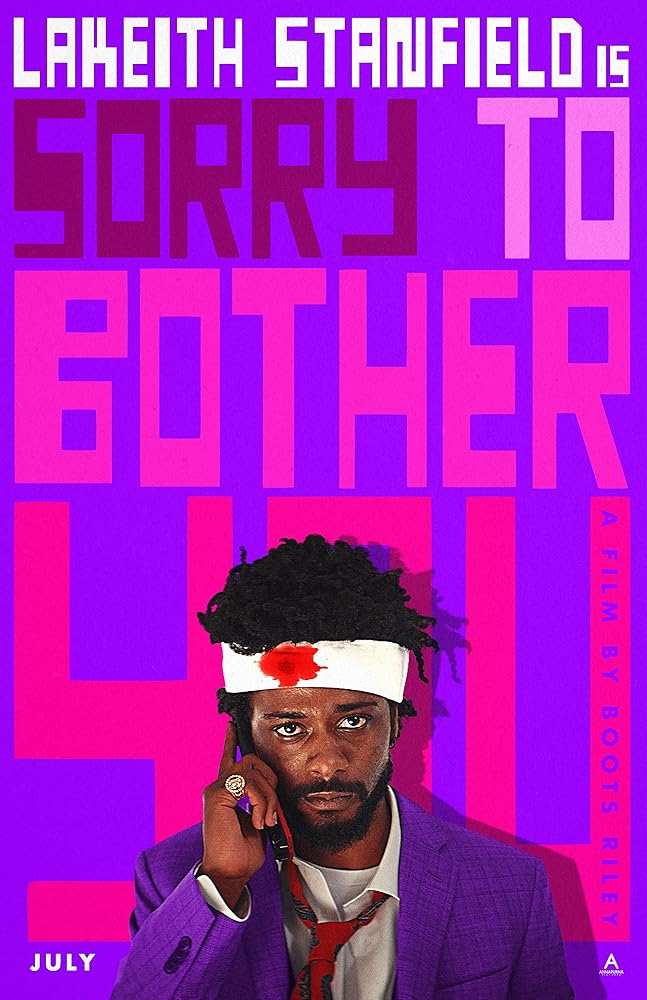
In the past, I’ve talked about quite a few films that can be classified as surreal comedies. I’d describe these as films that went all out with a wacky premise while often boasting a strong narrative to back it up. For example, in 2016, one of my favorite films of that year was Swiss Army Man, a film where a man traveled through the woods with a magical farting corpse whose boners were used as a source of navigation. Look a little closer, however, and you’d find a tale about friendship and regaining one’s love for life amidst all the discussions about the corpse’s desire to masturbate when thinking about his friend’s mom (don’t ask…). And for this year, it seems like the most talked about surreal comedy is Sorry to Bother You, in which a young African-American man finds himself sucked into the world of telemarketing once he learns how to use his ‘white voice’ effectively. The film is brought to us by rapper Boots Riley, who makes his directorial debut after nearly three decades in the music industry. And Riley has certainly had quite a career in that industry, mainly as the lead vocalist of the political hip-hop group known as ‘The Coup’. Sure enough, Sorry to Bother You, inspired by Riley’s own history working in the telemarketing business, is full to the brim with political satire that’s seamlessly intercut with all the crazy situations that its main character gets into. And because of this, while it is easily one of those films that won’t necessarily work well with everyone, I won’t deny that this film is an enjoyably wacky comedy that is very much its own thing.

On the streets of Oakland, a young man named Cassius Green (Lakeith Stanfield) struggles to make a living for him and his girlfriend Detroit (Tessa Thompson), often getting harassed for rent by his uncle Sergio (Terry Crews). ‘Cash’ ends up getting hired as a telemarketer for a company called RegalView, where he is told the importance of ‘S.T.T.S.’ (Stick to the Script). However, Cash finds it hard at first to make any sales, with most of his customers hanging up on him just a few seconds into the call. Things begin to change, though, when his co-worker Langston (Danny Glover) teaches him the secret to a successful telemarketing sale, using his ‘white voice’. And so, Cash’s white voice (provided by David Cross) allows him to quickly scale the company’s ranks, eventually managing to get promoted to the company’s most prestigious position, a ‘power caller’. Thus, he befriends fellow power caller Mr. **** (Omari Hardwick; ‘white voice’ provided by Patton Oswalt) and even ends up attracting the attention of Steve Lift (Armie Hammer), the CEO of WorryFree, a company that provides its customers with free food and lodging. However, WorryFree is also established as being quite the controversial business, as their offer comes at the expense of cheap labor that isn’t that far off from slavery. Thus, Cash soon finds himself in a major internal conflict as he finds himself torn between his new life of luxury and his relationships with Detroit and his fellow RegalView co-workers, who organize a strike to demand proper salaries. Things get even more complicated when Cash ends up learning about a dark secret about WorryFree and their plans for those who work for them.

Sorry to Bother You wears its weirdness like a badge of honor, going all out with its surreal humor. Sure enough, this film sports a solid consistency when it comes to that humor thanks to everything from hilarious visual gags to snappy dialogue. This humor is then matched perfectly with a tight script that delves into everything from race relations to one’s fear of becoming a ‘sell-out’. Now with all this said, though, the film does kind of drag a bit at times. While it is under two hours, it also loses a bit of steam by the end despite this being where the weirdest moments occur. Still, for what it’s worth, Boots Riley’s direction is excellent throughout and this is bolstered further by a totally game ensemble cast. Get Out breakout star Lakeith Stanfield shines in the lead role of Cassius while Tessa Thompson more than holds her own alongside him as Detroit, who gets her own unique plotline via her blossoming art career. And then there’s all the great supporting roles from the likes of Danny Glover as Langston, Armie Hammer as Steve Lift, and Steven Yeun as Cash’s co-worker ‘Squeeze’ just to name a few. Admittedly, most of these folks ultimately have minor roles in the larger story, but they all have their standout moments nevertheless. In short, while I don’t necessarily consider Sorry to Bother You to be one of the ‘best films of the year’ as many others are saying, it’s still a very good directorial debut from Boots Riley. If anything, it shows that he clearly has the potential for a prosperous career as a filmmaker to match the prestigious career that he has achieved as a musician.


Rating: 4/5