Showing posts with label Armie Hammer. Show all posts

Monday, July 16, 2018

Sorry to Bother You (2018) review

Sorry to Bother You (2018)

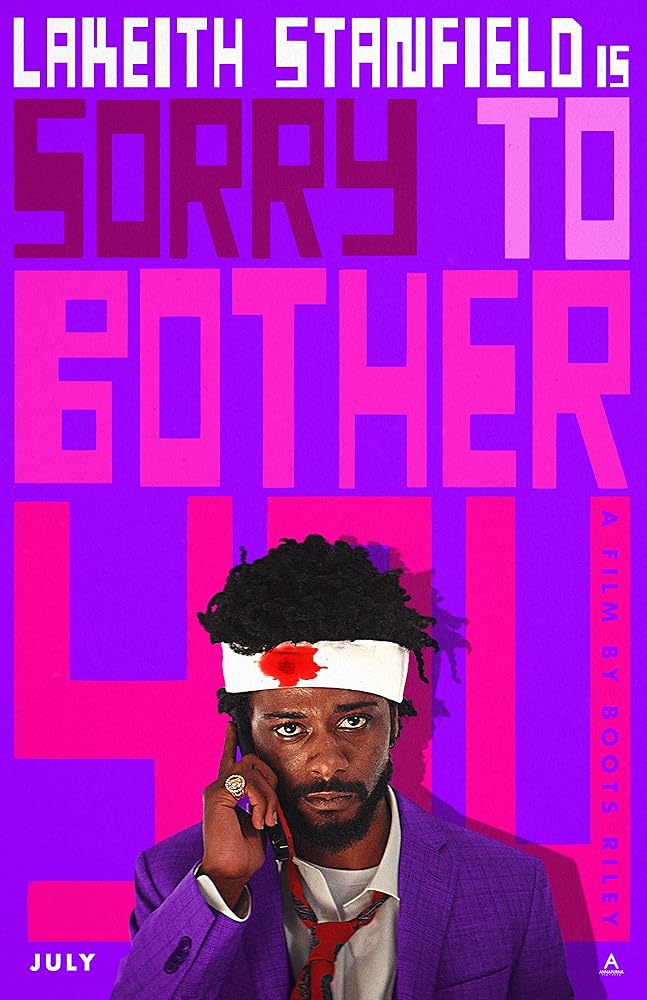
In the past, I’ve talked about quite a few films that can be classified as surreal comedies. I’d describe these as films that went all out with a wacky premise while often boasting a strong narrative to back it up. For example, in 2016, one of my favorite films of that year was Swiss Army Man, a film where a man traveled through the woods with a magical farting corpse whose boners were used as a source of navigation. Look a little closer, however, and you’d find a tale about friendship and regaining one’s love for life amidst all the discussions about the corpse’s desire to masturbate when thinking about his friend’s mom (don’t ask…). And for this year, it seems like the most talked about surreal comedy is Sorry to Bother You, in which a young African-American man finds himself sucked into the world of telemarketing once he learns how to use his ‘white voice’ effectively. The film is brought to us by rapper Boots Riley, who makes his directorial debut after nearly three decades in the music industry. And Riley has certainly had quite a career in that industry, mainly as the lead vocalist of the political hip-hop group known as ‘The Coup’. Sure enough, Sorry to Bother You, inspired by Riley’s own history working in the telemarketing business, is full to the brim with political satire that’s seamlessly intercut with all the crazy situations that its main character gets into. And because of this, while it is easily one of those films that won’t necessarily work well with everyone, I won’t deny that this film is an enjoyably wacky comedy that is very much its own thing.

On the streets of Oakland, a young man named Cassius Green (Lakeith Stanfield) struggles to make a living for him and his girlfriend Detroit (Tessa Thompson), often getting harassed for rent by his uncle Sergio (Terry Crews). ‘Cash’ ends up getting hired as a telemarketer for a company called RegalView, where he is told the importance of ‘S.T.T.S.’ (Stick to the Script). However, Cash finds it hard at first to make any sales, with most of his customers hanging up on him just a few seconds into the call. Things begin to change, though, when his co-worker Langston (Danny Glover) teaches him the secret to a successful telemarketing sale, using his ‘white voice’. And so, Cash’s white voice (provided by David Cross) allows him to quickly scale the company’s ranks, eventually managing to get promoted to the company’s most prestigious position, a ‘power caller’. Thus, he befriends fellow power caller Mr. **** (Omari Hardwick; ‘white voice’ provided by Patton Oswalt) and even ends up attracting the attention of Steve Lift (Armie Hammer), the CEO of WorryFree, a company that provides its customers with free food and lodging. However, WorryFree is also established as being quite the controversial business, as their offer comes at the expense of cheap labor that isn’t that far off from slavery. Thus, Cash soon finds himself in a major internal conflict as he finds himself torn between his new life of luxury and his relationships with Detroit and his fellow RegalView co-workers, who organize a strike to demand proper salaries. Things get even more complicated when Cash ends up learning about a dark secret about WorryFree and their plans for those who work for them.

Sorry to Bother You wears its weirdness like a badge of honor, going all out with its surreal humor. Sure enough, this film sports a solid consistency when it comes to that humor thanks to everything from hilarious visual gags to snappy dialogue. This humor is then matched perfectly with a tight script that delves into everything from race relations to one’s fear of becoming a ‘sell-out’. Now with all this said, though, the film does kind of drag a bit at times. While it is under two hours, it also loses a bit of steam by the end despite this being where the weirdest moments occur. Still, for what it’s worth, Boots Riley’s direction is excellent throughout and this is bolstered further by a totally game ensemble cast. Get Out breakout star Lakeith Stanfield shines in the lead role of Cassius while Tessa Thompson more than holds her own alongside him as Detroit, who gets her own unique plotline via her blossoming art career. And then there’s all the great supporting roles from the likes of Danny Glover as Langston, Armie Hammer as Steve Lift, and Steven Yeun as Cash’s co-worker ‘Squeeze’ just to name a few. Admittedly, most of these folks ultimately have minor roles in the larger story, but they all have their standout moments nevertheless. In short, while I don’t necessarily consider Sorry to Bother You to be one of the ‘best films of the year’ as many others are saying, it’s still a very good directorial debut from Boots Riley. If anything, it shows that he clearly has the potential for a prosperous career as a filmmaker to match the prestigious career that he has achieved as a musician.


Rating: 4/5

Sunday, June 18, 2017

Cars 3 (2017) review


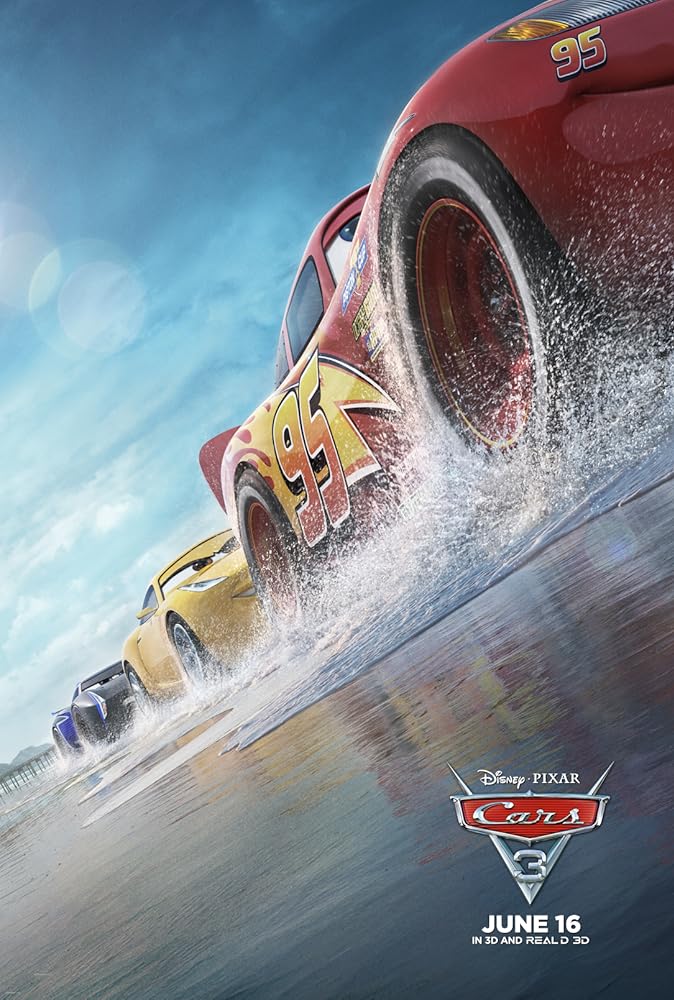
The Cars franchise has always been one of the more fascinating facets of Pixar Animation’s prestigious filmography. And that’s because while the films have been highly successful at the box-office, along with amassing an impressive $10 billion in merchandise sales, they’re generally considered to be some of Pixar’s weakest efforts. The first Cars film, released in 2006, did do well with critics but not necessarily on the same level as some of Pixar’s most beloved films (e.g. Finding Nemo, The Incredibles, etc.). Things only got worse with the 2011 sequel, Cars 2, as that film became the first Pixar film ever to receive primarily negative reviews from critics. Thus, Cars basically became Pixar’s ‘black sheep’ franchise and, if you ask me, was the catalyst for what I feel is the current internet mindset when it comes to the legendary animation company. That mindset is that if a Pixar film isn’t a ‘critically-acclaimed, 15/10 masterpiece’, then it isn’t worth a damn. This is the mindset that would ultimately affect films like Brave, Monsters University, and The Good Dinosaur. But I’ve never held Pixar to those standards, hence why I still love the first Cars film and will even argue that Cars 2 isn’t as bad as the internet puts it out to be. But now, here we are with Cars 3, which Pixar fans are either anticipating or dreading depending on their opinions of the franchise. It does promise, though, to return to the series’ original roots, and it certainly grabbed the attention of everyone when its first teaser showed main protagonist Lightning McQueen in a devastating crash. And while this ultimately may not be enough to convert those who aren’t fans of the series, Cars 3 is a worthy follow-up to the original Cars thanks to a solid and poignant story that gives a satisfying conclusion to its main protagonist’s overall arc.

Year in and year out, Lightning McQueen (Owen Wilson) has been one of the most successful racers in the league. However, that success is soon threatened by the arrival of hot-shot rookie Jackson Storm (Armie Hammer) and a new line of racers who train using the most advanced technology on the planet to be the fastest on the race track. The growing dominance of these new ‘high-tech’ racers soon lead to many of Lightning’s old racing pals being forced into an early retirement, and it seems like Lightning’s future is doubtful as well after he suffers a devastating crash during the final race of the season. Not wanting to be forced out of the sport the same way that his mentor Doc Hudson (who, despite having passed away after the events of the first film, returns in this film via flashbacks and unused audio of his voice actor, the late Paul Newman) was back in his day, Lightning realizes that he must start training the same way that the new rookies are training if he has any chance of beating them. Luckily for him, the company that sponsors him, Rust-eze Medicated Bumper Ointment, has just built a new training facility with all the upgrades courtesy of the company’s new owner, Mr. Sterling (Nathan Fillion). Now guided by enthusiastic trainer Cruz Ramirez (Cristela Alonzo), Lightning begins a journey of redemption as he attempts to adapt to the newest racing techniques to not only stand a chance against his new opponents, namely Storm, but to also save his career.

One of the key things that Cars 3 does is that, from a story perspective, it does return to the series’ roots after Cars 2 took an admittedly interesting but ultimately rather messy diversion into the world of ‘car espionage’ which, in turn, was based around a separate ‘world tour’ story. This time around, there aren’t two different plotlines that are struggling just to co-exist with one another to the point where the main plotline ends up becoming a ‘secondary’ one. Like the first film, this one’s all about racing again and this time it’s based around an effectively poignant story in which Lightning McQueen, who was the hot-shot rookie back in the first film, now finds himself being outdone by a new generation of racers. Thus, this film manages to make the entire trilogy of Cars films have a clear beginning, middle, and end. After all, it was during a crucial scene from the first film in which Lightning learned about how Doc used to be a famous racer until a devastating crash resulted in a premature end to his career. Now, Lightning finds himself in the same situation in racing’s modern landscape. Sure, like its predecessors, this film’s plot is a rather simplistic one for a Pixar film. However, I’d argue that the divide between generations in this film, and the ways in which the characters deal with it, does give Cars 3 a great amount of emotional depth. From the arcs that the main characters go through to the film’s effective use of the character of Doc Hudson despite Paul Newman’s passing in 2008, this film is steeped in poignancy. Granted, this may depend on whether you did like these characters in the previous films but it does work in the long run.  

Of course, like any Pixar film, the animation is excellent. In fact, this may just be the best-looking Cars film yet in terms of lighting and some of the new ways in which it creates a world inhabited by cars. Like its predecessors, this film features great racing sequences that are set within fun and unique locales, like the one ‘race’ that Lightning and Cruz participate in that’s ultimately more of a demolition derby. Plus, as is also common with Pixar films, Cars 3 features an excellent ensemble cast to portray this franchise’s lovable cast of characters. And this time around, they thankfully aren’t all under-utilized like most of them admittedly were in Cars 2. Granted, the Radiator Springs crew are still just side characters at the end of the day, as the focus is more on Lightning and his trainer, but they are utilized better in this film, especially Mater. Fear not, folks, this isn’t like last time where he ended up becoming the main character whereas Lightning was relegated to what was basically a minor supporting role. Lightning is truly the main character in this film, and Owen Wilson does a great job once again in not only making Lightning a likable protagonist but also a sympathetic one in this instance given that his storyline in this is one of redemption. The big standout of the show, however, ends up being Cristela Alonzo as Cruz. Her infectious enthusiasm instantly makes her a likable character, and she’s also given a nice character arc in which we see that she can hang with Lightning and the other racers on the track. As for Lightning’s new rival, Jackson Storm, he’s a serviceable foe just like Lightning’s rivals from the previous two films. Though, at the same time, he does serve as a nice foil to Lightning in this film given that he acts the same way that Lightning did at the beginning of the first film (i.e. an egotistical show-off).

Now, if I were to be honest, if you weren’t a big fan of these Cars films, to begin with (and not just because of Cars 2; I’m talking about the entire series in general), there’s a good chance that this new film isn’t going to win you over. Like the two films that came before it, the plot is admittedly a simpler one compared to other Pixar films. And heck, this is only Pixar’s first 2017 release, so I have the feeling that this film will, unfortunately, be completely forgotten about by the internet once Coco gets released in November. However, I will always argue that these Cars films (yes, even Cars 2… it’s not THAT bad!) are much more than just ‘middle-of-the-road’, ‘below average’ Pixar films that are ‘just for kids’ and are only there to sell toys. Cars 3 manages to come full-circle on the story of Lightning McQueen on his journey to prove that he can still be as successful of a racer as he used to be in a sport that is continuously evolving at a faster rate than he is. And through a plot that does indeed have the emotionally poignant moments that you can always expect from a Pixar film, Cars 3 does succeed in this regard. No, this isn’t the best film that Pixar’s ever made, but it doesn’t have to be. As I’ve said time and time again, not every film that they make will be a masterpiece. It’s just that the unfortunate downside of all the success that they’ve had since 1995 is that the internet now expects a masterpiece from them with each new release. Thus, given this film’s measly 66% rating on Rotten Tomatoes (which, for the record, IS still a fresh rating!), I know that many out there will regard it as an ‘unnecessary’ continuation of Pixar’s so-called ‘weakest’ franchise. But, as a fan of this so-called ‘black sheep’ of Pixar franchises, I enjoyed its newest installment. And if you are a fan of these films, I think you’ll like this new one just fine. 


Rating: 4/5

Tuesday, August 18, 2015

The Man from U.N.C.L.E. (2015) review


2015 has been a banner year for the spy genre and what’s even more impressive is the fact that all of the major spy films that have been released this year are all very much different in regards to execution. The year kicked off with ‘Kingsman: The Secret Service’, which embraced the campier/over-the-top atmosphere of the genre that had been abandoned in recent years. Then in June there was ‘Spy’, a comedic flick that was surprisingly well-shot for a film of that genre. And just a few weeks ago, the ‘Mission Impossible’ franchise returned with a bang with yet another excellent installment in the form of ‘Rogue Nation’. Of course we have the next Bond film, ‘Spectre’, coming out later this year but for now we come to the latest 2015 spy flick, ‘The Man from U.N.C.L.E.’. Like ‘Kingsman’, it harkens back to the old-school era of the genre. In fact, this is actually based off of a TV series of the same name which ran from 1964 to 1968 on NBC and starred Robert Vaughn and David McCallum as American agent Napoleon Solo and Russian agent Illya Kuryakin, respectively, polar opposites who find themselves working together as part of the international espionage organization known as the United Network Command for Law and Enforcement (U.N.C.L.E.). Henry Cavill and Armie Hammer take on these famous roles in director Guy Ritchie’s modern-day adaptation. And while the film may ultimately lack the depth of the other spy films we’ve seen this year, it still manages to be a pretty darn entertaining action flick, mainly due to Ritchie’s talents as a visual director.

In the midst of the Cold War in 1963, CIA agent Napoleon Solo (Henry Cavill) helps German mechanic Gabby Teller (Alicia Vikander) escape from East Berlin in order to get her to help him and his superiors track down her father, a Nazi scientist who had recently been working for the U.S. government. But during their escape, they find themselves being pursued by KGB agent Illya Kuryakin (Armie Hammer), who they barely manage to get away from. The following day, Solo and Kuryakin suddenly find themselves being paired together by their superiors in a joint venture in order to investigate the owners of an Italian shipping company for whom Gabby’s uncle Rudi (Sylvester Groth) works for, Alexander (Luca Calvani) and Victoria (Elizabeth Debicki) Vinciguerra, a couple with ties to former Nazis who are using Gabby’s father to build them an atomic bomb. Despite their obvious contempt for one another, as well as the fact that they’re each given private instructions by their respective superiors to steal a vital piece of computer data for their governments and kill their partner if necessary, Solo and Kuryakin are forced to work together with the help of Gabby, who poses as Kuryakin’s fiancĂ©, in order to prevent the Vinciguerras from getting the chance to use their nuke.

The film’s visuals are easily its biggest strength. Obviously the film’s production design is excellent in its period style, very much capturing the look and feel of the spy films of the 60’s just like how ‘Kingsman’ did a great job in harkening back to the more over-the-top tone and plotting of those films. Compared to some of the other spy films this year, this film is much simpler as far as the action sequences are concerned. In other words, you won’t be seeing anyone hang onto the side of a plane as it takes off from a runway or an all-out brawl break out inside a church. But Guy Ritchie more than makes up for that with his solid direction. The film moves at a solidly energetic pace and never drags at any point. Ritchie’s knack for visual flair also translates into the action sequences. Slick and kinetic, well-paired with a pulsating score by up-and-coming composer Daniel Pemberton, and from what I can tell mostly practical with both Cavill and Hammer doing a lot of their own stunts, these action sequences more than do their job in regards to thrilling the audience and for the most part make up for some of the film’s shortcomings as far as the writing is concerned.

Because admittedly, this film is sort of a major case of style over substance. In this case I’m not saying that this is a bad thing but it does mean that the film doesn’t have as much depth as something like ‘Kingsman’ or ‘Mission Impossible’. Each of the main characters get only very simple beats of character development (e.g. Solo’s criminal past, Kuryakin’s family history) and overall the story is generally straight-forward, not really pulling any major fast ones on us in terms of twists. But even with that said, the film definitely benefits from having an excellent ensemble cast. While Solo and Kuryakin spend most of their time bickering with each other, Henry Cavill and Armie Hammer have excellent camaraderie and the scenes of them going back and forth with each other are definitely one of the film’s major highlights. Both of them also prove to be very charming leads, with Cavill in particular showcasing off charm that would’ve made him a pretty damn good James Bond. Their leading ladies are even bigger standouts with both Alicia Vikander, in the midst of a breakout year having already garnered much acclaim for her performance in this year’s ‘Ex-Machina’, and Elizabeth Debicki, following her breakout turn as Jordan Baker in Baz Luhrmann’s ‘The Great Gatsby’, evoking classic Bond girls and femme fatales, respectively, with their performances. The film also features noteworthy cameos by Jared Harris as Solo’s CIA handler and Hugh Grant as Waverly who, minor spoilers for those who haven’t seen the show, becomes the head of U.N.C.L.E.

Unfortunately, it looks like this film is going to become one of the summer’s under-performers at the box-office, having only grossed $13 million during its opening weekend. It may not have been made on the type of budget that we see for superhero films nowadays, but that’s still not a solid number for a film that was made on a budget of around $75 million. And that’s sad because this film is pretty damn entertaining and is a prime example of pure film escapism. Sure it may also be a major example of a film that is style over substance but Ritchie’s style is so good that I can ignore that for the most part. The film is a fun thrill-ride from beginning to end thanks to its exciting action sequences and its solid cast, headlined by the charming trio of Henry Cavill, Armie Hammer, and Alicia Vikander. Like ‘Mission: Impossible’, I’ll admit that I went into this without having seen any episodes of the TV show that it is based on but having now seen it, I’m now encouraged to check out the show in the future. Obviously because of this, I can’t really say anything about how much this film stays true to its source material, and for the record this is basically a prequel to the TV series, but I will say that I had a lot of fun watching this film and if you’re looking for a nice simple spy action-adventure flick, then I think you’ll like this film as well.     


Rating: 3.5/5

Friday, July 5, 2013

The Lone Ranger (2013) review


When ‘Pirates of the Caribbean: The Curse of the Black Pearl’ was released in 2003, no one really expected a film based off of a Disney ride to be that much of a hit. But, to everyone’s surprise, it was, and it soon led the way to three more sequels (two of which have passed the billion dollar mark at the box office). This year, the main crew behind the ‘Pirates’ series (star Johnny Depp, director Gore Verbinski, producer Jerry Bruckheimer, and writers Ted Elliott and Terry Rossio) reunite for a modern adaptation of ‘The Lone Ranger’, a series that got its start as a radio program back in the 30’s, which later spawned a TV show and a couple of movies. It seems like the filmmakers are hoping that this film will start up a new film franchise the same way ‘Pirates’ did a decade ago. However, with most critics giving the film negative reviews and a less than stellar performance at the box office so far, it’s probably unlikely. However, this film is actually better than what critics have been saying right now. Sure, it’s not perfect, mainly because of length and script issues, but it’s a fun movie that manages to get by despite its flaws.

The story, as told by an elderly Indian named Tonto (Johnny Depp) to a kid in 1930’s San Francisco, takes place in Texas in 1869 and follows John Reid (Armie Hammer), a lawyer who ends up being recruited to the Texas Rangers by his older brother Dan (James Badge Dale). John joins his brother and their fellow Rangers on a mission to find and capture notorious outlaw Butch Cavendish (William Fichtner). The Rangers end up getting ambushed by Cavendish’s men and are all killed, including Dan. John, however, survives and after meeting with the younger Tonto, learns that he is a ‘Spirit Walker’, a man who has ‘been to the other side’ and cannot be killed in battle. Looking to enact revenge on Cavendish for the death of his brother, John teams up with Tonto (who is also looking to find Cavendish for his own reasons) and takes up the persona of the masked vigilante, ‘The Lone Ranger’.

The biggest problem this movie has is that it’s too long. The movie is about 149 minutes long and that’s just too much for a film with a script that is just not strong enough for a film of that length. This movie would have worked much better had it been trimmed by about half an hour because the main plot is a fairly simple story when you think about it. The main character seeks revenge on the villain for the death of his brother; that’s pretty much it. But it seems like the writers ended up adding in more besides that, which is why the movie is this long. There are two other villains beside Cavendish; a railroad tycoon (Tom Wilkinson) and a corrupt Calvary captain (Barry Pepper). The inclusion of Wilkinson’s character actually does work in regard to the story, but Pepper’s character is really just… there to be a villain. The way the whole narrative is set up is also rather awkward too, because there are certain points where the kid who the elderly Tonto is telling the story to interrupts him, and the Tonto from back then even looks to the camera acknowledging this as well, which really makes no sense. I’m not saying it’s bad, but it could have been handled a bit better.

But the main thing that keeps this movie together is its two leads. Depp and Hammer work off each other very well and they have really good camaraderie, resulting in a good amount of humor. As Tonto, Depp is pretty much channeling his ‘Jack Sparrow’ persona again here, but it still works very well and he is responsible for the majority of the humor in this film because of how ‘eccentric’ he can be. As the Lone Ranger, Hammer is perfectly cast in the role, displaying the right level of charm and wit, especially when working alongside Depp. Finally, there’s a nice supporting cast to back them up, including William Fichtner (properly menacing as Butch Cavendish), James Badge Dale (who’s having quite a year so far, appearing in 3 blockbuster movies; Iron Man 3, World War Z, and this), Ruth Wilson as Dan’s wife Rebecca (who has a bit of romantic connection to John as well), and Helena Botham Carter as the owner of a brothel who also has a connection to Cavendish.

Right now, ‘The Lone Ranger’ stands at 23% on Rotten Tomatoes and to that I say this… this movie is not as bad as that rating may seem. For the record, I’m not saying the movie’s perfect. It does suffer mainly from a length problem because for a movie that is about two and a half hours long, the script just doesn’t have enough in it to justify that length. But the movie still manages to work mainly for one main reason; it’s fun. If you’re able to go into this movie and not take it too seriously, then I guarantee that you’ll have a good time. This can also serve as a nice introduction for a new audience to this character, namely because there hasn’t been anything related to the Lone Ranger for at least three decades. Johnny Depp and Armie Hammer do work together quite nicely, and I would look forward to seeing them do another film in this series; just make sure that, if they do another ‘Lone Ranger’ film (which may not happen if the movie bombs at the box office), don’t make it two and a half hours long.

(On a side note, this movie does have a bit of a ‘post-credits’ stinger, but believe me… there’s not much to it.)

Rating: 3.5/5