As the 2019 film season begins, it’s time to once again
reflect upon on the year prior to rank the best and worst from the past twelve
months. But unlike a lot of people on the internet, I do things a little differently
around here by doing the ‘Worst of the Year’ list first BEFORE the ‘Best of the
Year’ list. The reason why I do this is simple; why the heck would I want to
end the year on a bad note by talking about the worst films that I’ve seen? Now
with that said, I’m fully aware that the annual ‘Worst of’ lists always get greater
attention online because the internet loves to see people rag on the worst
films of the year. But as you might have guessed, I’m just not one of those
people. Even in cases where I don’t have particularly high expectations for a
film, I always go into every new film that I see hoping for the best because,
if you ask me, that’s exactly what a film fan should be. Obviously, though,
there will be times where you’ll come across a film that just didn’t work for
you, and that’s perfectly okay because film is a subjective medium. As such, do
not go into these next two posts expecting any sort of intense rants on the films
that will be appearing on this list because I find that I tend not to get that
angry anymore when it comes to films that I don’t really like. It’s a lot like
a recent situation that actor John Krasinski was in when he met with director
Paul Thomas Anderson, who suggested that the word ‘hate’ is too strong a word
to use when talking about film, a mindset that I certainly agree with. However,
don’t assume that this means that I will be ‘going soft’ on these films as I still
intend on addressing their various shortcomings. It’s also worth noting that while
I will be delving into a few spoilers here and there, Spoiler Warnings will not
be put into effect given that this is the ‘Worst of’ list. Thus, without
further ado, it’s time to cover my Top 10 Worst Films of 2018, starting with
films #10-6. Before we begin, however, there is one Dishonorable Mention…
DISHONORABLE MENTION: TOMB RAIDER
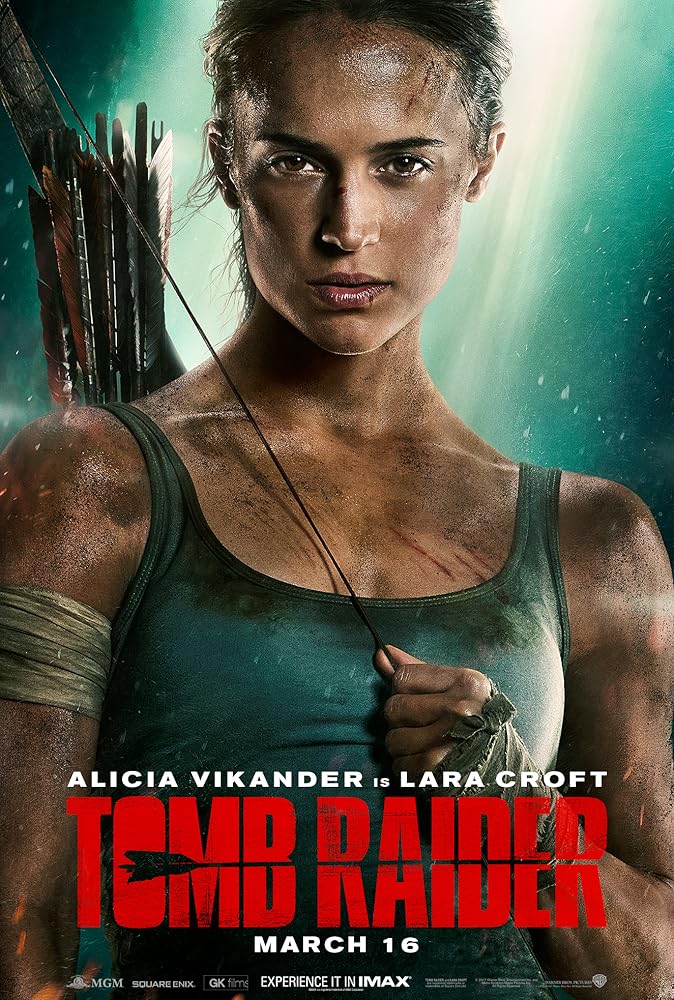
When I first reviewed this film back in March, I gave it a 3/5 rating
and noted that while it wouldn’t be the one to break the dreaded curse of
poorly-received film adaptations of popular video games, at the very least it
was one of the genre’s better outings. But while I do still stand by that specific
argument, this ultimately became one of the rare instances where my initial opinion
of the film changed considerably as time went on. Now to the film’s credit,
when it does get into its big action set-pieces, these sequences are
well-handled and do a nice job of replicating the thrills of some of the most
standout moments of the recent Tomb
Raider video games. However, these only occur during the second half of a
film that suffers from an extremely slow opening that takes its sweet time when
it comes to getting Lara on the mystical island of Yamatai. And even after
that, it still runs on a basic ‘origin’ plot that primarily focuses on Lara’s
relationship with her long-lost father Richard. Sure, there is some decent
emotional depth to come from this, especially once Lara learns that her father
is still alive. At the same time, though, the film would’ve benefitted more by
adding in some of the characters and plotlines from the 2013 Tomb Raider game, including Lara’s best
friend Sam and the other crew members who were on the same ship that Lara was
on before she got stranded on Yamatai. It’s a shame, really, because despite
some of the pre-release skepticism that revolved around her casting, Alicia Vikander
does give it her all as Lara Croft. Unfortunately, though, the film just
doesn’t match her commitment to the part. Still, compared to other films in the
genre, this one at least tried.
And now we move on to
the Top 10, which is always started off by films that I was generally ‘on the
fence’ about. In other words, these are the films that were far from being the
worst of the year but weren’t necessarily that good, either. And at Number 10,
we have a prime example of this in a film that I feel rather bad about when it
comes to putting it on here as it was made by a very talented filmmaker. Sadly,
though, this was ultimately an underwhelming take on its iconic source material,
especially when compared to its Disney counterpart.
10. MOWGLI: LEGEND OF THE JUNGLE
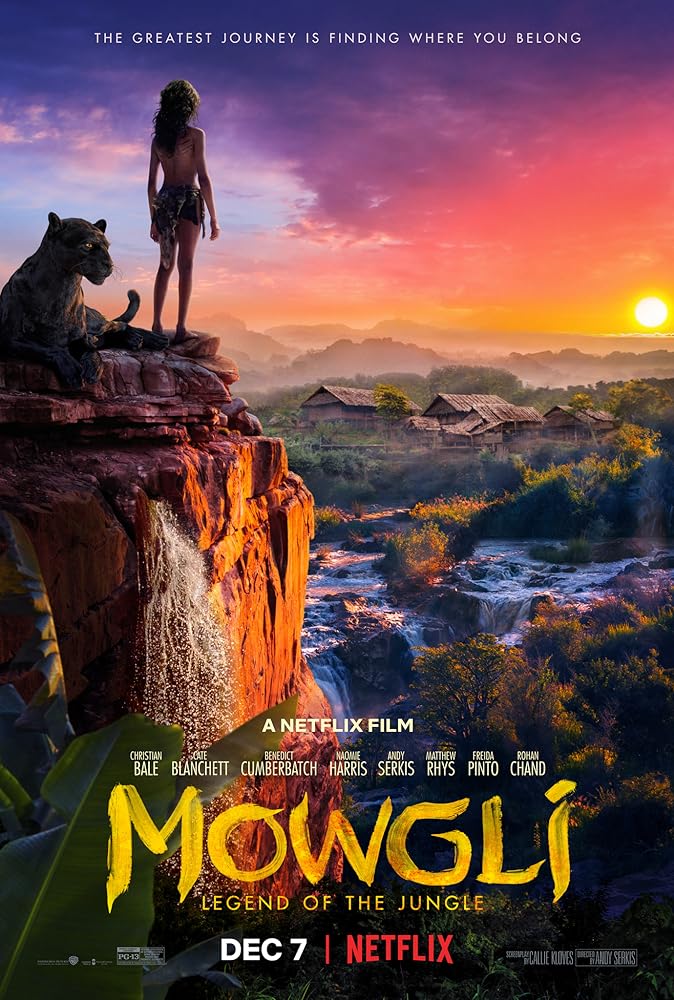
In the early 2010’s, two different live-action adaptations
of author Rudyard Kipling’s classic novel The
Jungle Book were put into production. The first of these to come out came
in 2016 via Disney and director Jon Favreau’s remake of the studio’s 1967
animated classic. However, instead of just being a straight-forward remake of
the original film, Favreau combined elements from both the film and the novel
to give it its own unique identity. And upon its release, the film was a
massive critical and commercial success, grossing over $966 million worldwide
and still standing as the most critically-acclaimed installment of Disney’s
recent line of live-action remakes. As such, I think it’s safe to say that the
success of Favreau’s film ended up having a huge effect on the other
live-action adaptation of The Jungle Book
that was being developed by Warner Bros and directed by motion-capture icon
Andy Serkis. For his adaptation, Serkis promised that it would be a darker and
more faithful take on the source material. In other words, there weren’t going
to be any musical numbers and the film wouldn’t shy away from the gruesome results
of attacks made by either Shere Kahn or a human hunter. However, while the film
was initially slated for an October 2018 release date, its theatrical release
was ultimately canned when Warner Bros. sold the rights to Netflix, who
premiered it online in December. This was reportedly done because Warner Bros
feared that the film wouldn’t do so well in theaters. And yet, regardless of
how it got released, something about it feels unfinished.
To be clear, the film’s darker tone isn’t its biggest issue.
Even when you factor in a sequence where Mowgli comes across the decapitated
head of his wolf friend Bhoot (yes, seriously…) and the occasional awkward tonal
shift, it does let the film differentiate itself from previous adaptations. Plus,
it does do a decent job of setting up Mowgli’s traditional arc of overcoming
his status as an ‘outsider’ in the eyes of his jungle brethren, especially through
the importance of him having to pass a trial known as ‘the Running’ so that he
can officially join the wolf pack. However, once the film sends Mowgli to the
man-village, this is where things start to get quite problematic in terms of
the writing. Mowgli’s time in the man-village only takes up a small part of the
run-time, and the addition of a secondary villain in hunter John Lockwood negatively
affects the plot to the point where the notorious Shere Kahn ends up getting
severely undermined as an antagonist. And if that wasn’t enough, these two
villains are then dealt with quickly in an extremely abrupt and lackluster
finale. Ultimately, though, the most disappointing aspect of the film… is that
the visual effects aren’t that good. Sure, as one can expect from an Andy
Serkis production, the film’s motion-capture effects are generally solid. Unlike
Favreau’s film, the use of mo-cap is a lot more prominent to the point where
the facial features of the actors playing the primary animal characters are
easily recognizable. And yet, this film’s mo-cap work ends up paling in
comparison to the effects of the Middle-Earth
films and the recent Planet of the
Apes films. The film’s CG jungle landscapes are even more lackluster,
especially when compared to sequences that were shot on location in South Africa.
In conclusion, this film at least deserves credit for its ambition. Despite its
narrative flaws, Andy Serkis’ direction is solid and the film sports an
excellent cast headlined by Christian Bale as the noble Bagheera, Serkis
himself as a far gruffer take on Baloo, and Cate Blanchett as Kaa who, unlike
the Disney films, is more in line with the novel by being one of Mowgli’s
mentors instead of an antagonist. However, while I’ve tried not to frequently compare
this one to the Jon Favreau-directed Disney flick, Mowgli: Legend of the Jungle ultimately lacks the visual polish and
heart of its Disney counterpart.
As fate would have
it, Number 9 is also a film that was originally intended for a theatrical
release before being abandoned by its studio and sold off to Netflix, and this
one is even more disappointing compared to Mowgli
because it comes from a franchise with a lot of potential.
9. THE CLOVERFIELD PARADOX
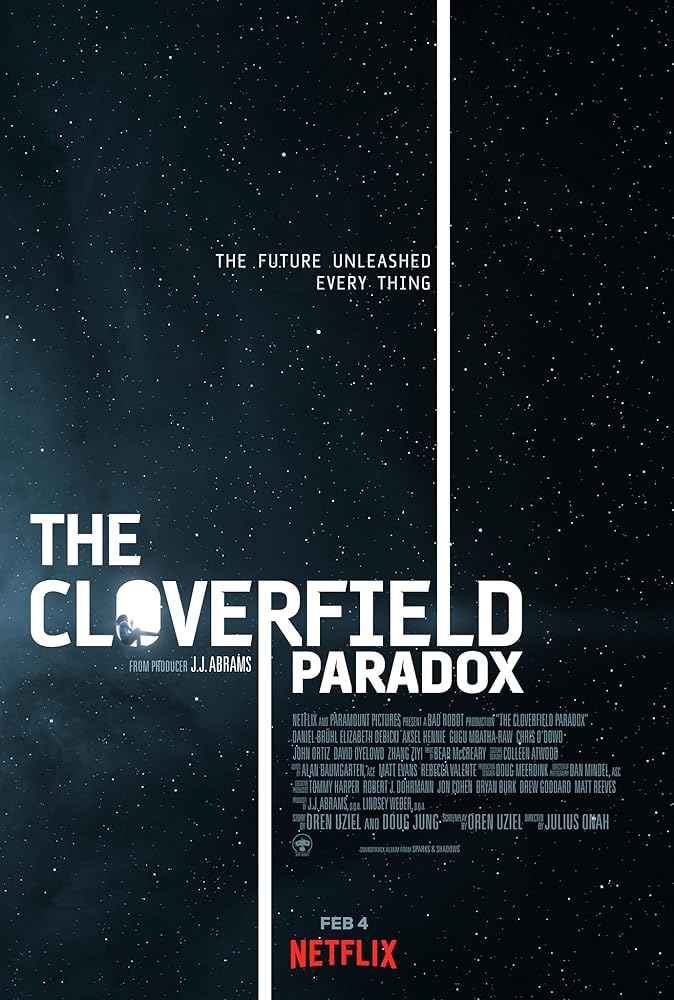
After years of speculation, a sequel to the 2008 found
footage monster flick Cloverfield finally
hit theaters in 2016. However, this was not an ordinary sequel. Instead, 10 Cloverfield Lane was a Hitchcockian
thriller that was pitched as a ‘spiritual sequel’ to its predecessor after
producer J.J. Abrams’ production company Bad Robot reworked a spec script
titled The Cellar to connect it to Cloverfield. Upon its release, the film
was a solid critical and commercial hit, showcasing the franchise’s newfound
potential as an anthology series a la The
Twilight Zone. And later that year, another Bad Robot film, then titled God Particle, was confirmed to be the
third installment of the franchise. A release date was confirmed for October
2017… before things started to get a lot more complicated. In July of that
year, it was announced that the film would be pushed back to February 2018 for
undisclosed reasons. In January 2018, the film was pushed back again, this time
to April 2018. Once again, no explanation was given for the delay, and just
like any J.J. Abrams production, details about the film were minimal to the
point where these release date shifts were literally the only bits of news
about them. The film continued to remain a secret until February 4th,
2018, when its first promo was aired during Super Bowl LII. The film was
officially renamed The Cloverfield
Paradox and it was revealed that it would be debuting on Netflix. The
biggest surprise, though, was that the film would premiere that very night
after the game. Ultimately, though, this bold marketing strategy was better
than the film itself.
Like Universal’s recent remake of The Mummy, this is a film that is clearly more focused on setting
up the lore for its franchise rather than ensuring that its own story is solid.
The ways in which the film connects to the previous Cloverfield films is fine, for the most part, mainly through the
reveal that debris from the film’s main locale, the ‘Cloverfield Station’, was
what crashed into the ocean at the end of the first Cloverfield. But as for the main plot itself… it’s just a clone of
films like Alien and Sunshine where the crew of a space
station find themselves being offed one by one by a mysterious force. Sure,
this film does feature some effectively brutal kills, but the story is incredibly
predictable and the characters are vastly underdeveloped, wasting a talented
ensemble cast that includes Daniel Bruhl, Elizabeth Debicki, and David Oyelowo.
One member of the cast does manage to get some decent material to work with, however,
and that honor goes to Gugu Mbatha-Raw as main protagonist Ava Hamilton AKA the
only character in the film to get any sort of character development through the
reveal of a tragic incident where she lost both her kids in a house fire. In
short, like Mowgli, it’s been made
clear that this film’s fate as a Netflix release was because its studio (in
this case, Paramount) wasn’t that confident in the final product. It has been
reported that J.J. Abrams had planned on fixing the film in post-production,
but he ultimately couldn’t do so due to his commitment to Star Wars: Episode IX. Still, regardless of how it would’ve turned
out had J.J. been able to work on it as he had hoped, The Cloverfield Paradox is a sadly underwhelming installment of its
promising franchise.
With Number 8, we
have a genuine rarity in that this is quite arguably the first film produced
under the Disney banner that’s appeared on my annual ‘Worst of’ lists. Usually
Disney films end up on the other list, but as many of my peers have pointed out
over the years, you won’t like every single film that’s made by your favorite
studio.
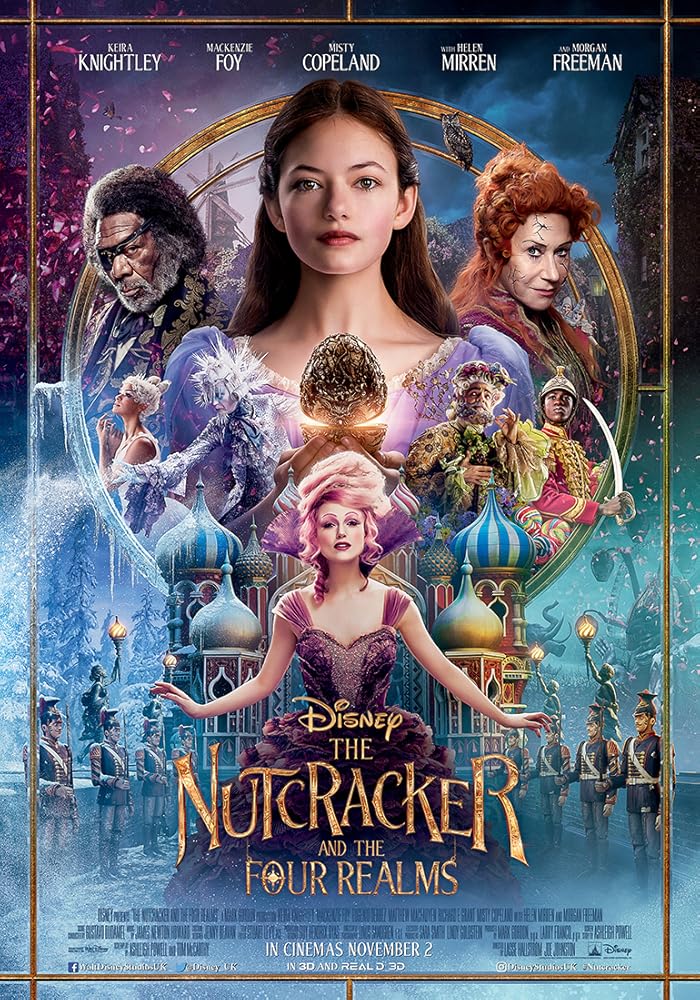
8. THE NUTCRACKER AND THE FOUR
REALMS

As I noted in my review for this film back in November, I
didn’t necessarily ‘dislike’ this ambitious spin on the classic story of The Nutcracker as there are some genuinely
good things about it, mainly in terms of its visuals. While it can be argued
that this is another example of CGI overload like Tim Burton’s Alice in Wonderland, the visual effects
in this film are quite solid and they do succeed in bringing the bright and
colorful world of the Four Realms to life, especially thanks to some solid
cinematography by Damien Chazelle’s go-to DP Linus Sandgren. The film also has
some solid performances from those who treat the material seriously,
specifically Mackenzie Foy as main protagonist Clara, Helen Mirren as the
‘villainous’ Mother Ginger, and newcomer Jayden Fowora-Knight as the titular
Nutcracker. However, this then ties into the film’s biggest issue in that it
suffers heavily from severe tonal shifts. While the initial set-up for the
story, specifically Clara learning more about her mother Marie’s past as the
original ruler of the Four Realms, is treated seriously, almost all the
sequences that take place within the Four Realms are incredibly over-the-top in
nature. And because the film still tries to have a lot of serious moments over
the course of its runtime, these two extremes frequently collide and, simply
put, do not gel well. This is especially the case with the film’s biggest twist
that revolves around the big reveal of its true main antagonist, the Sugar Plum
Fairy.
Right from the get-go, Clara is led to believe that the Four
Realms are in danger of being overtaken by Mother Ginger, ruler of the desolate
Land of Amusements. To stop her, Clara is told of a special machine that can
turn the Four Realms’ inhabitants into toys and vice versa, which is how her
mother created the world in the first place. However, after Sugar Plum activates
the machine and starts to amass an army of toy soldiers, it’s revealed that
Mother Ginger wasn’t the sinister tyrant that she was made out to be. Instead,
it’s Sugar Plum who plans on taking over the Four Realms as she blames Marie
for abandoning them in favor of living the rest of her life with her family. Now
while I’ll admit that I don’t have a lot of experience with The Nutcracker outside of a general
awareness of it, I don’t think that I’ve ever come across a version of the
story where the Sugar Plum Fairy is an antagonist. Granted, this could’ve
worked in theory, but because the film has a short 99-minute runtime and a
surprisingly brisk pace once Clara enters the Four Realms, this twist literally
comes out of nowhere. To be fair, though, Keira Knightley does deserve some
credit for, at the very least, committing to what is easily one of the weirdest
performances in recent memory. In conclusion, this is another film that had quite
an interesting production. While it was primarily directed by veteran filmmaker
Lasse Hallstrom, fellow veteran director Joe Johnston supervised the film’s
reshoots when Hallstrom became unavailable due to scheduling conflicts. And because
Johnston’s contributions to the film proved to be quite substantial, he and
Hallstrom ended up sharing the directorial credit in what is a genuine rarity
when it comes to a production of this nature. At this time, there hasn’t been
much info on what Johnston added to the film although it has been reported that
he primarily buffed up the finale to make it ‘more exciting’. However, regardless
of what he added to the final product, The
Nutcracker and the Four Realms is an underwhelming take on its iconic
source material. I mean, at the very least, it’s a harmless family flick, but
at the same time, it’s still rather bland.
Say, remember back in
May when I did a retrospective on The
Dark Crystal and Labyrinth, the
two non-Muppet films directed by Muppets creator
Jim Henson? This was primarily done to honor the impending release of his
company’s newest film… even though the film wasn’t set to come out until
August. To be perfectly frank, the reason why the retrospective was done in May
was so that I could have some new material published on this site during a time
where the only other posts from that month were reviews of Deadpool 2 and Solo: A Star
Wars Story. And then, if that wasn’t enough, I didn’t even end up seeing
this new Henson production when it first came out. Having now seen it, it was
probably for the best that I didn’t see it in theaters…
7. THE HAPPYTIME MURDERS
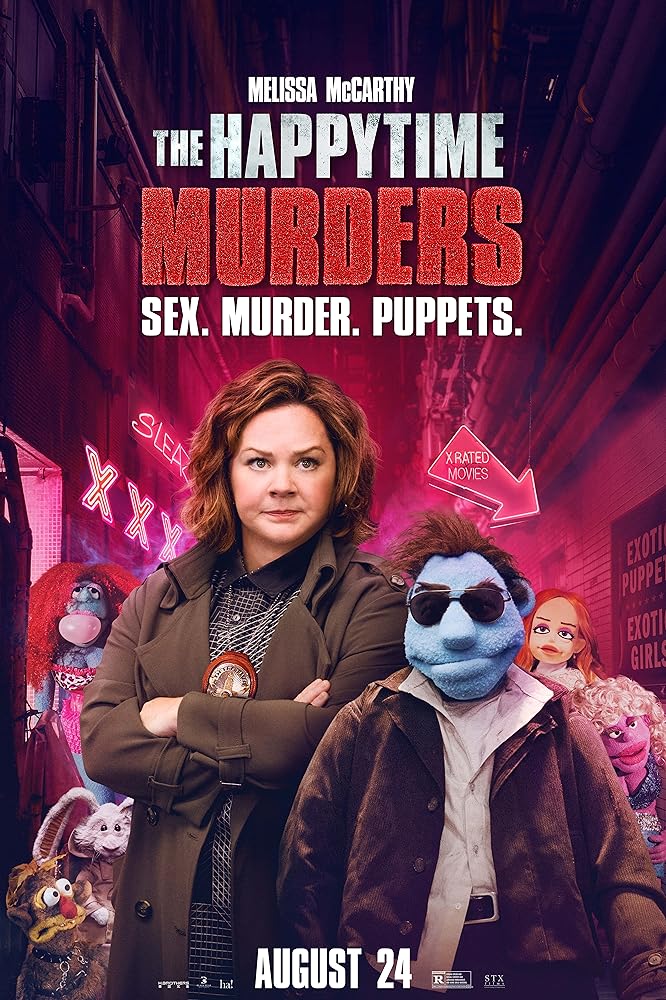
The Happytime Murders is
a rare adult-oriented outing from the Jim Henson Company and was directed by
Jim Henson’s son Brian, who also helmed the beloved Muppet Christmas Carol and the cult classic Muppet Treasure Island. The film focuses on a puppet ex-cop turned
private investigator named Phil Phillips who investigates into a string of
murders revolving around the cast of an old television sitcom that he has quite
a history with. Like any Henson production, the main reason to watch this film
is for its impressive puppetry work, as the filmmakers continue to do a great
job when it comes to having their puppet characters seamlessly interact with
humans. It’s a shame, then, that the story itself is incredibly predictable and
goes through all the usual beats of a murder mystery plot, from a traumatic
incident from the main character’s past that destroyed his career to a
seductive femme fatale with ulterior motives. And while the film may tout
itself as an R-rated comedy that’s ‘No Sesame, All Street’ (a tagline that
literally got them sued by Sesame Street),
it lacks the clever writing of other Henson productions, stranding a talented
ensemble cast that includes Melissa McCarthy, Maya Rudolph, and Joel McHale. In
short, it could be argued that this film’s shortcomings may have been due to it
spending a few years in development hell. To put this all into perspective, I
remember this film being announced around the time that the 2011 Muppets film was released, and to be
perfectly blunt, this does feel like a film that didn’t necessarily evolve much
from its initial story pitch.
To close out the
first half of this year’s ‘Worst of’ list, we have a film that stars a talented
actress and is directed by someone that she’s worked with to great success in
the past. Sadly, though, their latest collaboration isn’t quite as good as
their previous projects.
6. RED SPARROW
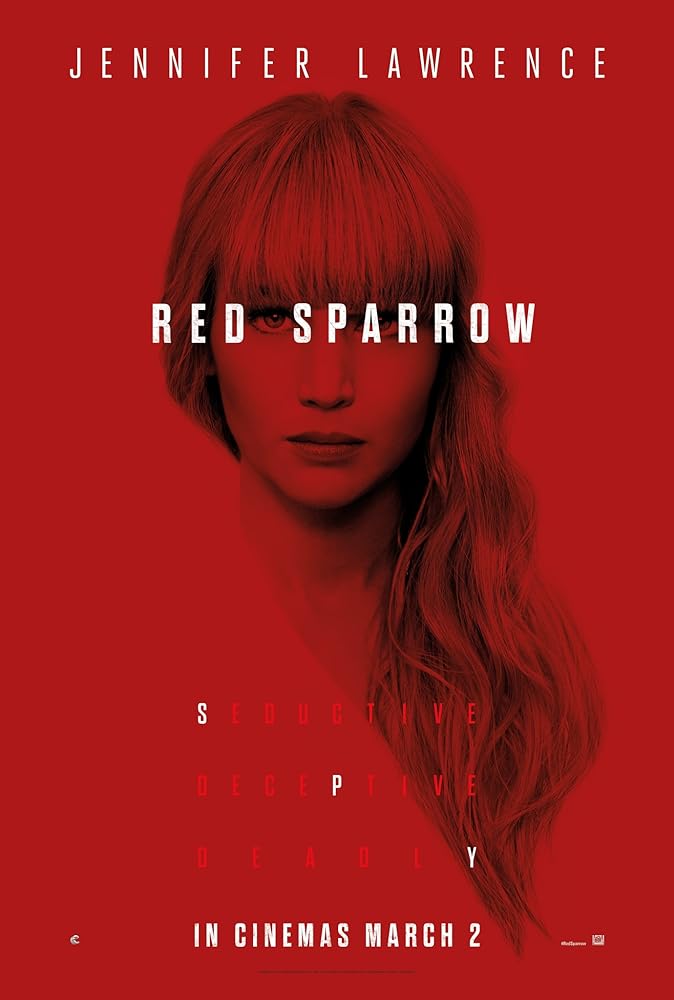
First off, let me make it clear that despite this being the
second film of hers in a row to appear on my annual ‘Worst of’ list, I’m still
a big fan of Jennifer Lawrence. Despite what I’ve said about last year’s
disastrous biblical drama Mother and
what I will be saying about this film, none of their shortcomings are her fault
as she does give good performances in both. In this instance, she reunites with
director Francis Lawrence (again, no relation) after they’d worked together on
the last three Hunger Games films. F.
Lawrence also brings in a lot of the same crew that they had worked with on
those films, so at the very least, this film is well-shot and utilizes its
wintry Russian setting to solid effect. Despite this, though, the film suffers
from an incredibly slow pace that isn’t helped in the slightest by its hefty
140-minute run-time. And because of this, the film slogs through a very basic
spy story that starts out fine enough but then ends up taking some major
stumbles as the film goes on. While it has been reported that the ending was
changed from its source material (author Jason Matthews’ 2013 novel of the same
name) to give it more of a feminist angle, it’s still a generic finale in which
the main protagonist makes a critical power move that allows her to get out of
her predicament alive. In other words, this film’s a lot like 2017’s
similarly-themed spy thriller Atomic
Blonde but without the solid pacing. Granted, the dialogue-driven approach
that this film takes over the genre’s usual action-oriented perspective is
admirable, but it still could’ve benefitted from a few trims here and there as
some scenes and plotlines feel quite extraneous. Thus, despite the best efforts
of Jennifer Lawrence and a supporting cast that includes Joel Edgerton, Jeremy
Irons, and Charlotte Rampling, Red
Sparrow is a spy thriller that thoroughly lacks the ‘wow factor’ of the
genre’s most iconic films.
And that concludes
Part 1 of Rhode Island Movie Corner’s list of my Top 10 Worst Films of 2018.
Thanks for following along and be sure to check back in tomorrow for Part 2 of
this list, where I’ll be revealing the Top 5.