Showing posts with label Shazam. Show all posts

Tuesday, April 14, 2020

TOP 12 FAVORITE FILMS OF 2019: #9-7

Welcome back to Rhode Island Movie Corner’s annual end-of-the-year list in which I’m counting down my Top 12 Favorite Films of 2019. This is Part 2 of 4 and today we’ll be covering films #9-7. For those of you who are just joining us that might have missed out on Part 1, where I listed my 6 Honorable Mentions and films #12-10, just head to the link that’s provided below. Let’s not waste any more time and get back to the list…

Today’s post starts off on a controversial note as our Number 9 pick is one of the many recent live-action remakes of a Disney animated classic. In fact, I’d say that this one has arguably become the new focal point when it comes to the debate over the necessity of this current trend of Disney’s live-action output. Nevertheless, I still found it to be just as enjoyable as its animated counterpart, which is saying a lot in this instance given that the latter is my personal favorite Disney animated film of all-time.
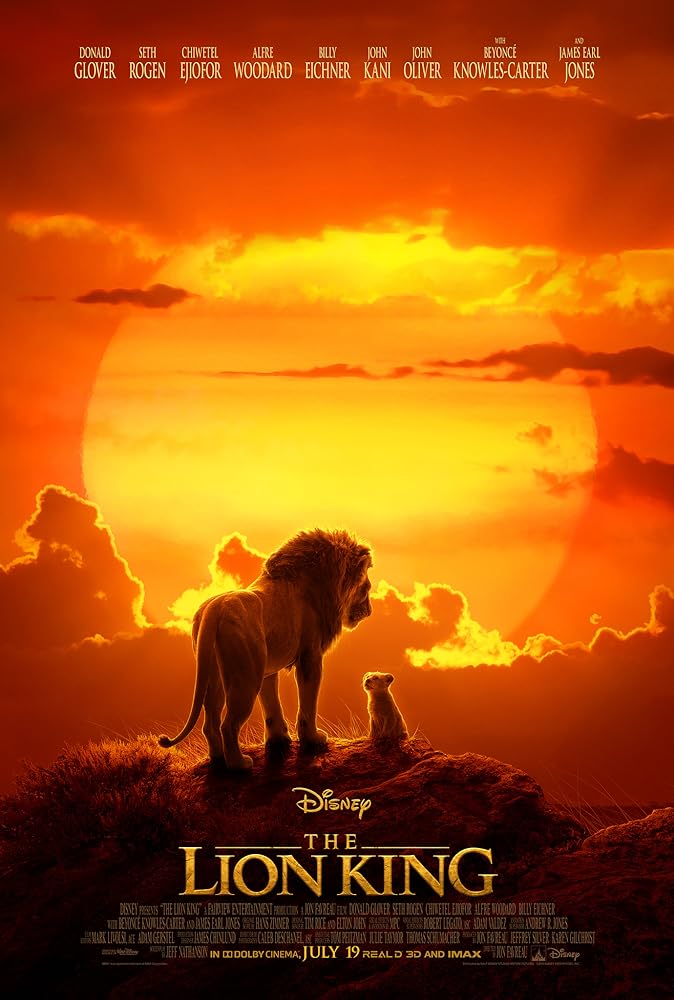
I really don’t need to explain why Disney’s recent line of live-action remakes have been a considerable source of contention within the film fan community because the situation basically speaks for itself. Simply put, many have questioned why Disney would even bother to do live-action adaptations of some of their most beloved animated films, especially since many of the recent ones have attempted to remake films from the Disney Renaissance era AKA the films that folks of my generation are undoubtedly the most attached to. This includes 1994’s The Lion King, which ended up being Disney Animation’s highest-grossing film for two decades until that record was overtaken by Frozen in 2013. And yet, ironically, since director Jon Favreau’s remake is technically still an animated film since the characters and environments are CGI, its $1.6 billion performance at the box-office officially puts the story of Simba, the king of Pride Rock, back on top as the highest-grossing animated film of all-time. However, this film has probably been the most polarizing of the recent Disney remakes to date, especially due to how Favreau ultimately retells this classic story. Say what you will about these recent remakes, but at the very least, they have made a few key narrative changes that help keep them from being a carbon copy of their animated counterparts, whether it’s by giving Prince Charming more scenes with Cinderella or turning Maleficent into a tragic anti-hero. This was also very much the case with Favreau’s previous Disney remake, 2016’s The Jungle Book, where he combined elements from both the animated film and Rudyard Kipling’s original novel to craft its plot. The Lion King, on the other hand, basically maintains the exact same plot as the original film, from the infamous wildebeest stampede that leads to the death of Mufasa to the final clash between Simba and his nefarious uncle Scar atop Pride Rock while the entire kingdom burns around them.   

The only major narrative changes that I can think of primarily revolve around Nala, who’s introduced as an adult at a much earlier point in the film instead of when she attacks Timon and Pumbaa. She also has a minor rivalry with Shenzi the hyena that culminates in one final brawl between them at the end. Aside from that, a few non-dialogue sequences from the original are also extended, including the scene where a tuft of Simba’s mane (disclaimer: in the original, it was a collection of dust and pollen that he’d laid down in) makes its way to Rafiki, promptly informing him that Simba is still alive. Despite this, however, Favreau does do a nice job of properly maintaining the emotional depth of the original film. This includes, of course, Mufasa’s death, which still hits hard even if, based on what I’ve come across online, some found it to be rather goofy in its execution. Another thing that people tend to bring up about this film is that because it goes for a more realistic atmosphere from a visual perspective, it doesn’t feature a lot of the most iconic images from the original, including the scene where Timon distracts some hyenas by dancing the hula. Overall, though, this doesn’t bother me that much and the film does make up for its lack of a grass skirt wearing meerkat with a brilliant reference to ‘Be Our Guest’ from Beauty and the Beast. It also helps that the film has an excellent voice cast to portray these classic characters. James Earl Jones slips back into the role of Mufasa with ease and Chiwetel Ejiofor is a wonderful successor to Jeremy Irons as Scar. Donald Glover provides a nice earnestness as adult Simba and while she doesn’t factor into the film as much as you may think given who’s voicing her, Beyoncé does a solid job in the role of adult Nala. But, of course, the biggest scene-stealers are Billy Eichner and Seth Rogen as Timon and Pumbaa, whose brilliant ad-libbed humor makes them worthy successors to Nathan Lane and Ernie Sabella.

I also loved the new takes on the original film’s classic soundtrack of songs written by Elton John and Tim Rice. That said, though, I’m aware that the remake’s soundtrack has been one of its most polarizing elements to the point where even Elton John thought it was underwhelming. Overall, though, most of the new renditions of these classic songs turn out solidly. ‘Circle of Life’ is still an unforgettable opening number, especially since it retains the iconic opening Zulu vocals from Lebo M. ‘I Just Can’t Wait to Be King’ is just as toe-tapping as ever and I love the little instrumental beat that’s added in before the “Everybody Look Left/Everybody Look Right” lyric. ‘Be Prepared’? Okay, I’ll admit that this version is the one disappointment of this soundtrack, namely because it’s basically just a single verse that’s mostly spoken. I mean, it is worth noting that, before the film’s release, it was rumored that there was a chance that the song wasn’t going to be included. But while it ultimately made it into the film, one of the most iconic villain songs to come from a Disney film ends up feeling like an afterthought. Thankfully, ‘Hakuna Matata’ is still an all-time classic with some fun alterations like Timon not censoring Pumbaa’s use of the word ‘farted’ during his solo or the fourth wall jokes that the duo make regarding how much time has passed (“Yeah, you’ve grown 400 pounds since we started…”). And sure, Seth Rogen’s admittedly not the best singer, but Billy Eichner, JD McCrary (who voices young Simba), and Donald Glover do make up for this. Finally, some excellent duet work between Donald Glover and Beyoncé results in a lovely rendition of the classic romantic melody that is ‘Can You Feel the Love Tonight’. As for the two new additions to the soundtrack, there’s ‘Spirit’, a powerful solo from Beyoncé (Because come on, why wouldn’t you give Queen Bey her own song?) that plays when Simba finally decides to return home to Pride Rock, and ‘Never Too Late’, a fun and upbeat track from Elton John that’s played during the credits.

Given that the original Lion King is my favorite Disney animated film of all-time, I wouldn’t be surprised if some of you figured that this would be the one Disney remake that I’d be against. Even I’ll admit that as much as I try not to let expectations impact my thoughts on a film given how that’s never a good thing (just wait until we get to #3 on this list), the fact that The Lion King means so much to me did have a considerable impact on how I viewed the remake. Ultimately, though, I did enjoy this new version of it just as much as I did the original. Does this mean that I think it’s the better version of The Lion King? No, no I don’t. At the same time, though, I’m not going to hold that against this film since I feel that it’s great in its own unique way, which also applies to my views on the other recent Disney remakes. As I’ve said before, it’s truly not that big of a deal that they exist because, at the end of the day, it’s not like they’re going to replace their animated counterparts. That’s why I’m thankful for the advent of Disney+, which has prominently featured both versions of the various films that have been remade these past few years. Now sure, as far as these remakes are concerned, The Lion King is probably the most straight-forward of the bunch since its biggest change is its visual style rather than doing anything to update the story. And yet, if we were to look at this new Lion King through the lens of it being a visual effects demonstration, it’s a full-blown success in that regard since the same visual wizardry that brought Favreau’s version of The Jungle Book to life is once again on full display here. In other words, it’s truly saying something about how authentically real this film looks when its only ‘real’ shot is the very first shot of the African landscape before the start of ‘Circle of Life’. In other words, this is easily one of the best-looking films of 2019.

2017 was the very first year that a horror film managed to earn a spot on my Top 12 Favorite Films of the Year list, and while it only managed to make the #12 spot that year, I still credit that film as the one responsible for giving me the opportunity to start getting more invested in the genre. And while this isn’t meant to imply that I found it to be ‘better’ than its predecessor, its sequel does manage to land at a higher spot on this year’s list.
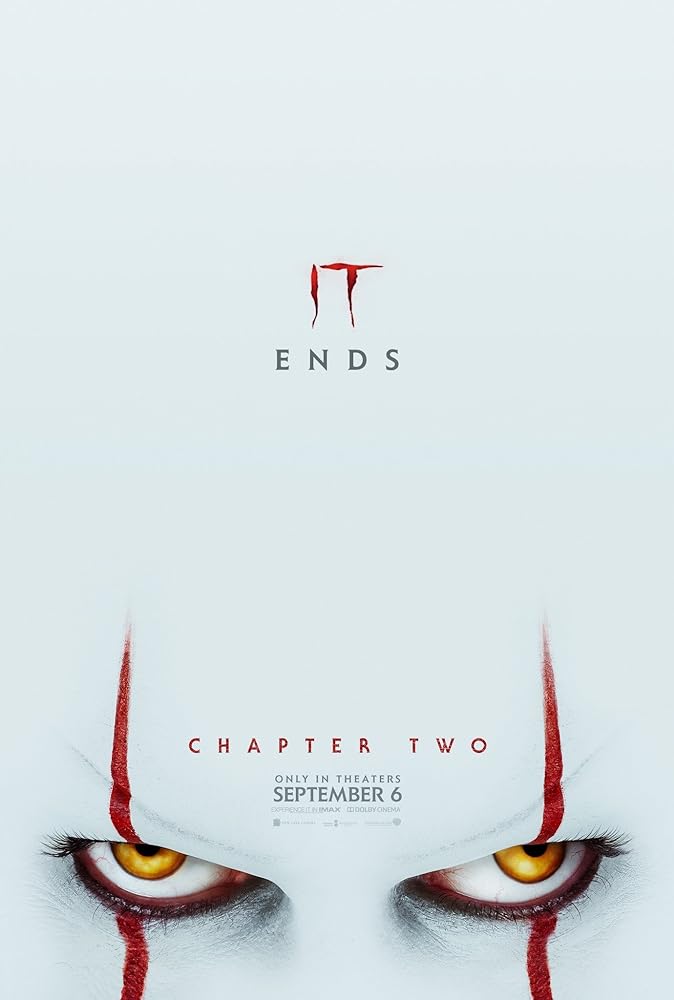
When it comes to the 1990 miniseries adaptation of Stephen King’s It, many felt that its weakest moments were the ones that involved the adult incarnations of the story’s main protagonists, the Losers’ Club. Thankfully, that is not the case with director Andy Muschietti’s big-screen adaptation of the story as the scene in this film where the Losers’ Club reunites for the first time in 27 years far surpasses anything that we got from the adults in the miniseries. And, of course, this is all thanks to how impeccably cast this film is. While it could’ve been easy to just go with an all-star cast for this beloved group, Muschietti instead opts for actors who are perfect counterparts to the young leads from the first film. Sure, there are some big stars like Jessica Chastain, who was the clear front-runner to play Beverly Marsh, and James McAvoy, who’s outstanding as Bill Denbrough, but then you have guys like Isaiah Mustafa, who thoroughly proves that he’s more than just ‘the Old Spice Guy’ with his phenomenal turn as Mike Hanlon. In short, everyone is perfectly cast in their respective roles, and when it comes to the biggest standouts, that honor goes to the duo of Bill Hader and James Ransone as Richie Tozier and Eddie Kaspbrak. Ransone is quite arguably the most pitch-perfect casting of the whole film when compared to his younger counterpart from Part 1, Jack Dylan Grazer, but Hader shines the most as Richie, who serves as both the film’s primary source of comic relief and the catalyst behind one of its most devastating moments. However, we still get plenty of scenes with the younger versions of the Losers’ Club, and while some CGI work had to be done to de-age them to look like they did in the first film, it isn’t really that noticeable unless you seriously try to look for it.

Despite this, however, there is one major aspect of It: Chapter Two that has been a key source of contention amongst both critics and audiences… its runtime. It: Chapter Two is the very definition of a ‘massive’ film, clocking in at nearly three hours long. And while I don’t feel that there were any major parts of the film that ‘dragged’, I do see why this may be an issue for others. This especially applies to the middle part of the film, which ends up maintaining a very specific formula where almost every member of the Losers’ Club reflects back to a moment from their childhood where they dealt with Pennywise on their own before having a new run-in with Pennywise as adults. The final battle with the infamous dancing clown is another sequence that goes on for a while and the Native American ritual known as the Ritual of Chüd that the Losers’ Club uses to defeat him can sometimes feel a tad bit convoluted. And yet, while I admittedly haven’t read a lot of the original novel (I’m a few chapters in on Audible, and as I’m sure many of you already know, Stephen King books can be quite long), I’m aware that a lot of these issues were also apparent there as well. Thus, I think Muschietti and the writers do deserve credit for at least trying to streamline some of the most complicated aspects of this story, particularly the Ritual of Chüd (Seriously, from what I’ve heard, it’s even weirder in the book). Ultimately, though, the main reason why this film’s hefty runtime doesn’t bother me too much is that, at the end of the day, we’re still following the same terrific and fully endearing group of protagonists that we were introduced to in the first film. And because of this, the best aspect of It: Chapter Two is how it dutifully retains its predecessor’s strong emotional poignancy.

Simply put, there are a lot of powerful emotional moments in this film; in fact, I’d dare say that It: Chapter Two even manages to surpass its predecessor when it comes to this aspect of the story. There’s the struggle that Bill goes through to overcome the guilt that he feels over his brother Georgie’s death since it’s revealed that he wasn’t sick on that fateful rainy day like he had claimed. This guilt is then further compounded by his ultimately failed efforts to save a young boy named Dean from the same tragic fate. But when he’s finally confronted with this dilemma by a vision of his younger self during the group’s final encounter with Pennywise, he overcomes it by affirming to himself that this one decision of his did not cause his brother’s death. Stanley Uris’ suicide is another devastating moment and its impact is felt throughout the whole film. When Richie nearly leaves town, he’s ultimately convinced to stick around when he drives by Stan’s church and remembers the speech that Stan gave at his bar mitzvah about the struggles of growing up and how everyone has memories that they wish they can forget. This is a particularly beautiful sequence as Stan’s monologue is paired with scenes of the young incarnations of the Losers’ Club at some of their lowest points. And then there’s the final sequence in the film where Bill opens a letter that Stan had written to the group before his death. In the letter, he admits that he was simply too scared to face Pennywise again and knew that the group wouldn’t stand a chance against him if they weren’t all together. Now… this may create a complicated situation for some since it can be argued that this sequence is trying to ‘rationalize’ Stan’s suicide. Thus, if you’re one of those folks who has an issue with this scene because of that, I don’t blame you because I fully recognize why. At the very least, some of the other messages that Stan puts in his letter (e.g. being proud of who you are and never letting go of those you love) are quite touching. These words are then coupled with scenes of the Losers’ Club living their best lives, including Ben and Beverly in a loving relationship and Mike, the only member of the group who stayed in Derry, finally leaving for the first time in his life.

But when it comes to the most devastating moment in this film, that would have to be everything that revolves around the death of Eddie. While the Losers’ Club does defeat Pennywise once and for all, Eddie gets impaled by Pennywise’s spider-like final form and ultimately succumbs to his wounds. This death is already tragic on its own merits given all the strong character development that our heroes have gotten in these films, but the real kicker is how Richie reacts to it. This effectively ties back to a moment earlier in the film when Richie was confronted by Pennywise, who proceeded to boast that he knew Richie’s “dirty, little secret”. And with Eddie’s death, we finally understand what that secret was; Richie was in love with Eddie. Because of this, it’s practically impossible not to shed a tear during the scene where the other members of the Losers’ Club console the normally loud-mouthed, wisecracking Richie or his final scene where he finishes writing the letters that he had carved onto a bridge back when he was a kid, ‘R+E’. As I’ve said numerous times in the past, I feel that one of the most important elements to a great horror film is giving us main characters that we truly care about, and these two It films have been some of the best examples of that in recent years. Thus, while I totally get why some people feel that It: Chapter Two wasn’t necessarily as good as its immediate predecessor, I’d still argue that it serves as a perfect bookend to this timeless story of love, friendship… and a killer clown. And because of this, I can now safely say that the amazing duology that is director Andy Muschietti’s adaptation of Stephen King’s It is now, collectively, my new favorite horror film of all-time.

While this isn’t the first time that I’ve talked about a superhero film on this year’s list given that Captain Marvel was one of my Honorable Mentions, Number 7 is the first of the genre’s 2019 slate to make it into the Top 12. The film in question is the latest installment of the DC Extended Universe and one that I personally hope will end up serving as a template for how future DC films should be made going forward.

7. SHAZAM

Djimon Hounsou, Adam Brody, Meagan Good, Zachary Levi, Michelle Borth, Grace Fulton, Asher Angel, and Jack Dylan Grazer in Shazam! (2019)

It goes without saying that the DC Extended Universe’s road to replicating the ongoing success of the Marvel Cinematic Universe has been rocky, to say the least. One could say that this is due to how they tried to rush the process of setting up its cinematic universe so that they can do a Justice League film despite having little to no time to set up its characters. Others might pin it all on the frequent creative conflicts behind-the-scenes that often led to several films being neutered in the editing room against the filmmaker’s will. But if you ask me, the biggest reason why the early DCEU films didn’t turn out as good as they could’ve been is because the franchise fell victim to believing the ongoing stigma against the MCU that views their films as being nothing more than family-oriented comedies. Thus, the early DCEU films tried way too hard to be the complete opposite of that, and while I don’t have a problem with ‘dark and gritty’ superhero stories, these films were arguably more focused on cool visuals and having their characters partake in cool action sequences rather than giving them proper character development. I mean, as much as people like to rag on the MCU films for their extensive use of humor, they still go above and beyond when it comes to developing their characters so that we’re able to fully connect with them. Let’s put it this way… imagine if Marvel decided to make the first Avengers right after doing Iron Man 2, effectively skipping over Thor and Captain America’s first solo films in favor of them making their official franchise debut in the highly anticipated team-up outing. That’s exactly what happened with 2017’s Justice League, and as much as the DCEU fandom wants to harp on the fact that the film that we got wasn’t director Zack Snyder’s intended version of it, I’d argue that the bigger issue was that it ultimately served as a prime example of how Warner Bros. and DC shouldn’t have rushed it out into theaters.

Thankfully, though, it seems like the DCEU is starting to get its act together when it comes to realizing that a good story and strong characters should always come first when it comes to this genre. Case in point, 2017’s Wonder Woman and 2018’s Aquaman provided their respective protagonists with the strong character development that they sorely needed after initially debuting in films where they were a small part of a much larger story. This then brings us to the DCEU’s latest (and quite frankly, best) installment, Shazam. On the surface, some may view this as DC’s attempt at trying to do an MCU-style superhero film, and to be fair, it’s easy to see why. Aside from some surprisingly dark moments that feel like they came straight from a horror film (which does make sense given that’s what director David F. Sandberg is primarily known for), this is easily the franchise’s most light-hearted installment to date. And sure enough, it’s full of excellent comedic moments, from the wacky antics of an easily scared mall Santa to the various attempts at giving the main protagonist a cool superhero name (“His name is Thundercrack!” (“That sounds like a butt thing…”)). However, when I say that Shazam is the closest that the DCEU has ever gotten to making an MCU film, I don’t just mean that in the sense that it’s a light-hearted comedy that’s the superhero equivalent of the 1988 classic Big. Instead, it’s because the film does what every good MCU film does; namely, it takes its time to properly develop its main protagonist, Billy Batson, and give him a solid, emotional character arc.

As the film begins, he’s solely focused on trying to find his mom, who he was separated from at a young age. Thus, even after he ends up getting placed in the care of foster parents Rosa and Victor Vazquez, he makes little effort to connect with his new foster siblings. And while his transformation into a superhero with ‘bullet immunity’ and other various superpowers does lead to him bonding with his disabled foster brother Freddy Freeman, who’s a huge superhero enthusiast, even that goes awry when he starts using his powers for selfish reasons. Eventually, he does manage to reunite with his mom… resulting in the most devastating moment of the entire film when he learns that when they got separated, she intentionally abandoned him because she felt that someone else can take much better care of him than she ever could. But if there is a silver lining to this whole ordeal, it’s that it ultimately compels Billy to reunite with his ‘real family’, his foster siblings. The arc that Billy goes through in this film is very much on par with some of the most emotional character arcs that we’ve seen from the MCU, and as Billy, Asher Angel excellently handles all the character’s big emotional moments. But, of course, the role of Billy Batson is a character that requires two actors to play it, and Zachary Levi is also outstanding as Billy's superhero alter-ego Shazam. Whereas Angel does the heavy lifting for the character’s emotional arc, Levi handles the bulk of the film’s comedic material and utterly nails the role of a kid in an adult superhero’s body. It also helps that both Angel and Levi have an excellent screen partner in Jack Dylan Grazer as superhero fanboy Freddy Freeman, who’s easily one of the best sidekicks to ever come from this genre. His extensive knowledge of superheroes works in numerous ways as it contributes to plenty of the film’s best humorous moments while also doing its part to keep Billy grounded when the fame and glory start to get to his head.

This then brings us to Billy and Freddy’s foster siblings; college-bound Mary (Grace Fulton), introvert Pedro (Jovan Armand), gamer Eugene (Ian Chen), and the ever-adorable Darla (Faithe Herman). Now admittedly, the film doesn’t spend too much time with them apart from Darla, who’s initially the only one aside from Freddy to know about Billy’s new powers, and Mary given that she’s the de facto den mother of the group. But if you want to talk about one of the most satisfying payoffs to ever come from a superhero film, then just look at this film’s finale, where Billy finally understands the advice of the grand wizard Shazam and transfers his powers to his foster siblings, turning them into superheroes as well. This, in turn, really helps the film’s finale (set at a winter carnival) stand out against the obviously much grander-scaled finales that have come from this genre. Plus, almost every one of Billy’s foster siblings (save for Mary (played as an adult by Michelle Borth), whose notable superhero scenes were reportedly cut for time) gets their chance to shine here, especially Meagan Good as adult Darla since she utterly nails the role of a 9-year old girl in a grown-up’s body. It also helps that our heroes have a great villain to face in Mark Strong’s Dr. Sivana, who serves as a terrific foil to Billy. His whole backstory revolves around the fact that, for most of his life, he was mercilessly bullied by his older brother and belittled by his father, both of whom regarded him as a loser. And while there was an instance where he was approached by the wizard Shazam to be considered as his next champion, he was ultimately rejected when he was tempted by a group of monstrous creatures known as the Seven Deadly Sins, who he later unleashes as an adult. However, the Seven Deadly Sins just end up being a group of indistinguishable CGI monsters; in other words, they’re the film’s only real weak link. Nevertheless, Sivana is easily one of the DCEU’s greatest villains to date and it’ll be interesting to see what comes of the potential alliance between him and an alien caterpillar known as Mister Mind that confronts him in the film’s mid-credits scene.

(And yes, there is a villain from the Shazam franchise that is a telepathic caterpillar from another planet. Need I remind you that this is the same genre that has given us a sentient tree creature and a hot-headed weapons-toting raccoon?)

But, of course, there has also been much anticipation regarding the eventual debut of Shazam’s most famous adversary from the comics, Black Adam. For years now, Dwayne Johnson has been slated to play the character and was long rumored to appear in this film. However, it was ultimately decided not to include Black Adam in favor of him making his official debut in his own solo film in 2021. And while I know that some people were disappointed by this, it was probably for the best since Johnson’s reportedly intense commitment to the role might’ve been a bit too much for a film of this nature (and yes, I say that despite the previously mentioned sequences in this film that are the very definition of nightmare fuel). However, it’s practically a given at this point that Billy Batson will eventually face off against the grand wizard Shazam’s former champion sometime soon; until then, we can all relish in the greatness of his feature film debut, which is currently my favorite installment of the DC Extended Universe. Now granted, I fully recognize that one could find a lot of bias in that sentiment given my affinity for the MCU and how it could be argued that Shazam is the DCEU’s attempt at trying to do a film in the style of the MCU. But like I’ve said numerous times in the past, MCU films are much more than the ‘silly comedies’ that certain audiences regard them as… and when I say ‘certain audiences’, I find that this usually means the hardcore faction of the DCEU fandom that is still loyal to Zack Snyder and his unrealized plans for the franchise. As I’ve also pointed out in the past, hardcore DCEU fans have easily been one of the most toxic fandoms in recent memory to the point where even when the franchise has a genuine critical/commercial hit on its hands, they still inexplicably end up finding something to complain about. They continue to accuse anyone who dares to say something critical about the DCEU films of being ‘paid by Disney’, never give Patty Jenkins the full credit that she deserves for her work on Wonder Woman, and yes, have not shut up about the Justice League fiasco and the mythical ‘Snyder Cut’  for the past two years.

Now as some of you might remember, I did give positive reviews for both of Zack Snyder’s first two DCEU films, Man of Steel and Batman v Superman: Dawn of Justice, when they first came out. But when it came to Justice League, I was amongst the many who found it to be the only disappointing release from what was otherwise one of the superhero film genre’s greatest years to date. And since then, I’ll admit that this has had an impact on my views of the early DCEU films and I’m not as positive towards them now as I am for the likes of Wonder Woman, Aquaman, Shazam, and Birds of Prey. Simply put, the Zack Snyder era of the DCEU is over, and as much as the DCEU fandom will try to argue otherwise, it’s much better off because of it. While Snyder may be one of the best visual directors in the industry, story and character development has never been his strong suit, and that was very much apparent in his DCEU films. By comparison, a film like Shazam doesn’t try to go all out with the visuals and instead does what every good superhero film should do by telling a strong, character-driven story that elicits phenomenal emotional depth. It just so happens that this is also one of the funniest installments of a genre that has given us an endless array of classic comedic moments over the years. Thus, in conclusion, I hope that one day the DCEU fandom realizes that there is honestly nothing wrong with the idea of incorporating comedy into a superhero film.   

And that concludes Part 2 of Rhode Island Movie Corner’s Top 12 Favorite Films of 2019. Thanks for following along and be sure to check back in tomorrow for Part 3 as we kick off the second half of this list with films #6-4.

Friday, July 19, 2019

2019 Midyear Recap


We’re now halfway through 2019 and despite the increasingly frustrating actions of modern fandom that continue to paint the film fan community in a negative light, the time has come for Rhode Island Movie Corner’s annual Midyear Recap. For those who are new to this site, the title of this post speaks for itself. Simply put, it’s just me going over every new film that I’ve seen so far this year from worst to best… in other words, it’s basically the equivalent of going through the annual rankings lists that I make on the film fan website Letterboxd. As is always the case, these current rankings are not officially set in stone, meaning that, for example, my current pick for ‘worst of the year’ probably won’t still be what it is by year’s end (I’ll be honest, though, my ‘best of the year’ will be… I’ll explain later…). Still, the one major advantage that these ‘Midyear Recap’ posts provide is that they’re the only posts that I do in a year (aside from the fan-based ‘Favorite Films of Summer’ polls) that allow me to truly go over everything that I’ve seen rather than just highlighting a select few. That, of course, is what always happens with my ‘Best of the Year’ and ‘Worst of the Year’ lists, which only focus on the 10 films (12 in the case of the ‘Best of’ lists) that I list and a select few Honorable Mentions. Thus, without further ado, it’s time to reflect upon the first six months of 2019 and the various films that have hit theaters in that timespan. With that in mind, I welcome you, ladies and gentlemen, to the 2019 installment of Rhode Island Movie Corner’s Midyear Recap.   

WORST OF THE YEAR (SO FAR)

GODZILLA: KING OF THE MONSTERS

Godzilla and King Ghidorah in Godzilla: King of the Monsters (2019)

I really wanted to like this film. As someone who ‘liked’ the 2014 American adaptation of Godzilla, I was hoping that this new film would fix some of the issues that quite a few people had with its predecessor. Namely, the hope was that it would give more screen-time to Godzilla, especially after it was revealed that the film would also feature several of his iconic monster co-stars, including Mothra, Rodan, and perhaps his most famous adversary, King Ghidorah. And yet, at the end of the day, it still feels like Godzilla’s playing more of a supporting role in his own franchise. Like the previous film, King of the Monsters places a lot of emphasis on its human characters, and while a lot of people harped on the 2014 film for doing this, at least that one didn’t have to juggle an extremely large ensemble cast. And because of this, this film’s cast is wasted considerably despite the best efforts of folks like Kyle Chandler, Vera Farmiga, and Millie Bobby Brown. At the very least, when the film does showcase Godzilla doing what he does best (i.e. fighting other monsters), those parts are well-handled even if these new Godzilla films could benefit greatly from having some more action sequences that are set during the day. Ultimately, though, Godzilla: King of the Monsters is a bit too serious for a film of this nature. Yes, the previous Godzilla film was incredibly serious as well, but you can arguably view that as director Gareth Edwards’ way of paying tribute to the original Godzilla film from 1954.

Now admittedly, Godzilla: King of the Monsters has been the only 2019 film that I’ve seen so far that I ‘didn’t like’. Usually, the next category in this post would be the other films that I wasn’t too big on, hence the category’s name, Other Notable ‘Stoinkers’. And yes, as some of you might have guessed, I basically borrowed the ‘stoinker’ term from the popular film review series Schmoes Know. Thus, given my current situation, I’m doing something a little different this year by creating a new category that focuses on the films that I found to be just ‘okay’.

MIDDLE OF THE ROAD

MEN IN BLACK: INTERNATIONAL

Chris Hemsworth and Tessa Thompson in Men in Black: International (2019)

Since I’m not someone who usually dings a film for being ‘unnecessary’ (since that term can practically be applied to any film and, to be perfectly blunt, is starting to get a bit overused this year), that didn’t affect my views on this year’s rather disastrous spin-off of the classic Men in Black franchise. However, as I noted in my review for it, Men in Black: International endured a generally hellish production due to frequent creative clashes between director F. Gary Gray and producer Walter F. Parkes. Parkes reportedly ended up winning this conflict and the film that was ultimately released in theaters was his intended version of it rather than Gray’s, which would’ve been a lot timelier with its narrative. Parkes’ cut, by comparison, ends up being a basic rehash of the previous Men in Black films, from a twist reveal that surrounds its primary McGuffin to a finale that’s set at a notable historic landmark. And because it’s so intent on playing things ‘by the book’, the film rarely lives up to the opportunities that it had to showcase how the world of Men in Black operates outside of New York, hence the International in its title. At the very least, the film does benefit from a solid pair of performances from Chris Hemsworth and Tessa Thompson as Agents H and M, respectively. The strong chemistry that made them such a dynamic duo in Thor: Ragnarök is on full display here and it also helps that they do end up providing a different dynamic when compared to J and K from the original trilogy. Ultimately, though, this (plus a scene-stealing turn from Kumail Nanjiani as a tiny alien named Pawny who joins H and M on their adventures) isn’t exactly enough to prevent Men in Black: International from being an underwhelming entry in this long-running franchise. It’s not ‘terrible’, per se, but it goes without saying that it could’ve been a heck of a lot better.

THE UPSIDE

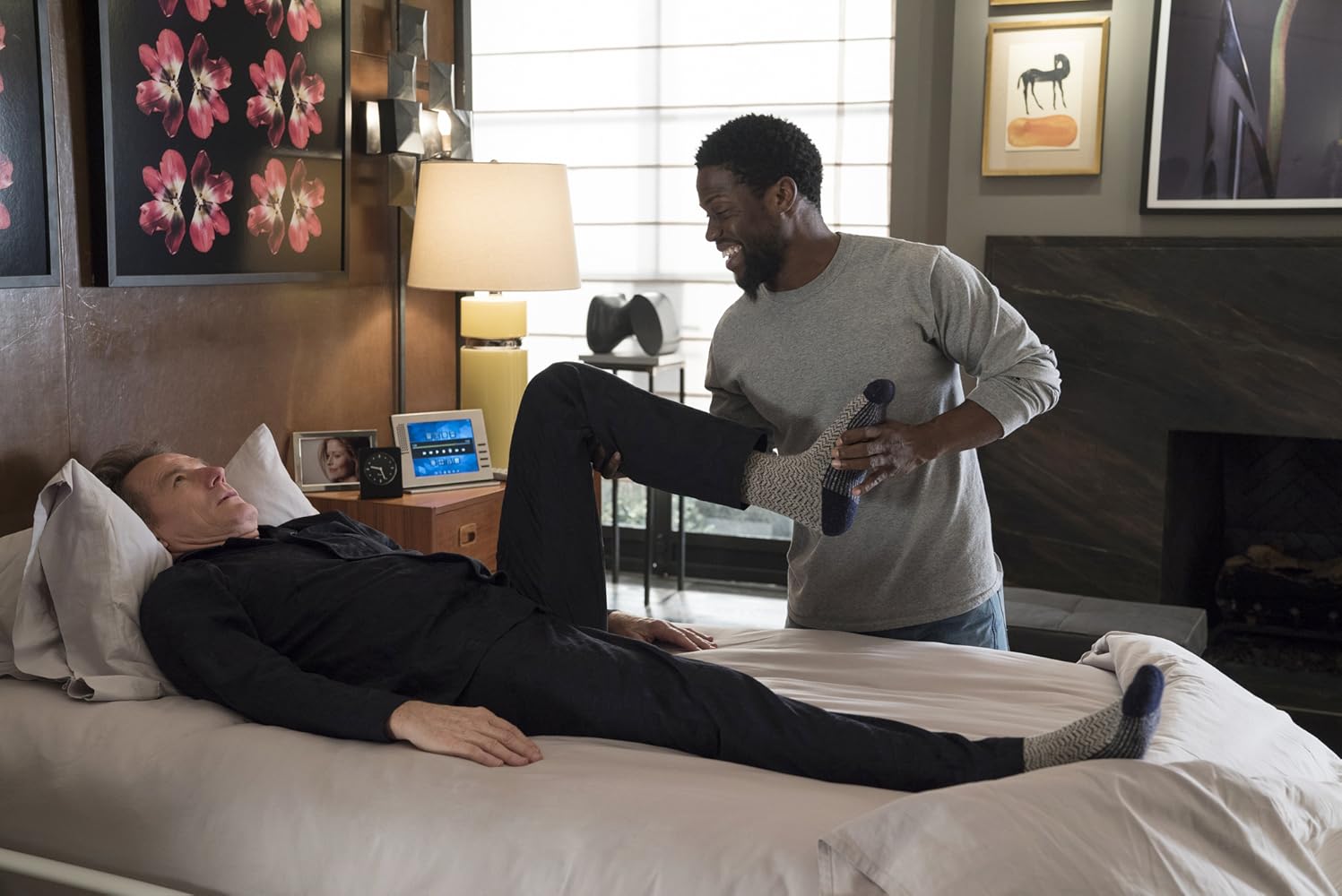
Bryan Cranston and Kevin Hart in The Upside (2017)

After spending a few years plagued by distribution issues, The Upside, an Americanized remake of 2011’s French hit The Intouchables, finally hit theaters this past January. And while this does mean that the film is exactly what you would expect from a January release, it still manages to be a decent little crowd-pleaser. Like its source material, the film follows a recently paroled man who ends up becoming the caretaker for a quadriplegic millionaire. As such, what follows is your basic comedic misadventure about two incredibly mismatched characters who, despite their differences, end up getting along and help each other become better people in the process. And yet, despite its simplistic narrative, the film does a decent enough job with its humor thanks in large part to its excellent lead duo of Kevin Hart and Bryan Cranston. These two have excellent comedic chemistry, with Hart’s usual animated persona mixing greatly with Cranston’s dry wit. At the same time, though, the film also has some very effective emotional moments, and while we know that Cranston’s got plenty of experience when it comes to dramatic material (Breaking Bad, anyone?), Hart gets a prime chance to flex his own acting chops as well. Because of all this, I can safely say that while The Upside isn’t really anything special, it’s still an enjoyable dramedy that, if anything, is better than most of the films that come out in January.

WORTHWHILE RECOMMENDATIONS

DUMBO

Eva Green in Dumbo (2019)

Dumbo is the very definition of a harmless family flick… which is a statement that I’m sure some of you will find questionable given that this is another one of Disney’s recent live-action remakes. Not only that, it’s a remake of one of the studio’s earliest animated features directed by a filmmaker who, despite having a very prestigious resume, has become a lot more polarizing in recent years. Still, there are quite a few things to love about this new rendition of the lovable elephant whose large ears allow him to fly. Under the direction of Tim Burton, this film is yet another showcase of his trademark visual style. In this instance, Burton eschews his traditional gothic visuals for a heartfelt tribute to the classic Americana of yesteryear. This is especially apparent from the film’s grand locales, including the lavish theme park named Dreamland where most of the film’s second half takes place. Really, this film’s only major shortcoming is that the new stuff that it adds to expand upon the original film’s story is quite simplistic in terms of its execution. Granted, the original Dumbo had a simplistic plot as well (after all, it is literally only an hour long), but while the new film goes as far as to cover every key moment of the animated film in just the first half-hour so that it can delve into a new plot revolving around a corrupt business tycoon, the new human characters don’t exactly get a lot to work with. However, for what it’s worth, this film’s cast (which is primarily made up of Burton regulars like Danny DeVito, Eva Green, and Michael Keaton) does do solid enough jobs with what they’re given. As such, while I’m not saying that the new Dumbo is better than its animated counterpart, it’s still a generally entertaining film whose heart is very much in the right place.

POKEMON: DETECTIVE PIKACHU

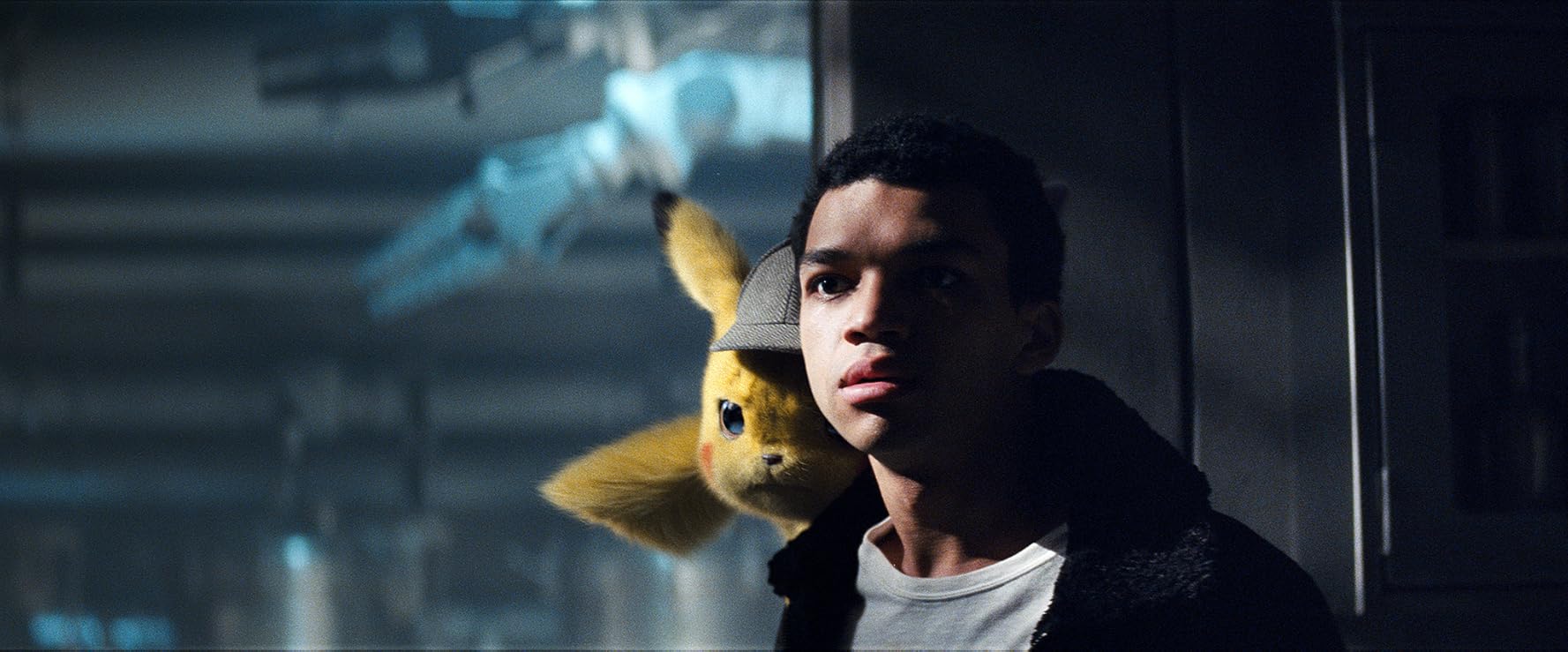
Ryan Reynolds and Justice Smith in Pokémon Detective Pikachu (2019)

To reiterate a statement that I made in my review of this film, I am genuinely impressed by everything that Pokémon: Detective Pikachu has managed to accomplish. To date, it is the best-reviewed live-action film based on a video game and the only one to boast a ‘Fresh’ rating on Rotten Tomatoes. Granted, its RT score is only in the high 60’s, but then again, most films of this genre tend to have an RT score that’s 30% or lower. How did this film manage to avoid that terrible fate? Well, simply put, it did so by providing a very faithful take on its source material. In this instance, while the film is an adaptation of a spin-off of the Pokémon series instead of one of the main games, it is full of references and nods to the various other facets of the franchise that are sure to delight those who are amongst its devoted fanbase. And yet, at the same time, it also manages to appeal to those who aren’t as familiar with Pokémon thanks to a story with solid emotional depth via main protagonist Tim Goodman’s efforts to figure out what happened to his father with the help of a talking Pikachu. While the film’s primary mystery plot ends up yielding predictable results, the strong camaraderie between Tim and Pikachu (played excellently by Justice Smith and Ryan Reynolds, respectively) is the heart of the film. Plus, this film also proves that Reynolds isn’t just limited to Deadpool’s unabashedly raunchy style of humor, though with that said, he does manage to throw in some jokes that go under the radar for a film that’s primarily geared towards younger audiences. Ultimately, though, Pokémon: Detective Pikachu proves to be a very fun time, and while it’s far from perfect, it still deserves a lot of credit for all its success despite being part of one of the unluckiest genres in all of film.

DARK PHOENIX

James McAvoy in Dark Phoenix (2019)

To start things off, yes, I did like Dark Phoenix, the latest installment of the X-Men film franchise… that is also its worst-reviewed entry to date. I’ve gone on record stating that I’m a huge fan of the franchise’s First Class era as it was directly responsible for making me a fan of X-Men. X-Men: First Class and X-Men: Days of Future Past are two of my favorite non-MCU superhero films of all-time and I will still go on record saying that X-Men: Apocalypse was unfairly overlooked by most of the internet. As for Dark Phoenix, though, while I do think that it’s not even remotely as bad as its low RT score suggests, it still could’ve been a lot better. As its title suggests, the film is an adaptation of the popular Dark Phoenix Saga storyline from the comics in which X-Men team member Jean Grey’s telepathic powers begin to corrupt her physically and mentally. This storyline was previously adapted to, to put it lightly, ‘mixed’ results in 2006’s X-Men: The Last Stand, and while this new film does opt for a more faithful adaptation of its source material, it still doesn’t give this plotline the emotional gravitas that it deserves. Simply put, the story of Jean Grey going rogue is treated like your standard superhero/supervillain conflict, and the addition of a woefully underdeveloped bunch of antagonists in the alien race known as the D’Bari doesn’t help the matter. For what it’s worth, though, longtime series writer Simon Kinberg makes a respectable directorial debut thanks to his solid handling of the action sequences. And while many of the newer additions to the franchise don’t get much to work with this time around, James McAvoy and Michael Fassbender are still phenomenal as Xavier and Magneto. Ultimately, though, that didn’t prevent this film from underperforming with both critics and audiences, the latter of whom are clearly just waiting for the series to get rebooted so that the X-Men can join the Marvel Cinematic Universe.

GLASS

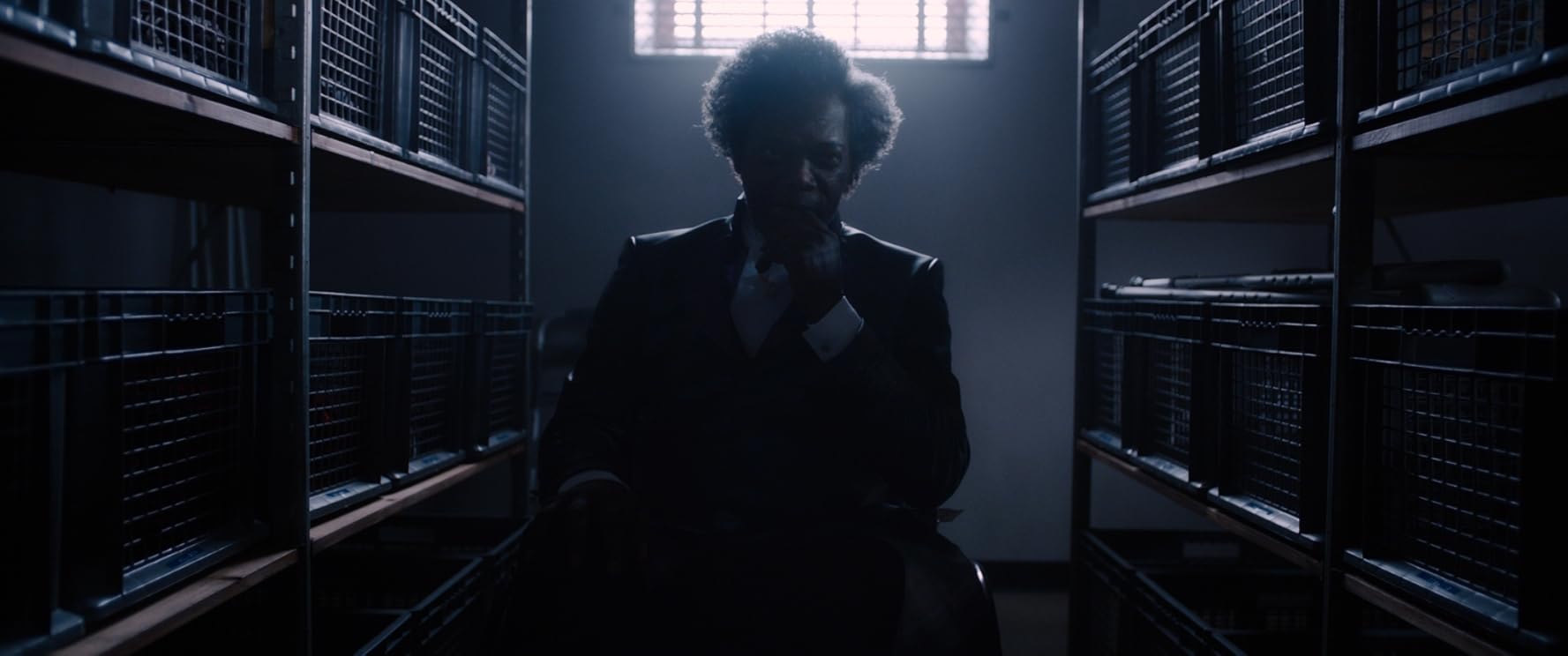
Samuel L. Jackson in Glass (2019)

When I saw M. Night Shyamalan’s 2017 effort Split in theaters, I hadn’t yet seen Unbreakable, which is quite arguably his most popular directorial effort. Still, I was at least aware of it enough to understand the film’s ending which, thanks to an unexpected Bruce Willis cameo, connected it to the world of Unbreakable. And thus, we now find ourselves with the finale of what has been referred to as the Eastrail 177 trilogy, Glass… which, after two straight hits that helped redeem his career, effectively put Shyamalan back in the same polarizing territory that he was in before 2015. As you might have guessed, this was mostly due to that trademark Shyamalan twist ending which, in this case, pulled a major bait and switch by teasing a potential clash between David Dunn and Kevin Wendell Crumb that ultimately didn’t happen. A few other sources of contention amongst critics and audiences were the big reveal regarding the intentions of new character Dr. Ellie Staple, who was revealed to be a member of a secret organization that hunts superpowered beings, and the extremely controversial ‘trivial’ death of David Dunn. However, while I do agree that the ‘secret organization’ reveal really could’ve been handled a lot better (namely, by having some actual set-up instead of it just randomly coming out of nowhere), the rest of the film does manage to be a solidly engaging finale to this unexpected trilogy.

Simply put, I at least understand what Shyamalan was going for with this film. Instead of being a big-budget blockbuster like the MCU films, Glass was intended to focus more on the psychological aspects of a world of superpowered beings. That was very much the case with Unbreakable, which presented a grounded take on a traditional superhero origin story, and while Split was more of a thriller by comparison that didn’t reveal its connection to Unbreakable until the very end, its psychological themes were still in line with what we got from the first film. Thus, Glass is basically a combination of the best elements of its two predecessors, limiting its biggest action set-pieces to the beginning and end of the film while filling the rest of the run-time with discussions about superhero behavior and character-driven moments of pure emotional poignancy. And on that note, the film also benefits greatly from the excellent trio of performances from the trilogy’s main leads. Bruce Willis continues to get a lot of this trilogy’s biggest emotional moments as David Dunn while Samuel L. Jackson fully revels in Elijah Price’s evolution into a full-blown criminal mastermind. Ultimately, though, the biggest standout of the bunch is James McAvoy who, just like in Split, fully commits (physically and mentally) to the role of Kevin Wendell Crumb, a man with 24 distinct personalities. And despite what I said before about the finale’s underdeveloped ‘secret organization’ twist, the film does sort of manage to bounce back from this thanks to a second twist that reveals that Elijah AKA Mr. Glass one-upped this organization and proved to the world that superheroes do exist. Thus, while I do understand why this film has proven to be quite the polarizing affair, I ultimately found myself amongst the crowd that did like it. I’m not saying that it’s the ‘best’ of the trilogy (that honor would have to go to Unbreakable), but I do think that it provides a fascinating conclusion to this story and the overall arcs of the three main characters who have headlined it excellently.

ALITA: BATTLE ANGEL

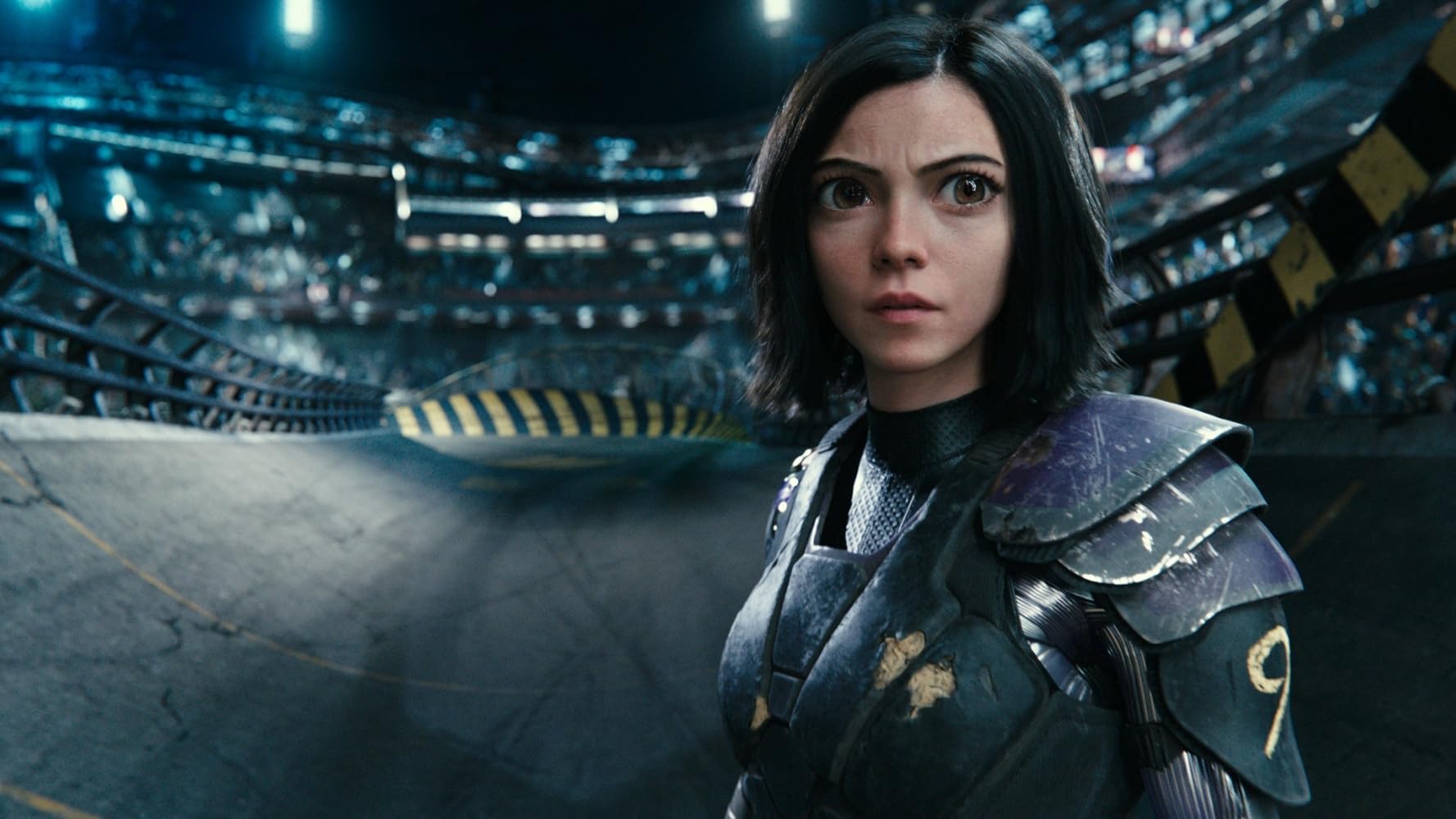
Rosa Salazar in Alita: Battle Angel (2019)

I got the chance to see Alita: Battle Angel early at the special fan screening that writer/producer James Cameron had set up at the end of January, and despite not having any experience with the original Battle Angel manga by Yukito Kishiro, I found Cameron and director Robert Rodriguez’s ambitious film adaptation to be quite solid. However, I do mean it when I say that this film is very ‘ambitious’ as Cameron described it as being an adaptation of the first four volumes of the manga. As such, it does often feel like the film is trying to tackle more than it can handle in a two-hour runtime. In other words, this is certainly one of those films that is hellbent on setting up a sequel, and while I personally don’t mind some of the things that it’s setting up, it also means that not every plotline for this film is given the attention that it should. Still, for what it’s worth, Rodriguez and Cameron certainly don’t skimp on the visuals, especially when it comes to bringing the title character to life. Despite some initial skepticism over the decision to give Alita large, anime-like eyes to honor the source material, this design does ultimately work in the final product. It also helps that Rosa Salazar does an excellent job in the title role, making Alita very sympathetic and handling the character’s arc from innocent cyborg girl to badass warrior very well. And while the rest of the cast doesn’t get as much solid material to work with as her, she’s still backed by some solid supporting roles from the likes of Christoph Waltz as Alita’s caretaker Dr. Ido and Ed Skrein as Zapan, a cocky cyborg bounty hunter who constantly crosses paths with her. Ultimately, though, it’s unclear right now if this will end up getting a sequel. Apparently, it did manage to break even at the box-office, but at the same time, this was one of those instances where it ended up getting saved by the worldwide box-office as it wasn’t that big of a hit here in the U.S. As such, I will note that while I am open to seeing where this franchise is going, right now we can only wait and see if it does indeed continue.

(P.S. It also would’ve been nice if this hadn’t become the film that misogynistic trolls rallied behind to spite a different film… but I’ll get to that in a little bit…)

ROCKETMAN

Taron Egerton in Rocketman (2019)

The Elton John biopic Rocketman is the second musical biopic revolving around a legendary musician from the U.K. in just two years that director Dexter Fletcher was involved with. The other film, of course, was last year’s Bohemian Rhapsody, even though that was an instance where Fletcher only came in to finish it after the whole ‘Bryan Singer incident’ and ultimately went uncredited for his work. But he takes full reign on Rocketman, resulting in a film that those who felt underwhelmed by Bohemian Rhapsody will probably find to be a lot better. Sure, like many of the other films in its genre, Rocketman does abide by several of the usual musical biopic tropes (e.g. a montage of drug/alcohol use that derails the main protagonist’s career). However, thanks to both A.) a strong visual style that perfectly honors Elton John’s knack for the eccentric flair, and B.) having a more honest spin on both his highs and lows, Rocketman manages to be one of the genre’s most authentic outings. But, of course, the biggest highlight of this film is Taron Egerton, who does a phenomenal job in the title role of ‘the Rocket Man’. We already knew that Egerton could do amazing renditions of Elton John’s music after his standout performance of ‘I’m Still Standing’ in the 2016 animated film Sing. And while this film does lead to his excellent takes on other classics like ‘Tiny Dancer’ and ‘Goodbye Yellow Brick Road’, he also fully succeeds in encapsulating Elton’s extravagant personality and, in the case of the more emotional moments of the film, his inner turmoil. With all this in mind (and at the risk of using an incredibly cheesy pun), Rocketman is truly a rockin’ time to be had thanks to its pitch-perfect portrayal of one of the most iconic figures of the music industry.  

JOHN WICK: CHAPTER 3 – PARABELLUM

Keanu Reeves in John Wick: Chapter 3 - Parabellum (2019)

As many have pointed out, the John Wick franchise is practically the antithesis of all the issues that many have had with modern action films. Rather than a bunch of action sequences that are full of quick cuts and erratic camerawork, the action sequences in John Wick are wonderfully shot and tightly edited to showcase their amazing fight choreography. That was the case with the original John Wick from 2014 and its first sequel, Chapter 2, in 2017, and as you have might guessed, the franchise has now gone 3 for 3 thanks to its latest installment, Parabellum. Given that it takes place immediately after the events of Chapter 2, the film puts John Wick through some of his toughest challenges yet now that he’s been excommunicated from the hitman community after he broke the Cardinal Rule and killed his target on Continental Grounds. But as always, Keanu Reeves continues to shine as the legendary ‘Baba Yaga’ thanks in large part to his full-on dedication to doing his own stunts. And as usual, he’s backed by a solid supporting cast that includes series regulars like Ian McShane and Lance Reddick and excellent newcomers like Halle Berry and Mark Dacascos. Really, the only thing holding this film back when compared to its predecessors is that there are times where it feels like the plot’s being stretched a bit thin for a film that notably boasts the longest run-time of any film in the series. Mind you, it’s still a very well-written action film that naturally expands upon everything that we got from the previous films, but at the same time, it can be argued that the first two films had tighter scripts. Ultimately, though, John Wick: Chapter 3 – Parabellum is another wonderful addition to this awesome new franchise and one that is already paving the way for a fourth film in 2021 that, given how great the last three films were, will surely be another stellar action flick.
   
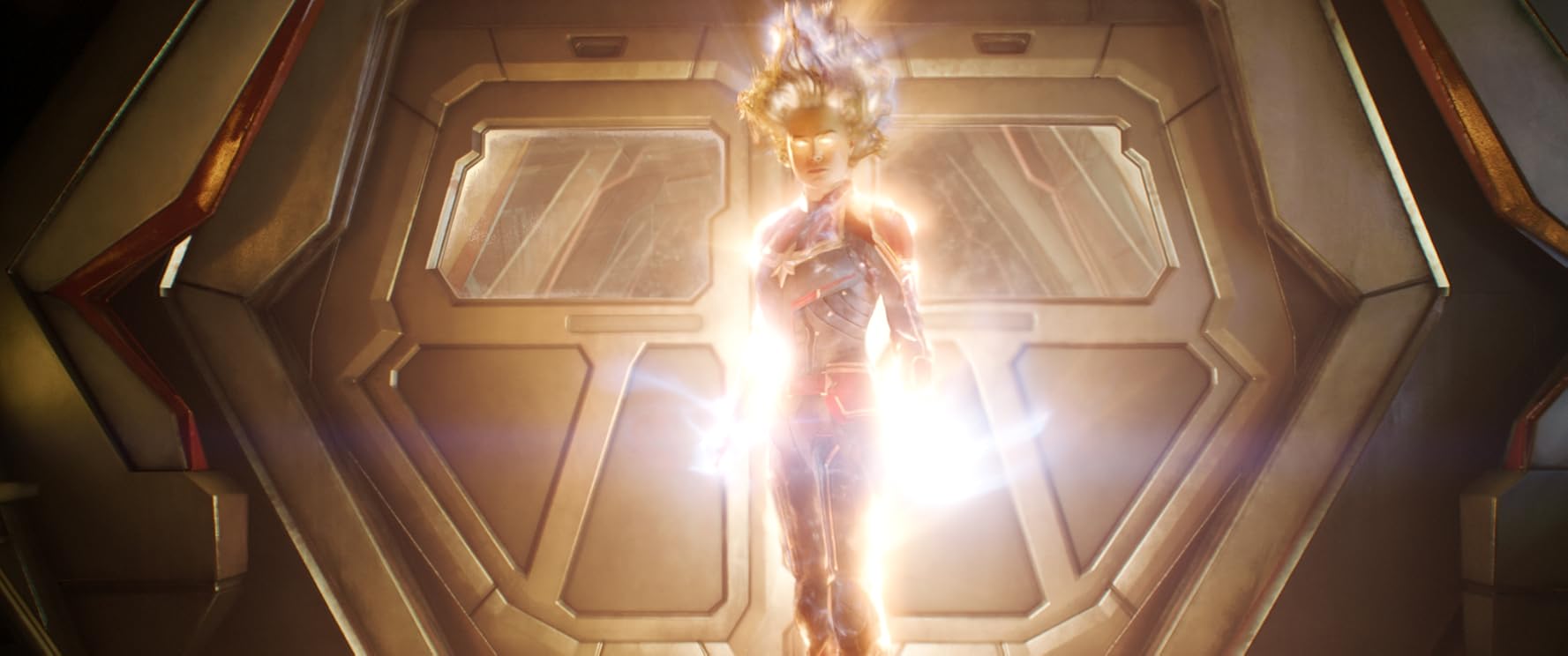
CAPTAIN MARVEL

Brie Larson in Captain Marvel (2019)

It’s quite sad that Captain Marvel ended up becoming one of those films that has practically defined the worst parts of modern fandom even though it didn’t even remotely deserve any of the intense backlash that it got. I mean, it’s truly saying something when the first female-led installment of the Marvel Cinematic Universe ends up being the one to attract this much controversy before its release. To be clear, I’m not referring to the various bits of skepticism that were being thrown around due to the advertising (which, to be perfectly blunt, I have no idea why this was happening, but that’s another story…). Instead, I’m referring to when Brie Larson commented on the need for greater diversity when it comes to film critics. Despite this being a perfectly reasonable request that yours truly is very much supportive of, this got misconstrued by the same misogynistic jackoffs who continue to rage over Star Wars: The Last Jedi as ‘Oh, Brie Larson hates all white men’. Thus, they proceeded to flood YouTube with clickbait garbage to the point where, nowadays, looking up videos of anyone who’s deemed ‘dangerous’ in their eyes (e.g. Rian Johnson, Kathleen Kennedy, heck, even J.J. Abrams) fully bombards you with this dreck. They also tried to combat this film by showing support for Alita: Battle Angel… which totally must’ve been successful given that Captain Marvel out-grossed Alita in its entirety in just one weekend on its way to becoming the MCU’s seventh billion-dollar grosser. Seriously, all this… for a film that’s totally fine and another great addition to its legendary franchise.

Now, for the record, I’m not saying that this is one of the MCU’s ‘best’ installments. It does start on a rather slow note and the plot itself is a far more straightforward affair when compared to some of the MCU’s most recent outings. And while the big twist that reveals that the supposed main villain Talos is only trying to protect a band of Skrull refugees is solidly done (while also giving us one of Ben Mendelsohn’s best performances to date as Talos), it ends up having a negative impact on the real villains, Starforce, since their roles in the plot are quite limited. Jude Law’s Yon-Rogg does get a pass, though, since the film properly establishes his role as a mentor for Carol. And on that note, this film’s biggest selling point is Brie Larson, who does a phenomenal job in the role of Carol Danvers. While some apparently found her to be a bit too braggadocious, Larson perfectly encapsulates Carol’s snarky attitude and hard-boiled tenacity to the point where her proper evolution into becoming Captain Marvel results in one of the most satisfying ‘superhero origin’ stories in recent memory. She also has a wonderful camaraderie with Samuel L. Jackson, who’s great as always as Nick Fury in a film that even manages to show us some of his backstory since it takes place in 1995 before he became the head of S.H.I.E.L.D. With all this in mind, it goes without saying that I implore you to not listen to the sexist dumbasses online when it comes to this film as it’s another genuinely worthy addition to the MCU. While it may not be my favorite MCU film, I will defend it come hell or high water.

US

Lupita Nyong'o in Us (2019)

After hitting it big with his directorial debut Get Out in 2017, Jordan Peele delivered yet another phenomenal horror flick this year with Us and one of the best things about it is that it managed to be a much different kind of horror film when compared to Get Out. While its plot is a bit more streamlined when compared to Get Out, Us is just as well-written in terms of its strong themes and layered characters. Whereas Get Out was based around race relations, Us serves as a commentary on the class system, and while it is a bit of a slow burn at first before it gets to its biggest horror moments, it all leads to a very satisfying payoff that even gives Peele a chance to flex his comedic talents at times thanks to the characters’ witty banter. And because this is a film where the main characters find themselves facing off against their feral doppelgangers, everyone in the main cast does a phenomenal job handling the daunting task of playing two radically different characters. It’s all brilliantly headlined by Lupita Nyong’o as the protective mother Adelaide and her sinister counterpart Red AKA the leader of these doppelgangers who are known as ‘the Tethered’. And then there’s the brilliant final twist regarding a big secret about Adelaide and Red that is excellently built up so that it makes complete logical sense. With all this in mind, it’s easy to see why Jordan Peele has been regarded by many as one of the top figures behind the horror genre’s recent renaissance. While some say he’s the next Alfred Hitchcock, I’m in the camp who’d call him the next Rod Serling. After all, we are talking about the same guy who just revived Serling’s classic series The Twilight Zone a few months ago and one could easily describe both Get Out and Us as Twilight Zone type stories.

TOP 5 OF 2019 (SO FAR)

5. THE LEGO MOVIE 2: THE SECOND PART

Chris Pratt in The Lego Movie 2: The Second Part (2019)

Over the past five years, we’ve witnessed a great new franchise start to blossom in Warner Bros.’ LEGO franchise. It all started, of course, with Phil Lord and Chris Miller’s masterpiece effort The LEGO Movie in 2014 and was then followed by the one-two punch of the highly entertaining LEGO Batman spin-off and the quite underrated adaptation of LEGO Ninjago in 2017. But now we’ve returned to the world of the OG LEGO Movie for the official sequel, and while Lord and Miller technically aren’t the directors this time around, their influence is still felt throughout. The LEGO Movie 2 easily surpasses the first film when it comes to its rapid-fire humor and its cavalcade of brilliant fourth-wall gags. At the same time, though, it also matches the original’s strong emotional poignancy while still doing its own thing instead of just being a carbon-copy sequel. Whereas the first film celebrated the imagination of LEGO’s massive fanbase, LEGO Movie 2 is a tribute to teamwork in times of severe miscommunication. It even goes against the message of the first film’s iconic tune, ‘Everything is Awesome’, by pointing out that this isn’t true but, at the same time, accepting that there’s no such thing as perfection. And with the continually excellent performances of the original’s ensemble cast (along with its stellar newcomers) and that always terrific animation that pays tribute to the perpetual charm of stop-motion, LEGO Movie 2 is yet another successful outing for this awesome franchise. Thus, it’s quite a shame, then, that this film… didn’t do very well at the box-office. It didn’t even break $200 million worldwide, and while I won’t go into detail about it in this post, the argument that some are making about why this happened just makes me mad because, simply put, this is one of those films that doesn’t even remotely deserve to be so criminally overlooked.

4. ALADDIN

Will Smith and Mena Massoud in Aladdin (2019)

At the time of this post’s publication, Disney’s live-action remake of Aladdin is very close to grossing over $1 billion worldwide, and if you ask me, that’s a legitimately impressive feat for this film to accomplish. Granted, it wouldn’t be the first of Disney’s recent live-action remakes to do so since Alice in Wonderland and Beauty and the Beast have both managed to reach this historic mark while The Jungle Book was this close to making it. And yet, at the same time, you must remember that this was quite arguably the most controversial of the bunch as it faced tons of scrutiny before its release over everything from certain casting choices to the widespread mockery that followed the first reveal of Will Smith in Genie’s traditional blue form. Thus, I believe that this film’s financial success shows that while it wasn’t exactly a hit with critics, it seems like quite a few of its biggest skeptics were ultimately won over in the end. And as I’ve been saying repeatedly over the years, it’s another example of why these Disney remakes aren’t the ‘blights upon humanity’ that some say they are. No, I’m not saying that this new take on Aladdin is better than the original, but thanks to some solid direction from Guy Ritchie, it still manages to be a fun fantasy adventure complete with a trio of excellent performances from its leads. Despite all odds, Will Smith manages to overcome the pressure of having to follow in Robin Williams’ footsteps to deliver a fun, new spin on the Genie. Meanwhile, Mena Massoud brings the proper charisma to the role of Aladdin while also having wonderful chemistry with Naomi Scott, who fully revels in Jasmine’s new characterization that allows her to have a far more proactive role in the story. Because of all this, the new Aladdin is another fun addition to Disney’s ever-growing line of live-action remakes, and while I know damn well that I’m in the minority on this, I always look forward to seeing these new spins on Disney’s animated classics.

3. SHAZAM!

Asher Angel in Shazam! (2019)

It’s truly nice to see that DC has finally started to get back on track when it comes to its cinematic outings. Case in point, we have Shazam, a film that, to some, may just seem like DC directly copying the successful formula of the Marvel Cinematic Universe. However, when I say that Shazam is easily the closest that DC has ever gotten to making an MCU film, I don’t mean that only in the sense that it’s one of their most light-hearted outings to date. Instead, it’s because I believe that DC has finally begun to understand everything that has made the MCU the juggernaut that it is. Instead of just trying to be darker than the generally light-hearted MCU films (though granted, this film does get extremely dark in some places despite being geared towards younger audiences), Shazam is a superhero film that places greater emphasis on its story and characters rather than how much it tries to replicate iconic imagery from the comics. The transformation of foster kid Billy Batson from a self-seeking loner to a selfless hero who stays loyal to his friends and family is handled excellently, and Asher Angel and Zachary Levi do phenomenal jobs as Billy and his adult superhero self, respectively. They’re also backed by an excellent supporting cast that includes It breakout star Jack Dylan Grazer as Billy’s loyal foster brother/superhero enthusiast Freddy Freeman and Mark Strong as quite arguably the DCEU’s best villain to date as the sinister Dr. Sivana. Thus, as you might have guessed, all this makes Shazam my new favorite installment of the DC Extended Universe. As I’ve said before, this, Aquaman, and Wonder Woman are the kind of films that DC should’ve been making from the beginning instead of the likes of Man of Steel, Batman v Superman, and Justice League.

2. TOY STORY 4

Tom Hanks, Tim Allen, Annie Potts, Keegan-Michael Key, and Jordan Peele in Toy Story 4 (2019)

It goes without saying that the internet didn’t exactly react positively to the announcement that there would be a fourth Toy Story film because, for many people, the series had already reached a perfect conclusion with the third film back in 2010. And yet, against all odds, Pixar managed to deliver yet another masterpiece with Toy Story 4. For starters, it’s quite arguably up there with Toy Story 3 when it comes to being one of the most emotional installments of the franchise, right down to its big emotional gut-punch of an ending. Whereas Toy Story 3’s ending was more about the conclusion of the toys’ relationship with their original owner Andy, Toy Story 4 truly serves as the last hurrah for these beloved characters, and it’s all backed by an excellent script that addresses the theme of finding one’s purpose in life. Granted, some may be disappointed by the lack of screen-time for several of the series’ main characters, but the film makes up for this thanks to solid new bits of character development for Woody and Buzz, the welcome return of Bo Peep in what is easily her largest role in these films to date, and plenty of fun new characters. I mean, how can you go wrong with characters like a handmade spork toy going through an existential crisis voiced by Tony Hale, an overly eager pair of plush toys voiced by Key and Peele, and a badass Canadian stuntman voiced by the equally badass Keanu Reeves? And because of all this, Toy Story 4 is just the latest and greatest masterpiece from Pixar that once again establishes why Toy Story is quite arguably the best animated franchise around.    

1. AVENGERS: ENDGAME


I’m just going to level with you, folks… this will most likely be my #1 at the end of the year. After all, the same situation occurred last year after I saw Avengers: Infinity War; it may have only been April, but it was immediately locked in as my favorite film of 2018. And as I always say when it comes to these films, can you blame me? Avengers: Endgame is a film that benevolently rewards its franchise’s devoted fanbase with what is easily the most epic installment of the Marvel Cinematic Universe. After Infinity War pulled off the most shocking finale in recent cinematic history, Endgame deftly continues onward to show how the Avengers work to overcome their biggest loss yet. It’s a film that is full of references to other installments of the MCU, whether it’s through a surprise cameo or a pivotal callback to a key moment from a previous film. It’s a film that boasts some of the most epic imagery in franchise history right down to a final battle that’s simply legendary. And just like Infinity War, it’s a film that’s one of the most emotionally charged installments of a franchise that has always been known for prioritizing strong character development over everything else. As such, it goes without saying that if you’ve been a longtime fan of the MCU, the ending of Endgame is guaranteed to break you because, above all else, it truly signifies the end of an era. Obviously, this won’t be the end of the MCU as it will undoubtedly continue to be the powerhouse franchise that it has been for the past decade. But as for Endgame, it was exactly the ending that it needed to be for the legendary run that Marvel Studios has now officially designated as ‘The Infinity Saga’.

And that concludes Rhode Island Movie Corner’s annual Midyear Recap. As we say farewell to the first half of 2019, we now look ahead to the rest of the year’s exciting new releases. There’s the final chapter of the Skywalker Saga, the second half of the Losers’ Club’s conflict with Pennywise the Clown, and the highly anticipated follow-up to a beloved modern classic from Disney Animation… and yes, that’s just to name a select few. Until then, thanks for following along and be sure to sound off in the comments below with your own personal Top 5 Favorite Films from the first half of this year.

Tuesday, April 9, 2019

Shazam (2019) review

Shazam! (2019)

Over the years, there have been several instances of two films that end up getting released in the same year while also sharing the same general premise (e.g. when two insect-themed films were released in 1998, Pixar’s A Bug’s Life and DreamWorks’ Antz). This year sees a situation that’s sort of like that… but only in the sense that we have two superhero films that are based on characters who’ve notably shared the same name, Captain Marvel. Now when that title comes to mind, most would probably think of Marvel’s badass heroine who recently had her excellent feature film debut last month courtesy of the MCU. And yet, some may be surprised to learn that Carol Danvers wasn’t the first to be called ‘Captain Marvel’. Instead, that honor goes to a character from, believe it or not, DC Comics known as Shazam. However, the adventures of a young Billy Batson technically didn’t start at DC. Instead, it was through a different publisher, Fawcett Comics. This Captain Marvel was created in 1939 by artist C.C. Beck and writer Bill Parker and officially made his comics debut in 1940 in issue 2 of Fawcett’s Whiz Comics series. Over the next few years, Captain Marvel would end up becoming the most popular superhero of the Golden Age of Comics to the point where he even managed to outsell the Man of Steel himself, Superman. However, because DC (then known as National Comics) believed that the character was a rip-off of their iconic hero, they ended up suing Fawcett for copyright infringement in 1941, with Fawcett being forced to discontinue their superhero titles in 1953 after more than a decade of litigation. DC would eventually purchase Captain Marvel’s character rights in 1972 and immediately began to incorporate the character into the DC universe.

However, by that point, Marvel had already established their own Captain Marvel in 1967, thus resulting in DC having to rename the character Shazam, which is an acronym combining the names of the six immortal beings that his powers are based on. This includes the Wisdom of Solomon, the Strength of Hercules, the Stamina of Atlas, the Power of Zeus, the Courage of Achilles, and the Speed of Mercury. But now we come to the character’s big feature film debut (that is if you don’t count the 1941 12-part serial Adventures of Captain Marvel) in the seventh official installment of the DC Extended Universe. It’s worth noting, though, that plans for a Shazam film have been in the works since the early 2000s with the likes of William Goldman, John August, and DC’s own Geoff Johns working on the script at various points in time. For the longest time, it was reported that Dwayne Johnson would star in the film as Shazam’s most iconic adversary, Black Adam. Ultimately, though, Johnson decided that it’d be better to have Black Adam debut in his own solo film that’s currently in development at the time of this review’s publication, although he’s still attached to this project as an executive producer via his production company Seven Bucks. Shazam officially headed into production in 2017 under the direction of David F. Sandberg, who’s had two big hits with Warner Bros. thanks to his work on 2016’s Lights Out and the 2017 Conjuring spin-off Annabelle: Creation. Zachary Levi, meanwhile, took on the title role of Shazam after notably playing a minor supporting role in the MCU as Warriors Three member Fandral in Thor: The Dark World and Thor: Ragnarök. What follows is a highly entertaining superhero flick that basically serves as an antithesis of the early DC Extended Universe films (save for Wonder Woman, of course).

For much of his life, orphan Billy Batson (Asher Angel) has run away from the various foster homes that he’s been sent to after being separated from his mother at a young age. After another failed attempt at trying to find his mom, he ends up being sent to a foster home run by Victor (Cooper Andrews) and Rosa (Marta Milans) Vazquez in Philadelphia. There, he becomes the roommate of Freddy Freeman (Jack Dylan Grazer), a paraplegic who’s also a huge fan of superheroes. And after saving Freddy from some bullies at school, Billy finds himself transported to another realm while on the run from the bullies. There, he comes across an ancient wizard named Shazam (Djimon Hounsou, in what is notably his second role in a DCEU film after playing the Fishermen King in Aquaman… not to mention the fact that he also appeared in this year’s other Captain Marvel film) who chooses him to be his new champion. Thus, whenever he utters the name ‘Shazam’, Billy is instantly transformed into an adult superhero (Zachary Levi) blessed with the wizard’s powers… the only problem, however, is that he’s totally clueless about how to be a superhero. As a result, he turns to his new foster brother Freddy, who helps him conduct various experiments to test out the powers that he now possesses. In the process, however, Billy ends up getting confronted by a dangerous adversary in the form of physicist Thaddeus Sivana (Mark Strong), who had a run-in with the ancient wizard Shazam himself when he was a kid. After being rejected by the wizard for being easily corrupted by the demonic creatures that Shazam has been watching over, the Seven Deadly Sins, Sivana unleashes the Sins from their imprisonment so that they can wreak havoc upon the world.

It can very well be argued that Shazam is the most light-hearted installment to date of the DC Extended Universe. Instead of focusing on a dark and intense superhero-related struggle a la Batman v Superman, this film is basically the superhero equivalent of the 1988 classic Big right down to it making a direct reference to that film. However, there are also some incredibly dark moments in this film that are practically straight out of a horror film, and while this is probably not that surprising considering director David F. Sandberg’s previous films, it’s still kind of jarring, nevertheless, given the film’s generally light-hearted premise. Thankfully, though, this isn’t the case for the entire film, even when taking the main antagonist’s demonic henchmen into account, as it gets the darkest moments out of the way in the first half-hour. Once it properly gets into the main plot of Billy and Freddy testing out the former’s newfound powers as the mighty Shazam, that’s where the film really shines. The humor is on point throughout and everything’s tied together by a strong emotional hook that does an excellent job of showcasing the arc that Billy Batson goes through as the DCEU’s newest hero. After he starts out by doing things that any kid his age would do if they were given superpowers, he slowly but surely begins to learn what it truly means to be a hero while also learning the truth about why he got separated from his mom which, simply put, paves the way for the film’s most gut-wrenching emotional moment.

As noted in the intro, Shazam sees Zachary Levi transition from his minor supporting role in the MCU to a starring role in the DCEU. And because the role of Shazam is a perfect fit for his comedic sensibilities, Levi kills it in the role. Asher Angel, meanwhile, does a very nice job handling the character’s emotional arc whenever Billy’s just his normal self. And to close out this film’s excellent lead trio, Jack Dylan Grazer has wonderful camaraderie with both Angel and Levi while also contributing to plenty of the film’s best humorous moments as superhero fanboy Freddy Freeman (“You have bullet immunity!”). But the three of them are then backed by a solid supporting cast which is highlighted by Billy and Freddy’s foster siblings, consisting of college-bound Mary (Grace Fulton), tech-savvy Eugene (Ian Chen), introvert Pedro (Jovan Armand), and the adorable Darla (Faithe Herman, who’s easily the standout of the bunch). While the film obviously doesn’t focus on them as much as Billy and Freddy, they do contribute nicely to the plot and it all leads to a very satisfying payoff at the end. And finally, this film boasts one of the DCEU’s best villains to date in Mark Strong’s Dr. Sivana. While I’m aware that some people feel that Strong is perhaps a bit miscast as a character who’s meant to be a lot more diminutive in stature, he still does a fantastic job with Sivana’s backstory, which establishes him as someone who’s always been tormented by others (even his loved ones) for being a weakling. It’s also nice to see Strong finally get the chance to play a properly-developed supervillain role after his turn as Sinestro in the disastrous adaptation of Green Lantern ultimately didn’t go anywhere.     
  
A lot has been said about the DC Extended Universe’s struggles to match the Marvel Cinematic Universe when it comes to quality outings. Whereas Marvel took its time to properly set up its characters before bringing them all together in one film, DC rushed into the situation with films that were seemingly more intent on having their characters do cool stuff rather than being given any sort of legitimate character development. Thankfully, though, it seems like DC is starting to realize that these films work a lot better the other way around. Wonder Woman kept the franchise from going under, Aquaman did the same to the point where it shocked everyone by becoming the highest-grossing DC film to date, and now the DC Extended Universe has been granted its finest installment yet, Shazam. Sure, it’s not the most visually-stunning installment of the franchise, but it more than makes up for it with a strong narrative, layered characters, great humor, and fun action sequences. In other words, one could say that Shazam is the closest that the DCEU has ever gotten to making an MCU film. And while I know that this will piss off some of the hardcore parts of the DCEU fandom who are still lamenting the downfall of Zack Snyder’s ambitious plans for the franchise, it just goes to show why the franchise has been doing a lot better without him. Both Wonder Woman and Aquaman could be described as cases of ‘course correction’ because they took characters who were underdeveloped in Snyder’s films and properly fleshed them out. And as for Shazam, it’s basically the exact opposite of a Snyder-directed DCEU film by being a character-driven film first instead of a visually driven one. Simply put, this is what DC and Warner Bros. should’ve been doing all along with the DCEU.


Rating: 5/5!