Showing posts with label Philip Seymour Hoffman. Show all posts

Sunday, November 22, 2015

The Hunger Games: Mockingjay Part 2 (2015) review


While most film franchises based off of ‘Young Adult’ book series have had mixed results in terms of financial and critical success, with some not even making it past one film, ‘The Hunger Games’ series, based off of the books of the same name by Suzanne Collins, has easily been the most successful of these franchises since it started three years ago. With its strong story and characters, the series is very much deserving of its status of being a ‘global phenomenon’ just like ‘Harry Potter’ was in the decade before the release of the first ‘Hunger Games’ film in 2012. Though for most people, the series really established itself as a premier franchise with its second installment, ‘Catching Fire’. For the record, the first film was very much a critical and commercial success when it was released in March 2012 but it did attract some polarizing responses from audiences, mostly due to the film’s ‘shaky cam’ style and rapid editing during the action sequences. But as for ‘Catching Fire’, the first in the series to be directed by Francis Lawrence (no relation to series star Jennifer Lawrence), it’s pretty much universally regarded as the better film, which is rather ironic considering that the book it was based off of was arguably the least popular entry of the series. The success of ‘Catching Fire’ resulted in Lawrence being brought back to direct the final installment of the series, ‘Mockingjay’. But then things got a bit controversial when it was announced that ‘Mockingjay’ would be split into two films.

Of course the practice of splitting the final installment of a series into two films was kick-started by the ‘Harry Potter’ franchise when it split its final book, ‘Harry Potter and the Deathly Hallows’, into two films. But ultimately the reason why that was actually a good thing was because the book did have enough material to justify two films. Other franchises then followed suit but it was clear that these series’ final installments weren’t big enough to be split into two films. That was very much true with the ‘Twilight’ series with ‘Breaking Dawn’ and without them even being released yet, the same will clearly be said for the ‘Divergent’ series with ‘Allegiant’ and its second part, ‘Ascendant’. As for ‘The Hunger Games’, the same general argument came up; that ‘Mockingjay’ simply didn’t have enough in it for two films. I on the other hand was a bit more optimistic after coming across an article that stated that the main reason why this decision was made was so that the filmmakers could expand upon the plot in ways that Collins couldn’t when she wrote the book due to the limitation of having to cram it all into just one book. Ultimately though, the skepticism towards this decision still stood and that was made even more evident by the less positive reaction towards last year’s ‘Mockingjay Part 1’, though I felt that it was still really good even if it was more about the series’ politics than the action. Now we finally come to the last installment of the ‘Hunger Games’ film series, ‘Mockingjay Part 2’, and… I finally see why this should’ve just been one film. For the record, I still really liked this film like I did the previous three but ultimately I feel that this is the weakest of the series as the complications of ‘Mockingjay’ being split into two films finally start to take effect.

‘Part 1’ of ‘Mockingjay’ saw Katniss Everdeen (Jennifer Lawrence), survivor of the 74th and 75th ‘Hunger Games’, slowly but surely becoming the ‘Mockingjay’, the face of the growing rebellion of the citizens of Panem against the Capitol and their dictatorial leader, President Snow (Donald Sutherland). During this time, Katniss’ main love interest Peeta Mellark (Josh Hutcherson), who had been captured by the Capitol during the events of ‘Catching Fire’ and turned into a ‘puppet’ for Snow, had been rescued but was revealed to have been brainwashed by Snow in order to kill Katniss. As Part 2 begins, the rebels truly begin their attack on the Capitol but after they destroy the Capitol’s primary weapons supply in District 2, Katniss’ request to go after Snow is declined by rebel leader President Alma Coin (Julianne Moore), who tells her that she will instead be maintained as the symbol of the revolution. Going against Coin’s orders, Katniss sneaks into District 2 where she is assigned into ‘Star Squad 451’, along with her best friend Gale Hawthorne (Liam Hemsworth) and, later on, Peeta, despite the fact that his ‘brainwashing’ is still partially in effect, therefore making him a liability for the squad. Despite this, Katniss ventures forward to the Capitol in order to finally kill President Snow and bring his tyrannical rule to an end. But after a while, she and her closest friends and allies soon begin to truly be affected by the horrors that have come from this war between the Rebels and the Capitol.

Whereas ‘Mockingjay Part I’ was more about the political side to the growing rebellion and the propaganda that both the Rebels and the Capitol were spreading in order to sway people to their sides, ‘Mockingjay Part 2’ is very much focused on the action. And with that in mind, the action sequences are pretty darn good. The film is definitely well-directed just like the previous two films, proving that the addition of Francis Lawrence as director was arguably the best thing that could’ve ever happened to this franchise. However, while the film is very much well-directed, the plot sort of suffers a bit compared to previous films. To put it bluntly, the film’s emotional beats don’t really hit on the level that the film was trying to achieve. This is primarily the result of two things; A.) The aforementioned ‘action-oriented’ pacing and B.) The fact that the film is primarily focused around Katniss. Katniss is very much the main character of the film and is in nearly every scene in the film. But because she’s focused on so much, there are times where she actually overshadows some of the other characters. Certain characters like Johanna and Haymitch are only in the film for brief amounts of time and this gets even more problematic when other characters end up biting the dust. Don’t worry I won’t reveal who dies for those who haven’t read the book but with that said, I feel that the major deaths in this film didn’t really get the attention that they should’ve gotten, particularly a very important death that should be very personal to Katniss and yet really only gets one major scene in which she is shown to be heavily affected by it.

The best thing that comes from the film’s overt focus on Katniss is that, because she truly is the main star of the film, this is very much Jennifer Lawrence’s film. She’s always been terrific in the role, even though the character sort of lost her edge in the first ‘Mockingjay’ film due to her being so concerned about making sure Peeta was rescued from the Capitol. Thankfully that isn’t as much an issue this time, however, and this can literally be described as a case where Jennifer Lawrence is both figuratively and literally carrying the film, and pretty much the entire franchise, on her back. The only other member of the cast who gets screen-time that’s anywhere close to Lawrence’s is Josh Hutcherson as Peeta. Hutcherson has definitely grown the most out of anyone in this cast to the point where I’d argued that he was actually the standout of ‘Mockingjay Part I’. Hutcherson is equally terrific here as Peeta might actually have more to work with than Lawrence given the fact that the character continually runs the risk of jeopardizing the whole mission due to his brainwashing by one of cinema’s best villains in recent years. Yes Donald Sutherland has been particularly great in these films as the truly despicable SOB Snow, who somehow always manages to maintain his cool no matter what the situation is. Of course the rest of the cast is great as well, as they’ve been throughout the entire series, but as I noted earlier, quite a few of these characters are generally downplayed in favor of Katniss.

Despite what I’ve said in this review, I want to make it clear that I do not ‘hate’ this film. I still really like it for a lot of the things that made the previous films great. Francis Lawrence’s direction is once again excellent, the film has some really well-done action sequences, and the film’s cast is outstanding, particularly Jennifer Lawrence, Josh Hutcherson, and Donald Sutherland. But at the same time, this actually ends up being my least favorite of the four films and ultimately this is because I now realize that this really should’ve just been one film. And I’m not saying that because the first film was more focused on the politics and this film was more action-oriented. The real reason why I think this should’ve been one film is because due to this film’s action-heavy pacing, most of the set-up for this film was a result of the first film, meaning that there’s not as much character development in this one. And because the film is focused more on Katniss than anyone else, certain character deaths don’t get as much focus as they should’ve gotten. In other words, if this was just one film, then maybe the characters that do die would’ve gotten more screen-time and therefore their deaths would’ve been more impactful. Again, I do still like the film and very much feel that ‘The Hunger Games’ is easily the best franchise of its ‘genre’ after ‘Harry Potter’, even though I don’t like referring to the latter as being part of the ‘Young Adult’ genre. But ultimately ‘Mockingjay Part 2’, while it does do its job at being the finale to this franchise, doesn’t really deliver on the epic finality that it was trying to achieve.


Rating: 3.5/5

Sunday, July 26, 2015

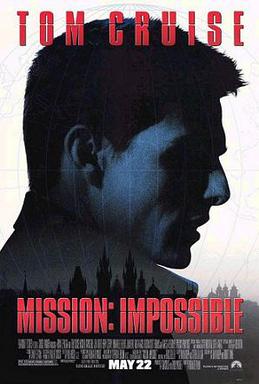
Mission Impossible (1996-2011) Film Series Retrospective


In 1966, writer Bruno Geller created the spy TV series ‘Mission: Impossible’, which revolved around a group of government agents who took on various missions for the Impossible Missions Force (IMF). The members of the group changed with each episode with the only full-time leads of the series being agents Dan Briggs (Steven Hill) and Jim Phelps (Peter Graves), the latter of whom took over the lead role of the series from Hill after the first season. The series was a solid success when it first aired on CBS, running for 7 seasons from 1966 to 1973 while also producing numerous iconic bits of pop culture history from the theme song by Lalo Schifrin to the ‘this tape will self-destruct in five seconds’ hallmark. In 1988, the series was revived on ABC with Peter Graves reprising his role of Jim Phelps. However this new iteration only lasted two seasons primarily due to poor ratings. However, six years later, the series resurfaced again, this time on the big screen starring Tom Cruise in the lead role of IMF agent Ethan Hunt. Since then, the ‘Mission Impossible’ film franchise has been one of the most successful action franchises of the last two decades, grossing over $2 billion worldwide across four films. And this is one of those rare franchises that has actually got better as it has gone on, namely by placing more emphasis on the ‘team’ element that had made the series so successful in the first place whereas earlier films focused more on Cruise’s Ethan Hunt character. So today, in preparation for the latest entry of the series, ‘Rogue Nation’, which hits theaters soon, your Mission, should you choose to accept it, is to join me as I look back upon the first four films of the ‘Mission Impossible’ franchise.

MISSION IMPOSSIBLE (1996)


Brian De Palma (‘Scarface’, ‘The Untouchables’) helmed the first installment of the series in 1996 which, while commercially successful (it was the third highest-grossing film of the year with $457.7 million worldwide), was a little more polarizing amongst fans of the show and even some of the members of the original TV series’ cast such as Greg Morris and Martin Landau. The primary reason for this was due to the decision to have the series’ main character Jim Phelps serve as the main villain of the film. The fact that the film also opened with the majority of Ethan Hunt’s team members being killed off was probably something that fans also had issues with. But overall I don’t think that these two things are that big of a problem in regards to the film. While the film obviously strays heavily from the show in terms of the characterization of Jim Phelps, I thought the whole twist of him being a traitor was actually handled well enough even though he’s only the ‘main villain’ during the finale. And while the film did do away with the original ‘team’ in the film’s opening sequence, resulting in the primary focus being on Ethan Hunt, if anything there’s still enough team-related moments in the film to at least capture the spirit of the original TV series as much as possible. I mean at the end of the day, the first ‘Mission Impossible’ at least focused more on the core IMF team than ‘Mission Impossible II’ did (more on that in a little bit).

The film’s greatest selling point, though, is its action sequences. From the scene where Ethan Hunt descends into a CIA vault to recover a file containing info on all IMF agents to the finale on top of a moving train, the action sequences in this film are well-shot and edited thanks to De Palma’s solid direction. As for the writing, many have felt that the plot was a bit too complicated. Compared to a film like ‘Memento’, I wouldn’t go as far as say that this film’s plot was ‘that convoluted’ but I do recognize where those people are coming from as there are some scenes that you do really have to pay attention because otherwise you’re going to get lost. In short, ‘Mission Impossible’, despite its major deviations from the original source material, is still a solid start to this series and for a film that was made nearly 20 years ago, it still holds up pretty damn well today. Is it the absolute best entry in the series? No, but like franchises like ‘Harry Potter’, this is just due to the fact that the series would get better as time went on. Still, the first ‘Mission Impossible’ is still highly recommended as it is easily one of the best action films of the 90’s if based solely on the action alone. Simply put, this was the film that proved that Tom Cruise was a premier action star and that is what continues to define his career to this very day.

Rating: 4/5

MISSION IMPOSSIBLE II (2000)


On paper, ‘Mission Impossible II’ seemed to be another solid hit for the franchise. In the director’s chair this time was John Woo, who at the time was known as one of the most prestigious action directors in the world for his work on films like ‘Hard Boiled’ and ‘Face/Off’. But at the end of the day, Woo may not have been the best choice to helm a ‘Mission Impossible’ film because unfortunately, ‘Mission Impossible II’ is the weakest entry of the first four ‘Mission Impossible’ films. The primary reason for this is because this is a simple case of style over substance. The plot for the film isn’t as convoluted compared to the first film but this results in the film ending up being a rather mindless action flick. Now don’t get me wrong, the action sequences are still as solid as they were in the first film. There’s no denying Woo’s talent when it comes to directing action. But they ultimately end up lacking depth for the most part and the main villain Sean Ambrose (Dougray Scott) is a pretty damn weak villain; Scott’s frequent over-acting doesn’t help much either. Not only that but Woo’s directing trademarks on are ‘full overload’ here, from his use of overly symbolic imagery to frequent slow-motion moments and of course, doves. It may just be because I haven’t really seen any of Woo’s other films before this but here it’s just a bit too much. For a ‘Mission Impossible’ film, this feels more like a James Bond film and as much as I am a fan of the James Bond franchise, that style just isn’t right for the ‘Mission Impossible’ franchise.

This film is also the worst of the series when it comes to handling the one key component of the franchise; the ‘team’ element. As many have no doubt already pointed out, this film is pretty much ‘the Tom Cruise show’ as the film constantly over-glorifies how much of a badass Ethan Hunt is, which is unnecessary because we already know that Tom Cruise really is a badass because he does do a lot of his own stunts. Here it just feels like he’s showing off. If I haven’t mentioned it already, he’s one of the producers of the franchise but even the other films didn’t over-glorify Cruise as much as this film does. The overt focus on him results in pretty much everyone else in the film being downplayed save for Thandie Newton in the role of the female lead Nyah but even then she’s wasted in an arguably rather sexist role. Sure Ving Rhames reprises his role of Luther Stickell from the first film but the other member of the team, pilot Billy Baird (John Polson), is easily one of the most underdeveloped characters in franchise history and ultimately both Polson and Rhames are severely underused. In conclusion, I don’t think that ‘Mission Impossible II’ is a ‘terrible’ film. There are some legitimately good things in this film though ultimately it’s mostly just the action sequences. The plot is mindless, Woo’s directorial style goes a bit too overboard, and Tom Cruise really hogs the spotlight in this entry to the detriment of the other characters in the film. At the end of the day, ‘Mission Impossible II’ strays the farthest from the spirit of the original TV series hence why it is ultimately the worst entry in the series to date. Thankfully there would be nothing but blue skies for the franchise after this disappointing installment.

Rating: 2/5

MISSION IMPOSSIBLE III (2006)


For ‘Mission Impossible III’, Tom Cruise and his producing partner Paula Wagner went with a newcomer who would make his feature-length directorial debut with this film. He would later go on to direct a few films that you may have heard of, including the upcoming ‘Star Wars: The Force Awakens’. Yes J.J. Abrams helmed this installment of the franchise and just like how I feel that he was responsible for resurrecting the ‘Star Trek’ franchise (and I’m confident that he will do the same for ‘Star Wars’), the addition of Abrams to the franchise (he would go on to produce the next two films in the series) helped get the ‘Mission Impossible’ films back on track, especially after the major disappointment that was ‘Mission Impossible II’. Through Abrams’ stellar direction, this film regains the high-speed pacing and tone that was lost in its immediate predecessor. And of course, the action sequences are excellent as always, from the highway attack scene to the raid upon a building in Shanghai where an object known as the ‘Rabbit’s Foot’ (which for the record we never actually learn what it is) is located. Something I noticed about this film in particular was that some of the action sequences are pretty damn intense or, to quote the MPAA rating for the film, really ‘frenetic’. While that does mean that the action sequences are much more chaotic than they are in other ‘Mission Impossible’ films, I do think they do a great job in really upping the tension. That is especially evident in this film’s cold opening, which fits the term ‘cold opening’ both figuratively and literally, resulting in quite frankly one of the best opening sequences that I’ve ever seen in a film.

This film also does a better job than ‘Mission Impossible II’ at balancing out the roles of Ethan’s main IMF team. As stated earlier, the previous film really focused too much on Ethan Hunt and while I can’t say that these are the most ‘developed’ characters of the franchise, namely as a result of the film’s action-heavy pacing, the bottom line is that at least the three other members of Ethan’s team; series regular Ving Rhames and newcomers Jonathan Rhys Meyers and Maggie Q, aren’t underused like Rhames and John Polson were in ‘Mission Impossible II’. This film also has the best villain in the entire series in Owen Davian, played by the late Philip Seymour Hoffman. Admittedly most of the other ‘Mission Impossible’ villains have been rather weak, but Hoffman is phenomenal in this film, making Davian such an intimidating villain especially through his plot to get back at Ethan by kidnapping his wife Julia (Michelle Monaghan). The addition of Ethan’s wife also helps bring some solid emotional depth to the film which I feel was sort of lacking in the last two films, which is pretty ironic given that the second film focused so much on a love triangle. All in all, I’d say that ‘Mission Impossible III’ is the first ‘truly great’ entry in the franchise. For the record that’s nothing against the first ‘Mission Impossible’ film but overall I just prefer this one over the first as I feel this is where the series really started to capture the spirit of the original series. Little did any of us know that things would only get better with the following installment of the franchise.

Rating: 4.5/5

MISSION IMPOSSIBLE: GHOST PROTOCOL (2011)


Another ‘newcomer’ was chosen to helm ‘Mission Impossible: Ghost Protocol’ but this wasn’t a case of a ‘newcomer’ who was making his feature-length debut like J.J. Abrams did with ‘MI3’. Instead, this director was making his feature-length ‘live-action’ debut having primarily worked on animated films for the majority of his career. In some ways, that can be perceived as a risk but ultimately it isn’t when you take into account that the director is none other than Brad Bird, the genius behind some of the greatest animated films of all-time like ‘The Iron Giant’ and ‘The Incredibles’… and this year’s criminally underappreciated ‘Tomorrowland’. Under Bird’s direction, ‘Ghost Protocol’ ends up being the absolute best entry in the entire ‘Mission Impossible’ series to date. Bird’s talent for visual storytelling translates perfectly into the film’s amazing action sequences, from the iconic climb up the Burj Khalifa in Dubai to the subsequent car chase through a sandstorm. And hopefully a lot of you got the chance to see this in IMAX because these action sequences are even more amazing on that big-screen. Not only that, but this film is arguably the best in the entire series when it comes to creating tension, mostly through said action. Part of this also comes from the main plot of having Ethan Hunt and his team having to go rogue after a bombing incident at the Kremlin forces the US government to disavow the entire IMF organization. Factor in other things like their equipment frequently failing and the tight pressure that they’re under and you have one of the most suspenseful action films of the last few years.

But the other great thing about ‘Ghost Protocol’ is that it is the first in the series to finally perfect the one major element of the Mission Impossible franchise that some of the films (save for 3) were fairly lacking in and that is through placing a greater emphasis on the main IMF team and not being entirely centered on Ethan Hunt. Sure, this is still a Tom Cruise film and Ethan Hunt is still the main character but this film does a fantastic job at balancing out the roles of Ethan’s team and giving solid character development to each of the other members. This includes Benji Dunn (Simon Pegg, reprising his role from the previous film), who takes on his first major field mission, Jane Carter (Paula Patton), who during the mission deals with a personal vendetta against one of their targets, assassin Sabine Moreau (Lea Seydoux), who was responsible for the death of her teammate/lover Hanaway (Josh Holloway), and finally ‘analyst’ William Brandt (Jeremy Renner), who is revealed to have a major connection to Ethan Hunt as he was a former field agent who feels responsible for the ‘death’ of Ethan’s wife Julia while they were on vacation on Croatia. Though at the end of the film we learn that this was all faked and that Julia is still alive, resulting in a touching moment when Ethan and Julia notice each other from afar. ‘Mission Impossible III’ was on the right track when it came to having greater emphasis on the other members of Ethan Hunt’s IMF team but ‘Mission Impossible: Ghost Protocol’ ends up exceeding that high mark with the series’ best group of leads to date.

I only have one major complaint towards this film and that is in regards to the main villain, Kurt Hendricks (Michael Nyqvist). Despite a solid-enough performance by Nyqvist in the role, Hendricks is arguably the weakest villain in the entire film series. As I stated earlier, Philip Seymour Hoffman’s Owen Davian has basically been the only ‘great’ villain in the series and while originally I felt that Sean Ambrose from ‘Mission Impossible II’ was the weakest in the series, at least he had a presence in that film and a much more substantial role. Hendricks on the other hand disappears for a sizable chunk of the film’s run-time, not really doing anything major until the finale. In fact, pretty much every major ‘adversary’ in the film is only in it for like a short period of time each. But like how I defend many of the villains of the Marvel Cinematic Universe for being better than what most critics put them out to be, here I don’t think it’s that much of an issue because the film does such a great job in developing the main characters. All in all, ‘Mission Impossible: Ghost Protocol’ is not only the best film in the entire series up to this point but it’s also quite frankly one of the best films period of this decade, with Brad Bird making a fantastic live-action film debut and once again proving why he's one of the absolute best directors currently working today in Hollywood.


Rating: 5/5!

Saturday, November 22, 2014

The Hunger Games: Mockingjay Part 1 (2014) review

The Hunger Games: Mockingjay - Part 1 (2014) Poster

When the Young Adult Book to Film Genre needed a new frontrunner to lead the pack after the ‘Harry Potter’ and ‘Twilight’ franchises came to a close, ‘The Hunger Games’ stepped in and has been both a commercial and critical success, thanks of course to great writing, great directing, and great acting from all involved. While I do understand the problems that some people have with the first film in regards to the cinematography and editing during the actual Hunger Games, I still stand by that film as being a well-made adaptation of Suzanne Collins’ best-selling novels. But like many people, I do agree that ‘Catching Fire’ was a superior film, expanding on the whole universe of Panem and moving away from those aforementioned ‘issues’ from the first film. So now ‘Catching Fire’ director Francis Lawrence (no relation to star Jennifer Lawrence) is back to direct the final film in the series, ‘Mockingjay’… except it isn’t the final film… not yet. Instead, Lionsgate decided to go the route that Warner Bros. did with ‘Harry Potter and the Deathly Hallows’ and split the final book of the ‘Hunger Games’ series into two separate films. This has certainly attracted a lot of controversy considering that the length of the book doesn’t really justify the need for two films. However, I do feel that ‘Mockingjay Part 1’, even though it is technically the ‘set-up’ for ‘Part 2’ next year, is just as good as the two films that came before it.

At the end of ‘Catching Fire’, Katniss Everdeen (Jennifer Lawrence), winner of the 74th Hunger Games and participant in the following year’s event AKA the ‘Quarter Quell’, escaped from the Hunger Games arena after she destroyed it and was brought to District 13, the district of Panem that was thought to have been destroyed 75 years ago during the original rebellion amongst its districts against the Capitol. However, at the same time, Katniss’ fellow Hunger Games champion and love interest Peeta Mellark (Josh Hutcherson) ended up getting taken by the Capitol and their home, District 12, was destroyed. Now in District 13 under the leadership of President Alma Coin (Julianne Moore), Katniss finds herself pressured into being the ‘face’ of the districts’ rebellion: the ‘Mockingjay’. She is at first hesitant to do so but finds new purpose when she learns that Peeta is still alive, albeit now under the control of President Snow (Donald Sutherland) and the Capitol. This inspires Katniss to spread her wings and become the Mockingjay as she now finds herself at the frontlines (in both a figurative and somewhat literal sense) along with her allies, including her best friend Gale Hawthorne (Liam Hemsworth), and her mentors Haymitch Abernathy (Woody Harrelson) and Effie Trinket (Elizabeth Banks) as she looks to save Peeta before he ends up getting killed by the Capitol.

‘The Hunger Games: Mockingjay Part 1’ is a very different beast compared to its predecessors. This time, there aren’t any ‘Hunger Games’ and instead it’s more about the political side of the rebellion and how each side is trying to use propaganda to sway public opinion. And while this film technically is more focused on that than the action, it still results in a very compelling film. But of course, the big question still remains; was the decision to split this final book into two films a good idea? Well, so far that has attracted quite a mixed reaction from a lot of people but personally I felt that it did actually work from a story perspective. I’ve noted before that the reason behind this was so that the filmmakers could expand on the book whereas Collins was forced to condense a lot of stuff to meet publisher demands and because of this, it does actually feel justified. Never at any time during the course of this film did I feel that it felt ‘padded’ to stretch things out for two movies. This movie does have a proper beginning and end with a clear objective; rescue Peeta from the Capitol. Because of this, I was never bored and the film did on a pretty neat but also very tense cliffhanger to lead into ‘Part 2’, where I’m guessing most of the action from the book will occur.

Once again this film, like its immediate predecessor, benefits from great direction from Francis Lawrence, who handles the transition to a more politically driven storyline (compared to the last two films) quite well and does a great job at showcasing the large scale of this rebellion. And that’s backed up by the great cast, headlined once again by Jennifer Lawrence as Katniss. In the last two films, Katniss was a character who was basically dragged into these events, sort of against her own will but now she’s much more proactive this time as we truly see her become the face of the revolution. Josh Hutcherson also stands out here as well as the transformation that Peeta goes through in this movie is truly fascinating. One of the advantages that the films have over the books is that because it isn’t in the same first-person narrative from Katniss’ perspective, this allows for the other characters to stand out more than they did in the books, resulting in members of the cast like Liam Hemsworth and Elizabeth Banks (the latter of whom brings such much-needed levity to this rather bleak setting as Effie) getting more to do and with equally great turns from other members of the cast including Jeffrey Wright as tech wiz Beetee, newcomer Julianne Moore as President Coin, and the late Philip Seymour Hoffman as rebel leader Plutarch Heavensbee, the whole cast is superb from top to bottom. But something that I forgot to mention the last time is that not only are the protagonists great but also the villain as well. Donald Sutherland has been great in these movies as President Snow. They REALLY make you hate this guy; cold, evil, and emotionless but yet he still manages to be calm and collected during all of this.

Now I’m not saying that I’m 100% supportive of the decision to split ‘Mockingjay’ into two films and ‘Part 1’ will never escape the fact that it’s basically a ‘set up’ for the finale in ‘Part 2’. But you know what? The same can be said for ‘Deathly Hallows Part 1’, and this is very much the Hunger Games’ version of that movie as both films are very similar in regards to their structure and execution. Yes, there’s not really that much action in this compared to the first two films… but hey, so was ‘Deathly Hallows Part 1’. In other words, this film still manages to be incredibly compelling thanks of course to the great direction from Francis Lawrence, the great writing that gives us great characters, and of course the great cast portraying these characters. I went into this unsure about the whole ‘2-parter’ thing but ultimately I came out pretty satisfied as I felt that the film did end on a solid note with an incredibly suspense cliffhanger. Now of course I say this knowing that this is only ‘Part 1’ of the story. We still got one more film to go in this series but you know that I will be there November 2015 to see this great series officially come to an end with ‘Mockingjay Part 2’ and I’ll also be keen to see if that film can also feel as ‘complete’ as a film like ‘Part 1’ was… as the first half of a two-part story of course.


Rating: 5/5!