Showing posts with label Paula Patton. Show all posts

Sunday, December 4, 2016

Warcraft (2016) review

Image result for warcraft poster

In the world of PC gaming, Warcraft is easily one of the most famous franchises in the history of the platform. Developed by Blizzard Entertainment, the series first started out with a trilogy of real-time strategy games; 1994’s Warcraft: Orcs and Humans, 1995’s Warcraft II: Tides of Darkness, and 2002’s Warcraft III: Reign of Chaos. But since 2004, the franchise’s arguably most popular installment has been the ‘massively multiplayer online role-playing game’ (MMORPG) World of Warcraft. As of October 2015, around 5.5 million players have active subscriptions to the game, which has obviously become a worldwide pop cultural phenomenon. Thus, it’s only fitting that we now have a feature film set within the world of Warcraft (no pun intended). And for a film that’s part of the controversial ‘video-game based film’ genre, and by ‘controversial’ I mean the fact that most of the genre’s output has been absolutely savaged by both critics and audiences, it certainly has some major credentials in terms of its crew. Specifically, its director, Duncan Jones. The son of the late rock legend David Bowie, Jones has made a name for himself in the film industry thanks to two critically acclaimed sci-fi films in 2009’s Moon and 2011’s Source Code. With Warcraft, however, Jones takes on what is easily his biggest project to date and with that comes a lot of pressure. Not only does the film have to appeal to the longtime fans of the franchise but it also must do enough to appeal to those who are generally unfamiliar with the franchise, me being one of them. So, with that said, does it achieve this? Well, ultimately, I’d say yes and no…

When their homeworld begins to be destroyed by a dark magical force known as ‘Fel’, the orcs of Draenor, led by the powerful and sinister warlock Gul’dan (Daniel Wu), travel via a portal to the human world of Azeroth. Once there, the orcs begin to attack various settlements all over the area, kidnapping large amounts of humans to use as sacrifices for Gul’dan so that he can reopen the portal and bring the rest of the orc Horde through it. This eventually ends up attracting the attention of the kingdom of Stormwind, ruled by King Llane (Dominic Cooper). When traces of Fel magic begin to become noticeable all over Azeroth, Llane sends his military commander, Sir Anduin Lothar (Travis Fimmel), to investigate. Enlisting the aid of Medivh (Ben Foster), a powerful sorcerer known as ‘the Guardian’, and young mage Khadgar (Ben Schnetzer), Lothar begins to investigate further into the matter, which ends up resulting in him and his men coming into conflict with the orcs. However, at the same time, some members of the Orc race, namely Durotan (Toby Kebbell), the chieftain of one of the primary orc clans, Frostwolf, begin to consider breaking ties with Gul’dan, who wields Fel magic, so that the orc race can truly survive. And to do so, they decide that the best option is to form the unlikeliest of alliances with the humans, who likewise work to stop Gul’dan before he can summon his Horde army and take over Azeroth.

As I noted in the intro, I’ve never played any of the Warcraft games. Thus, this film has the challenge of making it so that newcomers to the franchise can at least understand what’s going on. And for the most part, the film does succeed in doing so. Now, granted, it’s not a complete success as I’m sure that are some references to the games here and there that I most definitely didn’t get. But as far as establishing the, again no pun intended, ‘world of Warcraft’, the film does do a solid job of establishing the primary ‘story’ of the war between the humans and orcs. In fact, the plot of the film is basically the set-up for said conflict that is the backbone of the entire series. While some critics have noted that the plot was rather incoherent, I personally didn’t really notice that. Still, like I said before, those who have played the games are no doubt going to get more out of it, specifically in terms of how certain moments factor into the franchise’s lore. As for the visuals, which have been one of the most talked about aspects of the film, well, all that buzz was warranted. The visual effects in the film are outstanding. Now sure, some will probably take issue with the fact that, like the latter half of the Star Wars prequels and the Hobbit films, there are quite a lot of visual effects in this film, namely in terms of the environments that it creates. And while I have read that there were some actual sets that were constructed during filming, overall I think it’s safe to say that most of the action sequences in this film are primarily computer generated. Still, it’s hard to deny how much detail was put into these visual effects. From the grand environments of Azeroth to the impressive motion-capture work for the Orc characters, this is easily one of the best-looking films of the year and it does lead to some impressive big-scale action sequences.

But while the visuals are great and the story at least isn’t as confusing as critics are claiming, the film does lack in terms of character development. I don’t want to go as far as to say that this is a case of ‘style over substance’ but still, emotional depth is very slim here. And, no, this has nothing to do with whether you’ve played the games or not. Certain character moments in the plot (e.g. a tragedy that befalls Sir Lothar) just don’t have the emotional impact that the film is trying to achieve. Still, the film’s cast does do a decent job with the material that they are given. Of this cast, there are two main standouts. The first is Toby Kebbell in the lead orc role of Durotan. Kebbell’s become a major figure in the world of motion-capture performance work in recent years thanks to his great turn as Koba in Dawn of Planet of the Apes. And while Koba is easily the stronger character, Kebbell does do a good job in the role of Durotan, the lone orc who decides to stand up against Gul’dan because, unlike him, Durotan cares about his fellow orcs. The other major standout is Paula Patton in the role of Garona, a half-human/half-orc slave who is captured by Lothar’s forces and subsequently joins them in the fight against Gul’dan. Again, while character development is rather lackluster in the film, Garona does at least get more of it than most. She’s probably the most interesting character in the entire film; a half-human/half-orc who is obviously torn between worlds. And the film does a good job of exploring that internal conflict, primarily represented by a key decision that she makes during the finale.

I will admit that this film is a hard one to recommend because it all depends on the audience. If you’re a fan of the Warcraft series, I think it’s safe to say that you’re probably going to really like this film. From the perspective of a Warcraft outsider, it seems like Duncan Jones and his crew did do a solid job of respecting the source material, particularly in terms of the production design. But for anyone like me who went into this being generally unfamiliar with the franchise, it is quite a bit of a hard sell. At the very least, the film does a decent job of establishing the universe so that it’s easily accessible to newcomers. But at the same time, you really do have to be a fan of the franchise to get the most out of it. And while the plot isn’t as convoluted as some critics have said, at the same time it is very simple and character development is rather lackluster save for a select few characters. At the very least, the visuals are fantastic and I think that they at least deserve some attention come awards season (and yes, I’m fully aware that this would be the ONLY real way in which this film gets recognized during awards season). So, in conclusion, while the hunt for the first universally beloved film based on a video game still goes on, this will no doubt please fans of the franchise, at least more so than any other entry in the genre. And while this is nowhere near being one of my favorite films of 2016, at the very least I will say that this isn’t as bad as its current 28% rating on Rotten Tomatoes suggests. Granted, it isn’t exactly a film that I plan on re-watching anytime soon but, for the most part, I liked it fine.


Rating: 3/5

Sunday, July 26, 2015

Mission Impossible (1996-2011) Film Series Retrospective


In 1966, writer Bruno Geller created the spy TV series ‘Mission: Impossible’, which revolved around a group of government agents who took on various missions for the Impossible Missions Force (IMF). The members of the group changed with each episode with the only full-time leads of the series being agents Dan Briggs (Steven Hill) and Jim Phelps (Peter Graves), the latter of whom took over the lead role of the series from Hill after the first season. The series was a solid success when it first aired on CBS, running for 7 seasons from 1966 to 1973 while also producing numerous iconic bits of pop culture history from the theme song by Lalo Schifrin to the ‘this tape will self-destruct in five seconds’ hallmark. In 1988, the series was revived on ABC with Peter Graves reprising his role of Jim Phelps. However this new iteration only lasted two seasons primarily due to poor ratings. However, six years later, the series resurfaced again, this time on the big screen starring Tom Cruise in the lead role of IMF agent Ethan Hunt. Since then, the ‘Mission Impossible’ film franchise has been one of the most successful action franchises of the last two decades, grossing over $2 billion worldwide across four films. And this is one of those rare franchises that has actually got better as it has gone on, namely by placing more emphasis on the ‘team’ element that had made the series so successful in the first place whereas earlier films focused more on Cruise’s Ethan Hunt character. So today, in preparation for the latest entry of the series, ‘Rogue Nation’, which hits theaters soon, your Mission, should you choose to accept it, is to join me as I look back upon the first four films of the ‘Mission Impossible’ franchise.

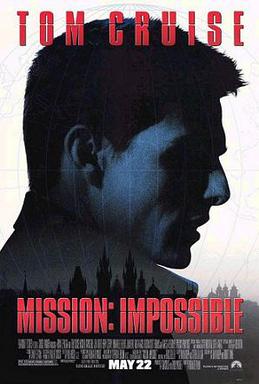
MISSION IMPOSSIBLE (1996)


Brian De Palma (‘Scarface’, ‘The Untouchables’) helmed the first installment of the series in 1996 which, while commercially successful (it was the third highest-grossing film of the year with $457.7 million worldwide), was a little more polarizing amongst fans of the show and even some of the members of the original TV series’ cast such as Greg Morris and Martin Landau. The primary reason for this was due to the decision to have the series’ main character Jim Phelps serve as the main villain of the film. The fact that the film also opened with the majority of Ethan Hunt’s team members being killed off was probably something that fans also had issues with. But overall I don’t think that these two things are that big of a problem in regards to the film. While the film obviously strays heavily from the show in terms of the characterization of Jim Phelps, I thought the whole twist of him being a traitor was actually handled well enough even though he’s only the ‘main villain’ during the finale. And while the film did do away with the original ‘team’ in the film’s opening sequence, resulting in the primary focus being on Ethan Hunt, if anything there’s still enough team-related moments in the film to at least capture the spirit of the original TV series as much as possible. I mean at the end of the day, the first ‘Mission Impossible’ at least focused more on the core IMF team than ‘Mission Impossible II’ did (more on that in a little bit).

The film’s greatest selling point, though, is its action sequences. From the scene where Ethan Hunt descends into a CIA vault to recover a file containing info on all IMF agents to the finale on top of a moving train, the action sequences in this film are well-shot and edited thanks to De Palma’s solid direction. As for the writing, many have felt that the plot was a bit too complicated. Compared to a film like ‘Memento’, I wouldn’t go as far as say that this film’s plot was ‘that convoluted’ but I do recognize where those people are coming from as there are some scenes that you do really have to pay attention because otherwise you’re going to get lost. In short, ‘Mission Impossible’, despite its major deviations from the original source material, is still a solid start to this series and for a film that was made nearly 20 years ago, it still holds up pretty damn well today. Is it the absolute best entry in the series? No, but like franchises like ‘Harry Potter’, this is just due to the fact that the series would get better as time went on. Still, the first ‘Mission Impossible’ is still highly recommended as it is easily one of the best action films of the 90’s if based solely on the action alone. Simply put, this was the film that proved that Tom Cruise was a premier action star and that is what continues to define his career to this very day.

Rating: 4/5

MISSION IMPOSSIBLE II (2000)


On paper, ‘Mission Impossible II’ seemed to be another solid hit for the franchise. In the director’s chair this time was John Woo, who at the time was known as one of the most prestigious action directors in the world for his work on films like ‘Hard Boiled’ and ‘Face/Off’. But at the end of the day, Woo may not have been the best choice to helm a ‘Mission Impossible’ film because unfortunately, ‘Mission Impossible II’ is the weakest entry of the first four ‘Mission Impossible’ films. The primary reason for this is because this is a simple case of style over substance. The plot for the film isn’t as convoluted compared to the first film but this results in the film ending up being a rather mindless action flick. Now don’t get me wrong, the action sequences are still as solid as they were in the first film. There’s no denying Woo’s talent when it comes to directing action. But they ultimately end up lacking depth for the most part and the main villain Sean Ambrose (Dougray Scott) is a pretty damn weak villain; Scott’s frequent over-acting doesn’t help much either. Not only that but Woo’s directing trademarks on are ‘full overload’ here, from his use of overly symbolic imagery to frequent slow-motion moments and of course, doves. It may just be because I haven’t really seen any of Woo’s other films before this but here it’s just a bit too much. For a ‘Mission Impossible’ film, this feels more like a James Bond film and as much as I am a fan of the James Bond franchise, that style just isn’t right for the ‘Mission Impossible’ franchise.

This film is also the worst of the series when it comes to handling the one key component of the franchise; the ‘team’ element. As many have no doubt already pointed out, this film is pretty much ‘the Tom Cruise show’ as the film constantly over-glorifies how much of a badass Ethan Hunt is, which is unnecessary because we already know that Tom Cruise really is a badass because he does do a lot of his own stunts. Here it just feels like he’s showing off. If I haven’t mentioned it already, he’s one of the producers of the franchise but even the other films didn’t over-glorify Cruise as much as this film does. The overt focus on him results in pretty much everyone else in the film being downplayed save for Thandie Newton in the role of the female lead Nyah but even then she’s wasted in an arguably rather sexist role. Sure Ving Rhames reprises his role of Luther Stickell from the first film but the other member of the team, pilot Billy Baird (John Polson), is easily one of the most underdeveloped characters in franchise history and ultimately both Polson and Rhames are severely underused. In conclusion, I don’t think that ‘Mission Impossible II’ is a ‘terrible’ film. There are some legitimately good things in this film though ultimately it’s mostly just the action sequences. The plot is mindless, Woo’s directorial style goes a bit too overboard, and Tom Cruise really hogs the spotlight in this entry to the detriment of the other characters in the film. At the end of the day, ‘Mission Impossible II’ strays the farthest from the spirit of the original TV series hence why it is ultimately the worst entry in the series to date. Thankfully there would be nothing but blue skies for the franchise after this disappointing installment.

Rating: 2/5

MISSION IMPOSSIBLE III (2006)


For ‘Mission Impossible III’, Tom Cruise and his producing partner Paula Wagner went with a newcomer who would make his feature-length directorial debut with this film. He would later go on to direct a few films that you may have heard of, including the upcoming ‘Star Wars: The Force Awakens’. Yes J.J. Abrams helmed this installment of the franchise and just like how I feel that he was responsible for resurrecting the ‘Star Trek’ franchise (and I’m confident that he will do the same for ‘Star Wars’), the addition of Abrams to the franchise (he would go on to produce the next two films in the series) helped get the ‘Mission Impossible’ films back on track, especially after the major disappointment that was ‘Mission Impossible II’. Through Abrams’ stellar direction, this film regains the high-speed pacing and tone that was lost in its immediate predecessor. And of course, the action sequences are excellent as always, from the highway attack scene to the raid upon a building in Shanghai where an object known as the ‘Rabbit’s Foot’ (which for the record we never actually learn what it is) is located. Something I noticed about this film in particular was that some of the action sequences are pretty damn intense or, to quote the MPAA rating for the film, really ‘frenetic’. While that does mean that the action sequences are much more chaotic than they are in other ‘Mission Impossible’ films, I do think they do a great job in really upping the tension. That is especially evident in this film’s cold opening, which fits the term ‘cold opening’ both figuratively and literally, resulting in quite frankly one of the best opening sequences that I’ve ever seen in a film.

This film also does a better job than ‘Mission Impossible II’ at balancing out the roles of Ethan’s main IMF team. As stated earlier, the previous film really focused too much on Ethan Hunt and while I can’t say that these are the most ‘developed’ characters of the franchise, namely as a result of the film’s action-heavy pacing, the bottom line is that at least the three other members of Ethan’s team; series regular Ving Rhames and newcomers Jonathan Rhys Meyers and Maggie Q, aren’t underused like Rhames and John Polson were in ‘Mission Impossible II’. This film also has the best villain in the entire series in Owen Davian, played by the late Philip Seymour Hoffman. Admittedly most of the other ‘Mission Impossible’ villains have been rather weak, but Hoffman is phenomenal in this film, making Davian such an intimidating villain especially through his plot to get back at Ethan by kidnapping his wife Julia (Michelle Monaghan). The addition of Ethan’s wife also helps bring some solid emotional depth to the film which I feel was sort of lacking in the last two films, which is pretty ironic given that the second film focused so much on a love triangle. All in all, I’d say that ‘Mission Impossible III’ is the first ‘truly great’ entry in the franchise. For the record that’s nothing against the first ‘Mission Impossible’ film but overall I just prefer this one over the first as I feel this is where the series really started to capture the spirit of the original series. Little did any of us know that things would only get better with the following installment of the franchise.

Rating: 4.5/5

MISSION IMPOSSIBLE: GHOST PROTOCOL (2011)


Another ‘newcomer’ was chosen to helm ‘Mission Impossible: Ghost Protocol’ but this wasn’t a case of a ‘newcomer’ who was making his feature-length debut like J.J. Abrams did with ‘MI3’. Instead, this director was making his feature-length ‘live-action’ debut having primarily worked on animated films for the majority of his career. In some ways, that can be perceived as a risk but ultimately it isn’t when you take into account that the director is none other than Brad Bird, the genius behind some of the greatest animated films of all-time like ‘The Iron Giant’ and ‘The Incredibles’… and this year’s criminally underappreciated ‘Tomorrowland’. Under Bird’s direction, ‘Ghost Protocol’ ends up being the absolute best entry in the entire ‘Mission Impossible’ series to date. Bird’s talent for visual storytelling translates perfectly into the film’s amazing action sequences, from the iconic climb up the Burj Khalifa in Dubai to the subsequent car chase through a sandstorm. And hopefully a lot of you got the chance to see this in IMAX because these action sequences are even more amazing on that big-screen. Not only that, but this film is arguably the best in the entire series when it comes to creating tension, mostly through said action. Part of this also comes from the main plot of having Ethan Hunt and his team having to go rogue after a bombing incident at the Kremlin forces the US government to disavow the entire IMF organization. Factor in other things like their equipment frequently failing and the tight pressure that they’re under and you have one of the most suspenseful action films of the last few years.

But the other great thing about ‘Ghost Protocol’ is that it is the first in the series to finally perfect the one major element of the Mission Impossible franchise that some of the films (save for 3) were fairly lacking in and that is through placing a greater emphasis on the main IMF team and not being entirely centered on Ethan Hunt. Sure, this is still a Tom Cruise film and Ethan Hunt is still the main character but this film does a fantastic job at balancing out the roles of Ethan’s team and giving solid character development to each of the other members. This includes Benji Dunn (Simon Pegg, reprising his role from the previous film), who takes on his first major field mission, Jane Carter (Paula Patton), who during the mission deals with a personal vendetta against one of their targets, assassin Sabine Moreau (Lea Seydoux), who was responsible for the death of her teammate/lover Hanaway (Josh Holloway), and finally ‘analyst’ William Brandt (Jeremy Renner), who is revealed to have a major connection to Ethan Hunt as he was a former field agent who feels responsible for the ‘death’ of Ethan’s wife Julia while they were on vacation on Croatia. Though at the end of the film we learn that this was all faked and that Julia is still alive, resulting in a touching moment when Ethan and Julia notice each other from afar. ‘Mission Impossible III’ was on the right track when it came to having greater emphasis on the other members of Ethan Hunt’s IMF team but ‘Mission Impossible: Ghost Protocol’ ends up exceeding that high mark with the series’ best group of leads to date.

I only have one major complaint towards this film and that is in regards to the main villain, Kurt Hendricks (Michael Nyqvist). Despite a solid-enough performance by Nyqvist in the role, Hendricks is arguably the weakest villain in the entire film series. As I stated earlier, Philip Seymour Hoffman’s Owen Davian has basically been the only ‘great’ villain in the series and while originally I felt that Sean Ambrose from ‘Mission Impossible II’ was the weakest in the series, at least he had a presence in that film and a much more substantial role. Hendricks on the other hand disappears for a sizable chunk of the film’s run-time, not really doing anything major until the finale. In fact, pretty much every major ‘adversary’ in the film is only in it for like a short period of time each. But like how I defend many of the villains of the Marvel Cinematic Universe for being better than what most critics put them out to be, here I don’t think it’s that much of an issue because the film does such a great job in developing the main characters. All in all, ‘Mission Impossible: Ghost Protocol’ is not only the best film in the entire series up to this point but it’s also quite frankly one of the best films period of this decade, with Brad Bird making a fantastic live-action film debut and once again proving why he's one of the absolute best directors currently working today in Hollywood.


Rating: 5/5!