Showing posts with label Birds of Prey. Show all posts

Saturday, February 20, 2021

TOP 10 FAVORITE FILMS OF 2020 - PART 1


Remember when 2020 was shaping up to be an awesome year for films? Remember when this was going to be the year where we’d witness the likes of Daniel Craig’s last hurrah as James Bond and the start of the next era of the Marvel Cinematic Universe? Well, as we all know, all that potential for a great cinematic year was thoroughly thrown to the wayside once the COVID-19 pandemic reared its ugly head this past March and drastically changed our way of life. And sure enough, the film industry was heavily impacted by all this as movie theaters all over the world were forced to shut down until further notice. Because of this, almost all the major blockbusters that were slated to come out this past year, from No Time to Die and Black Widow to Fast and Furious 9 and Ghostbusters: Afterlife, were pushed back to a later date. However, this doesn’t mean that there weren’t any new releases in 2020 as many of the non-blockbuster films that were supposed to come out ended up abandoning their theatrical releases in favor of a digital debut on the current crop of streaming services; Disney+, HBO Max, Netflix, Amazon Prime, etc. Still, there’s no denying how utterly terrible of a year 2020 was on all counts because of COVID, and in the case of film fandom, this was only made worse by the increasingly hostile state that the film fan community has been in these past few years. On one side, you’ve got the deplorable racists/misogynists who can’t fathom the possibility of films that are headlined by characters who aren’t white, heterosexual males. And on the other side, you’ve got the utterly frustrating group known as ‘stans’ who mercilessly crucify certain films and the filmmakers who make them for not being politically correct enough regardless of their good intentions.

But I’ve already gone over this crap plenty of times in the past, so I’ll try my best not to repeat myself when it comes to my grievances towards certain parts of internet fandom, nor will I ramble on about anything non-film related from this past year because… well, let’s face it, the less said about the awful parts of last year, the better. So instead, I’ll simply do what I’ve always done whenever a new year rolls around and present my favorite films from the past 365 days of the year. That said, though, the significantly decreased selection of new releases in 2020 ended up causing a unique dilemma on my end in that I’m unable to do my usual Top 12 list this year. For those who are new to this site, the process of me doing a Top 12 instead of the more traditional Top 10 began simply as a joke to tie into the year that I started Rhode Island Movie Corner, 2012. And yet, it ultimately became the norm for my ‘End of the Year’ list as I found that doing a Top 12 allowed me to cover even more of the great films that I saw in any given year. But when it comes to 2020… well, I’m afraid to say that I didn’t see enough films to do that big of a list. So instead, this year’s list will be your standard Top 10, which means that instead of it being a massive 4-part retrospective, it will be a more straight-forward two-parter. Hopefully, 2021 will pave the way for things to start returning to normal so that I can go back to doing Top 12 lists since I do consider them to be one of my trademarks as a film critic.

But before we begin, I need to lay down the ground rules that I always set for this end-of-the-year list. First off, be forewarned that I will be addressing the biggest spoilers from the following 10 films. If you haven’t seen any of these films, then I suggest that you check out my non-spoiler reviews of them first; in fact, I’ll even provide the links to those reviews via the following headers that precede my spoiler-filled writeups. Secondly, as is the case in any given year, I haven’t seen every new release that came out in 2020… yes, even in a year where I could’ve easily accessed certain films by way of the streaming services that they debuted on, I still wasn’t able to see everything. Plus, when it comes to these posts, I usually try to stick to the films that I saw during the year proper so that I won’t be bogged down with the process of catching up on anything that I missed, especially seeing how this undoubtedly resulted in my last two ‘Favorite Films of the Year’ lists taking so long to produce that they weren’t published until as late as April. And so, with that in mind, don’t expect to see films like Leigh Whannell’s remake of The Invisible Man or some of the year’s big Oscar contenders such as Nomadland and Promising Young Woman show up here. Obviously, this is nothing against those films; I just haven’t seen them yet. And yes, for those who’ve been following this site for a while, my end-of-the-year lists are largely made up of blockbuster-type releases that usually aren’t on critics’ ‘Best of the Year’ lists. Simply put, these are the films that I’m most likely to watch and I’m not in the mood to get criticized for liking the kind of films that others may deem as being ‘creatively bankrupt’.

And with that in mind, this brings us to the most important reminder of them all; above all else, please be respectful of differing film-related opinions regardless of how frustrating some of them may be. There’s a good reason why I keep stressing this last beat every year because if you ask me, film fandom has only gotten worse these past few years. Obviously, a lot of this has to do with the ‘racist misogynist’ and ‘stan’ crowds that I mentioned earlier, who have effectively made film-related discussions far more political than they have ever been before. And because of this, 2020 ended up being a firm reminder as to why I usually don’t like to talk about politics when it comes to my reviews. As such, I’m adding a new addendum to my usual ground-rules in that, while there will be instances where I’m going to have to address some of the political-based controversies surrounding some of these films, I won’t be going into too much detail about them simply because I don’t want any of that stuff to dominate this conversation. To be clear, this doesn’t mean that I’m against the film industry’s efforts to better reflect our increasingly diverse world because, if anything, I hope that a considerable amount of the content that I’ve published on this site over the past decade has proven otherwise. Instead, this is simply my way of highlighting the fact that, at the end of the day, talking about politics has always been an emotionally and mentally taxing process that ultimately yields ugly results. And so, as we come to the end of this incredibly long intro, the time has finally come for the main event. Without further ado, ladies and gentlemen, I’m proud to present Rhode Island Movie Corner’s Top 10 Favorite Films of 2020. This is Part 1 of 2, and in today’s post, we’ll be covering Films #10-6.

But before we get into those films, I wanted to include at least one Honorable Mention. For those who are new to this site, my ‘Favorite Films of the Year’ lists usually include around 5-6 Honorable Mentions. Obviously, 2020 didn’t give me the chance to do a full set for this year’s list, but the one that will make the cut does happen to be one of the few genuine success stories from the months before the COVID-19 pandemic fully went into effect.

HONORABLE MENTION: SONIC THE HEDGEHOG

At this point, much has been said about the major hurdles that the first feature film adaptation of Sega’s iconic video game protagonist Sonic the Hedgehog had to overcome. Simply put, the initial attempts to create a more humanoid-looking version of the character were so poorly received that the filmmakers redid the bulk of the film’s visual effects so that Sonic’s design would be more accurate to the games. And because of this, the film was legitimately able to redeem itself in the eyes of internet fandom, thus resulting in it becoming a solid critical and commercial hit upon its release. Not only is it one of the rare video-game based films to do decently with critics (coming out just a little less than a year after the equally successful Pokémon: Detective Pikachu), but it even managed to be the highest-grossing superhero film of 2020 as it earned over $313 million worldwide. Yes, because Sonic can technically be classified as a superhero given his super-speed abilities (that and the pandemic resulted in no new MCU films getting released last year), Sonic the Hedgehog became the first non-Marvel film since 2008 (and the first non-MCU film since 2009) to hold the honor of being the genre’s highest-grossing release. Once again, it’s genuinely impressive that this film managed to pull all this off considering how it was this close to being a full-blown disaster. And while most folks will probably attribute this to Sonic’s pivotal redesign, I’d argue that another key factor behind this film’s success was that, at the end of the day, it was a solidly entertaining family flick.

Now admittedly, Sonic’s first live-action film has a rather basic plot (although to be fair, that’s sort of the norm with this franchise). In other words, it’s your average buddy road-trip comedy that goes exactly the way you think it’s going to go. And yet, despite its inherently predictable nature, the film manages to overcome this by having a surprisingly heartfelt tone. Yes, because a key aspect of the story is Sonic’s desire to find friends (which he ultimately manages to find in Tom Wachowski, the sheriff of Green Hills, Montana) after spending many years isolated from the rest of the world, this film has a good heart to its proceedings. That said, though, it does make me wonder if any of what I just said would’ve even remotely worked as well as it did if Sonic’s original design had been kept. Anyway, aside from that, the film does a nice job of showcasing Sonic’s super-speed abilities even if we don’t get a lot of the traditional elements of the Sonic franchise (e.g. his home-world, other characters from the franchise, etc.). And it’s all bolstered by an excellent trio of performances from Ben Schwartz as Sonic, James Marsden as Tom, and Jim Carrey in a wonderful return to form as the hilariously crazy Dr. Robotnik. With all this in mind, Sonic the Hedgehog is the very definition of a crowd-pleaser. It’s by no means a masterpiece, but its wholly inoffensive nature makes it a solid watch for younger audiences.

To kick off this year’s Top 10 list, we have the most recent film that I reviewed on this site. Not only is it a top-notch adaptation of a classic play from one of the most famous playwrights of all-time, but it also serves as a premier showcase for a fallen star’s indisputable screen presence.

10. MA RAINEY’S BLACK BOTTOM

Ma Rainey’s Black Bottom is the second major film adaptation of playwright August Wilson’s The Pittsburgh Cycle, a series of ten plays tied together by their central themes that explored the experiences of African Americans throughout the 20th century, with each play set in a different decade and all but one set in Wilson’s hometown of Pittsburgh. The first of these was the 2016 adaptation of Fences, which starred Denzel Washington and Viola Davis and was notably directed by the former. As it turns out, Washington would end up being the catalyst behind the process of adapting Wilson’s work to the big screen as he secured a deal with HBO in 2013 (which would later transition over to Netflix) to develop other Pittsburgh Cycle adaptations. Unlike Fences, however, he’s only listed as a producer on Ma Rainey’s Black Bottom, which was directed by George C. Wolfe, a veteran stage director whose work in theater includes projects such as The Normal Heart and Tony Kushner’s Angels in America. And given Washington’s own background in theater, it’s clear that he’s been making all the right moves when it comes to these adaptations. In fact, I’d even go as far as to say that while it may not be a Pulitzer Prize-winning play like Fences was, Ma Rainey’s is the best August Wilson adaptation yet. 

Now as I mentioned in my review for this film, that previous statement ultimately comes down to personal preferences and isn’t meant to be a dig against Fences. With Fences, Denzel effectively brought Wilson’s emotionally hard-hitting drama to life in a film that was fully bolstered by strong performances from himself and Viola Davis. Really, the only thing that held that film back was its length, and because the strict adherence to the nature of Wilson’s script resulted in the film having a ‘stage-like’ quality to its proceedings, you did often feel the brunt of its 139-minute runtime. Ma Rainey’s admittedly has the same ‘stage-y’ feel as well, but in this instance, we have a film that’s only an hour and a half long. Because of this, I feel that the narrative themes of Ma Rainey’s Black Bottom flow a lot better by comparison, especially through the script’s handling of its conflict of black performers struggling to deal with how they’re being exploited by their white managers. This is something that the titular and real-life blues icon Ma Rainey succinctly points out at one point as she’s well-aware that her superiors will just move on to their next star when she’s of no further use to them. And as for her overly ambitious trumpet player Levee, his dreams of starting his own band are permanently dashed when, after a long and strenuous recording session, he kills Ma’s pianist Toledo simply because he stepped on Levee’s new shoes. To add insult to injury, the last scene of the film sees the songs that Levee was writing being performed by a band that’s made up entirely of white men.  

Moments like these and the various stories that the band members tell from time to time, from Levee’s disturbing tale about how a gang of white men raped his mom and killed his dad to Cutler’s story about a black priest being hounded by white men, are what arguably makes Ma Rainey’s a more relevant story than Fences was. Again, that’s not to say that Fences didn’t deliver on its themes (e.g. the struggle to properly provide for one’s family) but given all the race-related tragedies that happened this past year, I’d say that Ma Rainey’s hits harder as a result. And just like Fences, this film’s biggest strength is its cast headlined by Viola Davis and Chadwick Boseman. Davis is great as usual as she brings her trademark fierceness to the role of Ma Rainey. However, it’s safe to say that the most talked-about aspect of this film is Chadwick Boseman’s performance as Levee, especially since, sadly, this was the last film of his career in the wake of his tragic passing back in August due to colon cancer. On the bright side, though, Boseman’s last performance is easily one of the best of his career as he manages to bring a sympathetic angle to a character that, on paper, is an incredibly arrogant schemer. And if that weren’t enough, many have speculated that he’s one of this year’s biggest frontrunners for Best Actor which, if you ask me, would be a fitting way to honor a cinematic superstar. In just a few years, Chadwick Boseman portrayed multiple real-life icons such as Jackie Robinson, James Brown, and Thurgood Marshall. And in 2016, his legacy grew even stronger when he was cast as the Marvel Cinematic Universe’s Black Panther, the king of Wakanda, whose 2018 solo film would go on to become one of the superhero genre’s biggest cultural landmarks. Simply put, Chadwick Boseman was one of the best… and it goes without saying that he will be missed.

I think it’s safe to say that the next film on this list is one that I don’t think a lot of people were expecting to ever get made given the circumstances. And yet, it managed to take us all by surprise when it was officially confirmed back in September and ultimately managed to be a genuinely solid follow-up to one of the biggest comedies of the early 2000s.

9. BORAT SUBSEQUENT MOVIEFILM: DELIVERY OF PRODIGIOUS BRIBE TO AMERICAN REGIME FOR MAKE BENEFIT ONCE GLORIOUS NATION OF KAZAKHSTAN

I never saw Borat: Cultural Learnings of America for Make Benefit Glorious Nation of Kazakhstan when it first came out in 2006 (to be fair, I was only 11 at the time…). Despite this, however, there’s no denying that the wildly crude and wholly offensive mockumentary was one of the most iconic comedies of its time. Not only was it one of that year’s biggest critical and commercial hits, but it also quickly became one of the most widely quoted. Yes, it’s safe to say that there was seemingly no end to the number of folks who were repeatedly saying things like “Jagshemash!”, “Sexy time!”, “Very Nice!”, “My wife!”, and “Wawaweewa!” back in the late 2000s. As you might have guessed, this was one of the main reasons why the film’s star and key writer, Sacha Baron Cohen, ultimately decided to retire the character (who, of course, had originally debuted on Cohen’s Da Ali G Show) not long after the film’s release. Given his method of performing his comedic routines on unsuspecting subjects, Borat’s newfound popularity clearly would’ve made it difficult to maintain that shtick. And so, because of this, Cohen simply moved on to other projects, with Borat Sagdiyev only making brief appearances from that point on. But then, in 2019, Cohen was seen in character as Borat, which would ultimately lead to the reveal the following year that, yes, a second Borat was on the way. And against all odds, Cohen strikes gold once again with what is arguably his most iconic role.

Borat Subsequent Moviefilm maintains the same general structure of its predecessor in which the titular character interacts with both famous folks and regular civilians, all of whom are promptly weirded out by Borat’s heavily stereotypical and unabashedly vulgar antics. As noted earlier, the key sequences of the original film (and, for that matter, Borat’s segments on Da Ali G Show) were done in a way where those who interact with Borat weren’t aware that they were being filmed. And yet, given the first film’s popularity, it wouldn’t be that surprising to learn that some of this film’s sequences were staged, especially since a key plot-point in the film is Borat realizing that he’ll often need to don disguises because of how recognizable he is. Still, for what it’s worth, Cohen and his team manage to deliver another sharply written satire of the current state of American politics, and if there’s one thing that this film manages to take advantage of to avoid being nothing more than a ‘carbon copy’ sequel, it’s the radically different political landscape that it was made in. Whereas the first Borat poked fun at all the fearmongering brought upon by the Bush Administration and the War on Terror, Borat Subsequent Moviefilm lampoons the rise of white supremacy and misinformation tactics that have largely come from the Trump administration and his devoted band of supporters. And yes, there are even some sequences that address the COVID-19 pandemic, all culminating in a hilarious reveal where Borat learns that his Kazakhstani superiors purposefully turned him into the virus’ ‘Patient Zero’. Ultimately, though, this film’s biggest coup is its breakout star, Maria Bakalova as Borat’s daughter Tutar, who ends up tagging along with him on his latest trip to America.

Right off the bat, Bakalova immediately proves that she can easily match Sacha Baron Cohen when it comes to the latter’s trademark wacky antics and crude sense of humor. But at the same time, Tutar’s inclusion in this film ends up giving its plot a surprisingly heartfelt tone. Now, of course, I recognize that this may sound utterly ridiculous to some of you given that this is Borat we’re talking about, but because Tutar’s role in the film is based around her aspirations to become a journalist like her father, it very much establishes her as her father’s equal. Her experiences in America allow her to gain the confidence to challenge the societal norms in these films’ version of Kazakhstan to the point where, by the end of the film, she and her father end up changing their country for the better. And yes, through it all, this allows Borat, a character whose nonchalant sexism has always been one of his main running gags, the chance to legitimately grow as he comes to fully care about his daughter to the point where he rushes to protect her from the advances of Rudy Giuliani when she goes to interview him. So, in conclusion, amidst all the gross-out gags that we’ve come to expect from the #4 journalist in all of Kazakhstan, Borat Subsequent Moviefilm’s surprising amount of heart is what ultimately elevates it above its iconic predecessor. But at the end of the day, the biggest thing to take from this film is that, because of Sacha Baron Cohen’s insistence on releasing it before the 2020 election, it could very well be argued that it played some sort of part in this country’s efforts to bring an end to its darkest era. That is, after all, the reason why he even brought Borat back in the first place.

One of the most notorious consequences of the COVID-19 pandemic was that 2020 was the first year since 2009 to not see the release of a new MCU film. However, that doesn’t mean that there won’t be any superhero genre representation on this year’s list as we did get a pair of DC Extended Universe films… even if, through no fault of their own, their releases continued to establish the franchise’s fanbase as one of the internet’s most toxic groups. Case in point…

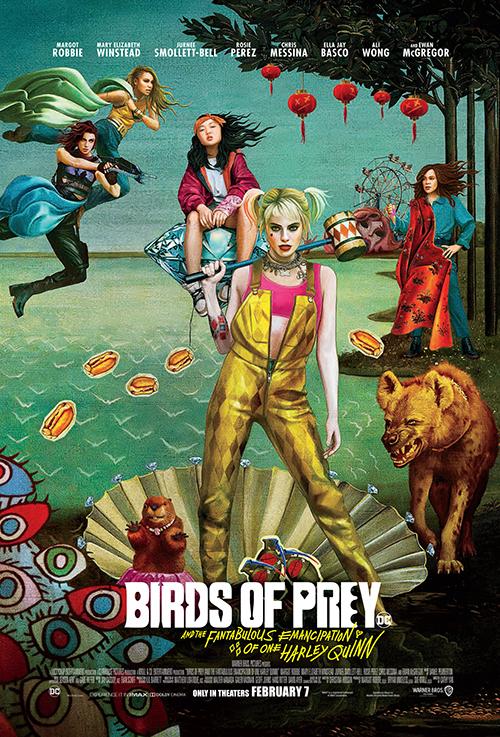
8. BIRDS OF PREY (AND THE FANTABULOUS EMANCIPATION OF ONE HARLEY QUINN)

Over the past few years, I’ve repeatedly mentioned how I have some major issues with certain parts of the DC Extended Universe fandom; namely, those who pledge their undying loyalty to the franchise’s original director, Zack Snyder, and the DCEU films that he directed while simultaneously attacking anyone who dares to suggest that they weren’t perfect. And because Snyder’s diehard fans have spent the past few years thinking about nothing but his original cut of 2017’s Justice League, which will finally be released this March, I’d go as far as to say that they most likely didn’t give a single crap about either of the DCEU films that came out in 2020. This was especially apparent with the first DCEU film of the year, Birds of Prey (And The Fantabulous Emancipation of One Harley Quinn). Birds of Prey (as I’ll be referring to it from here on out to avoid having to use that long subtitle) was the first official spin-off of 2016’s Suicide Squad based around its most popular character, Harley Quinn. Despite that film’s largely negative reception, Margot Robbie’s turn as the fan-favorite henchwoman turned antihero was widely considered to be one of its rare highlights. And so, because of this, several Harley-centric spin-offs were put into development, from a Harley Quinn/Joker film to one directed by Suicide Squad director David Ayer based on the Gotham City Sirens. Ultimately, though, Birds of Prey was the first to see the light of day thanks in large part to Robbie herself, who served as the film’s primary producer and was keen on making a female-led, female-directed superhero film.

And folks, believe me when I say that the diehard members of the DCEU fandom HATED the fact that this film existed. Bear in mind that this was all back before this past May when Zack Snyder’s Justice League was officially confirmed. Thus, I can assure you that it was quite common to see those DCEU fanboys complaining about a film like this getting made rather than something like Man of Steel 2. Also, remember what I said earlier about Birds of Prey being a female-led, female-directed superhero film? Well, as you might have guessed, this effectively made it the Captain Marvel of 2020 as it was forced to deal with all those sexist morons who got vitriolically mad at it for no valid reason, and overall, I do think that this somewhat affected it once it was released. Despite attracting solid reviews from critics, the film was a commercial underperformer. It only grossed around $201.8 million worldwide which, despite being at least double the total of its budget, still wasn’t enough for it to break-even. There’s been a lot of reasons thrown out there as to why this occurred, from its R-rating (even though the previous DC Comics-based film, Joker, grossed over $1 billion worldwide with that same rating) to, of course, COVID-19, which was starting to come into play around that time in certain countries. Ultimately, though, I just hope that it’s able to become one of those films that manages to attract a stronger reputation as time goes on because it’s another one of the DCEU’s best.     

But before we get into why that is, I’ll have to address the elephant in the room that is the main reason behind some of the more mixed reactions to this film. Despite being titled Birds of Prey and featuring several of the superheroine group’s most notable members from the comics, this is ultimately more of a Harley Quinn film. It’s told entirely from her perspective and the titular squad doesn’t officially come together until the finale. And yet, even with this in mind, the film manages to overcome this potential shortcoming by delivering on the one thing that the early DCEU films often lacked, character development. As great as Margot Robbie was in Suicide Squad, there were some who weren’t too big on ‘how’ Harley Quinn was portrayed in that film, especially the parts where she was clearly being used for fanservice. Thus, just like what happened with Wonder Woman and Aquaman when they transitioned to their respective solo films, Harley Quinn benefits greatly from being the lead in this film rather than being part of a larger ensemble (even if she was technically the main female lead in Suicide Squad). Birds of Prey does a much better job of highlighting Harley’s madcap personality and, because it revolves around her setting out on her own after breaking off her infamously toxic relationship with the Joker, ties in nicely with her newer characterization in the comics where she’s far from being a hero but works with the good guys more often. In other words, this is where Margot Robbie truly establishes herself as the definitive live-action Harley Quinn, but even though this film is admittedly more focused on Harley than the characters that it’s named after, it still does a great job of setting them up even if they don’t get as much to work with when compared to Harley.

Jurnee Smollett’s Dinah Lance AKA Black Canary is arguably the most grounded of the titular group even though she’s the only real ‘metahuman’ among them given her hypersonic scream abilities. While initially hesitant to partake in any vigilante business because of what happened to her mother AKA the previous Black Canary, she eventually steps up once she sees how low her boss, Roman Sionis AKA Black Mask, will go in his efforts to retrieve the diamond that holds the key to the Bertinelli family fortune. This is then contrasted nicely with Gotham City Police Detective Renee Montoya, with Rosie Perez perfectly cast as the no-nonsense cop who never gets any sort of respect from her fellow officers. However, the biggest standout of the titular group is Mary Elizabeth Winstead as Helena Bertinelli AKA Huntress, the sole survivor of the Bertinelli crime family turned crossbow-wielding vigilante. Huntress’ role in the film is a perfect mix of badass action beats and excellent comedic bits that poke fun at her overly serious nature (e.g. her various attempts at perfecting her ‘pre-kill’ catchphrase to the point where she’s seen practicing it in front of a mirror). Finally, to close out the main protagonists, we have Cassandra Cain… who has admittedly been the source of one of the film’s biggest fan-related controversies since it presents a radically different take on the character compared to her usual portrayal in the comics. In the comics, Cassandra is a mute martial artist who ends up becoming one of the most prominent characters to take on the mantle of Batgirl, but in this film, she’s just a street-smart pickpocket. Still, for what it’s worth, newcomer Ella Jay Basco does a great job in the role, especially thanks to the strong camaraderie that she forms with Margot Robbie.

All these well-developed heroines are then perfectly matched by a great main antagonist in crime boss Roman Sionis AKA Black Mask. Ewan McGregor is another one of the film’s biggest standouts as he fully succeeds in making Roman an utterly vile villain who somehow manages to also get many of the film’s best comedic moments (e.g. his frustration over not having control of the ‘Crossbow Killer’ (“I LIKE CROSSBOWS!”)). Granted, those moments are almost always of the ‘black comedy’ variety (e.g. the moment where he goes back on his promise to let the lone survivor of a family that he and his henchman Victor Zsasz just killed go simply because he’s grossed-out by a snot-bubble) but that doesn’t stop Black Mask from being one of the DCEU’s best villains. And so, with all this in mind, Birds of Prey is a great addition to both the superhero genre and the DCEU. Sure, it may have been a bit misleading to call this a Birds of Prey film since it’s ultimately a Harley Quinn story, but at the same time, it’s exactly the kind of film that Margot Robbie needed to fully embrace the role of Harley Quinn, a result that I’m 100% positive will carry over to her next appearance as the character in James Gunn’s The Suicide Squad. And as for the Birds of Prey themselves, I’d argue that, if anything, this film does a fantastic job of setting them up so that they can potentially become a staple of the DCEU going forward. That said, though, right now we can only hope that this film’s under-performance at the box-office doesn’t end up killing one of the DC Extended Universe’s most promising subseries.

One of the most iconic comedic duos in film history made their highly anticipated return to the big-screen this year for the first time since 1991, and while this newest film may have spent the last decade stuck in development hell, it ended up being one of the rare bright spots in the grim year that was 2020. Let’s be real, though, would you expect anything less from the WYLD STALLYNS!? (*Air Guitars*)

7. BILL & TED FACE THE MUSIC

1989’s Bill & Ted’s Excellent Adventure is easily one of the most famous cult classics of the ’80s. Case in point, I still remember the moment when I was first introduced to it during, of all places, my Eighth Grade World History class, where we watched the first twenty minutes or so of it before the end of class that day. I then proceeded to watch it in full when I came across it on cable not long after and it quickly became a favorite of mine. This, of course, then led to me seeing its 1991 sequel, Bill & Ted’s Bogus Journey, and while it wasn’t as well-received as Excellent Adventure, Bogus Journey has legitimately gone on to become a cult classic itself to the point where some even argue that it’s better than its predecessor. However, for the longest time, that was it for the cinematic outings of Bill S. Preston, Esquire, and Ted Theodore Logan, mostly due to stars Keanu Reeves and Alex Winter and series creators Ed Solomon and Chris Matheson moving on to other projects. Thus, the only major instances of the franchise’s continuation were things like a few TV shows and a stage show at Universal’s annual Halloween Horror Nights event. Solomon and Matheson did begin developing a third film in 2010… but, unfortunately, it ended up getting stuck in development hell for almost a decade, mostly due to the reluctance of most studios to revive a ‘cult-y’ franchise. And once again, to put this all into perspective, I still remember when this was first starting to come to fruition back then only for it to keep getting stuck to the point where it seemed like it wasn’t going to happen. But then, once Keanu Reeves experienced one of the best career revivals in recent memory thanks in large part to the John Wick films, the stage was finally set for the WYLD STALLYNS (!) to make their most triumphant return with Bill & Ted Face the Music and boy was it worth the wait!

Really, there’s not much that I can say about this film other than the fact that it’s another highly entertaining adventure starring Bill and Ted that’s narratively more in line with Excellent Adventure rather than the surreal road-trip adventure that was Bogus Journey. However, Face the Music also makes sure to include several of the things that made that film such a hit, such as William Sadler as the franchise’s hilariously dorky take on the Grim Reaper (“I was in the groove!”). And yet, amidst all the hilarious escapades that the lovable main characters get into, there’s also a surprising amount of solid emotional beats that do a nice job of addressing how much time has passed since the previous film, especially when it comes to the ways in which it pays tribute to the late George Carlin (archival footage, having Rufus’ daughter be named Kelly after Carlin’s own daughter (who cameos in the film), etc.). A lot of this also has to do with the introduction of Bill and Ted’s daughters, Thea and Billie, who share their dads’ passion for music and embark on their own Excellent Adventure to help their dads write the song that will bring the world together, which ultimately concludes with the poignant reveal that they’re the ones who wrote it. Samara Weaving and Brigette Lundy-Paine are phenomenal in their respective roles, have excellent camaraderie with each other and, perhaps most notably of all, very much feel like the natural off-spring of Reeves and Winter. All in all, Bill & Ted Face the Music is the very definition of a feel-good crowd-pleaser. It’s a warmly nostalgic love-letter to fans of the franchise that, at the same time, never tries to be something that it’s not.

If you were to ask me the two kinds of films that are practically guaranteed to make my End of the Year lists every year, I would say MCU films… and Pixar films. And while we may not have gotten an MCU film in 2020, we were blessed with the rare instance of two new Pixar films, and sure enough, both films will be appearing on this list. Ergo, we conclude the first half of this year’s list with the second Pixar release of 2020 and the one that will most likely be the big frontrunner for Best Animated Feature at this year’s Oscars.

6. SOUL

Pixar has seen a bunch of excellent directors helm their features over the years, whether they were figures from within their own ranks like Andrew Stanton and Lee Unkrich or ‘outsiders’ such as Brad Bird. And while any of these filmmakers could easily be considered as the studio’s ‘best’ director, I’d argue that this honor might just go to Pete Docter. At the very least, he’s been responsible for several of the studio’s most critically acclaimed outings, including the second animated film in history to get nominated for both Best Animated Feature AND Best Picture, 2009’s Up, and 2015’s Inside Out which, according to the internet, was Pixar’s ‘return to form’ after a ‘shaky’ run in the early 2010s. And in 2018, he took on the position of being Pixar’s new Chief Creative Officer; a fitting choice, if you ask me, given that he’s been a mainstay of the company ever since he first joined them in 1990. But before he properly took on his new job, he made it clear that he was still going to finish his follow-up to Inside Out that he began developing in 2016 which, of course, would ultimately become Soul. Now, on the surface, Soul might seem like something of a spiritual follow-up to Inside Out since both films explore concepts relating to the things that make us humans tick. But whereas Inside Out focused on our emotions, Soul is more about our personalities; our likes and dislikes, our dreams, our fears, etc.

With that in mind, it should probably go without saying that Soul is one of the most thought-provoking films that Pixar has ever made. Obviously, the deep exploration of a film’s themes isn’t anything new to Pixar, but in this instance, we have a story that truly goes above and beyond to explore the ways of life in as many ways as it can to the point where it even has the guts to openly address the subject of death. It shows both optimistic and cynical views on life and, while obviously leaning more towards the former when it comes to its own outlook on the matter, doesn’t outright vilify the latter by showing exactly how someone could end up that way. In other words, Soul is very much a celebration of life, resulting in all the great emotional beats that you’ve come to expect from Pixar films, with said moments arguably hitting harder than expected for reasons that I’ll get into later. And, of course, as you would also expect from Pixar at this point, it all comes together in a finely polished animated feature with top-notch animation and a great soundtrack comprised of both Trent Reznor and Atticus Ross’ score and terrific jazz tunes from Jon Batiste. But you can’t have a great Pixar film without great characters and Soul certainly has its fair share of fun characters, from Graham Norton’s eccentric soul-rescuing Moonwind to Rachel House’s utterly dedicated soul counter Terry. At the end of the day, though, Soul properly maintains Pixar’s routine of basing its stories around a lead duo which, in this instance, consists of music teacher and aspiring musician Joe Gardner and Soul #22, who’s been stuck in the Great Before for quite some time because she simply has no desire to go to Earth.

As Joe Gardner, Jamie Foxx does a great job in making Joe a generally likable audience surrogate as he embarks on this wacky adventure. At the same time, though, much of Joe’s arc in this film revolves around him overcoming his biggest character flaw, which is his general short-sightedness. His lofty aspirations to become a jazz musician just like his late father are what arguably set this film’s plot into motion as his excitement about being chosen to perform with legendary jazz performer Dorothea Williams results in him falling into a manhole after he had already gone through a bunch of near-death experiences. And after he and 22 begin working on the process of getting him back into his body, his insistence on getting it done in time for the concert that he is set to perform in that night results in him going down some selfish routes since he is generally oblivious towards 22’s personal journey. On that note, when we first meet 22 (a role that was practically tailor-made for Tina Fey, who’s just as excellent as Foxx), she’s the very definition of a snarky cynic who hasn’t found the spark that properly forms a soul’s personality. But once she travels to Earth with Joe, she finally gets to witness the joys of life, only for her own chance at life to be taken away from her because of Joe’s selfish desires, which results in her temporarily becoming a ‘lost soul’. Thankfully, Joe ends up having the epiphany that he desperately needed when he realizes that it’s not about what he’s trying to achieve in life but rather understanding the simple fact that life is something that’s worth living. Thus, the film ends with 22 finally finding her ‘spark’ and making the pivotal journey to Earth while Joe is given a second chance by the Great Before counselors to live his life to the fullest.  

Now, admittedly, I am aware that while this film has fared excellently with critics, it has also garnered some notably mixed reactions here and there. Namely, there’s been a lot of talk about the fact that while this is the first Pixar film to be headlined by an African American protagonist, Joe Gardner spends a good chunk of the film outside of his own body, including a considerable stretch where 22 ends up inhabiting his body while he’s stuck as a hospital’s therapy cat. This was something that was also brought up with Walt Disney Animation’s 2009 film The Princess and the Frog, which notably featured the studio’s first African American princess… who spent most of the film as a frog. Ultimately, though, just like that film, I don’t think that this ends up hurting the film too much in the long run given all the other things that are great about it. Earlier, I noted that the emotional beats of Soul ended up hitting harder than anticipated, and the reason why I say that is because of, as you might have guessed, the circumstances of it being released right in the middle of the COVID-19 pandemic. In a time where life as we know it was forced to be put on hold, Soul (which, like many of the films that were impacted by COVID-19, was forced to become a streaming release rather than a theatrical one) is a touching tribute to much of what we will hopefully get to return to once things start returning to normal. In other words, the best thing that I can say about Soul is that it’s one of those films that managed to come out at just the right time, thus making it one of the most uplifting releases from this crazy year.  

And that concludes Part 1 of Rhode Island Movie Corner’s Top 10 Favorite Films of 2020. Thanks for following along and be sure to check back in tomorrow for Part 2, where we’ll close out the list and go through my Top 5 of the year.

Sunday, June 28, 2020

2020 Midyear Recap


Normally around this time of year, I produce a Midyear Recap where I go through every single film that I’ve seen in the first half of the year. It’s a Rhode Island Movie Corner tradition that I’ve thoroughly maintained ever since this blog’s inception in 2012. But as you might have guessed, there has been a major complication when it comes to this year’s installment of the Midyear Recap. Yes, thanks to that pesky coronavirus, theaters were forced to shut down until further notice, which means that many of the biggest films that were set to come out these past few months had to be either pushed back to later in the year (or next year, in some cases) or moved directly to On-Demand and Streaming services. Personally, I only managed to get four films in at the theater before this all went down, which isn’t even enough to do the ‘Top 5 of the Year (So Far)’ segment that always ends these posts. However, in the wake of all the nationwide closures back in March, I have since seen two more films thanks to the On-Demand/Streaming circuit, effectively allowing me to have a proper Top 5 of 2020 by the halfway point. And since I’m usually not one to buck away from the traditions that I’ve established for this site, I will still go ahead and deliver the 2020 edition of Rhode Island Movie Corner’s annual Midyear Recap. For those who are new to this site, the annual Midyear Recap is exactly what you think it is. In today’s post, I will be going through all the new films that I’ve seen in 2020, whether it was in a theater or at home, in the order of ‘least favorite’ to my current #1 of the year. And to be clear, I’m only counting the films that I’ve seen that came out this year. In other words, this isn’t going to be one of those cases where I go over everything that I’ve been watching while being in lockdown for the past few months since a lot of it consists of films and shows that had come out in years past. And so, without further ado, join me as I proudly present what will easily be the shortest installment to date of Rhode Island Movie Corner’s annual Midyear Recap.

ARTEMIS FOWL

Josh Gad, Nonso Anozie, Lara McDonnell, and Ferdia Shaw in Artemis Fowl (2020)

Well, to start things off on a controversial note… yes, I did like this film. That said, though, I fully understand why a lot of people didn’t like it. Artemis Fowl will surely go down in history as one of the most infamous adaptations of a popular book series in recent memory as it makes a bunch of radical changes to the title character and combines story elements from the first two books in the series despite the fact that it does properly maintain the first installment’s premise. But like I said in my review of the film from a few weeks ago, I went into it without having read the book beforehand. I did attempt to read it back when I was younger, but for reasons that I can never explain, I wasn’t able to connect with it like I did with the likes of Harry Potter. However, I fully recognize that if I had read it, I probably would’ve taken greater issue with all these changes. In fact, this is the exact same situation that I was in when I first saw the film adaptation of Percy Jackson and the Olympians: The Lightning Thief in 2010. At the time, it was a film that I was really looking forward to since I was a massive fan of the book series ever since I read the first one in my 8th Grade English class. But while I didn’t necessarily ‘dislike’ the film when I finally saw it, all I could think about was how it was far from being the most faithful adaptation of its source material. Because of this, I’ll admit that I didn’t see its sequel, Sea of Monsters, when it came out in 2013; and yet, from what I can gather… I didn’t miss much. That one ended up being the last outing for the film franchise, effectively making it a failed attempt at an adaptation. Luckily for fans of the series, though, it has recently been announced that a TV series is being primed for Disney+ that has the potential to be a more faithful adaptation. In other words, it’s a lot like what happened with A Series of Unfortunate Events. Its 2004 feature film adaptation looked to be the start of a franchise that could rival the likes of Harry Potter, but those plans stalled out after just one film. But then, in 2017, it got a TV series adaptation on Netflix that was widely lauded for being a far more faithful take on the franchise, and because it ran for three seasons, it was able to do what the film couldn’t and see its story told to completion.

Nonso Anozie and Ferdia Shaw in Artemis Fowl (2020)

But anyway, back to Artemis Fowl. As noted earlier, the biggest deviations that the film makes from the books primarily revolve around the title character. In the books, Artemis Fowl II is a 12-year old ‘criminal mastermind’ who starts out as a more villainous character before he gradually transitions into being more of an ‘antihero’ in subsequent installments. The film, however, basically abolishes his ‘villainous’ traits to make him more of a traditional protagonist who, instead of looking to recoup his family’s fortune, is trying to rescue his father from a villain who didn’t appear in the first book. Naturally, this didn’t go over well with fans of the franchise, who promptly made it clear that the idea of having an antagonist as the main character of the series was never an issue for them and that all these changes robbed Artemis of the traits that made him interesting in the first place. Despite this, however, the film ends up faring a lot better when it comes to other aspects of its production. To be clear, I’m not saying it’s perfect (far from it, in fact…), but with a brisk 95-minute runtime and some fun production design to bring its fantasy world to life, it’s harmless, for the most part… you know, if you don’t take the story and character changes into account. Really, the only other thing that holds it back aside from its radical changes to the narrative is how it’s surprisingly lowkey when it comes to being a ‘franchise starter’. Sure, it maintains the idea of what author Eoin Colfer described as ‘Die Hard with fairies’, but it doesn’t spend as much time within the fantastical underground world of Haven City as it could’ve. And because of the negative reviews that it’s gotten and its fate as a Disney+ release, I think it’s safe to say that this won’t be eliciting a sequel that could make up for all this. But like I said before, perhaps this will end up being a case like Percy Jackson and A Series of Unfortunate Events where, sometime down the road, Artemis Fowl will end up getting a new adaptation that would give fans a far more faithful take on their beloved franchise.

And now, without further ado…

MY TOP 5 OF 2020 (SO FAR)

5. BAD BOYS FOR LIFE

Will Smith and Martin Lawrence in Bad Boys for Life (2020)

So far, Bad Boys for Life has been one of the biggest hits of 2020’s film slate when it comes to how it has fared with critics and audiences. Even as the third installment of a franchise that has been around since 1995 and hasn’t had a mainline installment since 2003, it’s currently the highest-grossing film of the year with a worldwide total of $419.1 million. And in an unexpected turn of events, it’s also the best-reviewed installment of the franchise to date with a solid 77% rating on Rotten Tomatoes. While the first two Bad Boys films that were directed by Michael Bay were solid hits with audiences to the point where 2003’s Bad Boys II is genuinely considered by some to be one of the best action films of its time, they weren’t as successful with critics. But with Bad Boys for Life, critics felt that the directorial duo of Adil El Arbi and Bilall Fallah were able to take the brazenly chaotic escapades of Bay’s Bad Boys films and do something worthwhile with it, and sure enough, that’s exactly what they did. Overall, Bad Boys for Life strikes a solid balance when it comes to how Adil and Bilall maintain the general atmosphere of the series. While they certainly do their part to maintain that classic Michael Bay style through the film’s lavish cinematography and flashy action sequences, it isn’t as insanely over-the-top in its depiction of ‘Bayhem’ like Bad Boys II was. Instead, it’s more in line with the original Bad Boys from 1995, which was Bay’s directorial debut, and while it certainly showed signs of the figuratively and literally explosive style of directing that he would become known for, nowadays one could argue that, by Michael Bay standards, it’s one of his tamest films.

Will Smith and Martin Lawrence in Bad Boys for Life (2020)

But perhaps the most fascinating aspect of Bad Boys for Life is how it managed to be its franchise’s best-written installment. Granted, this is still just as much of a generally mindless action flick as its predecessors, but the film deftly addresses the 17-year gap between it and the release of Bad Boys II. It does a wonderful job of emphasizing how Mike Lowery and Marcus Burnett aren’t the young hotshots that they once were, especially when it comes to the former since the film quickly shatters the image of Mike’s seemingly invincible persona that thoroughly dominated the previous two films. And then, of course, there’s the big reveal that Armando, the young assassin that’s been hunting him and Marcus, is the son that he fathered with the film’s main antagonist, cartel leader Isabel. This and the subplot of Marcus turning to religion after Mike nearly dies from one of Armando’s assassination attempts helps give the film some truly unexpected bits of strong emotional poignancy. And through it all, Will Smith and Martin Lawrence properly maintain the strong camaraderie between them that made the previous films the enduring hits that they are. Because of all this, it’s quite easy to see why Bad Boys for Life ended up becoming one of this year’s biggest hits. Not only did it deliver on everything that fans of the franchise have wanted to see for years (especially since this film spent a considerably long time in development hell for various reasons), but it also managed to do the unexpected and show some genuine signs of maturity. And really, considering some of the shenanigans that Mike and Marcus got into in Bad Boys II, that’s saying a lot. As I’ve said before, the Bad Boys films are far from being my favorite action films of all-time, but I assure you that I had just as much fun with one of the best recent examples of an all-around crowd pleaser as everyone else.

4. SCOOB

Will Forte, Frank Welker, Amanda Seyfried, Zac Efron, and Gina Rodriguez in Scoob! (2020)

Scoob was originally set to make its theatrical debut on May 15th, but of course, that plan changed when the pandemic forced all the theaters to close. So instead, Warner Bros opted to do what Universal and DreamWorks did when they decided to have Trolls World Tour released on On-Demand the same day as its intended theatrical release date on April 10th, which was also fully compromised by COVID-19. Thus, both films debuted with the ‘Theater at Home’ price tag of $19.99, and while I understand why some might find this to be a bit much for just a rental, I do feel that it’s a reasonable asking price given the circumstances. Plus, if there’s at least two people watching the film together, I’d argue that this is enough to justify what’s basically the equivalent of two theater tickets. The same method of pricing also ended up applying to films that were in theaters right when COVID-19 hit (e.g. The Invisible Man, Emma, and even an upcoming film on this list), which resulted in many of them opting to fast-track their debuts on On-Demand services. However, this practice has attracted some controversy from theater owners, especially after Universal announced that, because of how successful Trolls World Tour was on the streaming market, they were considering doing simultaneous theater and On-Demand releases for some of their other films down the road. In response, both AMC Theatres and Regal Cinemas announced that they wouldn’t distribute any of the studio’s films that are released in that manner. And while that’s all I’ll say about this debate for now, I’ll also admit that Scoob, the newest take on the classic franchise that is Scooby-Doo, has been the only film forced to On-Demand services by COVID-19 that I’ve rented at the ‘Theater at Home’ price range.

Will Forte and Frank Welker in Scoob! (2020)

One of the biggest selling points of this reboot of the Scooby-Doo franchise is how it looks to be the start of a potential cinematic universe that revolves around the classic characters of Hanna-Barbera Productions. And while I know that some people might groan at the prospect of another attempt at an MCU-style franchise, especially since most attempts at following the MCU formula haven’t even remotely come close to replicating Marvel Studios’ success, the idea of a Hanna-Barbera cinematic universe is a genuinely exciting one. This is especially if you’re like me and your experience with the company’s properties is admittedly limited to the likes of The Flintstones and, of course, Scooby-Doo. As such, one of the best aspects of Scoob is how it spotlights some of Hanna-Barbera’s lesser-known characters like the Blue Falcon (or in this case, the Blue Falcon’s generally aimless son Brian who took up his father’s mantle in the wake of his retirement), Dynomutt the Dog Wonder, and Captain Caveman. Sure, this does sort of come at the expense of the film being a traditional Scooby-Doo adventure, especially since the Mystery Inc gang is split up for a good chunk of the runtime, but it makes up for this with some solid emotional depth through its handling of Shaggy and Scooby’s relationship. After all, as the film clearly points out, they’ve always been the heart of this franchise. And while I fully recognize why the decision to recast the voices of the Mystery Inc. gang (save for Frank Welker as Scooby) has led to quite a lot of backlash, the new voice cast does manage to do a solid job in their respective roles. Like I’ve said before, though, this doesn’t mean that I think that they should replace the series’ current voice cast. But overall, I had quite a lot of fun with Scoob. While it does have its fair share of modern references, it does a wonderful job of maintaining that classic Hanna-Barbera style from its wide array of Easter eggs to animation that perfectly reflects the franchise’s traditionally animated roots. All in all, it’s a delightful little family flick that will hopefully get the chance to spawn its proposed cinematic universe despite the COVID-19 based circumstances that led to it forgoing its theatrical release in favor of an On-Demand debut.

3. SONIC THE HEDGEHOG

James Marsden and Ben Schwartz in Sonic the Hedgehog (2020)

By this point last year, the first live-action film adaptation of Sonic the Hedgehog was shaping up to be one of the biggest cinematic disasters in recent memory. When the film’s first trailer was released, literally the only thing that anyone talked about was how utterly mediocre the initial design for the title character was. This more humanoid version of Sonic quickly became a prime source of internet mockery in a manner quite similar to what happened when the first trailer for Cats hit or when the live-action Aladdin remake showcased its first look at Will Smith’s Genie in the character’s traditional blue form. And yet, in a genuinely unexpected turn of events, director Jeff Fowler announced that he and his team would take the criticisms of the design to heart and completely rework it. They even decided to delay the film to February of this year rather than its original November 2019 release date so that the VFX artists wouldn’t have to be forced to endure the dreaded crunch time that would’ve stemmed from such a severe deadline. Granted, it’s been reported that this happened regardless and the studio that worked on the visual effects ended up shutting down by the end of 2019, which resulted in the VFX artists who worked on the redesign getting laid off, but that’s another story for another time. When Sonic’s big redesign was officially shown off in the second trailer, the film’s online reputation did a complete 180 as fans reacted far more positively towards this version of the character. It certainly helped the film upon its release, where it managed to net over $306 million worldwide and stand toe-to-toe with last year’s Pokémon: Detective Pikachu as one of the rare positively received live-action adaptations of a popular video game. Sure, just like Detective Pikachu, the reviews weren’t ‘amazing’, per se, but both films certainly fared a lot better with critics than most of the other films that have come from what is quite arguably the film industry’s unluckiest subgenre. And in this instance, it’s easy to see why Sonic the Hedgehog managed to avoid the same fate as other films based on video games as it’s a solidly entertaining popcorn flick.

Jim Carrey in Sonic the Hedgehog (2020)

Now with that said, the film is admittedly rather basic in terms of its plot. In other words, it’s your standard fish-out-of-water/road-trip comedy that’s very straight-forward with its narrative/character arcs. Plus, fans of the franchise may be a bit disappointed with the fact that the film sees Sonic spend more time on Earth than he does on his home world of Green Hills, even though, to be fair, the concept of Sonic interacting with humans in the real world isn’t anything new for this series. Despite this, however, the film manages to work around this thanks to its easy-going atmosphere and it boasts some fun action sequences that do a nice job of utilizing Sonic’s super-speed abilities (and yes, this includes some slow-motion sequences a la the Quicksilver scenes from the recent X-Men films). And despite what I said before about the film’s inherently predictable nature, it does have a lot of heart to its proceedings thanks in large part to the strong bond that forms between Sonic and a local cop named Tom Wachowski that’s spurred by the former’s desire for friendship after years of isolation. As such, the film is very much bolstered by the phenomenal duo of Ben Schwartz, who proves to be a pitch-perfect voice for Sonic, and James Marsden, who makes the most out of his ‘best friend archetype who spends most of his time interacting with a CGI character’ role as Tom. And, of course, the one and only Jim Carrey is an undeniable standout in the role of Sonic’s arch-nemesis, Dr. Robotnik. All in all, it’s legitimately nice to see this film manage to overcome all the negative publicity that surrounded the original cinematic look for Sonic, especially since there was a good chance that this widely-maligned design could’ve easily derailed the film entirely had it not been redone. And because of how successful it managed to be at the box-office, a sequel was recently announced to be in the works, which makes perfect sense seeing how the film ends with a mid-credits scene where Sonic’s best friend Miles ‘Tails’ Prower arrives on Earth to look for him.

2. BIRDS OF PREY

Rosie Perez, Jurnee Smollett, Mary Elizabeth Winstead, Margot Robbie, and Ella Jay Basco in Birds of Prey: And the Fantabulous Emancipation of One Harley Quinn (2020)

The fact that Birds of Prey is one of the hardcore DCEU fandom’s most utterly despised films (despite being one of the franchise’s better-reviewed entries) is something that will always make me laugh. After all, like I’ve said plenty of times before, one of the reasons why the DCEU diehards have been one of the most toxic factions of modern film fandom is how they’re blindly loyal to the works of Zack Snyder to the point where they refuse to listen to anyone who dares to have a problem with his DCEU films even though they’re certainly far from perfect. Thus, when this film came out, the Snyder faithful grimaced at the idea of a film like this being made instead of something like Man of Steel 2 or the long-demanded release of the fabled ‘Snyder Cut’ of Justice League (which, of course, will finally happen next year). However, I do hope that this isn’t one of the reasons why Birds of Prey admittedly underperformed at the box-office. While it did manage to double its budget (which was around $82-100 million) with a worldwide total of $201.9 million, it didn’t reach the breakeven point of around $250-300 million. And to be clear, this isn’t necessarily one of those cases of a film whose theatrical release window was hindered by COVID-19 since it came out at least a full month before all this went down… although it did end up fast-tracking its On-Demand debut once the pandemic went into full effect. It could be argued that this may have had something to do with Birds of Prey being the DCEU’s first R-rated theatrical release (not counting the Ultimate Edition of Batman v Superman), but it’s still sad that this happened to a female-directed film that was primarily headlined by a female cast. In fact, to be perfectly blunt… it also speaks volumes about how the DCEU diehards can often have the same sexist tendencies as the haters of Star Wars: The Last Jedi. Remember all those alt-right clickbait videos on YouTube that I’ve talked about recently? Yeah, Birds of Prey has gotten that terrible treatment too. Let’s just say that there’s a good reason why the completely unrelated (though thematically similar in a lot of ways) Harley Quinn animated series on DC Universe directly spoofed this kind of toxic behavior in the Season 2 episode ‘Batman’s Back Man’.

Margot Robbie and Ella Jay Basco in Birds of Prey: And the Fantabulous Emancipation of One Harley Quinn (2020)

As for the film itself, I should probably start things off by addressing the elephant in the room. While the film is named after the superheroine group of the same name from the comics and does feature some of its most prominent members like Black Canary and Huntress, Birds of Prey is primarily a Harley Quinn story. It’s told almost entirely from her perspective and revolves around her efforts to rebuild her life after breaking off her relationship with the Joker while the titular squad doesn’t officially come together until the final act. I’m also aware that there’s been some controversy over the film’s portrayal of Cassandra Cain who, instead of being the martial-arts trained mute that she is in the comics (where she becomes Batgirl), is a street-smart pickpocket that Harley takes under her wing. Despite this, though, the film does an excellent job of maintaining the character-driven approach that the DCEU has thankfully been going with for their most recent outings. Even if it does come at the expense of proper set-up for the Birds of Prey, this film’s portrayal of Harley Quinn is superb, both in terms of how she’s written and how Margot Robbie finally gets the chance to assert herself as the definitive live-action incarnation of the character. And while they don’t get as much focus as they probably should’ve, the other female leads are great as well, especially Mary Elizabeth Winstead as Huntress, who gets a lot of the film’s best comedic moments thanks to all the playful jabs at her attempts at being a serious vigilante (who still gets to partake in many of the film’s best action beats). Plus, while we’re on the subject of action, did I forget to mention that, during the film’s reshoots, any action sequences that were filmed by the second unit were supervised by none other than John Wick’s Chad Stahelski? Basically, what I’m getting at is that this film’s got some great action sequences.

Margot Robbie in Birds of Prey: And the Fantabulous Emancipation of One Harley Quinn (2020)

And so, in conclusion… yes, I’m part of the crowd that really liked this film. As such, I’m also disappointed that it didn’t do as well as it could’ve at the box-office, partially due to the growing problem of overly entitled toxic ‘fans’ (and yes, as always, the term ‘fans’ is used loosely here). To be clear, I’m not saying that it’s perfect, namely due to it being a bit unfocused at times because of the whole ‘it being more of a Harley Quinn film than a Birds of Prey film’ thing, but thanks to the solid direction from Cathy Yan, it manages to overcome this to be another solid outing for the post-Snyder era of the DCEU. If I were to rank this film amongst the other installments of the DCEU, I’d put it at Number 4, right behind the Grade-A trio of Aquaman, Wonder Woman, and Shazam but still ahead of all the Zack Snyder DCEU films (plus Suicide Squad). Yes, as I pointed out a few weeks back when I discussed the announcement of the Snyder Cut’s long-awaited release, I’m not exactly as positive towards the Snyder-directed DCEU films as I was back then. And while the DCEU diehards will try to argue otherwise, Birds of Prey is simply yet another example of how the franchise has fared a lot better since it moved away from the overly dour atmosphere of Snyder’s films. The only real downside to all this is that the DCEU won’t be acknowledging the shared universe format as much going forward… though, really, that’s more on DC and Warner Bros for not realizing that perhaps rushing Justice League just so that they could match The Avengers wasn’t such a great idea. Whatever the case, though, while it may not be the most ideal interpretation of the team that it’s named after, Birds of Prey does, at least, show that there’s quite a lot of potential for them going forward.     

1. ONWARD

Onward (2020)

While it goes without saying that I’ll probably have a new #1 by the end of the year, my favorite release of the year so far has been Onward, the first of Pixar’s 2020 releases (barring any new COVID-19 related complications that could force the further delay of Pete Docter’s Soul, which is currently tapped for a November release). Onward serves as the sophomore directorial effort of Dan Scanlon, who had previously helmed the studio’s heavily underrated Monsters Inc prequel, 2013’s Monsters University. This time, however, Scanlon had the chance to do an original story that was inspired by the death of his father when he was younger and the strong relationship that he formed with his brother in the wake of their loss. This is effectively translated into a fantasy adventure set in modern suburbia where two elf brothers, Ian and Barley Lightfoot, embark on a Dungeons and Dragons inspired quest to retrieve a powerful gem that they can use to bring their deceased father back to life for one day. While I’m personally not too familiar with D&D, those who are will surely be delighted by all the references that this film makes to it, including a scene where Ian and Barley are confronted by the most terrifying foe of all… the gelatinous cube! But of course, Onward also dutifully maintains the most definitive aspect of any great Pixar film by fully delivering on its emotional poignancy, especially when it comes to its ending. It’s probably one of the best examples of a bittersweet but ultimately happy ending as Ian willingly gives up the chance to properly meet his dad to protect him and Barley from a giant dragon just so that Barley can have one last moment with their dad after he had revealed that he was too scared to say goodbye to him when he was sick. And as for Ian, while he may not have gotten the chance to meet the father that he never knew, the journey that they went on ultimately helped him realize that Barley was the one who filled that void for him.

Chris Pratt and Tom Holland in Onward (2020)

The strong brotherly bond between Ian and Barley is easily the best part of this film, and it’s all thanks to the phenomenal voice work from Tom Holland and Chris Pratt in their respective roles. And while the film’s focus on Ian and Barley’s quest means that the other characters in the film don’t exactly get as much to work with as they do, Julia Louis-Dreyfus and Octavia Spencer are just as great as Ian and Barley’s utterly dedicated mom Laurel and Corey the adventure-loving Manticore, respectively. All this and the fun fantasy world that it takes place in results in Onward being another top-notch outing from Pixar… even if some felt that it wasn’t exactly one of their ‘best’. Yeah, despite amassing an incredibly admirable 88% rating on Rotten Tomatoes, a common point that’s been brought up in a lot of reviews for the film is that it isn’t quite up to par with some of Pixar’s most beloved outings. And yet, this only continues to prove the point that my pal Kyle Ostrum and I have been saying for years now about how Pixar films that aren’t considered an outright masterpiece tend to get overlooked because of the intense expectations that come with every new film that the studio releases. There’s also the matter of this film arguably being the biggest release hindered by the COVID-19 pandemic, which went into full effect just about a week into the film’s release, and because of this, it was forced to join the increasing number of films that had to fast-track their releases onto the On-Demand market. As such, I do hope that this film manages to gain some greater attention on the home video market because I genuinely think that it’s just as worthwhile as all the other Pixar classics. The fact that it only did about $103 million worldwide on a budget of around $175-200 million is simply due to it being forced to experience the unlucky break of being released at the worst possible time.

And that concludes the [severely truncated] 2020 edition of Rhode Island Movie Corner’s annual Midyear Recap. As always, thanks for following along even with everything that made this the shortest Midyear Recap that I’ve done to date. With that said, I should note that, despite what some may suggest, I’m genuinely optimistic that we’ll be able to return to the concept of going to see films at the theater sometime in the future. While it’s currently unclear as to when it’ll be safe to partake in this timeless pastime again, hopefully there’ll be enough time this year to see some of the biggest upcoming releases, and believe me, there’s a lot to look forward to when it comes to films that I strongly believe should be seen with a crowd in the theater. There’s the highly anticipated follow-up to one of the best installments of the DCEU, the MCU’s first installment of the post-Infinity Saga era, the epic live-action reimagining of one of the Disney Renaissance’s most underrated gems, and the long-awaited return of one of the most iconic duos to ever grace the big-screen… and yes, that’s just to name a select few. And personally, I’d hate to see the theater-going experience die out just because this pandemic forced us to stay at home for a few months. Thus, in conclusion, I’m only going to say one thing, folks… WEAR A DAMN MASK so that we can keep this pandemic from getting any worse.     

Thursday, February 27, 2020

Birds of Prey (and the Fantabulous Emancipation of One Harley Quinn) (2020) review


Rosie Perez, Jurnee Smollett-Bell, Mary Elizabeth Winstead, Margot Robbie, and Ella Jay Basco in Birds of Prey: And the Fantabulous Emancipation of One Harley Quinn (2020)

On September 5th, 1992, Batman: The Animated Series made its official debut on the Fox Kids programming block and would go on to span 85 episodes throughout four seasons that would later pave the way for various spin-offs set in the same universe. Since then, the show has gone on to become one of the most beloved interpretations of the Dark Knight, garnering much acclaim for its dark and mature writing, noir-inspired animation, and strongly layered characters. This, of course, includes the show’s iconic interpretations of Batman’s legendary Rogues gallery headlined as always by his archnemesis, the Joker (voiced by Mark Hamill). However, this series would also see the debut of a villain who quickly turned out to be a fan favorite, Harley Quinn, a former psychiatrist at Arkham Asylum who fell in love with the Clown Prince of Crime and promptly became his fiercely loyal second-in-command. The character was largely inspired by her original voice actress Arleen Sorkin, a college friend of the series’ co-creator Paul Dini who once appeared in a jester outfit on the classic soap opera Days of Our Lives, which would influence Harley’s iconic harlequin look. After making her official debut in Episode 22 of the series, “Joker’s Favor”, Harley became such a popular character amongst fans of the show that she was then properly implemented into the comics. And in 2016, she would make her live-action cinematic debut in the DC Extended Universe’s Suicide Squad, where she was played by Margot Robbie. While the film proved to be a dud with critics, Robbie’s portrayal of the iconic villainess turned occasional antihero was considered one of its biggest highlights.

Because of this, plans were then set into motion for several potential spin-offs featuring Robbie’s take on the character, including one that focused solely on her and the Joker and another that would be based around the squad of her, Poison Ivy, and Catwoman known as the Gotham City Sirens. Ultimately, though, the first official Harley Quinn spin-off would end up being one proposed by Robbie herself based on a different all-female squad known as the Birds of Prey. The Birds of Prey were originally introduced in the mid-’90s by writer Chuck Dixon and former DC Comics editor Jordan B. Gorfinkel and, in the context of the DC Universe, was spawned from a partnership between Black Canary and former Batgirl Barbara Gordon who, at the time, had become known as ‘Oracle’ following the controversial events of The Killing Joke. Since then, other superheroines have been featured on the group’s roster over the years including Batwoman, Hawkgirl, and Power Girl. Outside of the comics, there was a Birds of Prey TV series that aired on the WB from 2002-2003 but sadly only lasted one season due to poor ratings (said series also notably featured a version of Harley Quinn played by Mia Sara). But now the Birds of Prey have been given their own film which, as alluded to earlier, primarily came to fruition thanks to Margot Robbie, who initially proposed it during the production of Suicide Squad. Along with headlining the film in her second official outing as Harley Quinn, Robbie is its primary producer via her production company, LuckyChap Entertainment, and prioritized a female-led crew that includes screenwriter Christina Hodson and director Cathy Yan. Thus, we now have a film that boasts the legendary title of Birds of Prey (and the Fantabulous Emancipation of One Harley Quinn), and sure enough, that elaborate title gives you an exact idea of the unabashedly chaotic and highly entertaining comic book flick that it ultimately is.

(Disclaimer: To avoid having to constantly repeat that long title, any future use of it in this review will consist solely of the Birds of Prey part of it and not the Fantabulous Emancipation of one Harley Quinn subtitle)

Sometime after the events of Suicide Squad, former Arkham Asylum psychiatrist turned crazed henchwoman Harley Quinn (Margot Robbie) breaks off her relationship with her longtime boss/lover, the Joker. But while Harley is more than ready to move on with her life, she quickly learns that this now puts her on the hit list of every criminal in Gotham City that she had previously wronged but was always protected from due to her ties with the Joker. At the top of that list is crime boss Roman Sionis AKA Black Mask (Ewan McGregor), who is currently after a diamond that’s embedded with information regarding the elusive fortune of the former Bertinelli crime family. But while he and his right-hand man Victor Zsasz (Chris Messina) end up finding the diamond, it’s then promptly stolen from them by young pickpocket Cassandra Cain (Ella Jay Basco). To save herself from his wrath, Harley offers to retrieve the diamond for Roman but ultimately ends up taking the young girl under her wing instead. In the process, the two also end up crossing paths with a bunch of other women who are tied to their current predicament. This includes Dinah Lance AKA Black Canary (Jurnee Smollett-Bell), Roman’s club singer turned driver who can project hypersonic screams, Gotham City police detective Renee Montoya (Rosie Perez), who’s looking to build a case against Roman, and Helena Bertinelli AKA Huntress (Mary Elizabeth Winstead), the sole survivor of the Bertinelli family who grew up to become a crossbow-wielding vigilante. Recognizing that they all share a common enemy, Harley proposes that they work together to protect Cassandra from the army of goons that are headed their way.

Much has been said about how Suicide Squad ended up being yet another example of the DCEU’s early installments being hindered tremendously by executive meddling, thus paving the way for its mediocre reception. One of the biggest criticisms directed towards it was that despite its marketing campaign’s promise of being one of the flashiest installments of the superhero genre, a lot of the final film was downright ugly when it came to its visuals. Thankfully, that is not the case with Birds of Prey as director Cathy Yan never shies away from the bright visual aesthetic that has commonly defined the character of Harley Quinn. And instead of the arguably quite cynical tone that defined much of Suicide Squad, Birds of Prey achieves a great mix of wacky hi-jinx and solid emotional drama. This is, after all, a film where Harley Quinn finally breaks off her long-standing relationship with the Joker which, despite being one of the most famous relationships in all of comics… is also one of the most toxic relationships in the history of media. In other words, Birds of Prey deserves a lot of credit for being thoroughly committed to producing a female-led superhero film that takes a full-on sledgehammer to toxic masculinity, and if you ask me, it handles this all very well. Sure, the plot can be a little jumbled at times due to all the story elements that it’s trying to juggle alongside the primary storyline with Harley (more on that in a little bit), but the film still flows at a very nice pace throughout. Plus, it also sports some excellent action sequences, with any sequence that was done during reshoots notably being handled by none other than John Wick director Chad Stahelski.   

Prior to the film’s release, there was some concern from fans that despite being titled Birds of Prey, it would end up being more focused on Harley Quinn given that the marketing primarily revolved around her, and to be perfectly blunt… that’s exactly what the film is. Birds of Prey is very much a Harley Quinn film and the titular squad doesn’t properly come together until the final act. However, I wouldn’t necessarily call this a bad thing in this instance since the film properly follows in the footsteps of Wonder Woman and Aquaman by giving its main character quality material that fully matches her commitment to the role. Margot Robbie was already a fantastic pick for Harley Quinn as evident by her performance in Suicide Squad, but just like Gal Gadot and Jason Momoa before her, it’s ultimately Harley’s ‘solo film’ (even though I do use that term loosely in this case) where she’s truly allowed to shine. And while this does mean that the other female leads in the film don’t get as much focus compared to Robbie, they’re all just as phenomenal in their respective roles. Jurnee Smollett-Bell brings a lot of humanity to the role of Black Canary (who’s arguably the most grounded of the group despite her metahuman abilities), Rosie Perez brings the right fiery tenacity to the role of Renee Montoya, and Mary Elizabeth Winstead’s Huntress is a great combination of badass action heroics and solid humor that pokes fun at her overly serious persona. And as for newcomer Ella Jay Basco as Cassandra Cain, she has wonderful camaraderie with Margot Robbie, whom she primarily shares the screen with given everything that goes down plot-wise. Finally, to close out this film’s excellent ensemble, we have our main antagonists Black Mask and Victor Zsasz. Ewan McGregor kills it in the role of Black Mask, fully succeeding at making him a down-right sleazebag of a villain (with some solid dark humor mixed in as well). And while Chris Messina doesn’t exactly get as much to work with as Zsasz, the partner dynamic that he forms with McGregor is top-notch.

Back when Suicide Squad came out in 2016, I was amongst those who thought that it wasn’t too bad; heck, I even gave it a 4/5 in my initial review of it. It wasn’t until recently, however, when I finally re-watched it, and while I will admit that I’m not exactly as positive towards it as I was back then, I don’t ‘dislike’ it. It is, however, still a prime example of an era of the DC Extended Universe that is thankfully over. Thanks to films like Wonder Woman and Shazam, it’s clear that this franchise has now realized that it’s better to develop its characters first before putting them all together in one film, and sure enough, Birds of Prey nobly continues that trend. Sure, at the end of the day, it’s a Harley Quinn film first and a Birds of Prey film second, but the clearly dedicated effort from producer/star Margot Robbie to highlight some lesser-known heroines in the DC Universe is incredibly admirable. In other words, one of the best things about this film is that it shows the incredible potential for future adventures with the squad of superheroines that it sets up. At the same time, it allows Margot Robbie the chance to firmly establish herself as the definitive live-action interpretation of one of DC’s most popular characters, and if that wasn’t enough, this won’t be the last we see of Harley in the DCEU as Robbie is already set to return in next year’s Suicide Squad sequel. And while I know that there are some out there questioning why Suicide Squad demanded a sequel given how it turned out, I can answer that question in two words… James Gunn. Yes, the man who brought us two of the greatest superhero films of the past few years is in charge this time around, and I’m fully confident that he will give us a superior sequel. But in conclusion, let’s also thank Cathy Yan for starting off 2020’s slate of superhero films on a high note with the delightfully madcap adventure that is Birds of Prey.

Rating: 4.5/5