Showing posts with label Ving Rhames. Show all posts

Thursday, August 2, 2018

Mission Impossible - Fallout (2018) review

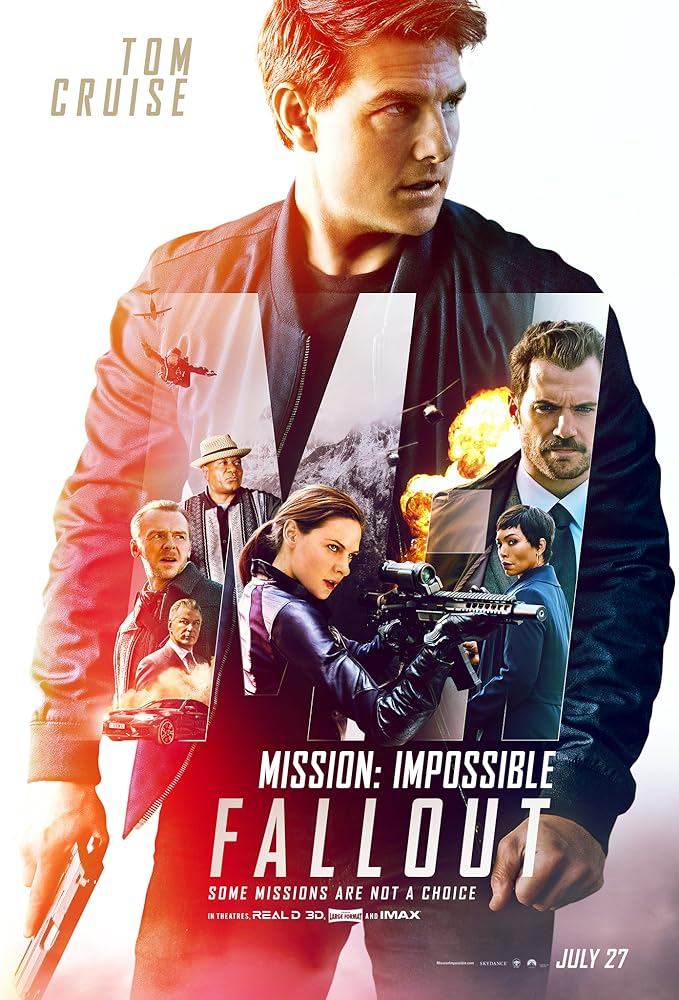
Tom Cruise, Alec Baldwin, Angela Bassett, Ving Rhames, Henry Cavill, Rebecca Ferguson, and Simon Pegg in Mission: Impossible - Fallout (2018)

Over the years, we’ve seen quite a few franchises experience an unexpected resurgence, resulting in the truly rare occasions where their sequels end up being their greatest installments. This has certainly been the case with the Mission Impossible franchise, which has now been running for more than two decades. It all started, of course, with the original film adaptation of the hit TV series of the same name from the 60’s/70’s (plus a short-lived revival in the 80’s) that was released in 1996 starring Tom Cruise in the lead role of Ethan Hunt, an agent of the International Missions Force AKA the IMF. The film also served as Cruise’s official debut as a producer, as he had launched his own production company three years prior with his former casting agent Paula Wagner. Upon its release, the film was one of the highest-grossing films of the year, and this commercial success continued over the course of the series’ initial trilogy of films. The third entry of that trilogy, 2006’s Mission Impossible III, served as the directorial debut of a longtime writer/producer named J.J. Abrams, who then joined the franchise as one of its main producers alongside Cruise starting with the sequel, 2011’s Mission Impossible – Ghost Protocol. And under the direction of Brad Bird in his live-action filmmaking debut, Ghost Protocol became the series’ most critically acclaimed and highest-grossing installment to date. Plus, it also helped to revitalize Cruise’s career after some of the, for lack of a better term, tumultuous incidents that he got involved in around the time of MI:3 (e.g. jumping on Oprah’s couch).

Four years later, the series returned with its fifth installment, Mission Impossible – Rogue Nation. Going off the ending tag from Ghost Protocol, the film’s plot took direct inspiration from the TV series by introducing one of its most recurring elements in the form of a terrorist organization known as the Syndicate. And keeping in line with the series’ habit of picking new directors for each new installment, Rogue Nation was directed by Christopher McQuarrie, who got his big break in the film industry by writing 1995’s The Usual Suspects, which earned him an Oscar for Best Screenplay. But in this case, he was most notable for being one of Tom Cruise’s most common collaborators, having worked together on films like Valkyrie, Edge of Tomorrow, and Jack Reacher (which he directed). And upon its release, the film continued the series’ recent hot streak with both critics and audiences to the point where the question of whether Ghost Protocol or Rogue Nation was the series’ best up to that point was quite the legitimate debate. But the biggest thing to come from Rogue Nation’s success was that McQuarrie ultimately ended up becoming the first director who was brought back to helm another Mission Impossible film. And thus, here we are now with the sixth installment of this premier action franchise, Mission Impossible – Fallout. With McQuarrie back behind the camera along with Cruise and the other returning cast members from past installments, things are certainly looking up for a series that has gotten better with each new film. Sure enough, Fallout may just be the series’ greatest outing to date thanks to its thrilling action set-pieces and McQuarrie’s phenomenal direction.

It has been two years since IMF agent Ethan Hunt (Tom Cruise) and his team successfully managed to capture Solomon Lane (Sean Harris), the ruthless leader of a rogue terrorist group known as ‘the Syndicate’. Since then, the surviving members of the Syndicate have formed a new faction known as ‘the Apostles’ led by a mysterious fundamentalist named John Lark. And to make matters worse, Ethan and his team end up botching a mission in Berlin, resulting in the Apostles acquiring three plutonium cores that they plan on using to further their plans to disrupt the current World Order. Thus, to prevent the devastating results of a potential nuclear attack, IMF secretary Alan Hunley (Alec Baldwin) sends Ethan to Paris to hunt down Lark, where he’s set to collect the cores from an arms dealer known as the ‘White Widow’ (Vanessa Kirby). And due to Ethan’s misstep in Berlin, he is also put under the watch of the CIA, specifically director Erica Sloane (Angela Bassett) and her top field agent August Walker (Henry Cavill), the latter of whom joins along on the mission to ensure that Ethan and his team can get the job done. But as the mission goes on, Ethan soon finds himself forced to go down quite a few dark roads, one of which even involves him having to assist the Apostles in breaking Solomon Lane out of custody. And if that wasn’t enough, Ethan’s actions soon lead to Walker beginning to suspect that he is really John Lark, putting more pressure on Ethan to figure out Lark’s identity.

With a subtitle like Fallout, one could only imagine how effective this film is in creating tension. While the series has always done a nice job when it comes to handling this aspect, it’s arguably at its finest here because of how truly high the stakes end up being. Sure enough, this is only strengthened further by the film’s amazing action sequences. Not only are they shot and edited perfectly, but they’re even more visually stunning when viewed in IMAX, continuing the franchise’s trend of utilizing the format to great effect ever since Brad Bird got the ball rolling with Ghost Protocol (sadly, I never got around to seeing Rogue Nation in IMAX). It all culminates in the film’s epic finale, which is quite arguably one of the most intense finales in recent cinematic history given the grand scale of the stunts involved (which, of course, are done practically by Tom Cruise himself, headlined this time by him piloting a helicopter by himself), and the consequences of what would happen if Ethan and his team fail. Simply put, arguably this film’s biggest strength is how finely tuned it is in almost every aspect of its production, resulting in what is truly a beast of an action film. And the same could be said for Rogue Nation as well, meaning that as far as Christopher McQuarrie’s contributions to this franchise are concerned, he’s given us some of the sharpest writing and most kinetic action set-pieces that we’ve ever seen from it. This also extends nicely to the film’s collection of layered characters.

As I’ve stated before, one of the reasons why Ghost Protocol was such a game-changer for the franchise was because it was the first entry in the series to truly capture one of the definitive aspects of its source material, its team dynamic. In other words, whereas the previous three films were directly focused on Ethan Hunt, Ghost Protocol was the first to ensure that his teammates were just as well-developed as he was. As such, the only thing that held Rogue Nation back was that it somewhat reversed course from this; granted, it’s not like there wasn’t any of it in the film to begin with, but it also kept half of the team away from the action for about half the runtime. With Fallout, though, I’m pleased to say that it goes about this more like Ghost Protocol. Sure, Ethan Hunt is still the main character as always (in fact, this film gives Tom Cruise some of the best bits of character development that he’s ever gotten from this franchise), but McQuarrie also does an excellent job of giving his teammates quality amounts of screen-time by comparison. Rebecca Ferguson shines once again as the enigmatic Ilsa Faust (AKA the series’ best female protagonist by far) while Simon Pegg and Ving Rhames once again provide reliable support as Benji Dunn and Luther Stickell, respectively. And as for the villains, Sean Harris continues to be intimidating as all hell as the soft-spoken madman Solomon Lane. Finally, with the newcomers to this franchise, the biggest standout of them all is easily Henry Cavill. Not only does Cavill prove to be just as dedicated as Cruise is when it comes to doing the action sequences, but Walker also ends up being quite the excellent foil to Ethan Hunt given their roles in the story.

When Rogue Nation came out, I was part of the crowd that still preferred Ghost Protocol even through the former was practically almost just as good by comparison. In other words, while Rogue Nation does feature a superior villain, Ghost Protocol was better at balancing its main characters. But as for Fallout, this time I’ll fully admit that I’m siding with the consensus this time when I say that this is the best installment yet of the Mission Impossible franchise. And for those keeping track, yes, we’re talking about the sixth installment of what is currently one of the longest-running film franchises in recent memory. Simply put, this is one of those franchises that has genuinely managed to improve itself with each new installment. With Rogue Nation, writer/director Christopher McQuarrie produced some of the series’ most dynamic action sequences to date, and with Fallout, he somehow manages to refine them even more. The result is a true action spectacle that once again highlights why Tom Cruise is one of the definitive stars of the film industry. Like in every other installment of this series, it’s really him doing all the big stunts, and this series doesn’t shy away from upping the scale of them with each new installment (and yes, that’s even after Rogue Nation literally had him hanging off the side of a plane). And through it all, Cruise is backed by a phenomenal supporting cast who benefit greatly from this film’s excellent handling of the series’ iconic team dynamic. In short, this is a must-see in theaters, especially if you’re able to see it on the biggest screens possible, IMAX. Simply put, this is up there with the likes of its predecessor Ghost Protocol (plus Rogue Nation, I’m sure…), The Walk, and many of Christopher Nolan’s recent films as one of the prime examples of why IMAX is truly one of the best ways to see a film in our current age of cinema.


Rating: 5/5!

Tuesday, August 4, 2015

Mission Impossible: Rogue Nation (2015) review


The ‘Mission Impossible’ franchise has been one of the rare film franchises that has actually gotten better and better as the series has gone on. It started off solidly enough in 1996 with the Brian De Palma-directed ‘Mission Impossible’, which still holds up quite well even after almost two decades. But then the series took a major stumble in 2000 with John Woo’s ‘Mission Impossible II’, as Woo, despite being one of the most famous action directors in the world at the time, proved to be the wrong choice for director, making the film feel more like a Bond film than a ‘Mission Impossible’ film. Thankfully, ‘franchise savior’ J.J. Abrams redeemed the franchise when he made his directorial debut with the third ‘Mission Impossible’ film in 2006 as he brought back the series’ fast-paced tone that had been severely lacking in the second film. But little did we know that the series would get even better in 2011 when Brad Bird made his live-action directorial debut with ‘Mission Impossible: Ghost Protocol’. Not only did that film feature some of the series’ best action sequences to date but it also greatly excelled in placing greater emphasis on the one major aspect of the franchise that had defined it since its days as a TV series in the 60’s; the team dynamic of the main IMF team. Whereas earlier films placed more emphasis on Tom Cruise’s character Ethan Hunt, sometimes to the detriment of his co-stars, ‘Ghost Protocol’ did a far greater job at balancing out the roles of Ethan’s teammates and giving them solid character development, resulting in the series’ best group of leads to date.

For the fifth film in the franchise, ‘Mission Impossible: Rogue Nation’, directing duties go to Christopher McQuarrie, who also wrote the screenplay for the film and co-wrote the story with Drew Pearce. While McQuarrie’s directorial resume has been fairly short prior to directing this film, with only two films to his name, he does have the benefit of being one of Tom Cruise’s most frequent collaborators in recent years, having worked on the screenplays for ‘Valkyrie’ and ‘Edge of Tomorrow’ and directing Cruise in 2012’s ‘Jack Reacher’ (he also wrote the highly-acclaimed crime drama ‘The Usual Suspects’ for Bryan Singer, who would go on to direct Cruise in ‘Valkyrie’, in 1995). So clearly McQuarrie was a solid choice to take on a ‘Mission Impossible’ film and because of it, ‘Rogue Nation’ is another Grade-A entry in this long-running franchise that has now been around for almost two whole decades. While I don’t know if I can go as far as say that it is ‘better’ than ‘Ghost Protocol’, namely due to it going back a bit on one of the best aspects of its predecessor, ‘Rogue Nation’ delivers exactly what you’ve come to expect from this franchise; impressive, tension-filled action sequences and a fast-paced story that is full of twists and turns. All of this results in what is easily one of the best blockbusters of the year that continues the resurgence of the ‘Mission Impossible’ franchise.

At the end of ‘Mission Impossible: Ghost Protocol’, IMF agent Ethan Hunt (Tom Cruise) received a mission brief about ‘the Syndicate’, a rogue organization full of trained operatives, like the IMF, that have been behind a series of attacks all over the world. As ‘Rogue Nation’ begins, Ethan has been spending the last year trying to prove the Syndicate’s existence with little success. To make matters worse, as a result of all of the IMF’s actions in previous films, the government has the IMF disbanded. Around this time, Ethan finally gets a lead on the Syndicate when he has a run-in with the organization’s leader, Solomon Lane (Sean Harris). But due to the IMF’s disbandment and him being branded as a fugitive by the CIA, Ethan is forced to go rogue, along with his IMF teammates Benji Dunn (Simon Pegg), William Brandt (Jeremy Renner), and Luther Stickell (Ving Rhames), as well as a new ally in Ilsa Faust (Rebecca Ferguson), a disavowed MI6 agent working with the Syndicate, in order to take down Solomon Lane and the Syndicate before they can take down the IMF. 

Just like with previous entries in the franchise, ‘Mission Impossible: Rogue Nation’ greatly delivers in terms of its action sequences. Of course there is the famous moment featured in the trailer, which actually serves as the opening sequence of the film, where Ethan Hunt hangs onto the side of a military aircraft as it takes off. But then you also have some other exceptional action sequences, from Ethan’s dive into a secure underwater server without the use of any oxygen tanks to a tense fight sequence inside a Vienna Opera House. And of course these sequences are even more effective due to their practical execution that once again shows that Tom Cruise is quite the badass due to him always doing his own stunts. Each ‘Mission Impossible’ director has brought something different to the franchise, from Brad Bird’s comic sensibilities to J.J. Abrams’ modern-day action aesthetic. In the case of McQuarrie, I’d say his biggest strength as director is in regards to how well he stages the film’s action sequences that in turn result in solid build-up, with the aforementioned Opera House sequence being the prime example of this. Like Brad Bird before him, McQuarrie does an excellent job in establishing solid suspense through both the action sequences and the overall plot. And because of both the latter and the film’s solid screenplay full of the usual twists and turns that one would expect from a film of this genre, I was fully invested in this film from beginning to end.

However, there is one thing about this film that is a little disappointing to me coming off of ‘Ghost Protocol’ and that is that it backtracks a bit on one of the greatest things about its immediate predecessor; the team dynamic. Despite being series regulars, Brandt and Luther are mostly ignored for the first half of the film, sidelined away from the action while the film focuses more on Ethan Hunt. While the film does attempt to further develop Ethan as a character through what could’ve been an interesting plot-point of him possibly being deranged in thinking that the Syndicate is real, at the end of the day it doesn’t really go anywhere and is actually rather pointless given the fact that he is ultimately shown to be right. Thankfully Simon Pegg isn’t underused early on like Renner and Rhames as Benji is right there with Ethan for most of the film’s first half. Plus, Brandt and Luther eventually end up rejoining them for the second half of the film so it’s not like ‘Mission Impossible II’ where Rhames and John Polson were completely underused due to a greater focus on Ethan Hunt. And when the four are all together, their camaraderie with one another is just as strong as it was in previous films. But then you have the biggest standout of the entire film in Rebecca Ferguson as female lead Ilsa. Described by some as the ‘female Ethan Hunt’ of the film, Ferguson more than holds her own against Cruise and is quite frankly the most interesting character in the entire film, an agent forced to work for the Syndicate so that she wouldn’t risk being killed by them.  

When it comes to villains, the ‘Mission Impossible’ films have admittedly had some lackluster foes for Ethan Hunt and his team to face. The most notorious case of this has been with ‘Ghost Protocol’. It may be a masterpiece but its single downfall is that it had the series’ weakest villain to date, but like with most of the MCU films, I didn’t think it was that big of an issue due to how well-written the main characters were. Before this film’s release, the series’ greatest villain had been Philip Seymour Hoffman’s Owen Davian from ‘Mission Impossible III’. But even then that was more due to Hoffman’s excellent performance in the role and not because of the writing. In other words, he was more of an intimidating foe than he was a well-written one as a result of that film’s action-heavy pacing. So as far as ‘Mission Impossible’ villains are concerned, Sean Harris’ Solomon Lane is the series’ best villain to date in terms of the writing. Compared to Hendricks, the villain from ‘Ghost Protocol’, Lane has a much more substantial role in the film as the main villain and has a greater presence that can be felt throughout the entire film. He proves to be a solid foil to Ethan Hunt and is sort of like the Joker in how he always manages to be one step ahead of Ethan and his team. And for the record this is all without him ever really partaking in any of the film’s action sequences.

I’ll admit that I’m a little disappointed that the team dynamic that had been handled to such great effect in ‘Ghost Protocol’ wasn’t managed as well here to the point where two of the main leads don’t get anything major to do until the film’s second half. That’s why at the end of the day I feel that ‘Ghost Protocol’ is still the best film in the series, even if this film does have the advantage of having a much stronger villain. But that doesn’t mean that ‘Rogue Nation’ is a bad film… far from it. It still very much succeeds in delivering on what you have come to expect from this franchise; amazing action sequences, solid tension (primarily thanks to the action sequences), and an overall fast-paced tone. Director Christopher McQuarrie does an excellent job as director, primarily due to how well he sets up the film’s action sequences. So thanks to McQuarrie’s solid direction, an excellent ensemble cast, and a solid screenplay/story that kept me engrossed from beginning to end, ‘Mission Impossible: Rogue Nation’ is another excellent installment of a franchise that has only gotten better and better over the years. It really is quite impressive how far this series has come from its early days, especially after the second film could’ve potentially killed the franchise due to it being, well, pretty damn mediocre. But thanks to its last three films, the ‘Mission Impossible’ franchise has now become one of the best, if not the best, action film franchises around.  


Rating: 4.5/5

Sunday, July 26, 2015

Mission Impossible (1996-2011) Film Series Retrospective


In 1966, writer Bruno Geller created the spy TV series ‘Mission: Impossible’, which revolved around a group of government agents who took on various missions for the Impossible Missions Force (IMF). The members of the group changed with each episode with the only full-time leads of the series being agents Dan Briggs (Steven Hill) and Jim Phelps (Peter Graves), the latter of whom took over the lead role of the series from Hill after the first season. The series was a solid success when it first aired on CBS, running for 7 seasons from 1966 to 1973 while also producing numerous iconic bits of pop culture history from the theme song by Lalo Schifrin to the ‘this tape will self-destruct in five seconds’ hallmark. In 1988, the series was revived on ABC with Peter Graves reprising his role of Jim Phelps. However this new iteration only lasted two seasons primarily due to poor ratings. However, six years later, the series resurfaced again, this time on the big screen starring Tom Cruise in the lead role of IMF agent Ethan Hunt. Since then, the ‘Mission Impossible’ film franchise has been one of the most successful action franchises of the last two decades, grossing over $2 billion worldwide across four films. And this is one of those rare franchises that has actually got better as it has gone on, namely by placing more emphasis on the ‘team’ element that had made the series so successful in the first place whereas earlier films focused more on Cruise’s Ethan Hunt character. So today, in preparation for the latest entry of the series, ‘Rogue Nation’, which hits theaters soon, your Mission, should you choose to accept it, is to join me as I look back upon the first four films of the ‘Mission Impossible’ franchise.

MISSION IMPOSSIBLE (1996)


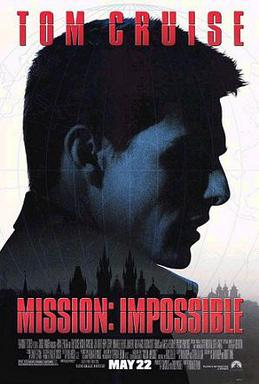
Brian De Palma (‘Scarface’, ‘The Untouchables’) helmed the first installment of the series in 1996 which, while commercially successful (it was the third highest-grossing film of the year with $457.7 million worldwide), was a little more polarizing amongst fans of the show and even some of the members of the original TV series’ cast such as Greg Morris and Martin Landau. The primary reason for this was due to the decision to have the series’ main character Jim Phelps serve as the main villain of the film. The fact that the film also opened with the majority of Ethan Hunt’s team members being killed off was probably something that fans also had issues with. But overall I don’t think that these two things are that big of a problem in regards to the film. While the film obviously strays heavily from the show in terms of the characterization of Jim Phelps, I thought the whole twist of him being a traitor was actually handled well enough even though he’s only the ‘main villain’ during the finale. And while the film did do away with the original ‘team’ in the film’s opening sequence, resulting in the primary focus being on Ethan Hunt, if anything there’s still enough team-related moments in the film to at least capture the spirit of the original TV series as much as possible. I mean at the end of the day, the first ‘Mission Impossible’ at least focused more on the core IMF team than ‘Mission Impossible II’ did (more on that in a little bit).

The film’s greatest selling point, though, is its action sequences. From the scene where Ethan Hunt descends into a CIA vault to recover a file containing info on all IMF agents to the finale on top of a moving train, the action sequences in this film are well-shot and edited thanks to De Palma’s solid direction. As for the writing, many have felt that the plot was a bit too complicated. Compared to a film like ‘Memento’, I wouldn’t go as far as say that this film’s plot was ‘that convoluted’ but I do recognize where those people are coming from as there are some scenes that you do really have to pay attention because otherwise you’re going to get lost. In short, ‘Mission Impossible’, despite its major deviations from the original source material, is still a solid start to this series and for a film that was made nearly 20 years ago, it still holds up pretty damn well today. Is it the absolute best entry in the series? No, but like franchises like ‘Harry Potter’, this is just due to the fact that the series would get better as time went on. Still, the first ‘Mission Impossible’ is still highly recommended as it is easily one of the best action films of the 90’s if based solely on the action alone. Simply put, this was the film that proved that Tom Cruise was a premier action star and that is what continues to define his career to this very day.

Rating: 4/5

MISSION IMPOSSIBLE II (2000)


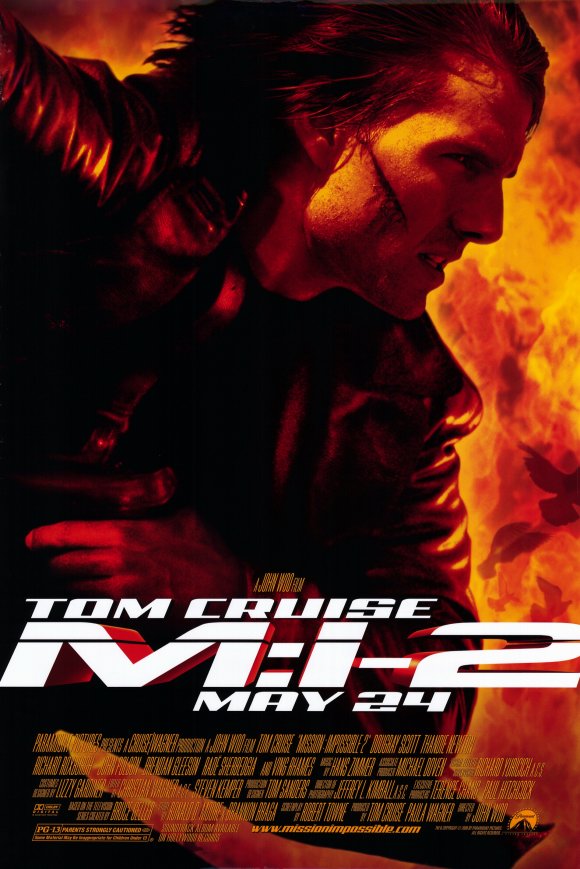
On paper, ‘Mission Impossible II’ seemed to be another solid hit for the franchise. In the director’s chair this time was John Woo, who at the time was known as one of the most prestigious action directors in the world for his work on films like ‘Hard Boiled’ and ‘Face/Off’. But at the end of the day, Woo may not have been the best choice to helm a ‘Mission Impossible’ film because unfortunately, ‘Mission Impossible II’ is the weakest entry of the first four ‘Mission Impossible’ films. The primary reason for this is because this is a simple case of style over substance. The plot for the film isn’t as convoluted compared to the first film but this results in the film ending up being a rather mindless action flick. Now don’t get me wrong, the action sequences are still as solid as they were in the first film. There’s no denying Woo’s talent when it comes to directing action. But they ultimately end up lacking depth for the most part and the main villain Sean Ambrose (Dougray Scott) is a pretty damn weak villain; Scott’s frequent over-acting doesn’t help much either. Not only that but Woo’s directing trademarks on are ‘full overload’ here, from his use of overly symbolic imagery to frequent slow-motion moments and of course, doves. It may just be because I haven’t really seen any of Woo’s other films before this but here it’s just a bit too much. For a ‘Mission Impossible’ film, this feels more like a James Bond film and as much as I am a fan of the James Bond franchise, that style just isn’t right for the ‘Mission Impossible’ franchise.

This film is also the worst of the series when it comes to handling the one key component of the franchise; the ‘team’ element. As many have no doubt already pointed out, this film is pretty much ‘the Tom Cruise show’ as the film constantly over-glorifies how much of a badass Ethan Hunt is, which is unnecessary because we already know that Tom Cruise really is a badass because he does do a lot of his own stunts. Here it just feels like he’s showing off. If I haven’t mentioned it already, he’s one of the producers of the franchise but even the other films didn’t over-glorify Cruise as much as this film does. The overt focus on him results in pretty much everyone else in the film being downplayed save for Thandie Newton in the role of the female lead Nyah but even then she’s wasted in an arguably rather sexist role. Sure Ving Rhames reprises his role of Luther Stickell from the first film but the other member of the team, pilot Billy Baird (John Polson), is easily one of the most underdeveloped characters in franchise history and ultimately both Polson and Rhames are severely underused. In conclusion, I don’t think that ‘Mission Impossible II’ is a ‘terrible’ film. There are some legitimately good things in this film though ultimately it’s mostly just the action sequences. The plot is mindless, Woo’s directorial style goes a bit too overboard, and Tom Cruise really hogs the spotlight in this entry to the detriment of the other characters in the film. At the end of the day, ‘Mission Impossible II’ strays the farthest from the spirit of the original TV series hence why it is ultimately the worst entry in the series to date. Thankfully there would be nothing but blue skies for the franchise after this disappointing installment.

Rating: 2/5

MISSION IMPOSSIBLE III (2006)


For ‘Mission Impossible III’, Tom Cruise and his producing partner Paula Wagner went with a newcomer who would make his feature-length directorial debut with this film. He would later go on to direct a few films that you may have heard of, including the upcoming ‘Star Wars: The Force Awakens’. Yes J.J. Abrams helmed this installment of the franchise and just like how I feel that he was responsible for resurrecting the ‘Star Trek’ franchise (and I’m confident that he will do the same for ‘Star Wars’), the addition of Abrams to the franchise (he would go on to produce the next two films in the series) helped get the ‘Mission Impossible’ films back on track, especially after the major disappointment that was ‘Mission Impossible II’. Through Abrams’ stellar direction, this film regains the high-speed pacing and tone that was lost in its immediate predecessor. And of course, the action sequences are excellent as always, from the highway attack scene to the raid upon a building in Shanghai where an object known as the ‘Rabbit’s Foot’ (which for the record we never actually learn what it is) is located. Something I noticed about this film in particular was that some of the action sequences are pretty damn intense or, to quote the MPAA rating for the film, really ‘frenetic’. While that does mean that the action sequences are much more chaotic than they are in other ‘Mission Impossible’ films, I do think they do a great job in really upping the tension. That is especially evident in this film’s cold opening, which fits the term ‘cold opening’ both figuratively and literally, resulting in quite frankly one of the best opening sequences that I’ve ever seen in a film.

This film also does a better job than ‘Mission Impossible II’ at balancing out the roles of Ethan’s main IMF team. As stated earlier, the previous film really focused too much on Ethan Hunt and while I can’t say that these are the most ‘developed’ characters of the franchise, namely as a result of the film’s action-heavy pacing, the bottom line is that at least the three other members of Ethan’s team; series regular Ving Rhames and newcomers Jonathan Rhys Meyers and Maggie Q, aren’t underused like Rhames and John Polson were in ‘Mission Impossible II’. This film also has the best villain in the entire series in Owen Davian, played by the late Philip Seymour Hoffman. Admittedly most of the other ‘Mission Impossible’ villains have been rather weak, but Hoffman is phenomenal in this film, making Davian such an intimidating villain especially through his plot to get back at Ethan by kidnapping his wife Julia (Michelle Monaghan). The addition of Ethan’s wife also helps bring some solid emotional depth to the film which I feel was sort of lacking in the last two films, which is pretty ironic given that the second film focused so much on a love triangle. All in all, I’d say that ‘Mission Impossible III’ is the first ‘truly great’ entry in the franchise. For the record that’s nothing against the first ‘Mission Impossible’ film but overall I just prefer this one over the first as I feel this is where the series really started to capture the spirit of the original series. Little did any of us know that things would only get better with the following installment of the franchise.

Rating: 4.5/5

MISSION IMPOSSIBLE: GHOST PROTOCOL (2011)


Another ‘newcomer’ was chosen to helm ‘Mission Impossible: Ghost Protocol’ but this wasn’t a case of a ‘newcomer’ who was making his feature-length debut like J.J. Abrams did with ‘MI3’. Instead, this director was making his feature-length ‘live-action’ debut having primarily worked on animated films for the majority of his career. In some ways, that can be perceived as a risk but ultimately it isn’t when you take into account that the director is none other than Brad Bird, the genius behind some of the greatest animated films of all-time like ‘The Iron Giant’ and ‘The Incredibles’… and this year’s criminally underappreciated ‘Tomorrowland’. Under Bird’s direction, ‘Ghost Protocol’ ends up being the absolute best entry in the entire ‘Mission Impossible’ series to date. Bird’s talent for visual storytelling translates perfectly into the film’s amazing action sequences, from the iconic climb up the Burj Khalifa in Dubai to the subsequent car chase through a sandstorm. And hopefully a lot of you got the chance to see this in IMAX because these action sequences are even more amazing on that big-screen. Not only that, but this film is arguably the best in the entire series when it comes to creating tension, mostly through said action. Part of this also comes from the main plot of having Ethan Hunt and his team having to go rogue after a bombing incident at the Kremlin forces the US government to disavow the entire IMF organization. Factor in other things like their equipment frequently failing and the tight pressure that they’re under and you have one of the most suspenseful action films of the last few years.

But the other great thing about ‘Ghost Protocol’ is that it is the first in the series to finally perfect the one major element of the Mission Impossible franchise that some of the films (save for 3) were fairly lacking in and that is through placing a greater emphasis on the main IMF team and not being entirely centered on Ethan Hunt. Sure, this is still a Tom Cruise film and Ethan Hunt is still the main character but this film does a fantastic job at balancing out the roles of Ethan’s team and giving solid character development to each of the other members. This includes Benji Dunn (Simon Pegg, reprising his role from the previous film), who takes on his first major field mission, Jane Carter (Paula Patton), who during the mission deals with a personal vendetta against one of their targets, assassin Sabine Moreau (Lea Seydoux), who was responsible for the death of her teammate/lover Hanaway (Josh Holloway), and finally ‘analyst’ William Brandt (Jeremy Renner), who is revealed to have a major connection to Ethan Hunt as he was a former field agent who feels responsible for the ‘death’ of Ethan’s wife Julia while they were on vacation on Croatia. Though at the end of the film we learn that this was all faked and that Julia is still alive, resulting in a touching moment when Ethan and Julia notice each other from afar. ‘Mission Impossible III’ was on the right track when it came to having greater emphasis on the other members of Ethan Hunt’s IMF team but ‘Mission Impossible: Ghost Protocol’ ends up exceeding that high mark with the series’ best group of leads to date.

I only have one major complaint towards this film and that is in regards to the main villain, Kurt Hendricks (Michael Nyqvist). Despite a solid-enough performance by Nyqvist in the role, Hendricks is arguably the weakest villain in the entire film series. As I stated earlier, Philip Seymour Hoffman’s Owen Davian has basically been the only ‘great’ villain in the series and while originally I felt that Sean Ambrose from ‘Mission Impossible II’ was the weakest in the series, at least he had a presence in that film and a much more substantial role. Hendricks on the other hand disappears for a sizable chunk of the film’s run-time, not really doing anything major until the finale. In fact, pretty much every major ‘adversary’ in the film is only in it for like a short period of time each. But like how I defend many of the villains of the Marvel Cinematic Universe for being better than what most critics put them out to be, here I don’t think it’s that much of an issue because the film does such a great job in developing the main characters. All in all, ‘Mission Impossible: Ghost Protocol’ is not only the best film in the entire series up to this point but it’s also quite frankly one of the best films period of this decade, with Brad Bird making a fantastic live-action film debut and once again proving why he's one of the absolute best directors currently working today in Hollywood.


Rating: 5/5!