Showing posts with label Star Trek into Darkness. Show all posts

Wednesday, July 20, 2016

TREK WEEK: In Defense of the J.J. Abrams-directed 'Star Trek' films


As the second annual ‘Trek Week’ continues here on Rhode Island Movie Corner, I’ll be doing something a little bit different today; something sort of along the lines of a ‘thesis’ as I work to defend two of my favorite films of the last few years; J.J. Abrams’ Star Trek films. Despite what some fans may claim, these two films are very important to the franchise as they very much resurrected it after almost half a decade of no new major Star Trek media. And they’re also very important to me as not only are they some of my all-time favorite films (the 2009 Star Trek film is legitimately in my Top 10 favorite films of all-time) but they also helped me get into the Star Trek franchise in the first place, and the same can be said for other people who went into it not being very familiar with the franchise. However, when it comes to long-time fans of Trek, these films aren’t really as liked. In fact, they’re pretty much hated by them for various reasons and said backlash got even more vocal when the 2013 sequel, Star Trek Into Darkness, was released. Simply put, the big argument amongst this crowd is that the films ‘don’t carry the feel of the franchise’. As a result, there’s now a lot of pressure on director Justin Lin and writers Simon Pegg and Doug Jung to make sure that the upcoming Star Trek Beyond does a better job at appealing to the long-time fans. And I won’t lie… all of this backlash kind of frustrates me. Because I am not embarrassed to admit that I am a major fan of the J.J.-directed Trek films. In fact, I kind of prefer them to the older Trek films. And yeah… I know that this will be considered as complete ‘blasphemy’ amongst Trek fans. However, I’m about to go over why I will defend these films to the bitter end.  

But first, let’s put things into perspective. In the early 2000’s, the Star Trek franchise was pretty much at rock bottom. The most recent Trek film, Star Trek: Nemesis, the last film to star the cast of Star Trek: The Next Generation, was both a critical and commercial dud, just barely earning back its $60 million budget at the box-office. In fact, from a box-office perspective, it is the lowest-grossing film in the series worldwide. Meanwhile, on the TV front, things weren’t doing much better. The main Trek show at the time, the prequel series Enterprise, constantly suffered ratings-wise during its run and by 2005, the generally polarizing series was canceled after only four seasons. The following year, the franchise’s creative head, Rick Berman, was relieved of his duties. In short, the franchise was in one hell of a creative rut. As a result, the next few years saw numerous proposals for a potential resurrection of the franchise from various filmmakers including Bryan Singer and even Trek alums like Jonathan Frakes and William Shatner. Ultimately though, the honor to revive the franchise went to writers Roberto Orci and Alex Kurtzman, with J.J. Abrams, fresh off of his feature-length directorial debut, 2006’s Mission Impossible III, chosen to direct. And we all know how that turned out. On May 8th, 2009, Star Trek was released in theaters and it was a solid critical and commercial hit. It certainly proved to be a success for non-fans of the franchise and opened the door for a new generation of Trek fans like myself. However, the same couldn’t really be said for long-time fans. And based on every single criticism that I’ve heard directed towards these films over the past few years, there are two main issues that the ‘Trekkers’ have with these films.
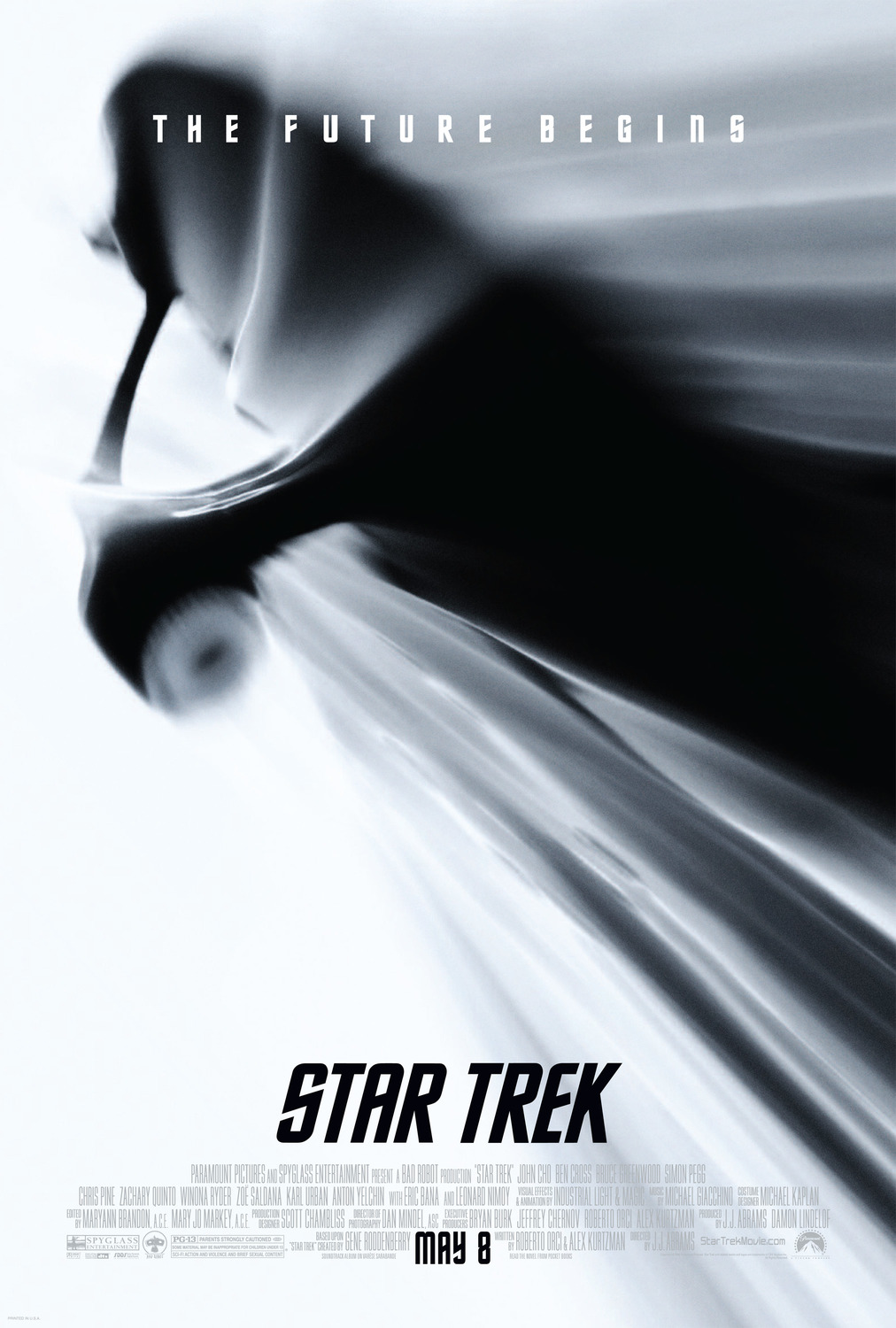

The first was the new film’s bold decision to establish an ‘alternate universe’. This concept of a ‘multi-verse’ had been previously explored in episodes of the various Trek shows but this was pretty much the first time that the films had ever gone this route. As the result of a supernova being turned into a black hole, the Romulan ship Narada ended up going back over a century in time and its attack on the USS Kelvin paved the way for a different series of events that still revolved around the franchise’s classic characters, namely James T. Kirk. A similar situation occurred last year with Terminator: Genisys and as you’d expect, that film also got flak for going that route. However, I actually think that this is a great idea as it allows the franchise to tell new stories within their universes with their classic characters without having to adhere to canon. But at the same time, another argument that people bring up about this kind of plot development is that it results in classic moments from the series ‘being erased from existence’… and I’ll just cut to the chase and say that this is not true. I mean, okay, it’s true that the creation of a new timeline does do away with beloved moments from previous films. However, it’s not like those films don’t exist anymore. If you can still go to a place like Best Buy and are able to buy the original Trek films without issue, then I don’t see what the problem is with a franchise establishing a new alternate reality. The main characters are still the same characters as before, expect that now they are being developed in different, and technically speaking ‘more modern’, ways.


The character that benefits the most from this new timeline is Captain James Tiberius Kirk. Of course William Shatner will always be the original Kirk but if you ask me, Chris Pine’s Kirk is actually a much more layered character. With Shatner’s Kirk, things usually ended up going his way no matter how difficult the situation was. After all, as emphasized in a classic scene in The Wrath of Khan where he reveals that he cheated on the infamous Kobayashi Maru test, a moment which was finally witnessed in the 2009 film, Kirk does not believe in the no-win scenario despite being told that it a situation that every Starfleet captain will likely face at one point. There were only a few instances where things didn’t really go his way, with the biggest one being when Spock died at the end of Wrath of Khan. Chris Pine’s Kirk, on the other hand, immediately starts off on a rough path. He had to grow up with the burden of having his father be George Kirk, who sacrificed himself to save the lives of the crew of the USS Kelvin, including his wife Winona and their then-newborn son [him]. So as a result, he became a reckless and arrogant delinquent until he was approached by Christopher Pike to enlist in Starfleet, ‘daring him to do better’ than his dad. I feel that this helped make Pine’s Kirk a very relatable protagonist, someone who has a lot of pressure on him to succeed. As a result, it’s cool to see how he matures as a leader over the course of these films. Plus, this idea of Kirk being under his father’s shadow seems to once again be relevant in the upcoming Star Trek Beyond as the second trailer opens with Kirk recounting how ‘he joined Starfleet on a dare’ and Bones remarking that now Kirk is trying to figure out who he really is.


As for Kirk’s eventual first officer Spock, the film further explores the character’s half-human, half-Vulcan heritage. Right out of the gate, he is shown to be ostracized by his Vulcan peers solely due to his father Sarek being a ‘traitor’ for marrying ‘that human whore’ Amanda Grayson. This prejudice is later seen when the heads of the Vulcan Science Academy remark about how successful Spock has been despite the ‘disadvantage’ of having a human mother. This effectively leads him to reject the invitation to the Academy and instead enlist in Starfleet. And while Trek fans of course know that Kirk and Spock are always portrayed as friends, the 2009 film actually doesn’t start out that way. When Kirk pulls his little ‘stunt’ during his Kobayashi Maru test, he is immediately accused of cheating by Spock and the two end up in a major moral conflict for most of the film, with Spock maintaining a generally cold and logical persona throughout. His emotions aren’t fully brought out until Kirk provokes him by questioning why he doesn’t show any emotion over the recent death of his mother, resulting in him lashing out at Kirk and subsequently relinquishing command to him on account of being emotionally compromised. This is then followed by Sarek finally admitting to him that he didn’t marry his mother because it was ‘logical’ but because he truly loved her. As a result, Spock is able to gain better control of his emotions, allowing for him and Kirk to finally set aside their differences and work together to stop the Narada from destroying Earth. Later, he is convinced to stay with Starfleet and be Kirk’s first officer, being told to ‘put aside logic’ and ‘do what feels right’. By whom, you may ask? Why, by his older self, of course!
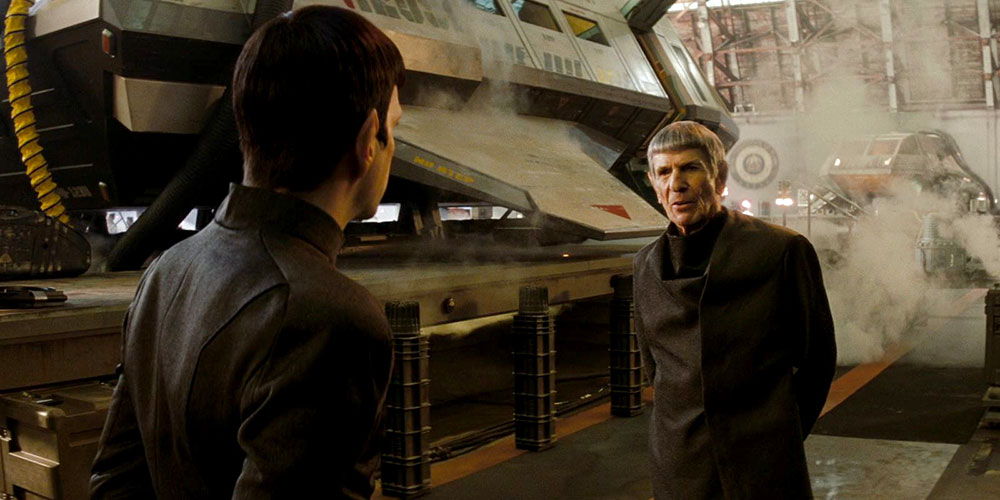

Yes, the 2009 film pulled a major coup by having Leonard Nimoy cameo as an older Spock. His Spock is shown to be the one from the original timeline and was partially responsible for the establishment of the new timeline. When his attempt to save the planet Romulus from a supernova failed, it led to the creation of the aforementioned black hole and he and the Narada were sent many years back in time. When Kirk is marooned on the ice planet Delta Vega by the younger Spock, ‘Spock Prime’ (his credited designation in these films) helps him get back onto the Enterprise though he doesn’t come along to help Kirk take command of the ship, claiming that he cannot come into contact with his younger self. However, the two Spocks do end up meeting at the end of the film and the older Spock admits that he ‘lied’, or as he puts it, ‘implied’ about the whole time paradox thing. This is easily one of the best cameos in recent memory, though I use the term ‘cameo’ loosely because Nimoy’s Spock actually has a major role in the film. Nimoy is just as excellent as he’s always been in the role. At the time, it had been a long while since he last played the part but he slips back into the role with ease and gives the film plenty of emotional gravitas. Now I am aware that there were also plans to have William Shatner do a cameo but that ultimately didn’t happen. And to be honest, I think it’s actually a good thing because I feel that having both Shatner and Nimoy appear might have been a detriment to Chris Pine and Zachary Quinto as the younger Kirk and Spock. By just having Nimoy appear, it allows for Pine and Quinto’s versions of the characters to stand on their own while still giving the film a means of connecting the new Trek with the old Trek. Nimoy would once again appear, this time truly in cameo form, in the sequel when the younger Spock contacts him requesting information about that film’s main villain (more on that character later). Sadly, this would be the last time that Nimoy ever played the part as he passed away in February of 2015.
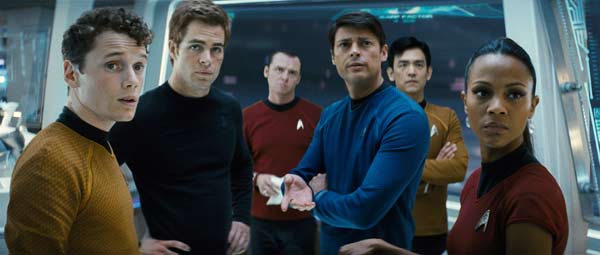

While Kirk and Spock are obviously the main protagonists, the film also does a great job in setting up all of the other main characters. Not all of them get as much to do as the lead duo but they at least have one scene each that establishes their importance to the crew. While Dr. Leonard ‘Bones’ McCoy has perennially been the third most important character of the series, the film actually promotes Lt. Nyota Uhura to that position. And sure, a sizable part of her role in the newer films does revolve around her romantic relationship with Spock but I actually don’t mind that as I feel that this relationship gives Spock a valuable human connection. Plus, I also liked how, early on, Uhura didn’t really get along with Kirk as a result of his generally brash demeanor. But of course the film doesn’t forget about the Enterprise’s reliable doctor, Bones, and of the entire cast, Karl Urban probably acts the closest to his predecessor, DeForest Kelley. Urban absolutely nails the character’s generally grumpy but still very much humane attitude, especially in scenes where he’s arguing with Spock (“Are you out of your Vulcan mind?”). Helmsman Hikaru Sulu (John Cho) gets to be part of a major action sequence when he and Kirk space-jump onto a Romulan drill, which harkens back to a famous moment from the episode ‘The Naked Time’ in which Sulu, while under the influence of a mysterious substance, brandishes a fencing foil (from the 2009 film: Kirk: “So what kind of combat training do you have?” Sulu: “Fencing.”). The sequel even hints at a potential future as a starship captain, something that did happen in the original timeline, when he becomes acting captain and threatens ‘John Harrison’ with the load of torpedoes at the Enterprise’s disposal (Bones: “Mr. Sulu… remind me never to piss you off.”).

As for ensign Pavel Chekov (played by the late Anton Yelchin, who tragically passed away recently meaning that the upcoming Beyond will serve as his final turn in the role), the film immediately sets him up as a young mathematical prodigy. Said talent comes in handy later on, especially in a scene in which he is able to beam up Kirk and Sulu when they fall off of the Narada’s drilling device. However arguably his best moment came in Into Darkness, during which he’s promoted to the role of Chief Engineer when Scotty decides to resign. Simply put, the look on his face when Kirk tells him to go put on a red shirt is priceless, showing that he clearly knows what happens to most redshirts in Star Trek. Thankfully that fate doesn’t end up happening to him. And of course we can’t forget about the Enterprise’s trusty engineer, Montgomery Scott, who is first introduced working at an outpost on Delta Vega before Kirk brings him onto the Enterprise as Chief Engineer. Like Urban, Simon Pegg absolutely nails the role from the accent to the mannerisms and the films certainly utilize Pegg’s comedic ability to great effect, from the scene in which he awkwardly remarks how exciting it is on the Enterprise after the whole ‘Kirk emotionally compromising Spock’ scene to the scene in Into Darkness in which he drunkenly argues with Kirk over coms while at a bar following his resignation. In short, every member of the Enterprise crew matters in the long run and these films do an absolutely fantastic job in establishing a phenomenal camaraderie amongst its cast of leads. 
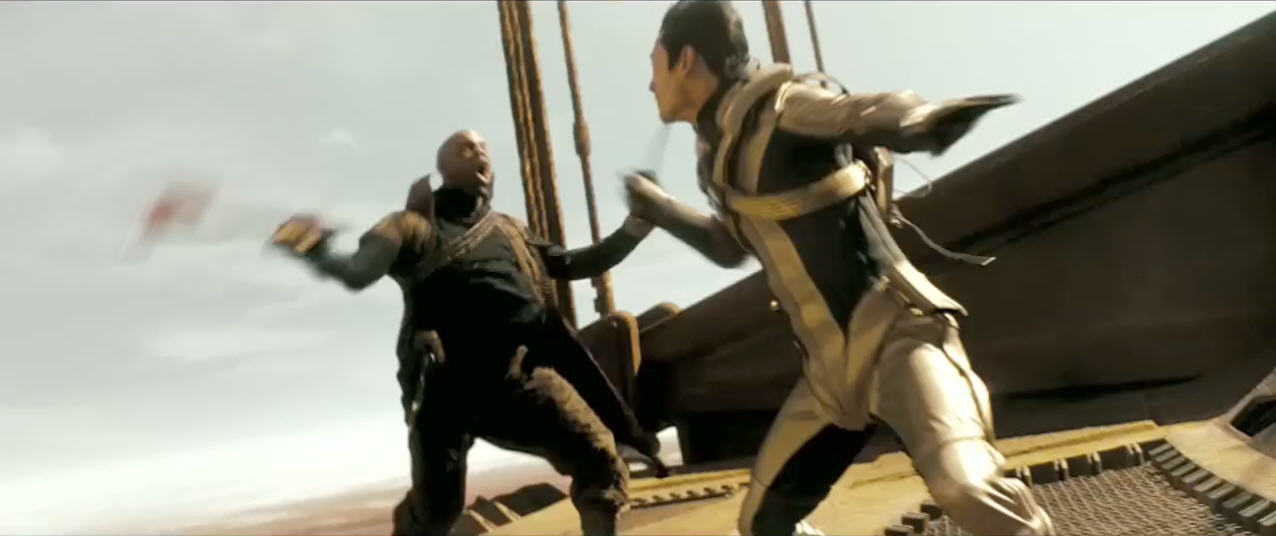

But perhaps the biggest issue that most Trek fans have with the new films is the fact that it seemingly focuses more on action than the layered, cerebral plots that the franchise has perennially been known for. And while it’s true that the films definitely have a very action-heavy style, I don’t really see how that’s entirely a ‘bad thing’. Chris Pine was recently quoted as saying that it’s not really possible to do ‘cerebral’ Trek anymore in 2016, saying that “it just wouldn’t work in today’s marketplace” of big blockbusters… and you know what? He’s totally right! Like imagine if they ever decided to do something similar to Star Trek: The Motion Picture… that would be a colossal disaster from a box-office perspective. It’d do about as good as a Terrence Malick film. The other thing is that I’d argue that while the films do lean more towards being sci-fi action films, that doesn’t mean that they don’t have strong themes and character arcs in them. In the case of the 2009 film, there’s things like Kirk trying to deal with being in the shadow of his father and Spock struggling to deal with his emotions as well as dealing with his half-human/half-Vulcan heritage. Heck, Nero (Eric Bana) is actually a pretty decent villain as far as Star Trek villains go. He has an emotional backstory to him as he seeks vengeance against Spock (the older Spock, specifically, though this plot of revenge is later carried over to the younger Spock) for being unable to save his planet Romulus from destruction. So as payback, he makes Spock witness the destruction of Vulcan… and boy is that an emotional gut-punch of a scene, especially when Spock’s mother Amanda falls to her death right in front of her son. Heck this whole film is full of effective emotional moments, including the opening as Kirk’s father sacrifices himself right as his wife gives birth. What can I say? J.J. does a great job when it comes to scenes like this.


Speaking of the score, Michael Giacchino’s music for these newer Trek films are two of my all-time favorite film scores. In creating said score, Giacchino does something that David Arnold did when he did the music for the 2006 James Bond ‘prequel/reboot’ film, Casino Royale. And that is that he makes the smart decision to not primarily utilize the iconic Star Trek theme created by Alexander Courage. Instead, that piece is fittingly used during the end credits and I must say that Giacchino’s version of the theme is quite a rousing cover of it. But as for the rest of the film, Giacchino does an absolute fantastic job when it comes to creating motifs that can be either really emotional or invigoratingly thrilling during the film’s equally thrilling action sequences. In regards to the latter, this mainly comes in the form of this reboot series’ main motif (exemplified in this track, ‘Enterprising Young Men’). I absolutely adore this motif and I especially love how it can be used in both emotional scenes (e.g. ‘Warp Core Values’ from Into Darkness) and scenes of grand spectacle (e.g. the aforementioned ‘Enterprising Young Men’, during which we see the first look at the Enterprise, and ‘Sub Prime Directive’ from the opening of Into Darkness as the Enterprise rises out of the ocean). In the case of the former, just look at tracks like ‘Labor of Love’, which is played when Kirk’s father sacrifices himself while his wife gives birth, or ‘Buying the Space Farm’ from Into Darkness, when Kirk makes the same bold sacrifices that his father made and shares one last moment with Spock.


And yeah… let’s talk about Star Trek Into Darkness. This is one that I’ve been dying to stick up for these past few years because ever since it came out, it’s been subjected to much scrutiny from ‘Trekkers’. So much so that at a convention in Las Vegas that was held a few months after the film premiered, it was named the WORST film in franchise history, with one fan apparently claiming that the JJ films shouldn’t even recognized as Star Trek films… and boy does all of this piss me off. First off, Into Darkness is ‘worse’ than The Motion(less) Picture, the yawner that is Insurrection, or the actual near-franchise killer that was The Final Frontier? But the thing that really rubs me the wrong way is the statement about the films not belonging in the franchise. You know, the franchise that was pretty much dead and would still be dead if it wasn’t for the J.J. films? They seriously ranked a non-Trek film, 1999’s Galaxy Quest, higher than Into Darkness. That shouldn’t even count! UGH! So what is it about Into Darkness that Trek fans were so upset about? It was over the big bait-and-switch pulled by the filmmakers in which it was revealed that Benedict Cumberbatch’s villain character was in fact the legendary franchise antagonist Khan… except in the months leading up to the film’s release, everyone kept denying that he was Khan. And to make things more problematic, the film then proceeded to re-imagine some notable ‘moments’ from Star Trek II: The Wrath of Khan, namely the bold sacrifice by a main character to save the Enterprise from being destroyed and the vengeful screaming of Khan’s name. However, is the film as big of a ‘rehash’ of Wrath of Khan as Trekkers claim? The truth is… it really isn’t…


If Star Trek Into Darkness was about Khan trying to find a terraforming device capable of giving new life to a dead planet or destroying every living thing if used on a planet with life, then I’d probably be more susceptible to call the film a ‘rip-off’ of Wrath of Khan but that’s not what the film is about. Instead, it’s about Khan enacting revenge upon Starfleet for using him and holding the rest of his people hostage. And really, you want to know how many things the film ‘borrows’ from Wrath of Khan? Aside from having Khan being of the villain, of course, as well as introducing the character of Carol Marcus, who gave birth to Kirk’s son David in the original timeline, there’s really only two major sequences from that film that are redone here; the aforementioned sacrifice and KHANNNN! scenes. Seriously Star Trek Nemesis was a bigger ‘rehash’ of Wrath of Khan. I’m not joking; the final battle of Nemesis is almost note-for-note the exact same finale. Two ships captained by a Federation captain and his greatest ‘personal’ nemesis fighting in a part of the galaxy where they are unable to target each other to attack, ultimately culminating in the death of probably the most popular character of their respective casts. Now as far as the whole thing about the cast and crew denying Khan’s identity before the film’s release, I actually don’t blame them for trying to keep the whole thing a secret. In the digital age, it’s become much harder for studios to prevent leaks of spoiler-heavy material. In fact, I already knew that Cumberbatch was going to play Khan months in advance due to someone at Entertainment Weekly making the idiotic mistake of identifying him as Khan when they debuted a pair of magazine covers for the film, one with Kirk and Spock, the other with Kirk and Khan.

And speaking of Khan, Benedict Cumberbatch is fantastic in the role. He doesn’t try to be Ricardo Montalban’s version of the character and that was certainly a smart move… otherwise the film would’ve gotten even more flak from Trek purists. Cumberbatch brings a ‘Hannibal Lecter’ esque vibe to his performance, which of course is straight-up exemplified in scenes where Khan is held captive on the Enterprise. But perhaps the most interesting part about Cumberbatch’s take on the character is that this film’s Khan is in some ways a very sympathetic villain. When Khan reveals his true identity to Kirk and Spock, he then proceeds to recount his past history. His ship and crew were found adrift by Starfleet’s Commander-in-Chief, Admiral Marcus, who subsequently took Khan’s crew hostage in exchange for having him develop weapons and the Admiral’s new ship, the USS Vengeance. Ultimately this of course leads to Khan enacting revenge upon Starfleet when he is led to believe that Marcus had killed his crew. However, as we learn, he didn’t and instead had them placed in cryogenic freeze inside 72 of the advanced torpedoes that Khan had been developing. Marcus then proceeds to give said torpedoes to the Enterprise to use as leverage against him. Khan immediately recognizes this when Kirk and crew confront him on Kronos and he willingly surrenders. And boy is the scene in which Khan emotionally recounts how he was led to believe that Marcus killed his crew yet another emotional gut-punch of a scene, buoyed by Cumberbatch’s absolutely powerful performance as well as the final line of his ‘monologue’; “Is there anything you would not do for your family?”


Once again, the film does a fantastic job of portraying the relationship between Kirk and Spock, which hits another snag at the beginning of the film when Kirk violates the Prime Directive and lets the Enterprise be seen by a primitive race in order to save Spock from an active volcano. And because Spock is very much someone who goes ‘by the book’, he ends up reporting this to Admiral Pike and Kirk is relieved of his command as a result. Obviously Kirk is pissed and Spock’s general ‘lack of emotion’ once again proves to be an issue for him. It even strains his relationship with Uhura as a result of him seemingly embracing his death at her expense. The film also continues to focus on Kirk’s reckless behavior, as Pike comments that this kind of attitude could get everyone under his command killed. That ends up being Kirk’s arc in this film; learning to take better responsibility for his actions. Because when ‘John Harrison’ attacks Starfleet and Pike ends up being one of the casualties, it leads to him recklessly going after Harrison to avenge the death of the person who become the closest thing that Kirk ever had to a father figure in his life. And sure, while Spock is the one who is with Pike when he dies, Kirk’s reaction to his death is still pretty damn emotional as is the scene where Spock mind-melds with Pike before he dies. Ultimately by the end of the film, Kirk follows in his father’s footsteps by saving his ship at the cost of his life by entering the ship’s radioactive reactor chamber and realigning the warp core.


And folks, I won’t lie in saying that the scene in which Kirk and Spock share one final moment before Kirk dies from radiation poisoning brings me to tears every time that I watch it. And yes, I know that it’s almost exactly the same as that scene from Wrath of Khan but aside from one or two lines of dialogue that are lifted from the previous film (e.g. ‘ship out of danger’), the filmmakers actually do enough to differentiate this scene from its predecessor, namely in regards to context. In Wrath of Khan, this was pretty much the first time that Kirk truly has to deal with a ‘no-win’ scenario. In Into Darkness, this scene reaffirms the friendship between the two. All throughout the film Kirk tries to prove to Spock why he risked violating the Prime Directive to save Spock from the volcano and it is in this moment when Spock realizes why he did it; he wasn’t going to let his best friend die. And as for the once-again infamous ‘KHAANNN!’ scene, this time performed by Spock, yeah it’s ridiculous but the same could be said for when William Shatner did it in Wrath of Khan. With that said, some have argued that this scene is ‘pointless’ due to the fact that it wasn’t necessarily Khan’s fault for the Enterprise falling helplessly to Earth. And yet, like the argument that the film is a complete retread of Wrath of Khan, that’s not entirely true. Sure, most of the damage sustained to the ship was caused by the film’s other ‘villain’, Admiral Marcus, but Khan ended up taking control of Marcus’ ship, which then proceeded to further attack the Enterprise. So I’d argue that said further attack is what ultimately led to the ship falling to Earth. So yes, even if it’s only in a minor way, Khan WAS partially responsible.

And yeah… maybe I should talk about the big elephant in the room. And that is in regards to the film’s major McGuffin, Khan’s blood. As shown in the beginning of the film, Khan is able to blackmail a Starfleet officer into bombing a Starfleet facility by offering to help save the officer’s terminally ill daughter with the use of his blood. And as you might expect, Khan’s blood is what is ultimately used to save Kirk. Bones realizes this when a dead Tribble that he has been experimenting on suddenly comes back to life as a result of the blood. Is it ridiculous? Yes. Is the part with the Tribble rather blatant fan-service? Yes. Am I in any way bothered by this plot-point? No. Because believe me, the Star Trek franchise has seen plenty of silly plotlines over the years, like in Star Trek IV: The Voyage Home when the villain was a giant space log that was trying to talk to humpback whales. And yes, I think it’s pretty clear that this plotline of, to quote its critics, ‘magic blood’ probably isn’t going to brought up again in future films, which would effectively make this ‘new discovery’ that could fix a whole lot of problems rather pointless in the long run. But again, I’m not too bothered by that because at the end of the day, Into Darkness is just like its predecessor in being a very fun and action-packed adventure buoyed by effective emotional depth and terrific character development. Worst Star Trek film of all-time this is not… not by a long shot.

Now I will admit… I’m quite biased towards the J.J.-era films. I’ll admit that prior to 2009, I knew little about the Star Trek franchise but I was interested in seeing the 2009 film after hearing that it got really exceptional reviews from critics. So I went to go see it with my dad, loved it, and afterwards, I learned that he was a fan of the series. As a result, I started to get into the series more and more. But time and time again, I found myself coming back to the 2009 film, mainly after I bought it on iTunes (which was pretty much the first major film ‘home media purchase’ that I ever made) and then proceeded to watch it numerous times. So yeah… you could say that the 2009 film is a very personal one for me and because of that, it legitimately has become one of my Top 10 favorite films of all-time. As a result, Into Darkness became my most anticipated film of 2013. When I first saw the film, I gave it a 4.5/5 rating but then had to start dealing with the slowly increasing backlash towards the newer films, mainly brought on by Into Darkness, to the point where I wondered if I was being a bit too lenient towards it. But when I bought on Blu-Ray on the week it came out, I re-watched it and was thrilled to see that not only did I still love it, it was even better in my opinion the second time around. So I updated my rating to 5/5. I’m an unapologetic fan of the J.J.-era Trek film and feel that they are far better than what Trek purists constantly put them out to be. Sure they may appeal to non-fans more due to their more action-focused pacing but I argue that they still do enough to capture that Trek feel, namely through the great characterizations of its protagonists and its strong emotional depth.

You can bet that I’m very much excited for Star Trek Beyond, which clearly has a lot to prove. It certainly hasn’t been easy to appease to long-time Trek fans, especially considering that they hired another ‘action’ director, Justin Lin, to take over for J.J. Abrams, who of course was busy working on a different Star film that you may have heard of. However, I don’t see how that’s a ‘bad’ thing due to Lin being one of the best action directors in recent years thanks to his work on the recent Fast and Furious films. Plus, Lin has made it clear that he is a fan of Trek, which I guess you can say is better than what was the case with J.J., who admitted that he was a bigger fan of Star Wars (But I sure as hell ain’t holding him to that, mind you). The film surely will also benefit from having Scotty himself, Simon Pegg, handling script duties as Pegg’s sci-fi fandom background as well as his work on the Cornetto trilogy will no doubt provide the film a solid pedigree. However, when the film’s first trailer was released, the ‘too much action’ argument was brought up once again, with Pegg admitting that even he wasn’t a fan of how the action-oriented trailer was put together. Me personally, though, I thought the trailer was perfectly fine. I also didn’t really get the complaint about the use of ‘Sabotage’ by the Beastie Boys being out of place considering that this was part of a major sequence in the first film. However, thankfully the second trailer was received much more positively and based on all of the clips that I’ve seen from it, many of which once again showcase the amazing camaraderie amongst the new cast members, I’m confident that Star Trek Beyond will be yet another super fun sci-fi adventure. However, I’m also hoping that this one will fare better with Trek purists because, well, I’m getting sick of having to defend these newer films against them.

And that marks the end of my very, very long defense of J.J. Abrams’ Star Trek films. Anyone else share my thoughts towards the newer films? And if so, are you excited for Star Trek Beyond regardless of how long-time Trek fans might respond to it? Be sure to sound off in the comments below.


Next time: My review of Star Trek Beyond


Saturday, January 4, 2014

TOP 12 FAVORITE FILMS OF 2013: #6-4

Welcome back to Rhode Island Movie Corner’s end-of-the-year list of my Top 12 Favorite Films of 2013. This is Part 3, and today I’m listing Films 6-4.

As I stated back in my ‘Worst of’ list, this was a really, really crappy year for comedies. In fact, I flat-out said it was the worst year I’ve ever seen as far as this genre was concerned. 5 ‘Comedies’ were on that list, so I’m relieved that, for Number 6, we have my pick for the Best comedy of the year.

6. THE WORLD’S END


Thank god for Edgar Wright. While most of the year’s comedies were doing everything wrong when it came to making comedies, Wright and co-writer Simon Pegg showed everyone how it’s done with ‘The World’s End’, the final film in their Cornetto trilogy. Well, let me be clear, this isn’t exactly a ‘trilogy’ like you might expect because these three films are all different genres. 2004’s ‘Shaun of the Dead’ is a zombie film while ‘Hot Fuzz’ is a buddy-cop action film. ‘The World’s End’ is a sci-fi film and considering that ‘Shaun’ and ‘Fuzz’ are two of the funniest comedies of this past decade, it’s no surprise that this one is another success for all involved. Now, I wouldn’t call this the funniest of the trilogy but at the same time, I’d argue that it’s the best written overall. It has probably the most developed lead characters of the entire ‘trilogy’ in Pegg and Nick Frost’s characters Gary and Andy respectively and as such they’re the best characters the two have ever played.

‘The one and only’ Gary King is a man consumed with his dream of finishing ‘The Golden Mile’, a fabled pub crawl in their old hometown of Newton Haven, to the point where he still sort of has the mindset of a kid. On the other side of the spectrum we have Andy who, like the rest of their friends, has grown up and is also very angry at Gary for an incident that happened to them years ago. It’s a refreshing change of pace from the last two films because usually Pegg is the straight guy while Frost is the man-child. Here, it’s changed around and it works out very well. While Pegg and Frost are their usual excellent selves, the rest of the cast is terrific as well. You really see the camaraderie amongst the five main leads, and co-stars Martin Freeman, Paddy Considine, and Eddie Marsan all have their own shining moments in the film. ‘The World’s End’ may not be the funniest film in the Cornetto Trilogy, but it’s arguably the best-written… and like ‘Rush’, another one that unfortunately wasn’t a big hit here in America. Seriously, this film only earns $26 million while friggin ‘Grown Ups 2’ earns over $130 million… I’m just going to let Pegg’s expression in this still from the movie do the talking for me.


Number 5 is a film that proves that ‘a little party never killed nobody’, especially when that party is hosted by…

5. THE GREAT GATSBY


I’ll admit that I’m not exactly a big fan of director Baz Luhrmann’s work. 1996’s ‘Romeo + Juliet’ may have been a nice change in style by being a modern retelling of the story but it was still stuck with the Shakespearean dialogue of old. For the record, I haven’t seen any of his other films before ‘Gatsby’ but in the end, he was just the best choice to direct this movie. He’s a visual director, sometimes to the point of excess, and considering that author F. Scott Fitzgerald’s ‘Great American Novel’ is also a tale of excess and the flash and glamour of New York in the 1920’s, the two just fit perfectly. That’s part of the beauty of this film. Sure, Luhrmann’s visual style is most certainly on display but it doesn’t overshadow the key themes of the novel; ideas like the aforementioned ‘excess’, the shallowness of the upper class, and the decline of the American dream as shown by the titular Gatsby’s efforts to woo the girl of his dreams.

This movie also made the bold choice of having a soundtrack that combines both modern rap from artists like Jay-Z and Kanye West with 20’s style jazz. Sure, from an outside perspective, that sounds like it wouldn’t possibly work but as a whole, it did actually work out in the end. It doesn’t get that distracting hearing the modern rap being played alongside jazz in the movie because Luhrmann succeeds at blending the two together, except for one point in the film when Gatsby and Nick are driving through the city. They pass by a car that’s playing ‘Izzo (H.O.V.A.) and I have to admit, I laughed at this part. Aside from that, the soundtrack is pretty darn good with its fair share of entertaining songs, like ‘A Little Party Never Killed Nobody (All we Got)’, which is a fitting party song as it is played during the first of Gatsby’s parties, to Lana Del Rey’s ‘Young and Beautiful’, which is a really touching and somber piece to showcase the relationship between Gatsby and Daisy. I know I said earlier that Frozen’s ‘Let it Go’ is the most likely to win ‘Best Original Song’ at the Oscars, but I hope that Del Rey’s song will at least get a nomination.

The film also boasts a terrific cast, as every actor/actress is well cast in their respective roles. In the lead role of Gatsby, Leonardo DiCaprio brings his usual A-game as he’s been routinely doing in this last decade. The unique thing about Gatsby is that he can be portrayed in different ways. Here, they go with the ‘hopeless romantic’ route while briefly touching upon the character’s ‘shady practices’. I like that they went this route because when you pair this with DiCaprio’s charm, you get a Gatsby that is both sympathetic and likable. Tobey Maguire is equally great as Nick Carraway, effectively serving as the narrator for the story. The film itself is pretty faithful to the novel, except for a change in the narrative structure. Instead of Nick narrating over the whole movie, he’s shown in a mental institution where his doctor recommends that he writes his story and overall it does work better from a film perspective. As for Carey Mulligan and Joel Edgerton, they get the most out of the roles of Daisy and Tom Buchanan, two characters who were admittedly rather one-dimensional in the book. Daisy is still as shallow as she was in the book, but Mulligan gets a lot of prime emotions out of the character and as for Tom, Edgerton’s clearly having fun being over-the-top in the role of Daisy’s brute of a husband.

‘The Great Gatsby’ is probably my favorite book that I read in high school. I wouldn’t say that it was the best time to read it (I think it’s more fitting to read in college), but it was the main reason why I was anticipating this adaptation of the story. It’s a great modern take on the story that keeps it where it should be, set in the 20’s, but does it with a modern flair from Baz Luhrmann. His visual style is there, but it’s not overshadowing the story and characters. As I said, he was the perfect choice to direct this film and in my opinion it’s one of the best book-to-film adaptations ever, especially of the last few years. I feel that F. Scott Fitzgerald would be pleased with this one.

I have a feeling that this will be my most controversial pick for this list. This is another film that has received a really mixed reception from audiences. In fact, I’d say that this was the most polarizing film of the year that actually did get really good reviews from critics (‘Man of Steel’ holds the honor of being the most polarizing film this year overall). Even my friend Matt and I are split on this; he lists it as his biggest disappointment of this year. As you’ll see, I had a different opinion. So for all of those who did not like this film, please hear me out on this…

4. STAR TREK INTO DARKNESS


I know I said this was a polarizing film, but in recent months, I’ve been hearing more negative things about it than positive. How negative, you ask? Well, at a Star Trek convention in Las Vegas, fans literally rated it as the WORST Star Trek film in the series, and that is saying a lot considering some of the really bad entries in this series (like ‘Star Trek V: The Final Frontier’ or ‘Star Trek: The Motion Picture’). Apparently one fan even said that ‘the reboot films shouldn’t even count as films in the series’. Well then if that’s the case, then where would this franchise be if J.J. Abrams’ two films never existed? This franchise would still be dead after ‘Star Trek: Nemesis’ was a commercial flop and ‘Star Trek: Enterprise’ was cancelled. This is not the worst ‘Star Trek’ film; this whole idea has been way too overblown and I think a lot of people are being a little too overcritical.

But despite that, there are many people who still aren’t big fans of the film, especially fans of the franchise. So I know what you’re thinking… how am I, a guy who has gone on record saying that I prefer ‘Star Trek’ to ‘Star Wars’, to the point where I named this my most anticipated film of 2013 primarily based on my love of the last film, not disappointed by this film? Well, for the record, my opinion of this film changed on second viewing. I only saw the film once in theaters and at the time I gave it a pretty solid rating of 4.5/5. But after that, I started to wonder if that rating was justified because I found myself agreeing with some of the problems that people were having with the film. I didn’t see the film again until I got it on Blu-Ray the day it came out and after watching it, not only was my rating justified, but the movie got better on my opinion. I got to say, this year was kind of frustrating when it came to these big blockbusters because my initial opinion was clouded/‘corrupted’ by all of the ranting that went on towards not only this film, but ‘Iron Man 3’ and ‘Man of Steel’ as well. But back to this movie… honestly, most of the problems that people have with it don’t bother me.

For the record, I am a little disappointed that the writers did go back to an old Star Trek villain/story instead of doing something new, especially considering that they established a new alternate universe, which meant that they could do new stories without having to adhere to the franchise canon. The villain in question is arguably Star Trek’s finest/most iconic villain, Khan Noonien Singh, the star of what is still the best ‘Star Trek’ film, ‘Wrath of Khan’. However, ‘Into Darkness’ also shares plenty in common with ‘Wrath’, which is another thing that has bugged a lot of people. But in my opinion, I feel that the writers were successful at blending the old Trek with the new alternate universe. Let’s face it; the ‘09 film was more catered to those who weren’t big fans of the franchise (like me before I saw it). This one is a little more geared towards the fans of the series… and yet look how that turned out. I guess why I’m not as mad about this is because I was introduced to this franchise through the reboot. Don’t get me wrong, I still appreciate the original stuff and as I said, ‘Wrath of Khan’ is still the best Star Trek film. But as a ‘Star Trek’ fan, I’m more attached to the reboot series.

As for the film itself, it’s not like they just copied the plot of ‘Wrath’; Khan’s not looking for the Genesis Device in this. If it was, then I’d be more critical about them ‘ripping off’ ‘Wrath’. Really, the only major comparisons that this film has to ‘Wrath’, aside from the obvious, is a major death scene at the end and the infamous yelling of Khan’s name, albeit with a twist. This time, the roles are reversed; Kirk is the one who dies to save the crew from their demise and Spock is the one who yells, ‘KHAANN!!!’ in anger after Kirk dies. It may seem pointless to do these scenes again, even when they switch Kirk and Spock’s roles around, but I think they still are effective… well, more in the case of the death. I’ll openly admit that I was tearing up during this scene because of how well-developed Kirk and Spock’s relationship is (more on that later, along with another controversial aspect of Kirk’s ‘death’). The yell… okay, they could’ve gotten away without adding that, but it’s not like there’s no reason for why Spock does this. Sure, Khan did not get them into the situation that they were in, facing probable destruction after being attacked by Admiral Marcus and his ship, the USS Vengeance, but he was the one responsible for firing the shots that ultimately sent the Enterprise falling down to Earth. It probably wouldn’t have happened that way if Khan didn’t take over the Vengeance… but I’m just speculating here.

I really do like the route they went in developing this universe’s take on Khan. Because this is an alternate universe, I can accept some of the changes that they made in regards to his backstory, like how he wasn’t first discovered by the Enterprise… or heck, even the fact that here he is a white British guy. I know he’s supposed to be Indian, but folks even the great Ricardo Montalban wasn’t the right nationality when he played the character. I like that in this one Khan starts out as a pawn of Starfleet who goes rogue when he thinks that they killed the rest of his crew. That actually makes him quite sympathetic to a certain extent, mainly during the scene where he reflects upon his situation, because while obviously I don’t agree with what he’s doing, at least he has a justified reason for doing it. Starfleet took his crew, who are like family to him. After all, “Is there anything you would not do for your family?” I also like that they didn’t kill this Khan off like they did in ‘Wrath’ so that he could possibly return in another ‘Star Trek’ film (or TV series, perhaps).

Of course, you can’t deny that Benedict Cumberbatch is outstanding in the role. He’s not Ricardo Montalban, but he doesn’t have to be. This is an entirely new take on Khan and he’s just as menacing as Montalban’s Khan was. He steals the spotlight whenever he’s on screen and has a very commanding screen presence. This is one advantage that this film has over the previous film… a better villain. I’m not saying that Nero was a bad villain in the last film; he just wasn’t a ‘standout’ villain like Khan was. However, because that film was more focused on the relationship between Kirk and Spock, it’s understandable as to why this was the way it was. This film is a different story… it has one of the best Star Trek villains in the entire franchise, even if the character already appeared in another Trek film. In fact, I’d say Cumberbatch’s Khan is right behind Montalban’s Khan when ranking the best Star Trek villains, if not just a few spots behind him.

The other main reason why I like this film as much as I do is because of the relationship between Kirk and Spock. Say what you will about the writing, but the writers did a great job at developing their relationship. That relationship is in a bit of a slump in this one after Kirk violates the Prime Directive in order to save Spock from death. Spock reveals this to Starfleet, and as a result, Kirk loses command of the Enterprise for a while. Obviously, Kirk is not too happy about this and it shows how different this two are when it comes to their actions. Kirk is still kind of the brash rebel who doesn’t agree to the rules while Spock is the by-the-book Vulcan who is still struggling to control his emotions. Their relationship carries the film and Chris Pine and Zachary Quinto are both fantastic as they were in the last film. It is because of their great camaraderie that made Kirk’s death scene so sad. Sure, it’s sort of the same scenario as ‘Wrath of Khan’, but the dialogue between them has different meaning to it. In ‘Wrath’, Spock reminded Kirk that ‘the needs of the many outweigh the needs of the few’. Here, Spock realizes that it was because of their friendship that Kirk violated the Prime Directive in order to save him, something he hadn’t realized at first. Now about Kirk’s death…

I know what you’re all going to say. That is regarding what happens ten minutes later. After Spock and Uhura capture Khan in San Francisco, they use his blood, which is revealed to have regenerative properties, in order to bring Kirk back from death. Because of this, many view Kirk’s death as being ultimately pointless and I’m pretty sure the ending is the most controversial part of the film. I can’t deny the fact that Khan’s blood is basically a deus ex machina and the fact that this is revealed through a scene of Bones testing out the blood on a Tribble doesn’t help hide that fact. But the idea of bringing a character back to life is something that has happened before on ‘Star Trek’. Remember ‘Search for Spock’, where they brought back Spock after his death in the previous movie? Well in my opinion, I’m glad Abrams and the writers didn’t decide to make the next Star Trek film, ‘The Search for Kirk’. At least they decided to speed that process up. Yes, the ending is a little bit rushed because of that, but it’s still pretty damn awesome. I do like that this one didn’t end in a space battle; you rarely see a ‘Star Trek’ film have a finale that doesn’t take place in space and the fact that this finale takes place here on Earth is even more compelling. Heck, in this film’s ending, Spock is a real badass.

Now I don’t think this movie is perfect. Why? Well, to quote the scene where Patton Oswalt performs a filibuster by talking about his story idea for ‘Star Wars: Episode VII’ from ‘Parks and Recreation’, “the female part is a little underwritten”. I’m not referring to Uhura because I’m fine with how they’re using her right now and for her relationship with Spock, although she sort of disappears during the scene where the Enterprise is falling to Earth, only reappearing until after Spock leaves the bridge to see to Kirk. I’m more referring to the character of Carol Marcus (another established role from ‘Wrath’). Overall, I’m fine with Alice Eve’s performance in the role; I think she did a fine job. But she really did not get anything to do in this movie. Sure, she disables one torpedo, but aside from that all she does is strip down to her underwear (you can’t deny it, fan boys, that was clearly a fan-service moment). I do like that they didn’t immediately make her the love interest for Kirk, but I hope that she’s given more to do in the next film. The relationship between her and her father, Admiral Marcus, is also very non-existent. As for him, his sudden turn as a villain is a little rushed. I say that because he starts off as a good guy, but then he’s suddenly willing to kill the whole crew of the Enterprise just so that he can eliminate Khan.

In the end, I don’t consider ‘Star Trek Into Darkness’ to be a masterpiece or even the best in the franchise. But as a whole, the majority of the problems that many are having with don’t bother me in the slightest. I think that the writers were successful at telling an old Star Trek story in a new way and I’m fine with this universe’s portrayal of Khan. J.J. Abrams once again delivered on another exciting sci-fi action film and I’m eagerly awaiting to see what he does for ‘Star Wars: Episode VII’. But if I were to say one thing, J.J., it is that you should stop apologizing for everything about this movie, which you have been doing for the last few months. Don’t apologize for over-using lens-flare in your movies; I think that everyone’s being way too critical about such a minor/trivial detail of these movies. It’s not that big of a deal folks. Also, don’t apologize for trying to keep Khan’s identity a secret. I can’t blame you guys for trying to do that because I knew that Cumberbatch was Khan going in and I’m pretty sure everyone else knew too. Let’s face it, if they did reveal that he was Khan, then everyone would just ask them how this Khan would be different. In short, they were going into a no-win scenario (a ‘Kobayashi Maru’, if you’ll allow me to coin a phrase).

Check back tomorrow for the final part of this year-end list for my Top 3 Favorite Films of the Year.

Monday, July 1, 2013

2013 MIDYEAR RECAP

We are now halfway through the year of 2013, and while there are still a lot of films coming out in the next few months, it’s time to take a look back at the year so far. All in all, 2013 has been a pretty solid year for movies. I can’t really say that it’s been as good of a year as last year (which saw so many good movies come out that I had to do a ‘Top 12’ instead of a ‘Top 10’) but there have been some very good movies that have come out this year. I say that even though a lot of films this year have actually gotten rather mixed reviews from critics and some have even received a mixed reception from audiences. In fact, my Top 3 films of the year right now have all received a rather mixed reception from not only critics, but most likely audiences as well. What three films are they? I’ll get into those later, but for now I’ll be looking back at all of the films that I have seen so far. I’m not really looking at these films in any specific order, but more in terms of overall ‘quality’ from worst to best. With that said, let’s start with the lowest of lows in 2013.  

WORST FILM OF THE YEAR (SO FAR):

A GOOD DAY TO DIE HARD

Wow, this was a straight-up insult to a once great franchise and it’s very sad that a generic action film has to be a part of the Die Hard franchise. None of the things that made this series great are present in this film; the villains are horrible, John McClane is no longer the ‘everyman’ that he was in the past, and worst of all there’s absolutely no tension. John and his son Jack (no chemistry between them, by the way) are pretty much superheroes that go through so much and yet come out with barely any scratches. Actually, ‘A Good Day to Die Hard’ does have two of the biggest villains in franchise history; director John Moore and writer Skip Woods, who are responsible for this piece of s***. There are plans for a sixth Die Hard film, but if you ask me, they should just end the series now; just to prevent any further embarrassments.

SOME OTHER FORGETTABLE FILMS:

I’m not saying these films are the worst of the year, but they’re not films I’ve remembered fondly of since seeing them.

G.I. JOE RETALIATION

My opinion of this film has changed quite a bit since I saw it and since I posted my review of it. I’ll admit I don’t think I was able to give my full thoughts on the film at the time because this was one of the worst theater experiences I ever had (there were people behind me who did not shut up throughout the entire film. Heck, I can do a whole post on how annoying things like that have been over the last few months). Still, looking back, this is a film I won’t be remembering down the road. Sure, in a way, ‘Retaliation’ is a better-made film compared to its predecessor but I actually have to admit that, recently, I’ve come to like ‘Rise of Cobra’. It’s a fun little popcorn flick that is entertaining when not taken seriously. As for ‘Retaliation’, I’m not as big on it. It’s not as ridiculously over-the-top but that does not excuse some weak writing and character development. Also, this film has some of the B.S. marketing in recent years due to the whole controversy surrounding supposed reshoots to give more screen time to Channing Tatum. Guess what? They didn’t change a damn thing.

GANGSTER SQUAD

 ‘Gangster Squad’ was the first film I saw this year; a film that was pushed back from a 2012 release because the filmmakers had to do reshoots because of a scene where gangsters shoot up a movie theater in the wake of the Aurora shootings. As for the film itself, it’s okay. It’s a fun little gangster popcorn flick but the major thing that holds this film back from being good is the writing (and I also like to point this out… the writer of this film was hired to pen ‘Justice League’). Character development is there, but only for the two main characters in the film (played by Josh Brolin and Ryan Gosling). As for the rest of the cast, including Anthony Mackie, Emma Stone, and Robert Patrick, they’re really not given anything to do. I don’t really want to say anything more about ‘Justice League’ but unless they decide to go for a different writer, I’d be a little worried if I were you, DC fans.

PAIN AND GAIN


Okay, I’m rather surprised that this film ended up in this category because it’s a Michael Bay film and until now, all of his films (good and bad) are always memorable. For the record, like with every Bay film, this film is entertaining but as a film that’s based off of a true, ridiculous, and rather horrific story, the route that Bay takes with this film is an odd one. This is intended to be a comedy and for the first half of the film, which revolves around the main characters kidnapping a rich/spoiled businessman, the film does succeed at doing that. But then the second half of the film starts to change things up, where the ‘protagonists’ (and I use that term loosely because these are murderers we’re talking about here) end up killing two people. This scenario is just too dark for a ‘comedy’, so as a whole, the film is quite uneven. The cast is pretty good (the standout being Dwayne ‘The Rock’ Johnson) but if you haven’t seen the film yet, I warn you… this film may not be for everyone.

NOTABLE RECOMMENDATIONS:

Here are a few films that I do recommend…

42

The true-life story of Jackie Robinson, the first African-American baseball player to break the color barrier, is represented pretty well in this film, which can serve as a great introduction to Robinson’s accomplishments. Admittedly though, the film is kind of romanticized. The film is a bit too clean and the struggles that Robinson went through in his first year with the Brooklyn Dodgers weren’t really fully looked into, like the death threats that he received (that’s just mentioned once). But that does not mean that this is a bad film. The acting is solid, especially from newcomer Chadwick Boseman as Robinson, and it’s an entertaining and well-made film even though it could have been a bit more edgy.

WARM BODIES


At first, I wasn’t really that interested in this film because it looked like a zombie version of ‘Twilight’. But once the film started getting good reviews, I decided to give it a chance and thankfully, the movie actually was good because while the story does look like the zombie ‘Twilight’, this is far better written than ‘Twilight’ with much more likable leads. I also have to give kudos to Nicholas Hoult, who does a fantastic job as the male lead ‘R’, who is both charming and likable. Hoult is quickly becoming one of my favorite actors thanks to not just this movie, but another film as well that also came out this year. That other film…

JACK THE GIANT SLAYER


While the box office may say otherwise, I’d say Nicholas Hoult is having quite a year so far. The reason I mention the box office is because right now ‘Jack the Giant Slayer’ has been the ‘John Carter’ of the year, having performed poorly at the box office against a rather huge budget. It’s unfortunate because the movie is a fun adventure flick even with a fairly formulaic story. Hoult once again is fantastic in the lead role of Jack, displaying the same charming and likable personality we saw in ‘Warm Bodies’. A solid supporting cast, including Ewan McGregor and Stanley Tucci, also help the film. So, in the end, this is a fun film even if it may have flopped at the box office.

OBLIVION


In the film industry, we see so many sequels, reboots, and remakes all the time that it’s quite refreshing when an original film like this comes out. Director Joseph Kosinski does a fantastic job at setting up a post-apocalyptic universe and the story keeps your interest throughout along with the interesting characters. Also, like with Kosinski’s last film, the music here (done by M83) is terrific and it’s one of the best scores of the year so far. However, the writing falls apart at the end of the film; it doesn’t really tie up all of the film’s loose ends. Still, as a whole, Oblivion is a rock-solid science fiction film and another solid outing from Kosinski (along with 2010’s ‘Tron: Legacy’). I believe this won’t be the last we hear from this director.

NOW YOU SEE ME


As I said in my review of this film, I get the idea that magicians aren’t really as popular as they were back in the 90’s or earlier than that. I myself have always been of a fan of magic which could be as to why I did really like this film. It’s an entertaining thriller with a top notch cast. But aside from that, the movie actually manages to surprise you, which is quite rare in this modern age where the internet can reveal everything about a movie. Even if you aren’t really a fan of magic, this is a film I do recommend.

MONSTERS UNIVERSITY


After back-to-back misfires with ‘Cars 2’ and ‘Brave’, Pixar finally gets back on track with this prequel to Monsters Inc., a film that’s recently become one of my personal favorites from Pixar. It’s a charming and creative look as to how Mike Wazowski and James P. Sullivan AKA Sulley met while at college after initially being rivals. It’s more appealing to the kids but I’m sure that adults will find it entertaining as well. It’s still not one of Pixar’s best, but after two less than stellar films, it’s good to see the company getting back on track.

THIS IS THE END


Who knew a movie about the end of the world would be so funny, in a good way? That’s exactly what ‘This is the End’ does, thanks in part due to its main cast; each actor/actress playing a fictionalized version of themselves. The six main leads (Seth Rogen, James Franco, Jay Baruchel, Jonah Hill, Craig Robinson, and Danny McBride) work off each other very well, which leads to some very funny, but also really bizarre, moments. It’s easily the best comedy of the year so far.

FAST AND FURIOUS 6


It’s amazing how far the ‘Fast and Furious’ series has come since its beginnings in the early 2000’s. The series has gotten better and better ever since Justin Lin took over as director of the franchise and that’s once again evident with the sixth film. At this point, the filmmakers are aware of how silly this franchise can be and they just roll with it. This film doesn’t try to be something it isn’t. It’s a fun and exciting action film that does defy logic and physics any chance it gets. But still, this is another great entry in a series that has gotten better over the years. Dare I say this is actually the best one yet? Plus, while sadly Justin Lin will not return for the 7th film, the post-credits scene of this film sets it up pretty darn well.

And now, here are my…

TOP 5 OF THE YEAR (SO FAR)

5. IRON MAN 3

‘Iron Man 3’ is another great comic book film from Marvel, especially as the first post-Avengers film in the Marvel Cinematic Universe. For one thing, this film proves that even after a film like ‘The Avengers’, a solo superhero film can still work. ‘Iron Man 3’ is a quite different take on a superhero film, as evident from the creative choices that director/co-writer Shane Black makes in this film, especially a big twist regarding the supposed main villain. As controversial as it is, it worked enough in the story even if it’s quite a drastic change from the comics. Robert Downey Jr. gives what is arguably his best performance as Tony Stark yet in another great outing from Marvel.

4. STAR TREK INTO DARKNESS


I had listed this film as my most anticipated film of the year, so did it live up to my expectations? Well, for the most part, it did not disappoint. Sure, it’s not as good as the previous Star Trek film, which is mostly because there are some elements of the film that aren’t really developed as much as others. Also, while the film also features a terrific performance from Benedict Cumberbatch as the main villain, the reveal that he is one of Star Trek’s most iconic villains, Khan, raises an important question; is this film trying to be the modern version of ‘Wrath of Khan’, because there are many similarities between this film and what is easily the best Star Trek film to date. Still, aside from that, the way Khan is used in the film is a pretty good change from what we saw before, the relationship between Kirk and Spock is a definite highlight of the film, and Chris Pine and Zachary Quinto are both fantastic in the roles once again. Even with a third act that is admittedly a bit rushed, ‘Star Trek Into Darkness’ is a rock-solid follow-up to the 2009 reboot.

3. MAN OF STEEL

It may not have been my most anticipated film of the year, but this film had the most going for it, as it’s the film that might set up a ‘DC Cinematic Universe’. I’m pleased to say that ‘Man of Steel’ was quite good and is easily the best Superman film since the first two Christopher Reeve films. It is quite a different take on Superman, but it works very well and you can thank director Zack Snyder for that. Sure, Christopher Nolan might be producing the film, but this is clearly Snyder’s film. Nolan’s influence is more in the writing, which is excellent because it’s the first Superman film to really focus on the character of Superman himself and how he struggles to live amongst us humans when he is an alien from another world. This is actually more the story of Clark Kent, but don’t worry Superman is still just as important. Casting is also superb; Henry Cavill is great as Superman, and both Russell Crowe and Kevin Costner are excellent as Superman’s two fathers and you can see the influence that both have on him. This is pretty much the ‘Batman Begins’ of the Superman franchise and yes, I’m eagerly awaiting not just a sequel, but a Zack Snyder directed sequel. Yes, I doubted him at first after ‘Sucker Punch’ but kudos to the guy for making a great Superman film.

2. THE GREAT GATSBY


Director Baz Luhrmann’s take on F. Scott Fitzgerald’s classic novel of the same name is easily the most exciting adaptation of the story, thanks in part to Luhrmann’s trademark visual style and very unique soundtrack, which mixes jazz with modern rap and believe it or not, this actually works really well. However, even amidst the visuals, the major themes of the story are still there, including the idea of excess and the decline of the American Dream. The cast is also brilliant, including Leonardo DiCaprio in another Oscar-worthy performance as Jay Gatsby, Tobey Maguire as the narrator Nick Carraway, and Carey Mulligan as Gatsby’s old lover Daisy. The writing is fantastic and Luhrmann’s visuals are not distracting to the point that the story and characters aren’t important anymore. It’s a damn fine film, ‘Old Sport’.

1. OZ THE GREAT AND POWERFUL
It’s hard for a prequel to actually be good, especially when considering that this film is a prequel to one of the most beloved films of all time, 1939’s ‘Wizard of Oz’. I really didn’t go into this film with high expectations but I surprisingly ended up liking this film more than I thought I would. For one thing, it doesn’t suffer from ‘prequelitis’, and the references made towards ‘The Wizard of Oz’ are well-done and are not crammed in there just to be there. Obviously, the visuals are fantastic and this is also one of the few films that I actually recommend seeing in 3-D, as it is well-used here and not distracting. But the writing is also pretty good along with the acting (especially from Rachel Weisz and Michelle Williams as the witches Evanora and Glinda, respectively). There is one notable exception in the cast, but that’s more during the second half of the film when that person’s character goes through a change. This is one of the best fantasy films I have seen in a long time and while it may not be as good as the original Wizard of Oz (but come on, that’s a tough act to follow), director Sam Raimi’s take on Oz is certainly the best Oz film since the original classic. Right now, it is my favorite film of 2013 so far.