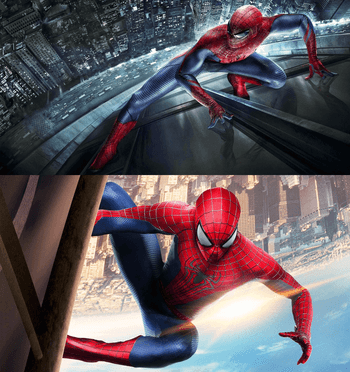
Showing posts with label Sony. Show all posts

Tuesday, July 11, 2017

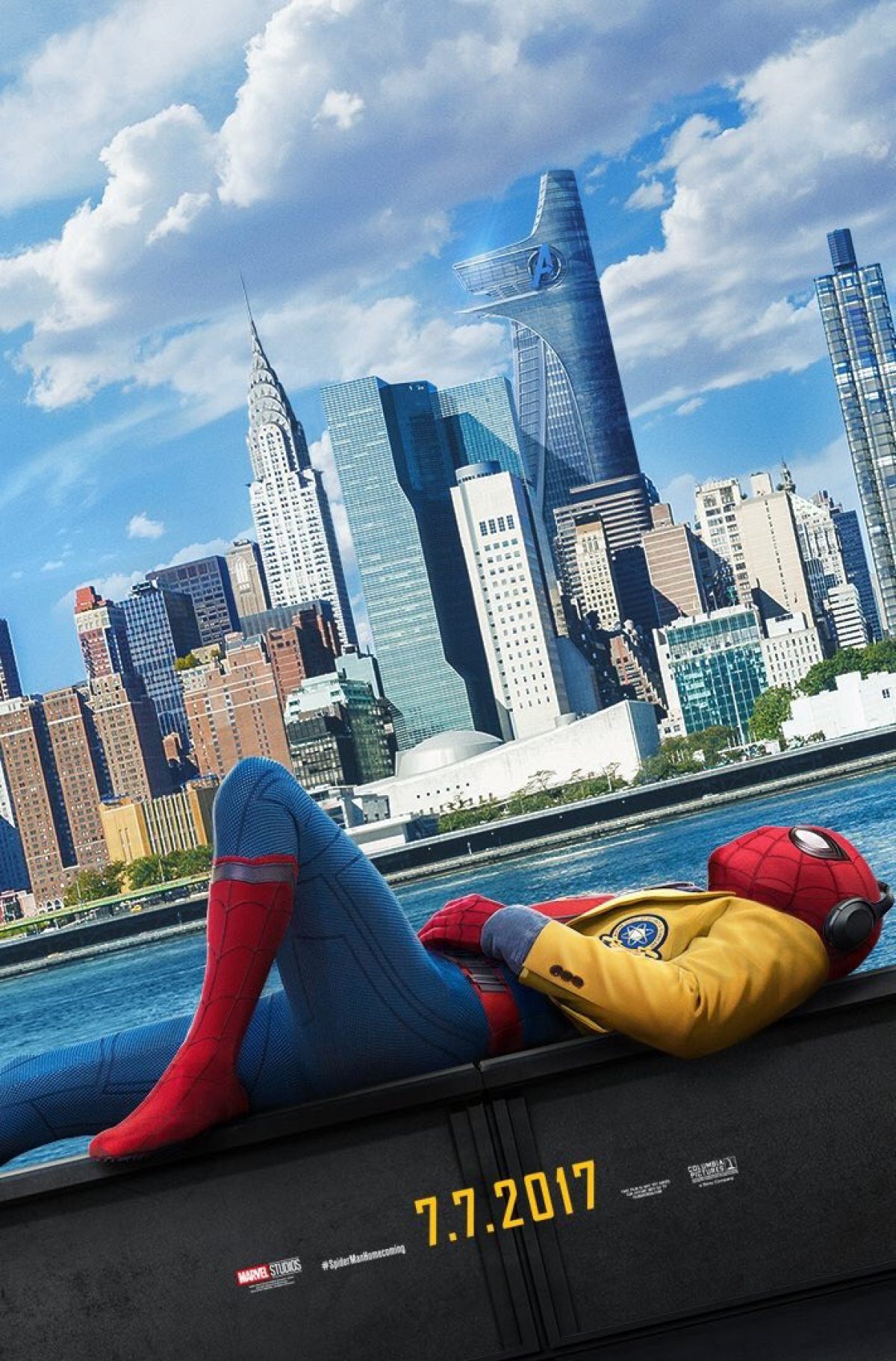
Spider-Man: Homecoming (2017) review

Image result for spider-man homecoming poster

It could be argued that Spider-Man is Marvel Comics’ most popular character. His characterization as a regular high-school student from New York who finds himself immersed in the larger Marvel universe has made him an incredibly endearing character to audiences young and old. This has also translated well to the web-slinger's time on the big-screen, as Spider-Man films have grossed over $3 billion worldwide. Of course, it all started with the trilogy of films directed by Sam Raimi and starring Tobey Maguire in the lead role, which ran from 2002 to 2007. The first film was one of the three major releases, alongside Bryan Singer’s X-Men and 1998’s Blade, that helped revitalize the superhero film genre after the low point that it experienced in the late 90’s. It was then followed by an even better-received sequel in 2004… and then an extremely polarizing third installment in 2007. That would ultimately be the final installment of the series, as Raimi backed out of directing the impending fourth installment when he felt pressured by the studio into getting it done by 2011. Thus, just one year later, Sony decided to reboot the Spider-Man franchise, with Marc Webb taking over as director and Andrew Garfield cast as the new Spidey. However, the short amount of time that had gone by since the Raimi series ended, paired with the fondness that many had for those films, ended up having a majorly negative effect on the Amazing Spider-Man films. While the first Amazing film managed to hold off a decent amount of the skepticism that had been surrounding it, the second Amazing film ended up being even more polarizing than Raimi’s third film. It was also the lowest-grossing Spider-Man film to date, barely grossing over $700 million worldwide.

The harsh reception to Amazing Spider-Man 2 put a lot of pressure on Sony, who have owned Spider-Man’s film rights since the 80’s. Clearly, their plans at the time to develop their own ‘Cinematic Universe’ a la Marvel Studios were not going over well with critics and audiences. And so, in 2015, they decided to strike a deal with Marvel Studios who, due to Marvel’s initial handling of their characters’ film rights, were originally unable to use some of the company’s biggest heroes for the first few years of the Marvel Cinematic Universe’s existence. This new deal, which was made official in February 2015, would allow Sony to hold onto Spider-Man’s film rights while also giving Kevin Feige and his team at Marvel Studios creative control over future films, thereby allowing everyone’s favorite neighborhood web-slinger to finally appear in the MCU. However, this also meant that the series would see another bit of rebooting for the second time in five years. Tom Holland, breakout star of 2012’s The Impossible, took on the role of Peter Parker and officially made his MCU debut in last year’s Captain America: Civil War. And overall, his turn as Spidey in that film was well-received by critics and audiences, proving that he was more than ready to take on the lead role in his own film. And so, here we are now with Spider-Man: Homecoming. General newcomer Jon Watts takes on directorial duties for this collaboration between Sony and Marvel Studios. To reiterate, because Sony still owns Spider-Man’s film rights, this is a Sony release, unlike the other MCU films which are distributed by Disney. However, given the involvement of Kevin Feige and co., it’s also the newest installment of the Marvel Cinematic Universe. Thus, with the involvement of the studio that has continued to deliver top-quality hits time and time again, I’m pleased to say that good ol’ ‘Underoos’ is indeed back and, more importantly, is better than ever in his latest on-screen adventure.

During the events of Captain America: Civil War, teenager Peter Parker AKA Spider-Man (Tom Holland), who gained spider-like abilities after being bitten by a genetically-altered spider, was recruited by billionaire Tony Stark AKA Iron Man (Robert Downey Jr.) to aid in the Avengers’ internal conflict in that film. Afterward, Tony gives Peter the new and improved suit that he had made for him but also tells him that he’s not yet a member of the Avengers. Thus, Peter returns home to Queens, where he lives with his Aunt May (Marisa Tomei), and his life as a ‘regular’ student at Midtown High while continuing to fight crime around town under the ‘supervision’ of Tony’s long-time bodyguard, Happy Hogan (Jon Favreau). But despite this, Peter is still left wishing for an opportunity to do more than just deal with minor incidents. He eventually manages to find a chance to prove himself when he starts to come across criminals that are using new and dangerous weapons that have been crafted from the Chitauri remains of the Battle of New York in the first Avengers. This soon leads to him coming into conflict with the man in charge of these recent criminal operations, Adrian Toomes (Michael Keaton), who uses a mechanical wingsuit to become ‘the Vulture’. However, the intensity of the situations that Peter soon finds himself in also gets him into trouble with Tony, who wanted him to maintain a more ‘grounded’ lifestyle. Thus, Peter now finds himself being pressured into proving that he’s capable of dealing with the kinds of threats that the Avengers face on a regular basis.

In the months leading up to its release, the filmmakers promoted Spider-Man: Homecoming as a high school film that was reminiscent of the classic 80’s films written and directed by John Hughes. And overall, the film does deliver on being just that, from its greater focus on the younger members of its cast to its various homages to films like Ferris Bueller’s Day Off. But, of course, at the end of the day, this is still a ‘Marvel Cinematic Universe’ film, so it also has all the great things that you’d expect from the MCU at this point. The action sequences are excellent, which in turn are backed by solid visual effects, and there are plenty of humorous moments that never take away from the more emotional moments of the story. And because this film is centered on a superhero who’s still in high-school, the advice that his mentor gives him (‘Stay close to the ground’) applies nicely to the overall scope of the film. Instead of being one of the high-level Avengers films, this is just a nicely scaled solo film that sometimes verges into the larger-scaled escapades of other MCU films but never once diverges from its high-school setting. I mean, if I had any sort of issue with this film, it’d be that it admittedly feels a bit overlong. Now, to be fair, this film is only about two hours and ten minutes long, which is on par with most of the other ‘solo’ MCU films. Heck, this isn’t even the longest Spider-Man film to date; The Amazing Spider-Man 2 was a little over two hours and twenty minutes long. Still, this film’s second half is made up mostly of its biggest action sequences, so it sometimes feels like the film never ends. Don’t get me wrong, I’m not saying that there were any points where the film dragged or anything, but perhaps it could’ve benefitted from some better pacing.

As noted before, this film focuses heavily on its younger stars, and all of them do excellent jobs in their respective roles. Of course, leading them all is Tom Holland who, as we already saw from Captain America: Civil War, is a great fit for the role of Peter Parker/Spider-Man. Not only does he have Spidey’s trademark quips down perfectly, but he’s also given a great overall arc in which he finds that he must prove himself within the larger world of the MCU. In some ways, it’s a lot like the arc that Tony Stark went through in Iron Man 3, in which he realized that his suit didn’t define who he was. And in this film, the fact that Tony knows himself well enough to not want Peter to go down the same route that he went truly goes to show how effective the MCU has been in terms of developing its characters in a consistent manner with each new film. Meanwhile, Holland is backed by some memorable supporting characters, including Jacob Batalon as Peter’s best friend Ned, who ends up learning about Peter’s big secret. And thanks to Batalon and Holland’s terrific camaraderie with each other, Ned proves to be one of the great MCU sidekicks, up there with the likes of Luis from Ant-Man and Wong from Doctor Strange. Another standout is Zendaya, who plays one of Peter’s classmates, Michelle. Her role in the film is a minor one but she does get some great lines of dialogue thanks to her hilariously dry wit. Rounding out the main ‘youth’ cast is Laura Harrier as Peter’s main love interest Liz Allan, who has solid chemistry with Holland, and Tony Revolori as Flash Thompson. It’s a different Flash than the ones we’ve seen in the previous film incarnations of Spider-Man but he still serves his purpose as a constant pain in Peter’s side.

As for the film’s adult leads, there was some controversy surrounding the casting of Marisa Tomei as Aunt May due to Tomei being the youngest actress to date in the role. However, Tomei does prove to be a great fit as the MCU version of Peter’s loving aunt. She works well with Holland while also getting one of the best humorous bits in the entire film right at the very end. Meanwhile, Jon Favreau gets to work with what is easily his biggest role in an MCU film to date (outside of directing, of course) as Happy Hogan, characterized excellently here as Peter’s begrudged liaison between him and Tony Stark. On that note, I’m aware that a lot of people were worried that Robert Downey Jr. was going to hog the limelight in this film to the point where it’d practically be Iron Man 4. Trust me, though, when I say that this isn’t the case. Tony’s only in the film for about 10 minutes and is used perfectly, both in terms of being the goofy genius, billionaire, playboy, philanthropist that we all know and love as well as being an effective mentor for Peter. And, of course, there’s the main villain, Adrian Toomes AKA the Vulture. Is he another one of Marvel’s ‘mediocre’ villains? No, not at all… in fact, I’d dare say that since the start of Phase 3, Marvel Studios has improved quite a bit when it comes to their villains. Michael Keaton is excellent in the role and the character is set up solidly as a former salvage operator who got screwed over by Stark Industries after the events of the first Avengers. This effectively continues the series’ tradition of having Spider-Man’s adversaries be more ‘sympathetic’ than just pure evil. And then, if that wasn’t enough, there’s one big twist surrounding the character that makes him even more of a personal threat for Peter.

There was quite a lot of backlash surrounding this film prior to its release, from its ‘allegedly spoiler-y’ trailers (personally, I didn’t think that they gave away too much) to its admittedly subpar main poster (though, seriously, how does a poster impact the quality of the film that it’s for?). Thankfully, though, that didn’t stop Spider-Man: Homecoming from becoming yet another satisfying entry in the Marvel Cinematic Universe, as well as a much-needed win for Sony after their last few attempts from this franchise fared poorly with audiences. Sure, this is still technically the second time in half a decade that Spider-Man has seen an on-screen reboot, but the filmmakers wisely avoid going down many of the same routes that the character’s previous incarnations went. Jon Watts’ direction is solid and the film finds a nice mix between the high-school antics that its young protagonist deals with on a regular basis and the grand-scale adventures within the larger MCU. And thanks to its terrific ensemble cast and the continuously great atmosphere that one can always expect from the MCU films, Spider-Man: Homecoming is a fun new spin on this beloved character. Now, with that said, I’ll admit that I’m still a little bummed about how the previous incarnation of Spider-Man, the Amazing Spider-Man series, was rather unceremoniously tossed aside after only two films. Yeah, I know I’m in the minority when it comes to liking those films, but why couldn’t they have just been given the opportunity to continue but through the way that they’re doing now and have Kevin Feige and his team come in to fix things up, allowing Andrew Garfield’s Spidey to be a part of the MCU? Still, I won’t lie… after his appearance in both Civil War and now this film, I’m fully onboard with Tom Holland’s portrayal of Spider-Man and, therefore, any future films featuring Marvel Studios’ version of the friendly neighborhood web-slinger.


Rating: 5/5!

Thursday, July 6, 2017

In Defense of the 'Amazing Spider-Man' films

Image result for The Amazing Spider-Man series

This weekend sees the release of the next installment of the Marvel Cinematic Universe, Spider-Man: Homecoming. This new film is a collaboration between Marvel Studios and Sony, the latter of whom still hold the rights to the character as they have had for many years now. However, thanks to a deal that they made in 2015 with Marvel Studios, Spider-Man: Homecoming is very much a part of the MCU, with the webslinger having made his long-awaited series debut in last year’s Captain America: Civil War. It’s also worth noting, though, that this is the second major reboot that the character has had in half a decade. Some may express a bit of concern about this happening as often as it has in this timeframe, but based on its current critical reception, it looks like Spider-Man: Homecoming will turn out to be another big success for Marvel Studios and their legendary Cinematic Universe, while also serving as a bit of redemption for Sony and their own Marvel output. However, today on Rhode Island Movie Corner, I’d like to make an argument in defense of the previous film incarnation of Spider-Man, the one that ended up putting a major dent in Sony’s reputation when it comes to their handling of the character. I’m, of course, referring… to the Amazing Spider-Man films. Obviously, this first attempt at rebooting the Spider-Man film franchise did not go over too well with audiences, especially after the second entry in the series was both a critical and commercial underperformer. And, basically, that’s exactly why we now have this second reboot; the first one was that big of a disaster amongst critics and audiences. However, I still have a soft spot for these two films, despite them now being mostly remembered by the internet as nothing more than a failed attempt to copy Marvel Studios’ success.  

But before I get into the films themselves, let’s start with a little history. Of course, as many of us know, the friendly neighborhood webslinger’s first major outing on the big screen was Sam Raimi’s original Spider-Man trilogy. Prior to this, there had been several attempts at a Spider-Man film, even one directed by James Cameron. Finally, Raimi was brought in by Sony, who had bought the film rights to the character in 1985. The first installment of this new series, simply titled Spider-Man, was a huge hit when it was released in 2002. It was the first film ever to gross over $100 million during its opening weekend at the U.S. box-office. Thus, it is now generally regarded as one of the major catalysts in the modern-day resurgence of the superhero film genre, alongside 2000’s X-Men and 1998’s Blade. Two years later, Raimi and his crew returned for a sequel; Spider-Man 2. And while it didn’t outdo its predecessor at the worldwide box-office, many viewed it as a superior sequel and, thus, it became one of the most beloved entries in the superhero genre. It was then followed by Spider-Man 3 in 2007 and… well, you already know what happened with that one. While it was another box-office success for the franchise, even to the point where it became the highest-grossing entry in the trilogy, it only did ‘okay’ with critics and was mercilessly SAVAGED by audiences for its mishandling of the famous ‘alien symbiote’ storyline from the comics, which saw Peter Parker adopt a darker persona. Said storyline is also known for the creation of one of his most infamous adversaries, Venom, who in the film was ultimately relegated to a minor supporting role after being written in by studio demand. Still, despite the polarizing reaction, plans were still in place for a fourth film. However, in 2010, it was announced that Raimi was stepping down from the project because he felt pressured by Sony into getting it done by a 2011 release date.

Image result for Sam Raimi Spider-Man

Thus, in 2012, Sony decided to instead reboot the Spider-Man franchise. Director Marc Webb, who was fresh off 2009’s critically-acclaimed romantic drama indie (500) Days of Summer, was brought in to direct the first installment of this new Spider-Man series, The Amazing Spider-Man. Andrew Garfield, fresh off an award-nominated performance as Eduardo Saverin in The Social Network, was cast in the title role while Emma Stone was brought in to play Peter Parker’s original love interest from the comics, Gwen Stacy, who had previously appeared in a minor supporting role in Spider-Man 3 played by Bryce Dallas Howard. Upon release, the film did manage to hold off most of the skepticism that had been surrounding it; it did fine with critics and it grossed over $750 million worldwide. Still, there were some dissenters out there, and part of the reason why is admittedly understandable. Because to be perfectly blunt… The Amazing Spider-Man is basically just a retread of the original Spider-Man. It’s the same general story of an unpopular high-school student who gains superpowers after being bitten by a radioactive spider. His uncle dies, he falls in love with one of his classmates, a close colleague of his becomes the main villain, and the film ends with Peter having to sever any chances of a romantic relationship with his love interest. Sure, the film adds in the plotline of Peter’s parents, skirts around Uncle Ben’s famous ‘With Great Power Comes Great Responsibility’ line, and the part where Peter breaks off his relationship with Gwen does go differently than before because she immediately realizes why he’s doing this. But at the end of the day, this origin story isn’t that different from the 2002 film’s origin story. I mean, to be fair, that was just an unfortunate side-effect of this film’s status as a reboot that came out only a decade after the release of Raimi’s first film. On that note, thankfully the new series with Tom Holland has decided to skip past the character’s origin, which is good seeing how we’ve already seen it twice now on film since 2002.

Still, I’d argue that this film does just enough to differentiate itself from Spider-Man’s previous onscreen incarnation. I mean, if anything, it’s not like this is a direct ‘carbon copy’ of Raimi’s film. The biggest change comes with the increased role of Peter’s parents, Richard and Mary Parker. Having only been mentioned in the Raimi films, the first Amazing film opens with Peter’s parents leaving him at Uncle Ben and Aunt May’s while they go off on an important business matter, only to never return. Thus, most of the film’s plot revolves around Peter learning more about his parents’ secrets and why this led to their disappearance which, in turn, ultimately leads him on the path to becoming Spider-Man. Now, admittedly, despite what I just said, the film doesn’t really focus too much on what happened to Peter’s parents save for a brief flash of a newspaper article mentioning that they were killed in a plane crash. Afterward, it basically just turns into a Spider-Man story that only occasionally ties everything back to Peter’s past. However, it does seem like there was initially going to be a greater focus on Peter’s parents based on the film’s several deleted scenes. These scenes include, among other things, some additional character development for Dr. Curt Connors, Richard Parker’s colleague, and an expanded role for their seemingly sinister superior, Dr. Kafka, who straight-up disappears from the film after the big action sequence on the bridge. Some of these scenes even appeared in the trailer, only to then not appear in the final cut. As we’ll soon see, that’s basically one of the biggest dilemmas with these films. Clearly, a lot of material was left on the cutting room floor, perhaps so that it could be saved for the sequel. On that note, thankfully, the plotline with Peter’s parents returned in the sequel and was given more attention there than in the first film.

Image result for andrew garfield and emma stone spider-man

Ultimately, though, the main reason why I liked these films more than the Raimi films (which, to be clear, I still like by the way) is that I just liked the characters in this series more, especially Peter and Gwen. While I do feel that both Tobey Maguire and Kirsten Dunst were solid in the Raimi films, Andrew Garfield and Emma Stone totally have them beat when it comes to chemistry. I mean, after all, these two were a couple in real-life, and that is indeed apparent in the several scenes where they’re together. As for Andrew Garfield’s performance in the role of the iconic webslinger, I much preferred his take on the character over Tobey Maguire’s. And, for the most part, it seemed like most critics were happy with Garfield’s take on the character as well. However, there have been some who felt that he wasn’t that good when it came to portraying Peter outside of the suit. They argued that he was whiny and that he didn’t look the part of a high-school nerd. And I’ll admit that, yes, Tobey Maguire was perhaps better when it came to conveying Peter’s nerdy qualities when he wasn’t in the suit. However, I don’t really agree with the ‘whiny’ argument, which in the first film mainly comes into play when Peter argues with Uncle Ben in the scene before his death. And the main reason why is one that gets brought up by several cast and crew members in the film’s behind-the-scenes material; at the end of the day, Peter is just being a teenager. At that age, teenagers will often find themselves lost at times and, thus, make questionable decisions. And that’s exactly what Peter does at times in this film, as a lot of his inner turmoil is, of course, based around him not knowing why his parents left him at such a young age. In short, I fully appreciate how this new version of Peter was characterized overall, which I would argue makes him more sympathetic than Maguire’s Peter.

But if there’s one clear thing that Garfield did indeed do better than Maguire, it’s being Spider-Man. Spider-Man is a character who is well-known for the comedic quips that he spurts when he’s fighting crime, and Garfield had that part down perfectly. Sure, some may argue that he didn’t do this that much in the first film save for the scene where he confronts the carjacker (“You’ve found my weakness. It’s small knives!”) but at the very least, things only got better in the sequel, where Garfield truly shined in the role. By comparison, Maguire never really got the chance to use Spidey’s trademark quips. I don’t know whether it was because of Raimi or the screenwriters, but Maguire’s Spider-Man was much more serious in tone. Thankfully, there were a few instances here and there where Maguire did throw out some quips at his enemies. It’s just that they really were few and far between. The first instance of this that I can recall came in the second film when he’s fighting Dr. Octavius at the bank. When Octavius remarks that Spidey is getting on his nerves, Peter then proceeds to joke that “he has a knack for that”. The other major instance that I can think of comes in Spider-Man 3, during his first fight with Flint Marko AKA the Sandman. When he first confronts Sandman, he informs him that he’s ‘the sheriff around these parts’. Then, after the fight, he goes to the roof of a skyscraper to empty out the sand in his costume, where he poses the question, “Where do all these guys come from?”. I will say that, at the very least, Spider-Man 3, which was co-written by Raimi and his brother Ivan, did allow Maguire to be more comedic in the role of Peter. However, considering that part of this included his infamous ‘emo’ phase (which really wasn’t as bad as the internet constantly puts it out to be; if anything, it was far from being the film’s biggest problem), that’s up for debate. Garfield, thankfully, never went ‘that far’ when playing the character.

Image result for emma stone spider-man

The real standout of these films, though, was Emma Stone in the role of Gwen Stacy, who is hands down the best on-screen love interest that Spidey has ever had in these films. Again, nothing against Kirsten Dunst, as she had good chemistry with Tobey Maguire and even a solid character arc in the second Raimi film as she navigated through her complicated love life. But at the end of the day, Mary Jane Watson was mainly just a damsel in distress who was constantly being saved by Peter. Gwen, meanwhile, was by no means a ‘damsel in distress’. Sure, she got cornered a few times by the Lizard in the first film and was captured by the Green Goblin during the finale of the second film, but she also played an active part in helping Spider-Man defeat his enemies. She helped to develop the cure for the Lizard’s mutagen in the first film and helped make Peter’s web-shooters resistant to Electro’s attacks in the second film. Heck, during a scene in the first film when she’s confronted by the Lizard, she straight-up wards him off with fire. But easily one of her most defining moments in these films came at the end of the first film which, like the ending of the first Raimi film, had Peter breaking off his current romantic relationship with her. Except in this instance, instead of it ending with Peter just walking away, Gwen immediately realizes why he is doing this; during the final battle, her father, Captain George Stacy, is killed by the Lizard. With his dying breath, he makes Peter promise to ‘leave Gwen out of it’, knowing that he’ll make many enemies as Spider-Man in the future. However, by the end of the film, it seems as if Peter and Gwen’s relationship might not be over after all. Though as we’ll soon see in the second film, this relationship becomes quite complicated.

The two are backed by an excellent supporting cast. Denis Leary is a major standout as Gwen’s father, George Stacy. Given his status as a New York City Police Captain, he provides a nice contrast to Peter’s actions as Spider-Man while also getting some of the best lines in the film, from “38 of New York’s finest versus one guy… in a unitard” to his response to when Peter tells him about Connors transforming into a giant Lizard (“Do I look like the mayor of Tokyo to you?”). And I won’t lie… I teared up quite a bit when he died. Sure, his role in the sequel was odd, to say the least, as he mainly appeared as a vision of Peter’s, forcibly reminding him of the promise that he made to him. Still, he was easily one of the best parts of the first film. Meanwhile, Martin Sheen and Sally Field are both fantastic as this series’ iterations of Uncle Ben and Aunt May. Their takes on these classic characters are a bit more authoritative in tone compared to Cliff Robertson and Rosemary Harris’ performances in the Raimi films. They still are the loving surrogate parents in Peter’s life but they do take on a stricter parenting role whenever he gets into trouble, especially Uncle Ben. And on that note, while it is pretty much the same as the scene from the first Raimi film, Webb does do a good job when it comes to handling Uncle Ben’s death in this film. Heck, I’ll even admit that perhaps I found this one to be just a tad bit more heartbreaking seeing how this happened while Ben was looking for Peter after an intense argument between them. And as for Sally Field as Aunt May… well, recently she’s distanced herself from these films, stating that it wasn’t ‘her kind of film’ but that she did it for her friend, producer Laura Ziskin, who had also produced the Raimi films. The Amazing Spider-Man would ultimately be one of the last projects that she worked on before her death in 2011. Field also stated that she felt that there wasn’t much depth to the character; a shame, really, because I’d argue that she gave it her all in the role, especially in the sequel.
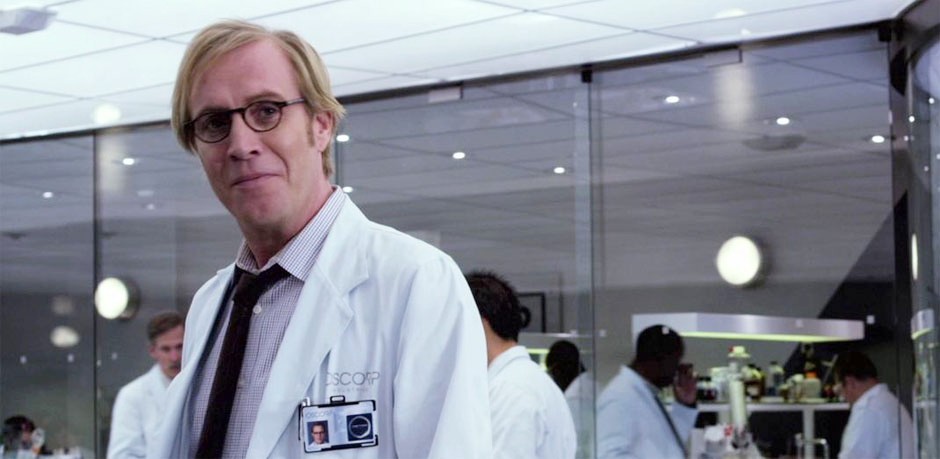
Image result for dr. connors amazing spider-man

As for the main villain, Dr. Curt Connors AKA the Lizard, I think that he was the series’ best ‘sympathetic’ villain since Dr. Octopus in Spider-Man 2. After all, that’s a common starting point when it comes to some of Spider-Man’s adversaries in these films; not all of them are just straight-up ‘bad guys’. In fact, almost all of them have a personal connection to Peter in some way, shape, or form. In this instance, Dr. Connors was a close friend of Peter’s dad who worked alongside him at Oscorp. And when we first meet him, we learn that he and Peter’s father were experimenting with cross-species genetics to try and find cures for diseases along with other potential scientific breakthroughs, including the possibility of humans being able to regenerate limbs. Connors himself only has one arm, hence why he’s fully determined to make his experiments work. While there was some material with Connors that was cut from the final film, including a scene where we see that he has a son, Rhys Ifans does a great job in making Connors a sympathetic character who’s trying to heal himself as much as he wants to heal the world. But, after one failed test, he becomes a diabolical creature and his goals become corrupted as he works to turn all of New York into lizard beings like himself. Dr. Connors had previously appeared in the Raimi films as well, played by Dylan Baker. Sadly, for Baker, he was never given the opportunity to become the Lizard, though, apparently, he was being set up to do so in the unmade fourth film. Thankfully, we finally got to see this character fully realized on the big screen in the first Amazing Spider-Man, and I think that it was also good that they started out with him instead of re-doing a villain from the Raimi films. Obviously, they re-did Green Goblin in the second film but, again, that was the second film. At that point, I’d argue that it was okay for them to try and do a new take on a previously seen character.

Finally, one of the other major things that I think the Amazing films do better than the Raimi films is its action sequences, namely whenever Spidey is swinging through the city. Admittedly, the first Raimi film has become rather dated in terms of its effects; you can clearly tell whenever a digital double of an actor is used during a fight scene. Thankfully, the Raimi films did improve from an effects standpoint as they went on. Thus, by the time that the Amazing films came around, Spider-Man’s web-slinging became more fluent than ever from a visual perspective. The second film, especially, featured some of the best Spider-Man swinging sequences ever put on film. With that in mind, I do think that Webb managed to improve as an action director the same way that Christopher Nolan did between Batman Begins and The Dark Knight. In Nolan’s instance, while Batman Begins was a great return to form for Batman on the big screen after almost a decade, its biggest shortcoming was its poorly edited fight sequences, which I attribute to it being Nolan’s first big action film. Thankfully, Nolan stepped up his game three years later with some exceptional fight sequences in The Dark Knight. Now, for the record, I’m not saying that Webb pulled off a Dark Knight-level leap in quality when it came to the second Amazing film. But, like Nolan, this was a case where the first Amazing Spider-Man was his first big action film. And while the action was solid enough in the first film, Webb managed to take it one step further in the sequel. For one thing, the sequel has action sequences that are set during the day instead of at night like in the first film. Seriously, the only major daytime action sequence in the first film… was one that took place within a school.

Related image

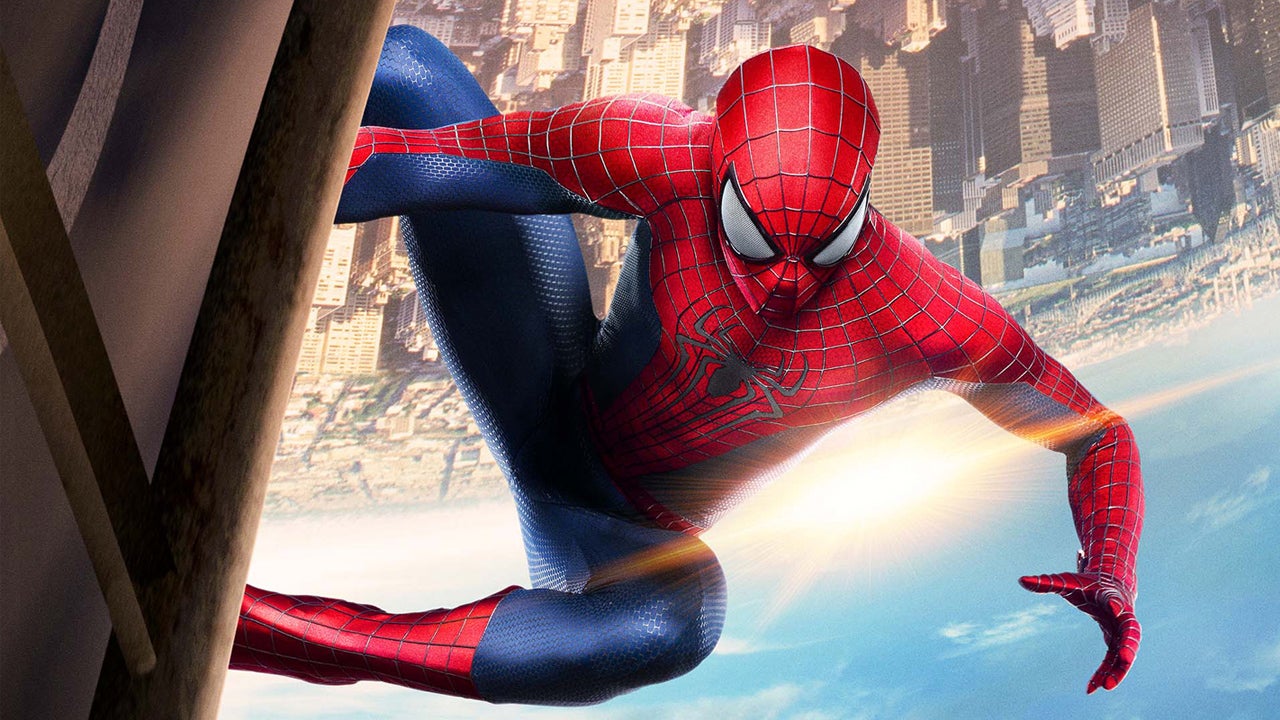
On that note, now it’s time to talk about that infamous sequel, 2014’s The Amazing Spider-Man 2. Like Spider-Man 3, it experienced an extremely polarizing response from critics and audiences that leaned more towards the negative. And while it was one of the top-grossing films of the year, with over $708 million worldwide… it was ultimately the lowest-grossing Spider-Man film to date. Thus, the following year, Sony made a deal with Marvel Studios to co-produce a second reboot franchise, which would allow the character to finally make his long-awaited debut in the Marvel Cinematic Universe. This also meant that all of Sony’s plans at the time to continue the Amazing series ended up falling by the wayside. But as for me, I was in the minority of people who did like The Amazing Spider-Man 2. And after re-watching it again as research for this post… I found that I still liked it. Hell, scratch that, I love it. As I noted before, it improved upon its predecessor in terms of the action sequences and visuals, effectively becoming the best-looking Spider-Man film to date. And just like its predecessor, it benefitted greatly from the lead performances of Andrew Garfield and Emma Stone. Garfield fully embraced Spidey’s comic persona while Stone’s Gwen continued to be his best on-screen love interest. Sure, the two do spend most of the film apart from each other after they break up due to Peter’s guilt over not sticking to the promise that he made to her father. But when they do share romantic scenes, boy are these two cute together. The scene where the two rekindle their relationship on top the Brooklyn Bridge is especially heartwarming… though also a bit gut-wrenching when you know exactly what’s about to happen to them. But I’ll get to that later…

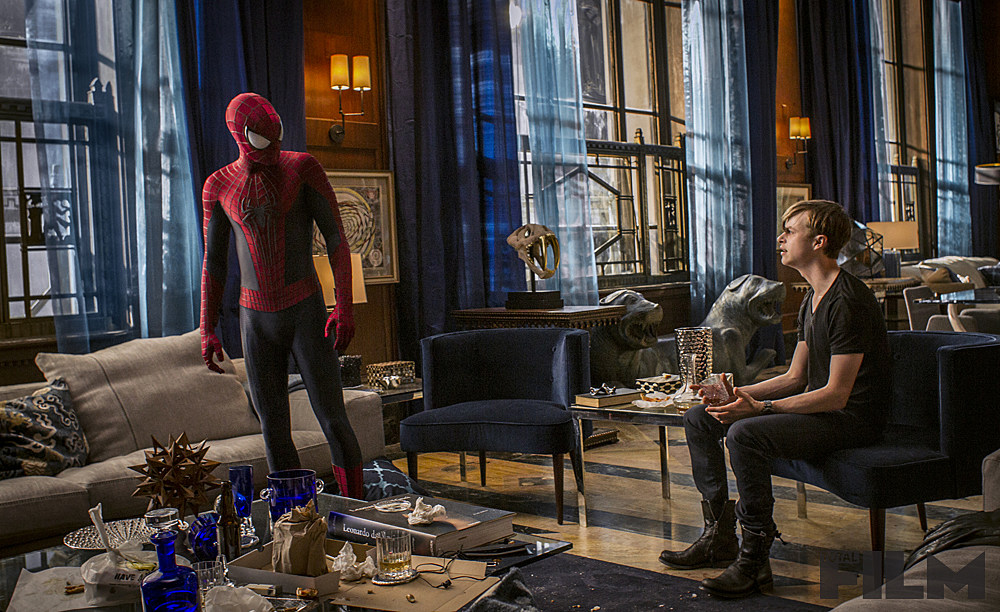
Remember how there was quite a lot of material left on the cutting room floor with the first film? Well, it’s an even bigger problem with this one. Once again, several scenes that were even featured in the trailer ended up being removed for various reasons, and in this instance, it does indeed impact the overall narrative. This includes a scene where Peter’s best friend Harry Osborn (Dane DeHaan) informs him that his father’s company, Oscorp, has been watching him and his family for years and, in what is perhaps the most notable (or ‘infamous’, depending on your point of view) deleted scene of the bunch, Peter is reunited with his long-lost father, who is revealed to have survived the plane crash, which we see happen in the film’s opening sequence. There were also a few scenes featuring Shailene Woodley as Mary Jane Watson, but her scenes were cut because Webb wanted to focus more on Peter and Gwen’s relationship instead of the one that would obviously occur between Peter and MJ. But unlike the previously mentioned deleted scenes, these haven’t been released yet, and now that Sony has moved onto a new series, it’s unlikely that we’ll ever see them. To me, this film feels very much like Iron Man 2, which also tried to set up a lot of material for future films to the point where it ended up being detrimental to its main plot. But whereas Iron Man 2 didn’t do ‘terribly’ with critics and was part of the continually-developing Marvel Cinematic Universe, Sony didn’t have the same kind of leeway with the Amazing films. Thus, several big-name actors ended up being vastly underutilized in roles that were clearly meant to be expanded upon in future films. This includes Felicity Jones as Harry’s assistant Felicia, who would’ve become the vigilante Black Cat from the comics, and B.J. Novak as scientist Alistair Smythe, who was well-known in the comics for creating robots known as the Spider-Slayers.

Image result for amazing spider-man 2

Ultimately, though, the film ends up facing the same dilemma as Spider-Man 3; a narrative that featured several main villains, three to be specific. However, while I do think that both films clearly bit off more than they can chew by having all these villains in one film, I still think that Spider-Man 3 was more problematic when it came to it having ‘too many villains’. And that’s because, after about 2-4 viewings of that film, I’m still unsure as to who the main villain of that film was. At first, it seemed like it was going to be Harry Osborn AKA ‘New Goblin’, but he’s put out of commission for a bit due to a sustained bout of amnesia. Then, there was Sandman, and for the most part, he was the ‘main threat’ of the film, especially given the big personal connection that he has with Peter as it’s revealed that he was the one who killed Uncle Ben. But then, like Harry, he too exits the film for a decent amount of time before coming back at the end. And then, of course, there’s Venom… who’s only in it for like ten minutes or so before he’s killed off. Amazing Spider-Man 2, at the very least, was a bit clearer as to who the main villain was; Electro. Sure, there’s a point in the film where he’s taken into custody for a bit, but by the end, he’s still ultimately the big threat for Spidey to stop. As for Harry, he slowly but surely changes into the Green Goblin by the end of the film; in other words, he was clearly meant to be one of the ‘big baddies’ in future films, though he does play a major part in this film’s finale. And as for the film’s third villain, Rhino, he was only meant to be a ‘book-end’ villain, first appearing at the beginning of the film and then returning at the end. I mean, to be fair, while Spider-Man does have a wide array of adversaries in the comics, not all of them are big enough to be ‘main villains’. And it seems like Spider-Man: Homecoming is doing a similar thing; Michael Keaton’s Vulture is the main villain while the film will also feature characters like Shocker and the Tinkerer in smaller roles.

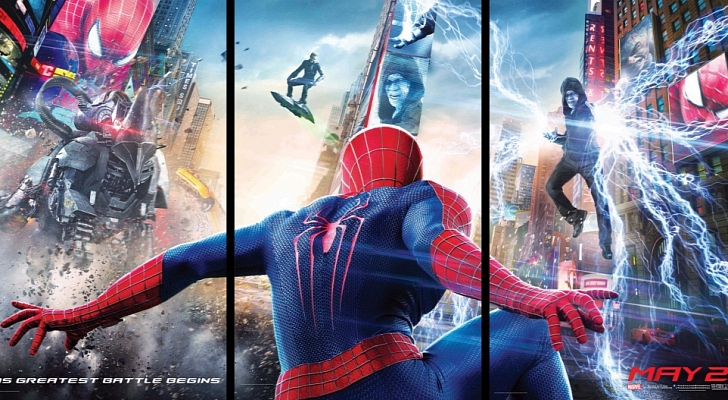
And overall, I was fine with the villains in this film. Paul Giamatti was delightfully hammy in his brief appearance as the Rhino; again, a brief appearance, but it did result in a fun opening sequence and ending, even though the latter cuts to the credits before the fight gets underway. As for Jamie Foxx as Electro, the film continued the series’ tradition of sympathetic villains who weren’t ‘bad guys’ just because they’re evil. In the case of Electro, he starts out as a lowly Oscorp employee named Max Dillon who is led to believe that he’s Spider-Man’s best friend after Spidey saves him one time. After transforming into the electrically-powered being Electro, Max is confronted by Spider-Man again, and even though Peter attempts to peacefully subdue him, this fails and the ensuing battle leads to Max’s opinion of Spidey being forever tarnished. Sure, maybe this happens rather abruptly… that and Foxx’s take on the character is very reminiscent of Jim Carrey’s portrayal of Edward Nygma AKA the Riddler in Batman Forever, complete with a whole subplot that focused heavily on the fact that his transformation occurred on his birthday. In fact, there are a lot of overly goofy moments in this film, more so than just anything that Electro does. Thus, one of the major criticisms of the film was its tendency to have some noticeable tonal shifts. I do see where people are coming from with this, but it ultimately didn’t bother me that much. Plus, going back to what I said before about how this film had some of the best Spider-Man action in any film to date, the creation of Electro does lead to some awesome electricity-based visuals and action sequences. And I also don’t mind the changes that were made to Electro’s overall design. I mean, to be fair, I don’t see how they could’ve put Foxx in a green and yellow spandex suit complete with a lightning-bolt shaped mask; that would’ve made things even sillier if you ask me. And finally, with Dane DeHaan as the new Harry Osborn AKA Green Goblin, I thought that he was an interesting new take on the character, as we see traces of both his long friendship with Peter and his eventual descent into anarchy. If he had been given another film to work with, I think his take on the character would’ve become even better.
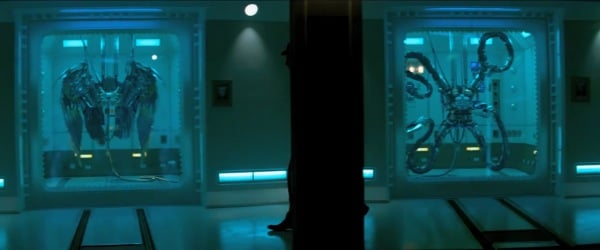
Image result for amazing spider man 2 sinister six

On that note, what were the plans then if the franchise hadn’t stalled out with this film? Well, obviously, there would’ve been a third (and maybe even a fourth) Amazing Spider-Man film, once again directed by Marc Webb and starring Garfield and DeHaan. But perhaps the most notable planned follow-up was a spin-off that focused on Spider-Man’s most notorious group of adversaries from the comics, the Sinister Six. The film was set to be written and directed by Drew Goddard, to the point where he even dropped out of handling show-running duties on Daredevil to work on this film. And the lineup for this gang of villains was directly teased in the credits of Amazing Spider-Man 2. This included, of course, returning characters Green Goblin and Rhino along with two characters that were teased in the film itself during a scene set at Oscorp that showcased their technology; Doc Ock and Vulture, the latter of whom will finally make his big-screen debut in Spider-Man: Homecoming. Finally, the other two confirmed villains were Kraven the Hunter, who would’ve debuted in the third film, and either Chameleon or Mysterio as implied by a bright-white mask. Ultimately, though, as we all know, this film, along with a planned Venom spin-off (that, apparently, is now back in development with Tom Hardy set to star in the lead role), were both canceled after the Marvel Studios deal was made official. It’s a shame, really, because I was interested in seeing both these films. Sure, it probably would’ve been difficult to try and make a film based around villainous characters and not superheroes, but I’m sure that it could’ve been done. Instead, we ultimately got our first big villain-centered comic book film in 2016 with DC’s Suicide Squad. And while that film also didn’t fare too well with critics, I still think that we’ll eventually see a good supervillain-led film in the future.

Anyway, back to Amazing Spider-Man 2… amidst all the goofy moments in this film, there are also some genuinely brilliant moments as well. Early on, there’s a scene where Peter saves a young kid from bullies and then proceeds to befriend him, complimenting his wind turbine science project and so on and so forth. This kid, Jorge, later returns at the end of the film where he dresses up as Spidey before the real Spidey comes back after being on a brief hiatus. In short, this was arguably the greatest on-screen instance of Spider-Man being the kind of role model to younger audiences that he’s always been known for. There’s also the scene where Peter talks with Aunt May about his father’s secrets which, as noted before, is a prime example of how Sally Field was truly giving it her all in the role despite her eventual thoughts on the films. Finally, of course, there’s the tragic finale in which, like in the comics, Gwen dies after sustaining injuries from a long fall. Say what you will about the rest of the film, but this moment is handled perfectly, thanks in no small part to Garfield and Stone’s excellent performances. Sure, it’s not exactly like it was in the comics, where the Goblin drops her from the George Washington Bridge, but we already got a scene like this in Raimi’s first Spider-Man film (with thankfully less tragic results). Instead, it occurs within a clock tower, and there’s even a neat little Easter egg where the clock stops at 1:21; #121 is the issue of Amazing Spider-Man in which Gwen died. Simply put, this was a truly emotional and heartbreaking scene that, along with all the other previously mentioned ‘brilliant’ scenes, is why I take issue whenever someone says that this is one of the worst superhero films of all-time… far from it. This is NOT the 2015 reboot of Fantastic Four, even though both films were clearly affected by hasty studio interference. And this is also NOT Batman and Robin, even though both films do have plenty of corny moments in them. Now, for the record, I do understand if some consider this to be a ‘middle-of-the-road’ entry in the genre, but worst? No way!

Image result for tom holland andrew garfield spiderman

Which is why I’m still a bit disappointed that this series had to end with a whimper by being replaced just like the Raimi films were. Now, don’t get me wrong, while I do prefer Garfield’s take on Spider-Man over Maguire’s, I did love Tom Holland’s portrayal of the character in Captain America: Civil War. Like Garfield, Holland had Spidey’s comedic quips down perfectly, and I also loved how this new take on the character is really focusing in on his high-school years, more so than Maguire and Garfield’s iterations combined (“I can’t go to Germany… I’ve got homework!”). And again, it looks like Spider-Man: Homecoming is shaping up to be the best Spider-Man film since Spider-Man 2, thanks in no small part to the influence of Kevin Feige and his team at Marvel Studios. But I must ask… why then couldn’t they just continue the Amazing films but do what they’re doing right now and have Feige and his team brought in to rework things so that the series could continue at a smoother pace? After all, as I’ve noted numerous times, Feige and his team clearly know what they’re doing. The Marvel Cinematic Universe wouldn’t be where it is today, in the middle of Phase III and building up to what will surely be an epic conclusion to the current age of the franchise in Avengers: Infinity War, without them. Now, I’ll admit, maybe they figured that the plans for future Amazing films were just too messy at that point to be salvaged, but given how many characters have been ‘redeemed’ through their roles in the MCU, I bet that they could’ve saved it. But, of course, that didn’t happen, and it does make you feel bad for Marc Webb and Andrew Garfield, both of whom are talented at what they do. It’s a shame, really, that both were ultimately hindered by a pair of films that were severely affected by studio influence. 
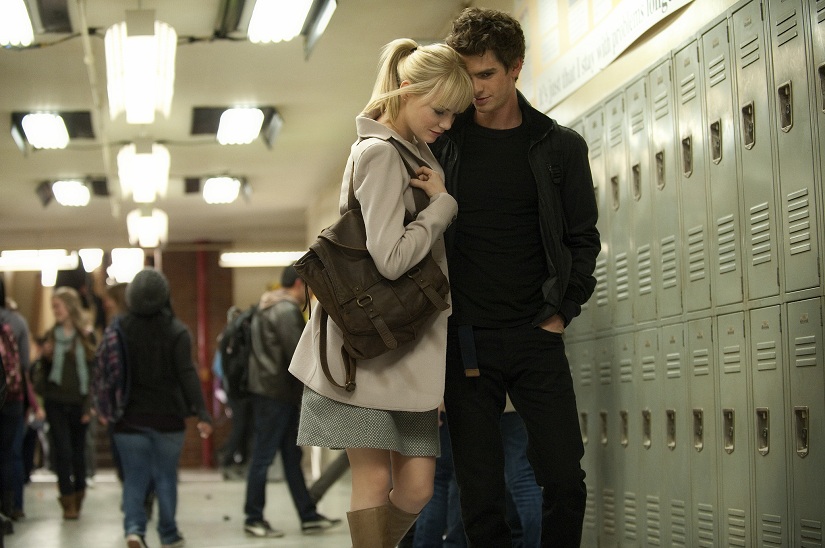
Image result for amazing spider-man peter and gwen


Well, even though the internet has mostly forgotten about them by now, I still really enjoy the Amazing Spider-Man films. In fact, I won’t lie… I have a stronger personal connection to them than I do the Raimi films which, again, I do still like. For one thing, the Amazing films were the first Spider-Man films that I ever saw in theaters. Yes, I’ll admit that I didn’t see any of the Raimi films in theaters, mainly because I was too young for them at the time. I did catch a few glimpses of the first Raimi film back in 2002, but that was at the drive-in and it was a situation where my dad and brother were seeing it while my mom and I went to see another film. The Amazing Spider-Man was my first true Spider-Man film seen in theaters. In fact, that instance was a special one for me as it was the first time that I ever went to an early screening. One of my local radio stations had a contest where they were giving away tickets to an IMAX screening of the film in Providence to those who called in and correctly named a film that the hosts used an audio clip from. And as fate would have it, I won on the day that the audio clip came from Marc Webb’s first film, (500) Days of Summer (how fitting!). And I remember this because my mom called it in for us (I had just been dropped off at school) and when she told the hosts that I gave her the answer, one of them joked that the film was rated R… even though it wasn’t. And I guess that part of the reason why I loved Amazing Spider-Man 2 so much is that I saw it at one of those ‘perfect times’. It was the last day of my freshman semester at college and the film was exactly what I needed after a rather rough second semester. In conclusion, yes, I know that I’m in the minority when it comes to liking these films. But remember, film is subjective; thus, it works in different ways for different people. Case in point, a lot of people my age are still very fond of the Raimi films, which in turn impacted their thoughts on the Amazing films. And, heck, I’ll even admit that back then, I was as skeptical as most people were about these films when they were first announced. But at the end of the day, I was surprised to find that I really connected with these films, more so than I ever did with the Raimi films.
Wednesday, February 11, 2015

Thoughts on the Marvel Studios/Sony 'Spider-Man' deal


As we all know, one of the biggest reasons why Marvel Studios started out the Marvel Cinematic Universe with some of their lesser known characters like Iron Man and Thor was because they didn’t have the rights to all of their characters at the time. Mainly, ‘Spider-Man’ was with Sony and ‘X-Men’ and ‘The Fantastic Four’ were with Fox. So that meant that Marvel had to go with what was, at the time, referred to by some as their ‘B-list’ heroes but of course as we all know they have gone on to achieve massive success both critically and commercially with a franchise that is still going strong today. Meanwhile, Fox and Sony have spent the last few years doing their own thing with the Marvel characters that they own. Fox recently got the ‘X-Men’ franchise back in top form with ‘Days of Future Past’ and now all eyes are on the new ‘Fantastic Four’ to see if that film can also deliver. But as for Sony, they’ve had less success than either Fox or Marvel Studios recently, mainly due to their extremely polarizing decision to reboot the ‘Spider-Man’ film franchise just five years after the release of the third Sam Raimi-directed ‘Spider-Man’ film. But last night, a major news bombshell was dropped when it was revealed that Sony and Marvel had reached a deal that would allow everyone’s favorite neighborhood web-slinger to appear in the MCU, something that comic book fans have been waiting for since the very beginning.


First off, let’s go over the details of this new deal. For the record, this deal does not mean that Marvel ‘got back’ the rights to Spider-Man. Sony still owns those rights and will be in charge of distribution, financing, and ultimately having final creative control over future ‘Spider-Man’ films. However, according to this new deal, Spider-Man will make his official debut in the MCU in one of the upcoming ‘Phase 3’ films. And then on July 28, 2017, Sony will release a new ‘Spider-Man’ film but this time Marvel Studios president Kevin Feige will produce the film along with former Sony Pictures Chairman Amy Pascal, who recently resigned from her position at Sony following the controversy surrounding the studio hacking scandal. At the same time, the studio’s proposed spin-off films, ‘Sinister Six’, ‘Venom’, and a film centered around some of the series’ female characters, are apparently still in development presumably not to be produced by Feige. However, it’s also been revealed that this new film is going to recast the role of Spider-Man and that ‘Amazing Spider-Man’ lead Andrew Garfield will not be returning for the new film nor will director Marc Webb. In short, the ‘Amazing Spider-Man’ film series that has polarized many comic book fans ever since it was first announced has officially come to an end and I will admit that I am a little disappointed by that.

Now I’ve made it perfectly clear that I am a big fan of both ‘Amazing Spider-Man’ films… and I know that this put me in the minority when it came to that stance, especially after ‘The Amazing Spider-Man 2’ ended up being one of the most polarizing films of this past year when it was first released while also ending up as the lowest-grossing ‘Spider-Man’ film to date. Nowadays, the film isn’t as polarizing as it was when it first came out and now it is officially deemed by the internet as a major disappointment… something that I’ve been constantly been reminded about anytime there a piece of news surrounding the future of the franchise comes out and believe me, folks, it’s gotten really annoying. I’m not saying that the ‘Amazing Spider-Man’ films are perfect. The first film will never escape the fact that it was a rushed reboot and it’s clear that the filmmakers didn’t realize the biggest problem of ‘Spider-Man 3’ when they made the second film. Not only that but it has also been very much proven that Sony made a lot of changes to the two films to the point where certain plot-points and scenes that were even featured in the trailers were cut out entirely. Still, to the series’ credit, it did do some things better than the Raimi trilogy, namely better action scenes and visuals and far superior leads in Andrew Garfield and Emma Stone.


But in the end, I will say this… this new deal with Marvel is the right move for both Sony and the Spider-Man film franchise and this is because it is now being co-handled by the studio that has proven time and time again that they know what they’re doing. Of course, if you’ve been following me since the beginning, you know that I’ve showered the MCU with nothing but praise time and time again. And for the record it does deserve a lot of that praise giving its excellent track record of films that, if anything, were incredibly entertaining films even if some weren’t really as good as others; in my opinion, there has yet to be a ‘bad’ MCU film. Sony, on the other hand, clearly hit a major roadblock when ‘Amazing Spider-Man 2’ didn’t meet their expectations both critically and commercially. There have been numerous rumors these past few months about the status of their ‘Cinematic Universe’, from shifting release dates around to even rumors that Sam Raimi was going to return to direct another one of these films. For the record, I was supportive of Sony’s ‘plan’ for future films and spin-offs, namely the proposed ‘Sinister Six’ and ‘Venom’ films because I wanted to see how those would’ve turned out. It seems like those two spin-offs are still happening but at the same time I do feel bad for both Andrew Garfield and Marc Webb who clearly were stuck in a not-so-great situation and I do wish that they could’ve gotten, if anything, one last chance so that their franchise can go out on a high note instead of a low one.

So now let’s start speculating about how Spidey is going to be incorporated into the MCU, more specifically which MCU film is he going to appear in? I think it’s safe to assume that he won’t be making a cameo in the post-credits scenes for either ‘Age of Ultron’ or ‘Ant-Man’ given the fact that both of these films are coming out fairly soon (just three months in the case of ‘Age of Ultron’. So given the fact that, in the comics, Spider-Man was a key player in the ‘Civil War’ storyline, it’s incredibly likely that he’ll be appearing in ‘Captain America: Civil War’ after all to play the same role he did in the comics. Though with that said, it’s a little disappointing if this is true because back when it was confirmed that ‘Cap 3’ would be ‘Civil War’, they were touting Black Panther to be the one who would take over Spidey’s role in the story, obviously because at the time, this deal wasn’t official yet. Who knows? Maybe they’ll have the same overall role in the story but each of them will side with either Cap or Iron Man. At the same time, I’d actually also be interested to perhaps see Spider-Man make a cameo appearance in one of Marvel’s TV shows, either ‘Agents of S.H.I.E.L.D.’ (which I would be extremely excited about given that it’s my favorite show on TV right now) or one of the upcoming Netflix shows, the latter of which could definitely work seeing how it takes place in New York.


As for the new Spider-Man film, believe it or not it now beats the record previously set by the first ‘Amazing Spider-Man’ film as one of the quickest franchise reboots ever; in this case of this new film, now just three years after the last film. But this time, I’m pretty sure we’re not going to get the origin story again; after all, we’ve already seen the whole ‘getting bit by a spider’ and the ‘death of Uncle Ben’ plot-points twice now. We don’t need to see that again. And here’s a suggestion… sometime in the near future (not in the first new film but in a sequel), why not introduce Miles Morales as the next Spider-Man like in the comics? Sadly, it seemed like they weren’t going to do that with the ‘Amazing Spider-Man’ films, even after Garfield was supposedly going to step down from the role after the third film. But now that those films are no longer happening, it seems much more likely this could happen. As for who’ll direct this film, I noted before that there were rumors that Sam Raimi was going to return but unless Sony apologizes to him for trying to rush him into making a fourth film, I doubt he’ll be back for this one. The other major rumor is that Phil Lord and Chris Miller are being approached to do it and well, given their phenomenal track record, I’d be in full support of that decision.

So I know a lot of people are excited about Spider-Man ‘coming home’ to the MCU but for the record, this doesn’t mean that Marvel got the rights to the character back. Sony’s still in control of that and instead, Marvel Studios and Sony are going to work together on all future Spider-Man related film projects and overall, this is probably the best deal they could’ve made and not just have Marvel 100% get back the rights. After all, Sony hasn’t been having a good run recently when it comes to their films and Spider-Man was basically their last major film franchise left. So with this new deal, both sides get something out of it instead of one of them being left out in the cold. Now Spider-Man can finally appear in the MCU, something that fans have been dying to see happen, and by all accounts it looks like future ‘Spider-Man’ films are going to turn out much better than before now that Feige and his team now have a say in how the films turn out. Still, you do have to feel bad for Andrew Garfield and Marc Webb given how everything went downhill for them because of what happened with ‘Amazing Spider-Man 2’. Part of me wishes that these were the new films that Feige and co. would work on instead of just rebooting the film franchise AGAIN!! Still, even as someone who still loves ‘The Amazing Spider-Man’ films, I can’t really complain about this deal that much because it’s clear that Spidey is going to have a much brighter future now in film. Now if only Marvel and Fox can get along…


R.I.P. ‘Amazing Spider-Man’ films (2012-2014). I’ll still defend you till the day I die.


Thursday, May 29, 2014

Video Game Review: Sly Cooper PS2 Trilogy


In the video game industry, a key aspect of debate that has been going on for years is the ‘console war’ between all of the major video game consoles released onto the market, like when the SNES faced off against the Sega Genesis or the PlayStation went up against the Nintendo 64. Nowadays, it’s between three consoles; the Wii U, the PlayStation 4, and the Xbox One. And I’m just going to come out and say it… I think that this whole ‘console war’ thing is really stupid and quite honestly rather pointless. So what if someone gets one of the three major consoles and it’s not the most popular one? Like what if they bought a Wii U but everyone else got a PS4 or an Xbox One? If they like it, then the more power to them. In my case, I’m a big Nintendo fan even though the company, while still playing a key part in the video game market, is now sort of in the back of the pack behind Sony and Microsoft. The Nintendo 64 was the first video game console I ever owned and most of my favorite video games of all time came from, you guessed it, Nintendo. I don’t own a Wii U at this time, but I’m considering possibly getting one in the future. For the record though, I have ventured out and bought a few non-Nintendo consoles over the years and probably the one that I’ve used the most aside from all Nintendo consoles was the PlayStation 2, which is currently the best-selling video game console of all time with over 155 million units sold since it was first released in 2000.


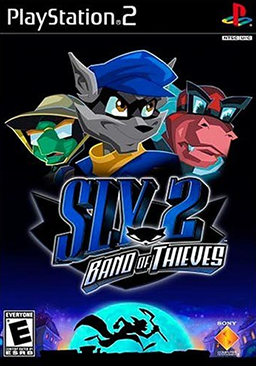
During its run, the PS2 (and basically Sony for that matter) may not have really had a definitive mascot like Mario with Nintendo or Master Chief from Halo for Xbox, but there were a lot of pretty good franchises released during the PS2 era, including series such as ‘Jak and Daxter’, ‘Ratchet and Clank’, and ‘Kingdom Hearts’. However, my personal favorite Sony franchise would have to be one that apparently wasn’t as successful as those franchises, but is still a really good series; the ‘Sly Cooper’ franchise, which was originally developed by Sucker Punch Productions before they moved on to the ‘Infamous’ franchise (Sanzaru Games took over after that, beginning with the PS3 re-mastered re-release of the original three games and then releasing the fourth main game in the series). Not only that, but there’s actually a full-length animated movie in the works slated for a 2016 release. But for now, we’ll be looking at the first three Sly Cooper games, all of which were released for the PlayStation 2; ‘Sly Cooper and the Thievius Raccoonus’, ‘Sly 2: Band of Thieves’, and ‘Sly 3: Honor Among Thieves’. I don’t own a PS3 at this time so this won’t include the most recent entry in the series, ‘Sly 4: Thieves in Time’ though I hope that one day I can finally play that one.


Taking place in a world fully inhabited by anthropomorphic creatures, the series focuses on the titular Sly Cooper, a raccoon whose family, the Cooper clan, is known for being world-famous master thieves. Each member of the family has passed down their techniques to each new generation through a book known as the ‘Thievius Raccoonus’. But before Sly is able to inherit the book, a gang of criminals known as the ‘Fiendish Five’ kill Sly’s father and steal the book. Sly ends up at an orphanage but while there, he meets his future partners in crime, tech genius Bentley the Turtle and muscle-man Murray the Hippo. Years later, they team up and travel the world, while also trying to avoid the law (primarily inspector Carmelita Fox, Sly’s nemesis/love interest), in order to stop the Fiendish Five so that Sly can take back his inheritance. In ‘Sly 2’ (don’t worry, I won’t spoil anything major from these games), Sly and the gang deal with another gang, the Klaww Gang, who have stolen some extremely valuable parts that could spell trouble if they’re put back together. Finally, in ‘Sly 3’, Sly, Bentley, and Murray round up a team of ‘specialists’ in order to help Sly get into the ‘Cooper Vault’, which contains his family’s entire fortune.


One of the things that I find really interesting about this series is that each game’s engine was built by improving on the engine from its predecessor. In short, each game got better as the series went on. Now while I’m basically saying that ‘Sly 2’ and ‘Sly 3’ were the best games in this trilogy, I’m not saying that the first ‘Sly Cooper’ game was bad; far from it in fact. It was a very enjoyable platforming game with solid controls and plenty of fun stealth elements thrown in. However, there are certain aspects about the game that were rather frustrating, with the most notable being that it operated on a ‘one-hit’ system. If Sly was hit just once, you’d lose a life and would have to start over either from the beginning of the level or a checkpoint (if you’ve reached one). You could find ‘lucky charms’ throughout the level (represented by horseshoes), which would give you extra hit points but at the most you could only get hit three times and that’s it. Some other problems included a bit too much repetition in certain areas and some missions that were… well, I won’t say ‘hard’ but they could get rather frustrating and in most cases that’s because of the whole one-hit problem that I mentioned earlier.

Thankfully, the two sequels removed the ‘one-hit’ system and instead gave the player a full life bar, which was definitely a welcome change. The hub worlds in both sequels were also much more expansive and offered a lot more chances for exploration whereas in the first game there wasn’t much to explore within the game’s hub worlds. But probably the best new change made with these games was that they offered much more variety in regards to the gameplay. You see, the first ‘Sly’ game had about only 3-4 mission types (not counting boss fights); stealth missions, driving missions, shooting missions, and one hacking mission. All of Sly’s stealth missions had the exact same objective; get to the end of the level and find a key that you use to unlock more of the hub world and ultimately to get to the boss and the other missions had you collecting keys as well. ‘Sly 2’ and ‘Sly 3’ offered much more variety in regards to the missions, referred to in these two games as ‘jobs’. Not only did you get more interesting missions to do, but you could also play as Bentley and Murray whereas in the first game you only got to play as them for brief moments in racing and hacking missions.

Overall, I think my personal favorite game of the three would have to be ‘Sly 3’, which might be because this was the first one of this series that I played even though I completed the other two games first. Also, I had to actually buy another copy of the game (along with another copy of ‘Sly 2’ for that matter) because both games had this odd problem where the game ‘froze’ but not in the usual case of a game freezing. The game still ran but the dialogue wasn’t progressing forward (It's kind of hard to explain, and unfortunately I can't provide a link to a video of this problem at the time I'm writing this). Anyway, back to ‘Sly 3’; the game had the best variety out of all of these three games in both the unique line-up of villains (no gang association this time) and the fact that in this game, Sly and the gang recruit a few new members into the game as well. Heck, they even team up with some of their enemies from previous games in the series. Of course, as it was common throughout the trilogy, each game featured some excellent writing/voice acting (though in the case of the latter, for some reason Carmelita was voiced by three different actresses in these games… and none of them even had the same accent), a full cast of memorable characters, and were just really fun to play.


So those were the first 3 Sly Cooper games, and out of all of the PS2 games that I’ve played over the years, these three games are definitely amongst my favorites. All 3 of the games had solid controls and fun stealth gameplay although I mostly prefer the second and third games due to the more frustrating elements of the first Sly Cooper. Again, I’m not saying that game was bad but it’s just that I wish that they had done something better than just having the whole game operate on a ‘one-hit’ health system, which really got annoying in certain areas. Thankfully, ‘Sly 2’ and ‘Sly 3’ got rid of that system. So now, it looks like this series is running again with ‘Sly 4’ for the PS3, which continued the series after the third one seemingly ended the story though had a bit of a cliffhanger at the end of the game. I’m interested in seeing where this series goes now and as for that movie coming out in two years, I’m hoping for the best. After all, video games and movies haven’t always worked well together but who knows? Maybe this could break that unlucky streak of video game movies… but only time will tell.

Ratings:

Sly 1: 4/5

Sly 2: 5/5!

Sly 3: 5/5!


Tuesday, May 6, 2014

The Amazing Spider-Man 2: SPOILER POST

WARNING: The following post contains Spoilers for ‘The Amazing Spider-Man 2’. If you haven’t seen the film yet, please refer to my Spoiler-Free review of the film as here, I’ll be discussing some of the key points of the film in detail. You have been warned!


Last year, the most polarizing film of the year was arguably ‘Man of Steel’, as both critics and audiences were divided in their reactions to it; some liked it, and some hated it. There really wasn’t any middle ground when it came to that movie. This year, I think it’s safe to say that ‘The Amazing Spider-Man 2’ is going to end up being the ‘Man of Steel’ of the year. The reviews from critics have been fairly mixed, and while audiences have been a bit more positive towards it, there are still quite a few people who aren’t the biggest fans of the film. I’m one of those people who did like it (in fact, I liked it a lot) but even then I’ll admit that while I do think it’s better than what a lot of critics are saying about it, I don’t think that it’s ‘perfect’, as I noted in my original review for the film and, as you might have guessed, this is a film that definitely demands a Spoiler Post as there are some things in the film worth talking about that I couldn’t really talk about that much in a non-spoiler review. This time however, instead of focusing on one major thing, like I did in my Spoiler Posts for ‘Iron Man 3’ and ‘Star Trek Into Darkness’, I’m mostly going to just expand on various things that I said in my original review.


As I did in the review, I’m starting off this post by talking about the whole ‘overcrowded’ situation that has been getting the most attention with critics and audiences because, when you get down to it, ‘The Amazing Spider-Man 2’ isn’t really as crowded as some are saying, at least when it comes to characters. The film’s story is pretty self-contained and does focus on the right characters, most importantly the relationship between Peter Parker and Gwen Stacy. As for the whole thing about this film having three villains, at the end of the day only one is the main villain; Electro. The Green Goblin AKA Harry Osborn does not show up until the final battle but does survive the fight between him and Spider-Man. Rhino (Paul Giamatti) is only in the film for a few minutes; at the beginning when’s he stealing the Oscorp truck of plutonium and at the end after he’s given a new mech suit courtesy of Oscorp. This isn’t a case like ‘Spider-Man 3’, a film that also had three villains but yet really didn’t have a definable ‘main villain’. Here, it’s handled fairly better so overall, this film isn’t as ‘overcrowded’ in characters as the marketing may suggest.

However, I will say that there were two characters that I felt were rather unnecessarily included in the film just because they played major roles in the comics. The first is Felicia Hardy (Felicity Jones) AKA Black Cat in the comics, who in this film is Harry’s assistant at Oscorp, and it has been reported that she will probably become Black Cat in a future film. The second is Alistair Smythe (B.J. Novak), who in the comics created the robots known as the ‘Spider-Slayers’. If I hadn’t known who these characters were before watching this film, I’d swear that I would never have known why they were so important to be included in the film because they are both only in the film for a few scenes. Felicia, as mentioned earlier, is in a few scenes with Harry and ultimately doesn’t do much while Smythe has a few scenes in the beginning of the film with Max Dillon and also has nothing to do. This is nothing against Jones and Novak, and I’m fine with them playing a bigger role in future films, but either the filmmakers should have waited and put them in the next film or give them more to do in this one because like I said, the film isn’t really as crowded as you think, so they could’ve been given more to do.


But then again, maybe the cast of characters isn’t the thing that is making a lot of people say that this film is ‘overcrowded’. It might be more in the case of how many ‘plotlines’ are going on within the film itself, resulting in kind of a messy narrative. Of course, we have Peter dealing with both his relationship with Gwen and also this new batch of villains, but then we also have Harry trying to deal with trying to cure the disease that he has which he got from his father Norman and of course, Oscorp’s dark secrets, especially in regards to what happened with Peter’s parents, amongst other things. Still, despite all of this, I didn’t really feel that the movie’s plot was too bloated. I mean, maybe I just didn’t notice it and on that note, I am aware that some elements of certain plotlines were cut out (more on that in a second) but as a whole, like I said earlier, the film stayed pretty ‘self-contained’ and didn’t really try to do too much as far as ‘expanding the universe’ was concerned… but then again that leads to my one major complaint about the final film; the whole idea of ‘expanding the universe’, the plan that Sony is looking to do with the next two films as well as the two spin-offs that they have announced, was sort of an afterthought when watching the film. 

The whole idea of a bigger universe (a ‘Cinematic Universe’ if you will) doesn’t really become relevant until the end of the film, when the Man in the Shadows from the first film (played again by Michael Massee), whose identity is revealed to be a man named Gustav Fiers AKA ‘The Gentleman (it was originally reported that he was the character ‘Mr. Fear’ but this was ultimately proven false), visits Harry to discuss some of Oscorp’s ‘special projects’; the first major lead-in to the ‘Sinister Six’. They break Aleksei Sytsevich (‘Rhino’) out of prison and give him a new suit of armor… but really, that’s all there is to it in terms of set-up for the ‘Sinister Six’. Now, I don’t really know how much material there actually was in terms of ‘Sinister Six’ set-up that they shot, but I have the feeling that there was a lot more to it originally than what we saw in the final film and that stuff ended up on the cutting room floor, similar to how the plotline of Peter’s parents wasn’t looked into that much in the first film but yet it is shown that there was more to that in the film’s deleted scenes. This is the second ‘Spider-Man’ film in a row where that sort of situation has happened and I know that in my review, I sort of implied that was partly because both films had the same editor but really, it’s obviously more because of ‘studio interference’ from Sony.


Now, for the record, it’s not like this hasn’t happened before. There have certainly been a few cases where even the Marvel Cinematic Universe has had some films that must have been altered in editing (‘Thor: The Dark World’ and ‘The Incredible Hulk’ are two that come to mind) to fit with the plan that they have in mind for their ‘Cinematic Universe’ and it seems like Sony’s doing a similar thing with this film but here, it really doesn’t work in their favor. Now, I want to point out that I am really excited for the two spin-offs, ‘Venom’ and ‘Sinister Six’, and I’m excited what the filmmakers can do with these characters. But as is, Sony really needed to do more in order to expand the universe further. It’s not like DC’s current plan for a Cinematic Universe where they’re ‘rushing’ some things, but it’s not like Marvel either, who took their time to develop their Universe. I’m not going to go as far and say that Sony is ‘ruining’ the franchise (a franchise which, as we know, they did hastily reboot just so that they can retain the rights to Spider-Man) but at this rate, Sony should be a little more careful in developing a Cinematic Universe.

So who will be in this universe’s Sinister Six? Now originally I was going to do a list of the six that I would have speculated to be possible members for the group, but Sony has already hinted at who could be the Six of their film universe via screenshots from the end credits. From these six images (shown below), there seem to be four definites; Green Goblin (that one was obvious considering the connection to Oscorp), Doc Ock and Vulture (as evidenced by the shots of Ock’s tentacles and Vulture’s wings located in Oscorp), and Rhino (Paul Giamatti has confirmed that Rhino will return for the next film). The last two images are currently up for debate, though are speculated to be hinting towards Kraven the Hunter and Chameleon. The latter, to me, seems like a bit more plausible scenario seeing how Chameleon’s look in the comics matches the image of the face with no eyes quite a lot. The one that sort of resembles a mask (the one that is supposedly hinting at Kraven) is the only one that I can’t really get a beat on but who knows? And on that note, the final lineup for the group hasn’t actually been confirmed yet so this is all just speculation at this point. But I’m pretty sure we’ll soon find out who will make up the Sinister Six of this film franchise.


Now there’s another thing that I’ve noticed amongst some reviews and that is that some are comparing this film to the Joel Schumacher-directed ‘Batman’ films, mainly in terms of the dialogue and tonal shifts. There are a few bits of goofy dialogue in this film, including a moment when Electro says ‘It’s my birthday… time to light my candles!’ before fighting Spider-Man. This comes after a scene where Electro (before his accident) is obsessing over Spider-Man and pretending that they’re best friends, which I do realize is sort of similar to Jim Carrey’s take on the Riddler in ‘Batman Forever’. Despite all of that, I just don’t get the connection to the Schumacher films. Yes, there are a few scenes that are a bit too goofy and the dialogue in those scenes certainly doesn’t help to hide that fact, but I wouldn’t say it’s goofy to the point where it becomes ‘campy’. As for the whole tonal shifts, I didn’t really catch it that much and I did actually like that this film was more lighthearted than its immediate predecessor. And besides, nothing will ever be as campy and over-the-top as Schumacher’s ‘Batman’ films and I don’t think that this film ever goes ‘that far’. Plus, there really is some excellent humor in this film thanks to Spider-Man and his trademark wisecracking personality. I’ve said before that Andrew Garfield really got that down well in the first film, but here it’s perfected and that is why I’d say that he’s now the definitive Peter Parker/Spider-Man of film alongside Emma Stone, the definitive Gwen Stacy of the film franchise.

Speaking of Gwen, now it’s time to talk about probably the biggest moment in the film, Gwen Stacy’s death… and I’m guessing that most of you already knew that was going to happen because of the marketing. Certain trailers showed the scene where Gwen is falling in the clock tower where Spider-Man and Green Goblin are fighting and Stone was also shown in both trailers and set photos to be wearing the same outfit that the character wore when she died in the comics. It also didn’t help that the internet pretty much spoiled that part when the film was first released in the U.K. But, as is, this scene is handled really, really well. It’s not exactly like it was in the comics where it happened at the Brooklyn Bridge (or the George Washington Bridge if we’re going by the text) but then again, that location was used in a scene similar to Gwen’s death from the comics in the first Raimi film (albeit with different results). Still, despite the change in location and the fact that the Goblin actually isn’t really the cause of her death, it’s still very effective and does manage to stay fairly close to the original scene: Gwen falls, Peter catches her with his web, but the impact of her being caught basically results in her death, more specifically in this case she hits her head when she reaches the ground after a very long fall.


I’ve noted before that the key reason why I liked the first reboot film so much was that I really found myself emotionally invested in the characters and Andrew Garfield and Emma Stone have such great chemistry in these roles… and that, to me, is the main reason why Gwen’s death is so emotionally effective in this movie. You remember that scene right before the final when Peter writes ‘I Love You’ with webs on the Brooklyn Bridge for her and then they reunite? That’s a great romantic scene and a prime highlight of Garfield and Stone’s chemistry… and it just killed me because I did know what was going to happen because I stumbled across the details on the internet. But even though I knew going in what was going to happen to Gwen, that scene still put me to tears. Part of me is so damn sad that it happened… and the other part of me is actually glad that they did finally put this iconic/infamous moment on film and that they did do it justice. That scene from the comics was one that I really wanted to see done in a ‘Spider-Man’ film, even if it means that the great relationship between Garfield’s Peter and Stone’s Gwen won’t be continuing in future films.


So those are my thoughts on ‘The Amazing Spider-Man 2’. For the record, I’m not saying that I think this is a perfect movie… it does have its flaws. The biggest flaw for me really is that for a movie that is trying to lead into something bigger, it’s still a fairly self-contained film. I am very excited to see what they would do with a ‘Sinister Six’ and a ‘Venom’ film, but Sony you really have to do a better job at establishing your own Cinematic Universe. Not only that, stop interfering so much in the editing process because both ‘Amazing Spider-Man’ films have proven that key parts of their stories have been cut out of the final product. But, through all of this, ‘The Amazing Spider-Man 2’ is just a fun superhero film and a very entertaining summer blockbuster that is pure movie escapism. It has great action, some fantastic visuals, an excellent cast (with an outstanding pair of excellent leads), and of course, it knows how to have fun… and I wouldn’t have it any other way.