Showing posts with label Sigourney Weaver. Show all posts

Tuesday, May 16, 2017

Alien Series Retrospective (1979-2012)

Image result for alien series logo

In 1979, a sci-fi horror film was released to theaters, with one of the most iconic taglines in film history; ‘In Space, no one can hear you scream’. This tagline was for director Ridley Scott’s classic, Alien, a film that has gone on to become one of the most iconic films of the sci-fi genre while also spawning a highly successful media franchise in the years since. And this weekend, Scott returns to the franchise that he helped create with Alien: Covenant, a follow-up to the franchise’s 2012 ‘prequel’ Prometheus, which he also directed. By the looks of it, this new film is returning to the series’ original roots as an intense sci-fi horror flick. And in honor of its release, today we’ll be looking at the films in the Alien franchise when it was at its highest of highs… and its lowest of lows. Specifically, we’ll be looking at its four initial installments, which starred Sigourney Weaver in the role of Lt. Ellen Ripley, and Prometheus. I won’t be covering the two Alien vs. Predator crossover films that came out in 2004 and 2007, respectively, for multiple reasons. First off, if I did decide to cover these films, I’d have to look at the Predator films as well, and I’m saving that for the upcoming Predator film, directed by Shane Black, which isn’t set to come out until next summer. Also, I’m aware that both AvP films have attracted a generally negative reaction from both critics and audiences. So… I didn’t want to bother with them anyway. Though with that said, I guess that I will have to cover those eventually when I do that Predator post next year. Well, until then, grab your big guns and avoid those alien eggs because here is my look back at the films of the Alien franchise.

ALIEN (1979)
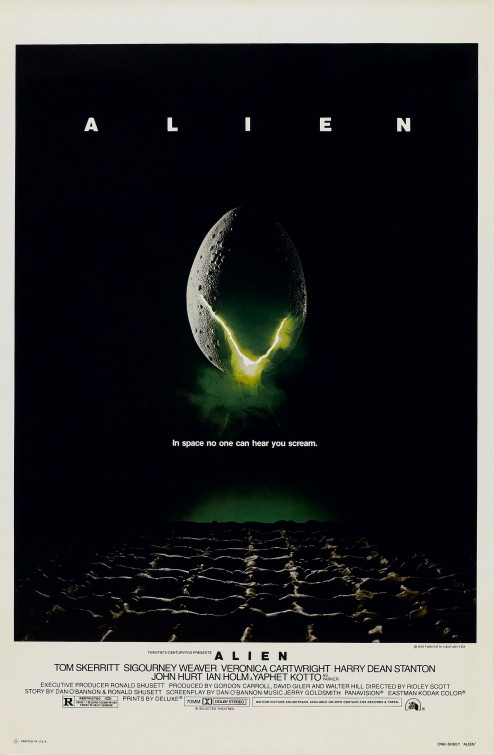
Image result for alien 1979 poster

We start things off, of course, with the original Alien from 1979; Ridley Scott’s classic tale of a spaceship crew who are awoken from stasis to investigate a mysterious transmission from an uncharted planet. This investigation, however, soon results in the crew being hunted by a terrifying alien creature that’s literally ‘birthed’ from one of their own crewmates. While initially polarizing amongst critics upon release, it has since gone on to become one of the most iconic films of the sci-fi genre, and rightfully so as it’s an excellently-made space-set chiller. A lot of this is due to Scott’s direction. His use of long, slow-moving, and uninterrupted takes helps add to the overall suspense, along with the general nature of the film’s setting. The film is primarily set within the dark and cramped confines of the crew’s ship, the Nostromo, and it results in an effectively intense and unsettling atmosphere because of the claustrophobic feeling throughout. Even moments that don’t involve the Alien, like when crew member Ash (Ian Holm) is revealed to be an android, have a great and suspenseful vibe to them. In fact, the Alien doesn’t even appear until just under an hour in. Like I said before, this is a slow-moving film but there’s never a dull moment in this. Thus, it’s easy to see why Alien is still regarded as one of the best films in both the science-fiction and horror genres. While I’m not that big a fan of the latter genre, this film does succeed in being a part of it thanks to Ridley Scott’s excellent direction and a solid cast that includes the likes of Sigourney Weaver, Tom Skerritt, Ian Holm, and John Hurt. Heck, this wouldn’t be the last time that a sci-fi film directed by Scott would overcome initial critical reception to become a seminal classic of the genre… but more on that when Blade Runner 2049 comes out.

Rating: 5/5!

ALIENS (1986)
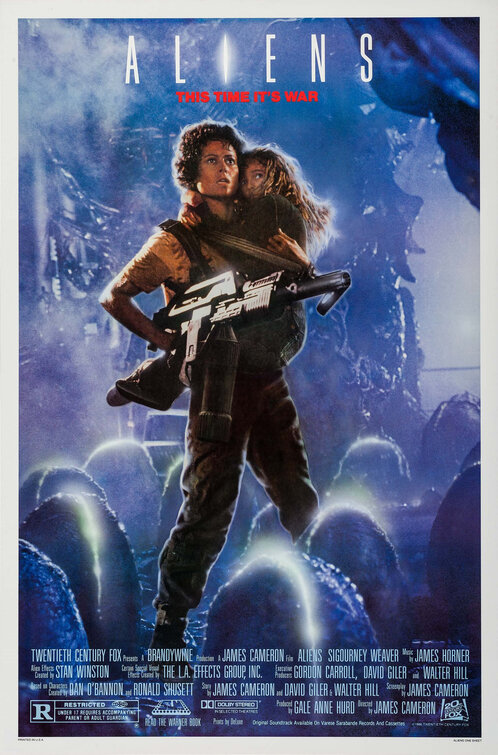
Image result for aliens 1986 poster

After making a name for himself in 1984 with The Terminator, James Cameron was brought on to write and direct the follow-up to Alien, titled Aliens. However, Cameron faced some scrutiny during production from the primarily British crew, who felt that he was inexperienced for a project of this magnitude. However, upon release, Aliens would go on to become just as beloved as the original Alien. This, of course, leads to the primary debate of the franchise; Alien or Aliens? Me personally, I lean slightly more towards the latter. I’ll admit that this may be because I’m not a big horror fan but this shouldn’t take anything away from Ridley Scott’s masterpiece. As for Aliens, though, while Cameron does lean more towards the action genre in this sci-fi story, it doesn’t mean that he completely shies away from the franchise’s horror roots. There are still some incredibly tense and creepy moments throughout this film along with the same great dark and claustrophobic set designs that the first film had. Ultimately, though, this film is more action-oriented than the first and it delivers on that aspect brilliantly. Plus, this film has arguably the best ensemble cast in the history of the franchise. Of course, it’s all led by Sigourney Weaver as Ripley, who went from being the secondary protagonist of the original film to one of cinema’s most badass action heroines in this film. Heck, she was so good in this film that she got nominated for an Oscar for Best Actress, a rarity for the genre. But the rest of the cast is excellent as well, including Carrie Henn as the scared young girl Newt, who Ripley becomes a surrogate mother to, and Lance Henriksen as this film’s android, Bishop. Even minor characters like Hudson (the late Bill Paxton (RIP); “Game over, man, game over!”) and Vazquez (Jenette Goldstein) are extremely memorable. In short, Aliens is just as much of a masterpiece as its immediate predecessor, but if you forced me to choose one over the other, I’d go with Cameron’s sci-fi action epic.

Rating: 5/5!

ALIEN 3 (1992)
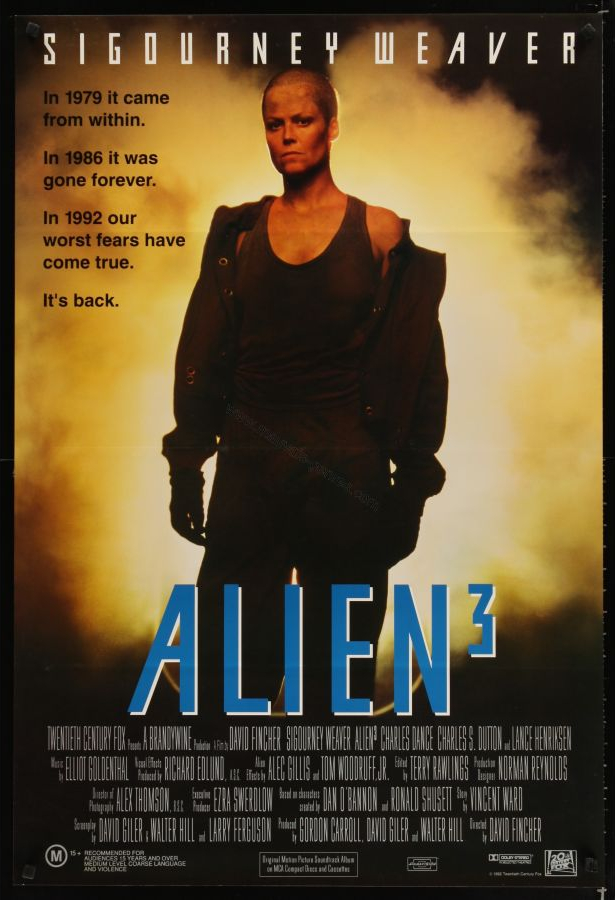
Image result for alien 3 poster

I’ve talked about this film before in my Directorial Retrospective on its director, David Fincher, way back in 2014 so I won’t repeat myself too much here. Bottom line; Alien 3 was, unfortunately, a disappointing follow-up to the first two Alien films, namely because it went through one of the most tumultuous productions of all time. Several writers and directors were brought in to try and figure out its overall plot, from William Gibson’s HIV-influenced storyline to Vincent Ward’s concept of a ‘wooden’ planet that held a monastery. Ultimately, David Fincher was brought in to direct; sadly, his directorial debut put him through hell. He was given little time to prepare and didn’t have a full script when filming began. To make matters worse, the studio blocked many of his ideas during the shoot; thus, it’s easy to see why Fincher has since disowned the film. I don’t blame him; the primary flaws of the film aren’t his fault. Alien 3 makes the questionable decision of going down a dark and gloomy route that goes against the optimistic ending of the previous film. Case in point, the opening scene sees most of the surviving cast of the previous film killed off, with Ripley being forced into an all-male prison. Of course, Fincher is well-known nowadays for his dreary thrillers but here, it just doesn’t translate as well. The supporting characters are all bland, partially because they’re predominantly a collection of similar-looking bald white men. Not to mention, these are all murderers, rapists, etc.; they’re not exactly a sympathetic bunch. Thankfully, Sigourney Weaver is still great as always as Ripley and the film’s ending is a highlight, as Ripley sacrifices herself when she learns that an Alien has manifested within her to keep the Weyland Corporation, the primary ‘evil corporation’ of the franchise, from using it for nefarious purposes. Had it not been for the next installment of the series, this would’ve at least ended the franchise on a decent note despite the film that it came from.

But now, let’s talk about the film’s alternate cut. Each of the first four Alien films has gotten a ‘Special Edition’ released over the years. But while the first two films didn’t add ‘that’ much to their Special Editions (though James Cameron and Sigourney Weaver have expressed preference towards the ‘Special Edition’ of Aliens for having more depth to it), the ‘Assembly Cut’ of Alien 3 adds in 30-plus minutes of material to try and improve upon the original theatrical cut. And for the most part, it does manage to do that. Some additions are welcome aesthetic changes, like having Ripley end up on the prison planet’s beach instead of being found in the crashed ship (which fixes a few plot-holes from the theatrical cut) and having the Alien emerge from an ox instead of a dog. But then there are some additions that improve the narrative, like a greater focus on the inmates’ religious beliefs and how Ripley’s arrival puts that into chaos, allowing for some additional character development for some of the main inmates. Crazed inmate Golic (Paul McGann), particularly, is focused on more in this version of the film as we see him become fascinated with the alien, so much so that he begins to compromise the protagonists’ efforts to destroy it. However, despite the improvements that it makes over the clearly truncated Theatrical Cut, I still can’t go as far as to say that it completely saves the film. Parts of it are still a chore to sit through, especially considering that the extended cut is almost two-and-a-half hours long. In conclusion, if you’re going to watch Alien 3, stick to the ‘Assembly Cut’ as it’s more in line with what Fincher was going for. Still, it isn’t enough to save the film, which will easily go down as one of the most hellish productions in film history, from being a mediocre conclusion to the Alien trilogy, a designation which lasted five years until…

Ratings: Theatrical Cut: 1.5/5 Assembly Cut: 2.5/5

ALIEN: RESURRECTION (1997)

Related image

While Alien 3 ended with the death of Ellen Ripley, the studio ended up reviving the franchise half a decade later with Alien: Resurrection. To bring back Sigourney Weaver, the plot involves scientists cloning Ripley, who gains ‘alien’ abilities due to her DNA being mixed with the Alien queen that was first introduced in Aliens. Like its predecessor, this film was primarily developed by a soon-to-be-famous filmmaker; in this case, the film’s writer, Joss Whedon, before he became known for his hit TV shows like Buffy the Vampire Slayer and way before The Avengers. And like with Fincher and Alien 3, the flaws of Resurrection are not primarily his fault. What we have here is a film that suffers from major tonal inconsistency. Whedon intended for the film to have a tongue-in-cheek feel to it; however, the film’s director, Jean-Pierre Jeunet (Amelie), decided to play everything straight-faced. Thus, the film maintains a ‘serious’ tone throughout despite various moments that are extremely over-the-top, especially those that involve Brad Dourif as one of the scientists in charge of the whole process. This over-the-top nature also extends to the cast. Sigourney Weaver is still just as great as she’s always been as Ripley but the rest of the cast is hit-and-miss because many are just hamming it up. And while the supporting characters are more memorable than the ones from Alien 3, they’re still a generally expendable group. Overall, Alien: Resurrection is more ‘enjoyable’ than Alien 3, partially because it doesn’t carry the same grim tone. However, the film’s tone is all over the place, resulting in unintentionally hilarious moments that were trying to be serious. Thus, what was intended to be a better conclusion to the series than its predecessor just made the whole situation worse.

Rating: 2/5

PROMETHEUS (2012)

Image result for prometheus poster

And finally, we conclude with the film that has become one of the most polarizing films in recent years; the pseudo-prequel to the Alien franchise, Prometheus. Ridley Scott returned to direct this film which, for the record, is not technically a prequel to the original Alien. It takes place in the same general universe as the other films but it is, ultimately, its own thing (e.g. this film does not take place on the same planet visited in the original Alien, despite the clear similarities). And to the film’s credit, it does a solid job of being its own separate story in this larger universe. Its overall plot, which delves into the mystery of humanity’s origins, is a fascinating one and I wouldn’t say that there’s a dull moment in the entire film. The production design is fantastic, particularly due to Scott emphasizing the use of as many practical effects as possible. And the film’s ensemble cast is solid as well, particularly Noomi Rapace as main protagonist Dr. Elizabeth Shaw, a much different kind of character compared to Ripley, Michael Fassbender as the enigmatic android David, and Idris Elba as the ship’s charismatic captain, Janek. But while the film is well-made on a technical level, its writing has been the main source of its polarizing response. Many have criticized the film for bringing up tons of questions that went unanswered. My thoughts on the matter? Well, I do agree that there are some plotlines that were only given vague explanations, like why the crew comes across a gigantic statue of a head during their mission. I think it’s safe to say that the ambition of the filmmakers might’ve surpassed what they could do in just one film. However, from the looks of it, Alien: Covenant will at least answer some of the unexplained mysteries that this film explored. And overall, I wasn’t too bothered by some of the more mysterious elements of the plot; I’d argue it makes the whole film more interesting. Thus, you can say that, overall, I’m still in the camp that likes this film. Admittedly, it may partially have to do with the fact that I have a personal connection to this film because it’s the first R-rated film I ever saw in theaters, but I do think that it’s still worth checking out if admittedly more for its technical aspects than the writing.

Rating: Way back in 2012, my first year on this blog, I had reviewed this film and gave it a 4.5/5 rating. Upon re-watch, I decided to lower that initial rating down to a 4/5 rating, which is still a strong rating on my scale.


"Final report of the commercial starship Nostromo, third officer reporting. The other members of the crew — Kane, Lambert, Parker, Brett, Ash and Captain Dallas — are dead. Cargo and ship destroyed. I should reach the frontier in about six weeks. With a little luck, the network will pick me up. This is Ripley, last survivor of the Nostromo, signing off."

Sunday, March 8, 2015

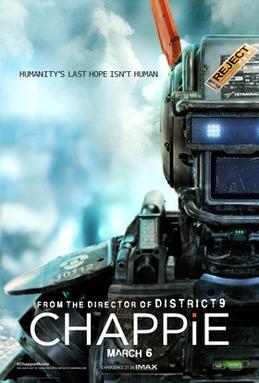
Chappie (2015) review


South African director Neill Blomkamp made quite a first impression with his feature-length directorial debut, 2009’s ‘District 9’. What was at first just a $30 million sci-fi film with a relatively unknown cast ended up becoming the ‘sleeper hit’ of that year, grossing over $200 million worldwide and earning four Oscar nominations, including one for Best Picture. This effectively made Blomkamp, who had previously been chosen by Peter Jackson to direct a ‘Halo’ film that sadly never came to fruition, one of the hottest new directors at the time. However his immediate follow-up, 2013’s ‘Elysium’, ended up being a bit of a disappointment for most point, to the point where even Blomkamp himself has recently admitted that he sort of ‘f****d it up’. Now he’s back with his third film, ‘Chappie’ which, like ‘District 9’, is inspired by one of Blomkamp’s previous short films, in this case 2003’s ‘Tetra Vaal’. But considering the current consensus towards this film (30% on Rotten Tomatoes at the time I’m writing this), it’s looking like some people are now going to wonder if Blomkamp was just a ‘one-hit wonder’ director. Well, after seeing the film I actually have to disagree with that notion. As someone who hasn’t yet seen ‘District 9’, I was mildly entertained by ‘Elysium’ despite the fact that there wasn’t much about it that really stood out. ‘Chappie’, on the other hand, is actually quite entertaining. It may have some flaws in regards to the story but surprisingly it was actually a really engaging sci-fi film. If anything, I think it’s better than ‘Elysium’.

In the year 2016, the government of South Africa deploys a series of semi-A.I. programmed attack robots to use as a police force in order to deal with the city of Johannesburg’s overly high crime rate. While the robots do prove to be a success, their creator Deon Wilson (Dev Patel), an employee at the weapons manufacturing company that builds them, creates a new A.I. program that is able to think and feel. Despite resistance from both his boss Michelle Bradley (Sigourney Weaver) and rival engineer Vincent Moore (Hugh Jackman), the latter of whom has developed a different robot design controlled by humans instead of A.I., Deon steals one of the police robots so that he could test out his new software. However, he is then almost immediately kidnapped by a group of gangsters, Ninja and Yolandi (played by Watkin Tudor Jones (‘Ninja’) and Yolandi Visser from Die Antwoord), who want to use the robot to assist them in a heist so that they can pay off a debt to another gangster. Deon ends up installing his new program for them, resulting in a new A.I. system for the robot (portrayed through motion-capture by Sharlto Copley), who Yolandi names ‘Chappie’. As time goes on, Chappie does begin to develop human intelligence and emotions, all the while Ninja tries to toughen him up so that he can help them on their planned heist. But soon they all have to deal with the consequences that occur as a result of Deon’s actions against his company.

It’s clear that Blomkamp is a director that really does bring some unique concepts to his sci-fi films. In the case of ‘Chappie’, it’s all based around the idea of smart A.I. and the possibilities, good and bad, which can come from it. While it’s not really a social commentary like either ‘District 9’ or ‘Elysium’ were, it still offers an interesting take on this whole concept. Now with that said, the writing can be a bit of a mess at times, sometimes favoring action over story and character development. I mean at the end of the day, Chappie is really the only major character in this who gets any major development; everyone else is either flat or under-developed. However, I was actually surprised to find that I was really invested in the film. Both the visuals and the action sequences are pretty good and the film is backed by a really solid score from Hans Zimmer. Story-wise, despite the occasional shortcoming in regards to the writing, I still found the film to be very engaging, mainly because of the character of Chappie. I thought it was a pretty cool idea to have a more adult version of ‘Short Circuit’ but one where the main robot character actually learns about the world from bad influences while still maintaining a pretty likable persona that stems from his child-like innocence.

Clearly taking some inspiration from Andy Serkis, Sharlto Copley’s motion-capture work here as Chappie is quite phenomenal. Not only that, but he does a fantastic job in capturing Chappie’s initial innocence and naivety and then subsequent evolution into a ‘gangsta’. A key scene early on where Chappie gets into a troubling situation in a bad neighborhood actually resulted in me feeling legitimately sorry for him. As for the rest of the cast, while they don’t get as much to work with as Copley, a lot of them still do fine enough work here. Dev Patel is good in the role of Chappie’s ‘maker’ as is Hugh Jackman, as usual, even though his role as the film’s ‘villain’ is rather underdeveloped. As for Sigourney Weaver, she also does a good job though she really needs to find roles that don’t have her only appearing in a few scenes that results in her character contributing little to the actual plot, just like what happened last year with her role in ‘Exodus: Gods and Kings’. Oh yeah, and Die Antwoord is also in this as well. Now I had never really known anything about them before seeing this movie and with that said, it is rather weird to be watching these two appear in this movie, in which they basically play themselves. Quite frankly it’s the strangest ‘cross-promotion’ I’ve ever seen. I won’t really say that their work in this is ‘good’, heck early on Ninja comes off as being a major a-hole (and I’ve heard that apparently he was a pain in the ass for Blomkamp to work with on set), but they do serviceable enough jobs here. Still, I think it would’ve been better to get other actors to play these roles.

I was legitimately surprised by how much I actually did like ‘Chappie’, especially given the fact that I’ve never seen ‘District 9’, admittedly wasn’t the biggest fan of ‘Elysium’, and went into this not knowing what to expect given the mediocre reviews it has been getting. But in the end, if anything, it seriously isn’t as bad as some people are putting it out to be. It’s clear that Blomkamp is a great visual director who does bring unique ideas to the films that he makes. Both of these qualities are definitely on display here. His only problem at the moment, though, is that he really does need to work on his writing because ‘Chappie’ does fall flat at times, mainly due to some lackluster character development for any character that is not named Chappie. But at the same time, Chappie is a fairly compelling main character and Sharlto Copley’s mo-cap performance here is superb. In short, the film was actually pretty dang entertaining and I did like it more than ‘Elysium’. I don’t believe that Blomkamp is a ‘one-hit wonder’ as I’m sure a lot of people will begin to think following this film (again, haven’t seen ‘District 9’). I’m excited to see what he brings to that ‘Alien’ film he’s working on next, which he got as a result of sharing some of the concept art he made for it. Heck, maybe now Sigourney Weaver can actually get a role where she’s not only in the film for a few scenes. Though as evident from his last two films, I think it’s safe to say that he should bring in another writer who can help him strengthen up his writing.


Rating: 4/5

Monday, December 15, 2014

Exodus: Gods and Kings (2014) review


Easily one of the most famous sections of the Hebrew Bible is the Book of Exodus, the story of how the Israelites, who were slaves of Egypt, escaped captivity and left for what they called ‘The Promised Land’, the land of Canaan, led by their leader Moses. Moses himself had originally been born Hebrew but when the King of Egypt demanded that all newborn male Hebrew babies were to be killed, Moses’ mother saved him from that fate by setting him adrift on the Nile, where he was ultimately picked up by the Pharaoh’s daughter who adopted him into the Royal Family. There have been multiple adaptations of Exodus, including not one but two films of the same name; ‘The Ten Commandments’, both of which were directed by Cecil B. DeMille. He first directed a silent version of the story in 1923 and then ‘partially remade’ it in 1956, this one starring Charlton Heston in the role of Moses and is commonly regarded as one of the greatest film epics of all time. There’s also the 1998 animated, and in some cases fairly underrated, adaptation titled ‘The Prince of Egypt’, which was made by DreamWorks. This year, director Ridley Scott takes on the story with ‘Exodus: Gods and Kings’, a film that has received quite a bit of controversy these past few months in regards to its casting. As for the film itself, it’s a pretty decent take on this iconic story, even though there are certain things it could’ve done better.

The film begins as Moses (Christian Bale) is already a part of the Royal Family, serving as a general in the Egyptian Army working alongside his ‘brother’, Prince Ramesses (Joel Edgerton). One day, Moses travels to the city of Pithom to see into the current situation with Egypt’s slaves and while there, one of the slaves, Nun (Ben Kingsley), tells him about his true lineage as a Hebrew man who was raised by Pharaoh Seti’s (John Turturro) daughter after he was saved from being executed as a result of Seti ordering that all Hebrew newborn males were to be killed. Moses eventually reveals his true identity to Ramesses, who becomes Pharaoh after Seti’s death, and is exiled because of it. He soon begins a new life as a shepherd living in the town of Midian with his wife Zipporah (Maria Valverde) but one day, after getting caught in a rockslide, he comes across the famous ‘burning bush’ and is told by God, represented in this film by a young boy named Malak, to return to Egypt to demand that the Hebrews be set free. Moses does end up returning to Egypt, but Ramesses refuses to free the Hebrews. As a result, God inflicts the ‘Ten Plagues’ upon Egypt in order to try and change Ramesses’ mind, even if Moses isn’t exactly on board with some of the things God does to the people of Egypt.  

This film’s greatest strength is easily its visuals, which do a phenomenal job of recreating key moments in the story of Exodus, from the ten plagues of Egypt (e.g. the water in the River Nile turning into blood, the swarms of frogs and locusts, etc.) to the parting of the Red Sea, even if the sequence itself is admittedly a little lackluster. Still, this is easily one of the biggest takes on the story of Exodus on film to date in regards to its overall scale and scope, perhaps even more so than the Heston version. However, the film does lack a bit in terms of character development, namely in regards to the relationship between Moses and Ramesses. I don’t want to compare this film too much with other adaptations of Exodus, but one of the biggest strengths of ‘Prince of Egypt’ was that it really did a good job in conveying the relationship of these two men in that, despite the fact that they ended up being enemies, they were still brothers (not actual brothers, but you get the idea). This film states that these two had grown up as ‘brothers’ but in the film itself, they don’t spend that much time together before they become enemies. While I’m not saying that this film should’ve 100% copied what ‘Prince of Egypt’ did in terms of the ‘Moses-Ramesses’ relationship, it could’ve really benefitted from more scenes between the two.

As noted earlier, there was quite a bit of controversy surrounding this film, not over the film’s take on the story of Exodus like the controversy surrounding the other major biblical film of the year, ‘Noah’, but in regards to its casting. Namely, the thing that made a lot of people angry about this film is that while the supporting cast of the film was probably cast in terms of race, four of the main roles (Moses, Ramesses, Queen Tuya, and Joshua) were all played by white actors (Christian Bale, Joel Edgerton, Sigourney Weaver, and Aaron Paul, respectively). Because I never like to talk about the subject of race in film, I won’t go into too much detail about it but I do want to point out some recent comments made by Scott in regards to this whole debacle. He said that the main reason as to why this film was cast the way it was is due to the fact that if he had cast a lesser-name actor of proper race in the lead role of Moses, then he would’ve been unable to get a movie of this scale (on a budget of $140 million, for the record) financed. So ultimately, regardless of what your stance is on this whole ordeal, Scott’s words are pretty true, showcasing a prime example of the recent controversy surrounding the idea of ‘whitewashing’ in Hollywood. Though like I said earlier, I won’t go any further into this matter.

But I will say that from a performance-perspective, the acting in this movie is pretty good, even with the whole ‘race’ controversy in mind. The two biggest standouts are easily Christian Bale and Joel Edgerton in the lead roles. Bale provides a pretty interesting take on Moses, who he referred to as ‘schizophrenic’ (another controversial statement that I won’t be going much into). This is definitely shown in scenes where Moses is talking to God where, from the perspective on an onlooker, it looks like he’s talking to himself. At the same time, Bale also does a great job at conveying both Moses’ leader-ship qualities and his humanity, the latter of which is highly emphasized in scenes where Moses disagrees with some of God’s decisions. Edgerton, as Ramesses, is a bit over-the-top at times but other times he also gives a very subdued and emotionally powerful performance, like in a key scene near the end where Ramesses experiences a personal tragedy. As I noted earlier, while the film could’ve benefitted from having more scenes between the two before they became enemies, Bale and Edgerton do work off each other really well. The rest of the cast is solid too, but some don’t get as much to do as Bale and Edgerton. Despite being one of the main characters in the film, Aaron Paul has arguably only a few lines in the entire movie. The same can be said for Sigourney Weaver, who has a very limited amount of screen-time.

This might end up being a case similar to Scott’s film ‘Kingdom of Heaven’, which was mainly panned when it was initially released in theaters but then got more recognition when the film’s ‘Director’s Cut’ was released. Scott has stated that there is a ‘four-hour’ cut of the film so I won’t be surprised if that version ends up getting released sometime in the near future. As is, ‘Exodus: Gods and Kings’ isn’t a bad movie. It did hold my interest from beginning to end and the film certainly delivers in terms of its visuals and its overall scale and scope. However, the film can sort of be argued as being a case of ‘style over substance’ as it is lacking a bit in terms of character development. I wouldn’t say that the film is completely devoid of ‘substance’ but it really could’ve been better had certain things been done, like spending more time developing the relationship between Moses and Ramesses and giving some characters more to do. Still, the film definitely benefits from two strong performances from Christian Bale and Joel Edgerton so as is, it’s a decent take on the story of Exodus. I can’t say it’s the absolute best adaptation of the story but I am interested in seeing the ‘Director’s Cut’ of the film to see if it will fix any of the problems with the theatrical cut.


Rating: 3/5

Tuesday, September 16, 2014

Ghostbusters (1984, 1989): 30th Anniversary Retrospective


There have been quite a few film franchises that have become iconic parts of pop culture history like ‘Star Wars’, ‘Batman’, and ‘Harry Potter’. And easily one of the most famous franchises of all time has to be ‘Ghostbusters’, which got its start in 1984 with the film of the same name. Directed by Ivan Reitman and written by Harold Ramis and Dan Aykroyd, who both starred in the film along with Bill Murray, Sigourney Weaver, and Ernie Hudson, the film, centered on a trio of parapsychologists who set up a ghost-catching business after being dismissed from their university, became a major critical and commercial success when it was released. It has since spawned a huge multimedia franchise that includes a 1989 sequel, two animated series (1986’s ‘The Real Ghostbusters’ and 1997’s ‘Extreme Ghostbusters’, the latter of which was a spin-off of the first show), and much more. A third film has been in and out of development for the past few years now but with the recent passing of Harold Ramis along with reports that Bill Murray isn’t that interested in returning, it doesn’t really look like we’ll ever get an ‘official sequel’. So because of that, recent reports say that director Paul Feig (‘Bridesmaids’, ‘The Heat’) will instead be helming a ‘reboot’ of the series with a female-led cast. It’ll be interesting to see how that turns out if it does get made but for now, in honor of the first film’s 30th anniversary, it’s time to look back upon the two ‘Ghostbusters’ films and for the record, just those two films. This post will not include reviews of the two animated series, simply because I didn’t watch either of them as a kid. So now with that out of the way, here are my reviews of ‘Ghostbusters’ and ‘Ghostbusters 2’.

GHOSTBUSTERS (1984)


Really, what more can be said about the first ‘Ghostbusters’ film? It’s an undeniable comedic classic; a film that blends its comedy with a wide array of zany visuals and it is done to great results. It’s highly quotable with great lines like ‘Dogs and Cats living together, Mass Hysteria!’ or ‘That’s a Big Twinkie’ and of course there’s much more. This is one of those comedies that isn’t afraid to get a little ‘mature’ at times when it comes to its humor. Case in point, Bill Murray. While Aykroyd and Ramis’ dialogue mostly consists of them spewing science jargon and, as Star Trek fans like to put it, ‘techno-babble’, a lot of Murray’s dialogue is more than likely going to fly over the heads of young viewers. But when you’re older, you’re going to understand it a lot more. This film came out a month before the PG-13 rating was introduced by the MPAA, and while it isn’t as ‘violent’ or ‘disturbing’ as something like ‘Temple of Doom’ or ‘Poltergeist’, this film is still a prime example of how back then filmmakers could get away with a lot more stuff in PG films than they do nowadays. I mean when you really think about it, this is a very bizarre premise but this film joyfully goes with it resulting in a highly entertaining film with a great cast, excellent writing, and fun visuals. Simply put, when there’s something strange in your neighborhood, you know who to call.

Rating: 5/5!

GHOSTBUSTERS 2 (1989)


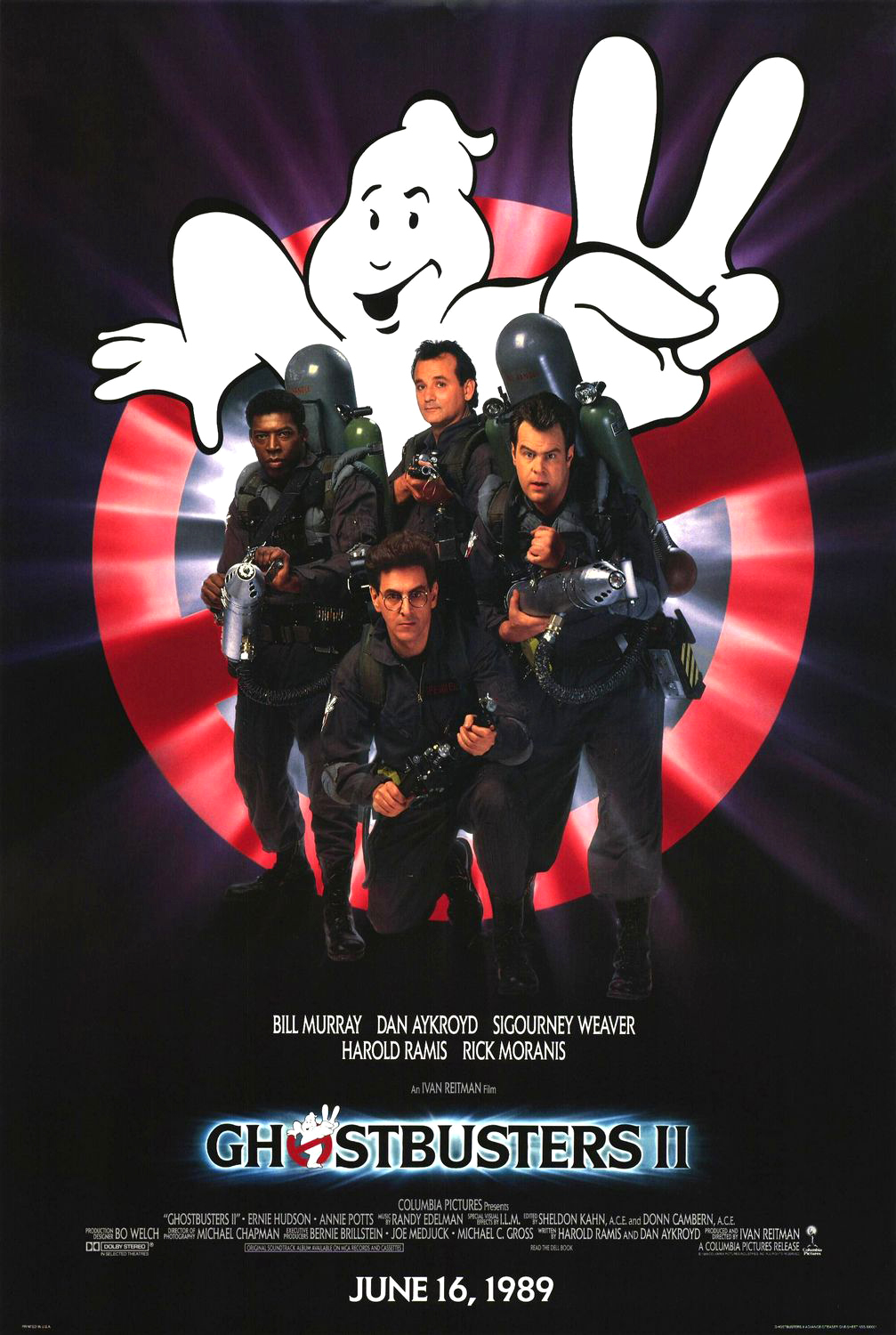
Like with pretty much almost every sequel that has ever come out, ‘Ghostbusters 2’ is generally considered by many to be ‘inferior’ to the first film and while I do agree that it isn’t as good as the first film, keep in mind how great of a film this one is supposed to follow up on; talk about an incredibly tough act to follow. So with that said, why is this one not as good as its predecessor? According to the Rotten Tomatoes consensus, it is because it ‘lacks the charm, wit, and energy’ that the first film had. However, I don’t entirely agree with that statement. Because while I can sort of see what they’re getting at, I don’t think that the film is entirely devoid of those aforementioned qualities… far from it, in fact. The cast still has phenomenal camaraderie, there are still plenty of lines that are highly quotable (‘Sometimes, s*** happens, someone has to deal with it, and who you gonna call?’), and there are still some pretty fun visuals, like during the finale when the Ghostbusters travel through the city of New York while piloting the Statue of Liberty. It’s true that maybe the film doesn’t have the exact same amount of charm, wit, and energy as its predecessor had but still, it’s not like it’s not there. It still very much feels like a ‘Ghostbusters’ film through and through.

Really, the main problem with the film is something that occurs with a lot of sequels; it rehashes a lot of the same beats from the first film in terms of its plot like how the Ghostbusters at one point have to visit the mayor when they get into trouble with the law or how they start off having to work to become popular again with the citizens in New York as this film takes place five years after the events of the first film as their popularity has started to dwindle. I do kind of like the idea of the Ghostbusters having to get back into the swing of things having been out of the business for a while but overall there’s not much in this film that is different from the first film save for it having different plot-points, like the River of Slime, the main villain Vigo, and for introducing Dana Barrett’s baby as a plot-point. Regardless of this, I still think that ‘Ghostbusters II’ is actually a pretty underrated sequel. Sure, it’s still not as good as the original, mainly because it copies a lot from that film. Still, I disagree with the notion that it is completely devoid of the ‘charm, wit, and energy’ that made the first film so great because it’s still here, just maybe not as much as in the first film. However, I do feel that this film deserves a second chance because it still a very entertaining film even if it doesn’t fully live up to the status of its predecessor.

Rating: 3.5/5

Before I end this post, if you ever have the chance, I recommend you check out the location tour video, ‘Follow that Marshmallow: A Ghostbusters Tour’ produced by James Rolfe AKA The Angry Video Game Nerd. It’s a really nice location video showcasing a lot of the locations in New York that were featured in both movies and it’s pretty cool to see that the filmmakers made a real effort to be as geographically correct as possible. What I mean is that a lot of the locations in the film aren’t too far apart from one another meaning that the routes that the characters take in the film are accurate to the real-life layout of New York. I’ll provide the link to the video below for your viewing pleasure.