Showing posts with label Jim Carrey. Show all posts

Tuesday, March 3, 2020

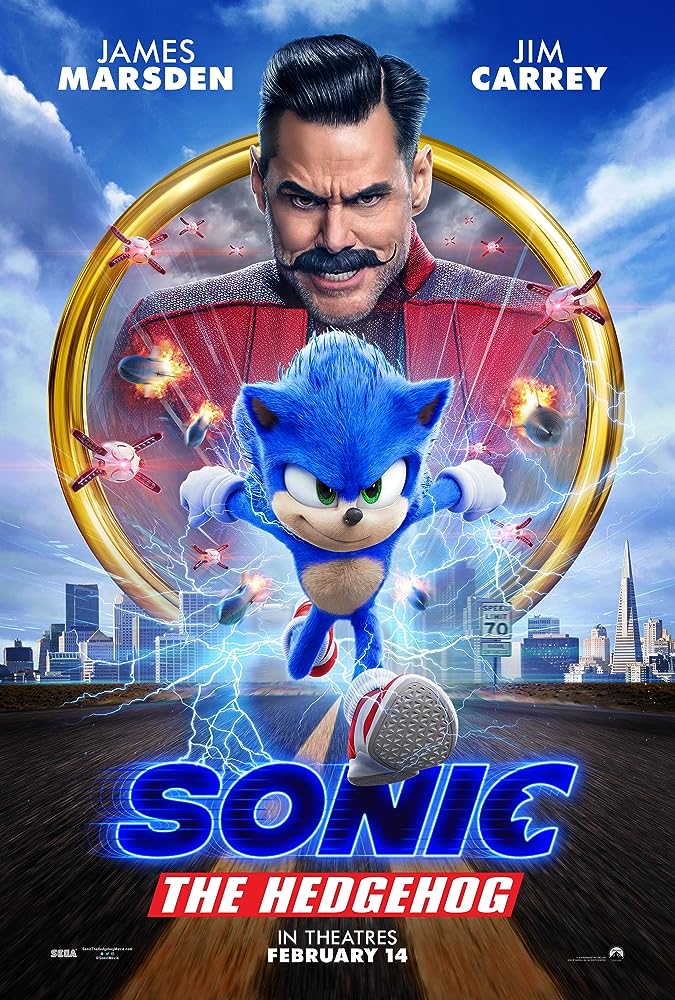
Sonic the Hedgehog (2020) review


Jim Carrey and Ben Schwartz in Sonic the Hedgehog (2020)

In the ’90s, video gaming was primarily defined by the intense rivalry between the two biggest game developers in the industry at the time, Nintendo and Sega. For the longest time, Nintendo had been the most dominant force in the industry thanks in large part to their third-generation home video game console, the Nintendo Entertainment System, which almost single-handedly saved the industry from financial ruin after the video game crash of 1983. And ever since his debut in the 1981 arcade classic Donkey Kong, the red-hatted Italian plumber named Mario has been the company’s quintessential mascot. During this time, another company named Sega was also developing its own video game consoles, and in 1988, they released their first 16-bit system, the Sega Genesis. While the console wasn’t exactly a top-selling item in Sega and Nintendo’s native country of Japan, it fared far more successfully in the U.S., where it promptly challenged Nintendo’s own 16-bit system, the Super Nintendo Entertainment System, thus paving the way for the concept known as ‘console wars’ that technically still persists to this day. And just like Nintendo, Sega’s success would become defined by its own mascot, a blue anthropomorphic hedgehog with super-speed known as Sonic. Developed primarily by programmer Yuji Naka and artist Naoto Ohshima, Sonic the Hedgehog would officially make his debut in the 1991 Genesis game of the same name. As you might have guessed, it was a massive hit upon its release and effectively made Sonic one of the most recognizable video game protagonists of all-time. Since then, the series has seen numerous follow-ups over the years, with some even making their way onto Nintendo consoles after Sega transitioned away from developing consoles in 2001.

Admittedly, though, the Sonic franchise has had a tumultuous run over the years when it comes to the overall reception of its games. In other words, amidst successful outings like the original quadrilogy of games for the Genesis and more recent titles like Sonic Generations and Sonic Mania, other installments like Sonic ’06 and Sonic Boom: Rise of Lyric have been some of the most critically savaged games in recent memory. Nevertheless, Sonic the Hedgehog continues to be a prominent figure in the world of gaming and has even left his mark on other forms of media. In the world of comics, Sonic was responsible for one of the longest-running series in the medium’s history thanks to his 24-year run with Archie Comics. He’s also headlined several successful TV series over the years, including the beloved 90’s series Sonic the Hedgehog (affectionately referred to by fans as SatAM) and the TV adaptation of the Sonic Boom games. And yet, it wasn’t until nearly three decades after his initial debut on the Genesis that the blue blur would finally get to make his feature film debut. That’s not to say that an attempt at a Sonic the Hedgehog film has never happened, however, as this film has technically been in the works since 1993. However, it wasn’t until 2016 when production would finally get underway on the film under the direction of VFX artist Jeff Fowler in his directorial debut, who developed it alongside his long-time collaborator, Deadpool director Tim Miller. And, of course, as I’m sure many of you reading this already know, this film attracted quite a bit of infamy online when the intensely negative reaction to Sonic’s initial design prompted a full-on redesign. But now the film has finally come out and the result is a decently entertaining popcorn flick that, largely thanks to that crucial redesign, does a nice job of adapting its popular source material.

On a far-off planet known as Green Hill, a young hedgehog named Sonic (voiced by Ben Schwartz) is constantly on the run from those who are after his ability to run at insanely high speeds. He eventually ends up traveling to Earth, where he spends the next ten years living a secret life in the town of Green Hills, Montana unbeknownst to its residents. However, when Sonic begins to lament the fact that his life of solitude has resulted in him not having any friends, he accidentally makes his presence known to the world when his powers cause a regional blackout. In response, the government enlists the services of an eccentric scientist/inventor named Dr. Robotnik (Jim Carrey) to track down the source of this anomaly. To make matters worse, Sonic’s attempts at escaping to another world are hindered when he’s confronted by Green Hills’ sheriff, Tom Wachowski (James Marsden). In the process, Sonic loses the bag of special rings that he uses to travel to other worlds when it ends up stuck on top of the Transamerica Pyramid in San Francisco. Thus, Sonic now finds himself having to join forces with Tom (and later Tom’s veterinarian wife Maddie (Tika Sumpter)) so that he can get to San Francisco, collect his rings, and escape before Robotnik can capture him with an army of robots that he powers with the supersonic energy that he collects from one of Sonic’s quills.

As that plot synopsis suggests, this is one of those cases of a film based on a popular property that takes the main characters of that series out of the worlds that they’re from and puts them on Earth to interact with humans. There have been quite a few films over the years that have done this including the recent live-action Smurfs films and even the first Thor, and to be perfectly blunt, this can often lead to mixed results since fans are most likely more interested in seeing these characters in their natural environments. As such, the first Sonic the Hedgehog film’s plot is admittedly very basic in its execution. Now granted, fans of the franchise know that the idea of Sonic interacting with humans has been done before in almost every other form of Sonic media, so it’s not like this is a completely illogical concept for a Sonic story. Still, what we get here is your basic ‘comedic road trip’ plot that goes exactly the way you think it does. But despite the generally predictable nature of its plot, Sonic the Hedgehog does handle it a lot better than some of the other films in this unique little ‘subgenre’. It mainly manages to achieve this by maintaining a breezy pace throughout and by also sporting an earnestly heartfelt character arc for Sonic in which he simply yearns for some friends after spending so much time alone. And when it comes to the action sequences, the film does a wonderful job of translating Sonic’s super-speed abilities into a live-action context. Plus, the film is also chock-full of fun nods to other facets of the franchise’s lore to make up for the fact that it doesn’t focus too much on Sonic’s universe.

While there was a lot of hubbub made over Sonic’s original design, the one aspect of his character that stayed consistent throughout this film’s development was his voice, and Ben Schwartz does a phenomenal job in the role. For starters, he certainly sounds like Sonic, with his rendition of the character sounding very reminiscent of voice actor Ryan Drummond, who played the character from 1998 to 2004 in games like the Sonic Adventure series and Sonic Heroes. But most importantly, Schwartz excellently maintains Sonic’s wisecracking but all-around likable persona from the games that is then matched nicely with the character’s cinematic arc of longing for a friend, which he ends up finding in James Marsden’s Tom ‘Donut Lord’ Wachowski (‘Donut Lord’ being the nickname Sonic gives him (it makes sense in context)). While Marsden’s role is your basic ‘best friend’ archetype that also requires him to interact with a CG character most of the time, he and Schwartz do manage to form a terrific camaraderie that helps make Tom and Sonic’s growing bond feel incredibly genuine. Marsden also has some nice romantic chemistry with Tika Sumpter as Tom’s wife Maddie, who admittedly doesn’t factor into the film too much (i.e. she’s absent for the whole second act until Sonic and Tom get to San Francisco) but still manages to be a solid supporting player. But, of course, the most talked-about member of the ensemble is Jim Carrey in the role of Dr. Robotnik. In fact, Carrey’s turn as Sonic’s notorious arch-nemesis was so anticipated that before Sonic’s big redesign, many figured that he’d be the best part of the film and partially make up for all the shortcomings surrounding Sonic’s controversial look. And while Sonic’s initial design is no longer an issue for this film, Carrey is still easily one of its biggest highlights as he’s clearly having a lot of fun playing an over-the-top mad scientist. All in all, it’s a great return to form for the man who practically defined the comedy genre in the 90s with hits such as The Mask and Ace Ventura.

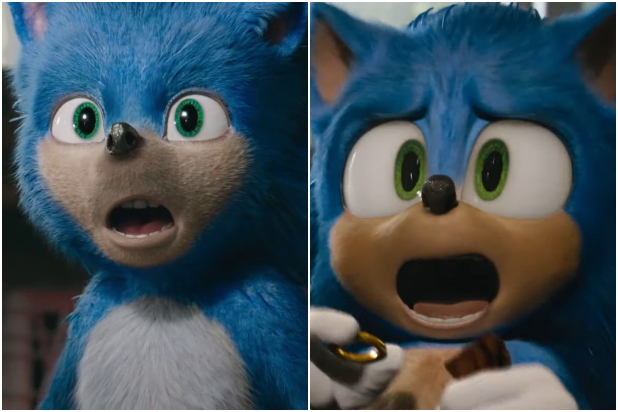
At the end of the day, Sonic the Hedgehog’s first foray on the big screen will most likely be known primarily for the fact that it nearly ended up being a total disaster. When it came to bringing the title character to life in a live-action film, the initial intent was to give Sonic a realistic/humanlike design. However, when the film’s teaser trailer dropped and showcased Sonic’s new look (which I’ll be providing a visual link to here for reference), it was almost universally panned for quite arguably making him look nothing like he does in the games. But in an unprecedented move for a film of this nature, director Jeff Fowler announced that he and his team had recognized their mistake and would fully redo Sonic’s design to be far more game-accurate. And while there was some initial concern that the film’s VFX team would have to endure some major crunch time to get the film done in time for its initial November 2019 release date, those fears were assuaged when Fowler also announced that the film would be pushed back to February 2020. Thus, when the film’s second trailer debuted in November (AKA the month it was originally meant to come out) and showcased Sonic’s new design that had been spearheaded by franchise artist Tyson Hesse, the fandom rejoiced about having a much better-looking cinematic interpretation of their beloved hedgehog. And overall, this correlates nicely to the film itself being a good old-fashioned crowd-pleaser. It may not be perfect by any means (namely due to it having a rather basic plot), but thanks to an enthusiastic cast, fun action sequences that perfectly highlight Sonic’s abilities, and of course, that pivotal visual update, Sonic the Hedgehog is another one of those rare cases of a video game based film done right.

Rating: 4/5

Friday, January 13, 2017

Lemony Snicket's A Series of Unfortunate Events (2004) review

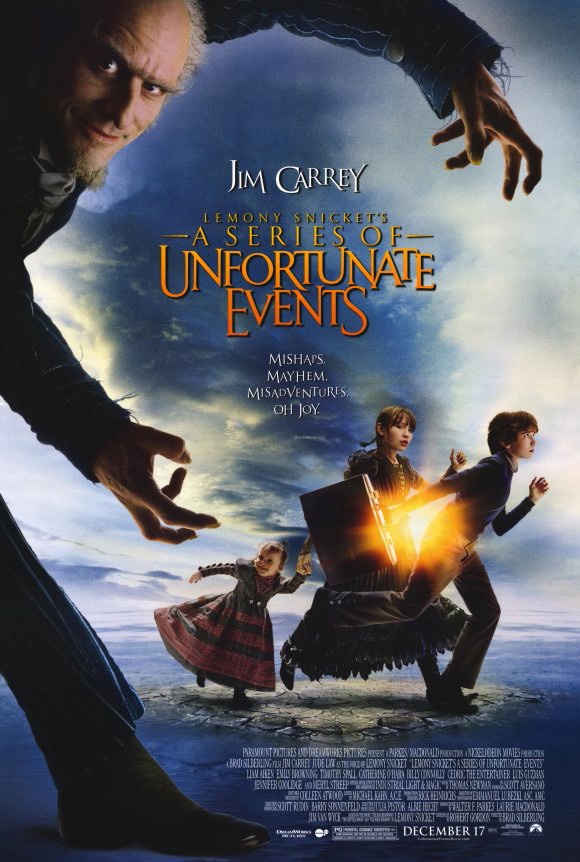
Image result for a series of unfortunate events movie poster

I regret to inform you that the review that you’re about to read is for a dreadfully grim film in which terrible things happen to young children. If you wish to instead read a review for a family film with a much more light-hearted plot, feel free to browse one of the many other reviews on this site for films like Moana or The BFG… okay, I’m not going to do that narration for the entire review. But, today, we are talking about A Series of Unfortunate Events. Written by author Daniel Handler under the pen name Lemony Snicket, who serves as the series’ in-universe narrator, this 13-book series has been a major commercial success ever since it first debuted in 1999, selling over 65 million copies worldwide. I used to read these books quite often when I was younger. That’s because even though these books do live up to their namesake by being a series of stories in which bad things constantly happen to the main protagonists, they were engaging reads thanks in large part to Handler/Snicket’s descriptive writing and their entertainingly dark sense of humor (e.g. the routine running gag in which Snicket constantly warns the reader not to read the books). A new adaptation of the series makes its debut on Netflix this weekend by way of a TV series. But, before that, let’s look back at the franchise’s arguably now forgotten film adaptation from 2004, which was produced by Nickelodeon Movies, directed by Brad Silberling (Casper), and starred Jim Carrey in the role of the villainous Count Olaf. As someone who grew up with the books, I watched this film numerous times when I was younger. And although it had been years since I’d last seen it, the debut of the new Netflix series made me want to watch it again. And, upon re-watch, I found that I still enjoyed it a lot. Because for a film that ended up being a failed attempt at spawning a franchise in the era of Harry Potter, I’d argue that it’s quite underrated.

The film is based off the first three installments of the series; The Bad Beginning, The Reptile Room, and The Wide Window. It centers on the three Baudelaire children; 14-year old inventor extraordinaire Violet (Emily Browning), 12-year-old bookworm Klaus (Liam Aiken), and their infant sister Sunny (played by twins Kara and Shelby Hoffman), who loves to bite things with her sharp teeth. One day, while at the beach, the children learn from their family’s banker, Mr. Poe (Timothy Spall), that their parents have died in a severe fire that had destroyed their house. As the Baudelaires now find themselves orphaned, Mr. Poe immediately puts them into the care of their distant relative, Count Olaf (Jim Carrey), the leader of a theatre troupe who’s supposedly their ‘third cousin four times removed’ (or ‘fourth cousin three times removed’). However, the children quickly learn that Olaf is secretly plotting to inherit the Baudelaires’ vast fortune, which they themselves will inherit when Violet turns 18. Thus, he begins to treat them horribly and even tries to kill them from time to time so that he can inherit the fortune. With no one to help them, the Baudelaire orphans are forced to rely on their own strengths to thwart Olaf’s dastardly schemes. But, even after they manage to have Olaf removed from the position of being their guardian, he continues to pursue them wherever they go, coming up with new ways to get rid of them and donning disguises that manage to fool their subsequent guardians, including herpetologist ‘Monty’ Montgomery (Billy Connolly) and timid widow Josephine Anwhistle (Meryl Streep), but not the children. Along the way, the children also begin to learn some secrets regarding their parents, including a secret organization that they were once a part of.

The best thing about this film is that it does an excellent job of recreating the vivid and stylish world of the books on the big-screen. For a film that was shot entirely on sound stages, the production/set design is fantastic. It’s also backed by some solid cinematography from Emmanuel Lubezki, who of course would go on to win three straight Oscars about a decade later for his work on films like Gravity and The Revenant. The overall success that the film has in terms of visually staying faithful to the books also translates quite well when it comes to the overall story. Save for a few cosmetic changes here and there, the film is a generally faithful adaptation of the first three books. The only major narrative change is that the ending of The Bad Beginning, in which Olaf attempts to legally marry Violet to get the fortune under the guise of it being part of his new play, is repurposed to the end of the film, after the events of The Wide Window. Thus, the ‘ending’ of the first act instead sees the Baudelaires trying to escape from a trap set by Count Olaf in which they’re about to be hit by a train. I’ll admit that when I was younger, initially I used to hate this change solely for the fact that it was made. But, looking back at it now, I get the reason why this change was necessary. The ending of The Bad Beginning is a ‘finale’ that’s more suited for the end of the film instead of being the first act finale about half an hour in. Really, the biggest downfall of the film is the fact that, nowadays, it’s considerably hindered by it not getting a sequel. It’s clear that, while watching this film, there were plans to do a follow-up as the plot has quite a few mysteries that either end up unsolved or are vaguely explained. And not only did these mysteries ‘not’ end up being answered in regards to this specific iteration of the series, it also ends up being a problem for those who haven’t read the books because, again, they’re given little explanation, meaning that some moments may come off as being rather confusing to newcomers.  

In the role of Count Olaf, Jim Carrey is, to put it simply, absolutely hamming it up as the main villain. It’s been noted that the film avoids going down some of the darker routes of the books, namely in regards to Olaf himself. The more disturbing tendencies of Olaf were basically replaced by Carrey’s comedic banter. However, I’d say that Carrey still did a good job in the role. Yes, he’s over-acting like crazy but I’d argue that this is part of the character; Olaf is an actor, after all. Sure, as I just noted, it’s not really his defining trait in the books, but when you have someone like Jim Carrey in the role, you know that he’s going to bring a humorous slant to it, which he does, namely through moments that surely must’ve been unscripted and the ways in which Olaf disguises himself; first as an ‘Italian’ herpetologist named Stephano and then as a peg-legged sailor named Captain Sham, though, sadly, he doesn’t get much screen-time while disguised as the latter. In short, while film Olaf may come off as being more humorous than sinister, I think that Carrey’s take on the character is rather iconic. For the record, that’s nothing against his successor in the role, Neil Patrick Harris, but with that said, Harris does have quite a bit to live up to. As for the Baudelaire children, specifically, Violet and Klaus seeing how Sunny is only a baby, both Emily Browning and Liam Aiken do solid jobs in their respective roles. One of the key aspects of the series, in general, is the fact that, through it all, the Baudelaires are always portrayed as an endearing trio. No matter what happens to them, they’re always likable and you root for them to triumph against Olaf. This is handled perfectly in the film, making the scenes where they succeed in foiling Olaf’s plans satisfying and the more heartwarming scenes involving them effectively emotional (e.g. the scene at the end where they finally receive a letter that their parents had written them while they were in Europe). Aside from Olaf and the kids, this film has quite an impressive supporting ensemble full of recognizable faces, from Billy Connolly to Meryl Streep to Catherine O’Hara, and they all do solid jobs in providing the film with an eccentric cast of characters.

While I haven’t read the books in quite some time, I am looking forward to this new adaptation of A Series of Unfortunate Events. For one thing, it could finally result in a complete adaptation of the series, something that the 2004 film was sadly never able to achieve. While the film did do well with critics and audiences, and even though there were plans for a sequel, it ultimately didn’t get one, mainly due in part to the fact that it was taking too long to make and the young leads were getting too old for their roles. Heck, they even considered making an animated film at one point before deciding on doing a series on Netflix. Still, it’s a shame that the original film didn’t go anywhere because I’d argue that it’s rather underrated. Sure, it’s not necessarily a ‘perfect adaptation’ of the source material but it still does just enough to capture the spirit of the books, particularly in terms of the set and production design. And while it can be argued that Jim Carrey is perhaps over-doing it in the role of Olaf, he still manages to provide us with plenty of humorous moments out of his maniacal performance. There’s also some funny moments that stem from the film’s numerous fake-outs, including the opening, which makes you think that you’re watching a different film, and a scene where it seems like the Baudelaires are about to be attacked by a snake but then we cut back to Lemony Snicket (played in the film by Jude Law) having to fix his typewriter because the ribbon jammed, then culminating in the reveal that the snake wasn’t harmful. Sure, this is another thing that contributes to the film’s more humorous tone compared to the more serious nature of the books but, at the same time, it also correlates perfectly to the series’ trademark dark humor. With all this in mind, the original adaptation of A Series of Unfortunate Events is an entertaining little adventure that is sure to bring back nostalgic memories for those who grew up with it. I know I did; heck, I even went to go see it on New Years’ Eve back in 2004. So, yeah, you could say that I have a strong personal connection to this film.


Rating: 4.5/5