Showing posts with label Tessa Thompson. Show all posts

Friday, November 15, 2019

Lady and the Tramp (2019) review (Disney+)


Justin Theroux and Tessa Thompson in Lady and the Tramp (2019)

Disney’s brand-new streaming service Disney+ is finally here, granting Disney fans premier access to a vast and varied collection of the company’s legendary filmography along with some exciting new projects from practically every major facet of the Disney universe. And here on Rhode Island Movie Corner, that means that you folks can expect plenty of reviews of Disney+ originals for the foreseeable future, which all begins with a review of the latest entry in Disney’s recent line of live-action remakes. Oh sure, I know some of you probably just rolled your eyes right now given how many of these have been made at this point, but as I’ve made it clear plenty of times by now, I’m all for these new spins on classic Disney stories, which includes today’s installment, a remake of Disney Animation’s 1955 release, Lady and the Tramp. Overall, I’d sum up Lady and the Tramp under the category of ‘Disney classics that, unfortunately, tend to get overlooked sometimes due to some of the other films that came out during that period’. In this instance, Lady and the Tramp, as far as its initial release was concerned, was sandwiched right between two of what are arguably Disney Animation’s most iconic films, Peter Pan and Sleeping Beauty. And yet, I think it’s safe to say that this charming little tale of a pampered Cocker Spaniel who falls in love with a street-savvy stray mutt is just as well-regarded as the other Disney classics of its time, especially thanks to its iconic sequence where the titular duo share a romantic spaghetti dinner to the tune of ‘Bella Notte’. This, of course, brings us to its new live-action remake, which is directed by Charlie Bean, a veteran animator who’s worked on several classic shows including Dexter’s Laboratory and The Powerpuff Girls. He also made his directorial debut back in 2017 with the considerably underrated LEGO Ninjago Movie, and here, he delivers an earnest and all-around heartwarming rendition of a classic Disney love story.

In a quaint little Midwestern town, Jim Dear (Thomas Mann) gives his wife Darling (Kiersey Clemons) a Cocker Spaniel for Christmas, whom they name Lady. As time goes on, Lady (voiced by Tessa Thompson) becomes incredibly accustomed to her life of luxury, especially after Jim and Darling give her a new collar. However, things start to change when she meets a stray mutt who’s often referred to as ‘the Tramp’ (voiced by Justin Theroux), who informs her that she isn’t going to be the center of her owners’ universe anymore because they’re about to have a baby, and as he puts it, “When the baby moves in, the dog moves out”. Sure enough, Jim and Darling end up having a baby girl named Lulu and Lady soon finds herself getting much less attention than she used to. To make matters worse, an incident in which Lady gets into trouble with Darling’s dog-hating Aunt Sarah (Yvette Nicole Brown) while Jim and Darling are away results in her ending up out in the streets without a collar and far from home. Thus, when she eventually reunites with Tramp, he offers to help her get home and begins to show her everything that he experiences as a street dog all while avoiding Elliot the local dogcatcher (Adrian Martinez), who’s hellbent on capturing Tramp and putting him in the pound. And in the process, an unexpected bit of romance starts to blossom between this most unlikely pair.  

Like Beauty and the Beast and Aladdin before it, Lady and the Tramp is another case of these recent live-action Disney remakes where, admittedly, most of its big changes are cosmetic in nature. For starters, instead of rarely showing their faces like in the original, Jim and Darling are featured a lot more prominently in this version whereas Aunt Sarah plays a lesser role than she did in the animated film in favor of a generally expanded role for the dogcatcher as the new main antagonist. But easily the biggest change comes via Aunt Sarah’s pair of Siamese Cats, who receive a considerably major overhaul due to their animated counterparts often being considered as racist stereotypes complete with a new song, ‘What a Shame’. The story, meanwhile, is basically the same as the original with the exact same story beats, from the troublesome rat that constantly pesters the family to Lady’s brief tenure in the pound where she learns ‘the truth’ about the Tramp. And unlike the other recent live-action Disney remakes, this one doesn’t really do much to update the story from a modern perspective outside of the previously mentioned revision of the Siamese Cats and the fact that Jim and Darling are a biracial couple. However, this new film still does a very nice job when it comes to its overall handling of this story and consistently maintains the same pleasant atmosphere of its animated counterpart. Yes, even that iconic spaghetti scene is still beautifully executed even with a live-action/CGI coat of paint.

A lot of this has to do with the film’s unique method of bringing its animal characters to life. While it clearly could’ve been quite easy to just have all the dogs portrayed solely through CGI since that is what many films tend to do nowadays for animals, Lady and the Tramp instead manages to go the extra mile by casting real dogs (many of them rescues), with the utterly adorable duo of rescues Rose and Monte taking on the title roles. And while the film does obviously use CG to have them talk and to give them digital doubles for certain sequences, it’s so well implemented that it’s often legitimately rather hard to distinguish between scenes where the dogs are either real or fully CG. It also helps that Lady and the Tramp are given an excellent duo to voice them in Tessa Thompson and Justin Theroux, respectively, as both do a wonderful job in making these two incredibly lovable and effortlessly charismatic while also sporting some lovely chemistry. They’re then backed by an equally solid supporting voice cast headlined by the likes of Sam Elliott as Trusty the old bloodhound and Janelle Monáe as Tramp’s flirtatious friend Peg the Pekingese (Monáe, of course, performs the classic ditty that is ‘He’s a Tramp’ and also helped write the Siamese Cats’ new song). As for the film’s human cast, Thomas Mann and Kiersey Clemons have solid chemistry that’s on par with Thompson and Theroux as Jim and Darling even if they still end up playing the same generally passive roles that their characters had in the original. After that, you have some nice supporting turns from Yvette Nicole Brown as Aunt Sarah despite her significantly reduced role in this version of the story and Adrian Martinez as the dogcatcher, who manages to be an effectively menacing villain without being too campy.

Many of these recent live-action Disney remakes have extensively used CGI to help bring the fantastical worlds of their stories to life. Lady and the Tramp is not one of those films since, just like the original, it is still very much an old-fashioned love story set in a practically picturesque Midwestern town like the ones that Walt Disney himself grew up in. As such, its use of CGI is a lot more limited compared to the other films of its subgenre which, even as someone who has loved all these recent Disney remakes, I have to admit is a nice and refreshing change of pace when it comes to these films. In other words, it could be argued that this new version of Lady and the Tramp eschews what has become the traditional process of remaking a Disney classic in favor of a pleasantly nostalgic ‘back to basics’ approach. However, if there is one thing that this film has in common with the other recent live-action Disney remakes, it’s that it’ll ultimately once again be the subject of controversy amongst those who are fully against this current cinematic trend. It also doesn’t help that this version of Lady and the Tramp doesn’t really do much to update its story for a new generation outside of abolishing some racist stereotypes. Ultimately, though, while it may not necessarily be the best of these live-action Disney remakes, Lady and the Tramp still thoroughly succeeds at being an immensely heartwarming crowd-pleaser thanks in large part to its extensive use of actual dogs instead of CG creations. But if you are one of those folks who still prefer the animated incarnations of these Disney classics, you’ll be pleased to know that the original Lady and the Tramp is also readily available for your streaming pleasures on Disney+. In fact, the same can be said for all the Disney classics that have received remakes these past few years. I’ve always argued that these remakes can peacefully co-exist with their animated counterparts and I’m pleased to say that Disney+ is now proving that this is, indeed, possible.

Rating: 4/5

Sunday, June 30, 2019

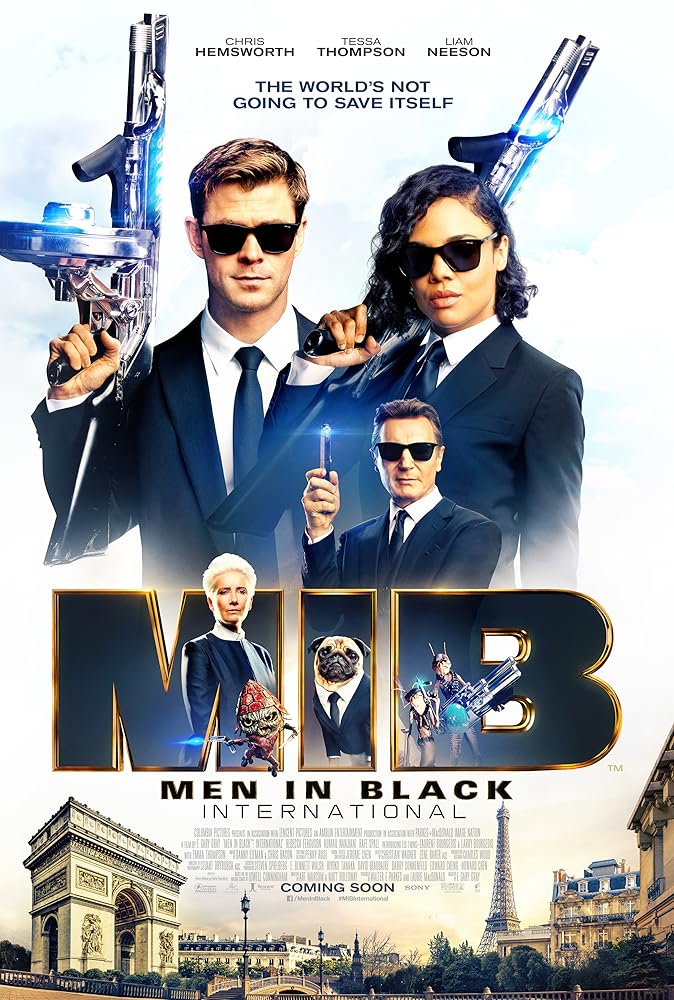
Men in Black: International (2019) review


Liam Neeson, Emma Thompson, Chris Hemsworth, Tessa Thompson, and Kumail Nanjiani in Men in Black: International (2019)

In 1990, the first installments of a new comic series, The Men in Black, was published by Aircel Comics. Created by writer Lowell Cunningham, the series focused on the titular Men in Black, a secret organization tasked with monitoring extraterrestrial activity on Earth. Soon after the completion of the series’ six-issue run, Aircel would end up getting acquired by Malibu Comics who, in turn, would be acquired by Marvel. And in 1997, the series was adapted to the big screen courtesy of director Barry Sonnenfeld and Steven Spielberg’s production company, Amblin Entertainment. Upon its release, the film, which starred Will Smith and Tommy Lee Jones as Men in Black agents J and K, respectively, was a big critical and financial hit, grossing over $589 million worldwide and earning the legendary Rick Baker his then-fifth Oscar for Best Makeup. The film would then spawn two sequels in 2002 and 2012, and while neither sequel was as well-received as the original, they were still both solid hits at the box-office. And yet, while it seemed like Men in Black 3 would be the final installment of the franchise, it has now come back in the form of a spin-off that isn’t the attempted crossover with the 21 Jump Street franchise that ultimately went nowhere. Instead, it’s a more traditional spin-off that focuses on new characters but is still set in the same universe. This time, directorial duties go to F. Gary Gray (Straight Outta Compton, The Fate of the Furious) while Chris Hemsworth and Tessa Thompson headline the cast in their second big collaboration together after Thompson made a big splash in the MCU as Valkyrie alongside Hemsworth’s Thor in Thor: Ragnarök. And just like in that film, they prove to be quite the dynamic duo despite this film’s admittedly major shortcomings.

When she was a child, Molly Wright (Tessa Thompson) and her family had an encounter with an alien that instantly attracted the attention of the secret organization known as the Men in Black. But while her parents were both neuralyzed as per MIB regulations, Molly managed to avoid that fate, thus leading her on a mission to prove the organization’s existence. Twenty-three years later, Molly finally manages to locate the Men in Black’s New York headquarters, where she convinces Agent O (Emma Thompson), head of the US branch, that she’s a perfect candidate for the organization given how she was successful in finding them. Thus, Molly is officially dubbed ‘Agent M’ and is sent to MIB’s London headquarters on probationary status. There, she meets the head of the UK branch, High T (Liam Neeson), who pairs her up with his old partner Agent H (Chris Hemsworth) on a mission to protect a member of an alien royal family. However, when the mission goes haywire and the royal family member is killed, MIB suspects that this is the work of a parasitic alien race known as the Hive whose previous attempt at invading the planet was thwarted by High T and H three years prior. Thus, H and M soon find themselves on a globe-trotting adventure to try and prevent another Hive invasion. In the process, however, they quickly realize that all this may be the result of a traitor within MIB’s ranks.

Since this review took a little while to get done, we’re at a point now where it’s become well-known that this film experienced quite a few nasty production issues. Most specifically, F. Gary Gray and producer Walter Parkes frequently clashed over the overall direction of the film to the point where the former repeatedly tried to back out of the production. Thus, it’s been reported that the version of the film that was released in theaters was Parkes’ intended cut rather than Gray’s, which would’ve been a bit more topical with its themes (i.e. some commentary on immigration). And to be perfectly blunt, it’s easy to see why Gray’s version of the film would’ve turned out a lot better because what we ultimately get is a generic retread of the previous Men in Black films. While it is based around new characters (with the only references to the previous films consisting of a few select cameos and some visual nods), the film maintains the same general plot structure of the last three films right down to having its finale revolve around a historic landmark (e.g. the Apollo 11 launch in Men in Black 3). The film doesn’t even live up to the International in its title as the strict adherence to the franchise’s formula prevents it from exploring more of the world of Men in Black despite this being the first installment of the series that isn’t primarily set in New York. At the very least, the film maintains the franchise’s quirky atmosphere when it comes to the antics of its various alien creatures even though this is the first entry of the series to not involve the makeup work of Rick Baker due to his retirement in 2017.  

Ultimately, though, the best part about this film is its main leads. After all, one of the definitive aspects of the original trilogy was the strong dynamic of Will Smith and Tommy Lee Jones (plus Josh Brolin in the case of the third film). And considering their excellent chemistry in Thor: Ragnarök, it’s easy to see why Chris Hemsworth and Tessa Thompson were paired together once again to become the Men in Black franchise’s newest lead duo. It also helps that these two do end up providing a different kind of pairing when compared to J and K from the previous films. Thompson, for example, may be following Smith’s arc from the first film as the rookie MIB agent, but whereas Agent J was the genuine newbie who was gradually introduced to the concept of aliens living on Earth, Agent M is already well-versed in it when she joins the organization. As for Hemsworth, Agent H’s characterization isn’t that far off from how Thor was initially portrayed in his MCU debut; in other words, a charismatic playboy who doesn’t always think before he acts. And while the big reveal surrounding it is a bit too simplistic, there’s a decent little mystery as to why H hasn’t quite been the same ever since he and High T saved the world despite him continually being regarded as one of the organization’s best agents. M and H are then backed by a solid ally in Pawny (voiced by Kumail Nanjiani), the last survivor of a tiny alien race who ends up pledging allegiance to his new Queen, M, and is quite simply the primary source behind most of the film’s best humorous moments. Everyone else in the film, including Neeson as High T and Rebecca Ferguson as an alien arms dealer who has a notable history with H, is fine in their respective roles but they’re ultimately just ‘there’, for the most part.

I still have vague memories of the first time that I watched the original Men in Black. Obviously, I was too young to see it in theaters in 1997, but I did watch it when I was about eight or nine when it aired on TV one night whilst my family and I were over at a party hosted by a family friend. And while my mom warned me that the film may be a bit too scary given the various alien creatures that appeared in it, this didn’t end up bothering me in the slightest and I became utterly enthralled by it. This then led to me watching the second film (which may not be as good as the first but isn’t quite as bad as a lot of folks say it is) and going to see the third film in theaters, which gave us the great addition of Josh Brolin as a younger K and a genuinely sweet twist in the finale that highlighted the strength of J and K’s relationship. Men in Black 3 was even one of the very first films I ever reviewed on this site, so with that in mind, you could say that I’m a big fan of this franchise and was really looking forward to its newest installment. Sadly, though, Men in Black: International ends up being the weakest of the bunch, though to be fair, that doesn’t necessarily mean that it’s ‘bad’. It’s just that, as I pointed out earlier in this review, this film was heavily affected by its scandalous production issues to the point where the version of it that we ultimately got is a generic copy of the previous films instead of a more culturally relevant sequel as was initially the plan. Thus, despite the best efforts of the dynamic duo of Chris Hemsworth and Tessa Thompson (and a scene-stealing Kumail Nanjiani), Men in Black: International is the very definition of a ‘by-the-numbers’ sequel.    

Rating: 3/5

Thursday, December 6, 2018

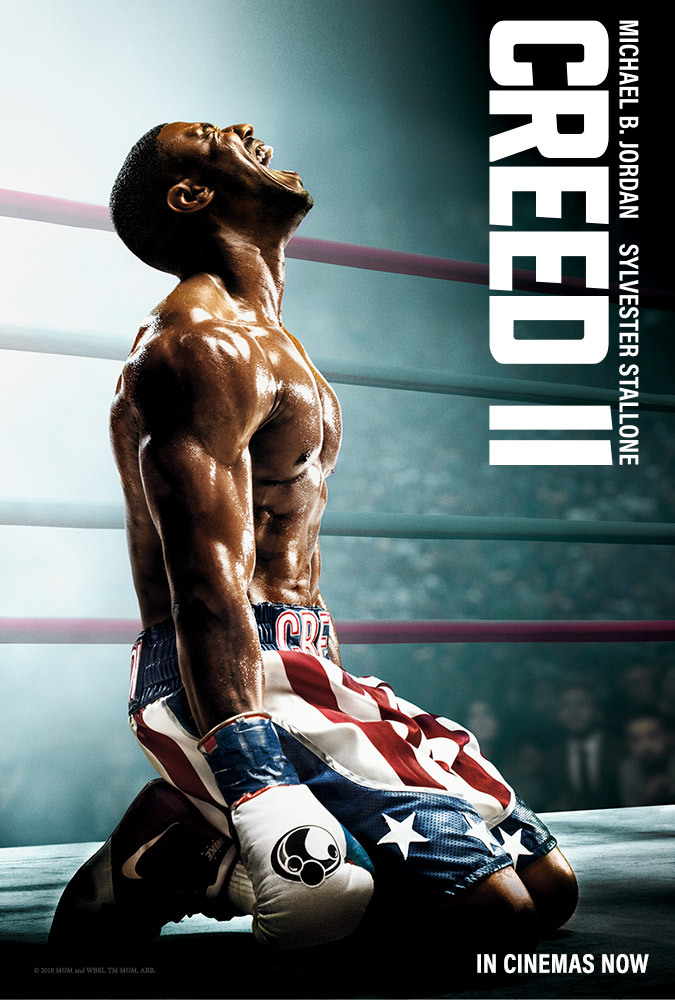
Creed II (2018) review

Michael B. Jordan in Creed II (2018)

For more than 4 decades, the city of Philadelphia has been closely tied to one of the most iconic film franchises of all-time, the Rocky series. It all began, of course, with the 1976 classic about a local boxer named Rocky Balboa (played by Sylvester Stallone, who also wrote the film) whose journey to fight the heavyweight champion of the world led to him doing the impossible and going the distance. And the film itself went down that same path, surprising everyone by winning Best Picture at that year’s Oscars. The series would then continue on with five more sequels up until 2006’s Rocky Balboa, and while some of the sequels admittedly got rather silly at times, the franchise continues to remain a staple of pop culture, Philadelphia culture, and the sports film genre. And while Rocky’s time in the ring ultimately came to an end after the sixth film, fans of the franchise were treated to a surprise comeback when it was revealed that the series would continue in 2015 with a spin-off titled Creed. Under the direction of Ryan Coogler, the film shifted focus onto Adonis Johnson Creed, the son of Rocky’s original foe, Apollo Creed. And upon its release, the film was a smash hit with both critics and audiences, with many touting it as one of the best installments of the franchise. But now ‘Donnie’ Creed is back in the second installment of his new series, Creed II, which sees him take on his most personal opponent yet; the son of the man who had killed his father more than three decades prior, Ivan Drago. This time, however, Ryan Coogler was unavailable to direct due to his commitment to a certain Marvel superhero flick that lead actor Michael B. Jordan also happened to be involved with. And while it was initially reported that Sylvester Stallone would be stepping in to direct after previously helming films 2, 3, 4, and 6, it was instead decided to maintain the trend of the previous film by allowing a new generation of filmmakers to work on the franchise. Thus, general newcomer Steven Caple Jr. steps in to helm a sequel that, to reference one of this series’ many iconic songs, shows that this franchise still possesses that ‘Eye of the Tiger’.

It has been three years since Adonis ‘Donnie’ Johnson Creed (Michael B. Jordan) successfully managed to overcome the burden of following in the footsteps of his father, the late Heavyweight Champion Apollo Creed, with the aid of his father’s foe turned friend, fellow former Heavyweight Champion Rocky Balboa (Sylvester Stallone). And after becoming the new Heavyweight Champion himself, Adonis is more than ready to start off a new chapter in his life with his fiancé, singer Bianca Taylor (Tessa Thompson). However, the past once again comes back to haunt Adonis when a new challenger emerges in Viktor Drago (Florian Munteanu), the son of notorious Russian boxer Ivan Drago (Dolph Lundgren). Drago, of course, became infamous back in the ’80s when he killed Apollo during a simple exhibition match, and after being beaten by a vengeful Rocky in his home country during a subsequent bout, he now seeks redemption by training his son to take on Adonis. But while Adonis immediately sets his eyes on fighting Viktor and avenging his family name, Rocky warns him that he’s way too dangerous of an opponent given the track record of the man who’s training him. Adonis hastily ignores Rocky’s suggestion, however, and takes the fight which, simply put, does not bode well for him. Dealt with some intense injuries, Adonis now finds himself on the slow path to recovery as he prepares for the inevitable rematch where he seeks to avenge his family’s legacy while, at the same time, being forced to deal with some heavy-hitting developments in his personal life.

I think it’s safe to say that when it was revealed that Creed II would be bringing back Ivan Drago, some were a bit fearful about the film returning to the overall tone of Rocky IV, which is widely considered to be the goofiest installment of the franchise. This was, after all, the same film where Rocky bought an actual robot for his brother-in-law Paulie, featured a full-blown musical performance by James Brown singing ‘Living in America’ and was mostly just a series of montages where Rocky faced off against the equivalent of the final boss in a video game. But thankfully that’s not the case with Creed II, as it does maintain the same serious tone of its predecessor. And in this instance, it’s fitting to have Donnie face off against Drago’s son because it more than fuels this film’s emotional depth given everything that their family did to his all those years ago. True to franchise form, this film maintains a strong emphasis on its main protagonist and the physical and mental struggles that he goes through, and director Steven Caple Jr. does a phenomenal job when it comes to handling the story’s most emotional moments. And while there aren’t any major single-take fight sequences like in Ryan Coogler’s film, the boxing matches in this film are still excellently filmed and edited. In short, both Creed films fully succeed in accomplishing the same thing that the original Rocky films managed to achieve all those years ago. They properly set up their main characters and the ‘underdog’ situation that they find themselves in and then proceed to take their time to ensure that audiences are fully endeared to them. Thus, when the film’s final boxing match does occur, we’re fully behind them as they take on their opponent, resulting in an emotionally satisfying conclusion. Yeah, it’s undoubtedly become this series’ defining formula at this point, but it’s still quite effective in its execution, which is saying something considering that this is the eighth installment of the series.

As was the case with the first film, Creed II primarily belongs to Michael B. Jordan, who’s fantastic once again as Adonis Creed. Even when he ends up diving into a situation without thinking things through first, he still manages to be a highly sympathetic protagonist and Jordan’s charisma is in top form here. A lot of this also comes via his relationship with Bianca, who in just two films has more than managed to become more than just the equivalent of what Adrian was to Rocky in the previous films. Jordan and Tessa Thompson have phenomenal chemistry and one major plotline that revolves around their newborn daughter Amara being afflicted with a serious physical condition provides the film with one of its most emotionally devastating moments. Phylicia Rashad also happens to get a bit more to do this time around as Adonis’ mother (and Apollo’s widow) Mary Anne, primarily thanks to her sharp wit whenever she shares a scene with Jordan. And, of course, there’s still Sylvester Stallone being as great as ever as Rocky Balboa. Admittedly, this one doesn’t give him the same emotionally-charged storyline that he got with Rocky’s cancer diagnosis in the first Creed, but he continues to maintain Rocky’s status as one of the most endearing protagonists in film history. But perhaps the most impressive thing that this film manages to achieve is taking the character of Ivan Drago and effectively presenting him in a serious manner. That’s right, this isn’t the over-the-top goliath of Rocky IV anymore; instead, we get a man who’s deadly committed to regaining his former glory no matter the cost. In other words, it’s easily the best performance of Dolph Lundgren’s career. Admittedly, though, his son Viktor doesn’t get as much to work with character-wise. Granted, Florian Munteanu does prove to be quite the physical foe for Adonis to face and there is some decent characterization with him when it comes to him trying to understand why his father is so desperate to win back those who shunned him after his loss to Rocky. Ultimately, though, he arguably gets even fewer lines than his dad did in Rocky IV.

The most common word that is being tossed around with this film is ‘predictable’. After the whirlwind success of the first Creed, several critics have lamented the fact that this film decides to go for a straight-forward plot that rehashes one of the most notable storylines from a past installment of the franchise. Well, to that I say this… yes, it’s predictable… but is that really such a bad thing? After all, the Rocky films usually aren’t known for re-inventing the wheel when it comes to their writing. And yes, that even includes the first Creed, which literally ended the same way as the original Rocky four decades prior and ultimately worked as well as it did thanks to Ryan Coogler’s strong direction and the outstanding lead trio of Jordan, Stallone, and Thompson. And despite the loss of Coogler as director for this one (though he did stay on as an executive producer), Steven Caple Jr. does an excellent job in his place because he continues to maintain an emphasis on the most important aspect of these films, their characters. Sure, you can tell that things will end up being alright for Donnie and his family, but it’s more about the journey there than the destination itself. Plus, it even manages to take the series’ goofiest villain and find some bits of humanity within him, thus making him just as intimidating as he was in Rocky IV but in a vastly different way. In short, Creed II is another rousing success story for this legendary franchise that, pardon the pun, delivers yet another emotional knockout. And considering the recent announcement by Sylvester Stallone that revealed that this will ultimately be his final turn as Rocky Balboa, that effectively makes this film one hell of a send-off for a true icon of the big-screen right as his new protégé becomes a legend in his own right.


Rating: 5/5!

Monday, July 16, 2018

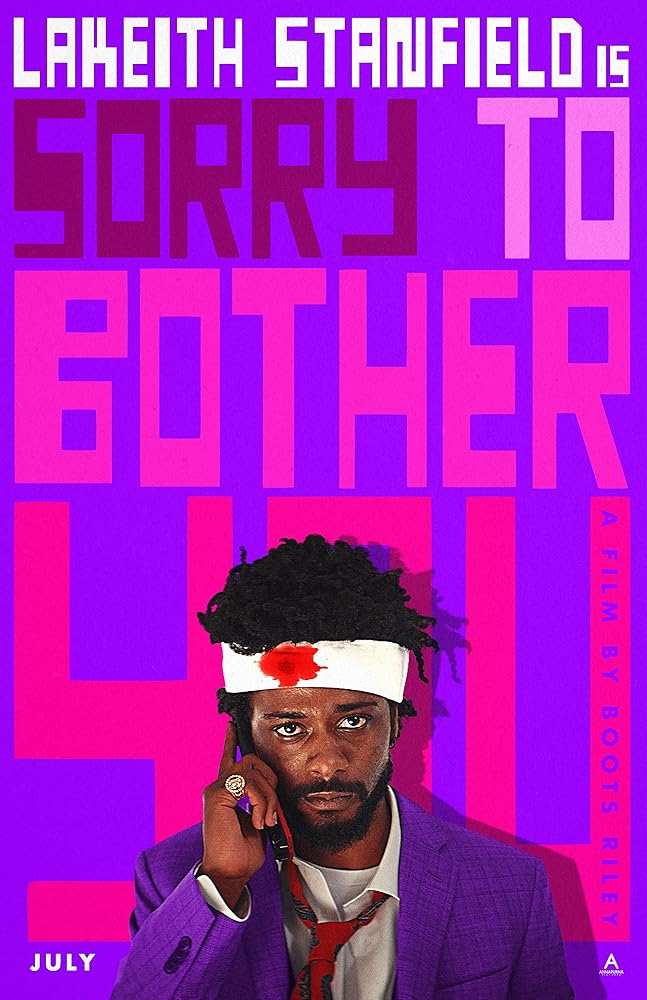
Sorry to Bother You (2018) review

Sorry to Bother You (2018)

In the past, I’ve talked about quite a few films that can be classified as surreal comedies. I’d describe these as films that went all out with a wacky premise while often boasting a strong narrative to back it up. For example, in 2016, one of my favorite films of that year was Swiss Army Man, a film where a man traveled through the woods with a magical farting corpse whose boners were used as a source of navigation. Look a little closer, however, and you’d find a tale about friendship and regaining one’s love for life amidst all the discussions about the corpse’s desire to masturbate when thinking about his friend’s mom (don’t ask…). And for this year, it seems like the most talked about surreal comedy is Sorry to Bother You, in which a young African-American man finds himself sucked into the world of telemarketing once he learns how to use his ‘white voice’ effectively. The film is brought to us by rapper Boots Riley, who makes his directorial debut after nearly three decades in the music industry. And Riley has certainly had quite a career in that industry, mainly as the lead vocalist of the political hip-hop group known as ‘The Coup’. Sure enough, Sorry to Bother You, inspired by Riley’s own history working in the telemarketing business, is full to the brim with political satire that’s seamlessly intercut with all the crazy situations that its main character gets into. And because of this, while it is easily one of those films that won’t necessarily work well with everyone, I won’t deny that this film is an enjoyably wacky comedy that is very much its own thing.

On the streets of Oakland, a young man named Cassius Green (Lakeith Stanfield) struggles to make a living for him and his girlfriend Detroit (Tessa Thompson), often getting harassed for rent by his uncle Sergio (Terry Crews). ‘Cash’ ends up getting hired as a telemarketer for a company called RegalView, where he is told the importance of ‘S.T.T.S.’ (Stick to the Script). However, Cash finds it hard at first to make any sales, with most of his customers hanging up on him just a few seconds into the call. Things begin to change, though, when his co-worker Langston (Danny Glover) teaches him the secret to a successful telemarketing sale, using his ‘white voice’. And so, Cash’s white voice (provided by David Cross) allows him to quickly scale the company’s ranks, eventually managing to get promoted to the company’s most prestigious position, a ‘power caller’. Thus, he befriends fellow power caller Mr. **** (Omari Hardwick; ‘white voice’ provided by Patton Oswalt) and even ends up attracting the attention of Steve Lift (Armie Hammer), the CEO of WorryFree, a company that provides its customers with free food and lodging. However, WorryFree is also established as being quite the controversial business, as their offer comes at the expense of cheap labor that isn’t that far off from slavery. Thus, Cash soon finds himself in a major internal conflict as he finds himself torn between his new life of luxury and his relationships with Detroit and his fellow RegalView co-workers, who organize a strike to demand proper salaries. Things get even more complicated when Cash ends up learning about a dark secret about WorryFree and their plans for those who work for them.

Sorry to Bother You wears its weirdness like a badge of honor, going all out with its surreal humor. Sure enough, this film sports a solid consistency when it comes to that humor thanks to everything from hilarious visual gags to snappy dialogue. This humor is then matched perfectly with a tight script that delves into everything from race relations to one’s fear of becoming a ‘sell-out’. Now with all this said, though, the film does kind of drag a bit at times. While it is under two hours, it also loses a bit of steam by the end despite this being where the weirdest moments occur. Still, for what it’s worth, Boots Riley’s direction is excellent throughout and this is bolstered further by a totally game ensemble cast. Get Out breakout star Lakeith Stanfield shines in the lead role of Cassius while Tessa Thompson more than holds her own alongside him as Detroit, who gets her own unique plotline via her blossoming art career. And then there’s all the great supporting roles from the likes of Danny Glover as Langston, Armie Hammer as Steve Lift, and Steven Yeun as Cash’s co-worker ‘Squeeze’ just to name a few. Admittedly, most of these folks ultimately have minor roles in the larger story, but they all have their standout moments nevertheless. In short, while I don’t necessarily consider Sorry to Bother You to be one of the ‘best films of the year’ as many others are saying, it’s still a very good directorial debut from Boots Riley. If anything, it shows that he clearly has the potential for a prosperous career as a filmmaker to match the prestigious career that he has achieved as a musician.


Rating: 4/5

Monday, November 6, 2017

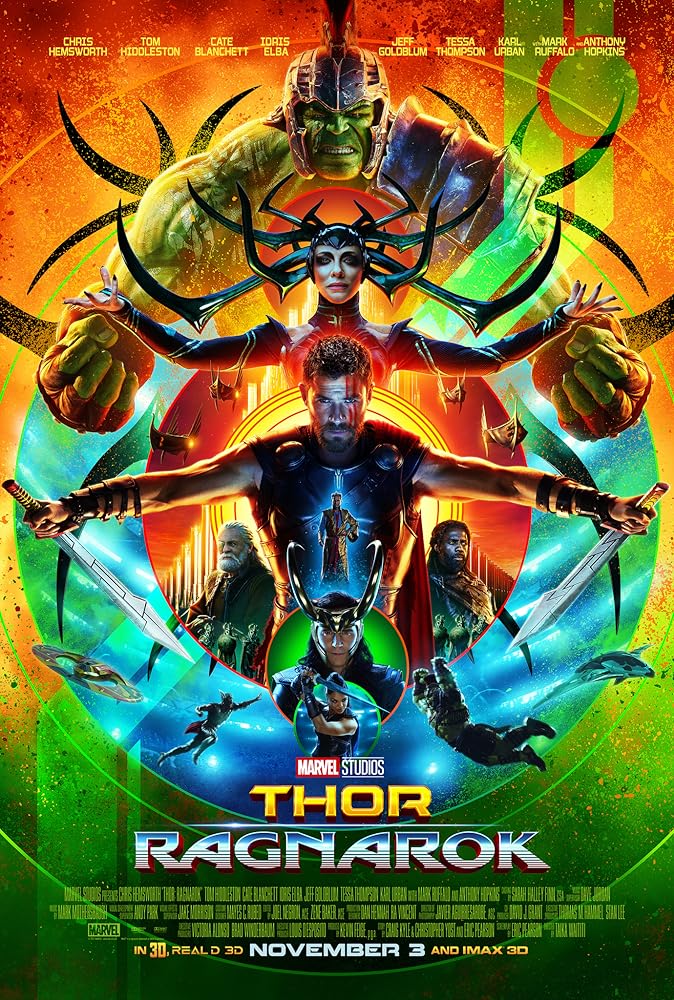
Thor: Ragnarok (2017) review


Thor Odinson AKA the Asgardian God of Thunder has been a vital member of the Marvel Cinematic Universe and its core superhero team, the Avengers. Despite this, however, many have viewed the character’s solo outings as being some of the weakest installments of the MCU. Now, to be fair, this wasn’t always the case; namely, back when the first Thor film came out in 2011. If anything, that film was arguably Marvel Studios’ first big ‘risky’ project, as it was the first MCU film to focus on a character who didn’t primarily reside on Earth. As such, there was a considerable possibility that this tale of god-like beings could’ve ended up being incredibly cheesy. However, thanks to the Shakespearean influence from director Kenneth Branagh, the film did manage to make its arguably ludicrous setting feel believable. But while the film did do solidly with both critics and audiences, I think it’s safe to say that, nowadays, you don’t see it brought up too often when people discuss their favorite MCU films. The same can be said for the 2013 sequel, Thor: The Dark World. While not technically a critical/commercial failure, many consider it to be one of the weakest installments of the entire MCU if not the absolute ‘worst’. And while I don’t think that it’s as bad as some people have put it out to be, it’s undeniably one of the prime examples of an MCU film that was heavily influenced by the studio’s infamous (and now thankfully disbanded) creative committee. After all, if it wasn’t for some highly publicized creative differences, the film could’ve been directed by Patty Jenkins who, thankfully, would go on to direct a far more successful superhero film four years later with DC’s Wonder Woman.

So with all this in mind, it’s safe to say that there’s been a lot of pressure on Thor’s third solo outing to, shall we say, ‘redeem’ the franchise. And thus, here we are now with Thor: Ragnarok. Fans of the comics, as well as those familiar with Norse mythology, will no doubt recognize the subtitle for this film as the plot is based around the fabled apocalyptic event known as Ragnarok. In both Norse mythology and the comics, this was a major event in which the kingdom of Asgard was destroyed and several of its most notable inhabitants were killed. But while the film does focus on the prophesized destruction of its main protagonist’s home-world, do not expect a huge and serious fantasy epic going in. Instead, Thor: Ragnarok can arguably be described as an 80’s-inspired ‘road trip comedy’ starring not only Thor but also the Incredible Hulk, whose plotline takes influence from the character’s popular Planet Hulk storyline from the comics. In the director’s chair is Taika Waititi, who is arguably the biggest ‘out of left field’ director that Marvel Studios has ever hired… which, for them, is saying a lot. Over the past few years, the New Zealand native has become well-known for his work on several critically acclaimed films. This includes 2014’s mockumentary horror comedy What We Do in the Shadows, 2016’s adventure dramedy Hunt for the Wilderpeople, and a few episodes of the hit HBO comedy series Flight of the Concords. And as for Thor: Ragnarok, his first big-budget feature, he proceeds to give us a highly entertaining film that not only stands as the best Thor film yet but also one of the best MCU films to date as well.

At the end of Avengers: Age of Ultron, Thor Odinson AKA the God of Thunder (Chris Hemsworth) left Earth to embark on a quest to try and find the mystical objects known as Infinity Stones that he had seen in the visions that he had during the film. As this film begins, it has been two years since then and Thor has not had much success with this current endeavor. To make matters worse, when he returns to Asgard he learns that his treacherous adopted brother Loki AKA the God of Mischief (Tom Hiddleston), who had been presumed dead during the events of Thor: The Dark World, has been impersonating their father Odin (Anthony Hopkins), ruler of Asgard. And then if that wasn’t enough, Thor and Loki soon find themselves dealing with a new threat in the form of Odin’s firstborn, Hela the Goddess of Death (Cate Blanchett). After being imprisoned for several eons due to her ever-growing ambition, Hela has now returned and is hell-bent on conquering the Nine Realms. When Thor tries to stop her, she ends up destroying his hammer, Mjolnir, and he ends up getting stranded on the planet of Sakaar. There, he becomes a prisoner of the planet’s eccentric ruler, the Grandmaster (Jeff Goldblum), and is forced to fight in a gladiatorial arena where his opponent is his old Avenger ally (and ‘friend from work’) Dr. Bruce Banner AKA the monstrous creature known as the Hulk (Mark Ruffalo).  And thus, Thor now finds himself in a race against time to return home to Asgard and stop Hela before the kingdom’s prophesized destruction, AKA Ragnarok, can occur.

So yes, as it’s been well-documented by several critics, Thor: Ragnarok is easily one of the most comedic outings of the Marvel Cinematic Universe… which, to be fair, is something that the MCU has always been known for anyway. Right from the get-go, this film is jam-packed with humorous bits of dialogue and funny sight gags. This, however, has proven to be a rather controversial development for some fans due to the fact that, in the comics, the Ragnarok storyline of which this film takes its name from was more serious in tone. Ultimately, though, this doesn’t prove to be as big of a problem as those fans may have feared, because while Thor: Ragnarok is undeniably one of the funniest MCU films to date, that doesn’t mean that this is all that it has going for it. When the story delves into the whole Ragnarok prophecy and Hela’s takeover of Asgard, the film does take these events seriously. Plus, for a film that is part of the allegedly so-called ‘kiddie’ franchise that has been the Marvel Cinematic Universe, it isn’t afraid to pull a few punches here and there to once again prove that long-standing argument wrong. Simply put, while the film is an absolute riot when it comes to its humor, director Taika Waititi establishes a solid tone that does, in fact, manage to keep it from just being a straight-forward comedy. And don’t even get me started on all of the great minor touches that he adds to the film to make it all the more memorable, from the implementation of the scores from the previous two Thor films to a scene that, no joke, pays homage to the infamous tunnel scene from Willy Wonka and the Chocolate Factory.

As noted earlier, Thor: Ragnarok mainly revolves around the duo of Thor and Hulk, a crossover that excited many due in no small part to some of the great interactions between the two of them in the Avengers films (e.g. the scene in the first Avengers where Hulk abruptly punches Thor off-screen after an intense battle… need I say more?). It’s also quite good that these two were paired together for this film seeing how, as far as the MCU films are concerned, we haven’t seen either of these two in more than two years. Not counting Thor’s cameo during the mid-credits scene of Doctor Strange (a sequence that is expanded upon here with Benedict Cumberbatch returning, of course, as the titular Sorcerer in a brief cameo), these two haven’t had a major role in an MCU film since Age of Ultron. But even after all this time, Chris Hemsworth and Mark Ruffalo both do excellent jobs once again in their respective roles as the film allows the two of them to utilize their comedic timing to its full potential. This, in turn, results in some of their best performances as Thor and Hulk (definitely Hemsworth’s best and arguably Ruffalo’s best). Another major returning player to the MCU is Loki, and heck, he hasn’t been seen for longer than Thor and Hulk combined. His last appearance was in Thor: The Dark World… all the way back in 2013. He almost appeared in Age of Ultron but his scenes ended up getting cut. Still, just like Hemsworth and Ruffalo, Tom Hiddleston is still great as always as the cunning but deeply-layered God of Mischief who continues to maintain a strenuous relationship with his brother.

Moving on to the new characters that are introduced in this film, first there’s Tessa Thompson as one of the Grandmaster’s assistants who, as we learn, is an Asgardian who was once a member of the kingdom’s elite Valkyrie squadron. However, we also learn that she is the only survivor of the group following a devastating battle with Hela long ago, which gives the character a solid backstory and character arc as a hard-drinking warrior turned scrapper who’s trying to escape her past. Plus, Thompson works excellently alongside Hemsworth, Ruffalo, and Hiddleston and proves to be a great new badass addition to the MCU’s lineup of female leads. As for Jeff Goldblum as the Grandmaster… well, he’s the Jeff Goldblum that we all know and love, simple as that. Finally, we come to the main villain of the film, Hela AKA the first lead villainess of the MCU films. And while I admittedly wouldn’t call her one of the ‘best’ MCU villains to date, Cate Blanchett certainly kills it in the role. Sure, the final conflict between her and Thor’s team sort of concludes rather quickly but, as noted before, the film does treat her as a serious threat throughout. She also gets a great henchman in the form of Skurge (Karl Urban), an Asgardian warrior who allies with her when it gives him an opportunity for the attention that he has long yearned for. And he ends up getting a surprisingly layered character arc as a result, effectively making him one of the MCU’s greatest henchman characters.

For many years, Marvel Studios tended to get a lot of flak from critics who argued that they often limited the creative visions of the directors that they’ve hired, resulting in a few ‘copy and paste’ installments. And while I don’t fully agree with that argument, I think it’s safe to say that this hasn’t been as much of an issue since the studio’s controversial creative committee was disbanded. Case in point, Thor: Ragnarok gives us one of the most creatively visionary installments in the entire Marvel Cinematic Universe. While the previous two Thor films stumbled a bit when it came to their overall tone, this film decided to just fully embrace the silliness of its cosmic-based premise. Because of this, Thor: Ragnarok is yet another highly entertaining installment of the Marvel Cinematic Universe thanks in large part to it being one of the funniest entries of the franchise. With that said, though, the film’s primarily comedic tone may throw some people off given the generally serious nature of the Ragnarok story arc from the comics. However… that’s the whole point! Director Taika Waititi did state that his overall intention with this film was to make a ‘fun’ superhero adventure, and that is exactly what he did. Sure, maybe it doesn’t have the best overall plot of these MCU films, but seriously… what’s so wrong about a ‘fun’ superhero flick?


Rating: 5/5! (And yes, I’m well-aware that I’ve given this rating to every major superhero film that has been released this year. Now it’s time to see if Justice League will also earn that rating and officially confirm 2017’s status as one of the genre’s greatest years ever… though, to be perfectly frank, this will still be the case even if Justice League doesn’t turn out that good (though, of course, hopefully, it IS good!))

Monday, December 7, 2015

Creed (2015) review


Over the span of three decades, audiences witnessed one of the greatest underdog stories ever told through one of the most famous film franchises of all-time; the ‘Rocky’ series. It all began in 1976 with a $1 million budgeted boxing film written by its star, Sylvester Stallone, about a small-time boxer named Rocky Balboa, a ‘nobody’ from Philadelphia who was given the opportunity to fight the heavyweight champion of the world, Apollo Creed. In a way, the first ‘Rocky’ was as much of an underdog as its main character but it ended up becoming one of the biggest sleeper hits of all-time, becoming the highest grossing film of the year and winning the Oscar for Best Picture. It subsequently spawned one of the most famous film franchises of all-time; one that experienced both highs and lows over the years. After 2006’s ‘Rocky Balboa’, which primarily came as a result of Stallone wanting to give the franchise a much better conclusion after the critical and commercial disappointment that was 1990’s ‘Rocky V’, it seemed like the franchise had finally come to an end. But then, out of the blue, comes this year’s ‘Creed’, a film that not only continues the series but takes it in a whole new direction. Under the direction of Ryan Coogler, fresh off of 2013’s critical indie darling ‘Fruitvale Station’, ‘Creed’ shifts the series’ focus from Rocky Balboa to a new character, Adonis Johnson Creed, the son of Apollo Creed. And thanks to the superb direction from Coogler and the terrific lead performances of its two main leads, ‘Creed’ proves that the ‘Rocky’ series still has quite a bit of gas left in the tank.

Adonis ‘Donnie’ Johnson (Michael B. Jordan) never knew his father. That’s because his father was former heavyweight champion of the world Apollo Creed, who died as a result of his fight with Russian Olympian Ivan Drago (as seen in ‘Rocky IV’), all of this before Donnie was even born as the result of an extramarital affair. After spending some time in a youth correctional facility, Donnie is taken in by Creed’s widow Mary Anne (Phylicia Rashad). Years later, a now grown-up Donnie quits his firm job in order to pursue a career in boxing just like his father. After being rejected by one of LA’s top boxing gyms, Donnie heads to Philadelphia where he finds Apollo’s old friend and former rival, fellow former heavyweight champion Rocky Balboa (Sylvester Stallone), and asks him to train him. Although hesitant at first, Rocky becomes Donnie’s new mentor as he begins to climb the ranks in the world of professional boxing. When Donnie’s connection to Apollo is revealed to the world, something that Donnie didn’t want to happen as he wanted to establish his own legacy, he and Rocky are approached by the handlers of ‘Pretty’ Ricky Conlan (Tony Bellew), the current light heavyweight champion of the world who challenges Donnie to be his final opponent before he goes to prison. Donnie accepts though is now pressured to truly prove himself as ‘the son of Apollo Creed’. Meanwhile, Rocky takes on a personal battle of his own outside of the ring that forces him to confront his own mortality.

As far as being part of the ‘Rocky’ franchise, ‘Creed’ not only continues it from a new perspective but also stays true to a lot of the things that have defined the franchise since the beginning. With this new film, Coogler foregoes quite a few of the usual elements that fans have come to expect from the franchise, namely the series’ primary songs in favor of a more modern soundtrack. But at the same time, the story of Adonis Johnson Creed’s rise to fame is very reminiscent of Rocky’s ‘zero to hero’ story in the first ‘Rocky’ through certain story beats. And even though that means that the story can be rather traditional at times, that is by no means an issue as it’s executed really well given Coogler’s clear affection for the franchise. Of course one of the key themes of the franchise has always been its underdog spirit and this film more than exceeds in continuing that tradition. But while previous films put Rocky through underdog situations like being a nobody taking on the heavyweight champion of the world to proving that he still has that ‘fighting spirit’ even at the age of 60, this film’s underdog story is a case of Adonis trying to prove himself with one hell of a legacy to live up to as the son of Apollo Creed. And while Adonis has overtaken the role of the series’ main protagonist, Rocky is still a vital part of the story. The ‘age’ factor that was a key part of ‘Rocky Balboa’ is once again in play here as Rocky now finds himself having to confront his own mortality, putting him at probably the most vulnerable state that he’s ever been at in his series, especially now that everyone close to him has either moved on or died.

The fight sequences for the film are superb, particularly the one in which Adonis fights a local Philadelphia boxer that was legitimately shot in one single take. As for the cast, there’s been quite a lot of talk about Sylvester Stallone’s performance in this film, with quite a lot of people predicting a potential Best Supporting Actor nomination at this year’s Oscars. And I must say that I completely agree with those people. I mean to be perfectly frank Stallone has always been great in the role of Rocky, even in the franchise’s weaker installments. And this film, the first of the series that he did not write, once again proves that as he once again conveys all of the qualities that made Rocky such a lovable character in the first place, including his inherent likability, his great comedic timing, and most importantly his willpower that allows him to overcome any adversity in his life. But of course he’s not the main character this time around as Michael B. Jordan, one of the best up-and-coming actors in the business, takes on the role of the series’ new main protagonist. And he very much succeeds in that regard, capturing quite a lot of the mannerisms that Carl Weathers brought to the role of his father Apollo while also establishing his own personality; a young man who’s been through quite a lot of rough patches in his life and has worked to forge his own legacy, though of course he still carries the weight of his father’s legacy on his shoulders. But as the film goes on, he too goes through a lot of the same endeavors that Rocky went through in the first film. He falls in love, in this case with an up-and-coming singer/songwriter named Bianca (Tessa Thompson, who serves as an excellent foil to Jordan as Adonis’ love interest the same way Talia Shire was always a great foil for Stallone as Adrian), and even experiences a few personal lows.

Under Ryan Coogler’s fantastic direction (two films into his career and he’s already become one of the best new directors in the industry), ‘Creed’ reinvigorates the iconic ‘Rocky’ franchise for a new generation, primarily by moving away from some of the things that made the series so beloved in the first place (for one thing, you don’t hear ‘Eye of the Tiger’ and only hear brief snippets of ‘Gonna Fly Now’ in the score). But even with that in mind, ‘Creed’ still very much feels like a ‘Rocky’ film through beats and themes reminiscent of previous films, especially when it comes to retaining the series’ trademark underdog spirit. No this film doesn’t do much to ‘reinvent’ the genre but that is by no means an issue when it comes to this film. The fight sequences are excellent, Michael B. Jordan and Sylvester Stallone excel performance-wise, and as a result, this series that had previously been considered done has been given new life. Which of course begs the question… will the franchise keep moving forward now that it has a new main protagonist? Where could Adonis’ story potentially go? Will Michael B. Jordan go the same route that Stallone did and one day direct one of these films? Will he end up fighting an Olympian in an incredibly over-the-top fight a la ‘Rocky IV’? Whatever happens next, ‘Creed’ is definitely another great installment of this great franchise.


Rating: 4.5/5