Welcome back to Rhode Island Movie Corner’s annual end-of-the-year list where I’m counting down my Top 12 Favorite Films of 2018. This is Part 2 of 4 and today we’ll be delving into films 9-7. If you missed my 6 Honorable Mentions and films 12-10, just click the link below to be directed back to Part 1. And thus, back to the list…
My Number 9 pick might be a bit controversial because, unlike a lot of the internet, this isn’t my #1 favorite animated film of the year. And yet, the fact that this is still in my Top 10 should hopefully indicate that I still thought that the film was great.
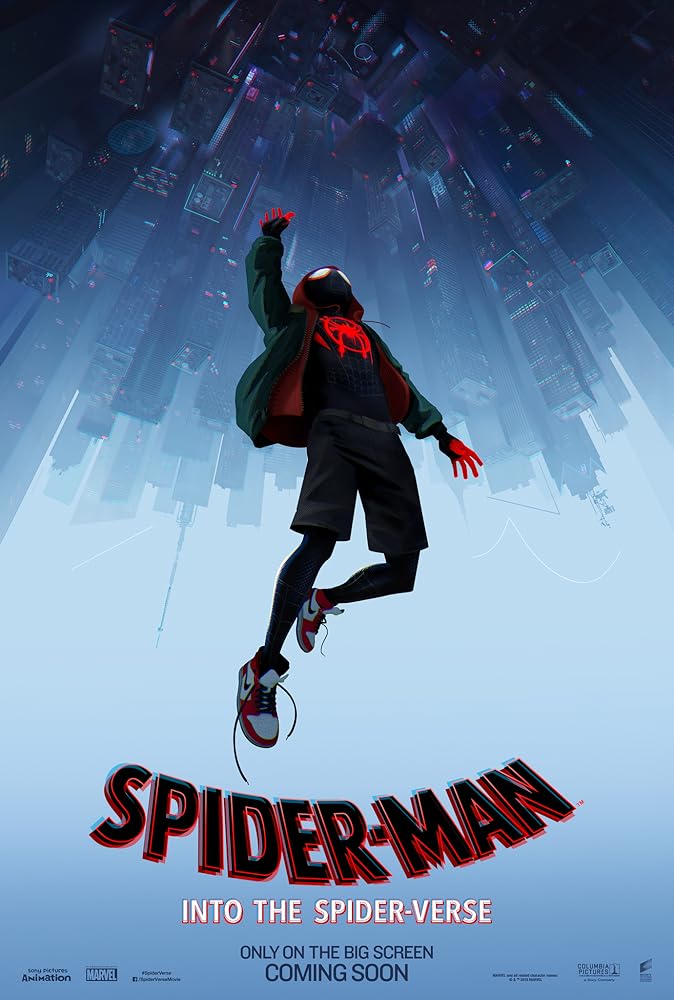
Into the Spider-Verse is a well-deserved success story for all involved. For Sony Animation, it is a major rebound for them after their infamous 2017 outing, The Emoji Movie. It’s a film that once again sees them collaborating with Phil Lord and Chris Miller after their previous work on the Cloudy with a Chance of Meatballs films, although it should be noted that Lord and Miller only produced this while Lord was one of the primary screenwriters. Directorial duties instead went to the trio of Bob Persichetti, Peter Ramsey, and Rodney Rothman. But thanks to the combined efforts of these five filmmakers, Spider-Verse features excellent writing that expands upon its traditional superhero origin story by being one of the first major superhero films since the start of the MCU to explore the concept of multi-verses. Several iconic iterations of Spider-Man are featured prominently in this film, from the badass Spider-Woman to the hilarious Spider-Ham… and yes, there’s a Spider-Man who’s a talking pig. Ultimately, though, this film primarily serves as the first official Spider-Man film to center on the character of Miles Morales, who is easily the most popular rendition of Spider-Man after Peter Parker. And amidst Lord and Miller’s trademark sense of humor, the film very much delivers on the emotional aspect of Miles’ transformation into Spider-Man. Over the course of this film, he witnesses the brutal death of his universe’s Peter Parker, learns that his uncle Aaron Davis is one of the Kingpin’s henchmen, the Prowler, and is then forced to witness his uncle’s death at the hands of Kingpin. Thus, when Miles finally makes his mark as Spider-Man in what is easily the definitive scene of the film, it’s one of the most emotionally cathartic moments in recent memory. And just like every other sequence in the film, it boasts brilliant animation that is easily the closest that any animated film has ever gotten to replicating the classic comic book style. Thus, with a win for Best Animated Feature at this year’s Oscars, along with the announcement that both a sequel and various spin-offs are in the works, it’s clear that a promising new franchise has been born.
The bigger question, though… who pointed first? ("SPIDER-MAN POINTED FIRST, OBVIOUSLY!")

Well, to prove my point about how Into the Spider-Verse not being my #1 favorite animated film of the year is a controversial opinion, my #8 pick is… an animated film. Not only that, but this film has apparently been a bit polarizing due to one key aspect of its plot. Still, it’s another solid addition to the growing pantheon that is Walt Disney Animation’s library of animated classics.
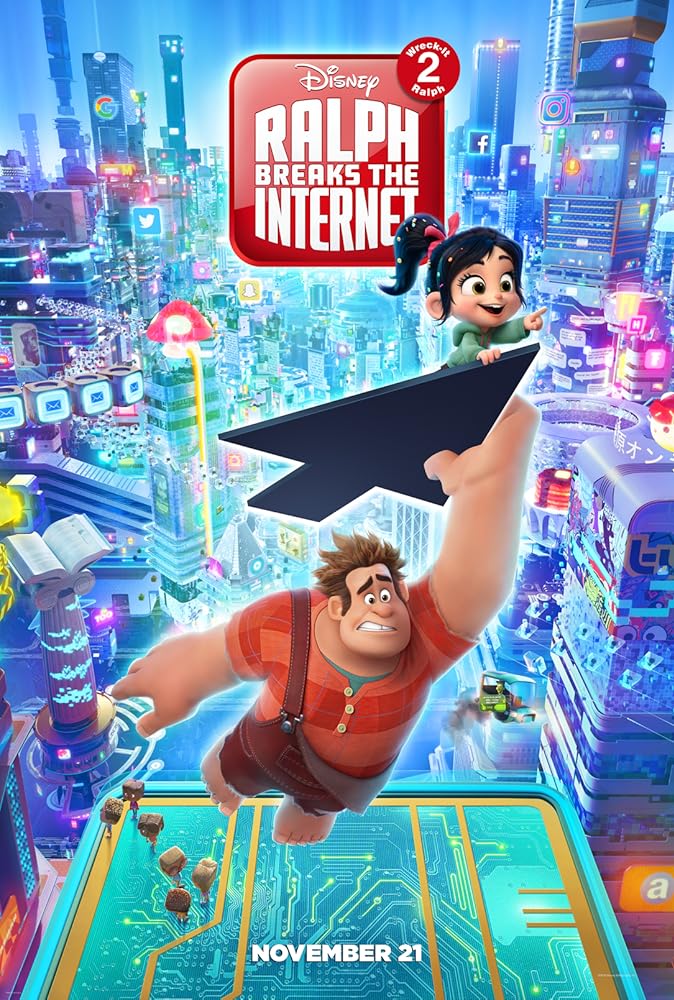
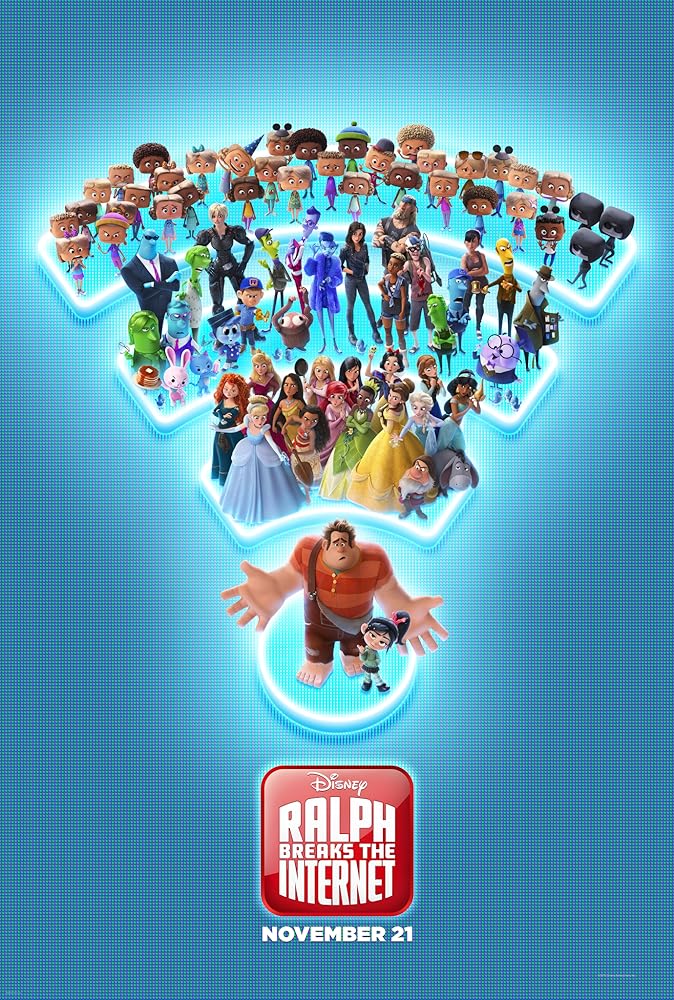
Ralph Breaks the Internet served as the first theatrically-released sequel to a Walt Disney Animation film since The Rescuers Down Under back in 1990. And overall, this follow-up to the studio’s 2012 outing Wreck-it Ralph managed to avoid ending up as Disney’s equivalent of The Emoji Movie even though both films are set within the confines of the internet and feature several references to current internet culture. Sure, just like the original and its references to classic arcade games, the references that this film makes to internet culture do run the risk of making it rather dated given the internet’s ever-changing landscape. Ultimately, though, the film wisely works around this by ensuring that the internet itself is not the focus of its story. Instead, this film’s creative and vibrantly animated spin on the internet only serves as the setting for the story, which is generally on par with the original when it comes to its strong themes and heartfelt narrative. It’s a film that treats its internet concepts seriously, simultaneously highlighting its best aspects while also paying attention to its worst (e.g. the firestorms that are comment sections). And in the process, it strengthens the film’s themes of change and insecurity, which are both represented in figurative and literal terms. And while the film does reference a few real-life websites here and there, it’s clear that the filmmakers did their homework when it comes to portraying them in a realistic manner. Even the highly talked about sequence where Vanellope meets with all* the Disney princesses (*yeah, yeah, I know that there are some notable absentees…) is handled very well. In different hands, it could’ve been the most blatant bit of corporate synergy that Disney has ever done. And yet, this sequence allows all of Disney’s current princess voice actresses to play off some of their characters’ common criticisms without betraying anything that has made these heroines so beloved in the first place.
But even with all this in mind, it seems as if Ralph Breaks the Internet has been a bit polarizing. Surprisingly, though, this applies more to audiences instead of critics, as the latter gave the film decent reviews that were generally on par with the original. Audiences, however, were a bit more split due to the story’s handling of Vanellope, who is arguably the main character this time around. When Ralph accidentally causes Sugar Rush’s steering wheel to break, the two of them travel to the internet to try and find a replacement wheel. But along the way, Vanellope, who’s been starting to have a bit of an identity crisis after years of doing the same old thing in Sugar Rush, ends up falling in love with another racing game named Slaughter Race to the point where the film ends with her staying there instead of directly returning to the arcade. Simply put, some felt that this arc wasn’t handled very well, with the main argument of theirs being that Vanellope’s decision to spend more time there instead of trying to help Ralph fix Sugar Rush makes their current dilemma worse while also being a poor sign of friendship. However, I don’t think that it negatively affects Vanellope as a character too much because it does tie into the primary theme of the film which shows that relationships, especially between best friends, do change over time. And even after all the hi-jinx that Ralph and Vanellope get into in this film (including stopping a giant, zombie-like, Ralph-shaped virus from destroying the internet), the two continue to stay in touch even after Vanellope moves over to Slaughter Race, complete with a genuinely effective tear-jerker scene where the two friends part ways. Because of all this, I would argue that Ralph Breaks the Internet is, at the very least, on par with its predecessor. Even though it doesn’t follow the same arcade-based narrative as the original, its internet setting does allow it to have its own identity instead of just being a carbon copy of the first film.
Next up is a film that was undoubtedly one of the most anticipated blockbusters of the year as it served as the latest installment of one of the best action franchises around. And as you might have guessed, this newest entry did not disappoint.
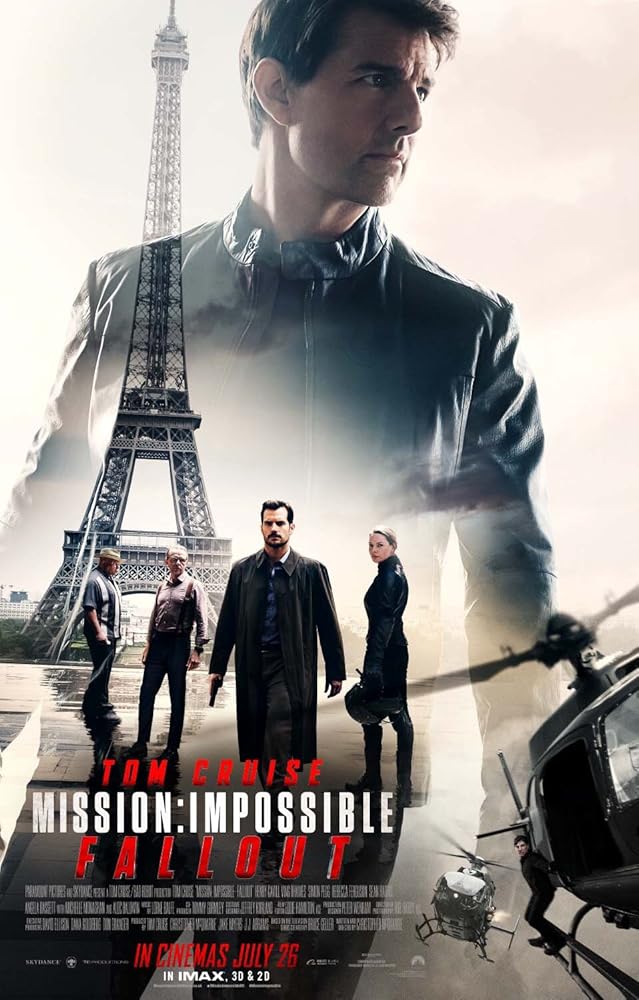
Prior to this film’s release, my personal favorite entry of the Mission Impossible series was the fourth film, Ghost Protocol. This remained the case even after the release of the fifth film, Rogue Nation, which was just as well-received as its predecessor if not arguably more so. This then led to a genuinely legitimate debate at the time as to which one was the series’ best installment. And while I will agree that Rogue Nation had a better villain, I still prefer Ghost Protocol by a slight margin as it was the first entry of the series to not just be about Ethan Hunt by giving the rest of his IMF teammates solid character development. By comparison, Rogue Nation went back on this a bit by being a bit more Ethan-centric though, thankfully, this wasn’t the case for the entire film. And now we come to Fallout, the second MI film in a row to be directed by Christopher McQuarrie, which is more like Ghost Protocol in terms of balancing Ethan and his teammates’ roles in the plot. Obviously, like every other Mission Impossible film, Ethan Hunt is still the main character but this one also manages to give him some of the best character development that he’s had in the entire series. His commitment to stopping Solomon Lane and his followers forces him to take some major risks to achieve that, including a temporary ‘alliance’ with Lane’s associates to break him out of prison. As the film goes on, though, it’s reasserted that Ethan is still very much one of the good guys, and there’s even some nice closure to his relationship with his ex-wife Julia (Michelle Monaghan), who’s revealed to have remarried to another doctor, Erik (Wes Bentley). Meanwhile, just like Ghost Protocol, the film does a nice job of giving Ethan’s teammates decently sized roles in the story. It’s all headlined by Rebecca Ferguson returning as the badass Ilsa Faust, who initially finds herself in conflict with Ethan over orders from her superiors to kill Lane. Series mainstay Luther Stickell (Ving Rhames) also has a notable character moment when Ethan saves him during a botched operation in Berlin, even if said mission ends up setting the stakes of this film’s plot into motion. Finally, Simon Pegg is great once again as Benji Dunn even if Benji’s big character moments were in the previous two films.
This solid character development is then paired nicely with everything that director Christopher McQuarrie brought to Rogue Nation. Under his direction, Fallout features some of the best action sequences in recent years, especially when seen in IMAX. There’s Ethan and CIA agent August Walker’s (played excellently by Henry Cavill) HALO jump into Paris, their brawl with one of their targets within a bathroom, and an intense chase through the streets of Paris with Ethan on a motorcycle… and yes, that’s just to name a few. Ultimately, though, arguably the best action sequence in the film is its finale, in which Ethan and company try to stop Lane and Walker, the latter of whom is revealed to be the extremist behind this terrorist plot, from detonating two nuclear bombs in the Kashmir region. Whether it’s Ethan giving chase to Walker in a helicopter, the two of them brawling on a cliffside, or Benji and Ilsa trying to deal with Lane, this is easily one of the most intense finales that has ever been seen on film due in large part to how high the stakes are. Granted, previous MI films have done a nice job in creating tense scenarios, like in Ghost Protocol when Ethan and his team were on their own in their efforts to stop a Russian strategist from starting a nuclear war. But in the case of Fallout, which also focuses on a plot involving nuclear weapons, having Ethan and co. in the same location as the nukes really stresses the consequences of what will happen if they fail. And for the record, it literally goes to the last second with this, complete with a bright white flash… that’s ultimately revealed to be sunlight, but the point still stands. And because of all this, Mission Impossible – Fallout manages to surpass all its predecessors as the new high mark of the franchise. Plus, if that wasn’t enough, it’s recently been confirmed that Christopher McQuarrie will return to helm two more sequels, which will be filmed back-to-back for releases in 2021 and 2022, respectively.
And that concludes Part 2 of Rhode Island Movie Corner’s list of my Top 12 Favorite Films of 2018. Thanks for following along and be sure to check back in tomorrow for Part 3, where we’ll be delving into films 6 through 4.