Well, folks, another year of Rhode Island Movie Corner’s Annual End of Summer Fan Poll has come and gone, and as always, I couldn’t be happier with the results. As such, I’d like to start by thanking everyone who participated in this year’s event as well as anyone who helped to share it around on social media. Those who partake in the latter are particularly instrumental in giving this annual event of ours some attention, especially given that, to be perfectly blunt, I’m mainly just a freelance film critic who has been self-publishing my reviews/retrospectives/etc. on this site for the past decade. Case in point, some of you might have noticed that I extended the voting period for this year’s poll an extra day due to a special request from my older brother Chris, whose busy schedule kept him from partaking in the voting process before the end of my initial September 1st cutoff date. Had he not messaged me, this year’s poll would’ve ended with only 40 votes, and while it would’ve been the lowest turnout in this event’s history, it also wouldn’t have bothered me that much because, at the very least, I always hope to achieve a minimum of 40 votes every year because I feel like that’s a good round number for this sort of thing. Thanks to that one extra day of voting, what would’ve originally ended up being an event-low… turned into a record-shattering turnout of 119 (!!!) votes! This is the first year that our annual poll has managed to attract over 100 responses which, as you might have guessed, is a development that delights me to no end. Once again, I express nothing but gratitude to everyone who helped us reach this significant milestone. And so, with all that out of the way, let’s not waste any more time, folks, as we’ve got fourteen films to talk about today. Without further ado, these are the films that earned your many, many votes as your favorite films from the 2022 summer season.
FIRST UP, WE
HAVE TWO FILMS THAT EARNED ONE VOTE EACH
THE GRAY MAN

We start things off with a film that, technically, was primarily
a streaming release via Netflix. On paper, this may seem like an instant
disqualification from being considered for this event given that I only focus
on theatrical releases, but this film did see a brief theatrical release the
week before it hit the service, which is something that Netflix has done before
for other films such as Martin Scorsese’s The Irishman, Zack Snyder’s Army
of the Dead, and the Shawn Levy directed Ryan Reynolds vehicle The Adam
Project. This is also something that I can personally vouch for as a Team
Member at the Universal Orlando resort as our on-site Cinemark theater has screened
all these films on the big screen. And really, even if I didn’t have that sort
of proof, it shouldn’t be that surprising that this got some form of theatrical
release given that it’s the latest from the directorial duo of brothers Joe and
Anthony Russo who, of course, are best known at this point for their work in
the Marvel Cinematic Universe, where they’ve been responsible for some of its
greatest outings like Captain America: The Winter Soldier and Avengers:
Endgame. After a brief detour into arthouse territory with last year’s crime
drama Cherry, the Russo brothers return to the genre that they’ve largely
been known for in recent years with an adaptation of author Mark Greaney’s 2009
novel of the same name, the first of what is currently a 12-book series. Ryan
Gosling headlines the film as the titular ‘Gray Man’ Court Gentry AKA Sierra
Six, a long-time CIA assassin who, after his latest operation results in him
taking out a former Sierra agent, is forced to go on the run after the rogue
agent, Sierra Four, provides him with a bunch of information that exposes the
corrupt business dealings of some of his CIA superiors.
What follows is, admittedly, an incredibly straightforward
action-thriller plot that hits all the usual narrative beats that you’d expect
from a story in which a highly trained government agent is targeted by his own
organization when he uncovers its corrupt secrets. Whether it’s the gradual
reveals of the main protagonist’s dark past or the use of some of his closest
allies as bait (in this instance, his first handler and his medically afflicted
niece), you’ve undoubtedly seen this kind of story play out before in other
films and TV shows. Despite this, however, the film never drags at any point
and gives plenty of opportunities for the Russos to display their talents when
it comes to directing top-notch action sequences. And while the formulaic plot doesn’t
give the film’s stacked ensemble cast a lot to work with, said cast is still
quite strong, with Ryan Gosling headlining the film as well as someone as
charismatic as Ryan Gosling can while being backed by solid supporting players
such as Ana de Armas as Dani Miranda, the lone CIA agent who ends up teaming up
with Six, and Billy Bob Thornton as his longtime handler Fitzroy. Ultimately,
though, the biggest star of the show is Chris Evans in a delightfully
against-type performance as Lloyd Hansen, the downright psychopathic mercenary
who’s brought in to kill Six. In short, while it’s by no means the best project
that either the Russos or longtime MCU screenwriters Christopher Markus and
Stephen McFeely have ever worked on, The Gray Man is still a largely
well-tuned action flick. As such, it’s easy to see why this is being primed up
to become a major franchise for Netflix, with both a sequel and spin-off (the
latter being developed by Deadpool and Zombieland co-writers Paul
Wernick and Rhett Reese) in the works.
DC LEAGUE OF SUPER-PETS

At the time of this post’s publication, we are a little more
than a week away from the release of one of the superhero genre’s most
talked-about installments in recent years, Black Adam, the long-awaited live-action
debut of the DC Universe’s infamous anti-hero and longtime rival of Shazam,
which Dwayne ‘The Rock’ Johnson has been attached to for years. As it turns
out, though, this wasn’t the only DC project that Johnson and his production
team would work on as they also developed an animated film that would undoubtedly
appeal to those who are arguably a bit too young for the darker and far more intense
affair that Black Adam is shaping up to be. Directed by Jared Stern
(best known for his work as a writer and creative consultant for the Warner
Bros. produced LEGO films), DC League of Super-Pets is based
around the Legion of Super-Pets, a squad of superpowered pets who are owned by
members of the Justice League. Johnson, of course, headlines the project as
Superman’s loyal canine Krypto the Superdog, who teams up with a bunch of
rescues from an animal shelter who have all been given superpowers thanks to a
batch of orange kryptonite to rescue Superman and the Justice League from a
trap set by Lex Luthor and a diabolical guinea pig named Lulu. While the film
didn’t make a lot of noise at the box office, only grossing about $199 million
on a $90 million budget, it fared relatively well with critics and I think it’s
safe to say that it must’ve performed even better with audiences. Plus, from
what I’ve heard, it’s also quite nice that the film serves as a lovely tribute
to the powerful and heartfelt bonds that can be formed between a pet and its
owner.
Also, I’d be remiss
if I didn’t mention the part about this film having a post-credits scene where none
other than Black Adam makes an appearance along with his dog Anubis; both of
whom are, as you’ve probably guessed, voiced by Dwayne Johnson.

THE FOLLOWING
TWO FILMS EACH EARNED TWO VOTES
FIRESTARTER

Here we have the latest adaptation of one of the many works
of legendary author Stephen King. The source material in question is King’s
1980 novel Firestarter, which follows a father and daughter, Andy and
Charlie McGee, who find themselves targeted by a government group known as ‘The
Shop’ that seeks to control the latter’s pyrokinetic abilities. This story was
originally adapted to the big screen in 1984 in a film that was notable for
being one of the earliest leading roles for Drew Barrymore as Charlie after her
breakout debut in E.T. the Extra-Terrestrial. It ultimately proved to be
a dud with critics (King himself wasn’t too pleased with it either), but at the
same time, I wouldn’t be surprised if there are some out there who consider it
to be a cult classic of its era. As for the new remake, it was produced by one
of the leading forces behind the modern era of the horror genre, Blumhouse
Productions, with Ryan Kiera Armstrong starring as Charlie and Zac Efron as her
father Andy. It also notably featured a score composed by the legendary John
Carpenter, working alongside his son Cody and frequent collaborator Daniel
Davies as they’ve been doing for the past few years on projects such as the
recent trilogy of Halloween films. Despite all this, however, this new
take on Firestarter didn’t fare any better than the 1984 film did with
critics; in fact, many argued that it was even worse by comparison. If
anything, though, while it only did around $15 million at the box office, it
did, apparently, get some sort of financial boost when it was paired with,
ironically enough, the next film that we’ll be talking about during its opening
weekend as part of a drive-in theater double feature.
JURASSIC WORLD:
DOMINION

Billed as not only the finale to the Jurassic World trilogy
but also the entire Jurassic Park franchise, Jurassic World: Dominion
saw the original Jurassic World’s director Colin Trevorrow return to
close out the trilogy after J.A. Bayona stepped in to direct 2018’s Jurassic
World: Fallen Kingdom due in large part to Trevorrow’s commitment at the
time to Star Wars: Episode IX. And practically from the moment that it
was announced, it was clear that Dominion was being set up to be the
very definition of a film franchise’s ‘grand finale’, especially once it was
revealed that the film would see the return of the original Jurassic Park’s
lead trio of Sam Neill’s Alan Grant, Laura Dern’s Ellie Sattler, and Jeff
Goldblum’s Ian Malcolm. Goldblum had already made a brief cameo in Jurassic
World: Fallen Kingdom, but as for Neill and Dern, this was the first time
that either of them had appeared in this series since Jurassic Park III back
in 2001. But upon the film’s release, we once again found ourselves dealing
with what has very much been the recurring trend for this franchise where,
despite being the pop-cultural juggernaut that it is, it has never been able to
match the same level of critical acclaim as the original Jurassic Park from
1993 with any of its sequels. In fact, Dominion ended up attracting some
of the worst reviews of any film in the franchise with a series-low 29% score
on Rotten Tomatoes, but as usual, this didn’t stop it from being another big
hit at the box office. At the time of this post’s publication, it has just
recently passed the same $1 billion mark that both of its predecessors reached.
Apart from the usual recurring criticisms that these films
have faced regarding logistical gaps in their plots and questionable decisions
made by their characters, it’s safe to say that one of the most talked-about
‘shortcomings’ of Dominion is how, despite bearing the Jurassic
Park/World pedigree, it is surprisingly light on dinosaur-related set pieces.
Instead, more time is spent on the film’s main plot of a sinister conspiracy orchestrated
by Biosyn, the longtime genetics rival of John Hammond’s defunct company InGen,
to unleash a plague of prehistoric locusts upon the world that will give them control
of the global food supply market. And bear in mind, this film boasts the
longest runtime of any film in the series at 146 minutes long, so it’s truly
saying something when a Jurassic film is severely lacking in the main
thing that people come to them to see, dinosaurs. At the very least, though,
the action set pieces that are in this film (whether they have a dinosaur or
not) are well-handled, with Trevorrow doing a nice job of upping his visual
game when compared to the more sterile visual palette of the first Jurassic
World. And if anything, it’s nice to see the return of the trio of Grant,
Ellie, and Malcolm in a way that lets them play a prominent role in the plot
instead of just being a bunch of cameos while also working quite well alongside
World’s lead duo of Chris Pratt and Bryce Dallas Howard.
At the end of the day, it’s clear that there are two
distinct camps when it comes to one’s thoughts on the Jurassic Park/Jurassic
World franchise. Obviously, there are quite a lot of folks out there who feel
that this series peaked with Steven Spielberg’s 1993 original and hasn’t
managed to recapture the same kind of cinematic magic ever since. But at the
same time, there are also clearly folks out there who, even if they don’t think
that any of the sequels are as good as the original, still like a decent number
of them. I believe that this is a major reason why this series continues to be
one of the most prominent film franchises of all time regardless of how poorly most
of its films have fared with critics. They’ve certainly done well in this
annual poll of ours, as the first Jurassic World was the third-place winner
of 2015 with four votes total. The same, admittedly, can’t be said for Fallen
Kingdom, which didn’t get any votes in the 2018 poll, but that uneventful showing
was very much redeemed by Dominion’s solid turnout in this year’s poll,
and for the most part, I think it’s easy to see why. As someone who’s on the
side of ‘those who’ve liked if not necessarily loved most of the sequels’, Dominion
is obviously far from being the franchise’s best outing but still has enough
enjoyable moments in it to be a decently entertaining summer blockbuster. If
anything, I give this film a lot of credit for how it managed to be one of the
first big Hollywood productions that was able to overcome all the newfound
complications that spawned from the chaos of the COVID-19 pandemic.
AS FATE WOULD
HAVE IT, WE GO FROM TWO FILMS WITH TWO VOTES… TO THREE FILMS WITH THREE VOTES!
DOWNTON ABBEY:
A NEW ERA

2010 saw the debut of Downton Abbey, a 1910’s/1920’s British
period drama created by veteran screenwriter Julian Fellowes that followed the
daily escapades of the aristocratic Crawley family, who reside in their luxurious
Yorkshire estate that the show takes its name from. First debuting on the U.K.’s
ITV network, the show was an immediate smash hit with both critics and
audiences and proceeded to gain even more attention once it made its American
debut the following year on PBS. In other words, it’s safe to say that it
promptly became one of the most well-known shows of its time; think of it as
the precursor to current hit period dramas such as The Crown and Bridgerton.
With all this success under its belt, the series transitioned to the big screen
in 2019 with a Downton Abbey film, and even though it had been four
years since the show had ended in 2015, it proved to be a considerable critical
and commercial hit. Thus, not long after Fellowes had completed work on the
first season of The Gilded Age, it was confirmed that a sequel would be
in the works, titled Downton Abbey: A New Era. In this film, the Crawley
family simultaneously deals with a filmmaker’s use of their estate for a silent
film and the mysterious revelation that the Dowager Countess of Grantham was
gifted a South France villa by a recently deceased old flame of hers. With
practically all the key members of the show’s massive ensemble cast reprising
their roles, A New Era was widely touted as a satisfying bit of fan service that may not have reinvented the wheel but gave its fans exactly
what they wanted.
THE BLACK PHONE
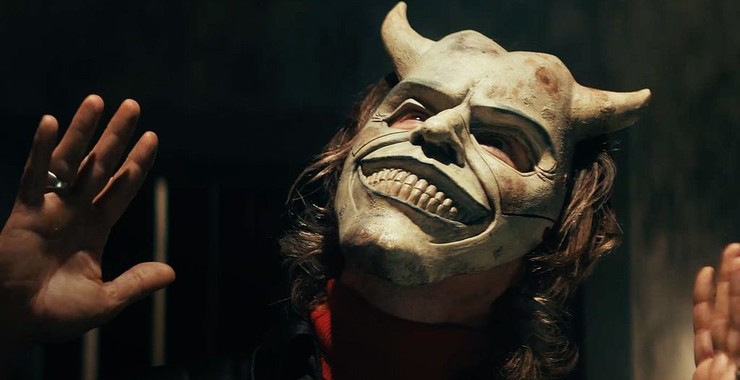
Scott Derrickson may have backed out of directing the sequel
to Doctor Strange, but by all accounts, this was ultimately for the best
as it gave him and his longtime writing partner C. Robert Cargill the perfect
opportunity to move ahead on a project that they’d been working on for years.
Thus, instead of Derrickson and Cargill’s second go-around with the Master of
the Mystic Arts, we got a 1970’s-set supernatural horror-thriller out of them
in The Black Phone, an adaptation of the 2004 short story of the same
name, first published in the 2005 short story collection 20th
Century Ghosts by author Joe Hill, the son of Stephen King. Ethan Hawke,
who had previously collaborated with Derrickson and Cargill in 2012’s Sinister,
stars as ‘The Grabber’, a mysterious masked serial killer who has abducted
multiple children from a small Denver neighborhood. His latest victim, a
teenage boy named Finney, ends up being contacted by the spirits of the
Grabber’s previous victims from the allegedly broken black phone in his
basement cell, who then proceed to instruct him on how to escape. Despite only
opening at the #4 spot at the box office during its opening weekend, The Black Phone
went on to earn over $161 million worldwide, an excellent turnout for a
film with a modest $16-18 million budget. And in a year that has given us a
bunch of acclaimed horror films such as Ti West’s X and Jordan Peele’s Nope,
The Black Phone was another one of the genre’s big hits. While some
critics felt that it didn’t fully deliver on its horror elements, it was seen
as a highly faithful adaptation of its source material that was fully bolstered
by strong lead performances from not only the always reliable Ethan Hawke but
also its young stars Mason Thames as Finney and Madeleine McGraw as his sister
Gwen, who also seeks to help her brother after having psychic dreams about his
predicament. In short, this was very much a success story for all involved, and
just like when Edgar Wright gave us Baby Driver as his first film after
leaving the first Ant-Man, Scott Derrickson proved that he wouldn’t be
completely waylaid by an unrealized stint in the MCU.
LIGHTYEAR

While Pixar has continued to be one of the most prolific
studios in the world of animation with a vast array of animated masterpieces
that span nearly four decades of the studio’s existence, it can very well be
argued that the Toy Story franchise still stands as their most iconic
endeavor. After all, the original Toy Story from 1995 was the film that
made them a household name and almost single-handedly revolutionized the art of
computer-animated films. Since then, every mainline installment of the
franchise has been a massive critical and commercial success, with the third
and fourth films both securing Best Animated Feature Oscars and over $1 billion
runs at the box office; 2010’s Toy Story 3 even managed to become only
the third animated film in history to secure a Best Picture nomination. Simply
put, the adventures of a bunch of toys who come to life when their owners
aren’t around have become undeniable staples of the pop cultural zeitgeist,
especially thanks in large part to their lovable cast of characters that are
headlined, of course, by the dynamic duo of Woody the pull-string cowboy doll
and Buzz Lightyear, Space Ranger. And yet, while Woody has undoubtedly been the
franchise’s main protagonist, Buzz has arguably been its biggest ‘mascot’ given
all the pieces of spin-off media that he’s headlined, from the various Toy
Story video games (including the widely beloved video game adaptation of Toy
Story 2) to a series of hugely popular dark rides at various Disney
theme parks. And in 2000, just one year after the release of Toy Story 2,
Buzz would end up becoming the star of his own TV series spin-off (a first for
a Pixar property), Buzz Lightyear of Star Command.
Developed by Walt Disney Animation’s television division and
the duo of Mark McCorkle and Bob Schooley (who would go on to create another
hit Disney animated series, Kim Possible), the show was largely a result
of the television studio’s highly successful batch of productions in the ’90s
and the rise of Disney’s direct-to-video market. During Toy Story 2’s
transition from a non-Pixar produced direct-to-video sequel to a theatrical
release directly developed in-house, McCorkle, Schooley, and Disney
Afternoon mainstay Tad Stones crafted a spin-off series focusing on the ‘real’
Buzz Lightyear and his crew of fellow Space Rangers as they battled the evil
Emperor Zurg. The result was a show that proved to be solidly popular with
audiences to the point where, nowadays, many are surprised that it hasn’t yet been
put on Disney+. It first debuted with a direct-to-video feature-length film, Buzz
Lightyear of Star Command: The Adventure Begins, and while Buzz was voiced
by Patrick Warburton in the show, Tim Allen returned to reprise his role from
the Toy Story films for the home video release. And while the film and
show were traditionally animated, Pixar provided a computer-animated opening
sequence for the film that was directed by Pixar animator Angus McLane. In
2022, McLane made his solo directorial debut (after previously co-directing
2016’s Finding Dory with Andrew Stanton) with a unique new take on everyone’s
favorite Space Ranger, simply titled Lightyear.
Lightyear is presented as the in-universe feature
film that would inspire the Buzz Lightyear toy line that, of course, spawned
the Buzz toy that the Toy Story gang’s original owner Andy would get for
his birthday in the first film. How does the Buzz Lightyear of Star Command series
factor into this, you ask? Well, as McLane has put it, it’s now seen as the
animated spin-off to the ‘live-action’ Lightyear film. Admittedly, this
explanation caused quite a bit of confusion amongst audiences when the project
was first announced due to all the crazy semantics behind it, but at the end of
the day, I’d argue that it’s not as big of an issue as the internet made it out
to be. However, the internet proved to have some other issues with this film
upon its release; while not critically panned, it did face the same criticism that
affected other ‘notoriously lesser-received’ Pixar films for not exactly having
the most refined of screenplays. But as anyone who’s followed me on this site
for several years knows, I’m not bound to the same ultra-high expectations that
most of the internet has for all future Pixar films. Sure, Lightyear is,
admittedly, a considerably straight-forward sci-fi adventure and ‘origin’ story
for Buzz, but that’s not always a bad thing as this is still a highly
entertaining film full of exciting action sequences, Pixar’s trademark gorgeous
animation and a bunch of fun call-backs to various Buzz-related scenes and
quotes from the Toy Story films. Plus, just because this is your
standard tale of an established soldier who’s forced to work with a bunch of
inexperienced rookies to save the day, that doesn’t mean that it lacks any of
those classic Pixar tearjerker moments, such as when Buzz views the final video
message given to him by his longtime friend Alisha Hawthorne before she dies.
Despite all the immense pressure that clearly must’ve come
from having to take over Tim Allen’s most iconic animated role, Chris Evans is
a fantastic fit as this film’s interpretation of Buzz Lightyear as he brings
the same level of charisma here that he brought to the role of Captain America
in the MCU. Keke Palmer, meanwhile, is equally terrific as Buzz’s main ally
Izzy, Alisha’s granddaughter, who faces her own personal struggles in her
efforts to become a Space Ranger just like her grandmother. They’re then backed
by some incredibly entertaining supporting players such as Taika Waititi as
their crew’s inexperienced yet happy-go-lucky recruit Mo, Dale Soules as the crotchety
parolee (and demolitions expert) Darby, and of course, the film’s best
character, Buzz’s loyal robotic cat companion Sox (voiced by Pixar regular
Peter Sohn). Heck, I was even fine with this film’s big twist revolving around
its version of Buzz’s arch-nemesis Zurg, who’s revealed to be an older Buzz
from an alternate timeline… which, I’m aware, is a debate that I’m very much in
the minority on. Were folks just mad that this film didn’t maintain the gag
from Toy Story 2 in which a Zurg toy tells the other Buzz Lightyear toy
that tags along with Andy’s Buzz and the gang that he’s his father? Because if
so… I don’t even recall the Buzz Lightyear of Star Command series retaining
what was primarily just a homage to the iconic Darth Vader reveal scene from The
Empire Strikes Back. Whatever the case, Lightyear is yet another
fine addition to Pixar’s legendary filmography that truly didn’t deserve to
become another one of its box-office bombs, especially because of all the lame
conservative outcry that occurred over a moment in the film where Alisha shares
a kiss with her wife Kiko.
THIS YEAR’S
EVENT SAW SIX VOTES COME IN THROUGH OUR WRITE-IN SECTION. ONE OF THESE VOTES
WAS, ADMITTEDLY, FOR A FILM THAT WAS ALREADY ONE OF THE AVAILABLE OPTIONS, BUT THIS
NEXT FILM WOULD BE THE ONE THAT EARNED THE OTHER FIVE VOTES.
WHERE THE
CRAWDADS SING

First published in 2018, author Delia Owens’ murder mystery
novel Where the Crawdads Sing, which follows a young self-raised woman from
the marshlands of North Carolina named Kya who is accused of murdering her
ex-boyfriend Chase, proved to be a big hit with audiences. The book has sold
over 15 million copies as of this year and has maintained a spot on the New
York Times’ Best-Seller List for the past three and a half years. Much of that
success came from it being recognized by the official book club of Reese
Witherspoon’s production company Hello Sunshine; as you might have guessed, this
then naturally resulted in Witherspoon and her team securing its film rights. Backed
by all that (plus the benefit of having Taylor Swift record a single for the
soundtrack, ‘Carolina’), the film adaptation ended up being just as big
of a financial hit as its source material, grossing over $135 million worldwide
on its modest $24 million budget. Critics were a lot more split on it, however,
with several feeling that it suffered from an uneven tone as it shifted between
being a murder mystery and a romantic drama. And yet, that clearly did nothing
to dissuade fans of the book from showing their support for the film, and
despite its mixed critical reception, lead actress Daisy Edgar-Jones earned
rave reviews for her performance as Kya. In short, there’s no denying all the
hype that this adaptation generated.
WELL, FOLKS, IT
TURNS OUT THAT I’LL BE ABLE TO DO A TOP 5 THIS YEAR WHEN IT COMES TO THE
EVENT’S BIGGEST WINNERS! COMING IN AT FIFTH PLACE WITH SIX VOTES…
MINIONS: THE
RISE OF GRU

No matter how much it may be the utter bane of many folks’
existence, there’s no denying that the Despicable Me franchise has been an
unstoppable juggernaut in the world of animation. Not only was it responsible
for immediately turning its production company, Illumination, into a genuine
box-office rival to the likes of Disney, Pixar, and DreamWorks, but since every
installment of the series has been a massive financial hit, it currently stands
as the highest-grossing animated film franchise of all-time. And so, after being
absent from the big screen for half a decade, this year saw the return of Universal
and Illumination’s biggest cash cow with Minions: The Rise of Gru, a
follow-up to the 2015 spin-off/prequel Minions, which focused solely on
the franchise’s titular collection of goofy yellow banana-loving henchmen in
the time before they found their ideal leader, Gru. But as you can undoubtedly guess
from the title of this sequel (that’s also technically still a prequel since
Gru is only eleven here), this film gives the series’ main protagonist (once
again voiced by Steve Carell) a more prominent role as the young wannabe supervillain
crosses paths with a legendary supervillain group known as the Vicious 6. And
to the surprise of no one, Minions: The Rise of Gru has been one of the
highest-grossing films of the year, currently running at over $928 million worldwide.
Critically, the film ended up being on par with the first two Despicable Me films
rather than the duo of Minions and Despicable Me 3, with the
consensus being that, above all, this series continues to successfully appeal
to its target audience. Thus, with a fourth Despicable Me film on the
way for a 2024 release, it’s safe to say that this series is still going strong
over a decade since its initial debut.
TIED FOR FOURTH
PLACE WITH SEVEN VOTES EACH…
THE BOB’S
BURGERS MOVIE

For the past decade, one of the most popular animated
sitcoms in a field dominated by the likes of The Simpsons, Family Guy,
and South Park has been Bob’s Burgers. Created by Loren Bouchard
(co-creator of Adult Swim’s Home Movies), the series follows the titular
Bob Belcher and his family (his wife Linda, their two daughters Tina and Louise,
and their son Gene) as they go about their daily lives running their family’s burger
joint. With several awards under its belt (including two Primetime Emmys) and a
considerable fan following, Bob’s Burgers has very much become a
prominent staple of the pop cultural zeitgeist, and sure enough, the show
continues to run strong to this day, having just recently concluded its 12th
season with a 13th on the way. And if that wasn’t enough, Bob’s
Burgers fans were given an extra treat this summer as the series followed
in the footsteps of another Fox animated series, The Simpsons, by
getting its own theatrically released film. In The Bob’s Burgers Movie,
the Belcher family works to save their restaurant from being shut down when a
massive sinkhole forms right in front of it. Sadly, the film didn’t do too hot
at the box office, only grossing around $34.2 million on a $38 million budget.
However, that didn’t stop it from attracting strong reviews from both critics
and audiences. Sure, there was some debate regarding the overall necessity of
it being a theatrical release (or, in other words, to paraphrase an observation
made by Homer Simpson in The Simpsons Movie, why pay for something that
you already watch for free on TV?), but regardless of all that, many agreed
that the series’ strong writing and well-developed characters were successfully
carried over to the film, resulting in an undeniable crowd-pleaser for its fans.
THOR: LOVE AND
THUNDER

Ever since the release of the first Thor back in
2011, the titular Asgardian God of Thunder has been a mainstay of the Marvel
Cinematic Universe, forming one-third of the series’ equivalent to the DC
Universe’s Trinity of Batman, Superman, and Wonder Woman alongside Iron Man and
Captain America. Despite this, however, Thor’s arguably had the rockiest run of
any main protagonist of the MCU when it comes to the overall reception of his
solo outings. While the first Thor was a solid critical and commercial
hit, it’s not exactly seen as one of the MCU’s best films nowadays. The same
can be said for its 2013 sequel, Thor: The Dark World… which, in part
due to its rather troubled production, is widely seen as one of the MCU’s
weakest films if not the absolute ‘worst’. This, along with Chris Hemsworth’s
growing disillusionment with the role at the time, left Thor’s future in the
MCU rather uncertain by the end of Phase 2; thankfully, that changed once Phase
3 rolled around and we got Thor’s third solo outing, 2017’s Thor: Ragnarök.
At a time when Marvel Studios was beginning to recruit some of its most unique
choices for directors, Ragnarök saw them bring in Taika Waititi, best
known for his quirky comedies such as 2014’s What We Do in the Shadows. And
under his direction, Thor: Ragnarök was the first of the MCU’s Thor films
to truly embrace the wackier parts of its cosmic source material, resulting in
one of the most visually striking and downright hilarious installments of the
MCU that instantly became one of its best-received releases. So, naturally,
this then led to Waititi being brought back to direct the fourth Thor film,
Thor: Love and Thunder, thus making Thor the first MCU protagonist to headline
four solo films (not counting, of course, his appearances in other films,
whether as a brief cameo or part of the Avengers films).
All this, along with the reveal that the film would see the
return of Thor’s ex-girlfriend Jane Foster, taking on her newly minted role from
the comics as being worthy of wielding Thor’s mighty hammer Mjolnir and
becoming his female counterpart AKA the Mighty Thor, seemed to poise Love
and Thunder as yet another runaway hit for the MCU. And yet… that wasn’t
exactly the case when the film hit theaters. It wasn’t downright panned or
anything and it obviously did well at the box office like every other MCU film
has done (currently standing at around $760 million worldwide), but unlike the
largely critically acclaimed Ragnarök, Love and Thunder was
surprisingly far more polarizing amongst critics and audiences to the point
where, I’ll just say it, some folks out there seemed particularly enraged by
it. Its 64% rating on Rotten Tomatoes is the lowest ‘Fresh’ score that any MCU
film has gotten to date (only surpassing the franchise’s first Rotten-rated
film, last year’s Eternals (47%)) and is even lower than The Dark
World’s 66% rating. This has straight-up led to some debate over whether
the MCU has been starting to lose its touch given the mixed reception that some
of its Phase 4 films have been getting… which, to be perfectly frank, is an
argument that I strongly disagree with given the high marks that films like Shang-Chi
and the Legend of the Ten Rings and Spider-Man: No Way Home have
gotten. And, of course, there are all the new MCU shows that have come out on
Disney+, which have arguably fared even better with critics and audiences; simply
put, the MCU clearly isn’t going anywhere anytime soon no matter how much its
biggest critics want it to die off.
But to go back to Thor: Love and Thunder, I’m utterly
baffled as to why this film is being treated like it’s some sort of plague upon
the superhero genre and why someone as lovably goofy as Taika Waititi has
suddenly become so hated online to the point where some jackasses tried to destroy
his career by digging up old tweets a la the whole situation with James Gunn a
few years ago that temporarily got him fired from Guardians of the Galaxy
Vol. 3. Well, okay, to be perfectly blunt, I do know why this
film has gotten so much flak as it has everything to do with the light-hearted
tone and atmosphere that Waititi has brought to his two Thor films. But
when I say that I don’t get it, I truly mean that because, to be clear, this
was one of the main reasons why Ragnarök was such a big hit… and yet, in
Love and Thunder’s case, it’s now being argued that this ruins the film
because it diminishes the impact of its big emotional moments. However, both
these films have several instances that firmly disprove what I feel to be one
of the biggest myths surrounding Waititi as a filmmaker; the argument that he’s
incapable of producing highly effective emotional moments. In Ragnarök,
this included scenes like Thor and Loki’s last moments with their father Odin
before he dies and the scene where Thor expresses his disappointment at how
Loki ultimately became his foe rather than his greatest ally, which Loki reacts
to in a solemn manner rather than delivering one of his usual snarky retorts. That
latter scene is one of my favorite emotional moments in the entire MCU and is
often overlooked because everyone focuses on what comes right after that, Thor
and Loki’s ‘Get Help’ routine.
As for Love and Thunder, yes, I’ll fully admit that
it is quite arguably the MCU’s most light-hearted installment to date thanks in
large part to, of course, Taika Waititi’s style of direction. However, that
doesn’t mean that this film lacks the kind of strong emotional moments that the
franchise has always been known for, and in this instance, that mainly comes
via its handling of the storyline of Jane Foster’s losing battle with cancer,
something that not even her newfound powers as the Mighty Thor can stop. Every
sequence that addresses Jane’s cancer is treated with the utmost respect and it
all culminates in the film’s devastating finale in which Jane finally succumbs
to it but did so on her own terms by joining Thor in the fight against Gorr the
God Butcher to help save the kidnapped children of Asgard. This then results in
Thor convincing Gorr to give up his plan to kill all the gods, instead using
the powers of Eternity to revive his lost daughter, Love. And once Gorr dies as
well from the effects of his cursed weapon, the Necrosword, Thor agrees to look
after Love, having finally begun to figure out his lot in life in a finale that,
in a refreshing turn of events, didn’t end up being your typical superhero/supervillain
fight. Plus, to make this whole ending even more touching, Love is played by
Chris Hemsworth’s daughter India, while Natalie Portman, Christian Bale, and
Taika Waititi’s children all have minor cameos in the film as Asgardian
children. All this, at the end of the day, helps me to sum up why I strongly believe
that this film has gotten way too much of a bad rap.
I’ll fully concede that Thor:
Love and Thunder is far from being the MCU’s most visually polished or
narratively-sound installment; however, I’d also argue that the film makes up
for all of that by being one of the MCU’s most personal endeavors. I already
mentioned the fact that the kids of both the film’s director and its stars all
appear in it, but because of its uncynical atmosphere and considerable number
of heartwarming moments, this is a film whose heart is very much in the right
place as an undeniable labor of love. Hell, it’s even in the damn title of the
film, LOVE and Thunder. And so, because of that, I can
forgive the fact that this film often feels like an improv-driven
buddy/romantic comedy that seemingly goes along without much of a purpose because,
for one thing, it does have a purpose (and a sweet one at that). As for its strong
emphasis on its humor, as someone who loved Ragnarök because of all the
great comedic touches that Taika Waititi brought to it, this didn’t bother me
in the slightest. Instead, I’m just left wondering yet again why some folks have
a completely irrational hatred for the implementation of humor in the superhero
genre because I’d argue that, without it, you’re left with a dour and soulless film
that’s the exact opposite of what this genre should be (I’m looking at you,
Snyder Cut…). Whatever the case, Thor: Love and Thunder is precisely the
kind of fun and easy-going superhero film that I always love to see from the
MCU; as Thor himself would put it, it’s another “classic Thor adventure”!
SPEAKING OF MCU
FILMS THAT ENDED UP ATTRACTING A SURPRISINGLY POLARIZING REACTION FROM BOTH
CRITICS AND AUDIENCES, COMING IN AT 3RD PLACE WITH EIGHT VOTES…
DOCTOR STRANGE
IN THE MULTIVERSE OF MADNESS

As I alluded to earlier when I discussed The Black Phone,
Scott Derrickson, by all accounts, seemed primed and ready to direct the
follow-up to the first Doctor Strange when it was officially announced
in 2019. And if that wasn’t enough, that initial reveal became even more
enticing when it was announced that it would be the MCU’s first proper horror
film, which was very much fitting given Derrickson’s extensive history with the
genre. But then, right at the start of 2020, Derrickson ended up backing out of
the project due to creative differences with the Marvel Studios team,
reportedly due to them not being completely onboard with some of the more radical
ideas that he had in mind for it. Thankfully, this didn’t end up completely
hindering either party as Derrickson and co-writer C. Robert Cargill finally
had the opportunity to develop their adaptation of The Black Phone while
Marvel quickly found a replacement who would naturally maintain the horror
route that they were going for in Sam Raimi. Obviously, Raimi is no stranger to
the horror genre thanks in large part to his iconic trilogy of Evil Dead films,
but at the same time, he’s also, of course, no stranger to the superhero genre either
as he was a major factor behind its big revival in the early 2000’s thanks to
his trilogy of Spider-Man films. Plus, to make this development even
more ironic, Spider-Man 2 included a nod to the Master of the Mystic
Arts 12 years before he ever debuted on the big screen in a scene where J.
Jonah Jameson’s assistant Hoffman name-drops Dr. Strange as a possible name for
the film’s main antagonist, Doc Ock, which Jameson likes but then immediately
notes that “it’s taken”.
Right off the bat, one of the best things about this film is
how it is very much a Sam Raimi-directed MCU film. No matter how much flak the
MCU has gotten over the years for allegedly never letting its directors display
their full creative talents, Doctor Strange in the Multiverse of Madness is
a prime example of the antithesis of that argument as it’s full of Raimi’s
directorial trademarks. Thus, you get everything from his wacky and creative
camera tricks (including a whole bunch of POV shots) to having his go-to
collaborator Bruce Campbell appear in a cameo that, naturally, results in
Campbell beating himself up. Raimi even gets to flex his horror muscles in ways
that you wouldn’t expect from a film from the largely family-friendly (and
Disney-backed) MCU with some of its utterly brutal character deaths. Through it
all, though, Raimi, just like when he made the Spider-Man films, also
does a great job of balancing the film’s most intense moments with the kind of
fun and light-hearted spectacle that the MCU has always been known for. In
other words, as much as this is, indeed, the MCU’s first true ‘horror’ film, it
still has all the classic MCU trademarks such as all the great bits of humorous
banter between characters and some incredibly stunning visuals, the latter of
which being something that the Doctor Strange films have always excelled
at thanks to its characters’ magical abilities. And given this film’s Multiverse
of Madness subtitle, it goes without saying that it certainly takes full
advantage of its premise when it comes to highlighting all the unique alternate
universes that the characters end up visiting, doing so in a way that makes it
more than just simple fanservice.
However, at the same time, I’d argue that Doctor Strange
in the Multiverse of Madness doesn’t rely on the concept of the multiverse
as extensively as last year’s Spider-Man: No Way Home. Nothing against
that film, for the record, but in its case, the multiverse was arguably the
most integral part of its plot, hence the highly anticipated appearances of
Tobey Maguire and Andrew Garfield’s versions of Spider-Man and their respective
villains. And sure, the same can be said for Multiverse of Madness in a
lot of places, including its own line of cameos ranging from the genuinely
unexpected like Anson Mount returning to play Black Bolt after the disastrous Inhumans
series (albeit an alternate universe Black Bolt but the point still
stands…) to ones that fans have been wanting to see for a long time such as
John Krasinski as the Fantastic Four’s Reed Richards AKA Mr. Fantastic. But
whereas Maguire and Garfield ended up playing significant roles in No Way
Home’s finale, the cameos in Doctor Strange are just that, cameos. As
a result, it could be argued that the multiverse is used more as the setting
for the events of the film rather than its most significant driving force. And in
this instance, I’d argue that this is a good thing because it doesn’t take away
from all the big character beats in this film, including the big reveal of its
main antagonist; none other than the Scarlet Witch herself, Wanda.
Yes, the longtime Avenger becomes Multiverse of Madness’
main antagonist as it’s revealed that she seeks the powers of multiverse-jumping
teenager America Chavez to travel to a universe where she can be with her two sons,
Billy and Tommy, who, in the main universe, were only part of the elaborate hex
that she created during the events of WandaVision. However, I think it’s
safe to say that this ended up being the most controversial aspect of the film because,
simply put, many of Wanda’s diehard fans didn’t take too kindly to this
development, especially in the wake of, as I just alluded to, her standout turn
in WandaVision. And yet, at the risk of pissing those folks off, this
was ultimately the best route to take and one that made sense given what we’ve
seen from Wanda in previous MCU films and shows (most notably, her takeover of
the town of Westview and how much it negatively affected its residents even
though it wasn’t an intentionally malicious act on her part). Plus, because
Wanda has had a lot of great character development these past few years…
technically, that automatically makes her one of the MCU’s best antagonists because
she’s arguably its best example yet of a villain who may be committing horrible
actions but does so with a sympathetic motive bolstered by all the devastating
tragedies that she’s endured. Thus, by the end of the film, Wanda does finally
realize how far she’s gone when she displays her dark side right in front of the
Earth-838 versions of Billy and Tommy and willingly sacrifices* herself to
destroy the artifact that was corrupting her, the Darkhold, but not before
being assured by her Earth-838 counterpart that Billy and Tommy will be all
right.
(*EDITOR’S NOTE:
I use the term ‘sacrifice’ loosely here because, as is often the case with the
world of comic book superheroes, it’s not completely clear if the destruction
of the Darkhold’s eternal shrine, Mount Wundagore, truly resulted in her
demise…)
But while Wanda’s heel turn obviously takes up a good chunk
of the film’s focus, that doesn’t mean that it forgets to be a Doctor
Strange film first and foremost, and sure enough, the MCU’s resident Master
of the Mystic Arts gets some great character beats of his own; in fact, they’re
arguably some of the best that he’s ever had in this entire franchise. In Strange’s
case, much of his character growth revolves around him finally gaining the
courage to move on from his most devastating losses that have often left him
disconnected from his friends and family, such as when he recounts the tragedy
of his sister Donna’s death when she drowned in a frozen lake when they were
kids to his Darkhold-corrupted variant. This also includes him coming to terms with
his failed relationship with his longtime girlfriend Christine Palmer, who
marries another man at the beginning of the film. After spending a lot of time
working alongside the Christine of Earth-838, whose relationship with that
universe’s Strange also went downhill, Strange tells her that “he loves her in
every universe” and that he’s never been able to admit something like that
before because he’s scared of losing the people that he cares about the most,
resulting in Christine encouraging him to “face his fears” before they go their
separate ways. It’s also nice that Rachel McAdams got a lot more to do this
time around as Christine instead of just being the passive love interest that
she was in the first film. As for the rest of the main cast, newcomer Xochitl
Gomez makes one hell of a great first impression as the wholly sympathetic
America Chavez while Benedict Wong continues to be one of the MCU’s best
supporting players from both a comedic and badass perspective as the newly
minted Sorcerer Supreme, Wong.
Upon its release, Doctor Strange in the Multiverse of
Madness became yet another financial hit for the MCU. Undoubtedly banking
on all the hype surrounding Sam Raimi’s hiring as its director (plus,
I’d argue, the benefit of having its teaser trailer serve as the billion-dollar
grossing Spider-Man: No Way Home’s post-credit sequence), the film has
grossed over $955 million worldwide, easily making it the highest-grossing film
of Raimi’s career. But to go back to what I said when I first introduced this
film, it did attract some polarizing reactions amongst critics and audiences
the same way that Thor: Love and Thunder did. Granted, I wouldn’t say
that this was ‘as polarizing’ as Love and Thunder as it did relatively
well with critics but believe me when I say that I have seen the same kind of surprisingly
hostile reactions directed toward this film for reasons that can range from the
decision to make Wanda the villain to those who let their expectations get the
better of them when it comes to this film’s cameos. Ultimately, though, I’d
argue that this film’s consistent subversion of expectations is one of the biggest
reasons why it very much succeeds at everything that it’s trying to be, whether
it’s a fun little adventure across the MCU multiverse (complete with a whole
bunch of fun cameos) or a classic Sam Raimi horror film that’s full of dark and
disturbing imagery… but also a hilariously morbid sense of humor.
THIS YEAR’S
RUNNER-UP, WITH FIFTEEN VOTES…
ELVIS

While he may only have a couple of directorial credits to
his name, Baz Luhrmann is undoubtedly one of the most unique filmmakers in the
industry thanks in large part to his distinct directorial style, from his lavish
visuals to the extensive soundtracks that run throughout his work. As a result,
this has produced films that, while sometimes polarizing amongst critics and
audiences, are easily some of the most talked-about releases of their time,
whether it’s his Oscar-winning jukebox musical Moulin Rouge or his ambitious
adaptation of The Great Gatsby. The same can very much be said for his
latest endeavor, a biopic covering the life and career of one of the most
iconic performers of all time, the King of Rock and Roll, Elvis Presley. But as
Luhrmann has gone on record stating, he didn’t just want to do a standard Elvis
biopic; thus, while the film does cover Elvis’ rise to fame and the events that
led to his tragic death at just 42, it's also a portrait of America in the
’50s, ’60s, and ’70s, highlighting both the cultural landscape that created
Elvis and the cultural landscape that he himself created. In doing so, it could
even be argued that the film is willing to address one of the most prominent long-standing
controversies surrounding Elvis; how he was heavily influenced by African
American music but, in his rise to fame, arguably left the very musicians who
paved the way for his success historically overlooked. To be clear, though,
that doesn’t mean that this is intended to be a deconstruction of Elvis’
legacy. The only reason why I bring up that controversy at all is because I’m well aware that there are plenty of folks out there who aren’t as enamored by
Elvis as the rest of the world.
Regardless of your views on the man himself, however, the
film does succeed in conveying how devastating the tragedy behind Elvis’
decline was because, at the end of the day, he was an all-around affable young
man with unmistakable potential as a performer who got royally screwed over by
his manager, Colonel Tom Parker, every step of the way. It’s a true emotional rollercoaster
to go from the satisfying moments in which Elvis manages to defy the demands of
the Colonel and flex his talents… only to then have those brief moments of gratification immediately upended by the Colonel’s latest scheme. As such, Elvis does come
off as a very sympathetic figure here and a lot of this is thanks to who’s
playing him. As pretty much everyone else has already said, Austin Butler
utterly kills it in the title role, perfectly embodying the spirit of Elvis
without ever falling into the trap of being nothing more than an imitation of
the man. And while your mileage may vary a lot more when it comes to Tom Hanks’
over-the-top performance as Colonel Parker, it’s still very much in line with
Luhrmann’s flashier style of directing and Hanks, as you’d expect, has an
undeniable screen presence. Thus, apart from a few minor issues such as it
being perhaps a bit too overlong at nearly three hours long and a surprisingly
limited supporting role for Olivia DeJonge as Elvis’ wife Priscilla, Baz Luhrmann’s
Elvis is a thoroughly engaging cinematic portrait of an indisputable
American icon.
PRIOR TO THE
BIG BOOST IN VOTER RESPONSES THAT WE ATTRACTED DURING OUR EXTRA DAY OF POLLING,
ELVIS WAS LEGITIMATELY GIVING THIS NEXT FILM A RUN FOR ITS MONEY. BUT AS
FASCINATING OF AN UPSET AS THAT WOULD’VE BEEN, THIS YEAR’S CHAMPION ENDED UP
BENEFITTING IMMENSELY FROM THAT LAST DAY SURGE. HOW MUCH SO, YOU ASK? WELL, BY
THE END OF IT ALL, THIS YEAR’S CHAMPION ENDED UP EARNING FIFTY-SIX VOTES,
NEARLY TRIPLING AVENGERS: ENDGAME’S 19-VOTE PERFORMANCE IN 2019… HECK,
THAT’S NEARLY HALF OF THIS YEAR’S VOTES. AND LET’S BE FRANK, FOLKS, WITH A
GRAND TOTAL LIKE THAT, I HIGHLY DOUBT THAT THIS RECORD WILL BE SURPASSED
ANYTIME SOON. SO, WITH ALL THAT IN MIND, FEEL FREE TO TAKE A BOW, TOM CRUISE
(OR, IN THIS CASE, GO FOR ANOTHER ROUND OF BUZZING THE TOWER), BECAUSE YOUR
LATEST FILM WAS THIS YEAR’S UNDISPUTED FRONTRUNNER!
TOP GUN:
MAVERICK
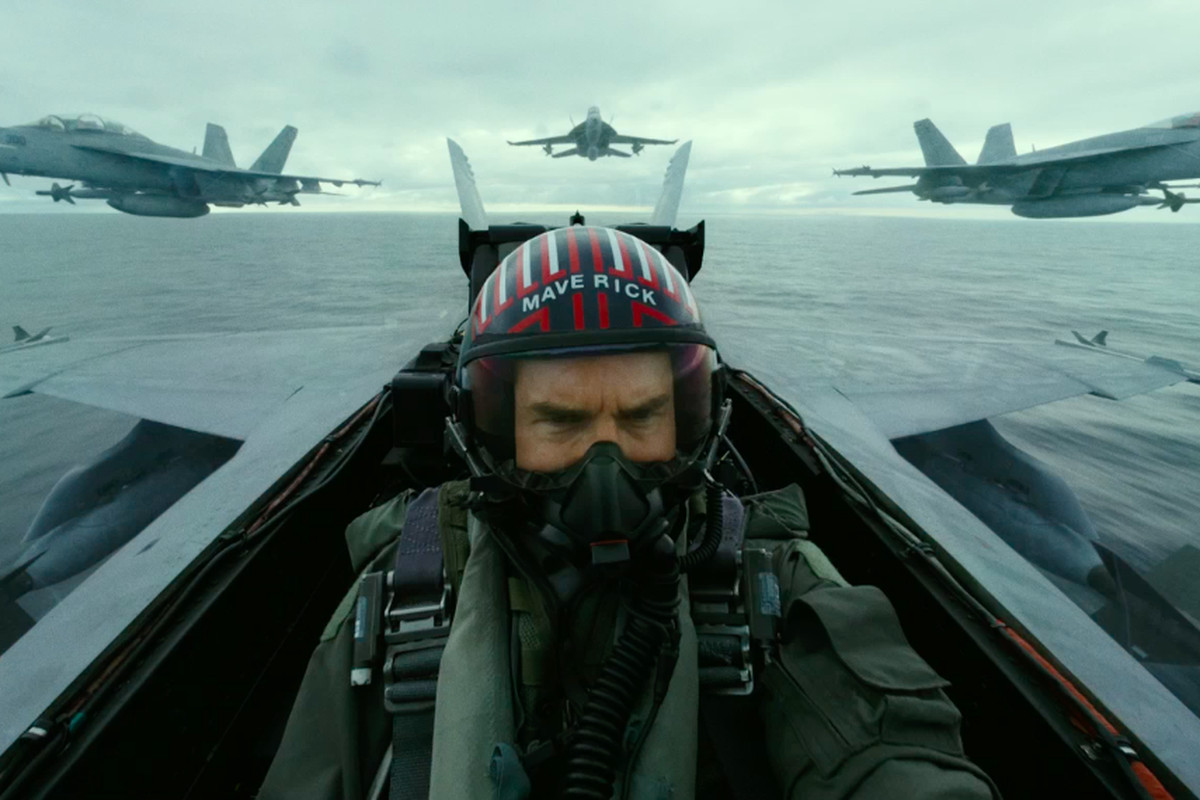
Let’s flashback for a moment to the start of this year; at
that time, if you were to tell me that Top Gun: Maverick, the
long-awaited sequel to 1986’s era-defining box-office sensation Top Gun,
would end up becoming the biggest film of 2022, I’ll admit that I would’ve been
rather skeptical about that. That’s nothing against the film, for the record, as
Tom Cruise’s undeniable star power would’ve surely helped it do excellently at
the box office regardless of how it would fare with critics and audiences; however,
I think it’s safe to say that up until its release, we are all severely underestimating
how truly big of a hit it would ultimately be. Whereas the original Top Gun rests
extremely close to the Fresh/Rotten threshold on Rotten Tomatoes with a 58%
rating, Top Gun: Maverick boasts a 96% rating on the site, easily making
it one of the best-reviewed films of the summer. And if that wasn’t enough, it
also managed to become the first film of the year to reach the $1 billion mark
at the worldwide box office. That, especially, is an impressive feat seeing
how, at this point, the only films that tend to reach that milestone are
superhero films, animated films, and live-action Disney remakes; you usually
don’t see that happening for legacy sequels that were released nearly four
decades after their predecessors. Currently standing at around $1.47 billion, it’s
among the Top 5 highest-grossing films of all time domestically and just shy of
the Top 10 highest-grossing films worldwide. In short, it’s an all-around
success story for everyone involved, including director Joseph Kosinski, who’s
come a long way since he made his directorial debut in 2010 with another long-overdue
sequel to an 80’s classic, Tron: Legacy.
But if you’re someone like me who, admittedly, took a long
time to get around to seeing this film (for reasons that I won’t be getting into
today…), it only takes a single viewing to see exactly why it has become such a
phenomenon. For starters, it goes without saying that thanks in large part to
Tom Cruise’s well-established preference for doing practically filmed action
sequences, Top Gun: Maverick’s air combat sequences are incredible,
expanding upon the terrific flight sequences of the original Top Gun with
all the benefits of modern-day technology headlined, of course, by the
extensive use of IMAX cameras. But aside from that, Top Gun: Maverick also
surpasses its predecessor from a writing standpoint by boasting a story with
stronger emotional poignancy. Don’t get me wrong, the original Top Gun had
its fair share of solid emotional moments, namely revolving around the death of
Maverick’s wingman Goose, but Maverick expands upon that in several ways.
Whether it’s major plot points such as Maverick’s struggle to confront his
strained relationship with Goose’s son Bradley AKA Rooster (and the urgency he
feels in ensuring that Rooster doesn’t succumb to the same fate as his father) or
the context behind the singular sequence in which Val Kilmer reprises his role
as Iceman that respectfully works around Kilmer’s real-life battle with throat
cancer, Top Gun: Maverick has a surprisingly consistent emotional
throughline running throughout. In other words, whereas the original Top Gun
was more focused on its air combat sequences, Top Gun: Maverick,
while still working with a relatively straightforward plot, does a better job
of balancing its story with its set pieces.
It's also worth noting that the film manages to pull all this
off… even though it could very well be argued that there are several instances
in which this film often feels like a modern-day remake of the original Top
Gun. Whether it’s a nearly shot-for-shot recreation of the original’s
opening sequence (complete with, of course, the use of Kenny Loggins’ ‘Danger
Zone’) or a scene involving the main characters partaking in a beachside sport
(football in this instance instead of volleyball), there are several sequences
in this film that clearly mirror all the key moments from its predecessor. But
like I said before, the fact that this film does a better job of balancing its
story and characters with its jaw-dropping set-pieces helps to alleviate the
potential shortcoming of it being accused of being nothing more than a rehash
of everything that came before it. And while this is a case like the original
film where most of the supporting cast outside of Maverick and Rooster are
given generally straightforward bits of character development to work with,
the film boasts an excellent ensemble cast nevertheless. Tom Cruise naturally
headlines the film the same way that he’s done in all his big action films as he
easily slips back into his iconic role of Maverick while Miles Teller is equally
terrific in the role of Rooster. They’re then backed by solid supporting turns
from the likes of Jennifer Connelly, who is, admittedly, a standard love
interest for Cruise as Maverick’s old flame Penny Benjamin but does have great
chemistry with him, Val Kilmer in his brief yet poignant appearance as Iceman, and
Rooster’s fellow Top Gun recruits such as Glen Powell as ‘Hangman’, this film’s
Iceman to Rooster’s Maverick.
And so, in conclusion, to return to the topic of explaining why
this film became the biggest hit of the year… well, the answer is quite simple,
really. From the moment its marketing campaign went into full swing, Top
Gun: Maverick was fully advertised as a definitive cinematic experience. In
other words, this was a film that was meant to be seen on the biggest screens possible
with a full and wholly engaged crowd. It is, after all, one of the main reasons
why the film was consistently pushed back from its original 2019 release date aside
from various factors ranging from Joseph Kosinski and his team needing more
time to work on the action sequences to, of course, COVID pushing everything
back. And while there were several times when the film was on the brink of
being sold off to a streaming service just like all the other films from the
past few years that had to go this route because of the pandemic, this
potential development was always shot down by Cruise, who was firmly dedicated
to maintaining its status as a theatrical release. But again, if you’re like me
and you didn’t get to see this in a theater, that’s not an absolute dealbreaker
as the film more than holds its own as both a technical masterpiece and a
superior sequel that, even when it reuses certain narrative elements from its
predecessor, uses them in a stronger manner that elicits some surprisingly
effective emotional moments. In short, Top Gun: Maverick is the very definition
of a classic summer blockbuster, and given all its success, it’s not surprising
in the slightest that it ended up being this year’s grand champion.
And so, that concludes
the 2022 edition of Rhode Island Movie Corner’s Annual End of Summer Fan Poll. Once
again, I want to thank everyone who participated in this year’s event, thus
giving us what has easily been our biggest year yet. With all that in mind, I
look forward to seeing what next year’s event will bring, especially given all
the big releases that will be hitting theaters next summer from the continuing
adventures of Marvel icons such as Spider-Man, Captain Marvel, and the Guardians of the Galaxy to the latest installments of well-established franchises such as
Indiana Jones and Fast and the Furious. Heck, maybe Tom Cruise
will end up leading the pack for the second year in a row with the next Mission
Impossible film; for all we know, Top Gun: Maverick’s utter
dominance this year could end up having a positive impact on Mission
Impossible: Dead Reckoning Part I’s run at the box-office. Only time will
tell…


.jpeg)