Friday, November 9, 2018

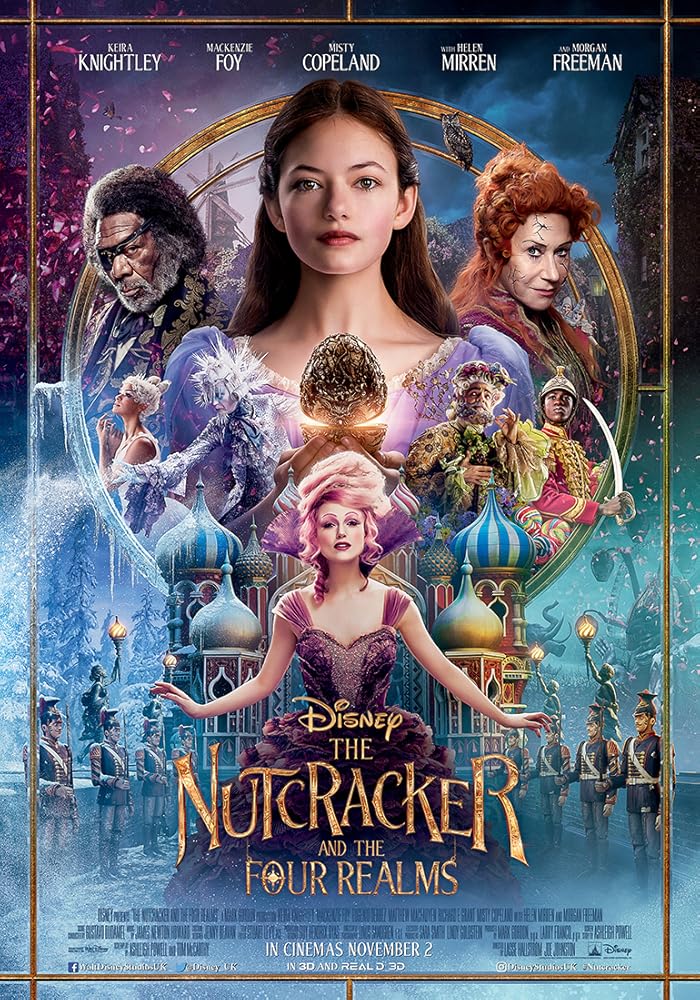
The Nutcracker and the Four Realms (2018) review

Morgan Freeman, Helen Mirren, Richard E. Grant, Eugenio Derbez, Keira Knightley, Mackenzie Foy, Misty Copeland, and Jayden Fowora-Knight in The Nutcracker and the Four Realms (2018)

In 1816, German author E.T.A. Hoffman published The Nutcracker and the Mouse King, which told the story of a young girl named Marie who ends up on a fantastical adventure with the sentient Nutcracker toy that was given to her at Christmas. But when it comes to the most famous interpretation of this story, that distinction goes to the 1892 ballet The Nutcracker, which was based off a revised version of Hoffman’s story written by Alexandre Dumas and featured music from composer Pyotr Ilyich Tchaikovsky. While its initial production did not fare well with critics, it has since gone on to be performed by numerous ballet groups worldwide, with Tchaikovsky’s music now regarded as some of the best and most recognizable melodies of all-time. The Nutcracker has also played a prominent role in the world of film thanks to its prominent use in Disney’s musical anthology film Fantasia and various film adaptations of the ballet that have been made over the years. And now Disney takes another crack at this story with The Nutcracker and the Four Realms, a film that experienced an interesting bit of development during its production. From the get-go, the film was directed by veteran filmmaker Lasse Hallstrom, whose work includes critically-acclaimed projects like 1993’s What’s Eating Gilbert Grape and 1999’s The Cider House Rules. But when it was announced that the film would be undergoing a series of reshoots, it was revealed that Hallstrom was unable to return due to scheduling conflicts. Fellow veteran filmmaker Joe Johnston (The Rocketeer, Captain America: The First Avenger) was brought in to direct the reshoots, and unlike the other major release this week that experienced a directorial switch-up during its production, Bohemian Rhapsody, Hallstrom and Johnston ended up sharing the film’s final directorial credit. What follows is a film that is truly something to behold when it comes to both its highlights and its shortcomings.

In the bustling city of Victorian-era London, young Clara Stahlbaum (Mackenzie Foy) regularly exhibits her passion for science and inventing, a trait that she’s inherited from her mother Marie. However, since her mother’s passing, Clara has grown emotionally distant from her family, especially her father (Matthew Macfadyen) who has pressured the family to maintain a respectable image amongst their peers in the wake of their recent tragedy. On Christmas Eve, Clara is given one last present from her mother in the form of a porcelain egg-shaped box that she cannot open as she doesn’t have the key for it. In her efforts to try and open it, Clara meets with her godfather Drosselmeyer (Morgan Freeman), a noted inventor, during his annual Christmas party. And while he doesn’t have the key either, Clara is eventually led on an adventure to find it when she partakes in his annual gift-giving process by following a string through his mansion. This string ends up leading her into a fantastical world that is divided up into Four Realms, including the Land of Sweets, ruled by the Sugar Plum Fairy (Keira Knightley), the Land of Flowers, ruled by Hawthorne (Eugenio Derbez), and the Land of Snowflakes, ruled by Shiver (Richard E. Grant). There, she learns that her mother was the queen of this world and helped bring all its inhabitants to life. However, the three main realms have also been in conflict recently with Mother Ginger (Helen Mirren), the ruler of the Fourth Realm, the Land of Amusements, who had previously attempted to take over the whole kingdom. Learning that the key to her porcelain egg also operates a special device that can help them deal with Mother Ginger and her army of mice, Clara finds herself on a quest to retrieve the key so that she can save the Four Realms and gain a greater understanding of her mother’s past.  

Like many other recent live-action Disney films, The Nutcracker and the Four Realms does sport some amazing visuals that help bring the fantastical world of the Nutcracker to life. And sure, just like Tim Burton’s Alice in Wonderland films, sometimes this film goes a bit overboard with its CGI but said CG is generally well-handled and is then bolstered by solid cinematography from Damien Chazelle’s go-to cinematographer Linus Sandgren. Things get a little more complicated, however, when it comes to its story. With no clear indication yet as to what parts of the film were done by Johnston rather than Hallstrom, there’s never really a point in the film where it feels like a direct competition between the visions of its two directors. And yet, there is a noticeable inconsistency when it comes to the film’s overall tone. While some parts of it are more serious in tone to emphasize the dramatic parts of the story (e.g. Clara learning more about her mother’s past), other parts of the film, namely anything that takes place within the Four Realms, are far more over-the-top in nature. These two extremes frequently collide over the course of the film and, simply put, they do not gel well together in the slightest. It also doesn’t help that the film has a very short 100-minute runtime. Once Clara enters the Four Realms, the film then speeds through its story at a break-neck pace. This results in a vastly underdeveloped plot that gives you no time to comprehend its biggest twist halfway through. And because of this, this reveal ends up feeling like it came completely out of nowhere and is easily one of the most substantial deviations from its source material outside of the infamous use of Nazi imagery in the 2010 film adaptation of the ballet (no joke, look it up…).   

This sense of unevenness also applies to the film’s cast, with half of them giving reserved, serious performances and the other half giving unabashedly over-the-top performances, and because of the film’s breezy pace, many of their characters don’t get much to do story-wise. But for the most part, several of them manage to do a good job with their limited material. Of them all, the most prominent standout of the cast is Mackenzie Foy in the lead role of Clara. In a cast that includes multiple Oscar winners and/or nominees, Foy impressively manages to carry the whole film as its sympathetic and smart female lead. She also works quite well with newcomer Jayden Fowora-Knight, who plays the title role of Philip the Nutcracker Soldier, who sticks with her through thick and thin while also being one of the saner characters in this crazy world. Another major standout is Helen Mirren as Mother Ginger who, despite being built up as the film’s main antagonist, ends up benefitting from the previously mentioned plot twist that reveals a bit more to her character than originally anticipated. But the one who is the most affected by this plot twist (and not exactly in as good of a way as Mirren) is Keira Knightley as the Sugar Plum Fairy… though, to her credit, she does commit to this character and all the craziness that comes with it in a performance that can only be seen to be believed. And as for Morgan Freeman as Drosselmeyer? Well, despite what the marketing for this film suggests, he’s literally in it for about three to five minutes in the beginning and then he doesn’t show up again until the end.

The Nutcracker and the Four Realms… is certainly a ‘unique’ film, I’ll give it that. I wouldn’t necessarily say that it’s as ‘bad’ as some critics are saying it is, but at the same time, it’s not that great, either. In fact, to be perfectly blunt, it’s quite a bit of a mess, though this isn’t entirely because the film ended up crediting two different directors. Ultimately its biggest issue is that it’s incredibly inconsistent with its tone, often going between serious drama and over-the-top kookiness in the blink of an eye. And despite the best efforts of some of its cast members, they’re all waylaid by an undercooked plot that bases itself around a mediocre plot twist in a film that goes by so fast that there’s no time to comprehend what just happened. Now to the film’s credit, it’s well-intentioned, at the very least, given that it’s a big-budget fantasy film that focuses on a young female protagonist who’s easily one of the most proactive iterations of her classic character. And just like other recent live-action Disney films like Tim Burton’s Alice in Wonderland and Sam Raimi’s Oz the Great and Powerful, this film does boast some gorgeous CGI visuals. But as innocuous as it is, The Nutcracker and the Four Realms is just… bland, which is a shame given all the work that clearly went into it from a visual standpoint. Had it been given a bit more time to flesh out its story and characters, this could’ve turned out to be a decent new take on the classic story of the Nutcracker that wasn’t primarily based around its music.


Rating: 2/5

Tuesday, November 6, 2018

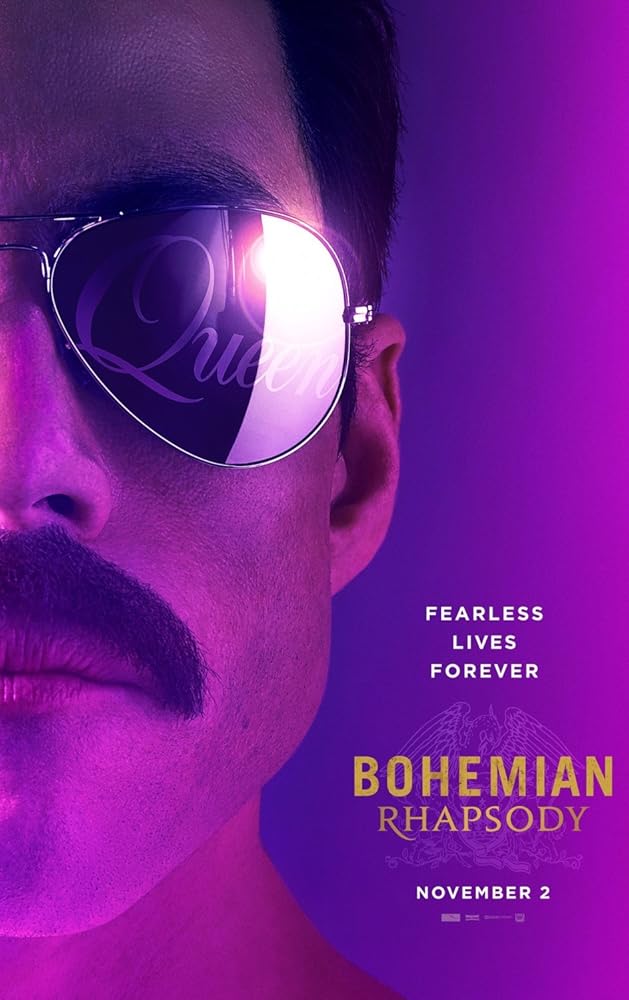
Bohemian Rhapsody (2018) review

Rami Malek in Bohemian Rhapsody (2018)

In the pantheon of legendary rock groups, easily one of the most prominent is the quartet of vocalist Freddie Mercury, lead guitarist Brian May, drummer Roger Taylor, and bass guitarist John Deacon, AKA Queen. In the 70’s and 80’s, Queen produced some of the most iconic songs of all-time and partook in some of the most legendary performances in rock and roll history, with perhaps the most notable being their appearance at the Live Aid benefit concert in 1985. With all this in mind, you may be surprised to find that plans for a Queen biopic spent several years in development hell. For quite some time, comedian Sacha Baron Cohen was tapped to play Freddie Mercury. However, he ultimately backed out in 2013 due to creative differences, presumably due to a rewritten script that would’ve focused more on Queen following Mercury’s tragic death due to AIDS in 1991 along with fears from May and Taylor that his comedic background would cause too many distractions. Eventually, Rami Malek took over the part and Bryan Singer was set to direct in what would be his first big directorial effort after his long-time stint on the X-Men franchise. And yet, even the production of the film itself was plagued by some major issues, which ultimately escalated to the point where Singer was fired halfway through filming for various reasons that ranged from continual on-set tardiness to reportedly tense feuds with Malek. Director Dexter Fletcher (who ironically has his own musical biopic, the Elton John vehicle Rocketman, hitting theaters next May) was then brought on to finish the film, but Singer was ultimately given its sole directorial credit as it was already 2/3rds of the way done by the time that this scandalous switcheroo occurred. Thus, for all intent and purposes, Bohemian Rhapsody (named after arguably the band’s most iconic song) is still a Bryan Singer film, and while it may not do complete justice to Queen and its legendary front-man, it still manages to be a highly entertaining musical biopic with a phenomenal lead performance from Rami Malek.

Tired of his job as a baggage handler at Heathrow Airport in 1970, Farrokh Bulsara (Rami Malek) ends up finding a new job as the lead singer of an up-and-coming band named Smile alongside guitarist Brian May (Gwilym Lee) and drummer Roger Taylor (Ben Hardy) after the band’s original singer leaves to join another group. Together, along with fellow recruit/bass guitarist John Deacon (Joseph Mazzello), the band changes their name to Queen and Farrokh changes his legal name to ‘Freddie Mercury’ while also beginning a romance with Mary Austin (Lucy Boynton). And after they produce their titular debut album in 1973, the band manages to land a major contract deal with lauded manager John Reid (Aiden Gillen) at EMI Records. Unfortunately, the band begins to face some pushback when they attempt to be more experimental with their 1975 album A Night at the Opera. Despite managing to craft the six-minute operatic suite known as ‘Bohemian Rhapsody’, EMI executive Ray Foster (Mike Myers) refuses to have it serve as the album’s first single due to its length. Undeterred, the band leaves EMI on their path to becoming one of the most popular music groups of the era. However, the band’s bond eventually begins to be put to the test, especially after Freddie shocks his bandmates with the announcement that he’s been signed for a solo career. And as for his personal life, that too begins to get quite rocky when he finds himself starting to question his sexuality.

Perhaps the biggest question surrounding this film is whether it manages to truly do justice to the story of Queen and, more importantly, Freddie Mercury. And overall, this has been a major source of contention amongst critics, many of whom have noted that there are several instances where the film isn’t exactly ‘historically accurate’ (e.g. how Freddie first met May and Taylor, the band’s status after Freddie went solo, etc.). With that in mind, it’s understandable if some feel that this isn’t as proper of a representation of this story as it could’ve been, as there are admittedly a few moments in the film where it doesn’t quite capture the emotional resonance that it’s trying to achieve. But despite its narrative shortcomings, the film manages to work a lot better in all its other areas. While there are a few instances where the film tends to drag a bit, it also boasts a pleasantly light-hearted nature throughout thanks to some solid comedic banter amongst Freddie and his bandmates. Now granted, I’m fully aware that this won’t fly well with everyone as many had hoped that the film would be a more risqué glimpse into the band’s history instead of what we ultimately get in this ‘watered down’ PG-13 rated film that’s more intent on being an all-around crowd-pleaser. But in that regard, it does succeed in what it’s trying to be thanks in large part to its rousing musical numbers that utilize the band’s classic tunes like ‘Another One Bites the Dust’, ‘We Will Rock You’, and of course, ‘Bohemian Rhapsody’ to great effect. And as many other critics have stated, the recreation of Queen’s iconic performance at Live Aid during the film’s finale is an undisputed highlight. To reiterate a point that I made a few weeks ago about Damien Chazelle’s First Man and its recreation of the iconic Apollo 11 mission, this film perfectly captures what it must’ve been like to witness a truly legendary musical performance for those like me who weren’t there to experience it firsthand. 

The challenge of playing someone as legendary as Freddie Mercury is undoubtedly a daunting task for anyone to attempt, but Rami Malek truly shines in the role, as he does a fantastic job when it comes to replicating Freddie’s eccentric mannerisms and his all-around charismatic persona. And while some were fearful that the film would underplay Freddie’s sexuality based on the first trailer, it ends up handling it in a manner that isn’t quite as problematic as they suspected but is still far from perfect nevertheless. While the first half of the film primarily focuses on Freddie’s relationship with Mary Austin up until their eventual breakup, the rest of the film does an okay enough job of showing Freddie’s bisexual side even though his other prominent lover, Jim Hutton (Aaron McCusker), is basically limited to a cameo role. But as for Mary, Lucy Boynton does a very nice job in the role; her chemistry with Malek is excellent and the film does a nice job of showcasing how, even after their breakup, the two continued to remain on good terms with each other. And while Freddie is obviously still the main protagonist throughout, Gwilym Lee, Ben Hardy, and Joseph Mazzello are all excellent as Brian May, Roger Taylor, and John Deacon, respectively. Each of them gets to have their own standout moment here and there, from Roger’s frustration at having to do numerous takes of the ‘Galileo’ part of ‘Bohemian Rhapsody’ (“How many more Galileos do you want?”) to John coming up with the iconic riff for ‘Another One Bites the Dust’ during one of the band’s heated arguments. More importantly, these four very much succeed at conveying their group’s strong camaraderie.

Now despite all the positive things that I’ve just said, it really should be noted that if you’re a big fan of Queen, it’s quite possible that you might be a bit disappointed with this film as it’s far from being a pitch-perfect take on their history as seen through the eyes of their iconic ringleader. For starters, it’s not exactly the most historically accurate musical biopic ever made as it does take some major creative liberties with certain moments in Queen’s prestigious history. And while the film doesn’t completely ignore the fact that Freddie Mercury ended up becoming one of the most prominent icons of the LGBT community, it still could’ve handled this side of the story a lot better (e.g. giving Jim Hutton a more prominent role in its proceedings). Simply put, this is not the dark and edgy Queen biopic that a lot of their fans were hoping for. Instead, it’s more of a light-hearted crowd pleaser… but that’s not entirely a bad thing, for the record. The musical sequences in this film are phenomenal, highlighted by the epic finale that is Queen’s performance at Live Aid which is practically worth the price of admission alone. Rami Malek is purely electric in the role of Freddie and is backed by an equally excellent supporting cast. And despite the whole debacle that led to Dexter Fletcher being brought in to take over for Bryan Singer, the film thankfully never feels like the mismatched product of two different directors. In short, Bohemian Rhapsody is far from perfect, but it’s still a fun time to be had when viewed on the big screen with a crowd who’s ready and willing to tap their feet in time with the music.


Rating: 4/5

Wednesday, October 31, 2018

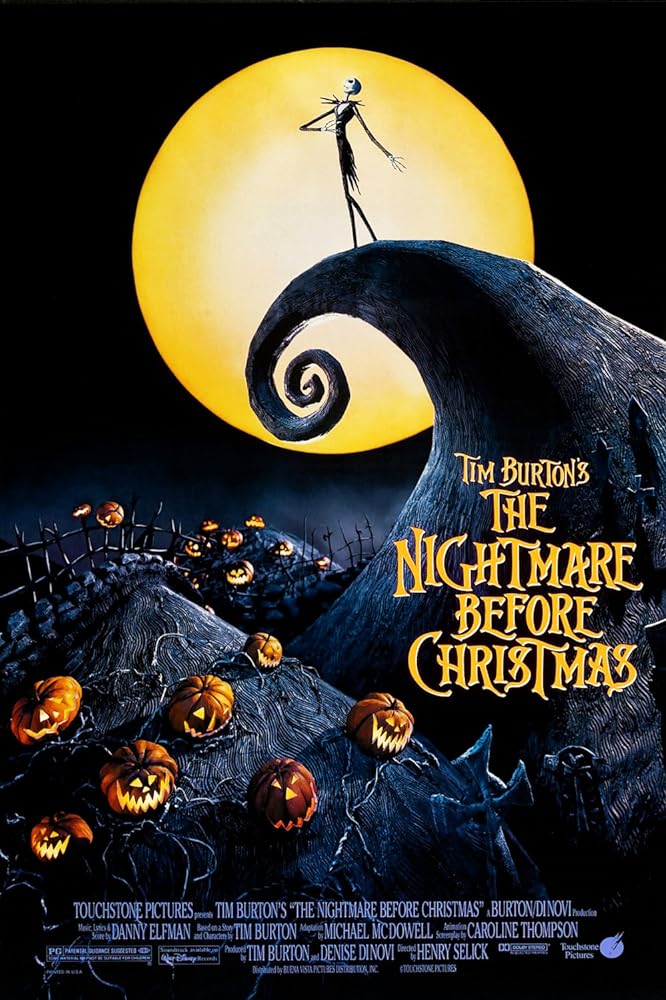
The Nightmare Before Christmas (1993) review

Danny Elfman and Chris Sarandon in The Nightmare Before Christmas (1993)

In 2016, I did a ‘Directorial Retrospective’ on the filmography of the most eccentric filmmaker in all of Hollywood, Tim Burton, who’s brought us classics like Beetlejuice, Batman, Ed Wood, and Edward Scissorhands, just to name a few. However, I decided to leave off one of his most notable films mainly because he didn’t direct it, and yet, seeing how it’s celebrating its 25th anniversary this year, I figured that it was now the perfect time to finally talk about one of Tim Burton’s most iconic creations, The Nightmare Before Christmas. But again, to debunk one of the internet’s longest-running myths, this film was not directed by Tim Burton. Instead, it was only produced by him as an adaptation of a poem that he had written in 1982 while working as an animator at Disney. Directorial duties ultimately went to Henry Selick, who would later go on to direct other stop-motion animated classics like 1996’s James and the Giant Peach (which Burton also produced) and 2009’s Coraline. And while The Nightmare Before Christmas was initially restricted to Disney’s Touchstone Pictures banner for fear of being too scary for younger audiences, calling it one of the most beloved films of all-time nowadays would be a massive understatement. Upon its release, it became the highest-grossing stop-motion animated film of its time, and it would eventually get properly placed under the Disney banner several years later thanks to annual 3-D re-releases. But this film’s massive imprint on the world of pop culture doesn’t stop there. Its characters have made various appearances at Disney parks, Disneyland’s iconic Haunted Mansion attraction does a special Holiday overlay every year based around the film, and it’s also been featured in several installments of the popular Kingdom Hearts video game series. And when you watch the film that started it all, it’s easy to see why it’s become a holiday tradition for its many devoted fans as it’s truly one of the all-time greats.

In a world where all the major holidays are represented by a collection of fantastical realms, one of the most prominent is the one found behind a pumpkin-shaped door in a tree known as Halloween Town. This land of monsters, ghouls, demons, and all the creatures that you’d expect from this kind of place is ruled by the benevolent ‘Pumpkin King’, Jack Skellington (voiced by Chris Sarandon, with singing vocals by Danny Elfman). However, unbeknownst to the residents of Halloween Town, Jack has begun to grow bored of all the usual Halloween routines and is desperate for something different. Luckily for him, that ‘something different’ soon comes around when he finds the entrances to the other holiday-themed worlds and is immediately drawn to the one themed around Christmas, Christmas Town. Amazed by the sights and sounds of this wondrous landscape, Jack decides that it’s time for the people of Halloween Town to try their hand at this ‘Christmas’ thing. Thus, despite the skepticism of Sally (voiced by Catherine O’Hara), a rag doll who has feelings for Jack, the Pumpkin King leads the rest of the town in preparations to develop their own Christmas, blissfully unaware of how people will react to their unique methods. This plan of theirs also includes them kidnapping the one they call ‘Sandy Claws’ (voiced by Ed Ivory) so that Jack can take his place as the one who gives out all the toys to folks all over the world. However, things get a little more complicated when the three kids who Jack sends to kidnap Santa, Lock (voiced by Paul Reubens), Shock (also voiced by Catherine O’Hara), and Barrel (also voiced by Danny Elfman), instead bring him to the sinister Bogeyman, Oogie Boogie (voiced by Ken Page), who has sinister plans for old St. Nick.

Even after 25 years and all the various stop-motion animated films that have come out since then, the stop-motion animation in this film still stands as some of the best to come from the medium. For those who aren’t that familiar with the process, stop-motion animation is usually quite a laborious procedure to the point where there are often only a few frames of animation that are finished in a single day, and one can only imagine how long it must’ve taken to film some of the sequences in this film, especially the final fight between Jack and Oogie Boogie. Tim Burton may not have been the director on this one, but his trademark visuals are on full display, with director Henry Selick and their team of over 100 artists doing an amazing job when it comes to honoring Burton’s unique style. Plus, while the folks at Disney may have been initially fearful of the film being too intense and scary for younger audiences, this ultimately isn’t that big of an issue. Because the film maintains such a lighthearted and lively atmosphere throughout, its dark, macabre humor (which, of course, is another Burton trademark) manages to undercut the darkest moments in the story without completely neutering any of its horror elements. Just look at the classic sequence where the people of Earth witness Halloween Town’s distorted rendition of Christmas, effectively making the film a fun, twisted spin on classic holiday specials a la Rankin-Bass. And, of course, this film is backed by one of the best soundtracks of all-time courtesy of Tim Burton’s most frequent collaborator, Danny Elfman, with a wide variety of classic tunes ranging from lavish show-tunes like ‘This is Halloween’, ‘What’s This?’, and ‘Oogie Boogie’s Song’ to wistful solos like ‘Jack’s Lament’ and ‘Sally’s Song’.

This film also benefits heavily from a tightly-written script that never skimps on its plot or characters throughout its breezy 76-minute run-time. Nothing ever feels underwritten and nothing ever feels overdone in this endearing story of someone who’s just trying to find a new way to spice up his life. With that in mind, the one and only Jack Skellington proves to be an incredibly sympathetic and likable character right out the gate, even when his optimism about his Christmas plans makes him a little naïve (though not in a ‘bad’ way, to be clear…) when it comes to the consequences of where it’ll lead him. This also applies to a lot of the other characters in this film, because even though they come from a world of scary monsters that regularly celebrates everything that there is to do with Halloween, a lot of them are just as good-natured as Jack is and their passion for the holiday is apparent throughout. There’s Jack’s main love interest Sally, who helps to keep the Pumpkin King in line (after all, she is, as Santa puts it, ‘the only one who makes any sense around this insane asylum’) while also pining for his affections, leading to a sweet romance between the two. There’s the two-faced (figuratively AND literally) mayor of Halloween Town (Glenn Shadix) who consistently (and hilariously) reminds everyone that he’s ‘only an elected official here’. And as for the main villain Oogie Boogie, while his screen-time is mostly reserved for the second half of the film, cabaret singer Ken Page very much steals the show as the exuberant, gambling Bogeyman.     

Now I’ll openly admit that I didn’t necessarily ‘grow up’ with The Nightmare Before Christmas the same way that a lot of people from my generation did. At the very least, I was generally familiar with it thanks to Jack and company’s many appearances in Kingdom Hearts and some instances of seeing it in print and whatnot, but to the best of my knowledge, I never watched the film in full until I was already a teenager. Thankfully, though, this did not have a negative effect on my thoughts on the film after that initial viewing. The Nightmare Before Christmas is a meticulously crafted masterpiece, and yes, ‘meticulously crafted’ is a fitting advective in this scenario given that this is a stop-motion animated film. All the hard work that Selick, Burton, and their team did to make this film happen can be seen on-screen, with gorgeous stop-motion animation and a delightfully wacky visual style that is one of the best representations of the artistry that has made Tim Burton the legendary filmmaker that he still is today. This is then paired nicely with a well-written script with layered characters that, in turn, features some of the best songs to ever come out of an animated musical. And at the end of the day, one of the biggest reasons as to why The Nightmare Before Christmas is such a timeless classic is that it manages to work as both a Halloween film and a Christmas film, perfectly representing the best of both holidays to produce what is easily one of the most enjoyable films to watch this time of year.

Rating: 5/5!

And that concludes this review of Tim Burton’s The Nightmare Before Christmas, directed by Henry Selick (Remember that, internet!). Thanks for following along and be sure to sound off in the comments below with your own personal memories of this legendary film.

Monday, October 22, 2018

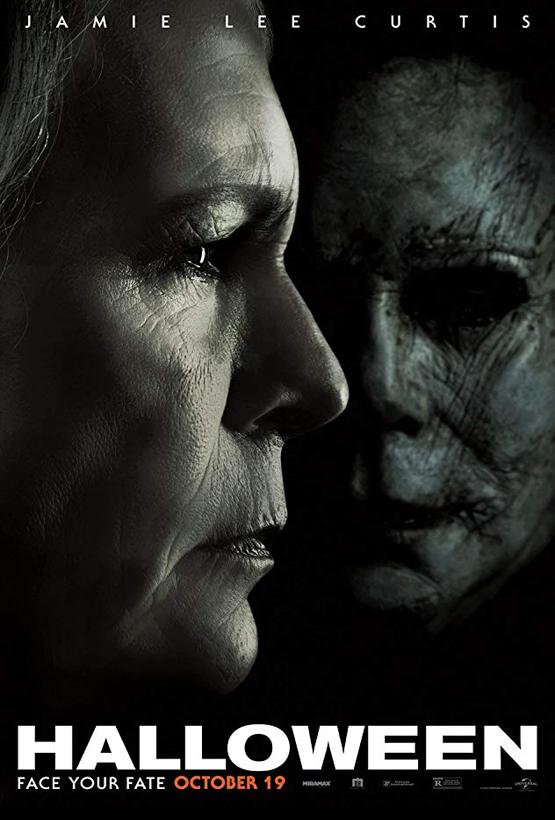
Halloween (2018) review

Jamie Lee Curtis and Nick Castle in Halloween (2018)

In 1978, director John Carpenter and co-writer/producer Debra Hill began working on a low-budget horror film about a serial killer who breaks out of a mental institution and enacts a string of murders in his hometown. Set during the holiday of Halloween, the film ended up sharing its name, resulting in the seminal classic that was Halloween. Upon its release, the film became a landmark entry in the horror genre and helped launch the careers of both Carpenter and lead actress Jamie Lee Curtis, who played the main protagonist Laurie Strode. After that, the series then continued with a bunch of sequels that varied heavily in terms of overall quality, with some serving as decent follow-ups to the original while others effectively killed the franchise for a few years at a time due to how poorly-received they were. But now this classic horror franchise is back with a new film that once again shares the title of the holiday that it’s set during, Halloween. Following the same path as 1998’s Halloween H20, which ignored the events of everything after 1981’s Halloween II, the new film goes the retcon route to remove itself from the franchise’s lesser sequels. In this case, however, it ignores the events of every single Halloween film that was released after 1978, meaning that John Carpenter’s original film is now the only one to precede it. Set 40 years after the events of its predecessor, this new film is directed by David Gordon Green, who co-wrote it with frequent collaborator Danny McBride. The two even have the honor of having John Carpenter return to the franchise for the first time since the ill-received 1982 spin-off Halloween III: Season of the Witch as an executive producer along with Jamie Lee Curtis making a much-heralded return as Laurie Strode. And with a pedigree like that behind it, the new Halloween film proves to be a worthy follow-up (arguably the first truly worthy follow-up, depending on who you ask…) to the 1978 classic.   

On Halloween Night in 1963, six-year-old Michael Myers murdered his older sister Judith with a kitchen knife. 15 years later, Michael broke out of the Smith’s Grove Sanitarium and returned to his hometown of Haddonfield, Illinois, where he began a new Halloween killing spree before he was stopped by his psychiatrist, Dr. Sam Loomis, and apprehended by the local police. 40 years later, Michael (played by a combination of newcomer James Jude Courtney and series veterans Nick Castle and Tony Moran) is still being held at Smith’s Grove. During this time, podcasters Aaron Korey (Jefferson Hall) and Dana Haines (Rhian Rees) look to initiate a reunion between Myers and the sole survivor of his massacre, Laurie Strode (Jamie Lee Curtis), before he’s permanently transferred to a maximum-security prison. The two discover that, in the years since that fateful Halloween night, Laurie has been preparing for a potential return from the man who once tried to kill her. However, the physical and emotional scarring that she has been constantly dealing with ever since has also caused her to become incredibly distant from her daughter Karen (Judy Greer), although she does maintain a decent relationship with her granddaughter Allyson (Andi Matichak). And unfortunately, her past ends up coming back to haunt her once more when Michael manages to escape from his captivity and return to Haddonfield to finished what he started 40 years ago. But this time, Laurie is ready for him and hellbent on making sure that the infamous being known as ‘the Shape’ is stopped once and for all.

As I noted a few days back in my retrospective on the Halloween franchise, the series eventually moved away from the slow, suspenseful atmosphere of John Carpenter’s original film in favor of a more traditional horror film mood and bloodier aesthetic compared to the first film’s generally non-graphic kills. In fact, this all began to take effect as early as its original sequel, Halloween II. Despite director Rick Rosenthal’s plan to have the film maintain the same general atmosphere of its predecessor, Carpenter decided to have the film be more violent given some of the horror films that had come out since his film was released. But with this new Halloween, director David Gordon Green delivers what is easily the closest to the original in terms of replicating its general mood. Granted, this film isn’t a ‘primarily bloodless’ affair like the original film, as it doesn’t hold anything back when it comes to some of Michael’s kills. Plus, the film even gives Green and McBride some opportunities to flex their comedic sensibilities with some humorous bits of dialogue here and there. But as far as tone and atmosphere are concerned, this film maintains the same narrative method of a slow buildup leading to an incredibly effective payoff that helped to make the original Halloween the classic that it still is today. Just like in that film, it takes a while before Michael officially starts to do his thing, but when he does, it paves the way for some incredibly suspenseful moments that, just like the original, are backed by an equally suspenseful score from John Carpenter. And while it can be argued that the plot is perhaps a tad bit predictable at times in terms of where it ultimately goes, along with having a few of the usual stock horror film characters who are just there to be killed by Michael, Green and McBride do a phenomenal job when it comes to all the ways that they pay tribute to the original film.  

Just like Halloween H20, the biggest coup that this film manages to achieve is getting Jamie Lee Curtis back to reprise her role as Laurie Strode. And simply put, she is just as fantastic as she’s been in the other Halloween films that she’s been in, as the film does an excellent job of showing Laurie’s transition from the timid ‘final girl’ of the original film to someone who’s fully prepared to take on Michael Myers. In other words, this film ends up going the same route that Halloween H20 did in further developing her character, but in this case, it works a lot better here because the arc is more prominent to the plot whereas H20 didn’t really get into it until its finale. A lot of this is due to how the film explores all the psychological trauma that Laurie has been going through ever since that fateful Halloween night 40 years prior, and we see how it affects not only her but her loved ones as well. As such, the other two major standouts of the film are Laurie’s daughter Karen and granddaughter Allyson, effectively providing the film with a phenomenal trio of female leads. With Karen, Judy Greer gets one of the more prominent roles of her film career thanks to a nice arc that showcases what Karen has gone through due to her mother’s over-protective nature. And without spoiling anything, this leads to one heck of an awesome payoff at the end. As for Allyson, newcomer Andi Matichak basically serves the same role that Curtis played in the original as the innocent teen who gets caught up in the whole Michael Myers situation. Matichak handles the role incredibly well, especially when it comes to Allyson arguably being the only one in the film to fully sympathize with her grandmother’s struggles, making her just as sympathetic of a protagonist as Laurie’s been all these years.

In short, for those who were disappointed by some of the franchise’s weakest follow-ups (e.g. Resurrection, Curse of Michael Myers, Rob Zombie’s heavily polarizing remake, etc.), you’ll be pleased to know that this new rendition of Halloween is easily the series’ best sequel to date. Ignoring everything that came after John Carpenter’s original film, this new sequel excellently showcases the evolution of Laurie Strode from the vulnerable heroine that she once was to a badass who’s ready to take on the man who nearly killed her while still maintaining the same sense of vulnerability that has helped make her one of the most iconic horror film heroines. This is then highlighted further by the film establishing her daughter Karen and granddaughter Allyson as equally fleshed out protagonists who are just as capable as she is when it comes to dealing with their current predicament. And as for the rest of the film, it succeeds at being a natural follow-up to Carpenter’s film by maintaining the same slow-burn atmosphere that leads to an incredibly satisfying climax while still utilizing aspects of the many horror films that have come out after the original. Plus, it also serves as another excellent example of a director stepping out of their comfort zone to produce an excellent film in a genre that they’re usually not known for. To reiterate, this film was directed by the guy who did the 2008 hit comedy Pineapple Express and he co-wrote it with one of the most prominent comedic actors of this current generation. Simply put, this sequel clearly reflects David Gordon Green and Danny McBride’s admiration for the original film, and with the backing of both John Carpenter and one of the horror genre’s most prominent producers in Jason Blum, their collaborative efforts results in one of the most satisfying revivals of a classic horror film franchise in recent memory.

Rating: 4.5/5

Wednesday, October 17, 2018

Halloween: Series Retrospective

Halloween (2018)

It’s the Halloween season once again, and this year, there was no contest when it came to what horror franchise I’d be covering for this site’s annual Halloween post. With its newest installment set to hit theaters this weekend, it’s time to look at one of the most iconic horror franchises of all-time, and it’s the one franchise that the holiday season directly shares its name with, Halloween. It all began in 1978 with writer/director John Carpenter’s low-budget horror film about a man named Michael Myers who killed his older sister when he was a child, breaks out of the Sanitarium that he’s been locked up in, and embarks on a spree of killings in his hometown of Haddonfield, Illinois. Upon its release, the film became a staple of the horror genre and spawned numerous follow-ups that underwent a fascinating journey in terms of how they continued the story. But this year, writer/director David Gordon Green helms the latest installment of this series, once again simply titled Halloween, which sees Jamie Lee Curtis return to her role as series protagonist Laurie Strode. The most prominent aspect of this sequel, however, is that it will be ignoring the events of all the sequels and instead serve as a direct follow-up to Carpenter’s original film. Still, even with that in mind, today’s retrospective will be covering every single installment of this franchise so that we can go through the unique history of one of cinema’s most famous slashers. And yes, this includes everything; the franchise’s early installments, Carpenter and co-writer Debra Hill’s promising but failed attempt at an anthology series, not one but two different attempts to ‘revitalize’ the franchise, and Rob Zombie’s highly controversial remake and its sequel. Thus, without further ado, beware of the man in the William Shatner mask (and yes, for those who are new to the franchise, Michael Myers’ iconic mask was originally crafted from a mask of Shatner’s iconic Star Trek character James T. Kirk) as we look at the ten theatrically-released films that currently make up the Halloween franchise.

HALLOWEEN (1978)
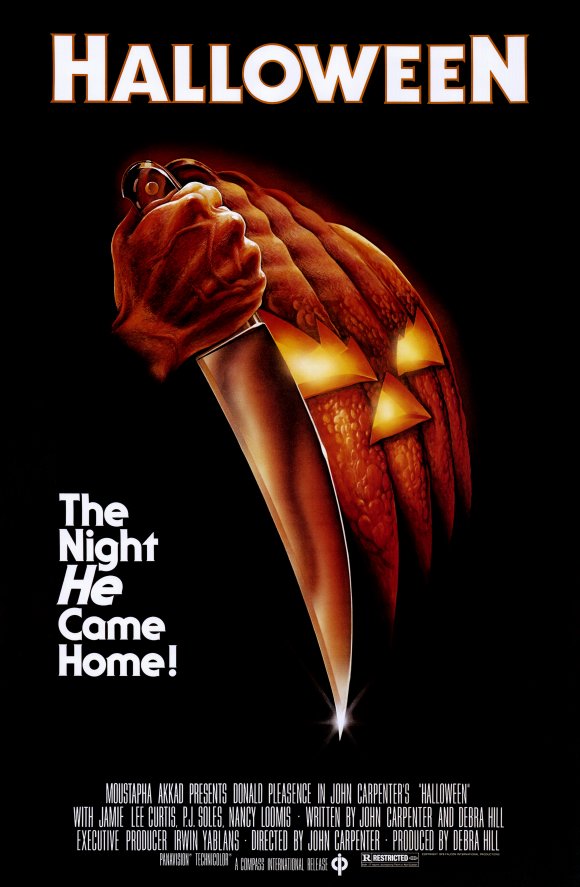
Halloween (1978)

The first time that I watched the original Halloween was on October 30th, 2014, when I saw it with my best friends Alex Corey and Danny LaPlante in theaters as a special re-release. By this point, I’d already seen plenty of horror films that have followed in the same narrative footsteps as John Carpenter’s iconic film. Despite this, though, this film still stands as one of the best films of its genre. Instead of relying on violent kills like many of the horror films that came after it, Carpenter instead goes for a horror film that’s light on the body count but is full of suspense from beginning to end, especially whenever we see things from Michael’s perspective (e.g. the opening sequence where a young Michael kills his older sister Judith). As you might have guessed, this helps give the film an incredibly eerie atmosphere that’s only strengthened further by having most of the action take place in a few houses on the same street. And then there are the outstanding performances from the two main leads, Donald Pleasance and Jamie Lee Curtis. Pleasance, who was considered quite a steal for a low-budget horror film at the time, is fantastic as Michael’s psychiatrist Samuel Loomis, who goes all out, Van Helsing style, to ensure that his former patient is stopped once and for all. Curtis, meanwhile, is also excellent as main protagonist Laurie Strode, who gets put through the emotional wringer once she begins to be hunted by ‘The Shape’. Admittedly, the rest of the cast is more hit-or-miss, but with two strong lead performances and excellent direction from John Carpenter, there’s no denying that the original Halloween is still one of the most effective horror films ever made.  

Rating: 4.5/5

HALLOWEEN II (THE ORIGINAL – 1981)

Halloween II (1981)

Three years later, Carpenter and producer/co-writer Debra Hill returned to the town of Haddonfield, Illinois for a follow-up, Halloween II, and unlike other sequels that often take place quite sometime after the original, this film takes place just a few hours after the events of the first film. As such, it does do a nice job of continuing the story, which sees Michael Myers escape his apparent demise at the hands of Dr. Loomis to hunt down Laurie at the local hospital. On that note, this film also introduced one of the series’ main plotlines by revealing that Laurie is really Michael’s younger sister before she was adopted by the Strode family following his arrest. While this plotline is set to be retconned for the upcoming film, it isn’t really that bad of a plot twist and did contribute to this franchise having its own identity compared to other classic horror franchises. As for the rest of the film, it’s mostly on par with the first film in terms of its overall quality. The new cast of characters are quite forgettable compared to Loomis and Laurie, but Donald Pleasance and Jamie Lee Curtis are excellent once again in their respective roles. And while Halloween 2 does lose a bit of the effective suspense and atmosphere that made the first film the classic that it is, that doesn’t mean that it doesn’t have any great suspenseful moments.  It’s also worth noting that this film’s death scenes are a lot more graphic compared to those in the first film, which was presumably a decision made by Carpenter, who was not the director this time around. Instead, then-newcomer Rick Rosenthal stepped in to direct, and while his plan to have the sequel be more like the original was ultimately waylaid by Carpenter’s changes, he does do a solid job when it comes to following in his predecessor’s footsteps. Because of this, Halloween II is a respectable follow-up to the original film that served as a fitting conclusion to the story of Michael Myers, Dr. Loomis, and Laurie Strode… for about seven years…

Rating: 4/5

HALLOWEEN III: SEASON OF THE WITCH (1982)

Halloween III: Season of the Witch (1982)

With Halloween II providing a very conclusive ending to the story of Michael Myers, Carpenter and Hill decided to take the series in a different direction by turning it into an anthology series a la The Twilight Zone. And thus, this sets the stage for Halloween III: Season of the Witch, directed by Tommy Lee Wallace, who had previously served as the co-editor and production designer of the original Halloween and had even done some stunt work in the Michael Myers costume. Instead of being another Michael Myers film, the film instead revolves around a sinister plot by the owner of a Halloween mask company to stage a nationwide series of sacrifices, effectively bringing back the old Celtic rituals that the season originated from. If anything, this film does deserve a lot of credit for being its own unique thing instead of just rehashing the plots of the previous film. However, the overall execution is off in a few places. For starters, the film takes quite a while to properly get going, as it doesn’t really get into its main premise until about 30-40 minutes in. And while this main premise is an interesting one, its overall set-up (which involves the main antagonist utilizing energy from one of the Stonehenge pillars via a series of microchips) ultimately isn’t that well-developed. This also applies to the film’s secondary ‘plot twist’ revolving around another secret project that the main antagonist has been working on. Because of all this, Halloween III is a bit of a mess, though it is far from being the ‘worst’ of the franchise. And to be perfectly clear, none of this film’s shortcomings have to do with the fact that it doesn’t feature Michael Myers (something that, I assure you, always gets brought up in reviews for this film). Like I said before, the potential was there for an interesting new anthology series, and I’m sure that I’m not the only one who would’ve loved to see this series go down that route. Ultimately, though, to compare this to another anthology series, this first attempt ends up being more like The Cloverfield Paradox instead of 10 Cloverfield Lane.

Rating: 2.5/5

HALLOWEEN 4: THE RETURN OF MICHAEL MYERS (1988)

Donald Pleasence, Michael Pataki, Ellie Cornell, Danielle Harris, Kathleen Kinmont, and George P. Wilbur in Halloween 4: The Return of Michael Myers (1988)

Halloween III proved to be a major dud with both critics and audiences who were confused by its complete lack of Michael Myers. And while it wasn’t necessarily a ‘box-office bomb’, it also ended up being the series’ lowest-grossing installment to date. Thus, without the direct involvement of John Carpenter and Debra Hill, the series revived its iconic villain in Halloween 4: The Return of Michael Myers. The film establishes that Michael and Dr. Loomis survived their apparent demise at the end of Halloween II and sees the former embark on another murder spree ten years after the events of the original film to hunt down Jamie Lloyd (Danielle Harris), the daughter of Laurie Strode, who died prior to the events of the film. What follows is a far more traditional horror sequel that lacks a lot of the suspenseful atmosphere of the previous films. It does have its moments, however, including a solidly tense climax where the main characters find themselves trapped in a barricaded house with Michael. But then there’s also a lot of oddly over-the-top moments as well, usually due to the repeated use of slow-motion or whenever Michael commits an arguably ridiculous kill. At the very least, the lead duo of Jamie Lloyd and her stepsister Rachel (Ellie Cornell) are a very likable lead duo, with Danielle Harris making a solid first impression in her feature film debut. And, of course, there’s also Donald Pleasance returning as Dr. Loomis. Admittedly he doesn’t get that much to work with this time around, but he is still just as good as he’s always been in these films. In short, while Halloween 4 is as much of a ‘by-the-numbers’ horror sequel as you can find, it manages to coast by with some good lead performances and a few great suspenseful moments here and there.

Rating: 3/5

HALLOWEEN 5: THE REVENGE OF MICHAEL MYERS (1989)

Halloween 5 (1989)

While Halloween 4 didn’t necessarily do that better than Halloween III at the box-office, it was clear that audiences were far more receptive towards it given the fact that it brought back Michael Myers as the main antagonist. Thus, the next film was immediately greenlit and released in theaters the following year… as such, you can tell that it was rather rushed. It doesn’t go forward with the previous film’s ‘cliffhanger’ ending in which it’s implied that Jamie Lloyd is becoming more like her uncle when she attacks her stepmother in a similar manner to when Michael killed his sister. Instead, it just has her coping with the traumatic events of the previous film. Now, to the film’s credit, aside from not addressing the ending of the previous film, it still does a decent job of continuing the story the same way that Halloween II did for the original film. However, it’s ultimately just as much of a basic horror film sequel as its predecessor, and in this case, this one is worse. Even with a meager 97-minute runtime, this film drags a lot, and that includes the ending in which Jamie Lloyd is being chased by Michael in his old home that’s ironically the best part of the film. It also doesn’t help that, along with having another bunch of generic supporting characters for Michael to kill off, Jamie Lloyd’s stepsister Rachel is killed off early on, robbing this film of the strong sisterly bond between the two that was a key aspect of Halloween 4. Thankfully, Danielle Harris is still excellent once again as Jamie Lloyd and Donald Pleasance is solid as usual as Dr. Loomis despite a few moments where he acts a bit out of character. Ultimately, though, Halloween 5 is the very definition of a mediocre sequel to the point where it even ended up doing worse financially at the box-office than Halloween III. Not only that, but this film ends up laying down the seeds for an even worse follow-up.

Rating: 2/5

HALLOWEEN: THE CURSE OF MICHAEL MYERS (1995)

Halloween: The Curse of Michael Myers (1995)

(Disclaimer: The following review is for the film’s theatrical cut as it is the version that is included in the series’ Blu-Ray box-set that I own. I have, however, viewed scenes from the film’s infamous ‘Producer’s Cut’. Thus, both versions of the film will be discussed here.)

Halloween: The Curse of Michael Myers serves as a conclusion to the story arc that first started in Halloween 4. Because of this, fans refer to films 4-6 as the ‘Thorn trilogy’ given the prominence of a thorn symbol in the latter two films. But while this film does address some of the mysteries that were left unanswered in Halloween 5… it’s also one of the worst films in the franchise. The plot is incredibly messy to the point of being incomprehensible. The reveal that Michael Myers’ actions were the result of an ancient Druidian curse that was laid in place by a cult, thus why he’s been killing all his blood relatives, severely diminishes the character’s long-standing portrayal as an unstoppable, emotionless killer. Other plot-threads are extremely underdeveloped as well, like the reveal that the leader of the cult is Loomis’ former associate Dr. Wynn, the cult’s efforts to kill the infant son of Jamie Lloyd (who’s killed off early), and moments where Danny Strode, the youngest of a group of relatives of Laurie’s adopted family, is starting to hear a voice telling him to kill people just like Michael. This film also suffers from some extremely poor editing, with some of the death scenes being nothing more than a series of flashing images and quick cuts. It also doesn’t help that this film boasts one of the series’ worst cast of characters, with the only saving grace being, of course, Donald Pleasance as Dr. Loomis in what would ultimately be his last film appearance. Sure, the main character Tommy Doyle, the kid who Laurie babysat in the first film and is now grown up, is played by none other than Paul Rudd in his feature film debut, but Doyle’s extreme obsession over Myers following the events of the original film makes him a little too weird to be likable. Plus, let’s just say that, performance-wise, Rudd got better as the years went on. With all this in mind, Halloween 6 is nothing short of a train wreck, as it does a piss-poor job of trying to continue this franchise.  

But, of course, that’s not the end of the story. The film that I just described was the theatrical cut of Halloween 6, which underwent an extremely notorious production that ended up having to go through major reshoots when the initial ‘Producer’s Cut’ was rejected by test audiences. It wasn’t until recently that this version of the film was finally given an official release, and while some feel that it’s the superior cut of Halloween 6, it also has its own share of problems. Most of the reshoots ended up giving Michael Myers a more substantial role in the climax. By comparison, the producer’s cut severely limits him to the point where he doesn’t kill anybody. Plus, it then establishes that the father of Jamie Lloyd’s baby is none other than Michael himself… yes, seriously. This version also gives more for Donald Pleasance to do, as he passed away prior to the reshoots and a lot of his scenes in the theatrical cut were removed as director Joe Chappelle found him to be ‘too boring’. But it also ends on a mediocre cliffhanger where Loomis is set up to take Wynn’s place as the leader of the cult, which obviously must’ve been scrapped following Pleasance’s death. In other words, neither version of Halloween 6: The Curse of Michael Myers is any good. The Producer’s Cut may give off a more Gothic feel, but its plot twists are terribly handled. And while the theatrical cut gives Michael Myers a more prominent role in its proceedings, it’s still poorly edited and the narrative cuts end up making the film even more incoherent than it already is. Thus, it’s easy to see why this film effectively killed the franchise for a few years as it was very clear at this point that it was running on fumes.

Rating: 1/5

HALLOWEEN H20: 20 YEARS LATER (1998)
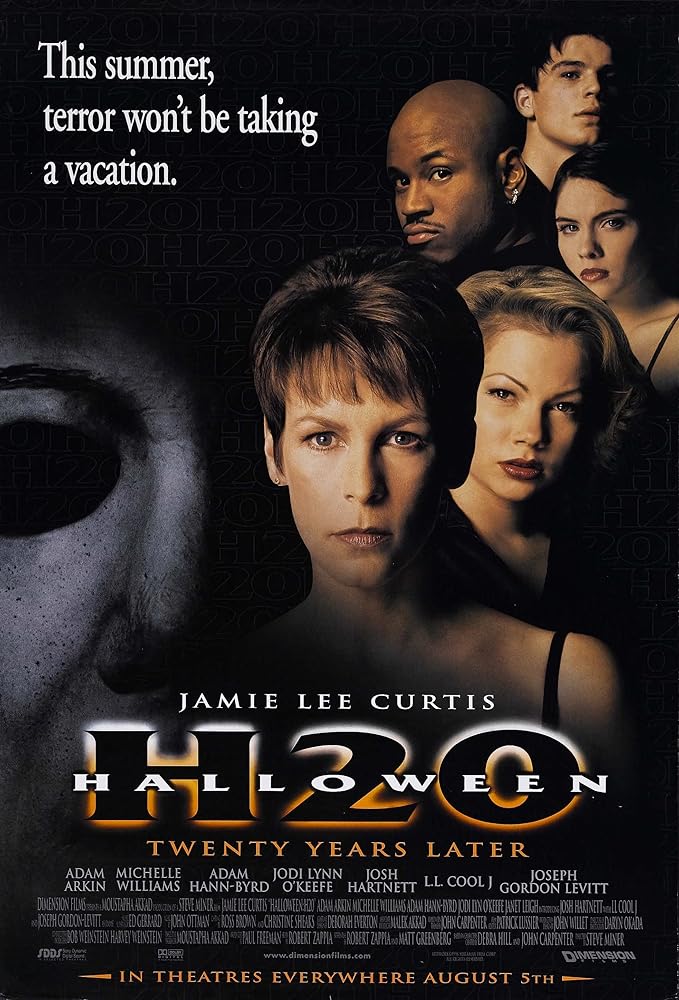
Jamie Lee Curtis, Josh Hartnett, LL Cool J, and Michelle Williams in Halloween H20: 20 Years Later (1998)

Following the, for lack of a better term, horrendous turnout of Halloween 6, the series was effectively rebooted with a film that straight-up ignored the events of the previous three films. Ultimately, though, the film’s biggest coup was the return of Jamie Lee Curtis as Laurie Strode for the first time since Halloween II. Set 20 years after the events of the original film (hence the admittedly awkward H20 title), Laurie is now the headmistress of a secluded boarding school in California, having faked her death to avoid being found again by Michael. But, as she has long feared, her brother ends up coming back to try and kill her once more… this time, however, she’s ready for him, and as you might have guessed, the biggest selling point of this film truly is Jamie Lee Curtis’ triumphant return to the franchise that started her career in the first place. Seeing Laurie evolve from being the timid survivor of the first two films to a more confident woman who manages to fend off her murderous brother makes the film’s finale one of the most satisfyingly entertaining sequences in the franchise’s history. There are also some solid performances from the film’s supporting cast, which include Josh Hartnett as Laurie’s son John, Michelle Williams in one of her earliest film roles as John’s girlfriend Molly, and Jamie Lee Curtis’ mother Janet Leigh (AKA the OG ‘scream queen’ from Alfred Hitchcock’s seminal classic Psycho) as Laurie’s secretary Norma. After the previous trilogy of films produced several bland supporting characters, this one manages to have one of the series’ better ensemble casts overall, even if a few of them are still just your basic bunch of traditional horror film characters.

With that said, though, admittedly it can be argued that the film is rather light on its horror elements, mostly opting for a bunch of cheap jump-scares. It should be noted that parts of the screenplay were influenced by Kevin Williamson, who of course wrote 1996’s Scream, which effectively revived the slasher genre that the original Halloween kick-started back in 1978. And while he ultimately wasn’t one of this film’s credited writers due to rewrites that nixed his plans to maintain continuity with the previous three films, he was still involved as an executive producer. Plus, the film was directed by veteran filmmaker Steve Miner, who directed the second and third Friday the 13th films along with several episodes of Williamson’s hit show Dawson’s Creek, which coincidentally starred Michelle Williams in one of the lead roles. As such, there are a few instances in this film where it does manage to give off some of the same self-aware vibes that were one of the definitive aspects of Scream. Despite this, though, the film doesn’t quite reach the same suspenseful heights of the original film. At the end of the day, it’s mostly worth watching just to see Laurie finally fight back against Michael, which she does in spectacular fashion. But for what it’s worth, Halloween H20 is easily the best of the Halloween sequels since Halloween II, and thanks to the welcome return of Jamie Lee Curtis, it served as a respectable follow-up to the original that was poised to be a fitting finale to the series after everything that it went through. However, as we’d soon find out, that ultimately wouldn’t be the case…

Rating: 3.5/5

HALLOWEEN: RESURRECTION (2002)

Jamie Lee Curtis, Tyra Banks, Busta Rhymes, Bianca Kajlich, and Sean Patrick Thomas in Halloween: Resurrection (2002)

After a string of increasingly mediocre sequels, Halloween H20 was very much a return to form for the series, but most importantly, it ended in a way that could effectively end it once and for all. However, it was also the highest-grossing entry in the series to date, and four years later, its ending was officially retconned in 2002’s Halloween: Resurrection. And as you might have guessed… this is a low point for the franchise. It’s truly saying something when the high point of this film is Jamie Lee Curtis’ last major appearance in the franchise until the 2018 reboot… and yet Laurie is killed off just 15 minutes into the film. After that, we follow the series’ worst cast of characters (yes, even worse than Halloween 6) on a reality show streamed online as they explore Michael Myers’ old house, clearly capitalizing on the found-footage craze that had begun to set in thanks to 1999’s The Blair Witch Project. Granted, it does give the film somewhat of a different spin to its proceedings compared to the previous installments, but it’s all for naught when you don’t give a single crap about any of these horribly cliched characters. And how does it all end? With Michael Myers, one of the most famous horror antagonists of all-time, getting his ass kicked by a kung-fu fighting Busta Rhymes (yes, seriously…). Simply put, this film is cheesy to an embarrassing degree. Sure, it might have had the distinction of being the second entry in the series to be directed by Rick Rosenthal (who, of course, directed Halloween II), but this in no way saves the film from being one of the cheapest horror sequels ever made. And just like Halloween 6, it effectively killed the franchise, thus paving the way for…

Rating: 0.5/5

HALLOWEEN (THE REMAKE – 2007)
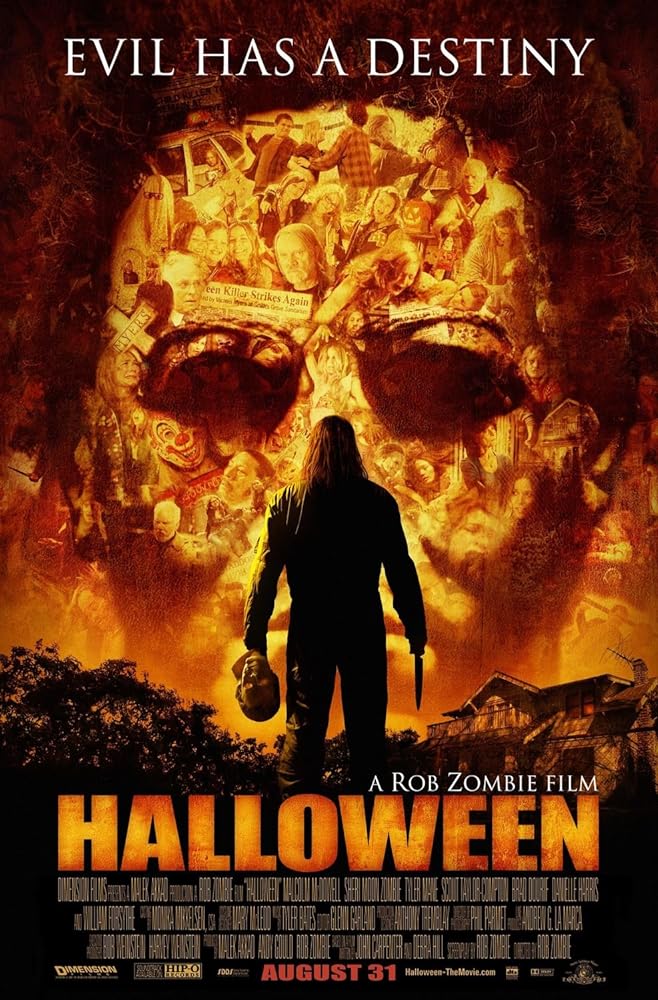
Tyler Mane in Halloween (2007)

Five years after the Halloween franchise hit rock bottom, musician turned filmmaker Rob Zombie helmed the inevitable remake of John Carpenter’s original film. However, while Carpenter did request that Zombie ‘make it his own’ when the two met prior to filming, ultimately the film isn’t that far off from the original film. The biggest difference between the two films is that the remake starts off with scenes of a young Michael Myers and his family to go into detail over the events that led to him becoming a psychopathic murderer. Ultimately, though, these scenes don’t really add much. As someone who isn’t big on the horror genre, I don’t think that this backstory completely ‘ruins’ Michael Myers like I know a lot of people feel about it, but at the same time, it doesn’t make the character any more interesting than he was in the previous films. And after that, the film then goes for a straightforward redo of all the key moments of the original Halloween with just a few cosmetic differences here and there (e.g. unlike the original, this one immediately establishes that Laurie is Michael’s sister). The only thing that sets it apart from the original is that Zombie’s version is far more gratuitous in terms of both the kills and nudity to make it more in line with the recent horror films that were being made at the time. Thus, this new take on Halloween really doesn’t have any of the subtlety of the original and gives off a far more mean-spirited tone overall. However, despite everything that I’ve just said here, I don’t think that it’s ‘terrible’. If anything, it never really drags at any point despite it boasting a far longer runtime than any of the previous films.

Plus, there are some good performances from the cast. The biggest standout is Malcolm McDowell, who proves to be an excellent successor to Donald Pleasance in the role of Dr. Loomis. And while McDowell’s take on the character is more reserved than Pleasance, he still does a great job with this rendition of the character. By comparison, Scout Taylor-Compton isn’t quite as good as Jamie Lee Curtis in the role of Laurie Strode (despite being more ‘animated’ than Curtis’ take on the character) but she still does a decent enough job with what she’s given. Aside from the two leads, there are also a few notable supporting roles as well. Zombie’s wife Sheri Moon is quite good in the role of Michael’s long-suffering mother Deborah, who’s quite easily one of the sanest and most sympathetic characters in a film that’s full of folks who are arguably even more sadistic than Michael himself. Brad Dourif, who of course played a different iconic horror villain as Chucky in the Child’s Play films, does a good job in the role of Sheriff Brackett, and as for his daughter Annie, she happens to be played by Jamie Lloyd from Halloween 4 and 5, Danielle Harris, who’s just as solid here as she was in those films. In short, Rob Zombie’s remake of Halloween is… ‘okay’. Back in 2010 when I was still writing film reviews on Rotten Tomatoes, I gave this film a generally positive review. However, it should be noted that this was back during a time when I hadn’t even seen John Carpenter’s original film. Since then, I’ve obviously now watched the original Halloween and it goes without saying that it is the far superior take on this story. At the end of the day, though, as much of a ‘trashy B-film’ as this one is, it’s far from being the worst remake of a horror classic.

Rating: 2.5/5

HALLOWEEN II (THE REMAKE’S SEQUEL – 2009)

Tyler Mane in Halloween II (2009)

Despite the negative reception towards Rob Zombie’s remake of Halloween, it was a hit at the box-office, and thus, Zombie and crew returned for a follow-up in 2009. And save for a sequence that mirrors the previous Halloween II by being set at a hospital, this Halloween II is, at the very least, not just a straight-forward remake of the 1981 sequel as was the case with the second half of its predecessor. Zombie was clearly given the opportunity to do his own Halloween film this time around without having to directly rely on anything from other installments of the series. However, that’s really the only positive thing that I can say about this film because… oh boy. Like the previous film, Zombie’s Halloween II sports one hell of a mean streak with its wide collection of despicable characters. Even previously likable characters like Dr. Loomis and, yes, even Laurie Strode (AKA the main protagonist of the film) aren’t sympathetic this time around. And while I will say that this film does boast more of an artistic vibe to it compared to the previous film, a lot of it just comes off as being visually ugly to look at due to an extremely grimy visual aesthetic that was also apparent in the first film but is more problematic here. It also doesn’t help that this film has an extremely mediocre plot that often veers into nonsensical territory with a bunch of fantasy sequences that often make no sense. Because of all this, I can safely say that this iteration of Halloween II is easily the worst entry in the Halloween franchise. Even Halloween: The Curse of Michael Myers and Halloween: Resurrection, AKA the other ‘worst’ installments of this series, have a bit more to them compared to this, which is ultimately up there with the likes of Darren Aronofsky’s Mother and Zack Snyder’s Sucker Punch as one of the worst films that I’ve ever seen. In fact, all three of these films coincidentally serve as prime examples of what happens when you let a director’s creative vision go way too far.

Rating: 0.5/5


And that concludes this retrospective on the Halloween franchise. Yeah, it didn’t necessarily end on the best of notes considering that it concluded with what is now one of the worst films that I’ve ever seen, but if anything, this serves as a great example of what I love about doing retrospectives like this. They provide a unique look at how a franchise has evolved over the years in both good and bad ways. And thankfully, the new Halloween film from David Gordon Green is getting a lot of good buzz, so I think it’s safe to say that fans of the franchise will be getting what might end up being the best follow-up yet to John Carpenter’s 1978 classic. And yes, you can expect a review of the new Halloween sometime in the next few days. Until then, be sure to sound off in the comments below with your own thoughts on this iconic horror franchise.